On the right bank of the Rhine, a little downstream from Koblenz, a graceful rococo palace looks out over the river from its terrace. Engers Palace was built in the 1760s as a hunting and pleasure palace for the archbishop electors of Trier, and its crowning glory is the Diana Hall, a festive room painted by Januarius Zick and dedicated to the goddess of the hunt.
Today the palace is home to a renowned academy of chamber music, and its rooms echo with the sound of young musicians from around the world. Concerts, a restaurant and a riverside terrace make Engers one of the most charming destinations in the Middle Rhine region.
In this article we will explore Engers Palace from the elector who built it to its Diana Hall, its Rose Cabinet, its riverside setting and its musical life today, and we will finish with practical tips for your visit.
In This Article
- A Rococo Palace on the Rhine
- Elector Johann Philipp von Walderdorff
- Johannes Seiz and the Architecture
- The Diana Hall
- Zick and the Art of the Ceiling
- The Rose Cabinet
- The Palace From the River
- The Facade and Its Details
- Engers From Above
- A Panorama of the Rhine
- The Rhine Terrace
- Engers Palace on Video
- Visiting Engers Palace Today
A Rococo Palace on the Rhine
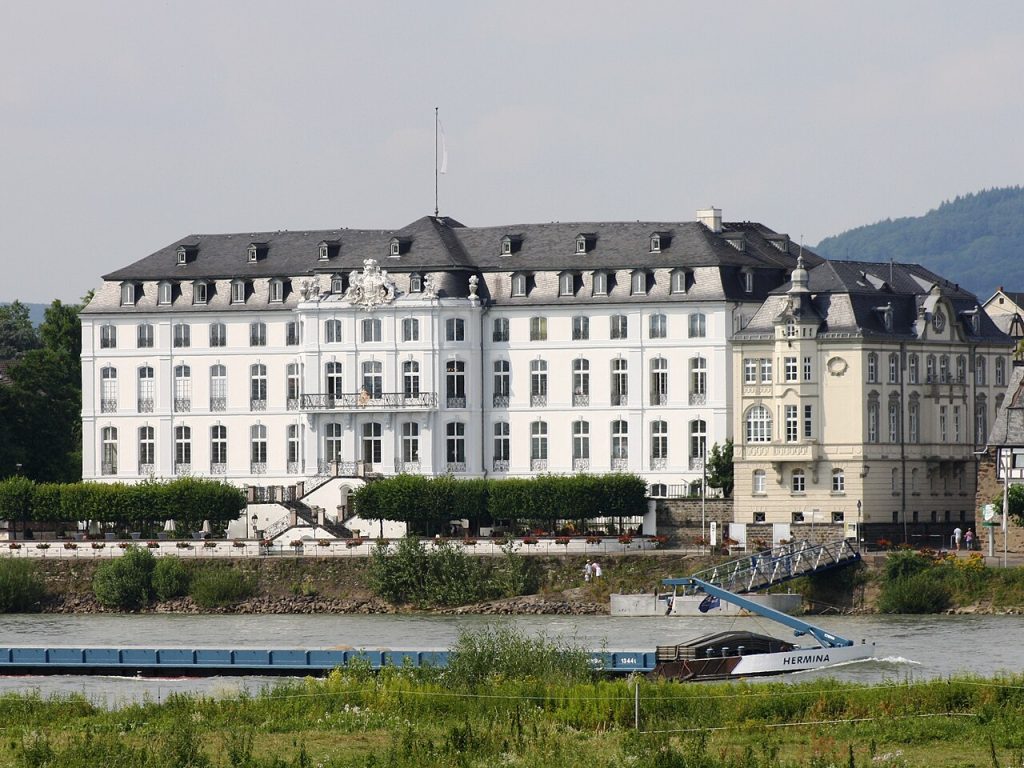
Seen from the river, Engers Palace appears as a long, elegant building with a central projection and a broad terrace stepping down toward the water. Its pale facades and slate roof stand out against the green of the riverbank.
The palace lies in Engers, today part of the town of Neuwied, in a peaceful setting where the Rhine widens and the landscape opens out after the narrow gorges upstream.
Its compact size and refined decoration make it one of the jewels of rococo architecture on the Rhine, a perfect example of a princely retreat.
What makes Engers special is the combination of its riverside location, its exquisite interiors and its lively musical life, which continues the palace’s tradition of culture and celebration.
From the terrace, the views up and down the Rhine are beautiful at any time of day, and passing ships add movement to the scene.
Engers is less known than the famous castles of the Middle Rhine, so visitors often have the palace and its terrace almost to themselves.
The town of Engers itself is small and friendly, with a riverside promenade and historic buildings that add to the charm of a visit.
Elector Johann Philipp von Walderdorff
The palace was built for Johann Philipp von Walderdorff, archbishop elector of Trier from 1756 to 1768. A cultivated ruler and passionate builder, he commissioned several important buildings, including the rococo wing of the Electoral Palace in Trier.
Engers had long been the site of a castle belonging to the electors, used as a hunting base and customs post on the Rhine. Walderdorff decided to replace the old castle with a modern pleasure palace.
Construction took place between 1759 and 1762, and the result was a residence for hunting parties, festivities and relaxation, away from the formality of the court.
The elector’s coat of arms can still be seen on the palace, a reminder of the patron who gave it its present form.
Hunting was a central pastime of the court, and the forests around Engers were rich in game, making the palace an ideal base for the elector and his guests.
Walderdorff’s reign was marked by building projects and cultural patronage, and his palaces at Trier and Engers are his most enduring legacy.
The old castle that preceded the palace had stood here since the fourteenth century, guarding the river and collecting tolls for the electors.
Johannes Seiz and the Architecture
The palace was designed by Johannes Seiz, the court architect of Trier, who had trained under Balthasar Neumann and also designed the rococo wing of the Electoral Palace in Trier.
Seiz created a compact palace with a central block and wings, carefully proportioned and decorated with graceful details in stone and stucco.
The design takes full advantage of the riverside location, with the main rooms facing the Rhine and opening onto the terrace.
The architecture shows the elegance and restraint of late rococo, with a focus on harmony and light rather than overwhelming display.
The interiors were decorated by skilled stuccoists and painters, many of whom also worked on other projects for the electors.
Seiz’s work at Engers and Trier shows how the lessons of Neumann were adapted to smaller, more intimate buildings in the electorate of Trier.
The Diana Hall

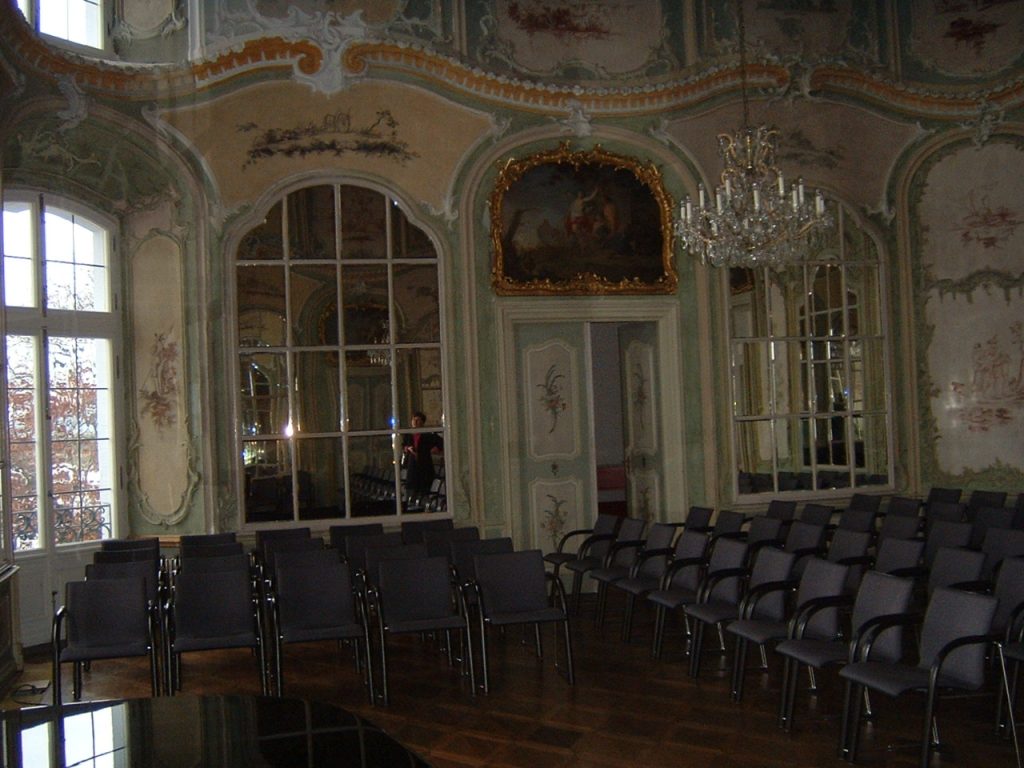
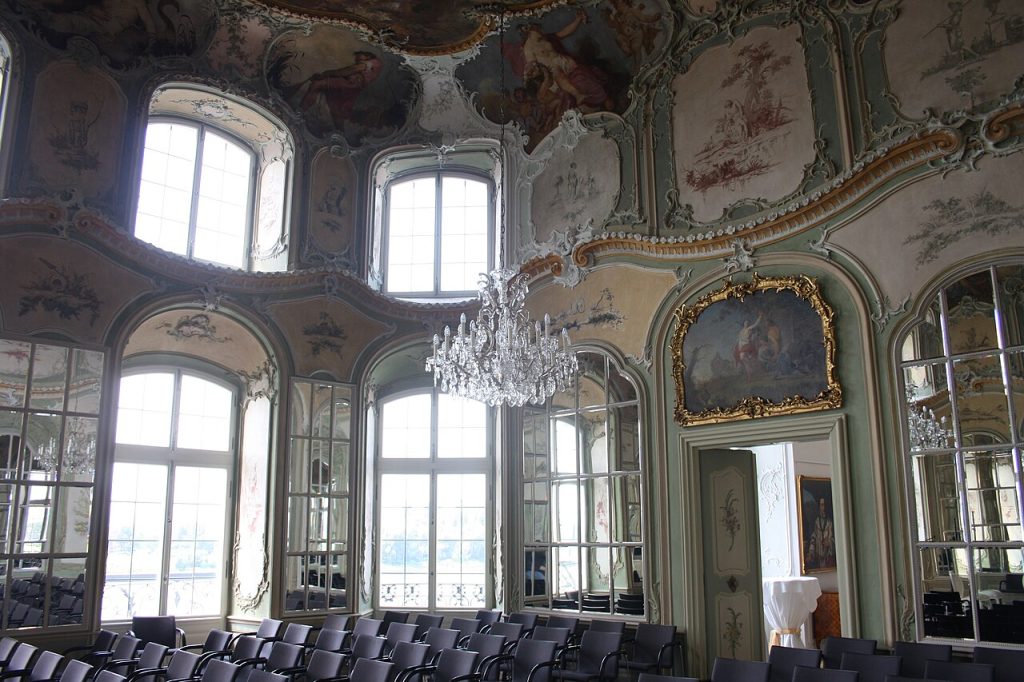
The highlight of Engers Palace is the Diana Hall, a festive room on the main floor dedicated to Diana, the Roman goddess of the hunt. It was designed for banquets and celebrations after hunting parties.
The ceiling fresco, painted in 1760 by Januarius Zick, shows Diana and her companions in a sky filled with clouds and figures, celebrating the joys of the hunt.
Zick was one of the most talented painters of his generation, the son of Johannes Zick, who painted the frescoes at Bruchsal. His work at Engers is considered among his finest.
The walls are decorated with elegant stucco, mirrors and paintings, creating a bright and festive atmosphere that is perfect for music and celebration.
Today the Diana Hall is used for concerts, and hearing chamber music beneath Zick’s ceiling is an unforgettable experience.
The room’s proportions and acoustics are ideal for chamber music, which is one reason why the music academy chose Engers as its home.
Zick and the Art of the Ceiling
Januarius Zick combined the traditions of baroque fresco painting with a lighter, more graceful rococo style. His figures are elegant and lively, and his colours soft and luminous.
In the Diana Hall, the painted sky seems to open the ceiling to the heavens, and the figures appear to float freely above the room.
Zick later worked in Koblenz, where he became court painter to the last elector of Trier, and his paintings can be seen in churches and palaces throughout the region.
Looking up at the ceiling, you can trace the story of Diana and enjoy the many details of animals, hunters and allegorical figures.
The restoration of the fresco has revealed its fresh colours, and visitors can now see it much as the elector’s guests did in the eighteenth century.
The Rose Cabinet
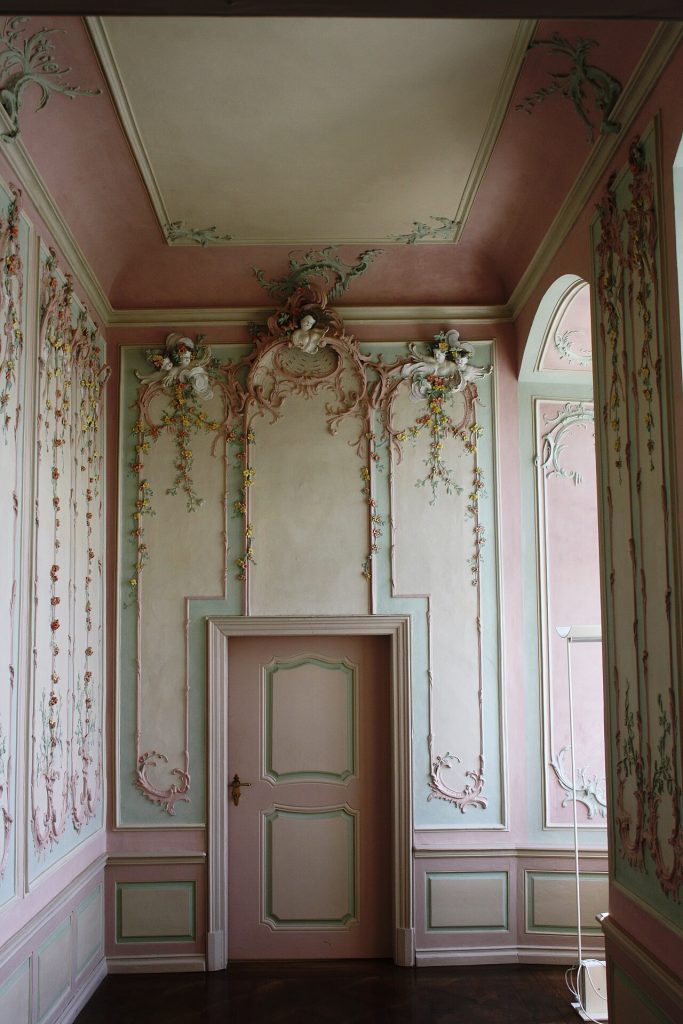
Next to the Diana Hall lies the Rose Cabinet, a small and delicate room decorated with floral motifs and fine stucco. It was used for intimate gatherings and conversation.
The decoration shows the rococo love of nature, with roses, garlands and leaves forming a playful frame around the walls and ceiling.
The room’s soft colours and refined details make it one of the most charming spaces in the palace.
Together with the Diana Hall, the Rose Cabinet gives a vivid impression of the elegance of court life in the electorate of Trier.
The Rose Cabinet is sometimes used for small recitals, where its intimate size creates a special closeness between musicians and listeners.
Floral decoration was a hallmark of rococo interiors, reflecting the period’s love of nature and its desire to bring the garden indoors.
The Palace From the River
The best way to appreciate Engers Palace is from the Rhine. Seen from a passing boat or from the opposite bank, the palace and its terrace form a beautiful picture against the green hills.
In the days of the electors, guests often arrived by boat, landing at the foot of the terrace and climbing the steps to the palace.
The river was also the main route for trade, and the old castle at Engers had collected tolls from passing ships before the palace was built.
Today, river cruises along the Middle Rhine pass the palace, and many visitors catch their first glimpse of it from the water.
Cyclists on the Rhine cycle path often stop at Engers to rest and admire the palace, which lies directly on the route.
The Facade and Its Details
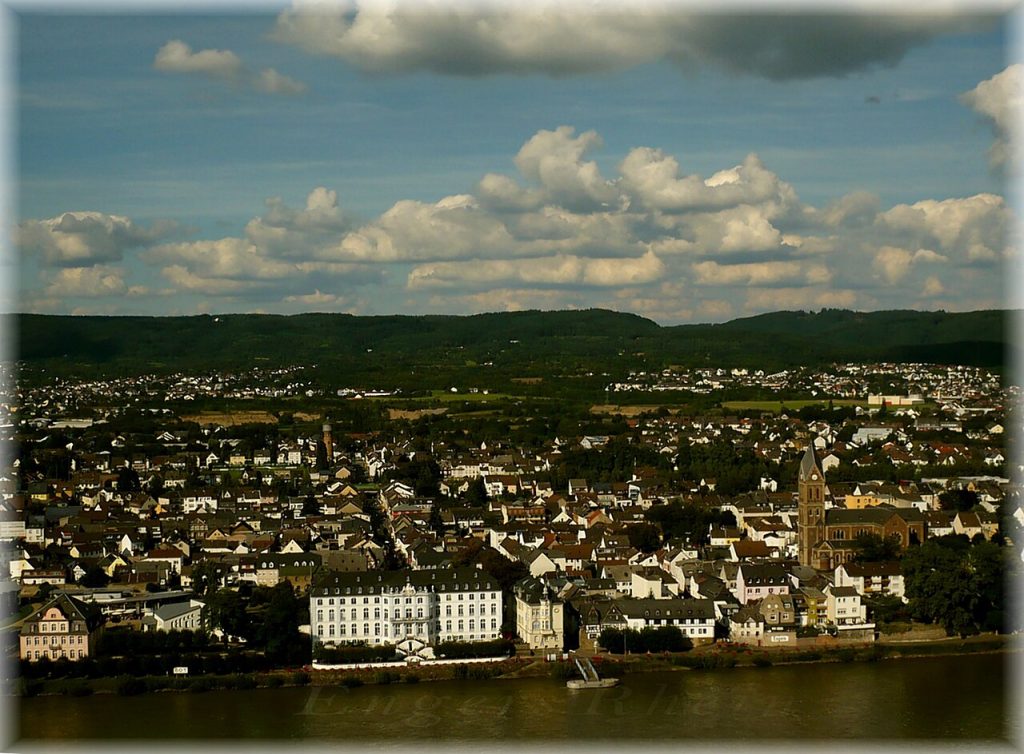
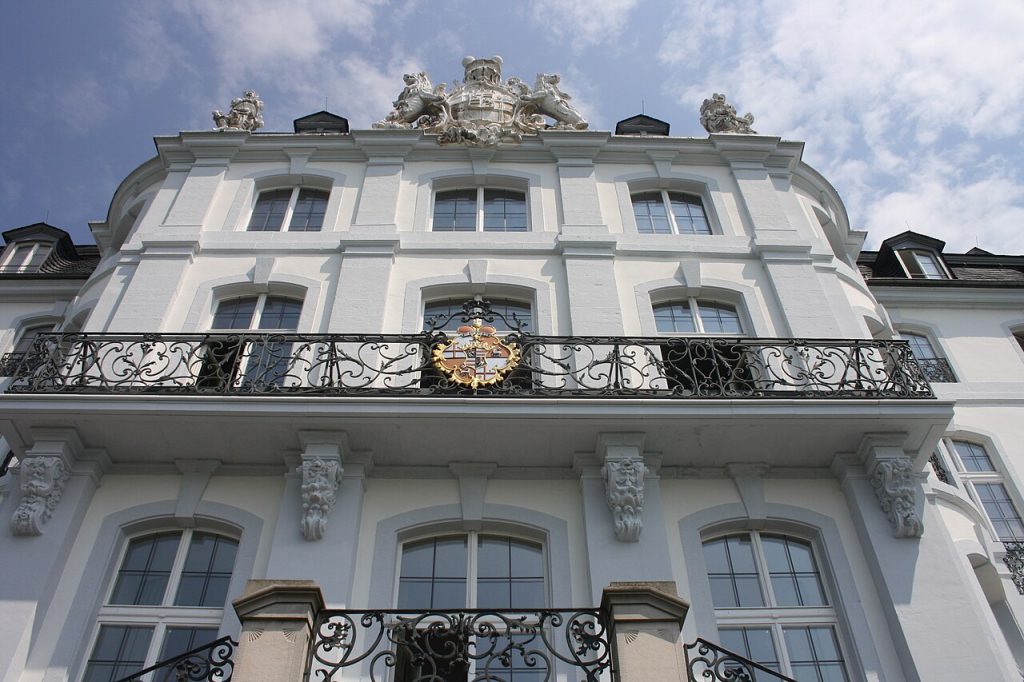
The facade of Engers Palace is elegant and well proportioned, with a central projection, pilasters and finely carved window frames.
The elector’s coat of arms crowns the central section, and decorative details in stone add a sense of refinement.
The pale colours of the facade contrast with the dark slate roof, giving the palace a crisp and harmonious appearance.
Walking along the terrace, you can see the details up close and appreciate the skill of the craftsmen who built the palace.
At night, when the palace is illuminated, the facade glows warmly above the dark river, a beautiful sight from the opposite bank.
Engers From Above
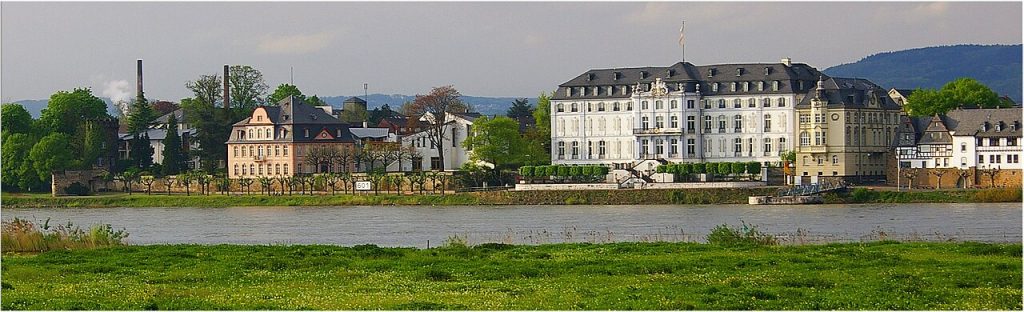
From above, the layout of the palace and its surroundings becomes clear. The main building stands close to the river, with the terrace in front and the town of Engers behind.
The palace’s compact form contrasts with the vast palaces of other electors, reflecting its role as a retreat rather than a seat of government.
The riverside setting is especially striking from the air, with the Rhine curving past and the hills rising on either side.
Aerial views also show the gardens and courtyards that once served the palace, some of which are still used for events today.
The palace’s position on a gentle rise above the river protected it from floods while giving it commanding views.
A Panorama of the Rhine
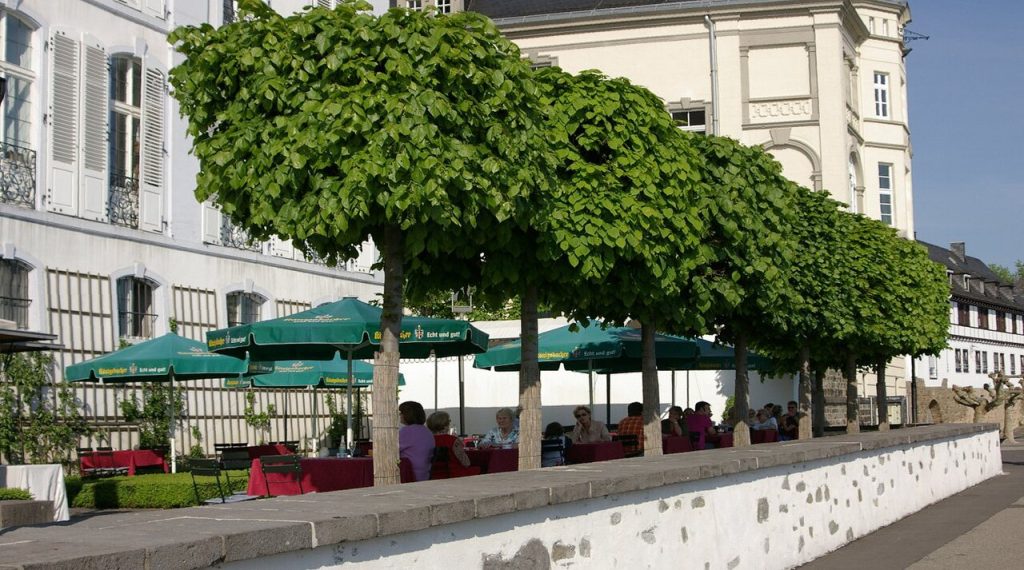
From the terrace and the upper windows of the palace, a wide panorama of the Rhine unfolds, stretching upstream toward Koblenz and downstream toward Neuwied.
The view changes with the seasons and the light, from misty mornings to golden evenings, and it has delighted visitors for more than two centuries.
In summer, the terrace is a perfect place to enjoy a meal or a drink while watching the river traffic.
It is easy to imagine the elector and his guests enjoying the same view after a day of hunting in the surrounding forests.
Photographers particularly enjoy the evening light, when the sun sets behind the hills and the river turns gold.
The Rhine Terrace
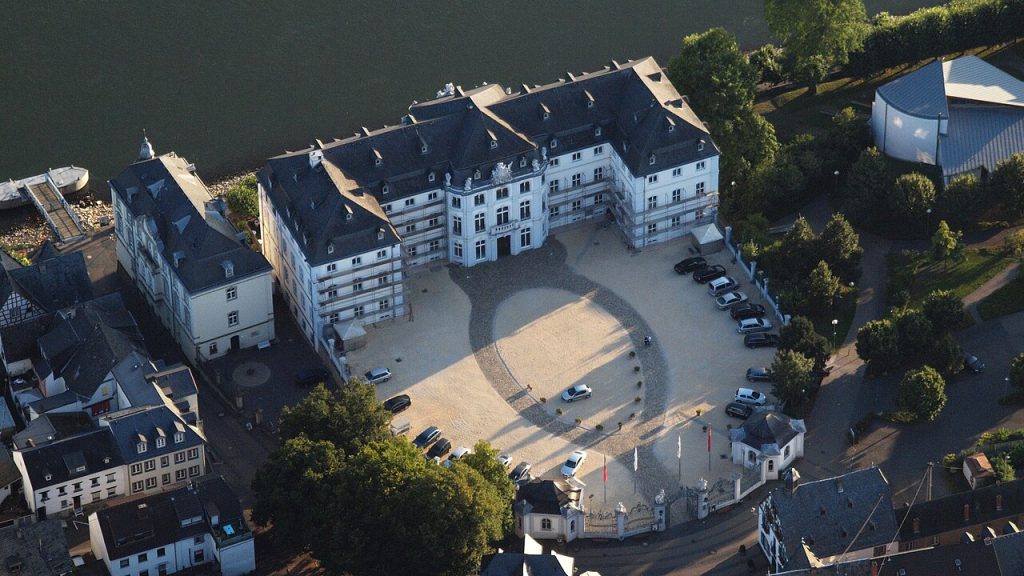
The terrace in front of the palace is one of its most attractive features. It provides a broad, open space between the building and the river, ideal for promenades and outdoor gatherings.
Balustrades and steps lead down toward the water, and the terrace offers an excellent vantage point for photographs of the palace and the river.
During summer festivals and concerts, the terrace becomes a lively meeting place for visitors.
Even on quiet days, it is a lovely spot to sit and enjoy the peaceful atmosphere of the Rhine.
The restaurant’s outdoor seating on the terrace is one of the most pleasant places on the Middle Rhine to enjoy a meal with a view.
Engers Palace on Video
For a look at the palace and its musical life, the video below presents Engers Palace on the Rhine.
Watch for the Diana Hall and the views of the river.
The video also gives a sense of the musical atmosphere that fills the palace today.
If the video inspires you, read on for practical tips.
Visiting Engers Palace Today
Engers Palace is home to the Villa Musica foundation, which runs an academy where young professional musicians work with renowned teachers. Concerts are held regularly in the Diana Hall and other rooms.
The palace also has a restaurant and hosts events, and its terrace is open to visitors. Guided tours of the Diana Hall are offered on certain dates.
Engers lies on the Rhine near Neuwied, about fifteen kilometres from Koblenz, and is easy to reach by car or train.
Combine your visit with the Electoral Palace in Koblenz and the fortress of Ehrenbreitstein, and if you have more time, travel up the Moselle to Trier to complete the circuit of the electors’ residences.
Concert tickets often sell out quickly, so it is worth booking in advance if you would like to hear music in the Diana Hall.
Whenever you visit, Engers Palace offers a delightful combination of rococo elegance, Rhine views and the living tradition of music.
View the location on Google Maps
Palaces Nearby
If you have enjoyed this palace, the Rhine and Moselle region holds more remarkable residences. Here are two more well worth adding to your journey:
- The Electoral Palace of Koblenz – the classical residence of the last elector of Trier on the Rhine.
- The Electoral Palace of Trier – the pink rococo residence of the archbishop electors beside the Constantine Basilica.
You May Like