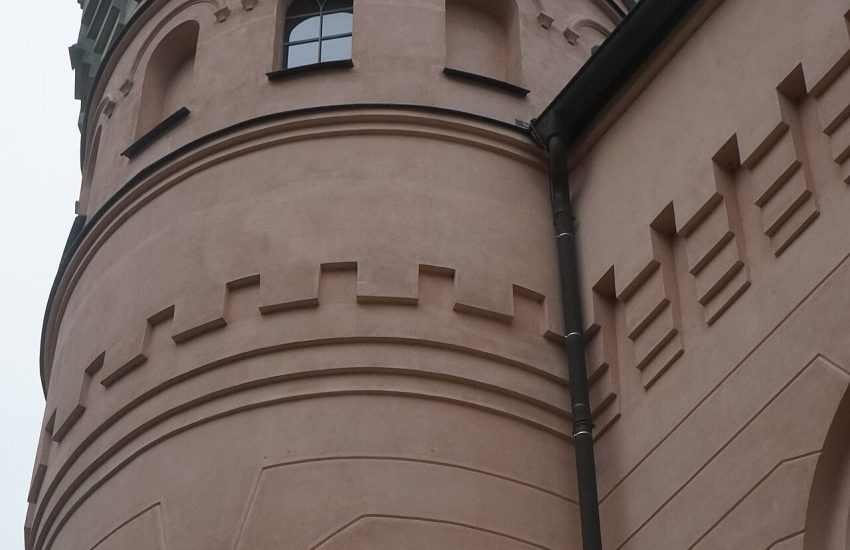
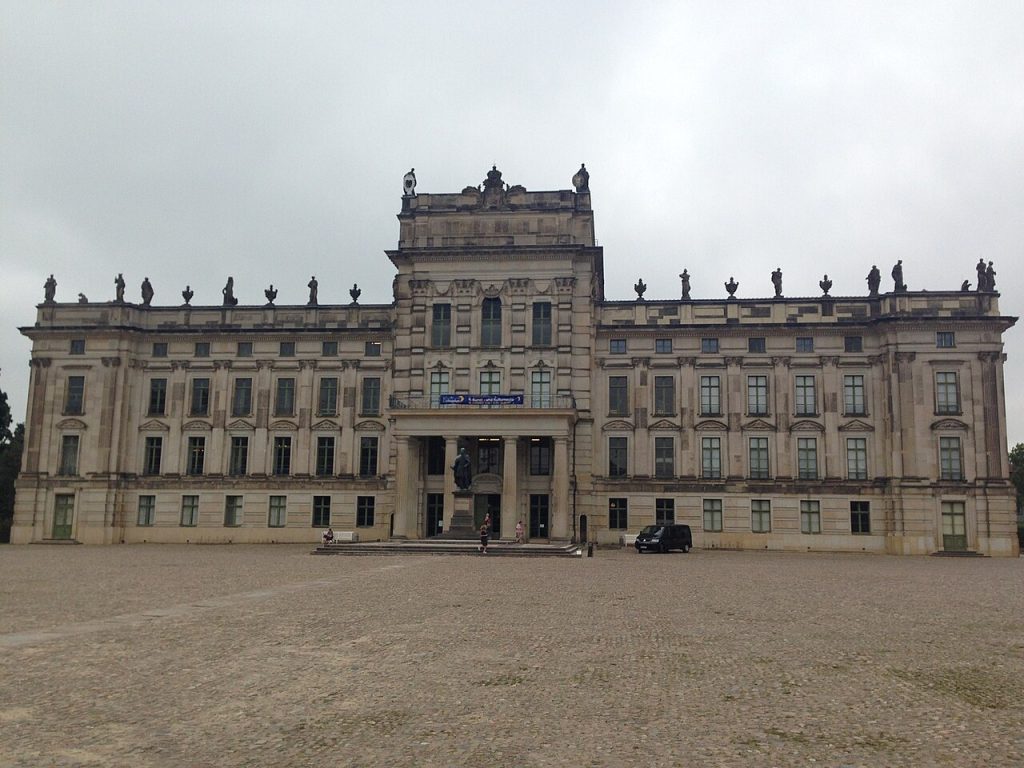
In the flat, quiet countryside of southwestern Mecklenburg, a grand palace rises at the end of a long avenue, its facade lined with statues and crowned by a row of figures against the sky. Ludwigslust was the residence of the dukes of Mecklenburg Schwerin, and people have long called it the Versailles of the North.
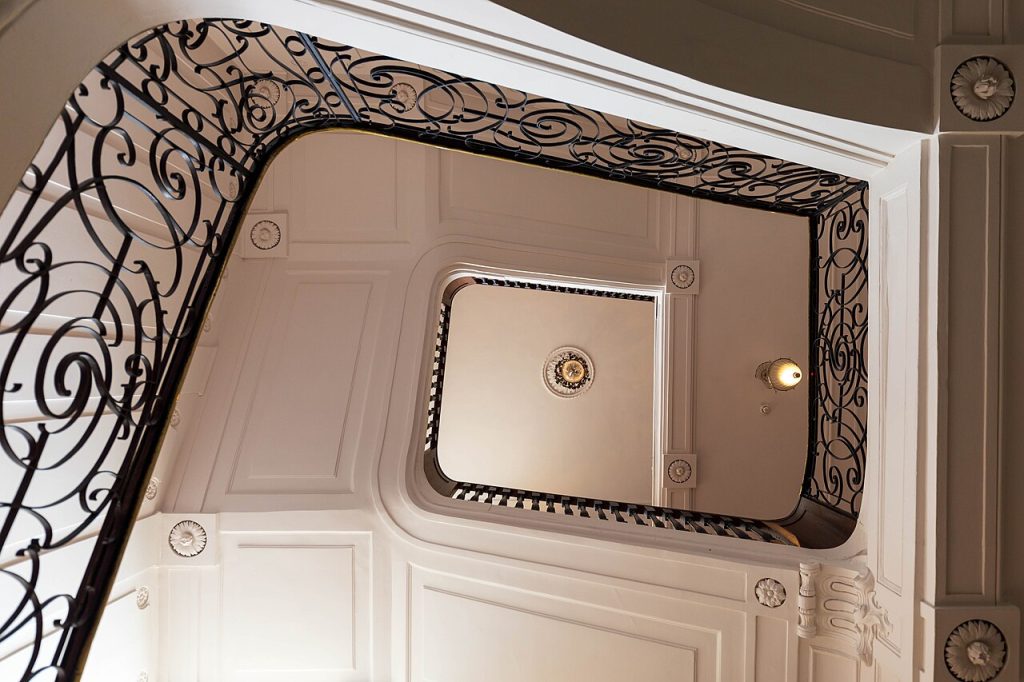
But here is the fun part, and I will let you in on it right away: much of the splendid decoration inside is not marble, gold or carved wood at all. It is papier mache, made in a local workshop to save money. Once you know this, you will never look at a baroque palace the same way again.
Come along as we walk the avenue, step into the Golden Hall, explore one of the largest landscape parks in northern Germany, and hear a few stories the guides love to tell.
In This Article
- A Palace at the End of an Avenue
- From Hunting Lodge to Residence
- Forty Statues on the Roof
- The Papier Mache Secret
- The Golden Hall
- The Ducal Apartments
- The Oudry Collection
- One of the Largest Landscape Parks in Germany
- The Great Cascade and the Canals
- The Court Church and the Town
- Ludwigslust on Video
- Visiting Ludwigslust Today
A Palace at the End of an Avenue
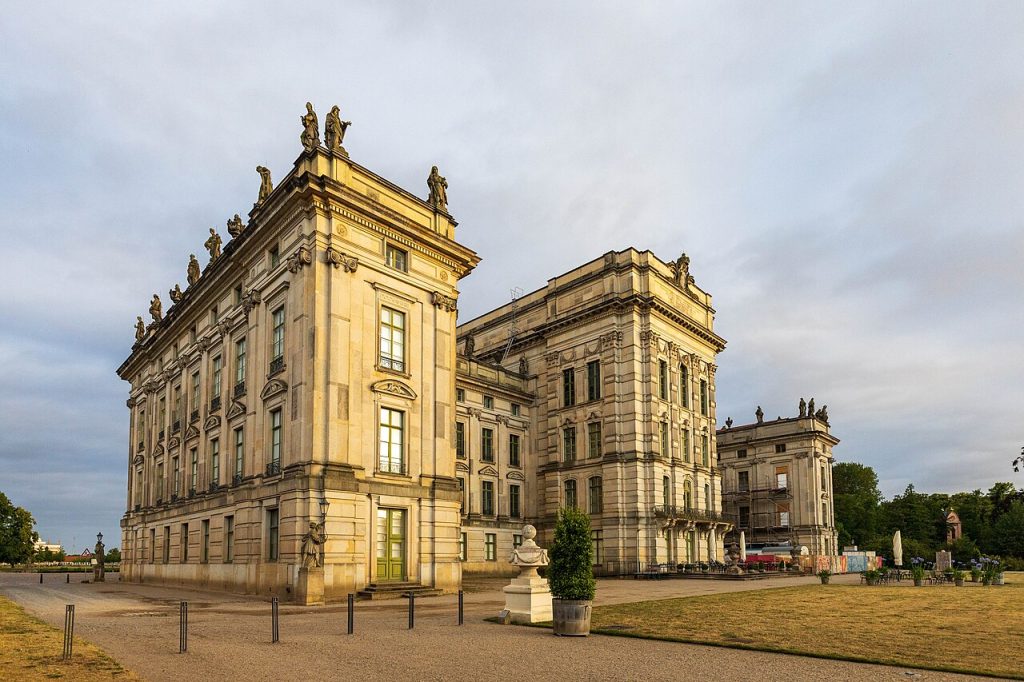
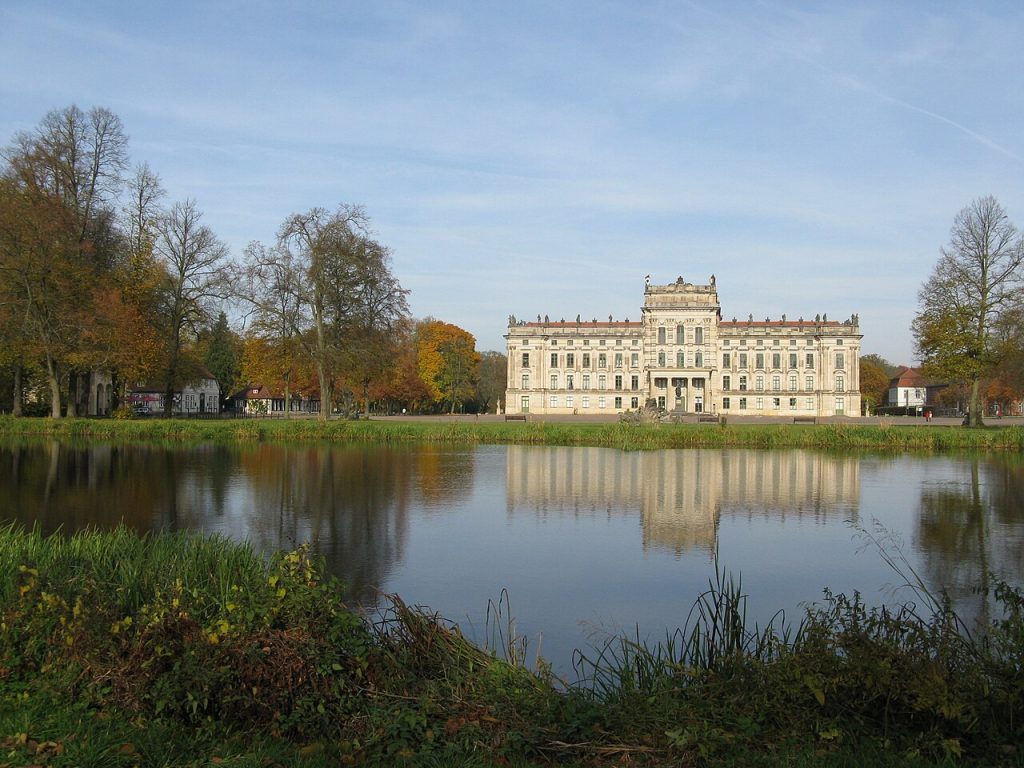
Picture yourself arriving in the little town of Ludwigslust and walking toward the palace. A wide square opens in front of you, with a long cascade of water and rows of trees leading your eyes straight to the palace.
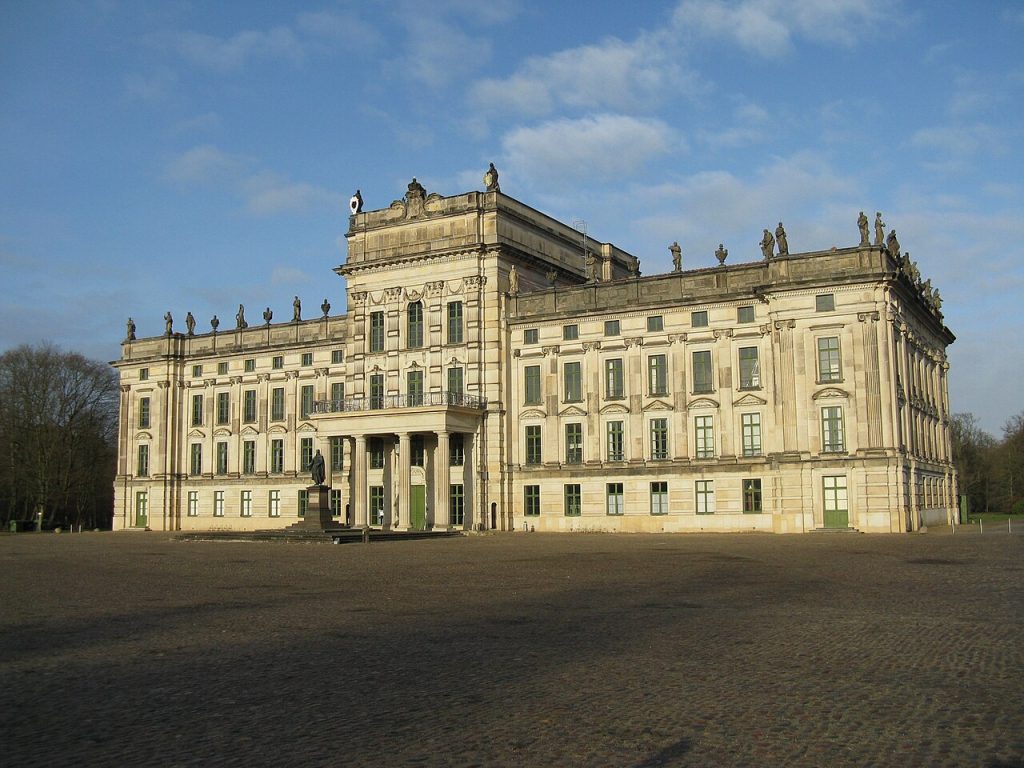
The facade is long and elegant, decorated with columns and topped by forty statues, a skyline of stone figures representing the arts, the sciences and the virtues.
The town itself was planned around the palace, with straight streets, a church facing the palace across the square, and neat brick houses for court officials and craftsmen.
Standing here, you can see how the dukes wanted everything to point toward their residence, a classic baroque idea of power and order.
Many visitors are surprised to find such grandeur in such a quiet corner of Germany. That surprise is one of the joys of Ludwigslust.
Here is a little tip: walk to the far end of the square first and then turn around. From there, the cascade, the trees and the palace line up perfectly, and you get the view the dukes wanted their guests to see.
From Hunting Lodge to Residence
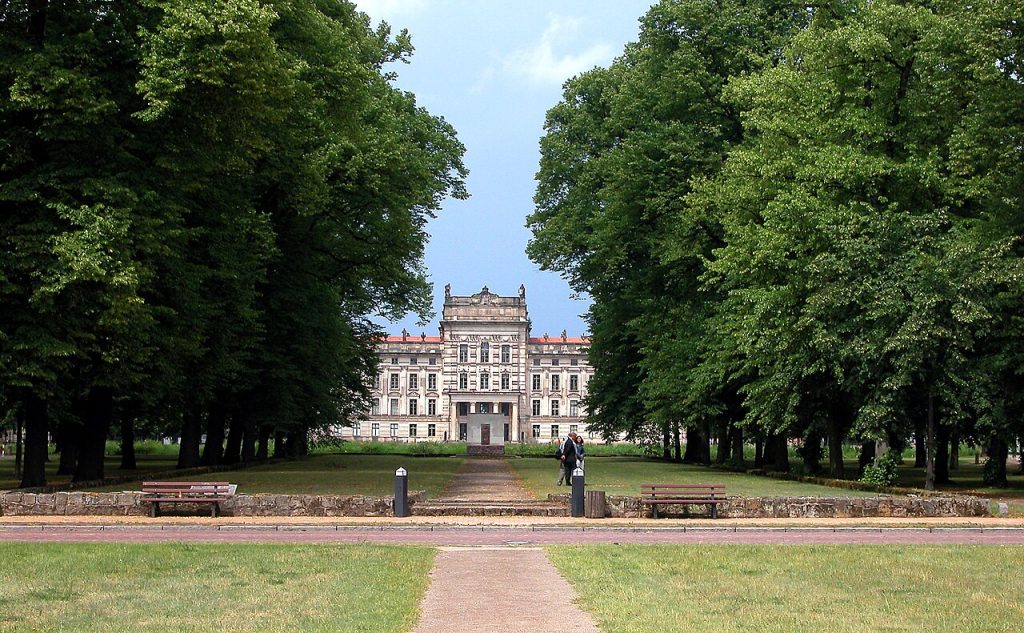
The story starts with a hunting lodge. Duke Christian Ludwig II of Mecklenburg Schwerin loved hunting in the forests here, and in the 1730s he built a modest lodge, which he named Ludwigslust, Ludwig’s Delight.
His son, Duke Friedrich, nicknamed the Pious, decided to move the whole court here from Schwerin in the 1760s. He wanted a quieter, more devout life away from the old capital.
Between 1772 and 1776, the court architect Johann Joachim Busch built the present palace, and the town grew up around it almost from nothing.
For about seventy years, Ludwigslust was the capital of the duchy, until the court returned to Schwerin in 1837.
Duke Friedrich was a deeply religious man who disliked the theatre and court balls of his father’s time. Ludwigslust under his rule was a quiet, pious court, devoted to music, prayer and simple pleasures.
Music, at least, was allowed. The court orchestra of Ludwigslust became one of the best in northern Germany, and composers such as Antonio Rosetti worked here.
Forty Statues on the Roof
Look up at the roofline. Forty larger than life statues stand along the top of the palace, made of sandstone and representing allegories of the arts, sciences and virtues.
The facade is built of brick and faced with sandstone from the Elbe region, giving it a warm, golden colour in the evening light.
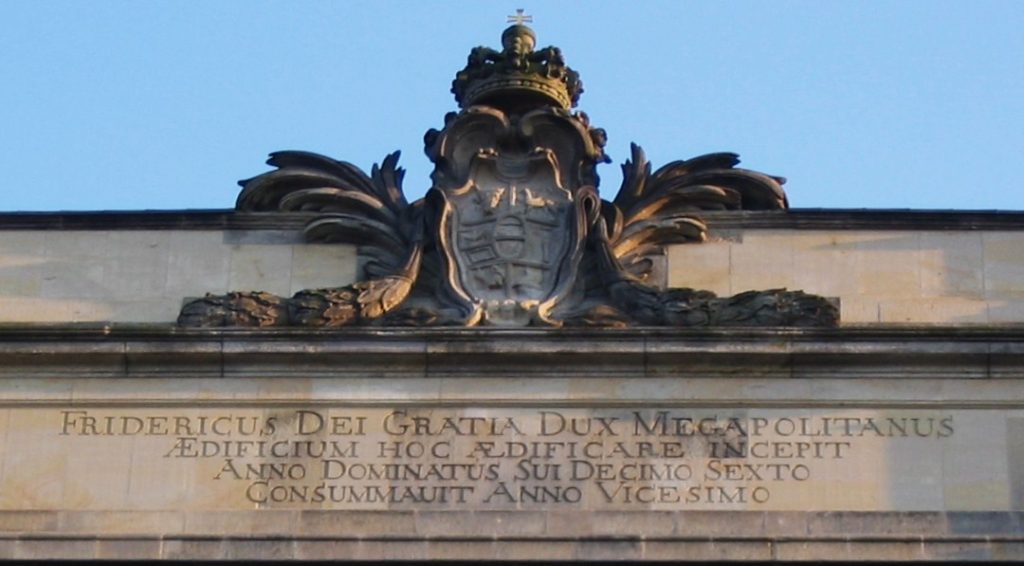
Above the central section you will see the ducal coat of arms and the monogram of the duke, a proud signature on his creation.
Stand back and count the statues if you like. Forty figures, each about three metres high, all carved from sandstone and hauled to the roof by hand and crane in the eighteenth century.
The Papier Mache Secret

Now for the story everyone remembers. Duke Friedrich was building on a tight budget, and the duchy was not rich. So instead of expensive marble, stucco and carved wood, much of the interior decoration was made of papier mache, a material called Ludwigsluster Carton.
A local workshop produced ornaments, frames, sculptures, vases and even whole decorative panels from paper pulp, which was pressed into moulds, painted and gilded.
The results were so convincing that visitors could not tell the difference, and the workshop later sold its products far beyond Mecklenburg.
Guides love to invite visitors to guess which decorations are paper and which are stone or wood. Most people get it wrong, and that is half the fun.
The workshop was founded around 1780 and operated for decades, producing everything from candelabras to busts. Some of its pieces were even exported to Russia and Scandinavia.
Papier mache was light, cheap and easy to shape, which made it perfect for ceilings and high decorations that would have been too heavy or costly in stone.
The Golden Hall
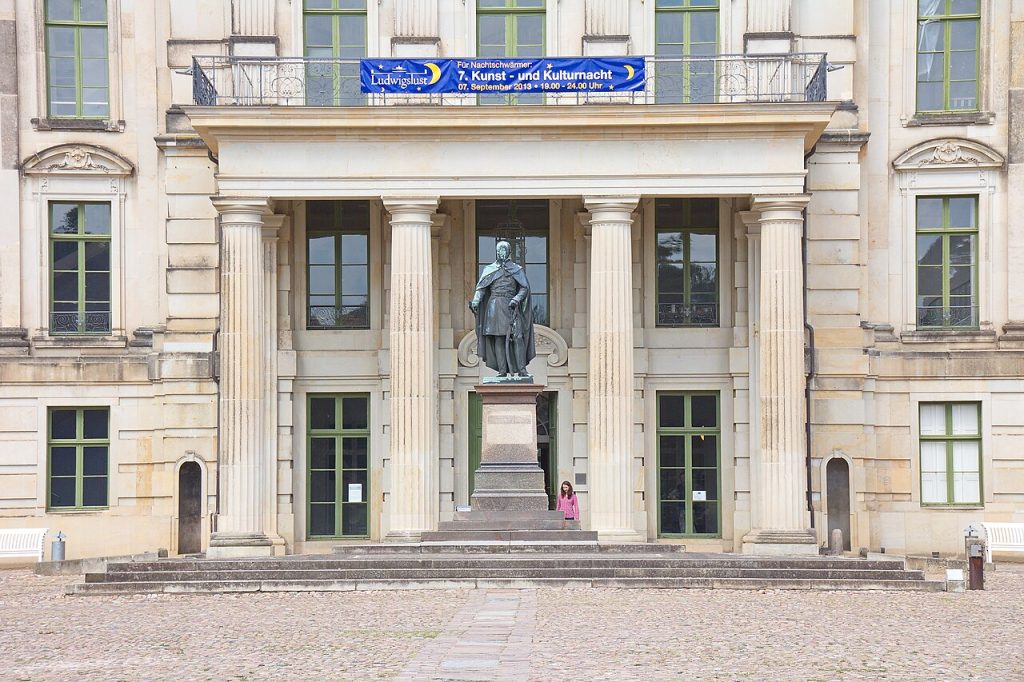
The heart of the palace is the Golden Hall, a vast festive room two storeys high, with columns, gilded decoration and great chandeliers.
It was used for balls, concerts and court ceremonies, and it is one of the most splendid rooms in northern Germany.
And yes, you guessed it: some of the gilded ornaments here are made of papier mache too, covered with gold leaf so beautifully that they shine just like carved wood.
Concerts are still held in the Golden Hall, and hearing music under its high ceiling is a wonderful experience.
When the chandeliers are lit for an evening concert, the gold seems to glow from within. Few guests in the eighteenth century ever guessed what the ornaments were really made of.
The Ducal Apartments
Around the Golden Hall lie the apartments of the duke and duchess, furnished with fine furniture, paintings, clocks and porcelain.
The rooms were restored in recent years and show the elegant style of the late eighteenth century, when baroque was giving way to classicism.
Look out for the paintings by Jean Baptiste Oudry, the French court painter famous for his animal and hunting scenes. The dukes of Mecklenburg owned one of the largest collections of his works in the world, and many of them hang here.
The duchess’s rooms are particularly charming, with soft colours, delicate furniture and views over the park.
The Oudry Collection
Oudry painted hunting dogs, deer, birds and still lifes with incredible realism, and Duke Christian Ludwig II admired him so much that he bought dozens of his paintings.
Some of the canvases are enormous, showing life size animals in dramatic hunting scenes. Standing in front of them, you can almost hear the barking of the hounds.
The collection is one of the treasures of the Staatliches Museum Schwerin, which manages Ludwigslust Palace.
One of the most famous paintings shows a white duck, painted with such detail that each feather seems to shimmer. Look for it if you visit.
One of the Largest Landscape Parks in Germany
Behind the palace stretches a vast park of about one hundred and twenty hectares, one of the largest landscape parks in northern Germany.
It was first laid out in the baroque style and later transformed in the nineteenth century by the famous garden designer Peter Joseph Lenne.
Canals, ponds, bridges, avenues and woods make it a wonderful place for long walks, and you will discover hidden monuments, a grotto and even a mausoleum among the trees.
In spring, carpets of wildflowers cover the meadows, and in autumn the old trees glow in gold and red.
Look for the Swiss House, the Catholic church of Saint Helena built like a Gothic chapel, and the stone bridge over the canal. Each discovery makes the walk more rewarding.
The mausoleum of Grand Duchess Helena Pavlovna, a Russian princess who married into the family and died young, stands quietly among the trees, a moving memorial.
The Great Cascade and the Canals
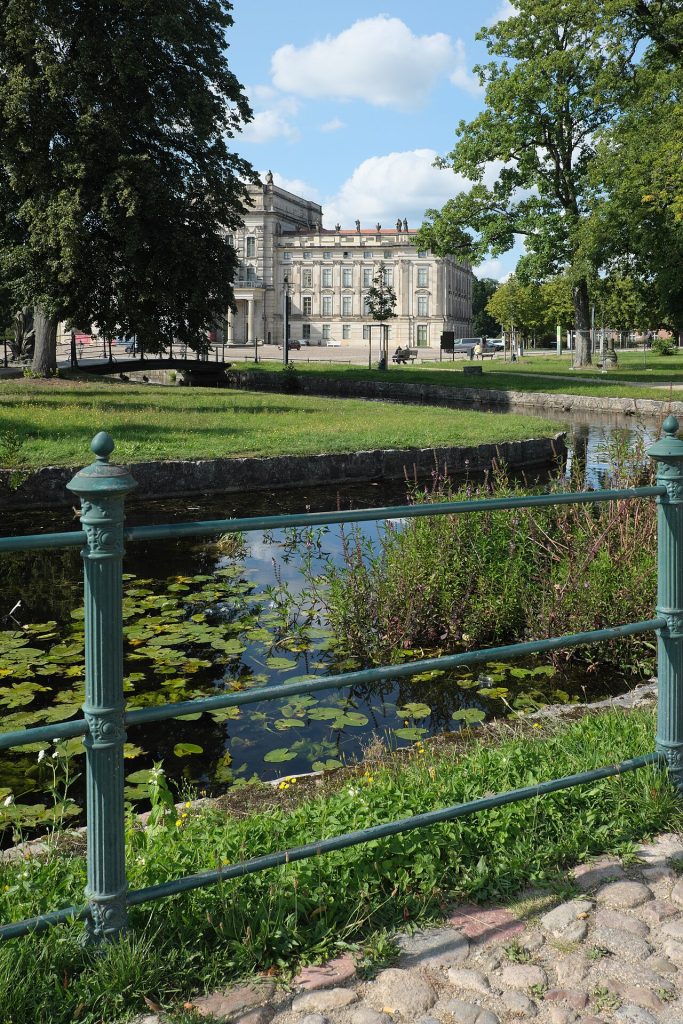
In front of the palace, a stone cascade carries water across the square, fed by a canal more than twenty kilometres long that was dug especially to supply the palace with water.
The canal also fed the fountains and water features of the park, a remarkable piece of eighteenth century engineering in such flat country.
Sit by the cascade on a warm day and listen to the water. It is one of the most relaxing spots in town.
The cascade was rebuilt and restored in recent years, and on summer evenings it is lit, creating a magical atmosphere on the square.
The Court Church and the Town
Facing the palace across the square stands the court church, built like a classical temple, with a huge painting of the Annunciation behind the altar, painted on a canvas so large that it fills the whole wall.
The town of Ludwigslust, with its neat brick houses and straight streets, is a rare example of a complete planned residence town of the eighteenth century.
Take a short walk around the streets after your visit, and you will see how carefully the town was designed to serve the court.
The painting behind the altar is so large that it was painted in sections and assembled in the church, and for many years it was one of the biggest paintings in Germany.
Ludwigslust on Video
Want a preview? The video below takes you to Ludwigslust Palace and its park.
If the video makes you want to visit, here are some practical tips.
Visiting Ludwigslust Today
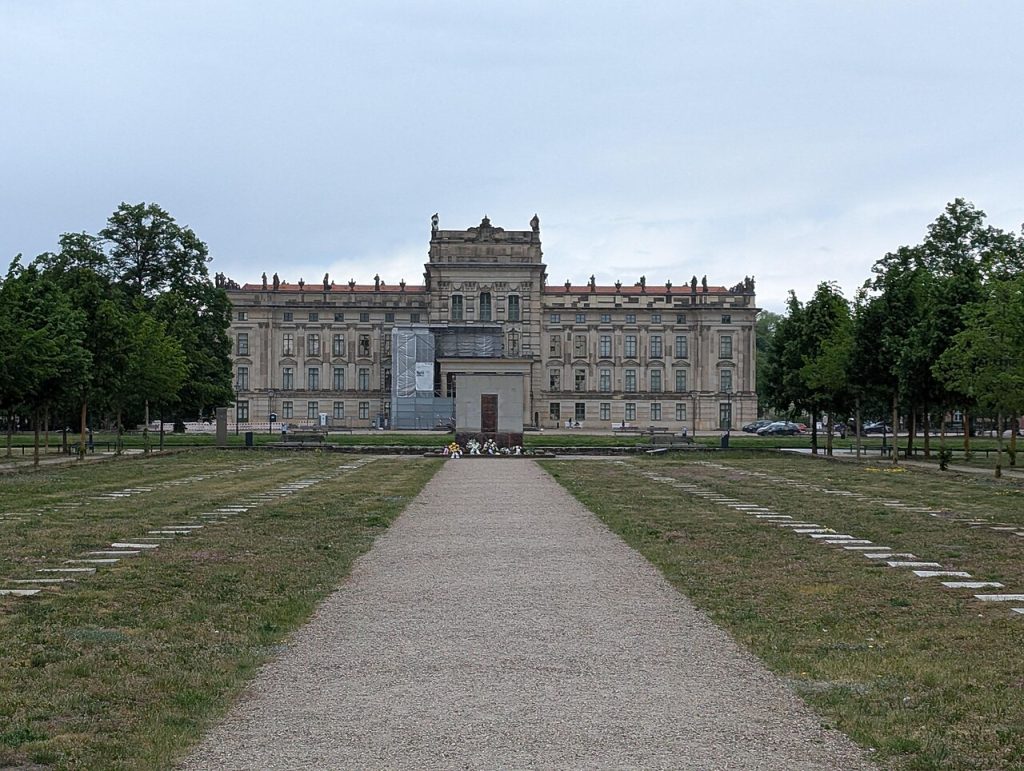
Ludwigslust Palace is managed by the Staatliches Museum Schwerin and is open throughout the year, except on Mondays. The park is open all year and free to enter.
Ludwigslust lies on the railway line between Berlin and Hamburg, so it is easy to reach by train, and the palace is a short walk from the station.
Plan at least half a day for the palace and the park. If you enjoy walking, give yourself a whole day, because the park is huge.
Combine your visit with Schwerin Castle, about forty kilometres away, for a full picture of the dukes of Mecklenburg.
A local tip: try to find the papier mache vases in the park. Most people walk right past them without realising they are paper.
There are cafes on the square in front of the palace, perfect for a break between the palace and the park.
View the location on Google Maps
Palaces Nearby
If you have enjoyed this palace, the region holds more remarkable residences. Here are two more well worth adding to your journey:
- Gustrow Palace – one of the finest Renaissance palaces in northern Germany.
- Bothmer Palace – the largest baroque palace in Mecklenburg, near the Baltic coast.
You May Like
Spyker Castle and the Ghost of the Swedish Field Marshal