On the left bank of the Rhine in Koblenz, not far from where the Moselle flows into the great river, stands one of the last grand palaces built before the French Revolution swept away the old order in Germany. The Electoral Palace was completed in 1786 for Clemens Wenceslaus of Saxony, the last archbishop elector of Trier, who would enjoy it for only eight years before fleeing the advancing French armies.
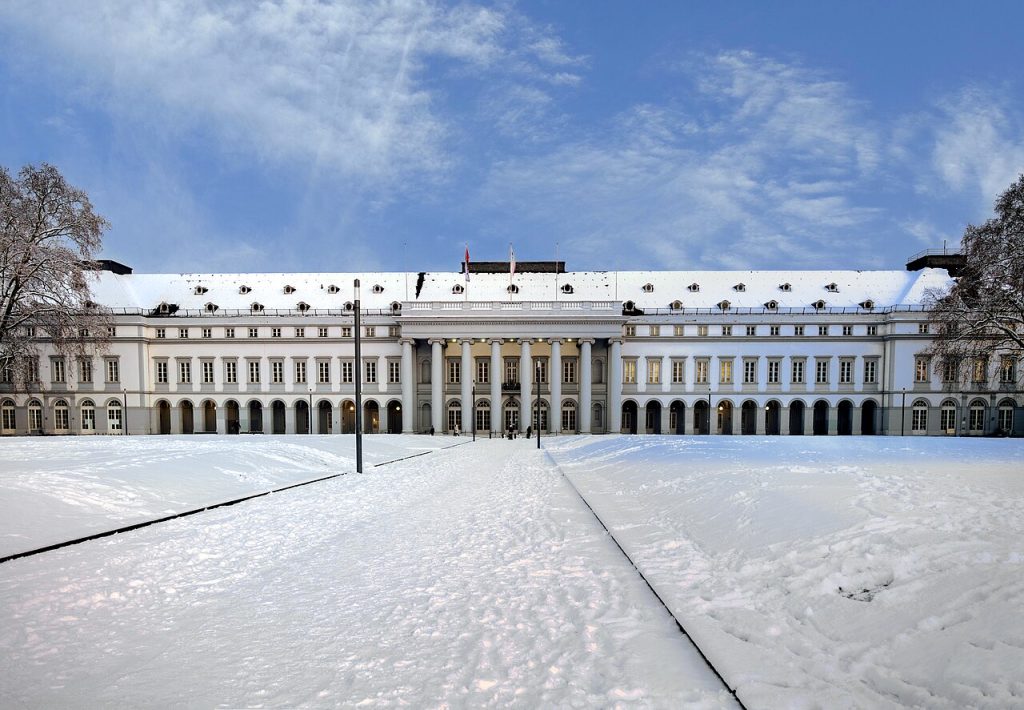
Its long, elegant facade, built in the early classical style, faces a wide forecourt on one side and the Rhine on the other. Later home to Prussian royalty and rebuilt after the Second World War, the palace and its gardens were renewed for the Federal Garden Show of 2011 and are now one of the most attractive sights in Koblenz.
In this article we will explore the Electoral Palace from its last elector to its Prussian era, its architecture, gardens and setting on the Rhine, and we will finish with practical tips for your visit.
In This Article
- A Classical Palace on the Rhine
- Clemens Wenceslaus, the Last Elector of Trier
- Ixnard, Peyre and Early Classicism
- The Forecourt and the City Side
- Prussian Royalty in Koblenz
- The Palace Garden
- The Wings of the Palace
- The View From the Rhine
- Destruction and Rebuilding
- The Palace Through the Seasons
- Flower Beds and Sculptures
- The Electoral Palace on Video
- Visiting the Electoral Palace Today
A Classical Palace on the Rhine
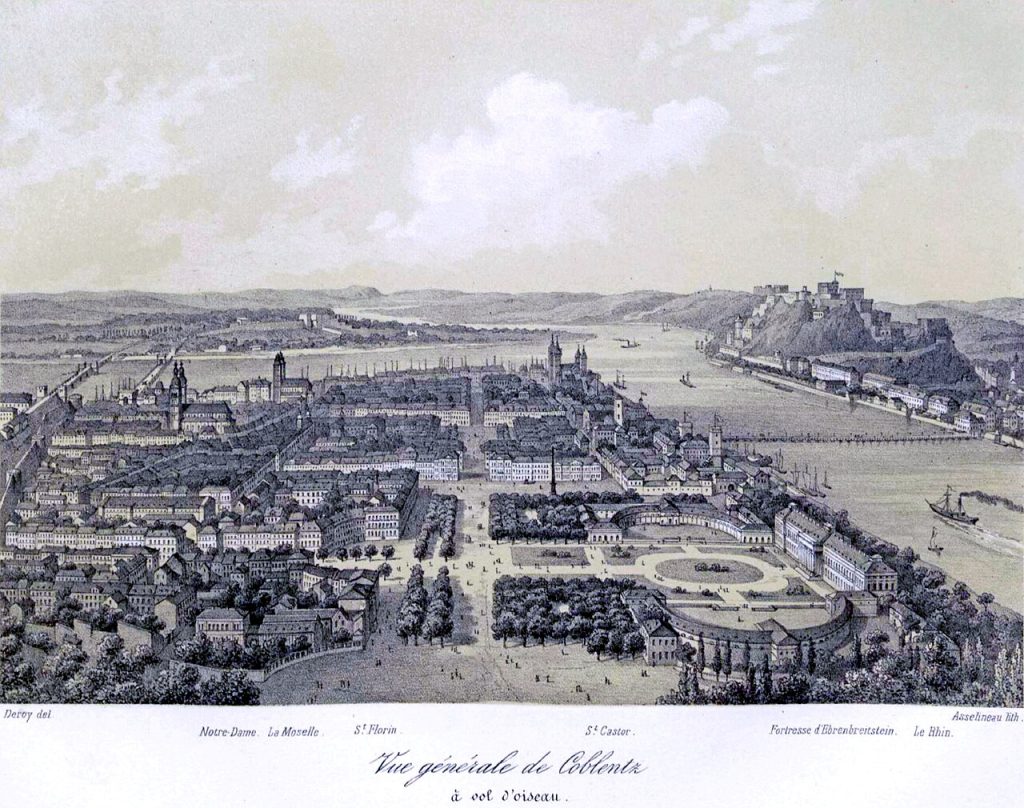
Arriving at the forecourt of the Electoral Palace, you face a long, pale building with a central portico of columns and two wings curving forward to frame the square. Its calm, orderly facade marks a clear break from the exuberant baroque of earlier palaces.
On the other side, the palace looks out over a garden and the Rhine, with views across the river to the fortress of Ehrenbreitstein high on its rock.
The palace stands near the old town of Koblenz, a lively city at the confluence of the Rhine and Moselle, famous for the Deutsches Eck monument and its historic streets.
What makes the Electoral Palace special is its place in history, as one of the last princely palaces of the old empire, built just before the revolution that would transform Europe.
Its gardens along the river are a favourite place for walks, and the whole ensemble is part of the Upper Middle Rhine Valley, a UNESCO World Heritage landscape.
The palace’s location between the old town and the river makes it a natural stop on any walk through Koblenz, and many visitors pass it on their way to the Deutsches Eck.
The view from the cable car to Ehrenbreitstein is particularly impressive, revealing the palace, its gardens and the Rhine in a single sweeping panorama.
Clemens Wenceslaus, the Last Elector of Trier
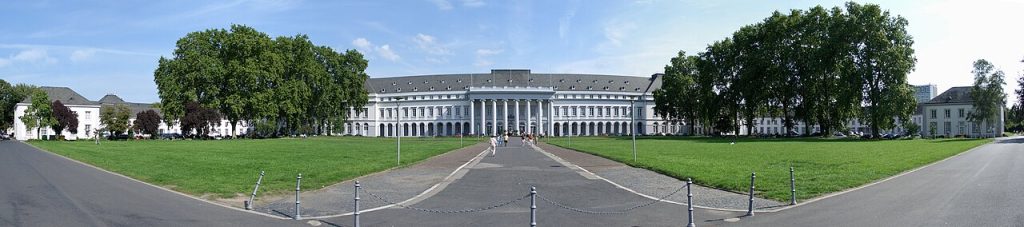
The palace was built for Clemens Wenceslaus of Saxony, a son of the king of Poland and elector of Saxony, who became archbishop elector of Trier in 1768. As one of the seven electors of the Holy Roman Empire, he held a position of great prestige.
Clemens Wenceslaus decided to move his residence from the old fortress of Ehrenbreitstein to a new palace on the Rhine in Koblenz, more comfortable and modern than the medieval castle on the rock.
He was an enlightened ruler who introduced reforms in education and administration, and his new palace was intended to reflect the spirit of the age.
In 1794, as French revolutionary armies advanced into the Rhineland, Clemens Wenceslaus fled, never to return. His electorate was dissolved, and his palace passed to new rulers.
He spent his last years in exile in Bavaria, and the palace he had built remains his most visible legacy.
His Saxon origins gave him close connections with the courts of Dresden and Warsaw, and his tastes reflected the cultivated world of the late eighteenth century.
The cost of the new palace was enormous, and it strained the finances of the electorate, but Clemens Wenceslaus was determined to create a residence worthy of his rank.
He also supported the arts and education, founding schools and improving the administration of his territories along the Rhine and Moselle.
Ixnard, Peyre and Early Classicism
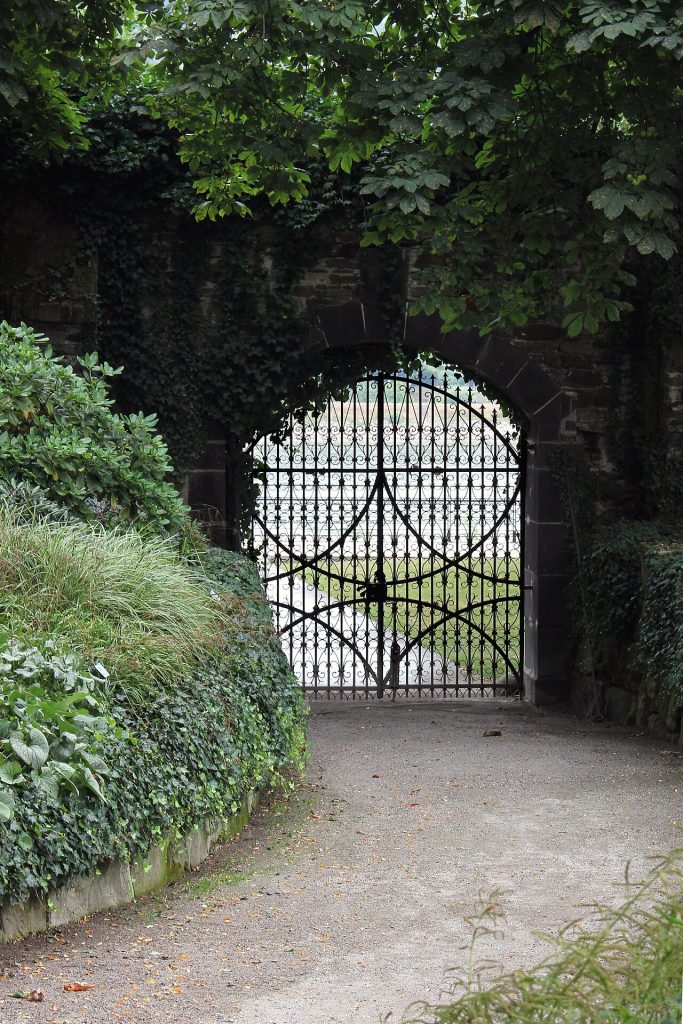
The first plans for the palace were drawn up by the French architect Pierre Michel d’Ixnard, but his design was considered too costly and was revised by Antoine Francois Peyre, another French architect.
Construction took place between 1777 and 1786, and the result was a palace in the early classical style, inspired by French architecture and the ideals of antiquity.
The central block is marked by a portico with columns and a pediment, while the wings extend in long, regular lines, creating a sense of order and dignity.
The palace is considered one of the most important early classical buildings in southwest Germany, a bridge between the baroque and the neoclassicism of the nineteenth century.
The portico, with its tall columns, gives the palace a temple like dignity, expressing the classical ideals of reason and order that were fashionable in the age of the Enlightenment.
Inside, the palace originally contained elegant state rooms decorated in the classical style, though most were lost in the war.
The Forecourt and the City Side
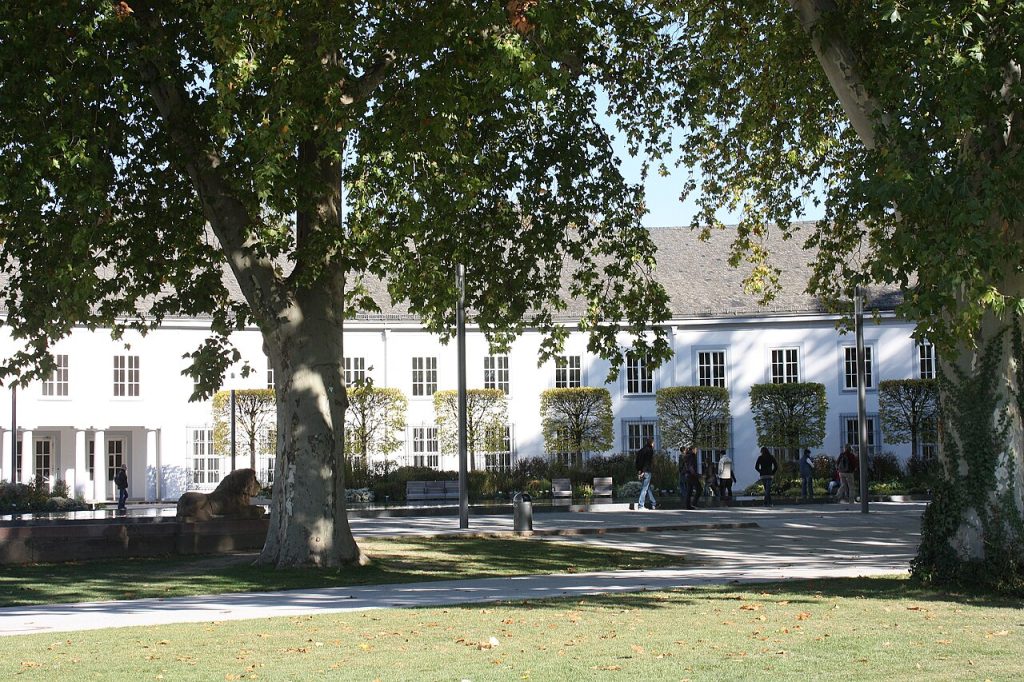
On the city side, the palace faces a large forecourt, framed by the curving wings. This space was designed for the arrival of carriages and for ceremonies, and it gave the palace a grand approach.
Today the forecourt is a public square, used for events and markets, and it offers a fine view of the main facade.
The square connects the palace with the city, and from here streets lead into the old town and toward the Deutsches Eck.
Standing in the forecourt, you can appreciate the clarity of the classical design and the harmony of its proportions.
During festivals and events, the forecourt fills with people, and the palace provides a stately backdrop for concerts and celebrations.
The curving wings that frame the forecourt create a sense of embrace, welcoming visitors into the palace’s orbit.
Prussian Royalty in Koblenz
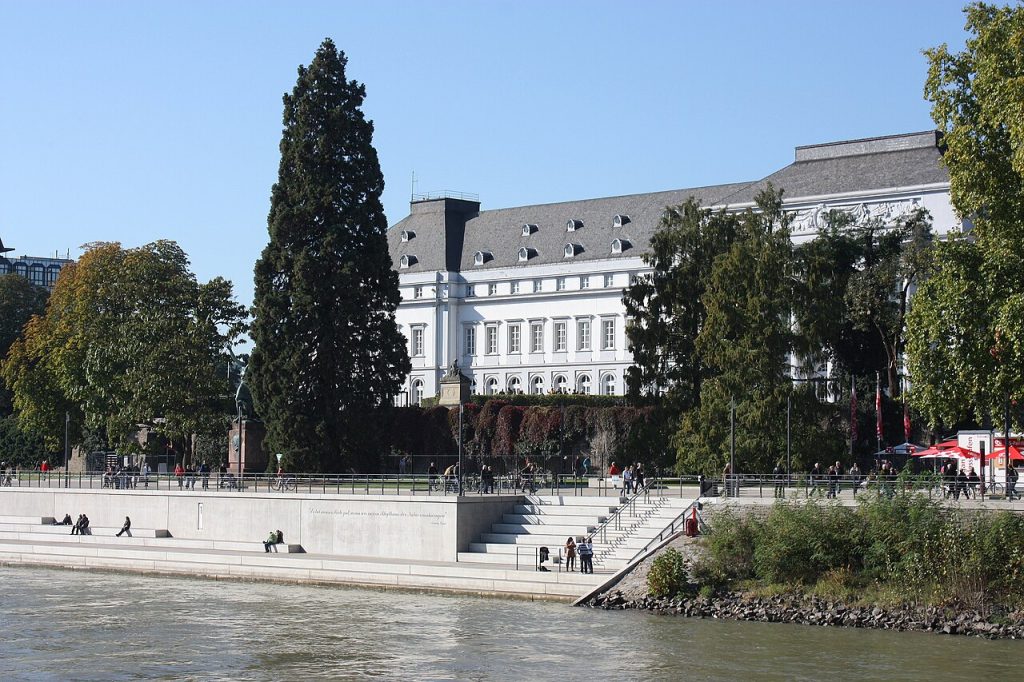
After the Napoleonic wars, the Rhineland became part of Prussia, and Koblenz became the capital of the Prussian Rhine Province. The palace was used as a residence by the Prussian royal family when they visited the region.
From 1850 to 1858, the future Emperor Wilhelm I lived in the palace as military governor of the Rhineland, together with his wife Augusta, who loved Koblenz and supported many cultural and charitable projects in the city.
Augusta laid out the riverside promenade that still bears her name, the Kaiserin Augusta Anlagen, one of the most beautiful walks along the Rhine.
The Prussian era gave the palace a new life as a royal residence, and its rooms were refurbished for the royal family.
Empress Augusta’s love of Koblenz is remembered in many monuments and institutions, and she is still regarded as one of the city’s great benefactors.
The palace hosted many royal visits during the Prussian period, and Koblenz became an important military and administrative centre.
Wilhelm and Augusta’s years in Koblenz were remembered fondly, and their presence brought prestige and new life to the city.
The Palace Garden
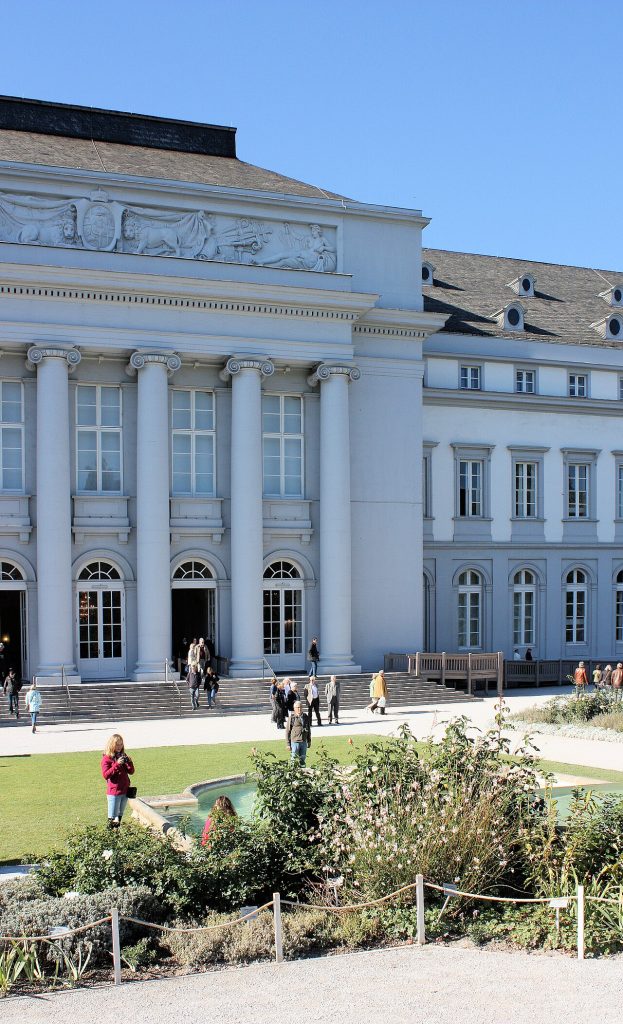
Between the palace and the Rhine lies a garden that was completely redesigned for the Federal Garden Show of 2011. The new design combines historic elements with modern landscaping, creating a lively and attractive space.
Flower beds, lawns, water features and paths lead toward the river, and the garden offers views of the palace from the river side.
The garden show brought new life to the palace and its surroundings, and the improvements made for the event continue to benefit residents and visitors.
In spring and summer, the flower beds are filled with colour, making the garden one of the most beautiful public spaces in Koblenz.
The garden show also restored the connection between the palace and the river, creating a continuous green space along the Rhine.
Modern play areas and resting places make the garden popular with families, while its views of the Rhine attract walkers and photographers.
The Wings of the Palace
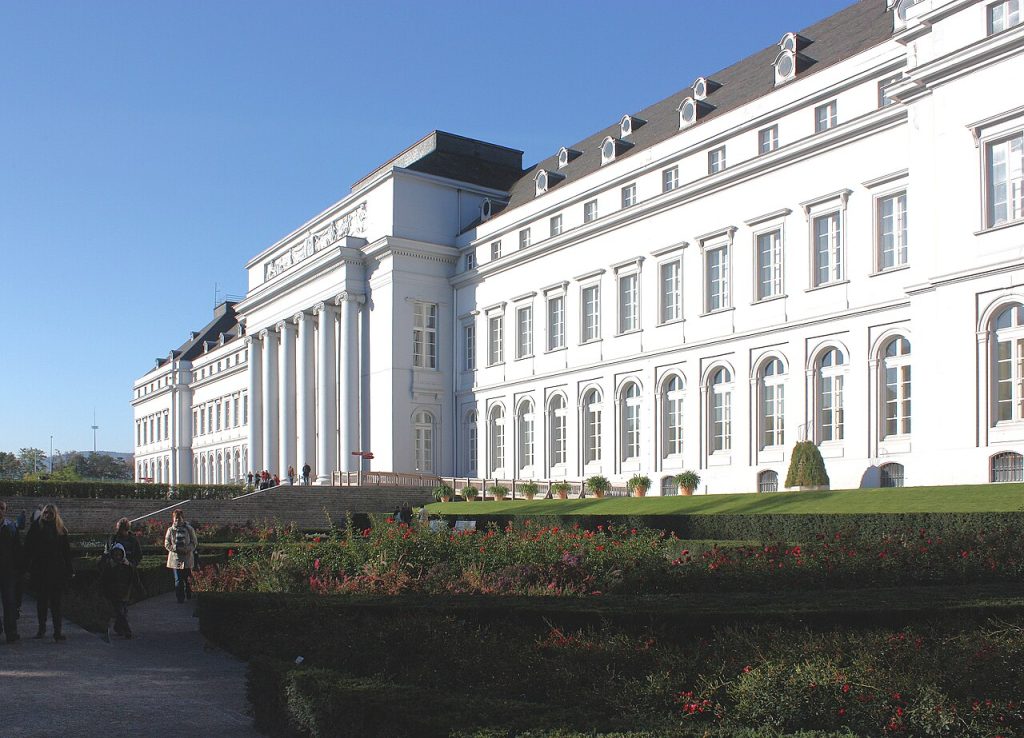
The wings of the palace extend from the central block, their long facades lined with regular windows and decorated with subtle classical details.
The north wing and the south wing once housed apartments, offices and service rooms, and today they are used by government offices and cultural institutions.
The simplicity of the wings emphasises the central block with its portico, creating a balanced composition typical of classical architecture.
Walking along the wings, you can appreciate the scale of the palace and the restraint of its design.
The wings have been carefully restored, and their facades now look much as they did when the palace was completed in the 1780s.
The View From the Rhine
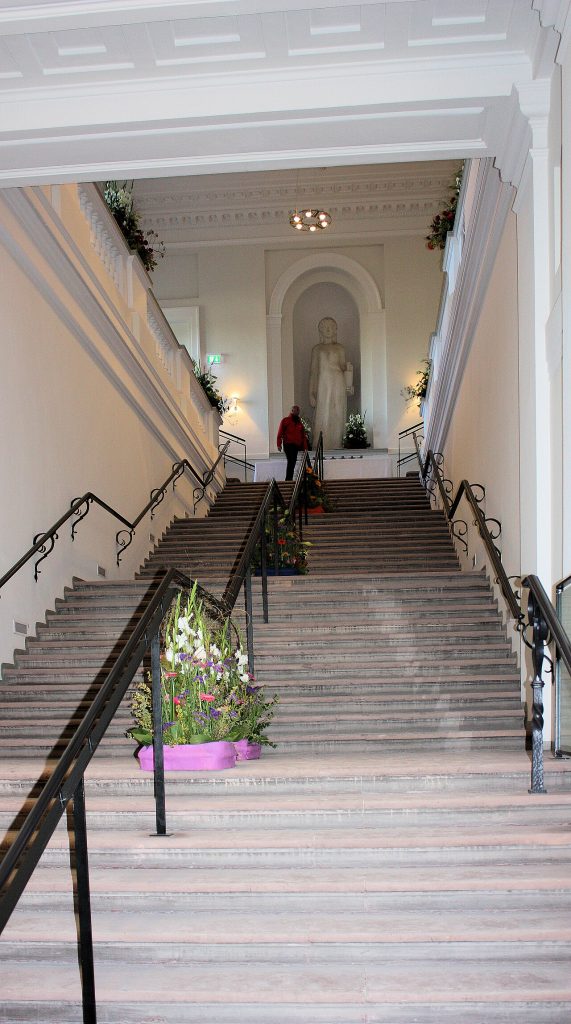
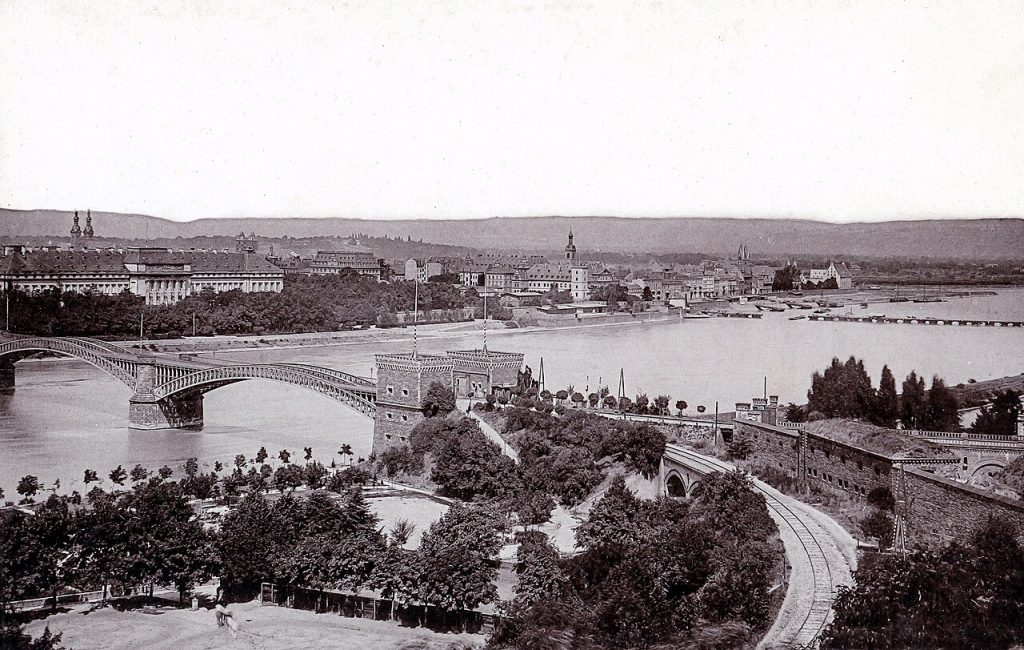
From the Rhine, the palace appears as a long, pale building behind its garden, with the river flowing past and ships gliding by.
Across the river, the fortress of Ehrenbreitstein rises on its rock, and a cable car links the two banks, offering spectacular views of the palace and the city.
The riverside promenade is one of the best places to admire the palace, especially in the evening light.
Taking a boat trip along the Rhine from Koblenz gives you yet another perspective on the palace and its setting.
The Rhine promenade continues for several kilometres along the river, linking the palace with the Deutsches Eck and other sights.
Destruction and Rebuilding
During the Second World War, Koblenz was heavily bombed, and the Electoral Palace was largely destroyed, leaving mostly the outer walls.
After the war, the palace was rebuilt in the 1950s, with the exterior restored to its historic appearance and the interior adapted for modern use.
Today it houses federal and state offices, and some rooms are used for events and exhibitions.
The reconstruction preserved the palace as a landmark of Koblenz and a reminder of the city’s long history as a seat of power.
The decision to rebuild the palace reflected its importance to the identity of Koblenz, and the restored building quickly became a symbol of the city’s recovery.
The Palace Through the Seasons
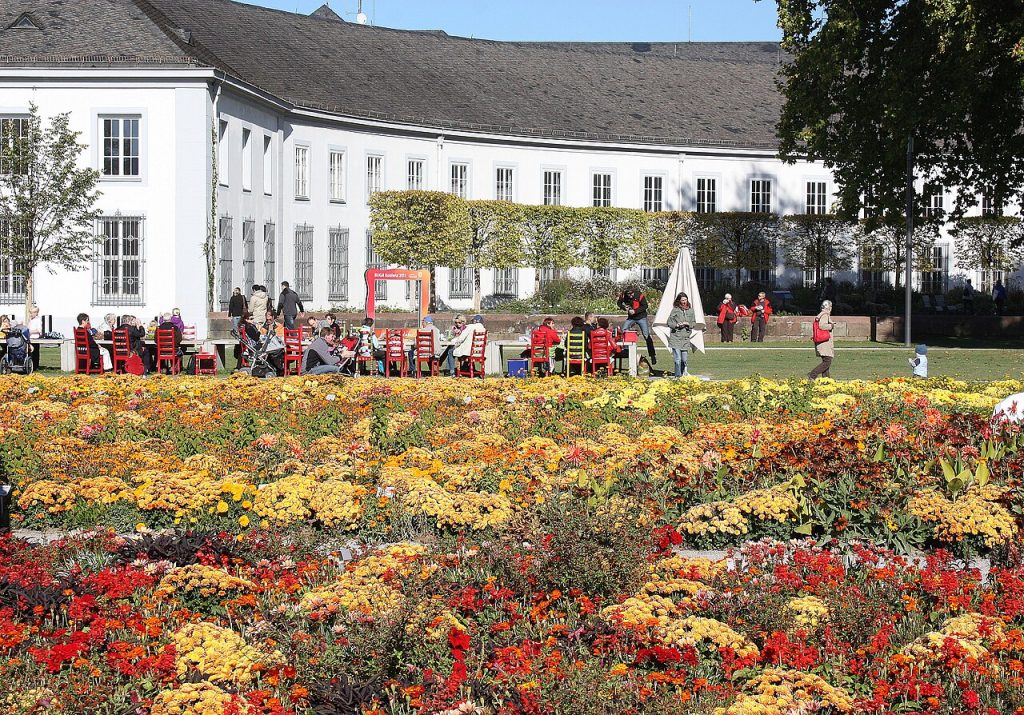
The Electoral Palace changes with the seasons. In spring, the gardens bloom with flowers, and in summer the riverside is lively with visitors and events.
In autumn, the trees along the Rhine turn golden, and in winter, a dusting of snow gives the palace a quiet, elegant beauty.
Each season offers a different mood, and photographers return again and again to capture the palace in changing light.
Whatever the time of year, a walk around the palace and along the Rhine is one of the pleasures of a visit to Koblenz.
During the Christmas season, the old town of Koblenz hosts festive markets, and the illuminated streets make a winter visit especially enjoyable.
Flower Beds and Sculptures
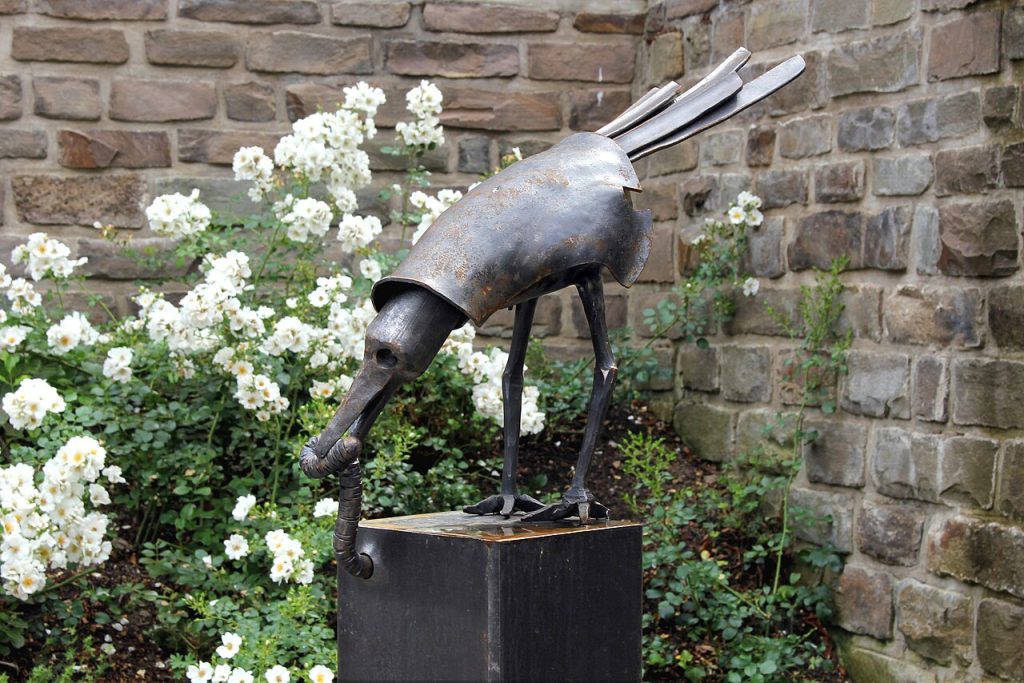
The gardens around the palace are decorated with flower beds and sculptures, adding colour and interest to the classical architecture.
Some sculptures recall the history of the city and its rulers, while others are modern works added during the garden show.
The combination of historic and contemporary elements gives the gardens a lively character, appealing to visitors of all ages.
Benches throughout the gardens invite you to sit and enjoy the views of the palace and the river.
The garden’s design invites you to wander, with paths leading in different directions and new views opening up at every turn.
The Electoral Palace on Video
For a look at the palace and its setting, the video below presents the Electoral Palace in Koblenz.
Watch for the classical facade, the gardens and the river.
The video also gives a sense of the palace’s relationship with the river and the city.
If the video inspires you, read on for practical tips.
Visiting the Electoral Palace Today
The palace exterior, forecourt and gardens are freely accessible, while the interiors are mostly used as offices and are open only during events and special tours.
The palace lies close to the old town of Koblenz, within walking distance of the main sights, including the Deutsches Eck, the Basilica of Saint Castor and the cable car to Ehrenbreitstein.
Plan at least a few hours to see the palace, the gardens and the riverside, and a full day if you want to explore the old town and the fortress.
Koblenz is a perfect base for exploring the Middle Rhine valley and the Moselle, with their castles, vineyards and charming villages.
Koblenz has many restaurants and wine taverns where you can enjoy local wines from the Rhine and Moselle after your visit.
Whenever you visit, the Electoral Palace offers a fascinating glimpse into the last days of the old empire, in one of the most beautiful settings on the Rhine.
View the location on Google Maps
Palaces Nearby
If you have enjoyed this palace, the Rhine and Main region holds more remarkable residences. Here are two more well worth adding to your journey:
- The Electoral Palace of Trier – the pink rococo residence of the archbishop electors beside the Constantine Basilica.
- Engers Palace – the rococo hunting palace of the electors of Trier on the banks of the Rhine.
You May Like


One thought on “The Electoral Palace of Koblenz and the Last Elector of Trier”