On the shore of the Holy Lake in Potsdam, its reflection shimmering in the water, stands an elegant palace of red brick and white marble. The Marble Palace was built in the 1780s and 1790s as the summer residence of King Frederick William II of Prussia, and it is one of the earliest and finest examples of early classicism in Germany.
Surrounded by the New Garden, an English landscape park full of romantic buildings, the palace offers refined interiors with fine furniture, Wedgwood ceramics and halls with views over the lake.
In this article we will explore the Marble Palace from the king who built it to its architecture, its interiors and the New Garden, and we will finish with practical tips for your visit.
In This Article
- A Palace on the Lake
- King Frederick William II
- Early Classicism in Brick and Marble
- Refined Interiors
- The Concert Hall
- The Grotto Hall and Kitchen
- The New Garden
- The Holy Lake
- War and Restoration
- The Dutch Houses and Garden Buildings
- The Birth of Prussian Classicism
- The Marble Palace on Video
- Visiting the Marble Palace Today
A Palace on the Lake
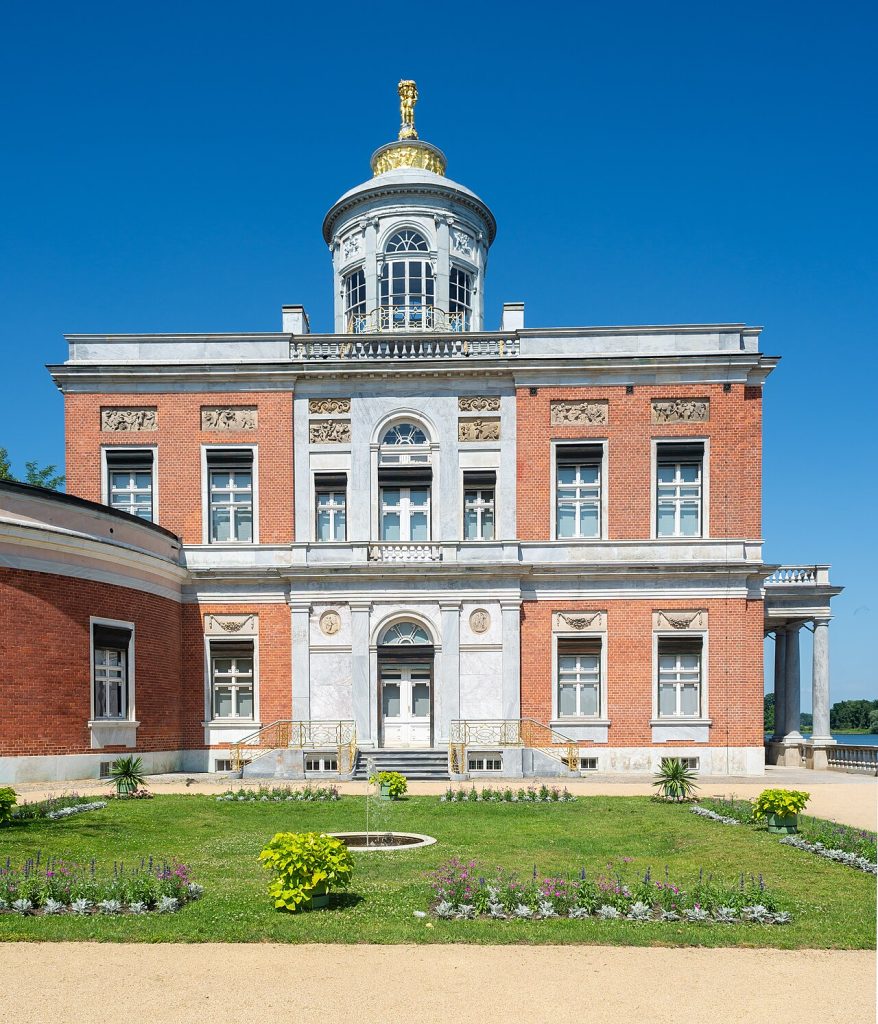
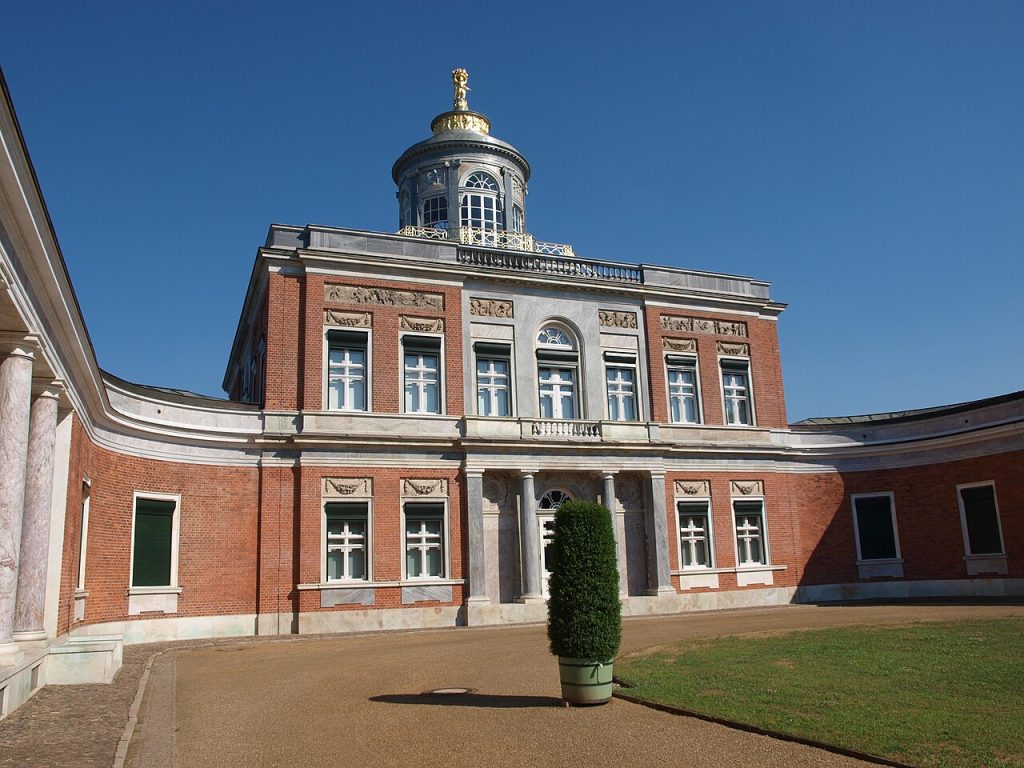
Arriving at the Marble Palace, you see a compact building standing right at the edge of the lake. Its walls of red brick and grey white marble create a striking contrast, and its roof is crowned by a small round belvedere.
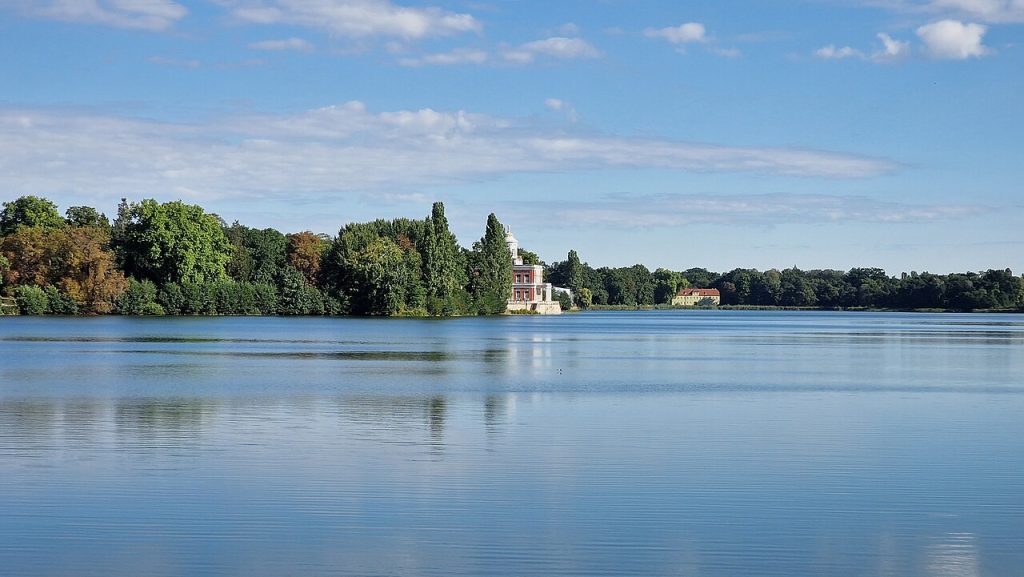
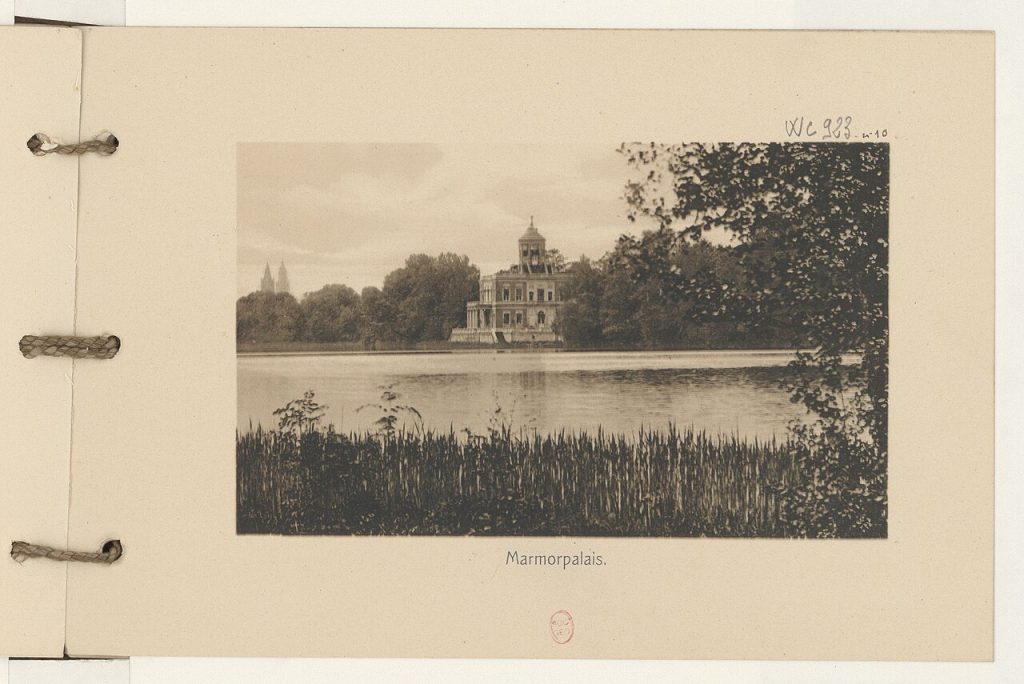
The palace seems to rise straight out of the water, and its reflection on calm days doubles its beauty.
It is quieter than Sanssouci and the New Palace, and many visitors find it one of the most charming places in Potsdam.
The palace’s name comes from the Silesian marble used for its columns and facings, which glows softly in the sunlight against the warm red brick.
From the opposite shore, the palace looks like a small temple rising from the water, an effect the king and his architects deliberately intended.
King Frederick William II
Frederick William II, nephew and successor of Frederick the Great, ruled Prussia from 1786 to 1797. A lover of music and the arts, his reign marked a change in taste from rococo to classicism.
He laid out the New Garden in the English landscape style and built the Marble Palace as its centrepiece, and he died in the palace in 1797.
Frederick William II was very different from his famous uncle. He loved music, romance and mysticism, and he was a member of the Rosicrucian order, which influenced the symbolism of some garden buildings.
His private life was colourful, and his long relationship with Wilhelmine Enke, later Countess Lichtenau, was well known at court; she helped design parts of the interiors and the New Garden.
He was also a generous patron of music, and Mozart dedicated string quartets to him, while Beethoven performed at his court and dedicated cello sonatas to him.
Early Classicism in Brick and Marble
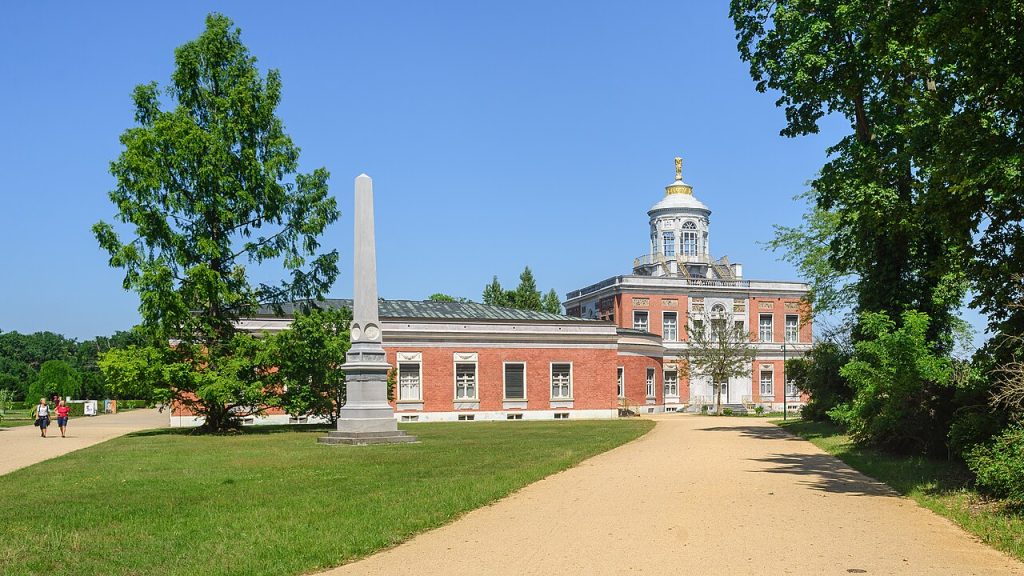
The palace was built between 1787 and 1793 by Carl von Gontard and Carl Gotthard Langhans, the architect of the Brandenburg Gate.
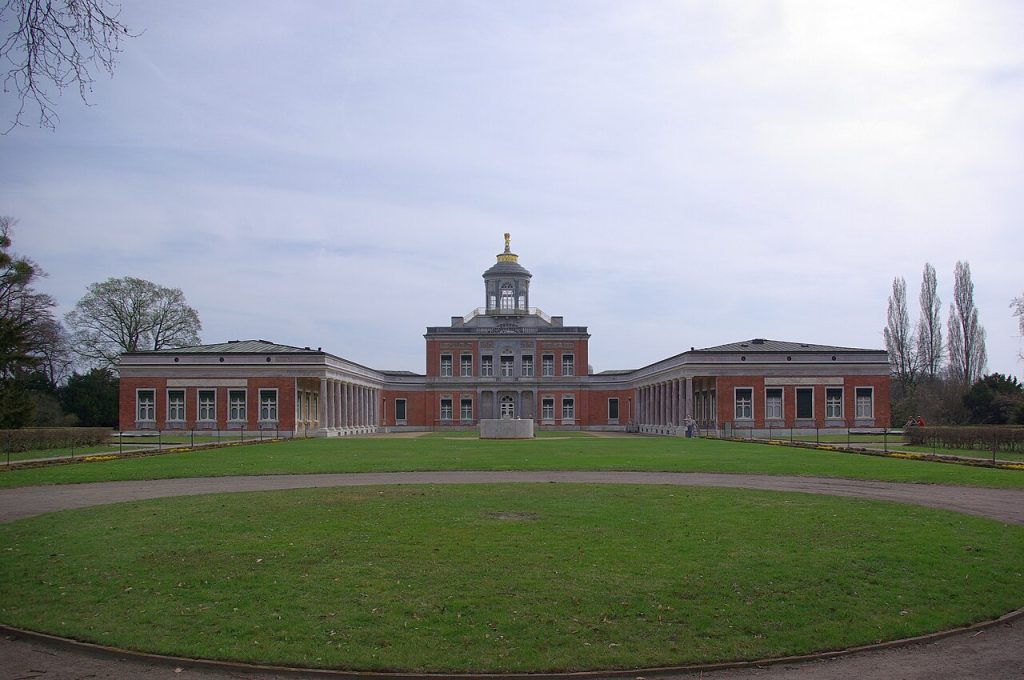
Its design reflects the new classical style inspired by ancient architecture and English country houses, combining red brick with Silesian marble. Side wings were added later.
The small belvedere on the roof gave the king views over the lake and the garden, and it was a favourite place to enjoy the sunset.
The palace’s design was inspired by Palladian villas and English country houses, which the king and his architects admired.
Refined Interiors
Inside, elegant rooms in the early classical style display fine furniture, stucco, painted ceilings, Wedgwood ceramics and antique sculptures, reflecting the king’s love of English taste and ancient art.
The rooms are decorated with antique sculptures, many bought in Italy, as well as paintings, mirrors and fine inlaid furniture made by the famous cabinetmaker David Roentgen.
Wedgwood ceramics, with their pale blue backgrounds and white classical reliefs, perfectly match the elegant style of the rooms.
The king’s bedroom, where he died in 1797, has been preserved, and visitors can see the bed and furnishings of his time.
The Concert Hall
On the upper floor lies the concert hall, where the king, an accomplished cellist, enjoyed music with his court, and concerts are still held there today.
The concert hall, with its columns and views of the lake, is considered one of the most beautiful classical rooms in Germany.
The king played the cello himself, and he often joined his musicians in performances for his guests.
The Grotto Hall and Kitchen
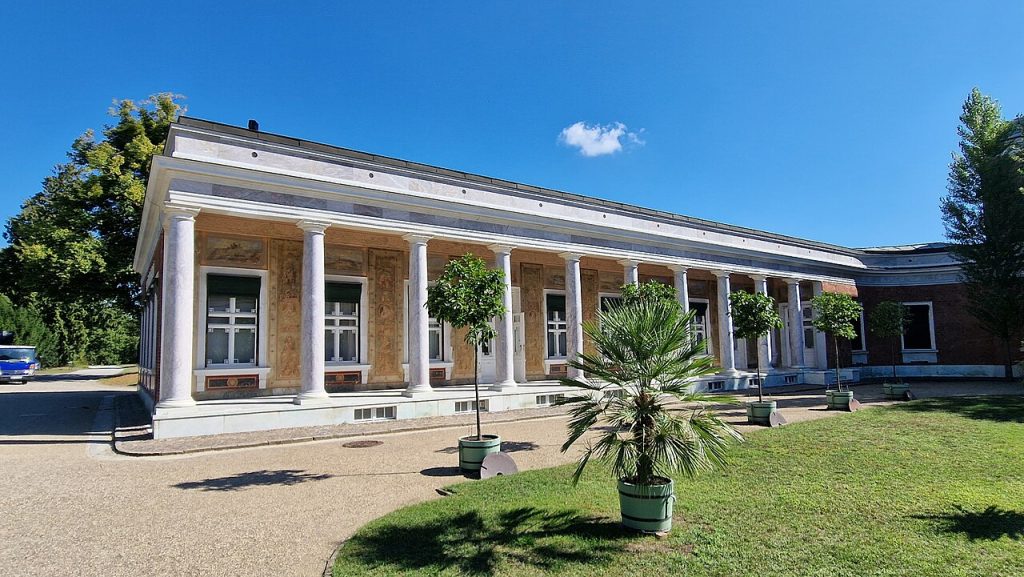
A grotto hall decorated with shells offered a cool retreat in summer, and the palace kitchen was built in the form of a ruined ancient temple, connected to the palace by an underground passage.
The ruined temple kitchen is one of the most charming follies in Potsdam, showing the eighteenth century taste for romantic ruins.
The New Garden
The New Garden, laid out from 1787, has winding paths, lawns and views across the water, with an ice house pyramid, a Gothic library and an orangery.
The New Garden was one of the first landscape gardens in Prussia, and its paths along the lake shore offer some of the most romantic views in Potsdam.
The Gothic library, standing at the water’s edge, housed the king’s books in a setting inspired by medieval architecture.
The Holy Lake
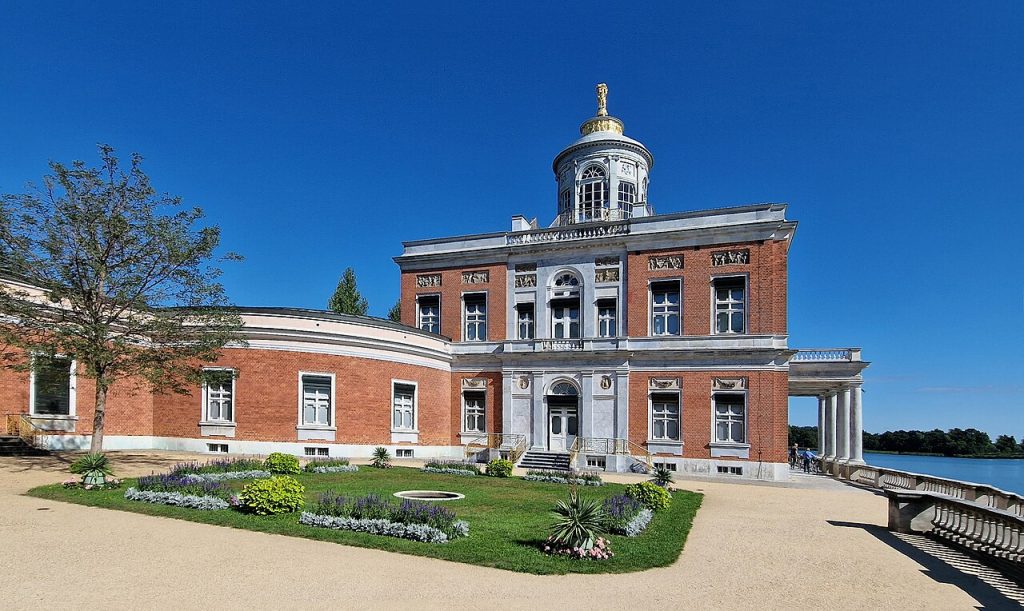
The palace stands on the Holy Lake, a small and peaceful lake surrounded by villas and gardens, popular for swimming and boating in summer.
Swans glide across the Holy Lake, and the reflections of the palace and trees in its clear water create a scene of great serenity.
War and Restoration
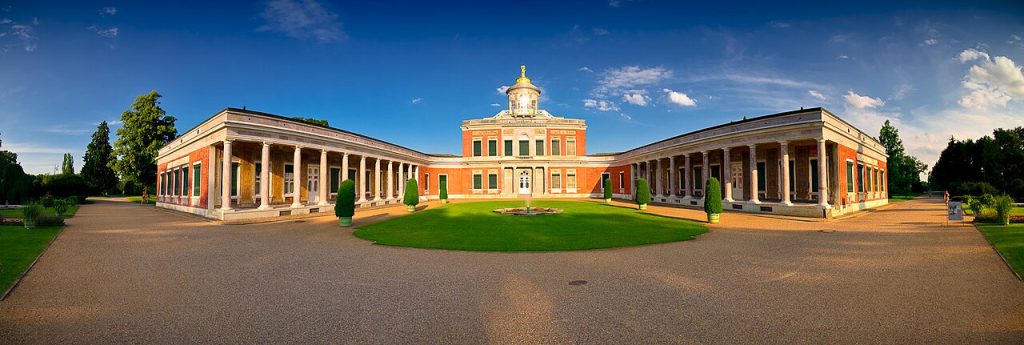
After war damage and use as a military museum in the time of the German Democratic Republic, the palace was restored after reunification and returned to its classical elegance.
During the time of the German Democratic Republic, the palace housed an army museum, and its interiors were only restored to their original appearance after 1990.
The Dutch Houses and Garden Buildings
The garden contains a row of red brick houses in the Dutch style, reflecting the Dutch influence on Potsdam, where a whole Dutch Quarter was built for craftsmen from the Netherlands.
The Dutch houses were built to provide homes for gardeners and staff, and they add a charming touch to the landscape.
The Birth of Prussian Classicism
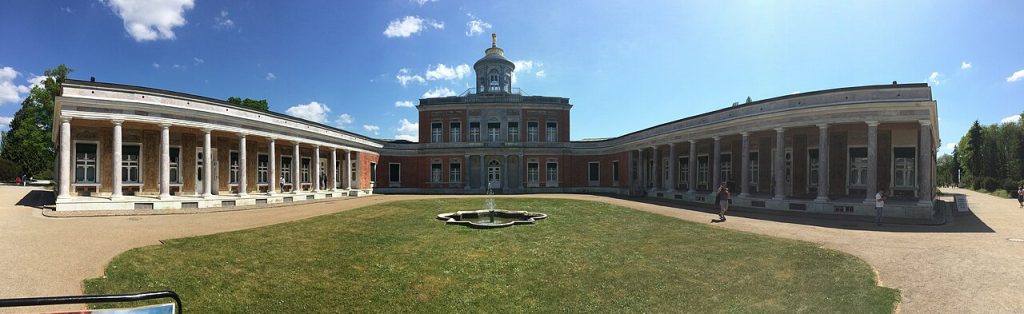
The Marble Palace marks the beginning of classicism in Prussia, a style later developed by Karl Friedrich Schinkel in Berlin and Potsdam.
Langhans designed the Brandenburg Gate in Berlin only a few years later, using similar classical ideas, so the Marble Palace can be seen as a forerunner of one of Germany’s most famous monuments.
The Marble Palace on Video
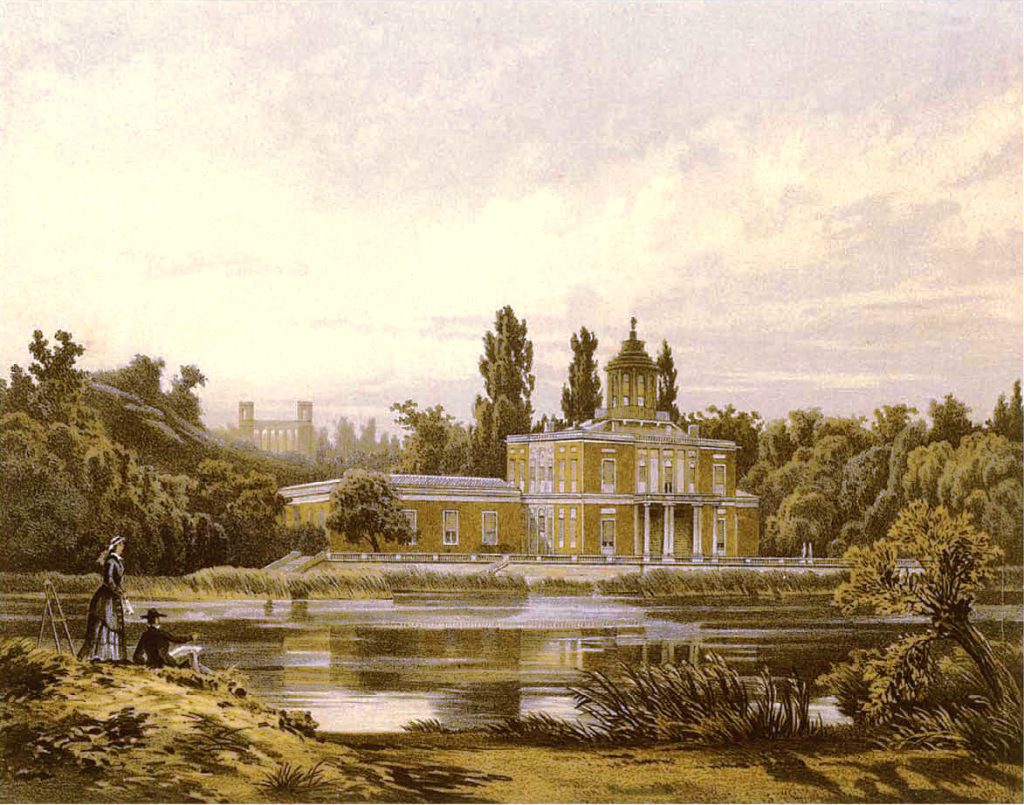
For a look at the palace in the New Garden, the video below presents the Marble Palace.
If the video inspires you, read on for practical tips.
Visiting the Marble Palace Today
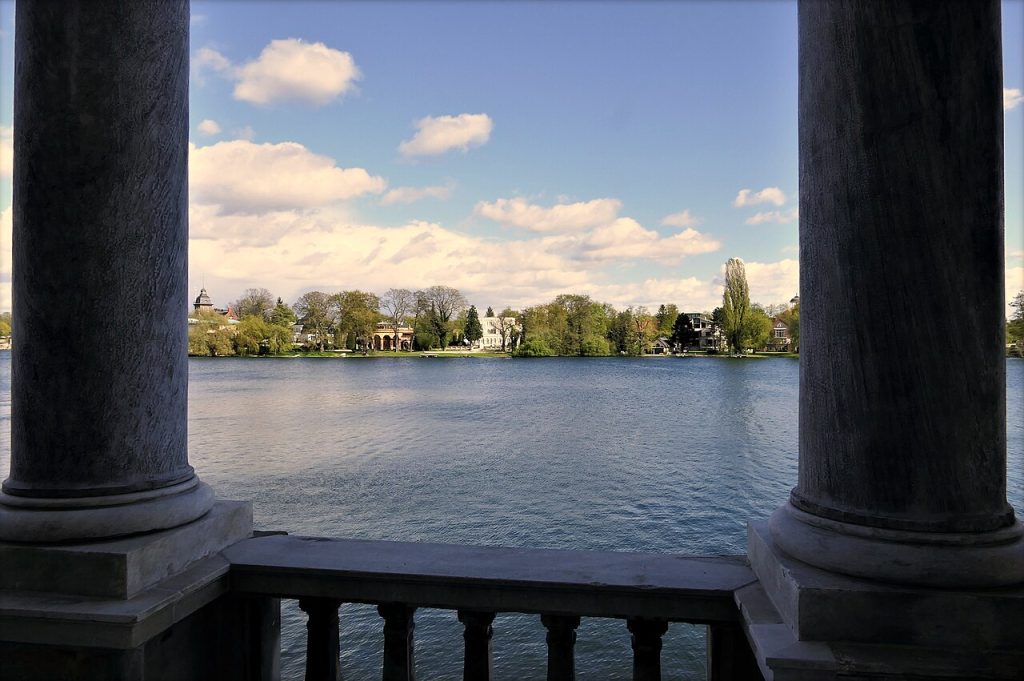
The Marble Palace is open from spring to autumn, with limited winter opening, and lies close to Cecilienhof in the north of Potsdam.
Combine your visit with Cecilienhof, the Dutch Quarter and Sanssouci park.
Whenever you visit, the Marble Palace offers an elegant and peaceful glimpse into the age of classicism in Prussia.
Bicycle paths connect the New Garden with Sanssouci and the other parks of Potsdam, making it easy to explore by bike.
View the location on Google Maps
Palaces Nearby
If you have enjoyed this palace, the region holds more remarkable residences. Here are two more well worth adding to your journey:
- Cecilienhof Palace – the English style palace where the Potsdam Conference was held in 1945.
- The New Palace of Potsdam – the triumphant palace of Frederick the Great in the park of Sanssouci.
You May Like
Rheinsberg Palace and the Happiest Years of Frederick the Great