At the western end of the park of Sanssouci in Potsdam stands one of the largest and most magnificent palaces in Germany. The New Palace was built by Frederick the Great after the Seven Years War to show the world that Prussia, despite years of conflict, was still rich and powerful. Its long facade, crowned by a great dome and hundreds of sculptures, stretches for more than two hundred metres.
Inside, more than two hundred rooms include the dazzling Grotto Hall covered with shells and minerals, the splendid Marble Hall and a charming rococo theatre. The palace is part of the UNESCO World Heritage Site of the palaces and parks of Potsdam and Berlin.
In this article we will explore the New Palace from the king who built it to its architecture, its halls, its theatre and its surroundings, and we will finish with practical tips for your visit.
In This Article
- A Palace of Triumph
- Frederick the Great and the Seven Years War
- Baroque Grandeur on a Vast Scale
- The Grotto Hall
- The Marble Hall
- The Palace Theatre
- Royal Apartments
- The Communs
- The Park of Sanssouci
- Music at the Prussian Court
- The Last Emperor at the New Palace
- The New Palace on Video
- Visiting the New Palace Today
A Palace of Triumph
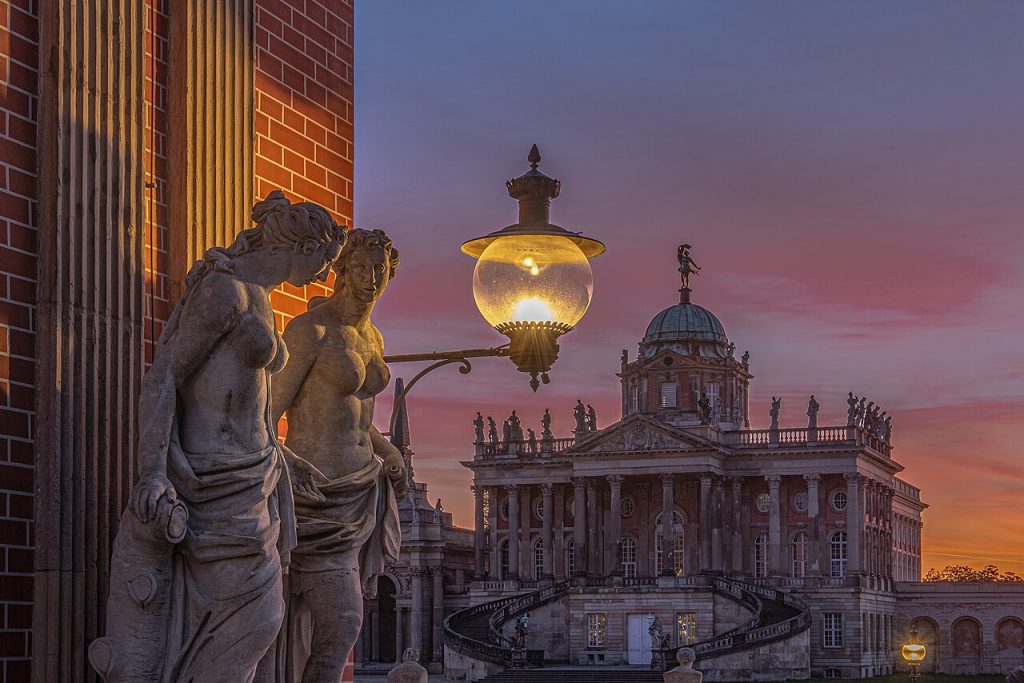
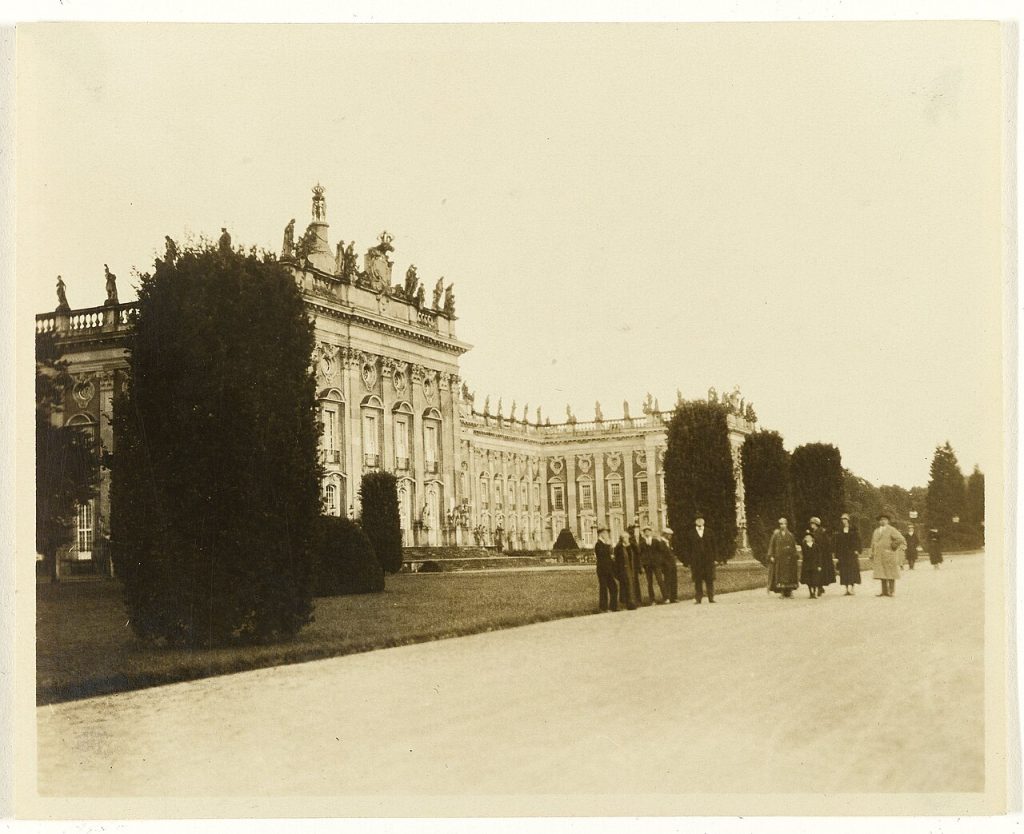
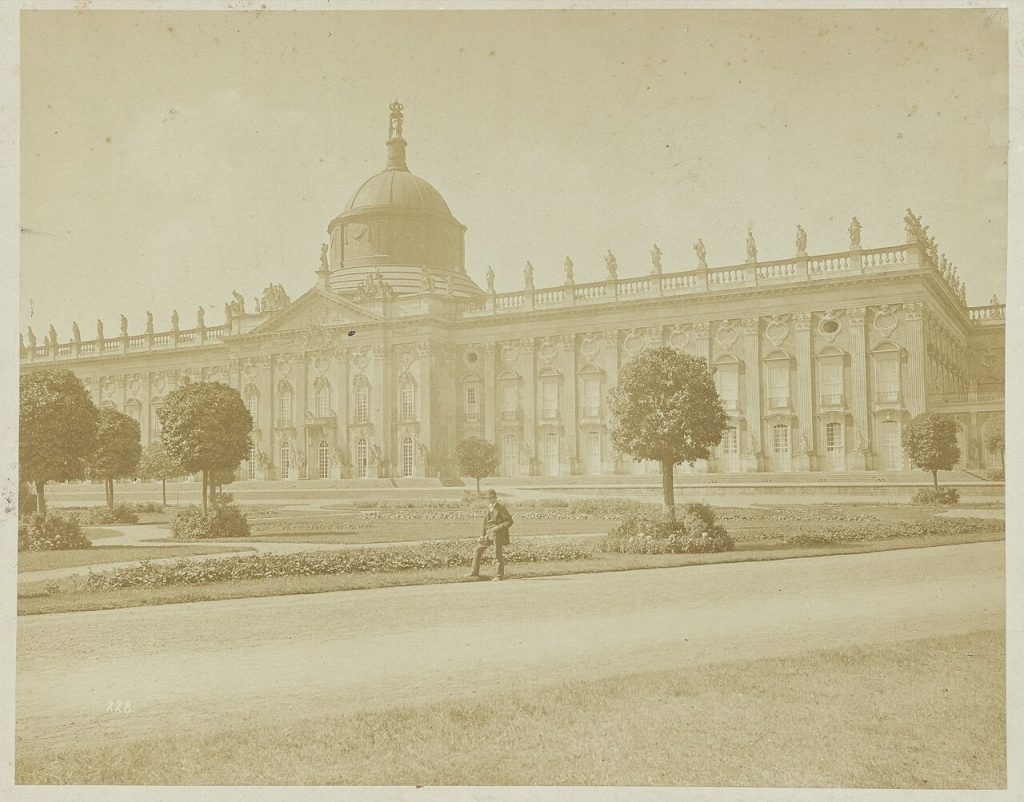
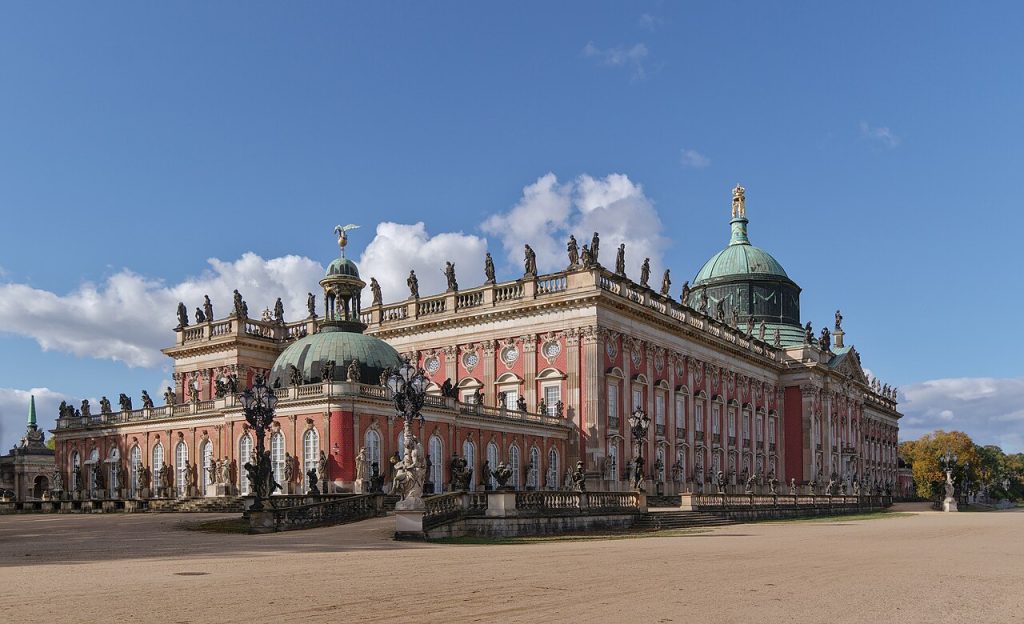
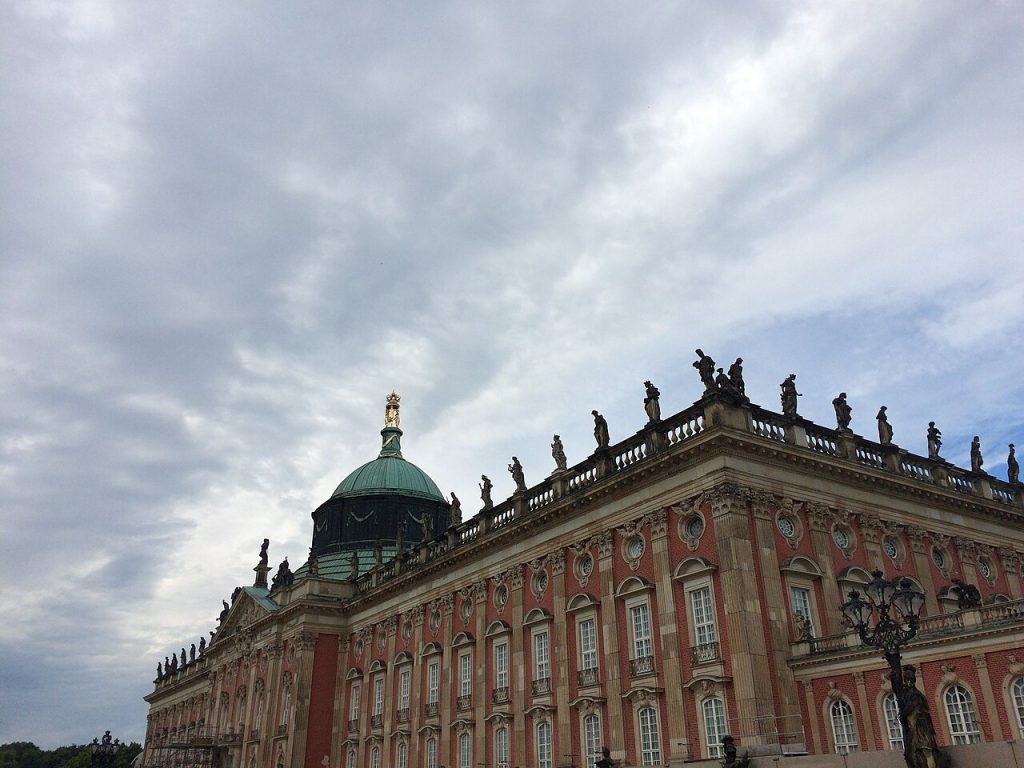
Walking along the main avenue of Sanssouci park, you reach the New Palace at its western end. Its vast red and white facade, crowned by a central dome and lined with sculptures, rises before you in all its grandeur.
The palace is so large that it is hard to take in at a glance, and its scale contrasts sharply with the intimate charm of Sanssouci Palace at the other end of the park.
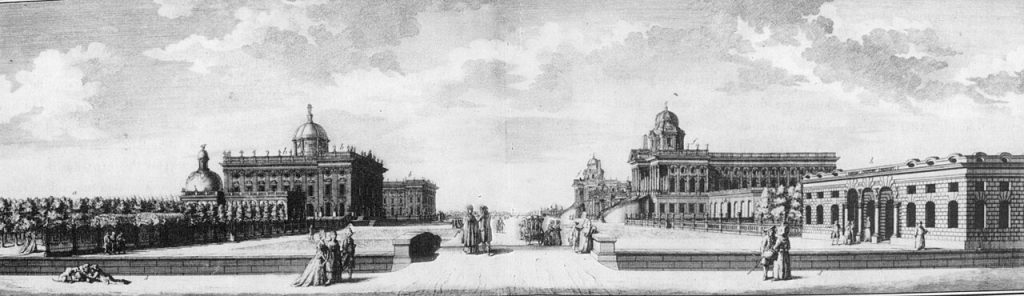
Opposite the palace stand the Communs, two splendid service buildings connected by a curved colonnade, which create a dramatic backdrop to the palace courtyard.
What makes the New Palace special is its role as a symbol of Prussian power and the richness of its interiors, showing Frederick the Great as a ruler and statesman.
The palace’s red facade glows warmly in the evening light, and the sculptures on the roof stand out against the sky.
The palace is visible from far across the park, and its dome, crowned by the Three Graces, has become one of the landmarks of Potsdam.
Many visitors walk the long main avenue from Sanssouci to the New Palace, a journey of about two kilometres that takes you through the heart of the park.
Frederick the Great and the Seven Years War
Frederick II of Prussia, known as Frederick the Great, ruled from 1740 to 1786. He was a brilliant military commander, an enlightened monarch and a lover of music, philosophy and the arts.
From 1756 to 1763, Prussia fought the Seven Years War against a coalition of European powers. The war devastated much of the country, but Prussia survived and kept its territory.
Immediately after the war, Frederick began building the New Palace, partly to demonstrate that Prussia remained strong and wealthy, and partly to provide work for craftsmen after the war.
Frederick himself called the palace a fanfaronade, a show of bravado. It was used mainly for guests and court festivities, while the king continued to prefer Sanssouci.
Frederick won the war against Austria, Russia and France largely thanks to luck and determination, and the sudden death of Empress Elizabeth of Russia in 1762, which changed the alliance against him, was called the Miracle of the House of Brandenburg.
The king is said to have remarked that he had built the palace to show his enemies that Prussia could still afford luxury after the war.
Frederick lived simply himself, wearing an old uniform stained with snuff, and he rarely used the grand rooms of the palace.
Baroque Grandeur on a Vast Scale
The New Palace was built between 1763 and 1769 by the architects Johann Gottfried Buring, Heinrich Ludwig Manger and Carl von Gontard, following the wishes of the king.
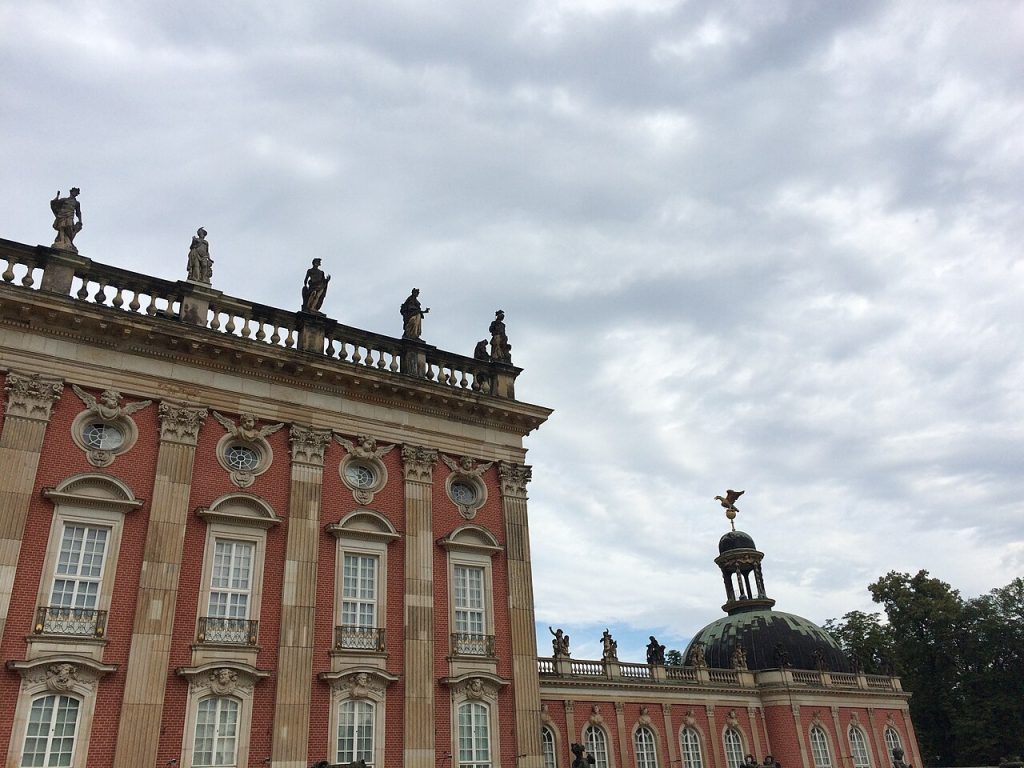
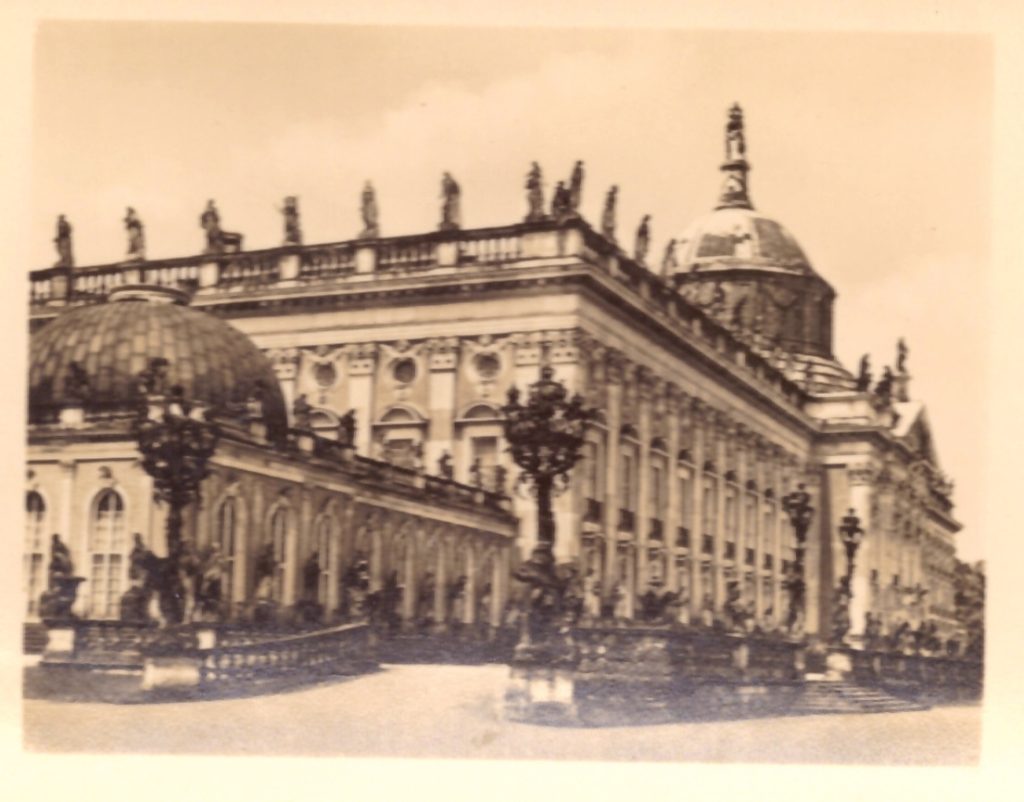
Its design is late baroque, with a long facade, a central projection and a great dome crowned by the Three Graces holding a royal crown, visible from far across the park.
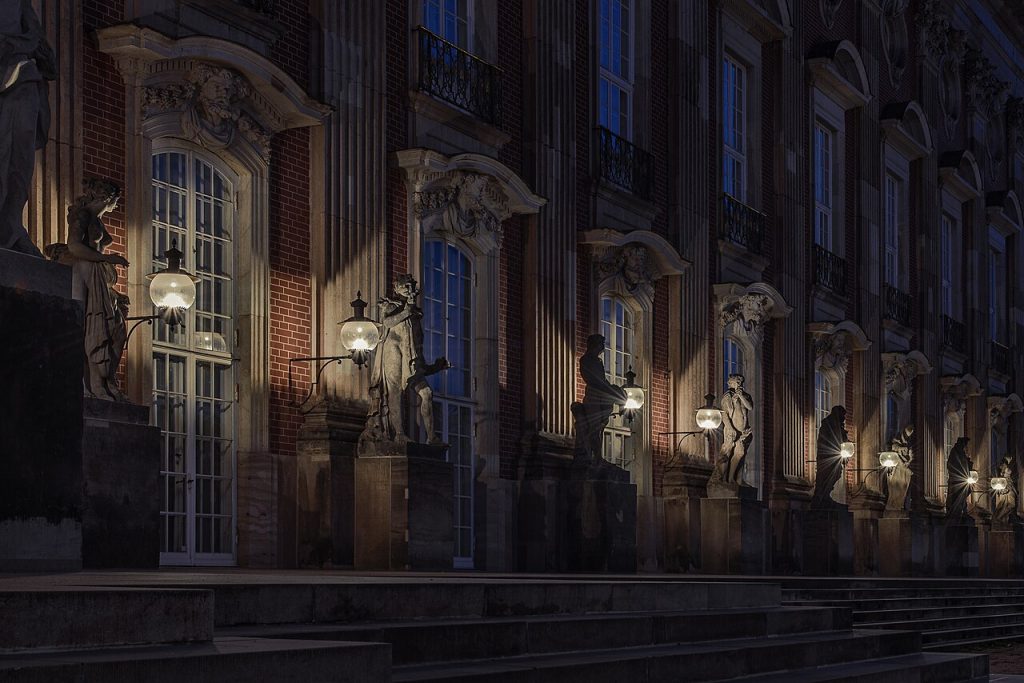
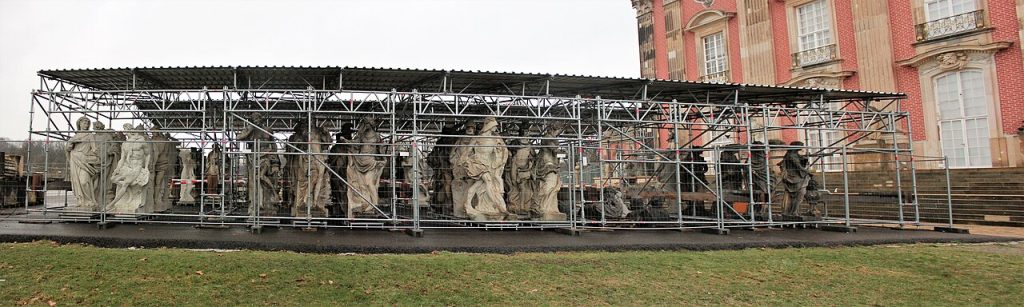
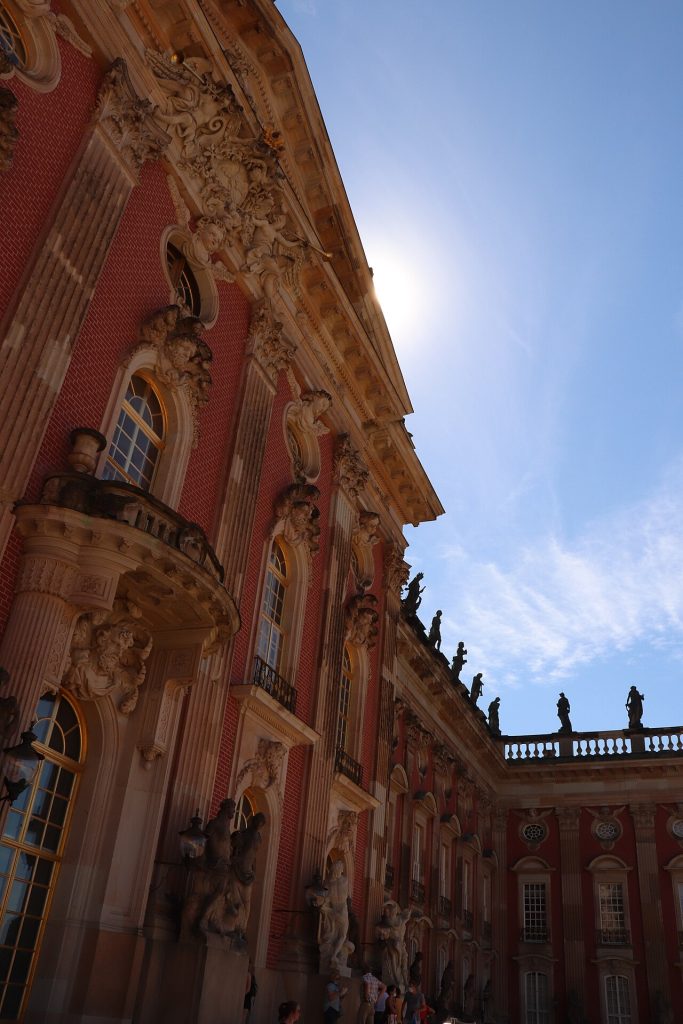
The facades are decorated with more than four hundred sculptures, and the walls were partly painted to imitate brick.
The palace contains more than two hundred rooms and was built in just six years, employing thousands of workers and craftsmen.
The sculptures on the roof and facades represent gods, goddesses and allegories, and they were carved by a team of sculptors working for several years.
The painted brick pattern on parts of the facade was a clever and economical solution, giving the impression of a costly building at a lower price.
The Grotto Hall
The most extraordinary room in the New Palace is the Grotto Hall, whose walls and ceiling are covered with shells, minerals, fossils and semi precious stones, creating the impression of an underwater cave.
Over the centuries the hall was enlarged and enriched, and some of the minerals were gifts from other rulers, reflecting the prestige of the Prussian court.
Its floor is decorated with marble patterns, and the hall is one of the most unusual rooms in any German palace.
The Grotto Hall contains more than twenty thousand shells, minerals and stones, and new pieces were added as late as the nineteenth century.
Sea creatures, dragons and fantastic figures appear among the decoration, creating a magical underwater world.
The Marble Hall
On the upper floor lies the Marble Hall, the largest festive hall of the palace. Its walls and floor are covered with marble in many colours, and its ceiling is painted with a great allegorical fresco celebrating the glory of the Prussian state.
The hall was used for banquets, balls and receptions, and after years of restoration it once again shines in its full splendour.
The ceiling fresco by Charles Amedee Philippe van Loo shows Ganymede being received among the gods of Olympus, a celebration of the glory of the arts.
The hall’s marble floor and walls use stone from Silesia and Italy, and the room was designed to impress foreign diplomats.
The Palace Theatre
The New Palace contains a charming rococo theatre in white and gold, which Frederick used for opera and drama. It is still used for performances today, making it one of the oldest working theatres in Germany.
The theatre has around two hundred seats, and Frederick sat in the stalls rather than in a royal box, a sign of his love of the performances themselves.
Italian opera singers and French actors performed here for the king and his guests.
Royal Apartments
The palace includes apartments for the king, his guests and members of the royal family, decorated in the rococo style with silk, stucco, paintings and fine furniture from the royal collections.
The palace contains a fine collection of paintings, including works by Antoine Pesne, the court painter, and by Italian and French masters collected by the king.
Some rooms display Meissen and Berlin porcelain, as well as furniture made by the finest Prussian cabinetmakers.
The Communs
Opposite the palace stand the Communs, two large buildings connected by a curved colonnade, designed by Carl von Gontard. They housed kitchens, servants and guests, and today they are used by the University of Potsdam.
The architecture of the Communs is so impressive that some visitors mistake them for the palace itself.
The Park of Sanssouci
The New Palace stands at the western end of the park of Sanssouci, which covers about three hundred hectares. A long avenue leads to Sanssouci Palace, passing temples, statues and fountains, the Chinese House, the Orangery Palace, the Roman Baths and Charlottenhof.
The Chinese House in the park, with its gilded figures drinking tea and playing music, is one of the most charming buildings of Frederician rococo.
Music at the Prussian Court
Frederick was a gifted flautist and composer who wrote more than a hundred flute sonatas and played almost every evening with his court musicians, including Carl Philipp Emanuel Bach and Johann Joachim Quantz.
The New Palace hosted concerts and operas for the king’s guests, and concerts are still held there today.
Frederick’s Flute Concertos are still performed today, and his musical evenings were famous across Europe.
The flute playing king was captured in a famous painting by Adolph Menzel, The Flute Concert of Frederick the Great at Sanssouci.
The Last Emperor at the New Palace
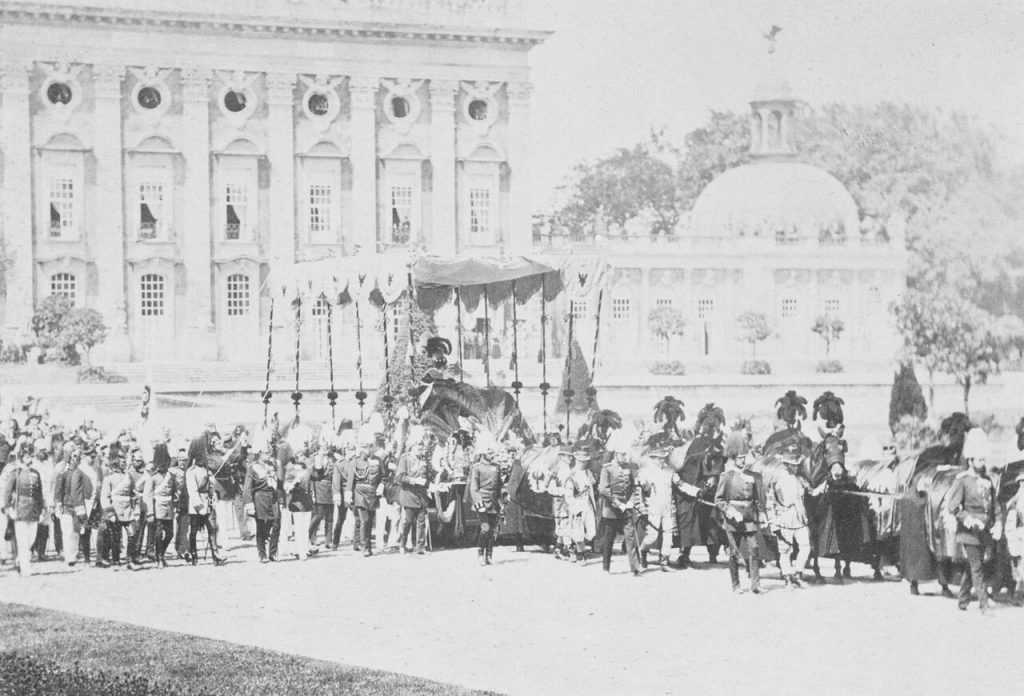
In the late nineteenth century, the New Palace became the favourite residence of Emperor Wilhelm II, who added electricity, central heating and bathrooms and lived here until 1918.
Some rooms still reflect the imperial period, giving the palace two layers of history, from Frederick the Great to the last Hohenzollern ruler.
Wilhelm II celebrated his birthdays and court festivals at the New Palace, and he left Potsdam from here at the end of the First World War.
The New Palace on Video
For a look inside the palace, the video below presents the guest rooms and hidden worlds of the New Palace in Potsdam.
If the video inspires you, read on for practical tips.
Visiting the New Palace Today
The New Palace is managed by the Prussian Palaces and Gardens Foundation Berlin Brandenburg and is open throughout the year, except on certain days.
It lies at the western end of Sanssouci park in Potsdam, which can be reached by train or S Bahn from Berlin. Combined tickets give access to several palaces in the park.
Plan at least two hours for the palace, and a whole day for the park, and combine your visit with Sanssouci, Cecilienhof and the Marble Palace.
Whenever you visit, the New Palace offers a dazzling glimpse into the world of Frederick the Great and the Prussian court.
Summer evenings in the park, with music festivals and illuminations, are a wonderful time to visit Potsdam.
View the location on Google Maps
Palaces Nearby
If you have enjoyed this palace, the region holds more remarkable residences. Here are two more well worth adding to your journey:
- The Marble Palace – the early classical palace of Frederick William II on the Holy Lake.
- Cecilienhof Palace – the English style palace where the Potsdam Conference was held in 1945.
You May Like
Rheinsberg Palace and the Happiest Years of Frederick the Great