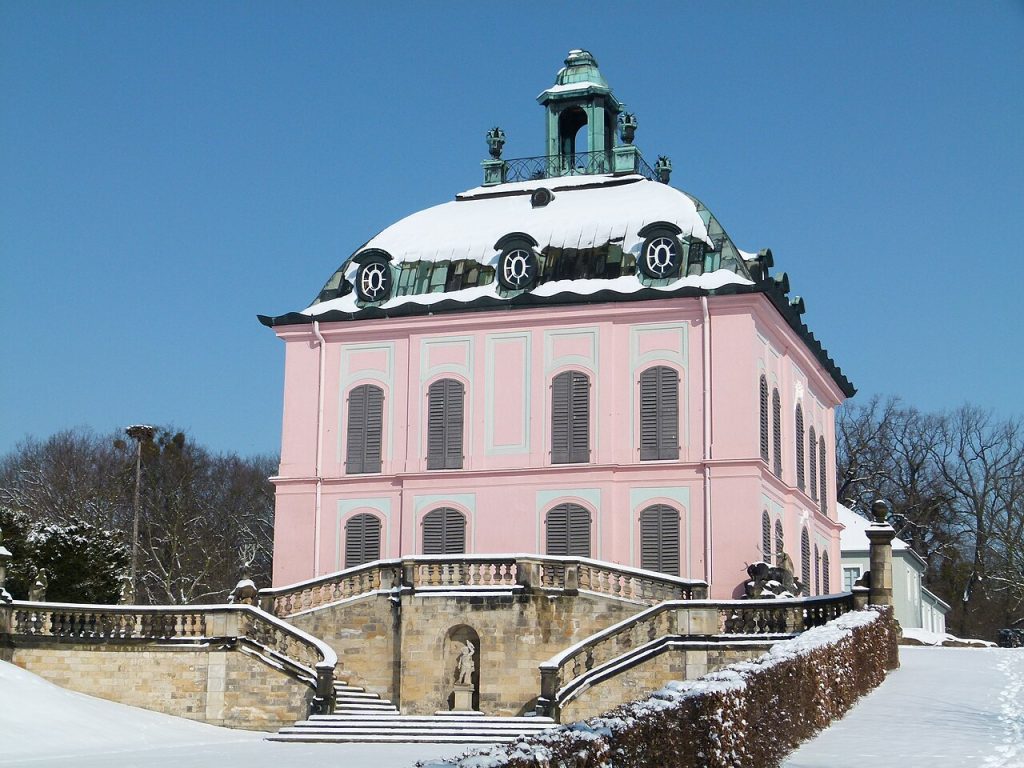
In the woods and lakes north of Dresden, not far from the famous Moritzburg Castle, stands one of the smallest and most charming palaces in Saxony. The Little Pheasant Castle was built in the late eighteenth century as a rococo retreat for the elector of Saxony, set among pheasant enclosures and lakes, and its delicate interiors are filled with feathers, painted birds and Chinese motifs.
Nearby, on the shore of a large pond, the elector built a miniature harbour with a lighthouse and a jetty, where mock naval battles were staged for the court. After a long restoration, the Little Pheasant Castle reopened as a museum and is now one of the hidden gems of the Dresden region.
In this article we will explore the Little Pheasant Castle from the elector who built it to its rooms, its harbour and lighthouse, and its landscape, and we will finish with practical tips for your visit.
In This Article
- A Tiny Palace in the Woods
- Elector Friedrich August III
- Rococo Architecture in Miniature
- Rooms of Feathers and Silk
- A Long Restoration
- Pheasants and Exotic Birds
- The Fashion for China
- The Harbour and the Mock Sea Battles
- The Lighthouse
- The Moritzburg Landscape
- Moritzburg Castle Nearby
- The Little Pheasant Castle on Video
- Visiting the Little Pheasant Castle Today
A Tiny Palace in the Woods
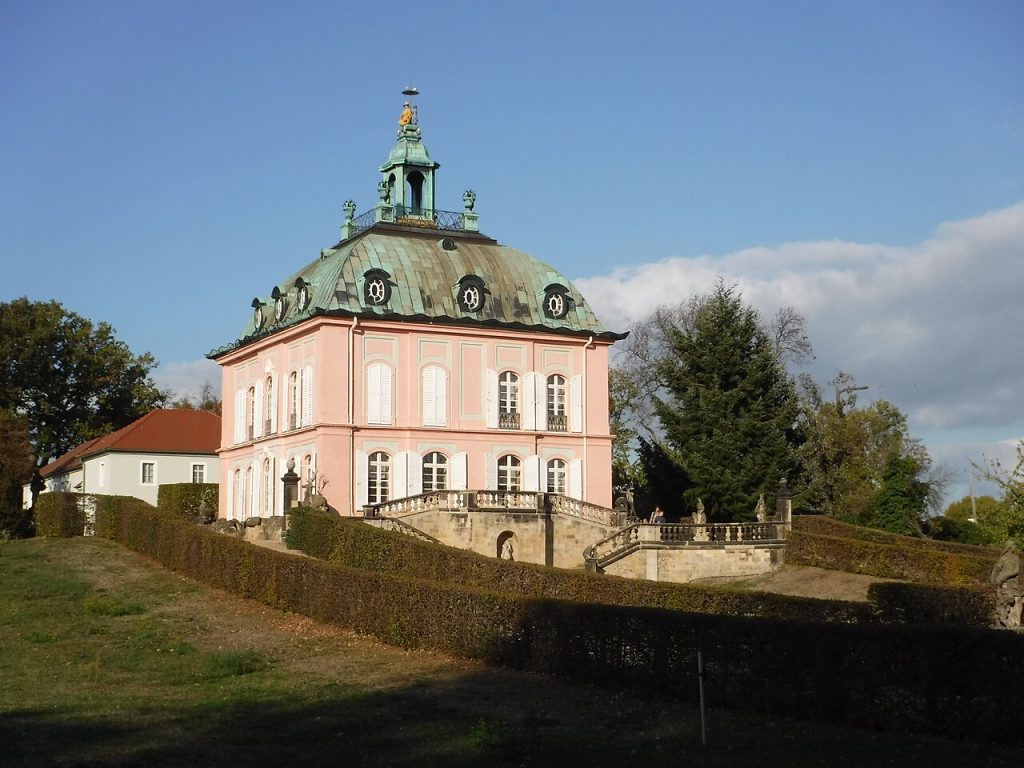
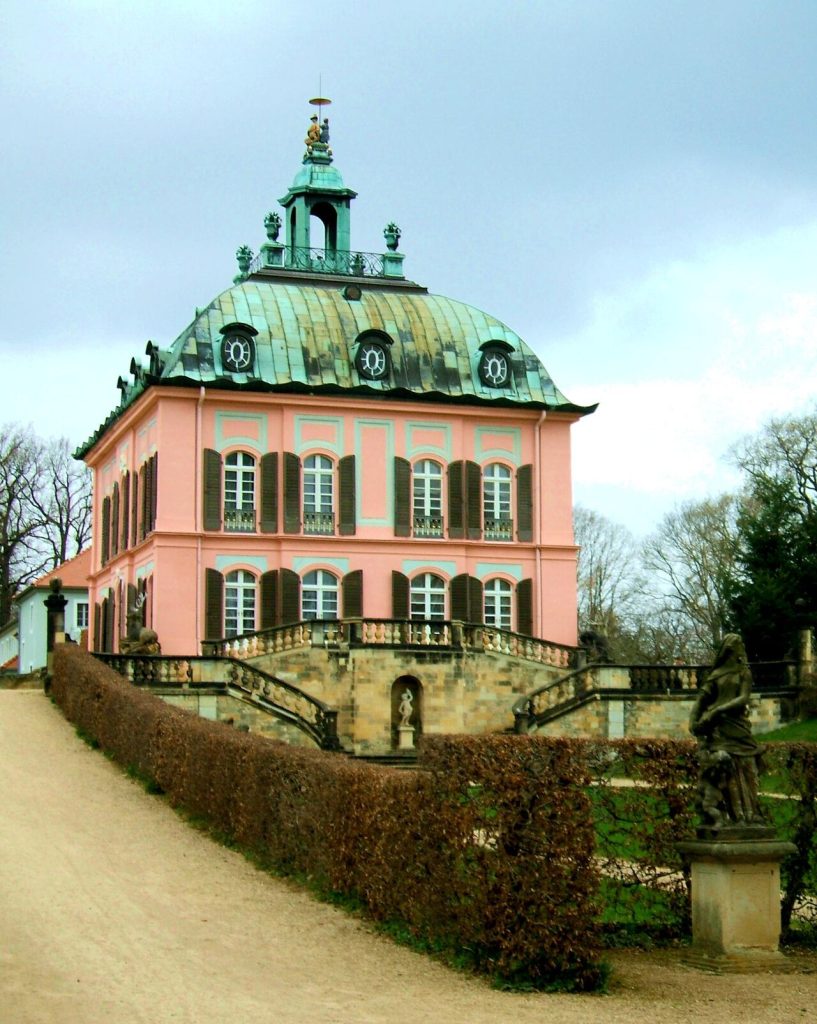
Walking along a path through the forest east of Moritzburg Castle, you suddenly see a small, elegant building standing in a clearing. Its pale walls, curved roof and Chinese style decoration give it a playful, almost doll house appearance.
The palace is so small that it seems more like a garden pavilion than a residence, yet it was used by the elector and his family as a retreat from the grand life of the court.
What makes the Little Pheasant Castle special is its intimacy and the charm of its decoration, a perfect example of late rococo taste.
The approach through the forest makes the discovery of the palace feel like a small adventure, especially for children.
Around it stretch meadows, woods and ponds, and the building is surrounded by stories of court entertainments, from pheasant breeding to mock sea battles.
Elector Friedrich August III
The Little Pheasant Castle was built between 1769 and 1782 for Elector Friedrich August III of Saxony, who later became the first king of Saxony.
The site had long been used for breeding pheasants, and the elector decided to build a small pleasure palace there.
Unlike his ancestor Augustus the Strong, Friedrich August III was a modest and thrifty ruler, and the small scale of the palace reflects his taste.
He became king of Saxony in 1806 under Napoleon and ruled for more than fifty years in total, one of the longest reigns in German history.
Friedrich August III was known as the Just because of his fairness, and he preferred a quiet family life to the extravagance of his ancestors.
Rococo Architecture in Miniature
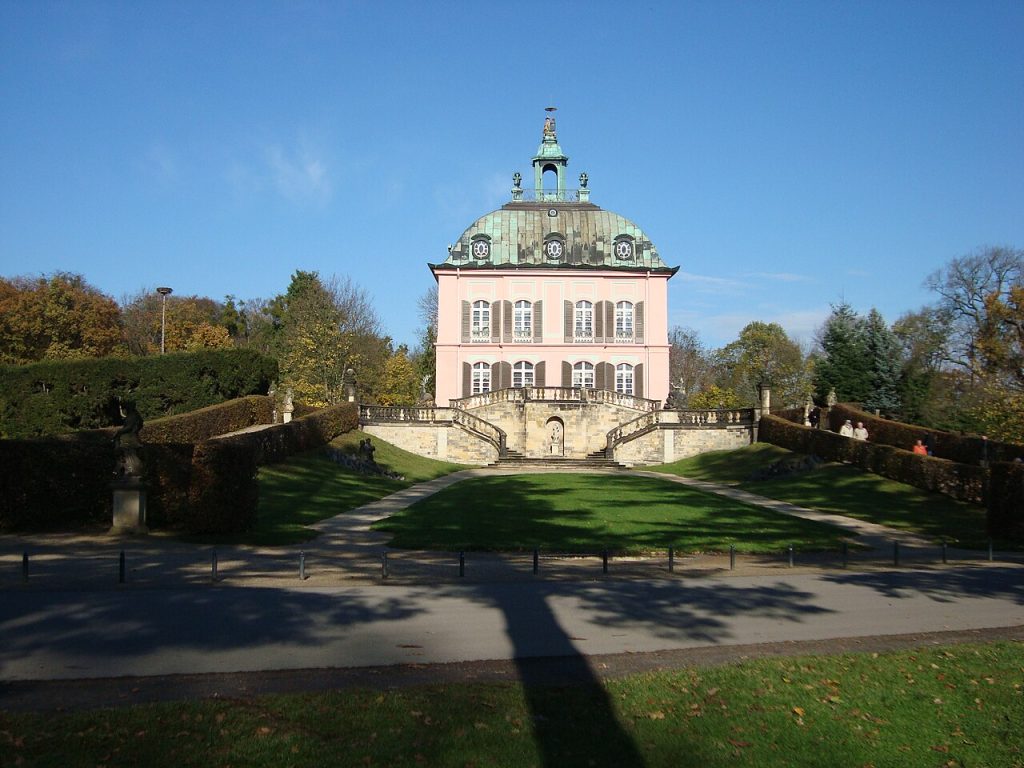
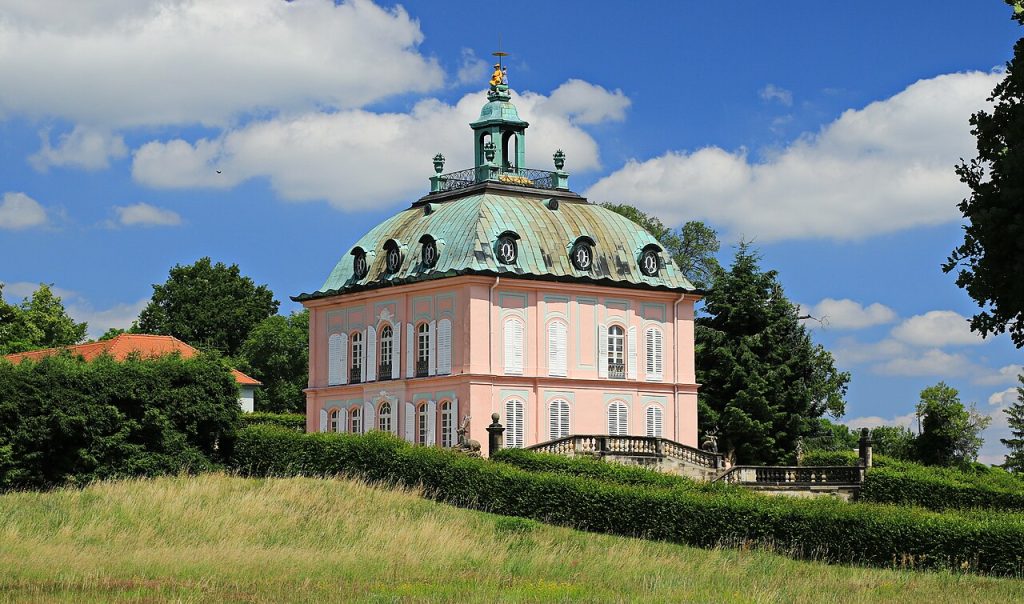
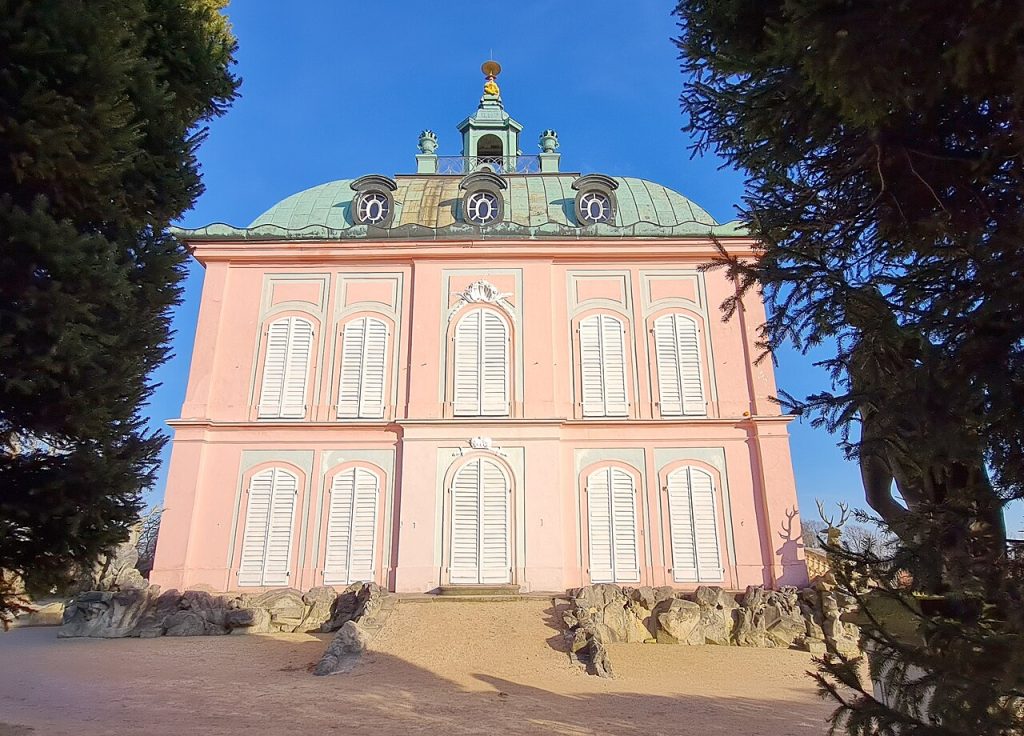
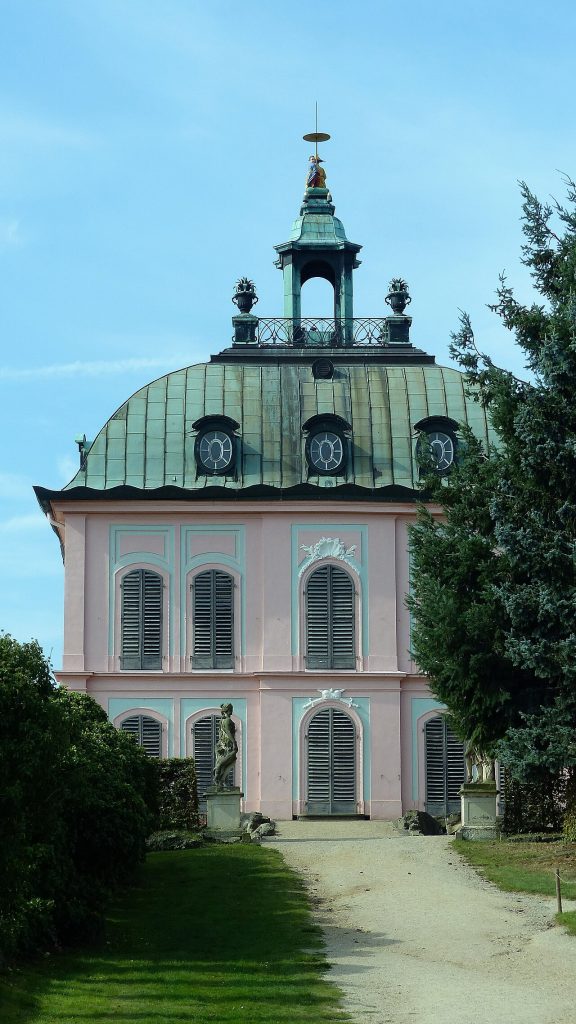
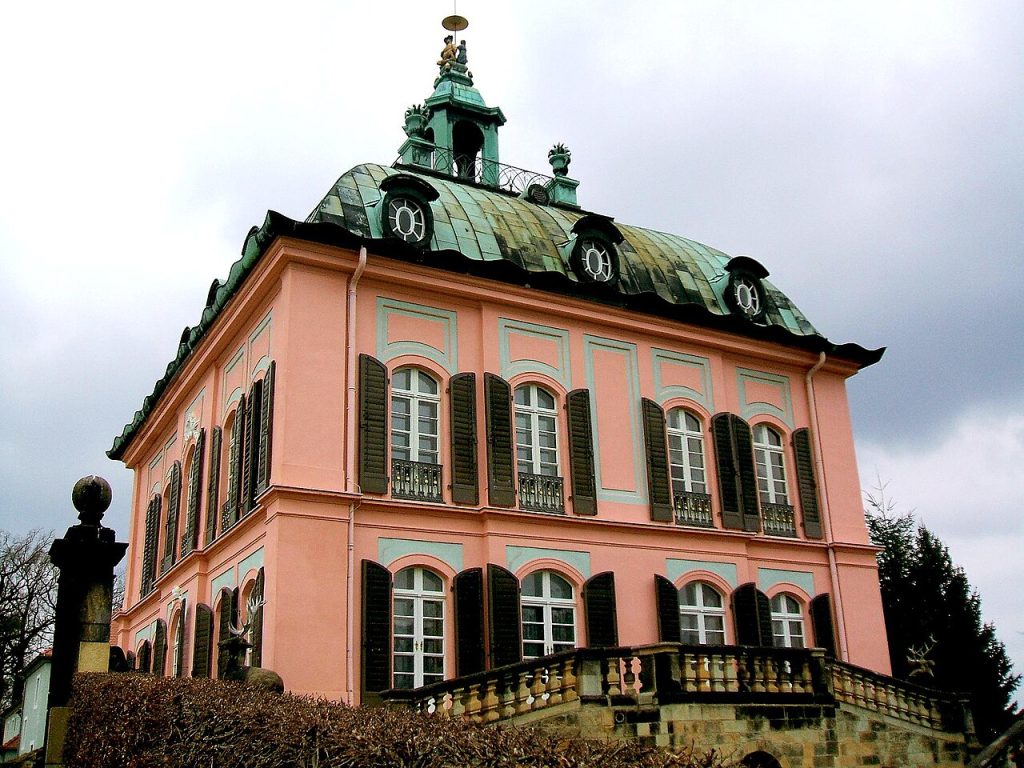
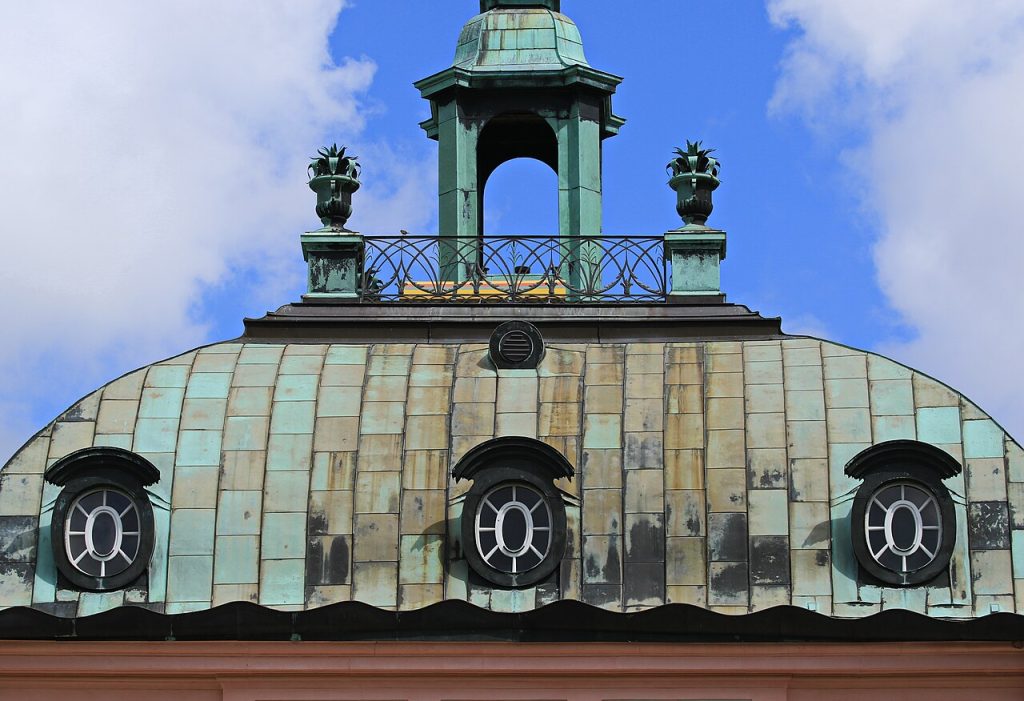
The Little Pheasant Castle is a compact building with a curved roof crowned by a small lantern, combining rococo forms with Chinese inspired details.
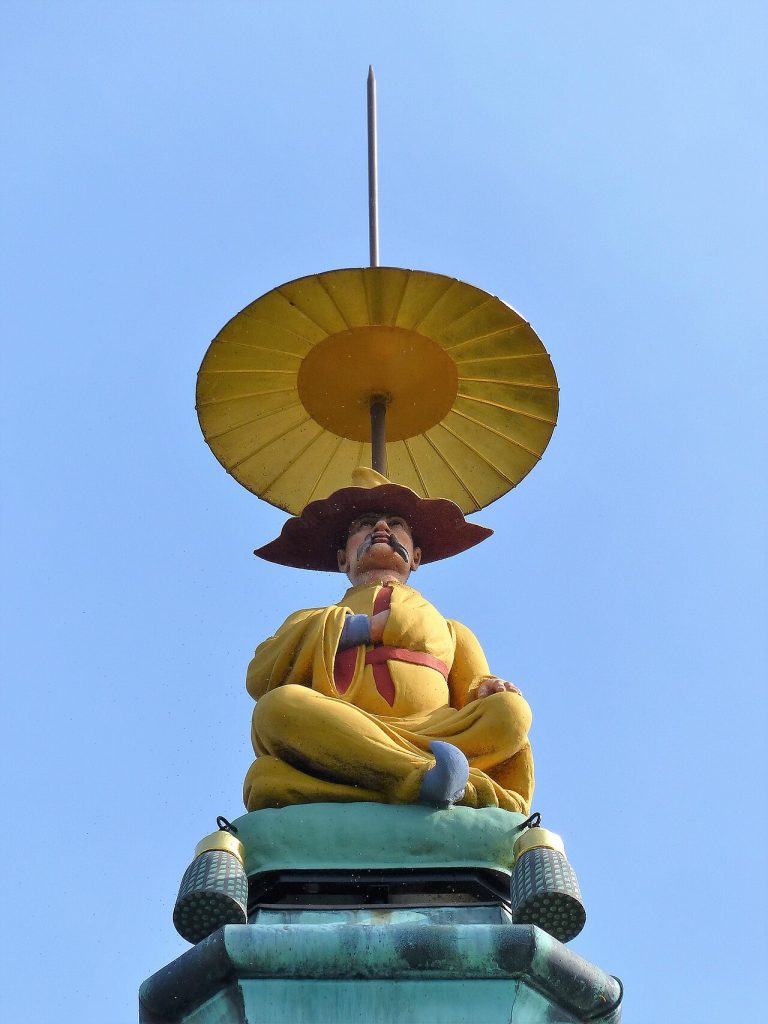
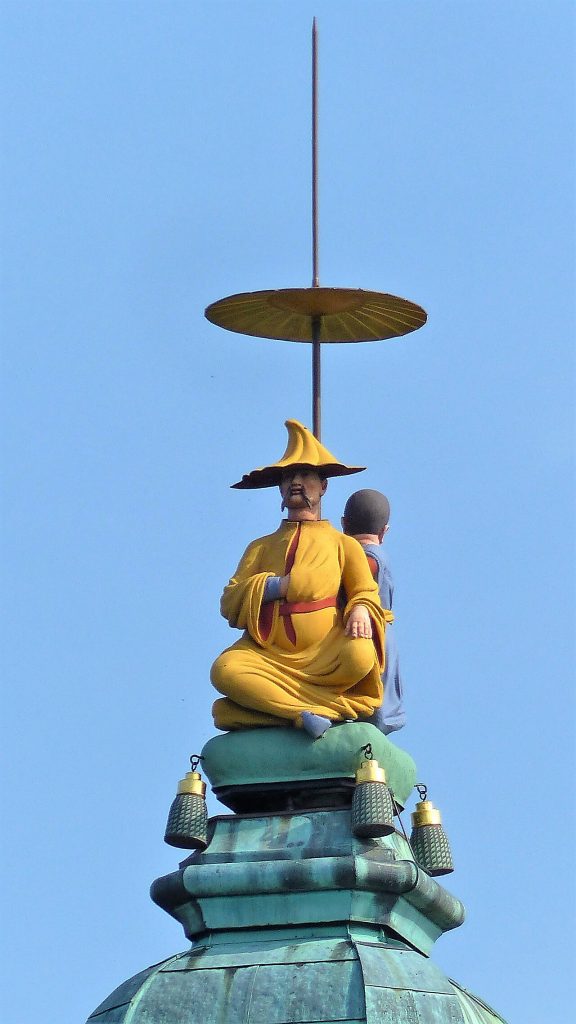
The roof is decorated with figures, including a Chinese figure holding an umbrella, a reminder of the fashion for chinoiserie.
Despite its small size, the palace shows the same care and craftsmanship as larger residences.
The palace was designed by the court architect Johann Daniel Schade, and the Chinese figure with an umbrella on the roof is one of its most beloved details.
Rooms of Feathers and Silk
Inside, the palace contains small rooms decorated with exceptional richness, with silk wall coverings, painted panels and even decorations made of feathers and straw embroidery.
These interiors are among the best preserved examples of late rococo decoration in Saxony, and the feather decorations are particularly rare.
Each room is so small that only a few people can enter at once, which makes a visit feel intimate and personal.
One room is covered with delicate straw embroidery, a rare technique in which thin strips of straw were stitched onto silk to create shimmering patterns.
Another room features wall coverings decorated with real feathers arranged into birds and flowers, a precious example of a craft that has almost disappeared.
A Long Restoration
For many years the palace was closed while restorers conserved the silk wall coverings, feather decorations and painted panels. It reopened as a museum in 2013, and visitor numbers are limited to protect the fragile rooms.
The restoration used traditional techniques and materials and received awards for its quality.
Pheasants and Exotic Birds
The site was used for breeding pheasants long before the palace was built. Pheasants were prized for hunting and as ornamental birds, and the enclosures also housed other exotic birds.
The love of birds is reflected in the decoration of the palace, where painted birds and feather decorations appear in many rooms.
The Fashion for China
The decoration reflects the eighteenth century European fascination with China. Chinese figures, pagoda like details and painted scenes create a playful world of fantasy, a fashion also seen at Pillnitz and the Japanese Palace in Dresden.
The Harbour and the Mock Sea Battles
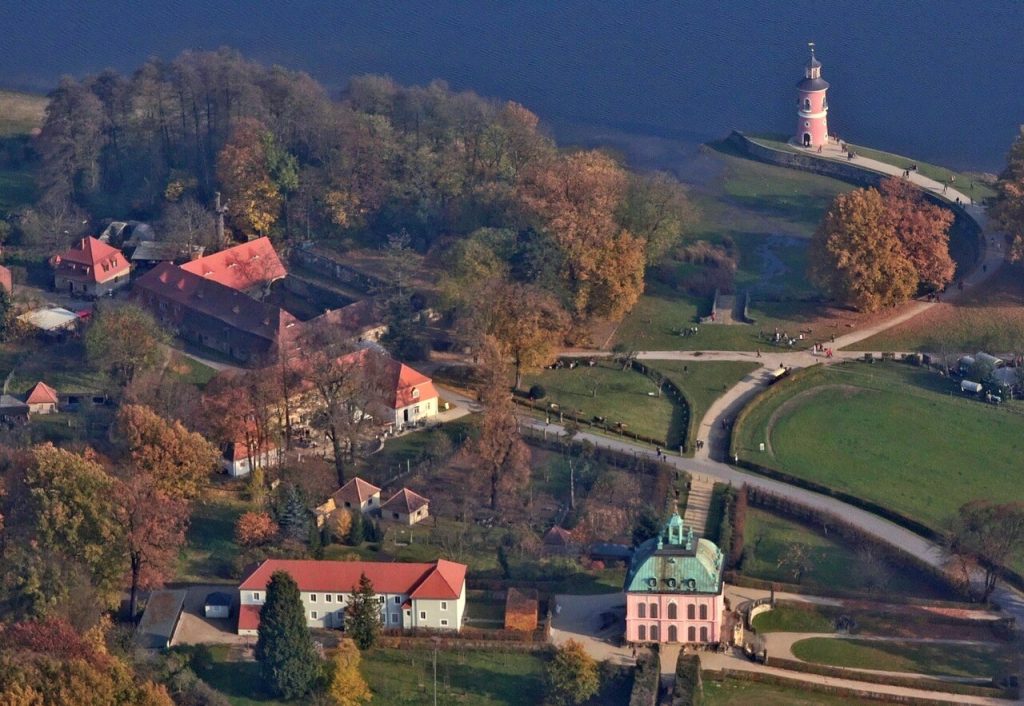
Near the palace, on the shore of the Grosser Teich, the elector built a miniature harbour with a jetty and a lighthouse, where the court staged mock naval battles with small ships, accompanied by music and fireworks.
The harbour, sometimes called the Dardanelles, once had a small fleet including a miniature frigate, and the mock naval battles were accompanied by music and fireworks.
The Lighthouse
The lighthouse, built at the end of the eighteenth century, is one of the few historic inland lighthouses in Germany. It was never meant to guide real ships, but to add to the illusion of a seaside setting.
At sunset, the lighthouse reflected in the still water creates one of the most beautiful scenes in the Moritzburg area.
Today the lighthouse is a popular destination for walks and photographs, and its slender form against the sky and water makes it one of the most charming sights in Saxony.
The Moritzburg Landscape
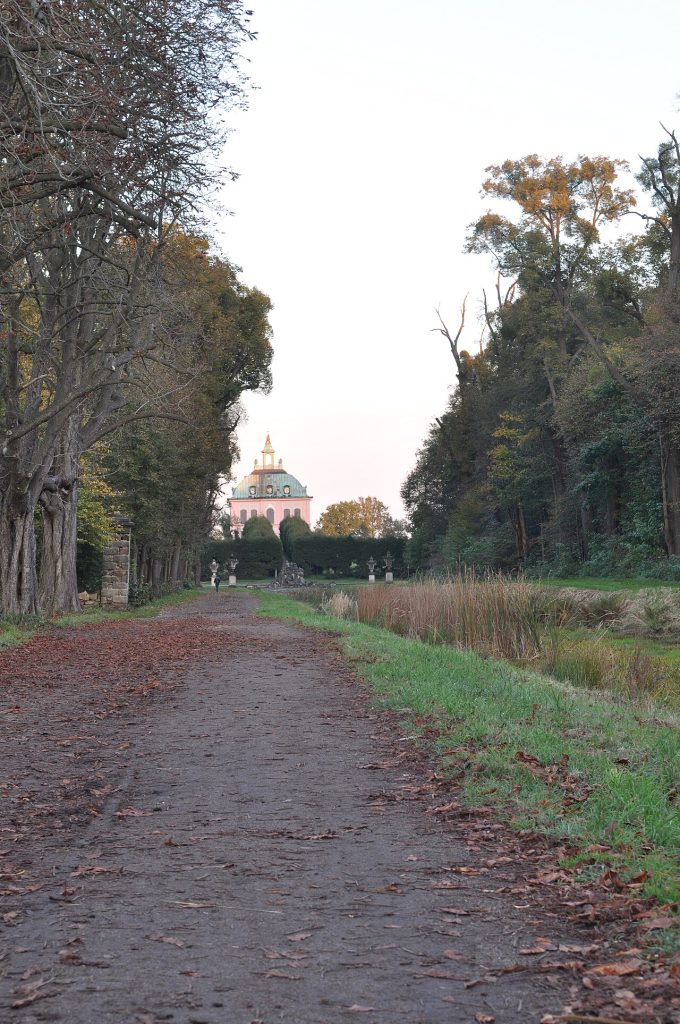
The palace lies in a landscape of forests, meadows and dozens of ponds created for fishing and hunting, now a protected area rich in birds and a wonderful place for walks and cycling.
In autumn, the fishing of the ponds is a traditional event, and visitors can watch fishermen harvesting carp as they have for centuries.
Moritzburg Castle Nearby
A short walk away stands Moritzburg Castle, the grand hunting palace of Augustus the Strong rising from its lake, whose yellow walls and round towers make it one of the most famous castles in Germany.
Visiting both palaces gives a fascinating contrast between the grandeur of Augustus the Strong and the intimate charm of his descendant’s retreat.
Moritzburg Castle houses the famous Feather Room, a bed chamber decorated with nearly two million feathers, which echoes the decorations of the Little Pheasant Castle.
Moritzburg Castle was also the setting of the beloved fairy tale film Three Wishes for Cinderella, which draws fans from across Europe.
The Little Pheasant Castle on Video
For a tour of the palace and its rooms, the video below presents the Little Pheasant Castle.
If the video inspires you, read on for practical tips.
Visiting the Little Pheasant Castle Today
The palace is open from spring to autumn, usually with guided tours of the interior, and booking in advance is recommended.
It lies about two kilometres east of Moritzburg Castle. Moritzburg is about fifteen kilometres north of Dresden and can be reached by bus or by the historic narrow gauge railway from Radebeul.
Whenever you visit, the Little Pheasant Castle offers a delightful glimpse into the playful world of rococo court life.
There are cafes and restaurants in the village of Moritzburg, and the stud farm nearby hosts horse shows and events.
View the location on Google Maps
Palaces Nearby
If you have enjoyed this palace, the region holds more remarkable residences. Here are two more well worth adding to your journey:
- The Japanese Palace – the porcelain palace of Augustus the Strong on the Elbe in Dresden.
- The Palace in the Great Garden – the first baroque palace of Dresden at the heart of its largest park.
You May Like
Rheinsberg Palace and the Happiest Years of Frederick the Great