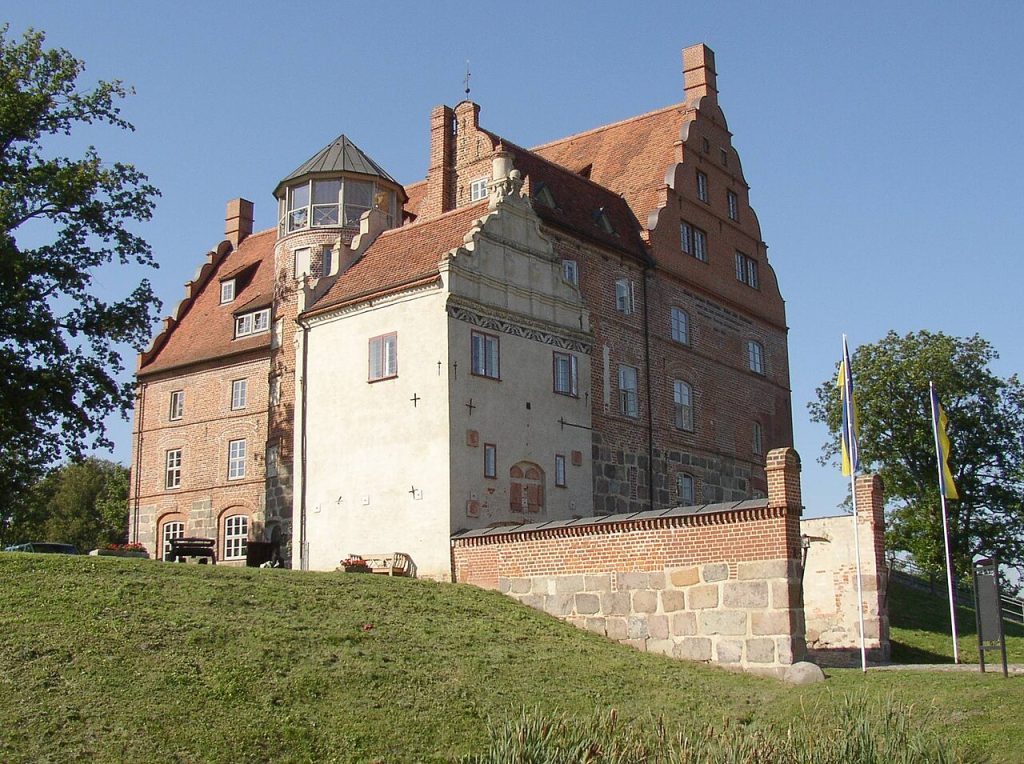
Most palace stories in eastern Germany end the same way: the family leaves in 1945, the house decays, strangers restore it or nobody does. Ulrichshusen is different, and that is why I keep coming back. Here the family came home. The castle on its island in the lake was built in 1562 by Ulrich von Maltzahn, who gave it his name, and it belonged to his descendants for nearly four centuries until the land reform took it away. In 1987, abandoned and abused, it burned to a roofless shell. Six years later a Maltzahn bought the ruin back and rebuilt it, beam by beam, into a hotel and the home of one of Germany’s most charming summer music festivals.
The result is a Renaissance water castle that is also a brand-new building, a family seat that is also a business, and a concert hall that is also a barn. It sits in the gentle lake country south of Malchin, surrounded by water, meadows and silence, and on a July evening with a string quartet playing in the Festspielscheune and the castle glowing across the moat, there are few more civilised places in Germany.
Let me tell the story in order, from the sixteenth-century bricks to the fire to the music, and then show you how to visit. The contents are below; the ending is the best part, so do not skip it.
In This Article
- An Island in a Mecklenburg Lake
- Ulrich von Maltzahn and the House of 1562
- Renaissance in the Water: The Architecture
- The Maltzahns: A Family of the Lake Country
- The Thirty Years’ War and a Village Erased
- Baroque Comforts and Nineteenth-Century Towers
- 1945: The End of Four Centuries
- Granary, Flats and Neglect
- The Fire of 1987
- The Return: Buying Back a Ruin
- Rebuilding From the Ashes
- The Barn That Became a Concert Hall
- Hotel, Park and the Family Today
- Ulrichshusen on Video
- Visiting Ulrichshusen Castle Today
- Palaces Nearby
An Island in a Mecklenburg Lake
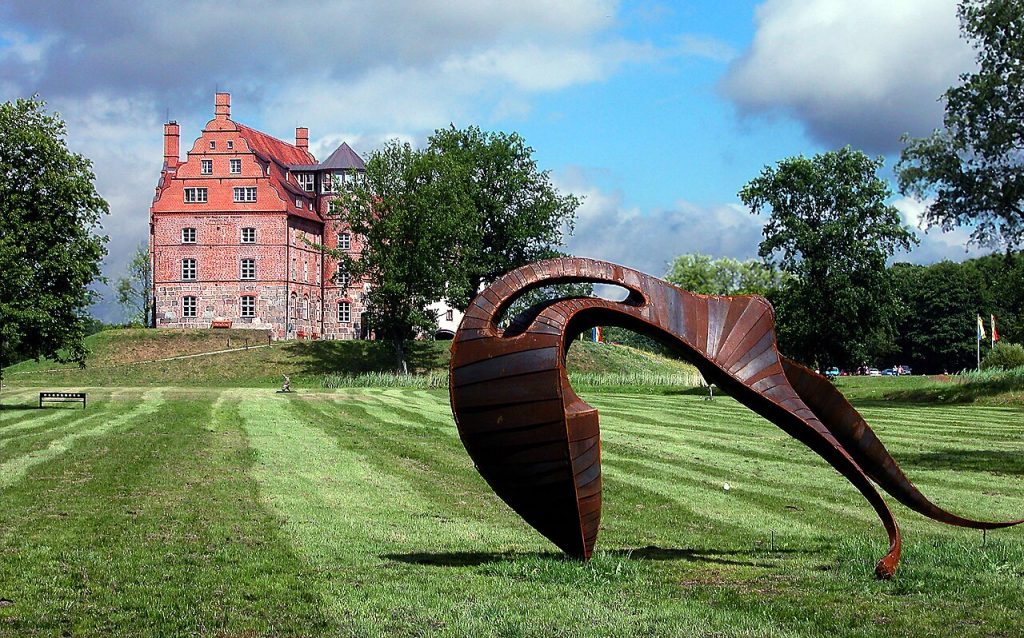
Ulrichshusen lies in the municipality of Moltzow, in the quiet triangle between Malchin, Waren and Teterow, where the Mecklenburg Lake District begins to roll into the hills of the Mecklenburg Switzerland. The castle stands on a small peninsula, once an island, in the Ulrichshuser See, a reedy lake fed by streams and ringed by alders. A causeway and a bridge connect it to the farm buildings and the village on the shore.
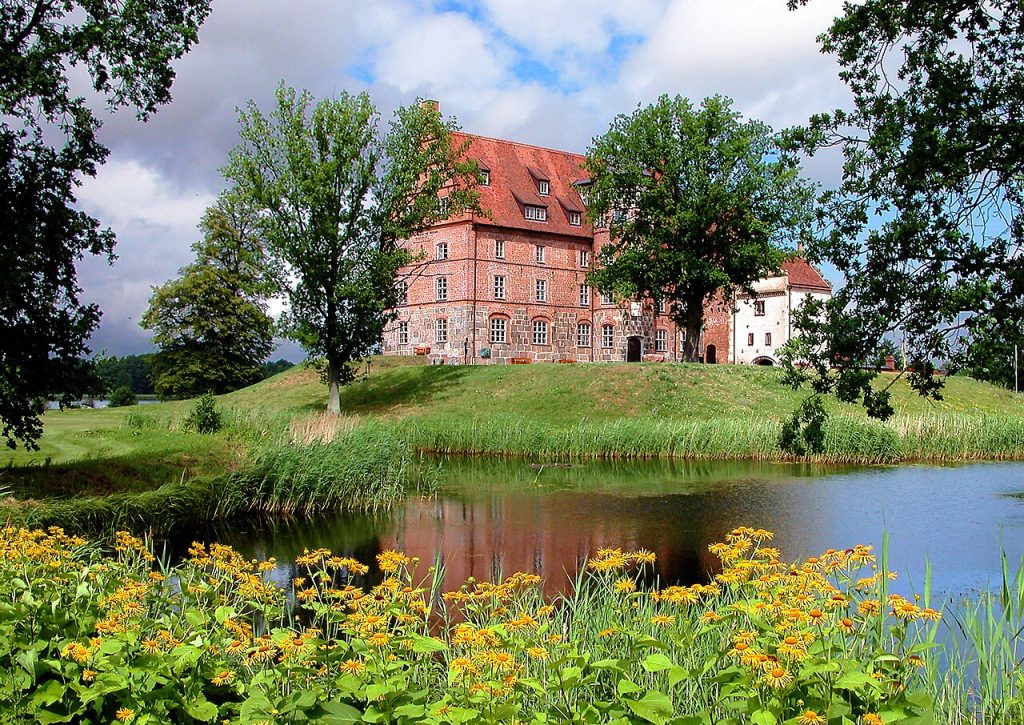
Now, stop here on the causeway and look at the water around the walls. In the sixteenth century this moat was the castle’s defence; today it is its mirror. The reflection of the brick gables and towers in the still lake is the image that appears on every festival poster, and it is better in real life, especially in the early morning when the mist rises and the swans are out. There is nothing else for miles, which is exactly how the builder wanted it.
Ulrich von Maltzahn and the House of 1562
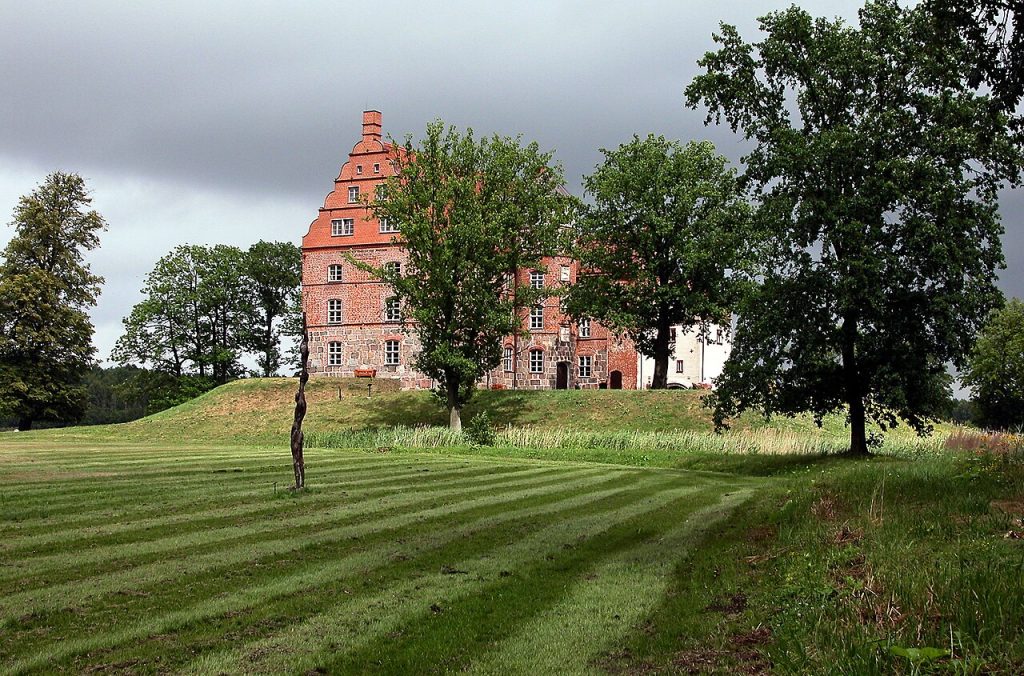
The castle takes its name from Ulrich von Maltzahn, a knight of one of Mecklenburg’s oldest families, who in 1562 began a fortified house on the island and called it, with no false modesty, Ulrichshusen, Ulrich’s houses. The date is carved on the building, and it places the castle in the generation after the Reformation, when Mecklenburg’s nobles were replacing their mediaeval strongholds with Renaissance houses that still kept a defensive edge: thick walls, a moat, a single gate, but also large windows and decorated gables.
Ulrich was a man of his time, Lutheran, litigious and ambitious, and his new house was meant to show his neighbours that the Maltzahns of this branch had arrived. He built in brick, the only material the region offered in quantity, and he built to last. The core walls of the castle today are his, blackened by fire and rebuilt above, but standing where he set them more than four hundred and fifty years ago.
Renaissance in the Water: The Architecture
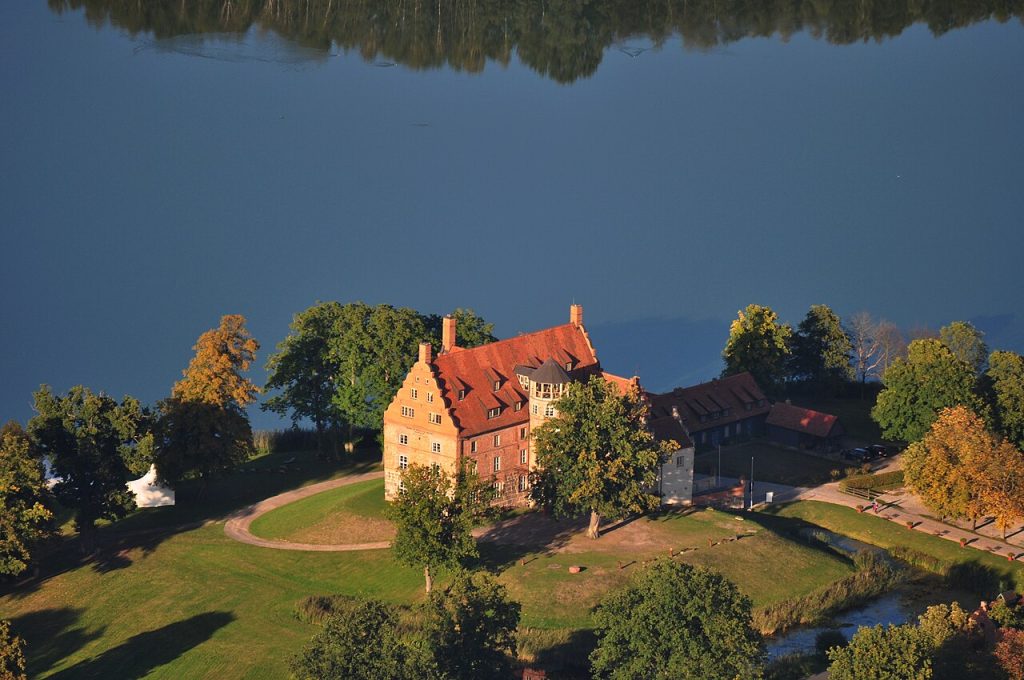
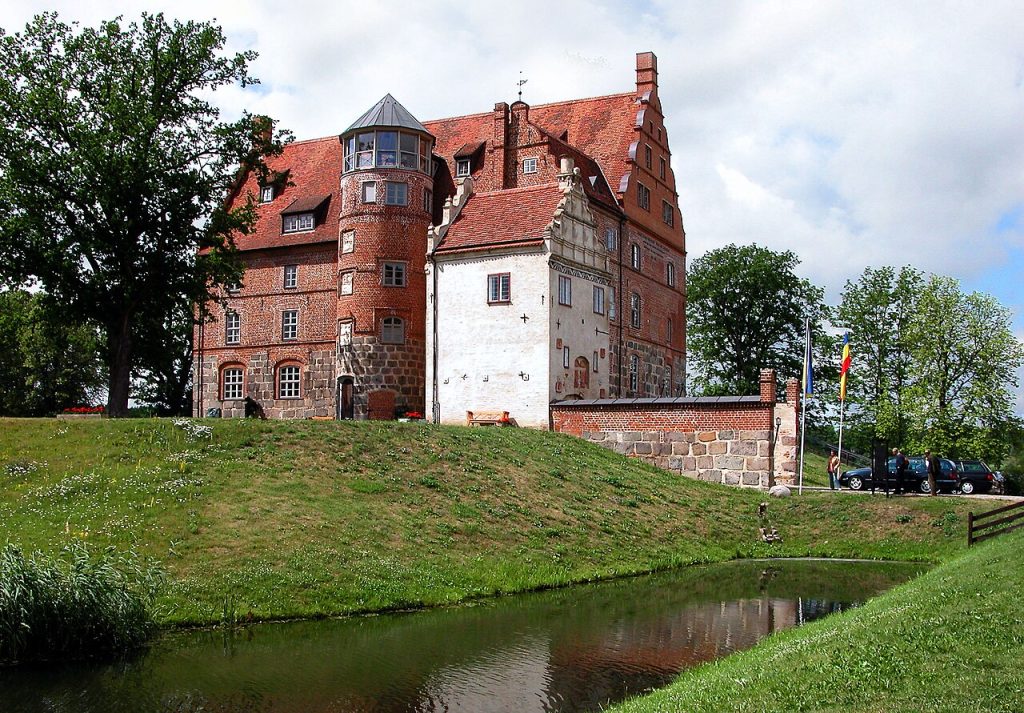
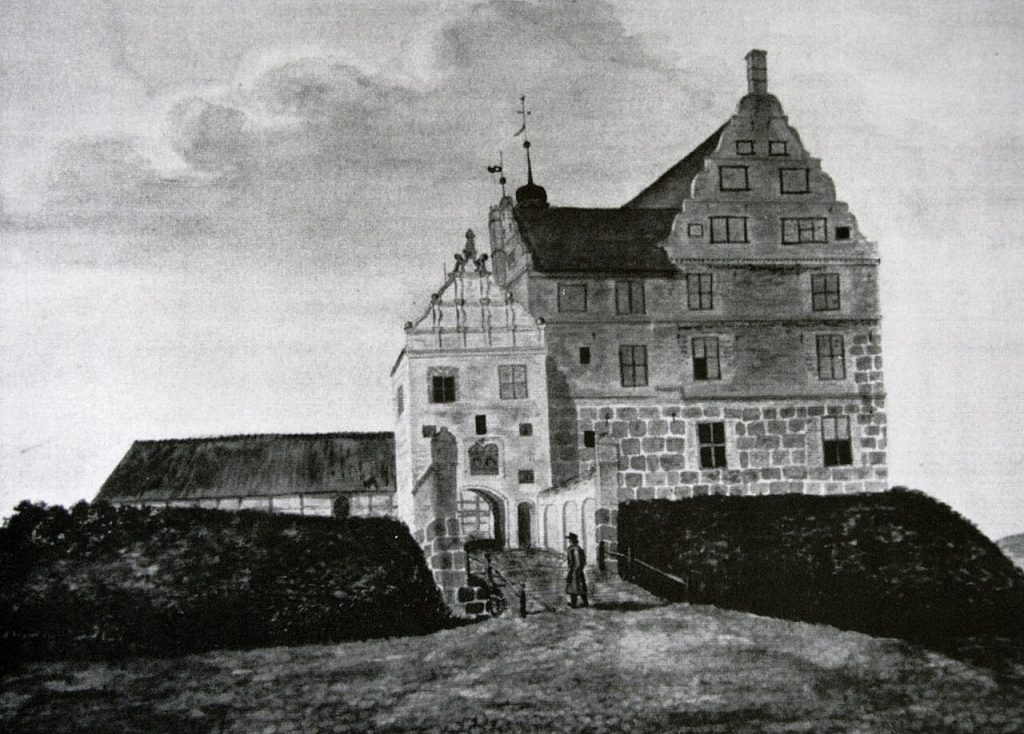
Walk the circuit of the walls from the bridge. The castle is a compact rectangular block of two main storeys over a vaulted basement, with round towers at the corners and tall stepped gables at the ends. The towers once carried pointed roofs, and the gables are decorated with blind arches and pilasters in moulded brick, the Mecklenburg way of translating Italian ornament into local clay. The windows are large for a fortified house, a sign that by 1562 comfort was beginning to outrank security.
Inside, the plan was simple: a hall and the lord’s rooms on the first floor, kitchens and stores below, bedrooms above, with spiral stairs in the towers. Look at the brick carefully where the restoration has left it exposed. Sixteenth-century bricks are long, uneven and dark; nineteenth-century repairs are smaller and sharper; the bricks of the 1990s rebuilding are new but made to match. The whole history of the house is written in the bond.
The Maltzahns: A Family of the Lake Country
The Maltzahns, or Maltzans, are everywhere in this part of Germany. They appear in documents from the thirteenth century, held the castle at Penzlin from the fifteenth, built Kummerow on its lake and Wolde and a dozen other houses, and divided over time into so many branches that genealogists need charts the size of tablecloths. In Mecklenburg they were among the handful of families who effectively governed the duchy through the assembly of estates, and they produced generals, ministers and churchmen in every generation.
The Ulrichshusen branch were country squires rather than grandees, living from the land, hunting, marrying their neighbours and sitting in the local church. That modesty is one reason the castle was never rebuilt into a Baroque palace. They had enough money to keep it up and not enough to pull it down, which is the ideal condition for a historic house.
The Thirty Years’ War and a Village Erased
Mecklenburg suffered as badly as any German land in the Thirty Years’ War. Imperial troops under Wallenstein occupied the duchy in the 1620s, Swedish and Imperial armies marched back and forth through the 1630s and 1640s, and the population fell by well over half. Villages around Ulrichshusen disappeared entirely, their fields reverting to scrub, and the castle itself was plundered more than once. The moat kept out bandits but not armies.
The Maltzahns survived, as old families do, by bending. They rebuilt, resettled their villages with new peasants and slowly recovered through the later seventeenth century. Now, stop here and look across the meadows toward the woods. Some of those fields were villages before 1630 and have never been villages since. The emptiness of this landscape is partly a scar.
Baroque Comforts and Nineteenth-Century Towers
In the eighteenth century the castle was made comfortable in the Baroque manner: new windows, tiled stoves, panelled rooms, a formal garden on the shore. In the nineteenth century, when romantic taste rediscovered the Middle Ages, the family raised the towers, added battlements and gave the house a more castle-like silhouette than Ulrich had ever intended. A landscape park with old oaks was laid out around the lake, and farm buildings, including a monumental brick barn, rose on the landward side.
That barn, built for grain and later used for cattle, is the building you will spend your evening in if you come for a concert, so give it a glance now. It is one of the largest in the region, with a soaring timber roof, and it tells you how prosperous the estate had become by 1900. The family was by then a comfortable fixture of Mecklenburg society, and nothing in that calm landscape suggested what was coming.
1945: The End of Four Centuries
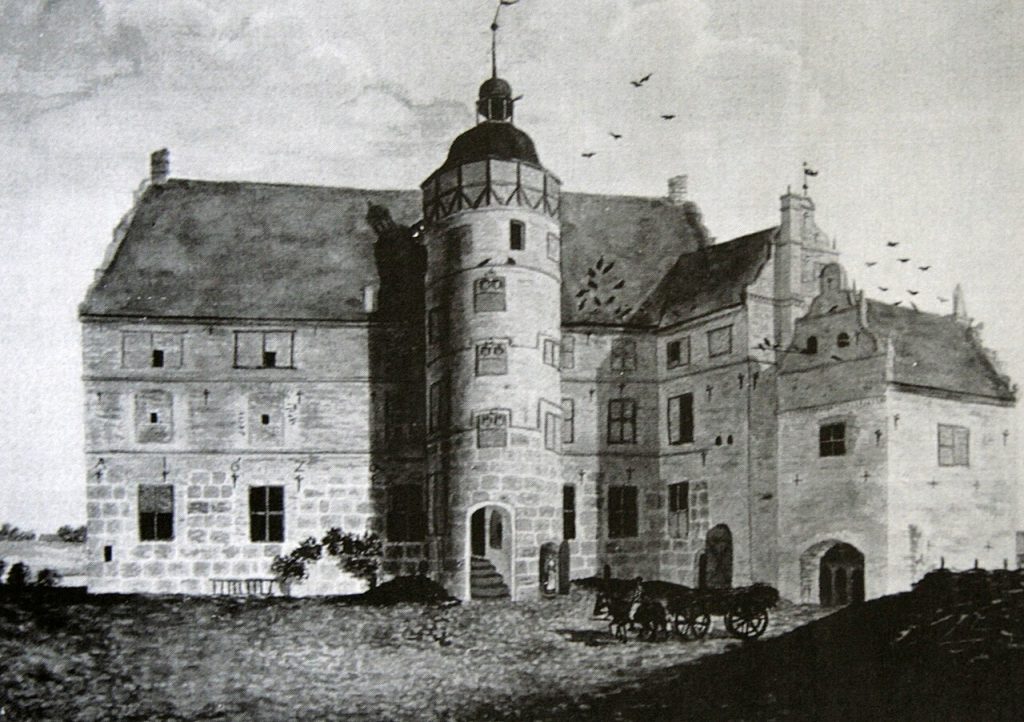
In the spring of 1945 the Red Army swept through Mecklenburg, and the Maltzahns of Ulrichshusen joined the millions moving west. The Soviet land reform that autumn expropriated every estate over a hundred hectares without compensation and with explicit intent to destroy the landed nobility as a class. The family lost castle, park, farm and forest, and the furniture, portraits and archives that had accumulated since 1562 were dispersed, looted or burned.
What makes Ulrichshusen’s story unusual is that the family never forgot the place. Children born in West Germany grew up hearing about the castle on the lake, and when the Wall fell a Maltzahn of the next generation decided that hearing about it was not enough. We will get there. First, the house had to survive forty years of neglect and one catastrophic night.
Granary, Flats and Neglect
The GDR had no use for a Renaissance castle on an island, so it used it for what it needed: first housing for refugees, then flats for farm workers, then storage for the agricultural cooperative, with grain heaped in the lord’s hall and machinery in the vaults. Maintenance was minimal. The roof leaked, the towers lost their caps, the garden vanished under nettles and the moat silted up. By the 1980s the last residents had moved out and the castle stood empty, a listed monument in name and a hazard in practice.
This was the fate of hundreds of Mecklenburg manor houses, and most of them simply fell down. Ulrichshusen might have gone the same way, slowly, over another decade. Instead its end came in a single night.
The Fire of 1987
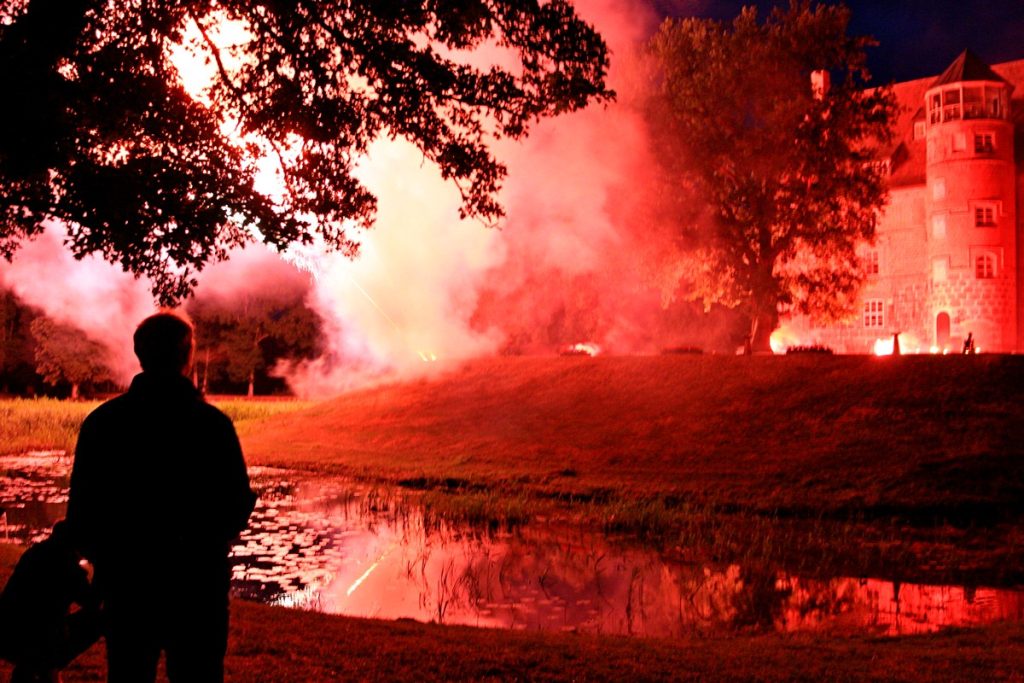
In 1987 fire broke out in the empty castle. Whether it was arson, carelessness or an electrical fault was never satisfactorily established, and in the last years of the GDR nobody was very interested in finding out. The roof collapsed, the floors burned through, and by morning Ulrich von Maltzahn’s house was a shell of blackened brick open to the sky. Trees began to grow inside the walls. Local people assumed the ruin would be pulled down for safety.
Now, stop here in the courtyard and look up at the roofline. Everything above the first-floor windows is new, built after 1993 on the old walls. The scorching on some of the lower bricks, where the restorers left it visible, is the only trace of the night the castle died. It is worth touching.
The Return: Buying Back a Ruin
After reunification, expropriations carried out under the Soviet land reform were not reversed, so the Maltzahns had no legal claim to Ulrichshusen. What they had was the chance to buy it. In 1993 Helmuth von Maltzahn, a descendant of the family who had built a career in the West, purchased the ruin and the surrounding farm buildings from the trust that was disposing of former state property. Friends thought he had lost his mind. He was buying a roofless shell on a silted lake, in a region with no tourism and few jobs.
His reasoning was partly sentiment and partly conviction that the place could earn its keep. He and his wife moved to Mecklenburg, set up a farm and began planning the rebuilding. The symbolism was not lost on the villagers. The family whose name was on the castle had come back, not as lords but as neighbours with a mortgage, and the village was unsure what to make of them. Thirty years later, it is hard to imagine Ulrichshusen without them.
Rebuilding From the Ashes
The rebuilding took about two years. The outer walls were stabilised, a new roof and floors were inserted, the towers were recapped and the gables repaired with matching brick. Inside, since nothing had survived the fire, the architects were free to create comfortable hotel rooms, a restaurant and function rooms within the Renaissance shell, using oak, lime plaster and tile in a way that feels historic without pretending to be original. The hotel opened in 1995, and the castle had a roof over its head for the first time in eight years.
Purists sometimes complain that the interior is a reconstruction. It is, and the owners say so openly. The alternative was a ruin or a car park. What you get instead is a working Renaissance castle where you can sleep in a tower room, eat in the vaulted cellar and look out at a moat that has been dredged and refilled. The old farm buildings were restored at the same time and house the estate offices, holiday flats and, most importantly, the barn.
The Barn That Became a Concert Hall
Here is the stroke of genius that turned a family project into a cultural institution. In the mid-1990s the newly founded Festspiele Mecklenburg-Vorpommern, a summer festival of classical music that plays in castles, churches and barns across the state, needed venues, and the Maltzahns offered their great brick barn. With a new floor, seating and acoustic adjustments it became the Festspielscheune, the festival barn, able to seat several hundred people under its timber roof.
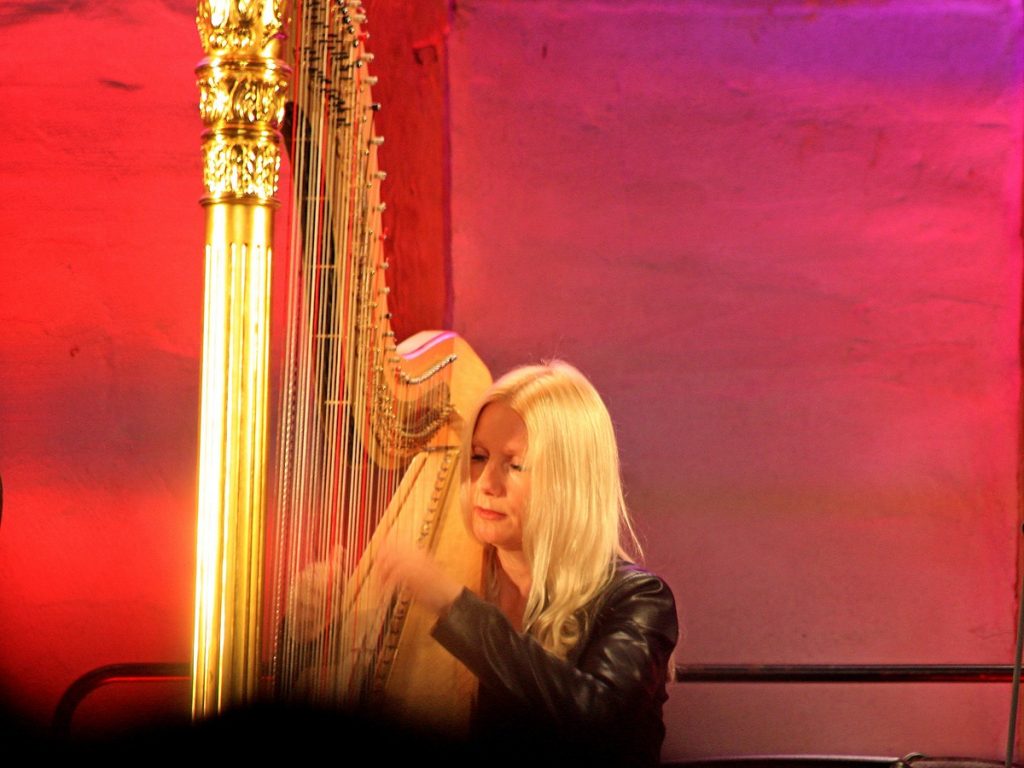
The barn is now the festival’s central venue and the scene of its most atmospheric evenings. Internationally known soloists and orchestras play here between June and September; the violinist Daniel Hope has long been closely associated with the festival, and the programme ranges from Bach to jazz. Now, stop here at the barn door at dusk on a concert night and look back toward the lit castle across the water, with the audience walking over the causeway in summer clothes. It is as close to a Mecklenburg Glyndebourne as you will find.
Hotel, Park and the Family Today
Three decades after the purchase, Ulrichshusen is a going concern. The castle runs as a hotel and restaurant, the farm produces grain and keeps cattle, the barn hosts the festival and other events, and the park around the lake has been cleared and replanted with walks along the shore. The family lives on the estate and the next generation is involved in running it. There is a small exhibition on the history of the house and the fire in the entrance area, worth ten minutes before you walk the grounds.
It would be easy to make this sound like a fairy tale, and the owners are the first to say it has been hard work with thin margins in a poor region. But stand on the bridge in the evening, with the Renaissance gables reflected in the water and music drifting from the barn, and the fairy tale is hard to resist. Ulrich von Maltzahn, who built here to show his neighbours he had arrived, would recognise the gesture.
Ulrichshusen on Video
Before you plan your trip, take a few minutes to see Ulrichshusen Castle in motion. The video below gives a good sense of the setting, the scale of the buildings and the atmosphere of the grounds.
Visiting Ulrichshusen Castle Today
Ulrichshusen is a private hotel estate, so the castle interiors are open to hotel and restaurant guests rather than as a museum, but the grounds, the causeway, the courtyard and the park paths around the lake are freely accessible in daytime, and the restaurant welcomes visitors for lunch or coffee. The best way to experience the place is to book a summer concert of the Festspiele Mecklenburg-Vorpommern in the barn, ideally with dinner before and a night in a tower room after. Concerts sell out, so book well in advance. Allow an hour for the grounds alone.
The estate lies about ten kilometres south-west of Malchin and twenty north of Waren an der Müritz, both of which have railway stations; a car is the realistic way to arrive, and the lanes through the Mecklenburg Switzerland are a pleasure. Combine your visit with Basedow, a few kilometres to the north-east, and with Mirow and Hohenzieritz further south. Here is the exact spot: Ulrichshusen Castle on Google Maps.
Palaces Nearby
If you have enjoyed this palace, the region holds more remarkable residences. Here are two more well worth adding to your journey: