Imagine being able to design a living organism the way an engineer designs a circuit board, sketching out exactly what you want it to do and then building it from standardised parts. Imagine programming a bacterium to manufacture a life-saving drug, or to produce a fuel, or to detect a poison and light up in warning. This is the ambition of synthetic biology, a field that sits at the strange and thrilling intersection of biology, engineering and computer science, and it may turn out to be one of the most transformative technologies of the coming decades.
The phrase itself can sound like science fiction, and some of its goals genuinely do, but the core idea is grounded in a real and growing capability. For the first time in history, we are learning not merely to read the language of life but to write in it, deliberately and by design.
From reading the code to writing it
To understand synthetic biology, it helps to recall how far our relationship with the genetic code has come. The great achievement of the late twentieth century was learning to read DNA, to sequence the genome and decipher the order of its chemical letters. That was an enormous undertaking, and the first reading of the entire human genome took years and cost a fortune. Today, sequencing has become so fast and cheap that it is almost routine.
Synthetic biology takes the next step. If we can read DNA, and if we can also now write it, synthesising stretches of genetic code from scratch in the laboratory, then we can begin to design genetic instructions ourselves and insert them into living cells. The cell becomes a kind of programmable machine, and the DNA we write becomes its software. This is the metaphor that animates the whole field: treating biology as a form of engineering, with cells as the hardware and genes as the code that runs on them.
Engineering principles meet living things
What distinguishes synthetic biology from older forms of genetic modification is its engineering mindset. Traditional genetic engineering tended to involve moving a single gene from one organism to another, a useful but limited kind of tinkering. Synthetic biologists aspire to something more systematic. They talk about standardised biological parts, interchangeable genetic components that can be catalogued and combined predictably, much as an electronics engineer combines resistors and capacitors from a catalogue.
The vision is of biology made modular, predictable and designable. You would describe the behaviour you want, select the genetic parts that produce that behaviour, assemble them, and load them into a host cell, often a humble and well-understood microbe like a particular strain of bacteria or yeast. Reality, of course, is messier than the metaphor: living systems are complex, full of feedback and unpredictability, and they do not always behave like tidy circuits. But the framework has nonetheless proven powerful.
Microbes as tiny factories
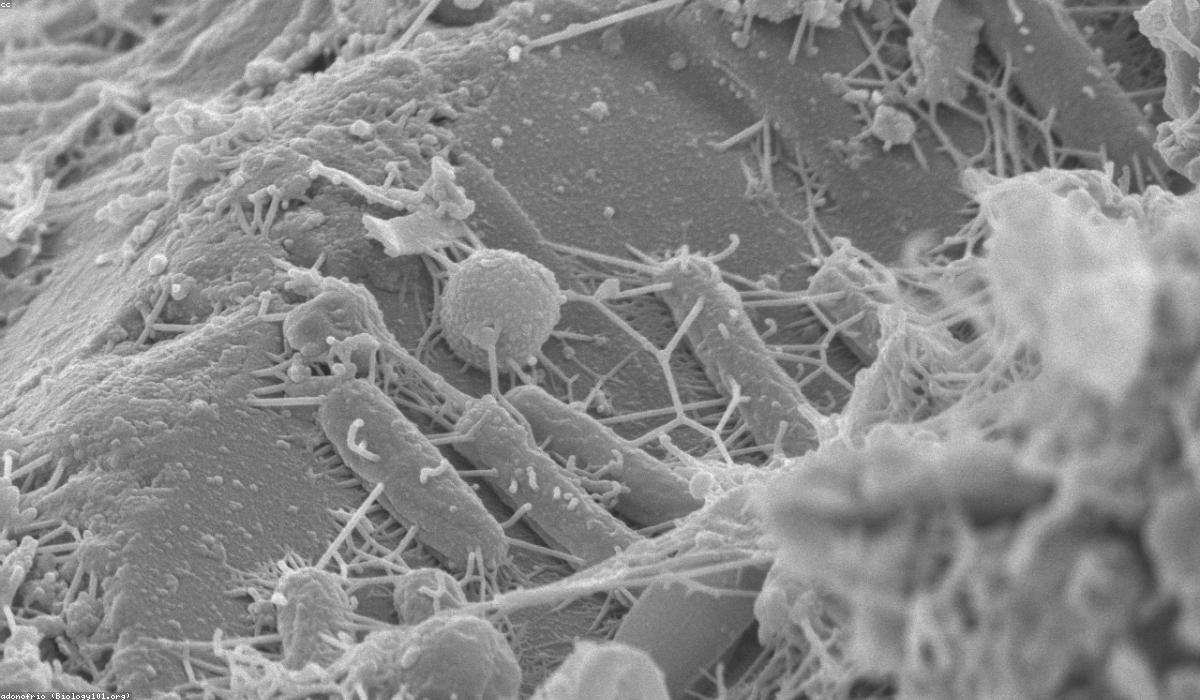
The single most successful application of synthetic biology so far has been turning microorganisms into miniature factories. Microbes are extraordinarily good at chemistry; given the right genetic instructions and the right conditions, they can produce a vast range of complex molecules cheaply, sustainably and at scale, simply by growing in large fermentation tanks much like those used to brew beer.
One of the celebrated early triumphs of the field involved engineering yeast to produce a precursor of an important antimalarial drug, a compound that had traditionally been extracted from a plant in a slow and supply-limited process. By giving yeast the genetic instructions to build the molecule themselves, researchers created a more reliable and scalable source of a medicine that matters enormously in the parts of the world hit hardest by malaria. It was a vivid demonstration that designed microbes could do real and valuable work.
Since then, engineered microbes have been put to work producing all manner of useful substances: flavourings and fragrances that would otherwise have to be harvested from scarce natural sources, ingredients for cosmetics, industrial chemicals, and materials that mimic those found in nature. The appeal is partly economic and partly environmental, since brewing a substance in a tank can be far gentler on the planet than extracting it from crops or petroleum.
Promise across many fields
The potential applications stretch across nearly every domain of human activity. In medicine, beyond drug manufacturing, researchers are exploring engineered cells that could act as living sensors and therapies inside the body, detecting signs of disease and responding to them. In agriculture, there is work on engineering microbes that live among crop roots to pull nitrogen from the air and fertilise plants naturally, potentially reducing the need for the energy-intensive synthetic fertilisers that carry a heavy environmental cost.
In energy and the environment, scientists imagine microbes engineered to produce clean fuels, to break down plastic waste, or to capture carbon. In materials science, there is interest in growing materials with biology, from spider-silk-like fibres to building substances grown rather than manufactured. The breadth of the ambition is part of what makes the field so exciting, and also part of what invites healthy skepticism, since not every dream will pan out.
The serious questions it raises
A technology this powerful inevitably raises profound questions, and it would be irresponsible to discuss synthetic biology without acknowledging them. The ability to design and build living organisms carries risks alongside its promise. There are biosafety concerns about engineered organisms escaping the laboratory and behaving unpredictably in the wild. There are biosecurity concerns about the potential misuse of the technology to create dangerous biological agents. As the tools become cheaper and more widely accessible, ensuring they are used responsibly becomes ever more important.
There are deeper ethical questions too, about how far we should go in redesigning life, and about who gets to decide. The field has, to its credit, engaged seriously with these issues, with many researchers actively working on safety mechanisms, including genetic safeguards designed to prevent engineered organisms from surviving outside controlled conditions. But the conversation about governance, regulation and the limits of what we ought to build is one that society as a whole, not just scientists, will need to continue having.
An engineering discipline in its infancy
It is worth keeping a sense of perspective. For all its promise, synthetic biology remains a young and often unpredictable discipline. The dream of biology as clean, modular engineering keeps running up against the messy reality of living systems, which evolve, adapt and frequently refuse to cooperate. Many projects that look straightforward on paper prove enormously difficult in practice. Progress has been real but often slower and harder than early enthusiasts hoped.
Yet the trajectory is unmistakable. The tools for reading, writing and designing genetic code are improving relentlessly, and the community of people able to use them is growing. We stand near the beginning of a long process of learning to engineer living things with intention. If the twentieth century was the age in which we learned to read the book of life, the twenty-first may be remembered as the age in which we began, cautiously and with no small amount of humility, to write new chapters of our own.