Ask most people when modern England really began and you’ll get a shrug. Push a historian into a corner, though, and a surprising number will point to a single grey morning in October 1066. That was the day the country changed hands, and almost everything that came afterwards — the words we use, the way land was held, even the castles scattered across the countryside — still carries the fingerprints of what happened on a muddy hill outside Hastings.
The story actually starts with a death. In January 1066 King Edward the Confessor died without an obvious heir, and that kind of gap is exactly the sort of thing that gets men killed. Harold Godwinson, the most powerful noble in the land, took the crown almost immediately. The trouble was that at least two other men were convinced it belonged to them. One was Duke William of Normandy, who insisted Edward had promised him the throne years earlier. The other was Harald Hardrada of Norway, who simply liked the idea of being king of England and had the longships to back up the ambition.
What followed was, frankly, dreadful luck for Harold. He marched his army north to deal with the Norwegians, won a savage victory at Stamford Bridge, and then — exhausted, bloodied, hundreds of miles from the south coast — got the news that William had landed near Pevensey. So he turned the whole army around and marched it all the way back down again. You can almost feel the fatigue bleeding off the pages of the old chronicles. Men who had just fought one of the bloodiest battles of the age were being asked to do it all over again, on the other end of the kingdom, without rest.
The two armies met near Hastings on 14 October. The English held the high ground and locked themselves into a shield wall, which was genuinely difficult to crack. For most of the day it held. Norman cavalry charged again and again and kept bouncing off. Then, according to tradition, the Normans feigned a retreat, the English broke ranks to chase what looked like a fleeing enemy, and the discipline that had protected them all morning simply melted away. Harold died on the field. Whether an arrow actually struck him in the eye is something historians still argue about over coffee, but the outcome was never really in doubt once the line broke.
Winning a battle is one thing. Holding a kingdom is quite another. William spent the next several years stamping out rebellion, sometimes with shocking cruelty. The so-called “Harrying of the North” in 1069–70 left whole regions burned, starving and depopulated; chroniclers wrote of land lying empty for years afterwards. It was terror as policy, and it worked. To lock down the rest of the country, William and his lords threw up castles everywhere — those squat motte-and-bailey forts of earth and timber that later grew into the great stone fortresses tourists photograph today. They weren’t built for beauty. They were built to loom over a town and remind everyone exactly who was now in charge.
Then there’s the paperwork, which sounds dull until you realise how astonishing it actually was. In 1086 William ordered a survey of nearly everything in England — who owned what, how many ploughs and pigs and acres of woodland, how much it was all worth, the lot. The result was the Domesday Book, and the grim nickname says everything about how people felt: there was no appeal against it, like the Last Judgement itself. No king in western Europe had ever attempted anything on that scale. It remains one of the most extraordinary administrative documents of the medieval world, and historians still mine it for clues about the texture of ordinary life nine centuries ago.
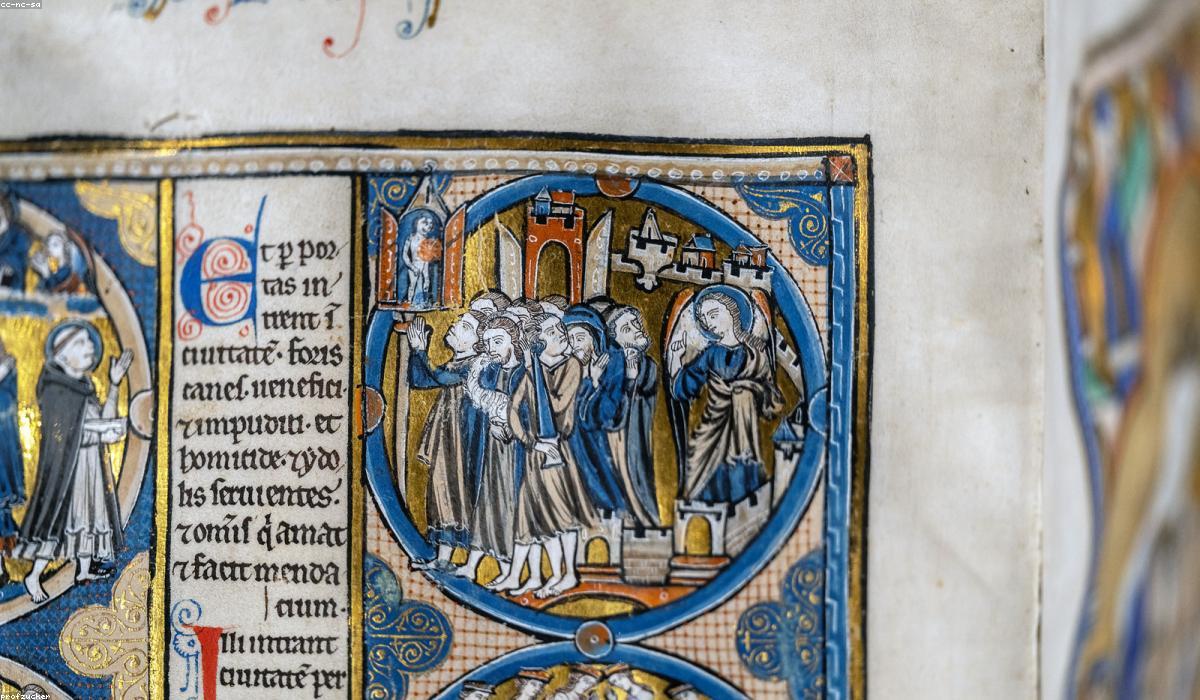
The deepest change of all, though, was quieter and far slower. A French-speaking aristocracy now sat on top of an English-speaking population, and over the following centuries the two tongues bled into one another in ways we never fully untangled. That awkward, rather beautiful collision is why English today carries both “cow” — the Anglo-Saxon animal standing in the field — and “beef,” the Norman word for the same creature once it reached the lord’s table. The same goes for sheep and mutton, pig and pork. Roughly a third of our everyday vocabulary traces back to that long, grinding fusion of conqueror and conquered.
It reshaped the law, too. Norman ideas about landholding, feudal obligation and royal justice settled over older English customs and never fully lifted. The very notion that the king sat at the top of a strict pyramid of loyalty and land owes a great deal to what William imposed after 1066.
So was 1066 really the year everything changed? Not overnight — history rarely works that cleanly, and plenty of English life simply carried on as before. But it set in motion a transformation of language, power and landscape that, nine and a half centuries later, we are arguably still living inside. In the next part of this series I want to jump forward a century and a half, to a rain-soaked meadow at Runnymede, where a group of furious barons forced a king to put his seal to a document that would echo far beyond anything they imagined: Magna Carta.
You May Like
The Belle Époque and the War That Ended It