In the space of just a couple of years, artificial intelligence went from a subject discussed mainly by researchers to something millions of people use every day. The arrival of conversational AI assistants, programs you can talk to in plain language and that answer with surprising fluency, has been the most dramatic shift in technology in a generation. Suddenly your phone, your computer, and your search engine all want to chat with you, draft your emails, summarize your documents, and answer your questions. This article looks at where these AI assistants stand today, what each major company is building, and, just as importantly, what they genuinely can and cannot do.
Table of Contents
- What these assistants actually are
- OpenAI and ChatGPT: the spark that lit the fire
- Google and Gemini: the search giant responds
- Microsoft and Copilot: AI woven into your work
- Apple, Meta, and the others
- A note on the wider field
- What they are genuinely good at
- The limits you must keep in mind
- How to use these tools well
- Closing thoughts
What these assistants actually are
It helps to understand, in plain terms, what is happening when you talk to one of these assistants. At their core they are built on large language models, systems that have been trained on vast amounts of text to become extraordinarily good at predicting what words should come next. By learning the patterns of human language at an enormous scale, they can produce responses that are fluent, coherent, and often genuinely helpful. They are not thinking in the human sense, and they do not understand the world the way a person does; they are, in a sense, very sophisticated pattern machines.
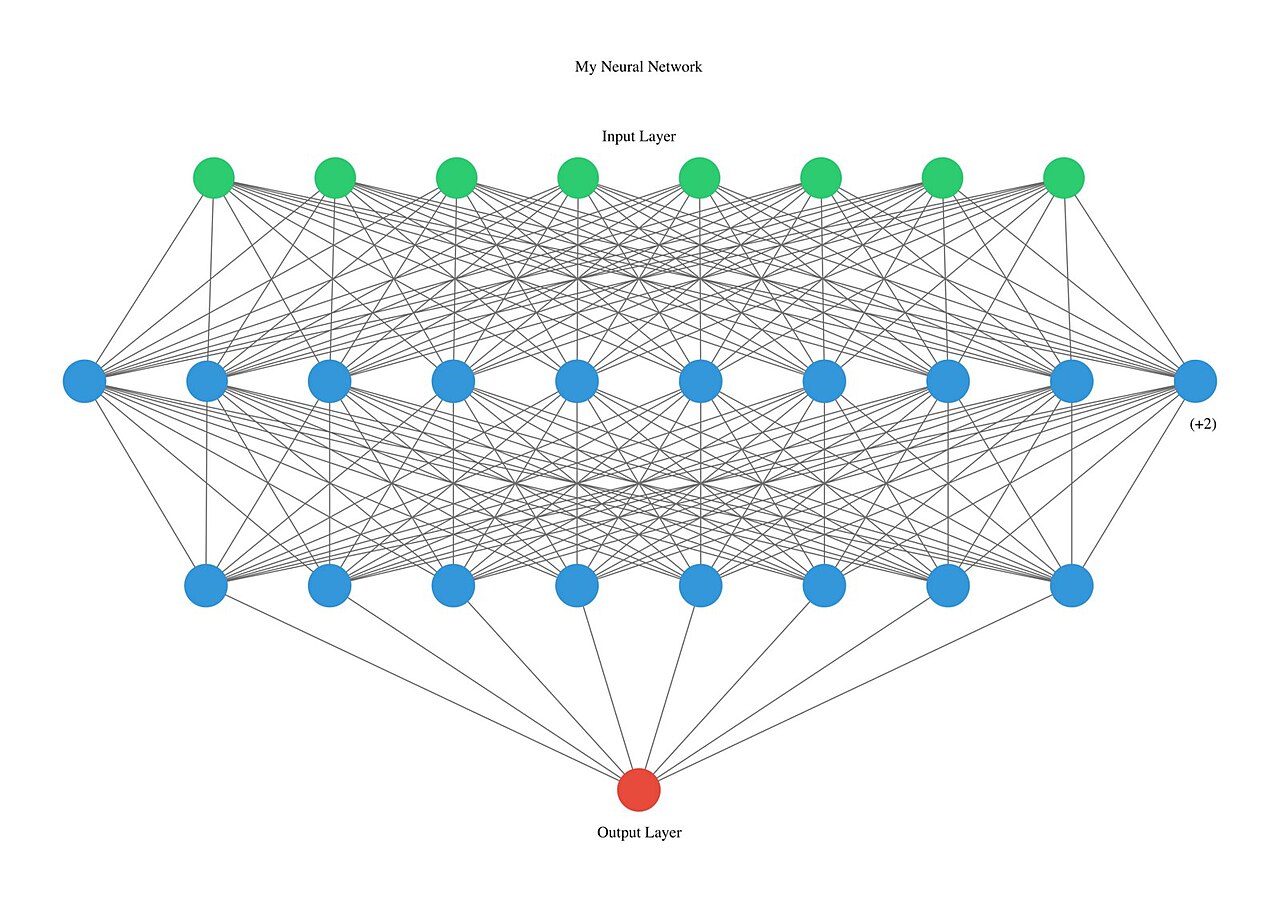
This matters because it explains both their strengths and their weaknesses. Their fluency can make them seem more knowledgeable and reliable than they actually are. They can write a beautiful paragraph and, in the same breath, state something completely false with total confidence, a phenomenon often described as hallucination. Keeping this dual nature in mind, brilliant and fallible at once, is the single most important thing for using them wisely. The popular image of a humanlike robot mind is misleading; the reality is stranger and more limited.

OpenAI and ChatGPT: the spark that lit the fire
The moment that brought this technology to the masses was the release of ChatGPT by the company OpenAI. Almost overnight, an enormous number of people experienced a conversational AI for the first time, and the effect was electric. Here was a program you could ask almost anything, that could write, explain, summarize, brainstorm, and converse with startling fluency. It became one of the fastest-growing consumer products in history and forced every major technology company to scramble in response.

OpenAI has continued to push the field forward, releasing successively more capable models that can handle not just text but images, voice, and more, moving toward assistants you can speak with naturally and that can see and discuss pictures. The company sits at the center of the AI boom, both celebrated for its breakthroughs and scrutinized over questions of safety, openness, and the immense influence such a powerful technology concentrates in a few hands. Whatever one thinks of it, ChatGPT was the spark that lit the entire fire.
Google and Gemini: the search giant responds
For Google, the rise of conversational AI was both an opportunity and a threat, because a chatbot that simply answers your question directly could undermine the search business at the heart of the company. Google, which had been a pioneer of the underlying AI research for years, responded by building its own family of assistants under the Gemini name and weaving AI-generated answers directly into its search results. It brought to the contest its vast resources, its deep research heritage, and its enormous reach across billions of devices.

Google advantage is its integration into products that people already use constantly, from search to email to its mobile operating system, allowing it to put AI assistance everywhere its users already are. Its challenge is to do this without damaging the search advertising business that funds the company, and to overcome a few stumbles where its AI gave confidently wrong or strange answers in public. The contest between the established search giant and the AI upstart that threatens it is one of the defining business rivalries of the moment.
Microsoft and Copilot: AI woven into your work
Microsoft took a different and shrewd path. Rather than only building its own models from scratch, it partnered closely with OpenAI and set about weaving AI assistance, branded Copilot, into the software that hundreds of millions of people use for work every day: its documents, spreadsheets, presentations, email, and operating system. The pitch is straightforward and powerful: an AI helper sitting inside the tools you already use, ready to draft a document, summarize a meeting, analyze a spreadsheet, or compose a reply.

This strategy plays to Microsoft great strength, its dominance in workplace software, and it represents perhaps the most concrete vision of how AI assistants will actually touch most people lives: not as a separate website you visit, but as a quiet helper built into the everyday tools of work. Whether the helper proves worth its cost, and whether it genuinely boosts productivity rather than simply adding another thing to manage, is a real and open question that businesses everywhere are now testing.
Apple, Meta, and the others
Apple, characteristically, moved more slowly and cautiously, focusing on bringing AI features onto its devices in a way that emphasizes privacy, keeping as much of the processing as possible on the phone itself rather than sending your data to distant servers. Its approach is less about a single dazzling chatbot and more about quietly useful features woven through its system, with the option to hand off harder questions to a partner service when needed. Meta, the company behind the major social networks, has taken yet another route, building AI assistants into its messaging apps and, notably, releasing some of its models openly for others to build upon, a contrast to the more closed approach of some rivals.
Beyond these giants sits a lively ecosystem of other companies, each pursuing its own angle, some focused on particular industries, some on open models, some on specialized tasks like coding or image generation. The field is moving so quickly that the competitive landscape shifts every few months, and any snapshot risks being out of date almost immediately. The one safe prediction is that AI assistance, in many forms and from many sources, is being built into more and more of the software and devices we use.
A note on the wider field
It is worth acknowledging that this article is itself the product of an AI assistant, and that the company that created it, Anthropic, is one of the players in this field, known particularly for its focus on building these systems to be safe and reliable. That is mentioned here not as a promotion but in the spirit of honesty, since writing about AI assistants without noting that one wrote these words would be a strange omission. It is also a small illustration of the very point this article keeps returning to: these tools can produce useful, fluent writing, and they should still be read with a thoughtful and critical eye rather than taken as the last word.

What they are genuinely good at
Set aside both the breathless hype and the dismissive cynicism, and a clear picture emerges of where these assistants truly shine. They are excellent at handling language: drafting a first version of an email, letter, or report that you then refine; summarizing a long document into its key points; rephrasing something to be clearer or more polite; and translating between languages. They are superb brainstorming partners, generating a list of ideas, angles, or names to get you unstuck. They can explain a difficult concept in simple terms, act as a patient tutor, and help you think through a problem by talking it over.
They are also increasingly capable in narrower, well-defined technical tasks, such as helping write and debug computer code, where they can save real time for those who know enough to check the results. The common thread is that they are at their best as an assistant to a knowledgeable human, handling the first draft, the rough work, and the tedious parts, while a person provides the judgment, the verification, and the final decision. Used this way, they are a genuine and significant productivity tool.
The limits you must keep in mind
The flip side deserves equal emphasis, because the most dangerous thing about these assistants is how convincing they are when they are wrong. They can state false facts with complete confidence, invent quotes, references, or details that do not exist, and make reasoning errors while sounding perfectly authoritative. They have a knowledge cutoff and may not know about recent events. They can reflect biases present in the material they were trained on. And because they are designed to be agreeable and helpful, they can sometimes tell you what you seem to want to hear rather than what is true.
This means you should never rely on an AI assistant for anything important without verifying it independently, especially for medical, legal, financial, or factual matters where being wrong carries real consequences. Treat their output as a knowledgeable but unreliable colleague: a useful starting point that always needs checking, not an oracle. There are also genuine wider concerns worth taking seriously, around privacy, the spread of convincing misinformation, the effect on jobs, and the concentration of such powerful tools in a few companies. A healthy enthusiasm for what these tools can do should always be paired with a clear-eyed awareness of their limits and risks.
How to use these tools well
The practical art of using an AI assistant well comes down to a few simple habits. Be specific in what you ask, giving context and detail, because a clear, well-framed request produces a far better answer than a vague one. Treat the first response as a draft to be improved through follow-up questions rather than a finished product. And always, always verify anything that matters, because a fluent answer is not the same as a correct one.
Think of the assistant as a tool that amplifies your own abilities rather than replacing them. It can help you write faster, learn quicker, and get unstuck, but the judgment about what is true, what is appropriate, and what to actually do must remain yours. The people who get the most out of these tools are not those who trust them blindly, but those who use them actively and skeptically, bringing their own knowledge and critical thinking to bear on everything the assistant produces. The tool is powerful; the human using it wisely is what makes it valuable.
Closing thoughts
The conversational AI assistant is the most striking new technology of our moment, and the race to build it has drawn in every major technology company: OpenAI, which set the whole thing in motion; Google, defending its search empire while embracing the new; Microsoft, weaving AI into the tools of work; and Apple, Meta, and many others, each with their own approach. The pace of change is genuinely dizzying, and any account of it is a snapshot of a fast-moving target.
The wisest stance toward all of this is one of curious, engaged skepticism. These tools are genuinely useful and genuinely limited, often in the same breath, and the people who benefit most are those who embrace what they do well while never forgetting what they do badly. Use them to lighten your load and expand your thinking, verify what matters, keep your own judgment firmly in charge, and you will find in them a remarkable helper. Mistake their fluency for infallibility, and they will eventually let you down. The choice, happily, remains yours.


