In the vast tidal swamps of the southwestern lowlands of Western New Guinea, where broad rivers wind through endless mangrove and sago forest before reaching the Arafura Sea, live the Asmat, one of the most celebrated woodcarving peoples in the world. Their homeland is a waterlogged country of mud and tide, of rivers that serve as roads and forests that provide nearly everything a household needs. Out of this seemingly forbidding landscape the Asmat built a culture of extraordinary artistic power, carving ancestor poles, shields, canoes, and figures whose beauty has made them famous far beyond the swamps that shaped them.
For the Asmat, carving was never mere decoration. It was bound up with the spirits of the dead, with the balance between the living and the ancestors, and with the deepest obligations of their society. To understand the Asmat is to understand a people who lived intimately with water and wood, who saw the human body mirrored in the shape of a tree, and who expressed their view of the world through the blade of the carver. This article traces the Asmat from their origins and language through their swamp homeland, their traditional life, their beliefs and art, their food and festivals, and the changes that contact with the outside world has brought.
Contents
- Origins in the Southern Lowlands
- The Name Asmat and Its Meaning
- Language of the Swamp Country
- The Homeland of Rivers and Tides
- The Traditional Way of Life
- Society, Kinship, and the Longhouse
- Religion, Ancestors, and the Spirit World
- Woodcarving and the Bisj Pole
- Crafts and the Work of the Hands
- Food, Sago, and the Forest Larder
- Festivals and Ceremonial Life
- History and Contact with the Outside
- The Asmat Today
Origins in the Southern Lowlands
The Asmat are among the indigenous peoples of the great southern lowlands of New Guinea, a region of swamp, river, and forest that has been inhabited for many thousands of years. Their ancestors adapted to one of the most challenging environments on the island, a low, flat, tidal country where dry ground is scarce and the rhythm of life is set by the rise and fall of the water. Over countless generations they developed a way of life exquisitely suited to this world of mud and mangrove.
Unlike the farming peoples of the highlands, the Asmat did not build their existence on gardens and pigs but on the resources of the forest and the rivers. Their deep history is not written in monuments but in the landscape itself, in the networks of waterways they travelled and the groves of sago palm on which they depended. Isolation from the wider world was near total, and the Asmat remained one of the last peoples on earth to encounter outsiders.
Oral tradition, rather than any written record, carries the Asmat sense of their own beginnings. Stories tell of the origin of people, of the first carvings, and of the relationship between human beings and the spirit world, explaining how the Asmat came to live as they do. These narratives root the people firmly in their swampy homeland and in the ancestral order that their art and ritual were designed to uphold.
That the Asmat should be counted among the last peoples on earth to meet outsiders speaks to the remoteness of their swamps, a country so hard to enter that it shielded a whole world of art and belief long after most of the globe had been mapped and drawn into wider trade.
The Name Asmat and Its Meaning
The name Asmat refers both to the people and to the region they inhabit, a broad expanse of the southwestern lowlands. Like many such names, its precise origins are bound up with the people’s own understanding of themselves as human beings set within a particular landscape and cosmos. To the Asmat, identity has always been closely tied to place, to the river along which one lives, and to the community and lineage into which one is born.
Within the wider Asmat world there are distinct subgroups, distinguished by dialect, environment, and custom, from those living deep in the interior swamps to those nearer the coast. Each has its own character and its own local variations in art and ritual, even while sharing the broad features that make the Asmat recognizable as a single cultural world. These internal differences matter deeply to the people themselves.
For outsiders, the single name provides a convenient label for a rich and varied culture. Yet the Asmat sense of belonging has always been rooted first in the local group and its territory, and only more recently in the broader identity that administration, mission, and the wider world have helped to define. The name has come to stand for a people whose art is admired across the globe.
The Asmat living deep in the interior swamps and those settled nearer the coast developed noticeably different accents in their art and ritual, a reminder that the single name covers a mosaic of communities rather than one uniform people.

Language of the Swamp Country
The Asmat speak languages belonging to the Papuan family of New Guinea, distinct from the Austronesian tongues of the coasts and islands. Within the Asmat area there are several related languages and many dialects, reflecting the fragmentation that the swampy, river-divided landscape encouraged. Communities separated by stretches of forest and water developed their own ways of speaking even while sharing a common cultural inheritance.
The language is rich in the vocabulary of the swamp world, with precise terms for kinds of trees, for the working of sago, for the parts of a canoe, and for the many relationships and obligations that bind a community together. It carries the songs, chants, and formal speech of ceremony, and it names the spirits and ancestors who share the world with the living. To speak well is to hold this knowledge of place and cosmos.
As with many indigenous languages, the spread of the Indonesian national language through schools, churches, and administration has brought bilingualism and, with it, pressure on local speech. Younger Asmat increasingly move between their own language and the national one, and the future of the smaller dialects depends on the value that communities place on keeping them alive alongside the wider world’s tongue.
The formal chants and ceremonial speech of the Asmat preserve an elevated register in which the names of ancestors and the events of myth are recited, a verbal art that runs parallel to the more famous art of the carver’s blade.

The Homeland of Rivers and Tides
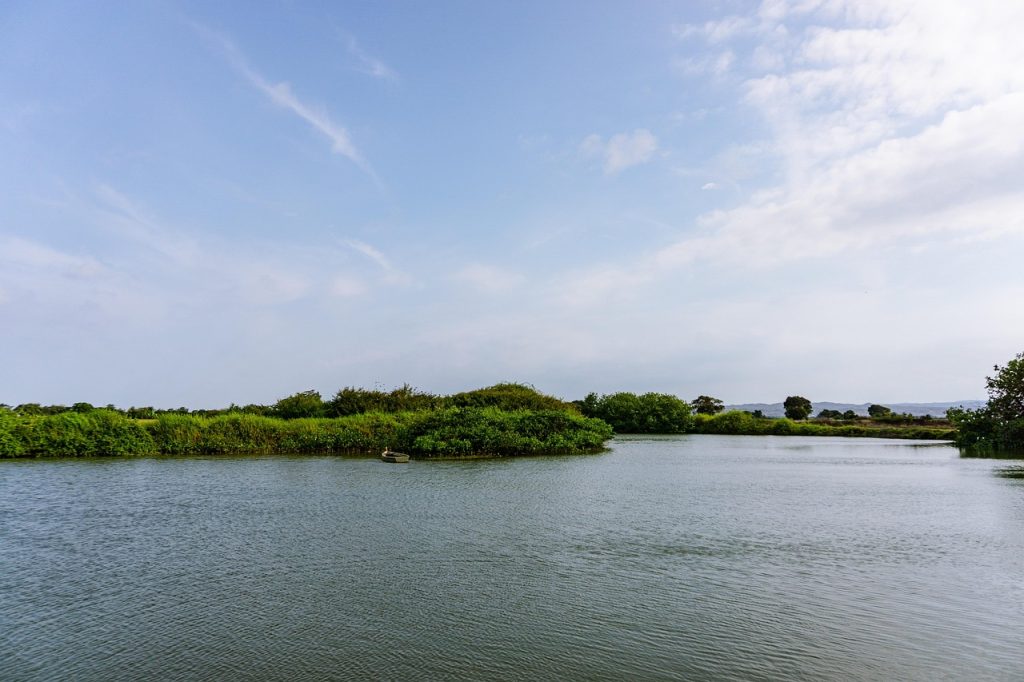
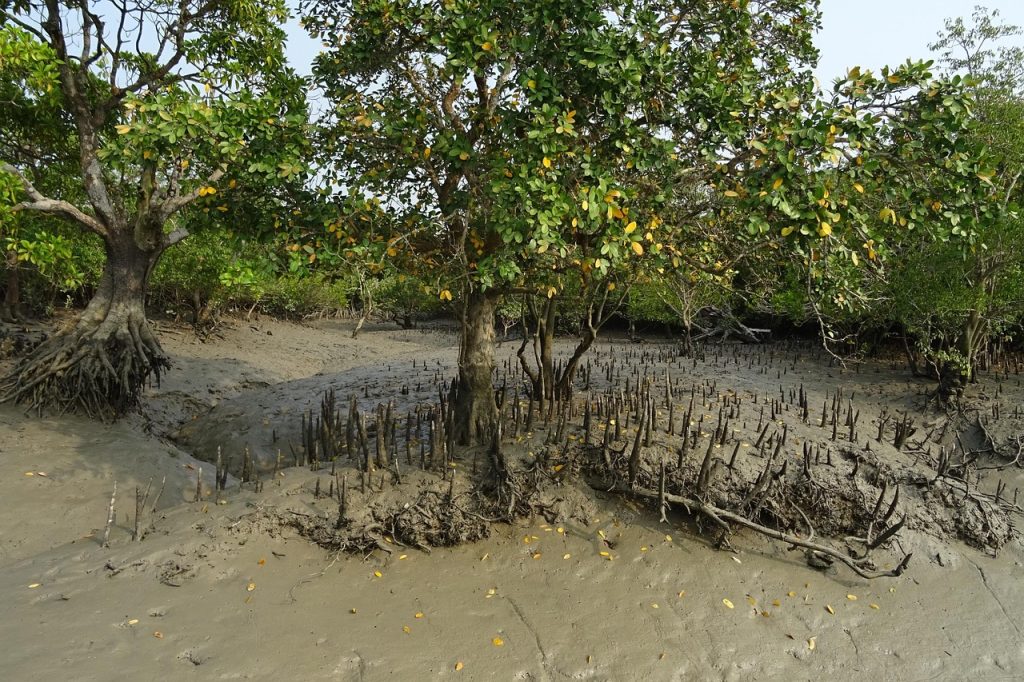
The Asmat homeland is a vast, low-lying plain of tidal swamp, threaded by wide, slow rivers and covered in mangrove and sago forest. It is a country almost without solid ground, where the tide reaches far inland and the water is never still. To live here is to live with and on the water, and the river is at once highway, larder, boundary, and the central fact of existence.
Sago palm, growing abundantly in the swampy forest, is the foundation of subsistence, while the rivers and coast teem with fish, shellfish, and other creatures. The forest supplies timber for canoes and carving, leaves for thatch, and countless other materials. It is a demanding environment, but for those who know it intimately it is generous, providing everything a community needs without the labour of clearing and tilling fields.
This landscape shaped the Asmat imagination as much as their livelihood. In a world where the boundary between land and water, forest and river, is forever shifting, the Asmat developed a vision in which human beings, trees, and spirits are deeply interconnected. The homeland is not merely a setting for their culture but its very source, the swamp world out of which their art and belief grew.
The endless interplay of tide and river means that the very shape of the land is never fixed, and the Asmat learned to read the moods of the water with the sure knowledge of people whose every journey and every meal depended on understanding the swamp.

The Traditional Way of Life
Traditional Asmat life was lived along the rivers, in villages of houses raised on posts above the wet ground, with the dugout canoe as the essential means of movement. Almost every journey, whether to fish, to gather sago, to visit kin, or to make war, was made by water, and skill with the canoe and paddle was a basic part of life for men, women, and children alike.
Subsistence rested on the processing of sago, on fishing and gathering in the rivers and swamps, and on hunting in the forest. The work of turning sago palm into food was central and demanding, and the rhythm of gathering, processing, and sharing food structured much of daily life. Men and women had their distinct tasks, together sustaining the household within the abundant but exacting environment of the swamp.
Above all, traditional life was permeated by the presence of the ancestors and the obligations owed to them. The great works of carving, the ceremonies, and even the conflicts of the past were bound up with maintaining the proper relationship between the living and the dead. This gave Asmat life an intensity in which everyday survival and profound spiritual concern were woven tightly together.
A child of the rivers learned early to handle a paddle and to move confidently across water that would have defeated a stranger, so that mastery of the canoe was as fundamental to Asmat life as walking is to the people of drier lands.

Society, Kinship, and the Longhouse
Asmat society was organized around the village and the men’s ceremonial house, a long structure that stood at the heart of community life. This house was the centre of ritual, of the planning of ceremonies and expeditions, and of the transmission of knowledge among the men. It expressed the unity of the group and served as the stage for the most important events in the community’s life.
Kinship and descent shaped the web of relationships within and between communities, defining obligations of support, exchange, and alliance. Villages could be tied to one another through marriage and shared ceremony, but they could also be rivals, and the balance of alliance and enmity was a constant feature of the Asmat world. Leadership rested on influence, skill, and reputation rather than inherited office.
Reciprocity and obligation, especially toward the ancestors, ran through the whole social order. The carving of ancestor figures, the holding of feasts, and the fulfilment of duties to the dead were not separate from social life but were its highest expression. To be a respected member of the community was to meet these obligations and to play one’s part in the ceremonies that bound the living and the dead together.
The men’s ceremonial house was more than a building; it was the living heart of the community, where the great decisions were weighed, where the knowledge of the ancestors was guarded, and where the ties that held the group together were continually renewed.

Religion, Ancestors, and the Spirit World
At the centre of Asmat belief stood the ancestors and the conviction that death was rarely a natural event but the work of hostile forces that demanded a response. The spirits of the dead remained powerfully present, and the living bore a heavy obligation to honour them, to appease them, and to restore the balance that a death had upset. Much of Asmat ceremonial life was directed toward these ends.
The Asmat saw a profound kinship between human beings and trees, understanding the human body in the image of a tree, with the head likened to its fruit. This vision lay behind the making of the great ancestor poles, in which the forms of the dead were carved from the trunks of trees. Art, belief, and the natural world were fused in a single understanding of how life, death, and renewal worked.
With the arrival of missions in the twentieth century, many Asmat became Christian, and older practices bound up with headhunting and warfare were suppressed or transformed. Yet the deep sense of the ancestors’ presence and the spiritual meaning of carving did not simply vanish. The Asmat relationship with the spirit world continues to inform their art and their sense of who they are.
The likening of the human body to a tree, with the head as its ripening fruit, was no mere poetic image but the very logic behind the ancestor poles, in which the felling and carving of a great trunk enacted a profound statement about death, memory, and renewal.

Woodcarving and the Bisj Pole
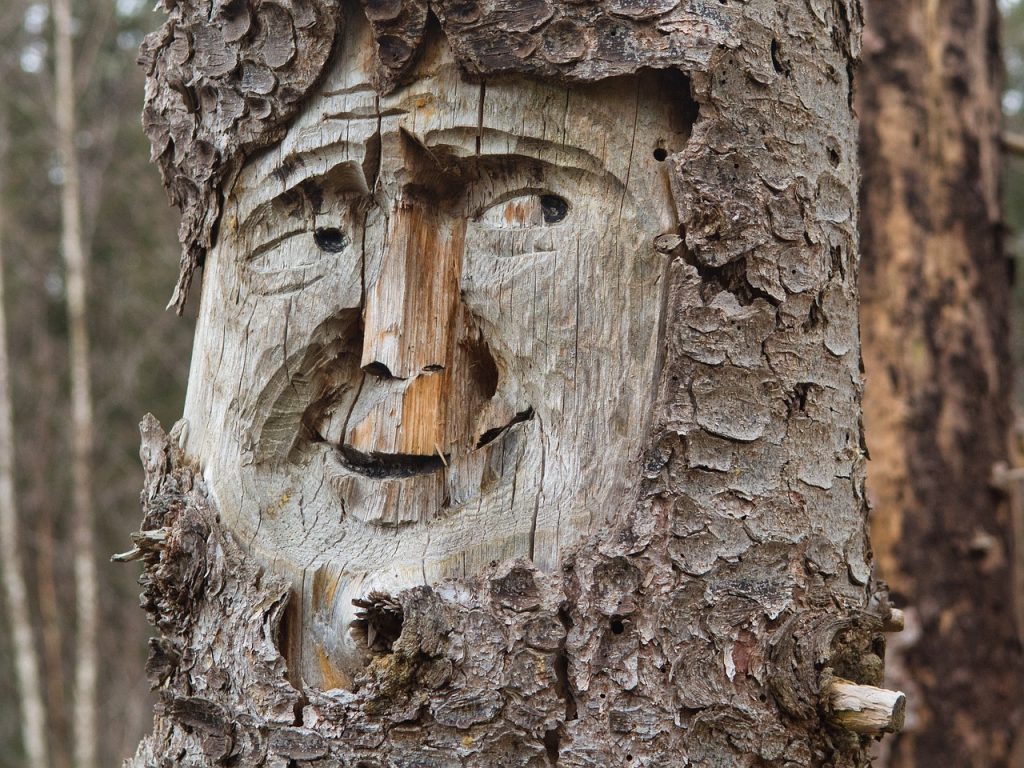
The Asmat are renowned above all for their woodcarving, an art of such power that it has been collected and admired by museums around the world. Working with tools of bone, shell, and stone before metal became available, Asmat carvers produced shields, canoes, drums, figures, and above all the towering ancestor poles that stand among the great achievements of world art.
The most famous of these are the tall carved poles raised in honour of the dead, dense with intertwined ancestor figures and symbols of headhunting and fertility. Carved for great ceremonies, they embodied the presence of the ancestors and the demand for the balance that their deaths required. The making of such a pole was a profound ritual act, not merely the fashioning of an object.
Carving was the work of specialists whose skill was highly valued, and the designs they used carried deep meaning drawn from myth, ancestry, and the natural world. In the swirling forms of Asmat art one reads a whole cosmology, a vision of the connections between people, spirits, and the living forest. This art remains the most celebrated expression of Asmat culture.
To watch a carver at work, patiently drawing an ancestor out of a length of trunk, was to witness an act of devotion as much as of craft, for the finished figure was understood to house something of the presence of the dead it honoured.

Crafts and the Work of the Hands
Beyond the great ceremonial carvings, Asmat life was full of skilled everyday making. Dugout canoes were shaped from single tree trunks, their prows often carved with figures, and they were the indispensable vehicles of a river-borne people. Paddles, drums, spears, and fishing gear were all crafted with care from the materials of the forest and swamp.
Fibre and leaf were worked into bags, mats, and thatch, and personal ornaments were fashioned from shell, bone, feather, and seed. As in the great carvings, even utilitarian objects could carry designs and meanings that linked them to the ancestral world. The distinction between art and craft, so sharp in some societies, was blurred in a culture where making itself was charged with significance.
Skills passed from one generation to the next through observation and practice, and the ability to carve, to build a canoe, or to fashion the tools of daily life was part of being a capable adult. In recent times Asmat carving has also found a market beyond the swamps, giving communities a way to turn their inherited artistry into a source of income in a changing world.
A finished dugout, shaped from a single great trunk and often graced with a carved prow, represented weeks of skilled labour and stood as both a practical vessel and a work of art, embodying the Asmat refusal to separate usefulness from meaning.
Food, Sago, and the Forest Larder
The staple food of the Asmat is sago, a starch extracted from the pith of the sago palm that grows abundantly in the swampy forest. Processing sago is laborious work, involving felling the palm, pounding the pith, and washing out the starch, but the palm yields a reliable and plentiful food that requires no cultivated fields. Sago is the foundation on which the whole diet rests.
To this staple the rivers and forest add a rich variety of foods. Fish and shellfish from the waterways, creatures hunted in the forest, and gathered fruits and plants all contribute to the diet, along with the celebrated harvest of the sago grub, a beetle larva that thrives in decaying palm and is prized as a delicacy. The swamp, forbidding as it seems, is a generous larder for those who know it.
Food and its sharing were central to social and ceremonial life. Great gatherings involved the accumulation and distribution of food, and hospitality and generosity in providing it were marks of standing. The gathering of sago and the harvest of the forest set the rhythm of everyday life, while the abundance of a feast expressed the strength and unity of the community.
The prized sago grub, harvested from the pith of decaying palms, is relished as a delicacy and reflects the Asmat gift for drawing sustenance from every corner of their swampy world, finding abundance where an outsider might see only mud and rot.

Festivals and Ceremonial Life
Asmat ceremonial life was rich and dramatic, centred on the great feasts and rituals that honoured the ancestors and marked the important transitions of life and community. Chief among them were the ceremonies surrounding the ancestor poles, in which carving, feasting, dancing, and the whole weight of belief came together in events that could involve entire villages and their allies.
These occasions were marked by display, with participants adorned in feathers, paint, and ornaments, and by drumming, singing, and dance that gave voice to myth and memory. The ceremonial house was the focus of preparation, and the mounting of a great feast required the accumulation of food and the coordination of many hands, making it a feat of organization as well as of devotion.
Ceremony bound the community together and reaffirmed its relationship with the spirit world. In honouring the dead and restoring balance, the Asmat also renewed the ties among the living, strengthening alliances and expressing the identity and vitality of the group. Even as missions transformed some practices, the ceremonial impulse and the love of display remain strong in Asmat life.
The rhythm of drumming that filled the ceremonial house during a great feast carried the voices of myth and memory, drawing dancers and onlookers alike into a shared experience in which the boundary between the living and the honoured dead seemed to thin.

History and Contact with the Outside
For most of their history the Asmat lived beyond the reach of the outside world, protected by the sheer difficulty of their swampy homeland. Early outsiders who skirted the coast found the country forbidding and its people formidable, and the Asmat remained among the last peoples on earth to be drawn into sustained contact with the wider world, which came only in the twentieth century.
When missionaries, administrators, and traders did arrive, change came swiftly. Missions worked to end headhunting and to convert the people to Christianity, while colonial and later national authority incorporated the region into a modern state. Steel tools, cloth, and new goods transformed daily life, and the collecting of Asmat art brought the outside world’s admiration and its money into the swamps.
The incorporation of the region into Indonesia has been accompanied by the pressures common to many indigenous peoples, including questions of land, resources, and rights, as well as the challenges of health and development in a remote and difficult environment. Within a few generations the Asmat have moved from near-total isolation to membership in a wider and often demanding world.
The suppression of headhunting by missions severed the old link between warfare and the carving of ancestor poles, forcing a profound reworking of ceremonies that had once been inseparable from the taking of heads and the balancing of deaths.

The Asmat Today
Today the Asmat remain in their river and swamp homeland, still gathering sago, still travelling by canoe, and still carving the wood for which they are famous. Christianity is now widespread, schools and clinics have appeared, and the national economy and administration are part of life, yet much of the older world persists alongside the new in the villages of the lowlands.
Asmat art has become a source of pride and of income, sought by collectors and celebrated in exhibitions, and carving remains a living tradition passed to new generations. This engagement with the wider world offers opportunity, but it also raises questions about how to sustain the meaning of an art once inseparable from ancestral ritual as it becomes, in part, a commodity for outsiders.
The challenges facing the Asmat are real, from the pressures on their environment and resources to the difficulties of life in a remote region. Yet they carry into the future a powerful inheritance: an intimate knowledge of their swamp world, a ceremonial life of great depth, and an artistic tradition admired across the globe. In their carving and their rivers, the Asmat continue to express a vision that is unmistakably their own.
Museums and collectors across the world now hold Asmat carvings among their most prized possessions, a recognition that has brought the people a measure of renown even as it raises difficult questions about the meaning of an art torn from the ceremonies that gave it birth.
For all the pressures of the modern world, the sound of an adze on wood and the sight of a canoe cutting the brown water remain the enduring signatures of a people whose identity is carved, quite literally, from the forest that surrounds them.
Related Peoples of the Region
- Warlpiri People of the Tanami Desert and Their World of Sand and Story
- Pitjantjatjara People of the Western Desert and Their Sacred Heart at Uluru
- Noongar People of the Southwest and Their Country of Six Seasons
- Tiwi People of the Northern Islands and Their World Apart
- Palawa People of lutruwita and Their Remarkable Cultural Return
- Dani People of the Baliem Valley and Their Highland World of Pigs and Gardens
You May Like
The Damara, an Ancient People of Namibia