Across the vast red heart of Australia, in the arid country known as the Tanami Desert, live the Warlpiri people, one of the largest Aboriginal groups still speaking their own language in daily life. Their homeland stretches through the central and northern reaches of the continent, a land of spinifex plains, hidden waterholes, and sandhills that glow deep ochre at dusk. For tens of thousands of years the Warlpiri have read this seemingly empty country as an intricate map of ancestral events, where every ridge, soak, and rock outcrop carries a story tied to the creative beings who shaped the world. To outsiders the desert can look like nothing at all; to the Warlpiri it is a living archive of law, kinship, and memory.
The Warlpiri are known far beyond their desert communities for the brilliant dot paintings that translate their sacred geography onto canvas, for a remarkable sign language used alongside speech, and for the resilience with which they have carried ancient knowledge into a rapidly changing era. Communities such as Yuendumu and Lajamanu have become centres of cultural creativity, where elders teach children the songs and designs that hold their world together. This article traces the Warlpiri from their ancestral origins through their language, homeland, social order, spiritual life, art, food, and ceremony, and into the challenges and achievements that define their lives today.
Contents
- Origins and Ancestral Roots
- The Meaning of the Warlpiri Name
- Language and the Famous Sign System
- Homeland in the Tanami Desert
- The Old Way of Desert Life
- Society, Kinship and Skin Names
- Religion and the Dreaming
- Traditions and Sacred Sites
- Dot Painting and Desert Crafts
- Food and the Desert Larder
- Ceremony, Song and Festival
- History and the Colonial Encounter
- The Warlpiri People Today
Origins and Ancestral Roots
The Warlpiri trace their presence in central Australia back through an almost unimaginable depth of time. Archaeological evidence across the continent shows that Aboriginal peoples have occupied Australia for at least sixty thousand years, and the desert country of the Tanami has been part of that long human story for many thousands of years. The Warlpiri themselves do not measure their beginnings in centuries but in the deeds of ancestral beings who emerged from the land and gave it shape, a framework of understanding that ties every living person to the deep past through unbroken lines of story and law.
Living in one of the harshest environments on earth demanded extraordinary knowledge, and the Warlpiri developed a sophisticated understanding of water, seasons, plants, and animals that allowed them to thrive where survival seemed impossible. Their ancestors moved across enormous territories in small family groups, timing their journeys to the ripening of seeds and the filling of waterholes after rare rains. This mobility was not aimless wandering but a carefully patterned use of country shaped by generations of accumulated experience.
Warlpiri origins are inseparable from their neighbours, for the desert peoples of central Australia share overlapping stories, ceremonies, and marriage ties that bind them into a wider cultural world. Groups such as the Arrernte, Pintupi, and Anmatyerre are linked to the Warlpiri through shared Dreaming tracks that cross the boundaries between languages. In this way the Warlpiri understand themselves not as an isolated people but as one thread in a vast web of relationships stretching across the interior of the continent.
The endurance of the Warlpiri across such an immense span of time reflects not only physical adaptation but an intellectual achievement of the highest order, for the knowledge required to live in the desert was vast and precise. Each generation inherited a detailed inventory of the land and its resources, refined through countless lifetimes of observation and encoded in a form that could be carried without books or maps. To understand the Warlpiri is to appreciate that their true wealth lay in this accumulated wisdom rather than in any material possession.

The Meaning of the Warlpiri Name
The name Warlpiri refers both to the people and to the language they speak, and like many Aboriginal group names it has been spelled in a variety of ways in written records, including Walbiri and Walpiri. The term came into common use as a way of identifying speakers of a shared tongue who occupied the Tanami region, though the people themselves have always understood their identity primarily through country, kinship, and the Dreaming rather than through a single collective label.
Within the wider Warlpiri world there are recognised regional divisions, sometimes described in terms of the direction of one’s country, such as the northern, southern, eastern, and western Warlpiri. These divisions reflect real differences in dialect, ceremony, and the particular ancestral tracks that pass through each area, while still belonging to one broad linguistic and cultural family. A person’s belonging to a specific stretch of country carries deep meaning and responsibility.
For the Warlpiri, a name is never merely a label but a marker of relationship and inheritance. Personal names, place names, and the names of Dreaming beings are woven together so tightly that to speak the name of a country is often to invoke the ancestor who made it. This dense connection between naming and meaning is one reason the Warlpiri language has become so important as a vessel for cultural knowledge that cannot easily be translated into any other tongue.

Language and the Famous Sign System
The Warlpiri language belongs to the Pama-Nyungan family that covers most of the Australian continent, and it remains one of the healthiest Aboriginal languages, spoken fluently by thousands of people of all ages. Unlike many Indigenous tongues that have declined toward silence, Warlpiri continues to be the first language of children in its home communities, a living medium of conversation, teaching, and ceremony. This vitality has made it a focus of linguists worldwide who see in it a window into how human language can encode a relationship with land.
Warlpiri is famous among scholars for its complex grammar, including a flexible word order and an elaborate system of kinship terms that can express the exact relationship between any two people. The language carries within it a whole social structure, so that to speak correctly is to acknowledge the web of obligations that binds a community together. Learning the language is therefore inseparable from learning how to behave properly toward relatives, elders, and country.
Perhaps most remarkable is the Warlpiri sign language, a fully developed system of hand signs used alongside or in place of speech. It is employed during periods of mourning when speaking is restricted, across distances where the voice cannot carry, and in situations that call for silence. Far richer than simple gestures, this sign system can convey detailed meaning and stands as one of the most sophisticated signed languages documented among the world’s spoken-language communities.
Efforts to record and celebrate the Warlpiri language have produced dictionaries, grammars, and teaching materials that stand among the most thorough for any Aboriginal tongue. These resources support the community’s own determination to keep the language alive, complementing rather than replacing the everyday speech that passes naturally between grandparents and grandchildren. The strength of Warlpiri offers hope and a model for other Indigenous communities working to sustain languages under pressure across the world.

Homeland in the Tanami Desert
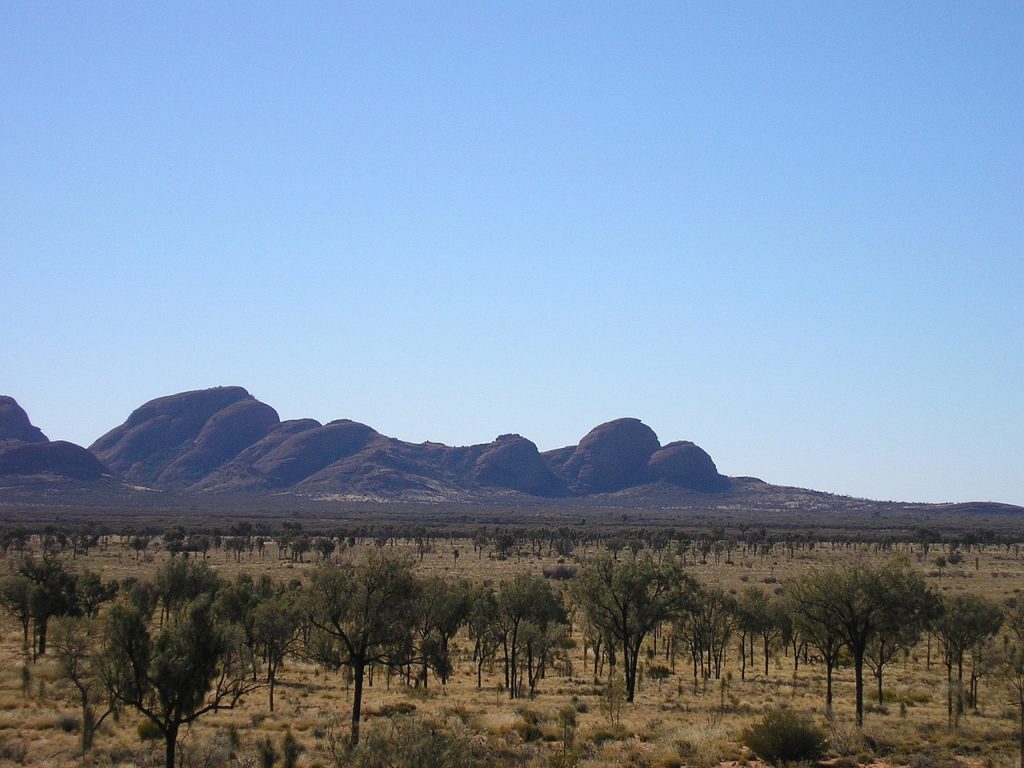
The Warlpiri homeland lies in the Tanami Desert and its surrounding country, a huge expanse of arid land in the Northern Territory stretching toward the border with Western Australia. This is a country of red sand plains, spinifex grasslands, low ranges, and scattered soakages that hold water beneath the surface long after the last rain has fallen. To the untrained eye it appears empty and forbidding, but to the Warlpiri it is a homeland dense with meaning, resources, and the presence of ancestral beings.
Water is the defining preoccupation of desert life, and Warlpiri knowledge of the land centres on the location of soaks, rockholes, and clay pans that fill after storms. The distribution of these water sources shaped the routes people travelled and the places where they could gather, and this intimate geography was passed down through songs that function as detailed maps. A single ceremony can encode the location of water across hundreds of kilometres of country.
The desert climate swings between scorching summer heat and surprisingly cold winter nights, and the Warlpiri adapted their movements and shelters accordingly. Seasonal rhythms governed when particular foods were available and when large gatherings for ceremony could take place, usually after good rains had filled the waterholes and brought a flush of plant and animal life. The homeland was never a static backdrop but a dynamic partner in the cycle of Warlpiri life.

The Old Way of Desert Life
Before the arrival of Europeans, the Warlpiri lived as mobile hunter-gatherers whose survival depended on deep ecological knowledge and constant movement across the land. Families travelled light, carrying only what was essential, and built temporary shelters from branches and spinifex when they camped. Their material culture was spare and elegant, shaped entirely by the need to move easily through a demanding environment while carrying everything of importance in their memories and songs.
The daily rhythm of life revolved around the search for food and water, with men typically hunting larger game and women gathering seeds, fruits, and small animals that together provided the bulk of the diet. Fire was a constant tool, used for cooking, warmth, signalling, and for burning country in patterns that encouraged fresh growth and made hunting easier. This careful use of fire shaped the desert ecology over thousands of years and reflected a profound understanding of the land as something to be tended rather than simply exploited.
Life in small groups did not mean isolation, for the Warlpiri maintained wide networks of trade, marriage, and ceremony that connected them to distant communities. Objects such as pearl shell, ochre, and stone tools moved along trade routes that spanned much of the continent, and great gatherings brought scattered families together for ceremony and the arrangement of marriages. In this way the apparent emptiness of the desert concealed a densely connected social world.

Society, Kinship and Skin Names
Warlpiri society is organised through one of the most intricate kinship systems known to anthropology, a structure that assigns every person a place within a web of relationships that governs almost every aspect of life. Central to this system are the so-called skin names, a set of categories into which everyone is born and which determine who may marry whom, who must be avoided, and who bears responsibility for particular ceremonies. These categories extend outward to embrace the whole social universe.
The skin name system divides the community into groups that stand in defined relationships to one another, so that a person meeting a stranger can quickly work out the correct way to behave toward them simply by learning their skin. This creates a remarkable social order in which even people who have never met already share a framework of mutual obligation. The system also extends to the natural world, linking people to particular animals, plants, and stretches of country.
Authority among the Warlpiri traditionally rested with senior men and women who held the deepest knowledge of law, ceremony, and country, rather than with any single chief. Elders earned their standing through a lifetime of learning and were responsible for guiding younger people through the stages of initiation and knowledge. This gerontocratic order ensured that the most important cultural knowledge was carefully controlled and passed on only to those judged ready to receive it.

Religion and the Dreaming
At the heart of Warlpiri spiritual life lies the concept often translated into English as the Dreaming, though the word only approximates a far richer idea known in Warlpiri as Jukurrpa. The Dreaming describes the creative era when ancestral beings travelled across a formless land, shaping its features, establishing its laws, and giving names to everything within it. Crucially, this era is not a distant past but an ongoing reality that continues to sustain the world and everyone in it.
The ancestral beings of the Dreaming took many forms, appearing as animals, plants, natural forces, and human figures whose journeys across the country left permanent traces in the landscape. The paths they travelled, known as Dreaming tracks or songlines, link sacred sites across vast distances and are remembered in songs, designs, and ceremonies. To follow a songline is to retrace the creative journey of an ancestor and to renew the living connection between people and country.
Religion for the Warlpiri is not a separate compartment of life but the foundation on which everything else rests, from kinship and land ownership to art and daily behaviour. The proper performance of ceremony is understood as essential to maintaining the health of the country and the wellbeing of its people. In this worldview, humans are not masters of the land but caretakers charged with keeping alive the law laid down in the Dreaming.
Traditions and Sacred Sites
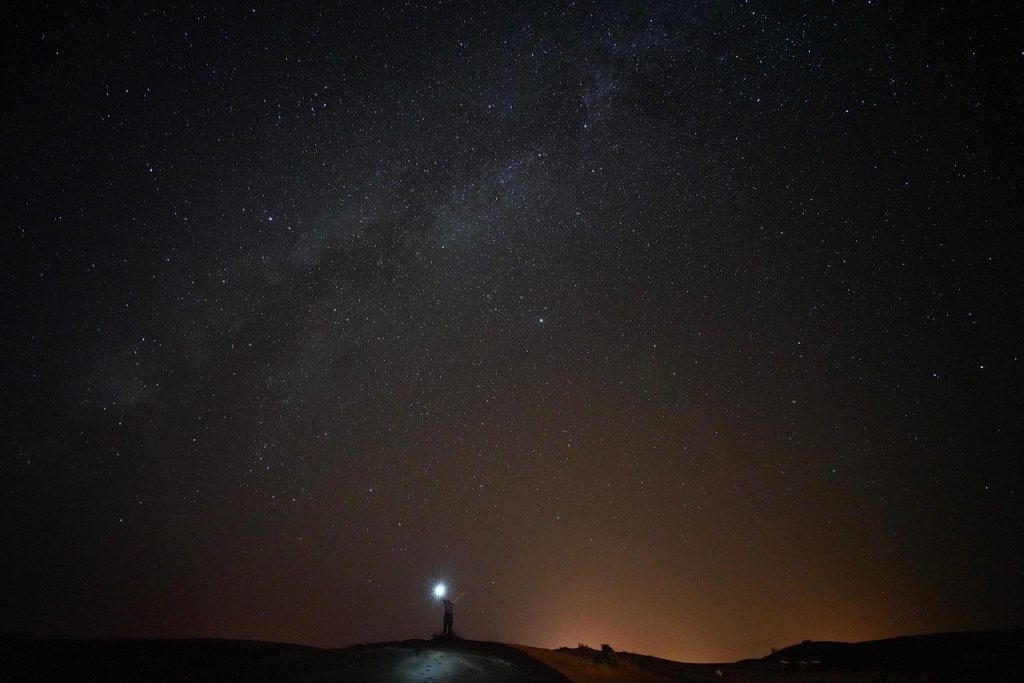
Sacred sites lie at the centre of Warlpiri tradition, each one marking a place where an ancestral being performed some significant act during the Dreaming. These sites, which may take the form of a rockhole, a hill, a tree, or a stretch of sand, are treated with great care and are often subject to restrictions on who may visit them or speak of them. The responsibility for particular sites belongs to specific groups of people connected to them through descent and ceremony.
The knowledge attached to sacred places is layered, with some information shared openly and other levels reserved for initiated men or women who have earned the right to receive it. This careful management of knowledge protects the most powerful stories and ensures that they are passed on responsibly. The great desert landmarks and the Dreaming tracks that connect them form a network of tradition that binds the Warlpiri to their neighbours across the interior.
Maintaining these traditions requires constant effort, for the songs, designs, and ceremonies associated with each site must be performed to keep them alive. Elders devote enormous energy to teaching the correct forms to younger generations, aware that a lapse in transmission could sever a connection that has endured for thousands of years. The endurance of these traditions in the face of profound social change is one of the most striking features of Warlpiri life.

Dot Painting and Desert Crafts
The Warlpiri are among the peoples most closely associated with the celebrated dot painting movement that brought Aboriginal art to worldwide attention. These paintings translate the sacred geography of the Dreaming into intricate patterns of dots and lines, mapping ancestral journeys, waterholes, and ceremonies onto canvas or board. What began as designs traced in sand or painted on bodies for ceremony has become a powerful means of asserting cultural identity and generating income for desert communities.
The community of Yuendumu became particularly famous for its art, especially after senior men painted the doors of the local school with Dreaming designs in a landmark project that carried deep meaning about passing knowledge to the young. Warlpiri artists use a restrained but striking palette drawn from natural ochres and modern acrylics, and their work is now held in major galleries around the world. Behind every painting lies a story that the artist has the right to tell through their connection to country.
Alongside painting, the Warlpiri produced a range of crafted objects essential to desert life, including boomerangs, spears, spear-throwers, digging sticks, and carved wooden bowls used to carry water and food. Each object was made with skill and often decorated with meaningful designs, blending practical function with cultural expression. These crafts embodied the same knowledge of country and materials that underpinned every other aspect of Warlpiri survival and art.

Food and the Desert Larder
The desert may look barren, but to the Warlpiri it offered a varied larder for those who knew where and when to look. Bush foods included a wide range of seeds ground into flour and baked into cakes, fruits such as bush tomatoes and desert berries, edible roots, and the sweet honey ants prized as a rare delicacy. Gathering these foods required detailed seasonal knowledge, and women in particular carried an encyclopaedic understanding of which plants ripened at which time and place.
Hunting provided vital protein, with kangaroos, emus, goannas, and smaller reptiles and birds forming the core of the game taken across the country. Men tracked larger animals over long distances using extraordinary skill in reading signs on the ground, while smaller creatures such as lizards were often caught by women and children close to camp. Nothing was wasted, and the cooking and sharing of game followed strict rules tied to kinship and ceremony.
Food among the Warlpiri was never simply a matter of nutrition but was bound up with law, generosity, and social obligation. The rules governing who received which portions of an animal reinforced the bonds of kinship and ensured that even in lean times the vulnerable were provided for. Sharing food was, and remains, one of the fundamental expressions of what it means to live properly within Warlpiri society.

Ceremony, Song and Festival
Ceremony is the beating heart of Warlpiri cultural life, the means by which the law of the Dreaming is renewed and the connection between people and country kept strong. Ceremonies range from small family rituals to great gatherings that draw participants from across the desert, and they may last for days or weeks as songs are sung, designs painted, and dances performed. These events are occasions of profound seriousness as well as joy and reunion.
Song cycles form the core of many ceremonies, with each song marking a stage in an ancestor’s journey across the land. Sung in sequence, these cycles recreate the creative acts of the Dreaming and reaffirm the singers’ rights and responsibilities to the country they describe. The precise transmission of these songs, sometimes numbering in the hundreds, is a feat of memory and devotion carried out by senior custodians who guard them closely.
Initiation ceremonies mark the passage of young people, especially young men, into adulthood and the gradual acquisition of sacred knowledge. These rites can be demanding and are surrounded by strict protocols, reflecting the weight of the knowledge being conferred. Through ceremony the Warlpiri renew not only their bonds with one another but their standing as the rightful custodians of a country entrusted to them in the Dreaming.

History and the Colonial Encounter
The Warlpiri remained beyond the reach of European settlement longer than many Aboriginal peoples because of the remoteness and harshness of their desert country. Sustained contact came only in the late nineteenth and early twentieth centuries, as pastoralists, prospectors, and miners pushed into the interior in search of land and gold. This encounter brought disease, violence, and disruption to a way of life that had endured for millennia, and the consequences were often devastating.
One of the darkest episodes was the Coniston massacre of 1928, when a punitive expedition killed a large number of Warlpiri and neighbouring people following the death of a settler. Events like this, together with the pressures of encroaching pastoral stations and the removal of people to government settlements, forced many Warlpiri off their traditional country. Communities such as Lajamanu were created when people were relocated far from their homelands, a dislocation whose pain echoed for generations.
Despite this upheaval, the Warlpiri never abandoned their law or their language, and the later twentieth century brought a gradual recognition of Aboriginal rights that allowed some measure of return and self-determination. Land rights legislation in the Northern Territory enabled the Warlpiri to regain legal title to parts of their country, laying a foundation for the cultural revival that continues today. Their survival stands as testimony to an extraordinary resilience.
The Warlpiri People Today
Today the Warlpiri number in the thousands and remain one of the most culturally intact Aboriginal peoples in Australia, with their language still strong and their ceremonies still performed. They live mainly in desert communities such as Yuendumu, Lajamanu, Willowra, and Nyirrpi, as well as in regional towns, balancing the demands of contemporary life with the continuing obligations of law and kinship. Their communities face real challenges, including remoteness, economic hardship, and the pressures of the wider world.
Cultural production has become a source of pride and livelihood, with Warlpiri art centres supporting painters whose work reaches international audiences, and with media projects recording songs, stories, and language for future generations. Bilingual education programmes have sought to keep the language strong in schools, and elders continue to insist on the importance of teaching young people both the old law and the skills needed to navigate modern society. This effort to hold two worlds together defines much of contemporary Warlpiri life.
The Warlpiri story is ultimately one of endurance and creativity in the face of enormous change. Having survived colonisation, dispossession, and the loss of many relatives, they have carried their knowledge into a new century and found ways to share it on their own terms. For visitors and scholars alike, the Warlpiri offer a profound example of a people whose relationship with their land has never been broken, and whose songs still map a world made in the Dreaming.
Younger Warlpiri increasingly move between their desert communities and the wider Australian society, taking up education and roles in cultural organisations while remaining anchored to their homeland. Many have become powerful advocates for their people, using film, music, and art to bring Warlpiri perspectives to national audiences, showing that an ancient culture can grow and speak with confidence in the present.

Related Peoples of the Region
- Kamsa People of the Sibundoy Valley and Their Carnival of Forgiveness
- Bororo People of the Mato Grosso Savanna and Their Circle of the Dead
- Chiquitano People of the Bolivian Lowlands and Their Baroque Mission Legacy
- Movima People of the Beni Floodplains and Their Language Without Kin
- Yolngu People of Arnhem Land and Their Unbroken Law of Two Worlds
- Arrernte People of the Red Centre and Their Songlines Across the Desert
You May Like
The Damara, an Ancient People of Namibia


2 thoughts on “Warlpiri People of the Tanami Desert and Their World of Sand and Story”