In the red heart of the Australian continent, around the town now called Alice Springs and across the ranges and desert country of Central Australia, live the Arrernte, one of the best known of all Aboriginal peoples. Their country takes in the dramatic MacDonnell Ranges, the dry riverbeds lined with river red gums, and the vast spinifex plains that stretch toward the horizon. For tens of thousands of years the Arrernte have lived in this arid land, reading its subtle signs and holding its stories in an unbroken tradition.
The Arrernte are famous partly through the work of early anthropologists who recorded their ceremonies and beliefs, making Arrernte life one of the most documented of any Aboriginal people. Yet the Arrernte are far more than a subject of study. They remain a living people whose art, law, and connection to country continue to shape Central Australia. This article follows the Arrernte through their origins, their language, their desert homeland, and the culture that endures at the center of the continent.
Contents
- Origins of the Arrernte People
- The Meaning of the Arrernte Name
- The Arrernte Language
- Homeland in Central Australia
- The Old Way of Life
- Society and Kinship
- Religion and the Dreaming
- Traditions and Ceremony
- Crafts and Desert Art
- Food and Bush Tucker
- Festivals and Gatherings
- History and Contact
- The Arrernte Today
Origins of the Arrernte People
The Arrernte descend from the first peoples of Australia, whose ancestors reached the continent in one of the earliest human migrations and spread even into its harsh desert center. In Central Australia they developed a way of life suited to one of the driest inhabited regions on earth.
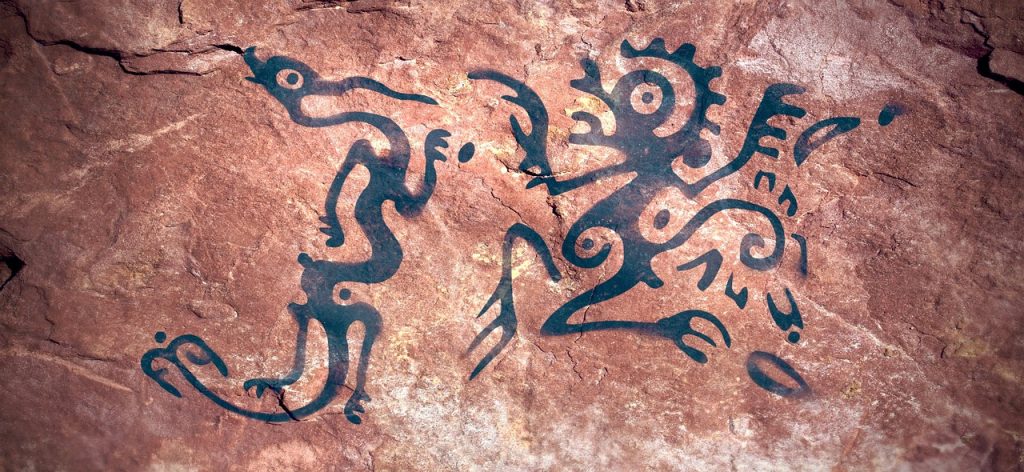
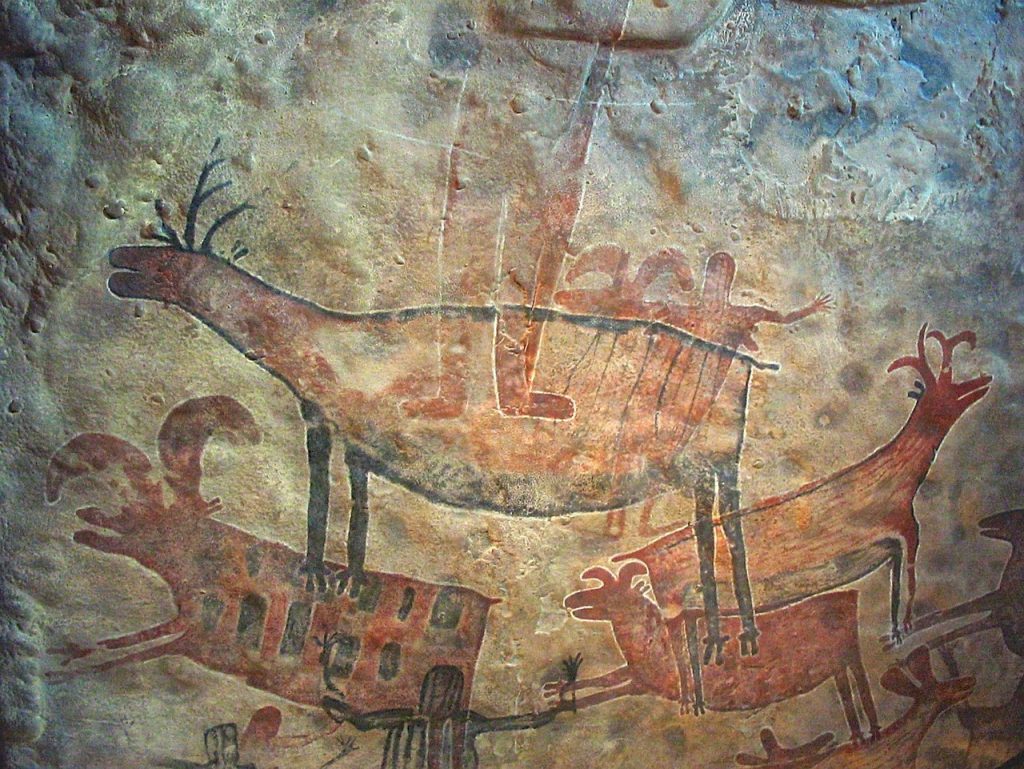
Their presence in the country reaches back many thousands of years, recorded in rock art, ancient camp sites, and above all in the oral traditions that tie the people to the land. The Arrernte understand their origins through the ancestral beings who created the country and gave them their law.
Living at the center of the continent, the Arrernte lay at a crossroads of Aboriginal Australia, linked by trade and ceremony to peoples in every direction. Their deep roots in this land and their central position made them a people of great cultural richness and importance.
That people could live, and live richly, in the arid center of Australia is a testament to the depth of Arrernte knowledge and the strength of their culture. The desert that seems empty to outsiders was to the Arrernte a country full of meaning, resource, and story.
The rock art and sacred sites of Central Australia record a human presence stretching back into the deep past, and the Arrernte carry that inheritance forward as the traditional owners of much of this country.
The Arrernte occupy a place of special importance in the wider story of Aboriginal Australia, both for the richness of their culture and for their location at the geographic heart of the continent, a hub of ancient trade and ceremony.
Trade routes radiating from Central Australia carried ochre, tools, and ceremonial objects across the continent, and along them moved songs and stories as well, making the Arrernte country a meeting place of ideas.
The Meaning of the Arrernte Name
The name Arrernte, also written in several other ways over the years, refers both to the people and to their language, and it distinguishes a number of related groups spread across Central Australia. There are eastern, western, central, and other Arrernte divisions, each tied to its own country.
Like other Aboriginal peoples, the Arrernte were traditionally organized as local groups tied to particular tracts of land rather than as a single named nation. The name Arrernte expresses what these groups share in language and culture.
The various spellings that have appeared in books and records reflect the efforts of outsiders to capture the sounds of the language, and the people themselves have settled on forms that best represent their tongue. The name today marks a proud and distinct identity.
The recognition of the different Arrernte groups, each with its own dialect and country, reflects the way Aboriginal identity is tied above all to particular land rather than to a single overarching nation. Each group is custodian of its own tract.
Anthropologists and linguists have used various spellings over more than a century, and the settling on modern forms reflects the growing role of the Arrernte themselves in representing their language and identity.
For the Arrernte themselves, the name is inseparable from country and law, marking not an abstract nationality but membership in a living tradition tied to particular land.

The Arrernte Language
The Arrernte language belongs to the large Pama-Nyungan family that covers most of Aboriginal Australia, and it is spoken in several closely related dialects across Central Australia. It remains one of the stronger surviving Aboriginal languages, still spoken by children in some communities.
The language carries the detailed knowledge of the desert country, its plants, animals, water sources, and the stories of the ancestral beings. To speak Arrernte is to hold a map of the land and its meaning encoded in words.
Efforts to teach and record the language, including dictionaries and bilingual programs, have helped keep it alive against the pressure of English. For the Arrernte the survival of the language is closely tied to the survival of their law and their connection to country.
The precise vocabulary of the language for landforms, plants, animals, and kin reflects the detailed engagement of the Arrernte with their world. Much of this knowledge cannot be fully translated, for it is bound to the country and the law.
Language centers and school programs in Central Australia have worked to document and teach Arrernte, aware that a living language is essential to a living culture.
Songs in the ceremonial register preserve older and sacred forms of the language, so that the learning of song is also the inheritance of deeper layers of Arrernte knowledge and law.
The endurance of Arrernte as a spoken tongue, still learned by some children, sets it apart from the many Aboriginal languages that have been lost, and it stands as one of the treasures of Central Australian culture.

Homeland in Central Australia
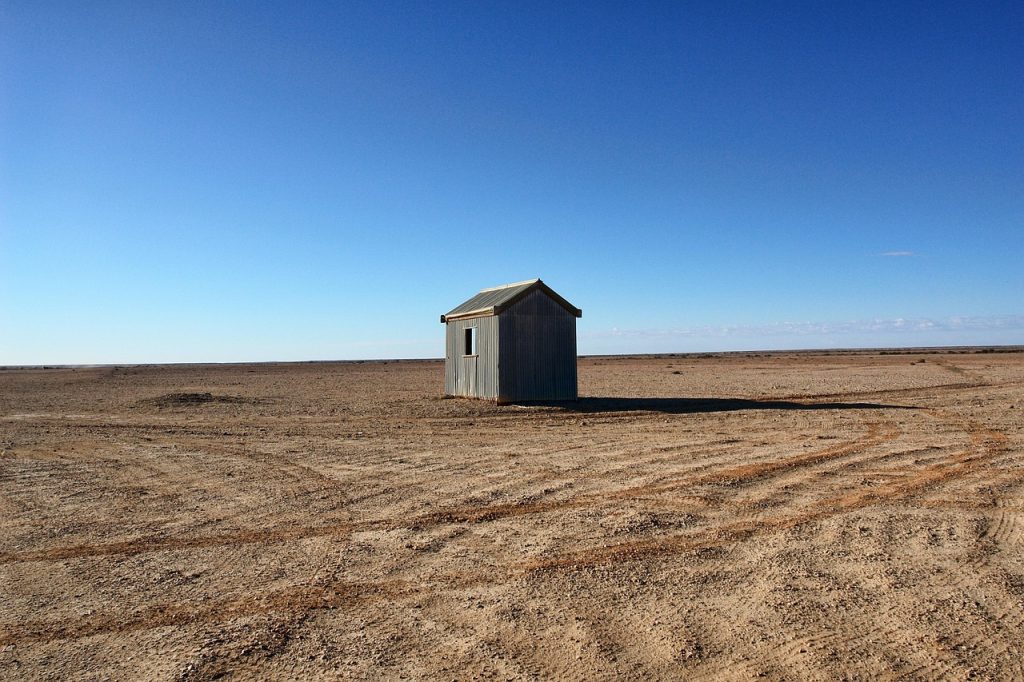
The Arrernte homeland lies at the center of Australia, taking in the MacDonnell Ranges, the Simpson Desert margins, and the country around Alice Springs, known to the Arrernte by its own name. It is a land of red earth, rugged ranges, and dry rivers that flow only after rain.
Water is the key to life in this arid country, and the Arrernte held deep knowledge of the soaks, springs, and waterholes that sustained them through the dry times. The great ranges hold permanent waterholes that were and remain places of profound importance.
The seasons here are marked less by regular rain than by the alternation of drought and the occasional flooding that transforms the desert into a carpet of flowers. The Arrernte learned to live with this uncertainty, moving across their country to where water and food could be found.
The MacDonnell Ranges, running east and west of Alice Springs, are among the most striking features of the Arrernte homeland, their gorges holding permanent water and great cultural significance. These places are woven into the stories of the ancestral beings.
The rivers of the region, though usually dry, spring to life after rain, and the river red gums that line their beds are a defining feature of the Central Australian landscape and of Arrernte country.
Alice Springs, at the center of Arrernte country, has grown into the main town of Central Australia, yet for the Arrernte it remains a place with its own name and its own deep significance long predating the settlement.
The permanent waterholes of the ranges, sustained even through drought, were lifelines for the Arrernte and remain places of deep significance, tied to the stories of the ancestral beings who created them.
The desert blooms after rare heavy rains, when dormant seeds burst into flower and the plains turn briefly green, a transformation that the Arrernte have always watched for and celebrated as the country renews itself.
The Old Way of Life
The Arrernte traditionally lived as hunters and gatherers, moving across their desert country in small groups tied to particular tracts of land and their water sources. Men hunted kangaroo, emu, and other game, while women gathered seeds, fruit, roots, and small animals.
Life in the desert demanded a profound knowledge of the land, for survival depended on knowing where water lay hidden and which plants and animals could be found in each season. This knowledge, built over countless generations, made a harsh land livable.
Groups moved between water sources as the seasons and the availability of food dictated, gathering in larger numbers when conditions allowed for ceremony and trade. This mobile life, always tied to country and law, sustained the Arrernte across the ages.
The division of labor between men’s hunting and women’s gathering ensured a varied diet, and in truth the plant foods gathered by women often provided the more reliable staple. Both forms of knowledge were essential to life in the desert.
Fire was used to manage the country, encouraging fresh growth and shaping the vegetation, a practice that reflects the deep ecological understanding of the Arrernte.
The mobility of desert life meant that possessions were few and portable, and the true wealth of the Arrernte lay in knowledge, in law, and in the relationships that tied people to one another and to country.
Reading the tracks of animals, the state of plants, and the signs of water was a skill honed from childhood, and the ability to find food and water where others saw only emptiness was the mark of a true knowledge of country.

Society and Kinship
Arrernte society is ordered by one of the most intricate kinship systems known to anthropology, dividing the people into named categories that determine marriage, ceremony, and obligation. Every person belongs to a section that shapes their relationships to everyone else.
This system links people not only to one another but to particular tracts of country and to the ancestral beings associated with them. A person’s identity, rights, and responsibilities flow from their place within this order.
The complexity of Arrernte social organization, recorded in detail by early anthropologists, revealed a society governed by law of remarkable subtlety. Marriage, ritual roles, and the inheritance of country all follow the logic of the kinship system.
The section and subsection systems, with their named categories, are among the most complex forms of social organization documented anywhere, and they govern the whole texture of Arrernte life. To know a person’s section is to know how one must behave toward them.
The inheritance of country and of ceremonial responsibility follows the logic of this system, tying each person to particular land and to the ancestral beings associated with it.
Marriage rules flowing from the kinship system ensured that unions crossed the proper categories, weaving distant groups together and preventing the isolation of any single family or country.
The recording of the Arrernte kinship system by early scholars became foundational to the study of human social organization, so influential were its intricate and logical structures.

Religion and the Dreaming
Arrernte religion centers on the ancestral beings whose journeys and actions created the country in the creative era often called the Dreaming. These beings shaped the land, left their traces in its features, and set down the law that the Arrernte uphold.
Sacred sites across the country mark the places where the ancestral beings acted, and these places carry great power and require care according to law. The stories, songs, and ceremonies tied to them form the heart of Arrernte religious life.
The Dreaming is not a distant past but an enduring reality, present in the land and renewed through ceremony. To care for country and to perform the proper rituals is to maintain the order the ancestral beings established at the beginning.
The care of sacred sites is a serious responsibility under Arrernte law, and the disturbance of such places is understood to carry grave consequences. The connection between the people, the land, and the ancestral beings is maintained through this care.
The stories of the ancestral beings map the country, for each feature of the landscape is tied to some event in the creative era, so that to travel the land is to move through a sacred history.
Men’s and women’s ceremonies each carry their own bodies of sacred knowledge, and both are essential to the maintenance of the law and the wellbeing of the country and the people.
To the Arrernte the land is not a backdrop to human life but a living record of the creative era, and every journey across country is in a sense a journey through sacred story.

Traditions and Ceremony
Ceremony lies at the center of Arrernte tradition, from the great rituals that reenact the journeys of the ancestral beings to the ceremonies of initiation that mark the passage into adulthood. These are governed by law and the knowledge held by senior men and women.
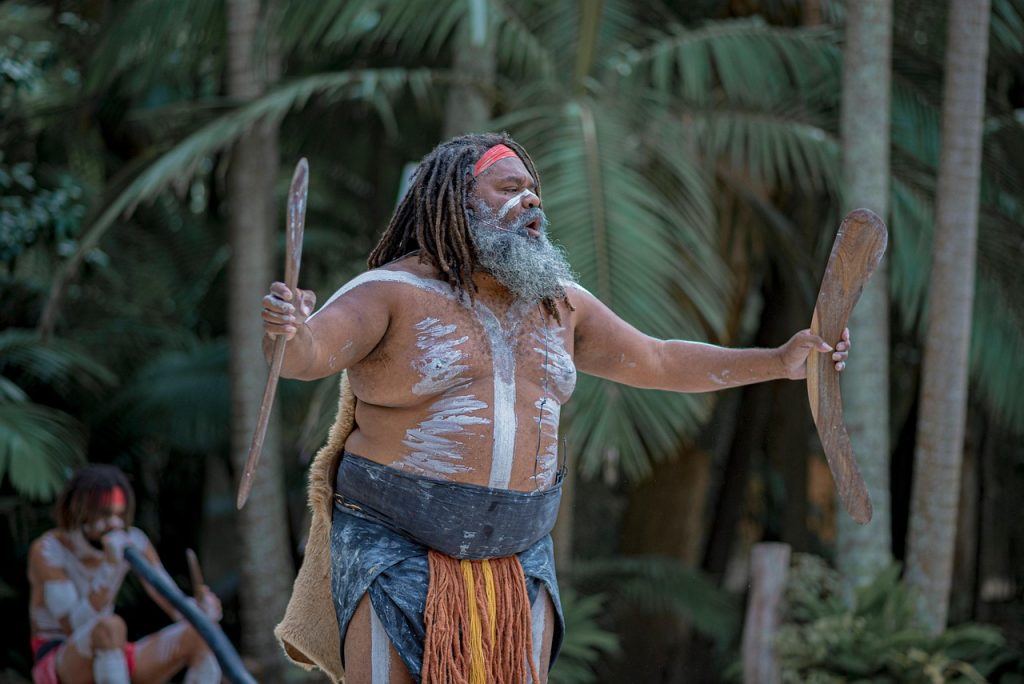
Body designs, sacred objects, and carefully choreographed song and dance carry the meaning of these ceremonies, which recount and renew the deeds of the ancestral beings. The tools of ceremony, including the boomerang and other objects, hold significance beyond their everyday use.
The transmission of ceremonial knowledge from elders to the young is a solemn responsibility, ensuring that the law and its rituals continue. Through ceremony the Arrernte affirm their connection to country and to the ancestral order.
Initiation ceremonies mark the crucial passage of young people into adulthood and into the knowledge and responsibilities of the law. These are among the most important events in Arrernte life, carefully staged and governed by the senior members of the community.
The knowledge held by senior men and women is transmitted gradually, in stages, so that a person’s understanding of the law deepens over a lifetime. This measured transmission preserves the integrity of the tradition.
The making and use of ceremonial objects, some of them highly restricted, is governed by law that determines who may see, hold, or know of them, a system that protects the most sacred knowledge of the people.

Crafts and Desert Art
The Arrernte and their neighbors gave rise to one of the most celebrated art movements in the world, the desert painting tradition in which ancestral stories and country are rendered in intricate patterns of dots and lines. This art translates sacred designs into a form that can be shared.
Long before acrylic paint, the Arrernte created designs on the body, on the ground, and on objects for ceremony, using ochre and other natural materials. The famous watercolor landscapes of Arrernte artists brought the desert country to a wide audience in a different style.
Alongside painting the Arrernte crafted wooden objects, including boomerangs, coolamons, and ceremonial items, each tied to particular uses and meanings. Their art, ancient and modern alike, carries the country and its stories into new forms.
The desert painting movement, which began in the wider Central Australian region in the later twentieth century, transformed sacred and ceremonial designs into paintings that could be shared and sold, bringing Aboriginal art to the world.
The watercolor tradition associated with Arrernte artists, rendering the ranges and country in a distinctive style, showed another way of representing the land, blending introduced techniques with a deeply Aboriginal sense of place.
The success of Aboriginal art has brought income and recognition to desert communities, and art centers now play an important role in supporting artists and managing the sharing of their work with the world.
The transformation of ceremonial design into painting for the wider world was undertaken with care, so that sacred knowledge could be protected even as the beauty of the art was shared.
The boomerang and the coolamon, the shallow carved wooden dish used to carry food, water, and even infants, are among the everyday objects that the Arrernte crafted with skill from the timber of the desert country.
Food and Bush Tucker
Arrernte food came from the desert country in the form of bush tucker, the wild plants and animals that a knowledgeable people could harvest even in an arid land. Seeds ground into flour, wild fruits, roots, honey ants, and witchetty grubs were among the many foods gathered.
Hunting provided kangaroo, emu, goanna, and smaller game, while women’s gathering brought in the plant foods and small creatures that made up much of the diet. The detailed knowledge of what could be eaten, and when and where to find it, was essential to survival.
The desert offered surprising abundance to those who knew it, from the sweetness of honey ants to the protein of grubs and the flour of native seeds. Bush tucker remains valued today, both as food and as a living link to the traditional way of life.
The gathering of native seeds, ground between stones into flour and baked into cakes, provided a staple that could be stored and carried, an important resource in a land of uncertain supply.
Honey ants, whose swollen abdomens hold a sweet nectar, are a prized delicacy of the desert and a food of cultural as well as culinary importance to the Arrernte.
Witchetty grubs, the larvae found in the roots of certain shrubs, are among the most famous of desert foods, rich in nutrients and long a valued part of the Arrernte diet.

Festivals and Gatherings
Gatherings for ceremony brought Arrernte groups together from across the country, occasions for ritual, trade, marriage, and the renewal of the bonds that linked distant kin. These meetings were timed to seasons when food and water allowed larger numbers to come together.
In modern times the Arrernte take part in public cultural events and festivals in Central Australia that celebrate Aboriginal art, music, and dance. These share aspects of the culture with visitors while strengthening pride and connection at home.
Whether the restricted ceremonies of law or the public celebrations of today, these gatherings express the enduring vitality of Arrernte culture. In song, dance, and the coming together of people the community renews itself.
The timing of large gatherings depended on the availability of food and water, for only when conditions allowed could many people come together for the extended period that ceremony required. These meetings were the high points of the social and ritual year.
Trade in ochre, tools, and other goods accompanied these gatherings, linking the Arrernte to peoples across the continent in networks that carried both objects and stories over great distances.
The renewal of ceremony in the present day, even amid the pressures of modern life, testifies to the determination of the Arrernte to keep their law and their gatherings alive for future generations.
For the Arrernte these gatherings remain a way of holding the far-flung community together, binding people to one another and to the country that gives them their identity.

History and Contact
European contact came to Central Australia in the later nineteenth century with explorers, the overland telegraph line, and the establishment of the settlement that became Alice Springs. The newcomers brought profound disruption to Arrernte life and country.
Missions, pastoral stations, and government policies reshaped Arrernte society, drawing people away from their country and, in the era of removals, taking children from their families. The Arrernte endured these upheavals while holding to their law and connection to the land.
The detailed recording of Arrernte culture by early anthropologists, however imperfect, preserved knowledge that the community itself now draws upon. Through a difficult history the Arrernte maintained their identity and their ties to the country at the center of the continent.
The overland telegraph line, completed in the later nineteenth century, brought a permanent European presence to the center of the continent and marked the beginning of profound change for the Arrernte and their neighbors.
The removal of children under assimilation policies caused deep and lasting harm, and the memory of these injustices remains part of the history the Arrernte carry into the present.
Despite the disruptions of contact, the Arrernte succeeded in retaining a strong connection to their country, and the later recognition of land rights allowed them to reclaim a formal stake in their traditional lands.
The resilience the Arrernte showed through this era, keeping their language and ceremonies alive, laid the foundation for the cultural strength they display today.
The Arrernte Today
Today the Arrernte live in and around Alice Springs and in communities across their country, maintaining their language, art, and ceremony while engaging with the wider Australian society. They hold native title and land rights over parts of their traditional country.
Arrernte artists have achieved national and international recognition, from the desert painting movement to the celebrated watercolor tradition, carrying the country and its stories to the world. Their art remains a powerful expression of identity and connection.
Challenges of health, economy, and the pressures on remote communities are real, yet the Arrernte face them from a foundation of deep connection to country and law. Their determination to keep their culture strong makes them an enduring presence at the heart of Australia.
Younger Arrernte increasingly balance life between town and country, carrying their language and law into new settings while returning to the sacred places that anchor their identity.
Ranger programs and cultural organizations allow the Arrernte to care for their country and pass on knowledge, combining traditional law with contemporary tools in the ongoing work of custodianship.

Related Peoples of the Region
- Nasa People of the Colombian Andes and Their Enduring Struggle for the Land
- Kamsa People of the Sibundoy Valley and Their Carnival of Forgiveness
- Bororo People of the Mato Grosso Savanna and Their Circle of the Dead
- Chiquitano People of the Bolivian Lowlands and Their Baroque Mission Legacy
- Movima People of the Beni Floodplains and Their Language Without Kin
- Yolngu People of Arnhem Land and Their Unbroken Law of Two Worlds
You May Like
The Damara, an Ancient People of Namibia


3 thoughts on “Arrernte People of the Red Centre and Their Songlines Across the Desert”