Far in the southern Pacific, where Polynesia meets the roaring forties, lies the last great landmass humans ever settled. The Maori, descendants of master navigators who crossed the ocean in double-hulled canoes, made these islands their own and built one of the most distinctive cultures on earth, a world of carved meeting houses, thundering haka, genealogies recited like scripture, and a language reborn from the edge of silence.
This portrait follows the Maori of Aotearoa New Zealand from the founding voyages to the present day: the meaning of their name, the language they saved, the tribal world of marae and whakapapa, the gods and arts they carry, the food they cook in the earth, and the long struggle over a treaty that still defines their nation.
Contents
- Voyagers Who Found the Last Great Land
- What the Name Maori Really Means
- Te Reo Maori, a Language Reborn
- Aotearoa, Land of the Long White Cloud
- Waka, Pa, and the Old Ways of Living
- Iwi, Hapu, and the Bonds of Whakapapa
- Gods, Tapu, and the Spirit World
- Haka, Moko, and the Power of Performance
- Carving, Weaving, and the Arts of Mana
- Hangi Feasts and Food from Land and Sea
- Matariki and the Gatherings of the Year
- Treaty, War, and the Long Fight for Land
- Maori Life in Aotearoa Today
Voyagers Who Found the Last Great Land
Sometime around the thirteenth century, double-hulled voyaging canoes slid onto the beaches of a land that no human being had ever seen before. The people aboard them had crossed thousands of kilometers of open Pacific from an ancestral homeland remembered in tradition as Hawaiki, navigating by stars, swells, and the flight paths of birds. They were the last great wave of the Polynesian expansion, and the islands they found were the largest and coldest their ancestors had ever settled.
The settlers who became the Maori arrived in an archipelago utterly unlike the tropical islands behind them. There were no coconut palms here, and many of the crops carried in the canoes struggled in the cooler soil. Instead the newcomers found forests full of enormous flightless birds, rivers thick with eel, and coastlines crowded with seals and shellfish. Within a few generations they had spread from the far north to the southern fiords, adapting their tropical inheritance to a temperate world.
Tradition preserves the names of the great founding canoes, among them Tainui, Te Arawa, Aotea, and Takitimu, and many tribes still trace their descent from the crew of a particular waka. These voyaging traditions are not vague legend but detailed genealogical charters, recited across generations, that anchor every Maori person to an ancestor who made the crossing.
Archaeology and tradition largely agree on the outline. Radiocarbon dates cluster in the late thirteenth century, making Aotearoa one of the last major landmasses on earth to be settled by people. In roughly five centuries of isolation that followed, the settlers built a culture found nowhere else, one that still shapes the identity of New Zealand today.
Genetic and linguistic studies trace the ancestral trail back through the Cook Islands and the Society Islands, and the plants and animals that traveled in the canoes, from the kumara to the Polynesian dog and rat, confirm a planned colonization rather than an accidental drift. The voyages were deliberate acts of settlement, provisioned for a new life, and later generations sailed back and forth before the long isolation began.
Genetic and linguistic studies trace the ancestral trail back through the Cook Islands and the Society Islands, and the plants and animals that traveled in the canoes, from the kumara to the Polynesian dog and rat, confirm a planned colonization rather than an accidental drift. The voyages were deliberate acts of settlement, provisioned for a new life, and later generations sailed back and forth before the long isolation began.

What the Name Maori Really Means
The word Maori originally meant something like ordinary or normal. Before Europeans arrived there was no need for a collective name; people identified themselves by their tribe, their ancestral canoe, and their mountain and river. When strangers appeared on the coast in ships, the distinction that suddenly mattered was between tangata maori, the ordinary people of the land, and the pale newcomers who came to be called Pakeha.
Over the nineteenth century Maori hardened from an adjective into a name, embraced by the people themselves as a banner of shared identity. Alongside it stands the phrase tangata whenua, people of the land, which expresses a relationship deeper than ownership: the land is an ancestor, and the people belong to it rather than the other way around.
Individual identity still begins with the tribal world rather than the national label. When Maori introduce themselves formally in a pepeha, they name their mountain, their river, their canoe, their tribe, and their marae before they name themselves. The word Maori answers the question of who they are to outsiders; the pepeha answers who they are to each other.
Today the name carries legal and political weight as well. It appears in the Treaty of Waitangi, in the name of the Maori King movement, in dedicated seats in Parliament, and in the revival movements that have carried the culture into the twenty-first century.

Te Reo Maori, a Language Reborn
Te reo Maori is a Polynesian language, a close cousin of Tahitian, Rarotongan, and Hawaiian. A Maori speaker and a Tahitian can still recognize whole phrases in each other’s speech, an echo of the centuries when their ancestors shared the same harbors. The language traveled to Aotearoa in the founding canoes and then drifted on its own course for five hundred years, developing regional dialects that still mark a speaker’s tribal origin.
It is a language of oratory. On the marae, the formal speechmaking called whaikorero is an art form judged as keenly as any performance, dense with proverb, genealogy, and allusion. Karakia, the chanted invocations that open and close gatherings, preserve some of the oldest layers of the language, and waiata, the songs that follow speeches, carry history the way books do elsewhere.
The twentieth century nearly killed it. Punished in schools and abandoned under the pressures of urban migration, te reo declined until by the 1970s fewer than one in five Maori spoke it. The response became one of the most celebrated language revivals in the world: kohanga reo, language-nest preschools where elders raised infants entirely in Maori, followed by immersion schools, Maori radio, and a Maori television network.
In 1987 te reo Maori became an official language of New Zealand. Today words like whanau, mana, taonga, and kia ora flow freely through New Zealand English, week-long national celebrations mark Maori Language Week, and a new generation raised in immersion classrooms is once again dreaming in the language of the canoes.
Aotearoa, Land of the Long White Cloud
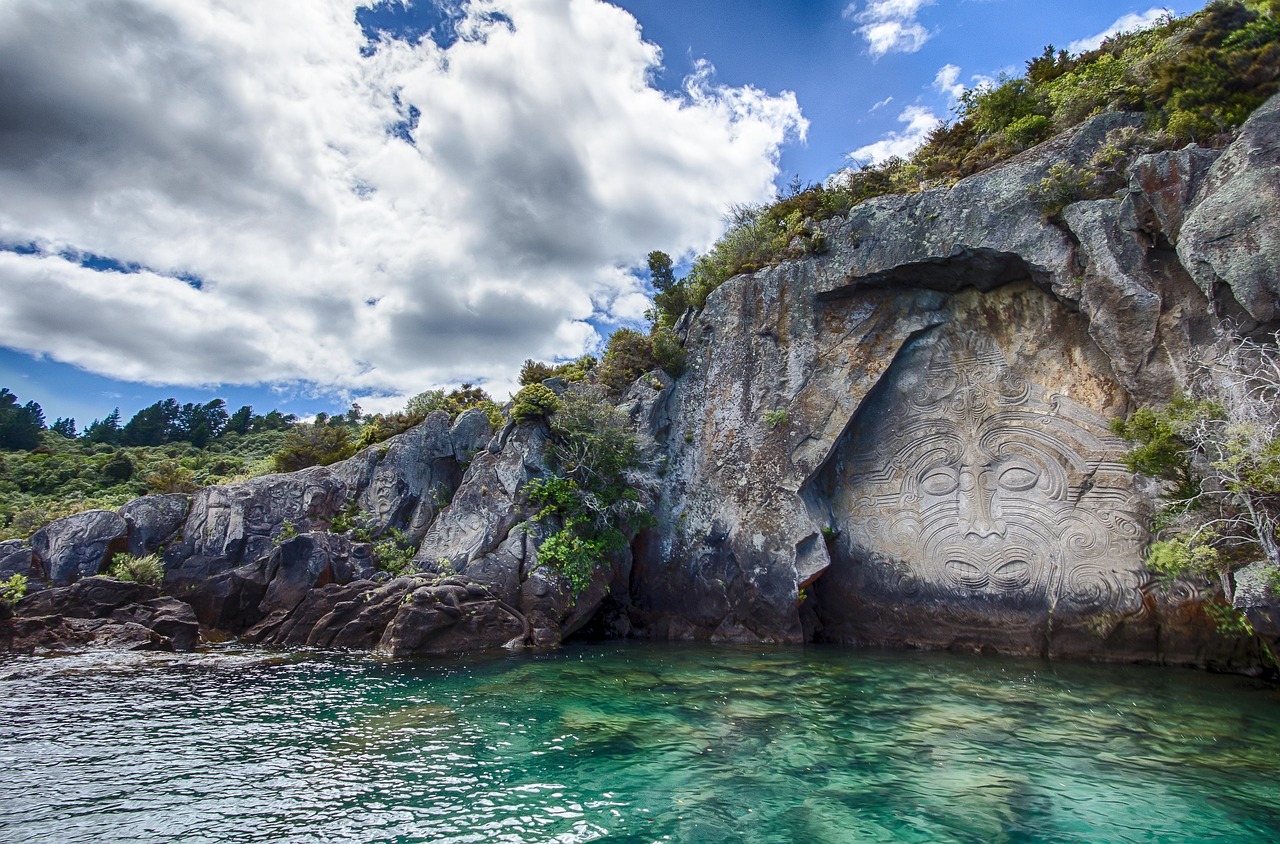
Maori tradition calls the country Aotearoa, usually translated as the land of the long white cloud, the sign by which the first navigators are said to have found it. The archipelago runs more than 1,500 kilometers from subtropical beaches in the north to snow-covered fiordland in the south, a range of climates unknown anywhere else in Polynesia.
The North Island, Te Ika a Maui, is in tradition a great fish hauled from the sea by the demigod Maui; its mountains, geysers, and volcanic plateaus are the body of the catch. The South Island, Te Waipounamu, is the water of greenstone, named for the pounamu jade found in its cold rivers. Every prominent peak is an ancestor: Taranaki, Tongariro, Ruapehu, and Aoraki are beings with histories, quarrels, and descendants.
This ancestral geography is legally real. When Maori negotiate with the state, mountains and rivers appear as parties with standing; the Whanganui River holds legal personhood as Te Awa Tupua, an innovation that made headlines around the world and flowed directly from the Maori understanding of land as kin.
Tribal territories, called rohe, still map the country beneath its official boundaries. Each iwi holds authority in its own districts, and the health of forests, fisheries, and rivers within them is spoken of as kaitiakitanga, guardianship, a duty inherited with descent.

Waka, Pa, and the Old Ways of Living
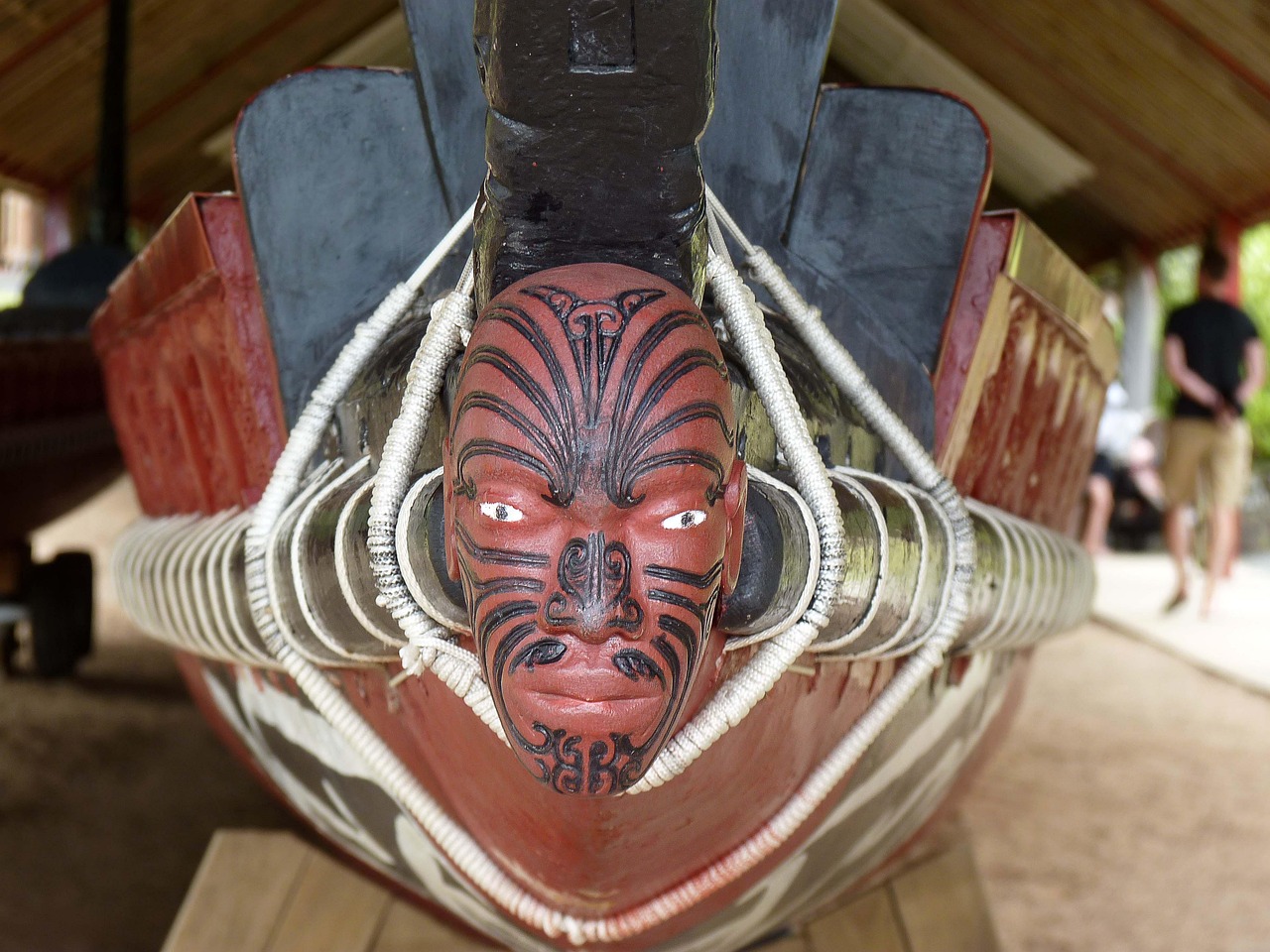
The old Maori world was organized around the waka and the pa. The great canoes that had crossed the ocean remained the measure of belonging long after the voyaging ended, while on the ridgelines above the harbors rose the pa, fortified villages ringed with palisades and terraced earthworks. Thousands of pa sites still corrugate the hills of the North Island, evidence of a landscape both densely settled and fiercely contested.
Daily life moved with the seasons. Gardens of kumara, the sweet potato that survived the voyage from the tropics, were planted with ritual care and stored in raised pataka storehouses whose carved facades announced a community’s wealth. Men and women fished with nets a kilometer long, snared forest birds, and dived for shellfish, while flax fiber was worked into clothing, ropes, and mats.
In the earliest generations the forests held moa, flightless birds taller than a man, and the first centuries of settlement were shaped by the great hunts that eventually drove them to extinction. As the moa vanished and the climate cooled, communities turned more heavily to gardening and fishing, and competition for the best soils sharpened the art of fortification.
Warfare was seasonal, bounded by planting and harvest, and fought for mana and utu, reciprocity, as much as for territory. Yet the same society that fought hard also traded obsidian, greenstone, and preserved birds across the length of the country, moving goods along coastal sea lanes in fleets of canoes.
Iwi, Hapu, and the Bonds of Whakapapa
Maori society is built on whakapapa, genealogy, the thread that links every person backward to the founding canoes and beyond them to the gods. To recite whakapapa is to establish who you are, whom you are related to, and what claims and obligations follow. It is the spine of the culture, and children are still taught their lines of descent as a treasured inheritance.
The largest social unit is the iwi, the tribe, descended from a founding ancestor; within it stand the hapu, clusters of related families that were the working political units of the old world, and the whanau, the extended family. Leadership belonged to rangatira, chiefs whose authority rested on descent, oratory, and achievement, guided by tohunga, experts in ritual, carving, navigation, and healing.
The heart of every community is the marae, the ceremonial courtyard with its carved meeting house. It is on the marae that guests are welcomed with the powhiri, that the dead lie in state during tangihanga funerals, and that decisions affecting the community are argued out in open oratory. The meeting house itself is an ancestor, its ridgepole a spine and its rafters ribs.
Concepts of mana, prestige and spiritual power, and tapu, sacred restriction, ordered every relationship. Mana could be inherited, earned, or lost; tapu protected people, places, and undertakings. Together they formed a law older than any court.

Gods, Tapu, and the Spirit World
The Maori universe begins with Ranginui the sky father and Papatuanuku the earth mother, locked in an embrace so close that their children lived in darkness between them. It was Tane, god of forests, who forced them apart and let light into the world. From that separation flow the departments of existence: Tangaroa rules the sea, Tawhirimatea the winds, Rongo the cultivated food plants, and Tu the affairs of war.
Human beings stand inside this family, not outside it. Every forest tree is a child of Tane, every fish a child of Tangaroa, and to take one required karakia, an acknowledgment to the ancestor concerned. The natural world was managed through tapu and rahui, ritual restrictions that could close a fishing ground or a forest as effectively as any modern regulation.
The dead travel north along ancestral pathways to Cape Reinga, where spirits descend by the roots of an ancient pohutukawa tree into the sea and return to Hawaiki. Ancestors remain present, carved into the posts of meeting houses, invoked in speeches, and consulted in dreams; the boundary between the living and the dead is a working relationship rather than a wall.
Christianity arrived with the missionaries in the early nineteenth century and was woven into rather than substituted for the older world. Distinctly Maori churches such as Ratana and Ringatu arose, and today karakia may be offered in the same breath as Christian prayer, on the same marae, without any sense of contradiction.

Haka, Moko, and the Power of Performance
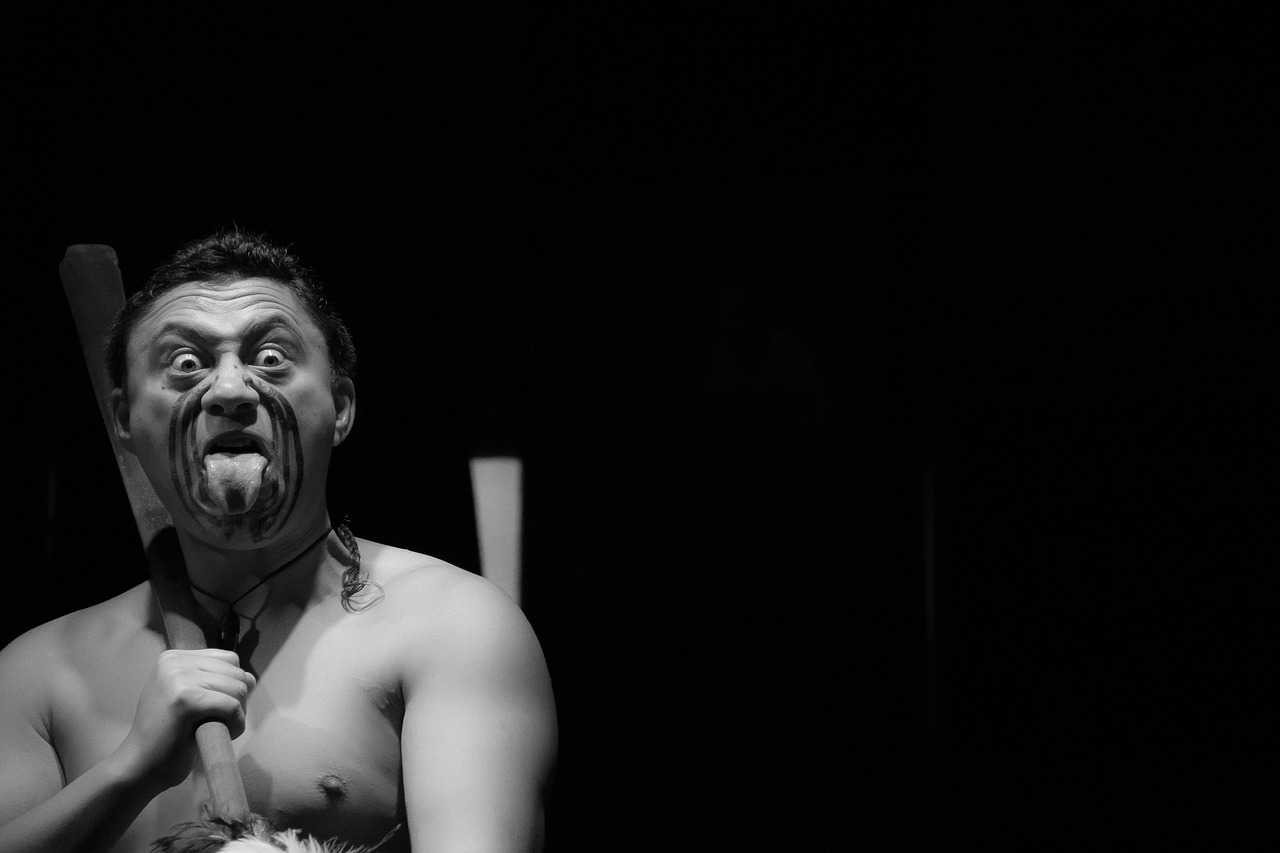
No Maori art form is more famous than the haka, the posture dance of stamping feet, slapping chests, rolling eyes, and thrust tongues. Haka were performed to welcome guests, to celebrate, to mourn, and to prepare for war, and each tribe holds its own compositions. The best known, Ka Mate, commemorates a chief’s escape from pursuers and is performed by New Zealand’s national rugby team before every match, carrying the art to stadiums around the world.
Equally striking is ta moko, the art of tattoo carved in curving lines across the face and body. Moko recorded lineage, rank, and achievement; a facial moko was a signature, and chiefs drew their moko patterns when signing documents. Suppressed for generations, the art has returned with force, and men and women again wear moko as declarations of identity.
Performance is organized today through kapa haka, competitive troupes that combine haka with waiata, graceful action songs, and poi, the rhythmic twirling of balls on cords. The national kapa haka festival, Te Matatini, fills stadiums every two years and is broadcast across the country, a measure of how central performance remains.
Beneath the spectacle sits protocol. The powhiri that welcomes visitors onto a marae, the hongi in which hosts and guests press noses and share breath, and the tangihanga that farewells the dead over several days are living traditions observed by Maori of every generation.
Carving, Weaving, and the Arts of Mana
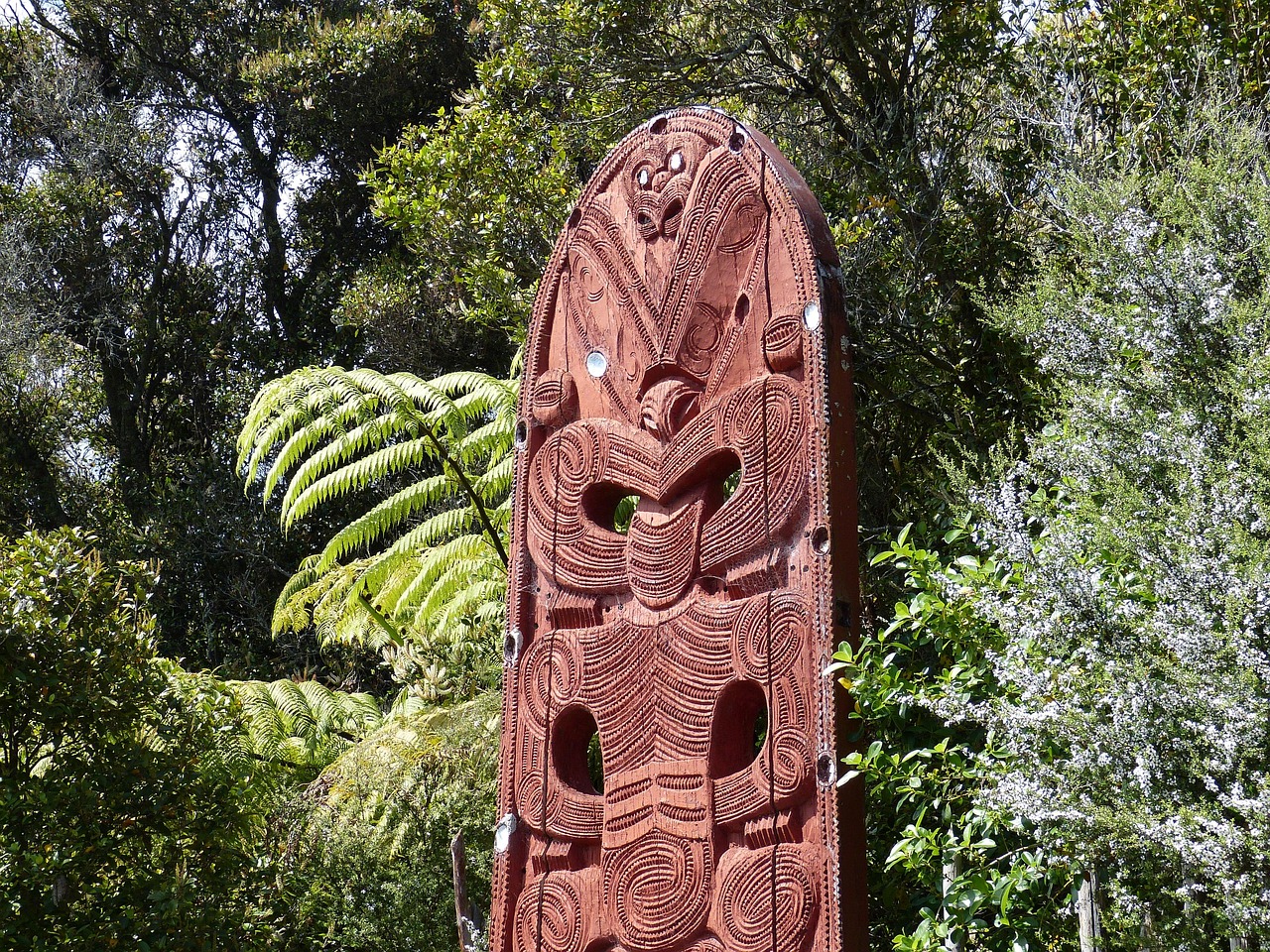
Maori carving, whakairo, is one of the great sculptural traditions of the Pacific. Working in totara wood, whalebone, and pounamu jade, carvers covered meeting houses, canoes, storehouses, and weapons with spiraling patterns and ancestor figures with glaring paua-shell eyes. Every element carries meaning: the spiral koru unfurls like a young fern frond, sign of growth and new beginnings, while the tiki figure embodies the ancestor itself.
Carving was a tapu occupation, learned through long apprenticeship in whare wananga, houses of learning. The chips from a master’s work were never blown away with the breath, for the carving held ancestral presence. When a great meeting house was completed, it was opened with ceremony as a living descendant of the people it commemorated.
Weaving, raranga, stands beside carving in prestige. From the fibers of harakeke, New Zealand flax, women wove baskets, floor mats, and the magnificent cloaks called kakahu, the finest of which were covered in feathers of kiwi, kereru, and now-vanished birds. A feather cloak remains the highest garment of honor, placed on the shoulders of dignitaries and graduates.
Pounamu, the greenstone of the South Island rivers, was the most treasured material of all, shaped into adzes, weapons, and the pendant hei-tiki that passed down generations gathering mana as heirlooms. Today carving and weaving schools flourish, and contemporary Maori artists carry the old patterns into galleries, architecture, and film.
Hangi Feasts and Food from Land and Sea
The signature of Maori cooking is the hangi, the earth oven inherited from tropical Polynesia and adapted to a cooler land. Stones are heated in a fire pit, baskets of meat and vegetables are lowered onto them, and the whole is sealed under earth for hours until everything emerges tender and faintly smoky. A hangi is by nature communal, dug for weddings, funerals, and festivals rather than for private dinners.
In the geothermal country around Rotorua, the earth does the cooking on its own. Families of the Te Arawa tribes still lower food into steam vents and boiling pools, and corn cooked in a hot spring is one of the region’s oldest fast foods. Visitors have marveled at this partnership between kitchen and volcano since the nineteenth century.
The old diet drew on kumara from the gardens, fern root, forest birds, and the sea’s vast larder of fish and shellfish. Delicacies remain proudly local: titi, the muttonbird harvested by southern tribes on offshore islands, kina, the sea urchin, and toroi, mussels preserved with puha greens. Seaweed, freshwater eel, and whitebait fritters all keep their places at the table.
Modern Maori chefs have carried these flavors into fine dining, pairing hangi techniques with contemporary plates and reviving native herbs such as horopito and kawakawa. Food remains a language of hospitality; on the marae, the visitors are not truly welcomed until they have been fed.
Kai moana, food from the sea, still carries customary protections, and tribal authorities issue permits for gathering at ancestral grounds, a modern echo of the old rahui that once guarded the beds of shellfish for generations yet to come.

Matariki and the Gatherings of the Year
The great gathering of the Maori year is Matariki, the midwinter rising of the Pleiades star cluster that marks the traditional new year. When Matariki appears in the dawn sky of June or July, the dead of the past year are mourned and released, the harvest is celebrated, and plans are laid for the season ahead. In 2022 Matariki became an official public holiday, the first in New Zealand grounded in Maori tradition.
Matariki celebrations now fill the calendar with dawn ceremonies, kite flying, storytelling, and shared meals. Each star of the cluster is associated with a domain of wellbeing, from freshwater to food from the soil, and the brightness of each was once read as a forecast for the coming year.
Beyond Matariki, the festival cycle centers on gatherings rather than dates. Te Matatini, the biennial national kapa haka championship, is often called the Olympics of Maori performance. Waitangi Day each February draws thousands to the treaty grounds in the Bay of Islands for ceremony, debate, and the launching of the great ceremonial waka Ngatokimatawhaorua.
Tribal events fill the rest of the year: coronation celebrations of the Maori King at Turangawaewae, regatta days on the Waikato River, and poukai, the circuit of marae feasts held since the nineteenth century. Every such gathering renews the web of kinship that holds the tribes together.

Treaty, War, and the Long Fight for Land
Sustained contact with Europeans began in the late eighteenth century, and by the early nineteenth the musket had entered tribal warfare with devastating effect. In 1840 more than five hundred chiefs signed the Treaty of Waitangi with the British Crown, a document whose English text claimed sovereignty while its Maori text promised the tribes tino rangatiratanga, full chieftainship over their lands and treasures. The gap between those two texts has shaped New Zealand history ever since.
Colonization moved faster than the treaty’s promises. Land purchases, confiscations, and the New Zealand Wars of the 1860s stripped the tribes of most of their territory within a generation. Resistance took many forms: the Kingitanga movement united tribes behind a Maori King, prophets such as Te Whiti led campaigns of nonviolent defiance at Parihaka, and petitions traveled to London.
By 1896 the Maori population had fallen to around 42,000 and observers spoke openly of a dying race. Instead came recovery: Maori leaders entered Parliament, the Maori Battalion won fame in the Second World War, and postwar migration carried the majority of Maori from rural marae into the cities.
The urban generation produced a renaissance. Protest marches over land in 1975, the occupation of Bastion Point, and the creation of the Waitangi Tribunal opened an era of treaty settlements in which the Crown has formally apologized to tribe after tribe and returned assets that now underpin iwi economies.
The settlement process is far from finished, and grievances over water rights, foreshore, and seabed have produced some of the largest protest movements in modern New Zealand. Yet the arc of the past two centuries, from confiscation to formal apology, has few parallels anywhere, and the treaty is now spoken of as the founding document of the nation rather than a relic of empire.
The settlement process is far from finished, and grievances over water rights, foreshore, and seabed have produced some of the largest protest movements in modern New Zealand. Yet the arc of the past two centuries, from confiscation to formal apology, has few parallels anywhere, and the treaty is now spoken of as the founding document of the nation rather than a relic of empire.

Maori Life in Aotearoa Today
Nearly one million people in New Zealand identify as Maori, about a fifth of the national population, and the median age is strikingly young. Auckland alone holds the largest concentration of Maori in the world, and sizable communities live across the Tasman Sea in Australia. Maori are politicians, filmmakers, scientists, and farmers; the culture lives as much in boardrooms and recording studios as on the marae.
The treaty settlement era has built a substantial iwi economy. Tribal corporations manage forestry, fisheries, geothermal energy, and property portfolios worth billions, with revenues funding scholarships, health programs, and marae restoration. Ngai Tahu in the south and Waikato-Tainui in the north have become significant players in the national economy.
Challenges remain stubborn. Maori continue to face gaps in health, income, housing, and imprisonment rates, and debates over the treaty’s place in law flare regularly in national politics. Climate change presses on coastal marae and ancestral sites, while the tribes argue for a stronger voice in how land and water are managed.
Yet the direction of the culture is unmistakably outward and upward. Te reo flourishes in schools and on national television, moko has returned to faces in Parliament, Matariki lights the winter calendar, and Maori film and music travel the world. Two centuries after the treaty, the people of the long white cloud remain tangata whenua, holding fast to the land their ancestors found at the end of the longest voyage in human history.

Related Peoples of the Region
- Dani People of the Baliem Valley and Their Highland World of Pigs and Gardens
- Palawa People of lutruwita and Their Remarkable Cultural Return
- Tiwi People of the Northern Islands and Their World Apart
- Noongar People of the Southwest and Their Country of Six Seasons
- Pitjantjatjara People of the Western Desert and Their Sacred Heart at Uluru
- Warlpiri People of the Tanami Desert and Their World of Sand and Story
- Arrernte People of the Red Centre and Their Songlines Across the Desert
- Yolngu People of Arnhem Land and Their Unbroken Law of Two Worlds
You May Like
The Damara, an Ancient People of Namibia


One thought on “Maori People of Aotearoa and Their World of Marae, Haka, and the Long Voyage”