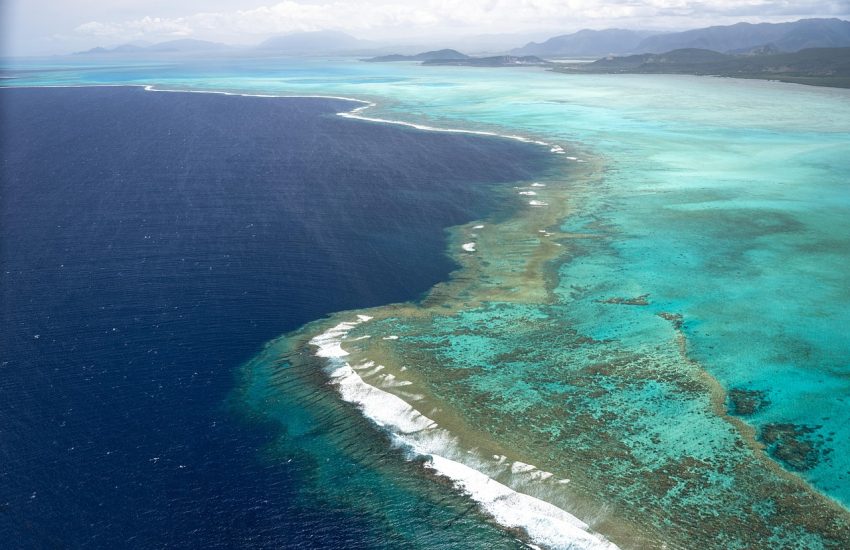
Between the Coral Sea and the open Pacific lies Grande Terre, the Great Land, a mountain ridge of ancient Gondwana wrapped in the largest lagoon on earth. Its first people, the Kanak, have gardened its valleys for three thousand years, building a civilization of yam terraces, carved great houses, and ceremonial exchange that survived a penal colony, dispossession, and near civil war to stand today at the center of one of the Pacific’s last great political questions.
This portrait follows the Kanak of New Caledonia from the Lapita voyagers to the present: the name they reclaimed from an insult, their twenty-eight languages, the customs that bind clans across the archipelago, their arts of wood and shell money, the bougna feast, and the long road from annexation to the referendums that will decide the fate of Kanaky.
Contents
- Three Thousand Years on the Great Land
- From Insult to Banner, the Story of the Word Kanak
- Twenty-Eight Languages on One Archipelago
- Grande Terre and the Islands of the Lagoon
- Yam Gardens, Great Houses, and the Old Life
- Chiefs, Clans, and the Path of the Yam
- Ancestors, Totems, and the Living Land
- La Coutume, the Ceremony That Binds
- Carved Doorposts and the Money of Shells
- Taro, Yam, and the Bougna Feast
- Yam Season and the Gatherings of the Clans
- Colonization, Revolt, and the Road to Self-Rule
- Kanak Identity in a Land Still Deciding
Three Thousand Years on the Great Land
The Kanak are among the oldest continuously settled peoples of the remote Pacific. Their ancestors, bearers of the Lapita culture with its famously stamped pottery, reached the great island of New Caledonia around three thousand years ago, sailing out of the Bismarck Archipelago in one of the boldest expansions of the ancient world. Long before Rome was founded, Kanak clans were already planting yams in the valleys of Grande Terre.
Unlike the later Polynesian voyagers who kept moving east, the settlers of New Caledonia stayed, and their culture grew deep roots rather than wide branches. Over a hundred generations they diversified into dozens of clan territories and languages, terraced entire hillsides for irrigated taro, and raised the tall conical great houses that still symbolize Kanak identity.
Archaeologists have mapped extensive ancient field systems, some of the most sophisticated agricultural earthworks in Oceania, proof of a dense and organized population long before European contact. Petroglyphs pecked into boulders across the island remain from these early centuries, their makers remembered in clan histories that tie each lineage to a founding mountain, creek, or rock.
When Captain Cook sighted the island in 1774 and named it for the Scottish highlands, he was looking at a world already ancient, a mosaic of chiefdoms whose genealogies reached back across millennia of unbroken occupation.
Genetics and archaeology tell a story of layering rather than replacement. The Lapita founders were joined over the centuries by later arrivals from the north and by Polynesian voyagers who settled Ouvea and the Isle of Pines within the last thousand years, folding their lines into the clan system. Kanak identity absorbed them all, organized not around race but around the land and the exchange paths that knit every newcomer into the web of custom.
Genetics and archaeology tell a story of layering rather than replacement. The Lapita founders were joined over the centuries by later arrivals from the north and by Polynesian voyagers who settled Ouvea and the Isle of Pines within the last thousand years, folding their lines into the clan system. Kanak identity absorbed them all, organized not around race but around the land and the exchange paths that knit every newcomer into the web of custom.

From Insult to Banner, the Story of the Word Kanak
Few peoples have so completely reversed the meaning of a name imposed on them. The word Kanak derives from the Hawaiian kanaka, meaning simply human being, which European sailors and traders spread across the Pacific as a catch-all label for islanders. In French colonial mouths it soured into canaque, a term of contempt for the colonized.
In the 1970s a new generation of activists seized the insult and made it a flag. Spelled with a K and left invariable in French, Kanak became the name of a people demanding recognition, and kanaky the name of the country they imagined. What had been a word to look down on became a word to stand up with.
The choice of an indigenous collective name mattered because the old world had none. Like most Melanesians, the people of New Caledonia identified by clan and language country, not by island-wide nationality; it was colonization itself that created the shared experience from which a shared name grew.
Today Kanak appears in the Noumea Accord, in the name of the Kanak and Socialist National Liberation Front, and in the official designation of the customary institutions of New Caledonia. The word carries the whole modern history of the people inside it.

Twenty-Eight Languages on One Archipelago
New Caledonia is one of the most linguistically dense places on earth. Some twenty-eight distinct Kanak languages, all belonging to the Oceanic branch of the Austronesian family, are spoken across an archipelago smaller than Belgium. Drehu on Lifou, Nengone on Mare, Paicî and Ajië on the mainland, and the Xârâcùù of the south each carry their own oral literature, and none is mutually intelligible with its neighbors.
This diversity is the signature of three thousand years of settled life. Where Polynesian languages spread thin across vast distances, the languages of Grande Terre grew apart valley by valley, each clan territory a small linguistic world tied to its own land and genealogy.
Colonization nearly silenced them. French was imposed in schools and administration, and Kanak languages were banned from classrooms for much of the twentieth century. Several smaller languages slipped below a few hundred speakers, and all of them ceded ground to French, which became the shared tongue of the archipelago.
The tide has partly turned. Four Kanak languages can now be studied to the baccalaureate, a Kanak Languages Academy standardizes spelling, and radio and church life keep the larger languages vigorous. In the customary world, the right words in the right language remain the key that opens every ceremony.
French remains the language of school, work, and politics, and nearly every Kanak is bilingual at least. Yet the customary world runs on the vernaculars: a speech of welcome, a marriage negotiation, or a mourning oration delivered in Paicî or Drehu carries a weight no translation can supply, and elders judge the younger generation as much by their command of the clan’s tongue as by any diploma.
French remains the language of school, work, and politics, and nearly every Kanak is bilingual at least. Yet the customary world runs on the vernaculars: a speech of welcome, a marriage negotiation, or a mourning oration delivered in Paicî or Drehu carries a weight no translation can supply, and elders judge the younger generation as much by their command of the clan’s tongue as by any diploma.

Grande Terre and the Islands of the Lagoon
The Kanak homeland centers on Grande Terre, a cigar-shaped island four hundred kilometers long whose central mountain chain divides a wet, forested east coast from a dry west of savanna and niaouli trees. Around it lie the Loyalty Islands of Ouvea, Lifou, and Mare, the Isle of Pines in the south, and the Belep islands in the north, each with its own languages and chiefdoms.
The island is a fragment of ancient Gondwana, and its soils are heavy with nickel, a quarter of the world’s known reserves. That geological accident has shaped Kanak history as much as any war, drawing miners and settlers to the island and gouging red scars into mountains that clans regard as ancestors.
Offshore stretches the largest lagoon on earth, ringed by a barrier reef sixteen hundred kilometers long and inscribed on the UNESCO World Heritage list. From the air its most famous emblem is the Heart of Voh, a heart-shaped clearing in the mangroves that has become the unofficial signature of the country.
For Kanak clans, geography is genealogy. Each lineage traces itself to a named mountain, rock, or spring, and the phrase used of a clan’s founding place, the mound where its first house stood, is spoken with the reverence other cultures reserve for scripture.

Yam Gardens, Great Houses, and the Old Life
The old Kanak world was a civilization of the yam. Villages of round houses clustered beneath the tall conical case of the chief, its ridgepole crowned with a carved fleche faitiere spearing the sky. Around them spread the gardens: dryland yam mounds on the slopes, and irrigated taro terraces whose stone-lined channels stepped down entire hillsides, engineering that still astonishes archaeologists.
The yam was more than food. Its growing cycle set the calendar, its first fruits opened the ceremonial year, and its size and beauty measured a gardener’s honor. Certain yams were raised only for giving away, and a chief’s greatness was reckoned by what passed through his hands rather than what stayed in them.
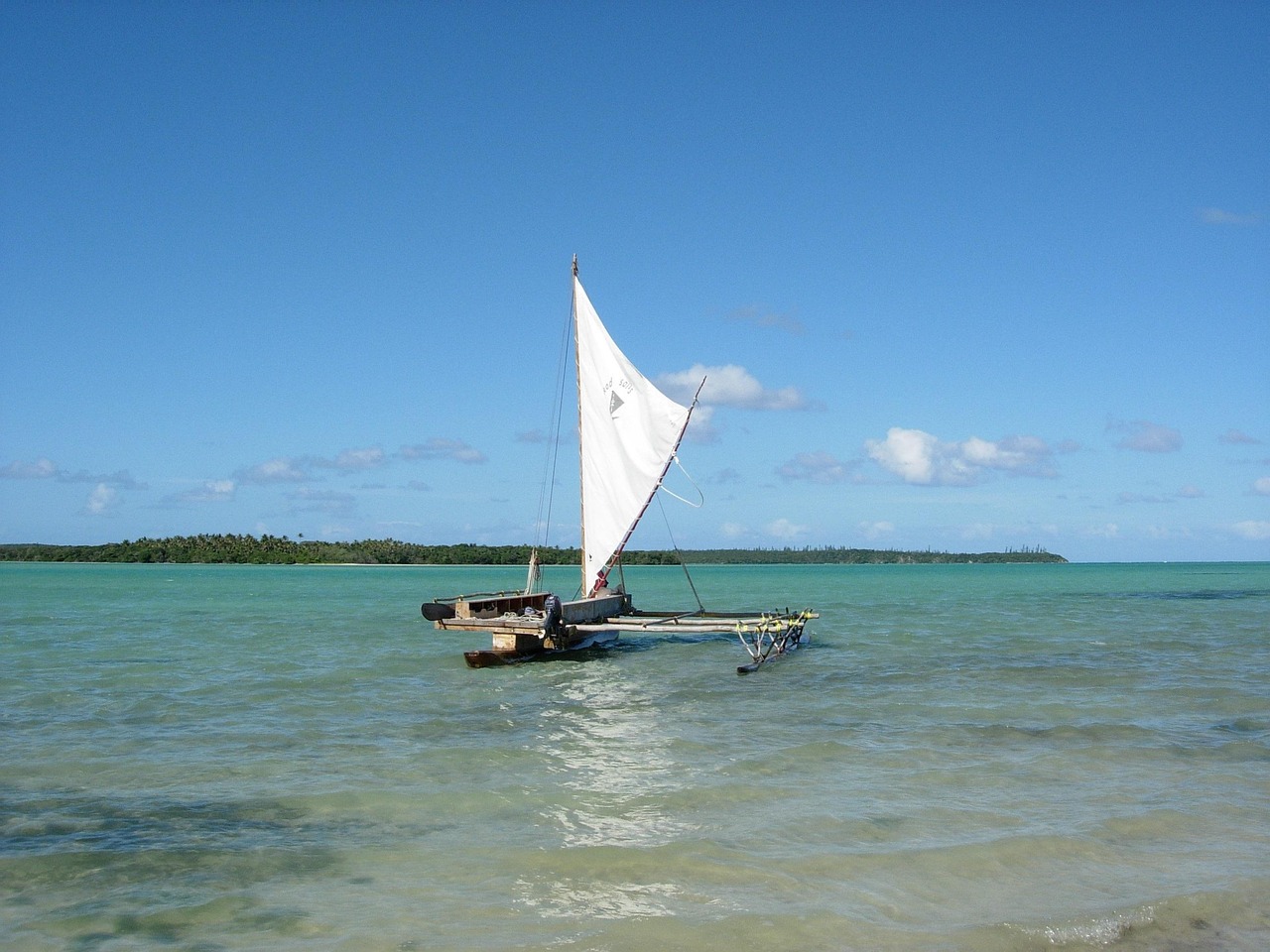
Fishing filled the lagoon side of life. Stone fish traps, nets, and outrigger canoes with crab-claw sails worked the reef, while great sea-going pirogues carried tribute and shell money between Grande Terre and the Loyalty Islands. On the Isle of Pines, sailing pirogues still glide across the lagoon much as they always have.
Everything moved along paths of alliance. Clans exchanged women, yams, and shell money down recognized routes; even war, frequent and formal, was part of the system of exchange, settled by compensation and the redistribution of land.
Chiefs, Clans, and the Path of the Yam
Kanak society is built of clans, each a chain of lineages descending from a founding ancestor and rooted in a named piece of land. Clans group into chiefdoms under a grand chef, but the chief is less a ruler than the word of the clan made visible; he speaks what the elders have already decided, and his person concentrates the honor of all.
Rank is ordered by the elder and younger lines of descent. The eldest branch holds the chiefly title while younger branches hold the offices that surround it, keeper of the land, master of the yam magic, herald who speaks the welcome. Maternal uncles hold a special power, for blood is thought to travel through women, and no important step in a person’s life is taken without honoring the mother’s clan.
Daily authority lives in the council of elders under the banyan tree and in the customary assemblies that still govern Kanak civil life; New Caledonia today recognizes eight customary areas whose senates rule on questions of land and status. Two thirds of the territory’s land remains under inalienable customary title held by the clans.
A person is never fully an individual in this world. Identity is a knot of relationships, to land, to the mother’s people, to the yam of one’s lineage, and the worst poverty imaginable is to stand outside the web of kin.
Colonial rule bent this order without breaking it. The administration invented paramount chiefs where none had existed and froze fluid alliances into administrative districts, yet the deep grammar of eldership, maternal blood, and land-rooted identity survived beneath the imposed forms and reasserted itself the moment the pressure lifted.
Colonial rule bent this order without breaking it. The administration invented paramount chiefs where none had existed and froze fluid alliances into administrative districts, yet the deep grammar of eldership, maternal blood, and land-rooted identity survived beneath the imposed forms and reasserted itself the moment the pressure lifted.

Ancestors, Totems, and the Living Land
In Kanak thought the land is not scenery but kin. Ancestors do not depart; they settle into the landscape, into sacred rocks, springs, and groves that clans approach with care, and into the totems, shark, lizard, thunder, snake, through which they continue to act among the living. A clan and its totem share one substance, and stories tell of ancestors who return in totemic form.
The dead were honored long over their bones. Skulls were kept in sacred places and consulted, and mourning was ordered by strict ritual duties owed between paternal and maternal kin. The invisible world pressed close on the visible one, and specialists in each clan held the words and plants that could call rain, bless yams, or turn sickness aside.
The word that best gathers Kanak spirituality is life itself. The yam rising from the soil, the child born to the clan, and the ancestor in the rock are one continuous current, and ceremony exists to keep that current flowing in its proper channels.
Christian missions, Catholic and Protestant, arrived in the nineteenth century and converted the archipelago within two generations. Yet conversion folded into custom rather than erasing it: pastors and priests take their place in ceremonial exchanges, church festivals follow the yam calendar, and the Bible is read in Drehu and Nengone. Most Kanak today move without contradiction between chapel and custom.
La Coutume, the Ceremony That Binds
The living heart of Kanak culture is la coutume, the custom, the ceremonial exchange that must open and close every significant meeting. A visitor who comes to a clan brings a gift, once shell money and cloth, today often fabric, tobacco, or a banknote, and offers it with formal words; the host replies in kind. The objects matter little, the gesture everything: it says I recognize you, and we are bound.
No marriage, mourning, land agreement, or political meeting begins without it. Even government officials opening a public works project on clan land will faire la coutume first, and the phrase has entered the French of the whole territory.
The grandest expressions of custom are the great ceremonies of marriage and mourning, weeks-long convergences in which allied clans arrive in processions carrying yams, taro, mats, and money, each gift announced by an orator. The pilou, the night-long circling dance with chants and bamboo percussion that once accompanied such gatherings, was suppressed by missionaries and administrators, and has been revived in cultural festivals as a symbol of endurance.
Custom also disciplines speech. On the ceremonial ground, words follow rank and protocol, and the orator’s art, dense with imagery of paths, houses, and yams, remains among the most admired of Kanak skills.

Carved Doorposts and the Money of Shells
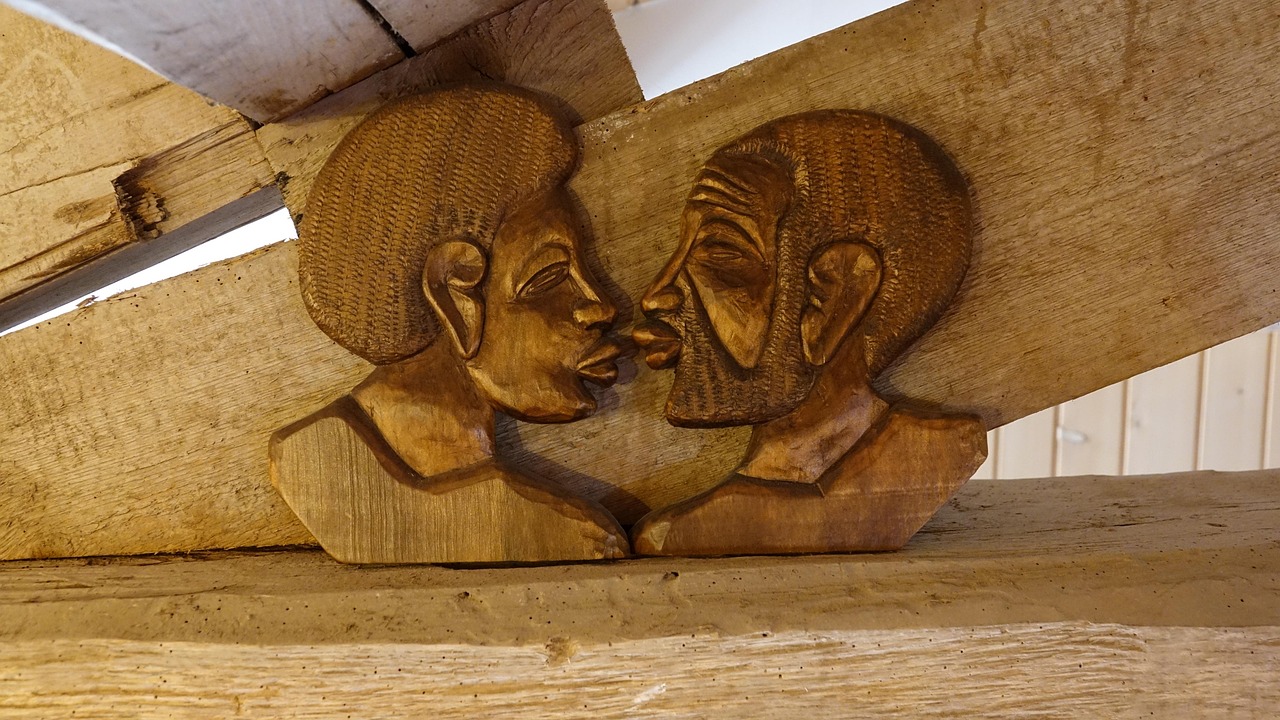
Kanak art is an art of the house. The great case of a chief was a sculpture to be lived in: carved doorposts flanked the low entrance, each representing an ancestor with heavy brows and geometric body, and above the ridgepole rose the fleche faitiere, the arrow-like finial threaded with shells that housed the ancestral spirit. These carvings are now emblems of the country, reproduced on the franc pacifique and public buildings.
Wood also yielded the bec d’oiseau war clubs shaped like a bird’s beak, ceremonial axes with disks of polished green jade, and masks with towering hair of human locks and cloaks of feathers that embodied water spirits and chiefly power in mourning rites. Jade from local rivers moved along exchange routes as one of the great valuables of the Melanesian world.
Women’s mastery lay in fiber. Shell money, strings of tiny ground discs punctuated with beads and finished with woven heads, remains the supreme customary valuable of the northern Grande Terre, made by families who guard the skill. Mats, baskets, and the looped string bags carried everywhere completed a portable wealth that still changes hands in every major ceremony.
Contemporary Kanak sculptors, painters, and weavers show alongside the old masters at the Tjibaou Cultural Centre, and the revival of carving workshops has turned an ancestral vocabulary into a living school.
Taro, Yam, and the Bougna Feast
The Kanak table is built on the roots of the garden: yam, taro, sweet potato, and manioc, joined by banana, coconut, sugarcane, and the fruit of an island generous to those who plant. The yam opens the year and the taro carries it, and a household’s dignity is still read in the abundance of its garden.
The festive dish of the archipelago is bougna. Chicken, lobster, or flying fox is layered with yams, taro, and banana in coconut milk, the whole wrapped in banana leaves and buried on white-hot stones until the bundle steams open hours later. Every celebration worth the name, and every visitor worth honoring, calls for a bougna.
The lagoon fills the rest of the pot: reef fish grilled or raw in lime and coconut milk, crabs from the mangroves, octopus, and shellfish gathered at low tide. On the plateaus, hunting brings rusa deer and wild pig, colonial-era arrivals that custom has absorbed into feast fare.
Sharing remains the first rule of eating. The garden’s first yams go to the chief and the church, kin arriving from far away leave with baskets of tubers, and no ceremony disperses before its mountain of food has been divided down the lines of clan and alliance.
The bougna itself has become a quiet ambassador. Cooked for tourists on Lifou’s beaches and for students far from home in Noumea courtyards, the smell of banana leaves opening over steaming yams is, for many Kanak, the very scent of belonging.
The bougna itself has become a quiet ambassador. Cooked for tourists on Lifou’s beaches and for students far from home in Noumea courtyards, the smell of banana leaves opening over steaming yams is, for many Kanak, the very scent of belonging.

Yam Season and the Gatherings of the Clans
The Kanak year still turns on the yam. When the new tubers are lifted around March, clans across the archipelago hold first-fruit ceremonies in which the finest yams are presented to chiefs, pastors, and allied clans before anyone may freely eat of the harvest. The fete de l’igname remains the most widespread and faithful of Kanak observances, a new year written in the soil.
Around this ancient anchor has grown a modern festival calendar. Each commune celebrates its signature produce, the avocado festival of Maré, the lychee festival of Lifou, the yam fairs of the north, occasions that mix customary ceremony with market stalls, dance, and song.
Cultural festivals have carried Kanak arts onto bigger stages. The landmark Melanesia 2000 festival of 1975, staged in Noumea by Jean-Marie Tjibaou, gathered thousands of performers and marked the cultural awakening that fed the political movement. Its heirs are the biennial arts festivals and the appearances of Kanak troupes at the Festival of Pacific Arts.
September brings customary commemorations of a harder kind: the anniversary of the 1853 French annexation and the days that honor the dead of the independence struggle, marked with flags, speeches, and the slow ceremonies of custom.
Colonization, Revolt, and the Road to Self-Rule
France annexed New Caledonia in 1853 and turned it into a penal colony and settler frontier. Kanak clans were pushed off the fertile west coast into native reserves, subjected to the indigenat code that made them subjects rather than citizens, and taxed into plantation labor. The great revolt of 1878 under the chief Atai swept the west coast before it was crushed; Atai’s head was shipped to a museum in Paris and returned to his descendants only in 2014.
Population collapse followed the muskets, measles, and dispossession; by the early twentieth century barely twenty-seven thousand Kanak remained, and administrators predicted their disappearance. Instead the people endured on the reserves, and missions gave them literacy in their own languages even as the colonial economy passed them by.
Citizenship came in 1946 and the vote through the 1950s, but the nickel boom that followed drew waves of new settlers that made the Kanak a minority in their own country. The 1970s brought a cultural and political awakening that hardened into the independence movement, and the 1980s into near civil war, les evenements, culminating in the hostage tragedy at Ouvea cave in 1988 that left nineteen Kanak militants and six gendarmes dead.
Peace was negotiated in the Matignon Accords of 1988, sealed at terrible cost when Jean-Marie Tjibaou was assassinated by a rejectionist in 1989, and deepened by the Noumea Accord of 1998, which promised a staged transfer of powers and up to three referendums on independence.
Memory of these events is not archival but ceremonial. The names of the dead of 1878 and 1988 are recited in custom, gifts still travel between clans to close old griefs, and the return of ancestral remains from French museums is treated as the homecoming of persons, not objects. History in Kanaky is a debt kept carefully on the books of exchange.
Memory of these events is not archival but ceremonial. The names of the dead of 1878 and 1988 are recited in custom, gifts still travel between clans to close old griefs, and the return of ancestral remains from French museums is treated as the homecoming of persons, not objects. History in Kanaky is a debt kept carefully on the books of exchange.

Kanak Identity in a Land Still Deciding
Just over one hundred thousand people identify as Kanak, about four in ten residents of New Caledonia. They are a young population, increasingly urban, drawn to greater Noumea where the districts of the north and the squats on the city’s edge hold clans from every corner of the archipelago. The Loyalty Islands and the Northern Province remain overwhelmingly Kanak, governed by pro-independence majorities under the provincial system the accords created.
Three referendums on independence were held between 2018 and 2021. The first two produced narrowing majorities against, forty-three and then forty-seven percent voting yes; the third, boycotted by the independence movement because it fell during a devastating COVID mourning period, was rejected by Kanak parties as illegitimate. The constitutional question remains unsettled, and in May 2024 a disputed reform of the electoral rolls set off riots in Noumea that left more than a dozen dead and put the territory’s future back on the table.
Beneath the political storm, the cultural ground has never been firmer. The Tjibaou Cultural Centre, its soaring wooden shells designed by Renzo Piano rising from the mangroves of Noumea, stands among the great indigenous cultural institutions of the world. Customary senates sit in law, Kanak languages are taught for the baccalaureate, and shell money still passes from clan to clan at every marriage.
The Kanak enter the middle of the twenty-first century as they entered every century before it, rooted in clan and land, patient in ceremony, and unfinished in their long negotiation with the world that washed up on their reef. The yam still comes first from the garden, and the path of custom still runs from house to house across the Great Land.
Emigration has stayed modest by Pacific standards; the Kanak future is being decided at home. Nickel royalties fund provincial development, customary land is being opened cautiously to clan-run enterprises, and a generation of Kanak graduates moves between Noumea, Paris, and the village, carrying custom into institutions their grandparents were barred from entering.
Emigration has stayed modest by Pacific standards; the Kanak future is being decided at home. Nickel royalties fund provincial development, customary land is being opened cautiously to clan-run enterprises, and a generation of Kanak graduates moves between Noumea, Paris, and the village, carrying custom into institutions their grandparents were barred from entering.

Related Peoples of the Region
- Tiwi People of the Northern Islands and Their World Apart
- Noongar People of the Southwest and Their Country of Six Seasons
- Pitjantjatjara People of the Western Desert and Their Sacred Heart at Uluru
- Warlpiri People of the Tanami Desert and Their World of Sand and Story
- Arrernte People of the Red Centre and Their Songlines Across the Desert
- Yolngu People of Arnhem Land and Their Unbroken Law of Two Worlds
- Maori People of Aotearoa and Their World of Marae, Haka, and the Long Voyage
- Maori People of Aotearoa and Their World of Marae, Haka, and the Long Voyage