In the far north of Australia, on the tropical coasts and floodplains of northeast Arnhem Land, live the Yolngu, one of the most culturally intact Aboriginal peoples of the continent. Their country reaches from the mangrove shores and island-dotted seas of the Gulf of Carpentaria inland to the stringybark forests and river systems of a land they have held for tens of thousands of years. Among all Aboriginal Australians, the Yolngu are known for having preserved their languages, law, and ceremony with unusual strength into the present day.
The Yolngu are not a single tribe but a group of clans bound together by shared law, related languages, and an intricate system of kinship that orders every person and thing into two great halves of the world. Their art, their ceremonial songlines, and the deep sound of the yidaki, the instrument the world knows as the didgeridoo, have carried their name far beyond Arnhem Land. This article follows the Yolngu through their origins, their languages, their homeland, and the living culture that continues to shape their world today.
Contents
- Origins of the Yolngu People
- The Meaning of the Yolngu Name
- The Yolngu Languages
- Homeland in Arnhem Land
- The Old Way of Life
- Society and the Two Moieties
- Religion and the Dreaming
- Traditions and the Yidaki
- Crafts and Bark Painting
- Food and the Coastal Country
- Festivals and Ceremony
- History and Contact
- The Yolngu Today
Origins of the Yolngu People
The Yolngu descend from the first peoples of Australia, whose ancestors reached the continent tens of thousands of years ago in one of the earliest human migrations out of Africa. In northeast Arnhem Land they built a way of life adapted to a tropical coast of monsoon rains, rich seas, and forested inland country.
Archaeology across Arnhem Land reveals one of the longest continuous cultural records anywhere on earth, with rock art and occupation sites reaching back deep into the last ice age. The Yolngu understand their presence in the land not as migration but as an inheritance from ancestral beings who created the country itself.
Isolation from the pressures that transformed much of the continent, together with the strength of Yolngu law, allowed their culture to endure with remarkable continuity. When outsiders finally came in force, the Yolngu met them from a position of deep and unbroken connection to their land.
The continuity of Yolngu culture is such that ceremonies, songs, and designs performed today can be traced in unbroken line to the deep past, making Arnhem Land a place of extraordinary heritage. Few peoples anywhere can claim so direct a link to so ancient an inheritance.
For the Yolngu the land itself is the record of their origins, its features created by ancestral beings whose actions are recounted in song. History and geography are thus one, written into the country rather than into books.
The rock art of Arnhem Land, some of it many thousands of years old, records changing environments, animals now extinct, and the arrival of new peoples and technologies over vast spans of time. It is among the oldest continuous artistic traditions known anywhere.
The Meaning of the Yolngu Name
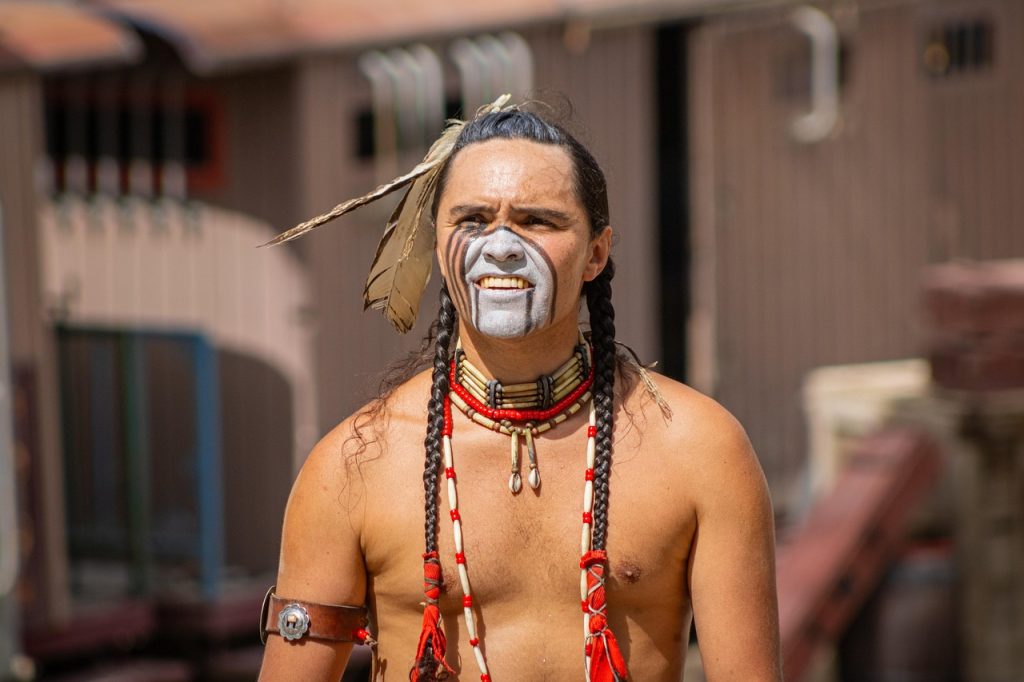
The word Yolngu means simply person or people in the languages of northeast Arnhem Land, a name the people use for themselves rather than one imposed from outside. It marks the shared identity of the many clans who speak related tongues and follow the same law.
Like many Aboriginal peoples, the Yolngu did not originally think of themselves as a single named nation but as a network of clans and kin. The name Yolngu came to express what these groups hold in common, distinguishing them from other peoples and from the newcomers.
To be Yolngu is to belong within a system of law, land, and kinship that assigns every person a place. The name carries this belonging, tying the individual to clan, to country, and to the ancestral order that shapes the whole Yolngu world.
The single word for person, extended to name the whole people, reflects a worldview in which to be truly human is to live within Yolngu law and kinship. Those outside that order were understood in different terms.
Neighboring peoples and later newcomers had their own names for the Yolngu, but it is the people’s own word that has endured as the marker of their shared identity.
Within Yolngu communities the sense of shared identity coexists with a strong loyalty to one’s own clan and country, so that a person is at once Yolngu and a member of a particular clan with its own name, land, and law.

The Yolngu Languages
The Yolngu speak a cluster of closely related languages and dialects, together forming the Yolngu Matha group, one of the most vital surviving Aboriginal language families in Australia. Each clan is associated with its own variety, and many Yolngu speak several.
These languages remain in daily use across the communities of northeast Arnhem Land, spoken by children as well as elders, a rare strength in a continent where many Aboriginal languages have been lost. The vitality of Yolngu Matha reflects the strength of the wider culture.
Language for the Yolngu is bound up with land, kinship, and ceremony, for the words of songs and law carry the knowledge of the ancestral beings and the country they made. To keep the language is therefore to keep the law and the connection to the land alive.
The survival of Yolngu Matha stands in sharp contrast to the fate of most Aboriginal languages, hundreds of which have fallen silent since colonization. Its strength is both a cultural treasure and a source of pride.
Bilingual and bicultural education in some Arnhem Land schools has sought to teach children in their own language alongside English, reinforcing the transmission of Yolngu knowledge.
Songs in the ceremonial register of the language preserve archaic words and forms, so that to learn the songs is also to inherit older layers of the tongue. In this way language and law are transmitted together.

Homeland in Arnhem Land
The Yolngu homeland lies in northeast Arnhem Land, a vast area of the Northern Territory that includes tropical coasts, offshore islands, river floodplains, and inland forests of stringybark and paperbark. It is a monsoonal country of a long wet season and a long dry, each shaping the movement and life of the people.
The sea is central to Yolngu country, with its coasts, estuaries, and islands rich in fish, shellfish, turtle, and dugong. Inland, the rivers and forests provide game, plants, and the materials of daily life, so that the Yolngu draw on both the salt water and the fresh.
Much of Arnhem Land is today held as Aboriginal land under Yolngu control, a rare situation in Australia that has helped protect both the country and the culture. The homeland remains not merely a place of residence but the living foundation of Yolngu identity and law.
The offshore islands, including the Wessel Islands and others, are part of Yolngu sea country, and the people’s law extends over the waters as well as the land. This unity of land and sea country is fundamental to Yolngu understanding of their home.
The recognition of Arnhem Land as an Aboriginal reserve, and later as Aboriginal freehold land, has given the Yolngu a control over their country that most Aboriginal peoples were denied, with lasting benefits for their culture.
The wet season transforms the floodplains into vast wetlands teeming with birds and other life, while the dry season opens the country again, and Yolngu life has always moved with this dramatic annual cycle.
Homeland communities, small settlements on clan country established through the homelands movement, have allowed many Yolngu to live on and care for their own land rather than in larger centralized towns.

The Old Way of Life
The Yolngu traditionally lived as hunters, fishers, and gatherers, moving across their clan country with the turning of the wet and dry seasons. The rich coasts offered fish, shellfish, turtle, and dugong, while the inland forests and wetlands yielded game, roots, fruit, and honey.
Deep knowledge of the seasons guided this life, for the Yolngu recognize a detailed calendar of changes in weather, plants, and animals that tells when each food is ready. This intimate reading of the country underpinned a way of life finely tuned to its rhythms.
Groups moved between coast and inland as the seasons dictated, gathering in larger numbers for ceremony and dispersing to smaller camps at other times. This flexible pattern, tied always to clan country and law, sustained the Yolngu across countless generations.
Yolngu ecological knowledge is vast and precise, encompassing the behavior of animals, the flowering of plants, and the movements of the sea, all tied to the seasonal calendar. This knowledge was and remains essential to living well in the country.
Fire was used with care to manage the land, encouraging new growth and shaping the forests and grasslands, a practice that reflects a deep understanding of the country’s ecology.
Camps were located to take advantage of seasonal resources, near the coast in some months and inland in others, and the knowledge of where and when to move was part of the inheritance of each clan in its country.
Even today many Yolngu continue to hunt, fish, and gather on their country, keeping alive skills and knowledge that connect the present generation to the way of life of their ancestors.

Society and the Two Moieties
Yolngu society is ordered by a profound division of the whole world into two halves, or moieties, called Dhuwa and Yirritja. Every person, clan, animal, plant, and stretch of country belongs to one or the other, and the two halves depend on each other in a constant balance.
A person inherits their moiety from their father, and marriage must join the two halves, so that Dhuwa marries Yirritja and their children carry the father’s side. This system weaves the clans together and governs kinship, ceremony, and the ownership of songs and designs.
Within this order each clan holds its own country, languages, sacred designs, and ceremonial responsibilities, inherited and guarded across generations. The moiety system gives Yolngu society a striking coherence, binding people, land, and the ancestral world into a single vast pattern.
The kinship system extends far beyond immediate family, placing every Yolngu and indeed every visitor within a web of relationships that carry specific rights and obligations. To know one’s kin is to know how to behave toward everyone and everything.
The balance between Dhuwa and Yirritja is not merely social but cosmological, for the two halves together make up the whole of creation in Yolngu understanding, each incomplete without the other.
Because designs, songs, and country are held as clan property within the moiety system, questions of ownership and inheritance are matters of law, carefully known and respected. Disputes are resolved with reference to this deep body of tradition.
Elaborate systems of names, subsection categories, and relationship terms allow the Yolngu to place any person precisely within the kinship order, determining how they should speak and act toward one another.

Religion and the Dreaming
Yolngu religion centers on the ancestral beings who created the country in the deep past and whose power remains present in the land, the sea, and the law. These beings shaped the landscape, gave the people their languages and ceremonies, and set down the order that Yolngu law upholds.
The songlines, sacred songs that trace the journeys of the ancestral beings across the country, carry this religious knowledge from generation to generation. To sing them is to renew the connection between the people, the land, and the creative powers that made the world.
Sacred designs, ceremonies, and objects hold and transmit this knowledge, entrusted to those with the right and responsibility to keep them. For the Yolngu the sacred is not separate from daily life but woven through the land, the kinship system, and the law itself.
The ancestral beings are associated with particular species, places, and natural forces, and their stories explain the origin and meaning of the world. To follow the law is to honor the order these beings established.
Restricted knowledge, held only by those with the right and the responsibility, lies at the heart of Yolngu religion, and its careful transmission is a sacred duty of the elders.
Ceremony renews not only the bonds between people but the relationship between the people and the ancestral beings, and the proper performance of ritual is understood to sustain the order of the world itself.
The concept often translated as the Dreaming does not mean a distant past but an ever-present reality, the ancestral order that continues to shape the living world. For the Yolngu it is the ground of all law and meaning.

Traditions and the Yidaki
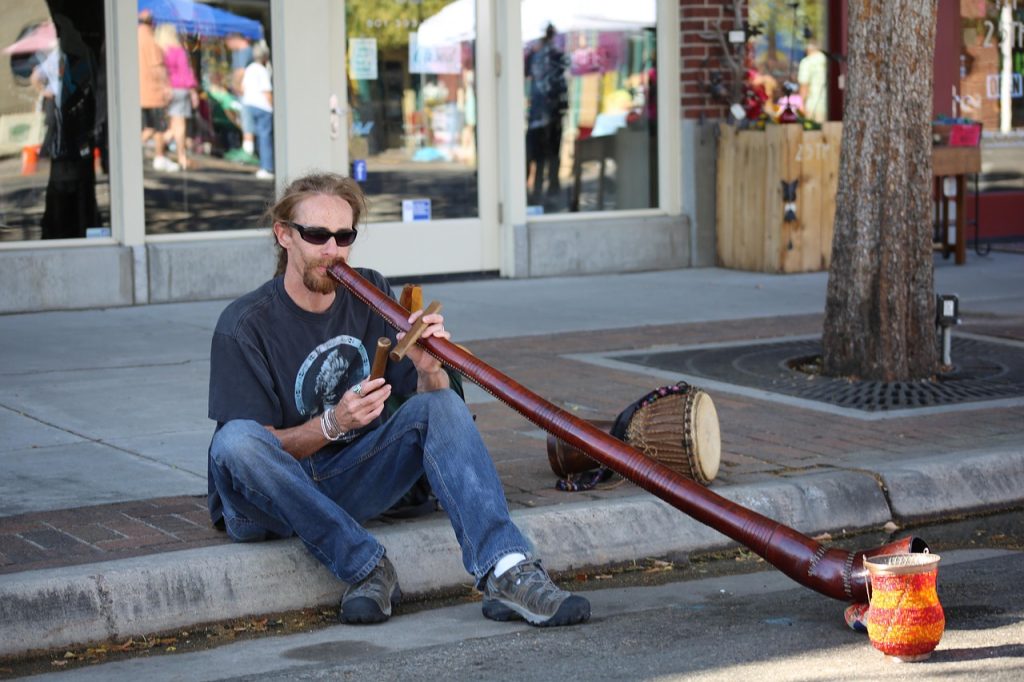
Among the most famous Yolngu traditions is the yidaki, the long wooden drone pipe that the wider world knows as the didgeridoo, whose deep sound accompanies song and ceremony. In Yolngu country the instrument carries specific law and meaning far beyond its role as music.
The yidaki is played alongside clapsticks and voice in the ceremonial songs that recount the journeys of ancestral beings and mark the great events of life and death. Its sound is understood to carry ancestral power, and the right to make and play it is bound by law.
Song, dance, and the yidaki together form the ceremonial heart of Yolngu culture, performances that are at once art, worship, and the transmission of law. Through them the knowledge of the ancestors is renewed and the identity of clan and country affirmed.
The making of a yidaki begins with finding a stringybark trunk hollowed naturally by termites, which is then cut, cleaned, and finished, a process bound by knowledge and law. The instrument is thus a product of the country as much as of the maker.
Different clans have their own songs, rhythms, and styles, and the yidaki player must know how to accompany the particular songs of a ceremony. This is a demanding art learned over many years.
The global fame of the didgeridoo has sometimes obscured its specific meaning in Yolngu law, and Yolngu people have worked to ensure that its cultural significance is understood and respected beyond Arnhem Land.
Crafts and Bark Painting
The Yolngu are renowned for their bark paintings, works made on sheets of stringybark using ochre pigments in intricate cross-hatched designs that encode clan identity and ancestral story. These paintings are not decoration but records of law and country, readable by those who hold the knowledge.
Alongside bark painting the Yolngu craft carved and painted objects, woven pandanus baskets and mats, and the yidaki itself, each tied to particular clans and purposes. The designs used carry meaning inherited within the moiety system and guarded as clan property.
Yolngu art has become celebrated far beyond Arnhem Land, exhibited in galleries around the world, yet it remains rooted in law and country. In selling their art the Yolngu share something of their world while keeping its deeper knowledge in their own hands.
The cross-hatched designs known as rarrk are among the most distinctive features of Yolngu bark painting, fine parallel lines that shimmer and carry sacred meaning. The right to paint particular designs belongs to particular clans.
Weaving from pandanus and other fibers, often dyed with natural colors, produces baskets, mats, and string bags that are both useful and beautiful, a craft carried especially by women.
Memorial poles, hollow log coffins painted with clan designs, are among the most striking of Yolngu artworks, made for mortuary ceremonies and now also admired as sculpture in galleries far away.
Art centers in the Yolngu communities support artists, manage the sale of their work, and ensure that the cultural knowledge behind the art is respected, giving the community both income and control over how their culture is shared.

Food and the Coastal Country
Yolngu food comes from both the salt water and the fresh, combining the harvest of the sea with the game, plants, and honey of the inland country. Fish, shellfish, turtle, dugong, and the eggs of coastal creatures have long been central to life on the tropical shore.
Inland the Yolngu gather yams and other roots, fruit, and the prized wild honey known as sugarbag, and hunt the animals of the forest and wetland. The detailed seasonal calendar tells when each of these foods is at its best, guiding the gathering of the year.
Sharing food according to the rules of kinship binds the community together, for who may take, give, and eat particular foods is governed by law. To provide and distribute food is thus a social and moral act as much as a practical one.
The hunting of turtle and dugong, prized foods of the sea country, requires great skill and knowledge and carries deep cultural significance. These hunts are governed by law and remain an important part of Yolngu life.
The gathering of sugarbag, the wild honey of native bees, is a valued and joyful pursuit, and the honey is a treasured food tied to particular seasons and places in the country.
Knowledge of which plants provide food, medicine, and materials is vast among the Yolngu, and this botanical understanding is passed down through daily practice and instruction from elders to the young.
Festivals and Ceremony
Ceremony stands at the center of Yolngu life, from the great rituals that mark death and the passage of the spirit to the ceremonies of initiation and the renewal of law. These gatherings bring clans together and enact the songlines of the ancestral beings.
In recent times the Yolngu have also created public festivals, most famously the Garma Festival, that share aspects of their culture with visitors while strengthening it at home. Such events combine ceremony, art, music, and the discussion of Yolngu concerns with the wider world.
Whether sacred and restricted or public and open, these gatherings express the vitality of Yolngu culture and its determination to endure. In song, dance, and the sound of the yidaki the community renews its bonds and its connection to country and law.
The Garma Festival, held annually in northeast Arnhem Land, has become a major gathering where Yolngu share ceremony, art, and ideas with visitors from across Australia and beyond. It is both a celebration and a forum for Yolngu voices.
Mortuary ceremonies, which may unfold over an extended period, are among the most important of all Yolngu rituals, guiding the spirit of the deceased and reaffirming the bonds of clan and country.
Ceremonial life requires great effort and resources, and the coming together of clans for a major ceremony is a significant event that reinforces alliances and obligations across the whole society.

History and Contact
Long before Europeans arrived, the Yolngu traded with Makassan seafarers from what is now Indonesia, who came each year to harvest sea cucumber and left words, goods, and stories in Yolngu culture. This early contact linked the Yolngu to a wider world across the sea.
British colonization reached Arnhem Land later than much of Australia, and the establishment of missions in the twentieth century brought profound change while also, in some ways, sheltering Yolngu land from settlement. The Yolngu engaged with the newcomers while holding firmly to their law.
In the twentieth century the Yolngu became leaders in the struggle for Aboriginal land rights, famously presenting bark petitions to the Australian parliament to assert their ownership of country. Their stand helped shape the recognition of Aboriginal land rights across the nation.
The Makassan trade, which continued for centuries until it was halted by Australian authorities in the early twentieth century, left a lasting mark on Yolngu language, art, and ceremony. Words and images from that contact survive in Yolngu culture today.
The bark petitions presented to the Australian parliament in the twentieth century, combining traditional painting with typed text, were a powerful assertion of Yolngu land ownership and a landmark in the history of Aboriginal rights.
Through the mission era and the decades that followed, the Yolngu adapted to new circumstances while insisting on the authority of their own law, a stance that set them apart in the wider story of Aboriginal Australia.

The Yolngu Today
Today the Yolngu live in communities and homelands across northeast Arnhem Land, holding much of their country as Aboriginal land and maintaining their languages, law, and ceremony with rare strength. They combine traditional life with engagement in education, art, music, and politics.
Yolngu artists, musicians, and leaders have carried their culture onto national and world stages, from celebrated bark paintings to popular music sung in Yolngu languages. This visibility has brought recognition while the community works to keep its knowledge rooted at home.
Challenges remain, from the pressures of the wider economy to the health and wellbeing of remote communities, yet the Yolngu face them from a foundation of unbroken connection to land and law. Their determination to keep their culture strong makes them one of the most resilient Aboriginal peoples of Australia.
Yolngu leaders have played prominent roles in national debates over Aboriginal rights, recognition, and self-determination, bringing the authority of their unbroken law to bear on the questions facing Aboriginal Australia.
Music groups singing in Yolngu languages have found audiences across Australia and overseas, carrying the sound and spirit of Arnhem Land to listeners who may know little else of Yolngu culture.
For the Yolngu, keeping the law strong, the languages alive, and the ceremonies performed is not nostalgia but the ongoing work of remaining who they are in a changing world.

Related Peoples of the Region
- Cofan People of the Ecuadorian Amazon and Their Fight to Save the Forest
- Nasa People of the Colombian Andes and Their Enduring Struggle for the Land
- Kamsa People of the Sibundoy Valley and Their Carnival of Forgiveness
- Bororo People of the Mato Grosso Savanna and Their Circle of the Dead
- Chiquitano People of the Bolivian Lowlands and Their Baroque Mission Legacy
- Movima People of the Beni Floodplains and Their Language Without Kin
You May Like
The Damara, an Ancient People of Namibia


2 thoughts on “Yolngu People of Arnhem Land and Their Unbroken Law of Two Worlds”