Off the tropical northern coast of Australia, separated from the mainland by a stretch of sea, lie the Tiwi Islands, home to the Tiwi people, one of the most distinctive Aboriginal cultures on the continent. Their homeland consists chiefly of two large islands, Bathurst and Melville, whose mangrove coasts, rainforests, and monsoon woodlands have shaped a way of life quite unlike that of the desert and coastal peoples of the mainland. For thousands of years the surrounding waters gave the Tiwi a measure of isolation that allowed their culture to develop along its own remarkable path.
The Tiwi are famous for their monumental carved burial poles, for a vivid painting tradition, and for a language and social order that set them apart from all their neighbours. So distinct are they that early observers regarded them almost as a world unto themselves, and the Tiwi have long taken pride in their separate identity. This article follows the Tiwi from their ancient island origins through their language, homeland, society, spiritual life, art, food, and ceremony, and into the vibrant and challenging world they inhabit today.
Contents
- Origins on the Islands
- The Meaning of the Tiwi Name
- A Language of Their Own
- Homeland of Two Islands
- The Old Way of Island Life
- Society, Moieties and Skin Groups
- Spiritual Life and the Dreaming
- The Pukumani and Kulama Ceremonies
- Jilamara Art and Burial Poles
- Food from Sea and Land
- Ceremony, Song and Dance
- History and the Coming of Outsiders
- The Tiwi People Today
Origins on the Islands
The Tiwi have lived on their islands for many thousands of years, their ancestors present when the land bridges that once linked the islands to the mainland were drowned by rising seas at the end of the last ice age. Cut off by the widening strait, the Tiwi developed in relative isolation, and this separation is central to understanding why their culture came to differ so markedly from that of mainland Aboriginal peoples. The sea both sustained them and set them apart.
Tiwi accounts of their own beginnings describe a creative era in which ancestral beings shaped the islands, brought forth their features and living things, and laid down the law by which people should live. In this understanding the Tiwi and their islands came into being together, bound in a relationship that continues to define who they are. The land and sea around them are read as a record of these creative acts.
The isolation of the islands meant that the Tiwi had little regular contact with the peoples of the mainland for long stretches of their history, reinforcing their sense of themselves as a distinct people. This separateness fostered a strong and confident island identity that endures to the present day. The Tiwi have long understood themselves as unlike any other, a perception shared by those who have encountered them.
The memory of a time when people could walk to the mainland, before the seas rose to their present level, survives in Tiwi tradition, a striking testament to the depth of their oral history. Such accounts preserve knowledge of events that unfolded thousands of years ago, carried faithfully across countless generations. They reveal a people whose connection to their islands reaches back not merely to habitation but to the very shaping of the land and sea around them.

The Meaning of the Tiwi Name
The name Tiwi means people, or more fully the people, in their own language, and it expresses the strong sense of distinct identity that has always characterised them. In their understanding the Tiwi were the people of the islands, set apart from the mainlanders across the water whom they regarded as quite different from themselves. The name thus carries within it the pride and separateness that define Tiwi identity.
This confident sense of being a people apart was noted by early outsiders, who found the Tiwi to differ from mainland Aboriginal groups in language, custom, and outlook. The Tiwi themselves have long embraced this distinctiveness, seeing their island world as complete in itself. Their name reflects not merely a label but a worldview centred on the islands and their people.
For the Tiwi, as for other Aboriginal peoples, names are bound up with country and ancestry, and the naming of places and people connects them to the creative era and to one another. The name of the people and the name of the islands are inseparable in Tiwi understanding, both rooted in the same deep sense of belonging. To be Tiwi is to belong wholly to the islands.
This enduring sense of distinctiveness continues to shape how the Tiwi present themselves to the wider world, proud of a heritage that is theirs alone. It is a pride rooted not in separation for its own sake but in a genuine and ancient difference of culture, language, and history.
A Language of Their Own
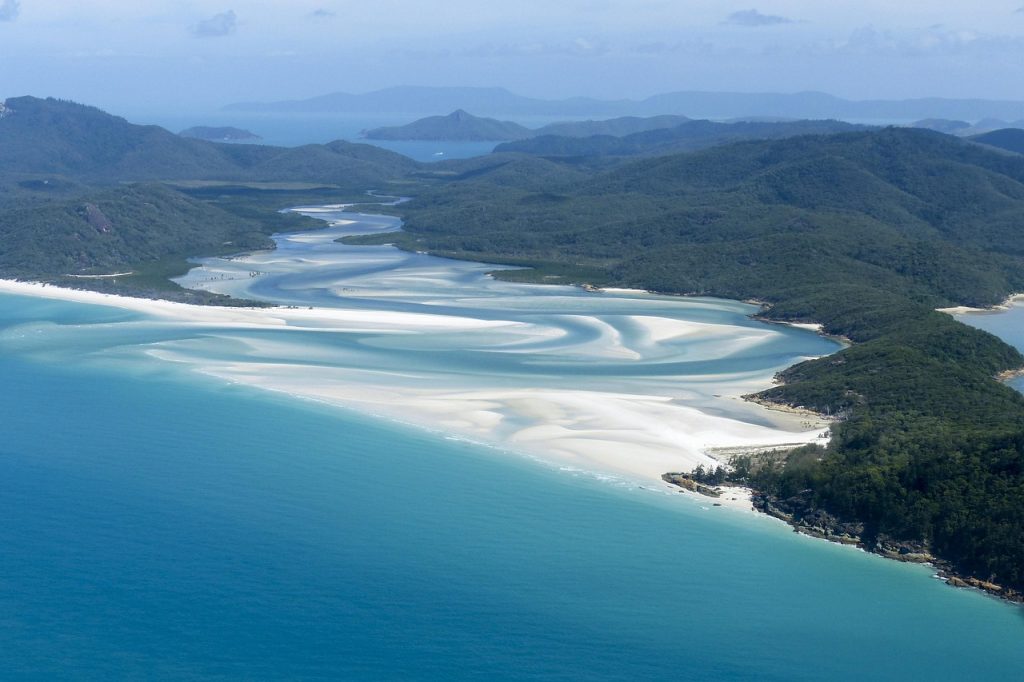
The Tiwi language stands apart from the languages of mainland Australia, so distinct that linguists have long regarded it as unrelated to any of its neighbours, a reflection of the long isolation of the islands. This uniqueness makes Tiwi one of the most remarkable languages of the continent and a subject of great interest to scholars. It carries the full weight of Tiwi knowledge, custom, and belief within its distinctive structure.
The traditional form of the language was known for its extraordinary complexity, with an elaborate grammar capable of packing a great deal of meaning into single words. Over the twentieth century the language changed considerably, and younger speakers developed newer forms that differ from the speech of the elders. This evolution reflects the pressures of a changing world, yet the language remains strong and widely spoken across the islands.
That the Tiwi language survives as a vigorous means of daily communication is a source of pride and a foundation of cultural continuity. Efforts to record and support both the older and newer forms have helped to ensure its transmission to younger generations. For the Tiwi, their singular language is one of the clearest marks of their identity as a people apart.
The uniqueness of the Tiwi language has made it a treasure not only for the Tiwi themselves but for the wider understanding of human language, offering a window into how a tongue can develop in isolation over vast spans of time. Its very difference from all its neighbours underlines the long separateness of the islands. For the Tiwi, speaking their own language is an everyday affirmation of who they are and where they belong.
Homeland of Two Islands
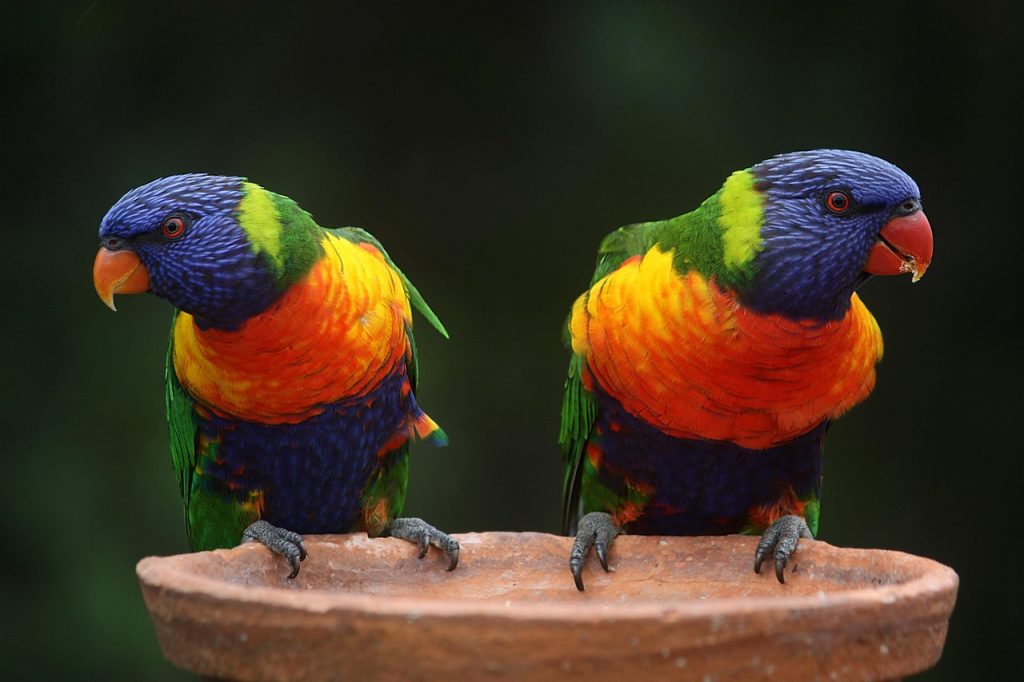
The Tiwi homeland consists chiefly of Bathurst and Melville Islands, the latter one of the largest islands off the Australian coast, together with a scattering of smaller islands nearby. This is a tropical land shaped by the monsoon, with a pronounced wet season of heavy rains and a dry season, its coasts fringed by mangroves and its interior clothed in rainforest patches and open woodland. The surrounding seas are rich in life and central to Tiwi existence.
The rhythm of the monsoon governed the Tiwi year, with the heavy rains of the wet season transforming the islands and dictating the availability of food and the timing of movement and ceremony. The Tiwi read the changing seasons through signs in the environment, timing their activities to the abundance each phase brought. Their homeland was a living system whose patterns they understood in intimate detail.
The sea was not a barrier but a provider, offering fish, shellfish, turtles, and dugong, and the Tiwi were skilled in exploiting the waters around their islands. At the same time the land yielded yams, fruits, and game, so that the Tiwi drew on both sea and land for their sustenance. This dual bounty of a tropical island world shaped a way of life rich in resources and deeply tied to place.
Melville Island ranks among the largest islands lying off the Australian coast, and together with Bathurst Island it gives the Tiwi a substantial and varied homeland of forest, woodland, wetland, and shore. The contrast between the drenching wet season and the clear dry season structured every aspect of life, from the movement of families to the timing of the great ceremonies. To know the islands was to know the moods of the monsoon.

The Old Way of Island Life
Before sustained contact with outsiders, the Tiwi lived as hunter-gatherers and fishers, moving across their islands according to the seasons and the availability of food. They exploited the resources of both sea and land, combining fishing and the hunting of marine creatures with the gathering of yams and other plant foods and the pursuit of game in the woodlands. Their way of life reflected the abundance of their tropical home.
The division of labour saw men typically hunting larger game and marine animals while women gathered plant foods and smaller creatures, together providing a varied and reliable diet. Fire was used for cooking, warmth, and the management of the land, shaping the woodlands over generations. The Tiwi lived in family groups whose movements followed the rhythms of the monsoon and the resources of their country.
Island life fostered a strong sense of community and a rich ceremonial tradition, for the relative security and abundance of the islands allowed the Tiwi to invest heavily in the elaborate ceremonies for which they became renowned. Their social and spiritual life was as sophisticated as any on the continent. The isolation of the islands gave this culture the space to flourish in its own distinctive way.

Society, Moieties and Skin Groups
Tiwi society is organised through a system of groups that determine kinship, marriage, and social obligation, structuring the relationships that bind the community together. Membership of these groups is inherited, and they govern who may marry whom and how people should behave toward one another. This social order, like the language, developed its own distinctive character over the long centuries of island life.
Marriage among the Tiwi followed elaborate rules that were central to social and political life, and the arrangement of marriages was a matter of great importance and complexity. These arrangements linked families and groups across the islands, weaving a dense fabric of alliance and obligation. The intricacy of Tiwi marriage practices drew particular attention from those who studied their society.
Authority and standing among the Tiwi were bound up with age, knowledge, and success in the ceremonial and social spheres, with senior men and women holding the deepest understanding of law and ritual. Their guidance shaped the life of the community and the transmission of knowledge to the young. Through this social order the Tiwi maintained the distinctive culture of their islands across generations.
The complexity of Tiwi marriage arrangements meant that a person’s spouse might be determined by obligations set in motion long before their birth, binding families into enduring alliances. These arrangements were the subject of careful negotiation and held great social and political weight. Though such practices have changed over time, the underlying importance of kinship and alliance remains central to how the Tiwi understand their community.

Spiritual Life and the Dreaming
The spiritual life of the Tiwi centres on their own accounts of the creative era, in which ancestral beings shaped the islands and established the law by which the people live. These beings and their deeds are remembered in story, song, and ceremony, and their presence is felt across the islands in the features of land and sea. The Tiwi understand their world as one made and ordered by these creative acts.
Death holds a central place in Tiwi spiritual life, and the elaborate ceremonies surrounding it are among the most important expressions of their beliefs. The Tiwi understand death as a passage requiring careful ritual attention to guide the spirit and to restore the balance of the community. This concern with the proper treatment of the dead gave rise to some of their most striking cultural achievements.
Spirituality for the Tiwi is woven through daily life and expressed above all in ceremony, which renews the connection between the living, the dead, and the ancestral beings of the creative era. The proper performance of ritual is understood as essential to the wellbeing of the people and their islands. In this worldview the Tiwi are custodians of a law and a land entrusted to them long ago.

The Pukumani and Kulama Ceremonies
The most renowned of Tiwi traditions is the Pukumani, the great funeral ceremony held some time after a death to honour the deceased and guide their spirit. Central to this ceremony are the carved and painted burial poles, known as tutini, erected around the grave as a lasting memorial. The making of these poles and the performance of the accompanying songs and dances are among the highest expressions of Tiwi culture.
The other great ceremony of the Tiwi is the Kulama, associated with the yam of the same name and traditionally held toward the end of the wet season. This ceremony marks the passage of participants through stages of life and knowledge and celebrates the renewal of the world through song, dance, and the ritual preparation of the yam. It is a ceremony of initiation, wellbeing, and continuity.
Together the Pukumani and the Kulama form the twin pillars of Tiwi ceremonial life, one concerned with death and the other with life and renewal. Both involve elaborate preparation, the composition of new songs, and the participation of the whole community. The endurance of these ceremonies is a powerful sign of the continuing strength of Tiwi tradition.
The composition of new songs for each Pukumani and Kulama ceremony means that these traditions are never static but constantly renewed, with each generation adding its own voice to an ancient form. This creativity keeps the ceremonies alive and relevant, binding the deep past to the present. In this way the Tiwi honour their ancestors while continuing to speak to the concerns of the living.
Jilamara Art and Burial Poles
Tiwi art is instantly recognisable for its distinctive designs, known as Jilamara, built from patterns of dots, lines, and geometric shapes painted in natural ochres of yellow, red, black, and white. These designs adorn the body for ceremony, cover the carved burial poles, and decorate a range of objects, carrying deep meaning tied to the creative era and to ceremony. The Tiwi style stands apart from the art of the mainland.
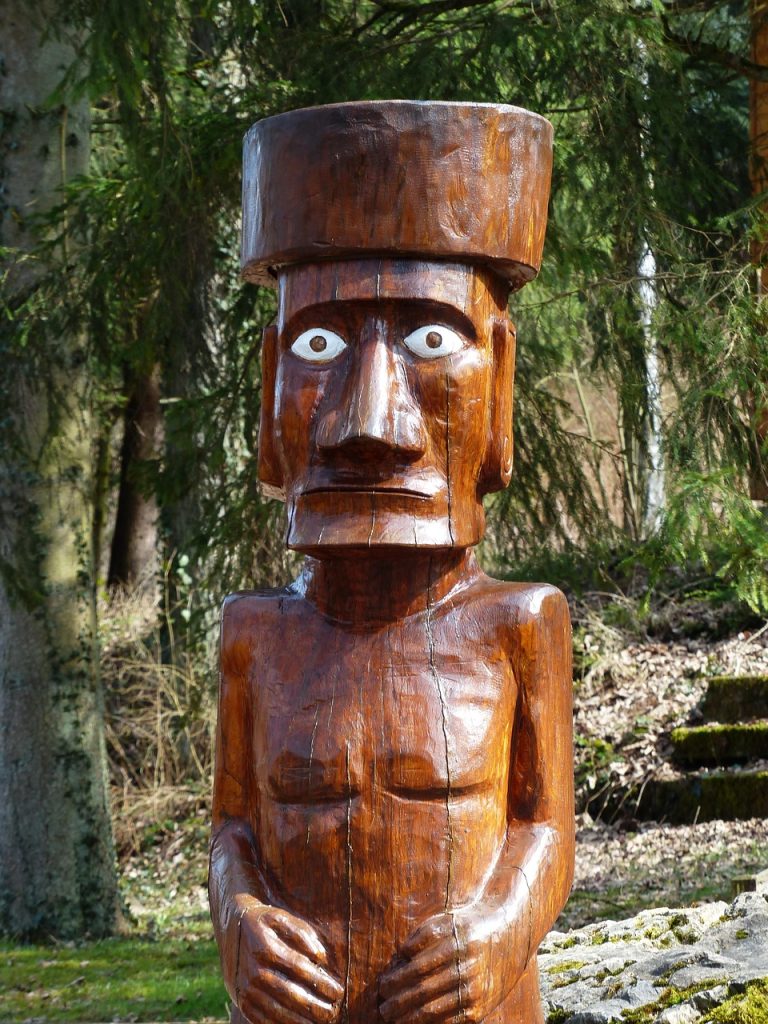
The carved burial poles of the Pukumani ceremony are the most famous of Tiwi creations, tall wooden columns shaped and painted with intricate Jilamara designs and set around the grave. Once the ceremony is complete the poles are left to stand and weather, returning slowly to the land. These poles have come to be admired around the world as masterpieces of Aboriginal sculpture.
In more recent times Tiwi artists have brought their traditions into new forms, producing paintings, prints, carvings, and fabrics through art centres on the islands that have gained international acclaim. This flourishing of contemporary art rests firmly on the ancient foundation of Jilamara design and ceremonial craft. Art has become both a proud expression of identity and an important part of island life.
The weathering of the burial poles after the Pukumani ceremony is not seen as neglect but as a natural and fitting return of the memorial to the country from which its materials came. This acceptance of impermanence reflects a profound understanding of the cycle of life and death at the heart of Tiwi belief. The poles thus embody not only artistry but a whole philosophy of existence.
Food from Sea and Land
The Tiwi drew a rich and varied diet from the tropical abundance of their islands and the surrounding seas. From the water they took fish, shellfish, crabs, turtles, and the prized dugong, a large marine mammal that provided abundant meat and held special significance. The Tiwi were skilled hunters and fishers, exploiting the resources of their coasts and shallow seas with great expertise.
From the land came yams and other roots, fruits, and the honey of wild bees, along with game such as possums, birds, and reptiles taken in the woodlands. The yam in particular held both nutritional and ceremonial importance, celebrated in the Kulama ceremony. Women held detailed knowledge of the plant foods of the islands and when each was ready to gather.
As among other Aboriginal peoples, food was bound up with kinship, generosity, and obligation, its distribution following the ties of family and the rules of proper conduct. The sharing of a large catch such as a turtle or dugong was an occasion of social importance. The abundance of the islands supported a way of life in which the sharing of food expressed the bonds of community.
The hunting of dugong and turtle required great skill and courage, and success in the pursuit of these large sea creatures brought considerable prestige. Such catches were shared widely, turning a successful hunt into an occasion that strengthened the bonds of the whole community. The sea, in this way, was not only a larder but a stage on which social standing and generosity were displayed.

Ceremony, Song and Dance
Song and dance lie at the very heart of Tiwi cultural life, and the Tiwi are celebrated for the richness of their ceremonial performance. New songs are composed for the great ceremonies, and the ability to create and perform them is highly valued, making song a living and evolving tradition rather than a fixed inheritance. Through song the Tiwi express their beliefs, their history, and their emotions.
Dance is inseparable from song in Tiwi ceremony, with each family and group associated with particular dances that draw on the creative era and the natural world. Dancers may take on the character of ancestral beings or of the creatures of land and sea, their movements telling stories understood by all present. The performance of these dances is a highlight of the great ceremonies.
The Pukumani and Kulama ceremonies bring song and dance together in performances that can last for days and involve the whole community. These occasions renew the bonds between the living and the dead and between people and their islands. The vitality of Tiwi song and dance, still composed and performed today, is among the clearest signs of the enduring strength of their culture.
The gift of composing songs was and remains highly esteemed among the Tiwi, and skilled songmen and songwomen hold a special place in the life of the community. Their new compositions, created for each ceremony, ensure that the ancient forms are forever refreshed. This living tradition of song places the Tiwi among the most musically creative of all Aboriginal peoples.

History and the Coming of Outsiders
For much of their history the Tiwi had only sporadic contact with outsiders, their islands protected by the surrounding seas and by a reputation for defending their country fiercely against intruders. Early attempts by Europeans to establish a foothold met with resistance and largely failed, and the Tiwi long remained masters of their own islands. This relative isolation preserved their distinctive culture into the modern era.
Sustained outside presence came in the early twentieth century with the establishment of a Catholic mission on Bathurst Island, which brought lasting change to Tiwi life. The mission introduced new beliefs, schooling, and ways of living, and drew many Tiwi into settled communities, yet the Tiwi retained much of their language, ceremony, and identity through this period. The encounter reshaped their world without erasing it.
Through the twentieth century the Tiwi navigated the pressures of missions, government policy, and the wider Australian society while holding to their island identity. In time they gained greater control over their own affairs and recognition of their ownership of their islands. This resilience allowed the Tiwi to enter the modern era with their culture and their sense of themselves as a distinct people intact.

The Tiwi People Today
Today the Tiwi live mainly in communities on Bathurst and Melville Islands, combining contemporary life with a strong commitment to their language, ceremony, and art. Their population has grown, their language remains vigorous, and their great ceremonies continue to be performed, testifying to the endurance of their island culture. The Tiwi manage much of their own affairs and take pride in their distinct identity.
The islands are renowned for their art centres, whose paintings, carvings, prints, and fabrics reach collectors and galleries far beyond Australia, providing both income and a powerful expression of identity. The Tiwi are also famous throughout Australia for their passion for football, and the annual football grand final on the islands has become a celebrated event that draws visitors and unites the community. This blend of tradition and modern life is characteristic of the Tiwi today.
The Tiwi story is one of a people who, protected by their islands, developed a culture unlike any other and carried it into the modern world with pride and resilience. Having weathered the coming of outsiders and the pressures of the wider society, they remain confidently themselves, a people apart in the best sense. For all who encounter them, the Tiwi offer a vivid example of a distinct island culture that continues to thrive.
Younger Tiwi move between their island communities and the wider world for education, work, and sport, yet the pull of the islands and their ceremonies remains strong. Many return to take part in the great gatherings that renew their culture and their bonds. In balancing these worlds the Tiwi demonstrate that their distinct island identity can endure and flourish in the conditions of modern life.

Related Peoples of the Region
- Movima People of the Beni Floodplains and Their Language Without Kin
- Yolngu People of Arnhem Land and Their Unbroken Law of Two Worlds
- Arrernte People of the Red Centre and Their Songlines Across the Desert
- Warlpiri People of the Tanami Desert and Their World of Sand and Story
- Pitjantjatjara People of the Western Desert and Their Sacred Heart at Uluru
- Noongar People of the Southwest and Their Country of Six Seasons
You May Like
The Damara, an Ancient People of Namibia


2 thoughts on “Tiwi People of the Northern Islands and Their World Apart”