You see it before you have even left the train. Step out of the main station in Cologne and the cathedral is simply there, impossibly close and impossibly tall, its blackened stone spires clawing at the sky so directly overhead that you have to tilt your head back to take it in. Few buildings on earth announce themselves with such force. For more than six hundred years this Gothic giant has loomed over the German city of Cologne, and for much of that time it was a magnet for pilgrims drawn by one of the most prized relics in all of medieval Christianity: the bones, so tradition holds, of the Three Kings who came to worship the newborn Christ.
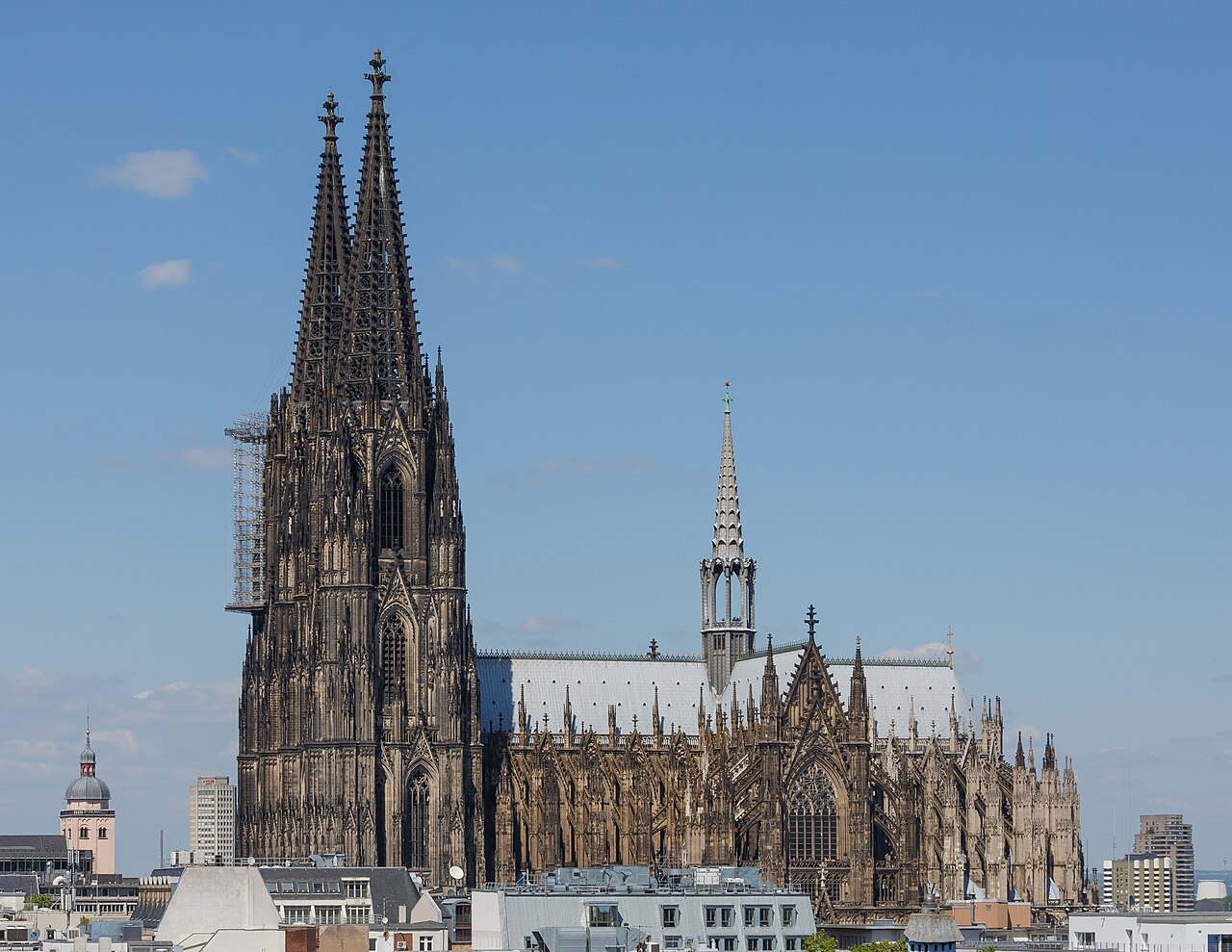
The story of how those relics came to a German river city, and of the astonishing building raised to house them, is really the story of medieval Europe itself.
The relics that made a city a destination
In the twelfth century, the relics said to be those of the Three Kings, the Magi who followed the star to Bethlehem, were brought to Cologne from Italy as a prize of war and politics. Their arrival transformed the city overnight. To possess the remains of the very first people to honour the infant Jesus, the wise men of the Christmas story, was to possess something extraordinary, and pilgrims began streaming to Cologne from across Europe to venerate them. A city with such a treasure needed a church worthy of it, and not just any church, but the grandest that human hands could raise.
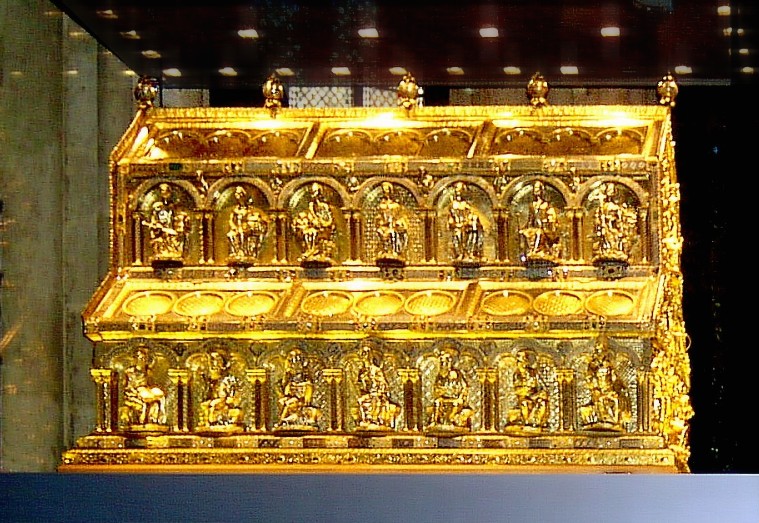
To hold the relics, the people of Cologne commissioned a magnificent golden reliquary, a shrine shaped like a basilica and covered in gold, jewels, and exquisite figures, large enough to contain the precious bones. It is one of the greatest works of the medieval goldsmith art that survives anywhere, and it still stands behind the high altar today, glittering in the dim light. The desire to give this shrine a fitting home was the seed from which the entire colossal cathedral grew.
Six centuries to finish a single building
Construction of the cathedral began in the thirteenth century in the soaring new Gothic style, with its pointed arches, ribbed vaults, and walls dissolved into glass, all designed to pull the eye and the soul upward toward heaven. The ambition was breathtaking, and so was the cost. Work continued for generations, then faltered, and then, remarkably, stopped almost entirely for centuries, leaving the half-built cathedral standing incomplete with a medieval crane rusting atop one unfinished tower, a familiar sight to the people of Cologne for hundreds of years.
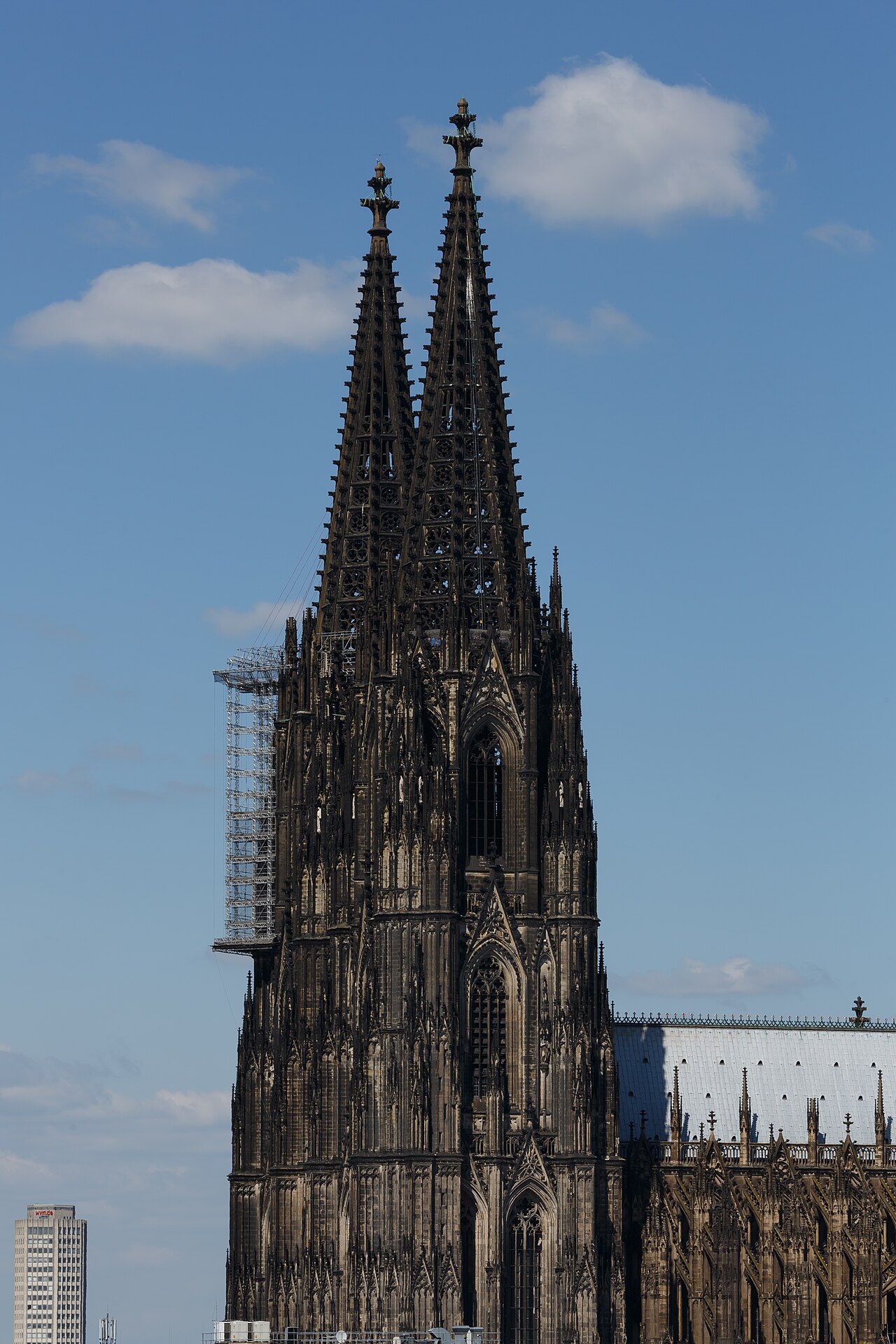
Only in the nineteenth century, swept up in a wave of national feeling and a renewed love of the medieval, did Germans resolve to finish what their ancestors had begun. Working from the original surviving plans, they completed the cathedral at last, and when it was done it was briefly the tallest building in the world. That is part of what makes Cologne so moving: it is at once a genuine medieval masterpiece and a monument to a much later age that chose to honour the vision of the distant past. The fact that it survived the bombing that flattened much of the city around it during the Second World War, battered but standing, only deepened its hold on the German imagination.
Where it belongs in the Christian story
Cologne Cathedral is a Roman Catholic church, the seat of the archbishop of Cologne, and it stands squarely within the tradition of Western Latin Christianity that built the great Gothic cathedrals of medieval Europe. Those soaring buildings were themselves a kind of theology in stone, expressing through height, light, and beauty the Catholic vision of a heaven reaching down to earth. The veneration of relics, like the bones of the Magi, and of saints was central to medieval Catholic devotion, and the pilgrimage to see and pray before such relics was one of the great religious practices of the age.
This sets the cathedral apart from the Protestant tradition that would later arise in Germany itself. The Reformation, which began in German lands, was in part a reaction against precisely these practices, the cult of relics, the elaborate shrines, the pilgrimages, which reformers regarded as distractions from a simpler, scripture-centred faith. Cologne, however, remained staunchly Catholic, and its cathedral stands today as one of the supreme expressions of the medieval Catholic worldview that the reformers challenged. To stand before the golden shrine of the Magi is to stand in the heart of that older, richer, more visual Christianity, the one that built cathedrals as gateways to heaven.
Standing inside the giant
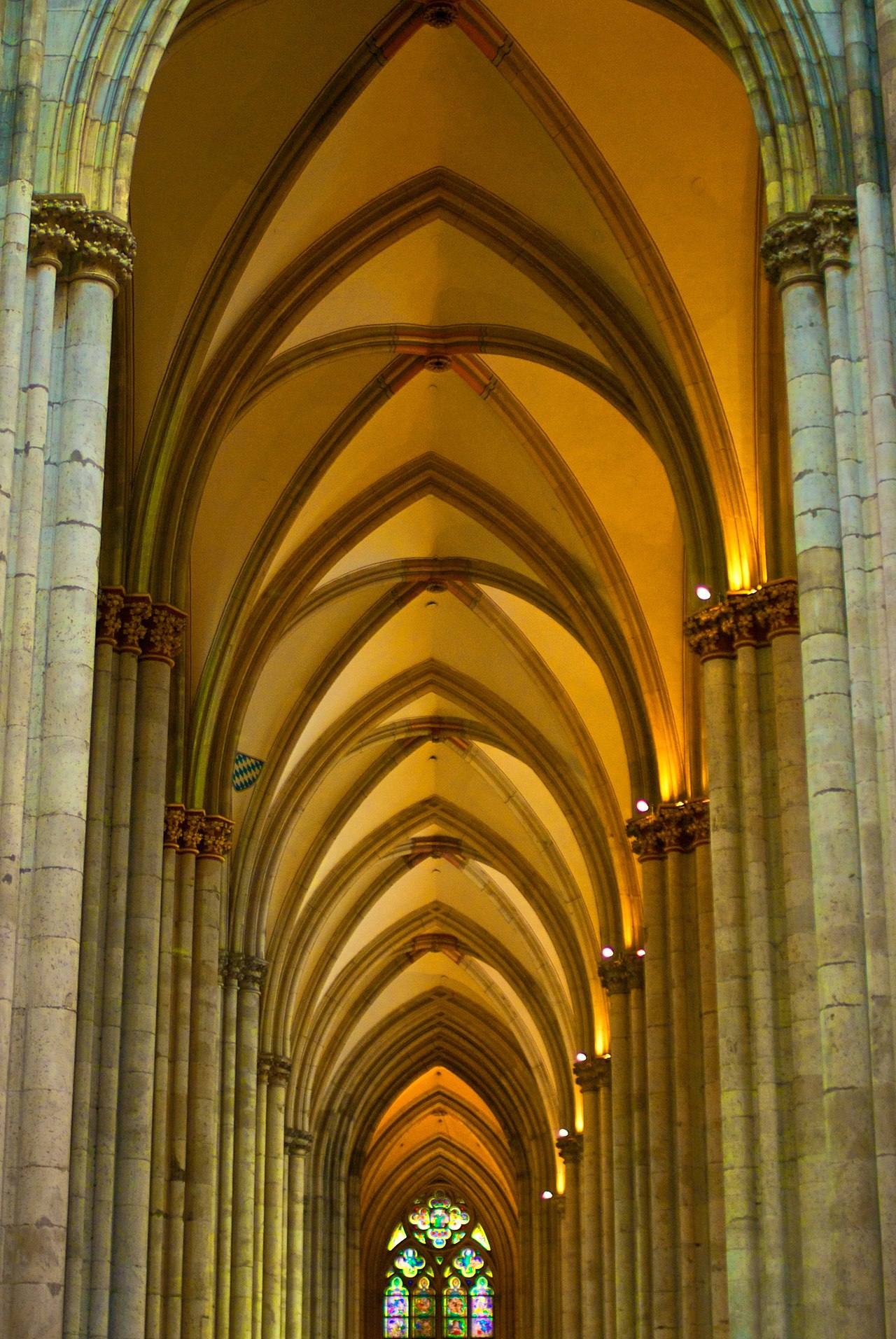
Whatever you believe, the interior is an experience of pure scale and light. The nave rises to a dizzying height, the slender columns soaring up before branching into the vaulted ceiling far above, so that the whole space seems to stretch and lift around you. Coloured light filters through the stained glass, some of it medieval and some far more recent, scattering across the cool grey stone. The effect is exactly what the Gothic builders intended: a feeling of smallness before something vast, and of being drawn upward and out of yourself.
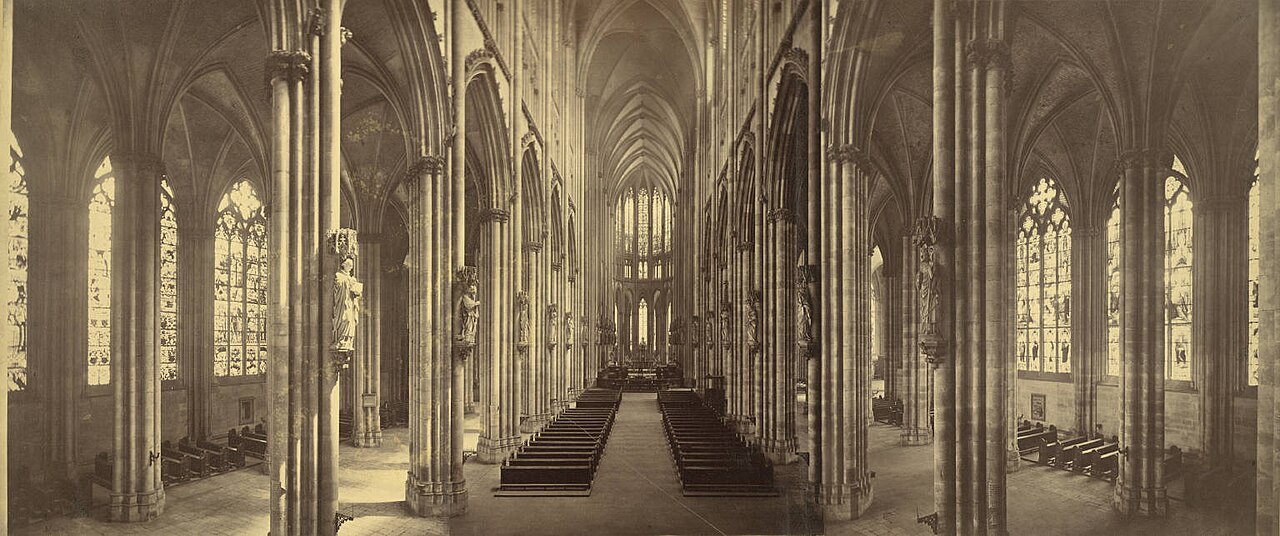
Behind the high altar glows the golden shrine of the Three Kings, the reason the whole building exists, and pilgrims and visitors still file past it in a quiet stream. For those with the energy, a long climb up a winding stone staircase inside one of the towers rewards you with a view out over the rooftops and the river far below, and a close-up encounter with the soot-darkened stone and intricate carving that decoration the exterior. It is a stiff climb of many hundreds of steps, but it gives a sense of the building from the inside out that you cannot get from the floor.
Visiting the cathedral
Because it sits directly beside the main railway station in the centre of Cologne, the cathedral is one of the most easily reached great churches in Europe, and you can find yourself standing beneath it within moments of arriving in the city. That accessibility means it is almost always busy, a constant flow of travellers, worshippers, and the simply curious passing through its great doors, so if you want a quieter moment it is worth coming early in the morning or staying into the evening.
It is easy, in the rush of a city visit, to treat the cathedral as just another famous sight to photograph and move on from. But it repays a slower visit. Sit for a while in the cool of the nave, let the height and the light work on you, and walk up to the glittering shrine that started it all, and you begin to feel the centuries of longing and labour and faith folded into the stone. A river city won a set of holy bones, and to honour them it spent six hundred years building a gateway to heaven. That ambition is still standing, still soaring, still drawing people from the ends of the earth to look up.


