Ask most people to name China’s minority peoples and they will reach for the Tibetans or the Uyghurs, the groups whose stories reach the outside world. Almost no one names the Zhuang, and yet the Zhuang are by a wide margin the largest minority nationality in the whole country, some seventeen million strong, more numerous than many independent nations. They live mostly in the green, karst-studded south, in a landscape of limestone towers and terraced rice fields, and their relative invisibility abroad is itself a clue to their history: a people so long and so closely intertwined with their Han neighbors that the world has almost forgotten they are distinct at all.
But distinct they are. The Zhuang speak a language not remotely related to Chinese, but belonging instead to the Tai family, kin to the languages of Thailand and Laos far to the south. They are the northernmost great branch of the Tai-speaking world, a people whose ancestors were tilling wet-rice paddies in this corner of Asia thousands of years ago, long before the Chinese state reached this far. Their culture, their songs, their festivals, and their old beliefs mark them as heirs to a civilization all their own, quietly persisting beneath the surface of modern China.
This is the story of the Zhuang, the giants that the world overlooks. We will trace their ancient roots as a Tai people of the south; the puzzle of their name and their language; the karst country they call home; the rice-farming life at the core of their culture; the village society and its clans; their old religion of spirits and ancestors; their extraordinary tradition of song; their weaving and their famous bronze drums; their food; their festivals; the long absorption into the Chinese world; and their situation today. Here is the path:
- A Tai People of the South
- The Puzzle of the Name
- A Language of Songs
- Among the Karst Peaks
- A Civilization Built on Rice
- Villages, Clans, and the Stilt House
- Spirits, Ancestors, and the Ritual Master
- A People Who Court in Song
- Brocade and the Bronze Drum
- Five-Colored Rice
- The Song Festival of the Third Month
- Two Thousand Years in China’s Embrace
- The Zhuang Today
A Tai People of the South
The Zhuang are the largest surviving branch of an ancient population that once spread across the whole of southern China, the Tai-speaking peoples whose descendants today include the Thai, the Lao, and many others across mainland Southeast Asia. Long before the Chinese empire pushed south of the Yangtze, these peoples inhabited the warm, wet lands of the far south, where they had developed one of the world’s early traditions of wet-rice agriculture, cultivating the flooded paddies that would become the signature of Tai civilization.
As the Chinese state expanded southward over the centuries, absorbing and displacing the native peoples of the south, many Tai groups migrated further south into what is now Southeast Asia, while others remained in their homeland and were gradually drawn into the Chinese world. The Zhuang are the great remnant of those who stayed, the Tai people who remained in the northern homeland and, over two thousand years, came to live within the Chinese state while keeping their distinct language and much of their culture.
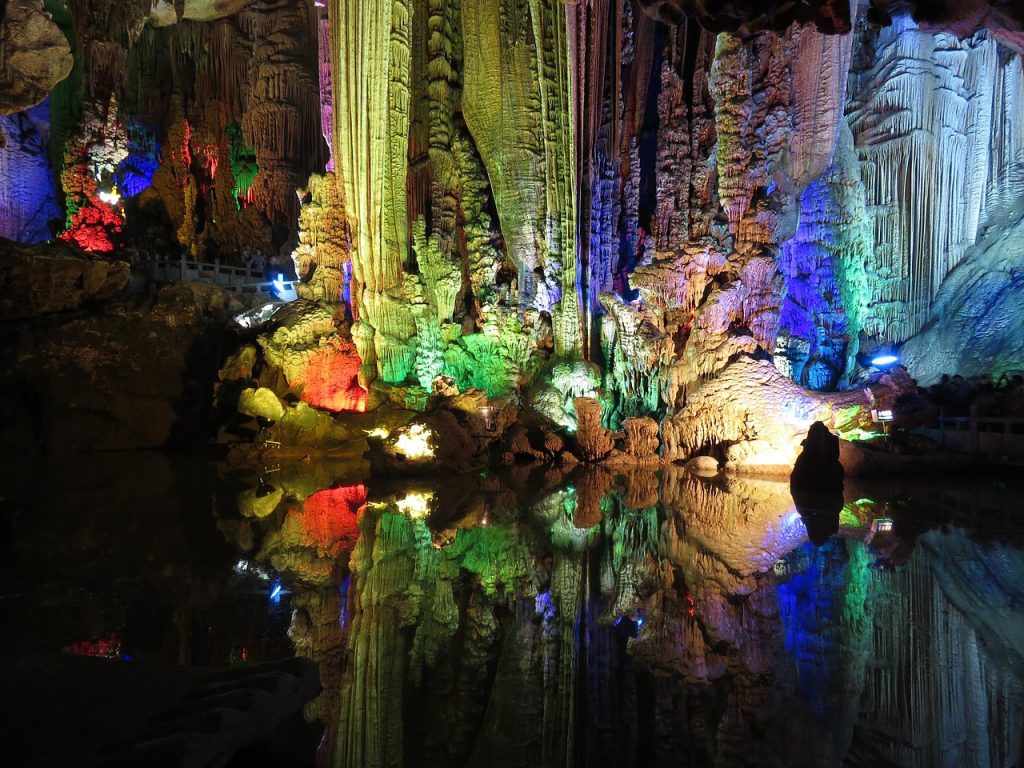
This makes the Zhuang a people of deep antiquity in their land, heirs to a civilization that predates the arrival of Chinese power in the region by a very long time. The great archaeological remains of the ancient south, including the bronze drums and the rock paintings scattered across the Zhuang lands, testify to a sophisticated culture that flourished here in remote times, and the Zhuang are the living inheritors of this deep southern past.
Because the Zhuang are spread across a wide territory and were never united in a single state, they are internally diverse, divided into a northern and a southern branch whose dialects differ considerably, and into numerous local groups with their own customs and identities. What unites them is their common Tai linguistic heritage, their shared traditions of rice farming and song, and, in modern times, their official recognition as a single nationality, a category that gathered many related local groups under one name.
The Puzzle of the Name
The name Zhuang is, in truth, a relatively modern and somewhat artificial label, applied to gather a great many related local groups into a single recognized nationality. For most of their history the ancestors of the Zhuang did not think of themselves as a single people under one name, but identified with their particular locality, clan, or dialect group, and the various Tai-speaking communities of the south went by many different local names.
The unification of these groups under the single name Zhuang came in the modern era, as the state undertook to classify and recognize the many peoples within its borders, gathering the diverse Tai-speaking communities of the south into one official nationality. This administrative act gave a single identity to peoples who had been fragmented, and created, in a sense, the Zhuang as a self-conscious nationality where before there had been a scattering of related local groups.
The written form of the name has itself changed over time, and earlier versions carried connotations that were later deliberately altered to remove any sense of disparagement, a small but telling episode in the modern history of the people. The choice of a neutral, dignified character to write the name reflected the official recognition of the Zhuang as an equal nationality within the state, a marker of their status in the modern order.
Whatever the artificiality of its origin, the name Zhuang now designates a real and self-aware people, the largest minority in China, conscious of their distinct language and heritage even as they live intertwined with the Han majority. The name has become a genuine marker of identity, and to be Zhuang today is to belong to this great southern people, heirs of the ancient Tai civilization of the karst country.
A Language of Songs
The Zhuang language belongs to the Tai family, entirely unrelated to Chinese despite the long centuries of coexistence, and it links the Zhuang to a wide world of related peoples stretching south into Southeast Asia. It is a tonal language, like Chinese, but its grammar and vocabulary mark it as a member of a quite different linguistic family, and its many dialects, divided broadly into northern and southern groups, can differ enough to hinder mutual understanding.
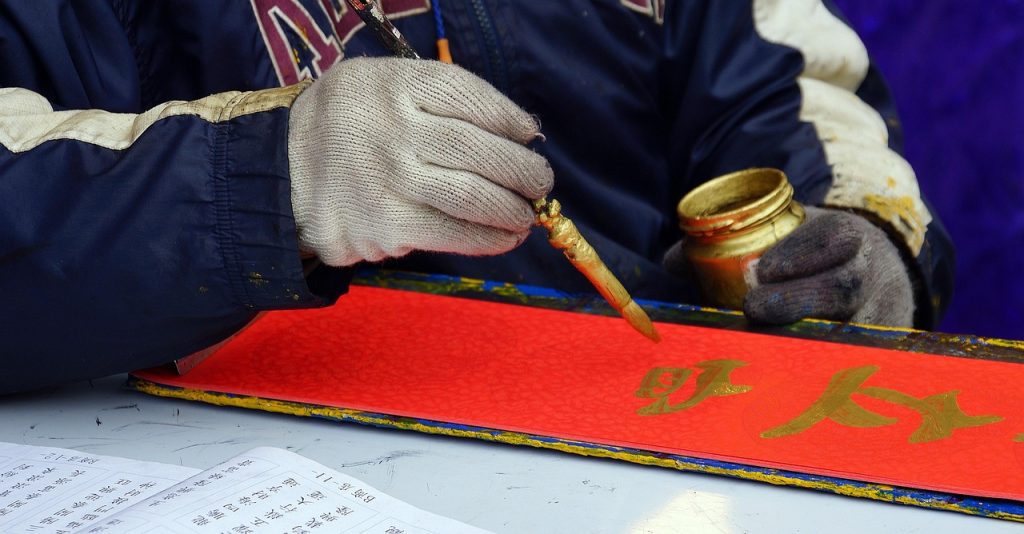
For most of their history the Zhuang had no widely used writing system of their own, though a tradition existed of writing the language using Chinese characters, and characters invented on the Chinese model, to represent Zhuang words, a home-grown script used chiefly by ritual specialists to record their chants and by others for songs and records. This old script was never standardized or widely taught, remaining the preserve of specialists and enthusiasts.
In the modern era a standardized writing system based on the Latin alphabet was created for the Zhuang language, an attempt to give the people a practical modern script and to promote literacy in their own tongue. This romanized Zhuang appears on official signs and documents in the Zhuang homeland, a visible marker of the language’s official status, though in practice the great majority of Zhuang are educated and literate in Chinese rather than in their own written language.
The language lives above all in speech and, most gloriously, in song, for the Zhuang are famous throughout China as a people who express themselves through singing, and their oral tradition of folk song is extraordinarily rich. Through these songs, the language carries the poetry, history, and emotional life of the people, and the maintenance of the spoken Zhuang tongue, under growing pressure from Chinese, is bound up with the survival of this singing culture that lies at the heart of Zhuang identity.
Among the Karst Peaks
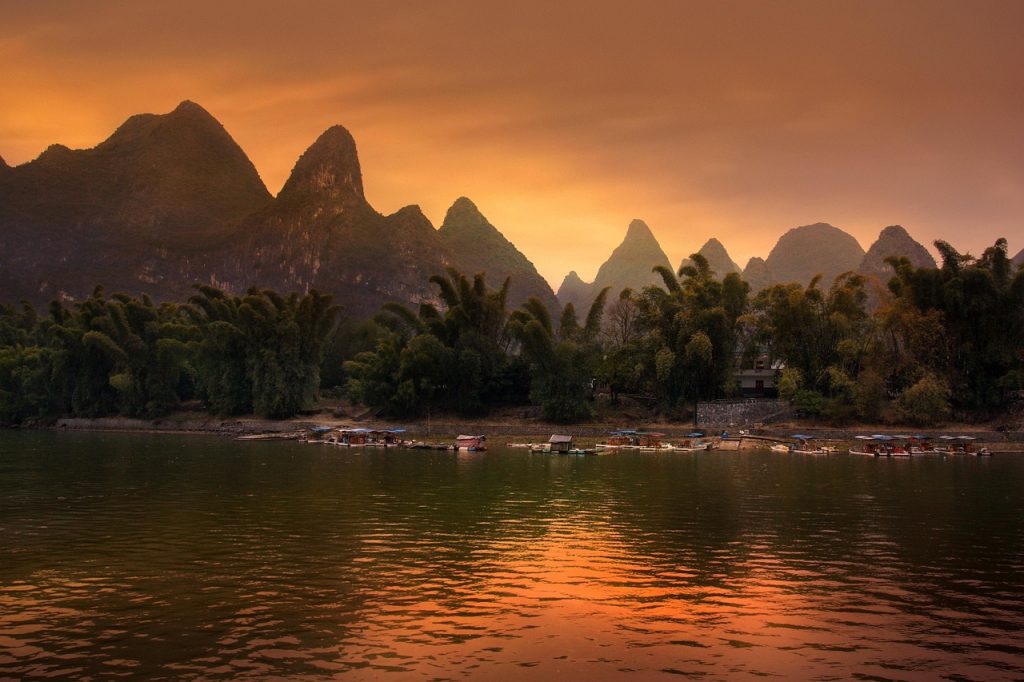
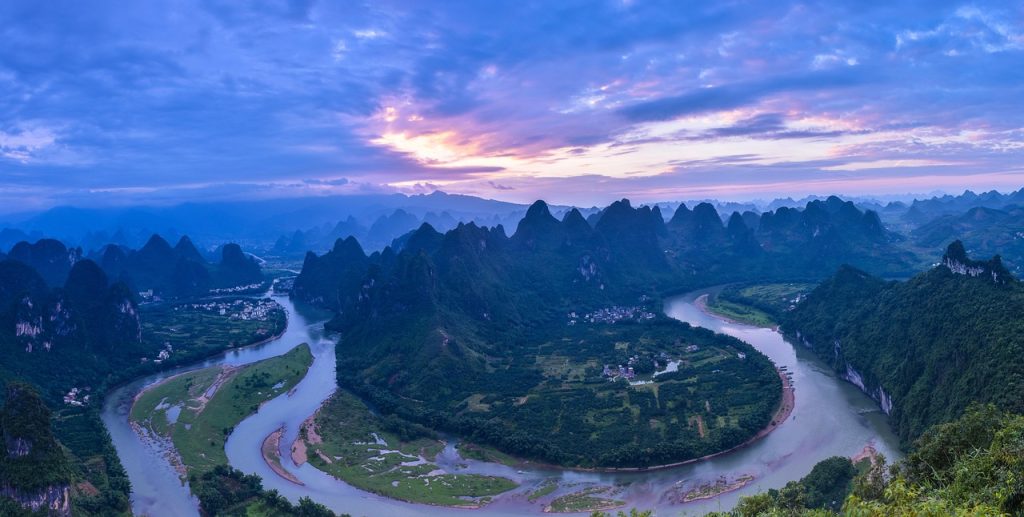
The Zhuang homeland lies in the far south of China, centered on a region of the country famous for one of the most spectacular landscapes on earth: the karst country, where countless steep limestone peaks rise abruptly from the plains like a forest of stone, their bases wrapped in mist and their feet washed by winding rivers. This scenery, immortalized in Chinese painting and instantly recognizable, is the setting of Zhuang life, a land of dramatic beauty and considerable challenge.
Between and among the karst towers lie the valleys and plains where the Zhuang built their villages and terraced their rice fields, coaxing flat, flooded paddies from a broken landscape. The rivers that wind among the peaks provided water and transport, and the subtropical climate, warm and wet, was well suited to the wet-rice agriculture that the Zhuang practiced. The famous terraced fields, climbing the hillsides in shining steps, are among the great sights of the region.
The homeland is a land of great natural richness, its warm climate and abundant water supporting a lush vegetation and a productive agriculture, but the karst terrain, with its thin soils and its underground drainage, also posed challenges, and some Zhuang areas remained poor and isolated, cut off among the peaks. The contrast between the fertile valleys and the harder hill country shaped the varied fortunes of Zhuang communities across their homeland.
Beyond their core region, Zhuang communities are also found in the neighboring provinces of the south, part of the wider zone of ethnic diversity where many minority peoples live intermingled among the Han. But it is the karst country, with its stone peaks, its winding rivers, and its terraced fields, that is the true heartland of the Zhuang, the landscape that shaped their civilization and that remains the enduring home of the great majority of the people.
A Civilization Built on Rice
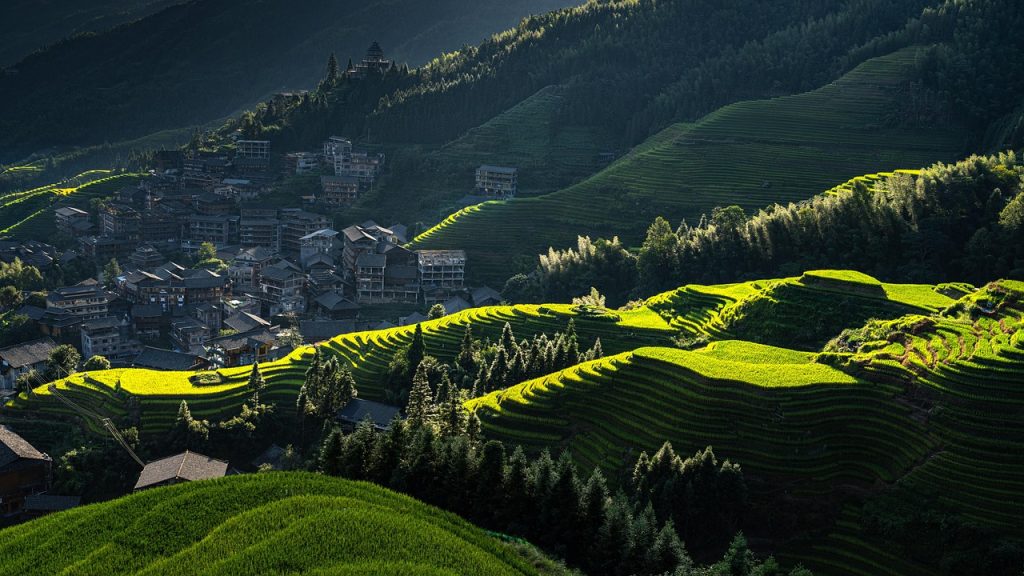
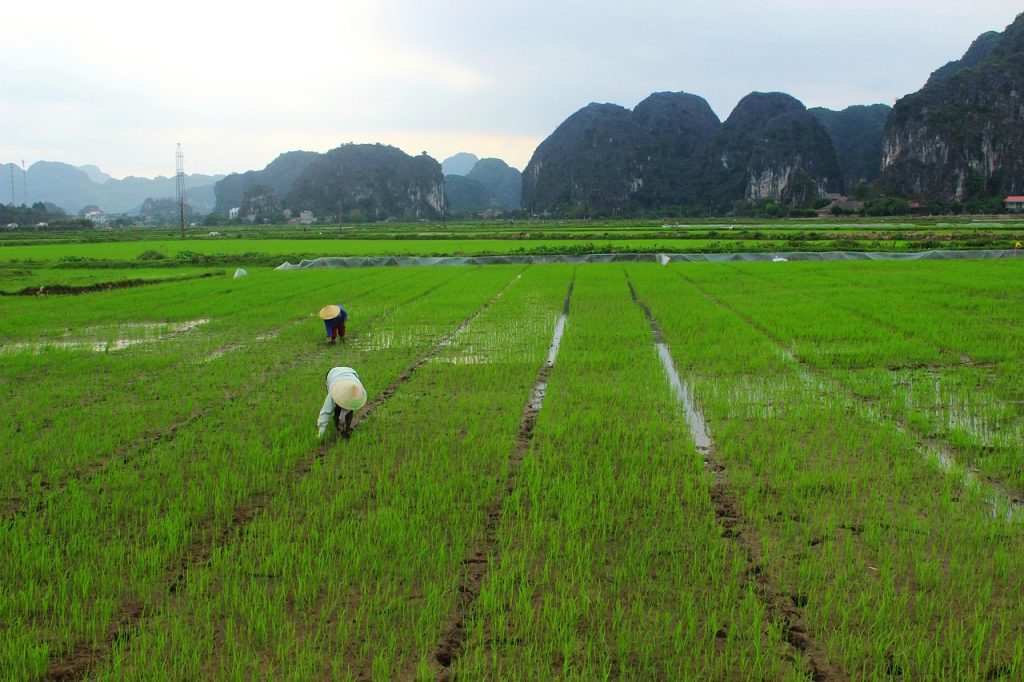
At the foundation of Zhuang life, as of the whole Tai world, lies wet-rice agriculture, the cultivation of rice in flooded paddies, a tradition of immense antiquity that the ancestors of the Zhuang helped to pioneer. The whole rhythm of traditional Zhuang life was set by the cycle of the rice: the flooding of the fields, the transplanting of the seedlings, the tending of the growing crop, and the harvest, labor that demanded cooperation and that bound the village community together.
The terraced fields that climb the hillsides of the Zhuang country are monuments to this rice civilization, the product of generations of labor that carved flat, water-holding steps from the slopes, an achievement of engineering and patience that turned difficult terrain into productive farmland. The management of water, channeled from the rivers and streams to flood the paddies, was central to the whole enterprise, and the Zhuang became masters of the art of wet-rice farming in a demanding landscape.
Alongside rice, the Zhuang cultivated other crops and raised livestock, and the rivers and paddies provided fish, an important part of the diet, so that the Zhuang economy combined farming, fishing, and animal husbandry in the manner of settled agricultural peoples across the region. The water buffalo, essential for plowing the flooded fields, was a valued animal, and the whole material culture reflected the demands and rhythms of a rice-farming life.
This settled, agricultural existence, rooted in the village and the paddy, gave Zhuang society its character: communal, tied to the land and the ancestral fields, and organized around the cooperative labor that rice cultivation required. For thousands of years the Zhuang lived by the rice, and the grain was not merely food but the center of their economy, their calendar, and their culture, celebrated in festival and song and woven into the deepest patterns of their life.
Villages, Clans, and the Stilt House
Traditional Zhuang society was organized around the village and the clan, the extended kin group that traced descent from a common ancestor and that formed the basic unit of social life. Villages were often composed of members of one or a few clans, bound by ties of kinship and by the cooperative demands of rice farming, and the clan provided the framework of belonging, mutual support, and identity. Ancestral halls and the veneration of clan forebears reinforced these bonds.
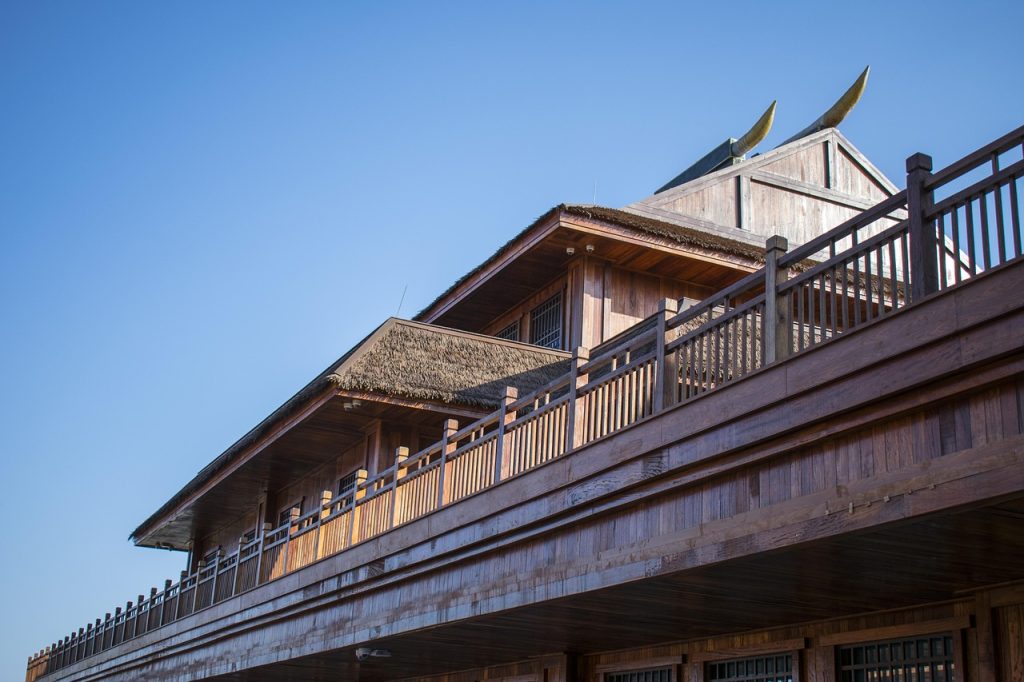
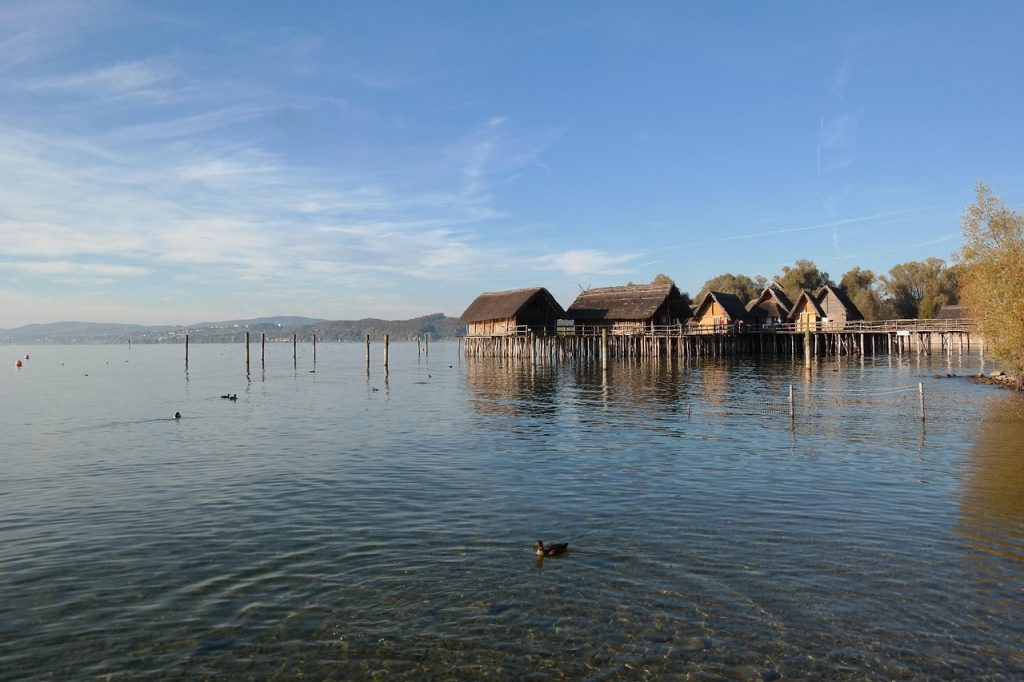
The characteristic dwelling of the Zhuang in earlier times was the wooden stilt house, raised on posts above the ground, with the family living on the upper floor and livestock kept below, a form of architecture well suited to the warm, wet climate and shared with other peoples of the region. These wooden houses, clustered into villages among the paddies and the karst peaks, formed the physical setting of Zhuang communal life.
Within the village, life was governed by custom and by the authority of elders and clan leaders, and the community managed its own affairs through the consensus of its respected members, in the manner of settled agricultural societies. The cooperative labor of rice farming, the shared rituals of the ancestral cult, and the bonds of kinship knit the village into a tight community, and the values of mutual aid and solidarity were essential to life in this world.
A distinctive feature of Zhuang society, celebrated in their culture, was the relatively free and prominent role of young people in courtship, expressed above all through the tradition of song. Unlike the more restrictive customs of some neighboring societies, the Zhuang allowed young men and women to meet and court through the exchange of sung verses at festivals and gatherings, a practice that gave Zhuang social life a distinctive warmth and that lies at the heart of their famous singing culture.
Spirits, Ancestors, and the Ritual Master
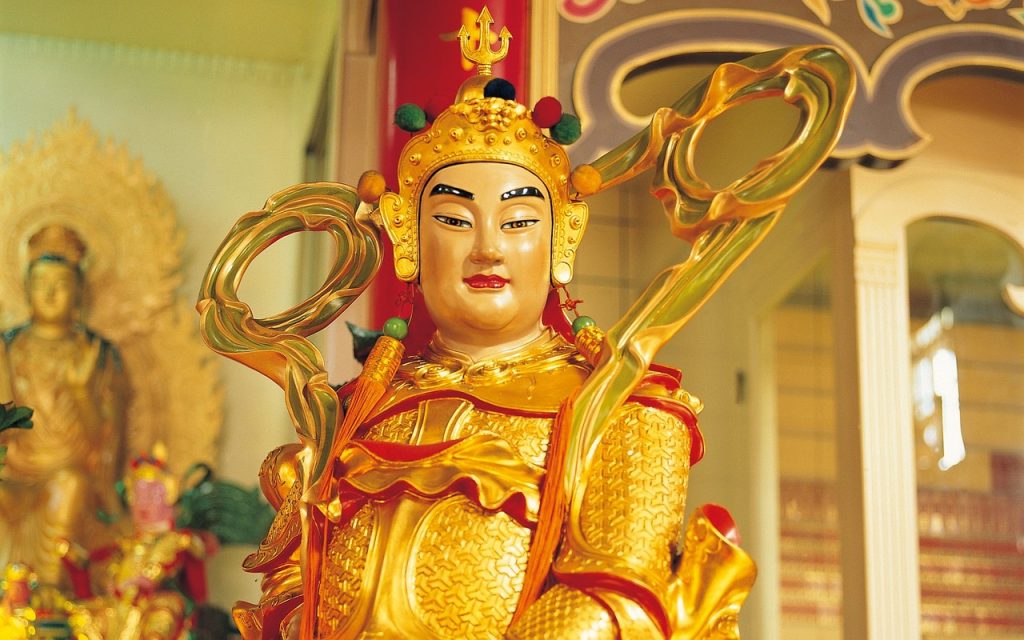
The traditional religion of the Zhuang was a rich blend of ancestor worship, the veneration of nature spirits, and elements absorbed over the centuries from Chinese Daoism and Buddhism, forming a distinctive folk religion woven into the fabric of daily life. Central to it was the honoring of ancestors, whose spirits were tended at family and clan altars and whose goodwill was essential to the fortunes of the living, a devotion the Zhuang shared with their Han neighbors but expressed in their own forms.
The world of the Zhuang was alive with spirits, the powers of the mountains, rivers, trees, and fields, the guardians of the village and the household, and the propitiation of these forces was a constant concern, for they governed the fortunes of the harvest, the health of the family, and the prosperity of the community. Sacred groves, spirit shrines, and the observance of countless customs and taboos structured the relationship between the Zhuang and the unseen powers around them.
Mediating between the human and spirit worlds were ritual specialists, the masters who conducted the ceremonies, chanted the sacred texts, and dealt with the spirits on behalf of the community. These ritual masters, who preserved the old chants recorded in the home-grown Zhuang script, held an important place in traditional society, and their knowledge of the rites and the spirit world made them essential figures at the great occasions of life and the crises of the community.
Over the long centuries of coexistence with the Han, the Zhuang absorbed much from Chinese religious traditions, blending Daoist deities and Buddhist elements into their own folk religion, so that Zhuang belief became a rich synthesis of native and Chinese elements. Yet the core of ancestor worship and nature-spirit veneration remained distinctly Zhuang, and this folk religion, tied to the land, the ancestors, and the cycle of the rice, remained central to Zhuang identity and the rhythm of Zhuang life.
A People Who Court in Song
If the Zhuang are famous for one thing in China, it is for their singing, for they are a people who traditionally expressed themselves through song to a degree remarkable even in a region rich in folk music. Song accompanied every aspect of Zhuang life, work and worship, celebration and mourning, but above all it was the medium of courtship, and the antiphonal song, in which young men and women answered one another in improvised verses, was the great art of Zhuang social life.
At the song festivals and gatherings, young people would face one another and sing back and forth, testing wit, beauty, and feeling in exchanges of improvised verse, and through this singing they courted, flirted, and sometimes found their partners. The ability to sing well, to answer cleverly and beautifully in the exchange of verses, was a prized accomplishment, and skilled singers were admired and sought after. This tradition of courtship through song is the jewel of Zhuang culture.
The Zhuang song tradition encompassed far more than courtship, for there were songs for every occasion, songs that recorded history and legend, songs of work and of ritual, songs that taught and entertained and preserved the collective memory of the people. In a culture where the written word was little used by ordinary people, this vast body of song was the living library of the Zhuang, carrying their poetry, their history, and their values from generation to generation.
This singing culture found its grand expression in the great song festivals, above all the famous festival of the third lunar month, when Zhuang communities gathered in enormous numbers to sing, and these gatherings remain a defining feature of Zhuang identity. In the modern era the song tradition is celebrated as a treasure of Zhuang and Chinese culture, and the image of the Zhuang as a people who court and converse in song is central to how they are known and how they know themselves.
Brocade and the Bronze Drum
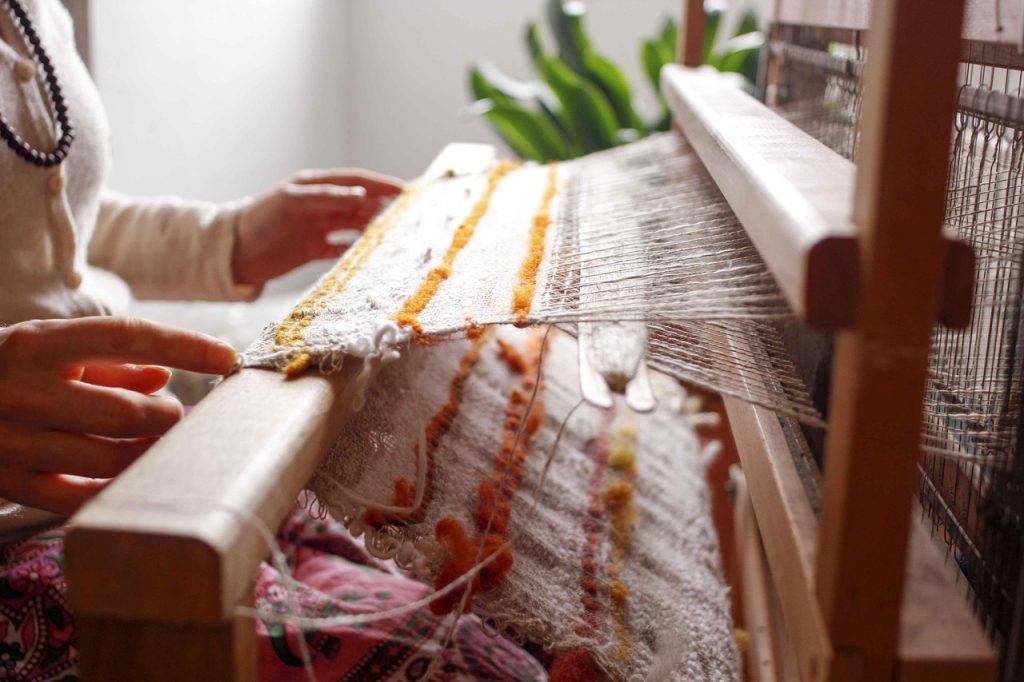
Among the crafts of the Zhuang, none is more celebrated than their brocade, a richly patterned woven textile that ranks among the famous brocades of China. Woven by Zhuang women on traditional looms, this brocade features intricate geometric and figurative designs in bright colors, and it was used for clothing, coverlets, and decoration, a display of skill and artistry that was also a mark of a woman’s accomplishment. The Zhuang brocade is a treasured expression of their material culture.
Even more emblematic of the ancient Zhuang and their Tai kin is the bronze drum, a magnificent cast-bronze instrument that was the supreme ritual and prestige object of the old southern civilization. These drums, some of great antiquity and elaborate decoration, were used in rituals, festivals, and ceremonies, symbols of authority and sacred power, and they are among the most important archaeological treasures of the Zhuang homeland, testimony to the sophistication of the ancient culture.
The bronze drum retained a place in Zhuang ritual and festival life into modern times, its deep, resonant voice sounding at the great occasions of the community, and it remains a powerful emblem of Zhuang identity, linking the modern people to their ancient forebears. Alongside the drums and the brocade, the Zhuang practiced other crafts in the manner of settled agricultural peoples, working in wood, bamboo, and other materials to meet the needs of village life.
The rock paintings scattered across the Zhuang country, ancient images painted on the cliffs above the rivers, are another testament to the deep artistic heritage of the region, depicting figures, drums, and scenes whose meaning is debated but whose antiquity and scale are astonishing. Together, the brocade, the bronze drums, and the rock art express the rich material and artistic culture of the Zhuang, a heritage reaching back into the remote past of the southern civilization.
Five-Colored Rice
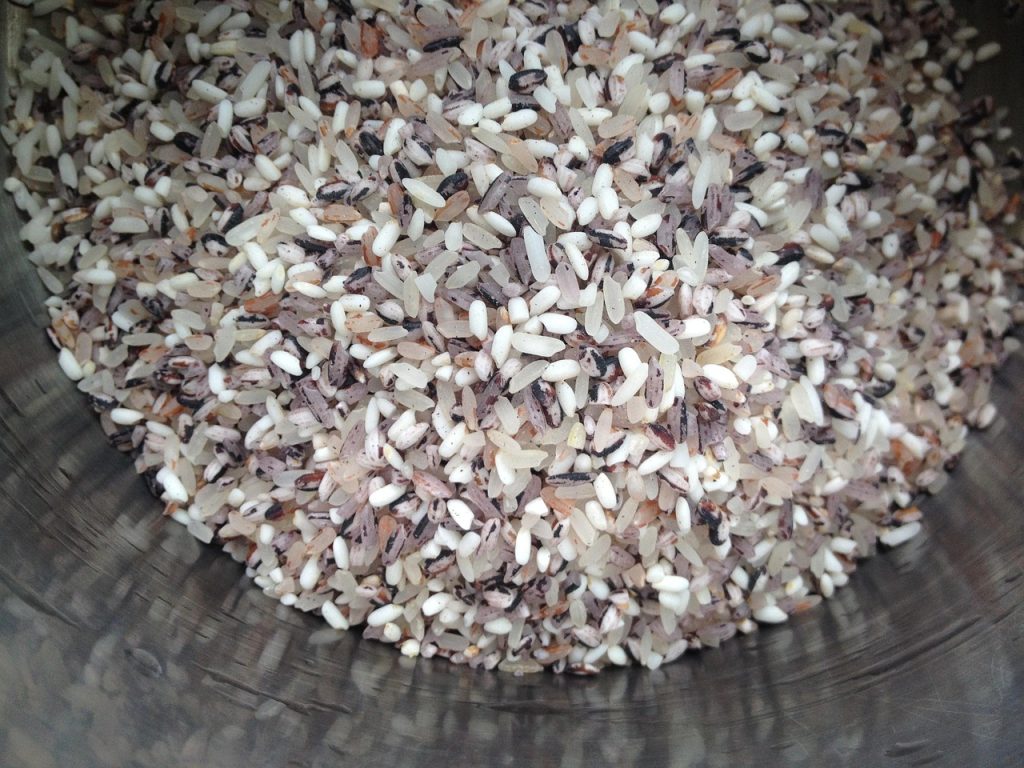
As befits a people whose civilization is built on rice, the grain is at the center of the Zhuang table, eaten at every meal and prepared in countless ways, and rice in its many forms defines Zhuang cuisine. The most distinctive and beloved of Zhuang rice dishes is the five-colored glutinous rice, sticky rice dyed in five natural colors using plant extracts and steamed for festivals, a dish that is as beautiful as it is delicious and that is emblematic of Zhuang food culture.
Beyond the celebrated colored rice, the Zhuang enjoy a rich subtropical cuisine drawing on the abundance of their warm, wet homeland: rice noodles, glutinous rice cakes, and dishes of fish from the paddies and rivers, alongside the vegetables, fruits, and herbs that flourish in the southern climate. Sour and pickled flavors, and the use of fresh herbs, give the cuisine its distinctive character, shared in part with other peoples of the south.
Food is central to Zhuang festivals and hospitality, and the great occasions of the year are marked by special dishes, above all the colored rice and the glutinous rice cakes prepared for celebrations. The offering of food and drink to guests is a matter of hospitality, and rice wine, brewed in the villages, accompanies celebrations and the reception of visitors, adding warmth to the gatherings that punctuate Zhuang life.
The subtropical bounty of the Zhuang homeland, its rice and fish, its fruits and vegetables, its herbs and its rice wine, provided a rich and varied diet, and Zhuang cuisine, with its beautiful colored rice and its southern flavors, is a distinctive and appealing expression of the culture. In the food, as in the song and the festival, the Zhuang celebrate the abundance of their land and the rice that lies at the heart of their civilization.
The Song Festival of the Third Month

The greatest of all Zhuang festivals is the song festival of the third lunar month, a celebration so central to Zhuang identity that it has become an official holiday in their homeland, drawing communities together in vast gatherings devoted to singing. On this occasion, Zhuang from across the region assemble to sing, and the antiphonal song exchanges, the courtship through verse, and the sheer joy of communal singing reach their annual height in a festival that is the supreme expression of Zhuang culture.
The third-month festival is a time of song, feasting, and courtship, when young people meet and sing back and forth, when the five-colored rice is prepared, and when the whole community celebrates the traditions that define them as Zhuang. It is bound up with legend and with the veneration of a beloved figure of song in Zhuang tradition, and it expresses the deepest values and joys of the culture, a celebration of song, love, and community.
Beyond the great song festival, the Zhuang observe a round of celebrations tied to the agricultural year and the lunar calendar, many of them shared with their Han neighbors but given Zhuang forms, including the lunar New Year and festivals marking the phases of the rice cycle. The ancestral rites, the propitiation of the spirits, and the celebrations of the harvest structured the Zhuang year and connected the people to the cycles of nature and the world of the ancestors.
Weddings, funerals, and the other rites of passage were marked with their own customs, songs, and observances, occasions that mobilized the clan and the village and reaffirmed the bonds of kinship and community. Through the great song festival and the round of seasonal and family celebrations, the Zhuang express and renew the traditions that unite them, and above all the singing culture that is their proudest and most distinctive inheritance.
Two Thousand Years in China’s Embrace
The history of the Zhuang is the story of a southern people gradually drawn into the orbit of the Chinese empire over the course of more than two thousand years. As the Chinese state expanded southward in ancient times, it reached the lands of the Tai peoples of the far south, and the ancestors of the Zhuang came, slowly and unevenly, under the influence and then the control of the empire, a process that unfolded over many centuries and that was never entirely complete.
For much of this history the Zhuang lands were governed loosely, through native chieftains who ruled their own people under the nominal authority of the empire, a system that allowed the Zhuang considerable autonomy and preserved their local structures and customs. Only gradually was direct imperial administration extended over the region, and the Zhuang, remote among their karst peaks and valleys, retained their language and much of their culture even as they were incorporated into the Chinese world.
The relationship was not always peaceful, and the history of the Zhuang lands includes episodes of revolt against imperial control and of resistance to the pressures of the state and of Han settlement. Yet over the long span of centuries, the dominant process was one of gradual integration, as the Zhuang adopted elements of Chinese culture, administration, and religion while retaining their distinct language and identity, living intertwined with the Han in the diverse society of the south.
In the modern era the Zhuang were recognized as a distinct nationality, the largest of the minority peoples, and their homeland was constituted as an autonomous region within the state, a formal acknowledgment of their identity and their place. This recognition gave the Zhuang an official status and certain protections for their culture and language, even as the deep processes of integration with the Han majority continued to shape their life in the modern nation.
The Zhuang Today
Today the Zhuang remain the largest minority nationality in China, some seventeen million strong, concentrated in their southern homeland but also spread into neighboring provinces, living for the most part intermingled with the Han majority. So close is this coexistence, and so deep the integration, that the Zhuang are in many respects among the most assimilated of China’s minorities, sharing much of the material culture and daily life of their Han neighbors while retaining their distinct language and traditions.
This closeness to the Han is both a strength and a challenge for the Zhuang, for while it has spared them much of the tension that has troubled other minority regions, it has also placed their distinct identity under pressure, as the Chinese language dominates education and public life and as the old traditions face the erosions of modernization. The transmission of the Zhuang language to the young, in particular, has weakened, raising questions about the future of the tongue.
Yet Zhuang culture endures, celebrated in the great song festival, in the brocade and the bronze drums, in the five-colored rice and the traditions of the villages, and there is a growing appreciation, official and popular, of the Zhuang heritage as a treasure of the region and the nation. Efforts to preserve the language, to celebrate the festivals, and to maintain the crafts and songs work to sustain the distinct identity of the great southern people.
The Zhuang stand, in the end, as the giants that the world overlooks, the largest minority in the most populous nation on earth, a people of ancient Tai heritage quietly persisting beneath the surface of modern China. Their homeland in the karst country neighbors the lands of many other southern peoples, and the mosaic of minorities in China’s south and southwest is astonishingly rich. Among the most numerous and distinctive of the others are a Muslim people scattered across the whole of China, the Hui, and it is to them that we turn next.
You May Like
The Zaza, a Mountain People of Eastern Anatolia


One thought on “The Giants China Overlooks, the Story of the Zhuang People”