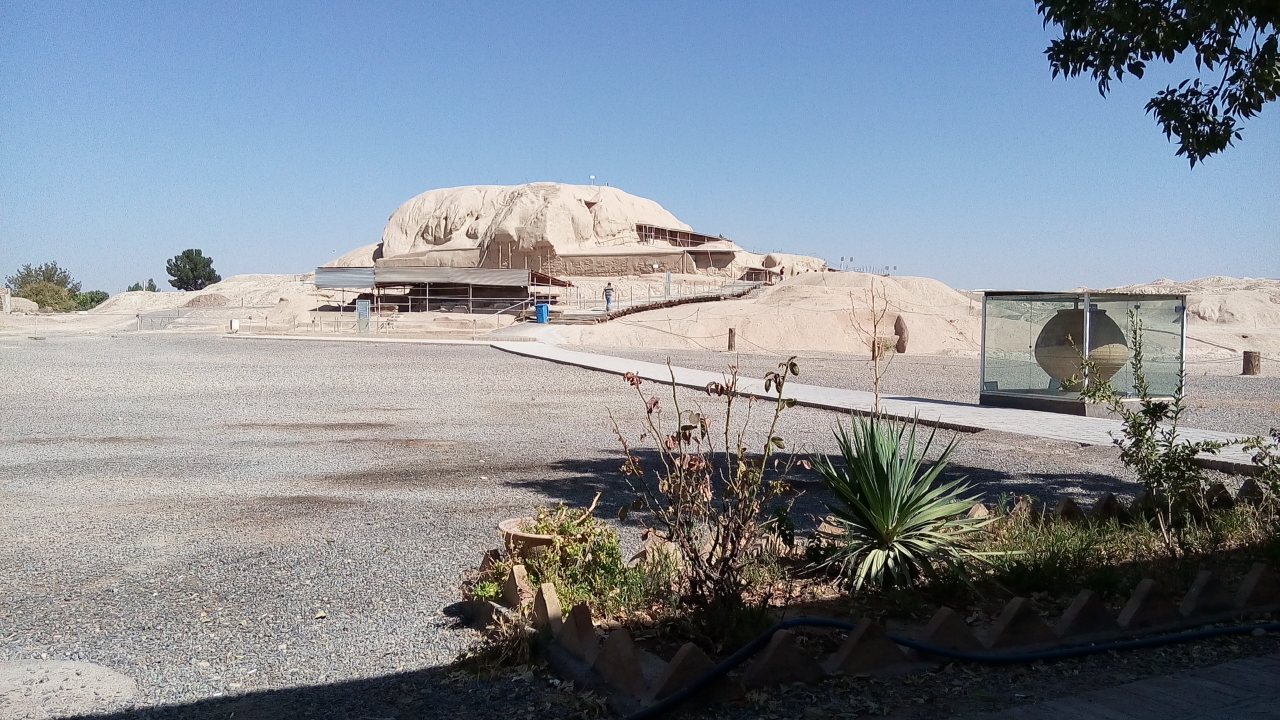
On the outskirts of Kashan, an old oasis city on the edge of the great central desert of Iran, rises a weathered mound crowned by the eroded remains of a stepped structure. This is Tepe Sialk, and though it draws far fewer visitors than Iran’s famous Persian capitals, it is one of the oldest and most important prehistoric sites in the whole country, a place where the story of settled life on the Iranian plateau can be traced back some seven and a half thousand years.
Tepe Sialk is not the ruin of a single city but the accumulated remains of many successive settlements, piled up over millennia into a great artificial hill. Within its layers lies a record of the slow development of human society in this region, from a village of early farmers to a community of skilled potters and metalworkers, complete with what may be one of the earliest stepped temple-towers, or ziggurats, ever built.
The site owes its survival, and its very existence, to water. In a landscape where the desert is never far away, the springs and streams around Kashan made settlement possible, and Sialk grew up beside a reliable source of water on the edge of the arid plateau. Its long story is, in many ways, the story of how human beings first learned to build lasting communities in a challenging and beautiful land.
Contents
- A Mound on the Edge of the Desert
- Seven Thousand Years of Settlement
- The Oldest Ziggurat in the World?
- Potters of Genius
- Metal, Kilns, and Early Industry
- Cities of the Dead
- Water, Qanats, and Survival
- The Man Who First Dug Sialk
- What the Layers Tell Us
- Sialk Beside a Living City
- Nearby Places to Explore
- The Deep Roots of the Iranian Plateau
A Mound on the Edge of the Desert
The setting of Tepe Sialk is central to understanding it. Kashan lies where the foothills of the central mountains meet the vast, dry basin of the interior, a transitional zone between highland and desert. Here, fed by springs and by water carried down from the mountains, small pockets of fertile land could support farming, and it was on such a spot that the first settlers of Sialk built their homes.
The mound itself, like others across the Near East, is a tell or tepe, an artificial hill built up over thousands of years as generation after generation constructed, demolished, and rebuilt their mud-brick houses on the same spot. Each layer of occupation raised the ground a little higher, until the accumulated debris of millennia formed the elevated mound we see today, a physical stack of successive human communities.
Actually there are two main mounds at Sialk, a northern and a southern one, occupied at different periods, along with associated cemeteries nearby. Together they preserve an almost continuous record of settlement across an immense span of time, making the site a kind of vertical library of prehistory, in which the deep past of the Iranian plateau can be read layer by layer.
For the archaeologist, this depth is priceless. Few sites anywhere allow such a long, continuous sequence of human development to be traced in one place. From the first simple villages through the emergence of crafts, metallurgy, and monumental building, Sialk captures the great transitions of early human society, all recorded in the humble medium of mud brick, ash, and broken pottery.
The name Tepe Sialk itself is descriptive: tepe is the common regional word for such an artificial settlement mound, and Sialk identifies this particular one near Kashan. Across Iran and neighboring lands, hundreds of such tepes dot the landscape, each a buried archive of ancient life, but few have proved as rich or as important as this one on the desert’s edge.
Seven Thousand Years of Settlement
The earliest settlement at Tepe Sialk dates back to around the sixth millennium BC, making the site some seven and a half thousand years old at its foundation. The first inhabitants were early farmers who lived in simple huts, cultivated crops, kept animals, and made the first pottery of the region, laying the foundations of a settled way of life that would continue, with interruptions, for thousands of years.
Over the following millennia the community grew more sophisticated. The people of Sialk developed increasingly fine pottery, learned to work metal, and built more substantial houses and structures. The site passed through the great technological and social transitions of prehistory, from the earliest farming villages of the Neolithic through the Chalcolithic age of early copper use and into the Bronze and Iron Ages.
This long occupation was not entirely unbroken; there were periods when the site was abandoned or its focus shifted from one mound to another. But the overall span is extraordinary, reaching from the dawn of settled life down into the first millennium BC, when the last major settlements and cemeteries were established. Few places anywhere preserve so complete a record of prehistoric development.

Reading this timeline is one of the great achievements of the site’s excavation. By carefully separating and studying the successive layers, archaeologists have been able to construct a detailed chronology of cultural development for this part of Iran, and Sialk has become a key reference point, a yardstick against which the prehistory of the wider region can be measured and understood.
Placing all of this on an absolute calendar has become steadily more precise as scientific dating methods have improved. Radiocarbon and other techniques applied to material from the site have refined the older estimates, anchoring the long sequence of Sialk in real time and allowing its story to be correlated with developments at other sites across the ancient world with growing confidence.
The Oldest Ziggurat in the World?
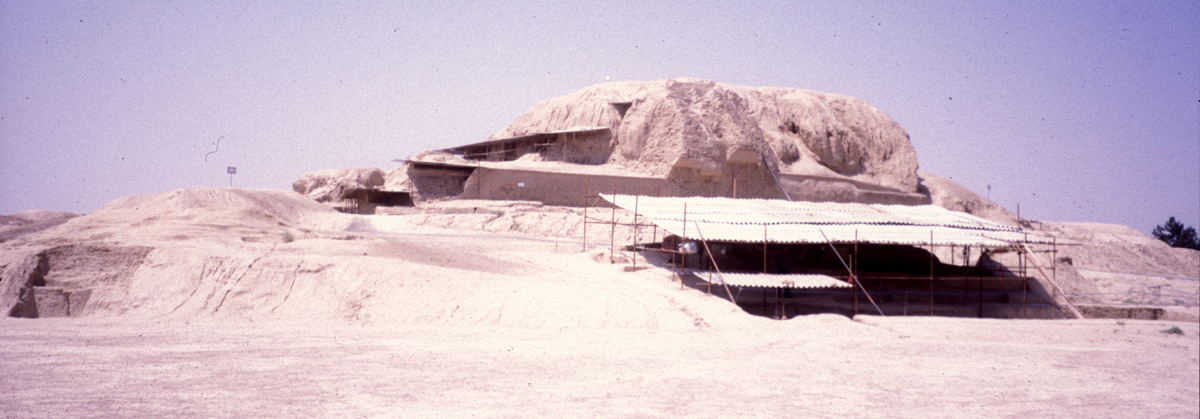
The most prominent feature of Tepe Sialk today is the eroded remains of a stepped structure that has been interpreted as a ziggurat, a form of ancient temple-tower built in receding tiers. If this identification is correct, and it is debated, the Sialk ziggurat would rank among the oldest structures of its kind in the world, possibly predating the famous ziggurats of Mesopotamia.
Constructed of mud brick and rising in stages above the mound, the structure would have been an imposing sight in its day, a monumental focus for the community, likely serving religious purposes. Its scale sets it apart from ordinary buildings and points to a society capable of organizing substantial collective labor for a shared, probably sacred, project, an important marker of growing social complexity.
Scholars continue to discuss exactly what the structure was and when it was built, and whether ziggurat is the right word for it. Some see it as a genuine stepped temple-tower in the Mesopotamian tradition; others interpret the remains more cautiously. The erosion of the mud brick over the millennia has made certainty difficult, and the debate is part of the ongoing scholarly life of the site.

Whatever its precise nature, the stepped monument at Sialk is a powerful symbol of the site’s antiquity and importance. Standing before its weathered tiers, one is looking at one of the earliest attempts by the people of the Iranian plateau to raise a great structure toward the heavens, an ancestor, perhaps, of the towering ziggurats that would later dominate the cities of the ancient Near East.
Comparisons with the great ziggurats of Mesopotamia are inevitable, and they cut both ways. On one hand, the Sialk structure shows that the impulse to raise stepped monuments was not confined to the river valleys of Iraq; on the other, its rougher, earlier form reminds us that such traditions had to begin somewhere, in experiments and first attempts that preceded the polished monuments of later ages.
Potters of Genius
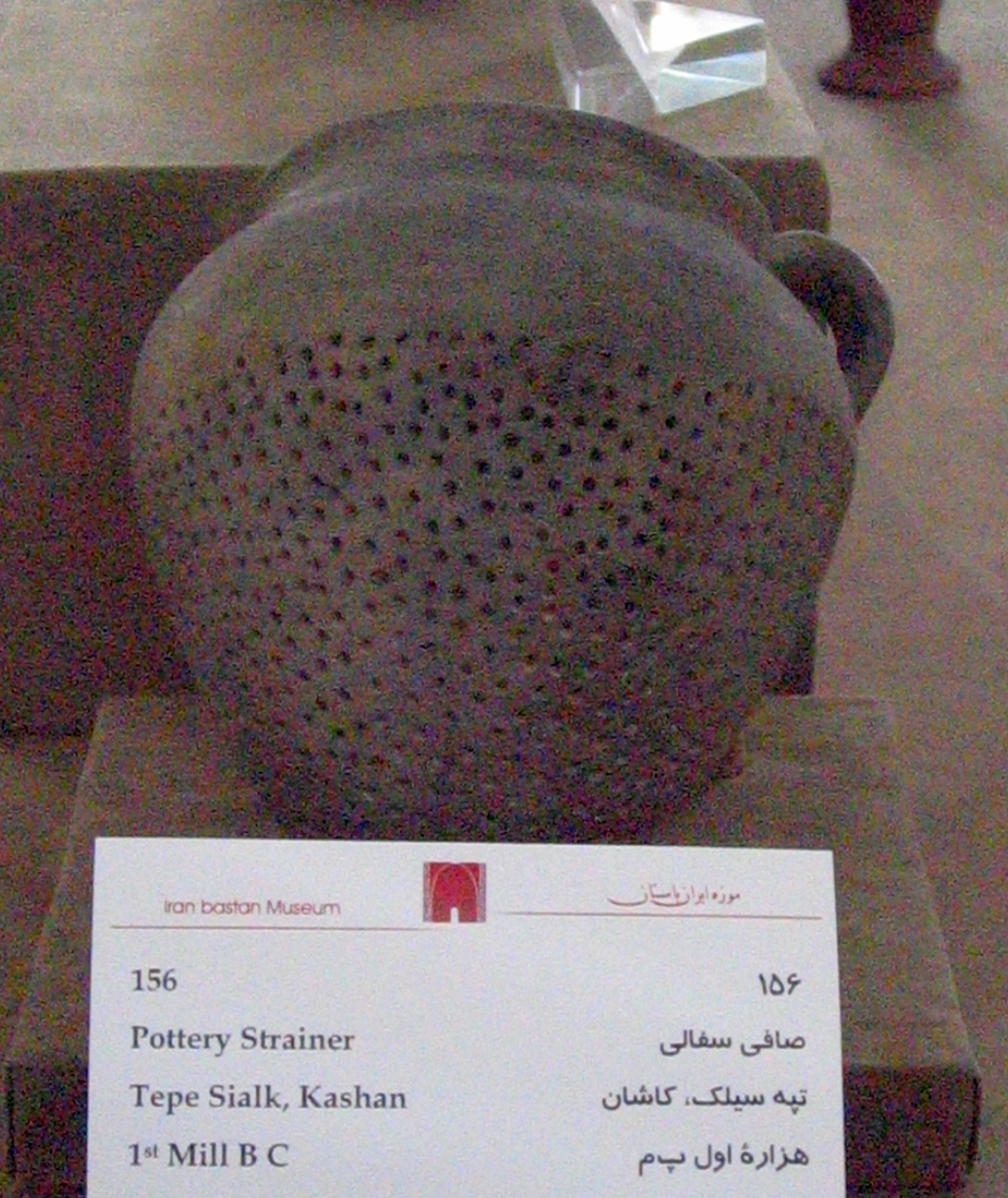
If Sialk is famous for anything among archaeologists, it is for its pottery. Across its long history the site produced ceramics of remarkable quality and beauty, and the changing styles of its pots and vessels provide one of the finest records anywhere of the development of prehistoric craft. The potters of Sialk were, quite simply, among the most accomplished of their age.
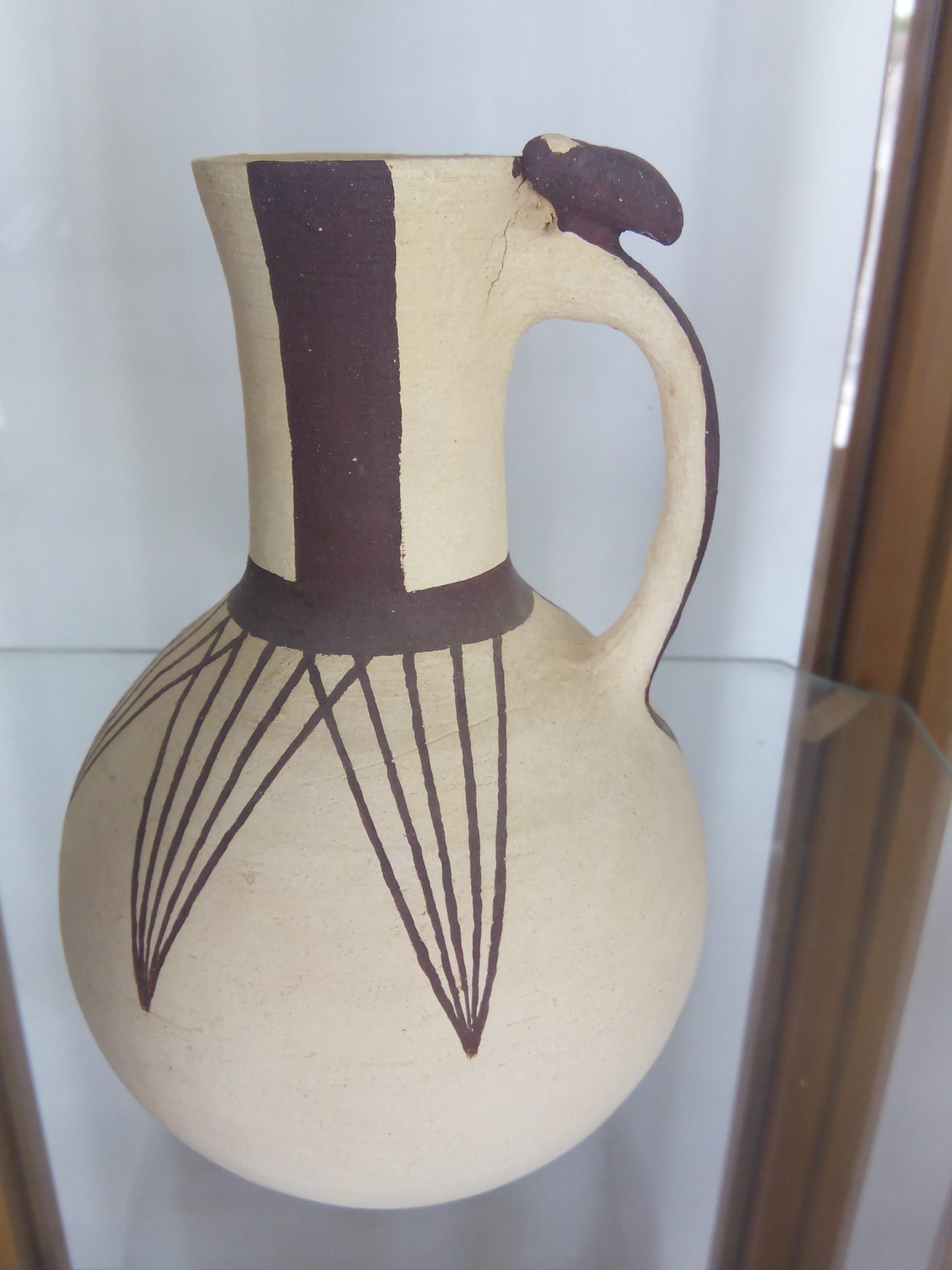
The earliest pottery was relatively simple, but over the centuries the craftsmen developed increasingly refined wares, painted with intricate geometric patterns and stylized images of animals and birds. In the later periods, the potters produced elegant vessels decorated with long-beaked birds, ibexes, and abstract designs, painted with a confidence and sophistication that still delights the eye thousands of years later.
One of the most distinctive later products was a class of fine pottery sometimes decorated with elaborate spouts and painted scenes, associated with the great cemeteries of the first millennium BC. These vessels, buried with the dead, show the continued vitality of the ceramic tradition even in the site’s final phases, and they are among the treasures of Iranian prehistoric art.

For archaeologists, this pottery is more than beautiful; it is a vital tool. Because ceramic styles changed over time in traceable ways, the pottery of each layer helps date it and connect it to other sites. The rich ceramic sequence at Sialk has thus become a cornerstone for understanding the chronology and cultural connections of prehistoric Iran, its painted pots serving as both art and evidence.
Collectors and museums prized Sialk pottery long before its full archaeological context was understood, and this early demand unfortunately encouraged unscientific digging in the site’s cemeteries in some periods. The loss of context for objects removed in this way is a real one, a reminder of why careful, recorded excavation matters so much for turning beautiful artifacts into genuine historical knowledge.
Metal, Kilns, and Early Industry
Tepe Sialk holds an important place in the history of metallurgy. The site has yielded some of the earliest evidence for the working of copper on the Iranian plateau, with small metal objects appearing already in its earlier layers. Over time, the inhabitants moved from simply hammering native copper to smelting ores and casting metal, a technological revolution that would transform human society.
This early metalworking placed Sialk among the pioneering communities of the ancient world. Learning to extract metal from stone and shape it into tools, ornaments, and weapons required knowledge, skill, and control of fire at high temperatures, and the appearance of these abilities at Sialk marks the site as a center of innovation during the crucial transition from the Stone Age to the age of metals.
Alongside metallurgy, the people of Sialk practiced a range of other crafts that hint at an increasingly specialized economy. The production of fine pottery required kilns and skilled potters; the working of metal required smiths; and the creation of ornaments and other goods required additional specialists. A community supporting such crafts was clearly moving beyond simple subsistence toward a more complex and differentiated society.

These early industries did not exist in isolation. The materials and techniques found at Sialk connect it to a wider web of contact and exchange across the plateau and beyond, part of the same great awakening of technology and trade that was transforming societies across the ancient Near East. Sialk was both a local center of innovation and a participant in a broader story of human advance.
The transition from stone to metal tools was one of the great turning points in human history, and sites like Sialk let us see it happening in slow motion, layer by layer. The gradual increase in the quantity and sophistication of metal objects up through the mound charts a technological revolution unfolding over centuries, one that would eventually remake economies, warfare, and social organization across the ancient world.
Cities of the Dead
Some of the most evocative discoveries at Sialk come not from the settlement mounds but from the cemeteries associated with them, especially those of the first millennium BC. Here the people of Sialk buried their dead with care, accompanied by pottery, ornaments, weapons, and other goods, creating a rich record of their beliefs about death and the afterlife.
The grave goods reveal a society that valued fine craftsmanship and that maintained clear rituals surrounding death. The distinctive painted vessels placed with the dead, the personal ornaments, and the weapons buried alongside certain individuals all speak to a community with defined customs and, perhaps, distinctions of status expressed through burial. The dead were sent into the next world equipped and adorned.
These later cemeteries also mark a particular cultural phase, associated with newcomers or changing traditions in the region during the Iron Age. The objects found in them connect Sialk to the broader currents of the age, when new peoples and influences were reshaping the Iranian plateau in the centuries before the rise of the Median and Persian empires that would follow.
Studying the cemeteries alongside the settlements gives archaeologists a fuller picture of life and death at Sialk. Where the mounds show how people lived, worked, and built, the graves show how they honored their dead and what they believed lay beyond. Together they let us reconstruct not just the material culture of Sialk but something of the inner world of its people across the ages.
The care lavished on certain burials, and the quality of the goods placed within them, also hint at the emergence of social distinctions within the community. When some graves are notably richer than others, archaeologists read the signs of a society beginning to differentiate itself by wealth or status, another step on the long road from the relatively equal villages of the earliest period toward the stratified societies of later times.
Water, Qanats, and Survival
The survival of any settlement on the edge of the Iranian desert depended, above all, on water, and Sialk is intimately connected to the history of how people in this region managed that precious resource. The site lies near Kashan, a city long famous for its ingenious use of underground water channels, and the story of Sialk is inseparable from the springs and streams that made life possible here.
The Kashan region is one of the heartlands of the qanat, the remarkable system of gently sloping underground tunnels that carry water from the water table in the mountains down to the fields and settlements of the plain. While the great qanats came later, the same fundamental challenge, bringing water to a dry land, shaped human settlement here from the very beginning, and Sialk’s founders chose their site with water firmly in mind.
For thousands of years, the availability of water governed the rise and fall of the settlement. When water was plentiful and reliable, the community could flourish; when it failed or shifted, life became difficult and the focus of settlement could move. The long, interrupted history of Sialk reflects this delicate dependence on a resource that, in this environment, could never be taken for granted.
In this sense Sialk embodies a theme that runs through the whole history of the Iranian plateau: the constant, ingenious struggle to wring life from a semi-arid land. The people who built and rebuilt this mound over millennia were, above all, masters of survival in a difficult environment, and their long success is a tribute to their skill in managing the scarce and vital gift of water.
The ingenuity behind the qanat system, which spread across the plateau and beyond, represents one of the great, underappreciated technological achievements of the ancient world. By tapping groundwater at the mountains and channeling it underground for great distances with minimal loss to evaporation, the people of this region turned an inhospitable land into one capable of supporting cities and agriculture, and the roots of that struggle with aridity reach back to sites like Sialk.
The Man Who First Dug Sialk
The scientific study of Tepe Sialk is bound up with the name of a single pioneering archaeologist who first excavated the site in the 1930s. His careful, systematic work on the mounds and cemeteries established the basic sequence of the site’s development and revealed its extraordinary antiquity, laying the foundation for everything that followed.
His excavations uncovered the successive layers of settlement, the stepped monument, the rich pottery, and the striking cemeteries, and his publications introduced Sialk to the wider world of scholarship. The chronology he developed became a standard reference for the prehistory of the Iranian plateau, and the site quickly took its place among the key locations for understanding the deep past of the region.
Like all early excavations, this pioneering work was a product of its time, and later archaeologists have refined, revised, and sometimes challenged its conclusions with new methods and fresh digging. But the fundamental importance of the site that these first excavations revealed has never been in doubt, and the sequence they established remains the backbone of our understanding of Sialk.

More recent campaigns of excavation and study, by Iranian and international teams, have added new detail and applied modern scientific techniques to old questions, from precise dating to the analysis of ancient materials. The result is an ever richer picture of this ancient place, built on the foundation laid by that first careful investigator nearly a century ago.
The finds from these excavations, dispersed to museums during an earlier era of archaeology, mean that the legacy of Sialk is now scattered across several countries. Reuniting this material intellectually, through study and publication even where the objects themselves remain apart, has been an ongoing task for scholars seeking to reconstruct the full picture of what the mound once held.
What the Layers Tell Us
The great value of Tepe Sialk lies in the story its layers tell about the long journey of human society. In its deepest levels we see the first farmers of the region, living simply and making their earliest pots. As we move upward through the mound, we watch that society grow more complex, developing finer crafts, working metal, building larger structures, and organizing itself in new ways.
This is prehistory made visible: not a story recorded in written documents, for these people left no writing, but one read directly from the physical remains they left behind. The pottery, the metal, the architecture, and the burials together allow archaeologists to reconstruct how life changed over thousands of years, capturing the great transitions that carried humanity from village farming toward the threshold of civilization.
Sialk also connects the local story to the wider world. Its materials, styles, and technologies link it to other centers across Iran and the Near East, showing that even in prehistory the plateau was part of a network of contact and exchange. The site is thus both a window onto a specific ancient community and a piece of the larger puzzle of how complex societies first arose across a broad region.
In the grand narrative of the ancient Near East, dominated by the famous names of Mesopotamia and Persia, humble prehistoric sites like Sialk are easily overlooked. Yet it is in such places that the deepest foundations of that later grandeur were laid. Long before there were kings and empires, communities like the one at Sialk were inventing the arts of settled life on which everything else would be built.
It is worth emphasizing how rare and precious a truly long, continuous sequence like Sialk’s really is. Many sites preserve only a slice of the past, a single period before they were abandoned or destroyed. Sialk, by contrast, offers something closer to a continuous film of development across millennia, and that continuity is exactly what makes it so valuable for tracing the gradual, cumulative process by which complex societies came into being.
Sialk Beside a Living City
Today Tepe Sialk sits on the edge of the modern city of Kashan, its ancient mounds and the eroded ziggurat now a protected archaeological site with a visitor area and a small museum. The proximity of the living city is a reminder of the deep continuity of settlement in this favored spot, where people have lived, in one place or another, for thousands of years.
A visit allows one to walk around the mounds, view the remains of the stepped monument, and get a sense of the great depth of time the site represents. Interpretive signs and the on-site museum help explain what can otherwise be a difficult site to read, since prehistoric mud-brick architecture rarely offers the dramatic visual impact of later stone monuments.
Many of the finest objects from Sialk, including its beautiful painted pottery, are displayed in museums in Iran and abroad, so a full appreciation of the site’s achievements often means seeing both the mounds themselves and the collections that hold their treasures. Kashan itself, with its historic houses, gardens, and bazaar, makes a delightful base and adds its own layers of history to a visit.
Tepe Sialk rewards the thoughtful traveler more than the casual sightseer. It offers not the spectacle of Persepolis but something quieter and, in its way, more profound: a direct encounter with the very beginnings of settled life on the Iranian plateau, a place where the long human adventure in this land can be said, in a real sense, to have begun.
Nearby Places to Explore
Tepe Sialk lies on the central Iranian plateau, in a land whose history stretches from the first farming villages to the great Persian empires. If the deep antiquity of this prehistoric mound has intrigued you, the following sites carry the story of ancient Iran forward, from other early settlements to the grand capitals of later ages.
- Susa — one of the oldest cities in the world, whose own layers reach back to prehistory before it became a great capital of Elam and Persia.
- Chogha Zanbil — the great Elamite ziggurat, a fully developed stepped temple-tower that shows what the tradition hinted at by Sialk would become.
- Persepolis — the ceremonial capital of the Achaemenid Empire, the grand culmination of the long development of civilization on the plateau.
The Deep Roots of the Iranian Plateau
Tepe Sialk is a monument not to a king or an empire but to the patient, cumulative achievement of ordinary people over thousands of years. In its layered mounds we can trace the whole arc of early human development in this region: the first farmers, the earliest potters, the pioneers of metalworking, the builders of one of the world’s oldest stepped monuments. It is a place where the deep foundations of everything that came later were quietly laid.
When we marvel at the columns of Persepolis or the ziggurat of Chogha Zanbil, we are looking at the flowering of a tradition whose roots reach back to humble sites like this one. The people of Sialk had no kings and left no writing, but they mastered the arts of settled life in a difficult land and passed them on across the generations. In the weathered mound on the edge of Kashan lies nothing less than the beginning of the story of civilization on the Iranian plateau.
You May Like
Norse Explorers Reached Canada 500 Years Before Columbus