The Bribri are the largest Indigenous people of Costa Rica, a Chibchan-speaking nation whose homeland in the rugged Talamanca mountains has sheltered them from full outside conquest for centuries. Their society is built on matrilineal clans, a creation story centered on the deity Sibö, and a deep reverence for cacao that predates and outlasts its modern reputation as a global commodity. This article traces Bribri origins, language, and social structure through to the land rights struggles and cultural revitalization efforts shaping their communities today.
Contents
- Origins
- Name
- Language
- Homeland
- Old way of life
- Society
- Religion
- Traditions
- Crafts
- Food
- Festivals
- History
- Today
Origins
The Bribri are the largest Indigenous people of Costa Rica, living primarily in the rugged Talamanca mountain range along the country’s southern border with Panama, where a small related Bribri population also lives on the Panamanian side. They belong to the Chibchan language family, a group of related languages spread across a corridor stretching from Honduras through Costa Rica and Panama into Colombia, marking the Bribri as part of a broader cultural and linguistic zone that historians sometimes call the Isthmo-Colombian area, distinct from both the Mesoamerican civilizations to the north and the Andean civilizations to the south.

Archaeological evidence places ancestral populations in the Talamanca region for well over a thousand years before Spanish contact, with local chiefdoms engaging in trade networks that connected them to other Chibchan-speaking groups as well as to more distant Mesoamerican and South American trading spheres. Unlike the large, centralized states of the Aztec or Inca, pre-contact societies in this region were generally organized as smaller chiefdoms, a pattern that shaped both their political structure and their long-term ability to resist conquest.
Bribri oral tradition places their origin in the creative acts of Sibö, the principal creator deity, who is said to have formed the Bribri people from corn seeds and given them their clan structure, laws, and relationship to the land, a foundational narrative that continues to shape Bribri identity, land rights claims, and ceremonial life today. This creation account is not treated as ancient history disconnected from the present but as an ongoing framework that governs proper conduct, clan membership, and the community’s relationship with the natural world.
The rugged, mountainous, and densely forested terrain of Talamanca proved decisively important to Bribri history, since it made large-scale military conquest and colonial settlement extremely difficult for outside powers, whether Indigenous neighbors, Spanish colonizers, or later the Costa Rican state, allowing the Bribri to maintain a degree of continuity and autonomy that many lowland Indigenous peoples elsewhere in the Americas were unable to preserve.
Neighboring Chibchan-speaking peoples, including the Cabecar, Guaymi (Ngäbe), and Boruca, share broad cultural and linguistic ties with the Bribri while maintaining distinct identities, together forming a network of related societies that occupied the lower Central American isthmus long before European contact and that continue to shape Indigenous life across modern Costa Rica and Panama.
Name
The name Bribri is used both by the community itself and by outsiders, and unlike many Indigenous group names elsewhere in the Americas, it does not appear to carry a history of pejorative colonial imposition, though its precise etymology is debated among linguists and community members. Some interpretations connect it to older terms describing the people’s relationship to their forested homeland, while others note that the name has simply become the standard self-designation through long usage, regardless of its deeper historical origin.

The Bribri are closely related to the neighboring Cabecar people, who share Talamanca territory, a broadly similar Chibchan language, and many aspects of clan structure, mythology, and ceremonial practice, to the point that some earlier Spanish colonial and even early anthropological sources sometimes conflated the two groups or treated them as a single population. Modern scholarship and the communities themselves distinguish Bribri and Cabecar as related but separate peoples, each with a distinct language and set of clan traditions, while acknowledging centuries of intermarriage and cultural exchange between them.
Historically, Spanish colonial sources sometimes used broader, less precise labels for the Indigenous peoples of the Talamanca region, occasionally grouping the Bribri together with other Chibchan-speaking neighbors under generalized terms that obscured meaningful distinctions between separate ethnic and linguistic communities. As with many Indigenous peoples across the Americas, more precise ethnographic and linguistic documentation over the twentieth century helped clarify these distinctions and gave greater visibility to the Bribri as a specific, self-identifying people.
Today, Costa Rican law and government agencies recognize the Bribri as one of the country’s eight officially recognized Indigenous peoples, each with legally designated territories, and the name Bribri appears consistently across Costa Rican census data, educational materials, and Indigenous rights advocacy, reflecting a settled and broadly uncontested naming convention compared to some other Indigenous peoples whose names remain subject to more active dispute or revision.
Language
Bribri belongs to the Chibchan language family, a group of related languages historically spoken across a long corridor from Honduras through Nicaragua, Costa Rica, and Panama into northern Colombia, making it part of a linguistic zone distinct from both the Uto-Aztecan and Mayan languages of Mesoamerica to the north and the Quechuan and Aymaran languages of the Andes to the south. Within this family, Bribri is most closely related to Cabecar, with the two languages sharing enough vocabulary and grammatical structure that some linguists debate whether they should be considered separate languages or closely related dialects.
With an estimated speaker population in the range of ten to fifteen thousand people, Bribri remains a living, actively spoken language, particularly within Talamanca’s more remote mountain communities, though Spanish-language dominance in schooling, media, and broader Costa Rican society has produced generational language shift in more accessible areas closer to towns and roads. Bribri distinguishes tones, meaning that pitch differences between otherwise identical-sounding words can change their meaning, a feature that adds complexity to language documentation and instruction compared to non-tonal languages such as Spanish.
Costa Rica has supported bilingual intercultural education programs in designated Indigenous territories since the late twentieth century, including dedicated Bribri-language instruction in primary schools within Talamanca, an effort that reflects broader Latin American trends toward recognizing Indigenous language rights within national education systems, though resourcing, teacher training, and materials development remain ongoing challenges for program effectiveness.
Written documentation of Bribri developed relatively late compared to some other Indigenous languages of the Americas, with systematic linguistic description and orthography development occurring mainly in the twentieth century through collaboration between academic linguists and Bribri community members, producing dictionaries, grammatical descriptions, and educational materials that continue to be refined and expanded by ongoing community-led language preservation initiatives active in Talamanca today.
Efforts to digitize Bribri-language materials, including dictionaries, story collections, and teaching resources, have expanded in recent years through partnerships between Costa Rican universities, Indigenous educators, and international linguistic researchers, part of a broader global movement to support endangered and minority language documentation using modern digital tools alongside traditional community-based transmission.
Homeland
Bribri territory centers on the Talamanca mountain range in southeastern Costa Rica, a rugged, densely forested landscape that rises from Caribbean coastal lowlands to peaks exceeding three thousand meters, encompassing extraordinary ecological diversity across a relatively compact geographic area. Costa Rican law recognizes several distinct Bribri territories, most notably Talamanca Bribri and Talamanca Cabecar in the Caribbean-facing lowlands and foothills, and Salitre and Cabagra further inland toward the Pacific-facing side of the mountain range, each with legally titled collective land boundaries.

A small Bribri population also resides across the border in Panama, particularly in the Bocas del Toro region, reflecting the fact that the modern Costa Rica-Panama border, established through nineteenth and early twentieth century agreements between the two independent states, cuts across territory that Bribri communities had occupied long before either national boundary existed in its current form.
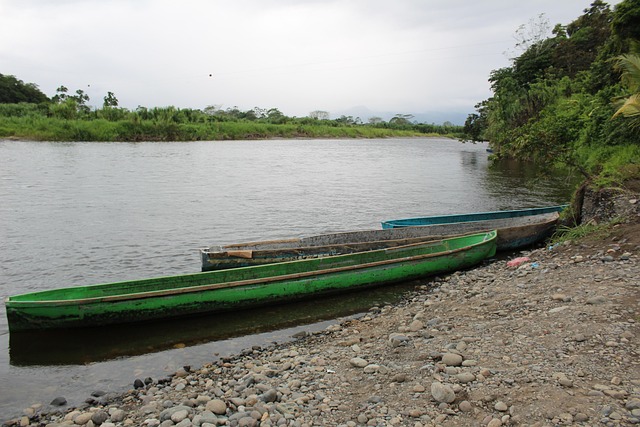
Rivers including the Sixaola, Telire, Coen, and Uren wind through Talamanca’s mountainous terrain, historically serving as primary routes of travel and communication between dispersed Bribri settlements in a landscape where overland travel through dense forest and steep terrain is often slow and difficult. This river-and-mountain geography, similar in some ways to river-centered Amazonian settlement patterns though shaped by a very different, higher-elevation ecology, has long structured how Bribri clans relate to one another across the region.
The remoteness and difficult terrain of Talamanca, much like similarly rugged Indigenous homelands elsewhere in the Americas, provided meaningful protection from full outside conquest and control for centuries, though this same isolation has also historically limited Bribri access to infrastructure, healthcare, and economic opportunity compared to more accessible regions of Costa Rica, a tension that continues to shape development and land-rights debates in the region today.
Old way of life
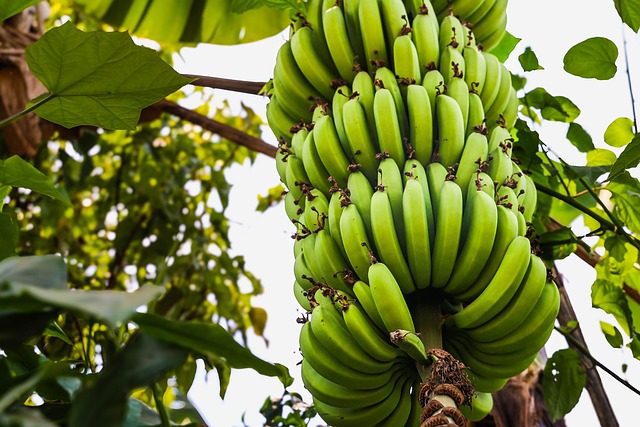
Traditional Bribri subsistence combined shifting horticulture with hunting, fishing, and gathering, adapted to the steep, forested terrain and generally poor upland soils typical of much of Talamanca. Root crops such as tubers, along with maize, formed early dietary staples, later supplemented significantly by cacao, plantains, and bananas following their introduction and adoption, with cacao in particular taking on an economic and ceremonial importance that extended well beyond simple nutrition into core religious and social life.
Hunting supplied important protein through the pursuit of forest game including peccary, deer, and various birds, using bows, blowguns, and traps suited to dense forest conditions, while fishing along Talamanca’s numerous rivers provided another significant protein source, using techniques including hook and line, woven traps, and, on the nearby Caribbean coast, engagement with marine resources including fish and sea turtles.
Settlement historically favored dispersed household clusters organized around clan affiliation rather than large centralized towns, a pattern well suited to the rugged terrain and shifting cultivation practices of the region, with individual households or small clusters of related households maintaining their own agricultural plots while remaining connected to a wider clan network through kinship obligation, shared ceremony, and cooperative labor for larger tasks.
Traditional Bribri architecture featured houses constructed from locally available timber, palm thatch, and other forest materials, built in styles adapted to the region’s high rainfall and humid climate, with construction techniques and house forms passed down through generations of practical knowledge about which local materials best withstood Talamanca’s demanding tropical mountain weather conditions across changing seasons.
Society
Bribri society is organized around a matrilineal clan system, meaning clan membership passes through the mother’s line rather than the father’s, a structure that shapes marriage rules, land inheritance, ceremonial roles, and broader social identity within Bribri communities. Individuals must marry outside their own clan, a practice called clan exogamy, which historically helped maintain broad kinship networks across dispersed Talamanca settlements and continues to structure social relationships within Bribri territory today.
Certain clans traditionally held specific ceremonial responsibilities, most notably the awa, ritual specialists responsible for conducting funerary rites and other major ceremonies, whose position depends on clan membership combined with extensive traditional training in ceremonial knowledge, oral history, and ritual practice passed down through structured apprenticeship over many years.
Leadership historically combined clan-based authority with the position of a broader spiritual and political figure sometimes referred to using the Spanish-derived term rey, or king, though this title reflects colonial-era Spanish attempts to describe Bribri leadership in familiar European terms rather than an exact equivalent of Bribri political structure, which operated more through clan councils, ceremonial authority, and community consensus than through centralized monarchical rule in the European sense.
Contemporary Bribri communities maintain formal governance structures recognized under Costa Rican law, including elected Indigenous development associations responsible for representing community interests in dealings with the national government, alongside continued recognition of clan-based ceremonial authority and traditional leadership roles, producing a layered governance system that blends indigenous social structure with the administrative requirements of the modern Costa Rican state.
Marriage alliances formed through clan exogamy also served practical functions beyond social structure, helping distribute knowledge, resources, and labor obligations across a wider network of related households spread throughout Talamanca’s difficult terrain, reinforcing cooperation between otherwise dispersed and relatively autonomous family groups.
Religion
Bribri cosmology centers on Sibö, the principal creator deity credited with forming the Bribri people, establishing their clan structure, and setting out the laws and ceremonial obligations that continue to govern proper conduct today. According to tradition, Sibö created the first Bribri people from corn seeds, brought them to the Talamanca region, and assigned each clan specific roles and responsibilities within the wider community, a foundational narrative still actively taught, recited, and referenced in ceremonial and everyday life.

Cacao occupies an especially sacred position within Bribri religious thought, understood according to tradition as a woman transformed by Sibö, and treated with particular ceremonial respect, including restrictions on who may prepare and handle cacao during certain rites, reflecting its symbolic status as far more than an ordinary food or trade crop within Bribri belief and practice.
The awa, ritual specialists whose position depends on specific clan membership and extensive traditional training, play a central role in Bribri religious life, particularly in conducting funerary ceremonies that can extend over multiple days and involve detailed ritual knowledge concerning proper treatment of the deceased, the journey of the spirit, and the maintenance of appropriate relationships between the living community and the spiritual world.
Christian missionary activity, both Catholic and later evangelical Protestant, has been present in Talamanca for generations, producing meaningful Christian conversion in many Bribri communities while traditional Sibö-centered belief, clan ceremonial obligations, and the ritual authority of the awa have persisted alongside rather than being fully displaced by introduced Christian practice, a pattern of religious coexistence and blending common among many Indigenous peoples across Latin America.
Traditions
Oral tradition occupies a central place in Bribri cultural life, with extensive narrative cycles concerning Sibö’s creation of the world, the origin of the clans, and proper moral conduct transmitted through structured recitation, particularly during funerary ceremonies where an awa may recite lengthy portions of traditional narrative as part of the ritual process, preserving both religious knowledge and historical memory across generations through memorized performance rather than written text.

Funerary rites represent among the most elaborate and important Bribri ceremonial traditions, involving specific ritual roles assigned according to clan membership, careful ceremonial treatment of the deceased’s belongings, and extended periods of ritual observance intended to ensure the proper transition of the departed’s spirit, reflecting the deep interconnection between Bribri clan structure, cosmology, and life-cycle ceremony described in earlier sections.
Sea turtle conservation and harvest on the nearby Caribbean coast, an area historically connected to Bribri and neighboring communities, reflects a traditional relationship with coastal marine resources that continues in adapted form today, with some community members now involved in conservation-oriented turtle monitoring programs that blend traditional ecological knowledge with contemporary conservation science and tourism-related economic activity.
Traditional medicine, drawing on extensive botanical knowledge of the Talamanca forest’s plant life, remains actively practiced in many Bribri communities, with knowledgeable elders and specialists maintaining detailed understanding of medicinal plant preparation and use passed down through direct apprenticeship, existing alongside rather than being fully replaced by the more limited formal healthcare infrastructure available in this remote mountainous region of Costa Rica.
Crafts
Basketry represents one of the most enduring traditional Bribri crafts, produced from locally gathered plant fibers and woven into containers used for carrying agricultural produce, storing goods, and various household purposes, with weaving techniques and pattern knowledge passed down through generations of practice within family and clan lines across Talamanca’s scattered settlements.

Wood carving, drawing on the wide variety of timber available in the Talamanca forest, produces both practical household items and more decorative or ceremonial objects, while traditional house construction itself represents a significant craft tradition, requiring detailed knowledge of which local materials best withstand the region’s demanding rainfall and humidity across different seasons of the year.
Cacao processing, given the crop’s sacred status described in the religion section, involves specific traditional techniques for harvesting, fermenting, drying, and preparing cacao for both ceremonial and everyday consumption, techniques that carry cultural as well as practical significance and that some Bribri communities have more recently adapted into small-scale commercial cacao and chocolate production aimed at both domestic and export markets.
Contemporary Bribri artisans increasingly produce craft items, including baskets, carved objects, and cacao-based products, for sale to tourists and buyers outside Talamanca, a shift that provides valuable supplementary income to communities in a remote region with limited formal employment opportunities, while also raising familiar questions common to many Indigenous artisan communities about balancing traditional technique and meaning against the pressures and expectations of external commercial markets.
Some Bribri cacao producers have in recent years pursued direct trade relationships with specialty chocolate makers abroad, seeking fairer prices and greater recognition of cacao’s cultural significance than conventional commodity markets typically provide, a small but growing example of Indigenous communities across Latin America reshaping their economic relationship with globally traded crops that were once extracted with little benefit returning to the communities that first cultivated them.
Food
Cacao holds an especially significant place in Bribri food culture, prepared traditionally as a beverage rather than as a solid confection, often mixed with water and sometimes other ingredients, and consumed both in everyday contexts and, given its sacred status, during specific ceremonial occasions where its preparation and handling follow particular ritual guidelines described earlier in relation to Bribri religious belief.

Plantains and bananas, adopted after their introduction to the Americas, became important dietary staples in Talamanca, prepared through boiling, roasting, or frying, and often served alongside root crops, rice, and beans that reflect centuries of exchange with broader Costa Rican and Central American food culture beyond the specifically Bribri culinary tradition.
Fish from Talamanca’s rivers and, for communities closer to the Caribbean coast, marine resources including fish and, historically, sea turtle, provided important protein sources, prepared through roasting, boiling, or smoking, often seasoned with locally available herbs and, following introduction through broader regional trade, chili peppers that have become common across much of Central American Indigenous and mestizo cuisine alike.
Contemporary Bribri diets increasingly incorporate purchased goods available through markets and stores accessible from Talamanca’s more connected communities, including rice, sugar, and packaged foods, reflecting broader patterns of market integration affecting Indigenous communities across Costa Rica, though cacao, plantains, and traditional root crops remain culturally significant staples in most Bribri households regardless of increasing dietary diversification.
Festivals
Bribri ceremonial life historically centered less on a fixed annual calendar of large public festivals and more on life-cycle events, particularly funerary ceremonies, and periodic clan gatherings tied to agricultural cycles, harvest timing, and specific ritual needs identified by an awa or other traditional authority, reflecting a pattern focused on kinship and clan obligation rather than centralized, community-wide public celebration common in some other cultural traditions.

Christian holidays including Christmas and Easter have been incorporated into community life in many Talamanca settlements following generations of missionary presence, often blended with existing patterns of extended family gathering and shared meals rather than entirely replacing older observance patterns, producing hybrid celebrations that combine introduced Christian religious calendar events with longstanding Bribri social and kinship traditions.
In recent decades, Bribri communities and Costa Rican cultural institutions have organized more public-facing cultural events aimed at celebrating and showcasing Bribri heritage, including craft fairs, cacao-related cultural tourism activities, and educational programming intended to raise both internal community pride and broader Costa Rican public awareness of Bribri history, language, and traditions, often coordinated with national Indigenous peoples’ recognition initiatives.
These newer, more publicly oriented cultural events sit alongside rather than replace the continuing practice of core traditional ceremonies such as funerary rites, reflecting a broader pattern in which Bribri communities selectively adapt some traditions into forms suitable for wider public presentation and tourism-related economic activity while maintaining the private, clan-based character of their most spiritually significant ceremonial practices.
History
Spanish colonization of Costa Rica proceeded slowly and unevenly compared to the rapid conquest of major Mesoamerican and Andean states, in significant part because the country’s Indigenous populations, including the Bribri, were organized into smaller, dispersed chiefdoms rather than large centralized empires offering a single decisive target for conquest, and because Talamanca’s rugged, forested terrain made sustained military campaigns and permanent colonial settlement extremely difficult to establish and maintain.

Franciscan missionaries established a presence in Talamanca beginning in the seventeenth century, attempting to congregate and convert Bribri and neighboring Cabecar communities into mission settlements, efforts that met significant resistance, most notably in a major 1709 uprising that destroyed several mission settlements and killed a number of missionaries and colonial soldiers, forcing a substantial retreat of formal Spanish colonial presence from the region for an extended period afterward.
This pattern of periodic resistance combined with the practical difficulty of controlling Talamanca’s mountainous terrain meant that Spanish and later independent Costa Rican state authority over the Bribri homeland remained comparatively limited well into the modern era, allowing greater continuity of traditional governance, land use, and ceremonial practice than occurred in many other Indigenous regions of Latin America that experienced more thorough and sustained colonial control.
The twentieth century brought new pressures, including banana company expansion into Caribbean lowland areas near Talamanca, missionary linguistic and educational activity, and gradually increasing incorporation into Costa Rican state administration, including the establishment of legally recognized Indigenous territories beginning in the 1970s, a framework that provided important land rights protections while also generating ongoing tension over boundary enforcement, resource extraction, and encroachment by non-Indigenous settlers that continues to affect Bribri communities today.
Today
The Bribri today number roughly fifteen thousand people within Costa Rica according to recent census figures, with a smaller additional population across the border in Panama, making them one of the largest and most prominent of Costa Rica’s eight officially recognized Indigenous peoples, concentrated primarily within the legally titled territories of Talamanca Bribri, Salitre, and Cabagra, alongside smaller populations in Talamanca Cabecar and other neighboring areas.

Contemporary Bribri communities continue to face significant challenges around land rights enforcement, as non-Indigenous settlers and outside economic interests have in some cases occupied portions of legally titled Indigenous territory, a problem that Costa Rican Indigenous rights organizations and Bribri community associations have worked to address through legal advocacy, government negotiation, and, in some documented cases, direct community-led land recovery efforts undertaken with mixed and sometimes contentious results.
Access to healthcare, education, and infrastructure remains uneven across Talamanca, with communities closer to towns and the regional road network generally enjoying greater access to formal services, while more remote mountain settlements continue to rely more heavily on traditional practices, including traditional medicine and subsistence agriculture, and face greater practical barriers in accessing state services and participating in the broader Costa Rican economy.
Younger generations of Bribri increasingly navigate between traditional community life, including participation in clan ceremony and Bribri-language education, and broader Costa Rican society, including Spanish-language schooling, wage labor, and, for some, involvement in tourism-related enterprises connected to Talamanca’s cacao heritage and rich biodiversity, producing a lived experience that blends ancestral practice with the pressures and opportunities of contemporary Costa Rican national life.
International attention to Bribri land rights increased notably following the killing of Indigenous rights activist Sergio Rojas in 2019, a case that drew wider domestic and international scrutiny to the dangers faced by Indigenous land defenders in Costa Rica and added further pressure on national authorities to more effectively enforce existing Indigenous territorial protections.
Nearby Peoples of Central America
The Bribri share the isthmus of Central America with several other peoples covered on this site, each with a distinct history shaped by the region’s mountains, coasts, and islands.
You May Like
The Damara, an Ancient People of Namibia