Tiwanaku is an ancient city in the Bolivian highlands near Lake Titicaca, where a powerful pre-Inca civilization built massive stone temples and a carved gateway called the Gate of the Sun.
Long before the Inca Empire rose to dominate the Andes, a state centered on the shores of Lake Titicaca, at an altitude of nearly four thousand meters, had already built one of the most influential civilizations in pre-Columbian South America. Tiwanaku’s monumental stone architecture, its precisely fitted masonry at the nearby Pumapunku complex, and its widespread religious iconography spread across a huge stretch of the Andes, reaching modern Peru, Chile, and Argentina through trade, pilgrimage, and cultural influence that outlasted the city’s own political power by centuries.
Contents
- A City on the Roof of the World
- The Rise of the Tiwanaku State
- What Language Did the Builders Speak?
- Akapana: A Pyramid Shaped Like a Mountain
- Kalasasaya and the Sunken Temple
- The Gate of the Sun and the Staff God
- Pumapunku and Its Puzzling Precision
- Raised Fields That Beat the Frost
- Religion, Society, and Daily Life
- Collapse, Drought, and a Living Legacy
- Nearby Places to Explore
- Why Tiwanaku Still Matters
A City on the Roof of the World
Tiwanaku sits on the Bolivian altiplano, a high plateau near the southern shore of Lake Titicaca, the largest high-altitude lake in the world and a body of water that held deep religious significance for nearly every major civilization that rose in the region, including the Inca after them. At an elevation of roughly 3,850 meters above sea level, the site experiences thin air, intense sunlight, and harsh nighttime cold, conditions that make the scale of Tiwanaku’s construction all the more remarkable, since every stone block, every earthwork, and every agricultural field had to be built and maintained by a population adapted to one of the most physically demanding environments inhabited by any major ancient civilization.
At its height, roughly between 500 and 1000 CE, Tiwanaku served as the ceremonial and political capital of a state whose influence extended across the southern Andes, encompassing parts of modern Bolivia, Peru, Chile, and Argentina. Population estimates for the urban core range from several thousand to over ten thousand residents, with a much larger number of people living in satellite communities and agricultural settlements tied economically and religiously to the central city.
The site’s proximity to Lake Titicaca was not incidental. The lake moderates the surrounding climate slightly compared to the drier altiplano further from its shores, and its waters supported fishing and totora reed harvesting, providing additional food and building material resources that supplemented the intensive agriculture practiced on the surrounding plains. Andean cultures across many centuries treated Titicaca as a sacred body of water believed to be a place of origin for the sun, the moon, and humanity itself, a belief that almost certainly predated Tiwanaku and likely contributed to the site’s selection as a major ceremonial center.
Modern visitors reaching Tiwanaku typically travel from La Paz, Bolivia’s administrative capital, a journey of roughly an hour and a half by road across the altiplano. The dramatic, wide-open landscape surrounding the site, framed by distant snow-capped peaks and the vast expanse of Titicaca not far away, gives visitors a strong sense of the physical setting that shaped Tiwanaku’s religious worldview, one deeply rooted in the relationship between mountains, water, and the sky.
The Rise of the Tiwanaku State
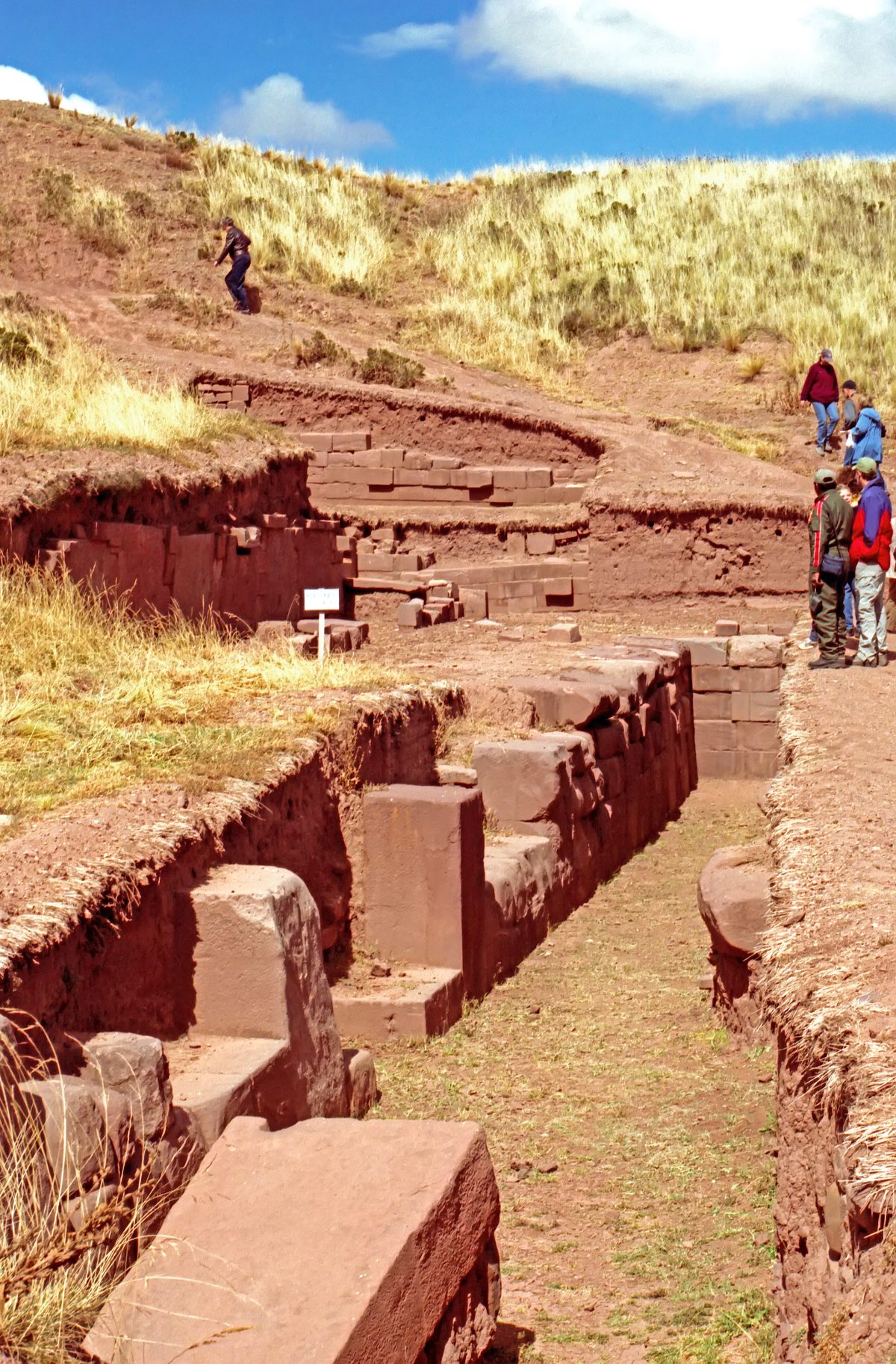
Tiwanaku began as a modest settlement in the Titicaca basin during the first centuries CE, part of a broader landscape of competing local communities in the region. Around 500 CE, the settlement began a period of rapid growth and monumental construction, eventually eclipsing its regional rivals and establishing itself as the dominant political and religious center of the southern Andes. This transformation coincided with the construction of the city’s major monuments, including the Akapana pyramid and the Kalasasaya temple complex, both built and expanded over successive generations.
Unlike some contemporary Andean states that relied primarily on military conquest, Tiwanaku’s expansion appears to have depended heavily on religious authority, controlled trade networks, and the strategic distribution of goods and agricultural surplus to allied communities. Llama caravans carried Tiwanaku-style pottery, textiles, and religious objects across enormous distances, spreading the state’s distinctive artistic and religious style far beyond the direct political control of the capital itself, a pattern that helped Tiwanaku’s cultural influence outlast its political reach by centuries.
Archaeologists distinguish between Tiwanaku’s core urban zone, where the largest monuments and elite residences were concentrated, and a much wider hinterland of agricultural villages and smaller ceremonial centers that fell under its economic and religious influence without necessarily being under direct, continuous political control. This layered structure, with a powerful ceremonial core surrounded by a looser network of allied and dependent communities, is now understood as typical of many pre-Columbian Andean states rather than a rigid, centralized empire in the European sense.
Ceramic styles associated with Tiwanaku, particularly a distinctive form of decorated drinking vessel and a flared beaker known as a kero, have been found at sites hundreds of kilometers from the capital, sometimes alongside local pottery styles rather than replacing them entirely. This pattern of Tiwanaku goods appearing alongside, rather than displacing, local material culture supports the interpretation of Tiwanaku’s expansion as one built substantially through exchange, alliance, and shared religious practice, rather than a conquest state imposing uniform control over a large, forcibly unified territory.
What Language Did the Builders Speak?
Tiwanaku left behind no deciphered writing system, so the language spoken by its founders and rulers cannot be confirmed directly from the city’s own inscriptions. Neither Aymara nor Quechua, the two indigenous languages most widely spoken in the Andes today, appears to have been dominant in the Titicaca basin during Tiwanaku’s height. Instead, many linguists and archaeologists argue that the Tiwanaku elite most likely spoke Puquina, a now-extinct language once widespread around Lake Titicaca and documented in colonial-era Spanish sources, though it had already been largely displaced by Aymara and Quechua by the time European chroniclers began recording Andean languages in detail.
This linguistic picture is necessarily built on indirect evidence, including place names, colonial-era word lists, and the documented geography of Puquina speakers recorded shortly after Tiwanaku’s collapse, rather than any text written by Tiwanaku’s own inhabitants. Aymara, which dominates the Titicaca basin today, appears to have spread into the region later, likely after Tiwanaku’s decline, while Quechua expanded even further afterward as the administrative language of the Inca Empire. Because of this gap in direct evidence, most careful scholarship describes Tiwanaku’s language as probably Puquina rather than definitively established, an honest acknowledgment of the limits of what archaeology alone can recover about a society that left no deciphered texts behind.
Some researchers have proposed that Tiwanaku society may have been multilingual, with Puquina serving as the primary language of the ruling elite and religious institutions while other Andean languages, including early forms of Aymara and possibly ancestral Uru languages, continued to be spoken among various communities incorporated into the broader Tiwanaku sphere of influence. This kind of linguistic diversity would not be unusual for a state built through trade networks and religious alliance as much as direct political conquest, since such an approach to expansion tends to leave existing local languages and cultural practices largely intact rather than replacing them with a single imposed tongue.
Understanding the language question at Tiwanaku matters beyond simple curiosity, since language is closely tied to how archaeologists interpret social identity, political organization, and the relationship between the capital and its surrounding communities. If Puquina truly was restricted mainly to an elite ruling class, as some researchers suspect, this would support a model of Tiwanaku society built around a distinct governing group presiding over a linguistically and culturally diverse population, an arrangement with parallels in numerous other ancient states around the world where a ruling elite maintained a separate language or dialect from the broader population it governed.
Akapana: A Pyramid Shaped Like a Mountain
The largest monument at Tiwanaku is Akapana, a stepped platform pyramid that was deliberately built to resemble the shape of a natural mountain, complete with an internal drainage system designed to channel rainwater down through the structure and out through carved stone spouts, mimicking the way water flows down a real mountainside. Rather than simply serving as an impressive artificial hill, Akapana appears to have functioned as a symbolic recreation of the sacred mountains that dominated Andean religious thought, connecting earth, water, and the surrounding landscape into a single deliberately engineered monument.
Excavations atop Akapana have revealed evidence of ceremonial activity, including offerings and the remains of dismembered camelids and, in some cases, human remains, suggesting the summit hosted rituals of considerable religious significance, possibly connected to fertility, water, or agricultural cycles central to a society dependent on high-altitude farming. Much of the pyramid’s surface stonework was removed by later builders and colonial-era construction projects that reused Tiwanaku’s finely cut blocks, leaving today’s Akapana looking more like an eroded earthen mound than the precisely faced monument its original builders completed.
The sophisticated drainage system built into Akapana required cut stone channels precisely angled to move water through the structure without causing erosion damage, a level of hydraulic engineering that parallels the skill seen in Tiwanaku’s raised field agricultural systems elsewhere in the region. This consistency between Akapana’s internal engineering and the broader agricultural technology developed by Tiwanaku’s farmers suggests a society with genuinely advanced, transferable expertise in managing water across very different applications, from monumental ceremonial architecture to everyday food production.
Kalasasaya and the Sunken Temple
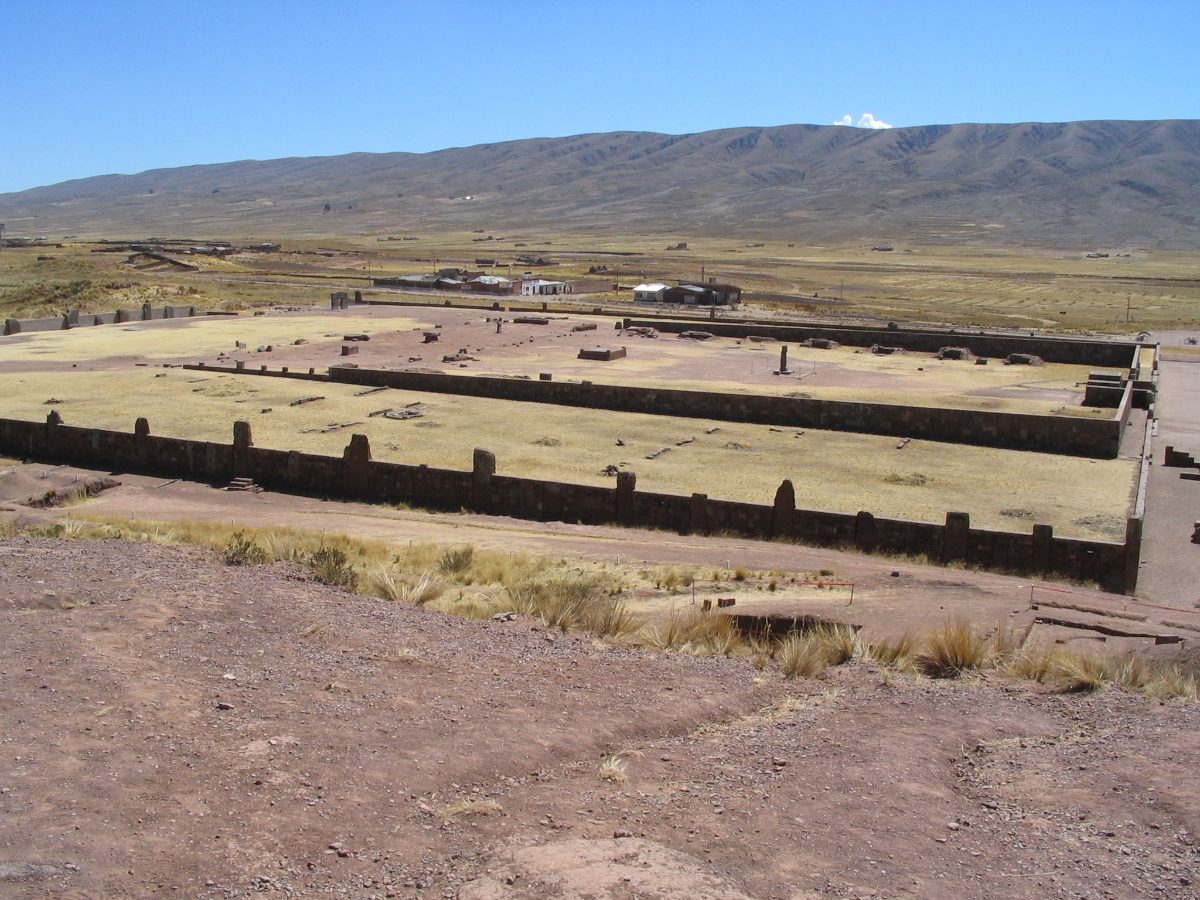
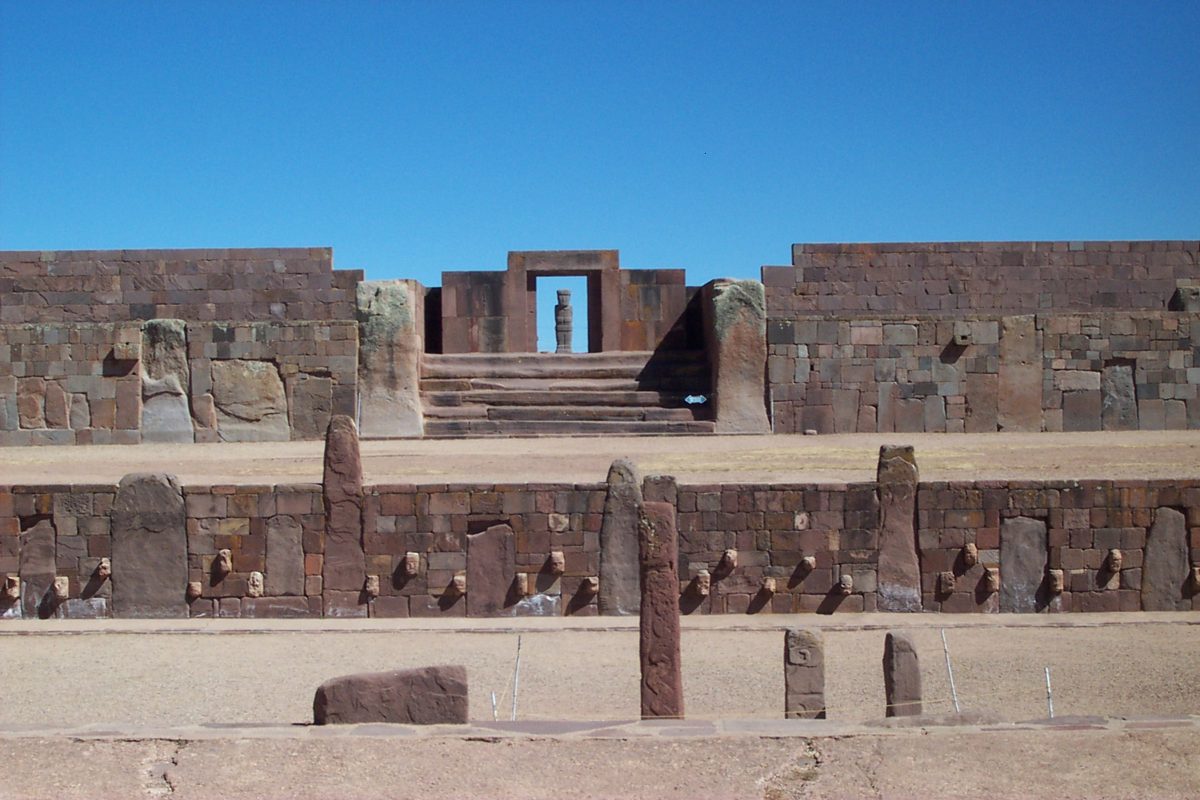
Adjacent to Akapana stands Kalasasaya, a large rectangular platform enclosure built from massive upright stone pillars alternating with smaller fitted stonework, forming a walled courtyard that likely served as a ceremonial and astronomical space. Alignments built into the structure appear to track solstice sunrises and sunsets, echoing a pattern seen at other major Andean ceremonial centers where monumental architecture doubled as a functional solar calendar essential for managing the agricultural cycle at high altitude.
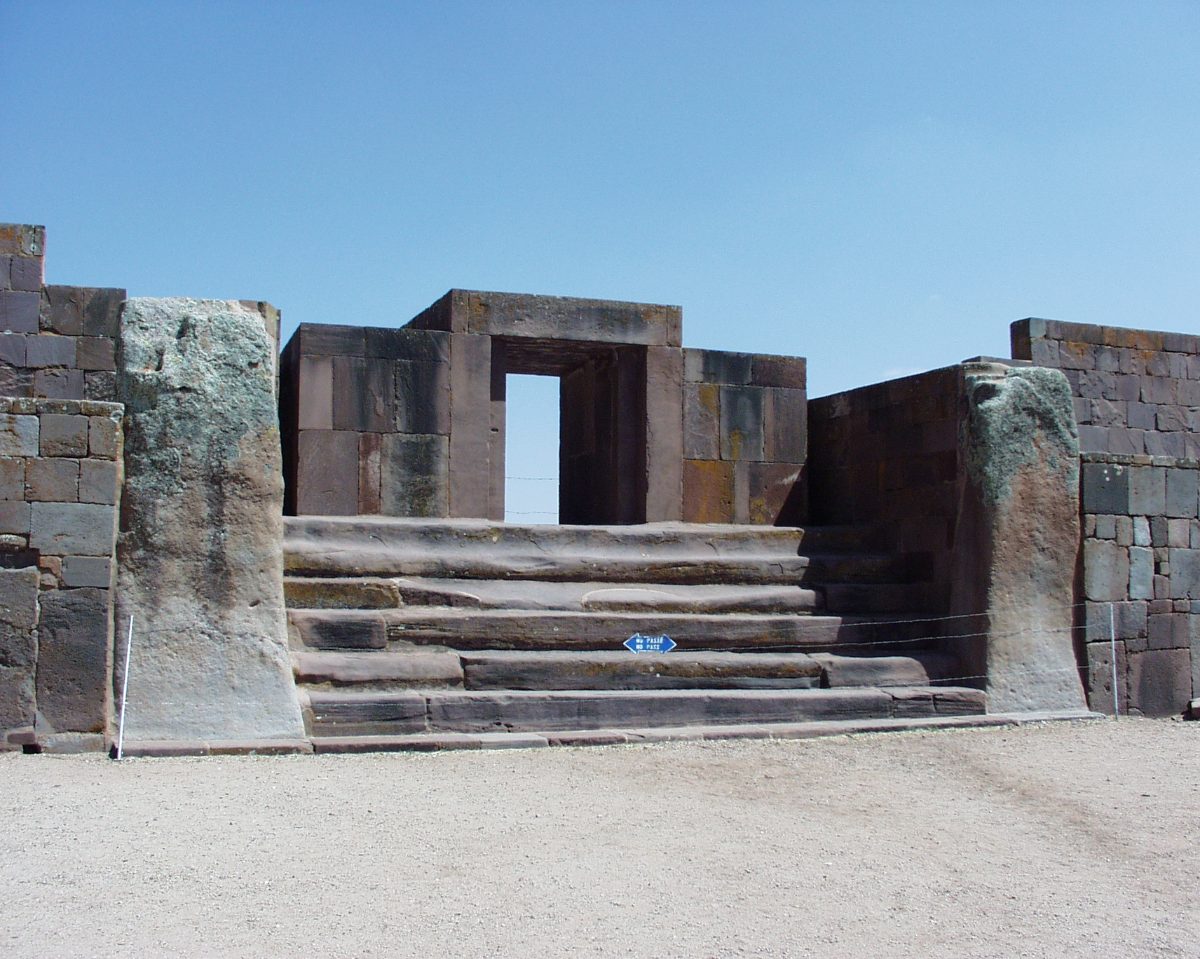
Just below Kalasasaya lies the Semi-Subterranean Temple, a sunken rectangular courtyard reached by a short stone staircase and lined with rows of carved stone tenon heads projecting from its walls, each showing distinct facial features that may represent different ethnic groups, ancestors, or conquered peoples incorporated into the Tiwanaku state. The sunken temple’s design, set below ground level and surrounded by carved faces staring inward toward its open courtyard, creates one of the most visually striking spaces anywhere at the site, and its excavation and partial reconstruction in the twentieth century remains one of Bolivian archaeology’s most significant achievements.
Early twentieth-century archaeologist Arthur Posnansky proposed controversial theories about Kalasasaya’s astronomical alignments implying an extremely ancient date for the site, claims that later, more rigorous archaeological and archaeoastronomical research has thoroughly revised and largely rejected. Modern dating methods, combined with careful stratigraphic excavation, confirm Tiwanaku’s major monumental construction falls within the commonly accepted timeframe of roughly 500 to 1000 CE, consistent with radiocarbon dates and the broader archaeological sequence established for the site and the surrounding region.
The Gate of the Sun and the Staff God
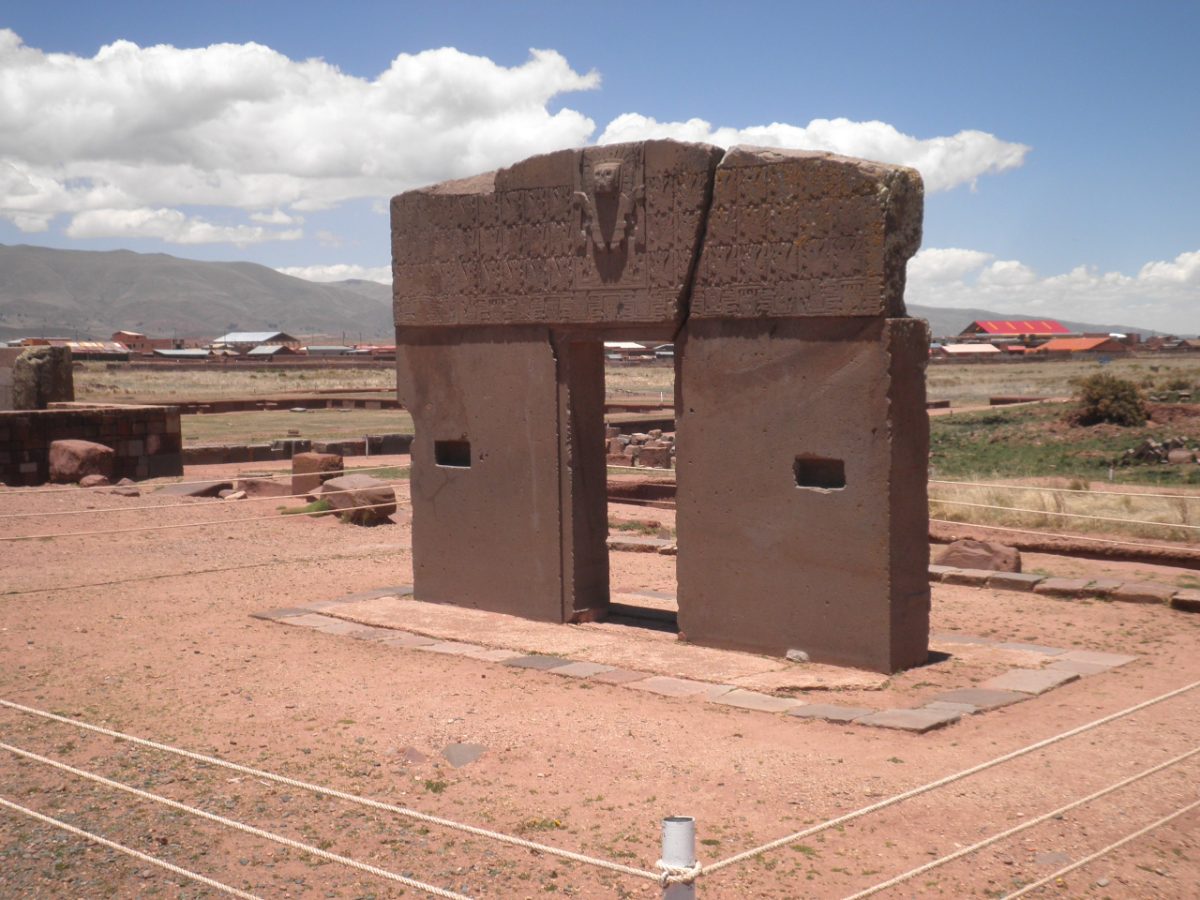
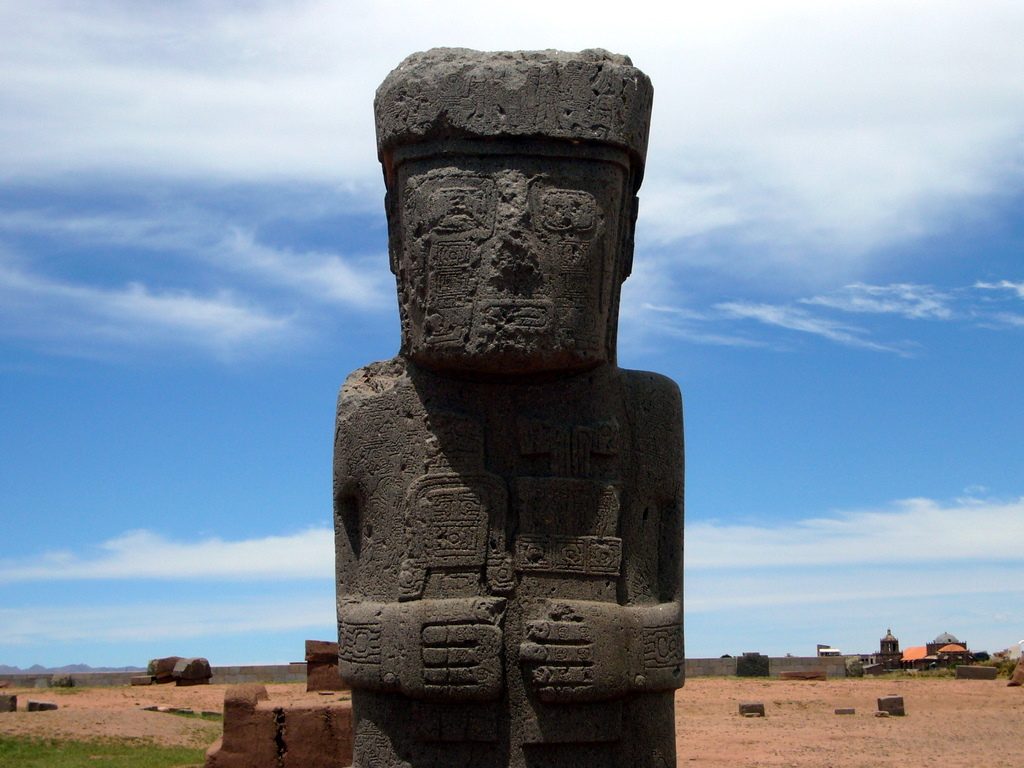
The single most famous monument at Tiwanaku is the Gate of the Sun, a monolithic stone archway carved from a single massive block of andesite, weighing an estimated ten tons. At its center stands a carved relief figure, often called the Staff God, holding a staff in each hand and surrounded by rows of smaller winged, running attendant figures arranged in orderly bands across the gate’s upper section. Many scholars connect this Staff God to Viracocha, the creator deity later worshipped by the Inca, suggesting that Tiwanaku’s religious iconography directly influenced, or perhaps originated, one of the most important deities in later Andean religion.
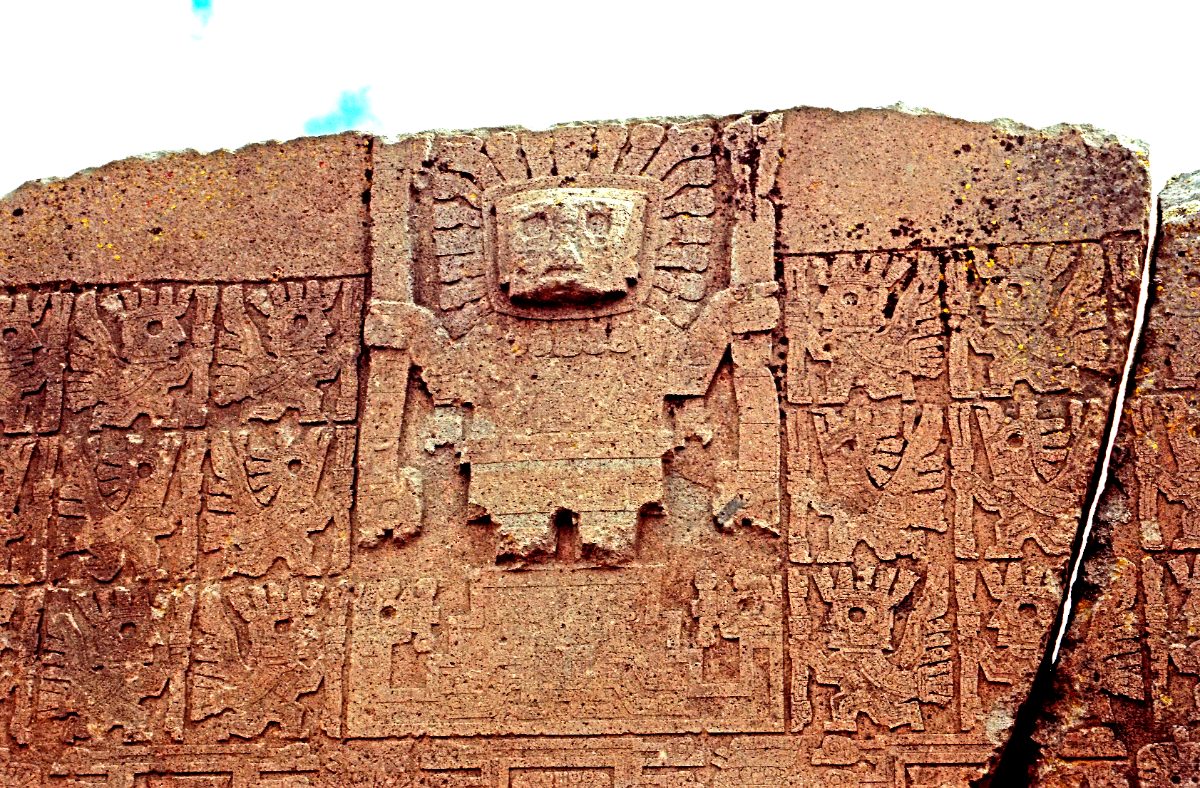
Remarkably, the Gate of the Sun as it stands today was found broken and displaced from its original location, and some archaeologists believe it may never have been fully completed or properly installed in its intended position, since a partially carved, unfinished side of the monument still shows tool marks from its original shaping. Regardless of its unfinished state, the gate’s central Staff God motif appears repeated on pottery, textiles, and other carved stonework found across the wider region influenced by Tiwanaku, cementing its status as one of the most widely recognized symbols of the entire Tiwanaku religious tradition.
Smaller gateways with similar, though less elaborate, carved relief work have also been identified at Tiwanaku and at related sites influenced by its religious tradition, suggesting the Gate of the Sun, despite its fame, represents the most accomplished example of a broader architectural and artistic type rather than a completely unique creation. Comparative study of these related gateways has helped archaeologists better understand how Tiwanaku’s religious imagery evolved and spread outward from the capital to allied and dependent communities across the wider Titicaca basin and beyond.
Pumapunku and Its Puzzling Precision
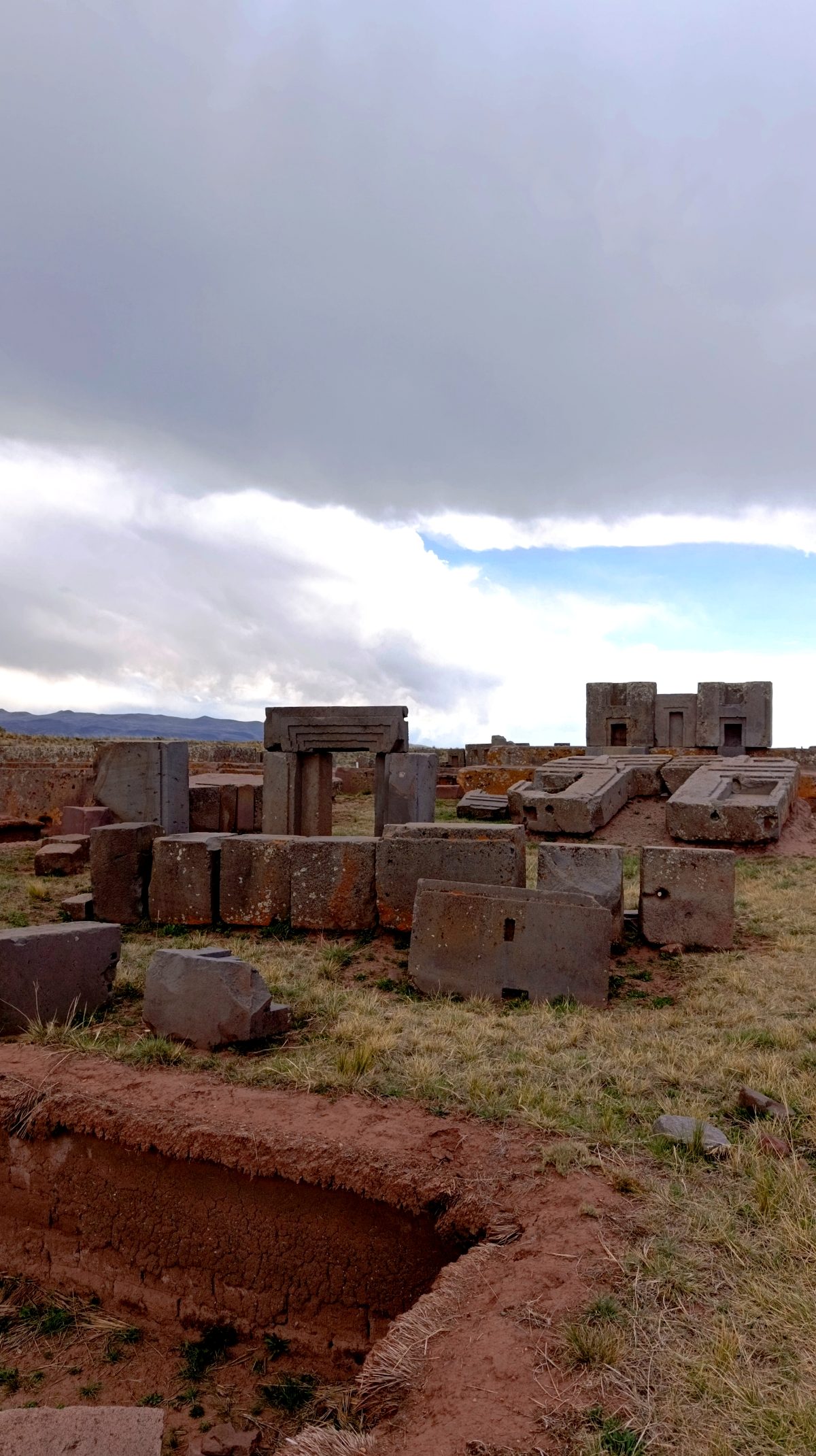
A short distance from the main Tiwanaku complex lies Pumapunku, a terraced platform mound famous for some of the most precisely cut stonework found anywhere in the ancient Americas. Massive andesite and sandstone blocks, some weighing well over one hundred tons, were shaped with flat faces, perfect right angles, and interlocking notches so exact that many blocks fit together with barely visible seams. Tiwanaku’s stoneworkers achieved this precision using stone, bronze, and copper tools, along with abrasive sand and water for grinding and polishing, techniques confirmed by unfinished blocks found at the site showing partial tool marks and works in progress.
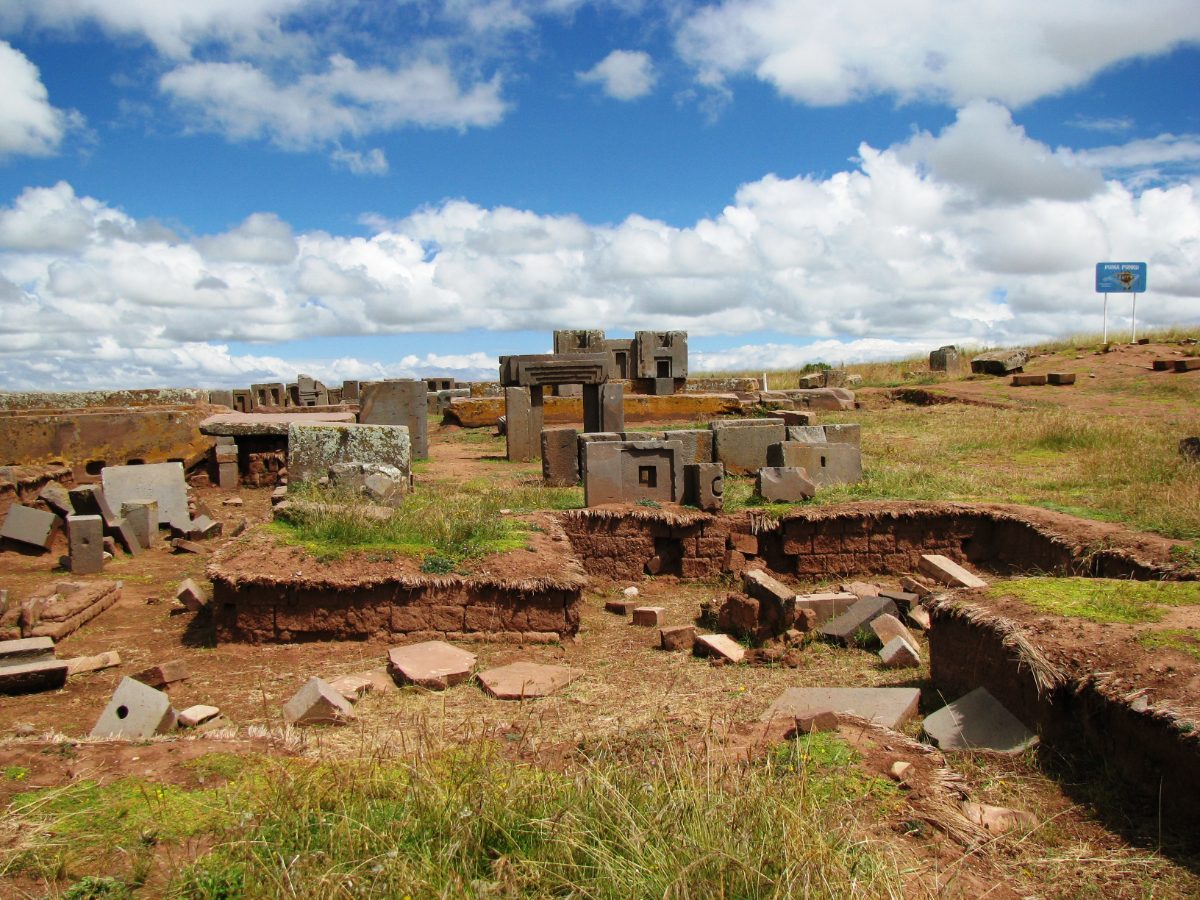
The scale and precision of Pumapunku’s stonework have made it a magnet for speculative and pseudo-archaeological claims over the years, but careful archaeological study consistently supports a straightforward, if impressive, explanation: skilled Tiwanaku engineers using known Andean stoneworking techniques, organized labor, and llama-drawn or human-hauled transport methods to move and shape blocks quarried from sites several kilometers away. Much of Pumapunku today lies in a collapsed, disarticulated state, with many of its original blocks toppled or scattered, making the site’s original completed appearance a subject of ongoing archaeological reconstruction and debate.
Metal cramps, small I-shaped fittings once poured in molten form to lock adjoining stone blocks together, have been found in sockets carved into several Pumapunku blocks, providing physical evidence of the specific engineering techniques Tiwanaku’s builders used to stabilize their monumental stonework against the seismic activity common in the Andean region. The presence of these cramps, along with the careful shaping of interlocking joints, shows a level of structural planning that went well beyond simple stacking of finished stone, reflecting genuine engineering knowledge developed and refined over generations of monumental construction at the site.
A dedicated on-site museum near the Tiwanaku ruins displays many of the smaller artifacts recovered from the site, including ceramics, metalwork, and carved stone fragments too delicate or valuable to leave exposed to the elements, giving visitors a fuller picture of Tiwanaku’s material culture beyond the large stone monuments that dominate the open archaeological park itself.
Raised Fields That Beat the Frost
Tiwanaku’s ability to support a large urban population at nearly four thousand meters of elevation depended on an ingenious agricultural technology known as raised field farming, or suka kollus. Farmers built long, elevated earthen platforms separated by water-filled canals, which absorbed solar heat during the day and released it slowly overnight, protecting crops from the frost that regularly threatens agriculture at high altitude. The canals also provided a source of nutrient-rich sediment that farmers periodically applied to the raised platforms, naturally maintaining soil fertility across generations of continuous cultivation.
Modern agronomic studies replicating these raised field systems have shown yields significantly higher than conventional dry farming at similar elevations, confirming that Tiwanaku’s farmers had developed a genuinely sophisticated solution to one of the most difficult agricultural challenges in the Andes. This technology likely explains how the state supported not only its urban population but also the surplus needed to fund monumental construction, long-distance trade caravans, and the religious feasts and ceremonies that reinforced Tiwanaku’s political and spiritual authority across the wider region.
Beyond raised field agriculture, Tiwanaku’s farmers also practiced extensive camelid herding, raising llamas and alpacas both for wool, meat, and as pack animals essential to the long-distance caravan trade that carried goods and religious influence across the wider Andean region. This combination of intensive high-altitude crop farming and large-scale camelid herding gave Tiwanaku’s economy a resilience and productive capacity well suited to the demands of supporting a large capital city and an extensive network of allied communities across a challenging high-altitude environment.
Religion, Society, and Daily Life
Tiwanaku’s religion centered heavily on the veneration of mountains, water sources, and celestial cycles, reflected directly in the design of Akapana as an artificial mountain and Kalasasaya as a solar observation platform. Ritual feasting appears to have played a major role in maintaining social and political bonds, with archaeologists recovering large quantities of specialized drinking vessels, called keros, used for consuming chicha, a fermented maize or quinoa-based beverage central to Andean ceremonial life for millennia both before and after Tiwanaku’s rise.
Society at Tiwanaku appears to have been organized hierarchically, with an elite class controlling access to monumental ceremonial spaces, religious authority, and long-distance trade, while a much larger population of farmers, herders, and craftspeople sustained the agricultural and material base that supported the capital. Evidence of specialized craft production, including fine textiles, elaborately decorated pottery, and worked metal objects in gold, silver, copper, and bronze, indicates a economy capable of supporting skilled artisans working outside direct subsistence farming, a hallmark of the kind of complex, stratified society Tiwanaku had clearly become by the height of its power.
Human sacrifice and ritual offerings, including camelid sacrifice, appear connected to major construction and calendrical events at the site, a practice documented at numerous other ceremonial centers throughout the ancient Andes and consistent with the broader religious worldview shared across many pre-Columbian South American cultures, in which reciprocal offerings to mountains, ancestors, and deities were considered essential to maintaining agricultural fertility and cosmic order.
Textile production at Tiwanaku reached a high level of technical and artistic sophistication, with weavers producing elaborately patterned cloth using camelid fiber from domesticated llamas and alpacas, dyed with a range of natural pigments and incorporating the same iconographic themes, including staff-bearing deities and geometric religious motifs, found on the site’s carved stonework and painted pottery. These textiles likely served both practical and ceremonial purposes, with the finest examples probably reserved for elite use or presented as valuable gifts reinforcing political and religious alliances across the wider Tiwanaku sphere of influence.
Collapse, Drought, and a Living Legacy
Tiwanaku’s political power began declining around 1000 CE and the city was largely abandoned as a major urban center by roughly 1100 CE. Paleoclimate records drawn from ice cores and lake sediment analysis point to a prolonged and severe drought affecting the Titicaca basin during this period, which would have devastated the raised field agricultural system that sustained the capital’s dense population, likely triggering the kind of social and political fragmentation that ultimately unraveled the state’s authority over its wider sphere of influence.
Even after Tiwanaku’s political collapse, its religious and cultural legacy persisted powerfully across the Andes. The Inca, who rose to dominance several centuries later, regarded Tiwanaku as a sacred place of origin, incorporating it directly into their own creation mythology and reportedly making pilgrimages to the ruins to honor what they considered an ancestral, semi-divine city. This enduring reverence meant that even as Tiwanaku’s original builders and their language faded from direct memory, the site itself remained a place of profound spiritual significance for the civilizations that followed.
Following Tiwanaku’s collapse, the Titicaca basin fragmented into a number of smaller, competing polities, often referred to as the Aymara kingdoms, which controlled the region for several centuries before eventually being absorbed into the expanding Inca Empire. These successor states continued to build chullpas, distinctive stone burial towers found throughout the altiplano, reflecting a changed but still recognizably Andean religious tradition that had developed, in part, out of the earlier cultural and religious foundations laid by Tiwanaku.
Nearby Places to Explore
Tiwanaku belongs to a much longer tradition of monumental ceremonial architecture that developed across the ancient Andes over thousands of years, and readers interested in this broader tradition may want to explore these related sites from earlier Andean civilizations in Peru.
- Chavin de Huantar: The 3,000-Year-Old Andean Temple Built to Overwhelm the Senses
- Cerro Sechin: The 3,600-Year-Old Peruvian Temple Carved With Warriors and Their Victims
- Chankillo: The 2,300-Year-Old Peruvian Towers That Are the Americas’ Oldest Solar Observatory
Why Tiwanaku Still Matters
Tiwanaku demonstrates that a sophisticated, monumentally ambitious civilization could thrive at one of the harshest high-altitude environments occupied by any major ancient society, solving the practical challenges of frost, thin soil, and extreme elevation through genuine agricultural and architectural ingenuity rather than favorable natural conditions. Its precisely fitted stonework at Pumapunku, its solar-aligned temples, and its widely copied Staff God iconography all speak to a civilization capable of both remarkable engineering and lasting religious influence across an enormous stretch of the Andes.
Even without a deciphered written language to speak for it directly, Tiwanaku continues to communicate through its architecture, its art, and the honest uncertainty scholars maintain about details like its builders’ native language, a reminder that archaeology sometimes progresses as much through careful acknowledgment of what remains unknown as through confident new discoveries. Its legacy, absorbed into Inca religious tradition and still visible in the ruins near Lake Titicaca today, secures Tiwanaku’s place among the most important civilizations of the pre-Columbian Americas.
You May Like
Mafra, the Palace a King Built From a Vow


One thought on “Tiwanaku: The Bolivian City Behind the Gate of the Sun”