Paquime, also known as Casas Grandes, rose in the desert valleys of northern Chihuahua, Mexico, as one of the most important trading cities linking the American Southwest to the civilizations of Mesoamerica, a multi-story adobe metropolis that bred scarlet macaws, engineered running water into its houses, and traded turquoise, shell, and copper across a network stretching over a thousand miles.
At its height between roughly 1200 and 1450 CE, Paquime housed several thousand residents in dense, multi-story apartment-style buildings unlike anything else built from adobe in the ancient Americas, making it one of the largest and most architecturally distinctive settlements north of central Mexico.
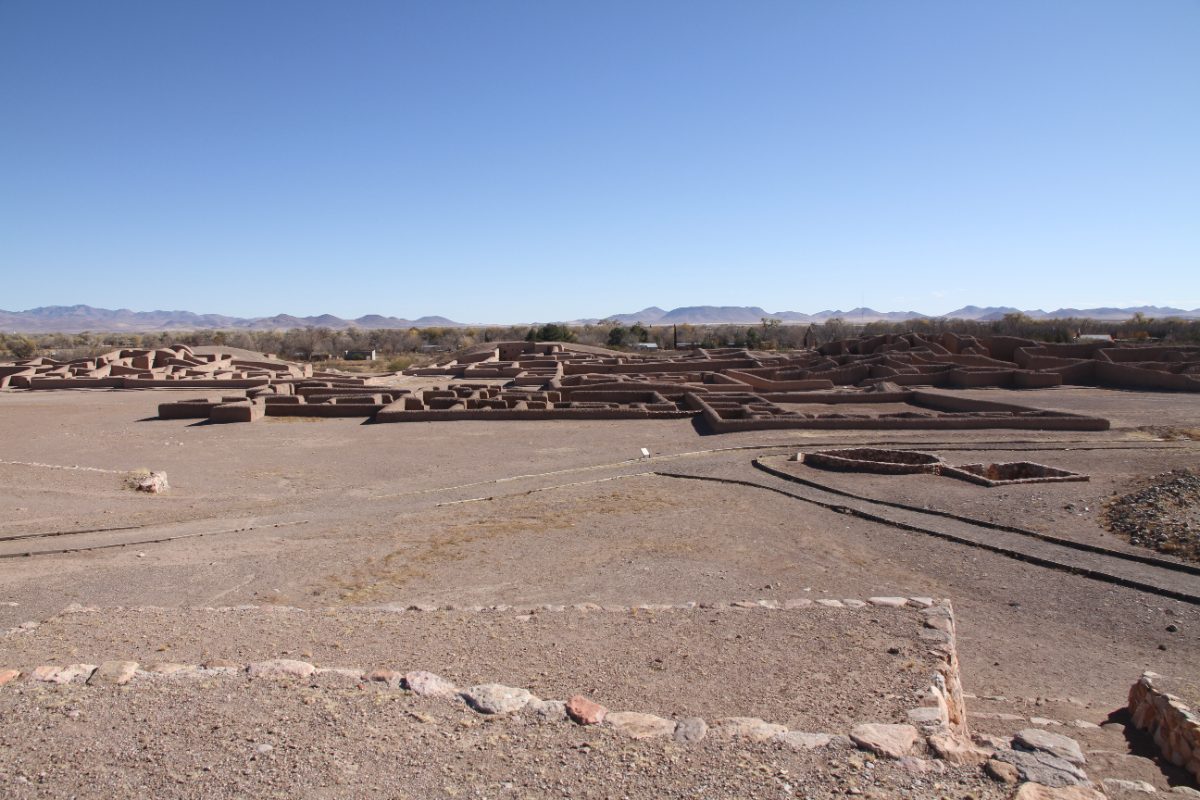
Table of Contents
- A Desert Trading City in Chihuahua
- From Pit Houses to a Planned City
- The Great Houses of Paquime
- Water Engineering and the City’s Infrastructure
- Breeding Macaws for a Continent
- Ball Courts and Effigy Mounds
- Pottery of the Casas Grandes Tradition
- What Language Did the People of Paquime Speak?
- Religion, Trade, and Society
- The Fall of Paquime
- Nearby Places to Explore
A Desert Trading City in Chihuahua
Paquime sits in the Casas Grandes River valley at roughly 4,600 feet elevation, a semi-arid landscape where the river’s floodplain provided the only reliable farmland for miles in any direction, making careful water management essential to the city’s survival and eventual prosperity.
Its location placed Paquime almost exactly between two very different worlds: the Ancestral Puebloan and Mogollon farming communities of the American Southwest to the north, and the urbanized civilizations of West Mexico and central Mesoamerica to the south, a position the city’s rulers used to become the dominant hub of exchange between both regions.
Rainfall in the Casas Grandes valley averages only about 12 to 15 inches annually, concentrated in brief summer monsoon storms, making the valley’s floodplain and the engineered irrigation systems built around it essential to supporting a population as large and densely concentrated as Paquime eventually became.
Surrounding the main city, archaeologists have documented a network of smaller satellite communities and specialized outposts, some apparently devoted to specific economic functions such as shell working or agricultural production, suggesting Paquime operated as the political and economic center of a considerably larger regional system rather than existing in isolation.
The Casas Grandes River itself flows only seasonally in its upper reaches but maintains a more consistent flow near the city site, a hydrological feature that likely influenced the precise location chosen for Paquime’s founding and later expansion into the region’s dominant urban center.
Surrounding mountain ranges to the west funneled seasonal runoff toward the valley floor, and Paquime’s engineers appear to have taken deliberate advantage of this natural drainage pattern when designing the canal networks that ultimately fed both agricultural fields and the city’s residential water reservoirs.
From Pit Houses to a Planned City
The Casas Grandes valley was home to farming communities living in shallow pit houses as early as 700 CE, part of the broader Mogollon cultural tradition shared with communities across what is now the border region of the United States and Mexico.
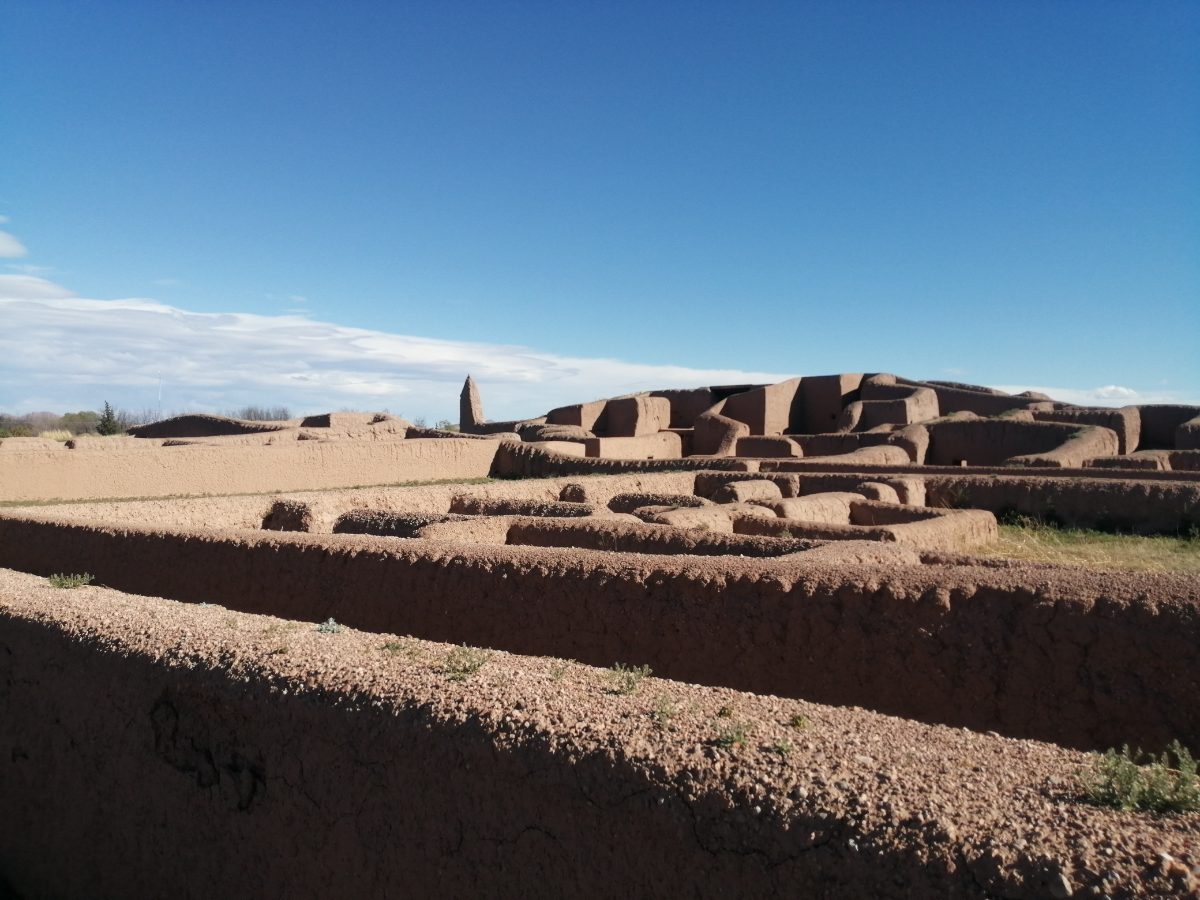
Around 1200 CE, in what archaeologists call the Medio period, Paquime transformed rapidly from a modest farming village into a planned, densely built city, with construction organized around large multi-room building complexes, plazas, ball courts, and specialized structures unlike anything in the settlement’s earlier history, a shift so abrupt that researchers debate whether it reflects new arrivals, powerful local leadership, or intensified contact with Mesoamerican trading partners to the south.
Excavations of the earlier Viejo period settlement beneath Paquime’s later Medio period city show a gradual increase in above-ground room block construction and a slow shift away from simple pit house architecture, a transition broadly paralleling similar developments at Mogollon and Ancestral Puebloan sites elsewhere in the Southwest during the same centuries.
Some archaeologists have proposed that the sudden intensification of construction and trade activity around 1200 CE may reflect the arrival of new leadership or migrants with direct connections to West Mexican trading centers, though the precise mechanism behind Paquime’s rapid transformation remains an active subject of ongoing research and debate.
Population growth during the Medio period appears to have been rapid enough that researchers estimate the city’s built-up area expanded several times over within just a few generations, a pace of urbanization that required not only labor but also sophisticated social organization to coordinate construction, water management, and food production simultaneously.
Excavation directors working at Paquime since the mid-twentieth century, most notably American archaeologist Charles Di Peso, whose extensive 1958 to 1961 excavations remain the foundation of most modern understanding of the site, documented the transition from Viejo period pit house village to Medio period city in exceptional stratigraphic detail, providing one of the clearest sequential records of urbanization anywhere in the ancient Southwest borderlands.
The Great Houses of Paquime
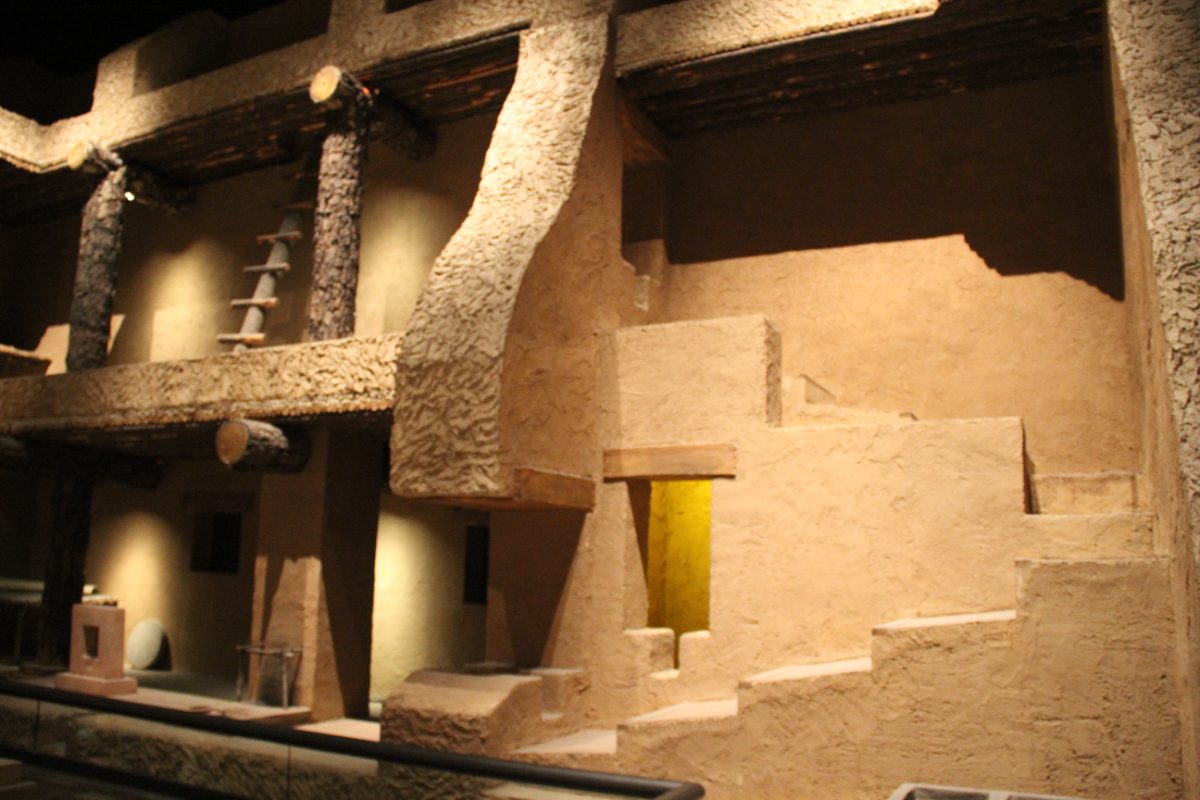
Paquime’s largest residential complexes rose three and four stories high, built from puddled adobe rather than stone, with walls up to several feet thick at their base tapering as they rose, an engineering solution allowing considerable height despite the relatively soft building material.
Distinctive T-shaped doorways appear throughout the city’s buildings, an architectural feature also found at Chaco Canyon and other Ancestral Puebloan sites hundreds of miles to the north, evidence some archaeologists cite as a sign of shared architectural ideas, if not direct population movement, linking Paquime to the wider Southwestern world.
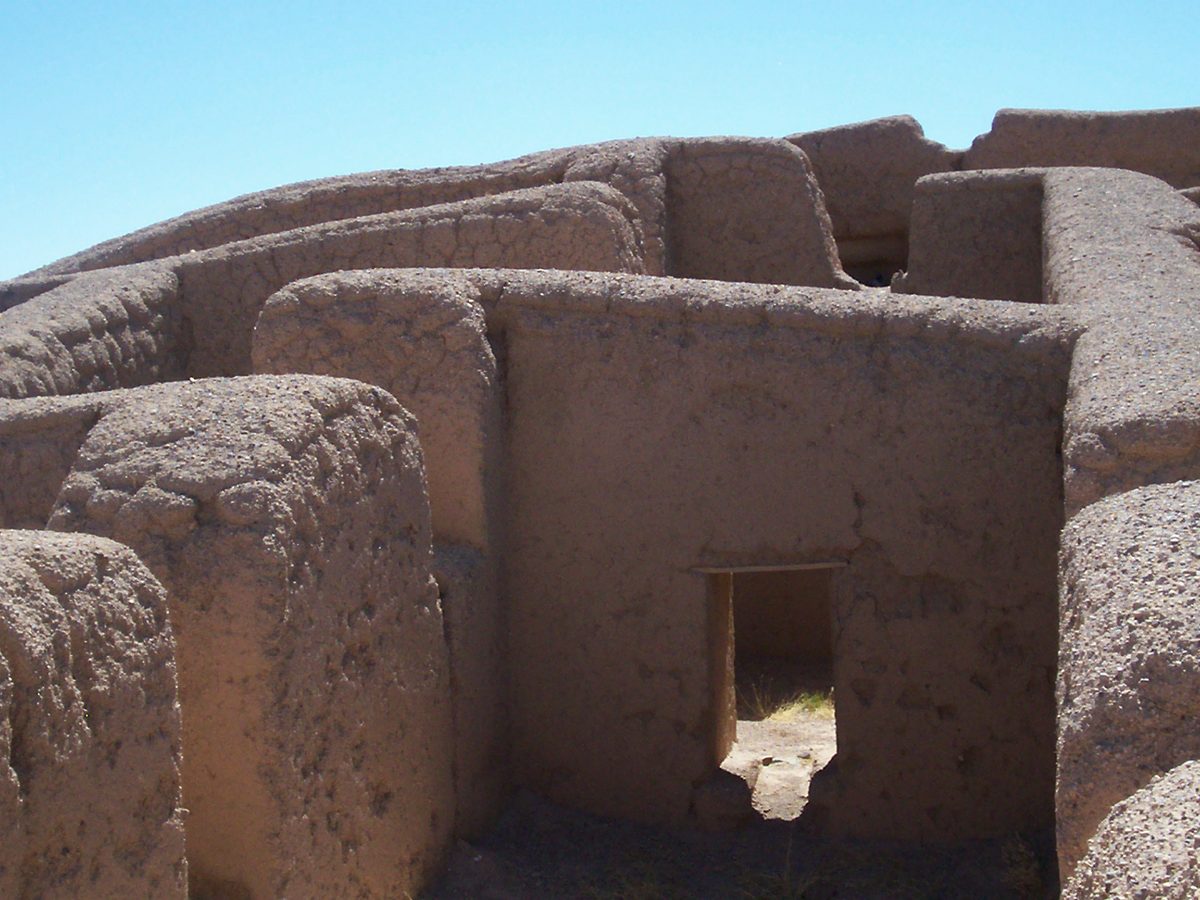
At its peak the city may have contained more than 2,000 rooms across its various building complexes, housing an estimated population of 2,500 or more residents, making Paquime one of the largest single settlements anywhere in the pre-Columbian borderlands region.
Roof construction at Paquime relied on large wooden beams supporting smaller cross members and a packed earth surface, a technique requiring substantial timber that had to be transported from forested mountain areas some distance from the valley floor, another indication of the coordinated labor and resource management the city’s builders were capable of organizing.
Interior room divisions at the largest building complexes suggest specialized use of space, with some rooms apparently dedicated to storage, others to food preparation, and still others showing evidence of craft production such as shell working or pottery finishing, painting a detailed picture of daily household economic life within the city’s dense residential blocks.
Some of Paquime’s larger building complexes included what appear to be communal or ceremonial rooms distinct from ordinary residential space, sometimes associated with caches of ritually significant objects such as effigy vessels or copper bells, suggesting these spaces served religious or administrative functions for extended kin groups or the wider community.
Structural analysis of surviving wall sections shows Paquime’s builders used a distinctive puddled adobe technique, building walls in successive layers of wet mud allowed to dry before the next layer was added, rather than the adobe brick construction more commonly associated with later Spanish colonial and Pueblo architecture in the region.
Doorway placement and room sequencing throughout Paquime’s largest complexes suggest a deliberate concern for controlling movement and access within the city, with some interior spaces reachable only by passing through several other rooms first, an arrangement that may have reinforced social distinctions between household groups or restricted access to storage and ceremonial areas.
Water Engineering and the City’s Infrastructure
Paquime’s builders constructed a genuinely remarkable water system, channeling water from springs and the Casas Grandes River through a network of stone-lined canals directly into the city, where it fed household reservoirs and, in several excavated buildings, what appear to be functioning indoor plumbing features unique among known sites in ancient North America.
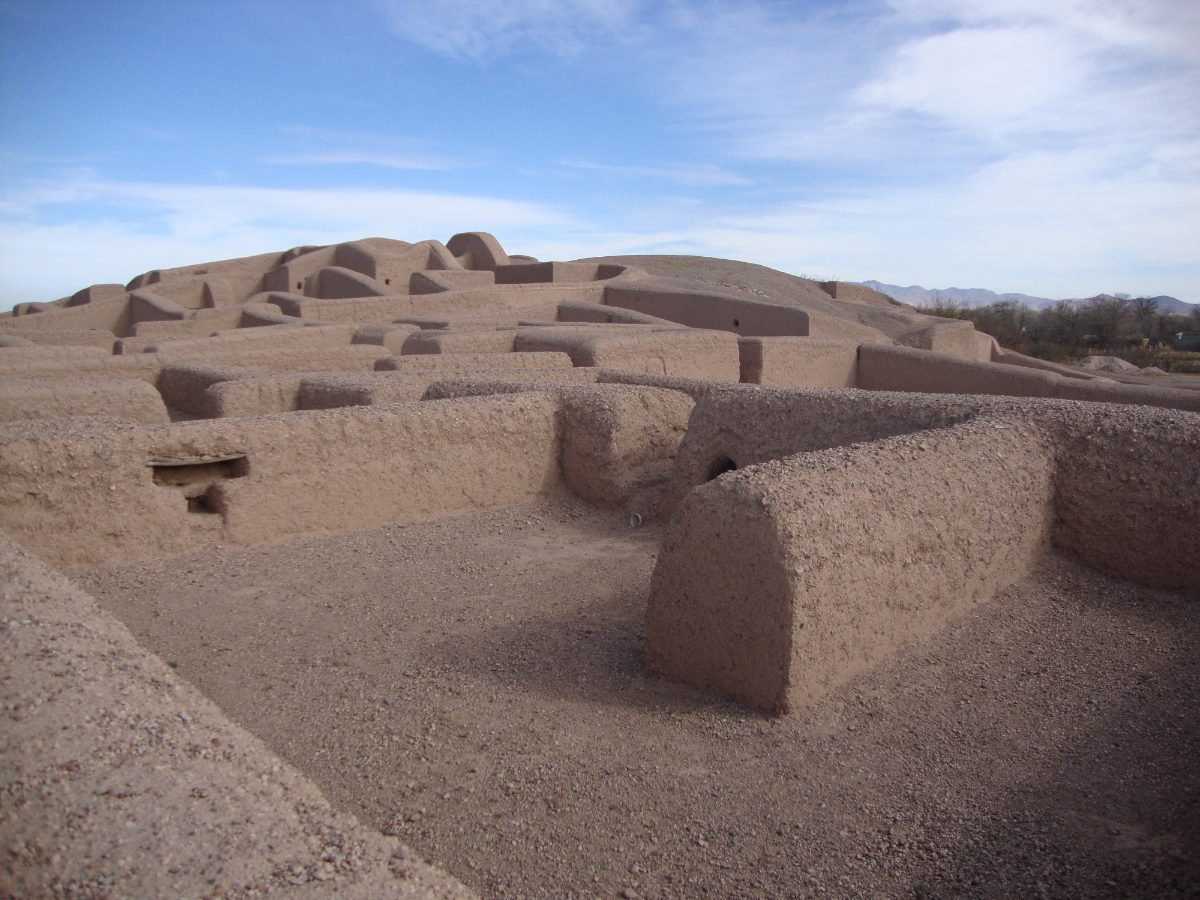
A drainage system carried wastewater away from residential areas, and excavators have identified what may be some of the earliest known indoor water and drainage infrastructure north of Mesoamerica, a level of civil engineering that stands out sharply against the simpler water management seen at most contemporary Southwestern sites.
Some excavated rooms feature stone-lined basins connected directly to the canal system, interpreted by researchers as reservoirs providing a controlled domestic water supply within individual residential complexes, a level of household water access rarely documented at other ancient sites anywhere in North America north of central Mexico.
Comparable large-scale water engineering is rare among ancient North American sites outside the irrigation canal systems built by the Hohokam culture in what is now central Arizona, and some archaeologists have speculated about possible shared knowledge or contact between these two roughly contemporary but geographically separated hydraulic engineering traditions.
Excavated canal segments show evidence of periodic maintenance and rebuilding across the city’s occupation, indicating a sustained institutional commitment to water infrastructure rather than a system built once and simply left to deteriorate, a level of long-term civic investment that parallels the sustained mound-building efforts documented at contemporary Mississippian centers far to the east.
Breeding Macaws for a Continent
Among Paquime’s most famous features are dozens of specially built adobe pens used to breed scarlet macaws and military macaws, tropical birds native to regions hundreds of miles south in Mexico’s lowland forests, kept alive at this high desert site through careful year-round care.
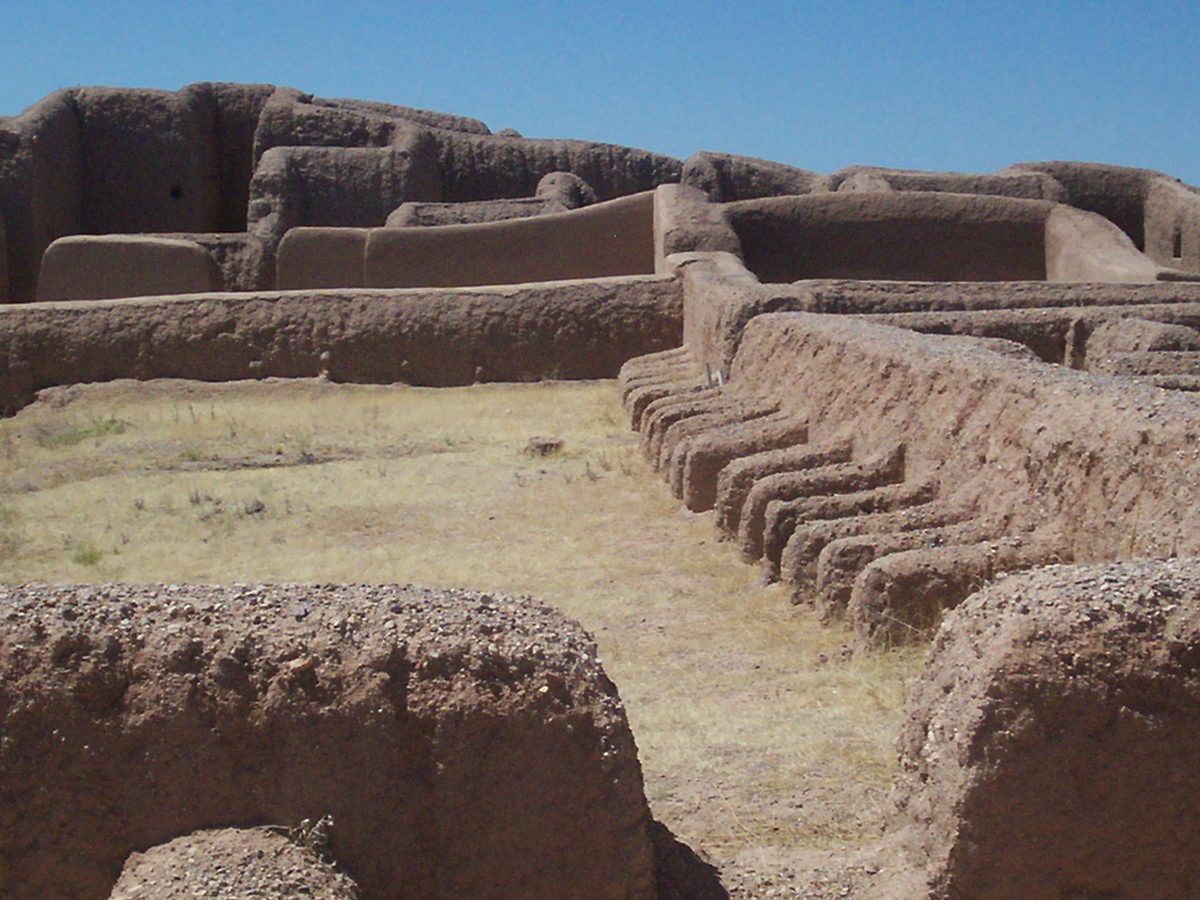
Macaw feathers were a valuable trade commodity across the ancient Southwest, used in ceremonial regalia and religious ritual as far away as the Ancestral Puebloan communities of New Mexico and Arizona, and Paquime’s breeding operation appears to have supplied a significant share of this trade, giving the city an economic and religious importance far beyond its own regional farming base.
Excavated macaw skeletons at Paquime show evidence of selective breeding and careful, sustained captive management across many generations, representing one of the most significant instances of animal husbandry practiced anywhere in the pre-Columbian societies north of central Mexico.
Beyond macaws, Paquime’s residents also raised turkeys extensively, and specialized pens for both species have been identified through careful excavation, indicating the city’s economy combined subsistence farming with organized animal husbandry serving both practical and ceremonial trade purposes across the wider Southwest and northern Mesoamerica.
Breeding scarlet macaws this far outside their native tropical range required year-round shelter, a reliable food supply including imported tropical fruits or seeds, and careful management of breeding pairs across multiple generations, representing a sustained and technically demanding undertaking rather than a casual or occasional practice.
Analysis of macaw skeletal remains recovered at the site indicates a mortality pattern consistent with intentional culling at specific ages, likely tied to feather harvesting cycles or ceremonial sacrifice, rather than natural death alone, further supporting the interpretation of Paquime as a genuine breeding and production center rather than simply a place where a small number of exotic pets were kept.
Ball Courts and Effigy Mounds
Paquime featured multiple ball courts built in the Mesoamerican style, evidence of direct cultural influence, or possibly migration, from civilizations further south where the ritual ball game held deep religious significance tied to cosmology and, in some regions, human sacrifice.
The city also built distinctive effigy mounds shaped like birds, serpents, and other animal forms, a mound-building tradition with parallels both in Mesoamerica and among some Mississippian societies far to the east, though Paquime’s specific effigy forms appear to represent a locally distinct religious tradition rather than a direct copy of either neighboring civilization.
The largest ball court at Paquime measures over 200 feet long, built with sloped earthen sides in a style closely resembling ball courts found at West Mexican sites, reinforcing the interpretation that the ritual ball game arrived at Paquime through sustained contact with civilizations to the south rather than developing independently in the region.
Effigy mounds at Paquime, shaped to represent birds and other creatures when viewed from above, were likely legible primarily as symbolic statements to the community itself rather than designed for any distant aerial vantage point, their true forms only fully appreciated through modern aerial photography and mapping techniques unavailable to the city’s own residents.
Pottery of the Casas Grandes Tradition
Casas Grandes polychrome pottery, painted in bold black, red, and cream geometric and figurative designs, is regarded as among the finest ceramic traditions of the pre-Columbian Southwest, traded widely and imitated by potters in communities well beyond the Casas Grandes valley itself.
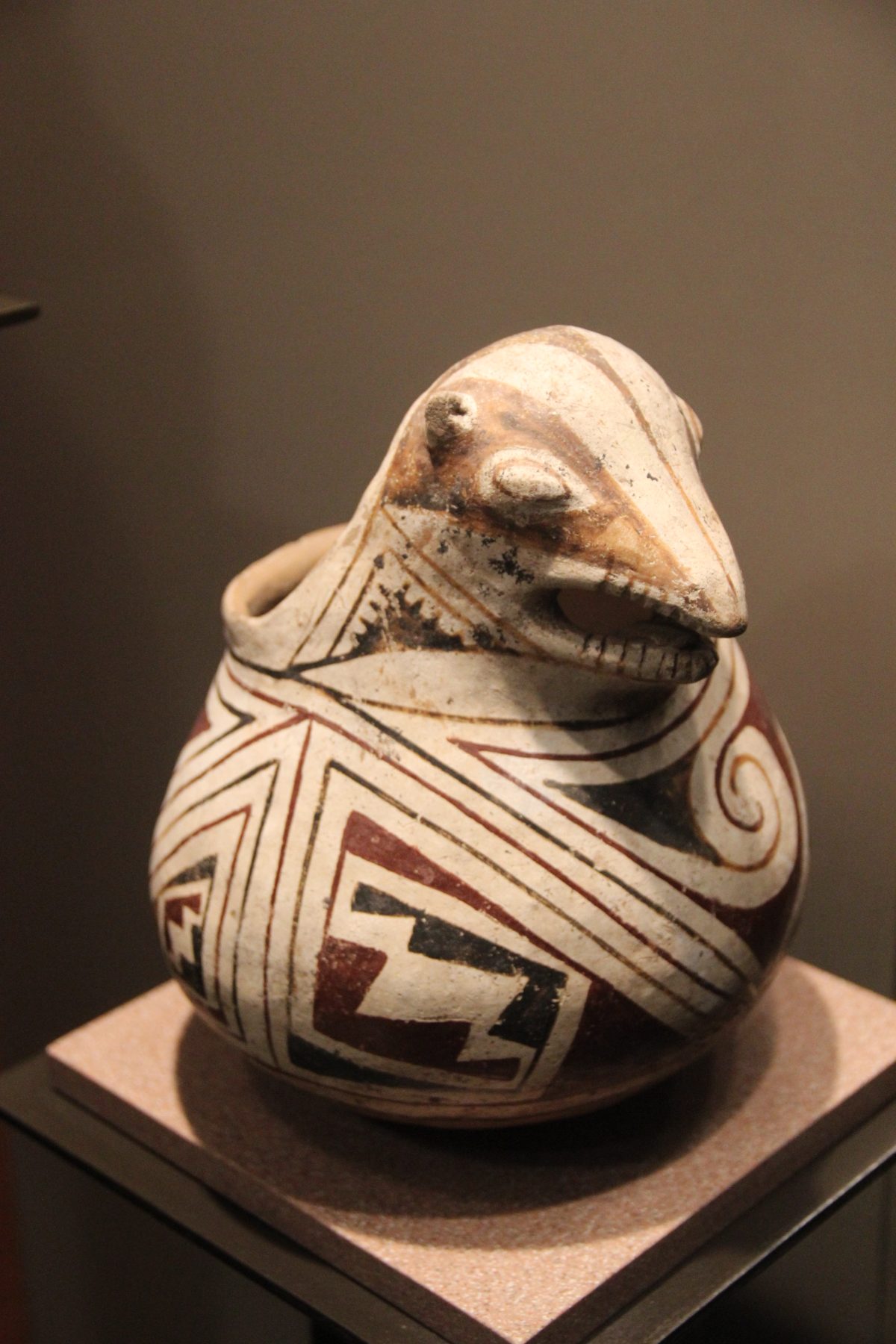
Effigy vessels shaped as human or animal figures, sometimes with elaborate painted body decoration matching known Mesoamerican and Southwestern iconographic themes, demonstrate the sophistication of Paquime’s potters and offer researchers rare visual clues about clothing, body painting, and social status among the city’s residents.
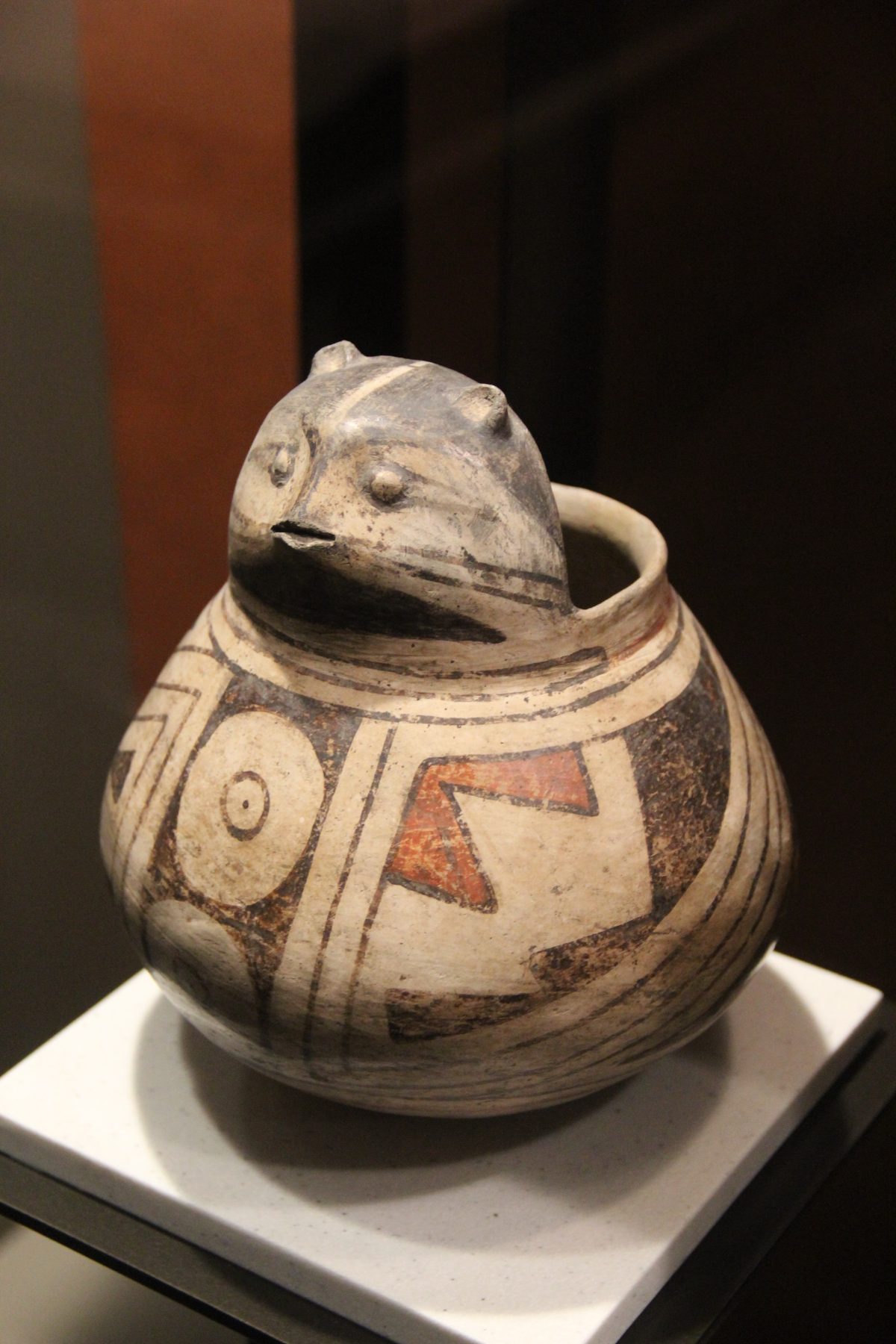
Casas Grandes pottery workshops appear to have operated at a genuinely large scale, and finished vessels have been recovered from sites throughout the American Southwest as far as central Arizona and New Mexico, physical evidence of the reach Paquime’s craft economy achieved well beyond its immediate valley.
Distinctive design elements on Casas Grandes pottery, including stepped frets, macaw and serpent motifs, and human figures rendered in a distinctly regional style, allow archaeologists to distinguish genuine Casas Grandes ceramics from later imitations produced in nearby communities once the tradition’s popularity had spread well beyond the valley itself.
Trade in finished Casas Grandes pottery moved in tandem with raw materials such as turquoise and shell, and some vessels recovered far from Chihuahua, in sites across Arizona and New Mexico, are thought to have been valued specifically as prestige imports connected to Paquime’s reputation as a center of specialized craft production and long-distance exchange.
What Language Did the People of Paquime Speak?
No written language survives from Paquime, so its spoken language must be inferred indirectly, and the region’s linguistic history is genuinely more uncertain than at many other major sites in the ancient Americas, since the Casas Grandes valley sits at a crossroads between several distinct linguistic and cultural spheres rather than squarely within one clearly continuous tradition.
Most researchers place Paquime’s population within the broader Uto-Aztecan language family, the same family that includes modern Nahuatl in central Mexico, Hopi in Arizona, and the Tarahumara (Raramuri) and Tepehuan languages still spoken today in the mountains and valleys of Chihuahua and Durango not far from the ancient city’s ruins.
Given Paquime’s documented close contact with Mesoamerican trading partners to the south, some researchers have also proposed that segments of its population may have included speakers of Mesoamerican languages such as an early Nahuan tongue, or represented a genuinely multilingual trading community, though no inscription or written record survives to confirm this directly, leaving the question honestly open rather than definitively resolved.
Linguistic reconstruction across the Uto-Aztecan family suggests its speakers originated somewhere in the northern Mexico or southwestern United States region before spreading both north toward the Great Basin and Hopi mesas and south toward central Mexico, a geographic pattern consistent with, though not conclusive proof of, an ancient Uto-Aztecan-speaking population at or near Paquime itself.
Comparative study of settlement patterns, architecture, and material culture across the wider Casas Grandes cultural sphere, which extended well beyond Paquime itself into parts of what is now the U.S. states of New Mexico and Arizona, suggests the region’s population was not linguistically uniform, further reinforcing the view that Paquime likely functioned as a genuinely multiethnic and quite possibly multilingual trading hub rather than the capital of a single unified linguistic group.
Religion, Trade, and Society
Religious life at Paquime appears to have blended Southwestern and Mesoamerican traditions distinctively, reflected in its ball courts, effigy mounds, and macaw breeding, all practices carrying strong ritual associations tied to fertility, the sun, and connections to distant, symbolically powerful lands to the south.
Trade sat at the center of Paquime’s economy and likely its political authority as well, with the city serving as a middleman controlling the flow of turquoise from the north, marine shell from the Gulf of California, copper bells and macaws from Mesoamerica, and locally produced painted pottery moving in every direction along these same routes.
Burial practices at Paquime included both cremation and interment, sometimes accompanied by valuable trade goods such as copper bells, marine shell jewelry, and fine pottery, evidence of a socially stratified community in which access to exotic imported materials marked higher status individuals within the city.
Copper bells recovered at Paquime, cast using techniques associated with West Mexican metalworking traditions, represent some of the northernmost evidence of pre-Columbian metallurgy in the Americas, traded from workshops likely located in modern Michoacan or Jalisco and carried hundreds of miles north along the same routes that brought macaws and marine shell to the city.
Social stratification at Paquime is also visible in architecture, with some residential complexes featuring larger, more elaborately constructed rooms and greater access to imported prestige goods than others, evidence of a community with meaningfully unequal access to wealth and status rather than a purely egalitarian farming settlement.
Marine shell ornaments recovered at Paquime, sourced from both the Gulf of California to the west and, more rarely, the Gulf of Mexico to the east, demonstrate the remarkable geographic reach of the trade networks the city’s merchants and artisans participated in, connecting two entirely different coastlines through a single inland desert hub.
The Fall of Paquime
Paquime’s decline began around 1450 CE, and archaeological evidence points to a violent end for at least part of the city: burned structures, scattered skeletal remains showing signs of trauma, and abandoned building complexes suggest conflict or attack contributed significantly to the city’s final collapse.
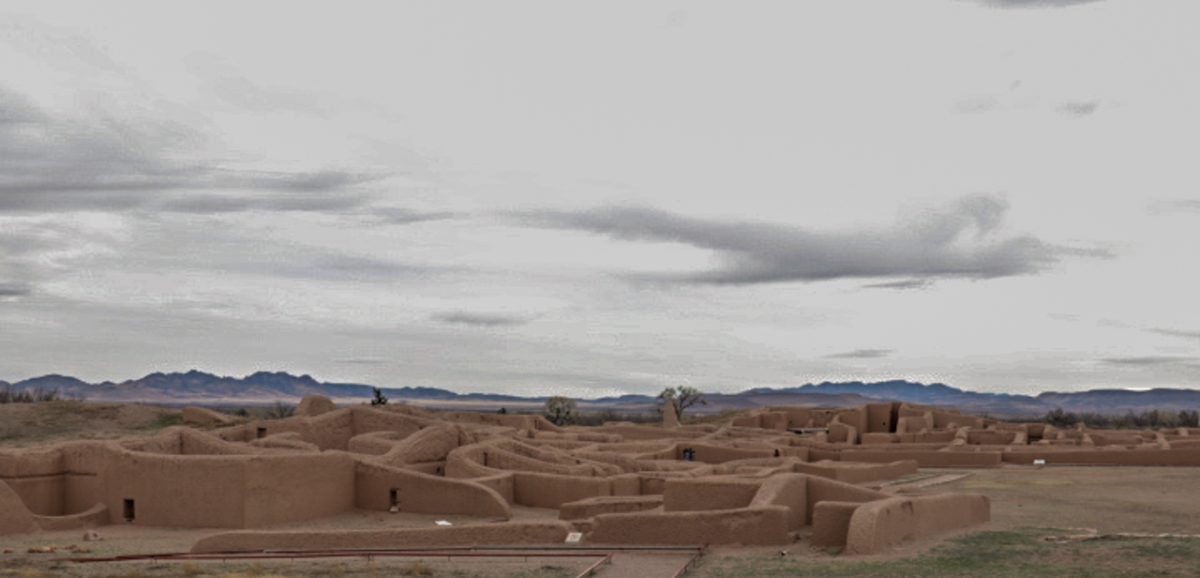
Broader regional pressures likely compounded any local conflict, including the same wave of climatic instability and drought that disrupted Ancestral Puebloan communities to the north around the same period, undermining the agricultural surplus that had allowed Paquime’s dense urban population and long-distance trade networks to flourish for over two centuries.
The descendants of the Casas Grandes cultural tradition likely persisted in the region in smaller, less centralized communities, and the Rarámuri (Tarahumara) people who live in the mountains of Chihuahua today maintain a documented, continuous cultural presence in the same broader region where Paquime once stood as one of the ancient Southwest’s most cosmopolitan cities.
Modern archaeological and conservation work at the site, recognized by UNESCO as a World Heritage Site since 1998, continues to refine understanding of the city’s final decades, with ongoing excavation revealing new detail about which portions of Paquime were destroyed by conflict and which were simply abandoned as the city’s trade networks and agricultural base collapsed.
The modern town of Mata Ortiz, located near the ancient ruins, has become internationally known for a twentieth-century revival of fine painted pottery directly inspired by ancient Casas Grandes ceramic traditions, a living artistic connection between the ancient city and the region’s contemporary population.
Understanding of Paquime’s final years remains incomplete, and current research continues to debate how much of the city’s decline should be attributed to external conflict, internal political collapse, or environmental pressures acting in combination, a question likely to remain at the center of ongoing archaeological investigation at the site for years to come.
Comparative regional chronology places Paquime’s collapse roughly alongside the broader thirteenth and fourteenth century disruptions documented at Chaco Canyon, Mesa Verde, and other major Southwestern centers, suggesting the desert Southwest as a whole experienced a period of interconnected climatic and social stress spanning several centuries rather than isolated, unrelated local crises at each individual site.
Nearby Places to Explore
Paquime sat at a genuine crossroads of ancient North American civilization, and comparing it with major centers to its north and south helps illustrate the wide trading world it once anchored.
- Chaco Canyon: The Ancient Center of the Southwest
- Mesa Verde: The Ancestral Puebloan Cliff City
- Maya Pyramids: The Secrets of El Castillo at Chichen Itza
A Bridge Between Two Worlds
Paquime remains one of the most striking demonstrations that the ancient Americas were never a set of isolated regions, but a continent laced with trade routes carrying turquoise, macaws, copper, and pottery across enormous distances, with cities like this one built specifically to manage and profit from that exchange.
Its towering adobe apartment buildings, engineered water systems, and carefully bred macaws reflect a genuinely original urban culture, one that borrowed ideas from both the Southwest and Mesoamerica while creating something distinctly its own in the high desert valleys of Chihuahua.
Modern visitors to the Paquime archaeological zone can walk among its towering adobe walls, restored canal segments, and preserved macaw pens, a tangible reminder of just how interconnected the ancient Americas truly were long before European contact reshaped the continent’s political and economic map.
You May Like
Mafra, the Palace a King Built From a Vow