In the rolling limestone hills of the Puuc region of Yucatan, far from any permanent river, lake, or stream, the Maya built one of their most architecturally refined cities. Uxmal has no cenote, no natural water source of any kind within easy reach, and yet its builders raised elegant, elaborately carved palaces and a uniquely rounded pyramid that still draws visitors past dozens of better-watered ruins elsewhere in Mexico.
Uxmal reached its height during the Terminal Classic period, roughly 700 to 1000 CE, later than the great lowland Maya cities of Guatemala’s Petén region, and its distinctive architectural style, known as Puuc after the hill region where it developed, produced some of the most technically accomplished stone mosaic facades anywhere in the Maya world.
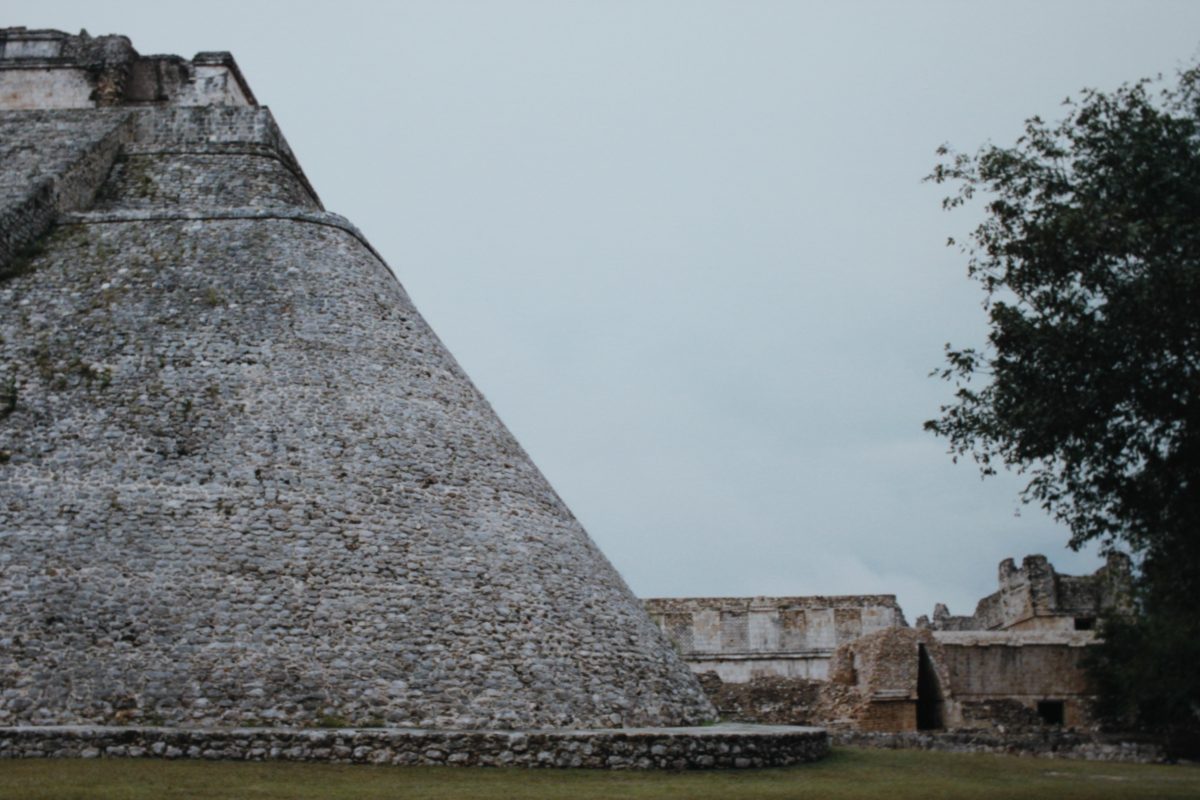
Table of Contents
- Arriving in a Land Without Rivers
- The Legend and Reality of the Pyramid of the Magician
- The Nunnery Quadrangle: A Courtyard of Carved Stone
- The Governor’s Palace and a City Aligned to Venus
- What Language Did Uxmal’s Builders Speak?
- Chaac, Rain, and a City Built on Thirst
- The House of the Turtles and the Puuc Style
- The Xiu Dynasty and Daily Life at Uxmal
- Drought, Decline, and Abandonment
- Rediscovery and Visiting Uxmal Today
- Nearby Places to Explore
- Closing Thoughts
Arriving in a Land Without Rivers
The absence of surface water in the Puuc hills is not a minor detail of local geography, it is the single fact that shaped nearly every aspect of how Uxmal’s builders designed their city and organized their religious life. Without rivers, lakes, or the deep sinkhole cenotes that supplied water to cities elsewhere on the Yucatan Peninsula, Uxmal’s population depended entirely on chultunes, artificial underground cisterns carved into bedrock and plastered to hold rainwater collected during the wet season.
Archaeologists have identified hundreds of these cisterns scattered across the site, ranging from small household chultunes to larger communal reservoirs near the main plazas, evidence of a sophisticated water management system that had to function flawlessly given how little margin for error a drought year would leave a population with no alternative source.
This precarious water situation explains why rain imagery dominates Uxmal’s architecture so completely, a theme explored further below, and it also explains why the city’s ultimate decline is so frequently linked by researchers to periods of prolonged drought recorded in regional climate data.
The name Uxmal is generally interpreted as meaning something close to ‘thrice built’ in Yucatec Maya, a reference some scholars connect to the multiple rebuilding phases visible in structures like the Pyramid of the Magician, though the exact etymology remains debated among linguists who study the peninsula’s place names.
Rainfall in the Puuc hills, when it does come, tends to arrive in a concentrated wet season followed by a long dry stretch, meaning even in a normal year Uxmal’s population had to store enough water during a few wet months to last through most of the calendar, a margin-thin arrangement that left little room for a single failed rainy season, let alone a multi-year drought.
The Legend and Reality of the Pyramid of the Magician
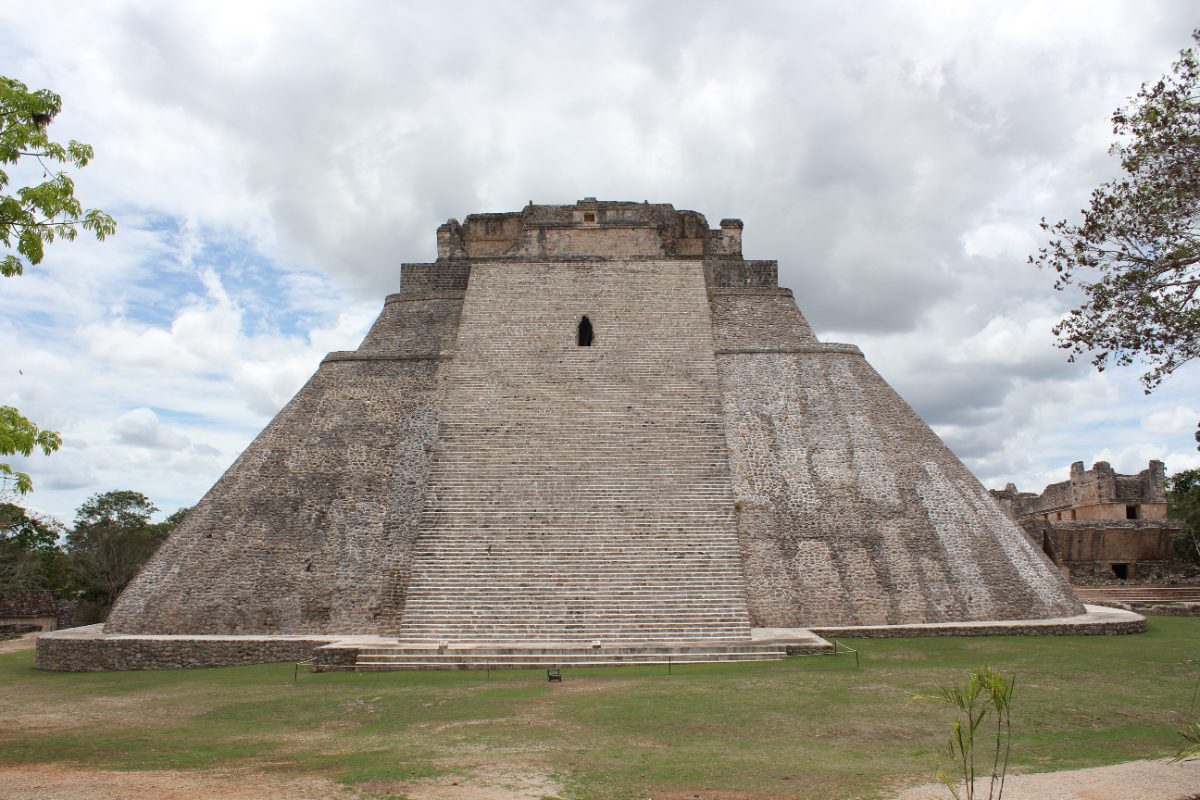
Uxmal’s tallest structure, standing nearly 35 meters high, breaks from the standard rectangular Mesoamerican pyramid plan with rounded, almost elliptical corners rising through five superimposed temple phases, each built directly over the last. Local legend, recorded by Spanish chroniclers and still told in the region today, credits its construction to a dwarf born from an egg laid by a witch, who supposedly built the entire pyramid in a single magical night to win a contest with the city’s ruler, giving the structure its popular name, the Pyramid of the Magician.
Archaeological excavation tells a less magical but equally striking story. Rather than a single construction event, the pyramid represents at least five distinct building phases spanning centuries, with later rulers repeatedly encasing earlier temples inside new outer shells rather than demolishing them, a practice common across Mesoamerica but executed here with unusual structural elegance given the rounded profile that had to be maintained through each rebuilding.
The westward-facing staircase of the final temple phase, unusually steep even by Maya standards, aligns with the setting sun during certain points in the agricultural calendar, reinforcing the interpretation that the pyramid’s ritual function was tied closely to seasonal and agricultural timing, fitting neatly with the water-anxious culture that built it.
Steep, narrow staircases like the one on the Pyramid of the Magician’s western face appear at several Puuc sites and are sometimes explained less as a purely religious choice and more as a practical way to maximize temple height on a comparatively small ground footprint, since the Puuc region’s rocky terrain limited how far builders could easily expand a pyramid’s base.
The Nunnery Quadrangle: A Courtyard of Carved Stone
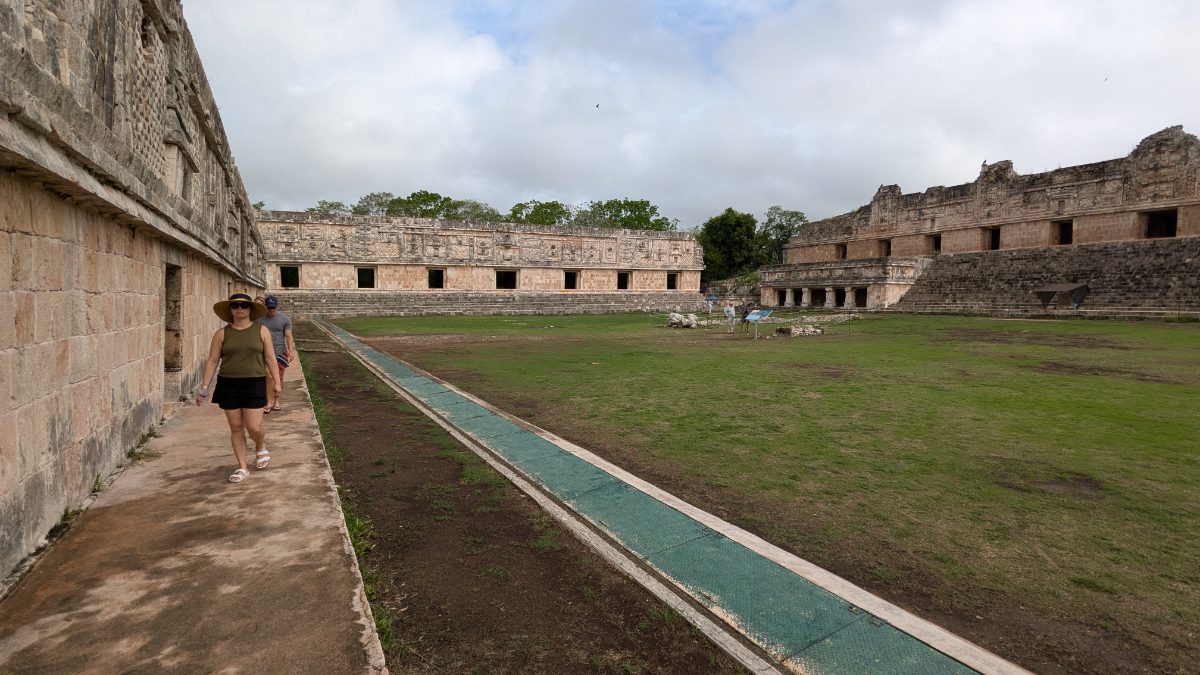
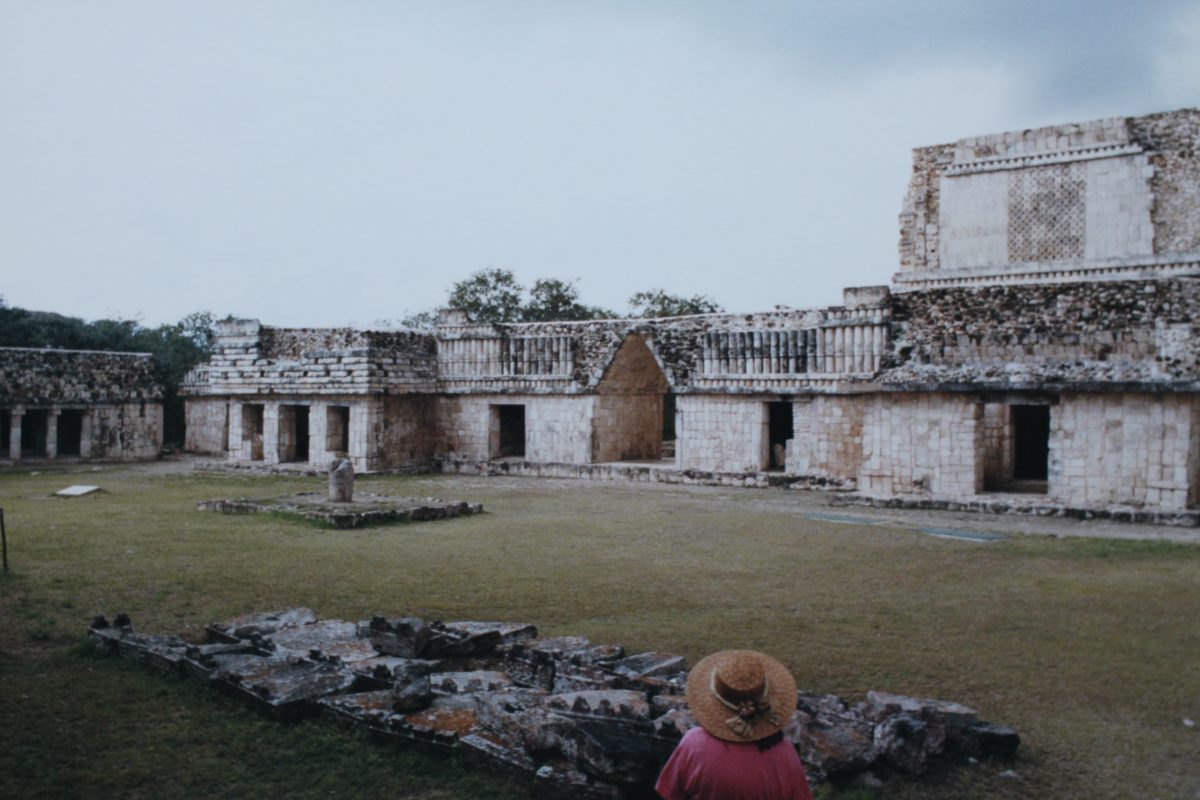
West of the pyramid lies the Nunnery Quadrangle, a name given by Spanish colonizers who thought its many small chambers resembled a convent, though its actual function was almost certainly administrative or elite residential rather than religious seclusion in the European sense. Four separate buildings enclose a rectangular courtyard, each facade covered in geometric mosaic stonework of a density and precision rarely matched elsewhere in the Maya region.
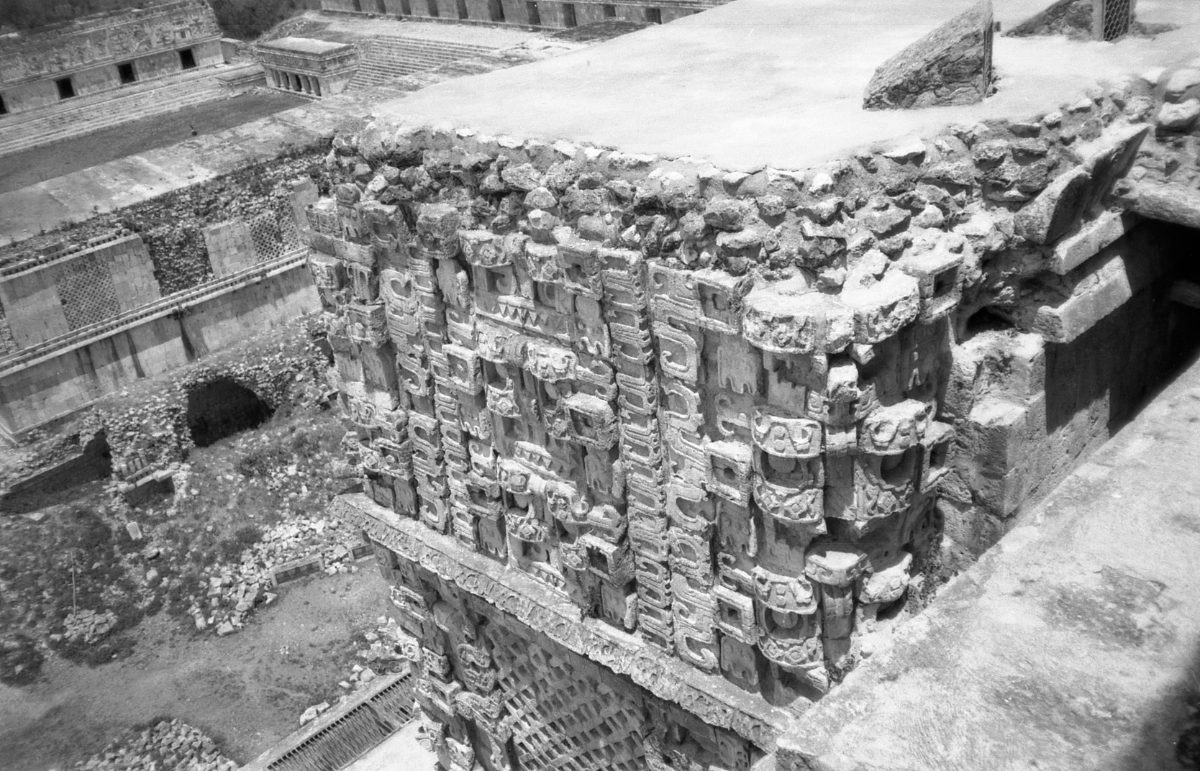
The upper facades combine lattice-like fretwork, representations of Maya thatched huts rendered in stone, coiled serpents, and repeated masks of the rain god Chaac, his hooked nose curling outward from the wall in a motif repeated so often across Uxmal that it has become the site’s visual signature. Lower wall sections remain comparatively plain, a stylistic convention typical of Puuc architecture that concentrates decorative investment on the upper portions most visible from the courtyard below.
Assembling these mosaic facades required cutting thousands of individually shaped stone elements to fit together like a three-dimensional puzzle, a level of stone-working precision that speaks to a highly organized labor force of skilled masons working under close architectural supervision, quite different from more improvisational construction methods documented at some other Mesoamerican sites.
The four buildings of the Nunnery Quadrangle differ subtly in their decorative programs, with the north building generally regarded as the most elaborate and the earliest of the four, suggesting the complex was built incrementally over multiple construction phases rather than as a single unified project completed all at once.
Some sections of the quadrangle’s mosaic work include stepped-fret patterns closely resembling motifs found at Xochicalco and other central Mexican sites, a stylistic echo that has led some researchers to propose limited long-distance contact or shared artistic influence between the Puuc region and central Mexico during the Terminal Classic period, though the exact mechanism of that connection remains unclear.
The Governor’s Palace and a City Aligned to Venus
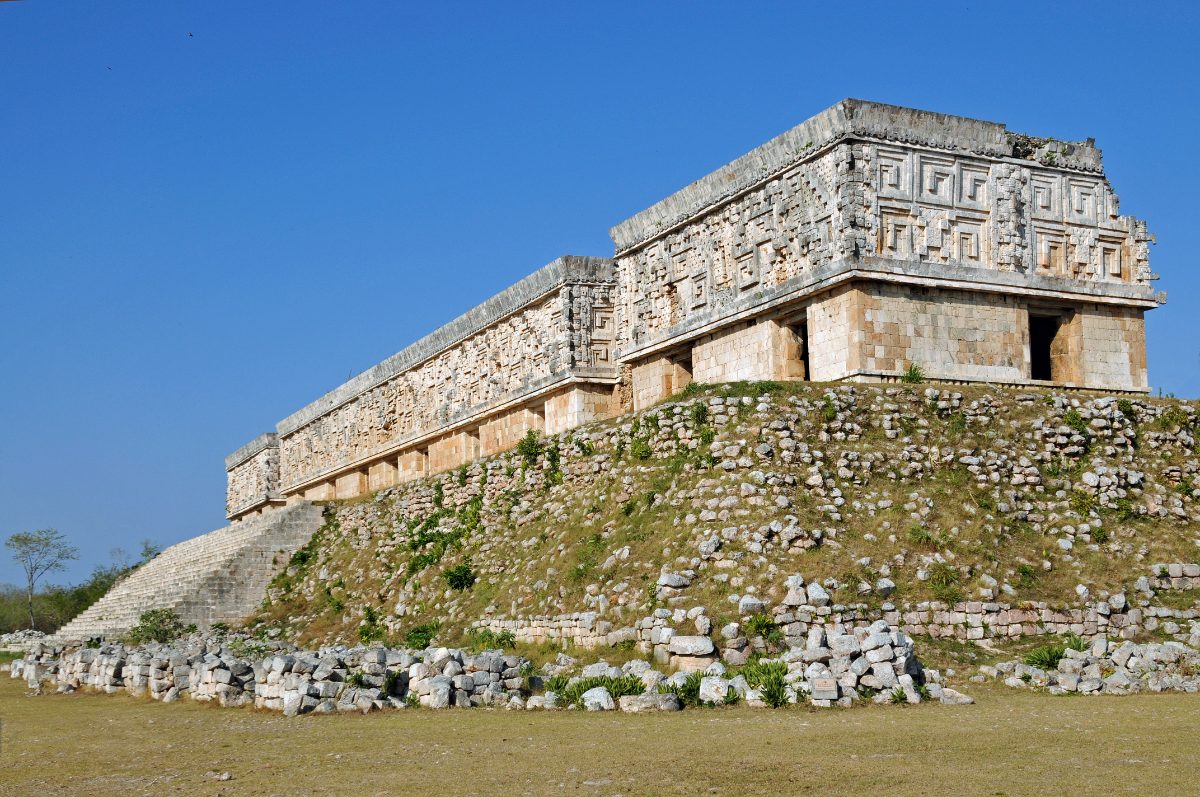
South of the Nunnery Quadrangle stands the Governor’s Palace, widely regarded by architectural historians as one of the finest buildings in ancient Mesoamerica. Nearly one hundred meters long, raised on an artificial platform, and covered with an even more elaborate mosaic frieze than the Nunnery Quadrangle, the palace likely served as the residence and administrative seat of Uxmal’s ruling elite.
Its central doorway aligns with the rising point of Venus at its southernmost extreme on the horizon, a celestial event tracked carefully across Mesoamerica because of Venus’s association with warfare and specific ritual timing in several Maya and central Mexican traditions. This alignment required precise long-term astronomical observation before construction began, evidence that Uxmal’s architects and priests, much like their counterparts at Xochicalco and other Epiclassic-period cities elsewhere in Mexico, integrated astronomical knowledge directly into monumental building design rather than treating it as a separate scholarly pursuit.
A stone jaguar throne sits before the palace’s main platform, likely used for royal ceremonies and public appearances by Uxmal’s ruler, reinforcing the building’s role as both a functional residence and a stage for the performance of political authority.
Some archaeoastronomers have proposed that the Governor’s Palace’s Venus alignment may have coincided with specific historical events recorded, however indirectly, in surviving inscriptions, though the fragmentary nature of Uxmal’s hieroglyphic record makes definitive correlation between the architecture and specific dated events difficult to establish with full confidence.
The jaguar throne positioned before the palace platform is carved as a double-headed creature rather than a single figure, a motif with parallels at other Maya sites where jaguar imagery consistently signals royal power and connection to underworld forces associated with rulership and divine sanction.
What Language Did Uxmal’s Builders Speak?
Uxmal’s builders almost certainly spoke Yucatec Maya, the language still spoken today by several hundred thousand people across the Yucatan Peninsula, making it one of the more linguistically well-documented ties between an ancient Mesoamerican city and its living descendant language. Yucatec belongs to the wider Mayan language family, but its specific branch developed largely in isolation on the peninsula, distinct from the Ch’olan languages spoken in the Classic-period cities of Palenque and the Petén lowlands to the south.
Hieroglyphic inscriptions at Uxmal, though less extensive and less well preserved than those at cities like Palenque or Copán, use conventions consistent with Yucatec Maya linguistic patterns, and colonial-era chronicles collected directly from Yucatec-speaking communities describe Uxmal and the surrounding Puuc cities as part of their own ancestral history, providing a rare case of reasonably direct linguistic and cultural continuity stretching from the ancient city to documented historical populations.
This continuity does not mean the language remained frozen for a thousand years, since Yucatec Maya has certainly evolved considerably since Uxmal’s peak, but it does mean that modern Yucatec speakers represent a more direct linguistic through-line to Uxmal’s builders than can be claimed for many other ancient Mesoamerican cities, where the connection between an ancient population and any specific modern language remains far murkier.
Modern Yucatec Maya speakers, numbering several hundred thousand across Yucatan, Campeche, and Quintana Roo states, maintain rich oral traditions and continue agricultural practices in some ways reminiscent of ancient patterns, giving researchers a living linguistic and cultural resource that helps interpret aspects of Uxmal’s iconography that would otherwise remain opaque without any surviving direct commentary from the city’s original inhabitants.
Chaac, Rain, and a City Built on Thirst
Given the total absence of surface water in the surrounding hills, it should come as no surprise that Chaac, the rain god, dominates Uxmal’s religious imagery more thoroughly than at almost any other Maya city. His hook-nosed mask appears repeated in long rows along the Nunnery Quadrangle and Governor’s Palace facades, sometimes stacked vertically in corner arrangements that create dramatic three-dimensional profiles jutting outward from the building corners.
Religious ceremony at Uxmal almost certainly centered heavily on securing adequate rainfall, and researchers believe the chultun cisterns themselves may have carried ritual as well as practical significance, their construction and maintenance bound up with religious obligation rather than treated as purely secular infrastructure. Some smaller cisterns near temple structures show evidence of ceremonial deposits, suggesting water storage sites doubled as places of offering.
This intense religious focus on rain and drought anxiety sets Uxmal’s spiritual life apart from cities built near reliable water sources, where agricultural ritual could afford to address a broader range of concerns. At Uxmal, the stakes of failed rainfall were existential in a way that shaped art, architecture, and presumably the rhythm of religious calendar observance throughout the city’s history.
Similar Chaac-mask-heavy facades appear at the nearby Puuc sites of Kabah and Sayil, reinforcing the idea that rain anxiety and its associated religious iconography were shared concerns across the entire Puuc region rather than a preoccupation unique to Uxmal alone.
Beyond architectural decoration, Chaac appears in surviving Yucatec Maya oral tradition as a figure who could be petitioned directly through specific ceremonies, some of which colonial-era Spanish clergy documented while attempting, largely unsuccessfully, to suppress what they viewed as pagan rain-petitioning practices among Yucatec communities long after Uxmal itself had ceased to function as a political center.
The House of the Turtles and the Puuc Style
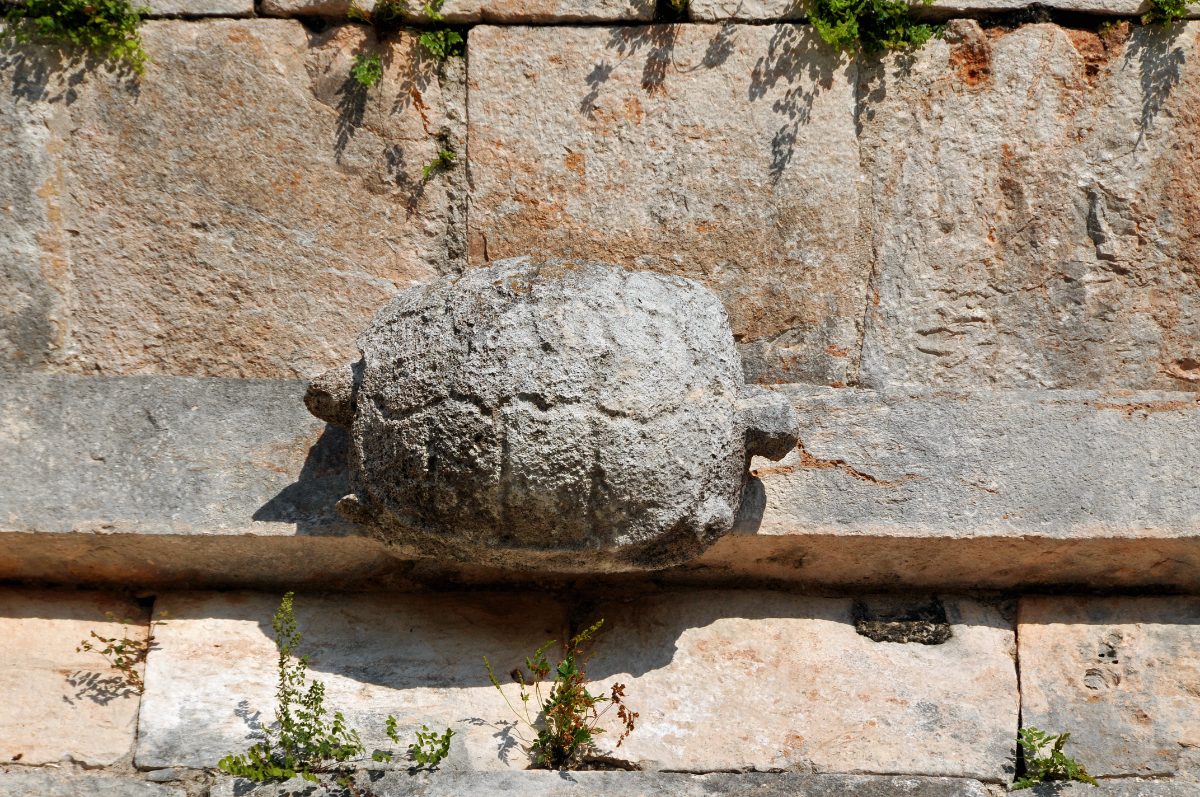
The House of the Turtles takes its name from a row of carved stone turtles running along its cornice, a motif tied in Maya belief to the earth and, notably, to rain and drought mythology, since turtles were associated in some Mesoamerican traditions with the earth’s surface cracking open during drought, adding another layer to Uxmal’s persistent water-related iconography.
Architecturally, the House of the Turtles exemplifies the restrained side of Puuc style, with plain lower walls and a comparatively simple upper cornice frieze compared to the dense mosaic work seen on the Nunnery Quadrangle and Governor’s Palace, demonstrating the stylistic range Puuc architects commanded, from ornate ceremonial facades to more understated elite residential buildings.
Puuc style more broadly is recognized across the wider region beyond Uxmal itself, appearing at nearby sites like Kabah, Sayil, and Labna, all of which shared trade connections, artistic conventions, and quite likely political alliances with Uxmal during the Terminal Classic period, forming a loose regional network of Puuc cities rather than a single centralized empire.
Excavations around the House of the Turtles have recovered ceramic fragments and small offering caches consistent with ongoing ritual use of the structure well into Uxmal’s later occupation phases, suggesting the building retained religious significance even as the city’s broader political fortunes shifted over time.
The contrast between the House of the Turtles’ relative simplicity and the dense ornamentation of its immediate neighbors illustrates a broader point about Puuc urban planning: architects clearly made deliberate choices about where to concentrate the most labor-intensive mosaic work, reserving the highest level of decorative investment for buildings with the greatest ceremonial or political visibility.
The Xiu Dynasty and Daily Life at Uxmal
Later Yucatec Maya chronicles and colonial-era documents associate Uxmal closely with the Xiu family, a prominent Yucatec Maya lineage that claimed descent from the city’s ancient rulers and continued to wield significant political influence in the region well into the Spanish colonial period, providing a rare documented link between an ancient Maya ruling dynasty and named historical descendants.
Daily life for Uxmal’s non-elite population likely centered on intensive agriculture adapted to the thin, rocky Puuc soils, supplemented by the careful water management the chultun system allowed. Household compounds excavated around the ceremonial core show evidence of craft production, including textile work and stone tool manufacture, alongside the small domestic shrines and offering deposits typical of Maya households throughout the peninsula.
Political organization at Uxmal’s height likely extended influence over a network of smaller satellite settlements throughout the Puuc hills, with Uxmal functioning as the dominant regional capital coordinating trade, water management knowledge, and religious ceremony across a cluster of allied or subordinate Puuc communities.
Colonial-era Xiu family documents, including genealogical records compiled specifically to assert land claims and political status under Spanish rule, represent some of the most valuable indigenous-authored historical sources surviving from the Yucatan Peninsula, offering a rare Maya perspective on regional history even though they were produced generations after Uxmal’s monumental core had already fallen into disuse.
Archaeological surveys of the residential zones surrounding Uxmal’s ceremonial core have identified clear status distinctions in house construction quality and burial goods, indicating a stratified society with a substantial gap between elite compounds near the main plazas and more modest dwellings on the settlement’s periphery.
Drought, Decline, and Abandonment
Uxmal’s decline, like that of many Terminal Classic Maya cities, remains a subject of active research rather than settled consensus, but the evidence increasingly points toward severe, prolonged drought as a major contributing factor, a conclusion that fits naturally with a city whose entire water infrastructure depended on rainfall with essentially no fallback source.
Paleoclimate records reconstructed from lake sediment cores and cave formations across the Yucatan Peninsula show evidence of significant drought episodes coinciding with the broader Terminal Classic collapse affecting Maya cities across the region during the ninth and tenth centuries. For a city as water-vulnerable as Uxmal, even a moderate multi-year drought could have proven catastrophic in ways that better-watered cities might have weathered more easily.
Political fragmentation likely compounded environmental pressure, as the loose network of allied Puuc cities that had supported trade and mutual security during Uxmal’s peak may have unraveled under the stress of failing harvests, leaving individual cities increasingly isolated and vulnerable. By the time of Spanish contact in the sixteenth century, Uxmal’s monumental core had been abandoned for centuries, though the surrounding region remained inhabited by Yucatec Maya communities who preserved knowledge of the site’s importance.
Comparative studies across the broader Terminal Classic Maya collapse note that cities with reliable year-round water sources, such as those situated directly beside major cenotes, generally show somewhat different collapse timelines than water-vulnerable Puuc cities like Uxmal, lending further indirect support to drought as a significant contributing factor in the Puuc region’s political decline specifically.
Some researchers have also suggested that increasing competition for control of remaining productive agricultural land during drought years may have intensified conflict between previously allied Puuc cities, turning what began as an environmental crisis into a political and possibly military one as the region’s population contracted.
Rediscovery and Visiting Uxmal Today
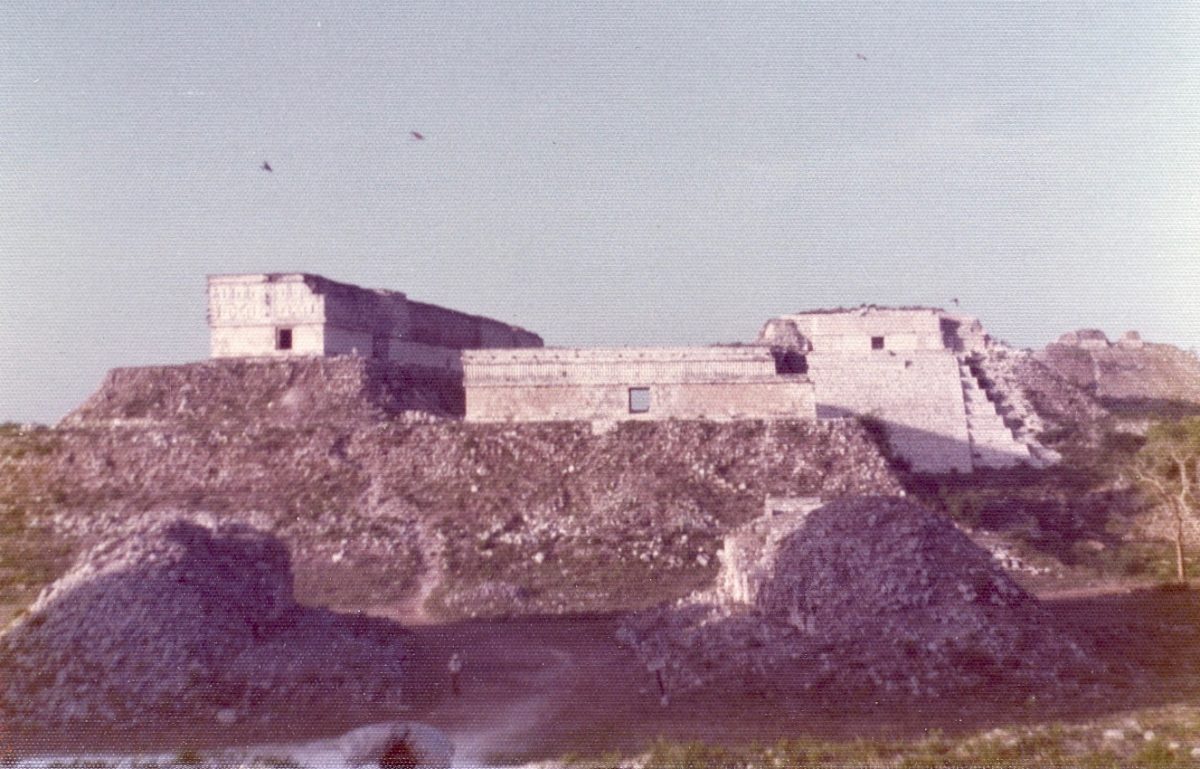
European awareness of Uxmal grew substantially following visits by explorers and illustrators in the nineteenth century, most famously John Lloyd Stephens and artist Frederick Catherwood, whose detailed engravings introduced Uxmal’s mosaic architecture to a wide international audience decades before rigorous archaeological excavation began at the site.
Systematic Mexican-led excavation and restoration efforts through the twentieth century stabilized the Pyramid of the Magician, the Nunnery Quadrangle, and the Governor’s Palace, and UNESCO added Uxmal to the World Heritage List in 1996, citing both the artistic sophistication of its Puuc architecture and its significance for understanding Terminal Classic Maya civilization on the Yucatan Peninsula.
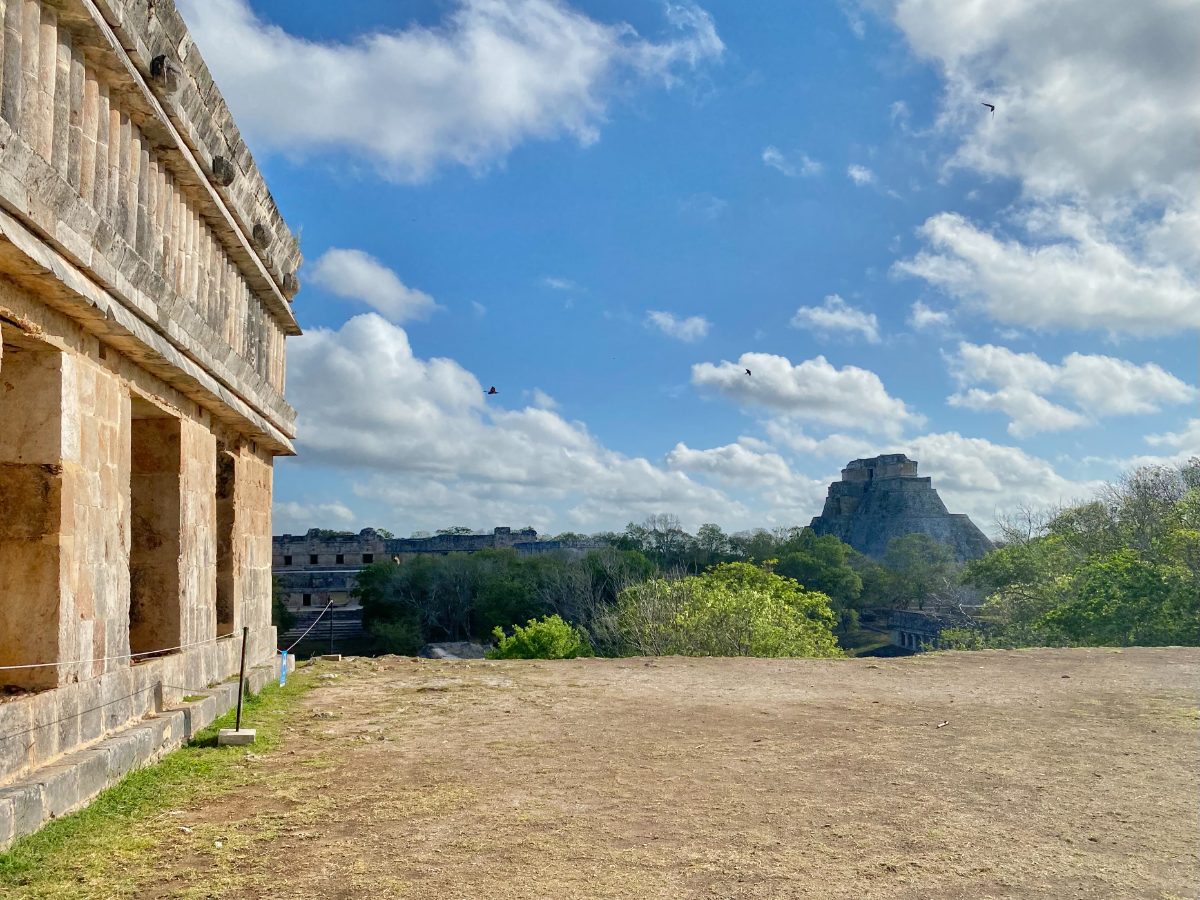
Today Uxmal remains somewhat less crowded than Chichén Itzá despite comparable architectural significance, giving visitors a chance to walk the Nunnery Quadrangle courtyard and stand before the Governor’s Palace facade without the density of tour groups common at Yucatan’s most famous ruin. An evening light and sound show at the site allows visitors to see the mosaic facades illuminated after dark, adding a modern layer of spectacle to a city whose builders clearly valued visual drama in their own right.
Stephens and Catherwood’s nineteenth-century published accounts of Uxmal proved enormously influential in shaping European and North American public awareness of ancient Maya civilization generally, arriving at a moment when many educated readers still assumed the ruins scattered across Mexico and Central America had been built by populations entirely unrelated to the Maya communities Spanish colonizers had encountered centuries earlier.
Nearby Places to Explore
Uxmal’s Terminal Classic prominence connects it to a wider network of contemporary and neighboring Maya and Mexican cities. The following related sites, covered elsewhere on this site, offer useful comparison points for understanding Uxmal’s place in ancient Mesoamerican history.
- Maya Pyramids: The Secrets of El Castillo at Chichén Itzá
- Palenque: The Maya City of Pakal’s Hidden Tomb
- Monte Alban: The Zapotec Capital Carved Into a Mountain
Closing Thoughts
Uxmal demonstrates how thoroughly geography can shape civilization. Denied any permanent water source, its builders channeled that scarcity into some of the most refined stone architecture the Maya world ever produced, covering their palaces in the repeated face of a rain god they depended on absolutely. The rounded Pyramid of the Magician, the mosaic-covered Nunnery Quadrangle, and the Venus-aligned Governor’s Palace together represent a city that met genuine environmental precarity with remarkable engineering, astronomical, and artistic sophistication.
When the rains eventually failed for long enough, that same precarity likely contributed to Uxmal’s decline, but the Yucatec Maya descendants of its builders never entirely lost their connection to the site, preserving through oral tradition and lineage claims a thread of continuity rare among the great ruined cities of the ancient Americas.


One thought on “Uxmal Rose From the Land Where No River Ever Flowed”