Most ancient Maya cities went silent centuries before the first European ships reached the Caribbean. Lamanai did not. Perched on the shore of the New River Lagoon in northern Belize, this city was still inhabited, still holding markets and ceremonies, when Spanish missionaries arrived to build a church on its outskirts in the sixteenth century, making it one of the longest continuously occupied settlements anywhere in the Maya world.
That unbroken thread, stretching from roughly 1500 BCE well into the colonial era and beyond, gives Lamanai a different character than the abandoned Classic-period capitals that dominate most discussions of Maya history. Here, the story does not end with a mysterious collapse; it keeps going, through conquest, disease, rebellion, and eventually sugar plantations.
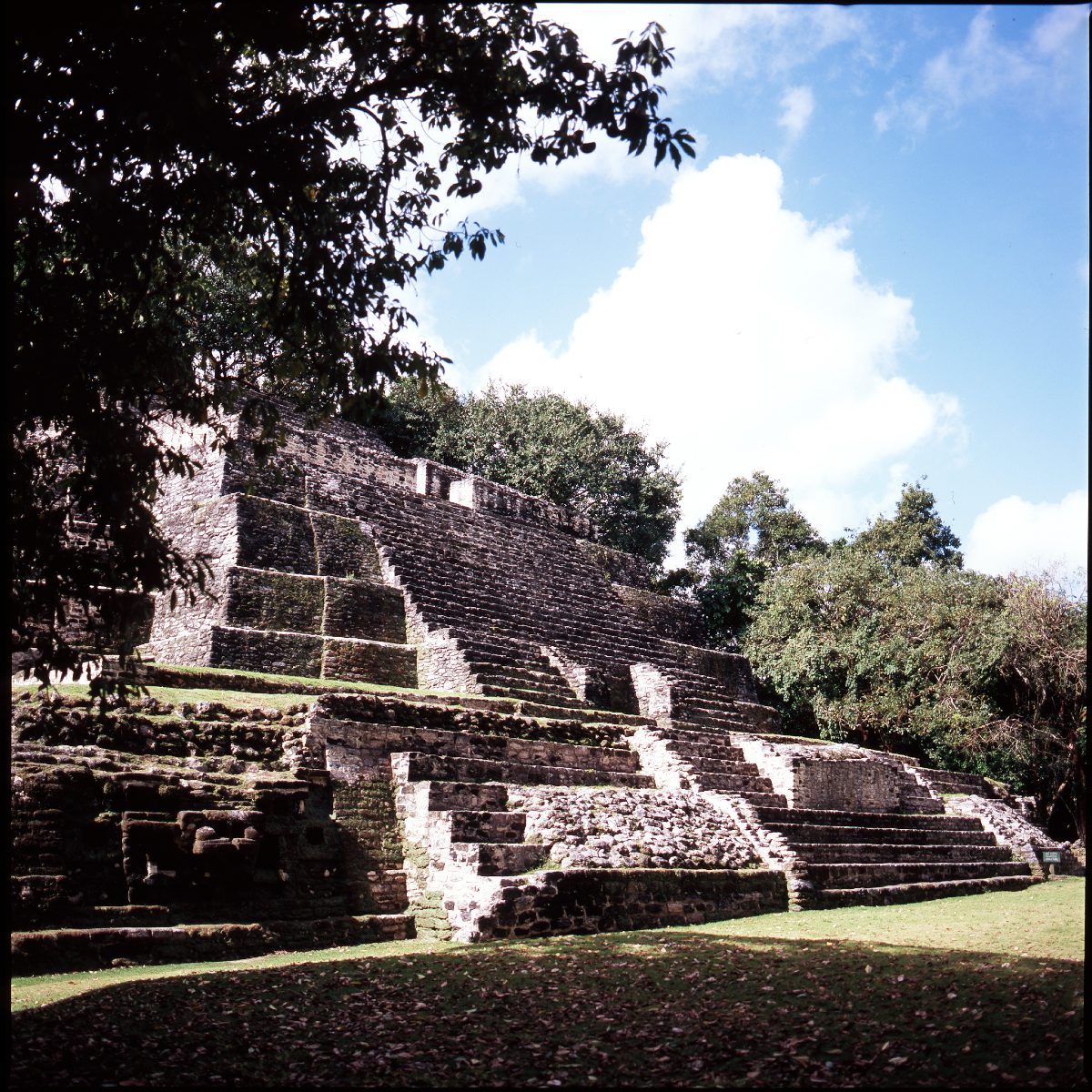
Table of Contents
- A City on the Lagoon
- The Name That Survived
- The High Temple
- Jaguars and Masks
- What Language Was Spoken at Lamanai?
- A Curious Ballcourt Offering
- Surviving the Classic Collapse
- Spanish Churches and Colonial Contact
- Sugar Mills and Later History
- Excavation and Visiting Lamanai Today
- Nearby Places to Explore
A City on the Lagoon
Lamanai sits in Belize’s Orange Walk District, strung along the western bank of the New River Lagoon, a freshwater body that connects, via the New River, all the way to the Caribbean coast. That waterway access made Lamanai a natural hub for trade and travel long before roads existed, linking the city to both inland Maya territory and coastal exchange networks.
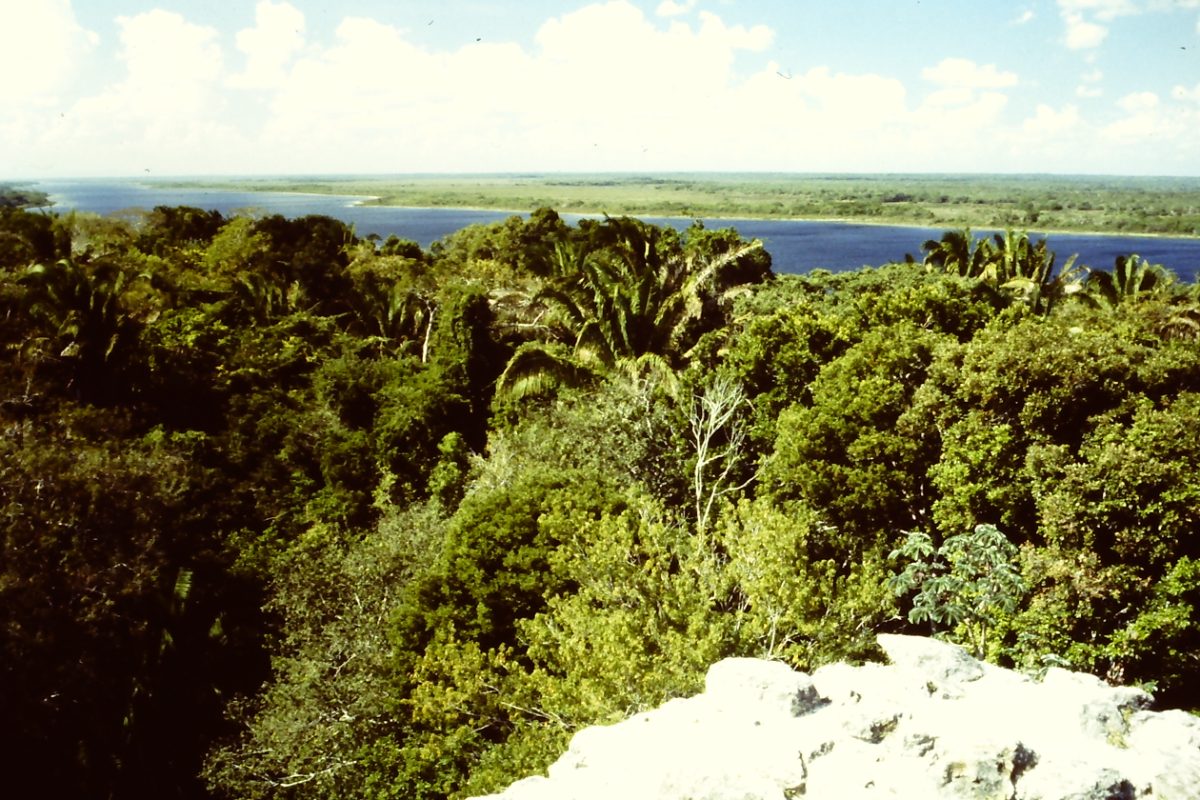
Unlike many lowland cities built around a single dry-season water source, Lamanai never had to worry about drought the way inland neighbors like Caracol did. Its lagoon-side position provided a stable water supply year-round, likely one reason the settlement managed to persist for roughly three thousand years without the kind of prolonged abandonment seen elsewhere.
Modern visitors sometimes assume waterfront settlements were an afterthought in Maya urban planning, but Lamanai’s founders clearly built their entire settlement strategy around lagoon access from the very beginning, orienting major structures toward the water and relying on canoe traffic for both everyday transport and long-distance trade in obsidian, jade, and salt.
The lagoon also shaped Lamanai’s diet and daily economy in ways archaeologists can trace directly through excavated food remains, with fish bones, freshwater turtle shell, and aquatic bird remains appearing throughout household refuse deposits, evidence of a population that drew heavily on the water for protein alongside the maize, beans, and squash grown in surrounding fields.
That reliable water access likely also insulated Lamanai from some of the worst effects of the droughts that hit inland Maya territory hardest, since a lagoon fed by an extensive watershed does not empty out in a single bad rainy season the way a small reservoir or seasonal water source might, giving the city a buffer inland cities simply lacked.
The Name That Survived
Almost every ancient Maya city known today carries a name assigned by Spanish colonizers, modern explorers, or local landowners rather than the name its own people used. Lamanai is a rare exception. Early colonial-era documents recorded a local place name close to Lama’anayin, which colonial missionaries rendered as Lamanai, and which scholars believe derives from a Maya phrase referencing a submerged crocodile.
Crocodile imagery does turn up repeatedly at the site, carved into stone and molded into stucco, lending some credibility to the connection, though the exact original meaning remains debated among linguists. Whatever the precise translation, the survival of any authentic ancient name at all sets Lamanai apart from sites like Caracol or Xochicalco, whose original names were lost and had to be guessed at from later hieroglyphic references.
The persistence of this one authentic place name also offers a useful reminder about how much of what the public knows as ‘Maya history’ is filtered through later colonial record-keeping, translation, and guesswork, rather than direct, unbroken transmission from the ancient world to the present.
Comparable naming puzzles crop up across the Maya world, where emblem glyphs sometimes preserve a city’s ancient title in hieroglyphic form even when no Spanish document happens to record it phonetically, leaving epigraphers to reconstruct pronunciation from sign values rather than colonial transcription, a much less certain process than the direct documentary trail available for Lamanai.
Visitors who learn this backstory often find it changes how they read the site’s crocodile motifs, transforming what might otherwise look like generic jungle imagery into a direct, literal echo of the very name the city’s own inhabitants once used to describe their home on the lagoon.
The High Temple
The site’s largest structure, known simply as the High Temple, rises about 33 meters above the surrounding plain, making it one of the tallest securely dated Preclassic-period buildings anywhere in the Maya lowlands. Construction on an early version of the temple began centuries before the Classic period cities most visitors associate with towering pyramids had even been founded.
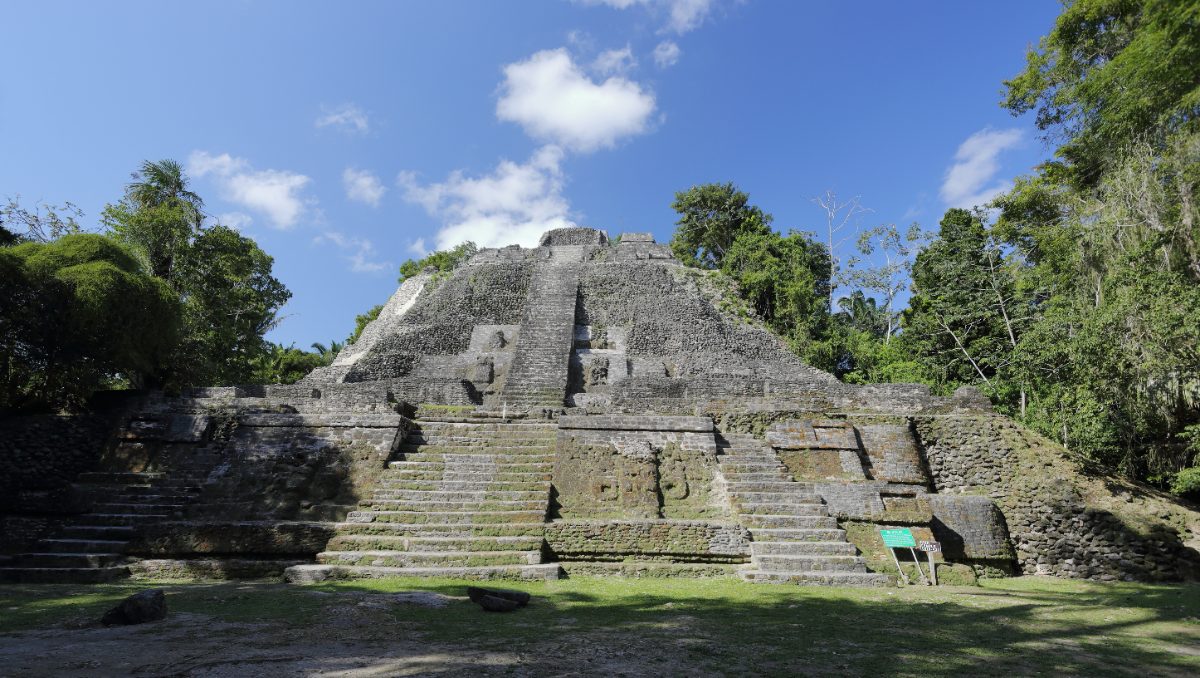
Climbing the High Temple’s steep stairway rewards visitors with a sweeping view over the lagoon and surrounding forest canopy, one of the more dramatic vantage points among Belize’s Maya sites precisely because the water breaks up the tree line in a way inland jungle sites cannot match.
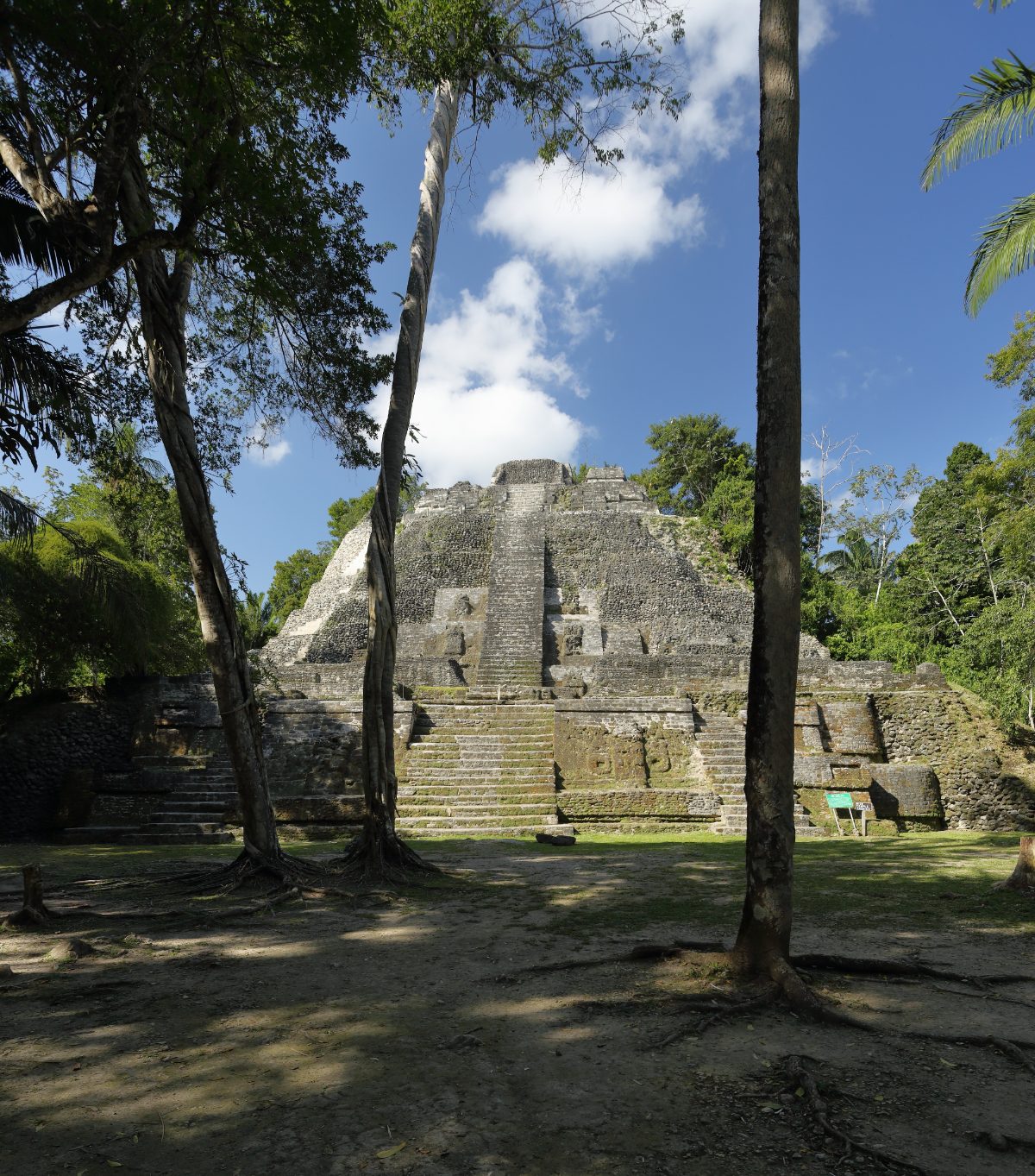
Excavation beneath later construction phases revealed that the earliest version of the High Temple was already an imposing structure long before its final form was completed, part of a pattern seen at several long-occupied Maya sites where successive generations of rulers literally built their legacy on top of their predecessors, layer by layer, over centuries.
Because the earliest construction phases lie buried deep beneath later additions, much of what is known about the temple’s Preclassic origins comes from narrow excavation tunnels rather than open-air exposure, a slower and more delicate approach that limits how quickly archaeologists can confirm new details about the building’s earliest history.
Later Maya builders elsewhere sometimes abandoned earlier monumental cores entirely when founding new capitals, but Lamanai’s continuous reoccupation of the same central precinct across thousands of years makes the High Temple something closer to a layered archive, each construction phase a physical record of a specific generation’s resources, ambitions, and religious priorities.
Jaguars and Masks
A short walk from the High Temple stands the Jaguar Temple, named for the stylized jaguar-face masks flanking its stairway, symbols closely tied to royal power and the underworld across Maya iconography generally. Nearby, the so-called Mask Temple carries even larger carved stucco faces built directly into its facade, one depicting a ruler wearing a crocodile headdress that neatly echoes the crocodile theme found in the city’s own name.
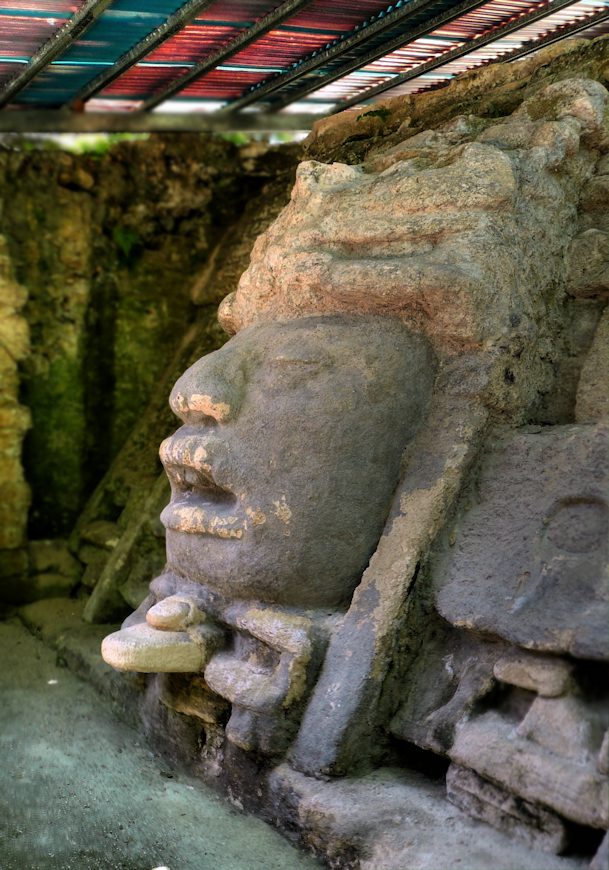
These masks were originally covered in painted plaster, likely in vivid reds and creams, transforming the temple facades into striking, almost theatrical displays meant to be seen from a distance across the plaza. Only traces of that original color survive today, but reconstructions based on pigment analysis give a sense of how vibrant the city’s core once looked.
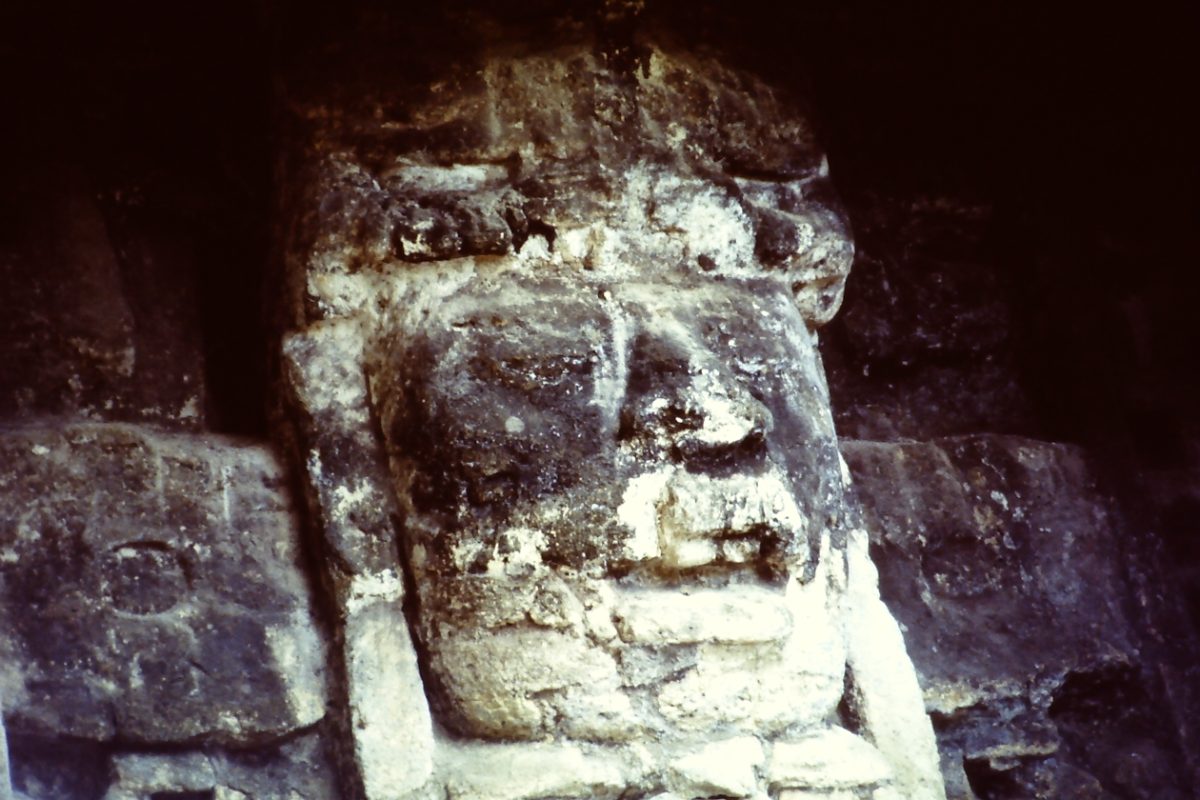
Some archaeologists have proposed that the crocodile-headdress figure on the Mask Temple may represent a specific historical ruler rather than a purely mythological being, blending real political authority with the symbolic language of Maya cosmology in a way common across the region’s monumental art, though without accompanying hieroglyphic texts the identification remains speculative.
Conservation of the stucco masks has posed an ongoing challenge for site managers, since the same tropical humidity that nourishes the surrounding forest also accelerates plaster decay, requiring periodic protective shelters and careful monitoring to keep centuries-old surfaces from dissolving under seasonal rains.
Comparable stucco masks appear at other northern Belizean and Yucatan sites, part of a broader Preclassic and Early Classic architectural tradition that used oversized facial imagery to communicate royal and divine authority to anyone approaching a temple plaza, regardless of whether they could read the accompanying hieroglyphic texts.
What Language Was Spoken at Lamanai?
Lamanai’s location in northern Belize places it within the broader Yucatecan language zone, and most researchers associate the city’s ancient population with an early form of Yucatec Maya or a closely related regional variant, the same language family still spoken by Maya communities across the Yucatan Peninsula and parts of Belize today.
Because Lamanai remained inhabited so much longer than most Classic-period centers, its linguistic record is unusually layered, with colonial Spanish documents actually recording local Maya speech patterns directly, something almost never available for cities abandoned centuries before European contact. That documentation gives linguists a rare, if imperfect, bridge between the ancient site and its historically attested language.
Colonial-era missionary records from Lamanai and nearby settlements occasionally include Maya vocabulary lists compiled for religious instruction, offering linguists rare direct snapshots of local speech at the exact historical moment when Spanish and Maya language worlds collided, a resource with no real equivalent at cities abandoned prior to European contact.
Modern Yucatec Maya speakers in Belize, Mexico, and Guatemala remain a living link to this linguistic tradition, and community-based language documentation projects in the region increasingly draw on colonial-era sources alongside contemporary speech to trace how the language has shifted over roughly five centuries since contact.
A Curious Ballcourt Offering
Lamanai’s ballcourt produced one of the more unusual archaeological finds in the Maya lowlands: a small vessel buried beneath the central playing marker that, when opened by excavators, contained a pool of liquid mercury. Mercury does not occur naturally in Belize, meaning it had to be brought in through long-distance trade, likely from cinnabar deposits mined far to the west in the Guatemalan or Mexican highlands.
Why anyone would bury liquid mercury under a ballcourt marker remains a genuine mystery, though it fits a broader pattern of ballcourts serving as sites for ritually charged offerings rather than purely athletic contests. Ballgames across Mesoamerica frequently carried symbolic weight tied to cosmology, warfare, and sacrifice, and this kind of rare, exotic offering underscores that Lamanai’s court was no exception.
Analysis of the mercury find suggests it may have been paired symbolically with other reflective substances favored across Mesoamerica, such as pyrite mirrors and hematite, materials associated with scrying, divination, and connections to the watery underworld in Maya cosmology, themes that would resonate naturally with a city so closely tied to its own lagoon.
Ballcourts across the wider Maya lowlands varied considerably in size and design, and Lamanai’s example, modest compared to the massive courts at sites like Chichen Itza, suggests the game itself may have carried more localized ritual significance here than the large-scale public spectacle it seems to have been at bigger political centers.
No comparable mercury deposit has turned up at another Maya ballcourt to date, which keeps the Lamanai find something of an archaeological outlier, cited often in academic literature precisely because it resists easy explanation and continues to prompt fresh proposals about ritual practice and long-distance trade in exotic materials.
Surviving the Classic Collapse
When most southern lowland Maya cities fell into decline during the ninth century, part of the broader Classic Maya collapse that emptied out places like Caracol and Tikal, Lamanai kept functioning. Population likely dipped, and monumental construction slowed, but the city never underwent the kind of wholesale abandonment documented at so many of its Classic-period neighbors.
Archaeologists studying this resilience point to Lamanai’s stable lagoon-fed water supply and its continued access to trade routes as likely factors, in contrast to inland cities that depended more heavily on seasonal rainfall and vulnerable causeway networks. Continuity, rather than collapse, defines Lamanai’s Postclassic centuries.
Ceramic sequences recovered from Lamanai show a steady, unbroken progression of styles spanning the Preclassic through Postclassic periods, a continuity rarely documented so completely at a single site and one of the main reasons archaeologists treat Lamanai as a kind of master chronological reference point for dating pottery found at other, less continuously occupied Belizean sites.
This resilience does not mean Lamanai was untouched by the wider political turbulence of the Terminal Classic period; trade patterns shifted, some monumental construction paused, and the city’s regional influence likely diminished. What set Lamanai apart was that these pressures produced adaptation rather than abandonment, a distinction easy to state but rarely documented so clearly in the archaeological record.
Comparative studies between Lamanai and inland cities that did collapse, including detailed sediment and pollen analysis from the lagoon itself, continue to refine scholarly understanding of exactly which environmental and political factors mattered most, work that has implications well beyond Belize for how archaeologists model resilience versus collapse across the ancient Maya lowlands generally.
This makes Lamanai an important counter-example in debates about Maya collapse theories more broadly, a reminder that whatever combination of drought, warfare, and political fragmentation devastated cities like Tikal and Copan clearly did not operate as a single uniform force across the entire Maya region, since Lamanai experienced the same centuries under markedly different circumstances.
Spanish Churches and Colonial Contact
That continuity meant Lamanai was still a functioning Maya settlement when Spanish missionaries arrived in the sixteenth century, prompting construction of a visita church intended to bring the local population under colonial religious control. A second church followed not long after, both built using stone scavenged in part from the site’s own ancient structures.
Colonial rule did not sit well with Lamanai’s residents. Historical records describe a Maya revolt in the 1640s during which the church was burned, a rare direct instance of an ancient Maya city’s inhabitants pushing back against colonial religious imposition using the very landscape their ancestors had built.
The two colonial churches, built only decades apart, were themselves eventually abandoned as Spanish administrative attention drifted elsewhere in the region, leaving their stone walls to crumble alongside the ancient temples they had been built beside, an unintentional monument to how briefly colonial religious authority actually held its grip on the area.
Documents describing the 1640s uprising are fragmentary, filtered through Spanish colonial administrators with obvious motives to downplay Maya resistance, but the basic outline, that residents rejected imposed religious authority forcefully enough to destroy the physical church building itself, has held up under later historical scrutiny.
Archaeological excavation of the church ruins themselves has recovered a mix of European trade goods, including glass beads and metal fragments, alongside traditional Maya ceramics, physical evidence of the uneasy cultural blending that defined daily life at Lamanai during its decades under nominal colonial oversight.
Sugar Mills and Later History
Centuries later, in the nineteenth century, British colonial entrepreneurs built a steam-powered sugar mill directly on the grounds of the ancient city, drawn by the same lagoon access that had made the location valuable to the Maya more than three thousand years earlier. Rusted machinery from that operation still sits among the ruins today, an unusually direct juxtaposition of pre-Columbian and industrial-era history at a single archaeological site.
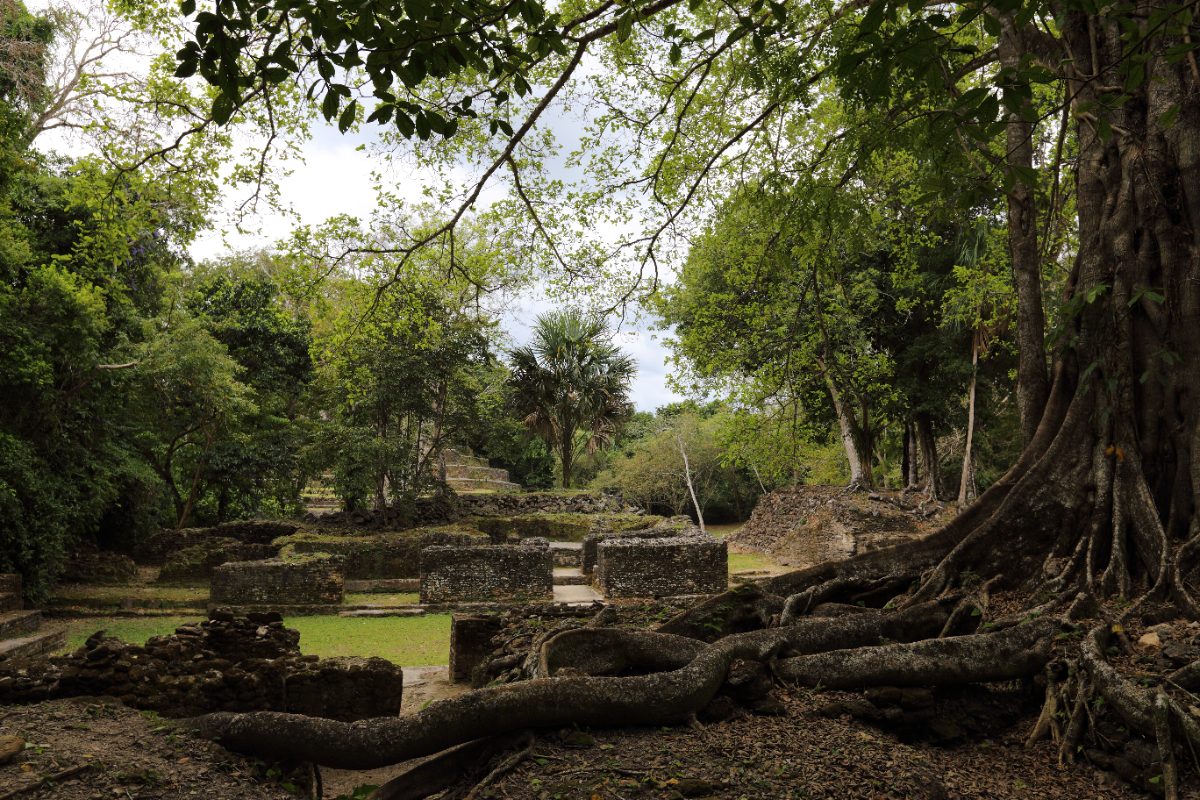
The sugar operation ultimately failed within a few decades, undone by the same remote location and dense surrounding forest that had once made Lamanai defensible and desirable, proving that the lagoon’s advantages for a Maya trading city did not automatically translate into profitability for a nineteenth-century industrial enterprise dependent on shipping refined sugar to distant markets.
Rusting boilers and cast-iron gears from the mill now sit quietly among tree roots only a short walk from Preclassic temple platforms, a juxtaposition that site guides often highlight deliberately, using the machinery as a visual anchor to explain just how many distinct chapters of history have played out on this single stretch of lagoon shore.
Excavation and Visiting Lamanai Today
Systematic excavation at Lamanai began in earnest in the 1970s under archaeologist David Pendergast of the Royal Ontario Museum, whose long-running project mapped the site’s remarkable occupational span and recovered much of the evidence now used to reconstruct its colonial-era history alongside its ancient one.
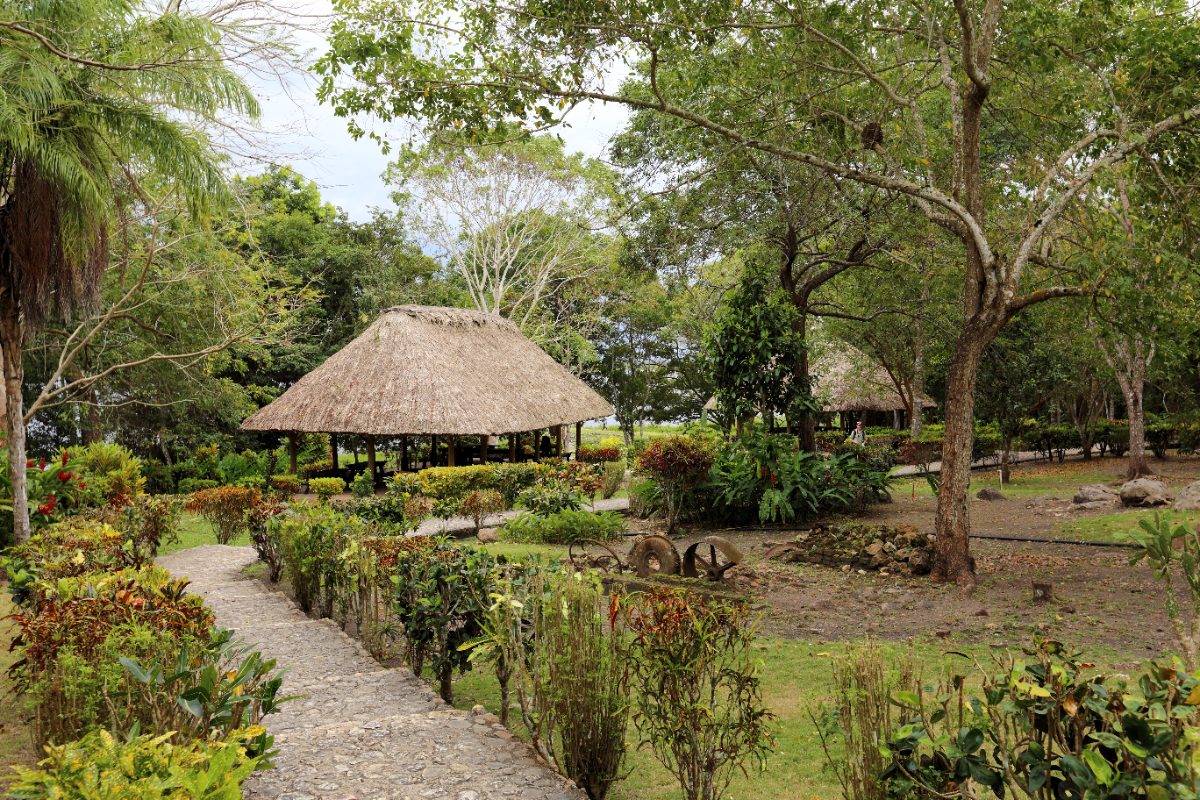
Most visitors today reach Lamanai by boat along the New River, a journey that winds past crocodiles, howler monkeys, and wading birds before arriving at the site’s dock, a mode of arrival that mirrors, in a small way, the same waterborne access that shaped the city’s fortunes for thousands of years.
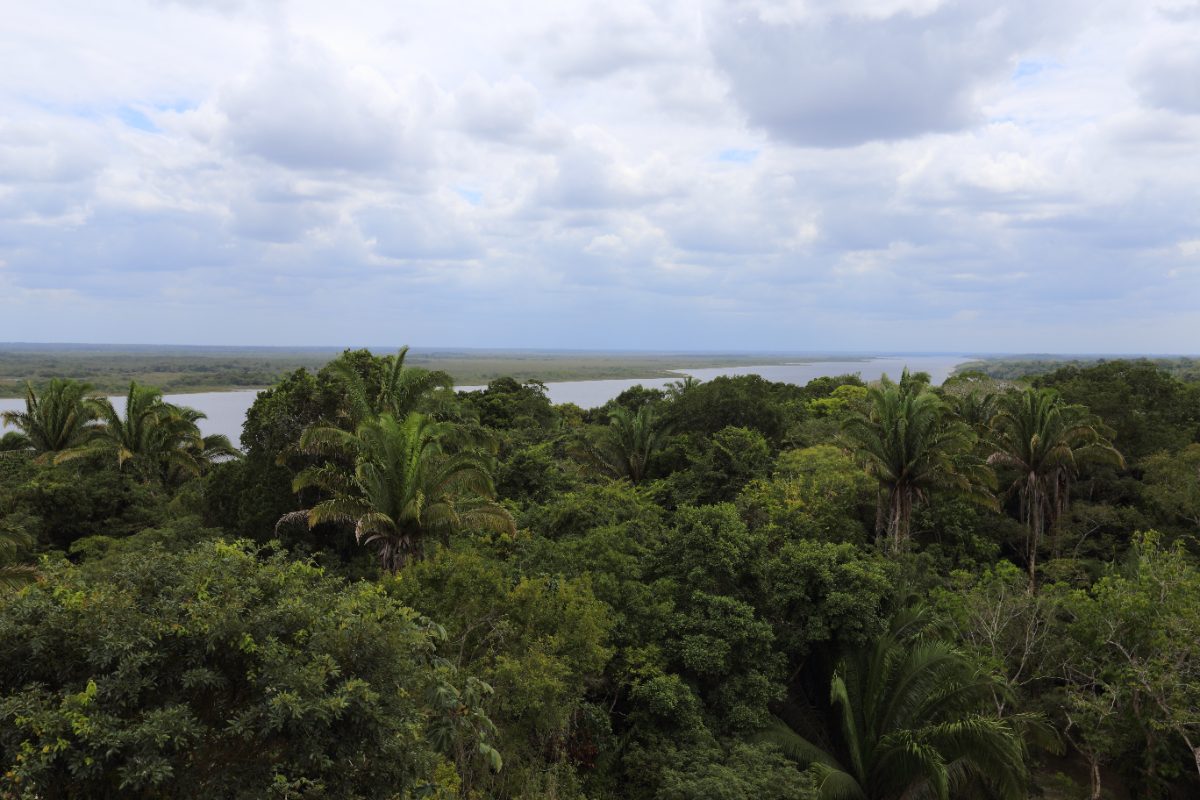
Pendergast’s excavations, continued by later archaeological teams working with Belize’s Institute of Archaeology, have made Lamanai one of the most thoroughly documented sites in the country, with findings that regularly reshape assumptions about how Maya civilization is supposed to have ended, given that this particular city simply never got the memo.
The site today remains part of a protected archaeological reserve managed jointly with the surrounding forest, a designation that has helped preserve both the ruins themselves and the rich wildlife corridor along the New River that makes the boat approach as memorable for many visitors as the temples waiting at the end of it.
Guides at the site frequently point out howler monkey troops living in the trees directly above the temple plazas, an appropriately loud reminder that despite centuries of excavation and restoration, Lamanai remains embedded in an active, living forest rather than existing as an isolated museum piece cut off from its natural surroundings.
Nearby Places to Explore
Lamanai’s long history intersects with several other Maya cities covered elsewhere in this series.
- Caracol: The Belize Maya City That Defeated Tikal
- Tikal: The Maya Capital of Towering Jungle Temples
- Copan: The Maya City of Kings and Scribes
Closing Thoughts
What makes Lamanai remarkable is not any single building or monument but its sheer persistence, a Maya city that watched other great centers rise, dominate the region, and fall silent, while it kept going through the Classic collapse, Spanish conquest, colonial rebellion, and industrial sugar production, all on the same patch of lagoon shore.
That long, layered history means a visit to Lamanai offers something rarer than most archaeological sites can: a place where Preclassic temples, colonial church ruins, and nineteenth-century machinery all sit within a short walk of one another, each layer a reminder that this city’s story never really stopped.
You May Like
Mafra, the Palace a King Built From a Vow