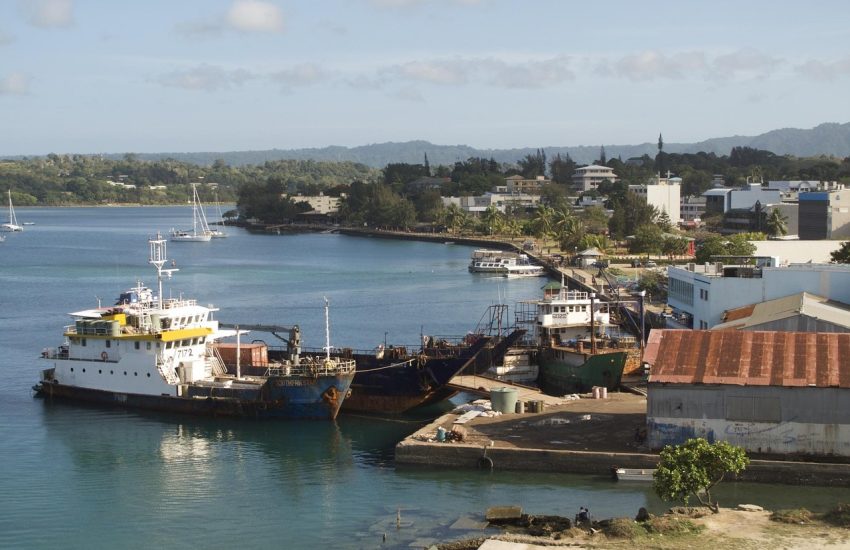
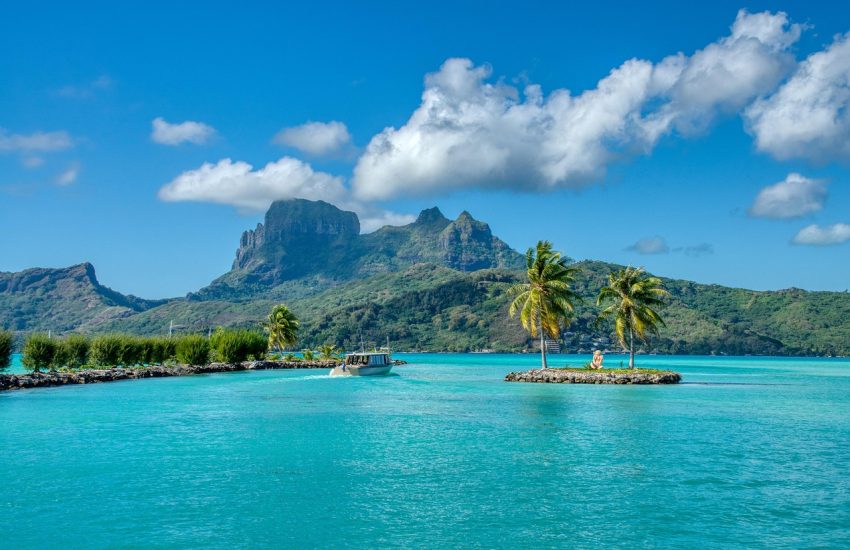
Scattered across the tropical waters of the South Pacific, where Melanesia meets Polynesia, lies the archipelago of Fiji, a country of hundreds of islands ringed by reef and crowned with green mountains. The indigenous people of these islands are the iTaukei, the original inhabitants whose ancestors settled the archipelago thousands of years ago and built a society rich in chiefly rank, ceremony, and a deep bond to land and sea. Today they form the majority of Fiji’s people and remain the custodians of a living culture that gives the islands their distinctive character.
The world of the iTaukei is one of villages set among coconut palms and gardens, of chiefs and clans bound by intricate ties of kinship and obligation, and of ceremonies centred on the sharing of yaqona, the drink of kava. It is a culture famous for its warm hospitality, its powerful traditions of dance and craft, and its profound attachment to ancestral land. This article follows the iTaukei from their origins and language through their island homeland, their traditional life, their society and beliefs, their crafts and food, their festivals, and the changes that the modern world has brought to their shores.
Contents
- Origins in the Pacific Islands
- The Name iTaukei
- Language of the Fijian Islands
- The Island Homeland
- The Traditional Way of Life
- Society, Chiefs, and Kinship
- Religion and the Ancestral World
- Ceremony and the Kava Bowl
- Crafts and the Work of the Hands
- Food, Gardens, and the Sea
- Festivals and the Meke
- History and Contact with the Outside
- The iTaukei Today
Origins in the Pacific Islands
The iTaukei are the descendants of the Austronesian seafarers who spread across the Pacific over thousands of years, reaching the islands of Fiji and making them home. Their ancestors were part of the great expansion of maritime peoples who settled the vast island world of the ocean, carrying with them the knowledge of voyaging, gardening, and the making of a society suited to island life.
Lying at the meeting point of Melanesia and Polynesia, Fiji became a place where influences from both great regions of the Pacific mingled, giving iTaukei culture a character all its own. Over the centuries the people spread across the many islands of the archipelago, developing the villages, chiefdoms, and traditions that would define their society and their deep attachment to particular stretches of land and sea.
The iTaukei understanding of their own beginnings is carried in oral tradition, in genealogies, and in the stories that link kin groups to their founding ancestors and to the land they hold. These traditions establish the ties between people, clan, and territory that remain fundamental to Fijian life, rooting the iTaukei firmly in the islands their forebears settled long ago.
Positioned as it is on the frontier between the two great cultural worlds of the Pacific, Fiji absorbed currents from both, so that iTaukei culture blends the influences of its Melanesian and Polynesian neighbours into something distinctively Fijian.
The genealogies that link living clans to their founding ancestors are treasured as the charter of iTaukei society, for they establish who belongs where and who holds rights to which stretch of ancestral land and reef.
The Name iTaukei
The term iTaukei refers to the indigenous people of Fiji, distinguishing them as the original inhabitants and the customary owners of the land. The word carries a sense of belonging and of rightful connection to the islands, and it has come to be the recognized name for the indigenous Fijian population, replacing older labels in official and everyday use.
Among themselves, the iTaukei identify strongly with their village, their clan, and their chiefly confederation, for these are the units that structure land ownership, obligation, and belonging. The broad identity as iTaukei sits alongside these more immediate loyalties, uniting a people who are nonetheless deeply attached to their particular districts and traditions.
The very meaning of the name, bound up with the ownership of and belonging to the land, expresses something central to iTaukei identity. To be iTaukei is to be tied to ancestral land through kinship and custom, and this relationship between people and territory lies at the heart of how the indigenous Fijians understand who they are.
The shift toward the term iTaukei in official and everyday speech reflects a desire to name the indigenous people by a word rooted in their own language and in their relationship to the land, rather than by labels inherited from outsiders.
Language of the Fijian Islands
The iTaukei speak the Fijian language, an Austronesian tongue related to the many languages of the Pacific and quite distinct from the Papuan languages of nearby New Guinea. Fijian is spoken across the islands in a range of dialects, with one form serving as a widely understood standard, and it binds the indigenous population together as a shared inheritance.
The language carries the knowledge and custom of island life, with a rich vocabulary for the land and the sea, for the ranks and relationships of chiefly society, for the ceremonies of kava and welcome, and for the intricate ties of kinship and obligation that structure Fijian life. It also holds the chants, oratory, and formal speech through which tradition and ceremony are conducted, making eloquence a valued skill.
Alongside Fijian, English is widely used in Fiji, a legacy of the colonial era, and it serves in education, government, and business, so that many iTaukei are bilingual. This connects them to the wider world while the Fijian language remains strong as the everyday tongue of village life and the vehicle of a distinctive island culture.
Skilled orators, able to deliver the formal speeches that accompany ceremony and the presentation of kava, command great respect, for in Fijian life the right words spoken in the right way carry weight far beyond ordinary conversation.
Efforts to teach and record the Fijian language, and its continued use in church, ceremony, and daily village life, give it a resilience that many indigenous tongues lack, even as English steadily expands its reach in the wider society.
The Island Homeland
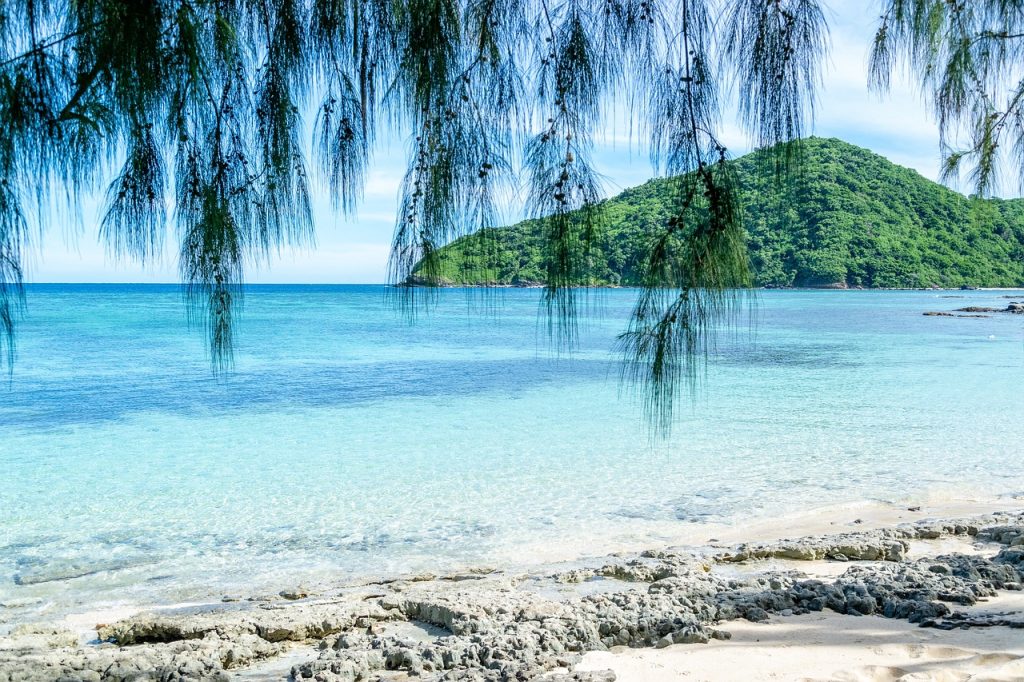
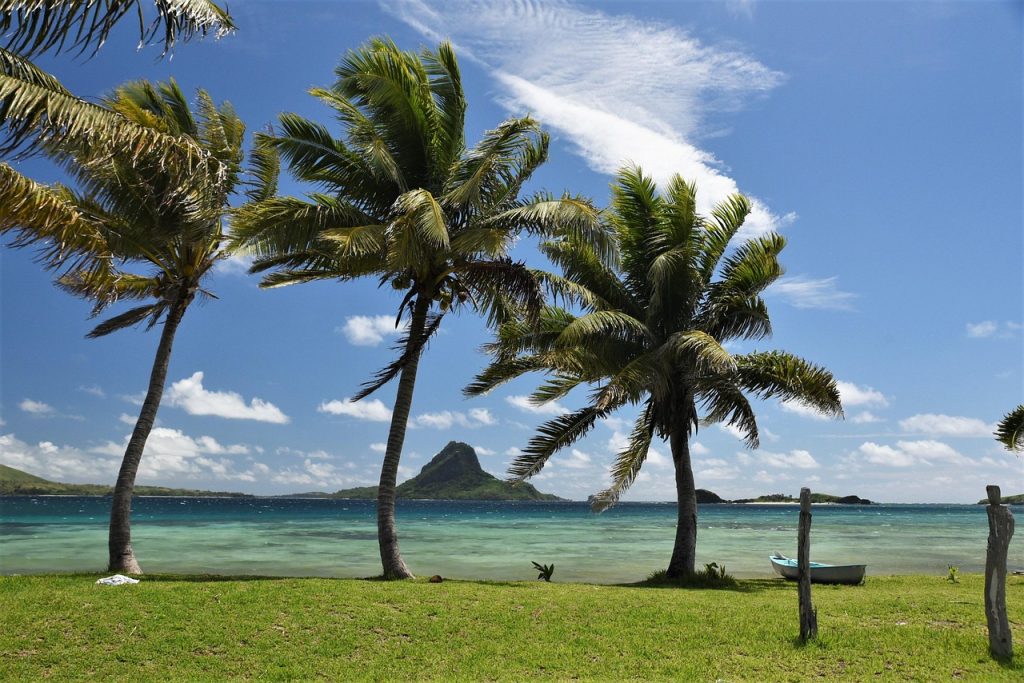
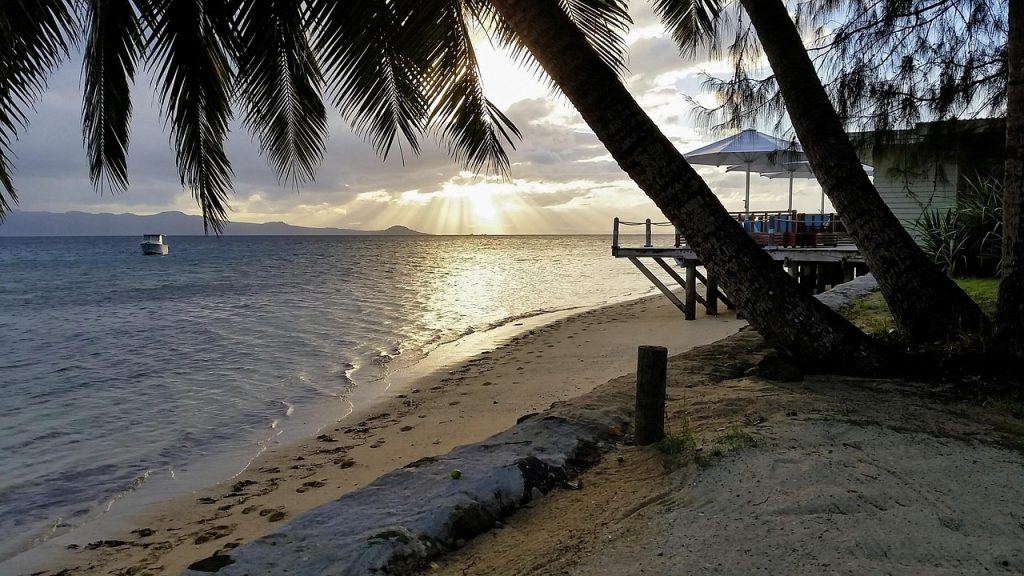
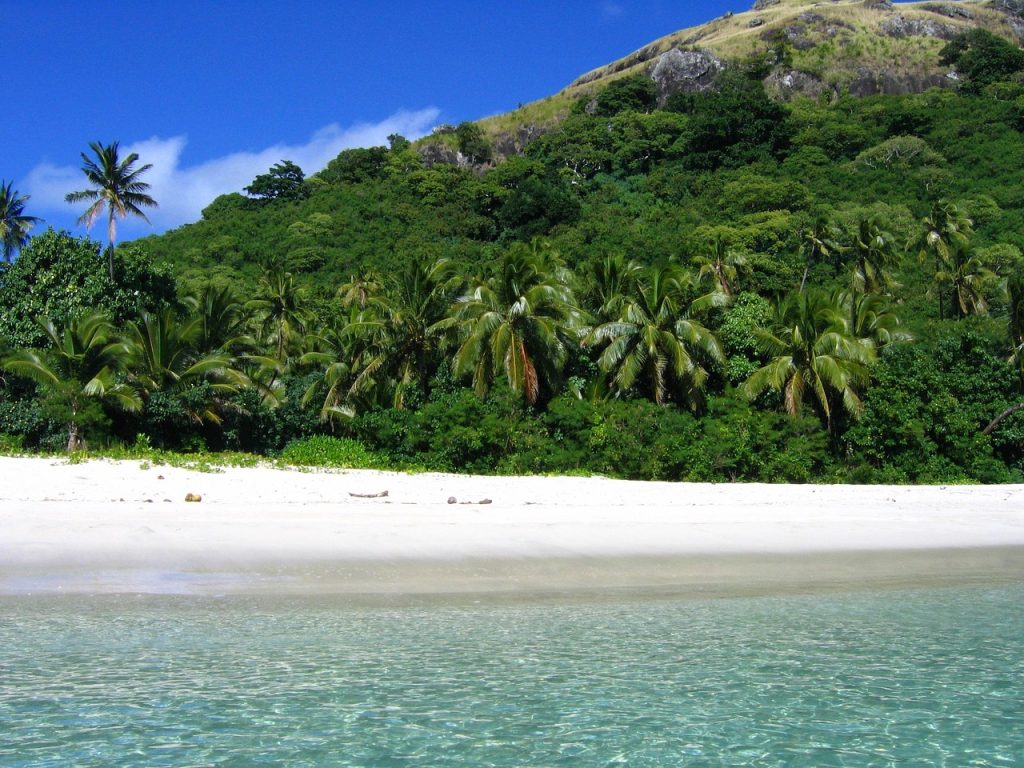
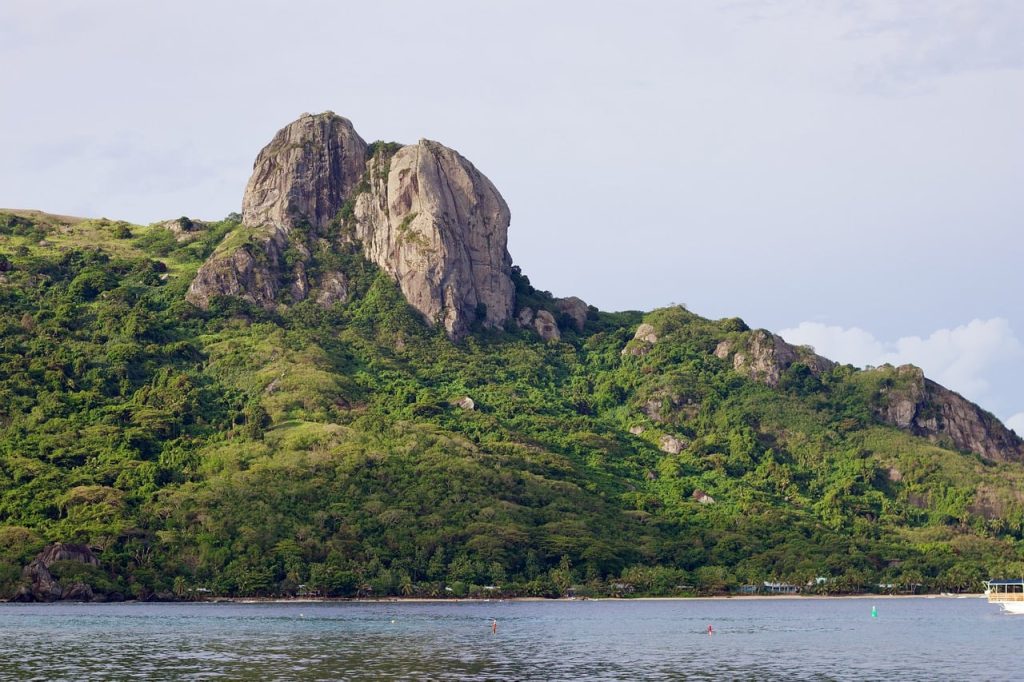
The homeland of the iTaukei is the archipelago of Fiji, a scattering of hundreds of islands, of which the larger ones rise into green volcanic mountains while smaller ones are low coral formations ringed by reef and lagoon. The islands enjoy a warm tropical climate and support lush vegetation, fertile gardens, and rich coastal waters, providing the iTaukei with an abundant and varied environment.
Life is shaped by both land and sea. The interior of the larger islands offers forest, rivers, and land for gardens, while the reefs and lagoons provide fish and the routes for travel between islands. The iTaukei traditionally lived in villages set near the coast or along rivers, with their gardens, coconut groves, and access to the sea forming the basis of their livelihood.
The land is deeply meaningful, held by kin groups through ancestral custom and rich in the associations of myth, genealogy, and history. Every stretch of ground and reef carries the ties of the people who belong to it, and the bond between the iTaukei and their land is not merely economic but a matter of identity, belonging, and sacred obligation passed down through the generations.
The contrast between the mountainous volcanic islands, with their rivers and forested interiors, and the low coral islands ringed by reef gives Fiji a striking variety of landscapes, each supporting its own patterns of settlement and livelihood.
Because so much of Fijian land remains held under customary ownership by kin groups rather than sold into private hands, the bond between the iTaukei and their territory has been preserved in a way that many indigenous peoples have not been able to sustain.
The Traditional Way of Life
Traditional iTaukei life centred on the village, a community of related families living among their gardens and coconut groves near the coast or a river. Houses were built from local materials, and the village was ordered around the ties of kinship and the authority of chiefs, with communal life, mutual obligation, and shared ceremony giving the community its shape and cohesion.
Subsistence rested on gardening, fishing, and the gathering of the abundant resources of land and sea. Root crops, coconuts, and other produce came from the gardens and groves, while the reefs and lagoons yielded fish and shellfish. Men and women had their distinct roles in the work of the village, and cooperation among kin was essential to the tasks of gardening, fishing, and building.
Above all, traditional life was bound up with kinship, rank, and ceremony. The obligations owed to chiefs and kin, the exchanges that marked important occasions, and the ceremonies of welcome, marriage, and mourning gave village life a rich texture in which practical work and social and spiritual concern were interwoven at every turn.
Communal labour, in which the members of a village came together to build a house, prepare a garden, or ready a feast, expressed the cooperative spirit at the heart of village life and bound neighbours and kin in ties of mutual help.
The village, with its ordered layout, its central open space, and its houses set among gardens and coconut palms, was not merely a place of residence but the living expression of the kinship and rank that structured iTaukei society.
Society, Chiefs, and Kinship
iTaukei society is organized around kin groups and a system of chiefly rank that gives Fijian life its distinctive structure. People belong to clans and larger groupings traced through descent, and these units hold land, order obligation, and define belonging. Above them stand the chiefs, whose rank and authority have traditionally been central to the ordering of Fijian society.
Chiefs held a position of great respect and responsibility, presiding over their people, representing them in dealings with others, and embodying the unity and standing of their group. The relationship between chiefs and people was one of mutual obligation, with the chief owed respect and service and the people owed protection, leadership, and the proper conduct of ceremony and affairs.
Reciprocity, respect, and obligation ran through the whole social order. Ceremonial exchange, the presentation of gifts and valuables, and the observance of proper conduct toward chiefs and kin created and renewed the bonds of society. To live well was to honour these obligations, and much of iTaukei life turned on the careful maintenance of the relationships that held the community together.
The respect owed to a chief was expressed in countless small observances of daily conduct, from the manner of approach and address to the order of seating and service at ceremony, so that rank was woven into the very texture of everyday life.
Confederations of chiefdoms, uniting many villages under paramount leaders, gave Fijian society a scale and structure that allowed for both the ordering of large populations and the great ceremonies and exchanges that bound districts together.

Religion and the Ancestral World
Traditional iTaukei belief centred on ancestral spirits and unseen powers bound up with particular places, kin groups, and the land itself. The ancestors were understood to remain present and influential, and keeping right relations with them, through respect, ritual, and proper conduct, was essential to the wellbeing and fortune of the community.
Sacred places, ritual specialists, and ceremonies addressed the relationship between the people and the spirit world, and beliefs about the powers of ancestors and the meanings of particular sites gave the landscape a sacred dimension. This understanding of an animate world, in which the living and the ancestral remained closely bound, shaped many aspects of daily conduct and ceremony.
From the nineteenth century, Christianity spread widely among the iTaukei through missionary work, and today the great majority are devout Christians, with the church a central institution of village and national life. Yet older understandings of ancestors, land, and the sacred have not entirely disappeared, and for many people Christian faith and inherited tradition coexist in the fabric of iTaukei life.
The devotion with which so many iTaukei embraced Christianity has made the church one of the strongest institutions of Fijian life, its services, choirs, and gatherings forming a central part of the rhythm of the village week.
Ceremony and the Kava Bowl
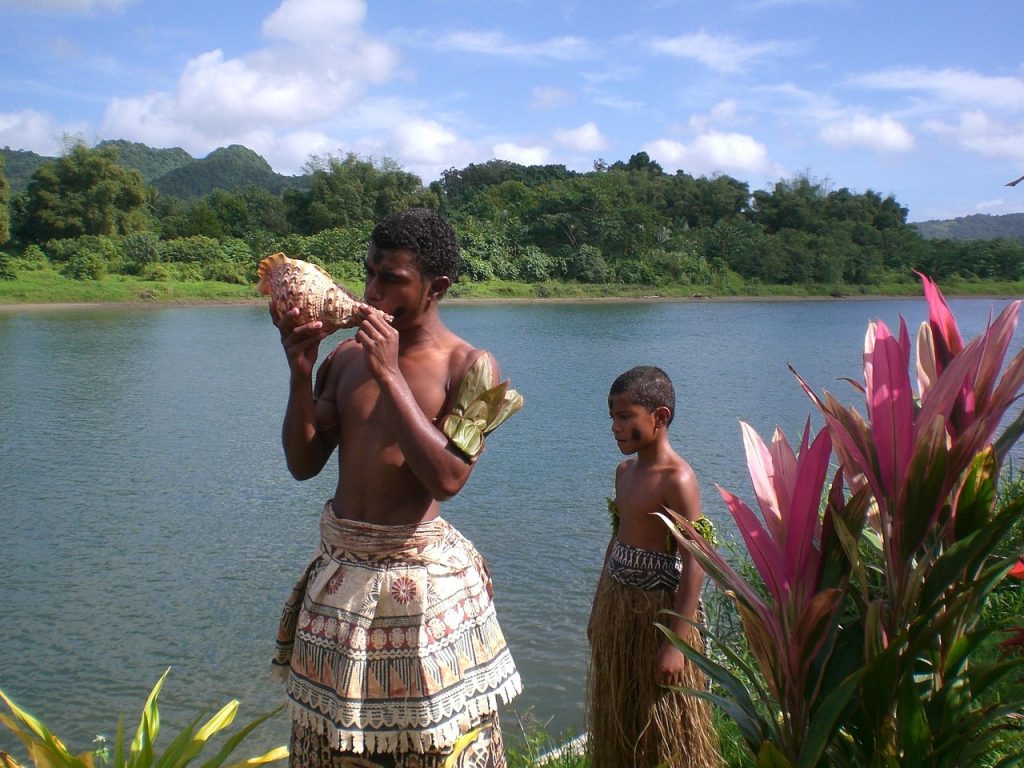
Among the most distinctive of iTaukei traditions is the ceremony of yaqona, the drink known widely as kava, prepared from the root of a pepper plant and shared in a great communal bowl. The kava ceremony is central to Fijian social and ceremonial life, marking welcome, respect, agreement, and important occasions, and it is surrounded by careful protocol and observance.
The preparation and sharing of kava follow an ordered ritual, with the drink mixed in a large wooden bowl and served in a set sequence that reflects rank and respect. To share kava is to affirm relationship, hospitality, and community, and the ceremony brings people together in a spirit of unity, whether in the welcome of visitors, the sealing of agreements, or the ordinary gatherings of village life.
The kava bowl and the ceremony surrounding it have become emblems of iTaukei culture, recognized as a defining feature of Fijian hospitality and tradition. Far more than a simple refreshment, the sharing of yaqona expresses the values of respect, relationship, and community that lie at the heart of indigenous Fijian life.
The careful sequence of the kava ceremony, in which the drink is presented and received according to rank and custom, turns a simple shared bowl into a profound expression of respect, unity, and the proper ordering of society.
Beyond its ceremonial role, the shared bowl of kava is woven into ordinary sociability, drawing neighbours together in the evening to talk, relax, and strengthen the everyday bonds of the village community.
Crafts and the Work of the Hands
iTaukei craft is rooted in the materials of island and sea and in the demands of daily life and ceremony. Among the most celebrated is the making of masi, the barkcloth beaten from the inner bark of the paper mulberry and decorated with bold designs, used for clothing, gifts, and ceremonial occasions and prized as a mark of Fijian artistry and identity.
The islanders were also skilled in the carving of wood, producing bowls, weapons, and other objects, and in the weaving of mats and baskets from pandanus and other fibres. The great wooden kava bowls, the finely woven mats presented at ceremonies, and the decorated barkcloth all combined usefulness with beauty and carried meanings of wealth, status, and relationship.
Skills passed from one generation to the next, often along lines of gender and kin, and the ability to weave a fine mat, to make masi, or to carve a bowl was valued and admired. Craft in this sense was woven into the fabric of social life, expressing not only usefulness but identity, standing, and the ties that bound the community and its ceremonies together.
The beating of masi from the inner bark of the paper mulberry, and its decoration with bold traditional patterns, is an art passed largely among women, and a fine piece of barkcloth remains among the most treasured of ceremonial gifts.
Finely woven pandanus mats, presented in great numbers at weddings, funerals, and other important occasions, function almost as a form of ceremonial wealth, their exchange marking and cementing the ties between families and clans.

Food, Gardens, and the Sea
The food of the iTaukei draws on the abundance of both land and sea. Root crops such as taro and cassava, along with coconuts, breadfruit, bananas, and other produce, come from the gardens and groves, while the reefs and lagoons yield fish and shellfish. This combination of productive gardens and rich waters gave the islands a varied and plentiful diet.
A characteristic method of cooking is the earth oven, known in Fiji as the lovo, in which food is cooked slowly over heated stones buried in the ground and covered with leaves and earth. Used especially for feasts and important occasions, the lovo produces the great meals that mark celebrations and gatherings, and its preparation is a communal act drawing many hands together.
Food and its giving are central to iTaukei social and ceremonial life. The presentation of food at feasts, the obligations of hospitality, and the sharing of meals express the ties of kinship and community. In the abundance of a feast and the generosity of its giving, the iTaukei affirm the values of relationship and respect that lie at the heart of their culture.
The lovo, opened amid anticipation after hours of slow cooking beneath the earth, yields the smoky, tender food that crowns a Fijian feast, and its preparation is itself a communal ritual that gathers a village around a shared task.

Festivals and the Meke
Among the great expressions of iTaukei culture is the meke, a traditional performance that unites song, dance, and storytelling to celebrate events, honour guests, and pass on the history and legends of the people. Performed by groups of men and women in distinct styles, the meke is a vivid and powerful art that brings the community’s traditions to life.
The meke and other ceremonial performances mark important occasions and gatherings, from welcomes and celebrations to the great events of village and chiefly life. Adorned in traditional dress and ornament, the performers give voice and movement to the stories and values of the iTaukei, and the meke remains a source of great pride and a defining feature of Fijian ceremony.
Alongside such traditional performances, the iTaukei mark the calendar with communal and religious celebrations, and cultural festivals bring people together in displays of dance, craft, and custom. These occasions bind the community, express its identity and vitality, and present iTaukei traditions both to the people themselves and to the wider world.
Performed in lines and groups to the rhythm of chant and clapping, the meke gives bodily form to the stories, victories, and legends of the people, turning history and memory into a living spectacle of movement and song.
Guests of honour at a great gathering may be welcomed with an elaborate ceremony combining the presentation of kava, the offering of gifts, and the performance of the meke, a sequence that expresses the full depth of iTaukei hospitality and respect.

History and Contact with the Outside
For much of their history the iTaukei lived within their island world, organized into chiefdoms that traded, allied, and warred with one another across the archipelago. Sustained European contact came in the nineteenth century, bringing traders, missionaries, and the pressures of the wider world, and it set in motion profound changes to island life.
Christianity spread rapidly, transforming the religious landscape, and in time Fiji became a British colony, drawing the islands into a wider imperial order. The colonial era brought new institutions, the introduction of labourers from afar whose descendants form a large part of Fiji’s population, and policies that shaped the relationship between the iTaukei and their land, much of which was protected under customary ownership.
Fiji became an independent nation in the later twentieth century, and the history since has been marked by the complex politics of a diverse society, including questions of the rights and place of the indigenous iTaukei alongside other communities. Through all these changes the iTaukei have retained their language, their custom, and their deep attachment to ancestral land.
The arrival of labourers from South Asia during the colonial period reshaped the population of Fiji lastingly, producing the diverse society of today and giving rise to enduring questions about land, identity, and the place of the indigenous iTaukei.
The iTaukei Today
Today the iTaukei form the majority of Fiji’s population and remain the custodians of a living indigenous culture. Most live in villages and towns across the islands, and while modern life, education, and the wider economy are part of their world, the village, the clan, the chief, and the ceremonies of kava and custom remain central to iTaukei identity and daily life.
Christianity is deeply woven into community life, and the church stands alongside the chiefly system and the ties of kinship as a pillar of iTaukei society. Traditional craft, dance, and ceremony continue to flourish, and the customary ownership of land remains a fundamental feature of Fijian life, protecting the bond between the iTaukei and their ancestral territory.
The challenges ahead include the pressures common to Pacific island communities, from economic change to the threats posed by a changing climate to low-lying islands and coasts. Yet the iTaukei carry into the future a powerful inheritance: a strong language, a rich ceremonial life, and an enduring attachment to land and community. In their villages, their kava bowls, and their meke, the iTaukei continue to sustain a world that is unmistakably their own.
In the cities and the villages alike, the sharing of a bowl of kava at the end of the day remains one of the enduring rituals of iTaukei life, a moment of relationship and rest that ties the modern present to deep tradition.
For the low-lying coral islands and coastal villages of Fiji, the rising sea and the intensifying storms of a warming world pose a particular threat, and some communities have already begun the painful process of relocating to higher ground.
For all the pressures of the modern age, the meke, the kava bowl, and the enduring bond to ancestral land remain the living emblems of a people whose sense of themselves is inseparable from the islands their ancestors settled long ago.
Related Peoples of the Region
- Tiwi People of the Northern Islands and Their World Apart
- Palawa People of lutruwita and Their Remarkable Cultural Return
- Dani People of the Baliem Valley and Their Highland World of Pigs and Gardens
- Asmat People of the Papua Swamps and Their Sacred Art of Woodcarving
- Huli Wigmen of the Papua New Guinea Highlands and Their World of Gardens and Ceremony
- Trobriand Islanders of Milne Bay and Their Sea-Spanning World of Yams and the Kula