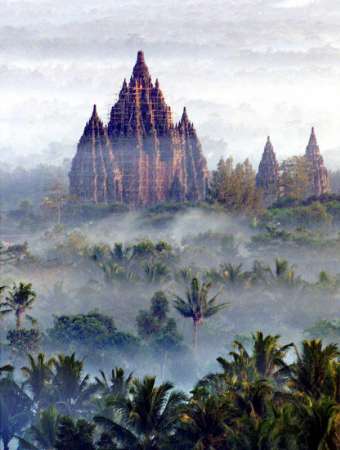
On the plains of central Java, not far from the great Buddhist monument of Borobudur, rises a cluster of tall, sharply pointed towers of dark stone. This is Prambanan, the largest Hindu temple complex in Indonesia and one of the grandest in all of Southeast Asia, built around the same time as its Buddhist neighbour more than a thousand years ago.
Dedicated above all to the god Shiva, Prambanan combines soaring architecture with exquisite carved reliefs telling the story of the Ramayana. Its slender spires, rising in tiers toward the sky, make it one of the most beautiful and dramatic temple groups anywhere.
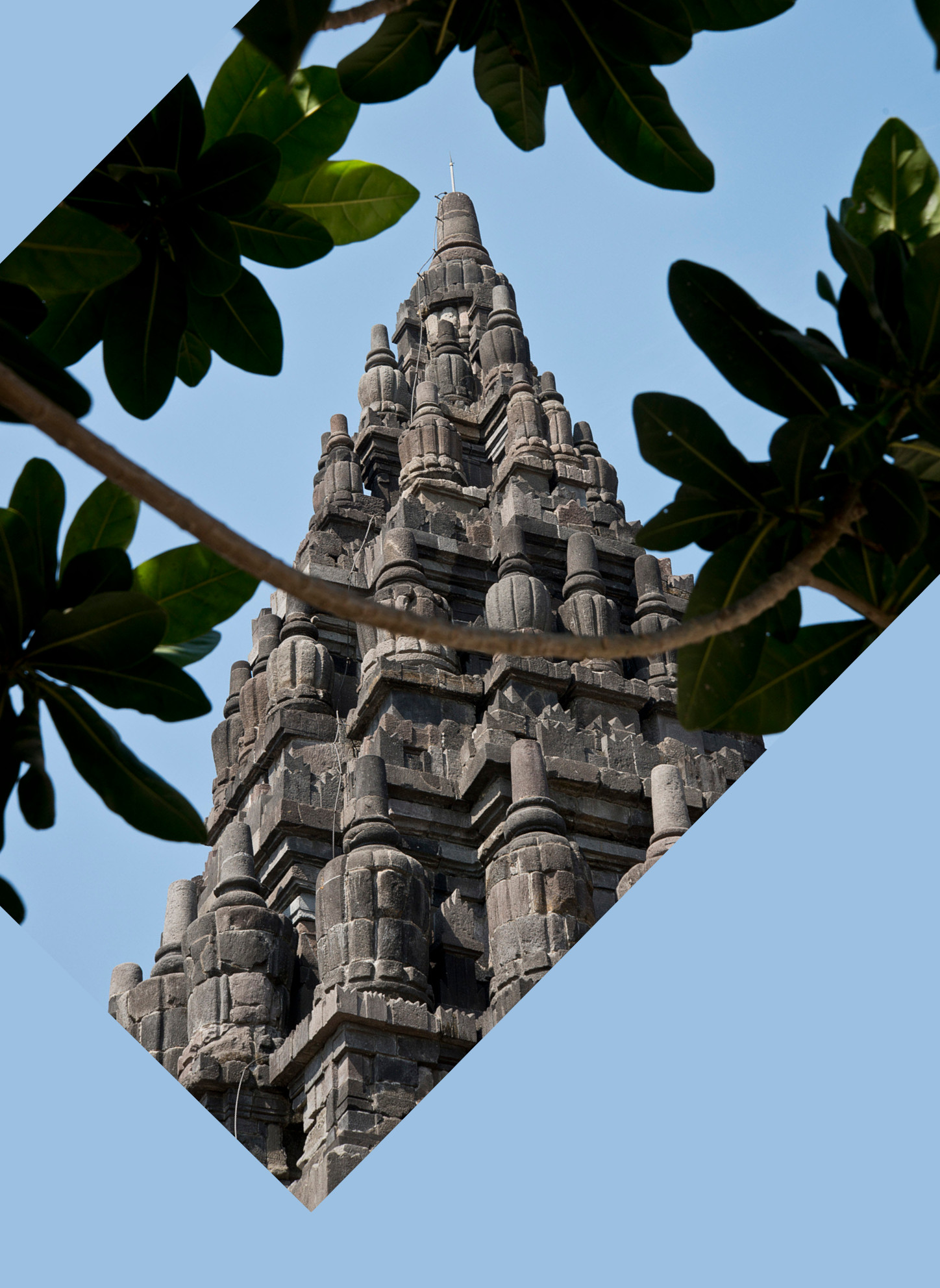
Table of Contents
- The Great Hindu Temple of Java
- A Rival to Buddhist Borobudur
- The Towering Spires
- The Temple of Shiva
- The Trimurti and the Divine Mounts
- The Ramayana Reliefs
- Hundreds of Shrines
- Carved Detail and Design
- Earthquakes, Legend, and Restoration
- Rediscovery and UNESCO
- Getting There
- Nearby Places
- Closing Thoughts
The Great Hindu Temple of Java
Prambanan was built in the ninth century AD, during a flourishing of culture in central Java. While Borobudur expressed the island’s Buddhism, Prambanan was the masterpiece of its Hindu tradition.
The complex once contained hundreds of temples, large and small, arranged in concentric squares. Its towering central shrines dominate the plain and proclaim the power and devotion of the kingdom that built them.
A Rival to Buddhist Borobudur
The two great monuments of central Java, Buddhist Borobudur and Hindu Prambanan, were built within a century of each other, reflecting the coexistence and rivalry of the two faiths on the island.
Together they show the richness of Javanese civilisation in this golden age, when great kingdoms poured their resources into monumental religious architecture. Prambanan is the Hindu counterpart to Borobudur’s Buddhist vision.
The Towering Spires
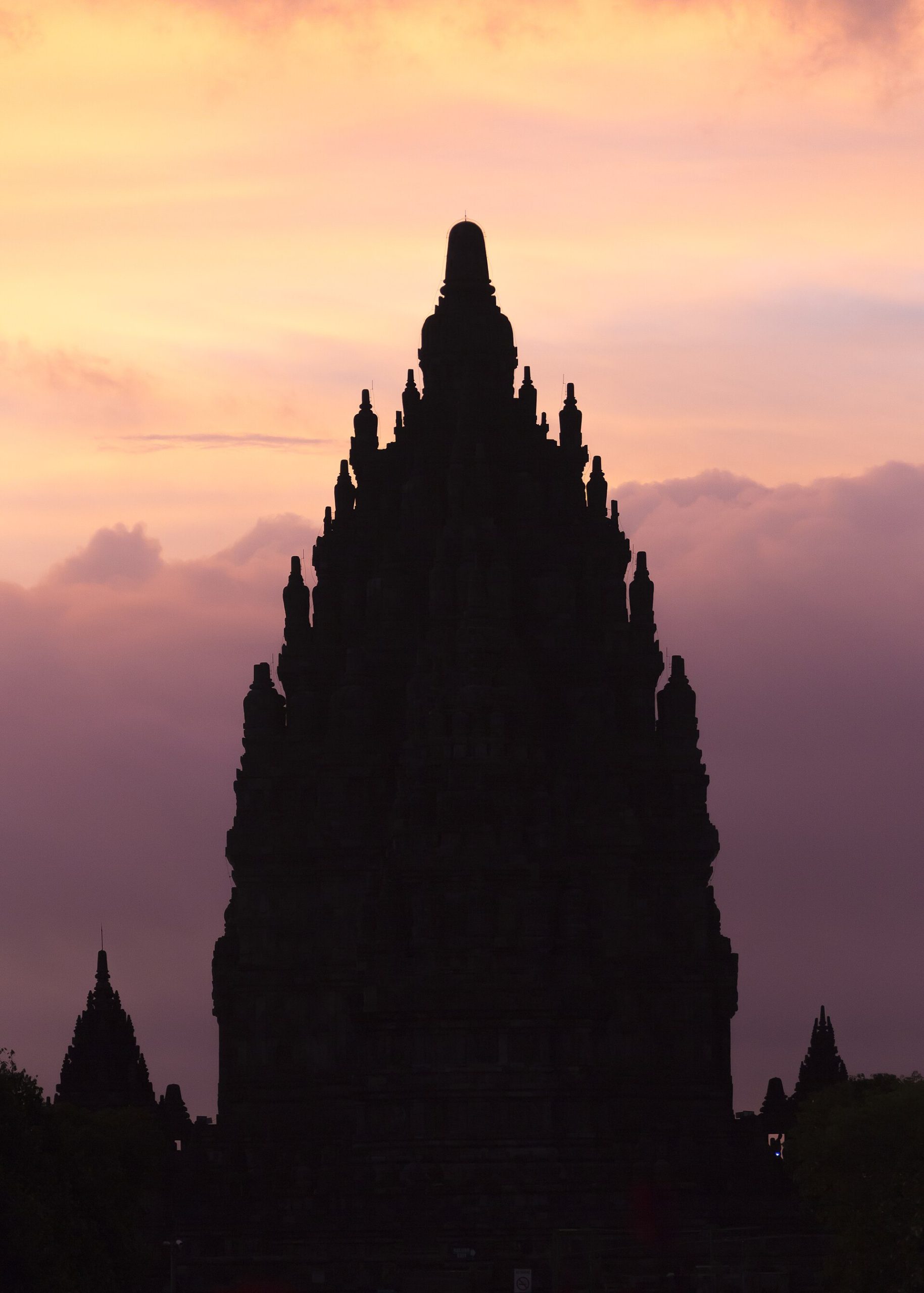
The most striking feature of Prambanan is the height and slenderness of its towers. The tallest, the temple of Shiva, rises to about forty-seven metres, its stepped spire tapering elegantly toward a crowning ornament.
These soaring forms, quite different from the rounded stupas of Borobudur, give Prambanan its dramatic silhouette. Seen at sunset or floodlit at night, the temples are an unforgettable sight.
The Temple of Shiva
At the centre of the complex stands the great temple of Shiva, the largest and most important shrine. Within its chambers stand statues of the god and of associated deities, the focus of worship at Prambanan.
The temple is richly decorated inside and out, and its central position reflects the supremacy of Shiva in the religion of the builders. It is the heart of the whole sacred complex.
The Trimurti and the Divine Mounts
Prambanan is dedicated to the Hindu trinity, the Trimurti: Shiva the destroyer, Vishnu the preserver and Brahma the creator, each honoured in his own great temple. Facing them are smaller temples for their divine mounts, such as Shiva’s bull Nandi.
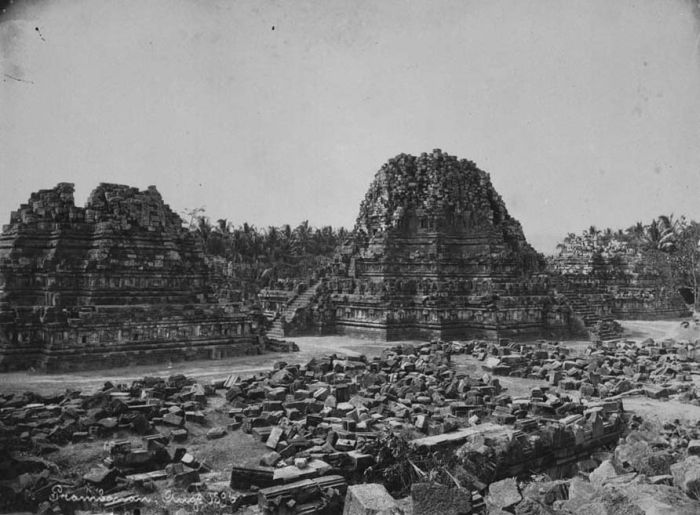
Within the Shiva temple stands a famous statue of the goddess Durga, associated in local legend with a princess turned to stone. The arrangement of the temples expresses the whole order of the Hindu cosmos.
The Ramayana Reliefs
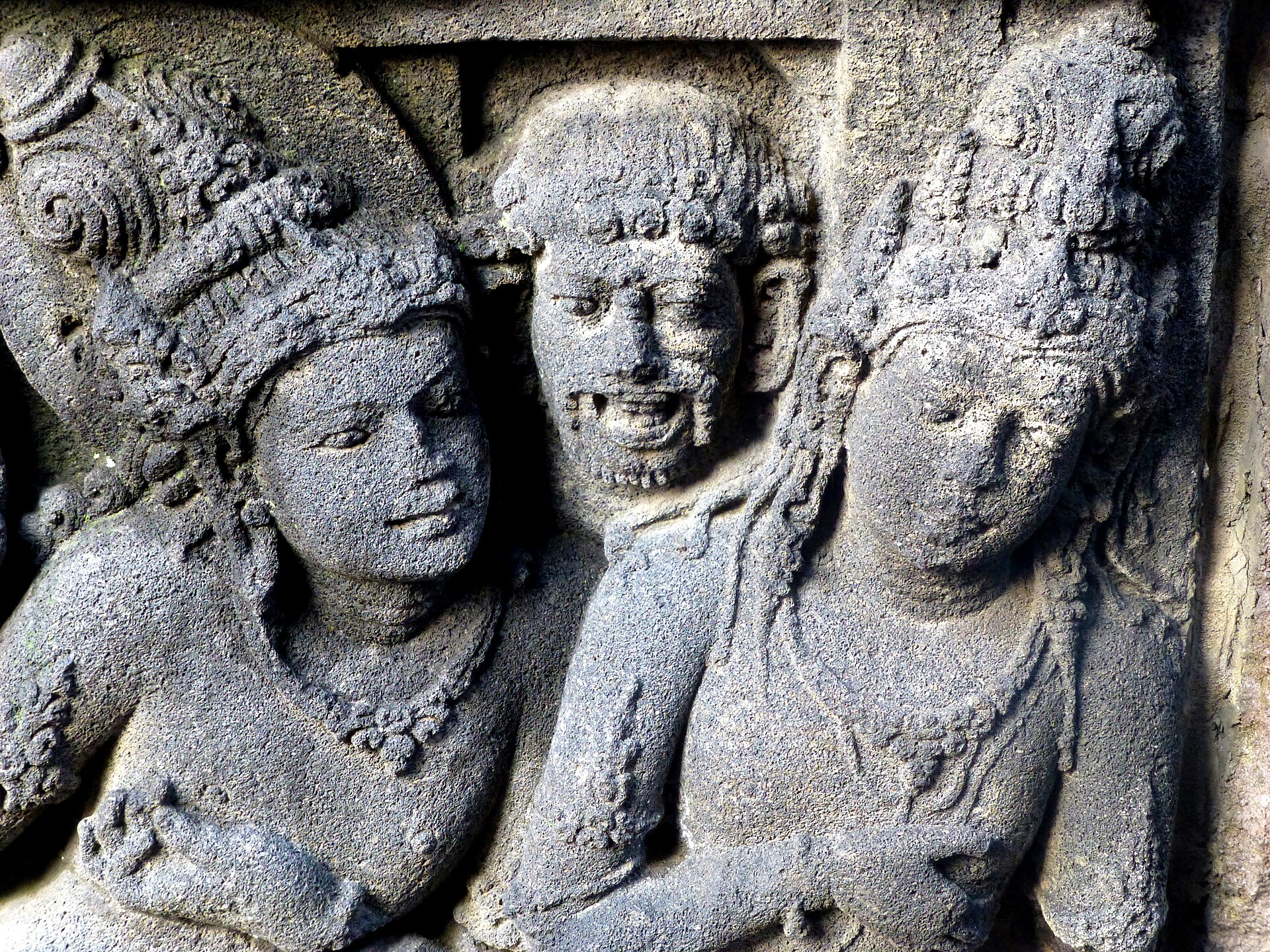
Running along the balustrades of the main temples is one of the great treasures of Prambanan: a long series of carved reliefs telling the story of the Ramayana, the epic tale of Prince Rama and his rescue of his wife Sita.
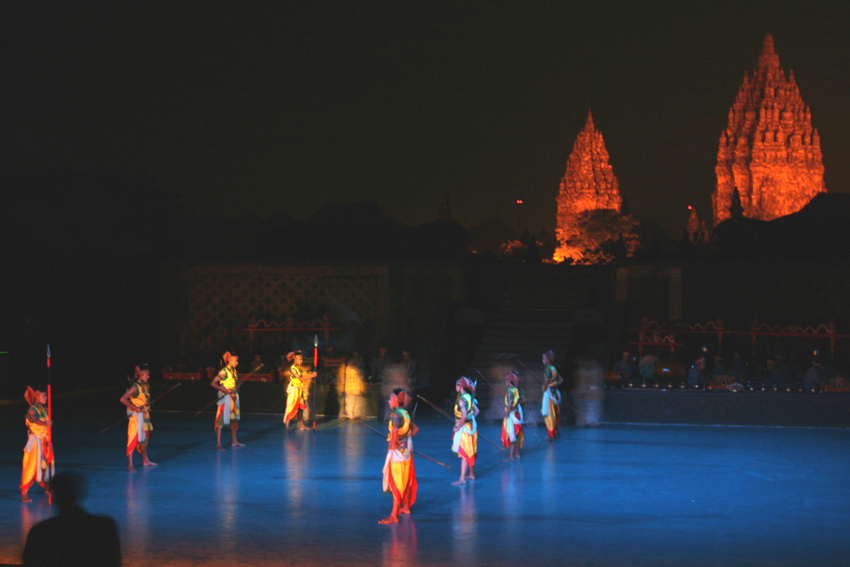
Visitors follow the story panel by panel as they walk around the temples, just as pilgrims did centuries ago. The reliefs are still brought to life today in performances of the Ramayana ballet staged against the floodlit temples.
Hundreds of Shrines
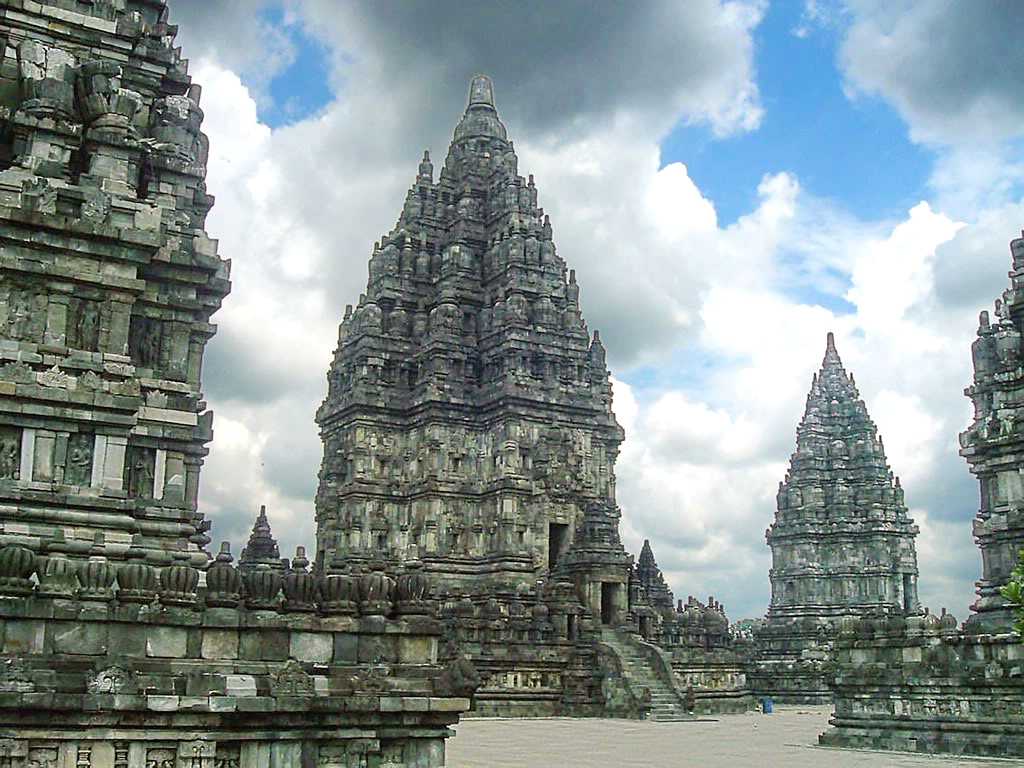
Around the great central temples once stood rows upon rows of smaller shrines, arranged in concentric squares. Though many are now ruined heaps of stone, some have been rebuilt, hinting at the original scale of the complex.
In its heyday Prambanan was a vast temple city, humming with priests, pilgrims and ceremonies. The sheer number of shrines shows the immense religious devotion that created it.
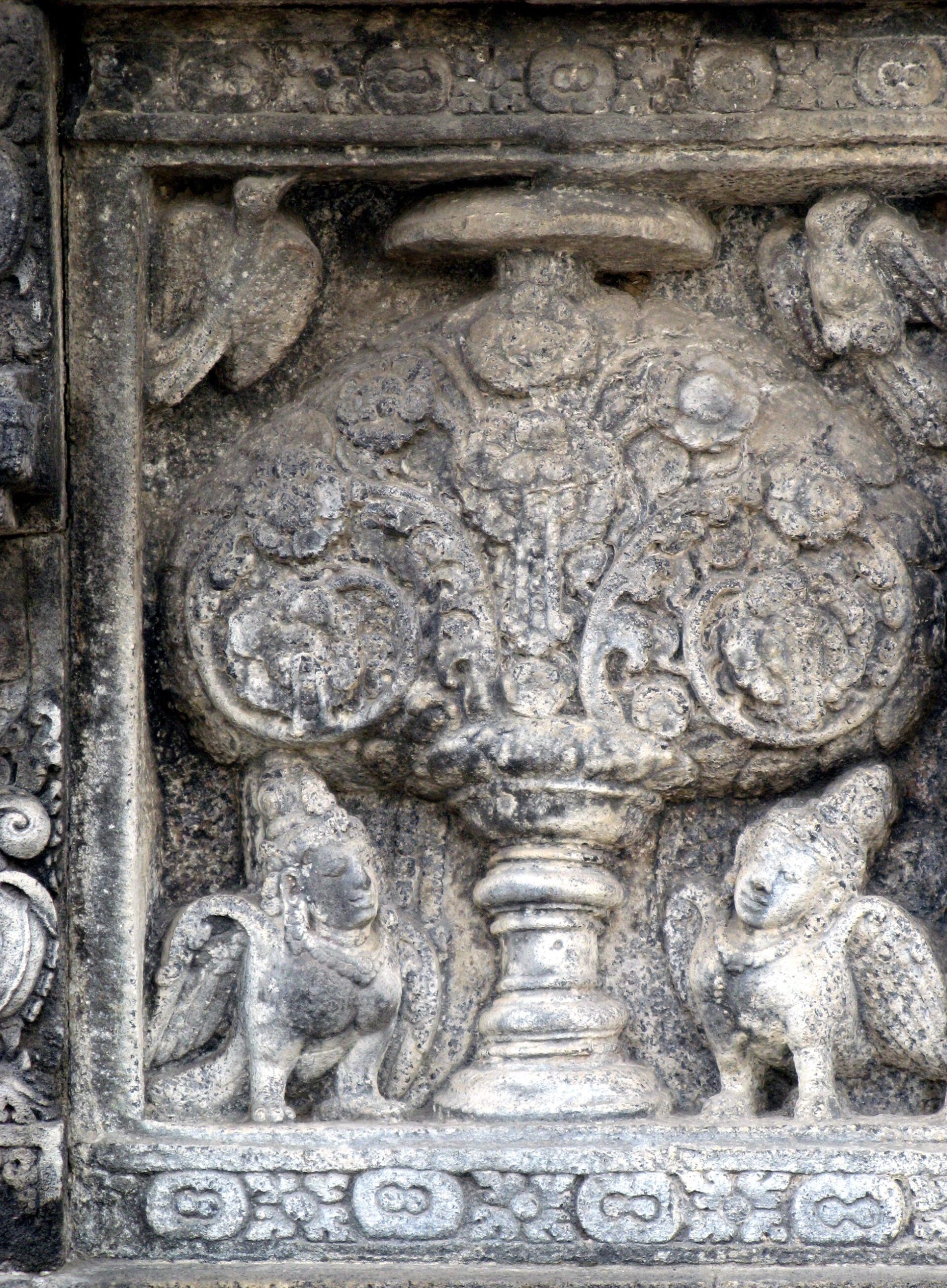
Carved Detail and Design
Every surface of Prambanan’s temples is covered with fine carving, from images of gods and celestial beings to lions, trees and decorative motifs. The stonework combines grandeur of form with delicacy of detail.
The design of the temples, rising in tiers of diminishing size crowned by ornaments, follows Hindu ideas of the sacred mountain and the structure of the universe. It is a masterpiece of religious architecture.
Earthquakes, Legend, and Restoration
Prambanan lies in a highly active earthquake zone, and over the centuries tremors have repeatedly damaged it, most recently a major earthquake in 2006. Much of what stands today is the result of careful restoration.
Local legend tells of the temples being built in a single night, and of a princess, Rara Jonggrang, turned to stone as the last of a thousand statues. Such stories add a layer of magic to the ancient stones.
Rediscovery and UNESCO
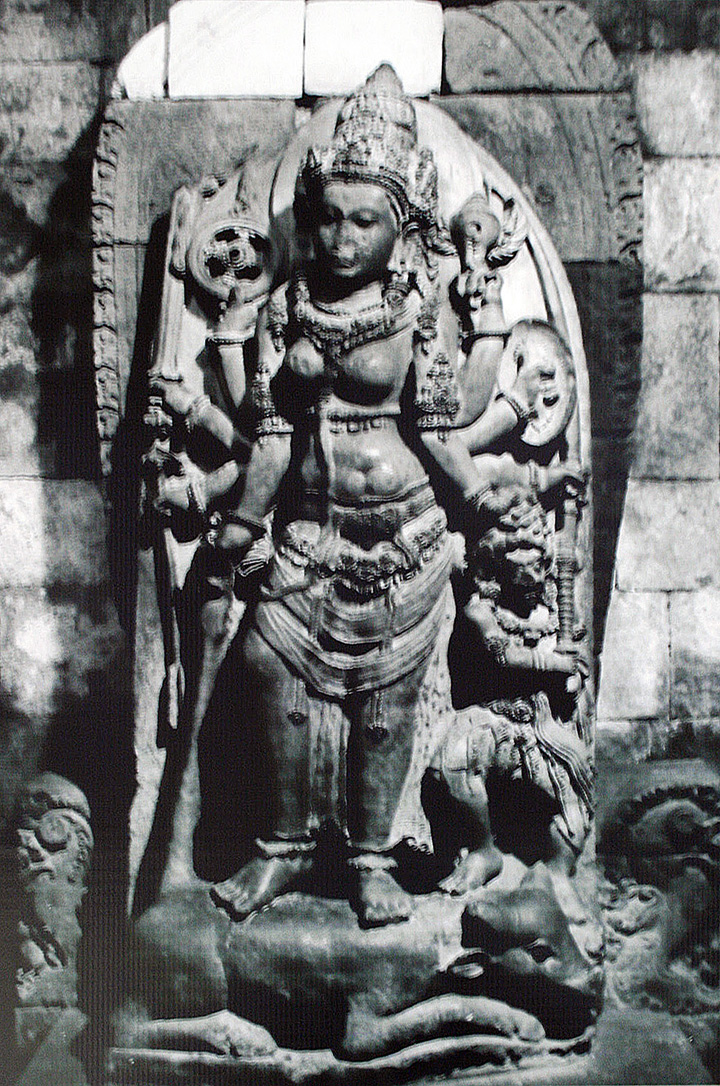
For a long time Prambanan lay collapsed and overgrown, its temples reduced to great mounds of tumbled stone. From the nineteenth and twentieth centuries, major efforts were made to clear and rebuild them.
Prambanan was inscribed on the UNESCO World Heritage List in 1991. Today, painstakingly restored, it is one of the most visited and beloved monuments in Indonesia, and a living centre of Hindu ceremony and performance.
Getting There
Prambanan lies in central Java, Indonesia, about seventeen kilometres east of the city of Yogyakarta, near the border with Central Java province. Yogyakarta has an international airport and good transport links.
From Yogyakarta the temples are easily reached by road, and are usually visited together with nearby Borobudur. Evening performances of the Ramayana ballet against the floodlit temples are a highlight for many visitors.
Coordinates: -7.7520, 110.4915 — open Prambanan in Google Maps.
Nearby Places
- Borobudur — the great Buddhist monument of the same Javanese golden age, Prambanan’s near neighbour and counterpart.
- Angkor — the vast Hindu and Buddhist temple-city of Cambodia, part of the same world of Southeast Asian devotion.
- Ellora — the Indian rock-cut temples whose Hindu art and mythology are echoed in the reliefs of Prambanan.
Closing Thoughts
Prambanan is the soaring Hindu answer to Borobudur: a cluster of tall, sharp-spired temples dedicated to Shiva and the gods, wrapped in reliefs of the Ramayana and rising dramatically from the Javanese plain.
Toppled by earthquakes and lovingly rebuilt, wrapped in legend and still alive with ceremony and dance, it is one of the great temple complexes of Asia. At sunset, its slender towers against the sky are among the most beautiful sights in all of Indonesia.
You May Like
Mafra, the Palace a King Built From a Vow