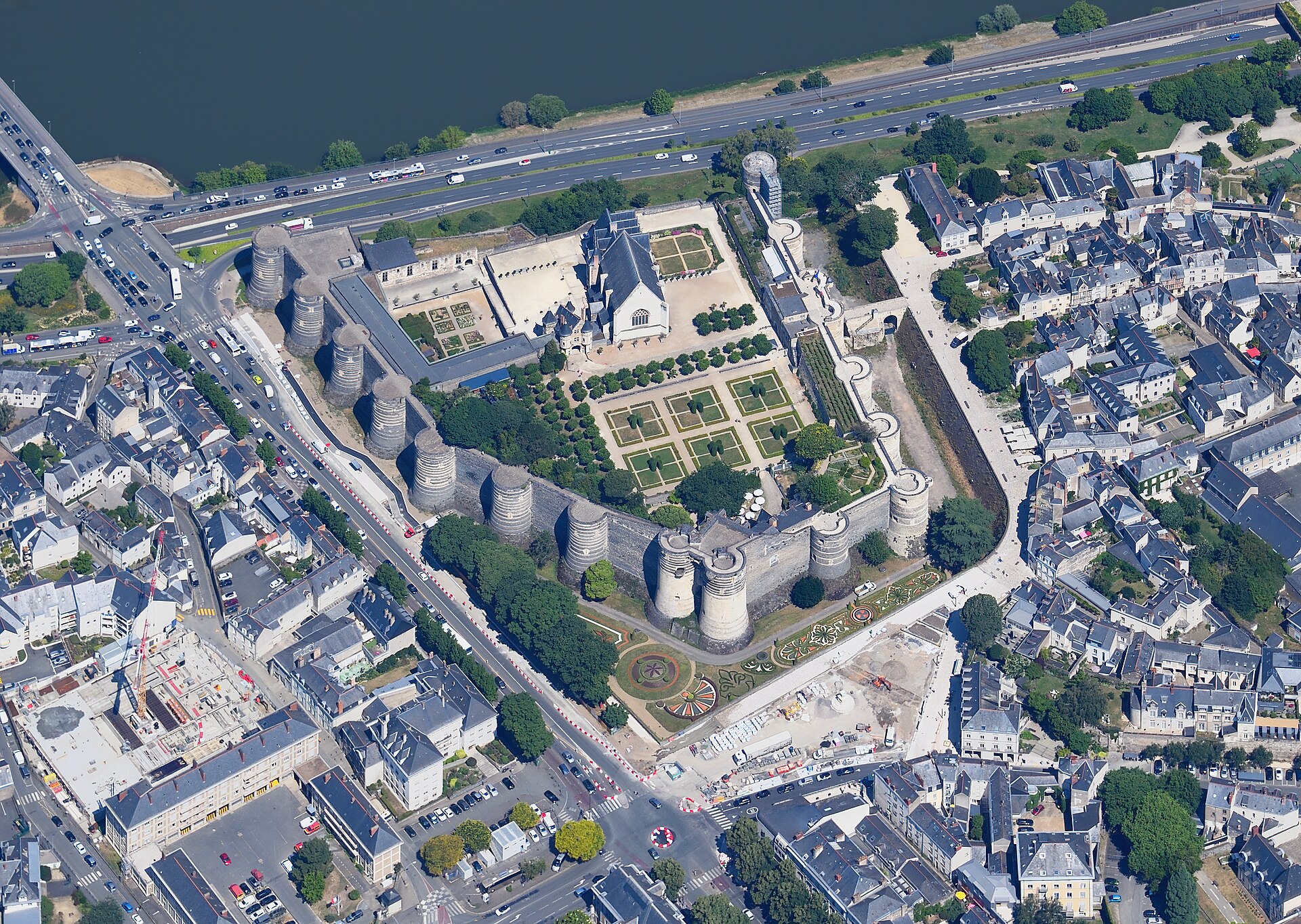
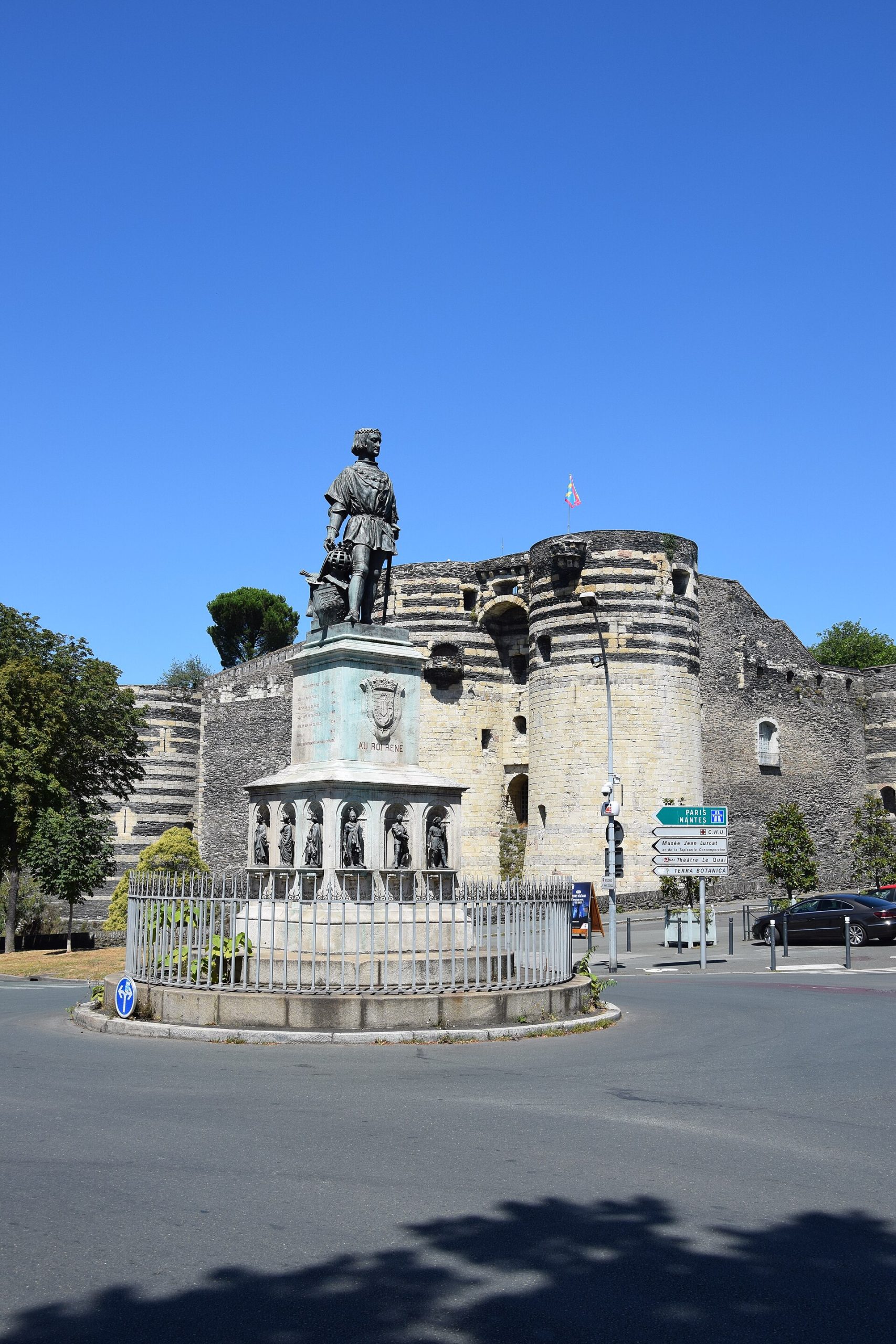
Not every great castle is a fairy-tale palace. Some are meant to frighten, and few do it better than the Chateau d’Angers. Rising above the River Maine in the west of the Loire Valley, it is a colossus of dark stone, a ring of seventeen huge round towers striped in bands of black schist and pale limestone, girdled by a deep moat. It looks less like a royal residence than a crown of stone dropped onto the edge of the old city, and that is exactly what it was built to be.
Behind those forbidding walls, however, lies one of the great cultural treasures of the Middle Ages. This was the seat of the mighty counts and dukes of Anjou, a dynasty that once gave England its kings, and later the home of a book-loving, art-loving duke remembered as Good King Rene. And here, coiled in a purpose-built gallery, hangs the Apocalypse Tapestry, the largest and one of the most extraordinary works of medieval art anywhere in the world.
So Angers is a castle of two faces: a grim war-machine on the outside, a place of beauty and learning within. It is a fortress that helped shape the destiny of two kingdoms, that was nearly pulled down in a religious war, and that survived to become one of the most impressive castles in all of France. Let’s cross the moat and step inside the great striped walls of Angers.
In This Article
- A Rock Above the River
- The Counts Who Became Kings of England
- Saint Louis Builds a Giant
- Black and White in Stone
- Through the Great Gatehouse
- A Palace Within the Walls
- The Chapel and the Courtyard
- The Apocalypse Tapestry
- Visions of the End of the World
- Good King René, the Last Great Duke
- When the Towers Were Doomed
- Prison, War and Rebirth
- Visiting Château d’Angers Today
A Rock Above the River
Angers has been a stronghold for as long as anyone can remember. The rocky spur above the River Maine, where the castle now stands, was fortified in Roman times and probably long before, its natural strength making it an obvious place to plant a defence. In the ninth century, as Viking raiders pushed up the rivers of France, a fortress was raised here to guard the city and its people against the terror from the north.
Through the early Middle Ages this stronghold became the seat of the counts of Anjou, one of the most ambitious and warlike noble families in all of France. From their rock above the Maine they expanded their power in every direction, fighting, marrying and scheming their way to greatness, until the little county of Anjou had grown into one of the most formidable principalities in the whole kingdom.
The site’s importance never faded. Whoever held Angers held the key to a wide and wealthy region, and so the castle was fought over, rebuilt and strengthened again and again across the centuries. The great fortress we see today is only the latest and mightiest in a long line of defences raised on this same commanding rock, each generation adding to the work of the last.
The River Maine, which flows past the foot of the castle rock, joins the great Loire a little way downstream, linking Angers to the whole network of rivers that were the highways of medieval France. This gave the city and its fortress real strategic importance, standing guard over the approaches to the wider Loire valley from the west. Control of Angers meant control of a vital gateway, and that is why the site was fought over for so many centuries.
Long before the great stone castle rose, this rock would have been crowned by simpler defences of earth and timber, then by successive walls of stone, each age leaving its mark. The Angers we see is the summit of that long process, but it stands on foundations of memory reaching back through the Vikings and the Romans to the very earliest inhabitants of the region, who recognised, as everyone since has, the commanding strength of this rock above the river.
The Counts Who Became Kings of England
The counts of Anjou reached a height of power that few noble families have ever matched. Through a brilliant marriage, the Angevin count Geoffrey Plantagenet wed Matilda, granddaughter of William the Conqueror and heiress to the English throne. Their son became Henry II of England, and with him the House of Plantagenet, the House of Anjou, ascended to the throne of England itself.
For a time the rulers of Angers commanded a vast empire that stretched from the border of Scotland to the Pyrenees, taking in England, much of France and everything in between. The great Richard the Lionheart and his brother King John, so familiar from the legends of Robin Hood, were Angevin princes, sons of Henry II and Eleanor of Aquitaine, and their family roots lay here, in the land ruled from this rock above the Maine.
It is an extraordinary thought that this dynasty, whose castle still broods over a quiet French city, once shaped the whole history of England. The link was eventually broken when the French crown reconquered Anjou in the early thirteenth century, but the memory of the Angevin empire clings to Angers still. This was the cradle of a family that wore two crowns and left its mark on the story of two great nations.
The rise of the house of Anjou is one of the great success stories of the medieval nobility. Starting as relatively minor lords, the counts built their power through a ruthless combination of warfare, careful marriages and sheer force of personality, absorbing neighbouring territories and outmanoeuvring their rivals until they stood among the greatest princes of France. Their story is a reminder of how fluid and dangerous the medieval world could be, and how far a determined family could rise.
The name Plantagenet, which the Angevin kings of England bore, is said to come from the sprig of broom, planta genista, that Geoffrey of Anjou wore in his hat. From that small emblem grew one of the most famous royal houses in English history, a dynasty that would rule England for more than three hundred years and give it some of its most celebrated and notorious kings. And the roots of that great tree lay here, at Angers.

Saint Louis Builds a Giant
The castle that so astonishes visitors today was largely the work of the French crown, raised after Anjou was recovered from the Plantagenets. In the 1230s, during the youth of King Louis IX, the saintly king remembered as Saint Louis, and under the guiding hand of his formidable mother Blanche of Castile, a vast new fortress was built here to secure the frontier and overawe the region.
The scale of the work was staggering. Seventeen enormous round towers were raised around a great curtain wall, encircling the rock in an almost unbroken ring of stone, with a deep dry moat cut around the outside. The towers rose far higher than they do now, crowned with conical roofs, and the whole structure was designed to be utterly impregnable, a statement of royal power that no rebel or invader could hope to challenge.
This was cutting-edge military architecture for its day, and it has survived remarkably intact. The great fortress of Saint Louis remains the bones of the castle we see, its seventeen towers still marching around the walls, its moat still deep. Few castles anywhere give such a powerful sense of the sheer might of a medieval royal fortress as Angers does, precisely because so much of that thirteenth-century giant still stands.
The decision to build so mighty a fortress at Angers reflected the anxieties of the French crown in the thirteenth century. Anjou had only recently been wrested from the Plantagenets, and the region needed to be held firmly against any attempt to take it back. A castle on this scale was both a practical defence and a powerful piece of propaganda, announcing in stone that the king of France was now the master of Anjou and intended to stay.
Blanche of Castile, who oversaw much of the work during her son’s youth, was one of the most capable rulers France ever had, governing the kingdom as regent with a firm and skilful hand. The great fortress of Angers stands as a monument to her determination as much as to her son’s later sanctity, a reminder that behind many a famous king stood a formidable mother steering the ship of state.
It is worth standing back to take in the sheer ambition of the design. Seventeen towers, each a massive structure in its own right, linked by high curtain walls and ringed by a moat, made up a defensive circuit of tremendous length and strength. Building it required armies of masons and labourers working over years, moving vast quantities of stone, and the cost must have been enormous. The result was one of the most powerful fortresses of its age, a fitting expression of the growing might of the French monarchy.

Black and White in Stone
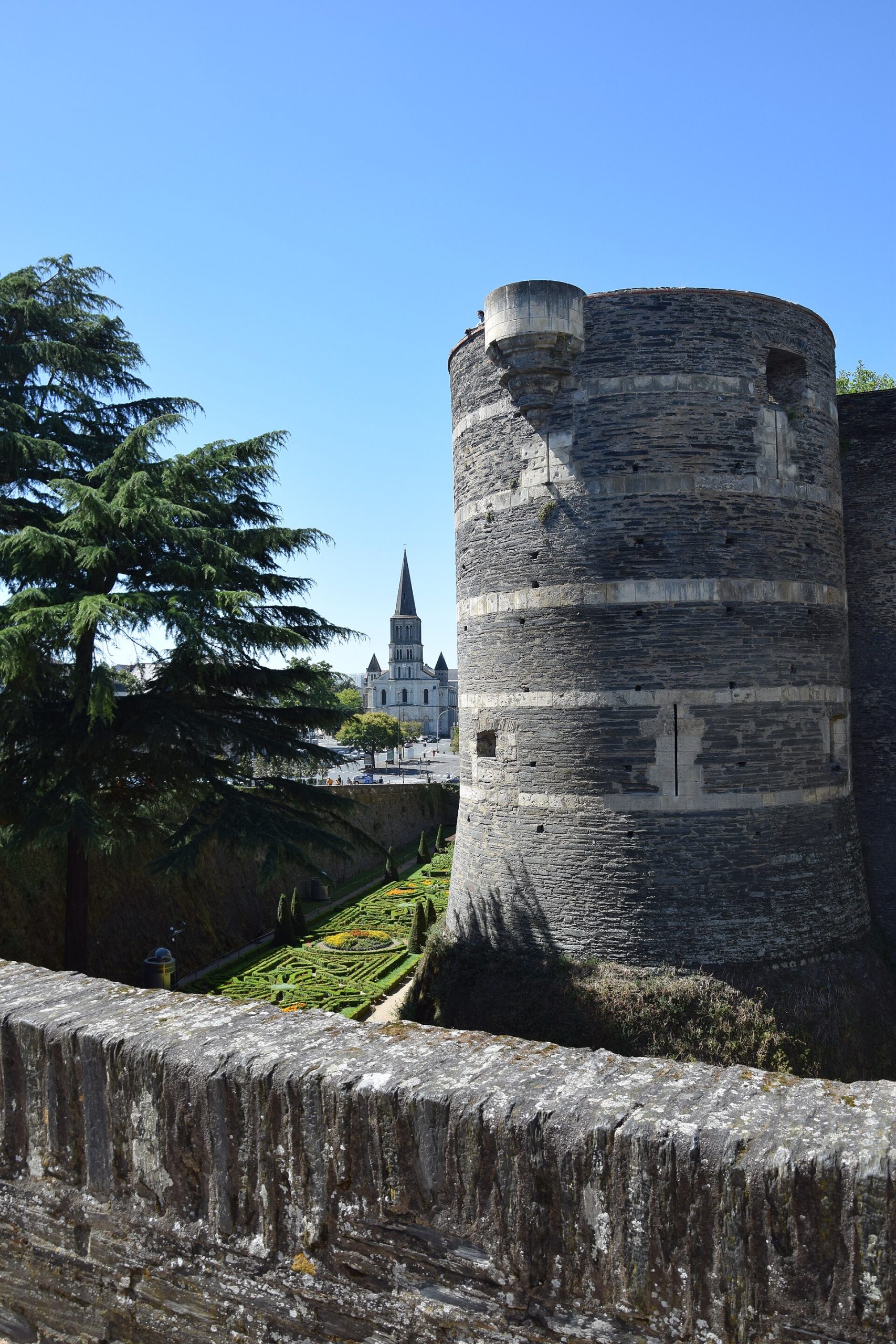
One of the most striking things about Angers is the colour of its walls. The towers and ramparts are built largely of dark blue-grey schist, the local stone of the region, and this is banded and trimmed with courses of pale creamy limestone, so that the whole fortress is striped in bold black and white. The effect is unforgettable, giving the castle a stern, almost heraldic drama that sets it apart from the honey-coloured chateaux further up the Loire.
This banded stonework was not just decoration. Using the hard local schist for the bulk of the walls made sound economic and practical sense, while the bands of dressed limestone helped strengthen and level the courses of rougher stone. Function and beauty came together, as they so often did in the best medieval building, to produce something that was both immensely strong and strangely beautiful.
Seen from across the moat, the striped towers rising sheer from the rock make an overwhelming impression. There is nothing soft or welcoming about them; they were built to daunt, and they still do. Yet the play of dark and light across the great curved surfaces gives the fortress a grandeur that goes beyond mere strength, a sombre magnificence entirely its own.
The schist that gives Angers its dark colour was quarried from the region around the city, where this hard, slaty stone is abundant. Its use ties the castle firmly to its landscape, for the same blue-grey stone can be seen in older buildings throughout the area. In a sense the fortress grew straight out of the ground on which it stands, built from the very bedrock of Anjou, which only deepens the impression of a castle rooted immovably in its place.
Through the Great Gatehouse
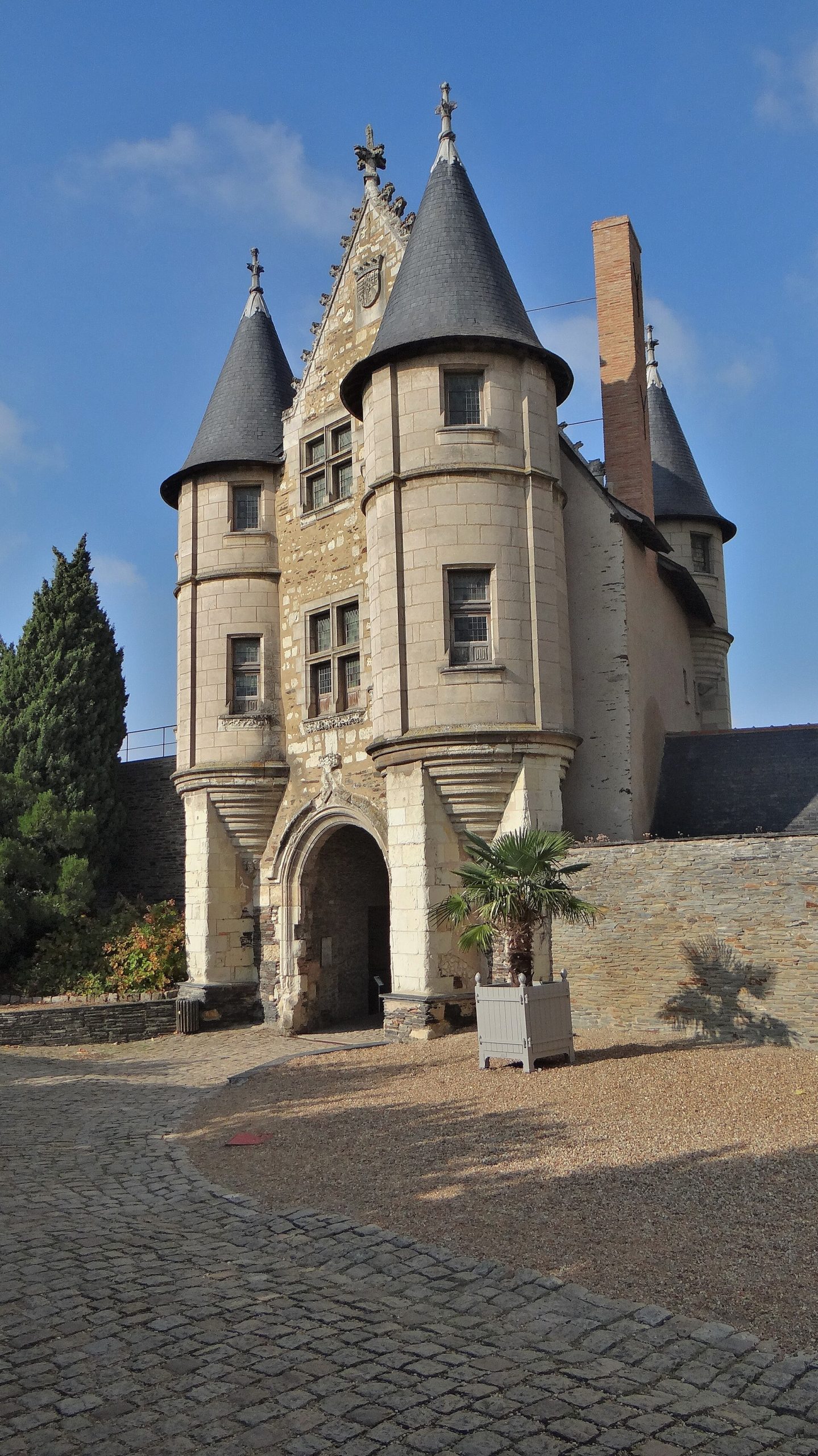
Entry into a fortress like Angers was never meant to be easy, and the castle’s gateways were among its most heavily defended points. The great châtelet, or gatehouse, guarded the approach across the moat, its passage once protected by drawbridges, portcullises and heavy doors, and overlooked by towers from which defenders could rain down missiles on any attacker who dared to approach.
To pass through the gate today, across the bridge that spans the deep moat, is to follow the same route that kings, dukes, soldiers and prisoners took over the centuries. The sheer thickness of the walls becomes clear as you go, the stone pressing in on either side, a reminder that this was a place built first and foremost for war, where every detail was designed to keep enemies out and defenders safe.
Beyond the gate, the character of the castle changes. The grim outer face gives way to a more open interior, where over the centuries the dukes of Anjou built themselves comfortable lodgings, chapels and gardens within the shelter of the great walls. The fortress was a shell around a world of its own, at once a stronghold and a home.
Defending the entrance was always the great challenge of castle design, for the gate was inevitably the weakest point in any wall. At Angers the builders answered the problem with layers of defence, so that an attacker who forced one barrier would find himself trapped and exposed before the next. To walk through in safety today, as a welcome visitor rather than a would-be assailant, is to appreciate just how formidable those defences once were.
A Palace Within the Walls
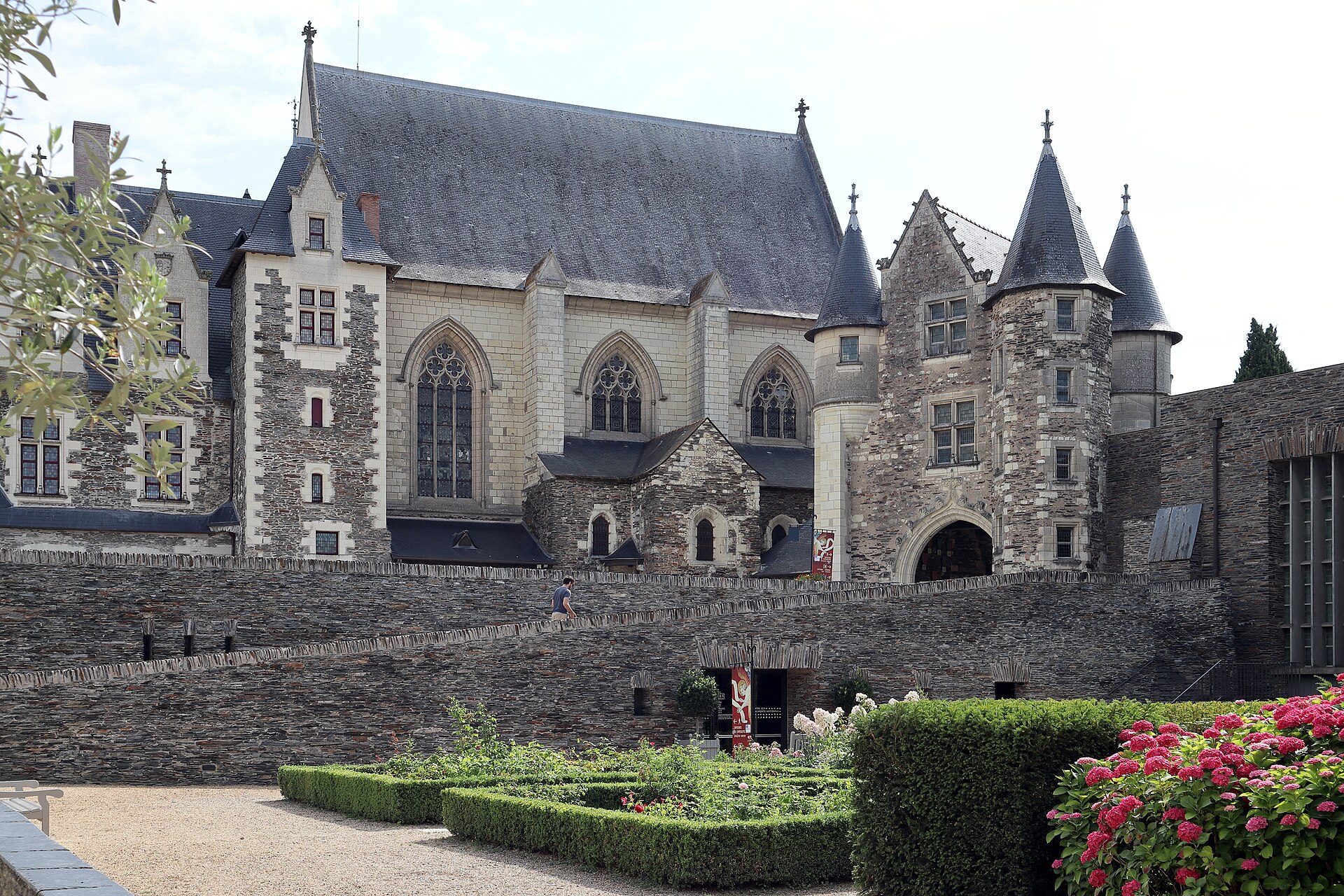
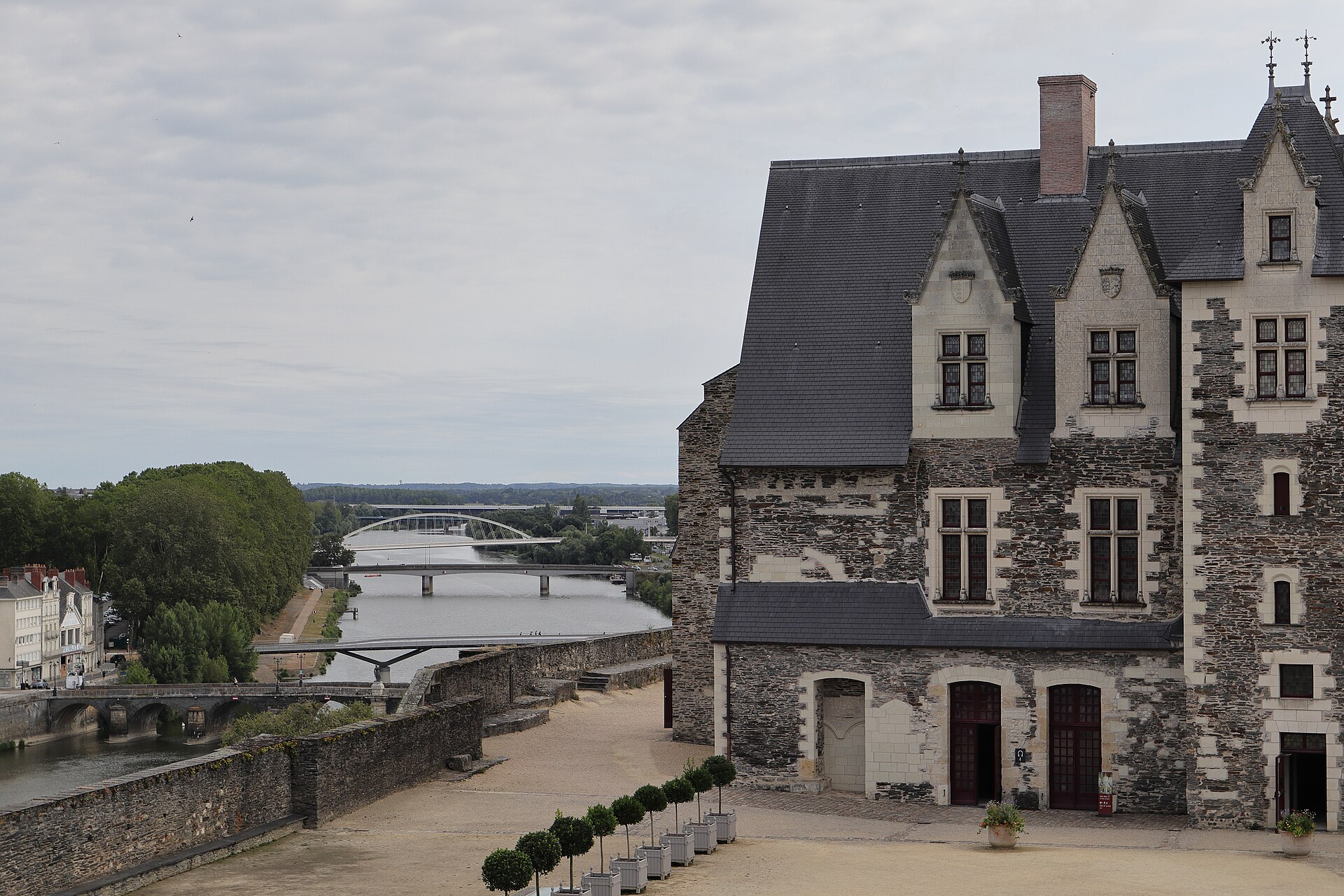
Inside the ring of towers, the castle opens out into a surprisingly gracious world. Here successive counts and dukes of Anjou raised the buildings they needed for daily life: a royal lodging, a fine chapel, halls and chambers, and gardens where they could escape the grimness of the outer defences. The contrast between the harsh exterior and the more refined interior is one of the pleasures of a visit to Angers.
The royal lodging, or logis royal, provided handsome apartments for the ducal family and their guests, its windows looking out over the courtyards and, beyond the walls, the river and city. Nearby stood the chapel, where the household worshipped, and various service buildings that kept the castle running. Together they formed a self-contained community, a small town of privilege sheltered behind the mighty curtain wall.
This blend of fortress and palace was typical of the greatest medieval castles, which had to be both strongholds in time of war and comfortable residences in time of peace. At Angers the two functions sit side by side with unusual clarity, the seventeen towers standing guard while, within their circle, the dukes lived, prayed, feasted and pursued their remarkable passion for art.
The idea of a strong outer shell enclosing a comfortable inner residence reached its fullest expression in castles like this. The walls did the work of defence, freeing the buildings within to be designed for comfort and display rather than war. Over the generations the dukes could rebuild and refine their private apartments as fashions changed, always secure in the knowledge that the great curtain wall of Saint Louis stood guard around them, unchanging and unbreachable.
The Chapel and the Courtyard
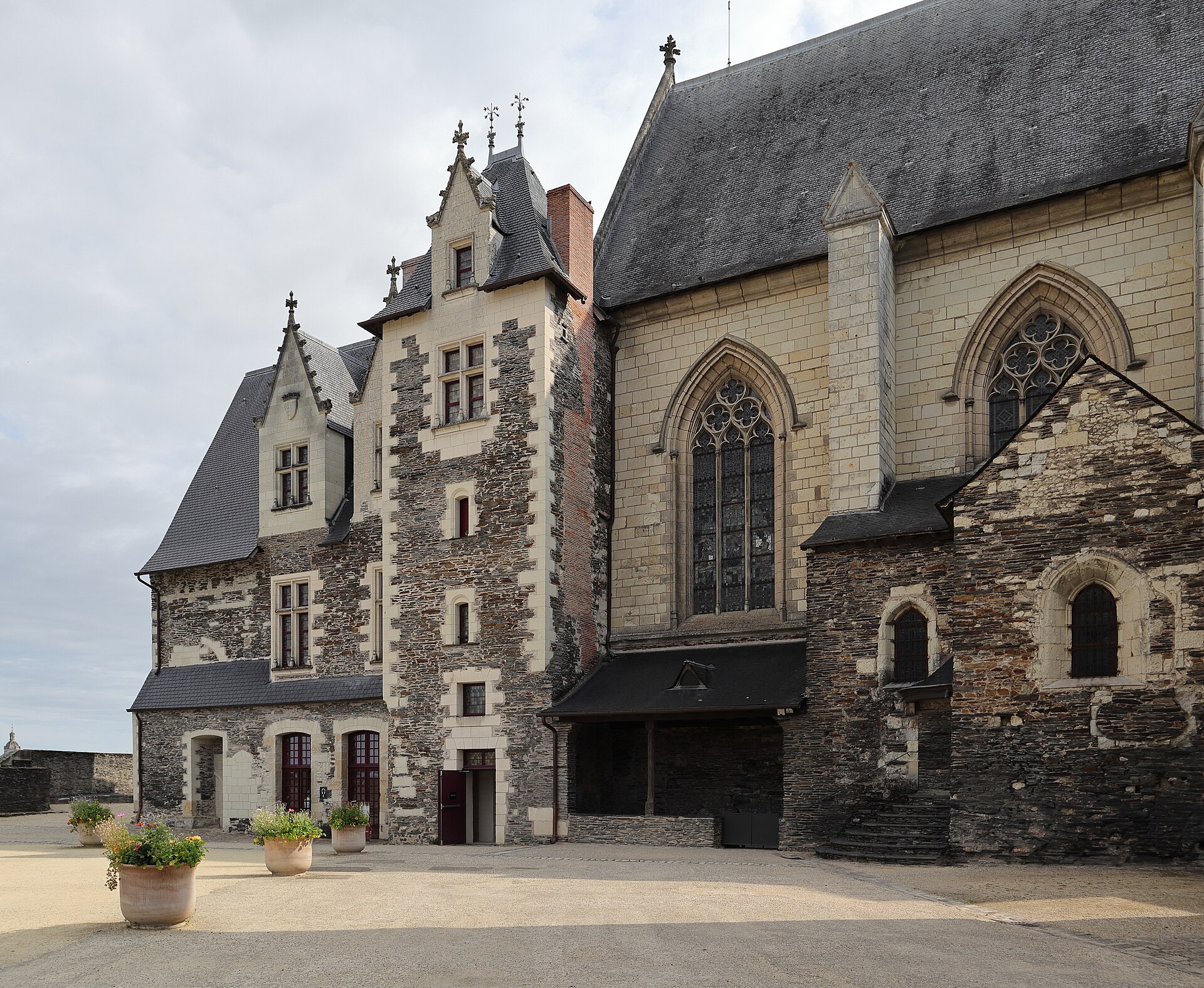
Among the buildings that survive within the walls, the chapel is one of the finest. Built in the elegant Gothic style for the ducal household, it provided a place of worship worthy of a great princely court, its vaulted spaces and fine windows a world away from the war-like walls outside. Here the dukes and their families gathered for Mass and for the great religious festivals of the year.
The courtyard around which these buildings stand is the heart of the castle’s inner life. Once bustling with the comings and goings of a ducal household, it is a place of relative calm today, framed by the surviving medieval buildings and opening onto gardens. It is here, more than anywhere within the walls, that you can imagine the daily rhythm of life in the castle during its great days.
The dukes of Anjou who worshipped in this chapel and crossed this courtyard were among the most cultured men of their age. Far from being mere warriors, they were patrons of artists and scholars, collectors of books and treasures, and it was their refined taste that would give Angers its single greatest glory, the astonishing tapestry that still draws visitors from across the world.
The survival of these inner buildings, alongside the great walls, is part of what makes Angers so rewarding to explore. Many fortresses have lost their domestic quarters entirely, leaving only bare ramparts, but here enough remains to conjure up the life that once filled the castle. Chapel, lodging and courtyard together let the visitor move from the world of war outside the walls to the world of the court within, and to feel the strange doubleness that defined a great medieval castle.
The Apocalypse Tapestry
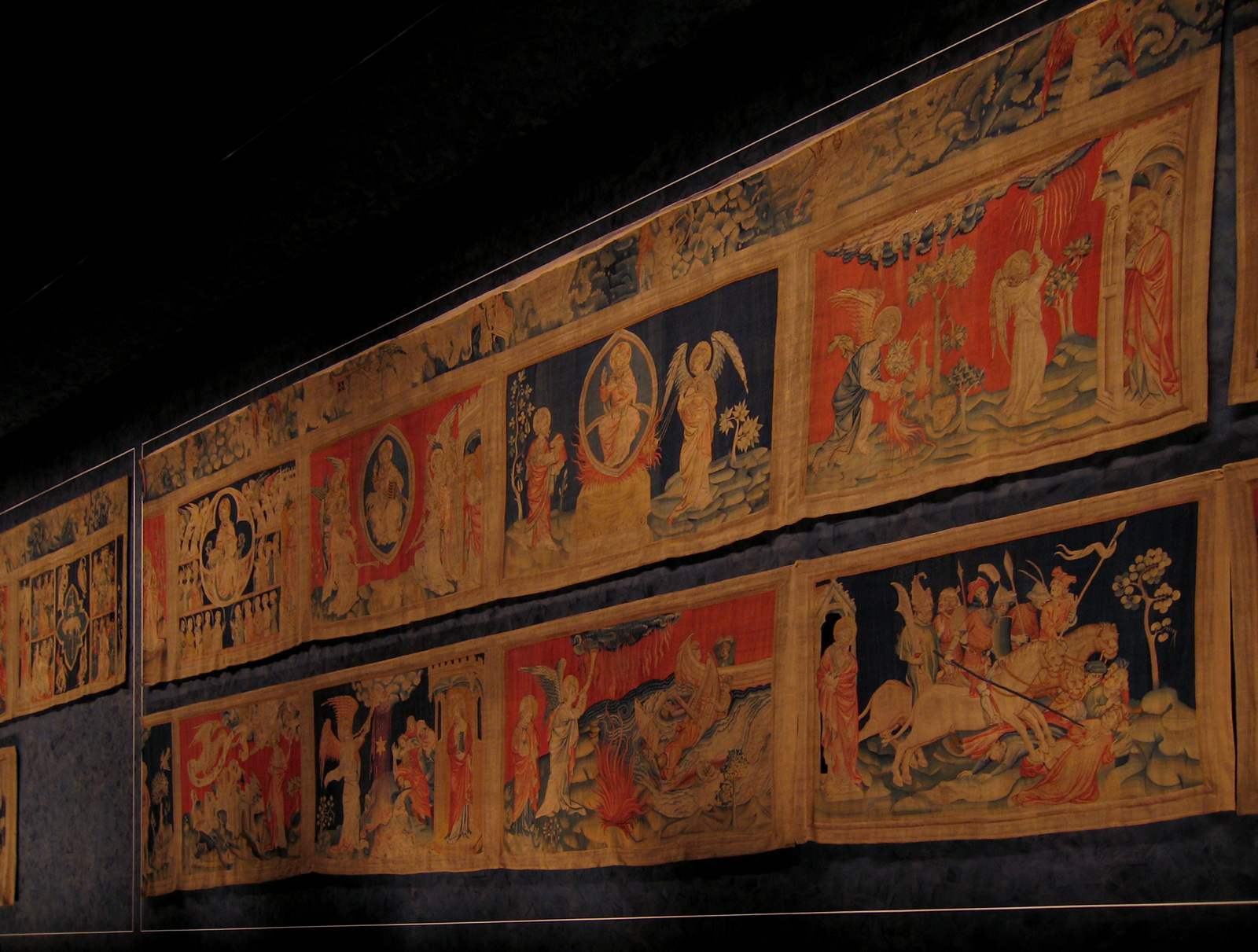
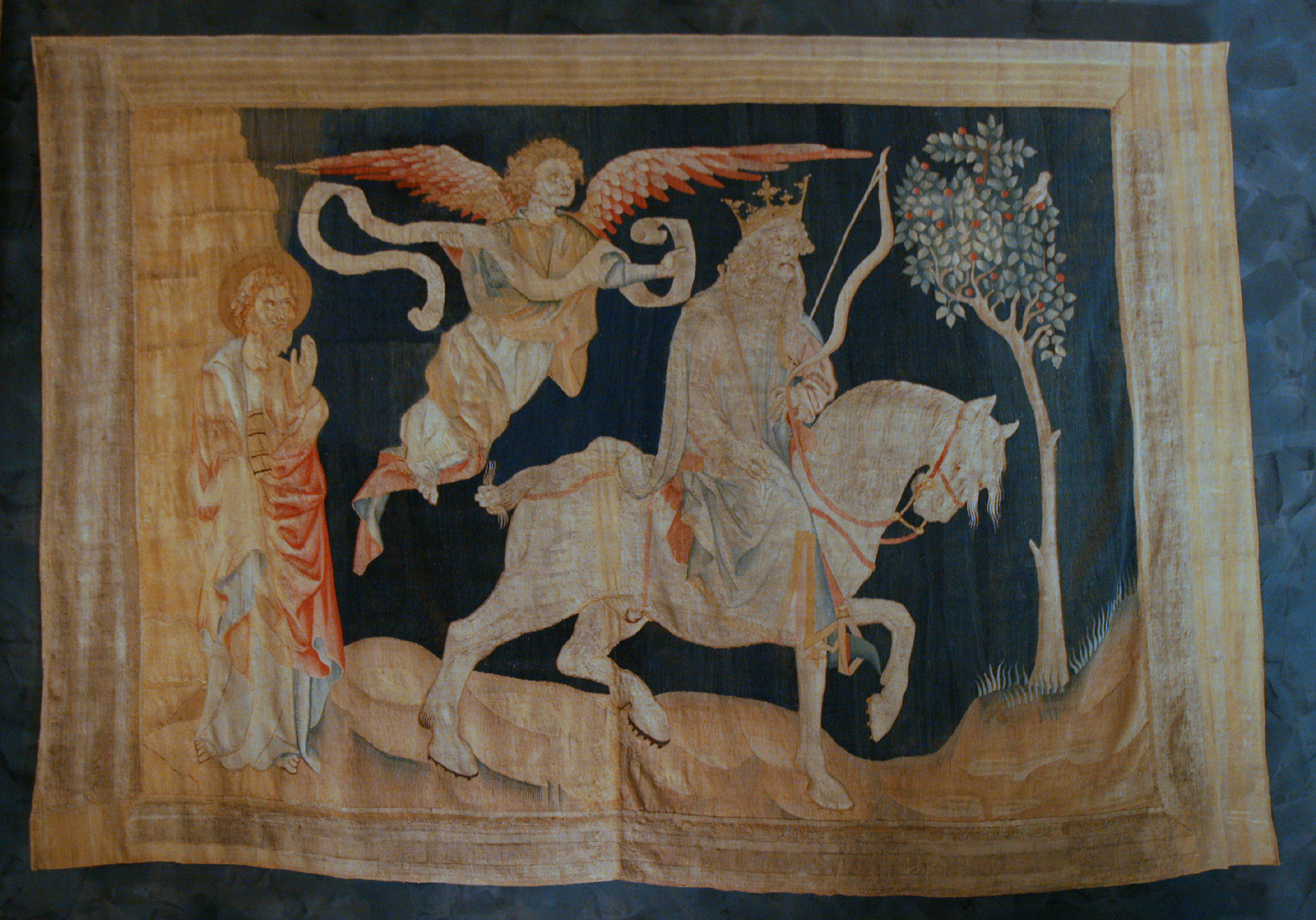
The supreme treasure of Angers, and one of the wonders of medieval art, is the Apocalypse Tapestry. Commissioned in the later fourteenth century by Duke Louis I of Anjou, it was woven to illustrate the Book of Revelation, the dramatic and terrifying vision of the end of the world that closes the Christian Bible. It is a work of staggering ambition, and nothing quite like it survives anywhere else.
The scale alone takes the breath away. When complete, the tapestry stretched to some enormous length, a great band of woven scenes that would once have hung in a vast display, telling the whole story of the Apocalypse in vivid, unforgettable images. Even today, with parts lost over the centuries, what remains is by far the largest surviving tapestry ensemble from the Middle Ages, an overwhelming procession of colour and drama.
To walk along it in the gallery built specially to house it is an extraordinary experience. Scene after scene unfolds: angels and beasts, dragons and horsemen, cities falling and heavens opening, all rendered with a power and inventiveness that still grips the imagination six hundred years later. This single work would make Angers worth visiting even if the great fortress around it did not exist.
The commissioning of such a work says a great deal about the wealth and ambition of the dukes of Anjou. Tapestries of this quality were among the most expensive objects a medieval prince could own, worth far more than paintings, and to order one on this colossal scale was a statement of almost royal magnificence. It was designed not only as an act of piety but as a display of power, a way of proclaiming the duke’s greatness through the sheer splendour of his possessions.
For centuries the tapestry was treasured, then, in less appreciative times, neglected and even cut up and put to humble uses, before its value was recognised again and the surviving pieces were painstakingly gathered and restored. That so much of it has come down to us at all is something of a miracle, and its survival allows us a direct, vivid connection to the artistic imagination of the fourteenth century that very few other objects can offer.
Visions of the End of the World
The scenes of the Apocalypse Tapestry are drawn from the Book of Revelation, and they lose none of their strangeness and power in the weaving. Here are the famous images that have haunted the Christian imagination for two thousand years: the four horsemen riding out, the great dragon with its seven heads, the beast rising from the sea, the fall of Babylon, and the final triumph of good over evil at the end of time.
What makes the tapestry so remarkable is not just its size but the vividness with which these visions are brought to life. The medieval weavers, working from designs by a leading court painter, filled each scene with drama and detail, with monsters and marvels, with terror and hope. Small human figures often watch the cosmic events unfold, drawing the viewer into the story and making the incomprehensible somehow immediate and real.
For the people of the Middle Ages, the end of the world was not an abstract idea but a vivid and ever-present reality, and a work like this was both a religious meditation and a spectacular display of ducal wealth and piety. To stand before it now is to see the medieval mind at its most imaginative, wrestling with the greatest questions of all in threads of wool and colour.
The tapestry was originally even longer than the great stretch that survives, and would have made an overwhelming impression when displayed in full on some grand occasion. Imagine entering a hall hung from end to end with these towering scenes of cosmic drama, the colours fresh and vivid, the gold threads catching the light: it would have been one of the most spectacular sights in all of medieval Europe, a whole world of terror and glory woven in wool.

Good King René, the Last Great Duke
The most beloved of all the lords of Angers was René of Anjou, remembered across the region as Good King René. A duke of Anjou who also held, at least in name, the crowns of Naples, Sicily and Jerusalem, René was one of the most cultivated princes of the fifteenth century, a poet, a painter, a lover of gardens and pageantry, and a genuinely humane ruler whose memory the people of Angers have cherished ever since.
Under René the castle and city enjoyed a golden age of art and festivity. He filled his court with artists and writers, staged tournaments and celebrations, laid out gardens and menageries, and threw himself into the whole rich culture of the late Middle Ages with infectious enthusiasm. His reign was the last great flowering of the independent power of Anjou, a warm and colourful epilogue to centuries of ducal glory.
René’s mother, Yolande of Aragon, was herself a formidable figure who played a crucial part in the wider history of France, helping to support Joan of Arc and the cause of King Charles VII in the darkest days of the Hundred Years War. The court of Angers, in her time and her son’s, stood close to the very centre of the drama that would decide the fate of the French kingdom.
René’s love of pageantry and beauty left a deep mark on the culture of his age. He wrote allegorical romances, designed tournaments and festivities of great elaboration, and took a genuine interest in painting, music and the natural world. In an era of hard-headed and often brutal princes, he stood out for his humanity and his cultivation, and the affectionate title Good King René reflects a real and lasting fondness among the people he ruled.
His reign, however, marked the end of an era. After René, Anjou was absorbed once and for all into the royal domain of France, and the great independent duchy that had shaped so much history came to a quiet close. The castle of Angers passed fully into the hands of the crown, its days as the seat of a mighty princely dynasty over, its future to be that of a royal fortress and, in time, a monument.
The court of Angers under René was a place where the late medieval world reached one of its final, most brilliant flowerings, just as the Middle Ages themselves were giving way to the Renaissance. There is something poignant in this last golden age of the duchy, a warm autumn light before the long story of independent Anjou finally came to its end and the great castle passed forever into the possession of the kings of France.
When the Towers Were Doomed
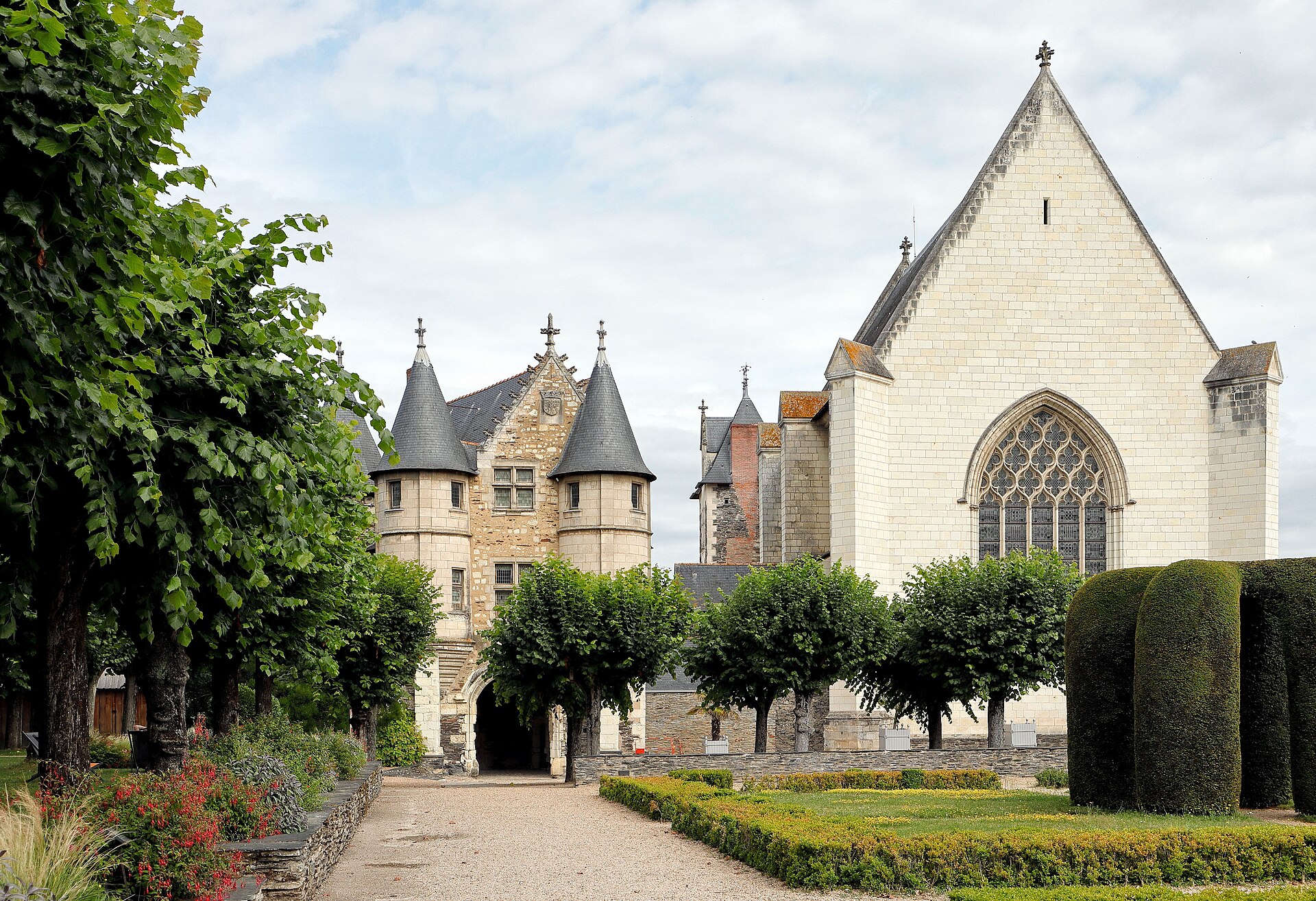
The great fortress came surprisingly close to destruction, not in war but by royal order. During the ferocious Wars of Religion that tore France apart in the later sixteenth century, King Henri III, fearing that a fortress as strong as Angers might fall into the hands of his enemies, gave the order for its towers to be demolished. It seemed the mighty castle of Saint Louis might be reduced to rubble.
Yet the towers survived, thanks to a mixture of luck, reluctance and practicality. The work of demolition was carried out only half-heartedly, and rather than being destroyed the towers were simply lowered, their tall conical roofs and upper storeys removed down to the level of the walls, where they could serve as platforms for artillery. The governor of the castle, it is said, deliberately dragged his feet, and the king’s death soon put an end to the scheme.
This is why the towers of Angers, for all their bulk, look strangely flat-topped today, shorn of the pointed roofs they once wore. What might have been an act of total destruction became, in the end, merely a lowering, and the great ring of towers survived. It was a narrow escape, and we owe the survival of one of France’s most impressive fortresses to the slowness with which its own destruction was carried out.
The episode is a striking illustration of how the meaning of a great castle could change over time. Built by the crown to project royal power, Angers had become, by the sixteenth century, a potential threat to that same crown, precisely because it was so strong. In an age of civil war, a fortress that could not be easily taken was as much a danger as a protection, depending on who held it, and this is why the king was willing to contemplate destroying his own predecessors’ masterpiece.
That the towers were lowered rather than levelled turned out to be a great piece of luck for posterity. Fitted with flat tops for cannon, they lost their soaring medieval roofs but kept their massive bulk, and so the essential character of the fortress survived. Visitors today see a castle subtly different from the one Saint Louis built, but recognisably the same great ring of towers, thanks to the incompleteness of its intended destruction.
Prison, War and Rebirth
In the centuries after its ducal heyday, Angers slipped into a long twilight as a working fortress, garrison and prison. Its grim towers and thick walls, no longer needed to guard a princely court, made it an ideal place to hold prisoners of the state, and over the years a number of notable captives were confined within its stern circle of stone, watched over by royal guards.
The castle’s military role continued right into modern times, and during the Second World War it was used by the occupying forces as an arms depot. This brought disaster, for the castle was bombed, and some of its buildings were damaged in the fighting and explosions of those years. The old fortress, having survived the wars of the Middle Ages and the Renaissance, was not spared the violence of the twentieth century.
After the war, however, Angers was carefully restored and given a new life as one of the great historic monuments of France. Its walls were repaired, its treasures cared for, and above all the Apocalypse Tapestry was given the fine gallery in which it now hangs. Today the castle welcomes visitors from all over the world, its long and dramatic story preserved for new generations to discover.
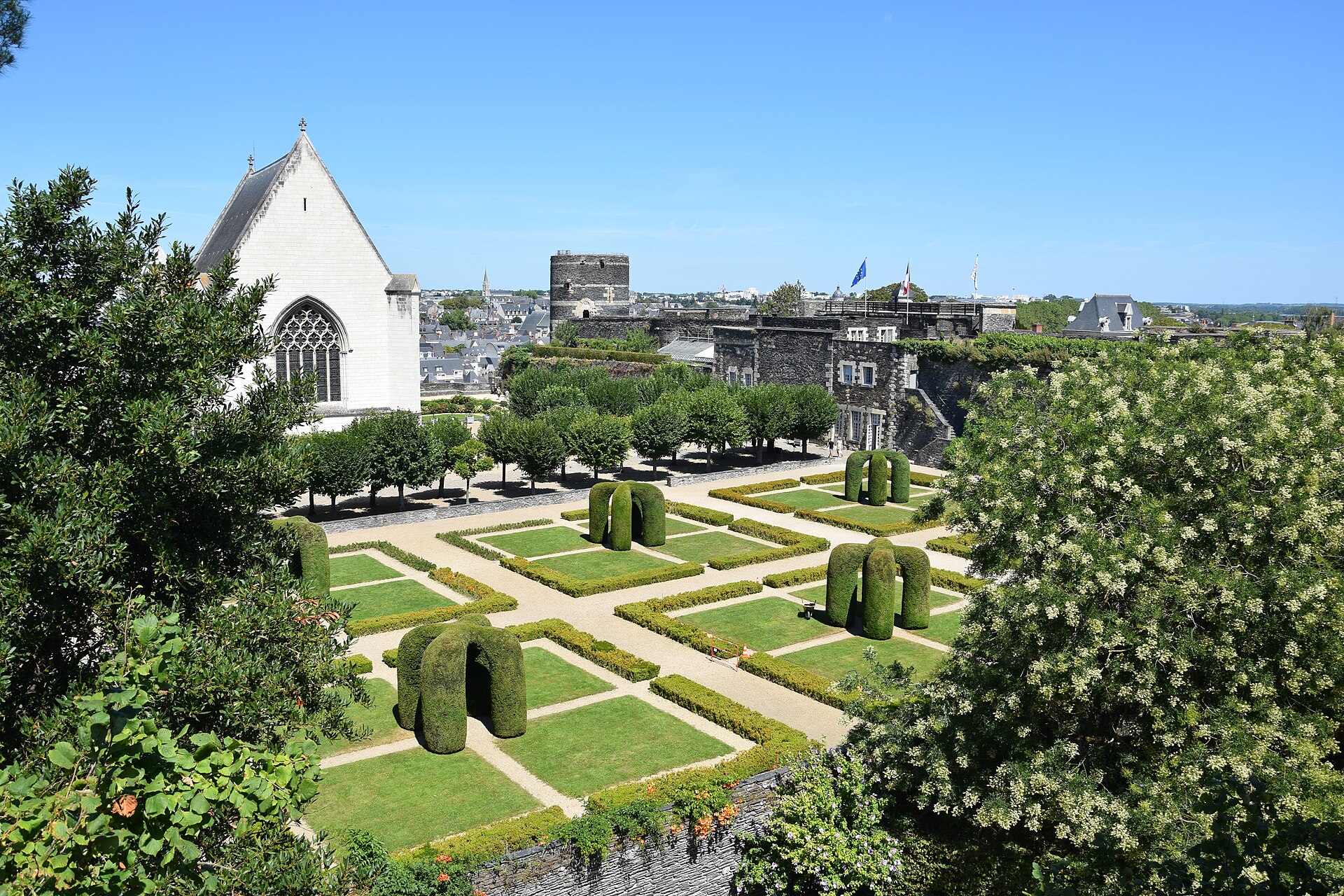
The transformation of the moat into gardens is one of the happiest touches of the castle’s modern life. Where once a dry ditch kept attackers at bay, there now flourish neatly patterned beds of flowers and clipped hedges, tended below the towering walls. It is a charming symbol of the castle’s journey from fortress to monument, the instruments of war turned, at last, to the service of beauty and pleasure.
Visiting Château d’Angers Today
Today the Chateau d’Angers is one of the great sights of western France, and a visit rewards you on many levels at once. You can walk the ramparts along the tops of the great walls, taking in sweeping views over the city, the River Maine and the surrounding countryside, and look down into the deep moat, which has been transformed into beautiful formal gardens far below.
Within the walls you can explore the surviving medieval buildings, the royal lodging, the chapel and the courtyards, and wander the gardens that soften the fortress interior. But the undisputed highlight is the Apocalypse Tapestry, displayed in its own purpose-built gallery, where you can walk slowly along its immense length and lose yourself in its extraordinary procession of medieval visions. Give yourself plenty of time, for the tapestry alone deserves an unhurried visit.
You will find the castle in the heart of the city of Angers, in the Maine-et-Loire department at the western end of the Loire Valley, easily reached by train and road and a natural companion to the great chateaux further east. For exact directions, here is a map link to guide you there: 47.4708, -0.56. Cross the moat, pass beneath the great striped towers, and step into one of the most powerful and treasure-filled fortresses in all of France.
Castles Nearby
The Fortress of the Angevins
The Chateau d’Angers is a place of mighty contrasts. From the outside it is one of the sternest and most imposing fortresses in France, a ring of seventeen great striped towers built to overawe a whole region and to stand against any assault. From the inside it is a place of art and beauty, where cultured dukes once held court and where the greatest tapestry of the Middle Ages still hangs in quiet splendour.
It is a castle that helped shape the destiny of two kingdoms, that came within a whisker of destruction, and that has survived to tell its extraordinary story to us today. Cross its moat and walk beneath its towers, and you walk into the heart of the old power of Anjou, a dynasty that once wore the crowns of England and France alike, and whose great black and white fortress still guards the rock above the Maine.
You May Like
Castello di Miramare: The White Castle of a Doomed Prince


One thought on “Château d’Angers: The Great Fortress of the Angevins”