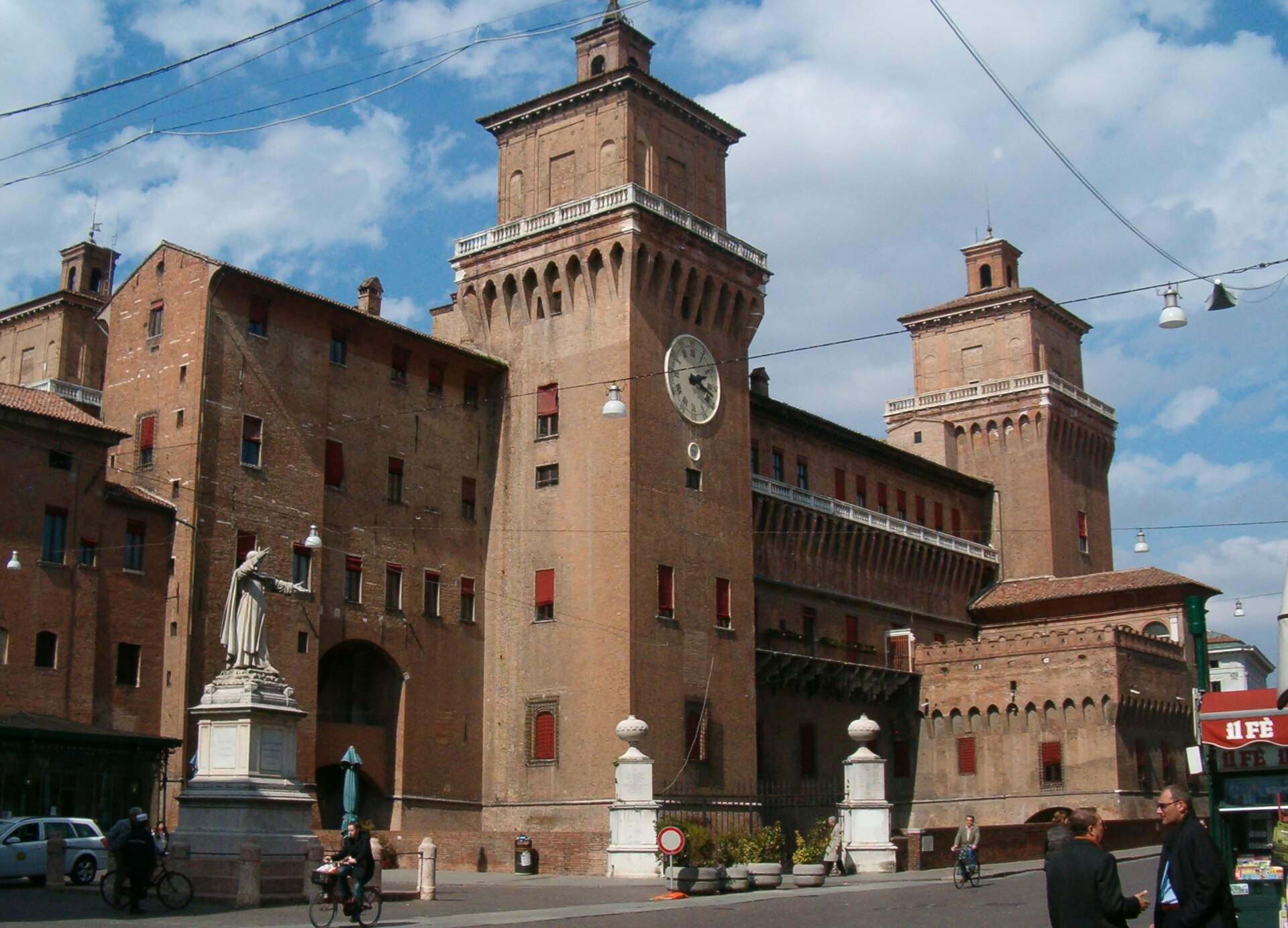
In the heart of the elegant city of Ferrara, in the north of Italy, stands one of the most striking castles in the country, a great red-brick fortress with four mighty towers, still surrounded by a wide moat filled with water. The Castello Estense is one of the last true moated castles of Europe, a fortress that has kept its ring of water when so many others have lost theirs, and it rises in the very centre of the city like a vision from the age of chivalry.
For centuries this castle was the seat of the Este, one of the great ruling dynasties of Renaissance Italy, a family who made Ferrara into a brilliant centre of art, music, and learning. The castle they built and inhabited reflects both sides of their rule, the fear and the splendour, for it was raised as a grim fortress to protect them from their own people, and then transformed within into a magnificent Renaissance palace fit for one of the most cultured courts in Europe.
With its moat and drawbridges, its towers and battlements, and its richly decorated rooms, the Castello Estense is a place where the medieval and the Renaissance meet, where the world of war and the world of art stand side by side. Come with me to Ferrara and we will explore this great moated castle, following the story of the Este dynasty from a fearful uprising to a golden age, and discovering why the Castello Estense is one of the loveliest and most evocative castles in all of Italy.
In This Article
- A Castle in the Heart of the City
- One of Europe’s Last Moated Castles
- Drawbridges and Defences
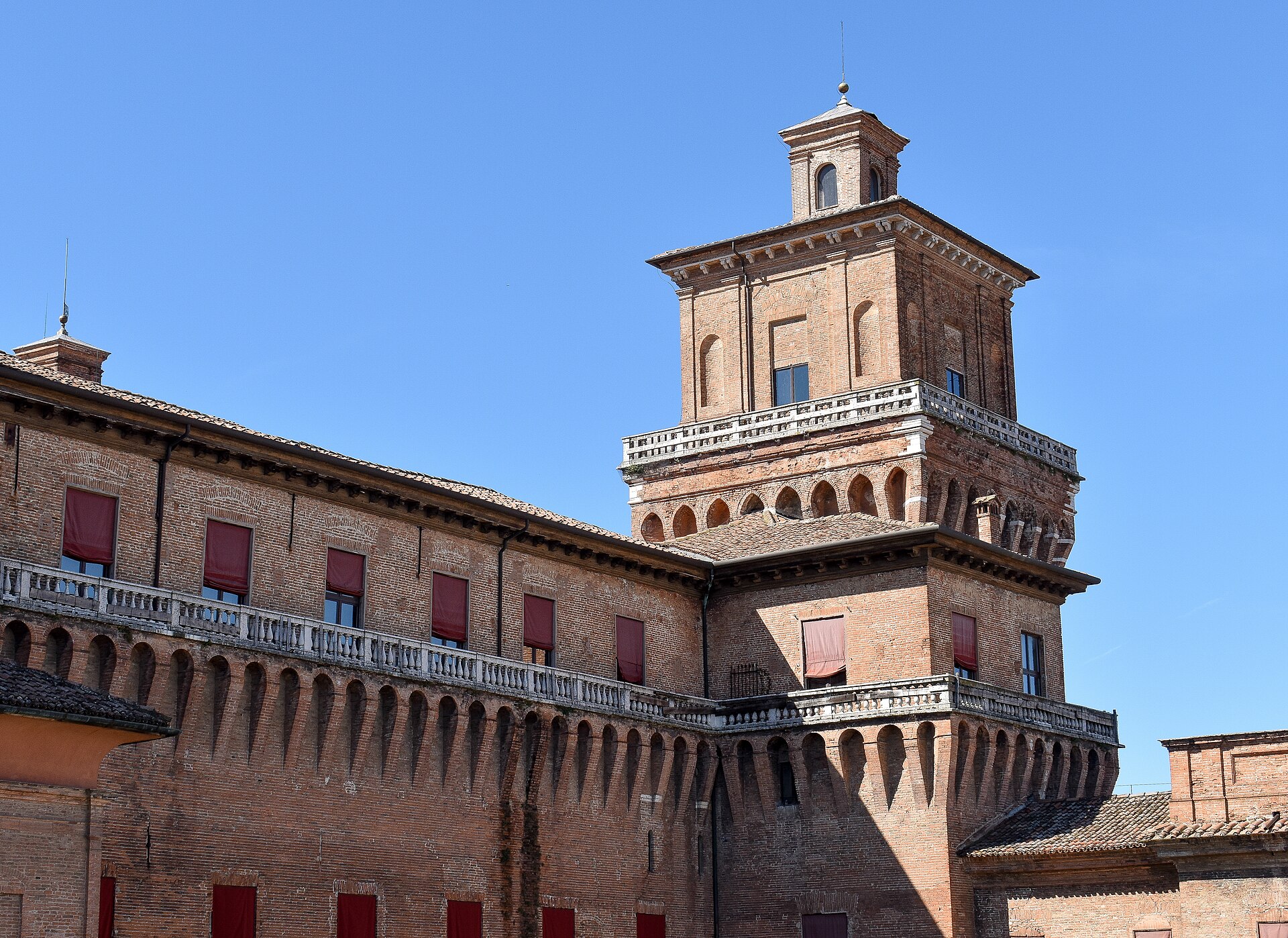
- Four Towers and a Square Plan
- Built From Fear
- The Tower of Lions
- From Fortress to Palace
- The Courtyard of the Este
- A Brilliant Renaissance Court
- The Dungeons and a Tragic Tale
- Hanging Gardens and Painted Halls
- From Dukes to Popes
- Visiting the Castello Estense
A Castle in the Heart of the City
Like the great fortress of Milan, the Castello Estense stands not in some remote and defensible spot but right in the middle of a city, dominating the central squares of Ferrara. The elegant streets and palaces of the old town gather around it, and the castle rises among them, its red-brick towers and its moat a startling reminder of the age of war amid the refined beauty of one of Italy’s most graceful Renaissance cities.
This central position was deliberate, and it tells us much about why the castle was built. It was raised not primarily to guard against outside enemies but to dominate the city itself and to protect the ruling family who lived within it. A fortress in the heart of the city, surrounded by water and bristling with towers, was a powerful statement of authority, a stronghold from which the Este could hold Ferrara in their grip.
For the visitor today, the effect of the castle in the centre of the city is unforgettable. To come upon so complete a medieval fortress, moat and all, in the middle of a busy Italian city is to feel the past and present meet in a single view. Ferrara grew up around its castle, and the two are inseparable, the fortress at the centre of the city giving the whole place its character and its unmistakable sense of history.
Ferrara itself is one of the treasures of Italy, a city so beautifully planned and preserved that it has been recognised as a monument of the Renaissance in its own right. The castle sits at the meeting point of the medieval city and the elegant new districts laid out by the Este, so that it stands at the very hinge of Ferrara history, linking the old town to the ordered beauty of the Renaissance city.
One of Europe’s Last Moated Castles
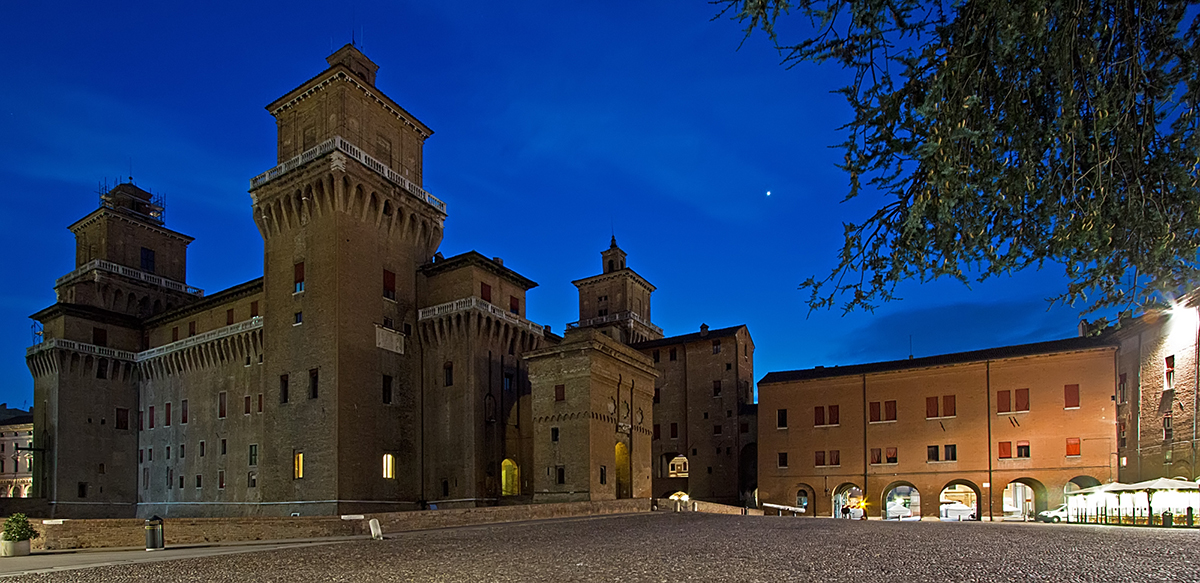
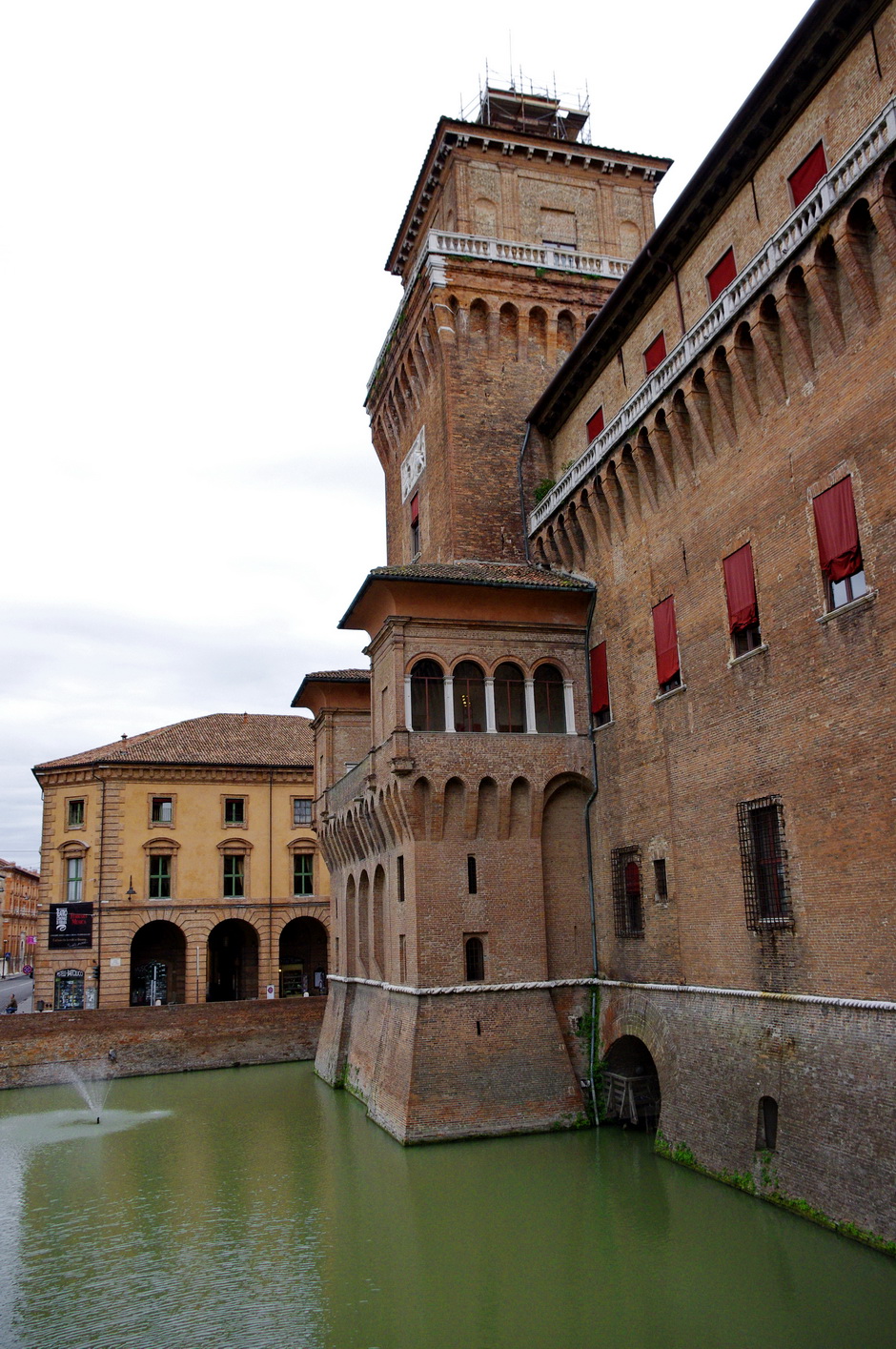
The most remarkable feature of the Castello Estense, and the one that sets it apart from almost every other castle in Italy, is its moat. The fortress is still completely surrounded by a wide channel of water, a true moat of the old kind, and this ring of water is one of the last of its type to survive intact in Europe. Where other castles have had their moats filled in or drained over the centuries, Ferrara has kept its water, and the effect is magical.
A moat was one of the oldest and most effective of all defences, for water is a barrier that cannot easily be climbed, tunnelled under, or set on fire. A castle surrounded by a moat could be reached only by its bridges, which could be raised to cut it off entirely, and this made a moated fortress extraordinarily difficult to attack. The wide moat of the Castello Estense was central to its strength, turning the fortress into an island of defence within the city.
Today the moat is one of the great beauties of the castle as well as a reminder of its martial past. The red-brick walls and towers reflected in the still water make one of the most photographed images in Ferrara, and the ring of water sets the castle apart from the city around it, giving it an air of romance and mystery. To walk around the moat, watching the castle mirrored in the water, is one of the great pleasures of a visit.
The survival of the moat is partly a matter of good fortune and partly of the low, watery landscape in which Ferrara sits, a land of rivers and canals where water has always been close at hand. In such a setting a moat was the natural form of defence, and the persistence of the castle ring of water into modern times connects the fortress to the whole watery character of the region around it.
At night, when the castle is floodlit and its towers glow above the dark water of the moat, the fortress takes on a particular magic, and the reflection of the illuminated walls in the still water is one of the most beautiful sights in Ferrara. Many visitors find the evening the loveliest time to walk around the moat and admire the castle at its most romantic.
Drawbridges and Defences
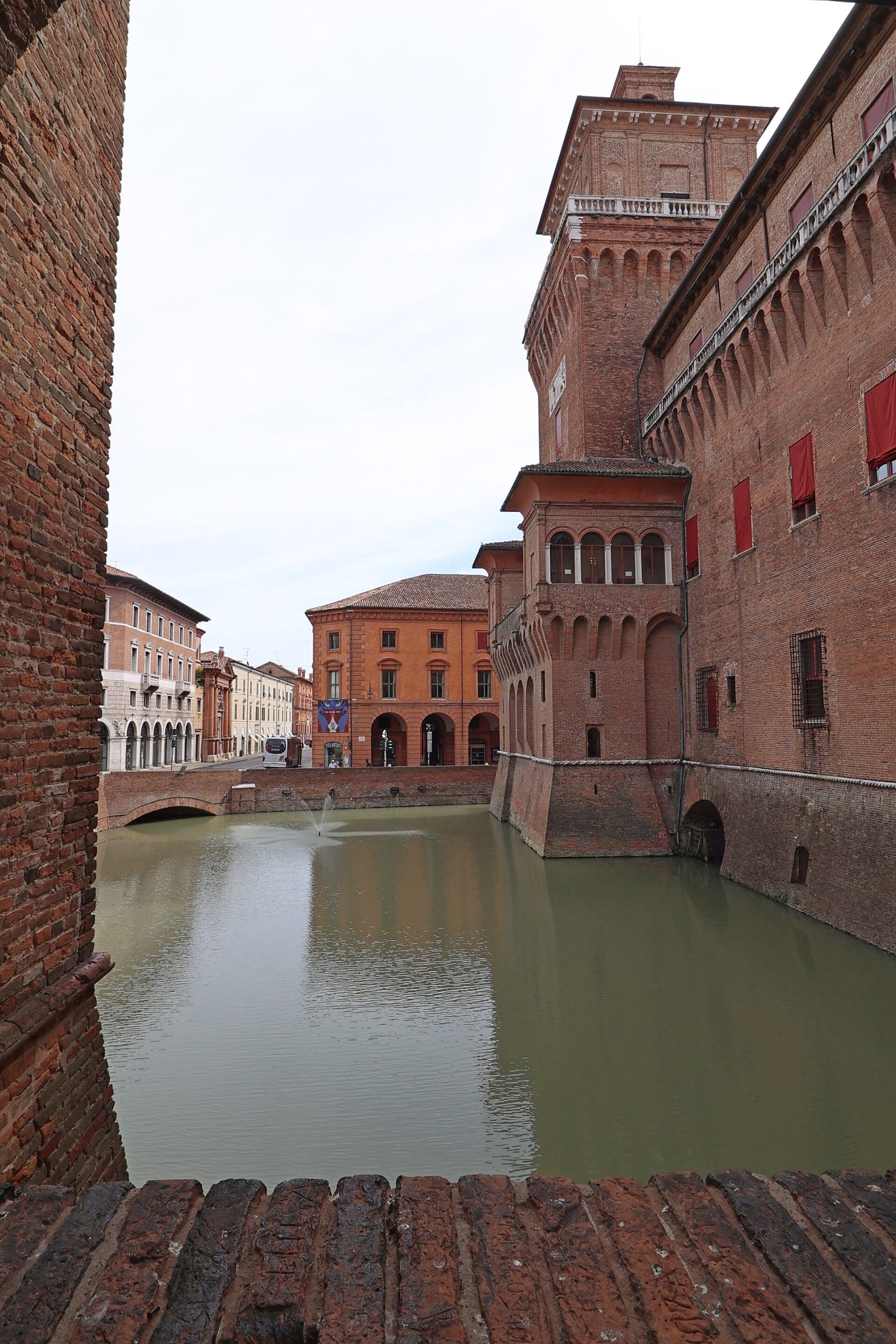
To enter the Castello Estense you must cross the moat, and the castle is reached by bridges that could, in earlier times, be raised to seal the fortress off completely. The drawbridge was an essential part of the defences of any moated castle, the single controllable point of access that turned the ring of water into a true barrier, and at Ferrara the bridges and their gates were designed to make the entrance a formidable obstacle to any attacker.
The whole approach to the castle was arranged for defence. An enemy wishing to storm the fortress would have to cross the water under fire, force the gates, and fight through the defences, all while the raised drawbridges denied them easy access. The combination of moat, bridges, and towers made the Castello Estense one of the strongest fortresses of its kind, a stronghold that could hold out even in the midst of a hostile city.
Crossing the bridges today, over the water and into the heart of the castle, the visitor follows the same path by which the Este and their guests once entered their fortress home. The experience of crossing the moat, with the water below and the great towers rising ahead, is one of the most memorable moments of a visit, a vivid reminder that this beautiful castle was, first and foremost, a serious work of military engineering built to keep its owners safe.
The mechanisms of the drawbridges, with their chains and counterweights, were marvels of medieval engineering, allowing heavy spans of timber to be raised and lowered at need to control access to the castle. Traces of these arrangements can still be seen at the entrances, a reminder of the constant readiness for danger that governed life in a fortress built to protect its rulers from sudden attack.
Four Towers and a Square Plan
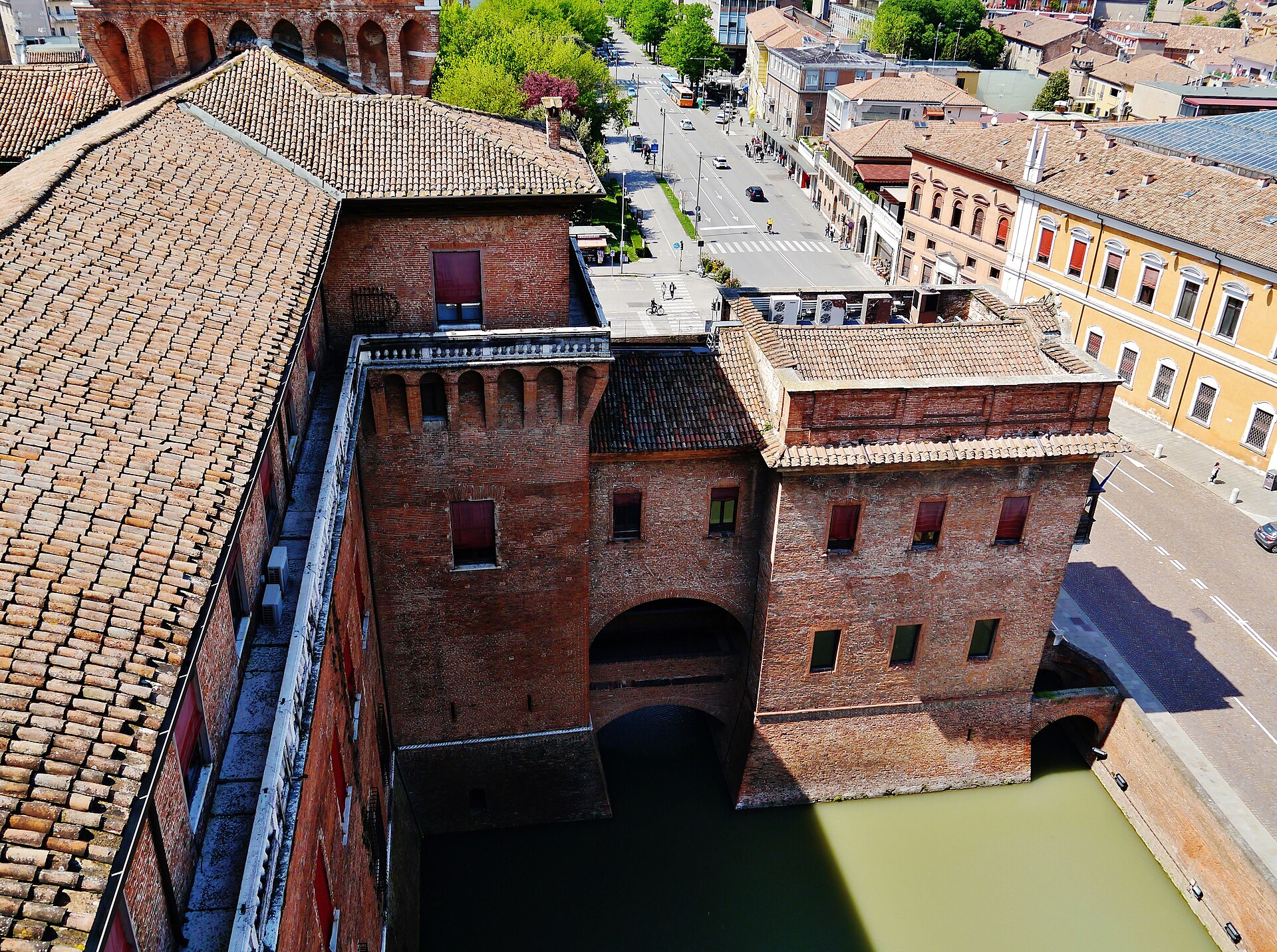
Seen from above, the Castello Estense reveals its classic and satisfying form, a compact square fortress with a massive tower rising at each of its four corners. This regular, four-square plan, ringed by the moat, is the essence of a certain kind of late-medieval castle, designed for strength and symmetry, and it gives the Castello Estense its powerful and unmistakable silhouette.
Each of the four corner towers played its part in the defence of the castle, allowing the defenders to cover the walls and the moat from every angle, so that no attacker could approach unseen or unopposed. The towers also served as strongpoints, lookouts, and, as we shall see, as prisons, and they remain the dominant feature of the castle, their bulk rising above the walls and the water in a display of medieval strength.
The four towers each have their own name and their own history, and the oldest of them incorporates part of an earlier structure that stood on the site before the castle was built. Together they frame the square mass of the fortress and give it its character, and from the air the whole composition, the square plan, the four towers, and the encircling moat, can be seen as a perfect example of the moated castle at the height of its development.
The regular, geometric plan of the castle reflects a moment when castle-building was becoming more systematic, as builders applied careful design to the problems of defence. The result at Ferrara is a fortress of great clarity and strength, its four towers and square plan forming a model of the type, and its very regularity contributing to the powerful impression it makes.
Climbing one of the towers rewards the visitor with a fine view over the rooftops of Ferrara and the flat, fertile country beyond, the same prospect from which the castle guards once watched for any sign of trouble. The view is a reminder of the castle role as the commanding point of the city, dominating both the town below and the surrounding landscape.

Built From Fear
The origins of the Castello Estense lie in a moment of fear and danger for the ruling family. In the late fourteenth century the people of Ferrara, driven to fury by heavy taxes, rose up in a violent revolt against the Este, and the ruling marquis found himself in mortal peril from his own subjects. The uprising was a terrifying warning of how quickly a prince could fall, and it left the Este determined never to be so vulnerable again.
In response, the marquis ordered the building of a great new fortress in the heart of the city, a stronghold to which the ruling family could retreat and from which they could dominate the population. The castle was raised around an existing tower, expanded into a mighty four-towered fortress surrounded by a moat, and it was designed above all to protect the Este from their own people, a refuge and a symbol of control in one.
So the Castello Estense was, in its origins, a castle built from fear, a response to the terror of that popular uprising. This gives the beautiful fortress a darker undertone, a reminder that it was raised not to defend the people of Ferrara but to hold them in check and to keep their rulers safe. The grim strength of the exterior, with its towers and moat, speaks of this original purpose, the hard foundation on which the later splendour of the Este court would be built.
The uprising that gave birth to the castle was a genuine trauma for the ruling family, and its memory shaped their behaviour for generations. The fortress they built in response was as much a psychological statement as a military one, a permanent reminder to the people of Ferrara of the power that ruled over them, and a reassurance to the Este that they would never again be caught defenceless in their own city.
It is a striking paradox that so beautiful a building should have been born of such fear and mistrust between rulers and ruled. The Castello Estense stands as a reminder that the great monuments of the past were often raised for hard and even cruel purposes, and that the beauty we admire today can rest on foundations of conflict and control long since forgotten.

The Tower of Lions
Of the four corner towers, the oldest and most storied is the great tower known as the Tower of Lions, which incorporates part of an earlier structure that predated the castle itself. Rising above the moat, it is the most ancient part of the whole complex, and it carries the deepest memories of the castle’s long and often dark history. Its very stones reach back beyond the founding of the fortress to an earlier age of Ferrara.
Like the other towers, the Tower of Lions served the defence of the castle, but it also housed some of its grimmest spaces, for the lower levels of the castle’s towers held the dungeons in which prisoners were confined. In these dark chambers, deep within the fortress, unfortunate captives were held far from light and hope, and some of the most tragic episodes in the castle’s history unfolded within these walls.
To look up at the Tower of Lions from beside the moat is to see the oldest and most powerful part of the castle, the tower around which the whole fortress grew. It anchors the Castello Estense in the deep past of Ferrara, and its combination of strength and darkness, of defensive might and grim confinement, captures perfectly the double nature of the castle as both a stronghold and a prison, a place of both power and suffering.
The names of the four towers each carry their own associations and history, and together they form a kind of roll-call of the castle past. The Tower of Lions, as the oldest, holds pride of place, but each tower has played its part in the long life of the fortress, standing guard over the moat and the city through six centuries of Ferrara history.

From Fortress to Palace
Over the centuries the Castello Estense underwent a great transformation, for as the danger of revolt faded and the Este grew into confident Renaissance princes, they turned their grim fortress into a magnificent palace. What had been a stronghold to protect them from their people became a splendid residence in which to display their wealth, their taste, and their patronage of the arts, and the interior of the castle was remade to match this new role.
The rooms of the castle were richly decorated with frescoes, painted ceilings, and fine furnishings, transforming the interior from a military stronghold into a princely home worthy of one of the great courts of Italy. Skilled artists were employed to adorn the walls and ceilings with beautiful decoration, and the castle became a setting for the brilliant cultural life of the Este court, a place of music, poetry, and art as much as of power.
This transformation from fortress to palace is one of the great themes of the castle’s history, and it can still be felt as one moves through the building today. The grim exterior, with its towers and moat, gives way within to rooms of surprising elegance and beauty, and the contrast captures the whole story of the Este, a family who began by fortifying themselves against their people and ended as some of the most cultured patrons of the Renaissance.
The gradual softening of the castle from stronghold to residence mirrors a wider change across Renaissance Italy, as the grim fortresses of the medieval age were adapted to the more refined tastes of a new era. At Ferrara this transformation was carried out with particular success, so that the castle became a byword for the union of strength and beauty, a fortress that was also one of the loveliest palaces in Italy.
The dual character of the castle, at once fortress and palace, makes it an especially rewarding place to visit, for it offers both the drama of a medieval stronghold and the refinement of a Renaissance residence within a single building. Few castles let the visitor pass so readily between these two worlds, and it is this richness that gives the Castello Estense its special fascination.
The Courtyard of the Este
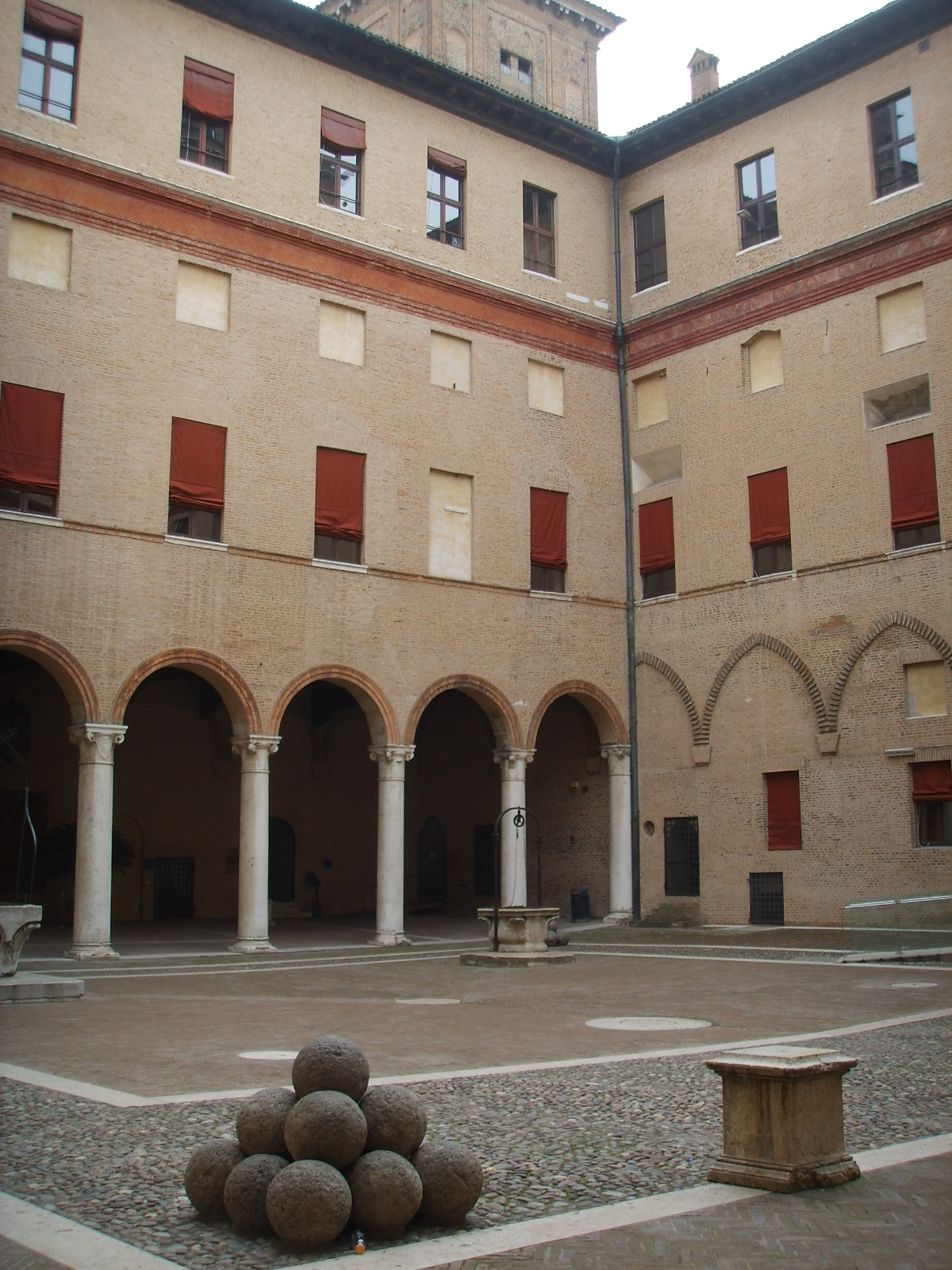
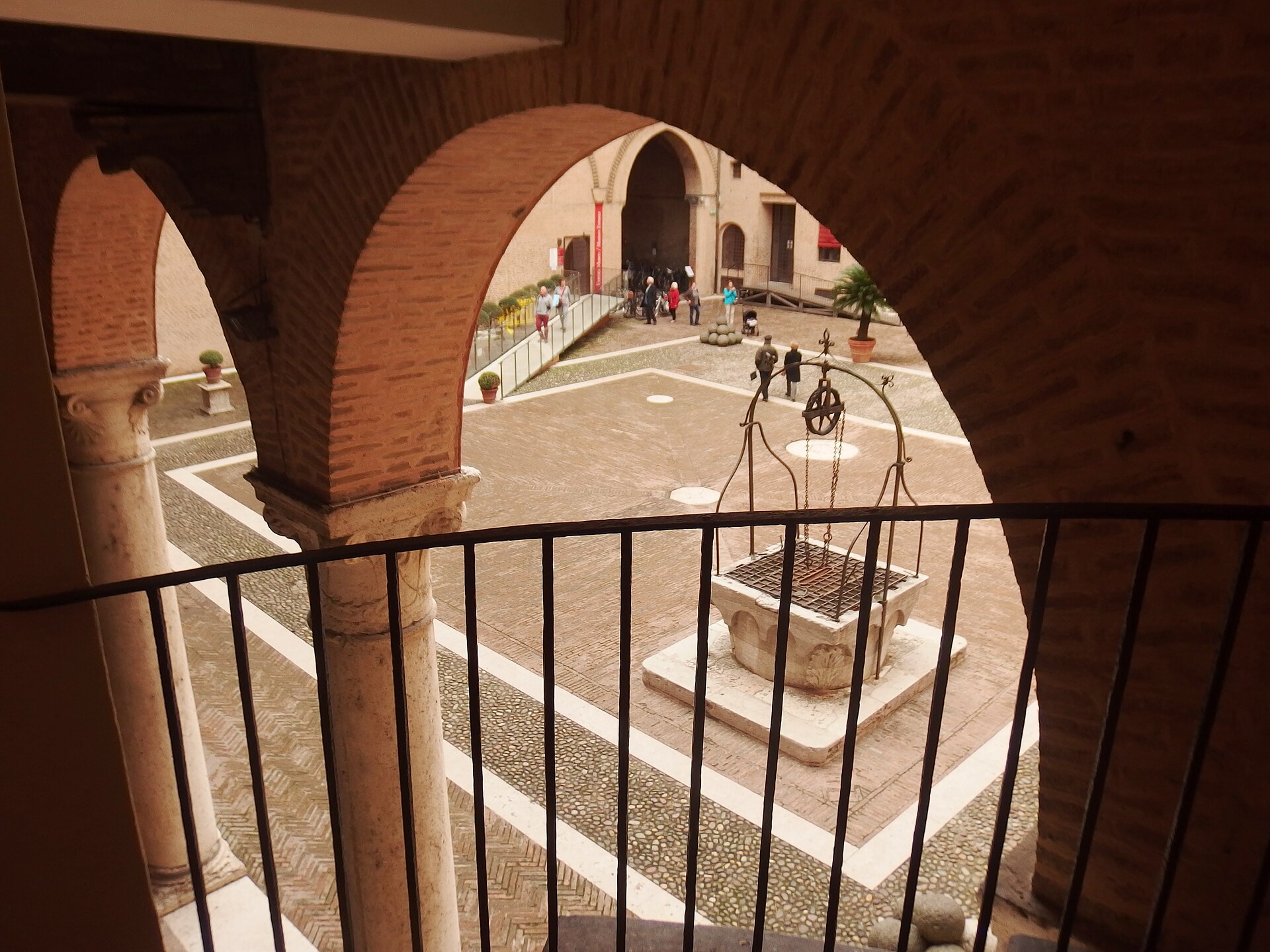
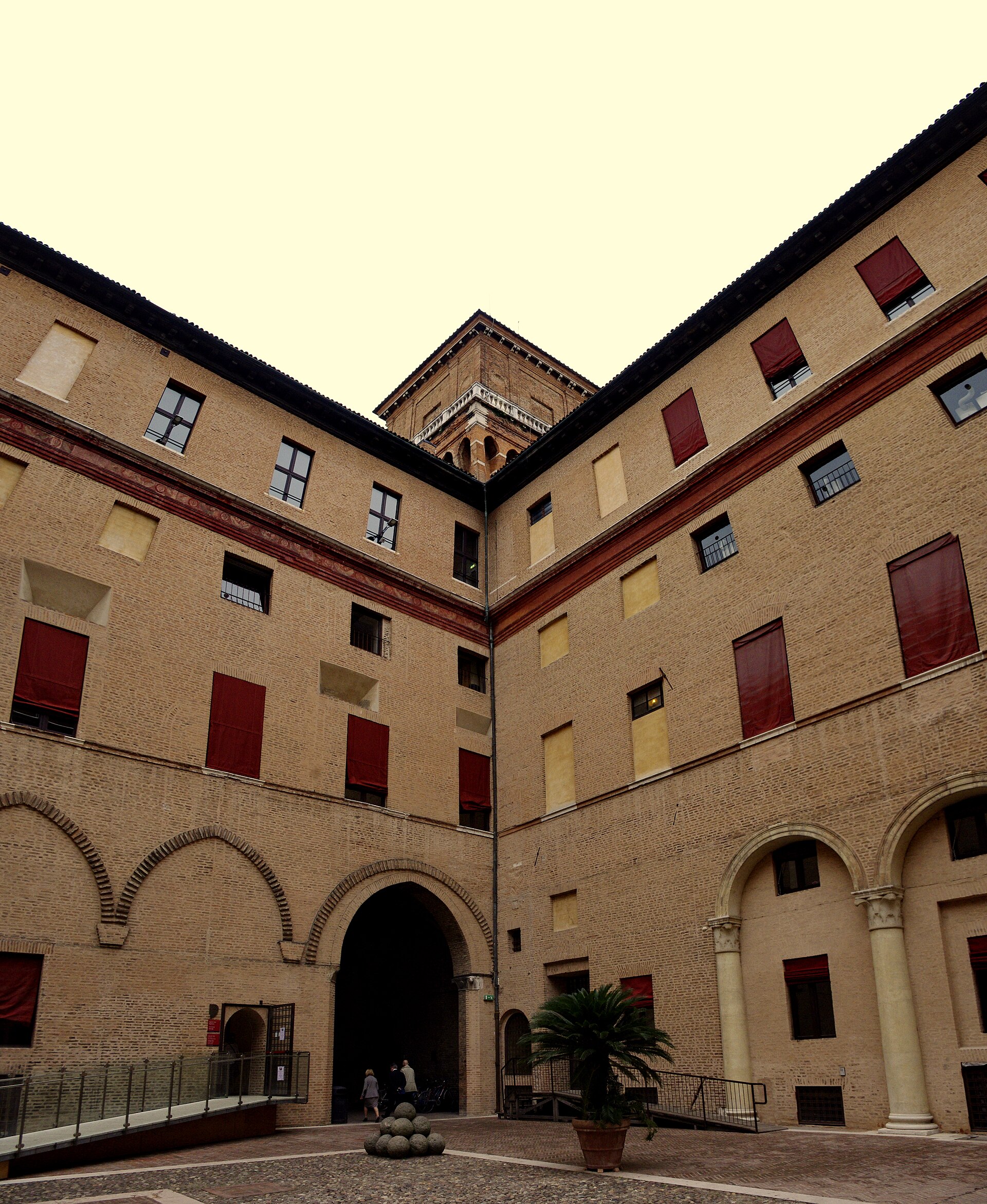
At the centre of the castle lies its courtyard, the sheltered heart of the fortress around which the various parts of the building are arranged. Enclosed by the walls and towers, this inner space was the focus of life within the castle, the point from which the residential rooms, the halls, and the towers could be reached, and it retains the calm and enclosed atmosphere of a place turned inward, protected within the ring of water and stone.
The courtyard reflects both the martial and the domestic sides of the castle. On the one hand it is enclosed and defensible, the secure heart of a fortress; on the other, as the Este transformed their castle, it became the elegant centre of a princely residence, giving access to the fine rooms and apartments where the family lived and entertained. It is a space where the fortress and the palace meet.
Standing in the courtyard, surrounded by the great mass of the castle, the visitor is at the very heart of the Este stronghold, the still centre of a building that has seen so much of the history of Ferrara. From here the whole castle can be explored, and it is the natural place to pause and take in the long and dramatic story of the fortress before moving on to its towers, its dungeons, and its splendid painted rooms.
The architecture of the courtyard, with its arcades and balconies added during the castle transformation, shows how the builders softened the fortress with the graceful forms of the Renaissance. What had been a purely defensive space became a place of elegance, and the courtyard today preserves that blend of strength and beauty that runs through the whole building.

A Brilliant Renaissance Court
Under the Este, Ferrara became one of the most brilliant centres of the Italian Renaissance, and the castle was the heart of that golden age. The Este were great patrons of the arts, drawing to their court poets, painters, musicians, and scholars, and making Ferrara a place renowned throughout Europe for its culture and its splendour. The castle rang with music and poetry, and its rooms were filled with beauty and learning.
The court of the Este was famous for its refinement and its magnificence, and the family’s patronage helped shape the art and literature of the age. Great poets found favour and support here, and the Este princes and princesses were themselves cultivated figures, some of them celebrated across Italy for their taste and their learning. The castle was the setting for this remarkable flowering, a fortress that had become a temple of the arts.
To imagine the castle in its golden age is to picture it filled with the life of one of the great Renaissance courts, its painted rooms crowded with courtiers, artists, and musicians, its halls the scene of feasts, entertainments, and learned conversation. This brilliant culture, nurtured within the walls of the fortress, is one of the great legacies of the Este, and it gives the Castello Estense a place of honour in the history of the Italian Renaissance.
The Este were connected by marriage to many of the great families of Italy, and their court drew in influences and talents from across the peninsula and beyond. This web of connections made Ferrara a crossroads of Renaissance culture, and the castle at its heart a place where the finest ideas and artists of the age could meet and flourish, adding to the brilliance for which the Este court became famous.
The music, poetry, and art nurtured at the Este court left a lasting mark on European culture, and echoes of that golden age can still be felt within the castle walls. To stand in the painted halls where such brilliance once flourished is to feel a direct connection to one of the high points of the Italian Renaissance, preserved within the great moated fortress of Ferrara.
The Dungeons and a Tragic Tale
Beneath the splendour of the Este court lay a darker world, the dungeons of the castle, where prisoners were held in grim confinement deep within the towers. These dark chambers were the scene of some of the most tragic episodes in the castle’s history, and they remind us that the same fortress that housed a brilliant court could also be a place of imprisonment, cruelty, and death.
The most famous and terrible tale associated with the castle’s dungeons is a story of forbidden love and deadly vengeance from the early fifteenth century. A marquis of the Este, discovering that his young wife and one of his sons had become lovers, had them both imprisoned in the castle and then put to death within its walls. The tragic story of the two doomed lovers, executed in the dungeons of the castle, became famous far beyond Ferrara and inspired poets and writers for centuries afterward.
This dark tale casts a long shadow over the beautiful castle, a reminder of the ruthlessness that lay beneath the refinement of the Renaissance court. The dungeons where such deeds were done still survive within the fortress, and to descend into them is to feel the grim reality behind the splendour, the fear and cruelty that were as much a part of the Este story as their patronage of the arts. Beauty and terror dwell together within the walls of the Castello Estense.
The tragic story of the doomed lovers passed into legend and literature, inspiring poets in later centuries to retell the tale of forbidden love and terrible punishment. In this way the dark deeds done in the castle dungeons achieved a strange kind of immortality, their memory preserved not in triumph but in the enduring sympathy of those who told and retold their sorrowful story.
Hanging Gardens and Painted Halls
Among the many delights of the castle’s interior are its beautiful painted halls and its remarkable gardens. As the Este transformed their fortress into a palace, they created splendid decorated rooms, their walls and ceilings covered with frescoes celebrating the family, the seasons, and the pleasures of court life. These richly painted chambers are among the treasures of the castle, and they bring vividly to life the world of the Renaissance court.
Perhaps the most surprising feature of all is the castle’s garden, for high up within the fortress the Este created a hanging garden, a green and fragrant retreat raised above the walls where the family could walk and take the air in privacy and beauty. That such a delicate pleasure garden should be set within the walls of a grim fortress is a perfect emblem of the castle’s double nature, and it is one of the most charming of its many surprises.
These painted halls and hidden gardens show how completely the Este transformed their fortress into a place of pleasure and beauty. Behind the moat and the towers, they created a private world of art, music, and refined enjoyment, a world in which the harsh purpose of the original fortress was almost forgotten. To discover these elegant spaces within the mighty castle is to understand how the Este turned a stronghold of fear into a palace of delight.
The idea of a garden raised high within a fortress speaks of a wish to bring nature and beauty into even the most defensive of buildings, and it reflects the refined sensibility of the Este at the height of their culture. Such gardens were places of quiet pleasure and private enjoyment, and the survival of one within the Castello Estense is a rare and delightful glimpse into the intimate world of a Renaissance court.
From Dukes to Popes
The golden age of the Este at Ferrara could not last forever, and at the end of the sixteenth century the direct line of the ruling dukes came to an end. With no legitimate heir to succeed, the duchy of Ferrara reverted to the Papal States, and the Este were forced to leave the city that had been their home for centuries, taking their court and much of their treasure with them to other lands.
With the departure of the Este, the great castle passed into the hands of the popes, and it became the residence of the papal governors who now ruled Ferrara. The city, which had been a proud and independent centre of art and power under the Este, entered a quieter period under papal rule, and the castle, though still the seat of authority, no longer rang with the brilliant court life of its golden age.
This change of rulers marks the end of the castle’s greatest era and the beginning of its long afterlife under different masters. Yet the fortress endured, passing through the centuries as the seat of successive governments, and it survives today as the enduring symbol of Ferrara and of the great dynasty that built it. The passing of the Este was the end of an age, but the castle they raised has outlasted them all, a monument to their power and their splendour.
The removal of the Este and their court dealt a heavy blow to Ferrara, which lost much of its former brilliance and importance when it ceased to be the capital of an independent duchy. Yet the beauty the Este had created, in the castle and throughout the city, remained, and it is this inheritance that makes Ferrara so rewarding to visit today, a Renaissance city preserved almost intact around its great moated castle.
Visiting the Castello Estense
The Castello Estense stands in the very centre of Ferrara, a city in the Emilia-Romagna region of northern Italy, and it is impossible to miss, rising with its towers and moat in the heart of the old town. Ferrara is easily reached by train and road, and the castle is the natural focus of any visit, surrounded by the elegant streets and palaces of one of Italy’s most beautiful and best-preserved Renaissance cities.
A visit allows you to cross the moat by the bridges, explore the courtyard and the state rooms with their frescoes, climb one of the towers for a view over the city, and descend into the grim dungeons where the castle’s darkest dramas unfolded. The contrast between the splendid painted halls above and the dark cells below is one of the most striking experiences the castle offers, and it captures the whole double nature of the fortress.
If you would like to find it and plan your visit, here is the castle’s position in the centre of Ferrara: 44.8378, 11.6197. Allow time to walk right around the moat, which gives the finest views of the castle reflected in the water, and to explore the beautiful city that grew up around it. The Castello Estense is one of the great moated castles of Europe and the proud symbol of Ferrara, and it rewards everyone who comes to this lovely and historic city.
A visit to the castle pairs naturally with exploring the wider city of Ferrara, whose broad streets, fine palaces, and great cathedral make it one of the most rewarding smaller cities in Italy. Seen together, the castle and the city tell the whole story of the Este and their golden age, and a day spent among them is a journey deep into the world of the Italian Renaissance.

Castles Nearby
- Castello Sforzesco, the Renaissance fortress of Milan
- Castel Sant’Angelo, from emperor’s tomb to papal fortress
The Moated Heart of Ferrara
Of all the castles of Italy, few are as complete, as beautiful, or as evocative as the Castello Estense. With its four great towers and its wide ring of water, it is one of the last true moated castles of Europe, a fortress that has kept its medieval defences intact into the modern age, rising in the heart of Ferrara like a survivor from the age of chivalry.
But the castle is more than a beautiful fortress. It is the story of the Este in stone, a family who built it out of fear and then filled it with splendour, who ruled Ferrara with an iron hand and made it a jewel of the Renaissance, whose dungeons held tragic prisoners even as their painted halls rang with music and poetry. In its towers and its gardens, its cells and its frescoes, the whole drama of the Este is written.
So when you come to Ferrara, cross the moat into the great red-brick castle and give yourself to its double story of power and beauty, terror and art. Walk the painted rooms, descend into the dungeons, and circle the moat to see the towers mirrored in the water. The Castello Estense is the moated heart of Ferrara, a fortress of the Renaissance princes that remains, after six centuries, one of the loveliest and most haunting castles in all of Italy.
You May Like
Mafra, the Palace a King Built From a Vow


One thought on “Castello Estense: The Moated Fortress of the Este Dukes”