There are castles that a nation loves, and then there is Wawel, which a nation almost worships. Rising on a limestone hill above the Vistula river in the heart of Kraków, the ancient royal capital of Poland, Wawel is far more than a castle. It is the coronation place and burial ground of Polish kings, the spiritual and political heart of the country for a thousand years, and to Poles it is quite simply the most sacred ground in their homeland.
To walk Wawel Hill is to walk through the whole history of Poland. Here kings were crowned in the great cathedral and laid to rest beneath it; here a magnificent Renaissance palace rose around one of the most beautiful courtyards in Europe; here national heroes and poets are entombed, and here, according to legend, a fearsome dragon once lurked in a cave beneath the rock. No other place gathers so much of a nation’s identity into a single hill.
So come with me up onto Wawel Hill, above the river and the old city, and let us explore the castle and cathedral that together form the beating heart of Poland. We will meet the kings who built it, marvel at its Renaissance courtyard and its royal tombs, hear the deep voice of the great Sigismund Bell, and descend at last to the den of the Wawel Dragon. This is a place where history and legend are woven into the very identity of a people.

In This Article
- The Hill at the Heart of Poland
- A Thousand Years of Kings
- The Most Beautiful Courtyard in the North
- Galleries Open to the Sky
- The Cathedral Where Kings Were Crowned
- The Golden Chapel and the Great Bell
- A Pantheon of Kings and Heroes
- Tapestries, Treasures and the Coronation Sword
- The Dragon Beneath the Hill
- The Castle and Its River City
- Occupation and Survival
- The National Museum on the Hill
- The Whole Sacred Hill
The Hill at the Heart of Poland
To understand Wawel, you must first understand what it means to Poles. This is not merely an old castle but the single most important historic site in the country, the place where, for centuries, Polish kings were crowned and buried, where the nation’s greatest heroes lie entombed, and where the very identity of Poland feels concentrated in stone. If Poland has a heart, it beats on Wawel Hill.
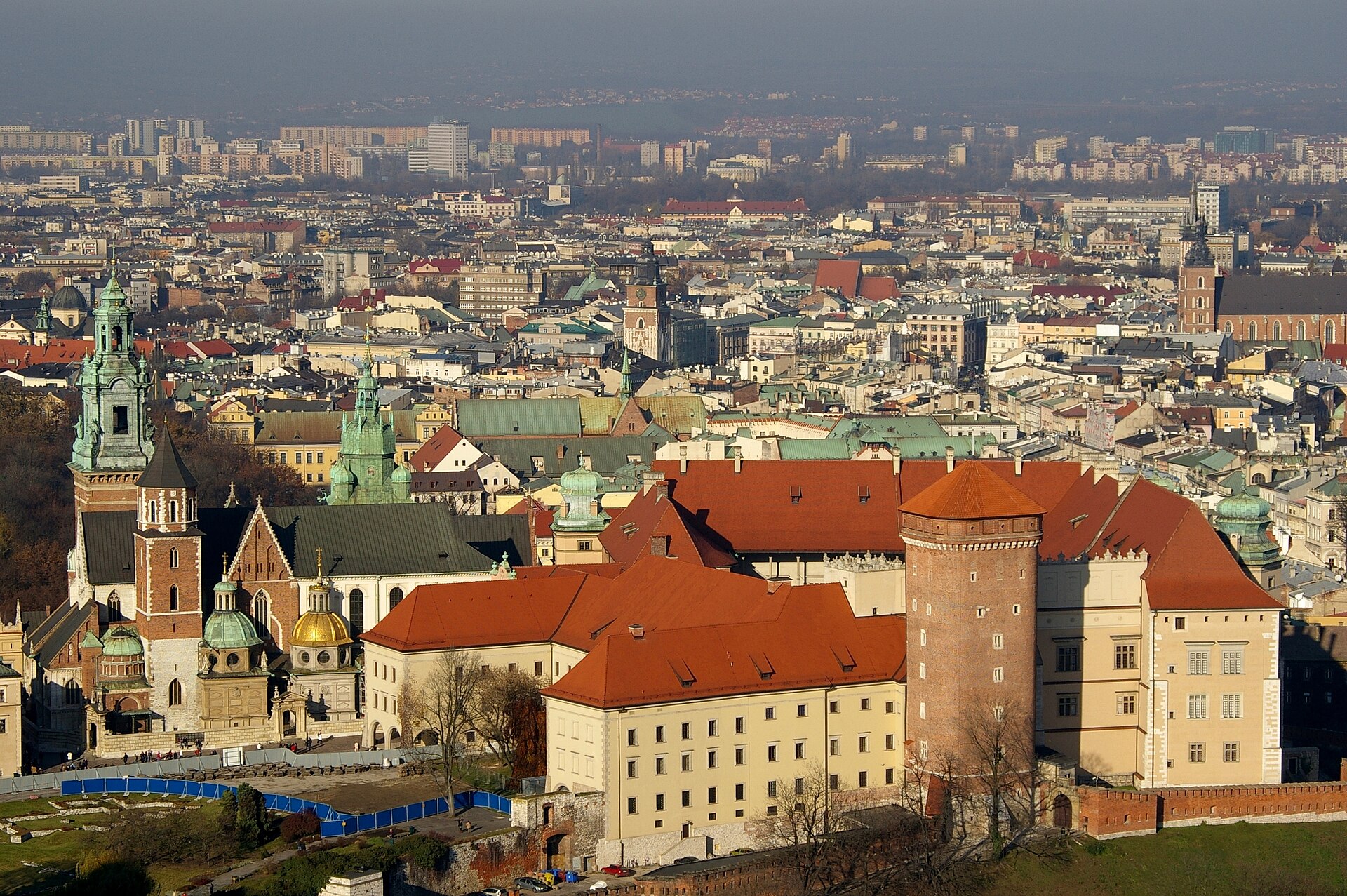
The hill itself is a modest rise of limestone above the Vistula river, in the city of Kraków, which was for centuries the royal capital of Poland. Its position was strategic and its symbolism immense: whoever held Wawel held the crown, and the castle and cathedral that crowd its summit grew over a thousand years into the political and spiritual centre of the whole realm.
What makes Wawel so moving is the density of meaning packed onto this one small hill. The royal castle, the coronation cathedral, the royal tombs, the crown treasury, the great bell, the dragon’s den of legend, all are gathered here within a few steps of one another, so that a walk across Wawel Hill is a walk through the entire history and mythology of the Polish nation, compressed into a single sacred space.
If you want to find this hallowed ground before you visit, here are the coordinates for Wawel Hill above the Vistula. Zoom in and you will see the castle and cathedral crowded onto their rock in the bend of the river, the historic core of Kraków spreading around them, the enduring heart of Poland laid out below.
A Thousand Years of Kings
The history of Wawel as a seat of power reaches back more than a thousand years. There was a stronghold here in the early Middle Ages, and by the time of the first Polish rulers of the Piast dynasty, Wawel had become a principal royal residence and the centre of the emerging Polish state. As Kraków grew into the capital of the kingdom, Wawel grew into the seat of its kings.
Through the medieval centuries, under the Piasts and then the great Jagiellonian dynasty, Wawel was the political heart of Poland, one of the major powers of Central and Eastern Europe. The castle was rebuilt and expanded by successive monarchs, from Gothic fortress to Renaissance palace, each generation leaving its mark, and it witnessed the full sweep of Polish history, from triumph to tragedy and back.
The castle’s importance was inseparable from Kraków’s role as the coronation and capital city. For centuries, the kings of Poland were crowned in the cathedral on Wawel Hill and ruled from the castle beside it, and even after the capital was moved to Warsaw around the turn of the seventeenth century, Wawel retained its symbolic primacy as the coronation and burial place of the monarchs.
To stand on Wawel today is to stand where the destiny of Poland was directed for the better part of a millennium. Kings and queens, statesmen and soldiers, walked these courtyards and climbed these towers, and the great decisions of a kingdom were taken here. Few places anywhere have served so long and so continuously as the true seat of a nation’s power.
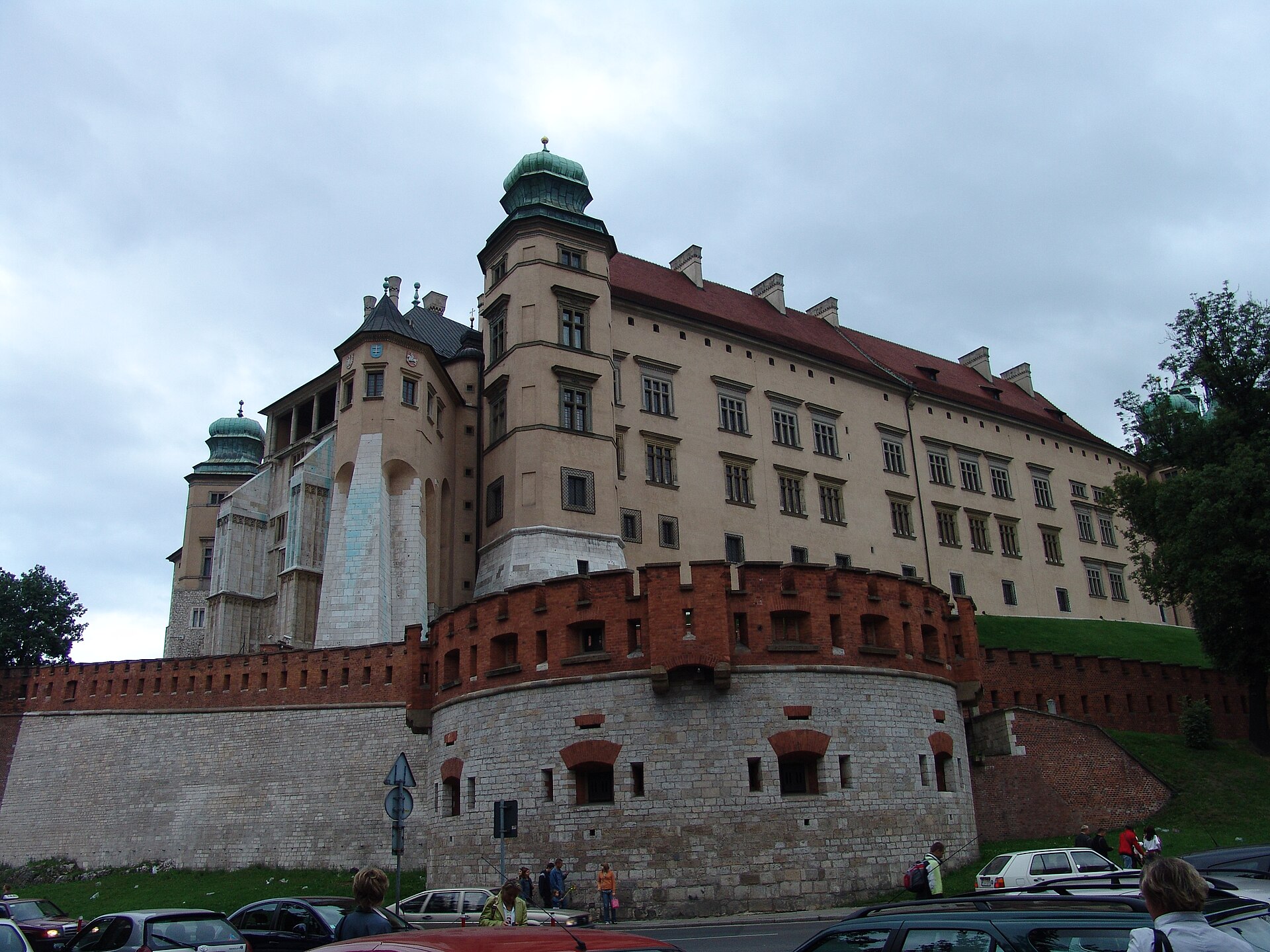
One of the most celebrated of Wawel’s monarchs was Casimir the Great, the last Piast king, who was said to have found a Poland built of wood and left it built of stone, and who did much to strengthen the castle and the kingdom. His reign is remembered as a golden foundation on which the later greatness of Wawel and Poland was raised.
The Most Beautiful Courtyard in the North
The glory of the royal castle is its courtyard, a magnificent arcaded Renaissance quadrangle widely regarded as one of the most beautiful north of the Alps. Rising in three tiers of slender columns and graceful arches around a broad open space, it brings the sunlit elegance of an Italian palazzo into the heart of northern Europe, and it is the architectural masterpiece of Wawel.
The courtyard was the creation of King Sigismund I the Old, who ruled in the early sixteenth century and who, inspired by the Italian Renaissance, employed Italian architects and craftsmen to rebuild the castle in the new style. Masters such as Francesco Fiorentino and Bartolommeo Berrecci brought the forms and spirit of Renaissance Italy directly to Kraków, transforming the Gothic castle into a Renaissance palace.
The result was one of the earliest and finest expressions of the Renaissance outside Italy, a sign of Poland’s wealth, sophistication and deep connection to the wider currents of European culture. The tall upper tier of columns, made unusually slender and elongated to lend the courtyard its soaring grace, is a particularly admired and distinctive feature, a bold local variation on the Italian model.
To step into the courtyard is to feel the confidence and openness of Poland’s golden age, when the kingdom was at its height and its court a centre of Renaissance learning and art. Even now, empty and quiet, the courtyard has an air of serene harmony, a perfect proportion and light that make it one of the great architectural pleasures of Central Europe.

In summer the courtyard sometimes hosts concerts and cultural events, its perfect acoustics and setting lending music a special resonance beneath the tiers of arches. To hear it filled with sound is to understand that Wawel is not a dead monument but a living stage on which the cultural life of Poland still unfolds.
Galleries Open to the Sky
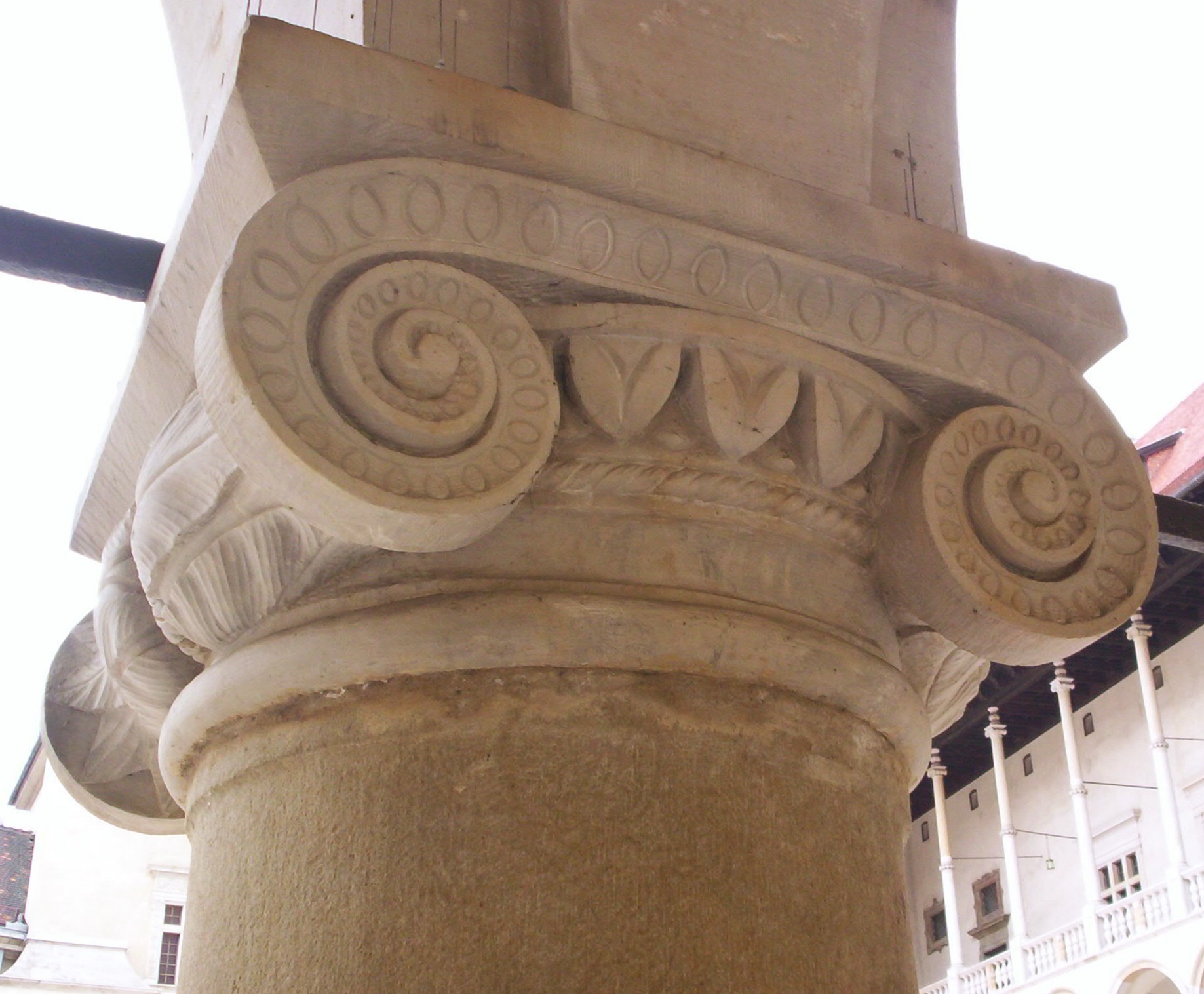
The columned galleries that ring the Wawel courtyard reward a closer look, for they are a subtle and inventive piece of architecture. The lower storeys follow the classical Italian model faithfully, with their arcades of rounded arches on columns, but the topmost tier departs boldly from the pattern, its columns stretched to an unusual, elongated slenderness to raise the roofline and give the whole composition its distinctive verticality.
This adaptation was a practical as well as an aesthetic choice, suiting the courtyard to the northern climate and the taller proportions of the existing building, but it also shows how the Italian Renaissance was not simply copied at Wawel but creatively reinterpreted. The result is a courtyard that is unmistakably Renaissance yet unmistakably Polish, a true fusion rather than a mere import.
The galleries were more than decoration; they were functional spaces, sheltered walkways connecting the various apartments and halls of the castle around the courtyard, allowing the court to move under cover and to look down upon the ceremonies and gatherings held in the open space below. They were the circulatory system of the palace, binding its many rooms into a coherent whole.
Walking the galleries today, looking out through the arches across the courtyard, you sense the daily life of the royal palace, the movement of courtiers and officials, the constant traffic of a working seat of government. The columns frame ever-changing views of the courtyard and the sky, and the whole ensemble remains a model of how architecture can be at once grand, graceful and genuinely useful.
The Cathedral Where Kings Were Crowned
Beside the castle, sharing the crown of the hill, stands Wawel Cathedral, and in many ways it is even more sacred to Poles than the palace. For centuries this was the coronation church of the kings of Poland, the place where monarch after monarch was anointed and crowned, and it remains the spiritual heart of the nation, a building saturated with religious and national meaning.
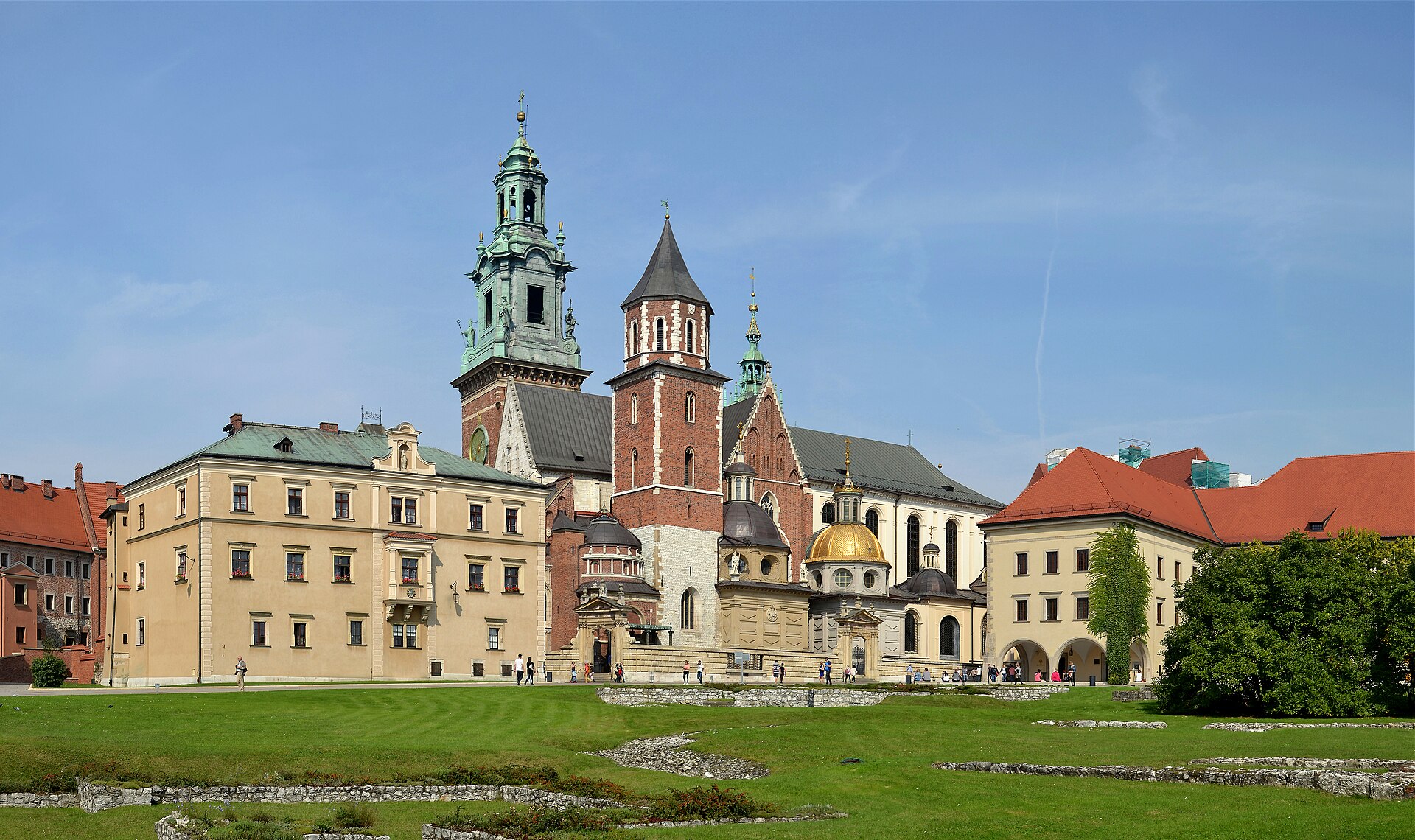
The cathedral is a rich accumulation of centuries of building, its Gothic core surrounded by chapels added by successive kings and bishops in every style from Romanesque to Baroque, so that the exterior is a jumble of domes, towers and chapels of many ages. This organic growth, far from spoiling it, makes the cathedral a living record of Polish history, each chapel a chapter, each tomb a story.
Coronations here were the supreme ceremonies of the Polish state, moments when the whole meaning of kingship and nation was made visible in ritual and splendour. The cathedral was where the sacred and the political fused completely, where a man became a king in the sight of God and the nation, and the memory of those ceremonies still hangs about its ancient stones.
For Poles, the cathedral is holy ground in the fullest sense, a place of pilgrimage and reverence, the church of their kings and saints. To enter it is to step into the sacred heart of Polish identity, and it explains why Wawel as a whole means so much: it is not just a royal residence but the very altar of the nation, where crown and cross and country have been bound together for a thousand years.
The Golden Chapel and the Great Bell
Of all the chapels crowding Wawel Cathedral, one stands supreme: the Sigismund Chapel, often called the most beautiful Renaissance chapel north of the Alps and a pearl of Renaissance art. Built in the early sixteenth century as a burial chapel for King Sigismund I the Old and his family, and crowned with a golden dome, it is a jewel-box of perfect proportion and exquisite decoration.
Designed by the Italian master Bartolommeo Berrecci, the same era that gave the castle its courtyard, the chapel is a flawless expression of Renaissance harmony, its interior rich with sculpture, gilding and fine stonework, its golden dome gleaming above the cathedral roofline as an instantly recognizable symbol of Kraków. It houses the tombs of the last Jagiellonian kings, rendered with superb artistry.
Nearby hangs another of Wawel’s great treasures, the Sigismund Bell, the Dzwon Zygmunt, an enormous bronze bell cast in 1520 and hung in the cathedral’s bell tower. One of the largest bells in Poland, it is rung only on the most important religious and national occasions, and its deep, solemn voice, carrying across Kraków, is one of the most stirring sounds in the country, a literal voice of the nation.
Together the golden chapel and the great bell embody the golden age of Poland, the era of the Jagiellonian kings when the kingdom was at the height of its power and culture. To see the gleaming dome and to hear, if you are fortunate, the deep toll of the Sigismund Bell, is to touch the confidence and glory of Poland’s Renaissance, preserved on Wawel Hill for five centuries.

The gilding of the Sigismund Chapel’s dome is renewed periodically so that it continues to gleam above the cathedral, a deliberate act of maintenance that keeps this symbol of Krakow shining for each new generation. Few architectural images are more closely associated with the city than that golden cupola catching the light.
A Pantheon of Kings and Heroes
Wawel Cathedral is not only where kings were crowned but where they were buried, and its crypts and chapels form a great pantheon of the Polish nation. Beneath the floor and within the chapels lie the tombs of monarch after monarch, an unbroken line of the kings and queens who ruled Poland across the centuries, gathered in death as they had been in the ceremonies of their coronations.
At the cathedral’s heart lies the shrine of Saint Stanislaus, the martyred bishop of Kraków who became one of the principal patron saints of Poland, his silver reliquary a focus of national devotion. The presence of this great national saint at the centre of the coronation cathedral bound the monarchy still more tightly to the faith and identity of the Polish people.
But the pantheon of Wawel extends beyond kings and saints. In the modern era, the cathedral crypts became the resting place of Poland’s national heroes as well, figures such as the general and independence leader Tadeusz Kościuszko, the statesman Józef Piłsudski, and great national poets, so that the tombs of Wawel gather not only the royal line but the heroes and bards of the nation.
To descend into the crypts of Wawel is therefore to walk among the honoured dead of an entire people, kings and saints, soldiers and poets, laid to rest in the most sacred place in Poland. It is a profoundly moving experience, and it explains why Wawel is spoken of not merely as a monument but as the very soul of the nation, the place where Poland keeps its greatest and its most beloved.
The tradition of burying national heroes at Wawel continued into recent times and has occasionally stirred controversy, as debates over who deserves a place among the nation’s greatest have played out around the cathedral crypts. That such arguments arise at all shows how powerfully Wawel remains the ultimate measure of national honour in Poland.
Tapestries, Treasures and the Coronation Sword
Inside the royal castle, the state rooms and apartments hold treasures worthy of the seat of a great kingdom. Most famous among them is the extraordinary collection of tapestries, the arrases, commissioned in the sixteenth century by King Sigismund II Augustus and woven in Flanders to the highest standard, depicting biblical scenes, animals and ornament in glowing wool, silk and gold thread.
These tapestries once numbered in the hundreds and adorned the walls of the castle for the greatest ceremonies, and the surviving arrases are among the most precious artistic treasures in Poland. Their survival is itself a story of national devotion, for they were repeatedly saved and hidden through the country’s many wars and partitions, spirited abroad and eventually returned, a testament to how deeply Poles cherish their heritage.
The castle also guards the Polish crown treasury, and its single most sacred object, the Szczerbiec, the coronation sword of the kings of Poland. This medieval sword, used in the coronation ceremonies for centuries, is one of the most important national relics in the country, a tangible link to the unbroken line of Polish kings and the ceremonies that made them on this very hill.
To tour the state rooms of Wawel is to move through the material glory of the Polish monarchy, its walls hung with priceless tapestries, its treasury holding the very regalia of the crown. These are not mere museum pieces but the sacred objects of a nation’s history, preserved against every disaster, and they give the castle interiors a weight and meaning far beyond their considerable beauty.

The story of how the Wawel treasures were evacuated at the outbreak of the Second World War, shipped through several countries and across the Atlantic, and kept safe for years before their eventual return to Poland, is itself one of the great epics of cultural preservation, a reminder of how much a people will risk to save the symbols of their identity.
The Dragon Beneath the Hill
No account of Wawel would be complete without its most beloved legend: the Wawel Dragon, the Smok Wawelski. According to the ancient tale, in the days of the early kings a terrible dragon lived in a cave beneath Wawel Hill, terrorizing the city of Kraków, devouring livestock and maidens, and defying all the knights who came to slay it. The people lived in fear of the beast in the rock below their castle.
The dragon was at last defeated not by force but by cunning. In the most popular version of the story, a clever young cobbler named Dratewka, or in other tellings a shoemaker’s apprentice, stuffed a sheep with sulphur and left it for the dragon to eat. The beast devoured the bait, was seized by a raging thirst, drank so much from the Vistula that it swelled up and finally burst, and so the city was freed.
The legend is woven into the identity of Kraków, and its physical traces can be visited today. Beneath the castle lies a real limestone cave, the Dragon’s Den, the Smocza Jama, open to visitors who descend through the rock to the supposed lair of the beast. At its mouth, beside the river, stands a splendid bronze statue of the dragon that, to the delight of children, actually breathes real fire.
That a fierce old legend should be commemorated with a fire-breathing statue tells you something about how Wawel holds its history: with reverence, but also with warmth and joy. The dragon connects the sacred hill of kings to the imagination of every Polish child, and the sight of the bronze beast belching flame by the Vistula is one of the most delightful experiences that Wawel, for all its solemnity, has to offer.

Every year Krakow celebrates its dragon with a great parade of dragon effigies, a joyful festival that turns the old terror into a citywide celebration and delights families from across Poland. The Wawel Dragon has become a mascot of the city, its fearsome origins softened into pure affection over the centuries.
The Castle and Its River City
Wawel cannot be separated from the city and river it presides over. The castle hill rises directly above the Vistula, Poland’s greatest river, which curves around its foot, and from the walls and terraces there are sweeping views over the water and the historic city of Kraków, one of the best-preserved medieval cities in Europe, spread out below.
For centuries the relationship between the hill and the city was that of crown and capital. Kraków grew up around and beneath the royal seat, its great market square, its churches and its university flourishing under the protection and patronage of the kings on Wawel, until the city became one of the major centres of learning and culture in Central Europe, a role it retains to this day.
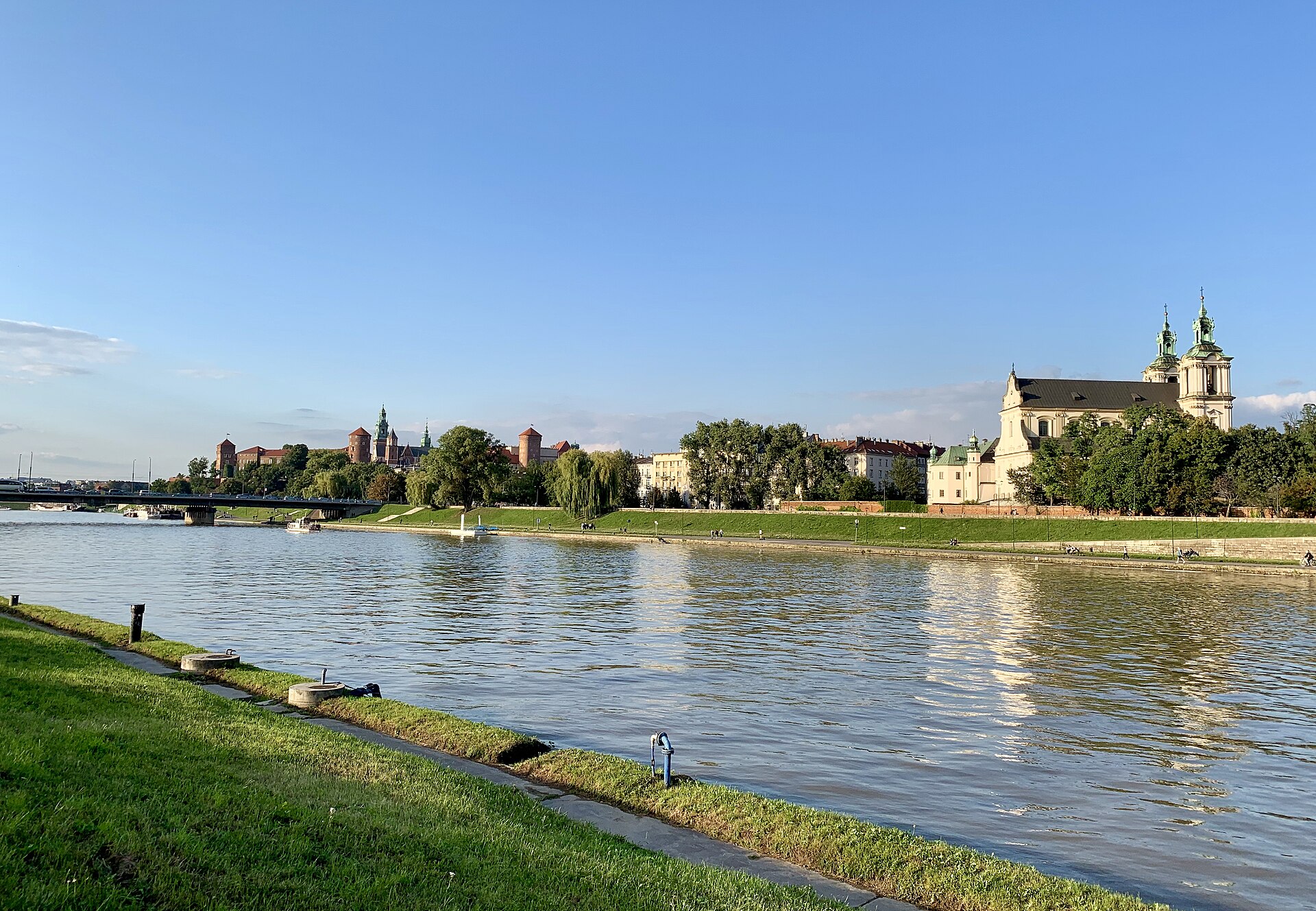
The Vistula itself was a lifeline, a trade route connecting Kraków to the wider world and a natural moat protecting the castle hill. The river and the city and the castle formed a single organism, the fortified royal heart and the thriving urban body, and to see Wawel from across the Vistula, its towers and the golden dome of the Sigismund Chapel rising above the water, is to see one of the great cityscapes of Europe.
There is even a strand of modern legend that Wawel Hill is one of the world’s centres of mysterious spiritual energy, a chakra point drawing seekers to a particular spot in the castle, a piece of folklore the authorities regard with amused tolerance. True or not, it captures something of the special aura that Poles and visitors alike sense on this hill above the river, a place that feels charged with meaning.

From the castle terraces the view takes in not only the river but the districts beyond, including the historic Jewish quarter of Kazimierz, so that the whole layered history of Krakow, royal, religious, academic and multicultural, is laid out from the hill. Wawel is the vantage point from which the entire story of the city can be read.
Occupation and Survival
Wawel’s long history has not been one of unbroken glory, for Poland itself endured centuries of tragedy, and the castle suffered with the nation. During the long period when Poland was partitioned out of existence by its neighbours, Wawel fell under foreign rule, and at times the Austrians who held Kraków used the sacred royal castle as a military barracks, a humiliation keenly felt by patriotic Poles.
The darkest hour came during the Second World War, when Nazi Germany occupied Poland and the notorious Governor-General Hans Frank made Wawel his official residence, ruling the occupied territory from the very heart of Polish nationhood. The deliberate choice of Wawel as the seat of the occupier was a calculated insult, an attempt to appropriate the soul of the nation it was trying to destroy.
Yet Wawel and its treasures survived. Many of the castle’s most precious objects, including the great tapestries and the royal regalia, had been evacuated abroad for safekeeping before or during the war, carried across the world and hidden until they could be returned, an epic of national devotion that kept the heritage of Poland out of enemy hands through the worst of times.
That Wawel came through the catastrophes of Polish history, the partitions, the occupations, the wars, and stands today restored and honoured, is itself a symbol of the endurance of the nation. The castle has suffered every indignity that befell Poland and outlasted them all, and its survival is bound up with the survival of the Polish people themselves, a fortress of identity that could not be conquered.

Perhaps the most poignant proof of Wawel’s meaning is that both oppressors and patriots understood its symbolic power in exactly the same way. The occupier seized it precisely because it was the heart of the nation, and Poles cherished and reclaimed it for precisely the same reason, a shared recognition that whoever held Wawel laid claim to the soul of Poland.
The National Museum on the Hill
In the modern era, Wawel has been lovingly restored and transformed into one of the great museums of Poland, its state rooms, treasury, cathedral and grounds open to millions of visitors from Poland and around the world. Careful restoration has recovered the splendour of the Renaissance castle and preserved the accumulated treasures of centuries, making the hill a place of both national pilgrimage and international tourism.
The restoration of Wawel in the twentieth century, especially after the country regained independence, was itself an act of national renewal, a reclaiming of the nation’s most sacred site after generations of foreign rule. Poles poured devotion and resources into restoring their royal hill, and the result is a monument that feels both authentically ancient and carefully tended, alive rather than embalmed.
Today Wawel functions as a state art collection and museum, its various sections, the royal state rooms, the private apartments, the treasury and armoury, the cathedral and the dragon’s den, each offering a different window onto Polish history and culture. It is impossible to see everything in a single visit, and the hill rewards return again and again.
For Poles, though, Wawel will always be more than a museum. It is the place they bring their children to learn who they are, where great national funerals are held, where the deepest currents of Polish identity are felt. A visit is not merely sightseeing but a kind of communion with the nation’s past, and that living reverence is what sets Wawel apart from almost any other castle in Europe.

Among the most visited sections is the exhibition of the private royal apartments, which offers a more intimate sense of daily life at the court than the grand ceremonial halls, letting visitors imagine the kings and queens not only as figures of state but as people who lived, worked and dreamed within these walls.
The Whole Sacred Hill
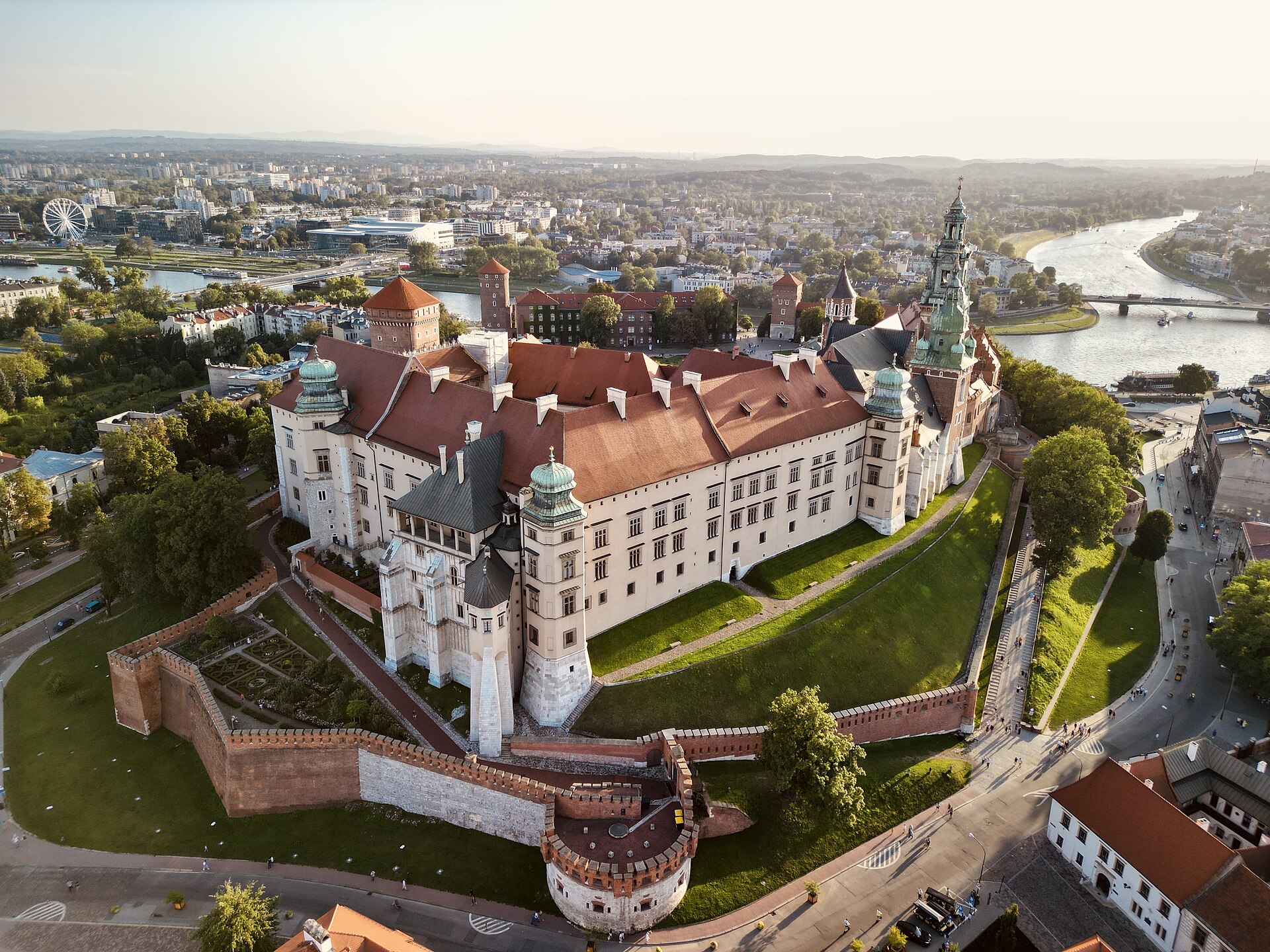
Seen as a whole, from across the river or from the air, Wawel resolves into a single magnificent ensemble: the royal castle with its Renaissance courtyard, the cathedral with its many chapels and the golden dome of the Sigismund Chapel, the towers and walls all crowded together on the limestone hill above the Vistula. It is the definitive image of Kraków and one of the great sights of Poland.
The density of the hill is part of its power. Unlike a sprawling fortress, Wawel packs castle, cathedral, chapels, treasury and legend into a compact crown of buildings, so that everything sacred to the nation is gathered in one small, intense space. To walk from the coronation cathedral to the royal courtyard to the dragon’s den takes only minutes, yet spans a thousand years of history and myth.
This concentration is why Wawel means what it does. Other nations scatter their royal palaces, their coronation churches and their national tombs across different cities; Poland gathered them all onto one hill, and so Wawel became the single, irreplaceable heart of the country, the place where the whole of Polish identity is rooted in a few acres of holy ground.
To take in the full sweep of the hill, it helps to walk it in company, and this tour leads you across Wawel, through its courtyards and past its cathedral and towers. It conveys, better than any single view, the way the whole sacred ensemble fits together, and why this modest rise above the Vistula holds the soul of an entire nation.
It is worth arriving early or lingering late, when the crowds thin and the hill regains something of its ancient stillness, and the weight of a thousand years settles over the courtyards and the cathedral. In those quiet moments Wawel reveals its deepest character, not as a tourist attraction but as the sacred hill at the centre of a nation’s story.
Castles Nearby
- Spis Castle: The Vast White Ruin That Crowns a Slovak Hill
- Bojnice Castle: The Fairy-Tale Dream a Count Built in Stone
Why Wawel Is the Soul of a Nation
Of all the castles in this journey through Central Europe, none carries quite the weight of Wawel. Other castles guarded frontiers or displayed a family’s wealth; Wawel holds the soul of a nation. Its courtyard is one of the loveliest in Europe, its cathedral one of the most sacred, its tombs a pantheon of a whole people, and its dragon a delight for every child, all gathered on one small hill above a river.
That is what makes Wawel unmissable. You do not simply admire it; you feel, walking its hill, the presence of a thousand years of Polish history, the coronations and the funerals, the golden age and the dark occupations, the kings and saints and poets who are gathered here. To understand Poland, you must climb Wawel, and to stand on Wawel is to touch the very heart of Poland.
So when you come to Kraków, give Wawel Hill the time it deserves. Walk the Renaissance courtyard, enter the coronation cathedral, listen for the great bell, descend to the dragon’s den, and look out over the Vistula and the old city below. Wawel is not just the most important castle in Poland; it is, in the deepest sense, the place where Poland keeps itself, and there are few more moving places in all of Europe.
You May Like
Mafra, the Palace a King Built From a Vow


One thought on “Wawel Royal Castle: The Sacred Hill at the Heart of Poland”