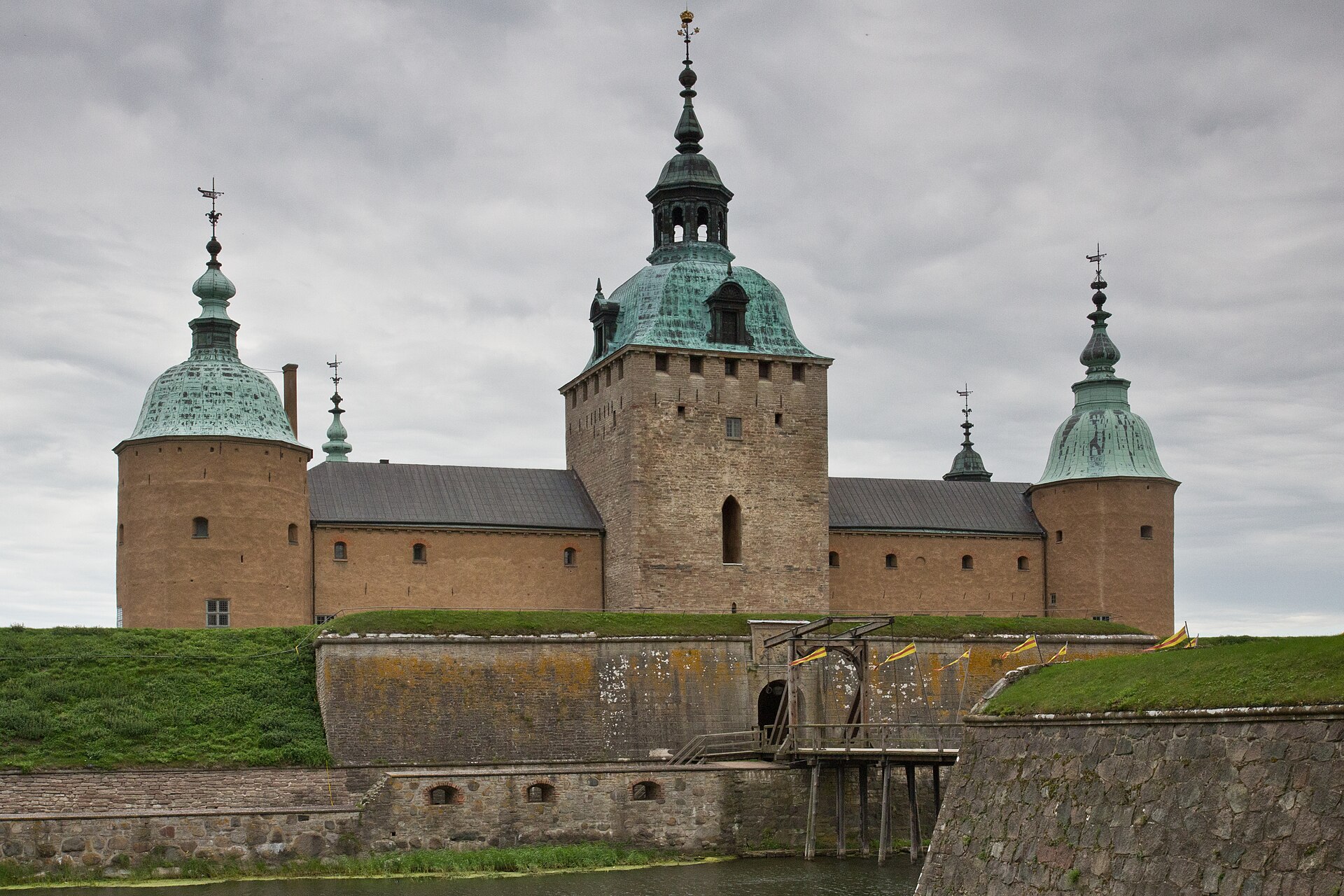
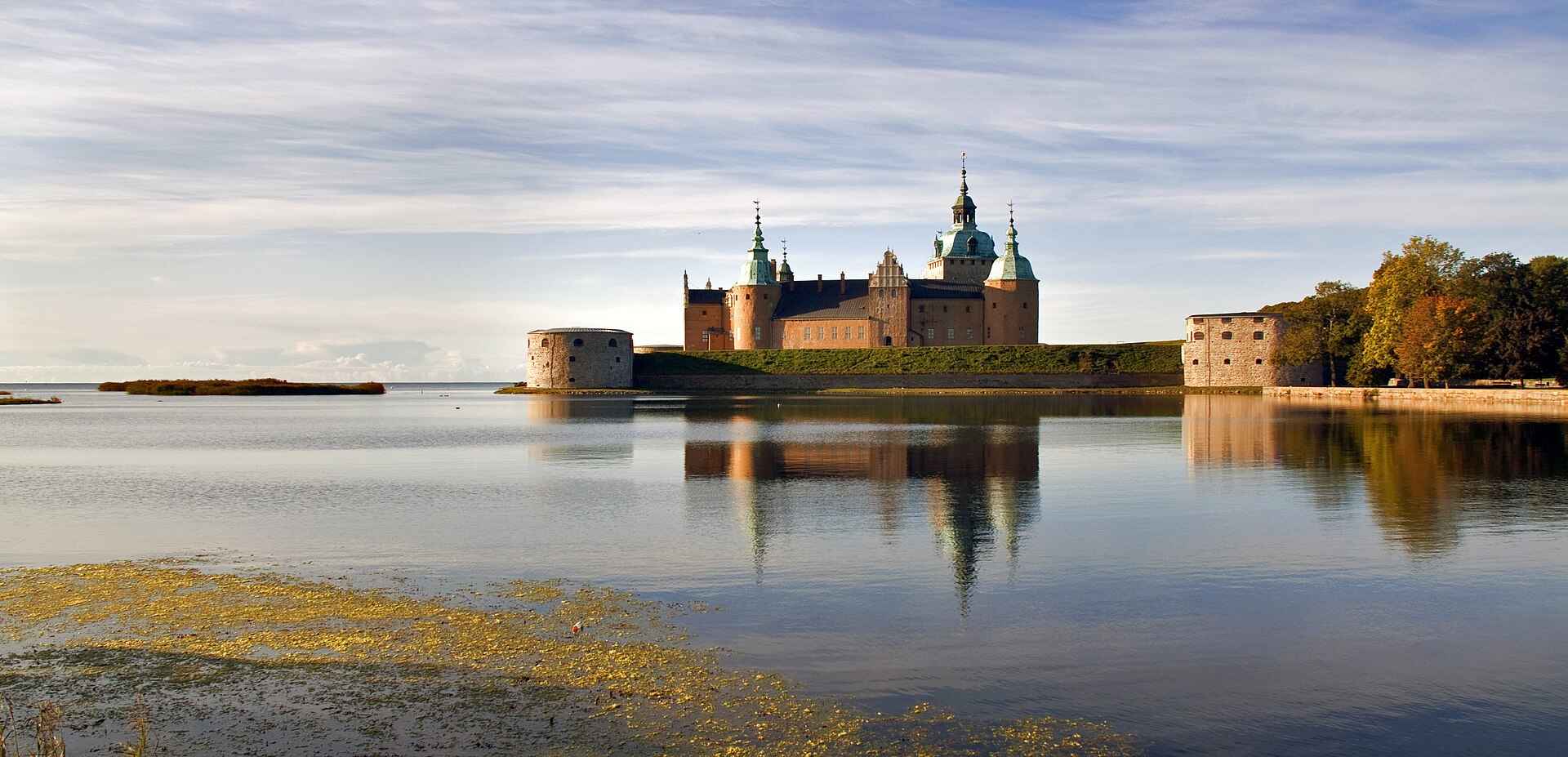
On the southeastern coast of Sweden, where the Baltic laps against the shore facing the great island of Öland, stands one of the most important and beautiful castles in all of Scandinavia. Kalmar Castle, Kalmar Slott, is a magnificent Renaissance fortress that for centuries guarded the frontier of Sweden against its great rival Denmark, and that played a central role in some of the defining moments of Nordic history.
This was no ordinary castle. Kalmar guarded the vital border between the Swedish and Danish realms in an age when the two kingdoms were bitter enemies, and it was so crucial to the defence of the realm that it was known as the key to Sweden. It was here, too, that one of the great political events of medieval Europe took place, the founding of the Kalmar Union, which for over a century joined the three crowns of Scandinavia.
So come with me to the Baltic shore of Sweden, and let us explore the great castle of Kalmar. We will trace its history from a medieval border fortress to a jewel of the Renaissance, discover the dramatic events of the Kalmar Union and the Vasa kings, walk its golden halls and royal chambers, and understand why this fortress, the key to Sweden, remains one of the finest and most historically significant castles in the north.
In This Article
- The Key to Sweden
- From Medieval Tower to Border Fortress
- Where Three Crowns Were United
- The Vasa Kings and the Renaissance
- A Fortress From Above
- The Tragic King Erik XIV
- The King’s Chambers
- The Golden Hall
- Ceilings and Renaissance Splendour
- The Castle Church
- Inside the Chapel
- Towers, Sieges and the Kalmar War
- Decline, Rescue and Renown
The Key to Sweden
For much of its history, Kalmar was quite literally the key to Sweden. In the medieval and early modern periods, the border between the kingdoms of Sweden and Denmark ran just to the south of here, and Kalmar stood as the great fortress guarding that frontier, the first bulwark against Danish invasion from the south. Whoever held Kalmar held the door to Sweden, and the castle was defended and fought over accordingly.
The strategic importance of the site is written in its very geography. Kalmar sits on the southeastern coast of Sweden, on the Baltic, opposite the long island of Öland, commanding the coastal approaches and the vital sea lanes. In an age when Sweden and Denmark were locked in a long and bitter rivalry for dominance of the north, this frontier fortress was one of the most important strongholds in the entire kingdom.
Because it stood on such a dangerous frontier, Kalmar was heavily fortified and constantly maintained and strengthened, and it saw more than its share of war. Danish armies besieged it, Swedish kings garrisoned it, and control of the castle shifted with the fortunes of the endless Dano-Swedish wars. Its walls have witnessed some of the most dramatic military and political events in Scandinavian history.
If you want to find this frontier fortress before you visit, here are the coordinates for the castle on the Baltic coast. Zoom out and you will see how it guards the approaches to Sweden opposite the island of Öland, the great stronghold that earned its name as the key to the kingdom, watching over the contested border between the crowns of the north.
The phrase key to Sweden was no mere poetic flourish but a strategic reality, repeated by generals and statesmen who understood that an enemy who took Kalmar had opened the door to the heart of the kingdom, and this understanding shaped the enormous investment successive rulers made in the fortress over the centuries.
From Medieval Tower to Border Fortress
The origins of Kalmar Castle reach back into the Middle Ages. The earliest fortification here was a round defensive tower, built in the twelfth or thirteenth century to guard the harbour and the coast against raiders and enemies. Over time, as the strategic importance of the site grew, this tower was expanded into a full castle, and Kalmar became one of the most important fortresses in medieval Sweden.
Through the medieval centuries the castle was steadily strengthened and enlarged, its walls raised, its towers multiplied, its defences improved to meet the growing threats of the age. As the frontier fortress guarding Sweden’s southern border, it was in the front line of the kingdom’s defence, and successive rulers invested heavily in making it as strong as possible.
The medieval castle was a formidable stronghold, and its importance was recognized by kings and enemies alike. It became a favoured royal residence and a centre of power, as well as a military bastion, and the town of Kalmar grew up in its shadow, one of the most important towns in medieval Sweden, its fortunes bound to the great castle that protected it.
This long medieval history laid the foundations, quite literally, for the magnificent Renaissance castle that would later rise on the site. Beneath the elegant sixteenth-century palace lie the walls and towers of the medieval fortress, and the whole history of Kalmar is one of a border stronghold constantly rebuilt and strengthened across the centuries to guard the key to Sweden.
The round tower that formed the nucleus of the castle can still be traced within the later structure, and archaeologists have uncovered much about the successive phases of building, so that Kalmar offers, beneath its Renaissance splendour, a rich record of medieval Swedish fortification for those who look for it.
Where Three Crowns Were United
Kalmar Castle holds a place in history far beyond its military role, for it gave its name to one of the great political creations of medieval Europe: the Kalmar Union. In 1397, in this castle, the three Scandinavian kingdoms of Denmark, Norway and Sweden were joined together under a single monarch, a union that would shape the history of the north for over a century.
The union was the achievement above all of Queen Margaret I of Denmark, a formidable and brilliant ruler who had already united the crowns in her own person and who arranged for her great-nephew Erik of Pomerania to be crowned king of all three realms at Kalmar. The choice of Kalmar for this momentous event reflected the castle’s importance and its position near the meeting point of the three kingdoms.
The Kalmar Union was an ambitious attempt to unite the Scandinavian peoples against common enemies, above all the powerful German merchants of the Hanseatic League, and for a time it made the united north a major power in Europe. That so vast a political project should bear the name of this castle is a measure of Kalmar’s significance in the affairs of medieval Scandinavia.
The union proved difficult to hold together, riven by tensions between the kingdoms, especially between Sweden and the dominant Danish crown, and it eventually collapsed in the sixteenth century when Sweden broke away for good under Gustav Vasa. But the memory of that founding moment endures, and Kalmar Castle remains forever linked to the great, doomed dream of a united Scandinavia.
Queen Margaret I is remembered as one of the ablest rulers in Scandinavian history, a woman who governed three kingdoms with skill and determination in an age dominated by men, and the Kalmar Union stands as the monument to her statecraft, a bold if ultimately fragile attempt to give the north the strength of unity.
For Sweden in particular the memory of the union is complicated, bound up with the long struggle for independence from Danish dominance, so that Kalmar Castle stands as a symbol both of a shared Nordic ideal and of the Swedish national identity that ultimately asserted itself against it.
The Vasa Kings and the Renaissance
The castle we see today is largely the creation of the Vasa dynasty, the royal house that led Sweden out of the Kalmar Union to independence and greatness. In the sixteenth century, King Gustav Vasa and especially his sons, Erik XIV and Johan III, transformed the medieval fortress of Kalmar into a magnificent Renaissance palace, one of the finest in Sweden.
Gustav Vasa began the work, strengthening the castle’s defences with modern bastions and ramparts to withstand the new power of artillery, turning Kalmar into a state-of-the-art fortress. But it was his cultured sons who added the Renaissance splendour, rebuilding the interior into a series of elegant royal apartments and halls in the latest continental style, filled with fine decoration and craftsmanship.
Under the Vasa kings, then, Kalmar became both a stronger fortress and a more beautiful palace, its medieval walls given modern defences without and Renaissance luxury within. This dual transformation reflected the ambitions of the Vasa dynasty, who were building a powerful, modern Sweden and who wanted their castles to express both military strength and cultural sophistication.
The result is the Kalmar Castle of today, a Renaissance palace wrapped in a modern fortress, one of the best-preserved Renaissance castles in Scandinavia. The Vasa kings gave it its essential character, and their work has survived remarkably well, so that to walk through Kalmar is to walk through the golden age of the dynasty that made Sweden a great power in the north.
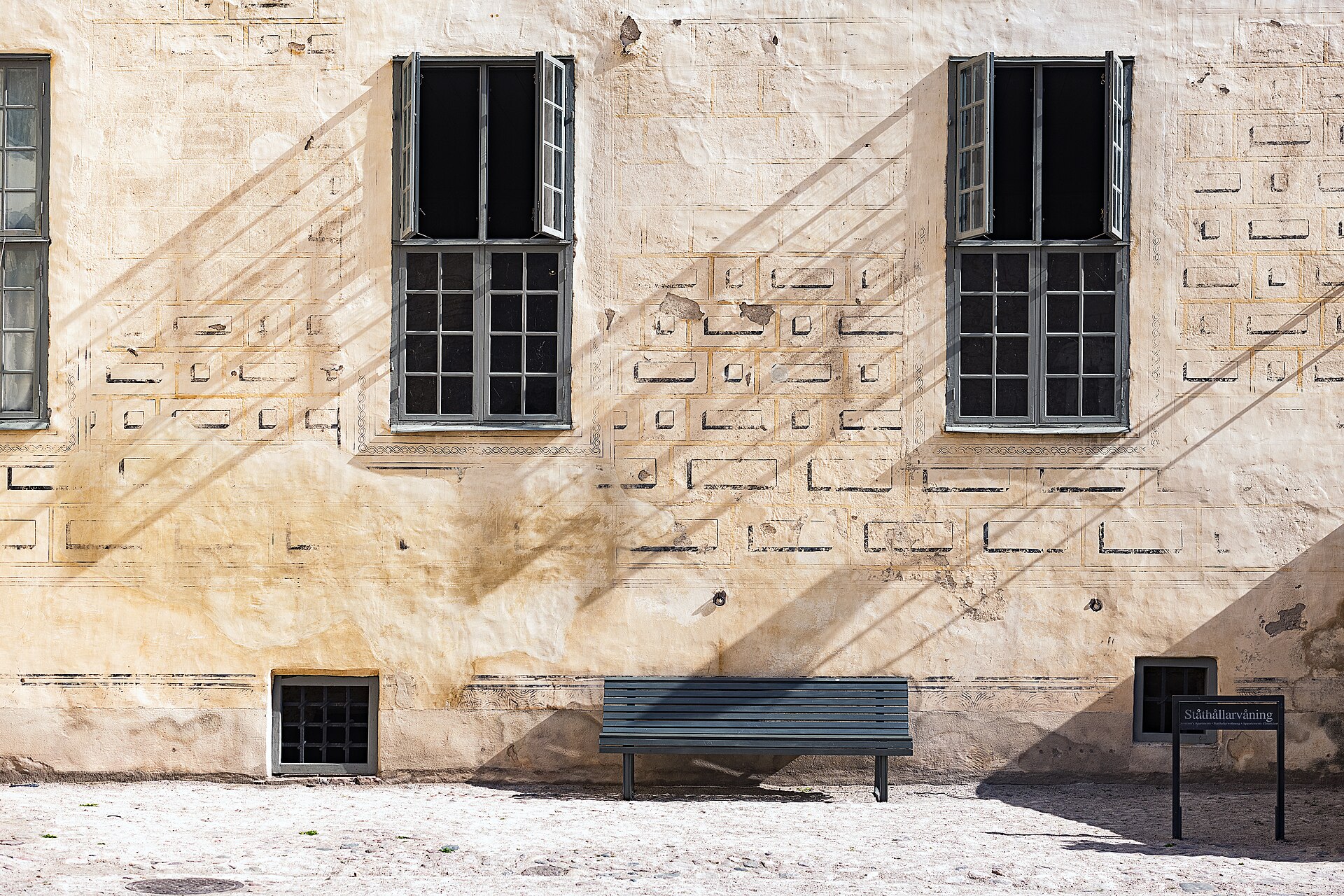
Gustav Vasa, who founded the dynasty, had himself begun his career in the turmoil surrounding the collapse of the Kalmar Union, leading the Swedish revolt that finally broke the union and won independence, so that the very castle that gave the union its name became, under his house, a symbol of the Swedish nation-state that replaced it.
A Fortress From Above
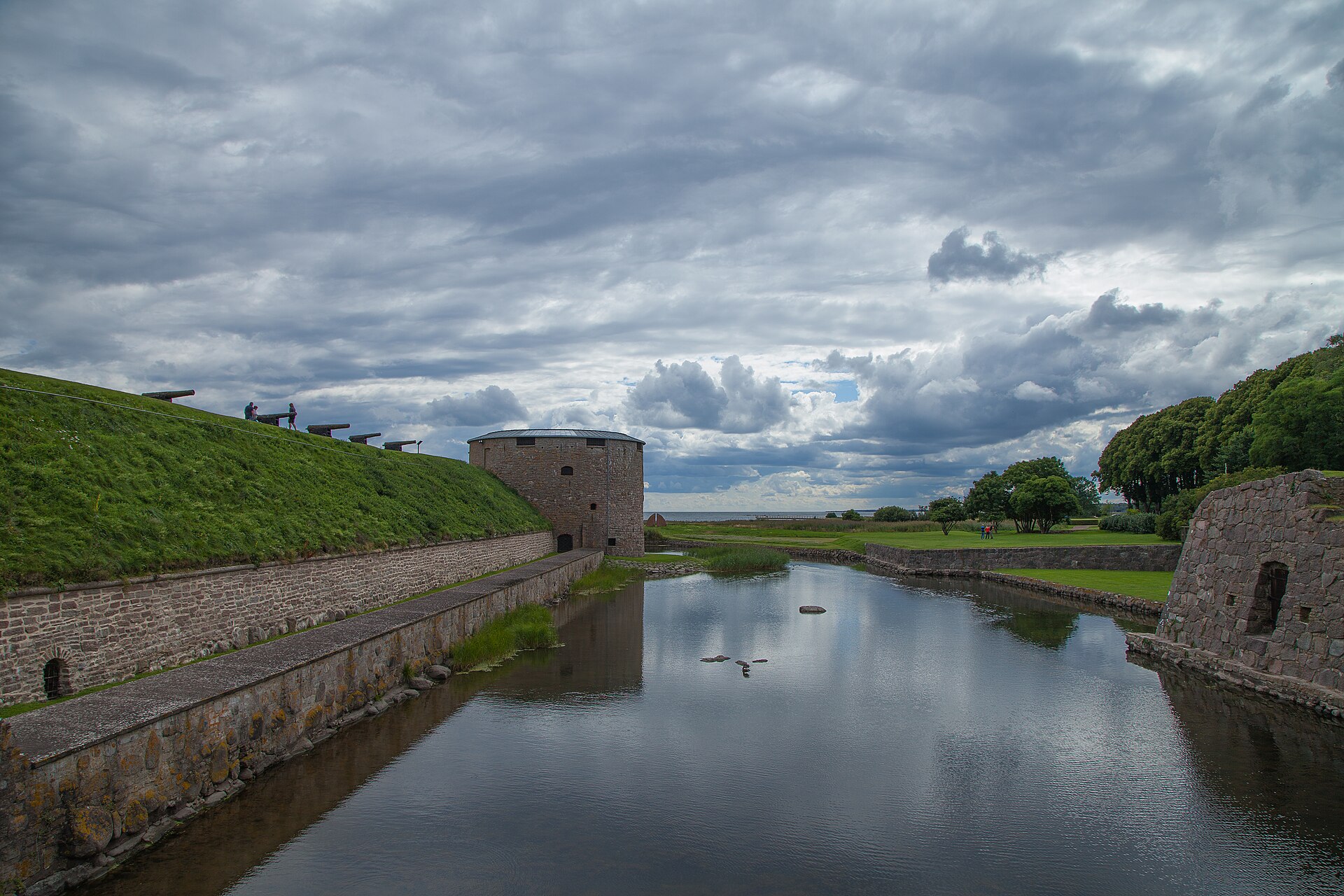
Seen from above, Kalmar Castle reveals the full sophistication of its design, a Renaissance palace at the centre surrounded by the angled bastions and ramparts of a modern artillery fortress. The great round towers of the medieval castle rise at the corners, while the star-shaped outer defences, added by the Vasa kings, spread around them, creating a stronghold designed to resist the most powerful weapons of the age.
This combination of the medieval and the modern is characteristic of Kalmar, a fortress that evolved over the centuries to meet each new threat. The rounded medieval towers speak of an earlier age of walls and crossbows, while the angled bastions were built for the era of the cannon, giving defenders overlapping fields of fire to sweep any attacker who approached the walls.
The aerial view also shows the castle’s relationship to its setting, standing on the coast with the water on one side and the town on the other, guarding the harbour and the frontier. Its position was chosen for maximum strategic effect, commanding the approaches by land and sea, and the geometry of its defences was calculated to make it as nearly impregnable as the military science of the age could achieve.
To appreciate the full extent of the fortress, from the Renaissance palace to its ring of bastions, it helps to see it whole, and this tour sweeps over Kalmar and through its courts and chambers. It conveys the double nature of the place, an elegant royal palace at the heart of a powerful artillery fortress, far better than any single view from the ground can manage.
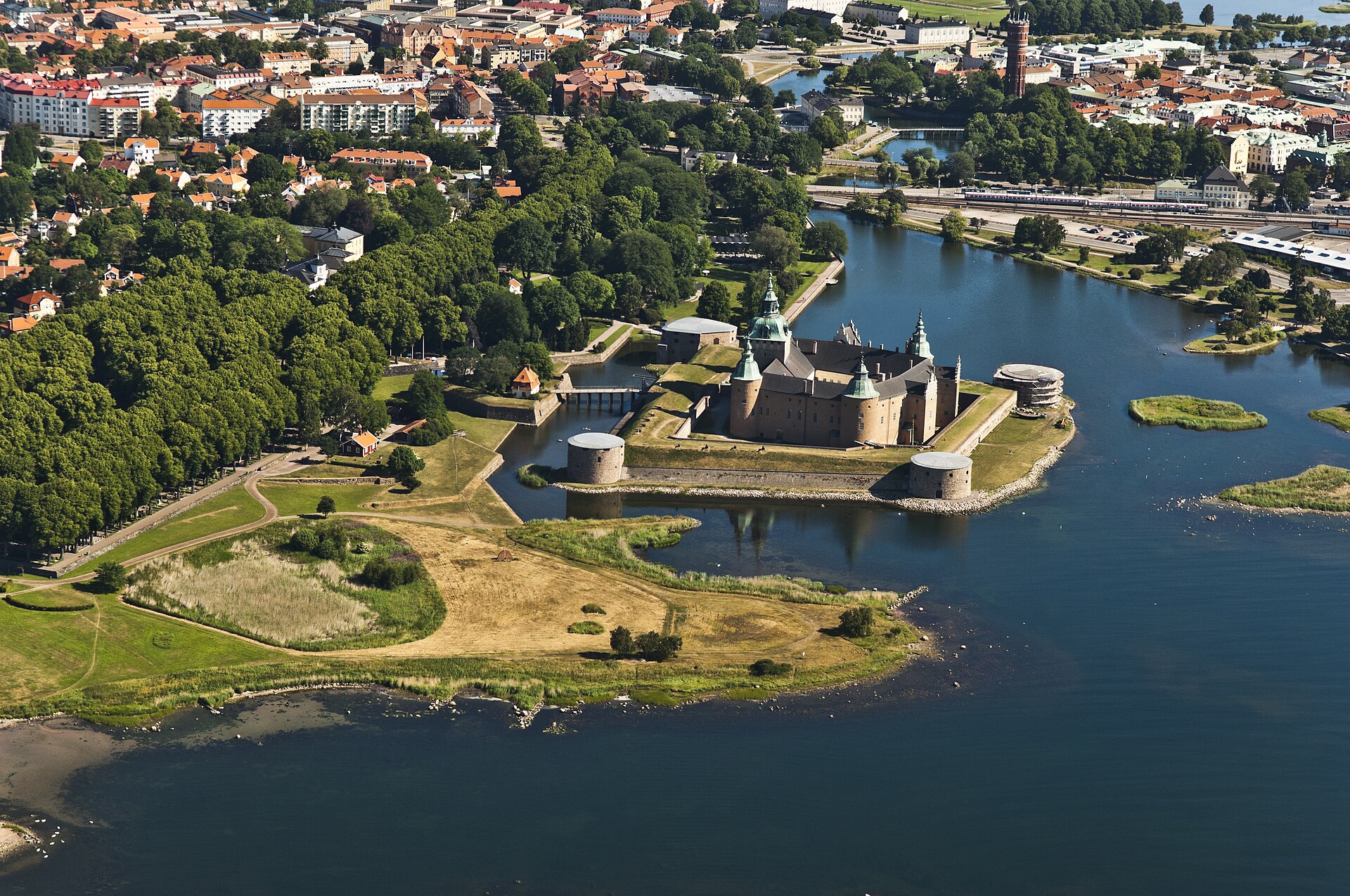
The town of Kalmar that grew up beside the castle was itself once fortified and was later moved to a new, more defensible site on a nearby island, a reminder of how completely life in this frontier region was shaped by the constant threat of war and the overriding need for defence.
The Tragic King Erik XIV
Among the Vasa kings who shaped Kalmar, none is more fascinating or more tragic than Erik XIV, the eldest son of Gustav Vasa, who reigned in the mid-sixteenth century. Brilliant, cultured and artistic, Erik was also increasingly unstable and paranoid, and his dramatic, ultimately catastrophic reign left its mark on Kalmar as on the whole of Sweden.
Erik was a true Renaissance prince, learned in many fields, a patron of art and music, and he lavished attention on the royal castles, including Kalmar, adorning them with the finest decoration of the age. The elegant Renaissance interiors of Kalmar owe much to his refined taste, and the castle became a showcase of the cultured, ambitious style of the early Vasa court.
But Erik’s reign descended into tragedy. Consumed by suspicion and mental instability, he turned on his own nobles, and in a notorious episode had several of them killed. He was eventually deposed by his brothers, imprisoned, and, according to the widely believed account, poisoned, dying a prisoner after years of confinement, a brilliant and troubled king brought low by his own demons.
The story of Erik XIV adds a note of dark human drama to the history of Kalmar, a reminder that these magnificent castles were the settings not only of grand politics but of personal tragedy and madness. Walking the Renaissance rooms that Erik adorned, one senses the presence of this gifted, doomed king, whose refined taste and terrible fate are woven into the fabric of the castle he helped to beautify.
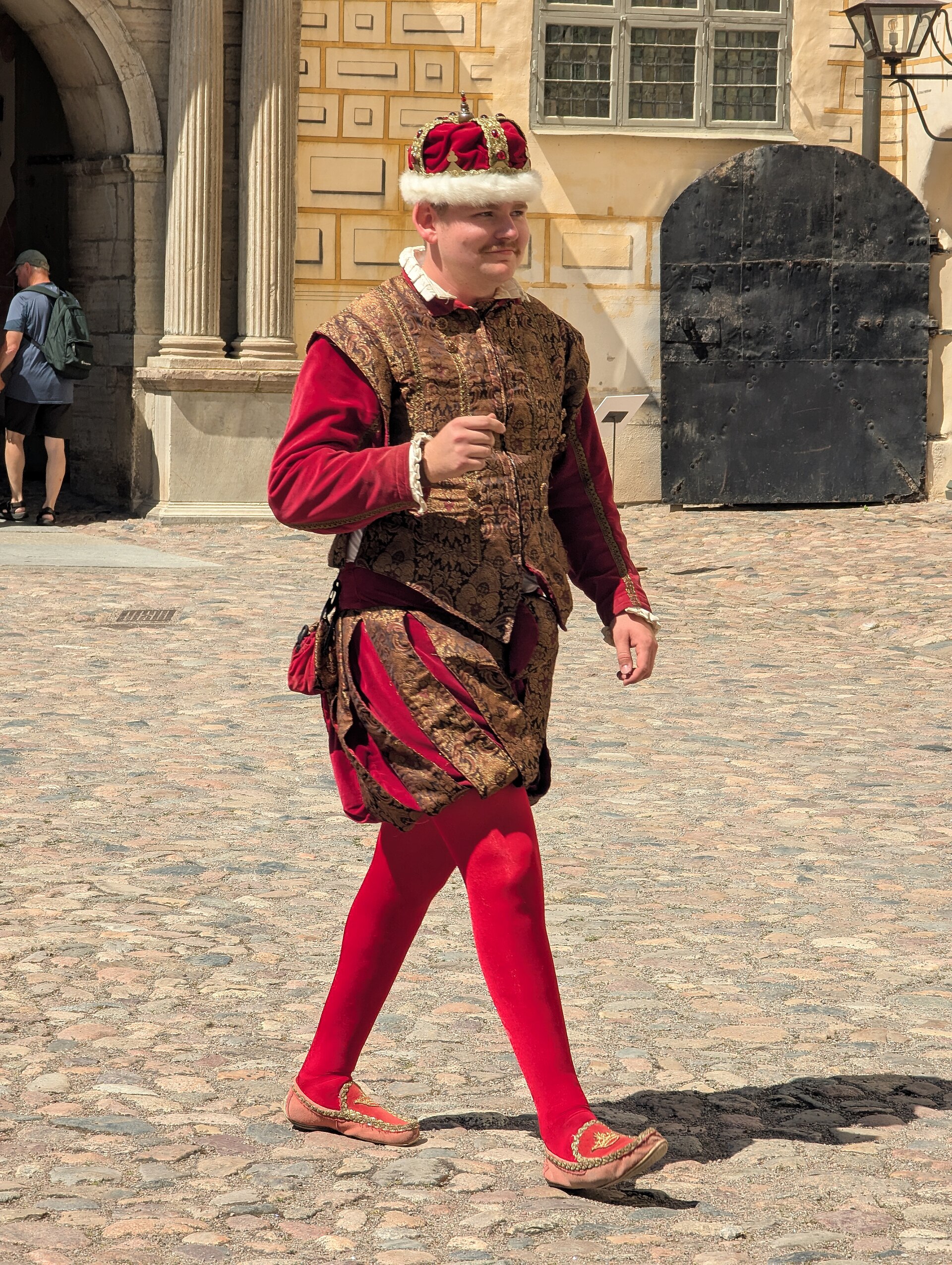
Erik XIV’s story has fascinated later ages and inspired plays and operas, for it combines the glamour of the Renaissance prince with the pathos of madness and the drama of a fall from the highest power, and the rooms he adorned at Kalmar carry an added poignancy from their association with his brilliant, doomed reign.
The King’s Chambers
Within the castle lie the royal apartments, the private chambers of the Vasa kings, and these rooms preserve, better than almost anywhere in Sweden, the taste and atmosphere of the sixteenth-century royal court. Panelled, decorated and furnished in the Renaissance style, they offer an intimate glimpse into the world of the kings who ruled a rising Sweden from this frontier fortress.
The chambers reflect the cultured ambitions of the Vasa dynasty, their walls and ceilings adorned with fine woodwork, painting and ornament in the latest continental fashion, their spaces arranged for both the private life and the ceremonial duties of monarchy. These were the rooms in which kings slept, worked and received their most important visitors, the working heart of royal power at Kalmar.
The survival of these interiors is one of the great treasures of Kalmar, for so much Renaissance decoration was lost elsewhere to fire, war and changing fashion. Here, in the king’s chambers, the sixteenth century survives with unusual completeness, allowing the visitor to step directly into the refined, dangerous world of the early Vasa court.
To stand in these rooms is to feel the presence of the Vasa kings, of Gustav and his brilliant, troubled sons, who made Sweden a great power and made Kalmar one of its finest palaces. The elegance of the chambers speaks of their cultural aspirations, while the fortress walls around them speak of the dangers they faced, the two combined in the intimate spaces where the kings themselves lived and ruled.
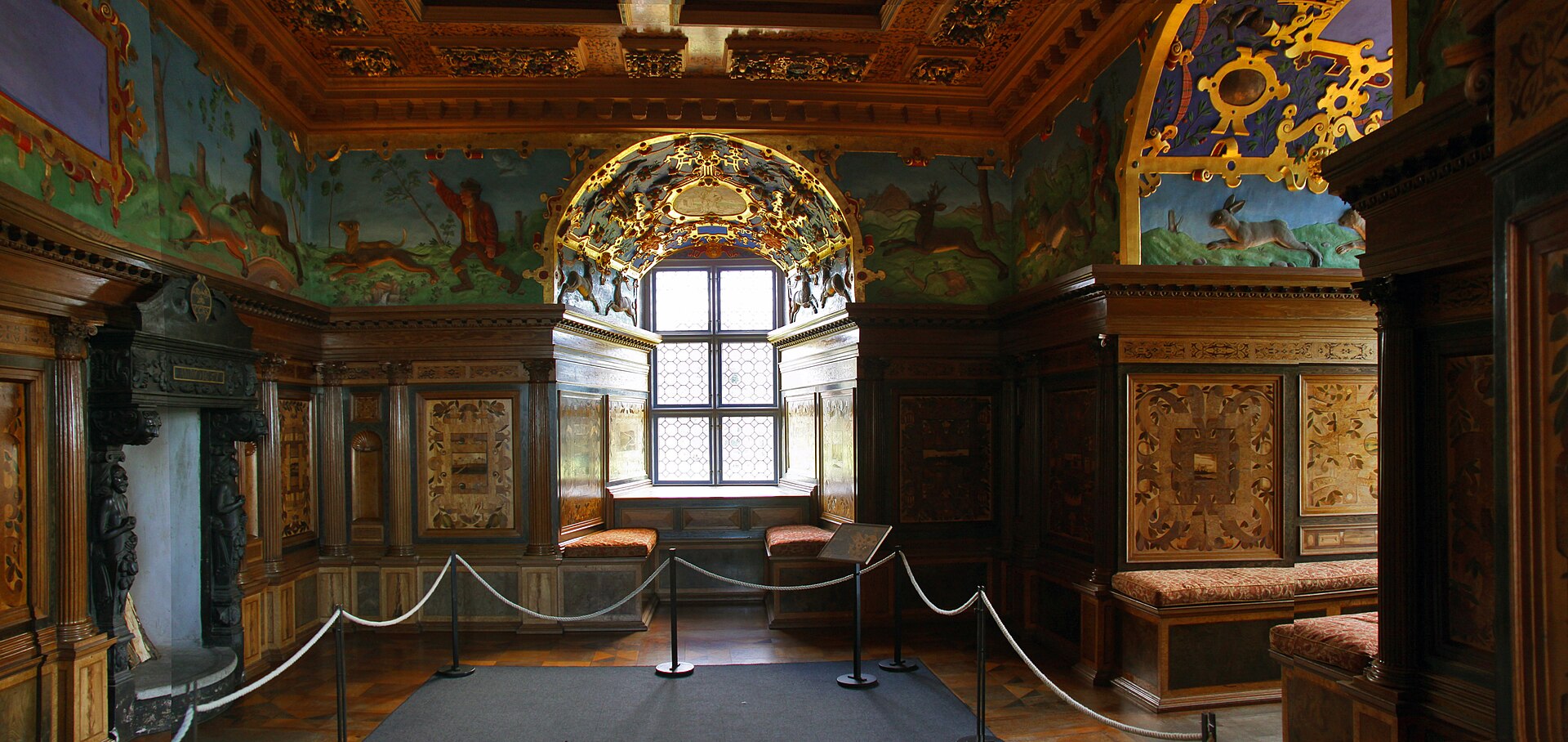
One celebrated feature of the interiors is a secret door concealed in the panelling of one of the royal rooms, a reminder of the atmosphere of intrigue and danger that surrounded the Vasa court, where kings had reason to fear assassination and where hidden passages could offer a means of escape.
The Golden Hall
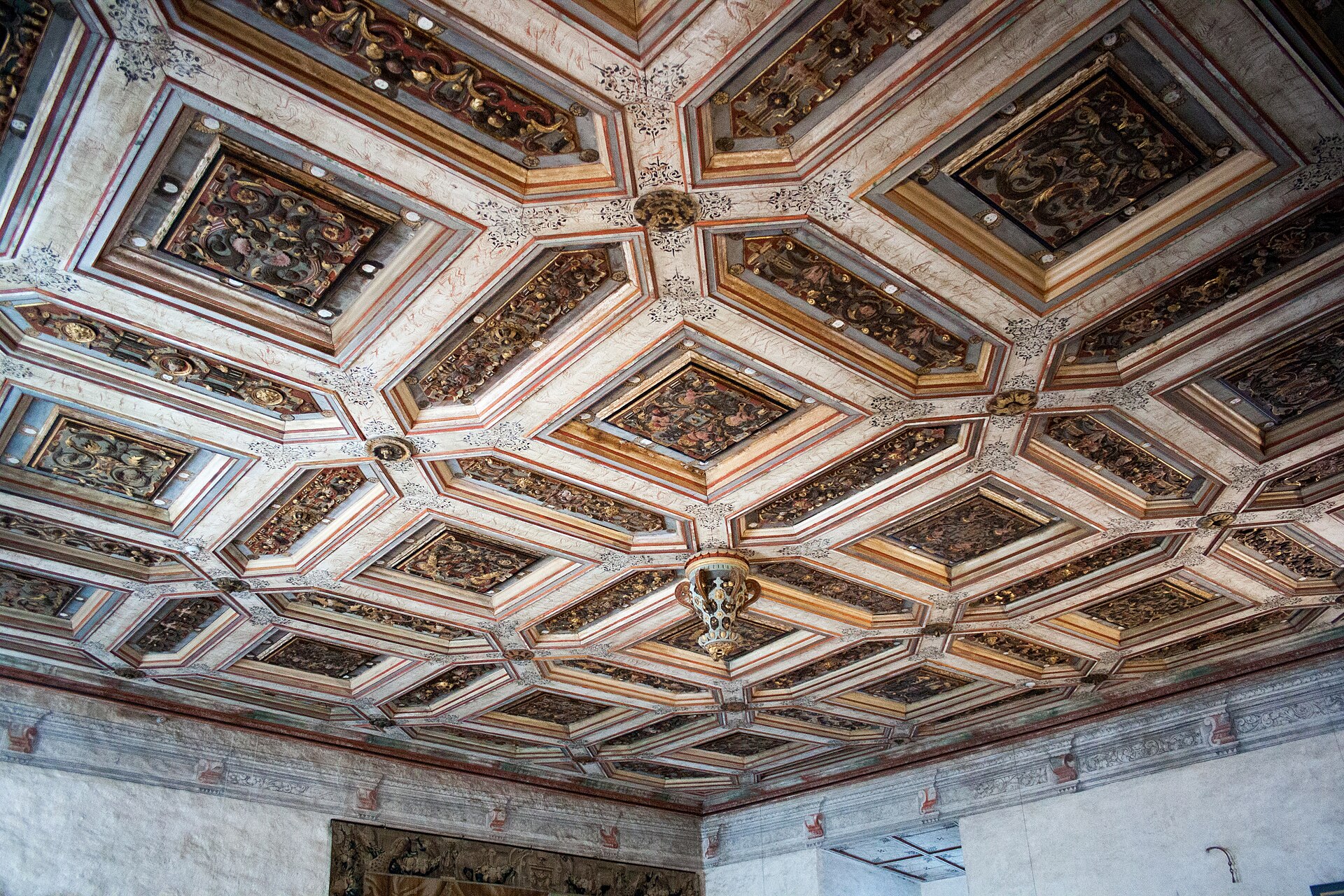
The most splendid room in Kalmar Castle is the Golden Hall, the Gyllene salen, a magnificent chamber that was the great state room of the Renaissance palace. Its glory is its ceiling, a masterpiece of decorated woodwork, richly carved, painted and gilded, that hangs above the hall in a blaze of Renaissance splendour, one of the finest such ceilings in Sweden.
The hall was the setting for the grandest occasions of the court, feasts and ceremonies and receptions, and its magnificent decoration was designed to impress upon all who entered the wealth, taste and power of the Vasa kings. Every surface was worked with care, but it is the great ceiling above all that takes the breath away, a canopy of gold and colour spread over the heads of those below.
Ceilings like this were among the greatest achievements of Renaissance interior decoration, demanding the highest skill of woodcarvers, painters and gilders, and the survival of the Golden Hall’s ceiling is a precious thing. It carries the visitor directly into the world of the sixteenth-century court at its most magnificent, a vision of royal splendour preserved across the centuries.
To stand in the Golden Hall and look up at its glowing ceiling is to understand the ambition of the Vasa kings, who wanted their frontier fortress to be not merely strong but beautiful, a palace worthy of the great power they were building. The hall is the jewel of Kalmar, the room where the castle’s dual nature as fortress and palace resolves most gloriously in favour of splendour.
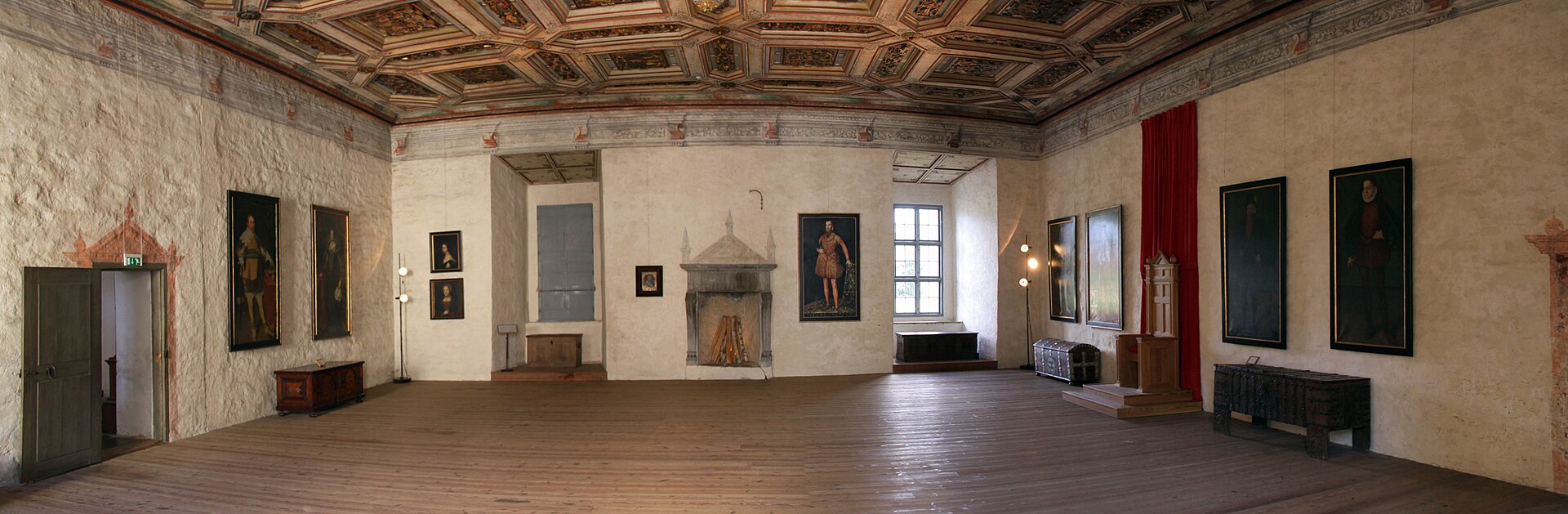
The technique and the materials of such a ceiling were enormously expensive, and its creation at a frontier fortress like Kalmar shows how determined the Vasa kings were that even their border strongholds should proclaim the wealth and cultural standing of their rising kingdom to any who entered.
Ceilings and Renaissance Splendour
The Golden Hall is only the most famous of the castle’s magnificent ceilings, for throughout the royal apartments and state rooms of Kalmar the visitor finds decorated ceilings of remarkable beauty and craftsmanship. Carved, painted and gilded, these ceilings are among the great glories of the castle, transforming its rooms into treasures of Renaissance interior art.
The decoration of a ceiling was one of the most demanding tasks of the Renaissance craftsman, requiring the coordinated skills of carpenters, carvers, painters and gilders, and the quality of the work at Kalmar reflects the resources and the ambitions of the Vasa court. Each ceiling is a work of art in its own right, and together they make the castle a museum of Renaissance decorative craft.
These interiors survived where so many others were lost, thanks in part to periods when the castle was less used and less altered, and thanks to careful later restoration. As a result, Kalmar preserves an unusually complete and coherent ensemble of Renaissance decoration, a rare survival that makes it one of the most important Renaissance interiors in the whole of Scandinavia.
To move from room to room, looking up at ceiling after magnificent ceiling, is to appreciate the full artistic ambition of the Vasa kings and their craftsmen. The decoration transforms the fortress into a palace of art, and it is this richness of surviving Renaissance interior that, as much as its dramatic history, makes Kalmar such a rewarding castle to explore.
Among the most admired of the castle’s rooms is a chamber whose walls are painted in a striking chequered pattern, a bold and unusual decorative scheme that has become one of the signature images of Kalmar, showing the inventiveness of the Renaissance craftsmen who worked on the castle.
The Castle Church
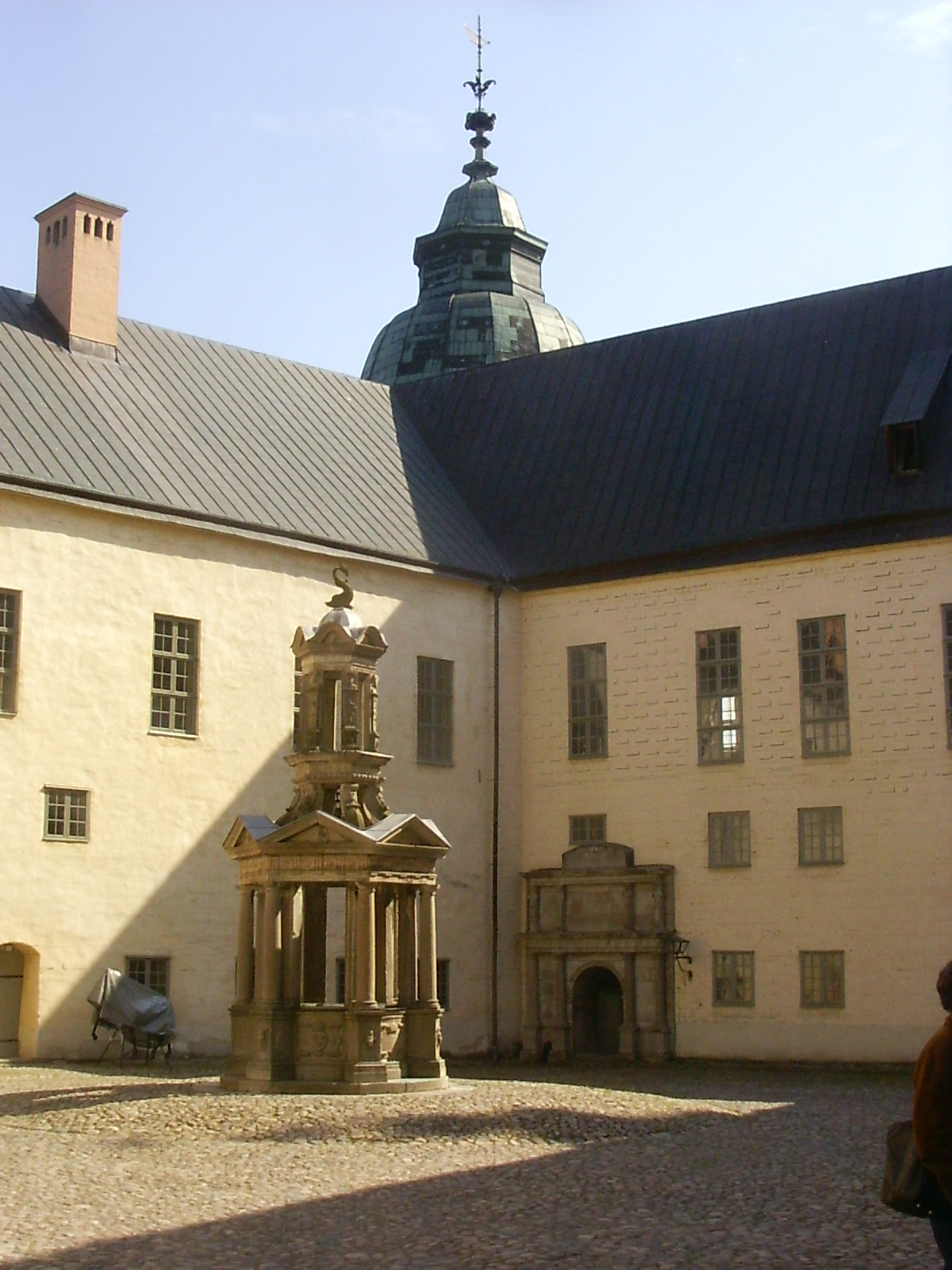
Among the great spaces of Kalmar is its castle church, a fine Renaissance chapel that served the religious needs of the royal household and garrison. Beautifully decorated in the sixteenth-century style, it is regarded as one of the finest Renaissance church interiors in Sweden, and it remains in use for services and ceremonies to this day.
The church reflects the religious changes of its age, for the Vasa kings led Sweden through the Reformation, breaking with Rome and establishing the Lutheran church, and the castle chapel was built and decorated as a Protestant place of worship. Its design and ornament express the new religious sensibility, adapted to the Lutheran liturgy while retaining the beauty appropriate to a royal chapel.
As a royal chapel in an important frontier fortress, the church was a place of both private devotion and public ceremony, where the court worshipped and where significant religious and state occasions were marked. Its fine interior, preserved across the centuries, gives a vivid sense of the religious life of the Vasa court and of the age of the Reformation in Sweden.
Today the castle church continues to serve as a place of worship and is a popular setting for weddings and ceremonies, its beautiful Renaissance interior providing a magnificent backdrop. Its survival and continued use link the modern visitor directly to the religious life of the sixteenth century, and it stands as one of the most beautiful and historically significant spaces in the whole castle.
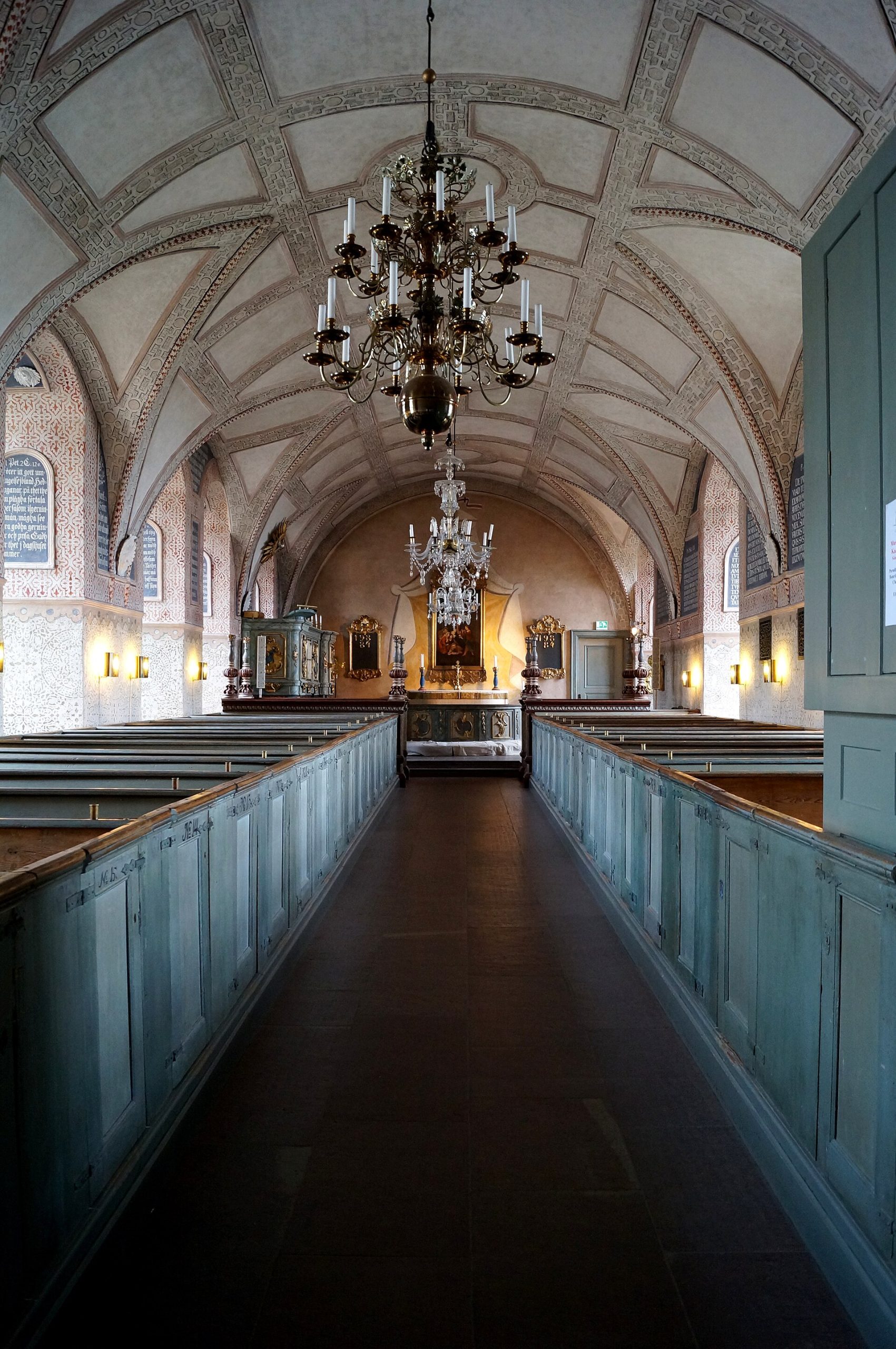
Weddings held in the castle church today follow a tradition of ceremony in this space that stretches back centuries, and the continuity of such use gives the chapel a living quality, connecting the celebrations of the present directly to the religious life of the Renaissance court that first worshipped here.
Inside the Chapel
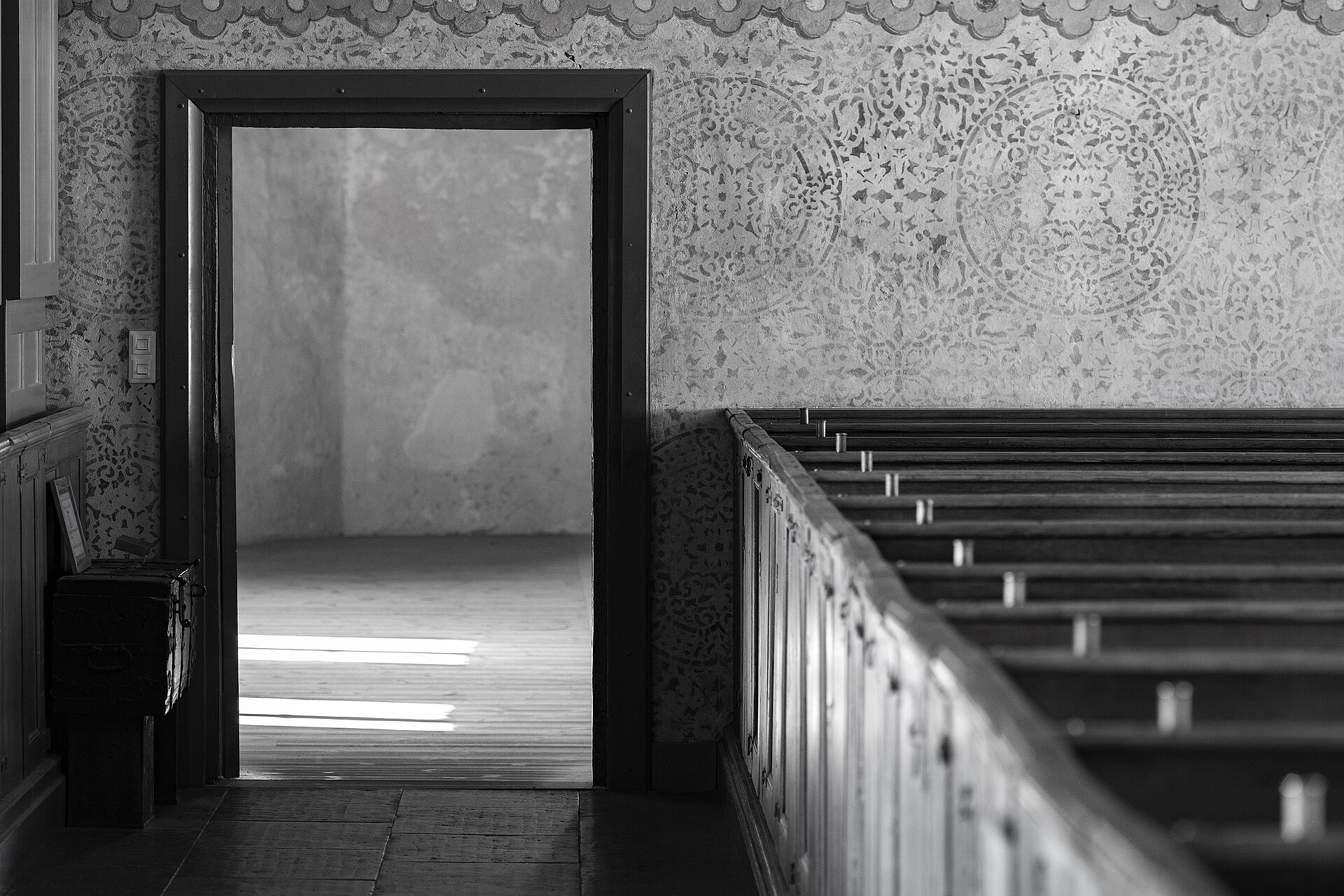
Stepping inside the castle church, the visitor is met by an interior of quiet, dignified beauty, its walls and fittings decorated in the restrained yet elegant manner of the Swedish Renaissance. The space was designed for the Lutheran form of worship that the Vasa kings had established, with its emphasis on preaching and the word, and its arrangement reflects that theological shift.
The decoration of the chapel, though less exuberant than the Golden Hall, is of fine quality, with carved and painted work adorning the pulpit, the galleries and the fittings, creating a space at once solemn and beautiful. It was here that the royal household gathered for worship, and the intimacy of the space lends it a very different atmosphere from the grand state rooms of the castle.
The survival of the chapel’s interior, like that of the castle’s other Renaissance rooms, is a precious thing, allowing the visitor to experience directly the religious world of the sixteenth-century Swedish court. In an age of great religious upheaval, when Sweden was remaking its faith, this chapel was the spiritual heart of the royal fortress at Kalmar.
To sit in the chapel today, surrounded by its Renaissance decoration, is to feel the continuity of worship across the centuries, for the space still serves its original purpose as a place of prayer and ceremony. It completes the picture of Kalmar as a whole world in itself, providing for the spiritual as well as the military and domestic needs of the royal household that once filled the great frontier fortress.
Towers, Sieges and the Kalmar War
As the key to Sweden, Kalmar was fought over again and again in the long and bitter wars between Sweden and Denmark, and its towers and walls witnessed some of the fiercest fighting in Scandinavian history. Danish armies besieged the fortress on multiple occasions, and control of the castle became a central objective in the recurring conflicts between the two crowns.
The most dramatic of these conflicts was the Kalmar War of the early seventeenth century, a struggle between Sweden and Denmark in which the castle and town of Kalmar were a principal battleground. The Danes captured the town and besieged the castle, and the fighting around Kalmar was intense, a measure of the fortress’s continuing strategic importance even as warfare was transformed by artillery.
These wars tested the castle’s defences to the limit, and the modern bastions and ramparts added by the Vasa kings proved their worth, allowing Kalmar to withstand assaults that would have overwhelmed an older fortress. The castle’s ability to endure siege after siege confirmed its reputation as one of the strongest fortresses in the north, the indispensable guardian of Sweden’s frontier.
The strategic importance of Kalmar only declined when the borders of Sweden shifted southward in the mid-seventeenth century, as Sweden conquered the neighbouring provinces from Denmark, moving the frontier away from the castle. With the border gone, Kalmar’s role as the key to Sweden came to an end, and the great fortress that had guarded the kingdom for so long gradually lost its military purpose.
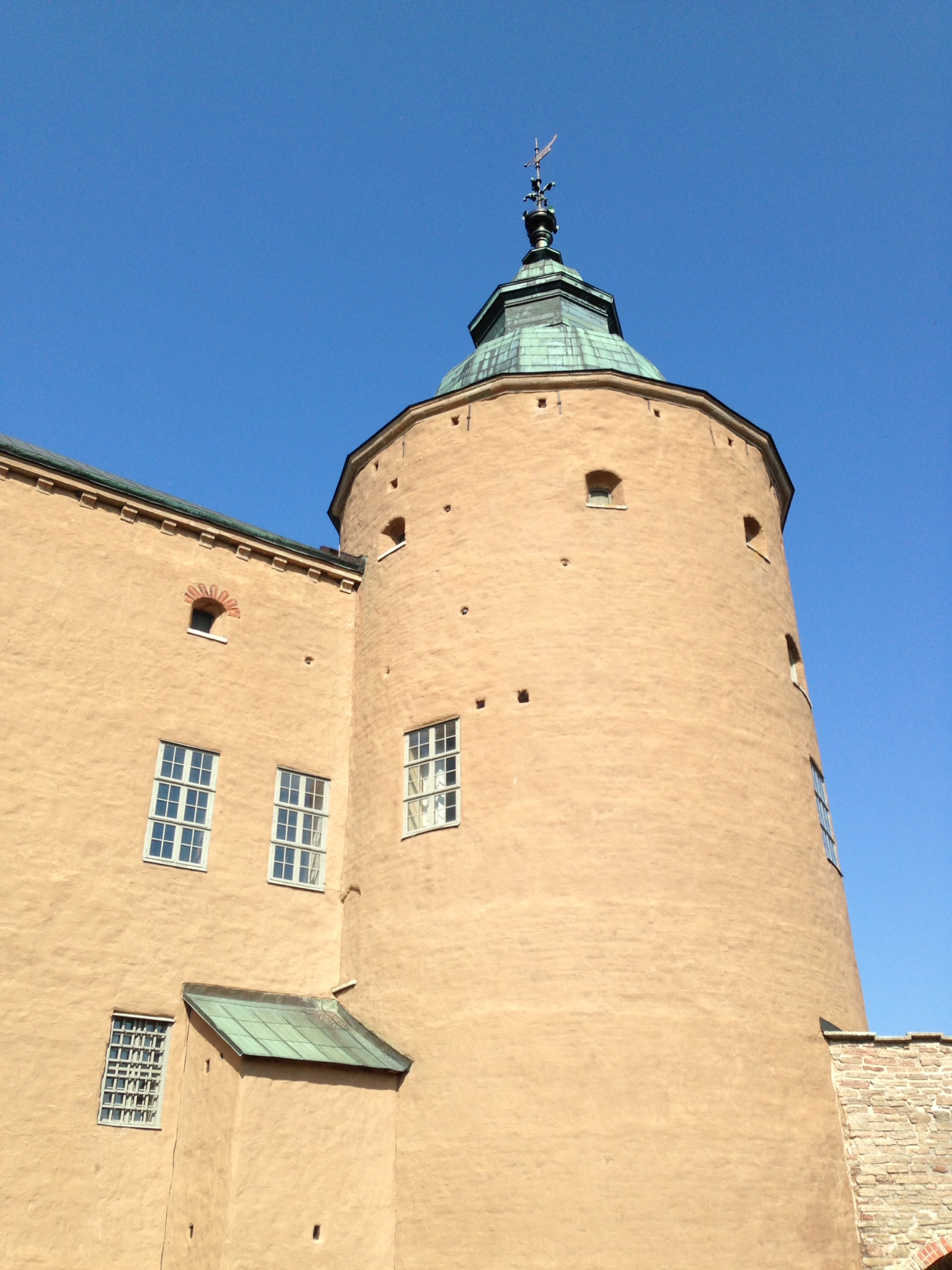
The shifting of the border in the mid-seventeenth century, when Sweden won the southern provinces of Skåne, Blekinge and Halland from Denmark, was one of the great turning points in Scandinavian history, and it transformed Kalmar overnight from a vital frontier fortress into a stronghold deep within secure Swedish territory, its centuries-old purpose suddenly gone.
Decline, Rescue and Renown
With the loss of its strategic importance, Kalmar Castle entered a long period of decline. No longer needed as a frontier fortress, it was put to various lesser uses over the following centuries, serving at different times as a prison, a granary and a distillery, its magnificent Renaissance rooms adapted to mundane purposes and its fabric gradually deteriorating through neglect.
This long decline might have ended in ruin, but in the nineteenth and twentieth centuries a growing appreciation of Sweden’s historic heritage led to the rescue of the castle. Extensive restoration work was undertaken to repair the neglected fortress and to recover its Renaissance splendour, saving one of the country’s most important castles from further decay and returning it to something of its former glory.
Today Kalmar Castle is one of the best-preserved and most important Renaissance castles in Sweden, a museum and a beloved national monument. Visitors come to walk its royal apartments and golden halls, to explore its towers and chapel, and to trace the dramatic history that unfolded within its walls, from the Kalmar Union to the Vasa kings to the wars with Denmark.
By day or floodlit by night, the great fortress on the Baltic coast remains a magnificent sight, its towers and bastions recalling the age when it was the key to Sweden. It has been a border fortress, a royal palace, a prison and a ruin, and it is now a treasured monument, one of the finest castles in Scandinavia and an enduring symbol of the long, dramatic history of the Swedish nation.
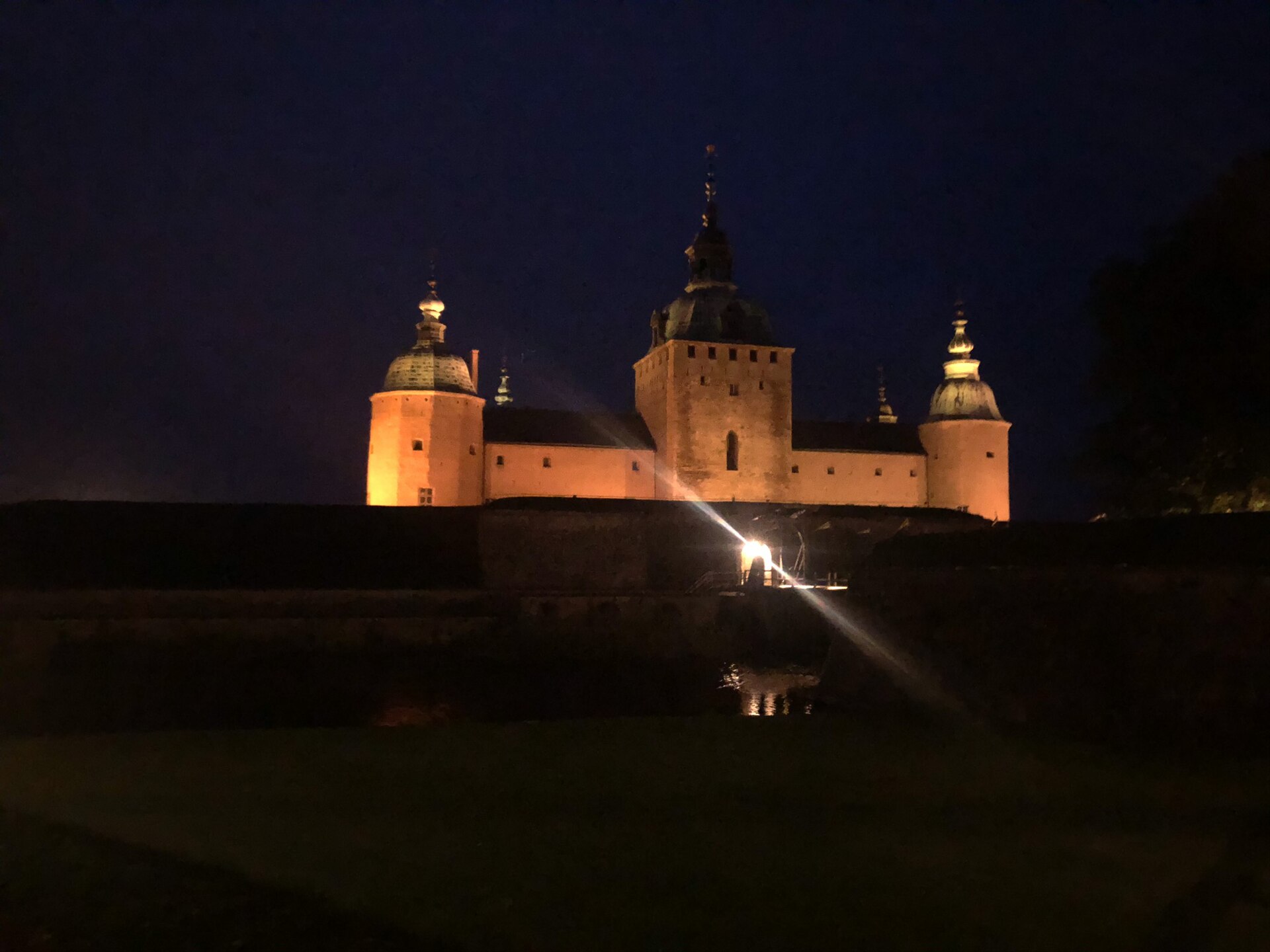
The nineteenth-century restoration of Kalmar was part of a wider awakening of national-romantic feeling in Sweden, when the historic monuments of the country came to be seen as precious expressions of national identity, worthy of preservation and study rather than mere old buildings to be put to any convenient use.
Castles Nearby
- Kronborg Castle: Hamlet’s Fortress on the Danish Sound
- Frederiksborg Castle: Denmark’s Floating Renaissance Palace
Why the Key to Sweden Still Guards the Coast
Kalmar is a castle where the grand currents of Scandinavian history run especially deep. It was the key to Sweden, the great fortress guarding the frontier against Denmark, and it gave its name to the union that once joined the three crowns of the north. Few castles have stood so close to the centre of a region’s history for so long.
And beyond its historical weight, Kalmar is simply one of the finest Renaissance castles in Scandinavia, its golden halls and decorated ceilings, its royal chambers and chapel preserved with rare completeness behind the walls of a powerful artillery fortress. It is a place where the drama of border wars and royal tragedy is matched by the beauty of surviving Renaissance art.
So make your way to the Baltic coast of Sweden and explore the great castle of Kalmar. Walk its ramparts and towers, stand beneath the golden ceiling of its great hall, and remember the union that was proclaimed and the wars that were fought within its walls. Kalmar is the key to Sweden in more than one sense, unlocking not only the frontier but the whole dramatic history of the Scandinavian north.
You May Like
Mafra, the Palace a King Built From a Vow


One thought on “Kalmar Castle: The Renaissance Key to Sweden”