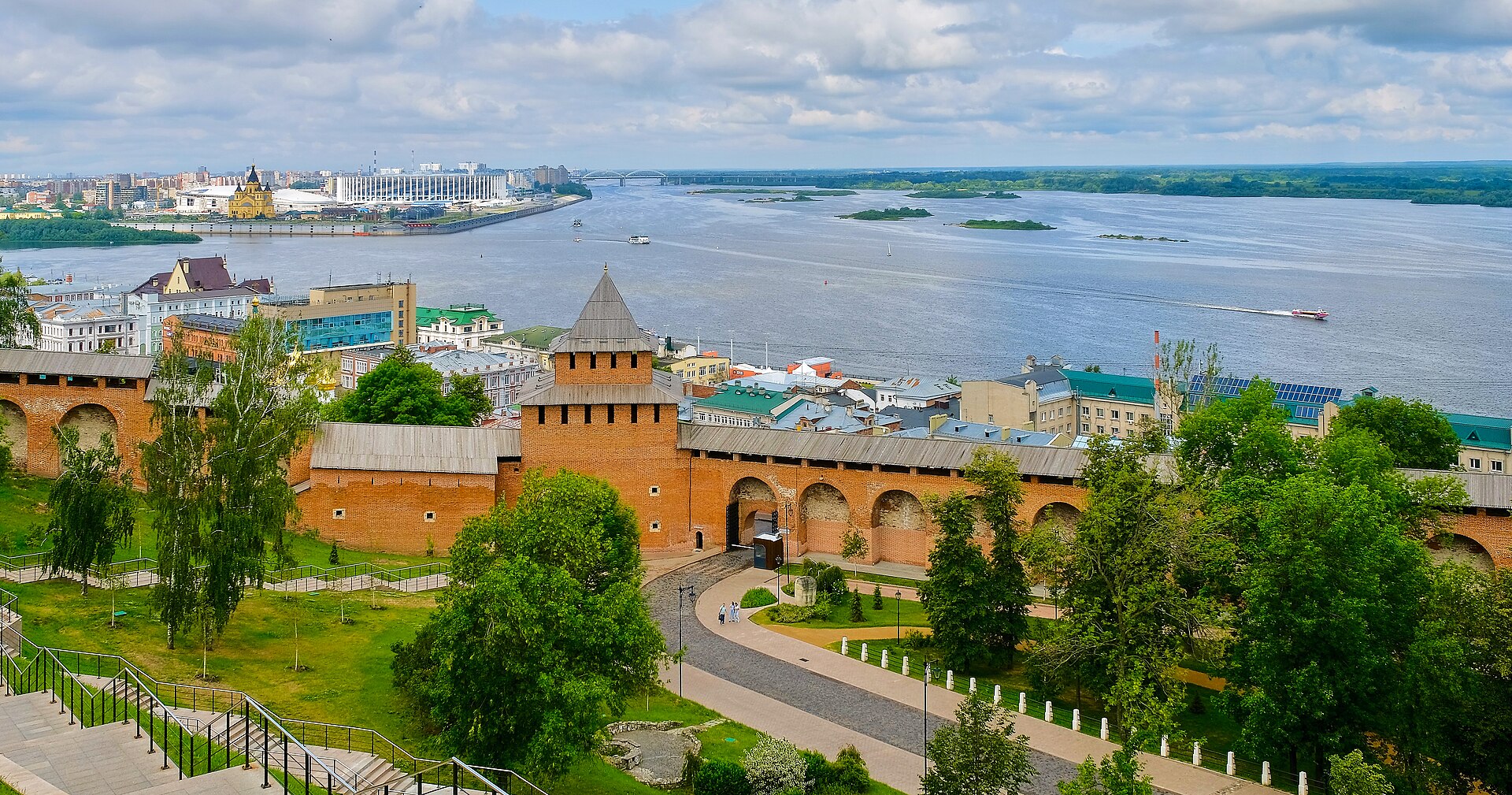
High on a hill above the meeting of two of Russia’s greatest rivers, the mighty Volga and the Oka, stands one of the most impressive fortresses in all of the country. The Nizhny Novgorod Kremlin, with its red-brick walls and its ring of towers climbing the steep riverbank, has guarded this strategic crossroads for more than five centuries. Like the great Kremlin of Moscow, it is a citadel of red brick built to defend the heart of a Russian city, and it is one of the finest and best-preserved fortresses of its kind in all of Russia.
Built in the early sixteenth century to guard the eastern frontier against the Tatar khanates, and never once taken by an enemy in its long history, the Nizhny Novgorod Kremlin is a fortress of great strength and beauty. Within its walls lie the ancient cathedral with the tomb of a national hero, the memorials of later struggles, and the living heart of one of Russia’s great cities. This was the cradle of a movement that once helped to save the whole Russian nation, and its story is woven deep into the history of the country. In this article you will explore the whole of it. Come and discover the fortress at the meeting of two rivers.
What makes the Nizhny Novgorod Kremlin so rewarding is the way it unites strategic grandeur, architectural beauty, and deep national meaning in a single place. It is at once a mighty frontier fortress, a masterpiece of the fortress-builder’s art set in a magnificent riverside landscape, and a shrine of national memory holding the tomb of a hero and the cradle of a great rescue of the nation. Few fortresses anywhere gather so much history and significance within their walls, and it is this richness that makes the great red Kremlin on the Volga so unforgettable.
In This Article
- The Kremlin at the Meeting of Two Rivers
- Where the Volga Meets the Oka
- Red Walls Built Against the East
- An Italian Master on the Volga
- Thirteen Towers on the Hill
- Walls That Climb the Riverbank
- A Fortress Never Taken
- The Shield of a Trading City
- The Cathedral and the Hero’s Tomb
- The Heart of a National Rescue
- Memory and the Eternal Flame
- The Kremlin Today
- Finding the Nizhny Novgorod Kremlin
- Castles Nearby
The Kremlin at the Meeting of Two Rivers
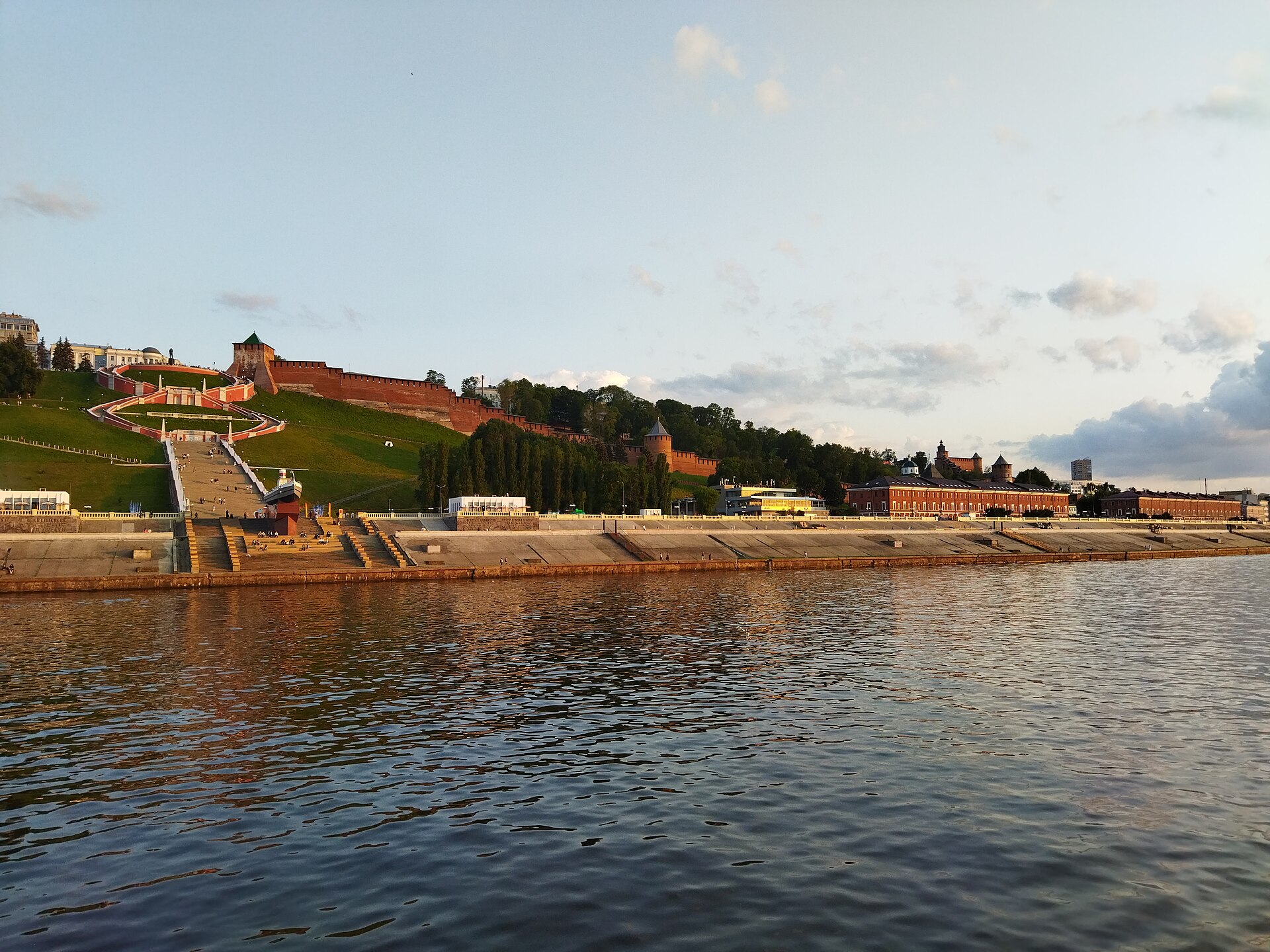
High on a hill above the meeting of two of Russia’s greatest rivers, the mighty Volga and the Oka, stands one of the most impressive fortresses in all of the country. The Nizhny Novgorod Kremlin, with its red-brick walls and its ring of towers climbing the steep riverbank, has guarded this strategic point for more than five centuries. Like the great Kremlin of Moscow, it is a citadel of red brick built to defend the heart of a Russian city, and it remains one of the finest and best-preserved fortresses of its kind in the whole of Russia.
The Nizhny Novgorod Kremlin is a stronghold whose whole history was shaped by its command of the confluence of the Volga and the Oka, one of the great strategic and commercial crossroads of Russia. From this hill the fortress guarded the eastern frontier of the Russian state in a dangerous age, and it did so with such success that it was never once taken by an enemy. Today, beautifully preserved and still at the heart of the great city that grew around it, the Kremlin stands as a proud monument to the history of Russia and of the city it has protected for so long. This is the story of the fortress at the meeting of two rivers.
There is a grandeur to the Nizhny Novgorod Kremlin that comes from the union of its mighty architecture with its magnificent natural setting. The red walls and towers, climbing the green hillside above the broad waters, create a scene of real drama and beauty, and the fortress dominates the whole city that spreads around it. It is a sight that has impressed travellers for centuries, and it remains one of the defining images of Nizhny Novgorod, a proud emblem of the city’s long and important history on the great rivers of Russia.
Where the Volga Meets the Oka
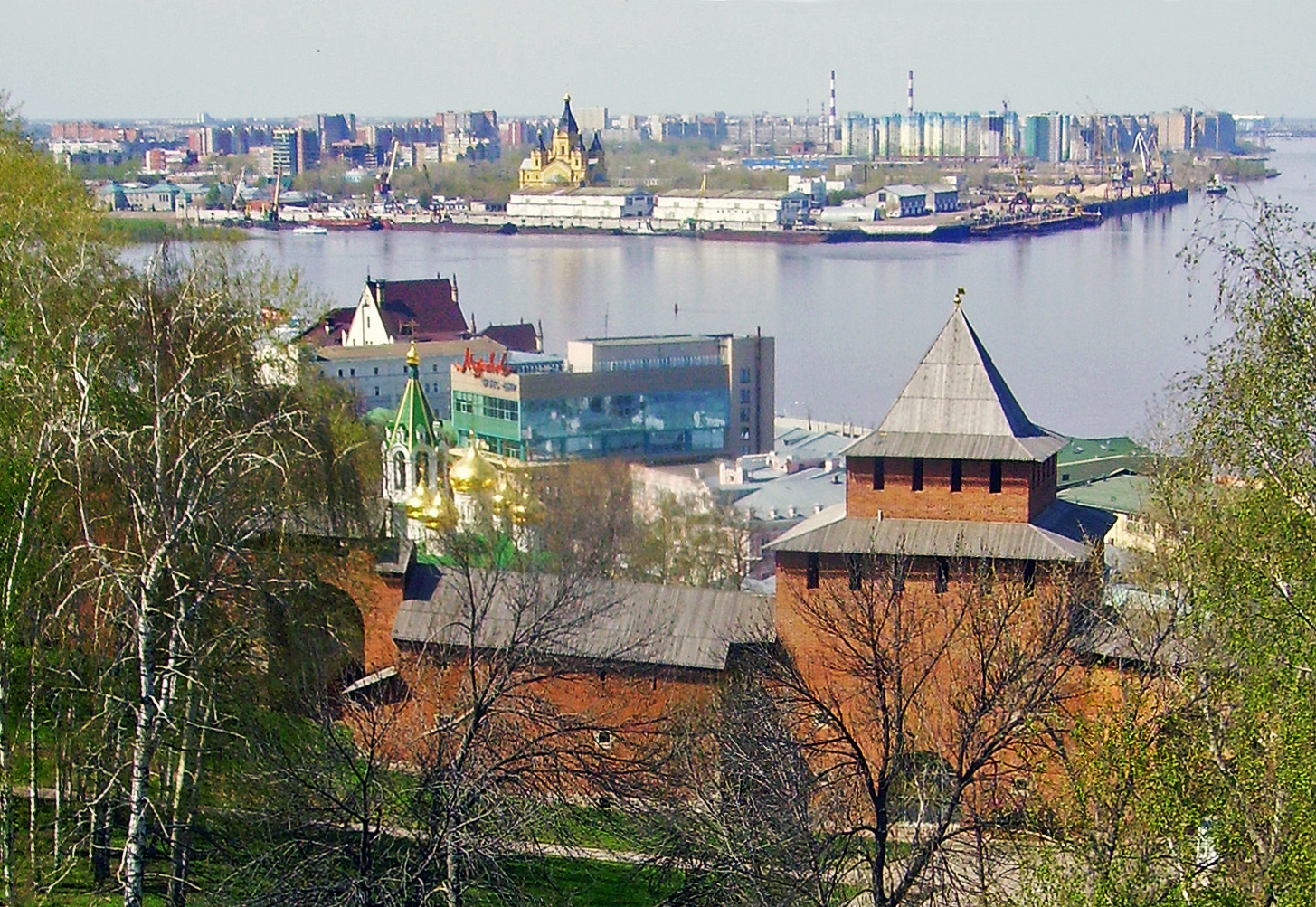
The site of the Nizhny Novgorod Kremlin is one of the great natural crossroads of Russia, the point where the Oka River flows into the mighty Volga, the greatest river in Europe. This confluence was of immense strategic and commercial importance, for the rivers were the great highways of trade and travel across the vast Russian lands, and whoever controlled their meeting point controlled a vital hub of the whole region. It was to command this crucial site that the great fortress was raised on the hill above the waters.
The city of Nizhny Novgorod grew up around this confluence precisely because of its importance, becoming one of the great trading cities of Russia, famous for its markets and its role as a meeting place of merchants from across the land and beyond. The Kremlin on its hill was the fortified heart of this thriving commercial city, guarding it and the vital river crossroads it commanded. The magnificent setting, with the two great rivers meeting below the walls, is one of the glories of the Kremlin, and it explains at once why so mighty a fortress was built on this particular hill.
The meeting of the Volga and the Oka has been a place of the greatest importance throughout Russian history, a natural hub where the routes of trade and travel converged and where great wealth and power gathered. The famous markets of Nizhny Novgorod, drawing merchants from across a vast area, made the city one of the commercial capitals of Russia, and all of this activity clustered around the confluence that the Kremlin guarded. To understand the fortress is to understand the immense importance of this river crossroads, which gave the city and its stronghold their reason for being.
Red Walls Built Against the East
The great red-brick Kremlin that survives today was built in the early sixteenth century, during the reign of the grand princes of Moscow who were then forging the Russian state into a great power. At that time, Nizhny Novgorod stood on the eastern frontier of the Russian lands, exposed to the raids of the powerful Tatar khanate that lay to the east, and the building of a mighty fortress here was a matter of vital importance for the defence of the whole region. The Kremlin was raised precisely to guard this dangerous frontier against attack.
The construction of so formidable a fortress reflected the growing power and ambition of the Russian state under its grand princes, the same rulers who were rebuilding the great Kremlin of Moscow in these very years. The eastern frontier had to be secured if the young state was to be safe, and Nizhny Novgorod, at its vital river crossroads, was one of the keys to that security. The great red walls rising on the hill above the Volga were a powerful statement of Russian strength and determination, a fortress built to hold the frontier against all who might threaten it from the east.
The building of the Kremlin came at a crucial moment in the formation of the Russian state, when the grand princes of Moscow were gathering the Russian lands under their rule and pushing their frontiers outward against their neighbours. Securing the eastern border against the Tatar khanates was one of the great tasks of the age, and the fortress at Nizhny Novgorod was a key part of that effort. Its construction reflected the growing strength and confidence of the young Russian state, and it played its part in the long struggle that would eventually see Russia become the dominant power in the region.

An Italian Master on the Volga
Like the great Kremlin of Moscow, the fortress at Nizhny Novgorod owed much to the skill of an Italian architect, one of the foreign masters that the grand princes of Moscow drew to Russia to build their fortresses in the most modern style. These Italian engineers brought with them the latest ideas in the art of fortification, including the design of walls and towers able to withstand the gunpowder artillery that was transforming warfare, and their expertise gave the Nizhny Novgorod Kremlin its formidable strength.
The involvement of an Italian master in the building of the Kremlin is a fascinating reminder that even on the distant Volga frontier, Russia was connected to the wider currents of European technical knowledge and drew upon them to strengthen the state. The fusion of Italian engineering skill with Russian purpose produced a fortress that was thoroughly up to date for its age, a stronghold designed to meet the newest threats of war. It is a link, across all of Europe, between this Russian frontier fortress and the world of the Italian Renaissance, and it is part of what makes the Kremlin so interesting to study.
The presence of Italian expertise in the building of the Nizhny Novgorod Kremlin, as at Moscow, is a striking reminder of how the rising Russian state reached out to the wider world for the knowledge it needed. Rather than relying solely on native tradition, the grand princes sought out the finest engineers of the age, wherever they might be found, and put their skills to work in the service of Russia. The fortress that resulted was a thoroughly modern stronghold, and its strength owed much to this willingness to learn from the best that Europe had to offer.

Thirteen Towers on the Hill
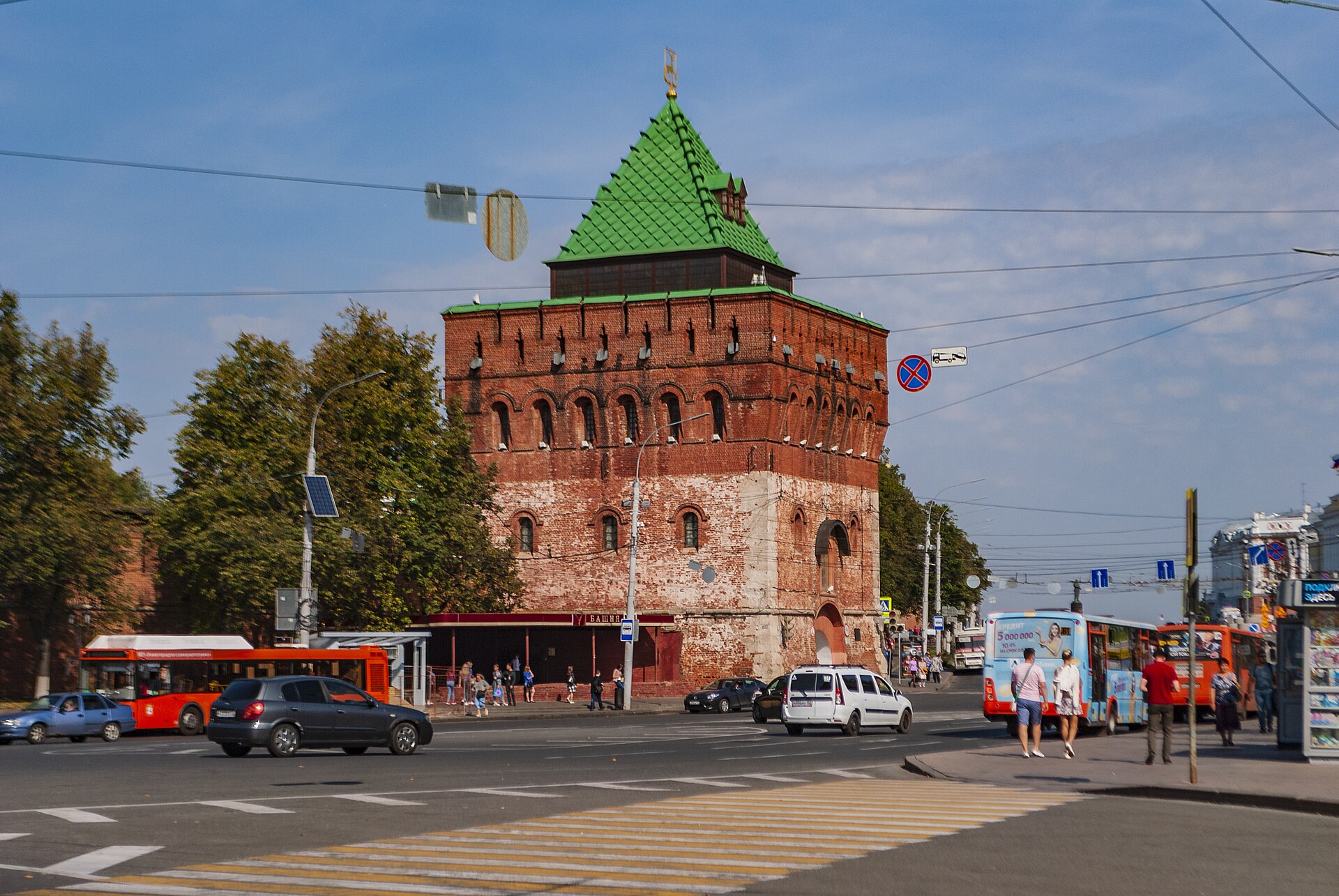
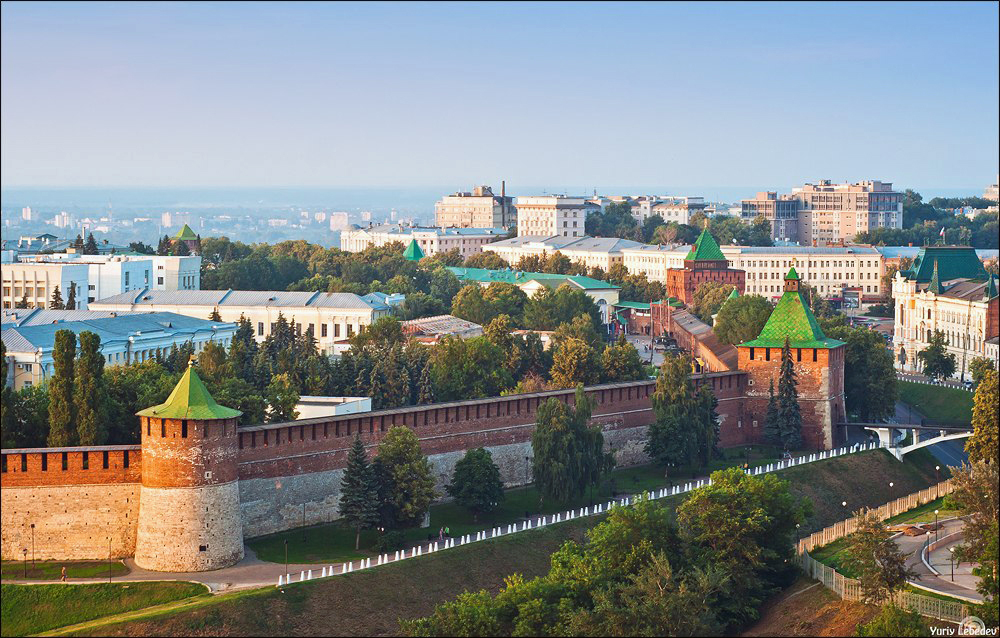
The walls of the Nizhny Novgorod Kremlin, stretching for some two kilometres around the fortress, are studded with a series of great towers, thirteen in all, which guard the walls and command the approaches by land and river. These towers, both round and square, are among the most impressive features of the Kremlin, each one a formidable strongpoint in its own right, and together they give the fortress its powerful and distinctive silhouette. The greatest of them served as the main gate and stronghold of the whole fortress.
Each of the towers has its own name and its own history, and several are famous in the annals of the city and the fortress. The principal gate tower, facing the main square of the city, was the ceremonial and defensive heart of the Kremlin, the great entrance through which the life of the fortress passed. From the towers, defenders could sweep the walls and the approaches with fire, and command the rivers and the land around. The thirteen towers, marching around the walls and up the steep hillside, are one of the great glories of the Kremlin and a marvel of the fortress-builder’s art.
The thirteen towers of the Kremlin are among its greatest treasures, each with its own character and its own place in the history and folklore of the fortress. Some guarded the gates, some the corners of the walls, and some the descent to the river, and together they formed a complete and formidable system of defence. Their varied forms and the way they follow the walls up and down the hillside give the Kremlin a wonderfully picturesque and dramatic appearance, and exploring them is one of the great pleasures of a visit to the fortress today.
The principal gate tower in particular has always been the ceremonial face of the Kremlin, the grand entrance through which the great occasions of the city’s life have passed, and it remains one of the most recognisable landmarks of Nizhny Novgorod. Standing before it, one can imagine the countless processions, arrivals, and departures that have passed beneath its arch across the centuries. It is a fitting symbol of the whole fortress, at once a powerful stronghold and a proud gateway to the historic heart of the city.
Walls That Climb the Riverbank
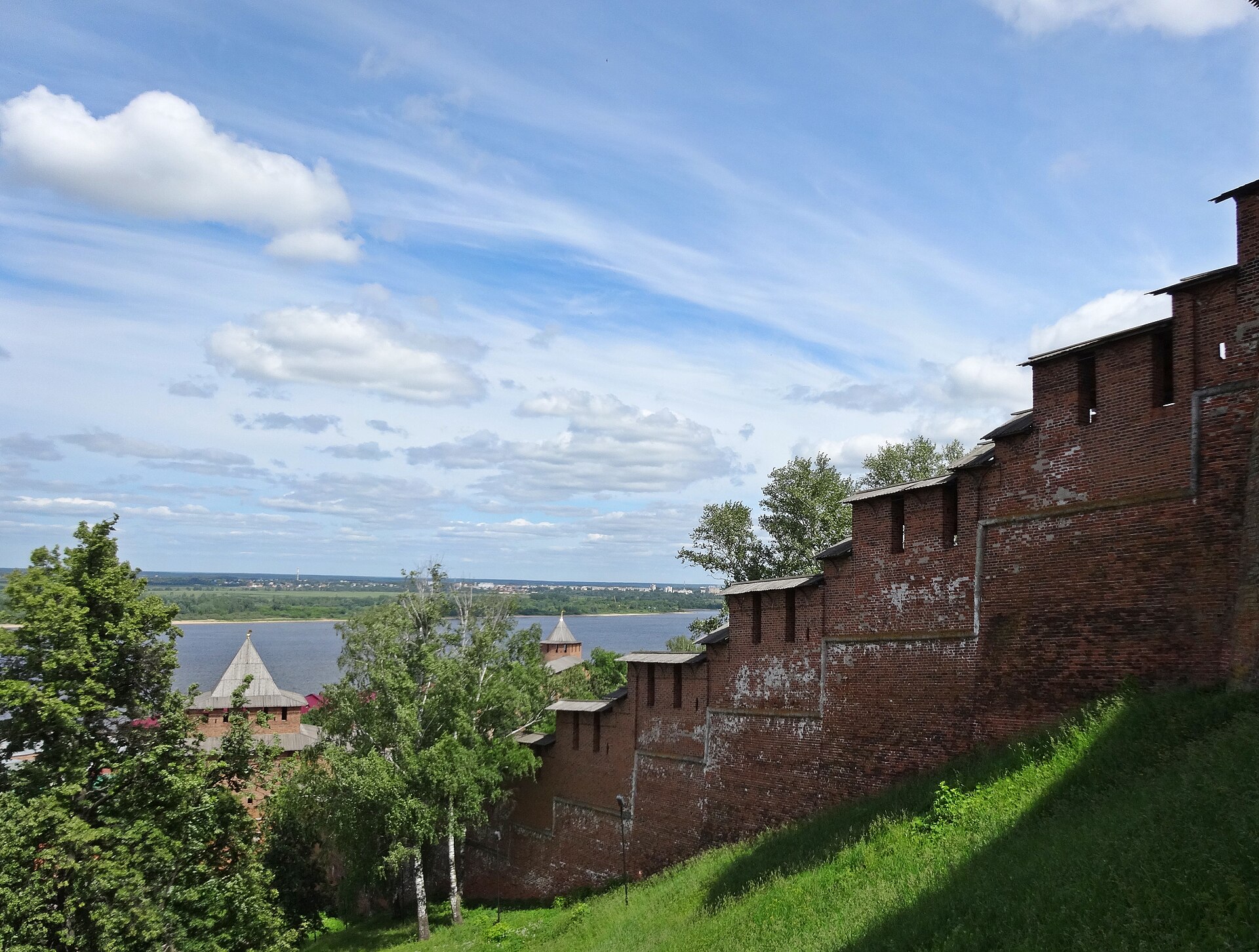
One of the most dramatic features of the Nizhny Novgorod Kremlin is the way its walls do not simply enclose a level space on the hilltop but descend the steep riverbank toward the waters below, following the difficult terrain in a bold feat of military engineering. Part of the fortress crowns the height, while another part climbs down the slope, so that the walls and towers ascend and descend the hillside in a way that is both spectacular to behold and highly effective for defence, denying any attacker an easy approach.
This adaptation of the fortress to its steep and dramatic site is a mark of the skill of its builders, who turned the difficult terrain to their advantage, using the natural slopes to strengthen the defences. The result is a fortress that seems to flow over and around the contours of the hill, its red walls rising and falling with the land in a way that few other fortresses can match. Walking the walls today, one can appreciate both the beauty and the ingenuity of this design, and the magnificent views it offers out over the rivers and the city below.
The engineering skill involved in building a fortress that descends so steep a slope should not be underestimated, for it required careful planning and great effort to raise walls and towers that could hold the difficult terrain and still present an unbroken line of defence. The builders rose to the challenge magnificently, and the result is one of the most dramatic and effective fortress designs to be found anywhere in Russia. The walls climbing the riverbank are not just a spectacular sight but a testament to the ambition and ability of those who created this great stronghold.

A Fortress Never Taken
For all the dangers of the frontier it guarded, the Nizhny Novgorod Kremlin holds a proud record, for in the whole of its long history it was never once captured by an enemy. Time and again the fortress stood ready to defend the vital river crossroads and the city that had grown around it, and its formidable walls and towers, designed with such care to withstand attack, proved equal to every threat. The strength of the Kremlin was such that no army ever succeeded in taking it, and it remained an unbroken shield of the Russian frontier.
This unbroken record of successful defence is a great source of pride, and it is a testament to the skill of those who built the fortress and the courage of those who held it. In an age when so many strongholds fell to siege or storm, the Nizhny Novgorod Kremlin stood firm, its red walls never breached by a foe. To this day the fortress is celebrated as a stronghold that was never taken, and its walls carry the memory of that long and honourable history of defence, a fitting reputation for one of the mightiest fortresses of the Russian state.
The unbroken record of the Nizhny Novgorod Kremlin as a fortress that was never taken is a rare and remarkable thing, for across the long and violent history of Russia, few strongholds could claim never to have fallen to an enemy. This record speaks both to the strength of the fortress and to its importance, for it was always well defended and never allowed to fall. For the people of Nizhny Novgorod, this proud history has been a source of enduring pride, a mark of the strength and resilience of their city and its great red fortress on the hill.

The Shield of a Trading City
The Nizhny Novgorod Kremlin was not only a frontier fortress but the fortified heart of one of the greatest trading cities in all of Russia. Nizhny Novgorod, standing at the meeting of the great rivers, became famous as a centre of commerce, its markets drawing merchants from across Russia and far beyond, and its wealth and importance grew with the trade that flowed through the confluence. The Kremlin on its hill guarded this thriving city and the riches that passed through it, the secure stronghold at the centre of a bustling commercial world.
The relationship between the fortress and the city was close and enduring, for the Kremlin provided the security that allowed trade to flourish, and the wealth of the trade sustained the importance of the city and its fortress. As Nizhny Novgorod grew into one of the leading cities of Russia, the Kremlin remained its historic heart and its proud symbol, the ancient stronghold around which the whole life of the city revolved. This dual role, as both a frontier fortress and the heart of a great trading city, shaped the whole history of the Kremlin and made it one of the most important places in the region.
The close bond between the fortress and the trading city it protected shaped the whole character of Nizhny Novgorod, a place where military strength and commercial wealth reinforced one another. The security provided by the Kremlin allowed the markets to flourish, and the wealth of the markets sustained the importance of the city and its fortress. This partnership of the sword and the merchant’s scale made Nizhny Novgorod one of the great cities of Russia, and the Kremlin, at its heart, was the guarantor of the prosperity that flowed through the confluence of the rivers.
The Cathedral and the Hero’s Tomb
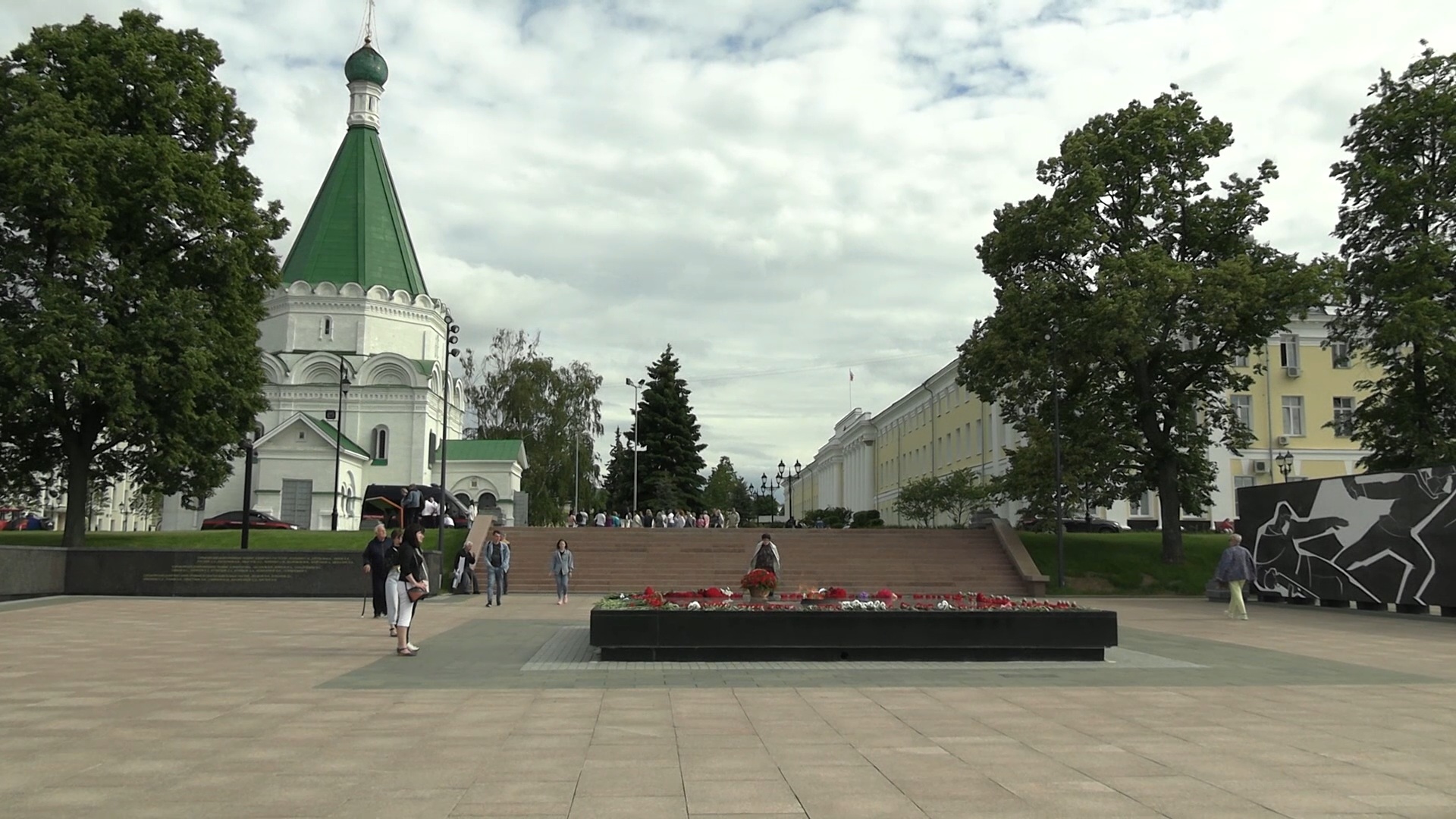
Within the walls of the Nizhny Novgorod Kremlin stands its ancient cathedral, dedicated to the Archangel Michael, which is among the oldest surviving buildings of the fortress and one of its most sacred. This venerable church has stood at the heart of the Kremlin for centuries, a place of worship and of memory, and it holds a treasure of the deepest significance to the Russian people, for within it lies the tomb of one of the great national heroes of Russia, a citizen of Nizhny Novgorod whose name is honoured throughout the land.
The hero buried here was a merchant of the city who, at a time of terrible crisis for Russia, rose to lead his people in the defence of their nation, and his memory is cherished as one of the great examples of patriotism and courage in all of Russian history. That his tomb should lie within the cathedral of the Nizhny Novgorod Kremlin gives the fortress a profound significance as a place of national memory, connecting it to one of the most stirring episodes of the Russian past. To stand before the tomb is to be in the presence of a figure who helped to save the Russian nation in its hour of need.
The presence of so sacred a tomb within the Kremlin gives the fortress a profound significance as a place of national memory and pilgrimage, for it connects the stronghold to one of the most cherished stories of Russian patriotism. To visit the cathedral and stand before the tomb is to be reminded of the moment when the people of this city rose to save their nation, and of the ordinary man who led them. Few fortresses anywhere hold so direct a link to so stirring a chapter of national history, and it lends the Kremlin a depth of meaning far beyond its walls.

The Heart of a National Rescue
The Nizhny Novgorod Kremlin holds a place of the highest honour in Russian history, for it was here, in a time of terrible troubles when the Russian state had all but collapsed and foreign enemies occupied the capital, that a great movement of national salvation was born. A merchant of the city rallied his fellow citizens and raised a great volunteer army, which marched to liberate the heart of Russia and to restore the nation. This heroic effort, born in Nizhny Novgorod, is remembered as one of the defining moments in the whole history of the Russian people.
The rescue of the nation that began in this city, led by its merchant hero together with a great commander, succeeded in driving out the occupiers and restoring the Russian state, and it is celebrated to this day as a supreme example of national unity and sacrifice. That so momentous a movement should have arisen in Nizhny Novgorod, with its Kremlin at the city’s heart, gives the fortress a special glory, for it was the cradle of the effort that saved Russia. This proud history is one of the reasons the Kremlin is cherished as a national treasure, a monument to the courage of a city that once helped to rescue an entire nation.
The story of the national rescue that began in Nizhny Novgorod is one of the most celebrated in all of Russian history, remembered and honoured across the country to this day. That a merchant of this city could rally his fellow citizens and set in motion the salvation of the whole nation is a powerful example of the difference that ordinary people can make in the great crises of history. For Nizhny Novgorod and its Kremlin, this glorious episode is a source of the deepest pride, and it has given the fortress a place of honour in the national memory that few other places can match.
Memory and the Eternal Flame
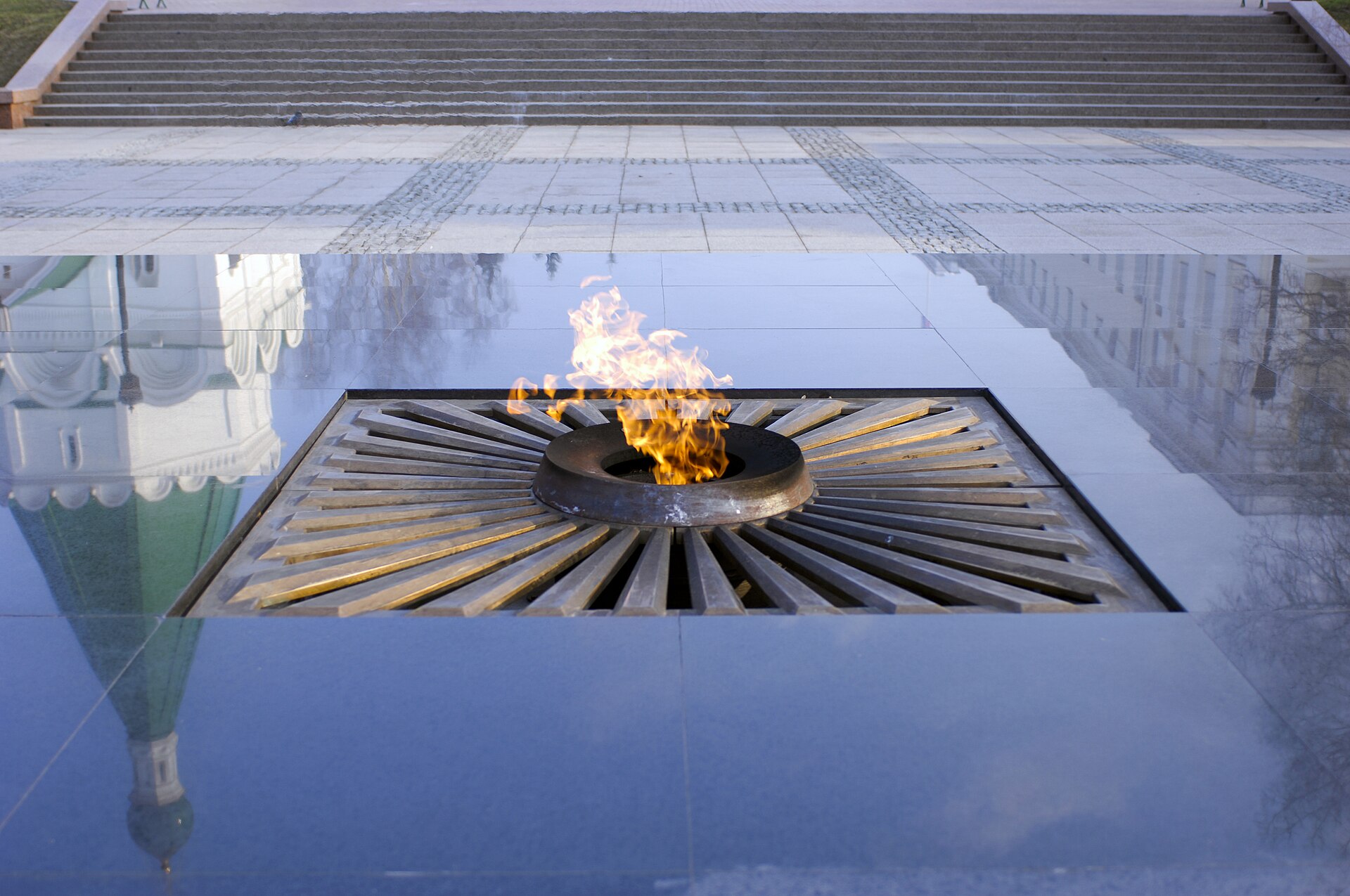
The Nizhny Novgorod Kremlin is a place of memory as well as of history, and within its walls stand memorials to the great struggles and sacrifices of more recent Russian history, above all the terrible war of the twentieth century in which the Russian people suffered and fought so greatly. An eternal flame burns within the Kremlin in honour of those who gave their lives, and memorials recall the immense contribution and sacrifice of the city and its people in that great conflict, when Nizhny Novgorod was an important centre of the war effort.
These memorials give the Kremlin a solemn and moving character, for they connect the ancient fortress to the more recent chapters of the nation’s history and to the sacrifices of ordinary people in times of war. The eternal flame, burning within the walls that have stood for five centuries, links the deep past of the fortress to the living memory of the modern age, and it makes the Kremlin a place of remembrance for the whole community. This role as a site of memory adds a further layer of meaning to the fortress, deepening its significance for the people of the city and the nation.
The memorials within the Kremlin ensure that the sacrifices of more recent generations are not forgotten, and they give the ancient fortress a living connection to the memory of the whole community. In gathering the remembrance of modern struggles within walls that have stood for five centuries, the Kremlin becomes a place where the whole sweep of the city’s history, from its medieval origins to the trials of the modern age, is held together in a single sacred space. This role as a keeper of memory is one of the most moving aspects of the fortress today.
The Kremlin Today
Today the Nizhny Novgorod Kremlin remains at the very heart of the life of the city, no mere museum piece but a living centre of civic and cultural activity. Within its ancient walls are the offices of the regional government, along with museums, exhibitions, and monuments, so that the fortress continues to serve as the administrative and cultural core of the city just as it has for centuries. The Kremlin is thus a working part of the modern city, its long history flowing seamlessly into its vibrant present.
For visitors, the Kremlin offers a great deal to see and enjoy, from walking the walls and towers with their magnificent views over the rivers to exploring the cathedral, the memorials, and the museums within. The whole fortress is beautifully preserved and cared for, and a visit brings to life its long and eventful history, from its founding as a frontier stronghold to its role in the great national dramas of Russia. As the historic heart of one of Russia’s great cities, the Nizhny Novgorod Kremlin is a rewarding and memorable place to visit, and a proud symbol of the city and its past.
The continued life of the Kremlin as the working heart of the city, rather than a mere relic, is one of its great strengths, for it means that the fortress remains woven into the daily life of Nizhny Novgorod just as it has been for centuries. The presence of government offices, museums, and monuments within the walls ensures that the Kremlin is always alive with activity, a living monument rather than a frozen one. This continuity, the ancient fortress still serving the city at the centre of its life, is part of what makes the Nizhny Novgorod Kremlin so special.

Finding the Nizhny Novgorod Kremlin
The Nizhny Novgorod Kremlin stands at the very heart of the city of Nizhny Novgorod, one of the largest and most important cities in Russia, on the hill above the meeting of the Volga and the Oka. The city lies a considerable distance east of Moscow but is well connected to it and to the rest of the country, and the Kremlin, at the city’s centre, is impossible to miss, its red walls and towers crowning the hill above the rivers. For anyone visiting Nizhny Novgorod, the Kremlin is the natural centrepiece of any exploration.
The setting could hardly be more magnificent, with the two great rivers meeting below the walls and the city spreading out around the ancient fortress. A visit to the Kremlin can easily be combined with the many other attractions of Nizhny Novgorod, a historic and vibrant city with much to offer. Here are the exact coordinates so you can find your way to the great fortress at the meeting of the two rivers.
View on Google Maps: 56.3287, 44.002
Castles Nearby
If the Nizhny Novgorod Kremlin has drawn you into Russian history, two more great strongholds make a fine next stop.
- The Moscow Kremlin is the great red-walled fortress at the heart of Russia.
- The Peter and Paul Fortress is the fortress where St. Petersburg was born.
The Fortress at the Meeting of Two Rivers
Few fortresses anywhere command so magnificent a setting or so proud a history as the Nizhny Novgorod Kremlin. Rising in red brick on its hill above the meeting of the Volga and the Oka, it guarded one of the great crossroads of Russia, held the eastern frontier against every threat, and was never once taken by an enemy. Within its walls lie the tomb of a national hero and the cradle of a great movement that once helped to save the Russian nation, so that the fortress is bound up with some of the most stirring moments in the whole history of the country.
That is what makes a visit to the Nizhny Novgorod Kremlin so rewarding. You are not just admiring a mighty fortress but standing at a great crossroads of Russian history and geography, in a place of both strategic importance and deep national meaning. To walk its walls above the rivers, to stand before the hero’s tomb, and to take in the magnificent views over the confluence is to feel the depth of the Russian past. Beautifully preserved and still at the heart of a great city, the Nizhny Novgorod Kremlin remains one of the finest fortresses in all of Russia.
If your travels ever take you to Nizhny Novgorod, a visit to the Kremlin is essential. Climb to the great fortress on its hill, walk the red walls that ascend and descend the riverbank, and take in the magnificent views over the meeting of the Volga and the Oka. Visit the ancient cathedral with its hero’s tomb, pause at the memorials, and let the long and proud history of the place work upon you. The great red fortress has guarded this crossroads for five centuries, and it is ready to share its story with everyone who comes to the meeting of the two rivers.
You May Like
Mafra, the Palace a King Built From a Vow