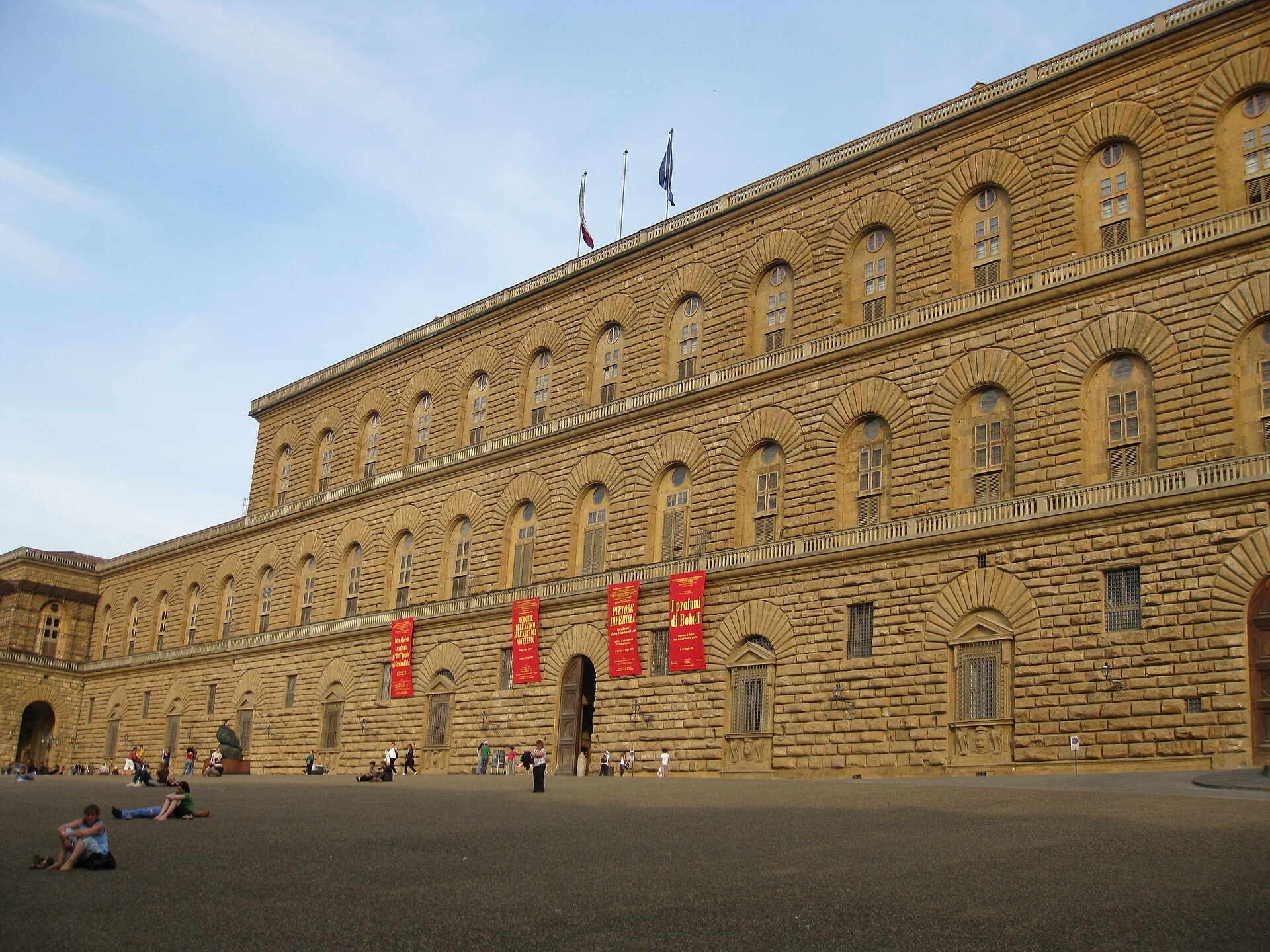
On the southern bank of the river Arno in Florence, its vast rusticated facade rising like a cliff of golden stone above a sloping piazza, stands one of the most imposing palaces of the Italian Renaissance. The Palazzo Pitti began as the ambitious dream of a Florentine banker, became the principal residence of the Medici grand dukes of Tuscany, and ended as a royal palace of the kings of Italy. Few buildings so completely embody the history of Florence and of Italy across five centuries.
The palace is a place of superlatives. Its immense facade is one of the largest and most powerful in Renaissance architecture, and behind it lies a treasure house of art that ranks among the greatest in the world, its rooms hung with masterpieces by Raphael, Titian, and a host of other supreme painters. Its ceilings blaze with the frescoes of one of the masters of the Baroque, and behind the palace rise the magnificent Boboli Gardens, one of the most influential gardens ever created.
The story of the Palazzo Pitti is the story of the great dynasties that ruled Florence and Tuscany, above all the Medici, whose wealth and taste transformed the city into a capital of art and who made the palace the seat of their court. From the Medici the palace passed to their successors, and eventually it briefly became the royal residence of a newly united Italy, so that its walls have sheltered bankers, grand dukes, and kings in turn.
To visit the Palazzo Pitti is to encounter the Renaissance and Baroque splendour of Florence at its most magnificent, to walk through galleries of incomparable art, and to wander gardens that shaped the taste of all Europe. This is the story of the great palace across the Arno, of the banker who built it and the Medici who made it their own, and of the treasures of art and the glorious gardens that make it one of the wonders of Florence.
In This Article
- The Great Palace Across the Arno
- The Banker’s Ambition
- The Medici Make It Their Own
- Ammannati’s Courtyard and the Great Facade
- The Palatine Gallery
- Pietro da Cortona and the Painted Ceilings
- The Planetary Rooms
- The Royal Apartments
- A Palace of Museums
- The Boboli Gardens
- The Amphitheatre and the Fountains
- Grottoes, the Obelisk, and Garden Fantasies
- The Palazzo Pitti Today
The Great Palace Across the Arno
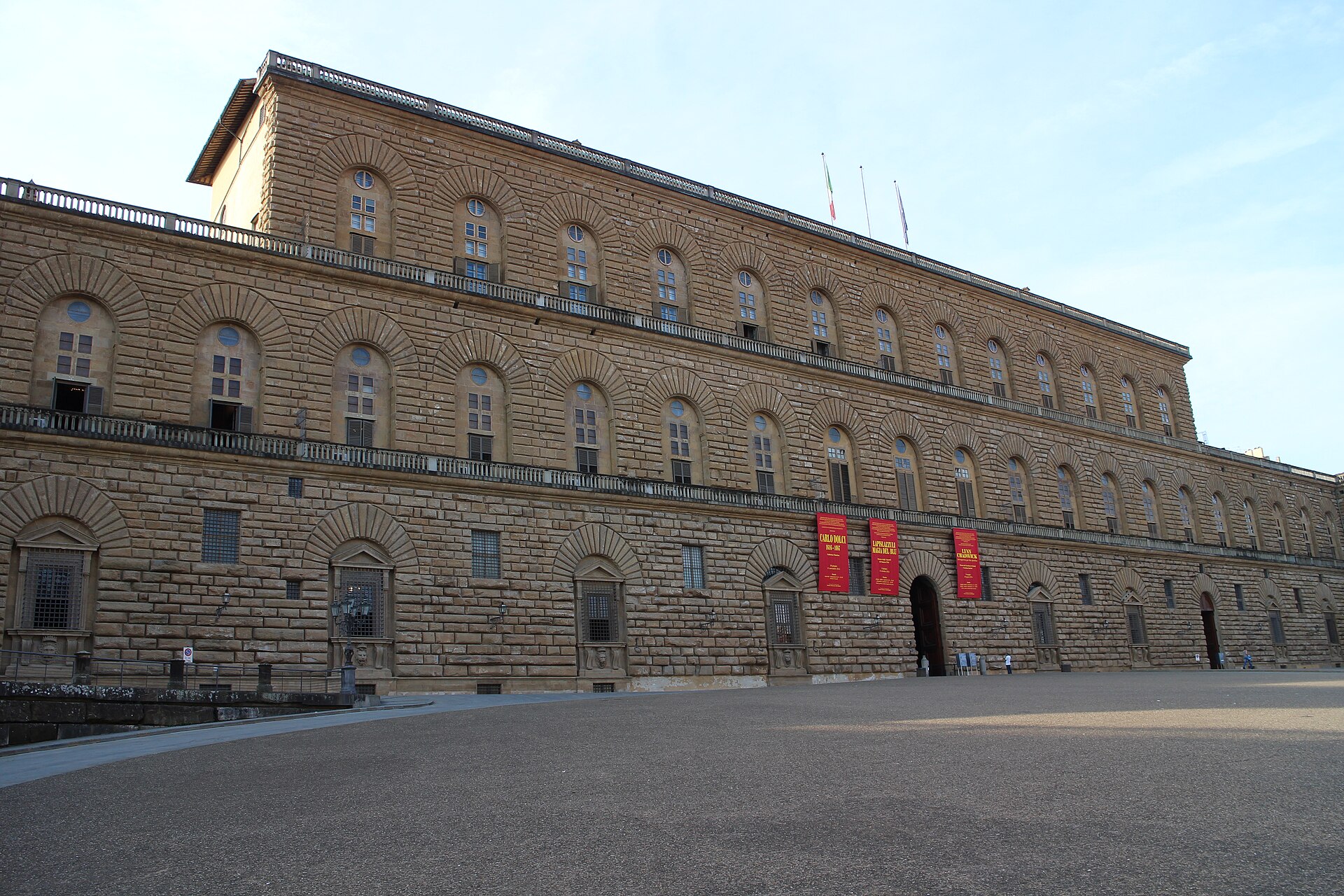
The Palazzo Pitti dominates its quarter of Florence, the district known as the Oltrarno on the southern bank of the river, with a presence that is almost overwhelming. Its enormous facade, built of rough-hewn rusticated stone, stretches across the head of a sloping piazza, rising in three great storeys of massive masonry that convey an impression of tremendous strength and solidity. It is one of the most powerful architectural statements of the Renaissance.

The palace is vast, far larger than it first appears, for behind the great facade extends an enormous complex of rooms, courtyards, and galleries, backed by the sweeping terrain of the Boboli Gardens rising up the hillside behind. What began as a large private house grew, over the centuries, into a palace of royal dimensions, capable of housing a court and its treasures on the grandest scale.
The character of the palace is unmistakably Florentine, its rugged rusticated stonework recalling the great fortress-like palaces built by the wealthy families of the Renaissance city. Yet its scale far exceeds that of any private townhouse, and its facade, extended and heightened over the generations, achieves a monumental grandeur that sets it apart as a palace fit for princes and, in time, for kings.
Behind its imposing exterior, the Palazzo Pitti contains one of the greatest concentrations of art and treasure in the world, and it opens onto one of the most celebrated gardens ever created. The union of the great palace with its magnificent gardens, rising up the hillside behind, forms an ensemble of extraordinary richness, and it makes the Palazzo Pitti one of the essential monuments of Florence and of the Italian Renaissance.
The palace also occupies a special place in the topography of Florence, standing on the Oltrarno, the far side of the Arno from the historic centre, and connected to the seat of government by a private elevated passage that allowed the rulers to move between their palaces unseen. This arrangement made the Palazzo Pitti not an isolated residence but part of an interconnected network of Medici power woven through the very fabric of the city.
The Banker’s Ambition
The palace takes its name from Luca Pitti, a wealthy and ambitious Florentine banker who began its construction in the middle of the fifteenth century. A rival of the Medici family, who then dominated Florence, Pitti sought to proclaim his own wealth and standing by building a townhouse of unprecedented grandeur, a palace that would outshine those of his competitors and assert his place among the great men of the city.
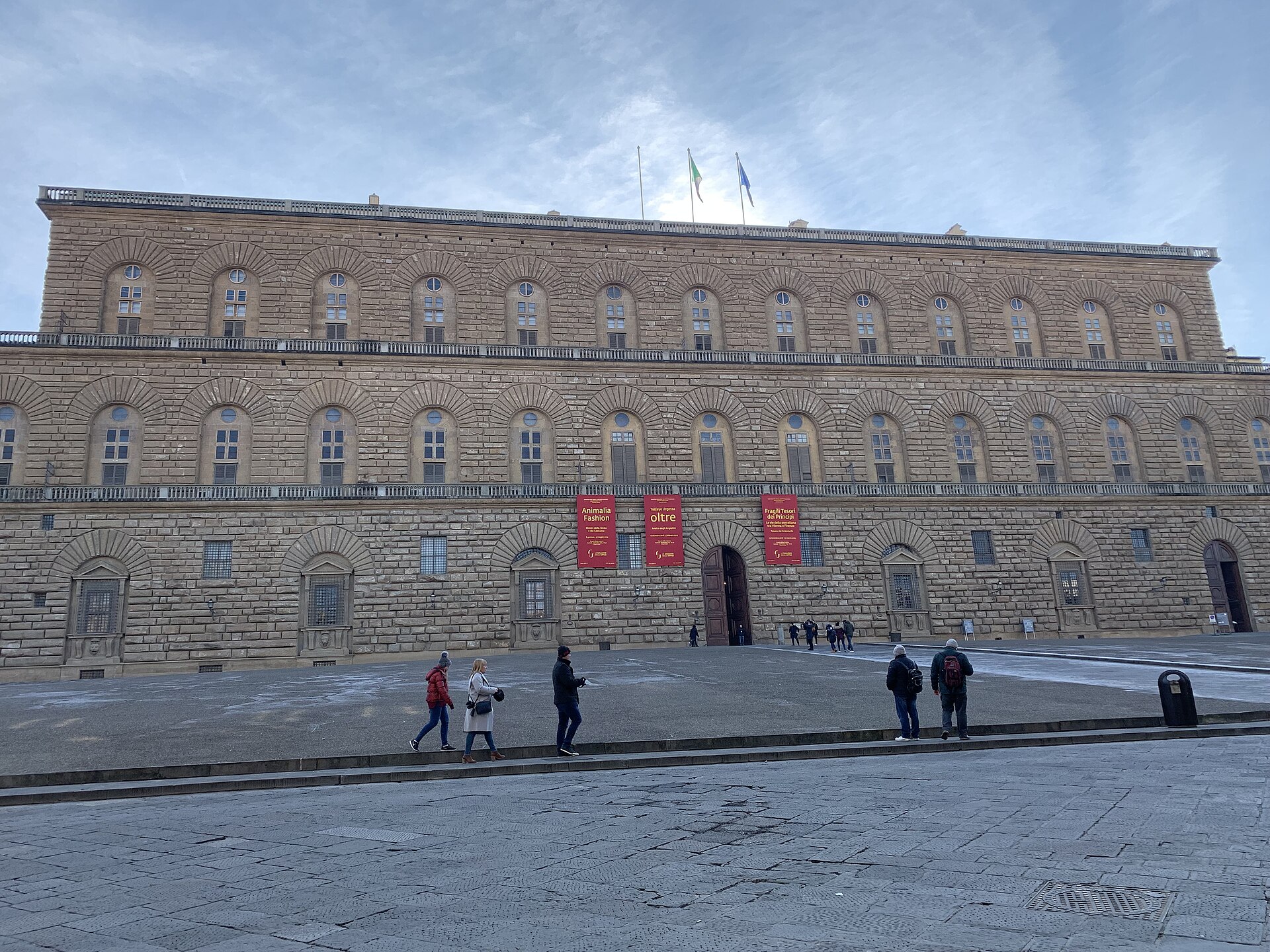
The design of the original palace, though later much enlarged, established the essential character of the building, with its powerful rusticated facade and its imposing scale. Tradition has associated the design with the great architect Brunelleschi, though the palace as first built was the work of others; whatever its precise authorship, it embodied the ambition of its patron to rival and surpass the Medici in magnificence.
Luca Pitti’s ambition, however, outran his fortunes. His challenge to the Medici ended in failure, his political schemes collapsed, and his family’s wealth declined, so that the great palace he had begun remained unfinished and became a burden rather than a triumph. The banker who had sought to eclipse the Medici was himself eclipsed, and his descendants were eventually obliged to part with the great house.
So it was that the palace built to rival the Medici passed, in the end, into Medici hands, a turn of fortune rich in irony. The great house that Luca Pitti had raised to proclaim his defiance of the ruling family became instead the principal seat of that very family, and it carried his name into a future he could never have imagined, as the palace of the grand dukes of Tuscany.
The Medici Make It Their Own
In the middle of the sixteenth century, the Palazzo Pitti was acquired by the Medici, who had by then risen from bankers to hereditary rulers of Florence as dukes and, soon after, grand dukes of Tuscany. The purchase was made on behalf of Eleonora di Toledo, the wife of Duke Cosimo I, and the family soon made the great palace their principal residence, transforming it into the seat of their court.
The Medici set about enlarging and embellishing the palace on a grand scale, adapting it to the needs of a ruling dynasty. They extended the building, laid out the great gardens behind it, and filled its rooms with the treasures of art that their wealth and taste allowed them to gather. Under the Medici, the Palazzo Pitti became not merely a residence but a showcase of the family’s magnificence and their patronage of the arts.
The move to the Palazzo Pitti reflected the transformation of the Medici from leading citizens of a republic into sovereign princes. The great palace across the Arno, with its royal scale and its splendid gardens, was a fitting seat for a dynasty that now ruled Tuscany as its hereditary lords, and it became the centre of a brilliant court that made Florence one of the great capitals of art in Europe.
For nearly two centuries the Palazzo Pitti was the heart of Medici power and patronage, and successive grand dukes continued to adorn it with art and to develop its gardens. The family’s extraordinary collections, gathered over generations, filled its galleries, laying the foundations of the great museums that the palace houses today. The Medici made the Palazzo Pitti, above all, a treasure house of art.
Under the later Medici and their successors, the collections continued to grow through inheritance, purchase, and patronage, until the palace held one of the richest accumulations of art in Europe. The last of the Medici line, in a famous act of foresight, ensured that these treasures would remain in Florence forever, bequeathing them to the city and its people, so that the great collections of the Palazzo Pitti survive intact to this day.
Ammannati’s Courtyard and the Great Facade
Among the most important additions made to the palace under the Medici was the great internal courtyard, designed by the architect Bartolomeo Ammannati in the later sixteenth century. This magnificent courtyard, built of the same powerful rusticated stone as the facade, forms a grand transition between the palace and the gardens rising behind it, and it is one of the masterpieces of Florentine architecture of its age.
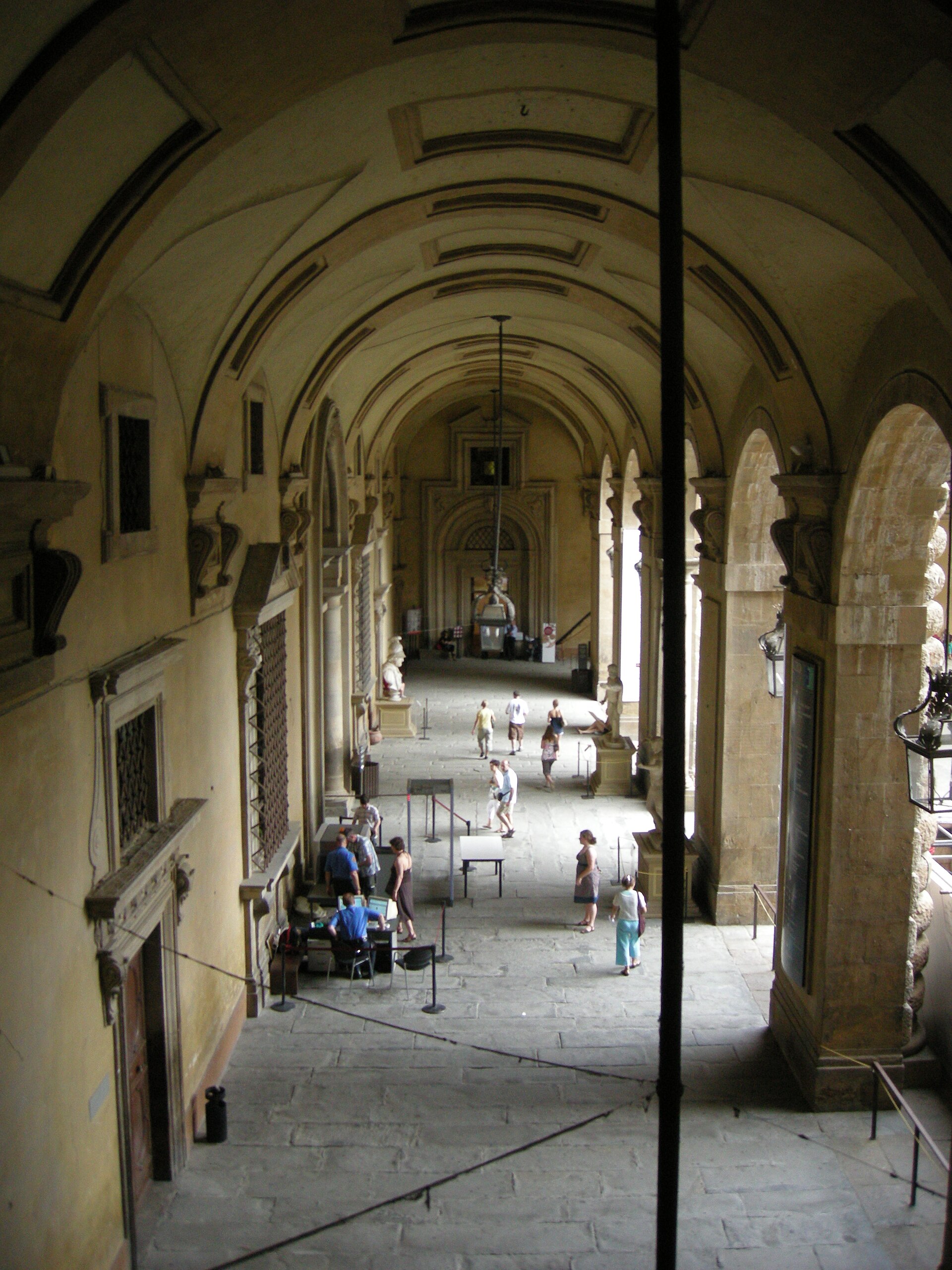
Ammannati’s courtyard is a work of great originality and power, its three storeys of rusticated arches and columns creating an effect of rugged magnificence. It served as a grand setting for the ceremonies and entertainments of the Medici court, and it opens toward the gardens behind, linking the palace to the great landscape of the Boboli that rises up the hillside beyond.
The facade of the palace, too, was transformed over the generations, extended and heightened until it reached its present enormous length. What had begun as a large but self-contained townhouse was progressively widened, its rows of great windows multiplying across the front, until the facade achieved the vast and powerful sweep that so impresses the visitor today, one of the largest of any Renaissance palace.
The combination of the immense facade and the grand courtyard within gives the Palazzo Pitti its distinctive character, at once fortress-like and magnificent. Ammannati’s courtyard, in particular, is a work of the first importance, a bridge between the Renaissance and the Baroque, and it stands as one of the finest achievements of the architects who served the Medici grand dukes.
The Palatine Gallery
The greatest of the treasures housed within the Palazzo Pitti is its collection of paintings, displayed in the Palatine Gallery, one of the most important picture galleries in the world. Occupying a magnificent suite of state rooms, the gallery preserves the extraordinary art collection of the Medici and their successors, hung in a manner that recalls the taste of the princely collectors who assembled it.
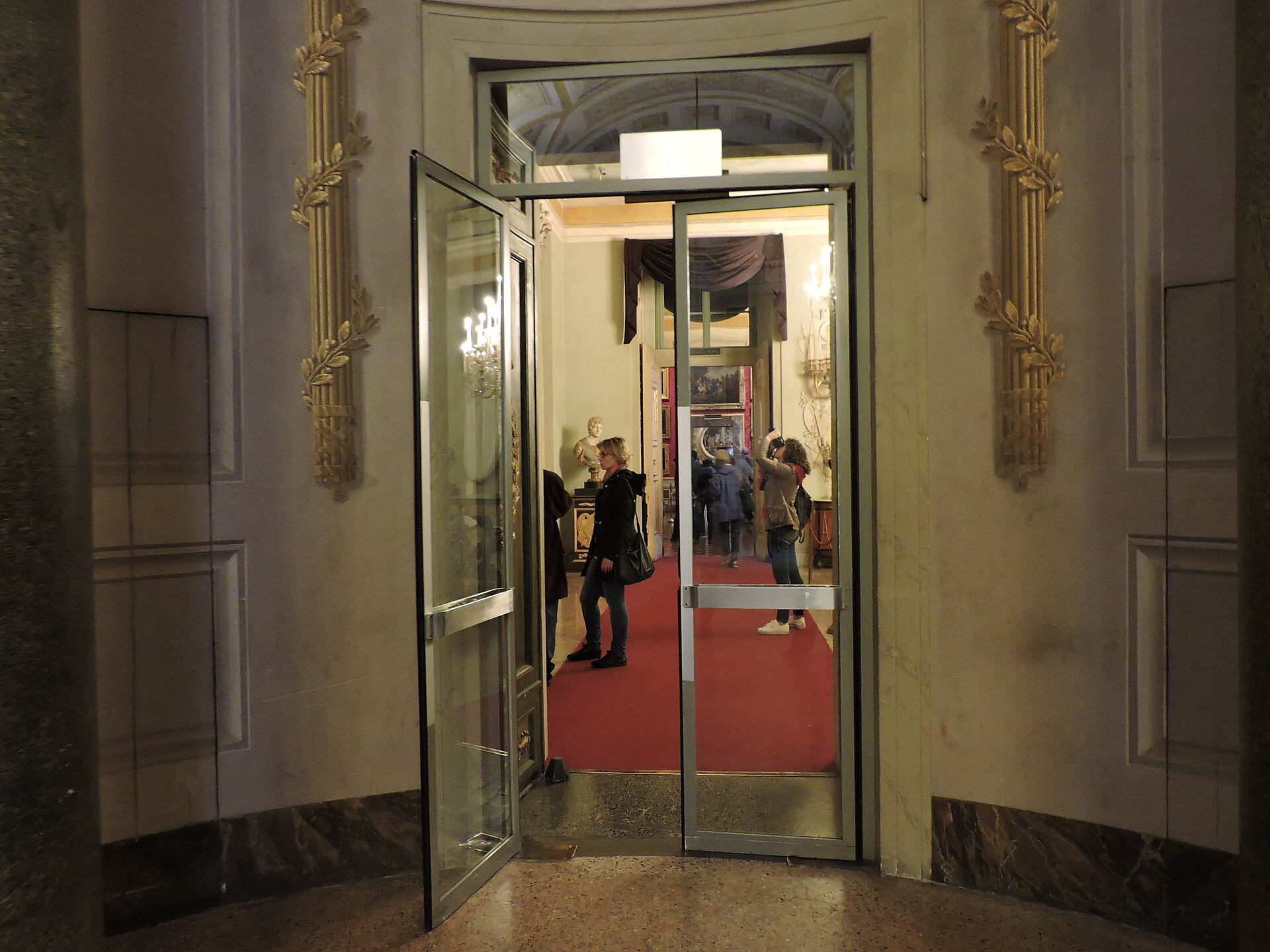
The Palatine Gallery is unlike a modern museum, for its paintings are hung not in chronological order but in the dense, decorative arrangement favoured by the grand dukes, covering the walls of the sumptuous state rooms from floor to ceiling. This arrangement, preserving the character of a princely collection, allows the visitor to experience the paintings as their original owners did, amid surroundings of great splendour.
The collection is astonishing in its richness, including a remarkable number of masterpieces by the greatest painters of the Renaissance and the Baroque. Works by Raphael and Titian are particularly numerous and celebrated, and the gallery holds one of the finest collections of their paintings anywhere in the world, together with masterpieces by many other supreme artists gathered by the Medici and their heirs.
To walk through the Palatine Gallery is to move through a treasure house of European art displayed in a setting of princely magnificence, the paintings glowing against the rich decoration of the state rooms. It is one of the supreme experiences that Florence has to offer, and it makes the Palazzo Pitti one of the essential destinations for any lover of art, a gallery that preserves both great paintings and the splendour of the court that collected them.
The gallery came into being when the grand dukes opened their private collections to view, and it retains to a remarkable degree the character of a princely gallery rather than a modern museum. This makes a visit a journey into the taste of the collectors themselves, an encounter not only with individual masterpieces but with the whole idea of the princely collection as an expression of magnificence, learning, and power.
Pietro da Cortona and the Painted Ceilings
The state rooms that house the Palatine Gallery are themselves works of art, above all for their magnificent painted ceilings, the masterpiece of one of the greatest decorative painters of the Baroque, Pietro da Cortona. In the middle of the seventeenth century, Cortona and his collaborators covered the ceilings of the principal state rooms with a series of dazzling frescoes celebrating the Medici and the virtues of a prince.
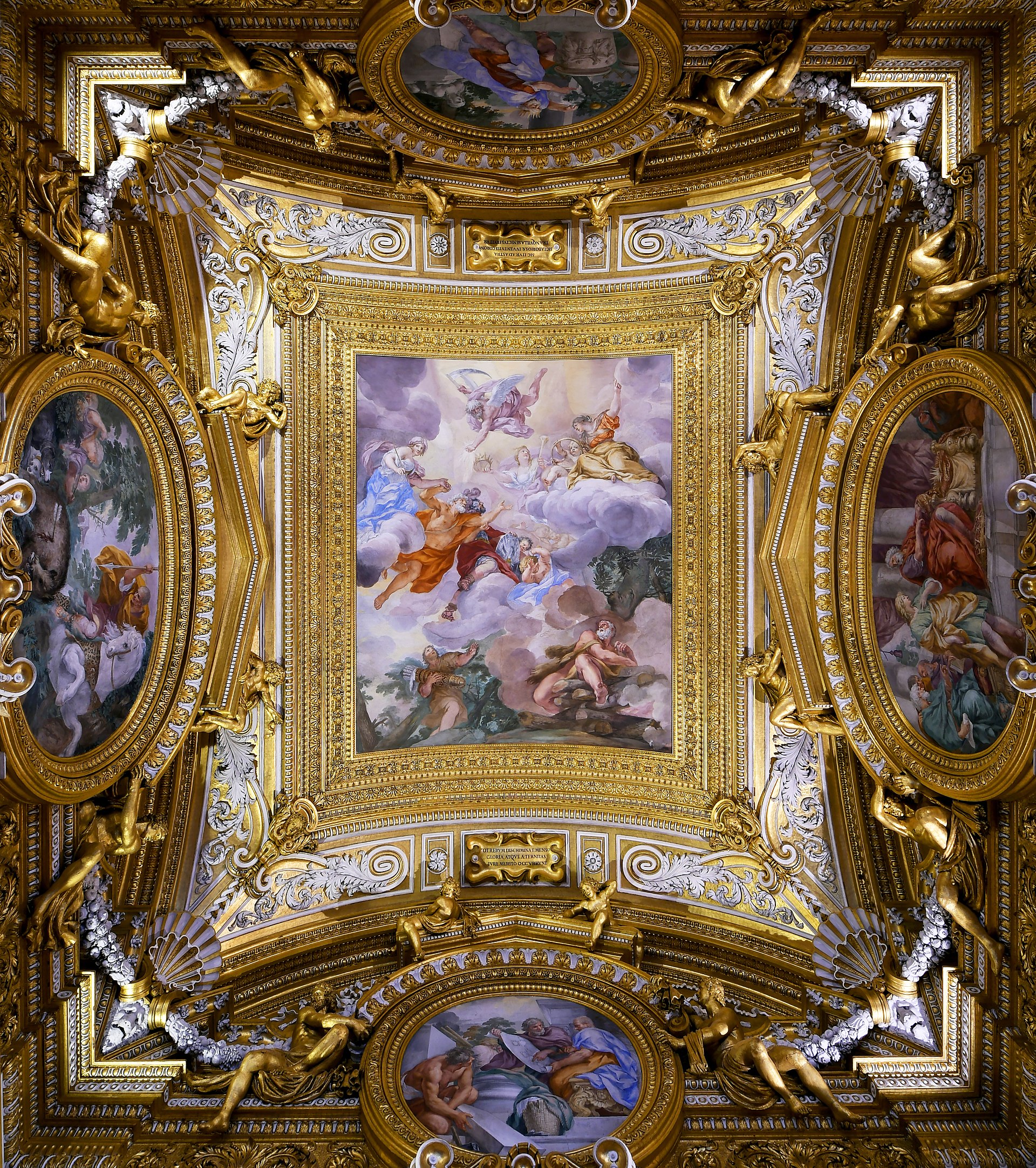
The frescoes are among the supreme achievements of Baroque ceiling painting, their compositions crowded with gods, allegorical figures, and swirling movement, framed by elaborate gilded stucco. They transform the ceilings into visions of the heavens opening above the visitor, and they represent one of the high points of the decorative art of the age, a fitting adornment for the rooms that house the Medici treasures.
Cortona’s frescoes were designed as a coherent programme, an allegory of the education and virtues of a prince, unfolding across the sequence of rooms. Through the language of classical mythology, they celebrated the qualities of the ideal ruler and glorified the Medici dynasty, uniting the arts of painting, sculpture, and architecture in a single magnificent scheme of decoration.
The combination of the great paintings of the Palatine Gallery and the magnificent frescoed ceilings above them makes these state rooms among the most splendid in Europe. The visitor is surrounded on all sides by masterpieces, the walls hung with the paintings of the Renaissance and the ceilings blazing with the frescoes of the Baroque, an overwhelming display of the artistic riches gathered within the Palazzo Pitti.
Pietro da Cortona’s work at the Palazzo Pitti proved enormously influential, setting a standard for grand decorative painting that was studied and imitated throughout Europe. Artists came from far and wide to learn from his example, and the Planetary Rooms became a school of the grand manner, their combination of illusionistic painting and rich stucco framing helping to define the character of Baroque interior decoration for generations to come.
The Planetary Rooms
The principal state rooms of the palace are known as the Planetary Rooms, for each is dedicated to one of the planets and the classical deity associated with it, their ceilings frescoed with scenes appropriate to each. The visitor passes through a sequence of rooms named for Venus, Apollo, Mars, Jupiter, and Saturn, each a masterpiece of decoration and each hung with some of the finest paintings in the collection.
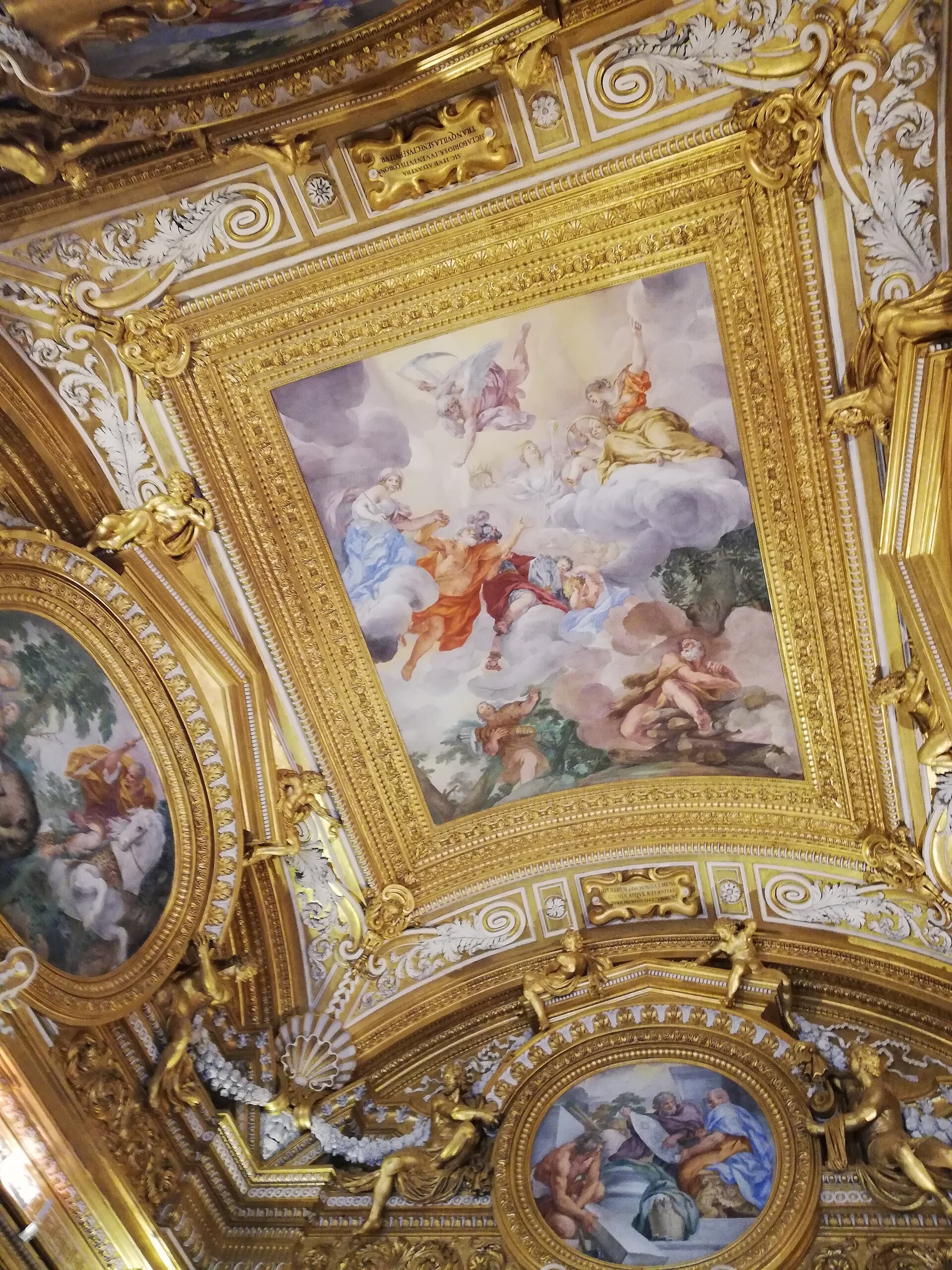
The scheme of the Planetary Rooms was conceived as an allegory of the progress of a prince, ascending as it were through the heavens, from the room of Venus, representing the passions of youth, toward the room of Saturn, representing wisdom and maturity. This ingenious programme, developed through the frescoes of Cortona and his collaborators, gave the rooms a coherent meaning and celebrated the ideal formation of the ruler.
Each of the Planetary Rooms is a jewel of decoration, its ceiling a swirling composition of mythological figures and its walls hung with masterpieces from the collection. The Room of Saturn, in particular, holds an extraordinary concentration of masterpieces by Raphael, so that the visitor stands surrounded by some of the supreme achievements of Renaissance painting beneath a magnificent Baroque ceiling.
The Planetary Rooms represent the perfect fusion of the palace’s two great glories, its collection of paintings and its magnificent decoration. They were the grand state rooms of the Medici court, the setting for its ceremonies and its display, and they remain today the heart of the Palazzo Pitti, a sequence of interiors of unrivalled richness that unite great art with great splendour.
The Royal Apartments
Beyond the Palatine Gallery lie the Royal Apartments, a suite of rooms that served as the private and ceremonial residence of the rulers who inhabited the palace across the centuries. Richly decorated and furnished, they preserve the atmosphere of a princely and, later, a royal residence, and they reflect the changing tastes of the successive dynasties that made the Palazzo Pitti their home.
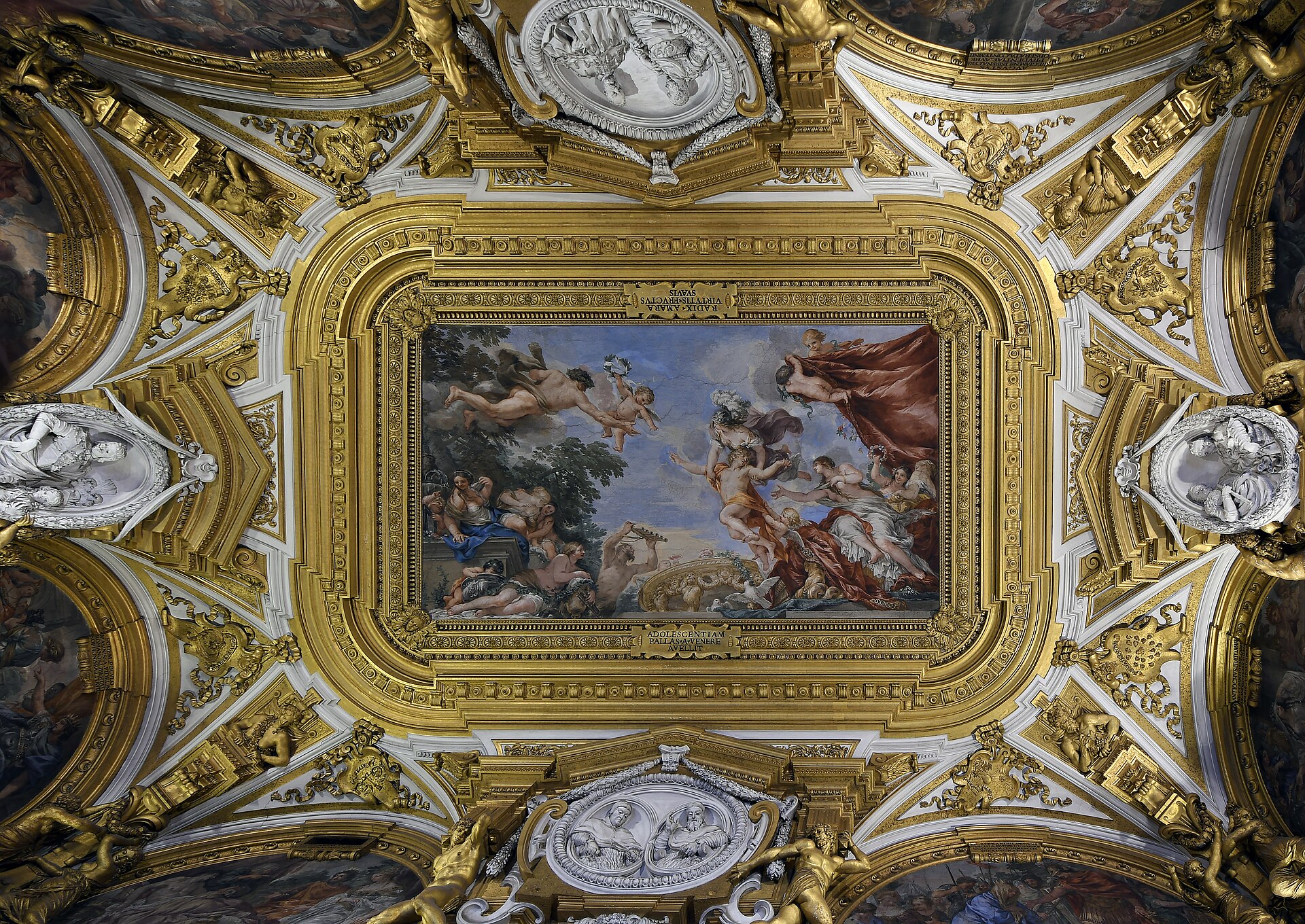
The apartments were used by the Medici grand dukes, then by their successors the grand dukes of the house of Lorraine, and finally by the kings of Italy, and their decoration bears the imprint of these different periods. Sumptuous hangings, fine furniture, and elaborate ornament fill the rooms, which were adapted and redecorated by each dynasty according to the fashion of its age.
The apartments provide a vivid sense of the domestic and ceremonial life of the court, from the age of the Medici to that of the kings of a united Italy. They complement the great galleries of art, showing not only the treasures collected by the palace’s inhabitants but also the setting in which they actually lived, surrounded by luxury and magnificence.
The Royal Apartments thus add a further dimension to the Palazzo Pitti, revealing it as a living residence as well as a treasure house of art. They allow the visitor to trace the long succession of dynasties that inhabited the palace, and to appreciate the continuity of princely and royal life within its walls across nearly five centuries of Florentine and Italian history.
When Florence briefly served as the capital of the newly united Kingdom of Italy in the 1860s, the Palazzo Pitti became the royal residence of the first king of Italy, and the apartments were adapted once more to serve a modern monarchy. This final royal chapter added another layer to the palace’s long history, linking the ancient seat of the Medici to the birth of the Italian nation, before the capital moved on to Rome.
A Palace of Museums
So vast are the collections gathered within the Palazzo Pitti that the palace today houses not one museum but several, each occupying a different part of the great building. In addition to the Palatine Gallery and the Royal Apartments, the palace contains galleries devoted to modern art, to costume and fashion, to porcelain, and to the fabulous treasures of the grand dukes.

The Treasury of the Grand Dukes displays the extraordinary collection of precious objects gathered by the Medici and their successors, including vessels of hardstone, jewellery, cameos, and works of the goldsmith’s art of astonishing richness. These treasures, gathered by generations of princely collectors, reflect the wealth and the refined taste of the court that assembled them, and they form one of the great collections of decorative art in the world.
Elsewhere in the palace, the Gallery of Modern Art displays paintings and sculpture of the nineteenth and early twentieth centuries, while the Costume Gallery preserves a remarkable collection of historic dress, and the Porcelain Museum holds the fine ceramics used and collected by the court. Together these galleries make the Palazzo Pitti one of the richest museum complexes in Italy.
The sheer variety and richness of the collections housed within the palace reflect the accumulated patronage of the dynasties that inhabited it across the centuries. From Renaissance paintings to grand-ducal treasures, from historic costume to modern art, the Palazzo Pitti holds within its vast fabric a treasure house of astonishing breadth, a museum of museums at the heart of Florence.
The Boboli Gardens
Rising up the hillside behind the palace are the celebrated Boboli Gardens, one of the most famous and most influential gardens in the world. Laid out for the Medici from the sixteenth century onward, they represent the supreme example of the Italian Renaissance garden, and they served as a model for the great formal gardens created across Europe in the following centuries, including those of Versailles.
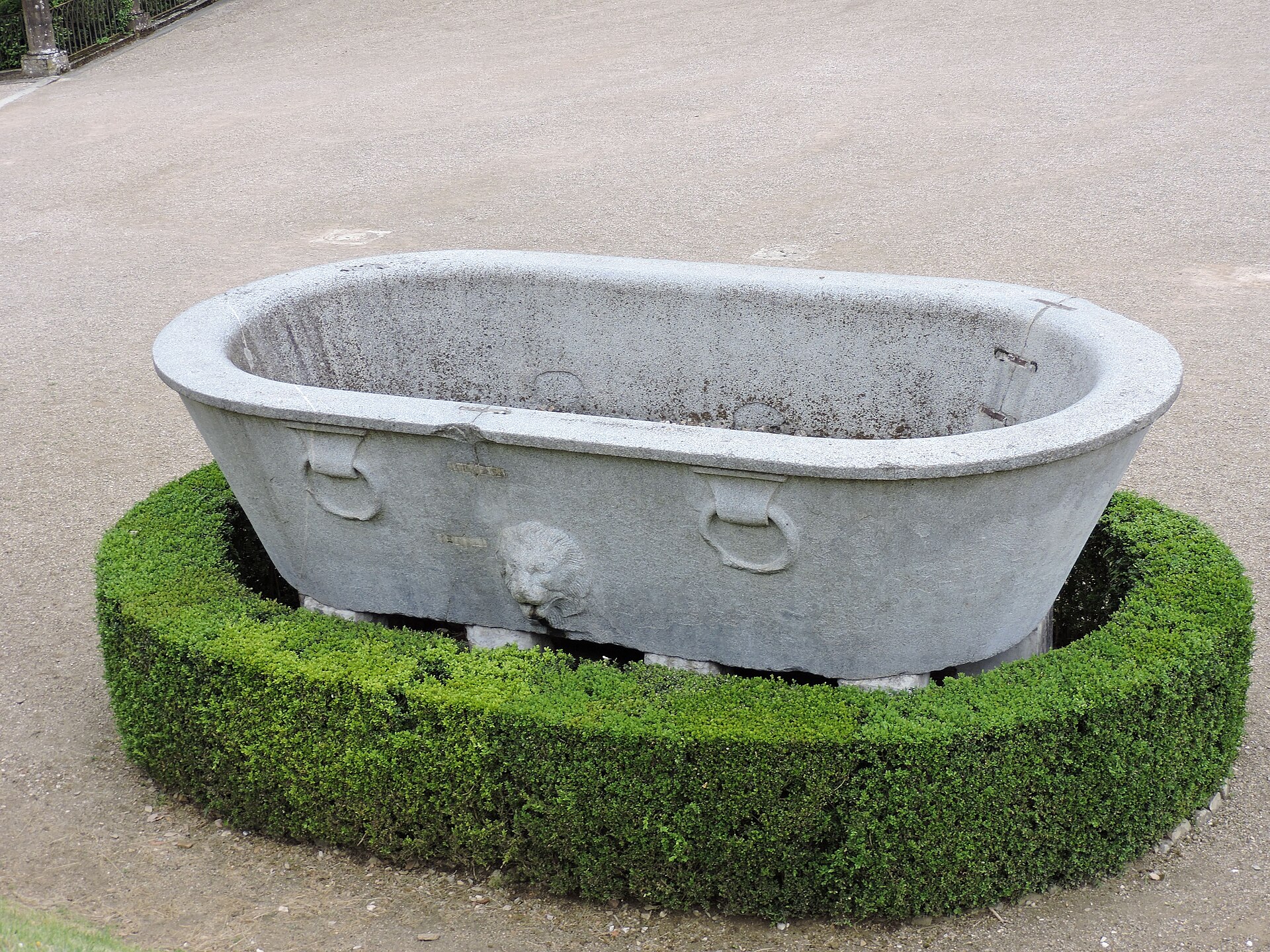
The gardens rise in a series of terraces and avenues up the slope behind the palace, adorned with fountains, sculptures, grottoes, and architectural features, and offering magnificent views over the palace and the city of Florence beyond. They were conceived as a green extension of the palace, a place of pleasure and display for the Medici court, and a setting for the elaborate entertainments and spectacles that the court so loved.
The design of the Boboli Gardens combined the ordered geometry of the Renaissance with a wealth of sculpture and ornament, creating a landscape that was at once formal and richly varied. Statues from antiquity and from the hands of Renaissance and Baroque masters populate the avenues and fountains, so that the gardens are, like the palace, a treasure house of art displayed amid greenery and water.
The Boboli Gardens are one of the glories of Florence, a masterpiece of the garden art that influenced the whole of Europe. Their combination of grand design, magnificent sculpture, and superb views makes them one of the most rewarding of all Italian gardens, and they form the perfect complement to the great palace at their foot, extending its splendour up the hillside toward the sky.
The influence of the Boboli Gardens on the history of the garden can scarcely be overstated, for their combination of formal design, sculpture, and dramatic use of the hillside setting provided a model that was studied and imitated across Europe. The great gardens of the following centuries, including those of the French royal palaces, drew upon lessons first worked out on this Florentine hillside behind the Palazzo Pitti.
The Amphitheatre and the Fountains
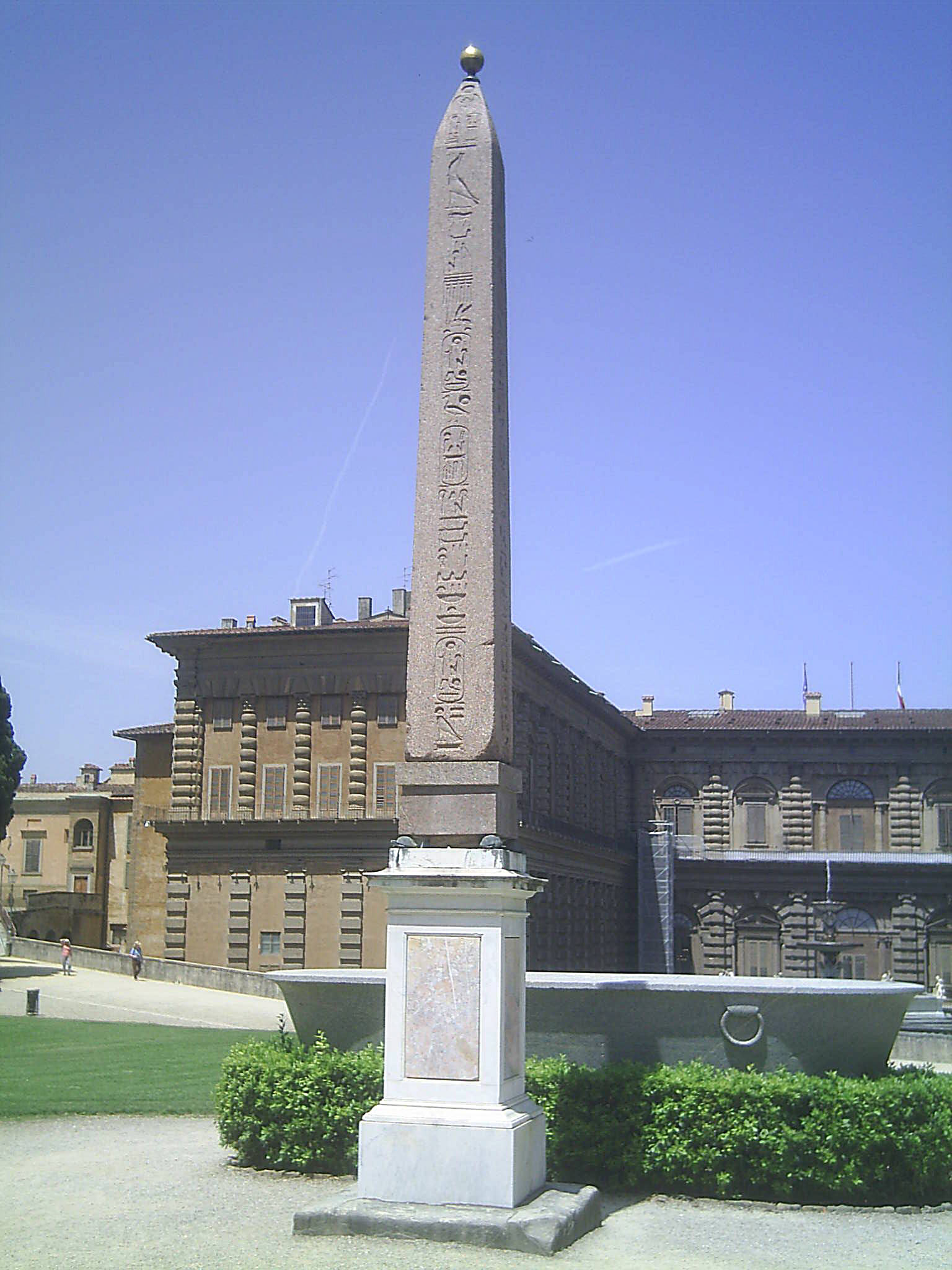
At the heart of the Boboli Gardens, directly behind the palace, lies the great amphitheatre, a grand open space in the form of a classical theatre, cut into the hillside and adorned with statues and an Egyptian obelisk at its centre. It was here that the Medici court staged its most spectacular entertainments, and the amphitheatre remains one of the most striking features of the gardens.
The amphitheatre was designed as a setting for the elaborate spectacles, festivals, and performances that were so important a part of court life, and it could be filled with water for mock naval battles or transformed into a stage for opera and pageantry. Rising in tiers around the central space, it recalls the theatres of antiquity, and it forms a magnificent focal point directly behind the palace.
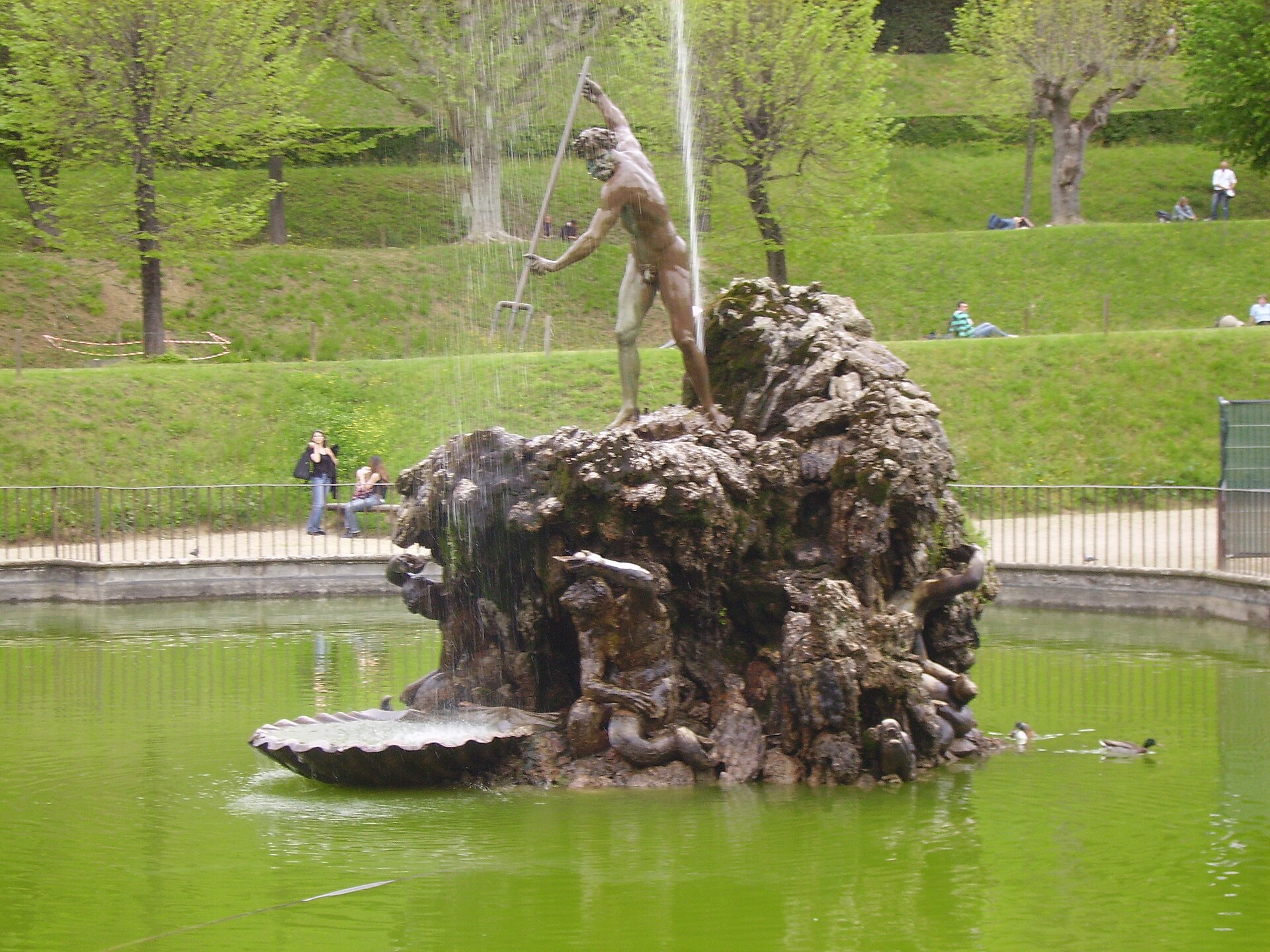
Among the many fountains that adorn the gardens, several are of great beauty and fame, including the fountain of Neptune, set on the hillside above the amphitheatre, where the god of the sea rises trident in hand from his basin. These fountains, fed by an elaborate system of waterworks, brought the pleasures of moving water to the gardens and provided settings of great beauty amid the greenery.
The amphitheatre and the fountains reflect the Medici love of spectacle and display, and their delight in the union of art, nature, and water. They made the Boboli Gardens not merely a place of quiet beauty but a great stage for the theatrical life of the court, and they remain among the most memorable features of a garden that is itself one of the wonders of Florence.
Grottoes, the Obelisk, and Garden Fantasies
The Boboli Gardens are famous not only for their grand design but for the wealth of curious and delightful features scattered through them, chief among them the extraordinary grottoes that so appealed to the imagination of the age. The most celebrated of these is a fantastical artificial cave, encrusted with strange forms and adorned with sculpture, a masterpiece of the taste for the bizarre and the marvellous that flourished in the late Renaissance.
The grottoes were designed to astonish and delight, their walls covered with stalactite-like forms, shells, and sculptures that seemed to blur the boundary between art and nature. They reflected the fascination of the age with the strange and the wonderful, and they provided cool and mysterious retreats amid the heat of the Florentine summer, places of surprise and enchantment within the gardens.
Elsewhere in the gardens, an ancient Egyptian obelisk rises at the centre of the amphitheatre, brought from afar to adorn the Medici gardens, while a charming island garden, set in a great basin of water and reached by causeways, offers one of the most delightful corners of the whole park. These features, drawn from many sources and traditions, enrich the gardens with variety and surprise.
Together these grottoes, obelisks, island gardens, and countless statues make the Boboli a garden of endless discovery, a landscape filled with art and invention as well as natural beauty. They reflect the boundless imagination and the refined taste of the Medici and their successors, and they make the Boboli Gardens not merely a beautiful landscape but a work of art as rich and varied as the palace itself.
Generations of grand dukes and their successors added to the gardens, so that the Boboli became a layered accumulation of the taste of many periods, from the formal Renaissance parterres to later, more naturalistic additions. This long process of enrichment gave the gardens their extraordinary variety, and it means that a walk through the Boboli is a journey through the whole history of the Italian garden, from the sixteenth century to the modern age.
The Palazzo Pitti Today
Today the Palazzo Pitti, with its many museums and its magnificent gardens, is one of the great cultural destinations of Florence and of Italy, drawing visitors from around the world to see its treasures. The Palatine Gallery, the Royal Apartments, the Treasury of the Grand Dukes, and the other collections offer an incomparable experience of art, while the Boboli Gardens provide one of the finest garden landscapes in Europe.

View the exact location on Google Maps
The palace preserves, more completely than almost any other, the character of a great princely residence and its collections, allowing the visitor to experience the art and the splendour of the Medici court and its successors much as they were. To walk through the Planetary Rooms, surrounded by the paintings of Raphael and Titian beneath the frescoes of Cortona, is to enter the world of Renaissance and Baroque Florence at its most magnificent.
The palace stands in the Oltrarno district on the south bank of the Arno, a short walk from the historic centre of Florence and connected to it by the famous bridges over the river. Its great facade, its treasure-filled galleries, and its glorious gardens make it one of the essential sights of a city that is itself one of the supreme treasures of world art and history.
From the ambition of a Renaissance banker, through the long splendour of the Medici and their successors, to its brief role as a royal palace of a united Italy, the Palazzo Pitti has embodied the history of Florence and of Italy across five centuries. Grand, treasure-filled, and set amid its magnificent gardens, it endures as one of the great palaces of the world, a monument to the art and the dynasties that made Florence immortal.
The Palazzo Pitti also stands as a monument to the continuity of Florence’s role as a capital of art, from the age of the Medici to the present day. In its galleries the masterpieces gathered by the grand dukes continue to be seen by new generations, and in its gardens the beauty created for a Renaissance court is still enjoyed, so that the palace remains a living link between the golden age of Florence and the world of today.
Palaces Nearby
If the splendour of the Palazzo Pitti has captivated you, this other great Italian palace is well worth discovering:
You May Like
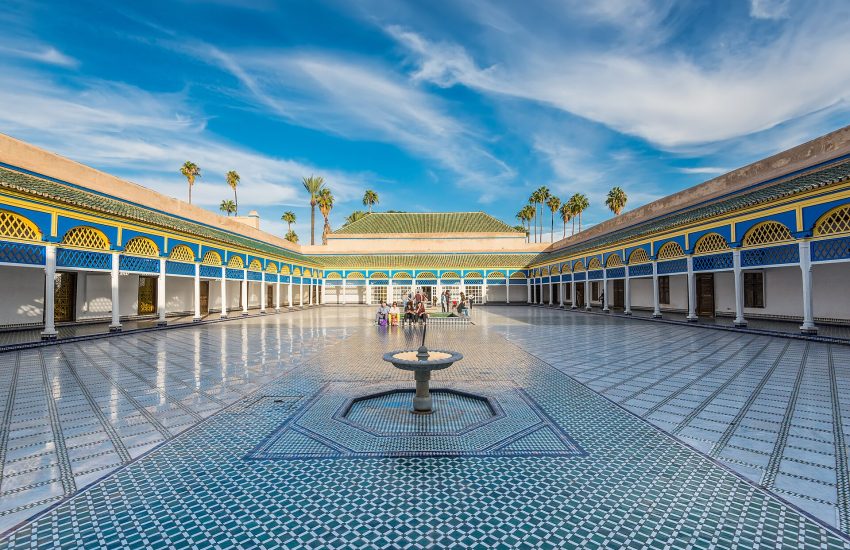
The Bahia Palace of Marrakech: A Vizier’s Dream of Moroccan Splendor



One thought on “Palazzo Pitti: The Medici’s Vast Renaissance Palace and Its Treasure House of Art”