On the highest of the seven hills of Rome, above the ancient heart of the city, stands a palace that has been the seat of power for three very different regimes across more than four centuries. The Palazzo del Quirinale began as a summer retreat for the popes, became the royal palace of the kings of a newly united Italy, and is today the official residence of the President of the Italian Republic. Few buildings in the world have witnessed such a succession of rulers, or embodied so completely the changing history of a nation.
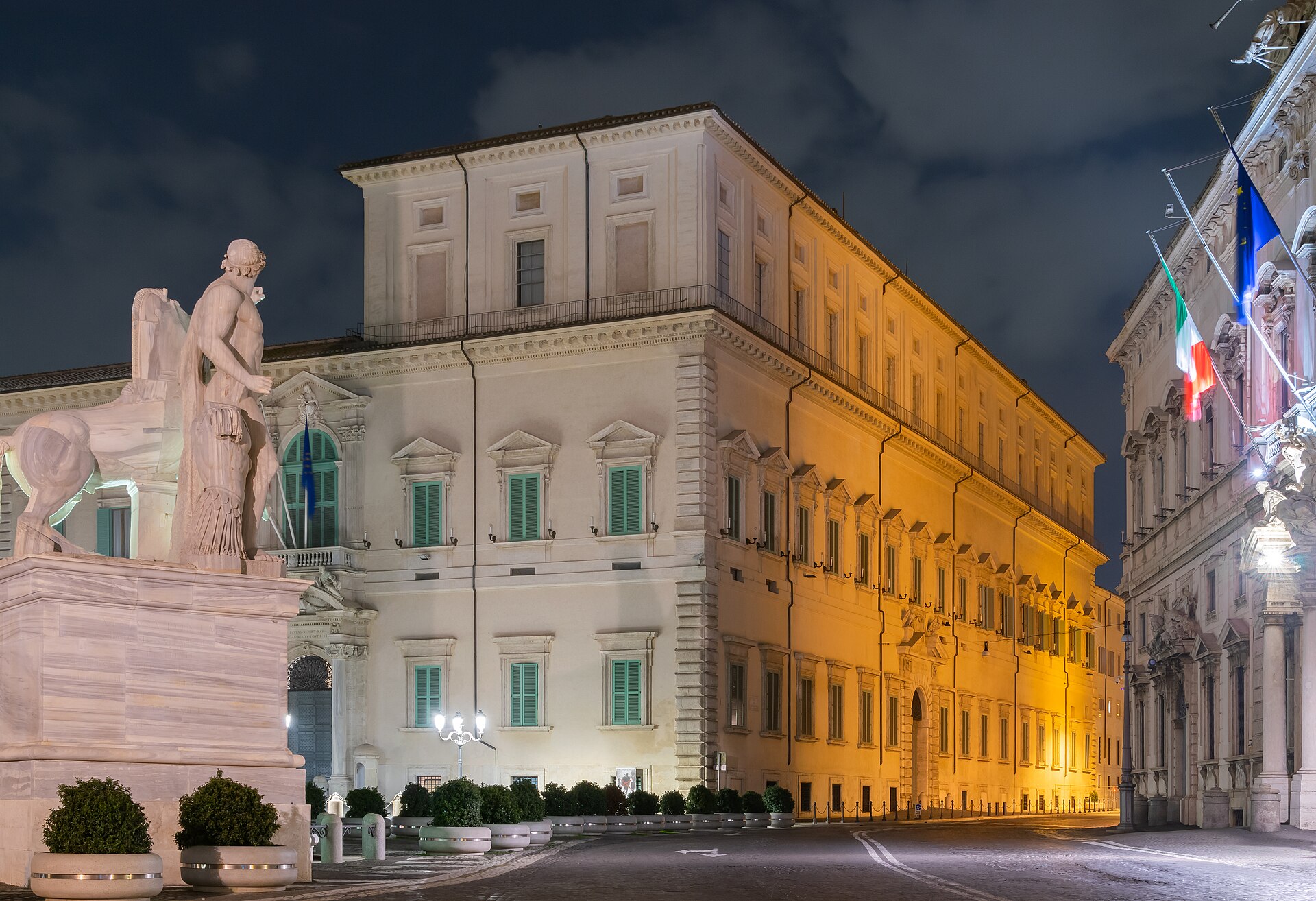
The Quirinale is one of the largest palaces in the world, a vast complex of state rooms, chapels, courtyards, and gardens spread across the summit of the Quirinal Hill. Its long facade looks out over a grand piazza adorned with colossal ancient statues and an obelisk, one of the most majestic squares in Rome, and behind it extend gardens of great beauty and interiors decorated by some of the supreme artists of the Baroque age.
The history of the palace is the history of Rome and of Italy in miniature. Popes were elected and lived here in the great age of Baroque Rome; the palace was seized by the new Italian state when Rome became the capital of a united kingdom; and after the fall of the monarchy it became the home of the head of the Italian Republic. Its walls have sheltered pontiffs, kings, and presidents in turn, a unique record of the transformations of Italian power.
To visit the Quirinale is to encounter the grandeur of papal, royal, and republican Rome all within a single palace, to walk through state rooms decorated by the masters of the Baroque, and to stand in a square that unites the art of ancient Rome with the splendour of later ages. This is the story of the palace on the hill, of the three regimes it has served, and of the great building that stands today at the summit of the Italian state.
In This Article
- The Palace of Three Regimes
- The Quirinal Hill and the Popes’ Retreat
- Building the Papal Palace
- The Great Architects of the Quirinale
- The Piazza and the Dioscuri
- The Hall of the Cuirassiers
- The Pauline Chapel
- The State Apartments and Halls
- The Gardens of the Quirinale
- From Popes to Kings
- From Kings to the Republic
- The Cuirassiers and the Ceremony of State
- The Quirinale Today
The Palace of Three Regimes
The Palazzo del Quirinale is unique among the great palaces of the world for having served, in unbroken succession, as the residence of three entirely different kinds of ruler. For nearly three centuries it was a residence of the popes; for some seventy years it was the royal palace of the kings of Italy; and since the middle of the twentieth century it has been the official residence of the presidents of the Italian Republic. No other palace has embodied so completely the political history of its nation.
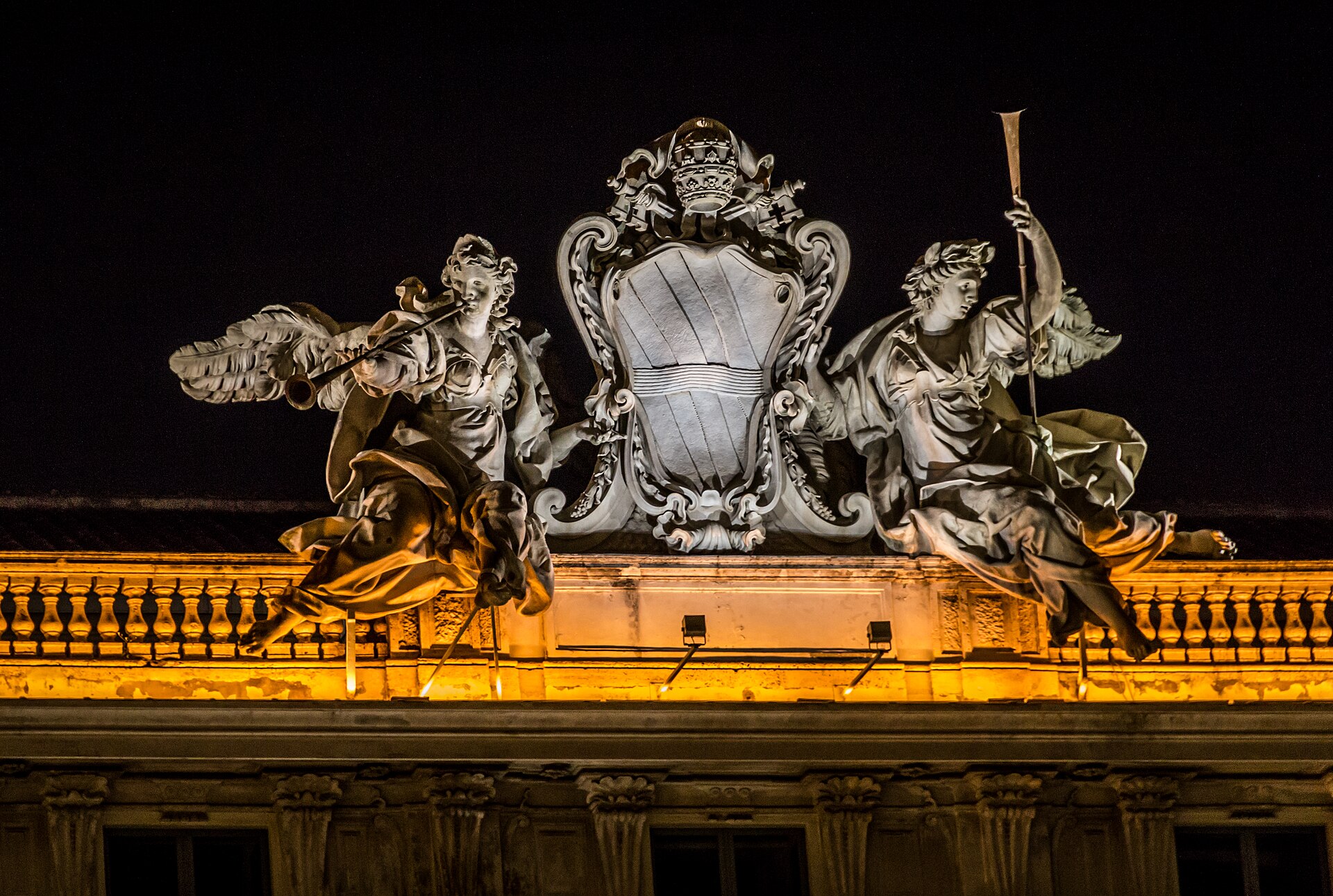
This extraordinary succession has left its mark on the palace, which bears the accumulated traces of the tastes and needs of popes, kings, and presidents. Each regime adapted and adorned the building according to its own character, so that the Quirinale is a layered record of Italian history, from the age of the Baroque popes through the era of the monarchy to the modern republic. To move through its rooms is to move through the centuries of Italian power.
The palace is also remarkable for its sheer size, being one of the largest residences of a head of state anywhere in the world. Its vast complex of buildings, arranged around courtyards and set amid extensive gardens, covers the summit of one of the great hills of Rome, and it contains within its walls everything required for the ceremonial and practical life of the head of the Italian state.
Standing at the summit of the Quirinal Hill, the highest of the seven hills of ancient Rome, the palace occupies a position of great symbolic as well as physical elevation. From this height it has presided over the city and, in turn, over the Papal States, the Kingdom of Italy, and the Italian Republic, a fixed seat of authority through all the transformations of Italian history across more than four hundred years.
This continuity of use, through such profound changes of regime, gives the Quirinale a symbolic weight that few buildings possess. It has stood as the visible seat of supreme authority in Rome through the age of the Counter-Reformation papacy, the birth and life of the Italian monarchy, and the establishment of the modern republic, absorbing into its fabric the memory of each. To understand the Quirinale is, in a real sense, to understand the political history of modern Italy itself.
The Quirinal Hill and the Popes’ Retreat
The story of the palace begins with the Quirinal Hill itself, the highest of the seven hills of Rome, which in ancient times had been a fashionable residential quarter and the site of temples and gardens. By the sixteenth century, the height and the relatively healthy air of the hill made it an attractive refuge from the heat and the unhealthy atmosphere of the low-lying areas of Rome around the Vatican and the Tiber.
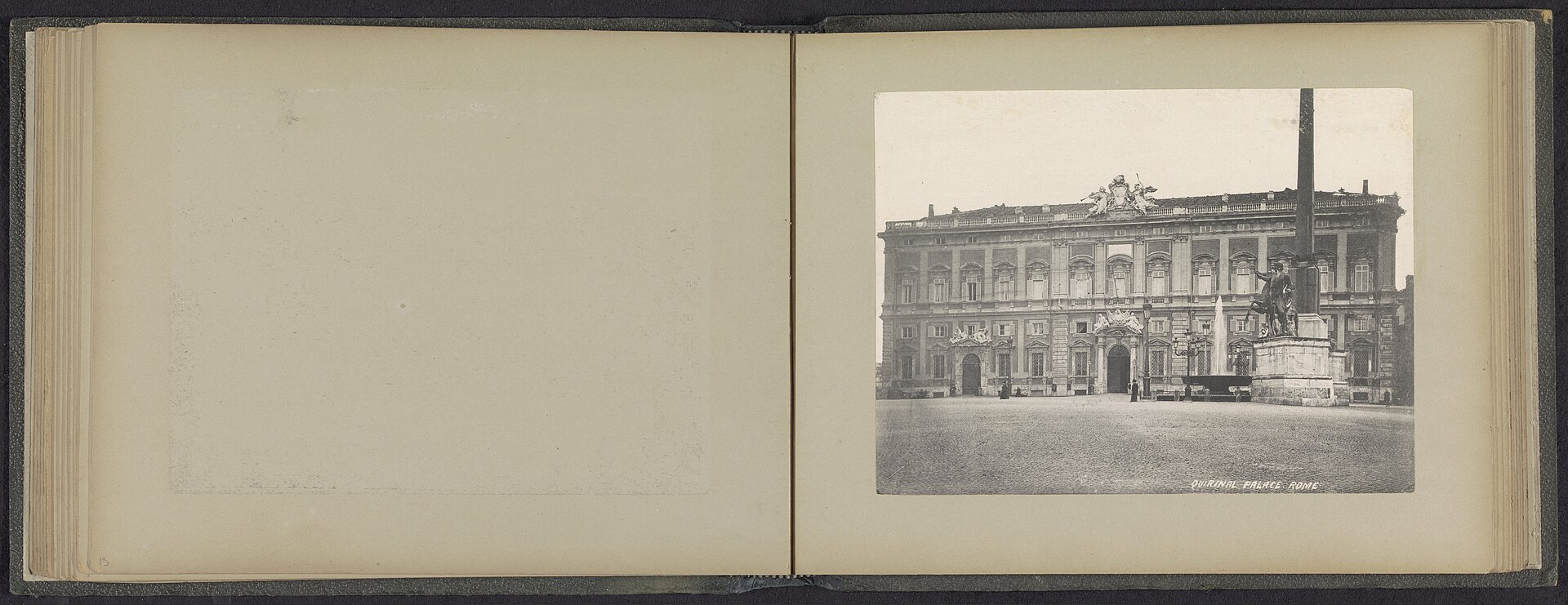
It was for this reason that the popes, in the later sixteenth century, chose the Quirinal Hill as the site for a summer residence, a retreat from the Vatican where they could escape the summer heat and the fevers that plagued the lower parts of the city. What began as a villa and garden retreat would grow, over the following decades, into one of the principal residences of the papacy and eventually its main dwelling.
The choice of the hill reflected the same search for healthier air that had led rulers elsewhere to build summer retreats away from their capitals. For the popes, the Quirinale offered a refuge close to the centre of Rome yet raised above its unhealthy quarters, and successive pontiffs were drawn to develop it, transforming the summer villa into a great palace worthy of the head of the Church.
Over time the Quirinale became not merely a summer retreat but the ordinary residence of the popes, who found it more comfortable and more secure than the Vatican. For nearly three centuries the palace on the hill was a principal seat of the papacy, the place where popes lived, governed, and were often elected, and it became one of the great centres of the Baroque Rome that the popes did so much to create.
The name of the hill, and of the palace, derives from an ancient temple of the Roman god Quirinus that had once stood upon the summit, a reminder that the site had been a place of importance since the earliest days of Rome. In choosing this ancient and elevated ground, the popes were building upon a hill sacred and significant since antiquity, adding a new chapter to a history that stretched back to the origins of the city.
Building the Papal Palace
The construction of the palace was begun in the later sixteenth century under Pope Gregory XIII, who commissioned a residence on the hill, and it was continued and greatly enlarged by his successors over the following decades. Each pope who took an interest in the Quirinale added to it, extending the buildings, laying out the gardens, and adorning the interiors, so that the palace grew steadily into a vast complex.
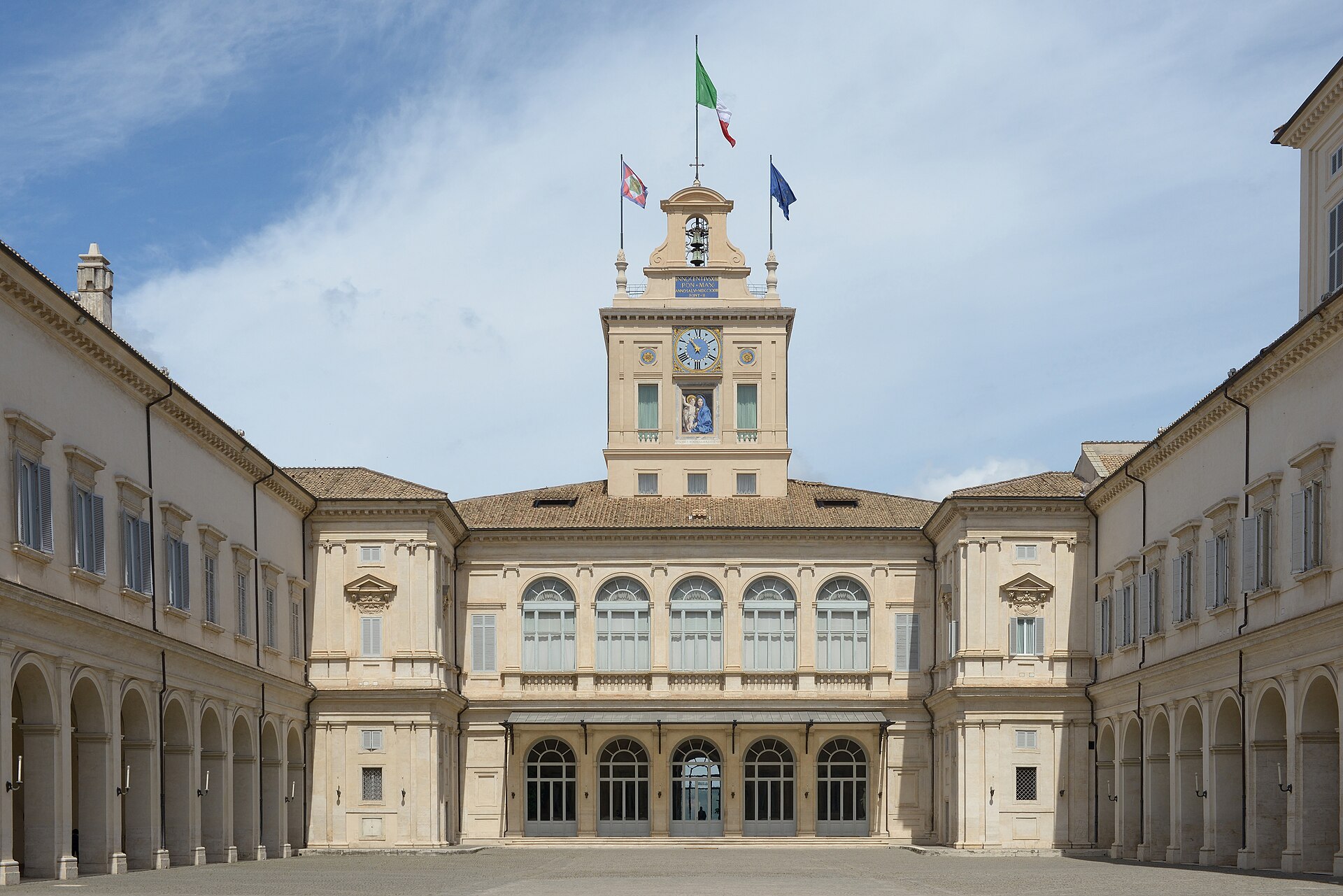
The popes who developed the Quirinale were among the great builders of Baroque Rome, and they brought to the palace the same ambition and the same artistic resources that they lavished on the churches and public works of the city. Under their patronage the palace acquired its grand courtyards, its long facades, its state rooms, and its chapels, becoming a residence of the utmost magnificence befitting the head of the Church.
The building of the Quirinale extended over a long period, and it drew upon the talents of a succession of the finest architects working in Rome. Each added his contribution, so that the palace is the work of many hands across many decades, a collaborative masterpiece of the Roman Baroque that nonetheless achieved a remarkable coherence and grandeur in its final form.
By the time the great age of construction drew to a close, the Quirinale had become one of the largest and most magnificent palaces in Rome, a fitting residence for the popes and a monument to the power and the artistic patronage of the papacy. It stood as a rival even to the Vatican itself, and it embodied the confidence and the splendour of the Church in the age of the Counter-Reformation and the Baroque.
The Great Architects of the Quirinale
The Palazzo del Quirinale was shaped by a remarkable succession of the greatest architects of Baroque Rome, whose contributions gave the palace its grandeur and its character. Among those who worked on the building were the leading masters of the age, each adding his own touch to the great complex over the long period of its construction and adornment.
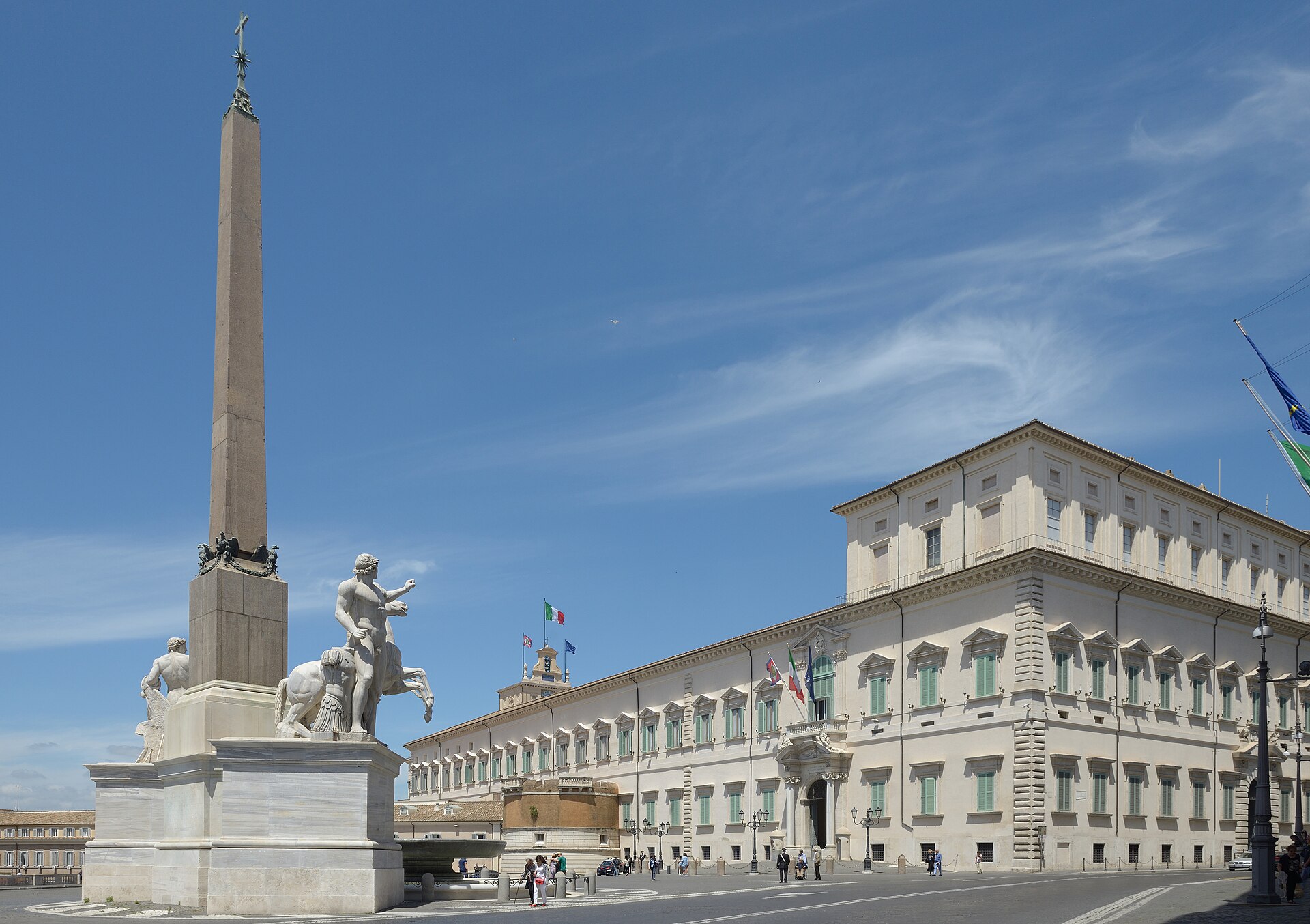
The architects who served the popes at the Quirinale included figures of the first rank, among them Domenico Fontana, Carlo Maderno, and the supreme genius of the Roman Baroque, Gian Lorenzo Bernini, who contributed to the palace, including the great benediction loggia from which the popes could bless the crowds gathered in the piazza below. The involvement of such masters ensured that the Quirinale ranked among the finest buildings in Rome.
Later, the architect Ferdinando Fuga added further elements to the palace, including a long wing and a charming garden pavilion, continuing the tradition of employing the finest talents of each age. The result of these successive contributions was a palace that, despite the long period of its creation and the many hands involved, achieved a monumental unity and grandeur.
The roll of architects who worked on the Quirinale reads like a history of Roman architecture across the Baroque age, and their combined achievement made the palace one of the supreme monuments of the city. That so many masters contributed to a single building is a measure of the importance the popes attached to their palace on the hill, and of the resources they devoted to making it worthy of their power and their patronage of the arts.
The long roll of masters who worked at the Quirinale reflects the way in which the great papal building projects drew upon the finest available talent, and the palace became, in effect, a showcase of the architecture and decorative art of Baroque Rome. Painters as well as architects contributed, covering the walls and ceilings of the state rooms with frescoes, so that the palace gathered within its walls the work of many of the greatest artists of the age.
The Piazza and the Dioscuri
Before the palace extends one of the most majestic squares in Rome, the Piazza del Quirinale, laid out on the summit of the hill and adorned with monuments that unite the art of ancient Rome with the splendour of the Baroque. From the piazza there are magnificent views over the city, and it forms a grand forecourt to the palace, a fitting approach to the residence of popes, kings, and presidents.
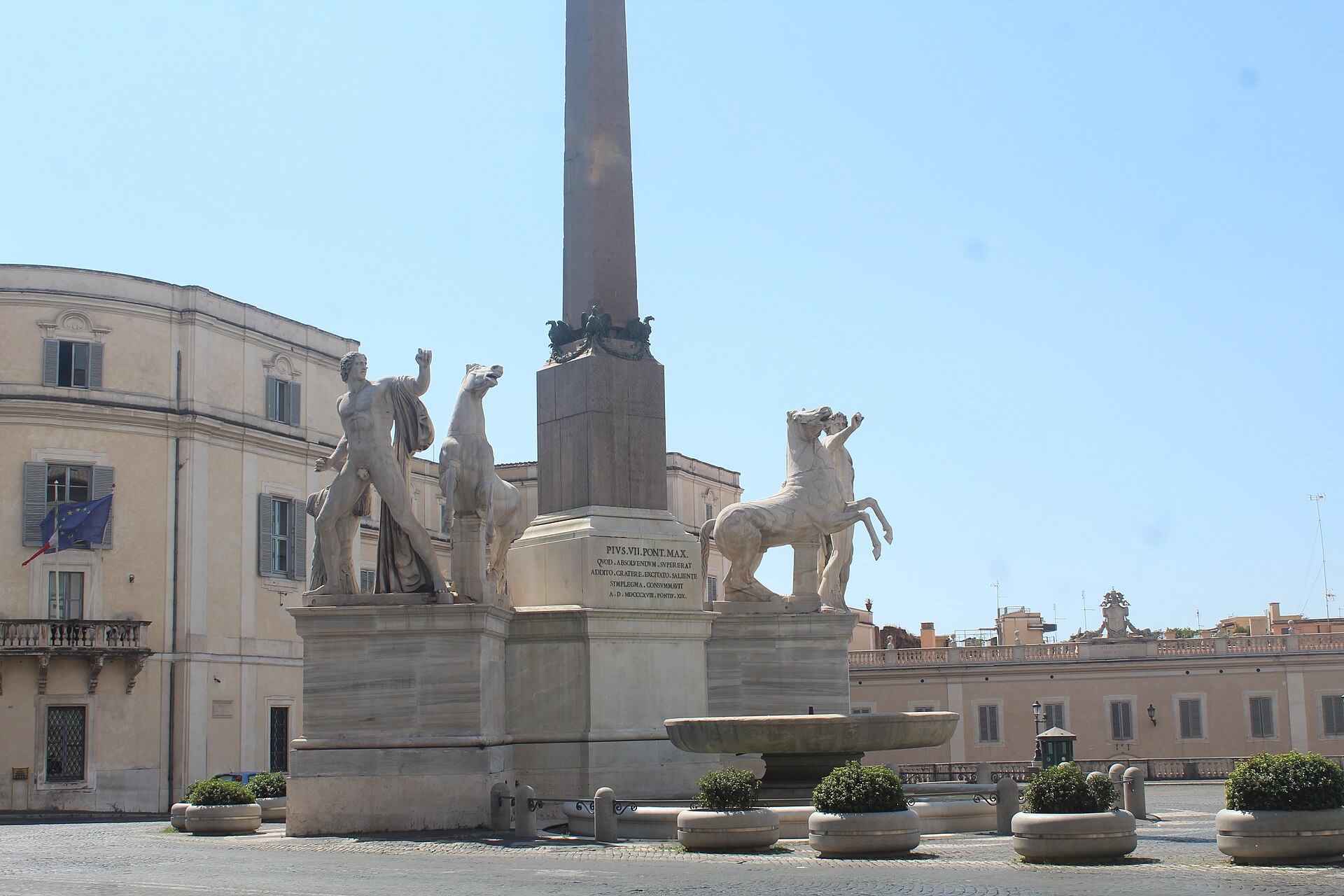
The centrepiece of the piazza is a spectacular monument combining colossal ancient statues with an obelisk and a fountain. The great marble statues, standing over five metres tall, depict the mythological twins Castor and Pollux, the Dioscuri, each shown restraining a rearing horse. These magnificent works, surviving from antiquity, give the hill and the palace their older name of Monte Cavallo, the hill of the horse.
To this group of ancient statues were later added an Egyptian obelisk and a great basin forming a fountain, brought together to create a single grand monument at the centre of the piazza. The combination of the colossal antique sculptures, the towering obelisk, and the fountain makes the monument one of the most impressive in Rome, a meeting of the ancient and the later city.
The piazza and its monuments form a magnificent setting for the palace, uniting the grandeur of ancient Rome with the ceremonial splendour of the papal and later regimes. It is here that the great public occasions associated with the palace unfold, and the sight of the colossal Dioscuri restraining their horses before the long facade of the Quirinale is one of the noblest in the whole of Rome.
From the terrace of the piazza, one of the finest panoramas of Rome opens out across the domes and rooftops of the city toward the distant hills, a view that has been admired for centuries. The combination of this magnificent prospect with the colossal ancient statues and the long facade of the palace makes the Piazza del Quirinale one of the great set-pieces of the city, a place where the grandeur of Rome is concentrated in a single sweeping composition.
The Hall of the Cuirassiers
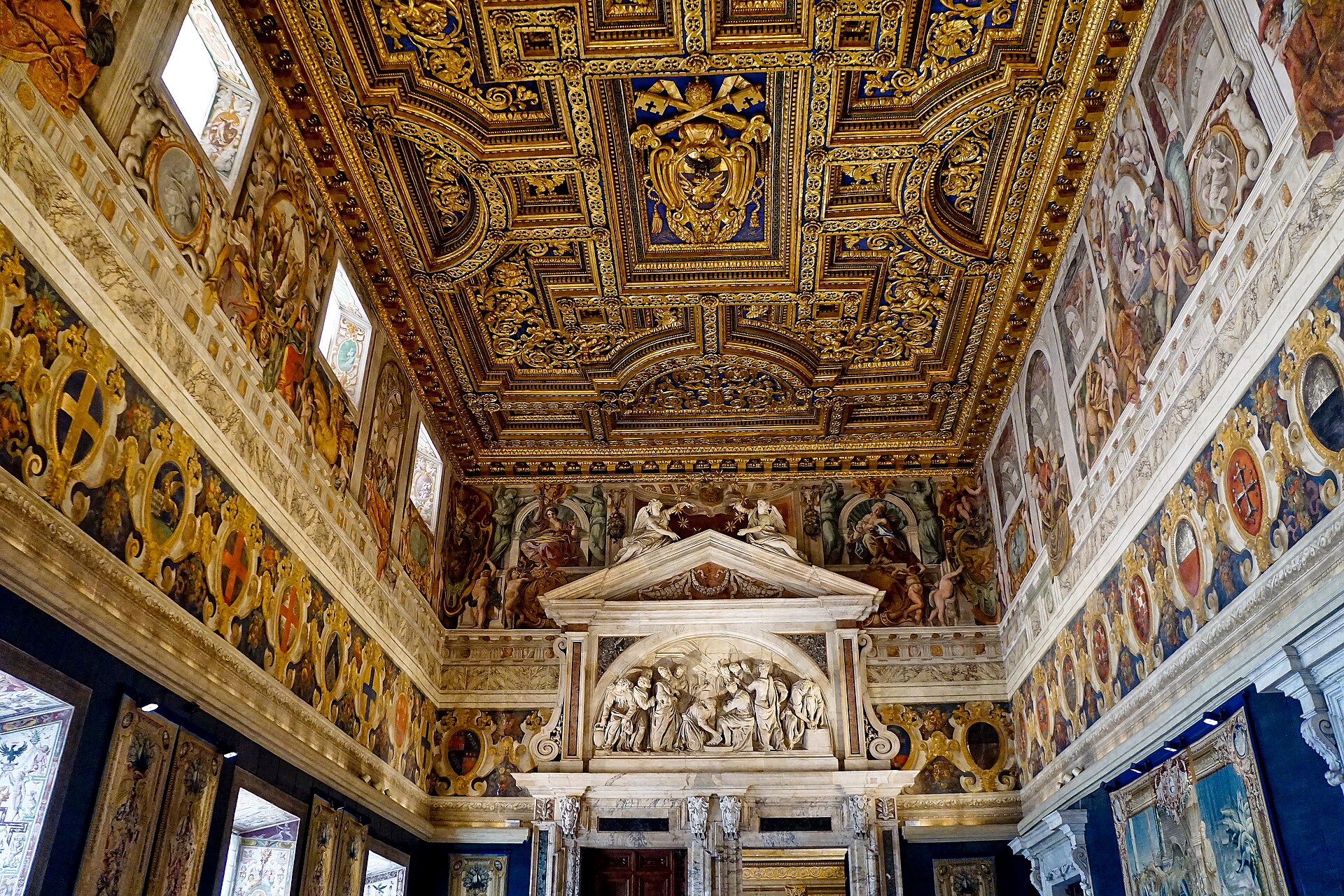
The grandest of the state rooms of the Quirinale is the great hall known as the Salone dei Corazzieri, the Hall of the Cuirassiers, named for the guardsmen who attend the head of state. This immense and magnificent hall, one of the largest and most splendid rooms in the palace, served as the principal reception room and remains the setting for the most important ceremonies of the Italian state.
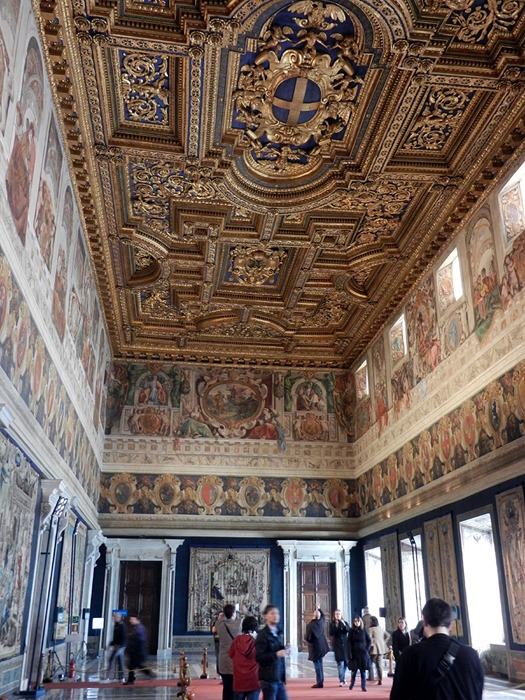
The hall is richly decorated, its walls adorned with a great painted frieze depicting scenes and figures, and its ceiling worked with fine ornament. The decoration was carried out by leading artists for the popes, and it celebrates the majesty of the residence and its rulers. The scale and the richness of the hall convey the grandeur appropriate to a palace that has served the heads of three regimes.
The frieze that runs around the hall is a notable work, depicting an array of figures and scenes, including representations of embassies and visitors from distant lands who came to the papal court, a reminder of the wide reach of the papacy in the age when the hall was created. This great decorative scheme makes the hall not only a room of state but a work of art in its own right.
The Salone dei Corazzieri remains at the heart of the ceremonial life of the palace, the setting for the reception of ambassadors, the swearing-in of governments, and the great occasions of the Italian Republic. Its magnificence links the ceremonies of the modern state to the splendour of the papal and royal past, and it stands as one of the noblest rooms in Rome.
The Pauline Chapel
Adjoining the great hall is the Pauline Chapel, the principal chapel of the palace, a magnificent Baroque interior built for the popes as their private chapel in the Quirinale. Designed by the architect Carlo Maderno, it was deliberately built to the same dimensions as the famous Sistine Chapel in the Vatican, a sign of the importance the popes attached to their palace on the hill.
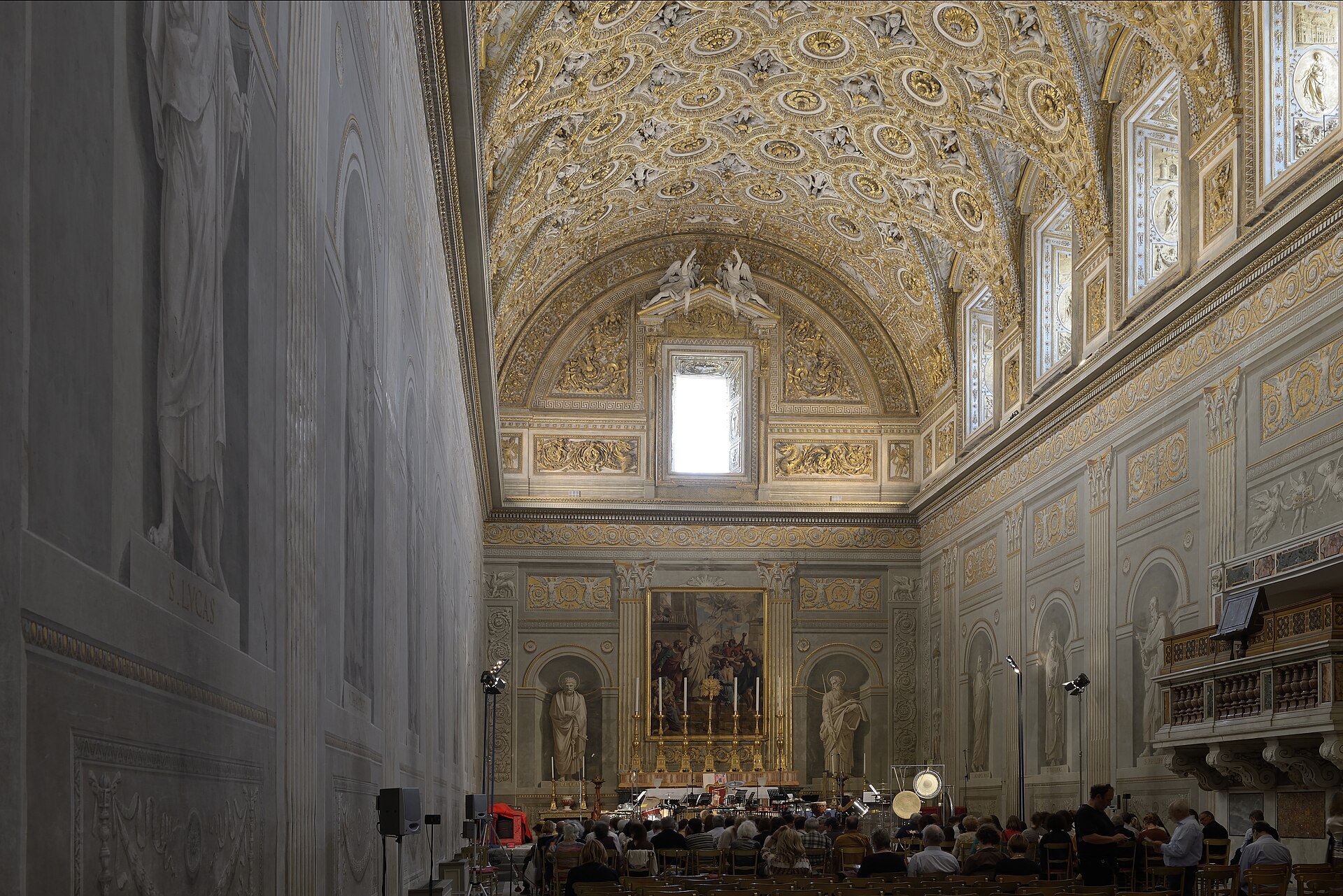
The chapel is a space of great richness and beauty, its walls and ceiling adorned with fine stucco decoration, gilding, and ornament in the grand manner of the Roman Baroque. It served as the setting for the private devotions of the popes and for important religious ceremonies, and its scale and splendour reflect its role as the sacred heart of the papal residence.
The chapel has witnessed events of great historical importance, for it was here, on more than one occasion, that popes were elected in conclaves held at the Quirinale rather than the Vatican. The great chamber, built to rival the Sistine Chapel, thus played a direct role in the succession of the papacy, adding to its historical significance.
Today the Pauline Chapel is used for concerts and ceremonies of the Italian Republic, its magnificent Baroque interior serving new purposes while preserving the memory of its papal origins. It remains one of the most beautiful spaces in the palace, a reminder of the long centuries during which the Quirinale was the residence of the popes and one of the great sacred and secular buildings of Rome.
The State Apartments and Halls
Beyond the great hall and the chapel, the Quirinale contains a long sequence of state apartments and halls, richly decorated over the centuries by the popes, the kings, and the republic. These magnificent rooms, adorned with frescoes, tapestries, fine furniture, and works of art, form one of the grandest series of state interiors in Italy, and they reflect the tastes of the successive regimes that inhabited the palace.
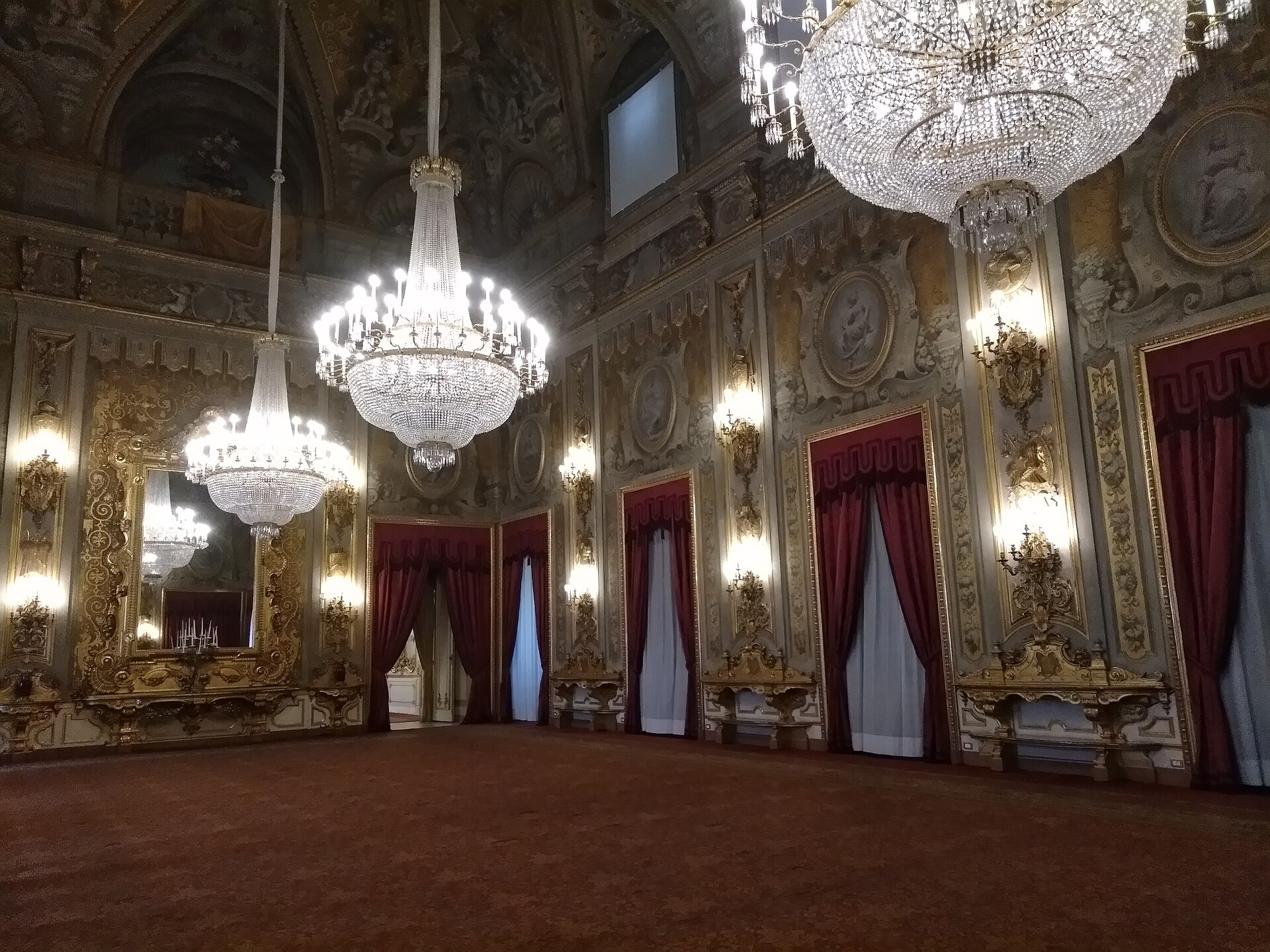
Among the many splendid rooms are grand halls used for receptions and ceremonies, decorated with painted ceilings and rich ornament, and more intimate apartments that served as the private quarters of the rulers. The decoration ranges from the Baroque splendour of the papal age through the tastes of the monarchy to the additions of the republic, so that the apartments trace the whole history of the palace.
The rooms are filled with treasures accumulated over the centuries, including fine tapestries, some of them woven for the palace, paintings, clocks, porcelain, and furniture of the highest quality. These works of art, gathered by popes, kings, and presidents, make the Quirinale a treasure house as well as a residence, its rooms displaying the artistic riches of the Italian state.
The state apartments remain in use for the ceremonial functions of the presidency, hosting state visits, receptions, and the great occasions of the republic. To walk through them is to experience the accumulated grandeur of centuries, from the age of the Baroque popes to the modern Italian state, a magnificent sequence of rooms at the summit of the Italian nation.
The Gardens of the Quirinale
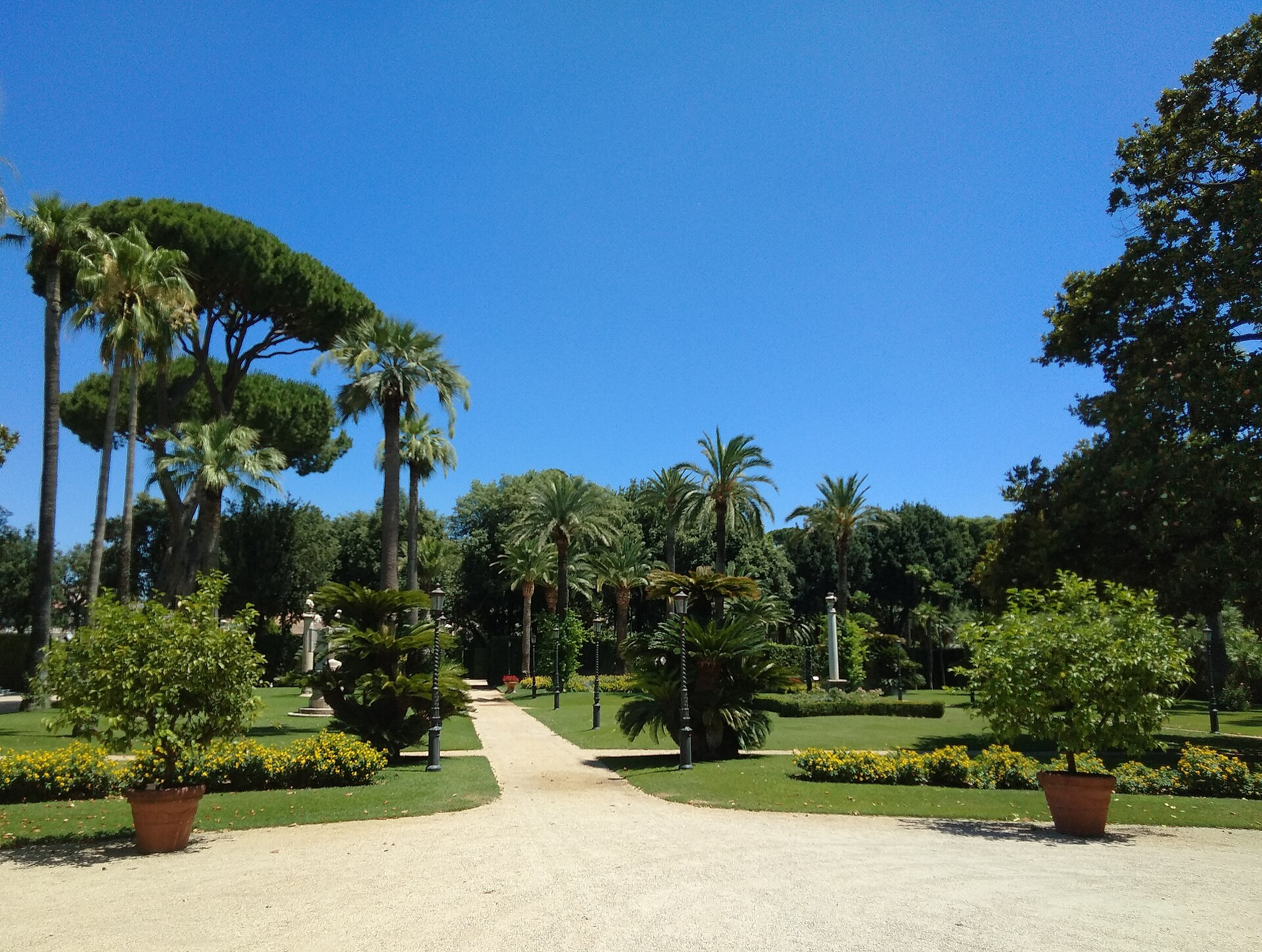
Behind the palace extend the great gardens of the Quirinale, a green and tranquil world laid out on the summit of the hill, hidden from the city below. Covering a large area, the gardens were developed over the centuries by the popes and their successors, and they form one of the most beautiful and secluded green spaces in the heart of Rome, a retreat for the rulers who inhabited the palace.
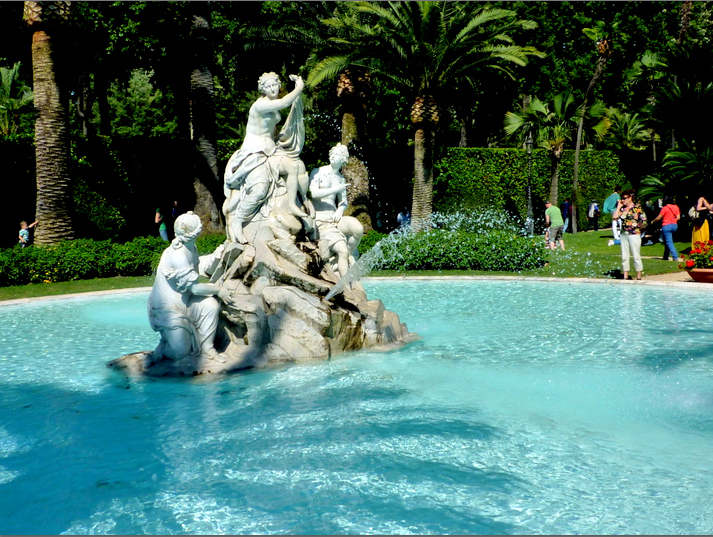
The gardens are laid out in a formal manner, with avenues, hedges, fountains, and ornamental plantings, adorned with sculpture and enlivened by the sound of water. They provided a place of pleasure and repose for the popes and later rulers, a green retreat where they could escape the formality of the state rooms and enjoy the air and the beauty of the hilltop.
Among the features of the gardens is a charming garden pavilion, a coffee house built for the popes as a place of refreshment and leisure amid the greenery, a delightful example of the garden architecture of its age. The gardens also contain fountains, an organ fountain among them, and a wealth of statuary, making them a work of art as well as a place of pleasure.
The gardens of the Quirinale are normally hidden from public view, part of the private world of the head of state, though they are opened to the public on special occasions. They form a magnificent complement to the palace, a green crown upon the summit of the hill, and they preserve, in the heart of the busy modern city, the tranquil beauty of a great historic garden.
From Popes to Kings
For nearly three centuries the Quirinale was a residence of the popes, but in the later nineteenth century its history took a dramatic turn. As the movement for the unification of Italy gathered force, the new Italian state, having united most of the peninsula, at last took possession of Rome in 1870, ending the temporal power of the popes over the city and making Rome the capital of the Kingdom of Italy.
With the fall of papal Rome, the Quirinale, as the principal residence of the popes, was taken over by the new Italian state to serve as the royal palace of the kings of Italy. The pope withdrew into the Vatican, and the great palace on the hill passed from the papacy to the monarchy, a symbolic transfer of power that marked the birth of the new Italian nation.
The transformation of the Quirinale from papal to royal residence was one of the most significant symbolic acts of the Italian unification, for it placed the new monarchy in the very seat of the old papal power. The kings of Italy adapted the palace to their needs, and it became the centre of the ceremonial life of the monarchy, the residence of the sovereigns of a united Italy.
For some seventy years the Quirinale served as the royal palace, witnessing the reigns of the kings of Italy and the great events of the nation’s history in the age of the monarchy. The palace that had been the home of the popes became the home of the kings, and it stood at the centre of the life of the young Italian state through the momentous decades that followed unification.
The capture of Rome and the transfer of the Quirinale to the monarchy were deeply controversial, for the popes regarded the seizure of the city as an injustice, and for decades afterward the relationship between the papacy and the Italian state remained bitter. The palace on the hill thus became a symbol not only of Italian unity but of the painful conflict between the new nation and the Church, a conflict that would not be resolved until well into the twentieth century.
From Kings to the Republic
The royal chapter of the Quirinale came to an end in the aftermath of the Second World War, when the Italian people, in a referendum held in 1946, voted to abolish the monarchy and establish a republic. The king departed into exile, and the great palace on the hill entered upon its third and current role, as the official residence of the head of the new Italian Republic.

Since then the Quirinale has been the seat of the President of the Italian Republic, the head of state and the symbol of national unity. The palace that had housed popes and kings became the residence of the elected head of a democratic republic, a transformation that reflected the new political order born from the upheavals of the war and the fall of the monarchy.
As the seat of the presidency, the Quirinale is the setting for the highest functions of the Italian state, the place where new governments are sworn in, where ambassadors present their credentials, and where the great ceremonies of the republic are held. The palace thus continues, under its third regime, to stand at the very summit of Italian political life.
The passage of the Quirinale from monarchy to republic completed its extraordinary succession of roles, making it a palace that has served, in turn, the three great forms of authority in modern Italian history. Its walls, which once sheltered popes and then kings, now house the president of a democratic republic, a unique record of the transformations of the Italian state across the centuries.
The Cuirassiers and the Ceremony of State
The Quirinale is guarded and served by a distinguished corps of ceremonial soldiers, the Corazzieri, or Cuirassiers, an elite unit whose splendid uniforms and imposing bearing make them one of the most striking features of the palace. Tall and magnificently attired, with gleaming breastplates and plumed helmets, they attend the head of state and lend great dignity to the ceremonies of the republic.
The Cuirassiers perform the ceremonial guard duties at the palace, and their presence at the great occasions of state, standing guard in the magnificent halls or escorting the president, adds to the grandeur of the ceremonies. They are the heirs of a long tradition of the guard of the head of state, and their splendid appearance is one of the enduring images of the Quirinale.
Among the ceremonies associated with the palace is the changing of the guard in the piazza before the facade, a colourful spectacle that draws spectators and displays the pageantry of the Italian state. On special occasions this ceremony is performed with full pomp, with music and the participation of mounted units, a display of tradition and ceremony in the grand setting of the piazza.
These ceremonies link the modern republic to the long traditions of the palace, and they bring the pageantry of the Italian state before the public. The magnificent Cuirassiers, the changing of the guard, and the great occasions held within the palace all contribute to the ceremonial life of the Quirinale, maintaining, under the republic, the dignity and splendour that have always attended the seat of Italian power.
The Quirinale Today
Today the Palazzo del Quirinale continues in its role as the official residence of the President of the Italian Republic and the ceremonial heart of the Italian state, while also being opened, in part, to the public. Visitors can tour the magnificent state apartments, the great halls, the chapel, and the gardens, experiencing the accumulated grandeur of a palace that has served popes, kings, and presidents.

View the exact location on Google Maps
The palace preserves and displays the extraordinary artistic and historical heritage accumulated over its long history, from the frescoes and decoration of the papal age to the treasures gathered by the monarchy and the republic. Its opening to the public in recent years has allowed visitors to appreciate one of the greatest palaces in Italy, long hidden as the private residence of the head of state.
Standing at the summit of the Quirinal Hill, at the centre of Rome, the palace remains one of the great monuments of the city, its long facade and its magnificent piazza with the colossal Dioscuri among the noblest sights in Rome. Its position at the head of the Italian state gives it a continuing importance beyond its historical and artistic significance.
More than four centuries after the popes first built their retreat on the hill, the Quirinale endures as a palace unique in the world, having served in unbroken succession the popes, the kings, and the presidents of Italy. Grand, historic, and still at the summit of the Italian state, it stands as a monument to the whole sweep of modern Italian history, and as one of the great palaces of Rome and of the world.
The decision to open the Quirinale and its gardens more fully to the public in recent years reflects a wish to share this extraordinary heritage with the citizens of the republic and with visitors from around the world. The palace that was for so long the private preserve of popes and kings has thus become, in part, a place for all, its treasures and its history made accessible as part of the common heritage of the Italian nation.
Palaces Nearby
The Quirinale is one of several great Italian palaces; these two are especially worth discovering:
You May Like
The Bahia Palace of Marrakech: A Vizier’s Dream of Moroccan Splendor


One thought on “The Quirinale: The Roman Palace That Housed Popes, Kings, and Presidents”