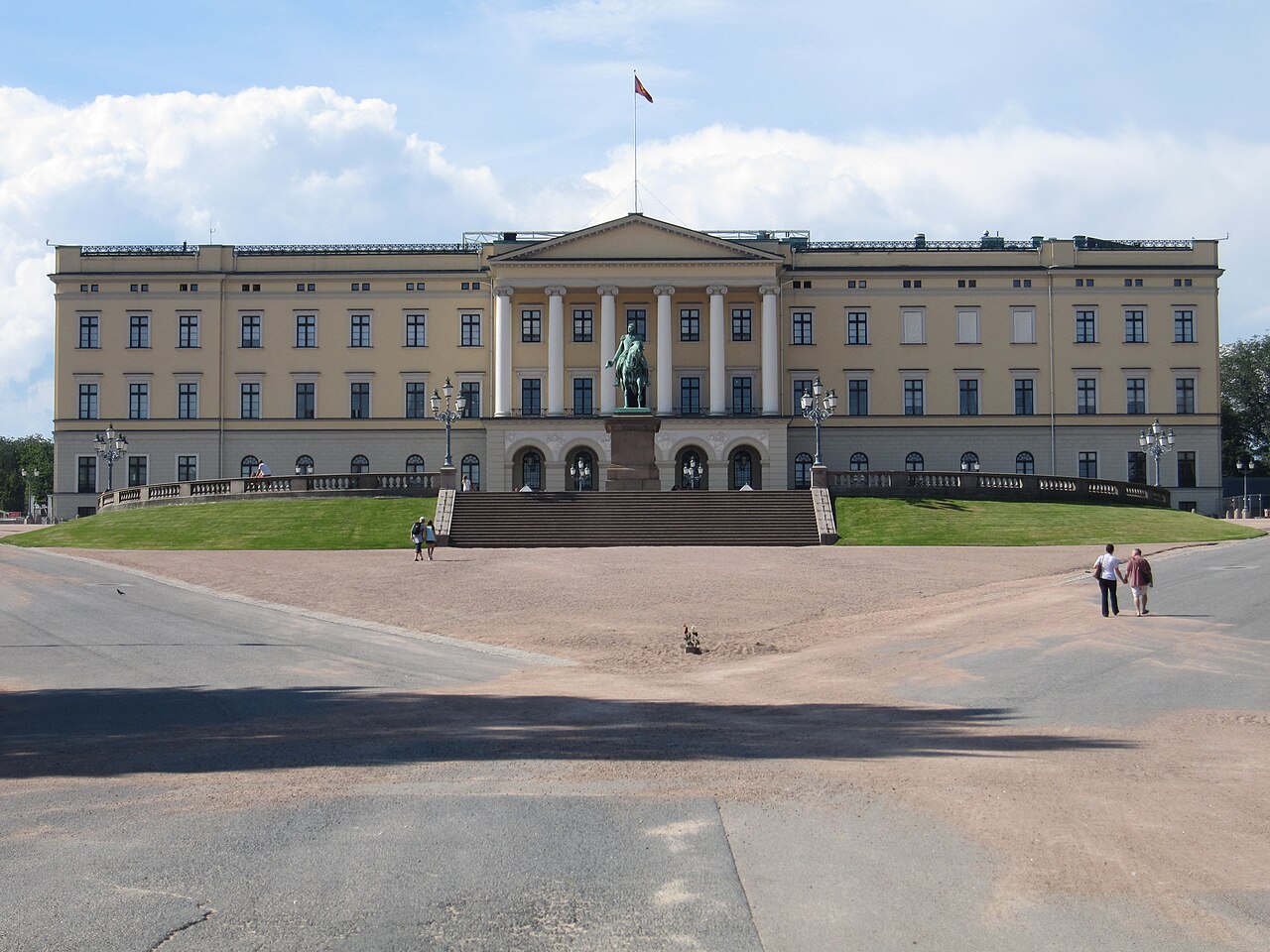
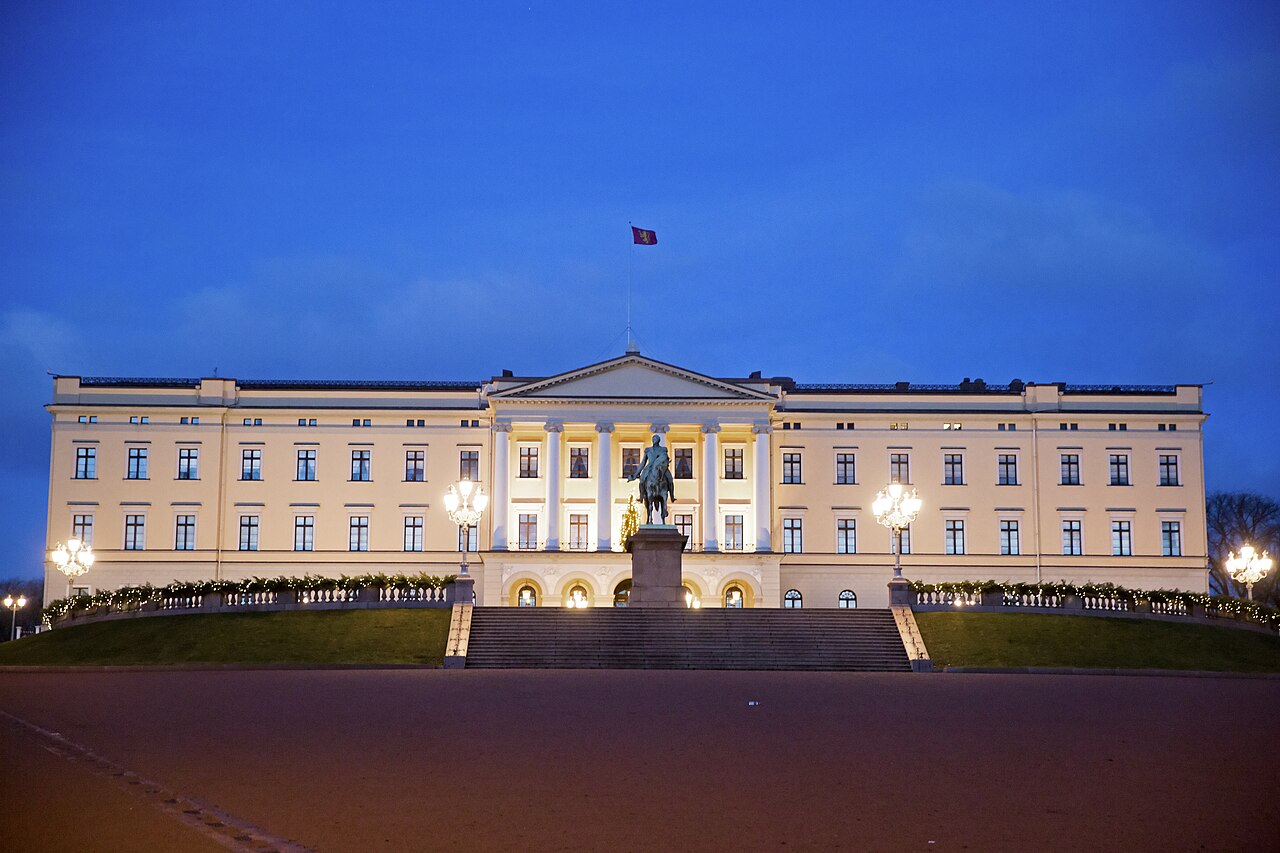
At the top of Oslo’s grandest avenue, on a gentle rise looking back down over the city toward the harbour, stands the Royal Palace of Norway. Long, pale, and dignified, it presents a calm neoclassical face to the capital, framed by a green park and approached by a broad boulevard that draws the eye straight to its columns. It is a palace built not to overawe but to preside, the serene centre of a nation’s public life.
The Norwegian Royal Palace, known in Norwegian as Det kongelige slott, is younger than many of Europe’s great royal residences, a creation of the nineteenth century rather than an inheritance from the age of absolute kings. Its story is bound up with a fascinating chapter of history, in which a French soldier became the king of two Nordic countries, and in which Norway moved from union to full independence with its own monarch on the throne.
Today the palace is the official residence of the Norwegian monarch and the working heart of the country’s constitutional monarchy. Unlike some royal sites that survive only as museums, this is a living palace, the setting for state ceremonies, official audiences, and the daily business of the crown, while also opening its doors to the public in the summer months and standing at the centre of Oslo’s civic life all year round.
In this guide you will follow the palace from the remarkable king who commissioned it, through its long construction and elegant architecture, its park and its famous approach, the changing of the guard, its role in Norway’s journey to independence, and what it is like to visit today. By the end you will understand why this quietly grand building means so much to Norwegians.
In This Article
- A Palace for a New King
- From French Marshal to Northern King
- The Long Road to Completion
- Neoclassical Dignity on the Hill
- Karl Johans Gate and the Grand Approach
- The Palace Park, Oslo’s Green Retreat
- The King on His Bronze Horse
- The King’s Guard and the Changing Ceremony
- Inside the State Rooms
- Union, Independence, and a Norwegian Throne
- A Working Palace at the Nation’s Heart
- Planning a Visit to the Palace
- See the Palace for Yourself
A Palace for a New King
The Royal Palace in Oslo owes its existence to a moment of profound change in Norwegian history. In the early nineteenth century Norway entered into a union with Sweden under a shared king, and the new royal house wished to have a proper residence in the Norwegian capital, then a much smaller city than it is today. A palace was needed to give the monarchy a fitting home in Norway.
The decision to build such a palace was a statement of intent. It signalled that the king took his Norwegian realm seriously and intended the crown to have a real presence there, not merely a token one. For a country that had long been governed from abroad, the promise of a royal palace in its own capital carried considerable symbolic weight, a sign of dignity and recognition.
The site chosen was a rise at the western edge of the growing city, land that offered space for a grand building and its grounds and commanded fine views back toward the centre. From this elevated position the palace would look out over the capital, and the capital would look up toward the palace, a relationship of mutual regard built into the very geography of the city.
Thus the palace was conceived from the outset as more than a residence. It was to be a national symbol, the anchor of a new royal presence in Norway and a physical expression of the country’s place within the union and, eventually, of its own emerging identity. The building that rose on the hill would come to embody far more than its founders first imagined.
It is easy to forget how young Oslo’s grandeur is. When the palace was begun, the city was a modest capital by European standards, and a project of this ambition represented a genuine leap of faith in its future. The palace was, in effect, a bet on what the city and the nation might become, and the decades since have more than vindicated it, as Oslo grew into the confident capital that now spreads out below the royal hill.
From French Marshal to Northern King
The king who set the palace in motion has one of the most extraordinary life stories in European history. Born in France, he rose through the ranks during the revolutionary and Napoleonic era to become one of Napoleon’s marshals, a soldier of humble origins who reached the very summit of the French military. Then, in a remarkable turn of fate, he was chosen to become the heir to the Swedish throne.
Adopted into the Swedish royal succession, this French marshal took a new name and a new destiny in the north, eventually becoming king of both Sweden and Norway. His journey from a provincial French town to a Scandinavian throne is one of history’s great improbable ascents, and the dynasty he founded would rule for generations, shaping the modern history of the region.
It was this king who wished for a royal residence in the Norwegian capital, and the palace became closely associated with his name and reign. His vision of a monarchy that spanned the Scandinavian peninsula required visible symbols in both kingdoms, and the palace in Oslo was to be the Norwegian counterpart to the royal seats in Sweden.
The story of the palace is therefore inseparable from this astonishing personal history. That a building meant to symbolise Norwegian royal dignity should have been founded by a former French soldier turned northern king gives it an extra layer of romance. It is a reminder of how tangled and surprising the histories of Europe’s royal houses can be, and of how far ambition and fortune could carry a person in that turbulent age.
The founder’s French origins also left subtle marks on the wider culture of the monarchy he established. A man shaped by the upheavals of revolutionary Europe, he brought a certain pragmatism and modern sensibility to his northern thrones, and the dynasty he founded proved adaptable enough to survive the great political changes of the following century, including the eventual peaceful separation of the two kingdoms he had ruled together.
The Long Road to Completion
Building the palace proved a longer and more difficult task than anyone first imagined. Construction began in the earlier part of the nineteenth century, but the project was repeatedly slowed by the practical challenges of raising so large a building in a modest capital, and above all by questions of cost. Funding a grand palace strained the resources available, and the work stretched on over many years.
The original plans had to be adjusted as the realities of budget and construction set in. What had been conceived on a very grand scale was modified and simplified, and the design evolved during the long building process. These changes, driven by necessity, shaped the palace into the more restrained but harmonious form that stands today.
After years of effort, the palace was finally completed and inaugurated around the middle of the century, a milestone that gave Norway its royal residence at last. The long wait had tested the patience of all involved, but the result was a dignified and elegant building worthy of its purpose, and its completion was an occasion of national significance.
The protracted construction is itself part of the palace’s story, reflecting the modest means of the country in that era and the determination to see the project through despite the obstacles. That Norway persevered and completed its royal palace, even at great effort, speaks to how much the building mattered as a symbol of national dignity and royal presence.
The finished palace also gave a young capital a new sense of confidence. With its royal residence complete, Oslo could count itself among the seats of European monarchy, and the building became a source of civic pride as well as royal dignity. In later years, as the city grew around and below it, the palace remained the fixed point at the head of the avenue, a constant presence through decades of rapid change.
Neoclassical Dignity on the Hill
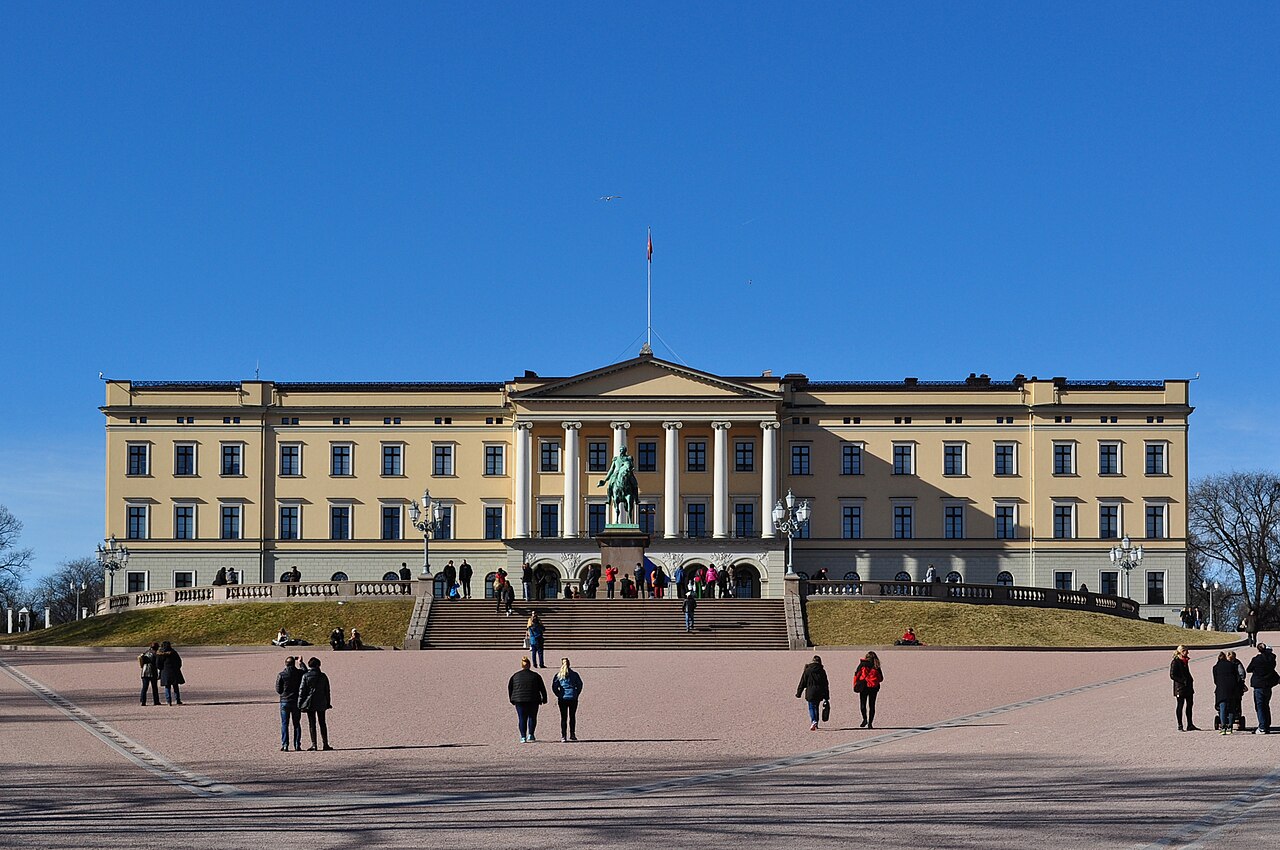
The Royal Palace is a fine example of the neoclassical style that dominated European architecture in the early nineteenth century. Its design favours clarity, symmetry, and restraint over ornament, with a long, balanced facade, a central section marked by columns, and clean lines that convey dignity and calm. This was the architectural language of the age, associated with reason, order, and the ideals of classical antiquity.
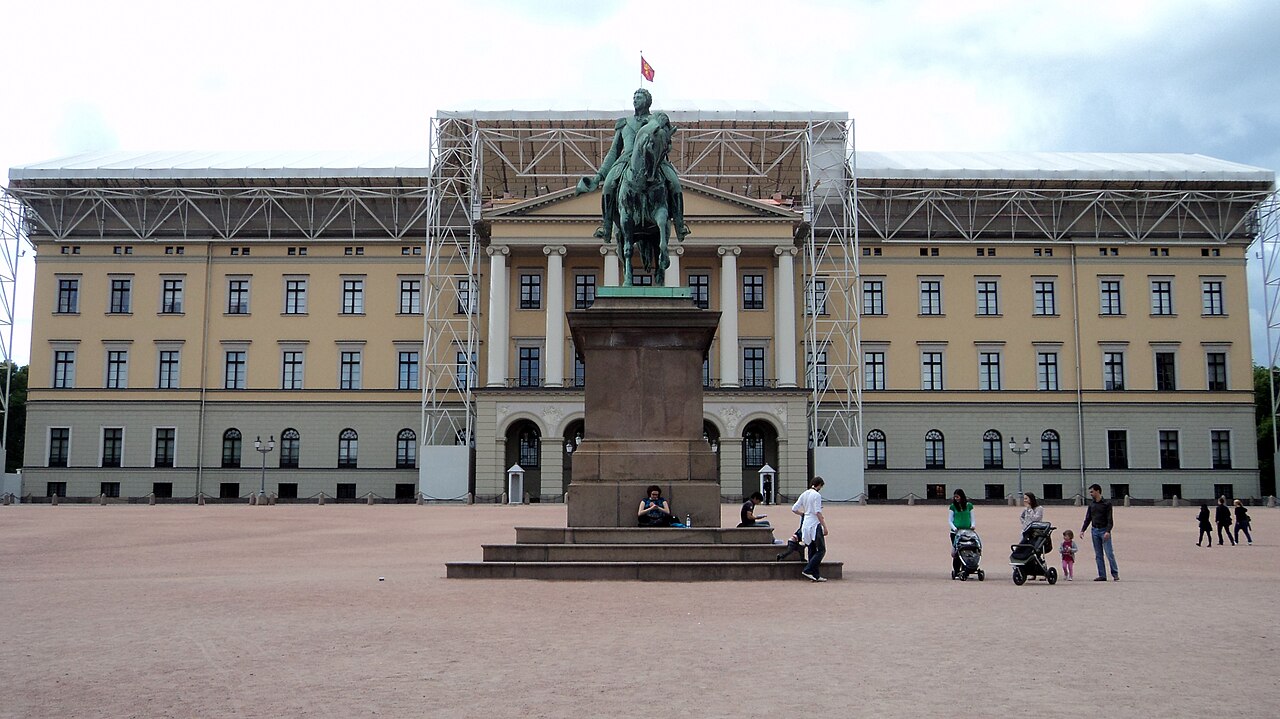
Rather than overwhelming the viewer with size or decoration, the palace impresses through proportion and poise. Its pale walls and columned centre give it an air of serene authority, well suited to a constitutional monarchy that rules by consent rather than by force. The building looks stable and reassuring, an emblem of continuity rather than of overwhelming power.
The palace’s setting enhances its architecture. Placed on its rise and approached across an open square, it is seen to full advantage from a distance, its horizontal lines echoing the breadth of the space before it. The relationship between the building, its square, and the avenue that leads to it was carefully considered, creating a grand civic composition at the heart of the capital.
In its restraint and balance, the palace reflects something of the Norwegian character and of the modest, democratic spirit of the country’s monarchy. It is grand without being ostentatious, dignified without being remote, a building that holds its place with quiet confidence. This unshowy elegance is part of why Norwegians regard it with such affection.
Compared with the exuberant palaces of older monarchies, the restraint of the Oslo palace can seem understated at first glance, but that is precisely its strength. In an age that was beginning to question the pretensions of absolute monarchy, a palace built on principles of balance and clarity rather than overwhelming display was well matched to the constitutional, consensual style of kingship that would come to define the Norwegian crown.
Karl Johans Gate and the Grand Approach
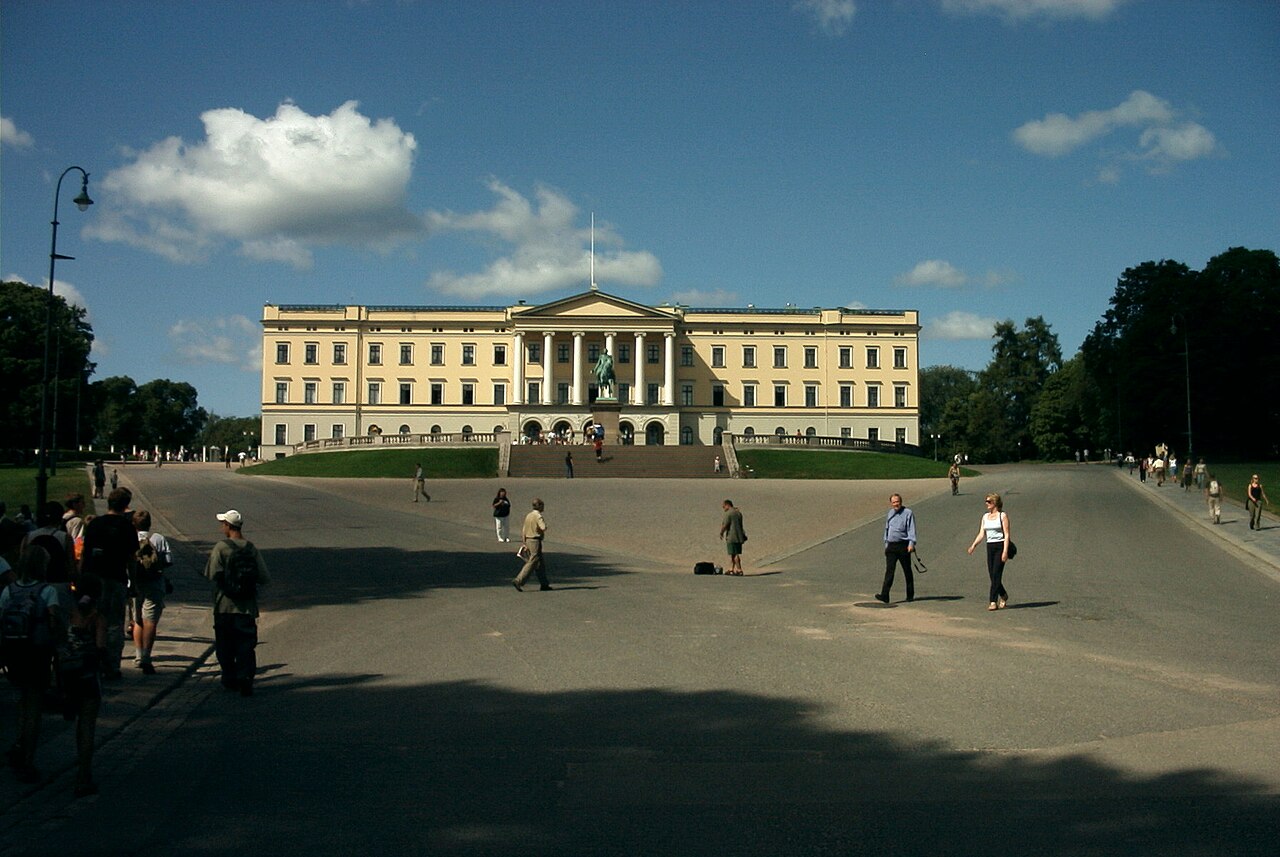
One of the palace’s greatest assets is its setting at the head of Karl Johans gate, the main ceremonial avenue of Oslo. This grand boulevard runs through the heart of the city and rises gently toward the palace, so that the building forms a natural focal point at the top of the street, drawing the eye and the footsteps of everyone who walks its length.
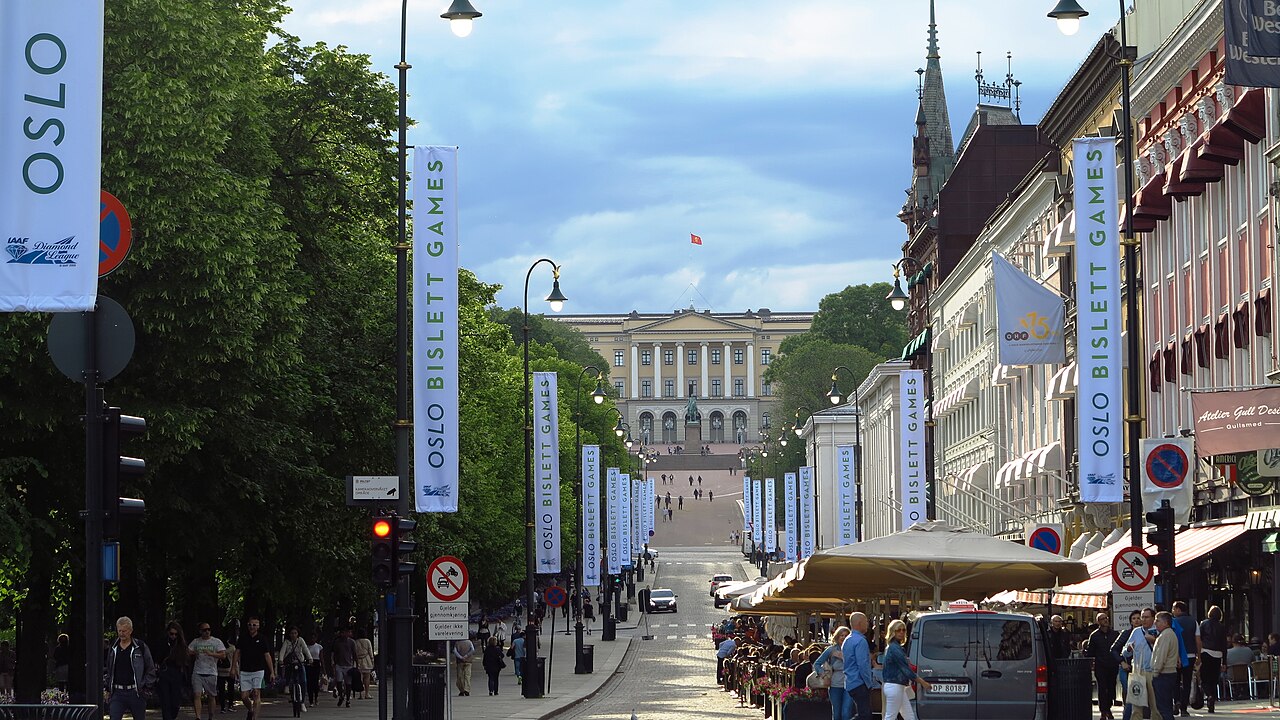
The avenue is named after the very king who founded the palace, and the relationship between the street and the building is no accident. The approach was conceived as a grand civic axis, linking the palace to the central institutions of the nation strung along the boulevard, from the parliament to the university and the national theatre. Walking up Karl Johans gate toward the palace is to move through the symbolic heart of Norway.
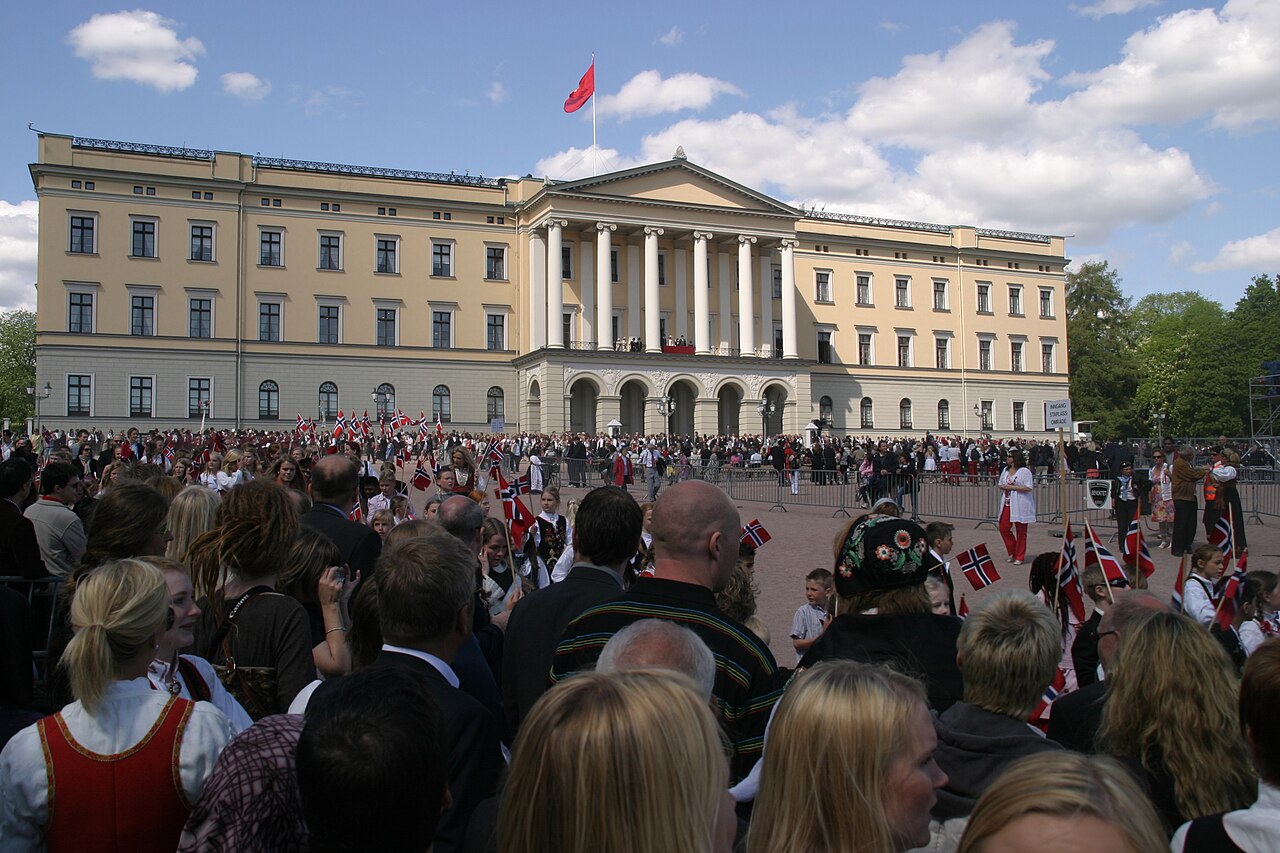
This arrangement gives the palace a central place in the daily life of the city. The boulevard is a place of promenades, shops, cafes, and gatherings, and the palace presides over it all from its rise at the end. On national holidays and great occasions, the avenue fills with crowds and processions, and the palace becomes the natural stage for the nation’s celebrations.
The open square in front of the palace, the Palace Square, completes the composition. Here the ground levels off before the building, providing space for ceremonies, for the changing of the guard, and for the public to gather and admire the view. From the square, looking back down the avenue toward the city, you understand how carefully the whole ensemble was planned to unite the monarchy with the life of the capital.
The genius of the arrangement becomes clearest on foot. As you climb the avenue, the palace grows steadily before you, framed by the trees and buildings along the way, until it fills the view at the crest of the rise. Few capitals stage the approach to their royal residence so effectively, and the walk up Karl Johans gate remains one of the great urban experiences that Oslo offers to residents and visitors alike.
The Palace Park, Oslo’s Green Retreat
Surrounding the palace on three sides is the Palace Park, known as Slottsparken, a large and beautiful green space that serves as both the grounds of the royal residence and a beloved public park. Unlike the enclosed private gardens of many palaces, this park is open to all, woven into the everyday life of the city as a place of recreation and relaxation.
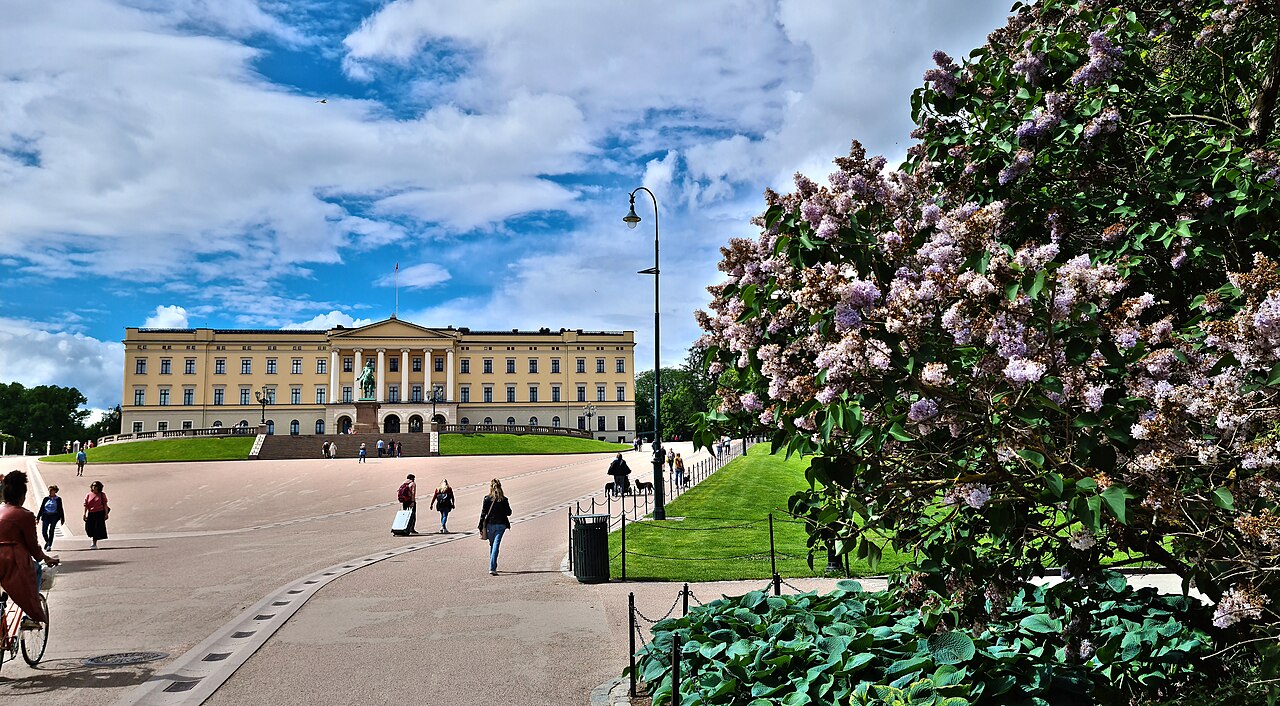
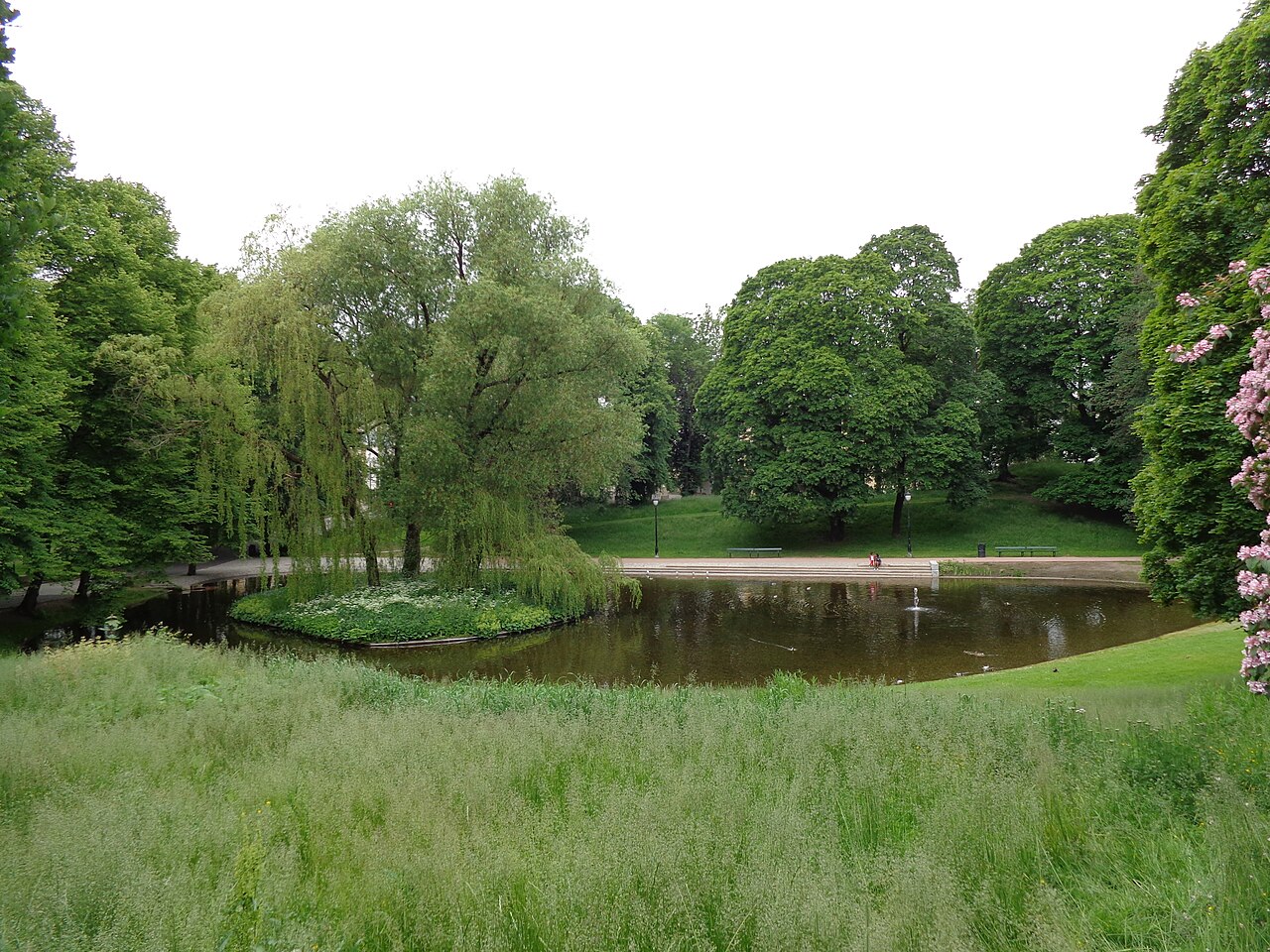
The park was laid out as part of the palace project, transforming the grounds around the building into a landscaped setting of lawns, trees, paths, and ponds. Over time it has matured into a leafy oasis in the middle of the capital, where the formal dignity of the palace gives way to the informal pleasures of a public garden.
For the people of Oslo, the Palace Park is a cherished amenity. In summer its lawns and benches fill with residents and visitors enjoying the sunshine, while its shaded paths offer a cool retreat and its ponds attract birds and children alike. The park brings the monarchy and the public together in the most everyday way, allowing anyone to share the grounds of the royal residence.
This openness is characteristic of the Norwegian monarchy and its relationship with the people. That the grounds of the royal palace should double as a public park, freely accessible to all, speaks of a crown that sees itself as close to its citizens rather than set apart from them. The park is thus not just a pleasant space but an expression of a whole approach to royalty.
The park changes beautifully with the Nordic seasons. In the long light of summer it is a place of picnics and open-air ease; in autumn its trees turn to gold and russet; and in the deep of winter it lies under snow, the pale palace rising serenely above the white expanse. Each season offers a different experience of the grounds, and locals return throughout the year to enjoy the park in all its moods.
The King on His Bronze Horse
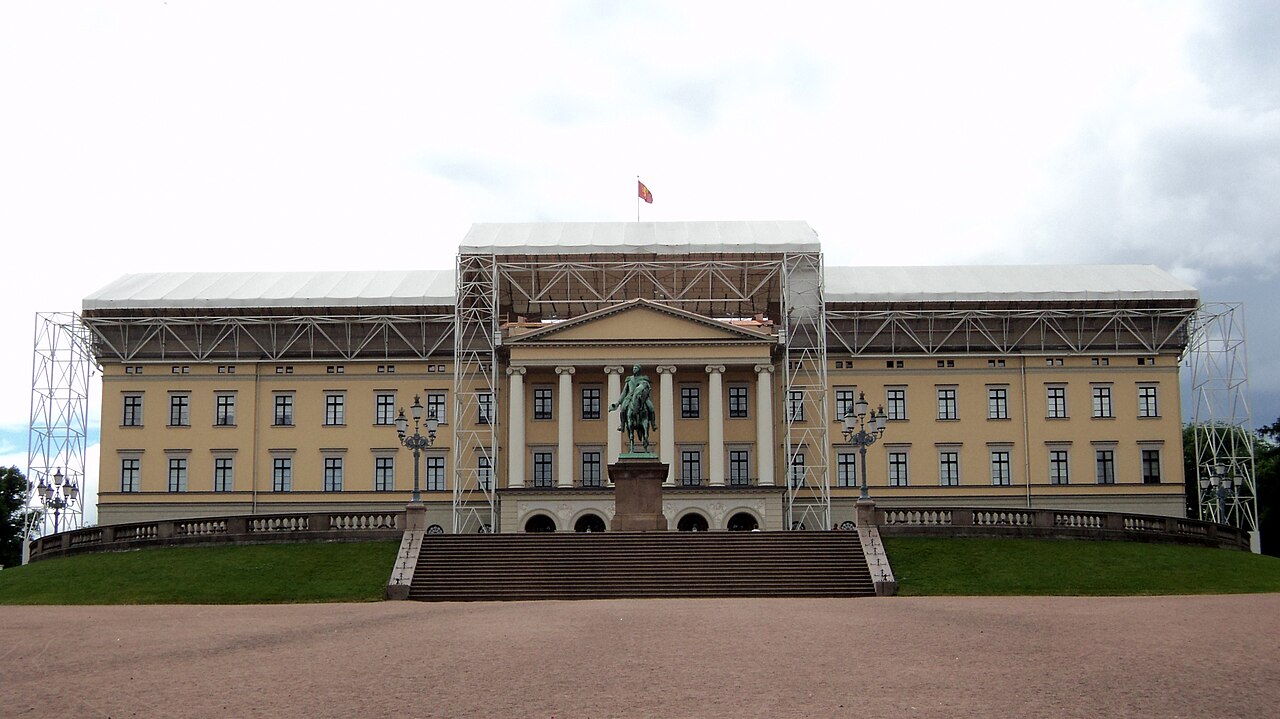
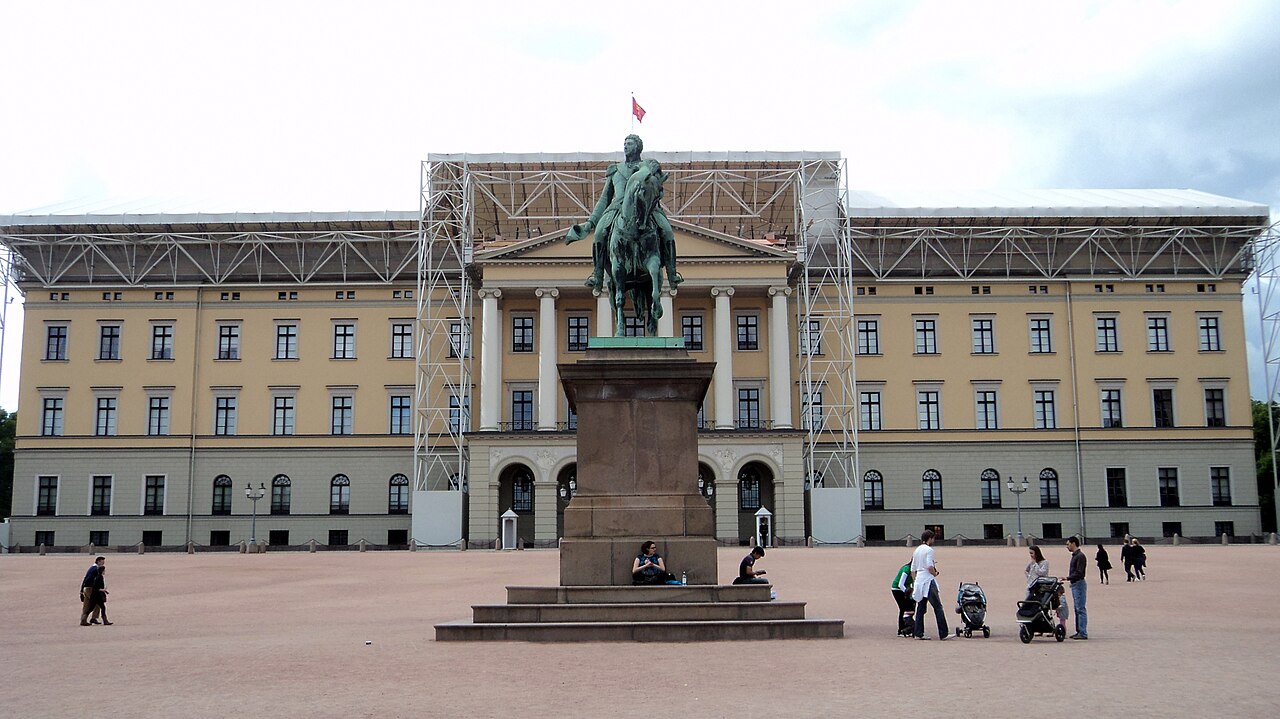
In the square before the palace stands a striking equestrian statue of the king who founded the building, mounted proudly on his horse and gazing out over the city and the avenue that bears his name. This monument is one of the most recognisable landmarks in Oslo and a fitting tribute to the remarkable monarch whose vision gave Norway its royal palace.
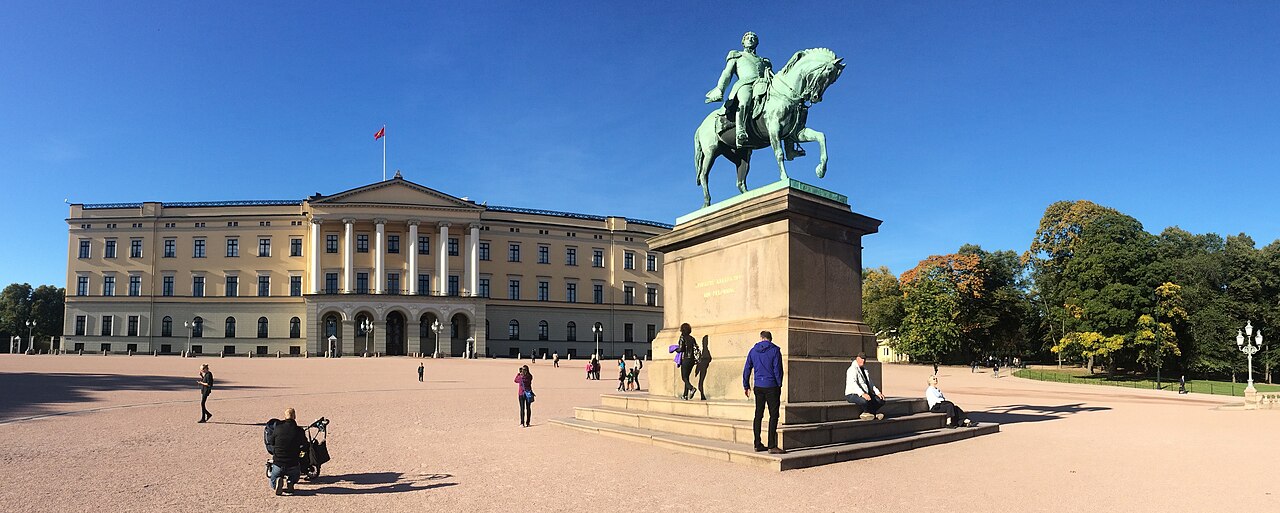
The statue captures the king in the heroic manner traditional for royal monuments, presenting him as a commanding figure worthy of his extraordinary career. Placed at the meeting point of the palace and the avenue, it links the man, the building, and the street into a single memorial to the founder of the dynasty and his role in Norwegian history.
An inscription on the monument records words associated with the king, expressing the ideals he wished to be remembered by. Such monuments were designed not only to honour the individual but to convey a message about the values of the monarchy, and this statue continues to speak to passersby of the reign it commemorates.
For visitors, the equestrian statue is a natural focal point in the Palace Square, a place to pause and take in both the monument and the palace behind it. Together they tell the story of the building’s origins in a single glance, uniting the founder and his creation at the top of the great avenue that carries his name through the heart of the city.
Standing before the monument, it is worth reflecting on the sheer unlikelihood of the life it commemorates. The figure on the bronze horse began life far from any throne, and yet ended his days as the founder of a royal dynasty in the north. The statue, gazing down the avenue that bears his adopted name, is a fitting memorial to a career that reads more like legend than history.
The King’s Guard and the Changing Ceremony
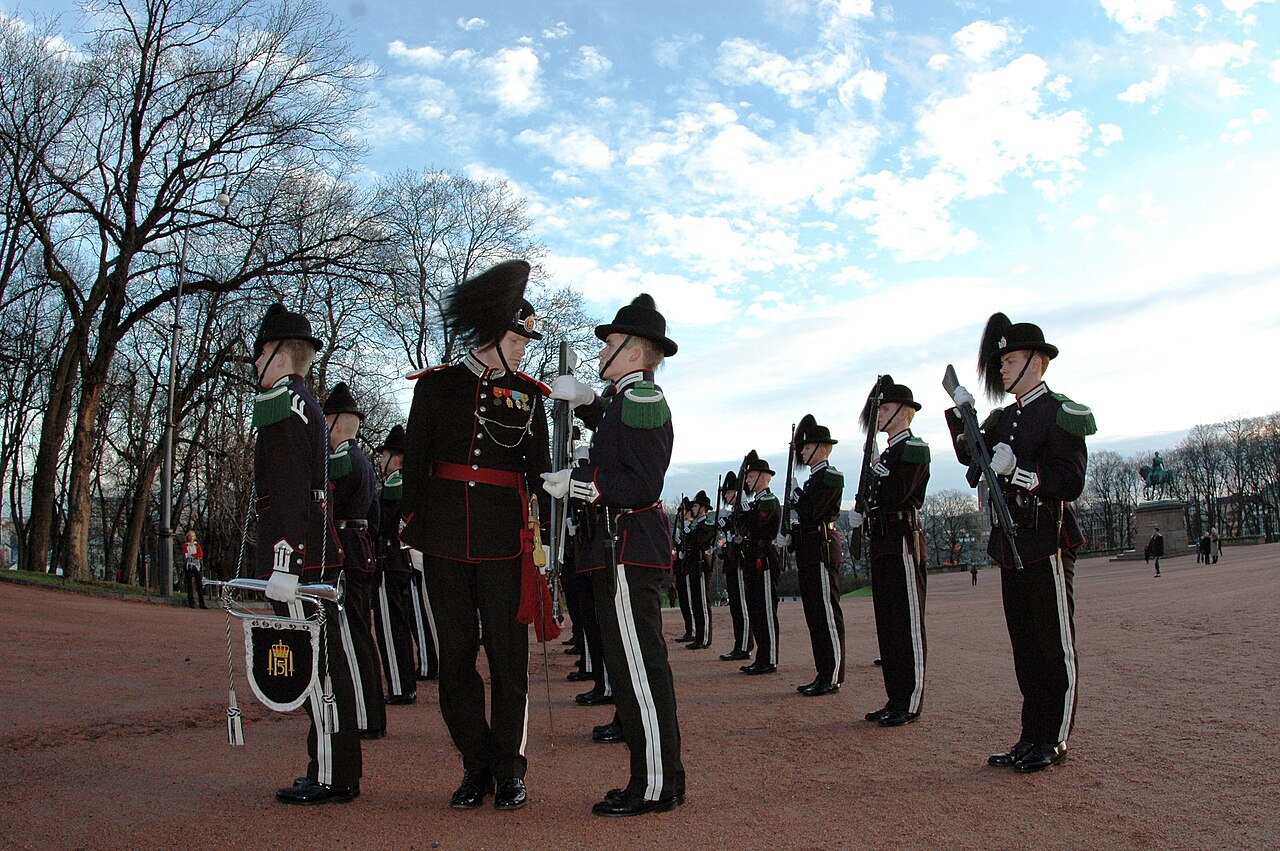
No visit to the Royal Palace is complete without seeing His Majesty The King’s Guard, the elite soldiers who watch over the royal residence. In their distinctive uniforms, standing sentinel before the palace and its square, they are among the most photographed sights in Oslo and a living link between the building and the ceremonial traditions of the monarchy.
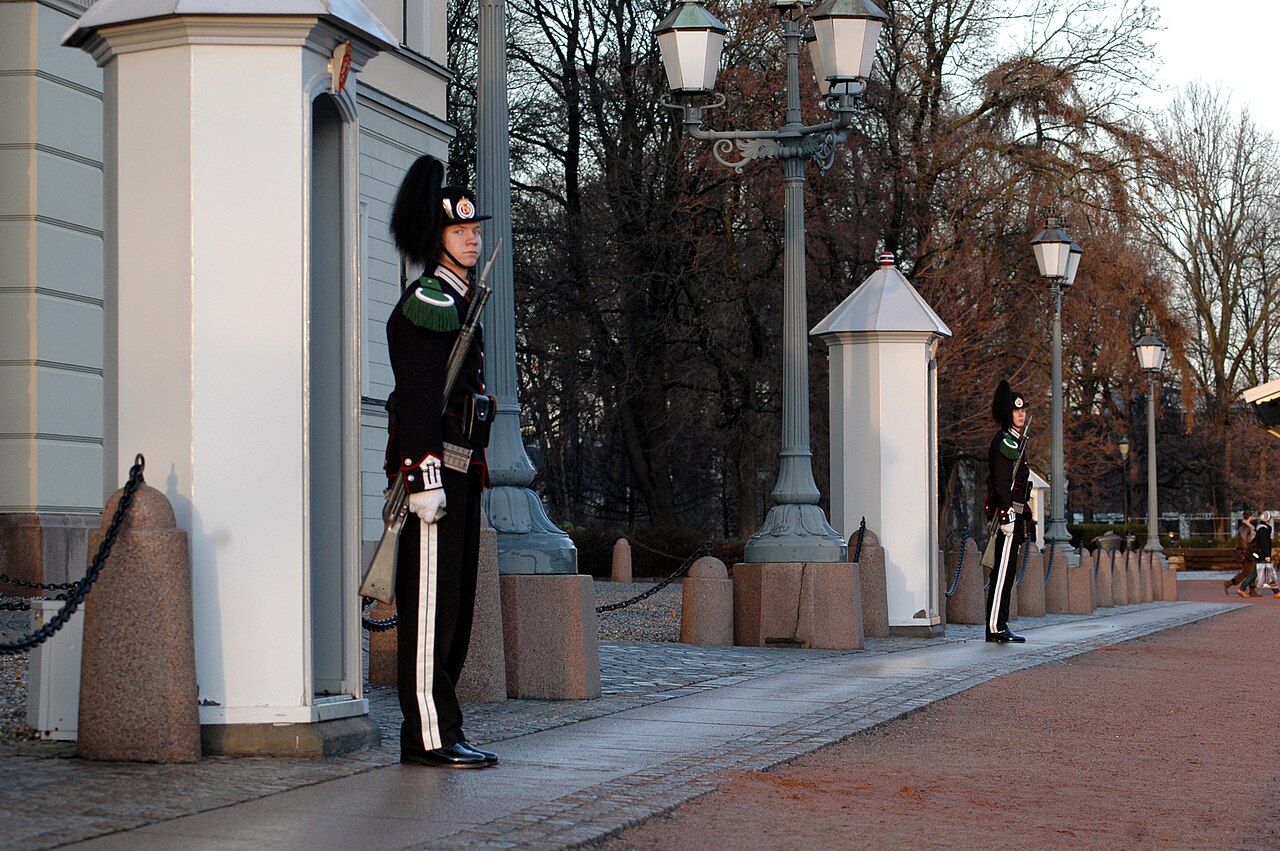
The daily changing of the guard is a highlight for visitors, a piece of ceremony performed with precision and pride in the square before the palace. Crowds gather to watch the ordered movements and hear the accompanying music, and the ritual brings a note of pageantry to the heart of the capital, connecting the modern city to older traditions of royal service.
The King’s Guard is more than a ceremonial body; it is a real military unit with genuine duties, and its members take their responsibilities seriously. Guarding the monarch and the palace is an honour, and the ceremony that visitors enjoy is the visible face of a continuous tradition of protection and service that surrounds the crown.
For many visitors, watching the guard is the most memorable moment of a visit to the palace. There is something timeless about the sight of the sentries in their uniforms against the pale facade of the building, and the ceremony offers a direct, human connection to the living monarchy. It is a reminder that this is not a museum but a working royal residence, watched over day and night.
The King’s Guard also has a lighter side that has won it international affection, including its well-known ceremonial connection to a bear that became the regiment’s mascot, a story that has charmed people far beyond Norway. Such traditions give the guard a human warmth alongside its formal duties, and they are part of why the changing ceremony draws such fond crowds day after day.
Inside the State Rooms
Behind its restrained facade, the Royal Palace contains a series of elegant state rooms used for the ceremonies and official functions of the monarchy. These interiors, decorated in the styles of the nineteenth century and enriched over the years, provide the setting for state banquets, official audiences, and the receptions that are part of the crown’s public role.
The rooms range from grand halls designed for the largest gatherings to more intimate chambers for private meetings and smaller occasions. Their decoration reflects the taste of the era in which the palace was built and furnished, with fine plasterwork, chandeliers, furniture, and works of art creating an atmosphere of dignified elegance appropriate to the seat of the monarchy.
Over time the interiors have been maintained and enhanced, with careful attention to preserving their historic character while keeping them fit for their continuing use. The palace is not frozen in the past but remains a working residence, and its rooms are cared for as living spaces where the business of the monarchy is actually conducted.
During the summer months, when the royal family is often away, parts of the palace open to the public through guided tours, offering a rare chance to see these state rooms from within. For visitors, stepping inside the palace brings the monarchy to life, revealing the private grandeur behind the familiar public facade and deepening the appreciation of what the building represents.
The art and furnishings within the palace also tell a story of national identity taking shape. Over the generations the interiors have been enriched with works by Norwegian artists and craftsmen alongside older pieces, so that the rooms reflect not only the tastes of the nineteenth century but the growing cultural confidence of an independent Norway. The palace is, in this sense, a living record of the nation as much as of the crown.
Union, Independence, and a Norwegian Throne
The palace has been a silent witness to some of the most important moments in modern Norwegian history, above all the country’s journey from union to full independence. For much of the nineteenth century Norway was joined with Sweden under a shared monarch, and the palace served as the Norwegian residence of that union’s kings, a symbol of the crown’s presence in a country that governed much of its own affairs.
The union was not always easy, and over the decades Norwegian desire for full independence grew. In the early twentieth century the union was peacefully dissolved, and Norway became a fully sovereign kingdom once more, free to choose its own path. This momentous change transformed the meaning of the palace, which now became the residence of an independent Norwegian monarchy.
With independence, Norway invited a prince to become its own king, founding the royal line that continues to this day. The new king and his family took up residence in the palace, and the building that had symbolised the union now became the home of a distinctly Norwegian crown. Its role shifted from a shared royal seat to the heart of a proud, independent nation.
Through the dramatic events of the twentieth century, including war and occupation, the palace remained a powerful symbol of Norwegian identity and continuity. The monarchy came to be closely associated with the nation’s resilience and unity, and the palace at the head of Karl Johans gate stood as an enduring emblem of the country’s hard-won independence and its enduring institutions.
The peaceful manner in which the union was dissolved is itself a point of pride, achieved through negotiation rather than war at a time when such transitions often ended in bloodshed. The palace, which might have become a symbol of division, instead came to stand for a mature and orderly nationhood, and the smoothness of the change did much to set the confident, democratic tone of the independent monarchy that followed.
A Working Palace at the Nation’s Heart
Today the Royal Palace remains the official residence of the Norwegian monarch and the working centre of the country’s constitutional monarchy. It is here that the king carries out many of his official duties, receives visiting heads of state, holds audiences, and hosts the ceremonies that mark the calendar of national life. The palace is very much a living institution, not a relic of the past.
The Norwegian monarchy is known for its relatively informal and accessible character, and the palace reflects this spirit. While it is the setting for grand state occasions, it also stands at the centre of a monarchy that prizes its closeness to the people, and the openness of its park and the visibility of its ceremonies embody that democratic ethos.
National celebrations bring the palace and its square vividly to life. On the country’s constitution day in particular, huge crowds fill Karl Johans gate and the Palace Square, and the royal family appears to greet the people, in scenes that have become one of the defining images of Norwegian public life. On these days the palace is unmistakably the heart of the nation.
Through its combination of ceremonial grandeur and everyday accessibility, the palace expresses the modern Norwegian idea of monarchy: dignified but not distant, traditional but in tune with a democratic society. It is a building that belongs, in a real sense, to all Norwegians, and its continuing role at the centre of national life keeps it meaningful in a way that many older palaces have lost.
The relationship between palace and public is renewed with each generation. Royal weddings, christenings, and jubilees draw the nation’s attention to the building, and moments of national mourning or crisis see people gather instinctively toward it. Through both celebration and sorrow, the palace serves as a gathering point for shared feeling, a role that keeps it woven into the emotional life of the country.
Planning a Visit to the Palace
The Royal Palace sits at the top of Karl Johans gate, an easy and pleasant walk up the avenue from the centre of Oslo, and it is one of the essential sights of the Norwegian capital. Even when the interior is closed, the palace, its square, its equestrian statue, and the surrounding park are open to enjoy, and the approach up the grand boulevard is an experience in itself.
View the Royal Palace, Oslo on Google Maps
During the summer season, guided tours allow visitors to see inside the palace and its state rooms, offering a rare glimpse of the working residence of the monarchy. These tours are popular and often require booking in advance, so it is wise to plan ahead if seeing the interior is a priority. Outside the summer, the exterior and grounds remain the focus of a visit.
The daily changing of the guard is a highlight that can be enjoyed year-round, drawing visitors to the Palace Square to watch the ceremony. Combining the guard, a stroll in the Palace Park, and a walk up Karl Johans gate makes for a rewarding half-day that captures both the grandeur of the palace and its place in the life of the city.
You can find the palace and plan your route using the map link below. Whether you come to tour the state rooms, watch the guard, relax in the park, or simply admire the building at the head of its great avenue, the Royal Palace offers a window into Norway’s monarchy and its national story. Take time to enjoy both the building and its lively, welcoming setting.
See the Palace for Yourself
A palace so bound up with the life of its city is best appreciated in motion, and the short film below offers a closer look at the Royal Palace of Oslo, its setting at the head of Karl Johans gate, its park, and the ceremony that surrounds it. It gives a sense of the building’s calm dignity and its central place in the Norwegian capital.
As you watch, keep in mind the remarkable story behind it: a French soldier turned northern king, a long struggle to complete the building, and a nation’s journey from union to proud independence. The Royal Palace is a young palace by European standards, but it carries a rich history, and it remains the living heart of one of the world’s most admired monarchies.
Palaces Nearby
If the Royal Palace of Oslo has drawn you into Scandinavia’s royal heritage, two more northern palaces make natural companions, each with its own distinct character.
- Drottningholm, the Versailles of the North — a queen’s Baroque palace near Stockholm with a unique court theatre and Chinese pavilion.
- Rosenborg, the Castle That Guards Denmark’s Crown Jewels — Christian IV’s fairy-tale Renaissance castle in central Copenhagen.
You May Like
The Bardo, a Palace of the Beys Filled With Roman Mosaics