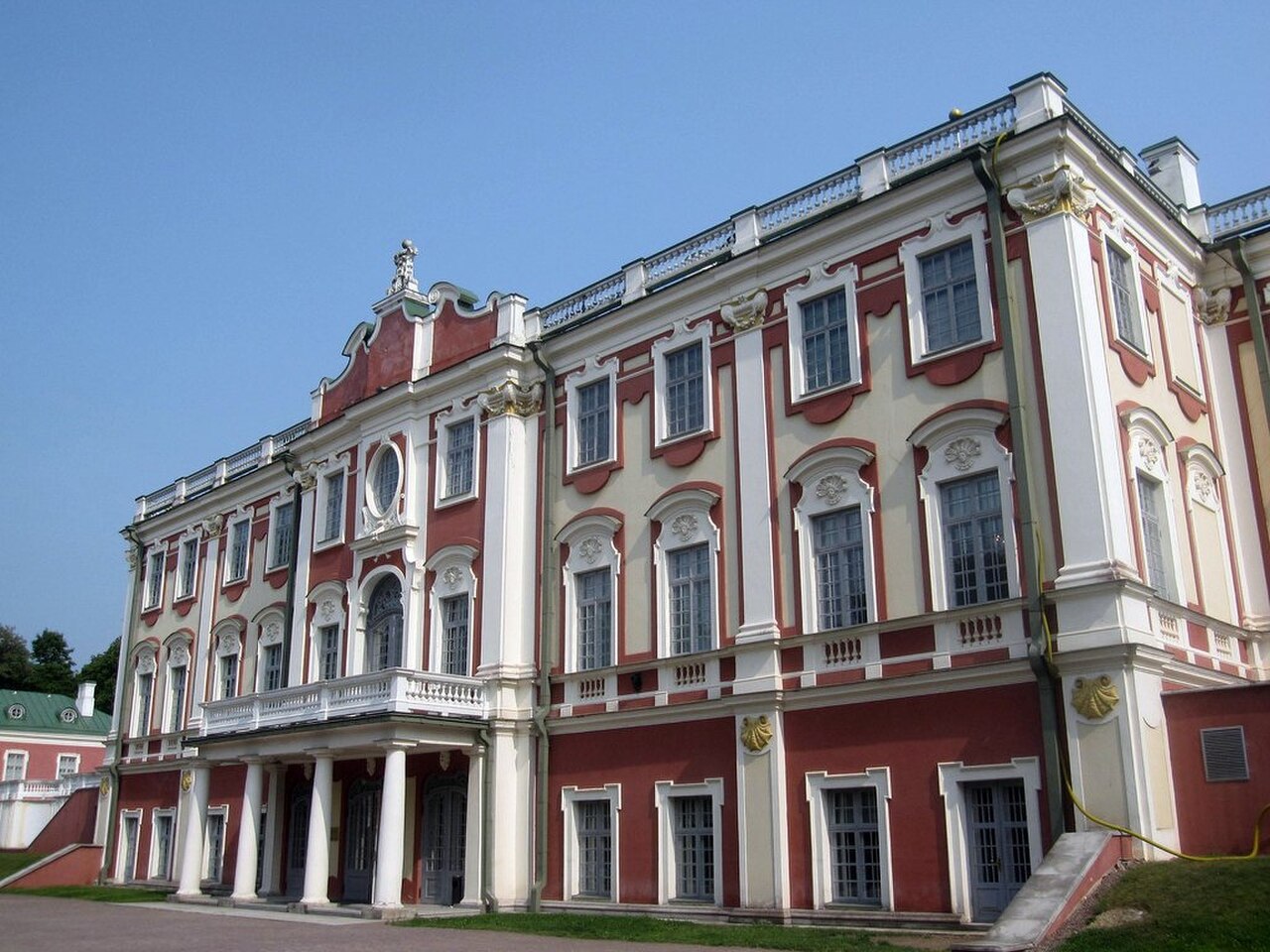
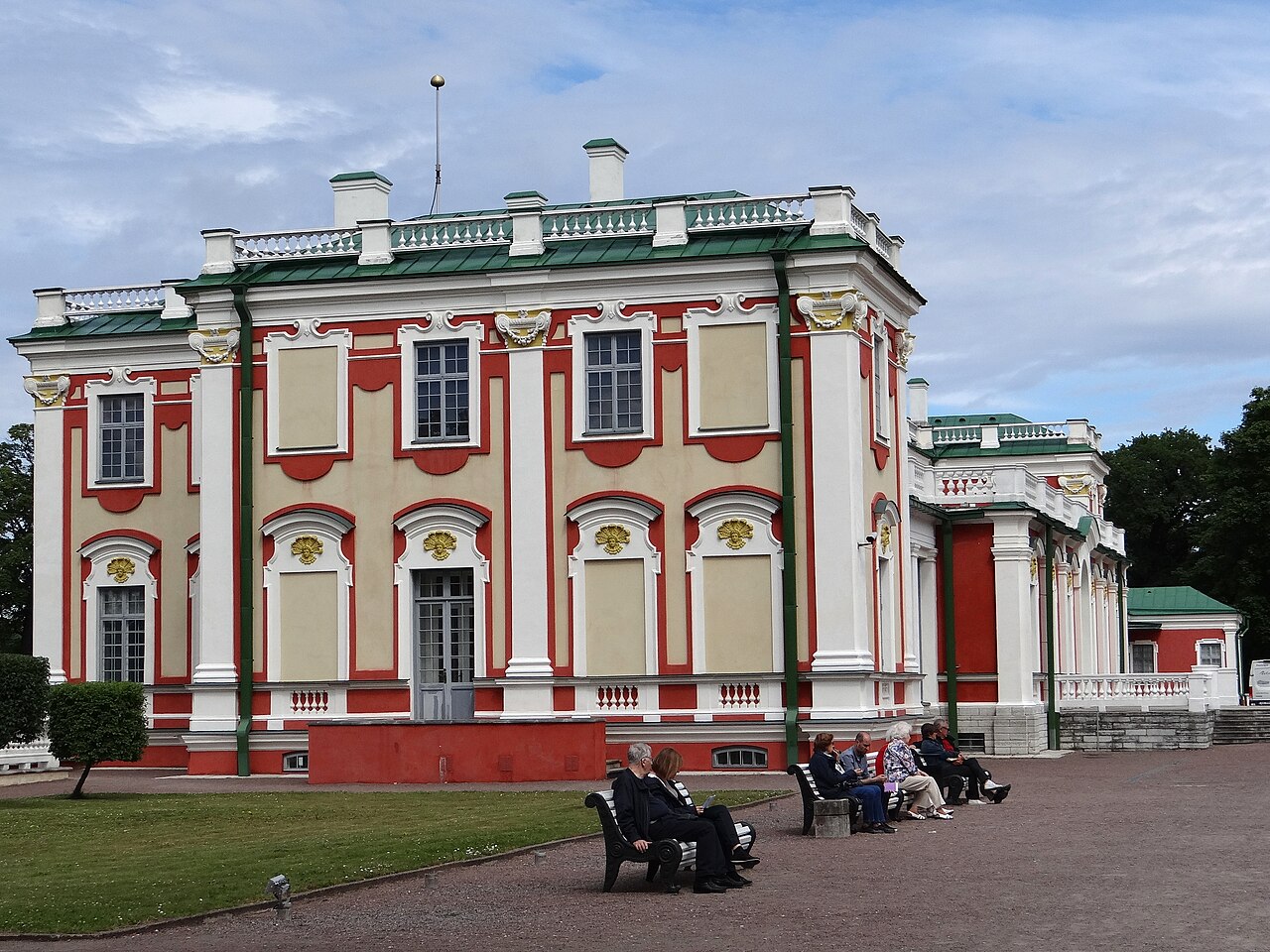
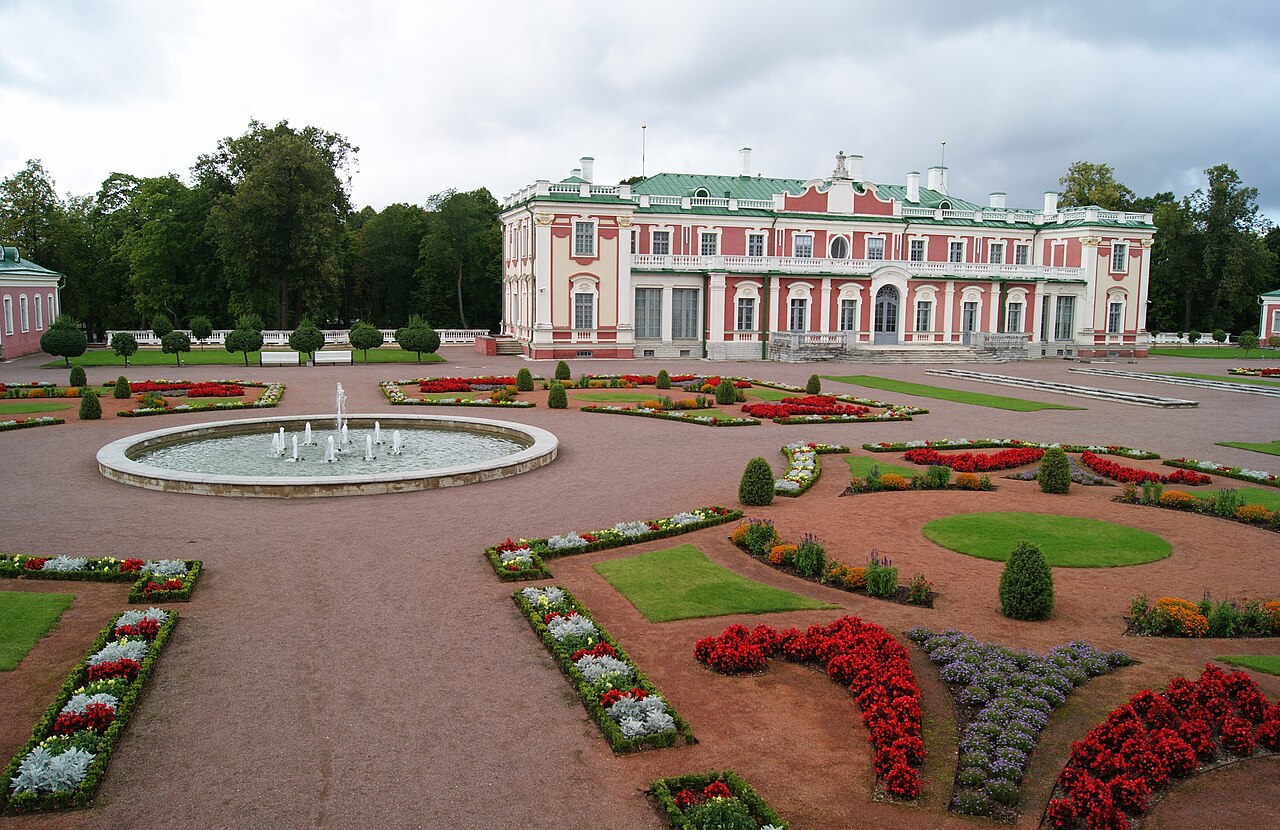
In a leafy district on the eastern edge of Tallinn, a rose-pink Baroque palace glows among formal gardens and old trees. Kadriorg, with its warm walls, white pilasters, and elegant proportions, feels almost transported from Italy to the shores of the Baltic, and in a sense it was. This is one of the most surprising palaces in northern Europe, a jewel of southern splendour set down in the cool light of Estonia.
Kadriorg was built by one of history’s most formidable rulers, Peter the Great of Russia, in the wake of his conquest of these Baltic lands, and it was named in honour of his wife. Conceived as a summer residence and a statement of imperial power in newly won territory, it brought the grandeur of the European Baroque to a corner of the empire that had never seen anything quite like it.
Today the palace is no longer a royal residence but a much-loved art museum, its splendid rooms filled with paintings and its Great Hall counted among the finest Baroque interiors in the region. Around it spreads Kadriorg Park, the grandest palatial park in Estonia and a beloved retreat for the people of Tallinn, while the story of the palace weaves through centuries of the country’s turbulent history.
In this guide you will explore Kadriorg from its origins under Peter the Great, through its Italian-inspired architecture, its magnificent Great Hall, its park and gardens, its many changes of use across the centuries, and its life today as a museum. By the end you will understand why this pink palace holds such a special place in the heart of the Estonian capital.
In This Article
- Peter the Great and the Baltic Conquest
- A Palace Named for an Empress
- The Italian Architect and His Vision
- The Great Hall, a Baroque Jewel
- Northern Baroque in Pink and White
- Kadriorg Park and Its Quiet Waters
- The State Rooms and Their Decoration
- Changing Hands Through the Centuries
- The Palace Reborn as an Art Museum
- A Presidential Neighbour in the Park
- A Symbol Woven into Estonia’s Story
- Planning Your Visit to Kadriorg
- See Kadriorg for Yourself
Peter the Great and the Baltic Conquest
The story of Kadriorg begins with war. In the early eighteenth century Russia and Sweden fought the long and bloody Great Northern War for supremacy in the Baltic region, and by its course the lands of present-day Estonia passed from Swedish into Russian hands. For Peter the Great, the Russian tsar who won these territories, the conquest was a triumph that opened his empire to the sea and to the west.
Peter was determined to leave his mark on his new possessions, and Tallinn, an ancient port on the Baltic, became a place of particular interest to him. The tsar visited the city more than once and took a personal interest in its development, seeing in it a valuable asset for his expanding empire. It was natural that he should wish for a residence of his own in this newly won land.
The site he chose for his palace lay a little outside the medieval city, on gently rising ground with views toward the sea. Here, in the years following the war, Peter set in motion the creation of a grand summer residence and park, a project that would bring the fashionable Baroque architecture of Europe to the Estonian coast and announce the arrival of Russian imperial power in the region.
For Peter, building here was both pleasure and politics. A palace in the latest European style demonstrated the sophistication and reach of his empire, and it staked a permanent claim to the conquered land. Kadriorg was thus from the very beginning a statement as much as a home, a piece of imperial theatre raised on the shore of the tsar’s new Baltic domain.
It is worth appreciating how bold a gesture this was. Tallinn lay at the very frontier of Peter’s new empire, a hard-won prize on the edge of hostile waters, and to raise a palace of European sophistication there so soon after the fighting was a powerful assertion of confidence. The tsar was declaring, in brick and stucco, that these lands were now firmly and permanently part of his realm, and that the culture of the wider continent had arrived with him.
A Palace Named for an Empress
The very name of the palace tells a story of devotion. Kadriorg is the Estonian form of a name meaning Catherine’s valley, and it honours Catherine, the wife of Peter the Great and herself one of the most remarkable figures of the age. The tsar named his new Baltic residence for the woman who would become empress in her own right after his death.
Catherine’s own life was extraordinary. Of humble origins, she rose through fortune and force of character to become the consort of the most powerful ruler in the east, and after Peter’s death she reigned as empress. That the palace should carry her name links it forever to this improbable and dramatic story, giving Kadriorg a romantic dimension beyond its architecture.
Naming the palace for his wife was a gesture typical of the age, when great residences were often dedicated to royal consorts as expressions of affection and honour. It also served to associate the new imperial presence in the Baltic with the warmth of a personal, familial connection, softening the hard fact of conquest with the language of love and devotion.
The name has endured through all the changes the palace has undergone, a constant thread linking the modern museum to its imperial origins. Every visitor who comes to Kadriorg today speaks, perhaps without knowing it, the name of an empress who rose from nothing to the summit of an empire, and whose memory is woven into the very identity of this beautiful place.
The bond between Peter and Catherine was famously close, and the palace stands as one of its lasting monuments. In an age of dynastic marriages arranged for politics, theirs was a genuine partnership, and Peter relied on Catherine’s judgement and companionship through the great struggles of his reign. To give her name to this Baltic jewel was to set that relationship in stone, and the name has outlived the empire that produced it.
The name also carries a gentle irony that visitors may enjoy. A woman who began life in obscurity, far from any court, ended by giving her name to a palace and, in time, to an entire district of a European capital. Few rises in fortune have left so graceful a monument, and the name Kadriorg keeps that unlikely story alive every time it is spoken.
The Italian Architect and His Vision
To design his Baltic palace, Peter the Great turned to Italian talent, engaging an architect trained in the great traditions of Roman Baroque. The choice reflected the tsar’s ambition to bring the finest European design to his empire, and it gave Kadriorg its distinctly southern, Italian character, so unexpected in the northern setting of Estonia.
The architect brought with him the language of the Italian Baroque, with its confident sense of proportion, its love of ornament, and its mastery of grand interior effects. Working far from the sunlit cities where the style had been born, he adapted it to the northern climate and to the tsar’s wishes, creating a palace that fused Italian splendour with its Baltic surroundings.
The design centred on a relatively compact but richly decorated palace, its finest energies concentrated in a magnificent central hall, surrounded by gardens laid out in the formal manner of the age. This concentration of splendour, rather than sprawling size, gave Kadriorg an intimate grandeur, a jewel-box quality that distinguishes it from larger, colder palaces.
The involvement of an Italian master gives Kadriorg a special place in the history of architecture in the region. It represents the direct transplantation of the Roman Baroque to the Baltic, a meeting of south and north that produced something genuinely new. The palace stands as a testament to the reach of European artistic ideas and to the ambition of the ruler who summoned them to his distant shore.
The transplantation of Italian design to the Baltic was not without its challenges. The materials, the climate, and the local building traditions all differed from those of the south, and the architect and his craftsmen had to adapt their methods to the conditions they found. That the palace succeeds so completely as a work of Baroque art, despite these obstacles, is a measure of the skill that went into its making and the determination behind the whole enterprise.
The Great Hall, a Baroque Jewel
If Kadriorg has a single glory, it is the Great Hall, one of the most magnificent Baroque interiors in the whole of northern Europe. Rising through two storeys at the heart of the palace, this splendid room takes the breath away with its soaring proportions, its rich stucco decoration, and its painted ceiling, a concentrated burst of southern magnificence in the Baltic north.
The hall is adorned with elaborate stuccowork of extraordinary delicacy and richness, the white ornament standing out against coloured grounds in a display of the plasterer’s art at its finest. Above, the ceiling is crowned with painted decoration in the grand manner, drawing the eye upward and completing the illusion of a space that opens toward the heavens.
Every element of the hall was designed to impress and to embody the majesty of the empire that built it. The scale, the ornament, and the artistry combine to create an atmosphere of solemn splendour, a room meant for the grandest occasions and calculated to overwhelm visitors with the power and sophistication of its imperial patron.
For visitors today, the Great Hall remains the climax of any tour of Kadriorg. To step into it is to feel the full ambition of Peter the Great’s project, the determination to plant a masterpiece of European art on the shore of his new domain. It is a room that fully deserves its reputation as one of the treasures of Baroque architecture in the region.
Art historians often single out the Great Hall as the most important Baroque interior in Estonia and one of the finest in the entire Baltic region. Its combination of architecture, stucco, and painting into a single unified effect represents the Baroque ideal of the total work of art, in which every element works together to overwhelm the senses. For anyone interested in the decorative arts, the hall alone justifies a visit to the palace.
Northern Baroque in Pink and White
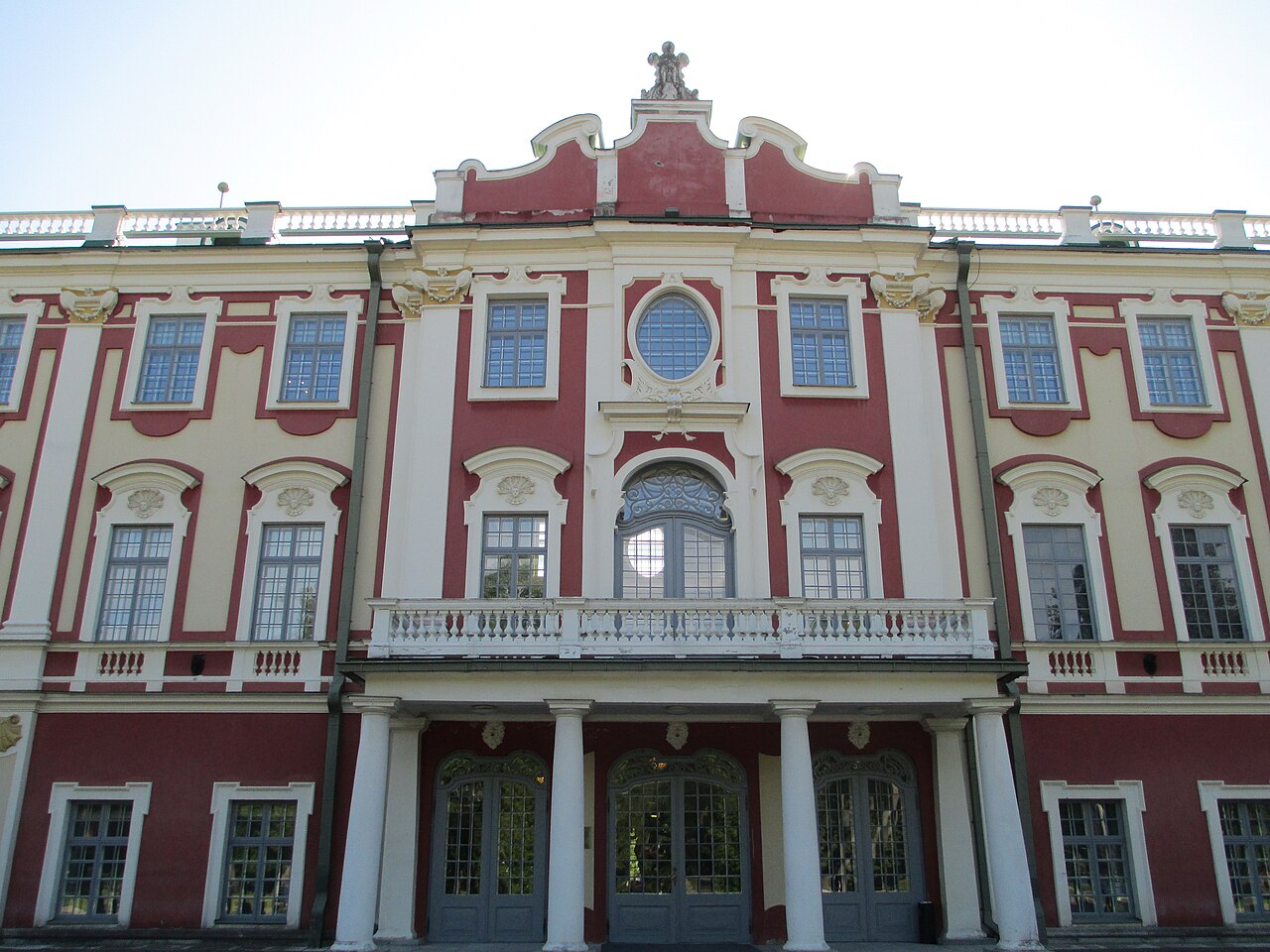
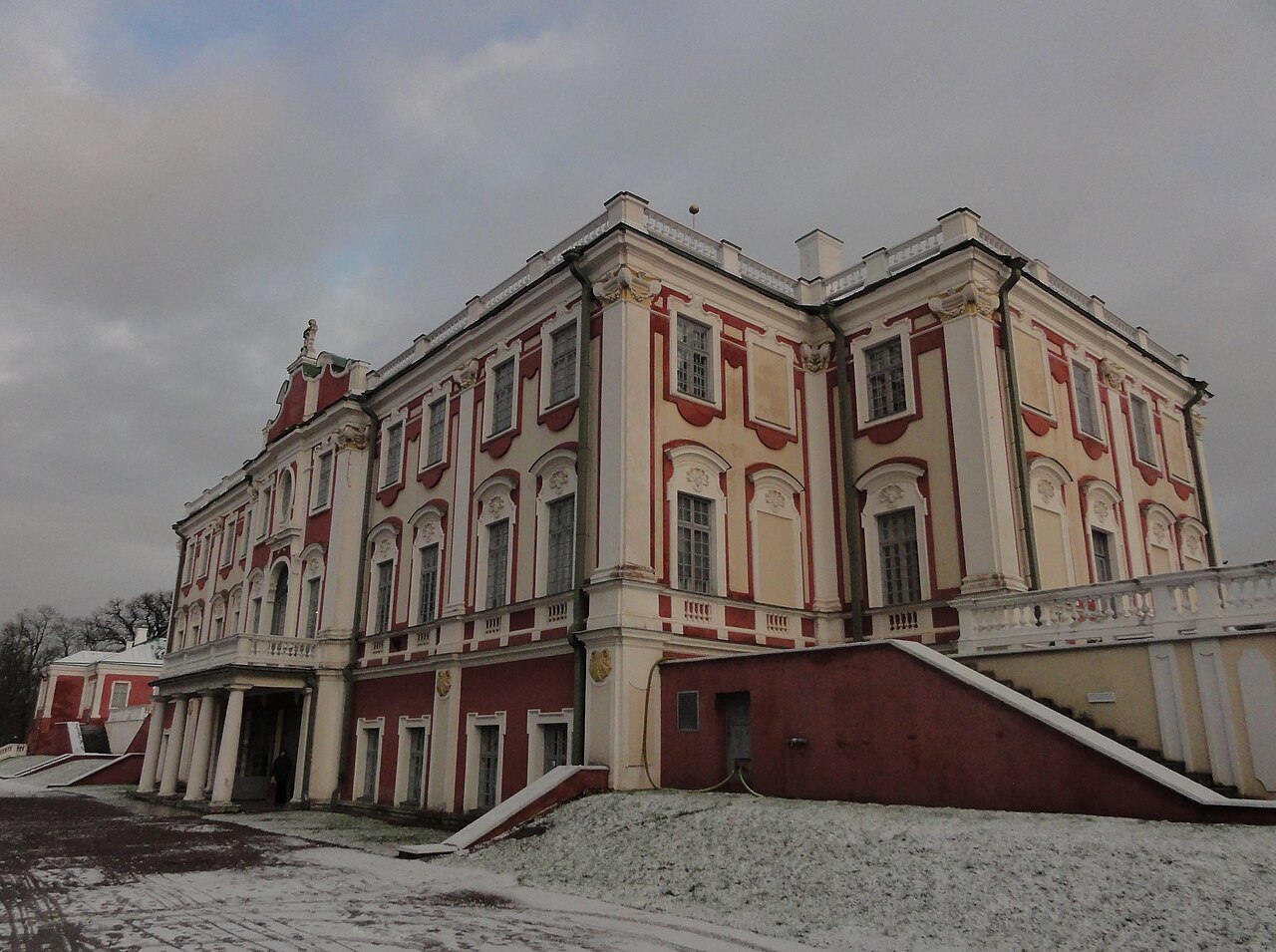
The exterior of Kadriorg is as charming as its interior is grand. The palace is painted in a warm rose-pink, set off by white pilasters, window frames, and ornament, a colour scheme that gives it a cheerful, welcoming character quite different from the severity of many northern buildings. Against the greenery of its park, the pink walls glow invitingly in the changing Baltic light.
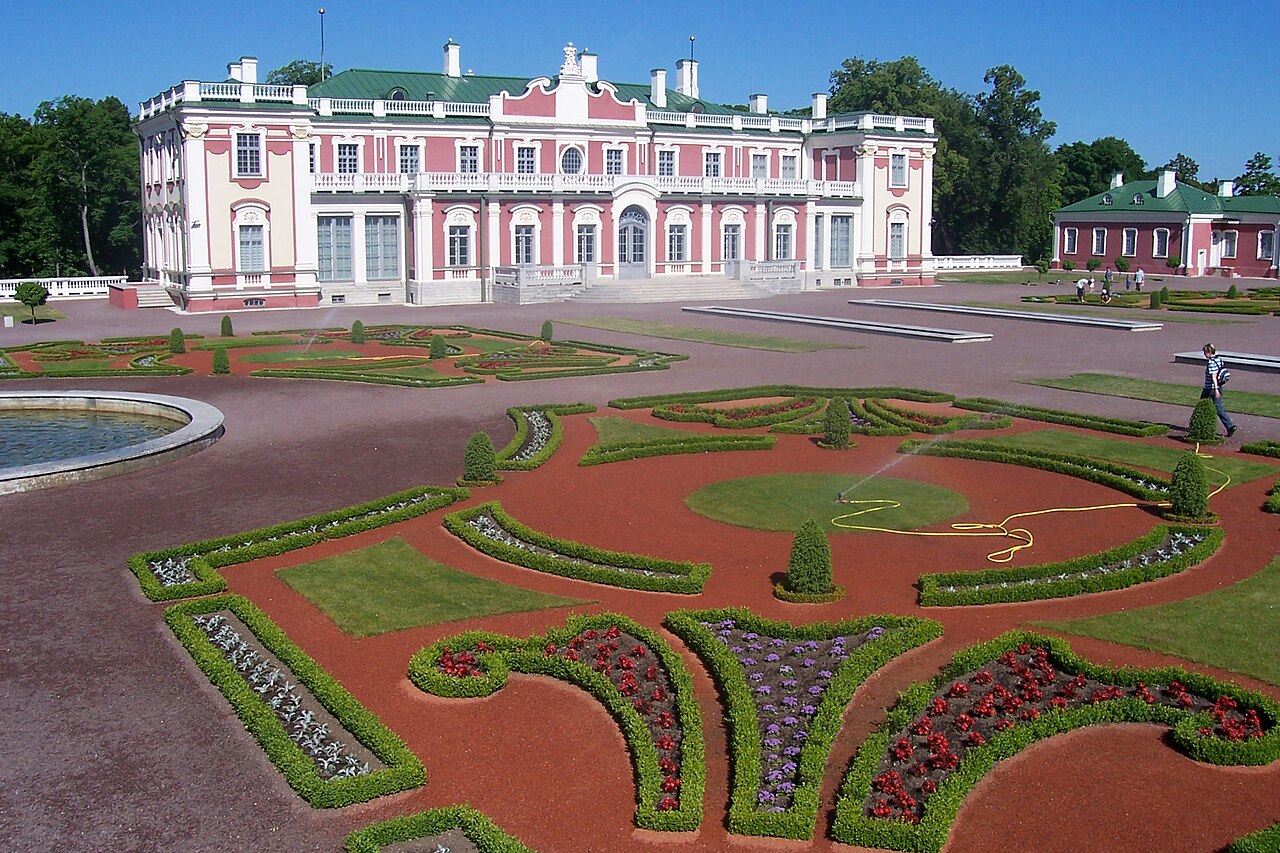
Architecturally, the palace is a fine example of the Baroque as adapted to its northern setting. Its balanced facade, its central emphasis, and its decorative detailing all speak the language of the style, while its relatively modest scale keeps it human and approachable. The building charms rather than overwhelms, drawing visitors in rather than holding them at a distance.
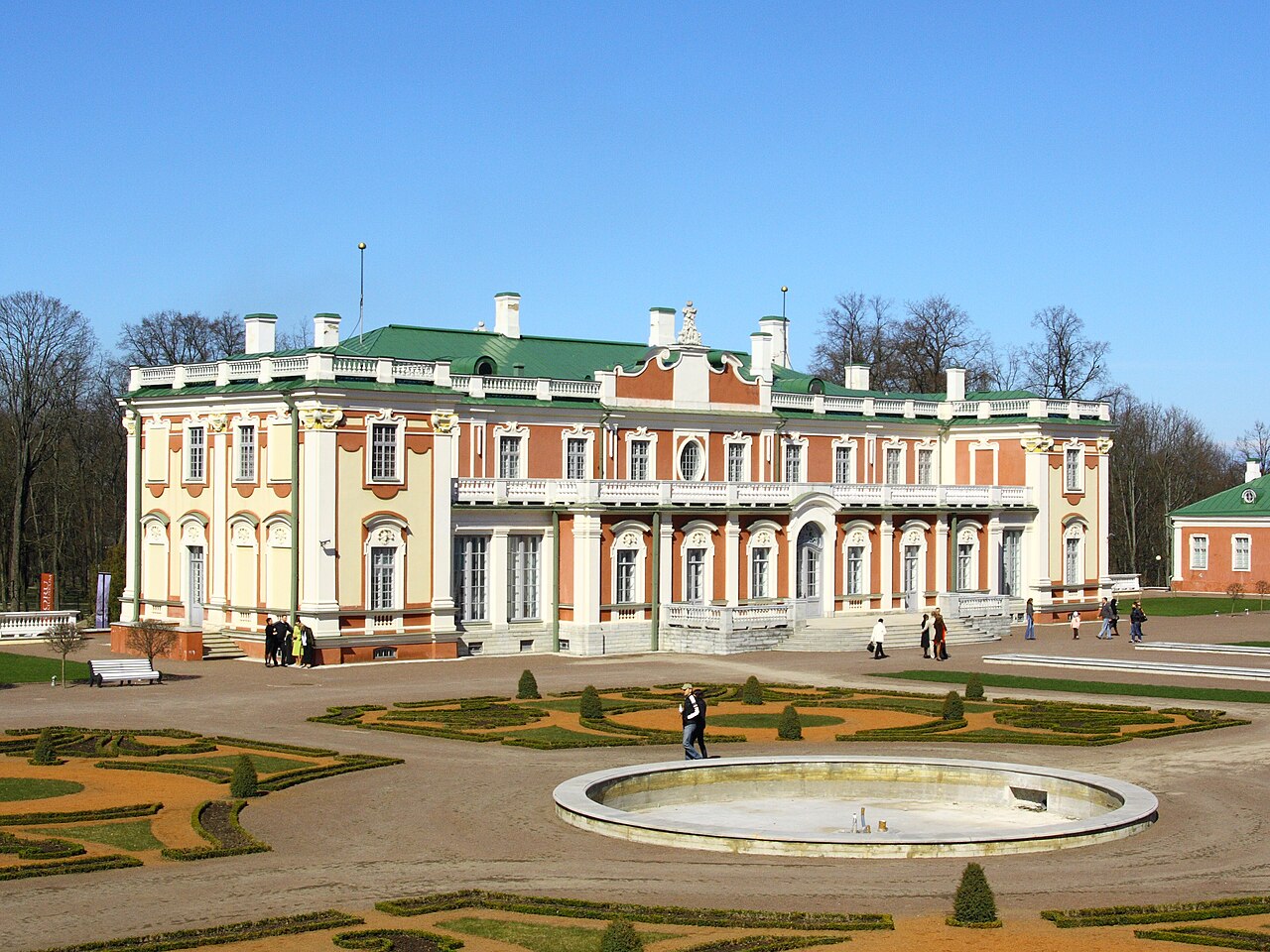
The relationship between the palace and its gardens is central to its effect. Designed together as a single composition, the building and the formal grounds around it form a harmonious whole, with axial paths, parterres, and water features extending the order and elegance of the architecture out into the landscape. The palace sits at the heart of its designed world like a jewel in its setting.
This combination of Italian splendour and northern charm gives Kadriorg its unique appeal. It is grand without being forbidding, elegant without being cold, a palace that seems to smile at its visitors. In this it perfectly suits its modern role as a public museum and a place of enjoyment, welcoming all who come to admire its beauty and its history.
The pink-and-white palette repays a moment’s thought, for colour was an essential part of the Baroque vocabulary. Warm, bright exteriors were meant to convey vitality and welcome, and at Kadriorg the rose tone lends the building a distinctly cheerful, almost domestic warmth that tempers its imperial grandeur. Under the soft northern sky the colour reads differently through the day and the seasons, so the palace never looks quite the same twice.
Kadriorg Park and Its Quiet Waters
Spreading around the palace is Kadriorg Park, the largest and grandest palatial park in Estonia and one of the most cherished green spaces in the country. Laid out as part of the original palace project and developed over the following centuries, the park combines formal Baroque gardens near the palace with more informal, naturalistic landscapes beyond, offering a rich variety of scenery.
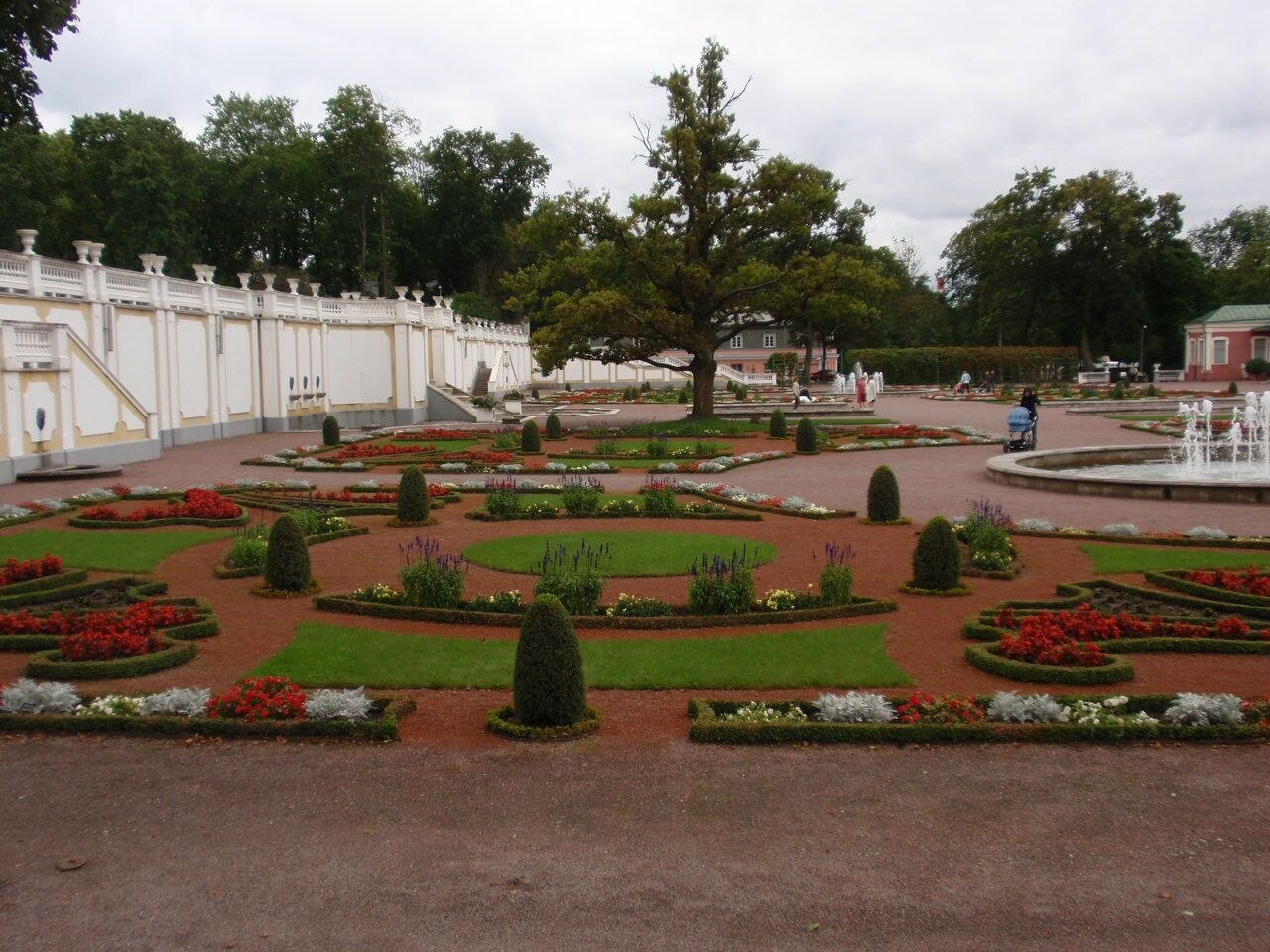
Near the palace, the gardens preserve the formal geometry of the eighteenth century, with symmetrical layouts, clipped plantings, and ornamental features that complement the architecture. Water plays an important role, with ponds and pools reflecting the sky and the surrounding trees, adding a sense of calm and beauty to the designed landscape.
Beyond the formal gardens, the park opens into wider grounds of lawns, woodland, and winding paths, a place for walking, relaxing, and escaping the bustle of the city. Over the years the park has become a beloved retreat for the people of Tallinn, who come to stroll among the trees, enjoy the flowers, and take in the atmosphere of this historic landscape.
The park is also home to other cultural institutions and monuments, making it a destination in its own right as well as a setting for the palace. Together the palace and its park form one of the great cultural landscapes of Estonia, a place where history, art, and nature meet, and where the grandeur of the imperial past has become a shared pleasure for all.
The park has evolved continually since Peter’s day, absorbing the changing tastes of successive eras while never losing its essential appeal. Formal beds give way to romantic groves, and modern additions sit alongside historic features, so that a walk through Kadriorg is also a walk through the history of garden design. This layering gives the grounds a depth and variety that keep them endlessly interesting to explore.
The State Rooms and Their Decoration
Beyond the Great Hall, Kadriorg contains a sequence of elegant rooms that once served the needs of imperial residence and now display works of art. These interiors, decorated in the styles of the eighteenth century and enriched over time, provide a fitting setting for the collections they hold and give a sense of the refined life the palace was built to host.
The rooms vary in scale and character, from grander spaces to more intimate chambers, and their decoration reflects the taste of the age of their creation. Fine plasterwork, painted decoration, parquet floors, and period detailing combine to create an atmosphere of dignified elegance, a backdrop against which the paintings and objects of the museum are displayed to advantage.
Careful restoration over the years has recovered much of the original beauty of these interiors, which had suffered during the palace’s long and varied history. The work of conservators has allowed the rooms to be enjoyed once more in something close to their intended splendour, and to serve their modern purpose as galleries within a historic setting.
Moving through these rooms, visitors experience the palace as both a work of art and a container of art, the architecture and the collections enhancing one another. The elegant proportions and decoration of the interiors frame the paintings on the walls, while the works of art bring life and colour to the historic spaces. It is a happy marriage of building and collection.
The restoration of the interiors has been a painstaking process of research as much as craft, with conservators studying old records and surviving fragments to recover lost decorative schemes. The results allow modern visitors to experience the rooms much as their first occupants did, and they stand as an example of the care that a small nation has been willing to devote to preserving a treasure of its cultural heritage.
Changing Hands Through the Centuries
Over the three centuries since its founding, Kadriorg has passed through many hands and served many purposes, reflecting the turbulent history of Estonia and the wider region. What began as an imperial summer residence would, in the course of its long life, be used, neglected, restored, and repurposed many times over as regimes and borders changed around it.
For long periods the palace served as a residence or was maintained as an imperial property, its fortunes rising and falling with the attention of its distant owners. At times it was well cared for; at others it suffered from neglect, its grand rooms falling into disrepair as the priorities of rulers shifted and the palace slipped from favour.
The dramatic events of the twentieth century, including the emergence of an independent Estonia, foreign occupations, and shifting political systems, all left their mark on Kadriorg. The palace was adapted to new uses under successive regimes, and it witnessed at close hand the upheavals that shaped the modern history of the country.
Through all these changes, the palace survived, its essential beauty enduring beneath the alterations and adaptations of the years. That it has come down to us in such fine condition is a tribute to the efforts of those who valued and restored it, and the layered history embedded in its walls is part of what makes Kadriorg so rich and rewarding to explore today.
Each era that used the palace left traces that a careful visitor can still detect, from imperial refurbishments to the practical adaptations of later, humbler uses. Rather than erasing this history, modern conservation has sought to honour it, presenting the palace as a layered document of the past. The building thus tells not one story but many, overlapping across three centuries of dramatic change in this corner of Europe.
The Palace Reborn as an Art Museum
In its modern incarnation, Kadriorg has found a fitting new purpose as an art museum, its splendid rooms given over to the display of art. The palace now houses a major collection of foreign art, bringing together works from across the centuries and from many countries, and making the building a centre of culture and learning as well as a monument of history.
The decision to make the palace a museum reunited it with its original spirit as a place of beauty and refinement. Where once emperors and their courts admired the splendour of the interiors, now visitors come to admire both the rooms and the paintings they contain, and the palace serves the public as a treasury of art open to all.
The collections span a rich range of European art, offering visitors the chance to encounter masterpieces in a setting of great beauty. The combination of the historic palace and its art holdings makes Kadriorg a destination for lovers of both architecture and painting, and a jewel among the museums of the Estonian capital.
As a museum, Kadriorg also plays an active role in the cultural life of Tallinn, hosting exhibitions, events, and educational programmes that bring the palace alive for new generations. In this way the building continues to fulfil a public purpose, its imperial grandeur now placed in the service of art, learning, and the enjoyment of all who visit.
The museum’s focus on foreign art gives it a distinctive place among Estonia’s cultural institutions, complementing the collections of native art housed elsewhere in the park. Visitors can encounter works from across Europe within the historic rooms, gaining a sense of the wider artistic world of which the palace itself was always a part. It is a fitting role for a building born of international ambition.
A Presidential Neighbour in the Park
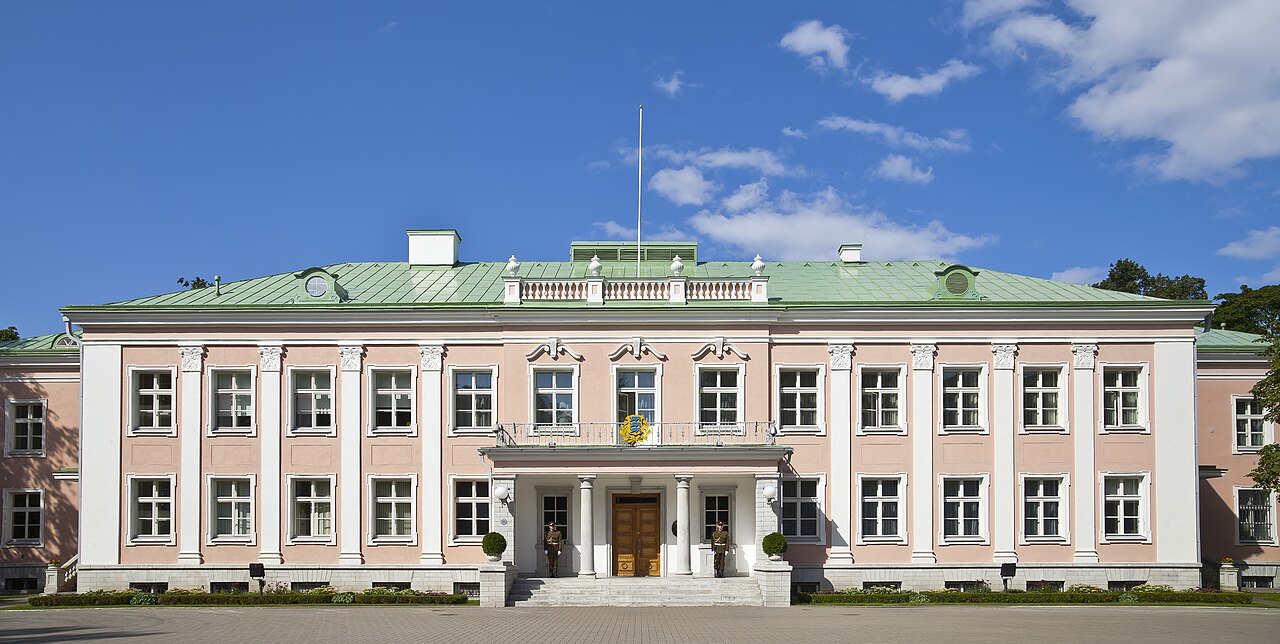
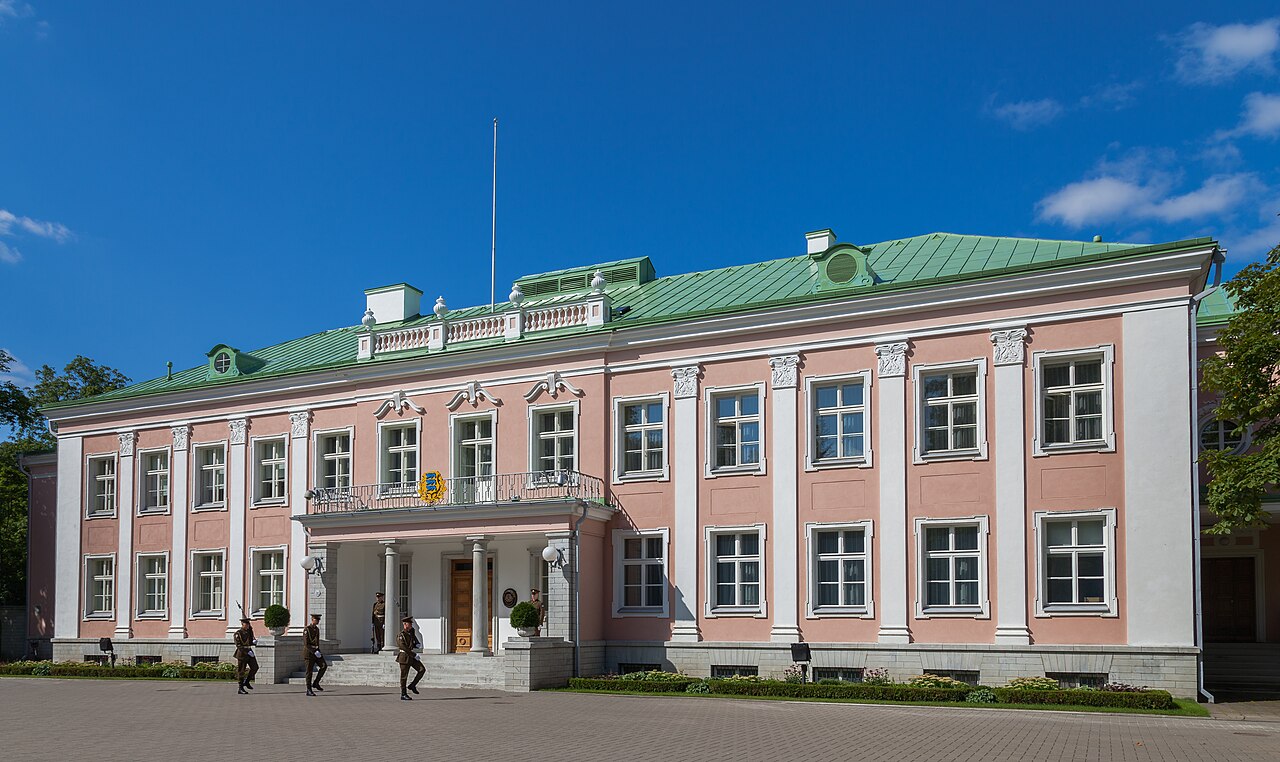
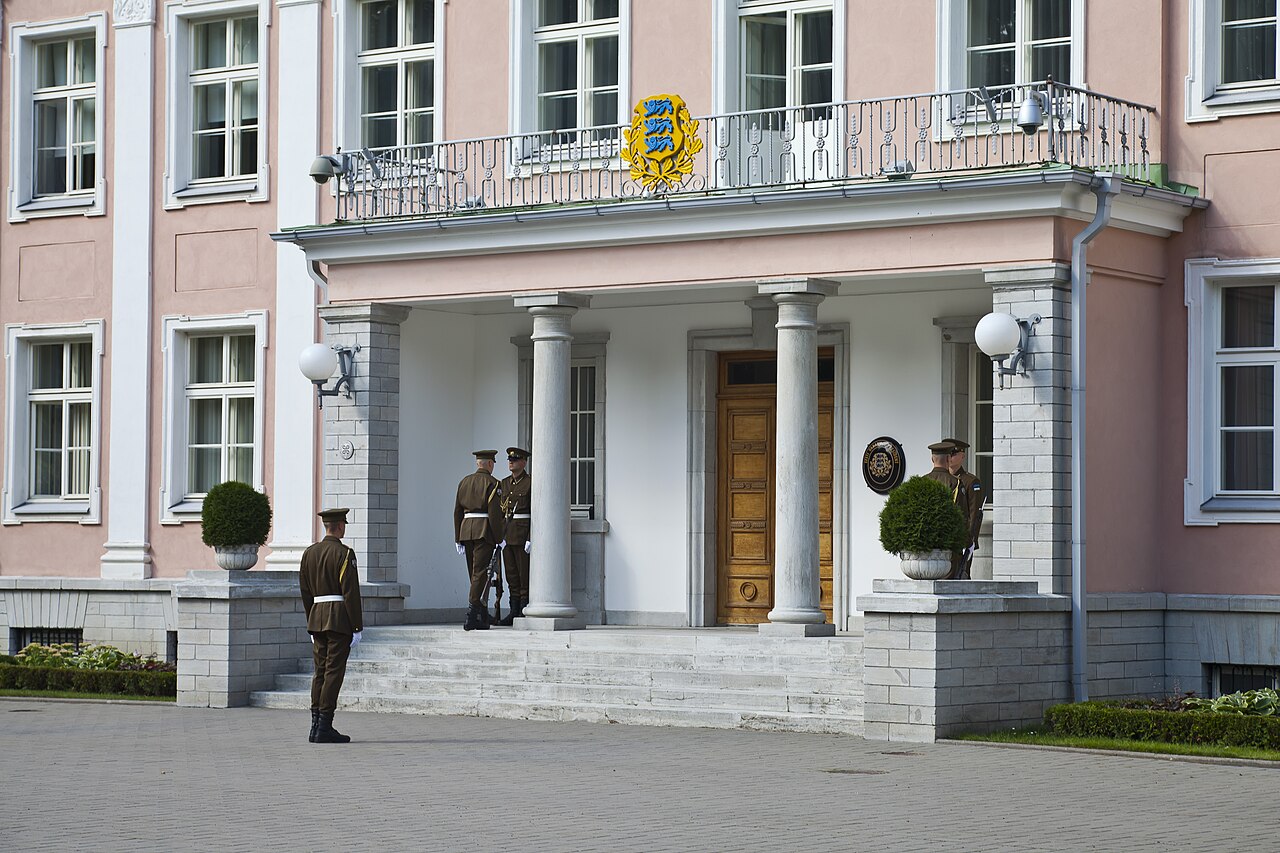
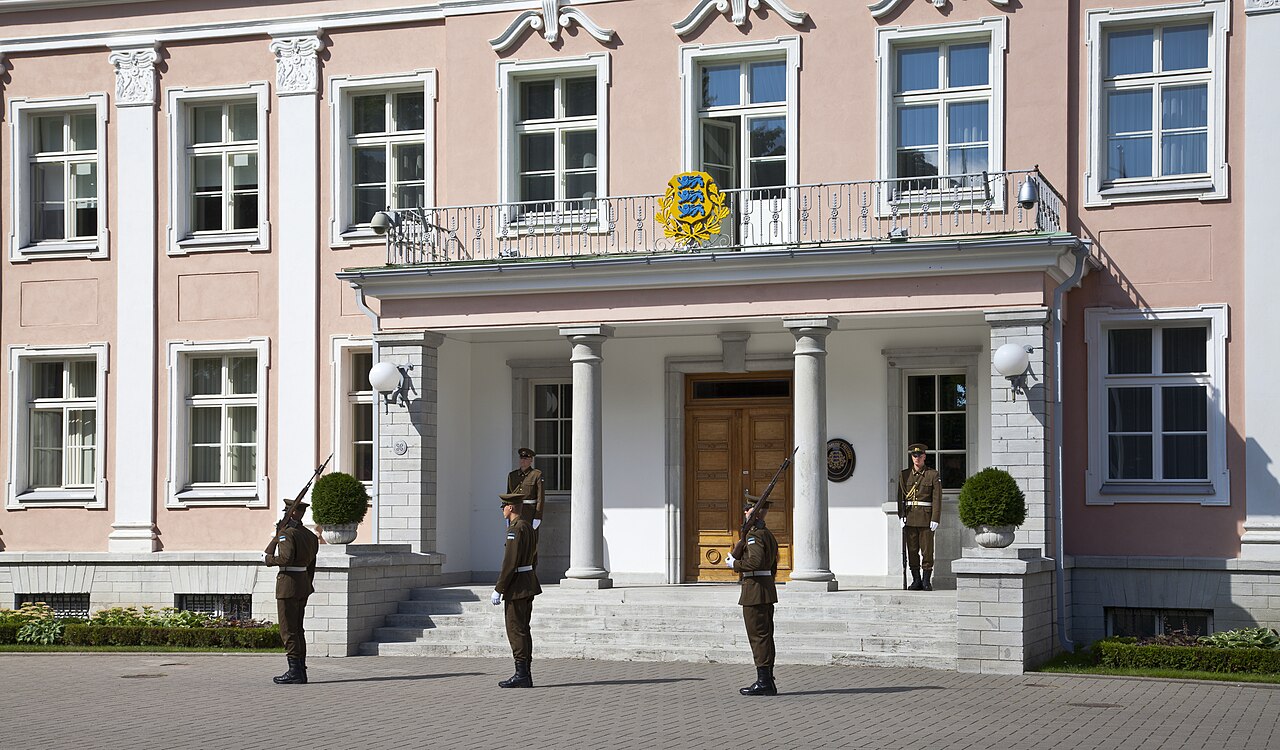
Kadriorg is not only a palace and a park but also, in a sense, the political heart of modern Estonia, for close by stands the official residence of the country’s president. This proximity links the historic imperial palace to the living institutions of the independent Estonian state, giving the whole district a special significance.
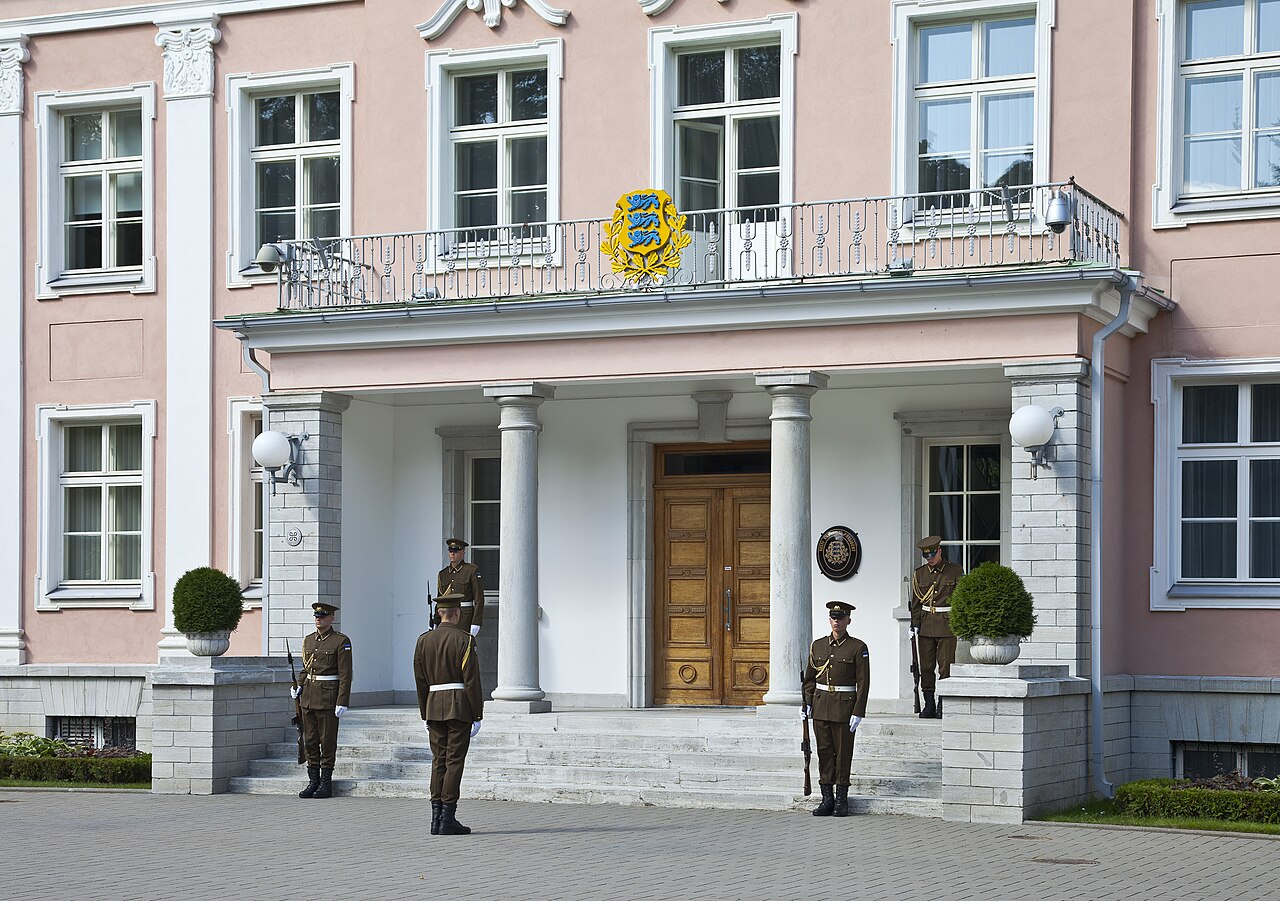
The presidential residence, built in the twentieth century, was placed near the historic palace deliberately, associating the new republic with the grandeur and history of the site. The choice reflected a desire to root the young state’s institutions in a place of established dignity and beauty, and to claim the imperial heritage of Kadriorg for the nation.
This coexistence of the old palace and the modern seat of the presidency gives the area a unique character. Visitors strolling through the park may glimpse both the rose-pink Baroque palace of Peter the Great and the residence of the head of state, a juxtaposition that captures the long arc of Estonian history from imperial rule to independence.
The presence of the presidency also keeps the district at the centre of national life. State ceremonies and official occasions bring the area into the news, and the setting of the presidential residence amid the historic park lends dignity to the affairs of state. In this way Kadriorg remains a living political landscape as well as a place of history and art.
The pairing of imperial palace and republican presidency also carries a quiet symbolism about the passage of power. Where an emperor once claimed this ground for a distant throne, an elected head of state now governs from beside it on behalf of a free people. Few places capture the long transformation of European politics so neatly within the span of a single park.
A Symbol Woven into Estonia’s Story
For Estonians, Kadriorg is far more than a beautiful old building; it is a place woven deeply into the national story. Its history mirrors that of the country itself, from foreign imperial rule through the struggles for independence to the flourishing of a modern nation, and the palace has been a witness to and a participant in all these chapters.
The very fact that the palace was built by a conquering emperor gives it a complex meaning in Estonian memory. It is at once a monument of foreign domination and a treasured part of the national heritage, a beautiful legacy of a difficult history. Estonians have embraced Kadriorg as their own, transforming an emblem of empire into a source of pride and pleasure.
The park and palace have also become settings for the everyday life and cultural traditions of the capital. Generations of Estonians have walked in the park, visited the museum, and gathered in the district for celebrations and quiet recreation alike, weaving the place into the fabric of ordinary life and personal memory.
In this way Kadriorg embodies the resilience and adaptability of Estonia itself. A palace born of conquest has become a cherished national treasure, its imperial grandeur repurposed to serve the culture and enjoyment of a free people. Its story is, in miniature, the story of a nation that has turned a difficult past into a proud and independent present.
That a people should take such pride in a palace built by a conqueror says something generous about how nations can make peace with their history. Rather than rejecting Kadriorg as a symbol of domination, Estonians have chosen to see it as part of their own inheritance, a beautiful thing that belongs now to them. In that act of reclaiming lies a quiet confidence, the assurance of a nation secure enough in itself to embrace the whole of its complicated past.
Planning Your Visit to Kadriorg
Kadriorg lies a short distance from the centre of Tallinn and is easily reached on foot, by tram, or by other public transport, making it a natural addition to any visit to the Estonian capital. The palace and its park can be enjoyed together, and a visit can range from a quick look at the exterior and gardens to a leisurely half-day exploring the museum and grounds.
View Kadriorg Palace on Google Maps
Inside, the palace welcomes visitors as an art museum, with the Great Hall and the state rooms among the highlights alongside the collections they contain. Touring the interiors offers both the pleasure of the art and the experience of the historic spaces, and the Great Hall in particular should not be missed. The surrounding park invites a relaxed stroll before or after.
As with any museum, it is wise to check current opening hours and ticket arrangements before you go, since these can vary with the season and with special exhibitions. The park is open more freely and can be enjoyed at almost any time, offering a beautiful setting in every season, from the blooms of spring and summer to the crisp light of autumn and winter.
You can find the palace and plan your route using the map link below. Whether you come for the Baroque architecture, the art collections, the beauty of the park, or the layers of history embedded in the site, Kadriorg offers one of the most rewarding experiences in Tallinn. Give yourself time to enjoy both the splendour within and the greenery without.
Visitors often find that the district rewards a whole day rather than a hurried hour. Beyond the palace and its immediate gardens lie other museums, monuments, and quiet corners waiting to be discovered, and the walk between them through the park is itself a pleasure. Coming with time to spare allows Kadriorg to reveal its many layers, from grand interiors to hidden garden paths, at an unhurried and rewarding pace.
See Kadriorg for Yourself
A palace as elegant as Kadriorg, set in so beautiful a park, is best appreciated in motion, and the short film below offers a closer look at the building, its Great Hall, and its gardens. It conveys the warm charm of the pink facade, the splendour of the interiors, and the peaceful beauty of the surrounding landscape.
As you watch, keep in mind the remarkable story behind it: a conquering emperor, a palace named for his empress, an Italian architect summoned to the Baltic shore, and centuries of change that have turned an imperial residence into a beloved museum. Kadriorg is a place where southern splendour meets northern light, and where the history of Estonia is written in stone, stucco, and paint.
Palaces Nearby
If Kadriorg has drawn you into the royal and imperial heritage of the Baltic, two more palaces in the region make natural companions, each with its own character.
- Rundale, the Baroque Palace on the Latvian Plain — Rastrelli’s Versailles of the Baltic, a Latvian masterpiece rescued from ruin.
- The Vanished Palace of Lithuania’s Grand Dukes, Rebuilt in Vilnius — the reconstructed Renaissance seat of the grand dukes at the heart of Vilnius.
You May Like
The Bardo, a Palace of the Beys Filled With Roman Mosaics


One thought on “Kadriorg, the Pink Palace Peter the Great Built by the Baltic”