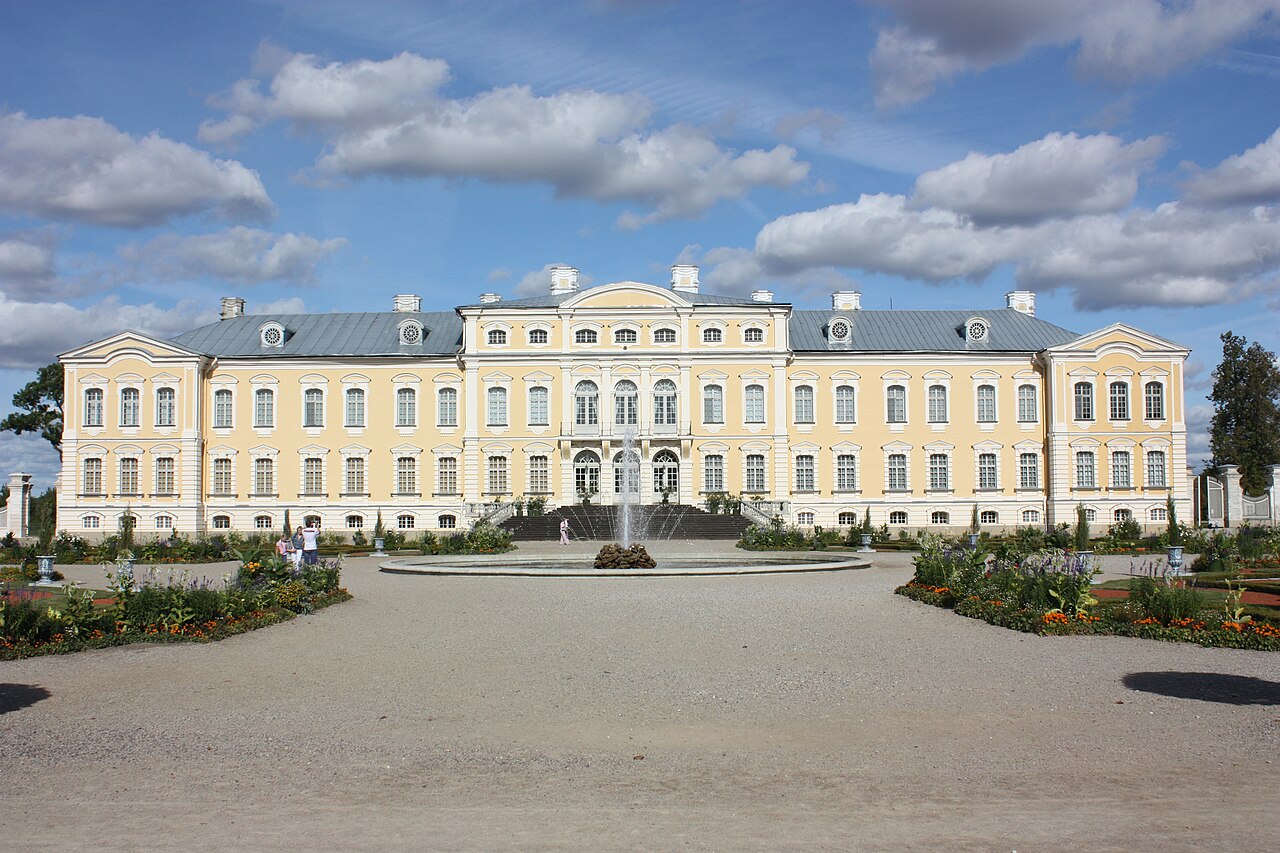
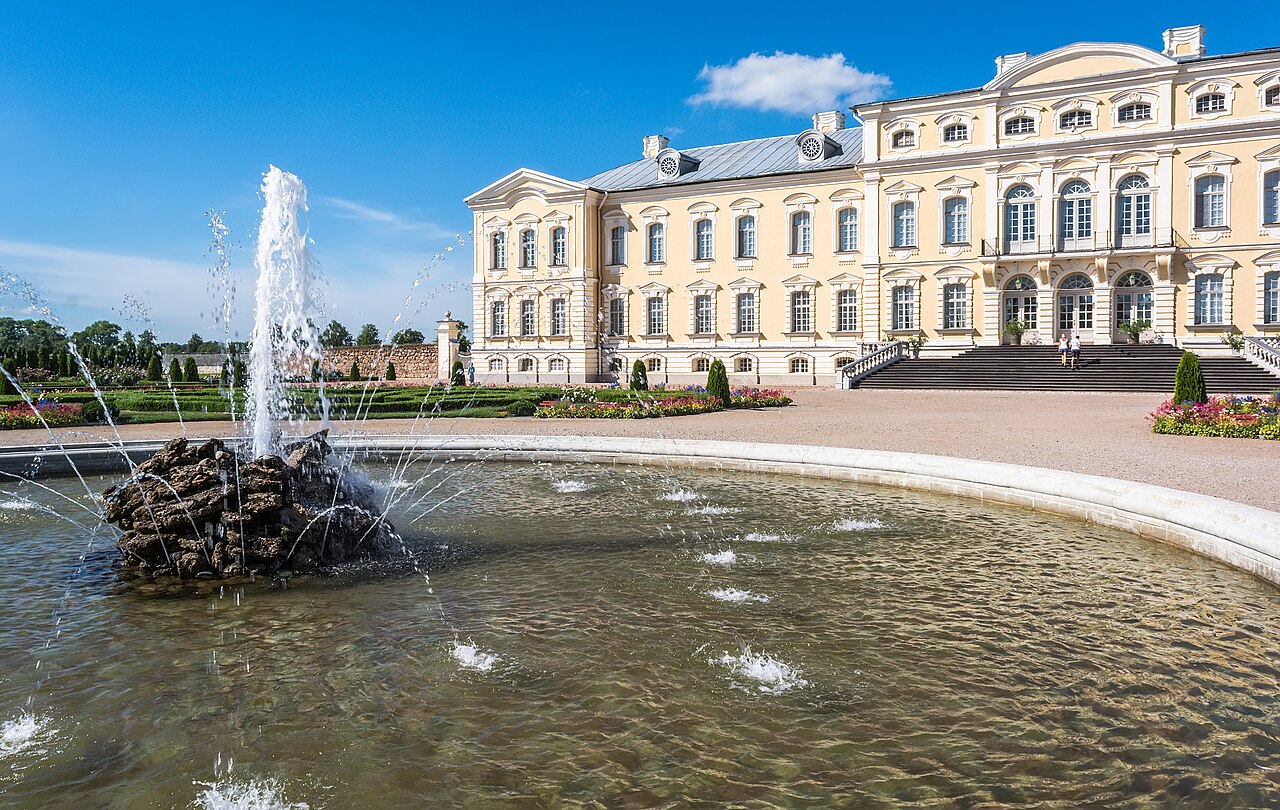
Rising out of the flat farmland of southern Latvia, where you might expect nothing grander than barns and church spires, stands one of the most magnificent Baroque palaces in northern Europe. Rundale appears almost like a mirage, a long, stately facade of ochre and white with a sweep of formal gardens before it, a vision of courtly splendour set down amid the fields of the Zemgale plain. It has earned its nickname as the Versailles of the Baltic.
The palace was built in the eighteenth century as the summer residence of a duke, and it was designed by one of the greatest architects of the age, the same master who created the imperial palaces of Russia. Its interiors, from the gilded throne hall to the elegant private apartments, count among the finest Baroque and Rococo rooms in the whole region, and its gardens are a masterpiece of formal design.
Yet Rundale’s history has been anything but serene. The fortunes of the palace rose and fell with those of its founder and of the lands around it, and for long stretches the building suffered neglect and decay. Its survival and magnificent restoration are a story in themselves, one of the great achievements of cultural preservation in the Baltic, carried out with extraordinary dedication over many decades.
In this guide you will explore Rundale from its origins under the duke who built it, through its celebrated architect and its splendid halls, its French garden, its long years of decline, and its remarkable restoration to the glory you can see today. By the end you will understand why this palace on the plain is regarded as a jewel of Latvian heritage and a treasure of European art.
In This Article
- A Palace for the Duke of Courland
- Ernst Johann von Biron, the Favourite
- Rastrelli, Architect to the Empress
- Two Phases and a Duke’s Downfall
- The Golden Hall and the Throne
- The White Hall and the Grand Gallery
- Rococo Splendour in the Duke’s Rooms
- The French Garden and Its Roses
- Neglect Across Turbulent Centuries
- The Long Work of Restoration
- The Palace Museum Today
- Planning Your Visit to Rundale
- See Rundale for Yourself
A Palace for the Duke of Courland
Rundale was built to serve as the summer residence of the Duke of Courland, the ruler of a small but prosperous duchy that occupied part of present-day Latvia in the eighteenth century. Courland lay at a crossroads of powers, nominally a vassal state yet with a court that aspired to the sophistication and splendour of the great European monarchies, and its duke wished for a palace to match those ambitions.
The choice to build so grand a residence in the countryside reflected the fashion of the age, when European rulers created lavish summer palaces set amid gardens and parkland, away from the crowded capitals. Rundale was to be such a retreat, a place of pleasure and display where the duke could hold court in surroundings of the utmost elegance, surrounded by the beauty of art and nature.
The site chosen lay on the fertile plain of Zemgale, where there was ample room for a great palace and its formal gardens. The flat, open landscape, so different from the dramatic settings of many palaces, would allow the building and its grounds to be laid out in perfect symmetry, an ordered vision of courtly life imposed upon the rural countryside.
From the beginning, then, Rundale was conceived as a statement of ducal grandeur, a bid to place the small duchy of Courland among the cultured courts of Europe. The palace that rose on the plain would embody these aspirations in stone, stucco, and gold, a monument to a duke who wished his modest realm to shine with the brilliance of the great powers of the age.
Courland occupies a curious place in European history, a small duchy that punched above its weight in ambition and even, for a brief period, ventured overseas colonial enterprises. This outsized aspiration helps explain Rundale, for the duchy’s rulers were determined to be taken seriously among their grander neighbours. A palace of imperial quality was one way to assert that a small state could still command the attention and respect of the wider world.
Ernst Johann von Biron, the Favourite
The duke who built Rundale was Ernst Johann von Biron, one of the most remarkable and controversial figures of his time. Of relatively modest noble origins, Biron rose to extraordinary heights through his position as the favourite of Anna, the Russian empress, whose trust and affection he enjoyed. Through her patronage he was raised to the dukedom of Courland and to immense wealth and power.
Biron’s career is a striking example of how far personal favour could carry a person in the courts of eighteenth-century Europe. As the empress’s closest confidant, he wielded enormous influence in Russia itself, and his name became associated with an entire period of Russian history. The resources of an empire lay, for a time, within his reach, and he used them in part to build his magnificent palaces.
It was this access to imperial favour and wealth that made a palace like Rundale possible. Biron could summon the finest architect in the empire and command the resources needed to realise a residence of the highest splendour, far beyond what the revenues of a small duchy alone could have provided. Rundale is, in this sense, a product of the extraordinary system of court favouritism that shaped the age.
Yet Biron’s fortunes were as precarious as they were dazzling. His power depended entirely on the favour of the empress, and when that protection was removed, his position collapsed. The dramatic reversals of his life would leave their mark on Rundale itself, whose construction was interrupted by his fall from grace, tying the fate of the palace closely to the turbulent career of the man who built it.
Biron remains a figure who provokes strong opinions, remembered by some as a symbol of foreign influence and court intrigue and by others simply as an ambitious man who rose and fell with the fortunes of his patron. Whatever the verdict on his career, there is no doubt about his taste, for in commissioning Rundale he left behind a work of art that has long outlived the controversies of his political life.
Rastrelli, Architect to the Empress
To design his palace, Biron secured the services of Bartolomeo Rastrelli, the greatest architect working in the Russian Empire and one of the supreme masters of the Baroque. Rastrelli was the genius behind the most famous imperial palaces of Russia, and his involvement placed Rundale in the very first rank of European architecture, an astonishing coup for a duke of a small Baltic state.
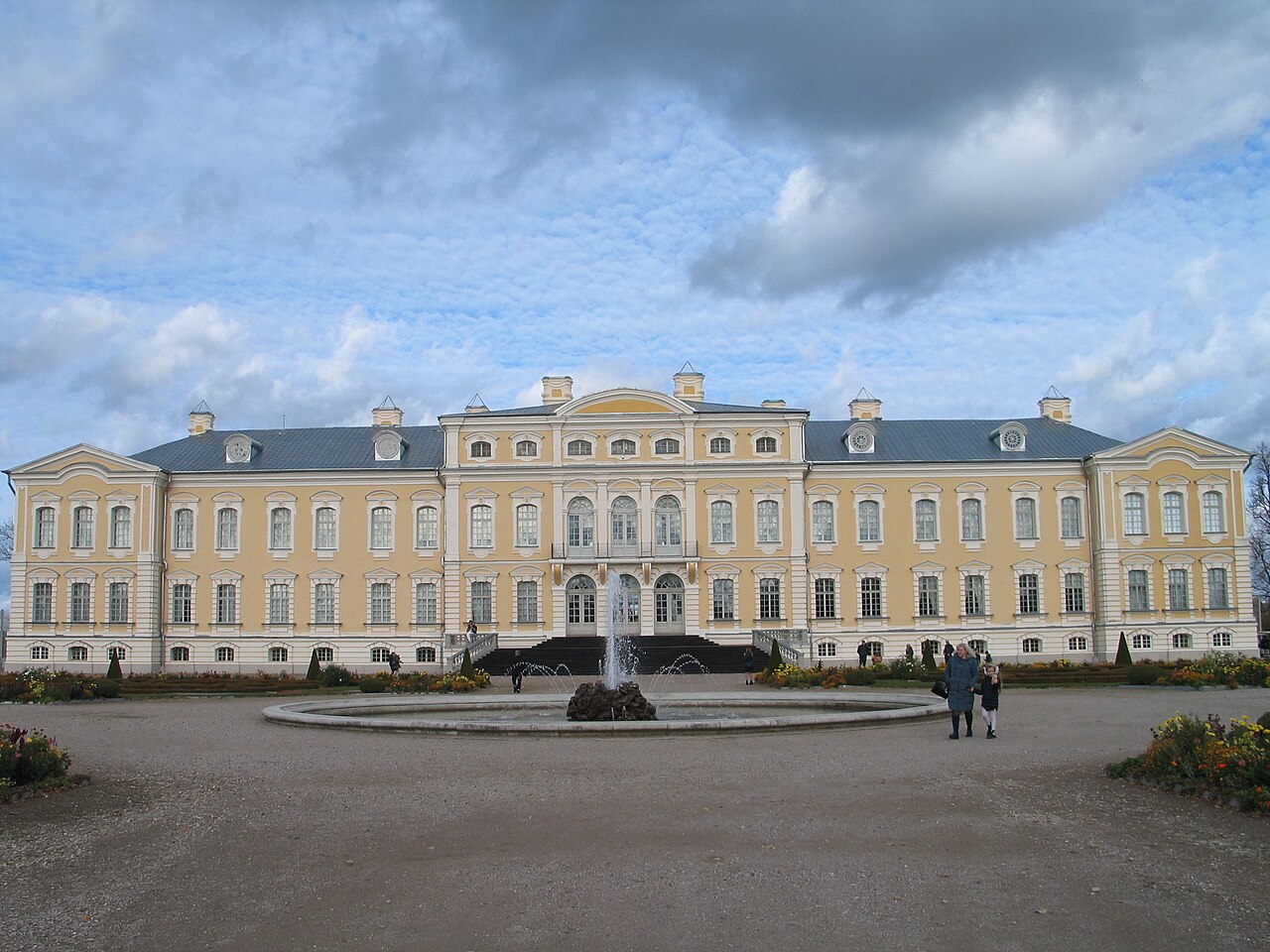
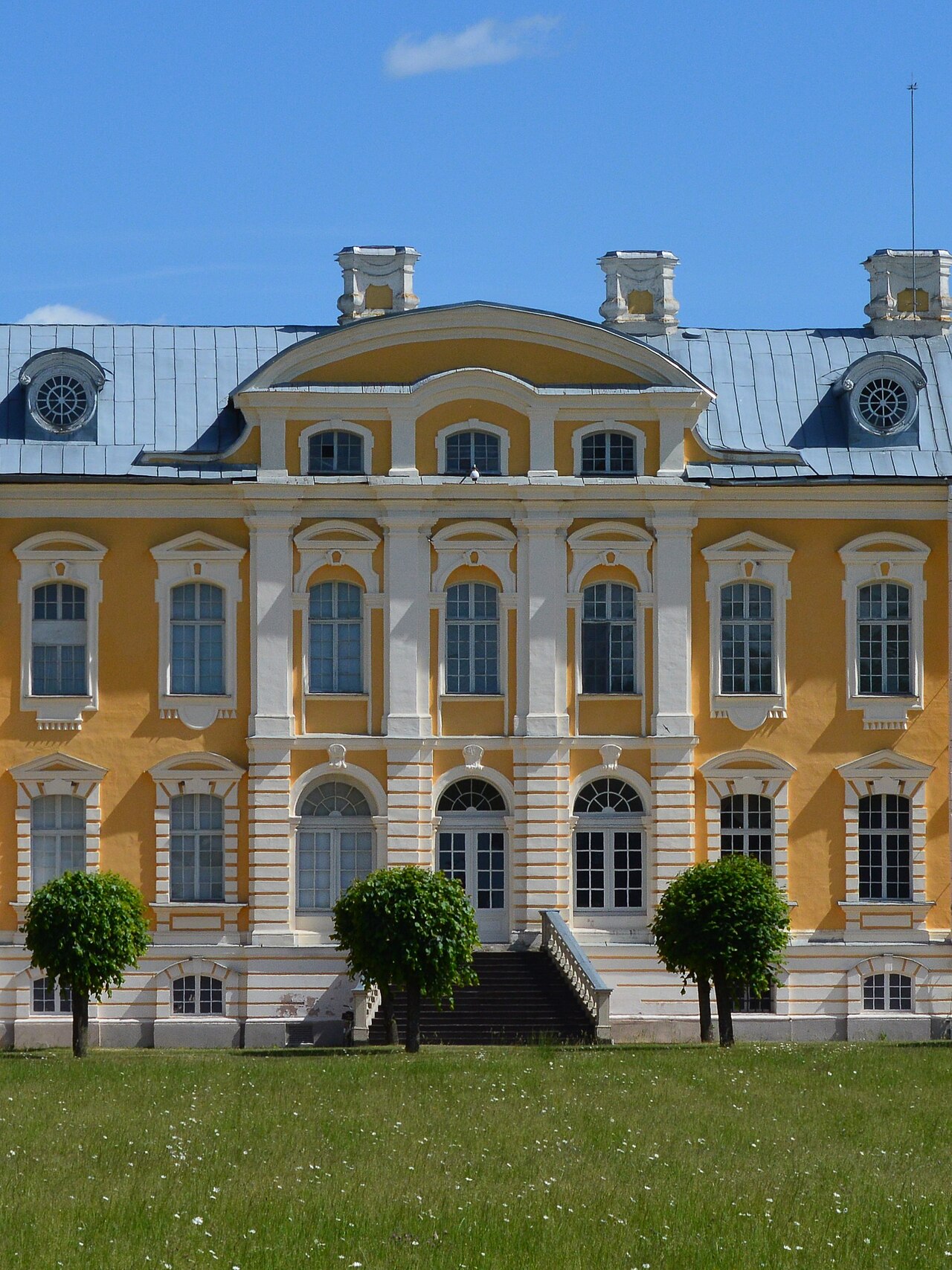
Rastrelli’s style was the grand Baroque at its most confident and exuberant, marked by sweeping facades, richly decorated interiors, and a masterful sense of scale and drama. At Rundale he brought all these gifts to bear, creating a palace whose long, elegant front and sumptuous rooms bear the unmistakable signature of his art, the same hand that shaped the grandest residences of the tsars.
That the architect of the imperial palaces should also have designed Rundale gives the Latvian palace an extraordinary pedigree. It stands as a sibling to the great palaces of Russia, sharing their designer and their Baroque splendour, a piece of imperial-scale magnificence set in the Baltic countryside. Few palaces of comparable importance can be found anywhere in the region.
Rastrelli’s design united the palace and its gardens into a single grand composition, characteristic of the Baroque vision in which architecture and landscape formed one harmonious whole. The result was a residence of remarkable coherence and beauty, in which every element, from the sweep of the facade to the layout of the parterres, worked together to create an impression of ordered magnificence.
Comparing Rundale with Rastrelli’s imperial commissions is instructive, for the same architectural language appears here on a slightly more intimate scale. Freed from some of the constraints of an imperial capital, the architect could pursue a unified vision, and many admirers feel that Rundale shows his genius in an especially pure and coherent form, a complete Baroque world realised by a single master hand.
Two Phases and a Duke’s Downfall
The building of Rundale unfolded in two distinct phases, separated by one of the great dramas of Biron’s life. The first phase began in the 1730s, when the duke, at the height of his power, set Rastrelli to work on the palace. Construction proceeded rapidly, and the shell of the great residence rose swiftly on the plain, a testament to the resources at the favourite’s command.
Then came catastrophe. When his imperial protector died, Biron’s enemies moved against him, and he was stripped of his power, arrested, and sent into exile far from Courland. With the duke disgraced and banished, work on Rundale halted, and the unfinished palace stood waiting through the long years of his absence, a monument to a fortune suddenly and dramatically reversed.
Years later, Biron’s fortunes revived. Restored to favour under a new reign, he was allowed to return from exile and to resume his position as Duke of Courland. With his restoration came the resumption of work on Rundale, and a second phase of construction and decoration began, again under the guidance of Rastrelli, to complete the palace that his downfall had left unfinished.
This second phase brought the palace to its full glory, with the creation of its most splendid interiors. The dramatic interruption between the two phases is written into the very history of the building, and the story of Rundale cannot be separated from the extraordinary rise, fall, and rise again of the duke who built it. The finished palace is a monument to survival as much as to splendour.
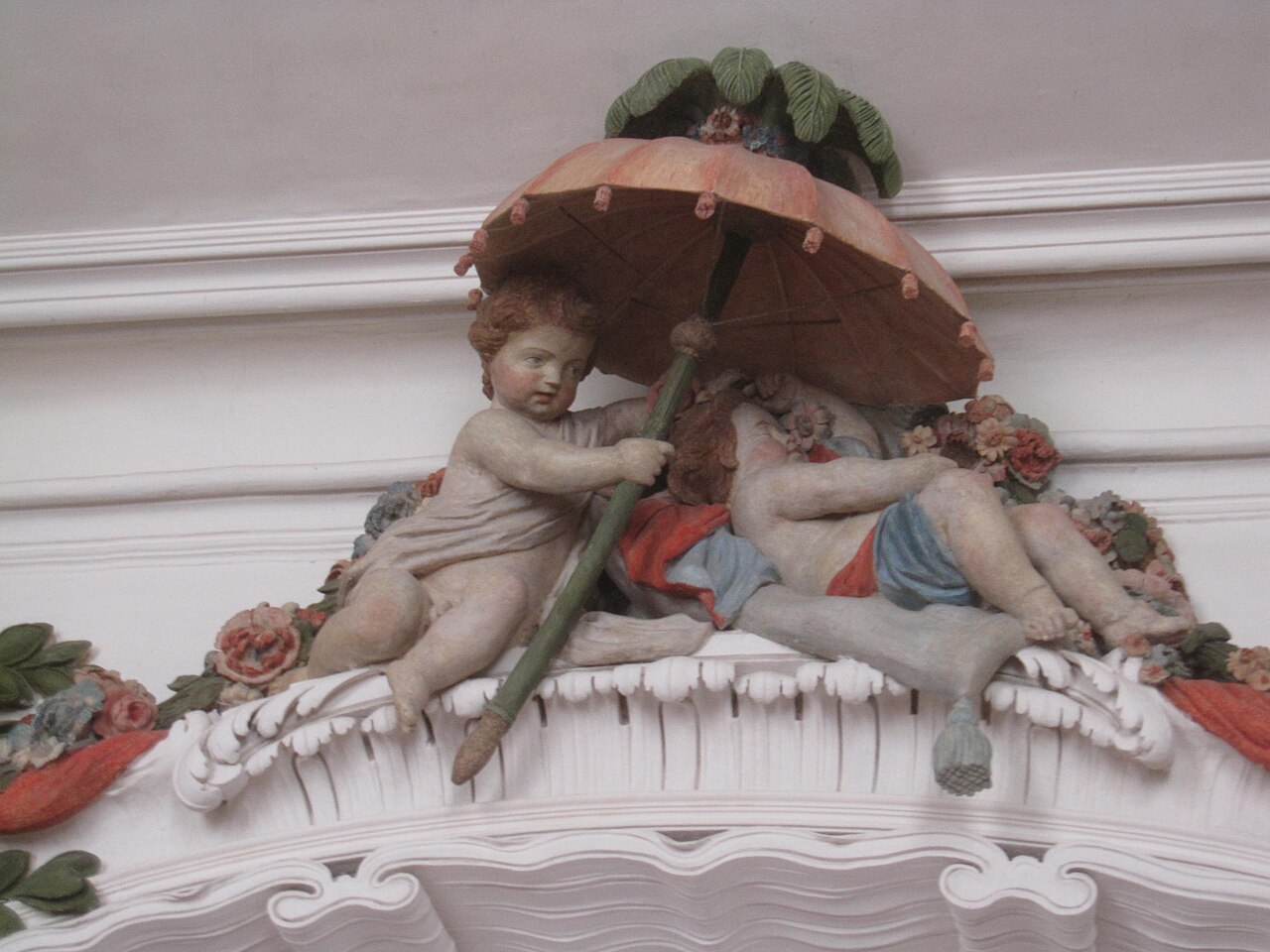
The gap between the two building phases also left its mark on the palace’s style, for tastes had shifted during Biron’s years of exile. The later interiors show the lighter touch of the emerging Rococo alongside the grander Baroque of the earlier work, so that Rundale captures a moment of transition in European art. This layering, born of misfortune, adds richness and interest to the finished palace.
The Golden Hall and the Throne
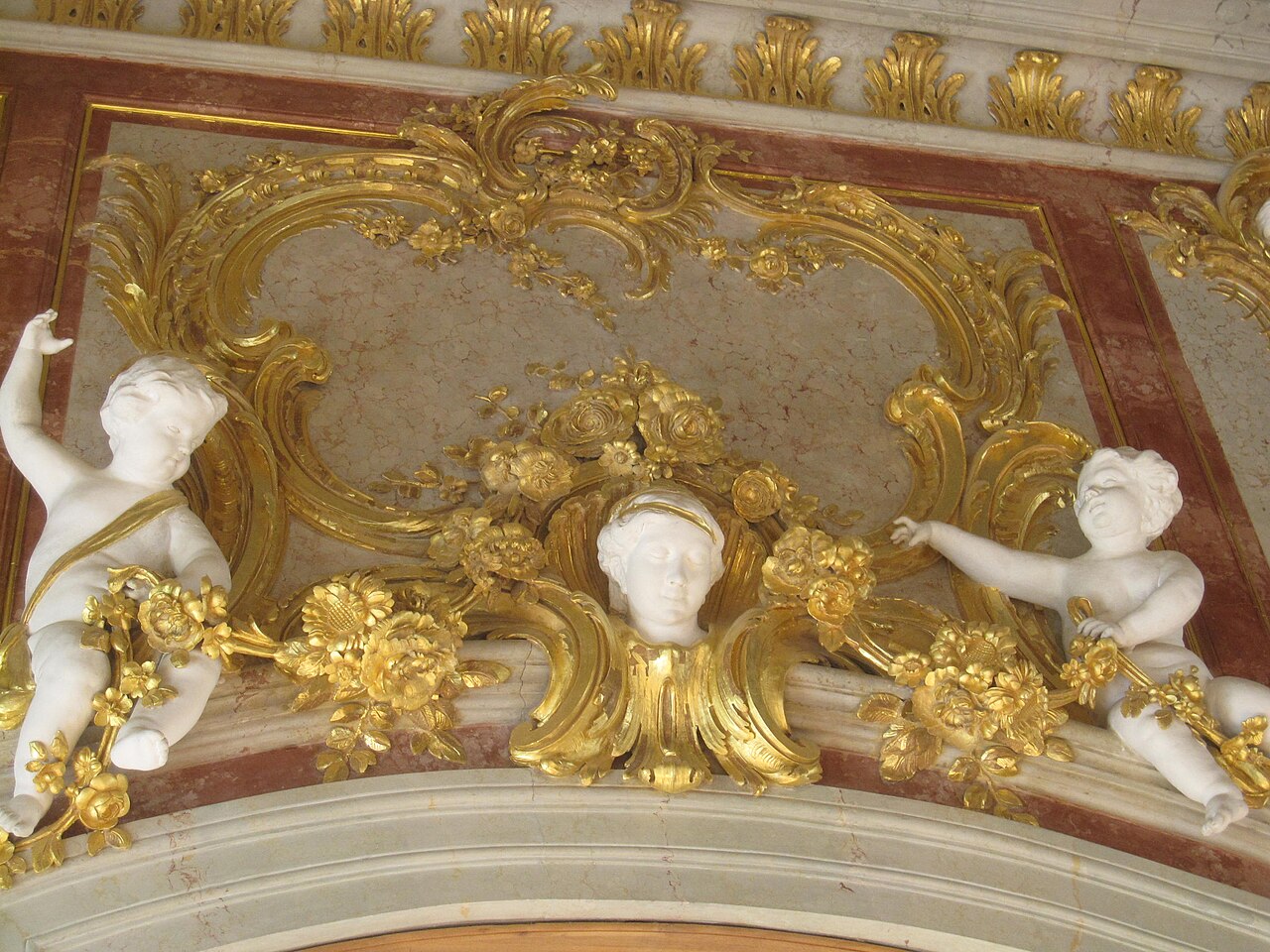
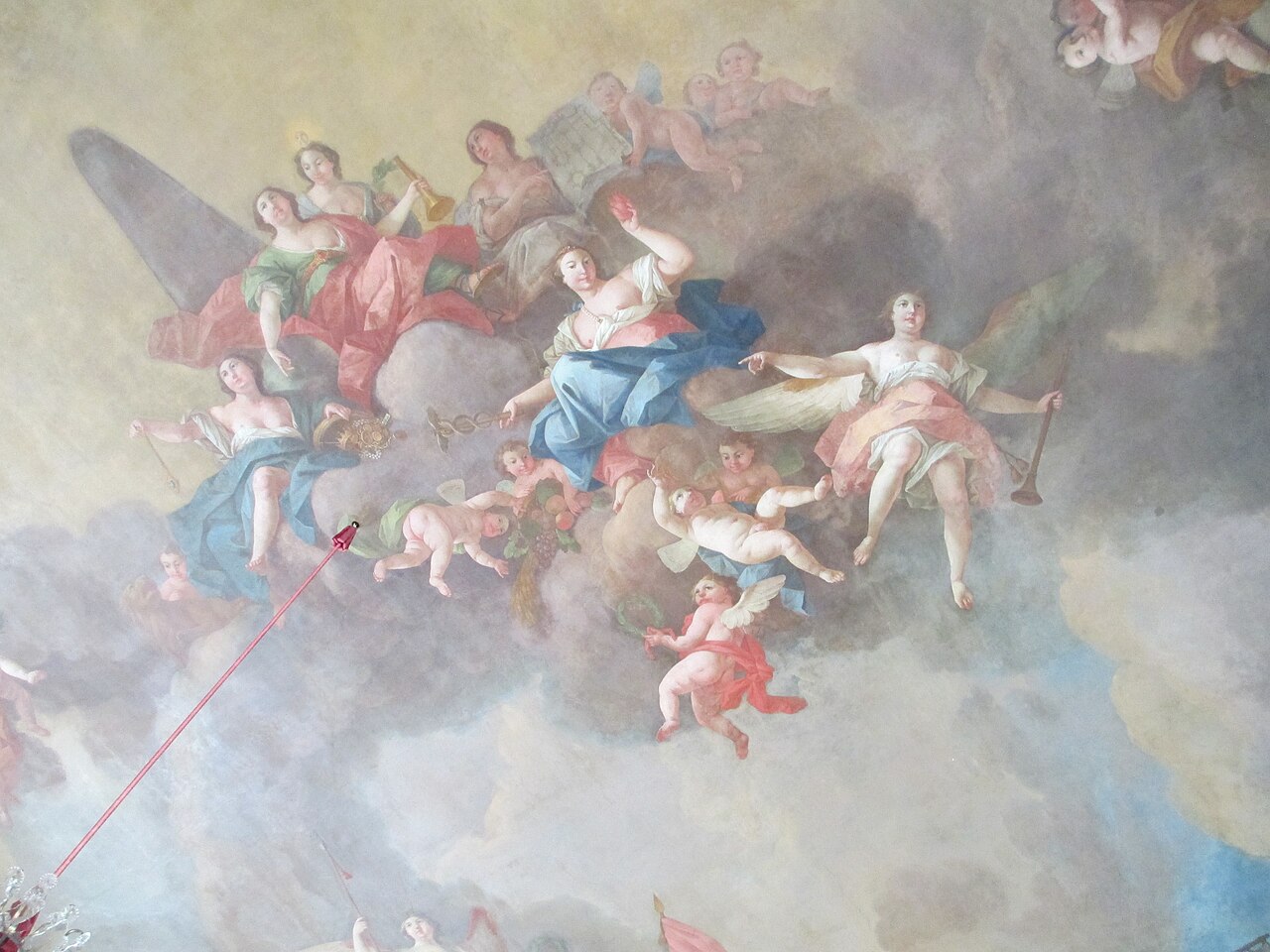
The ceremonial heart of Rundale is the Golden Hall, the throne room of the palace and one of its most dazzling interiors. Designed to embody the majesty of the duke, the hall glows with gilded ornament, its walls alive with elaborate stucco decoration and its ceiling crowned with painting, a concentrated display of Baroque magnificence intended to overwhelm all who entered.
As the throne room, the Golden Hall was the setting for the most solemn occasions of the ducal court, where the duke would receive important visitors and preside over ceremonies of state. Every element of its decoration was calculated to convey power and prestige, from the shimmering gilt work to the allegorical paintings that celebrated the virtues and glory of the ruler.
The stuccowork of the hall is of particular renown, the creation of master craftsmen who covered the walls with intricate ornament of extraordinary richness and delicacy. This decorative artistry, combined with the gilding and the painted ceiling, makes the Golden Hall a supreme example of the Baroque interior, a room where architecture and the decorative arts merge into a single overwhelming effect.
For visitors today, the Golden Hall remains one of the highlights of Rundale, a space that captures the full ambition of the palace and its founder. To stand within it is to feel the splendour that Biron sought to project, the desire of a favourite raised to a dukedom to surround himself with a magnificence worthy of the greatest courts of Europe.
The allegorical paintings and ornament of the hall were not mere decoration but a carefully devised programme, designed to glorify the ruler and to express the ideals of his rule. Reading these images, visitors of the time would have understood a whole language of power and virtue encoded in the room’s decoration, a reminder that the Baroque interior was as much a statement of ideas as a display of wealth.
The White Hall and the Grand Gallery
If the Golden Hall dazzles with colour and gilt, the White Hall enchants with purity and elegance. This ballroom, decorated entirely in white with exquisite stucco ornament, offers a striking contrast to the gilded throne room, its restrained palette allowing the sheer artistry of the plasterwork to take centre stage. It is one of the loveliest rooms in the entire palace.
The stucco decoration of the White Hall is a marvel of the plasterer’s craft, with delicate reliefs depicting figures, foliage, birds, and other motifs woven across the walls and ceiling. Rendered all in white, these decorations create an atmosphere of cool, refined beauty, a space of light and grace designed for dancing and celebration in the elegant manner of the age.
Adjoining these grand rooms is the Grand Gallery and a sequence of connected halls that together formed the ceremonial core of the palace. These interconnected spaces allowed the court to move in procession through a series of magnificent settings, each contributing to the overall experience of splendour that the palace was designed to provide.
Together, the Golden Hall, the White Hall, and the Grand Gallery represent the summit of Rundale’s artistic achievement. In their contrast and their harmony, they display the full range of the Baroque and Rococo styles, from opulent gilding to delicate white stucco, and they confirm the palace’s status as one of the great artistic monuments of the Baltic region.
The choice to leave the White Hall unadorned by colour or gilt was itself a sophisticated aesthetic decision. In an age that loved gold and bright hues, a room given over entirely to white stucco made a bold statement of confidence, trusting in form and craftsmanship alone to create beauty. The effect is one of serene, almost musical elegance, and it shows the range of moods the Baroque could achieve.
Rococo Splendour in the Duke’s Rooms
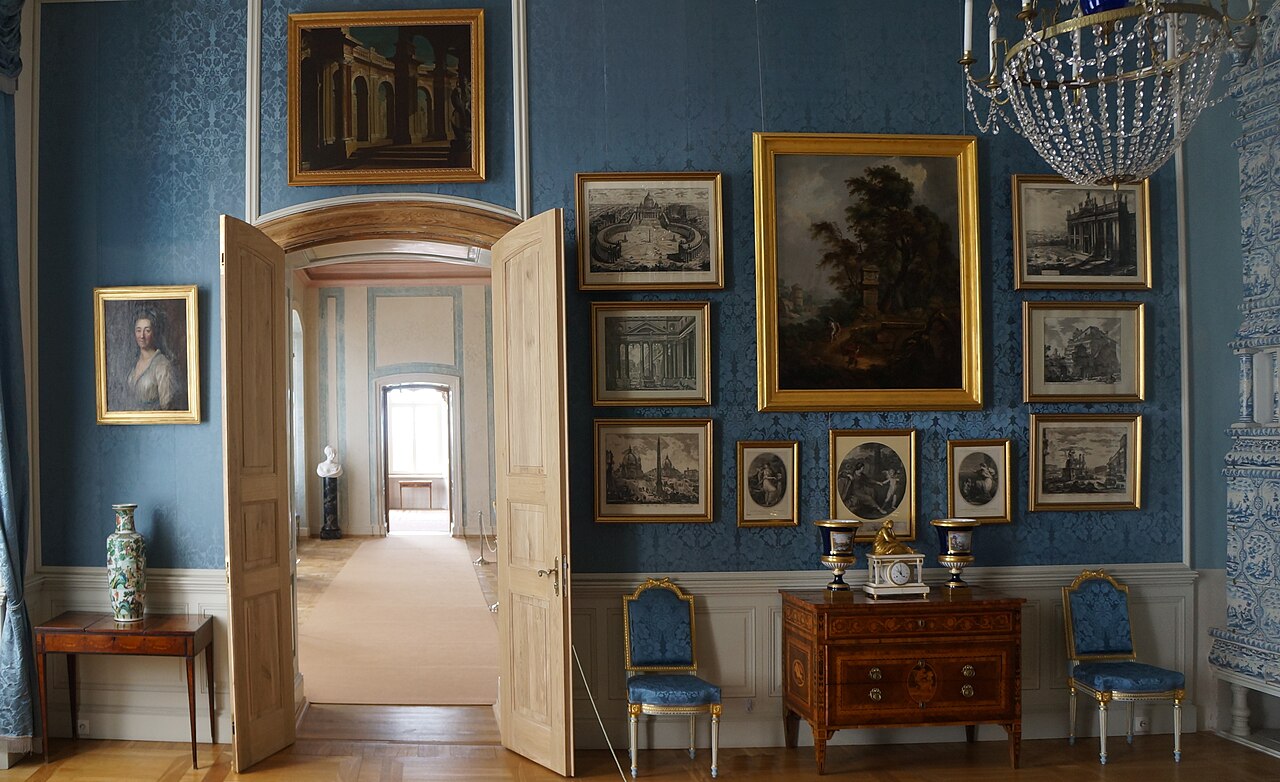
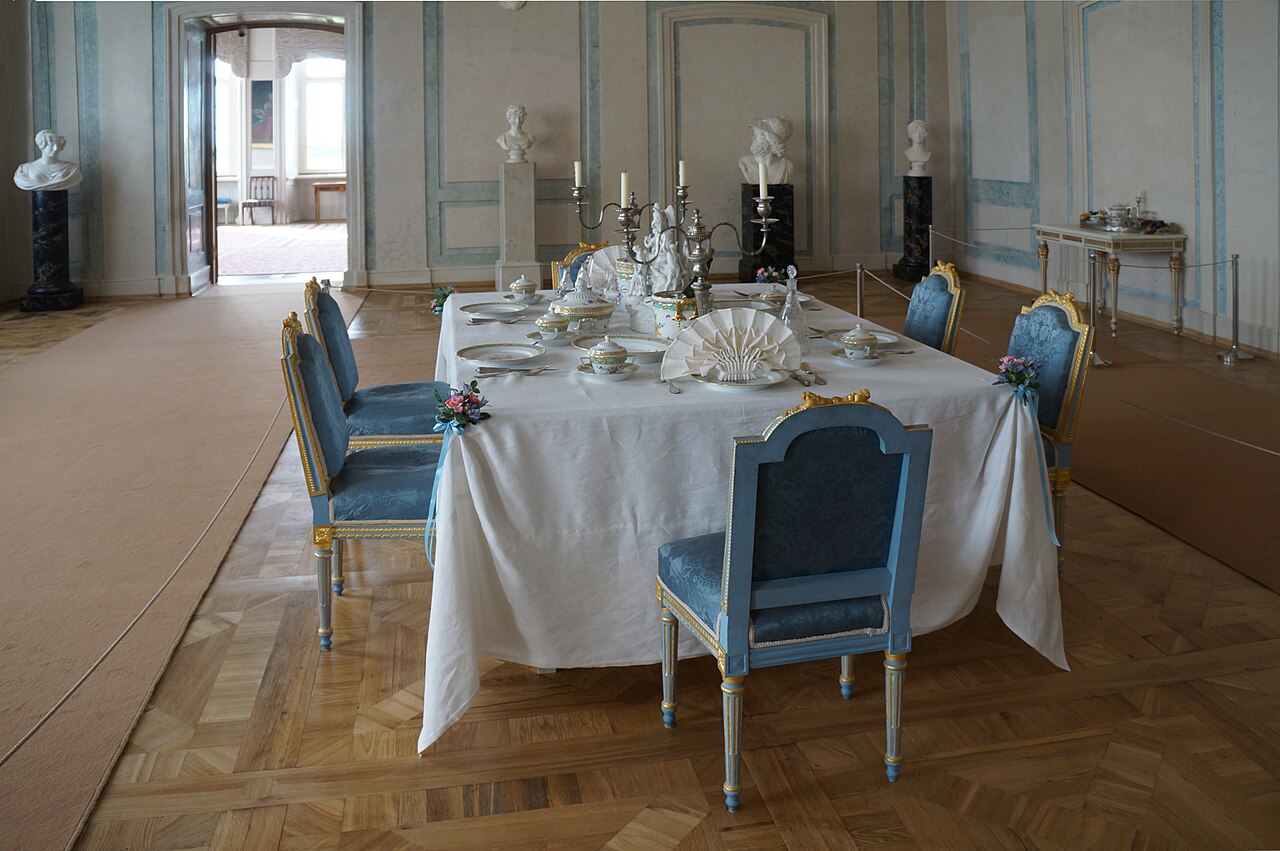
Beyond the grand ceremonial halls, Rundale contains a wealth of private apartments and smaller rooms, decorated with a refinement that ranges from Baroque grandeur to the lighter, more playful Rococo style. These rooms, intended for the duke, his family, and honoured guests, offer a more intimate experience of the palace’s artistry and a glimpse of courtly life at its most elegant.
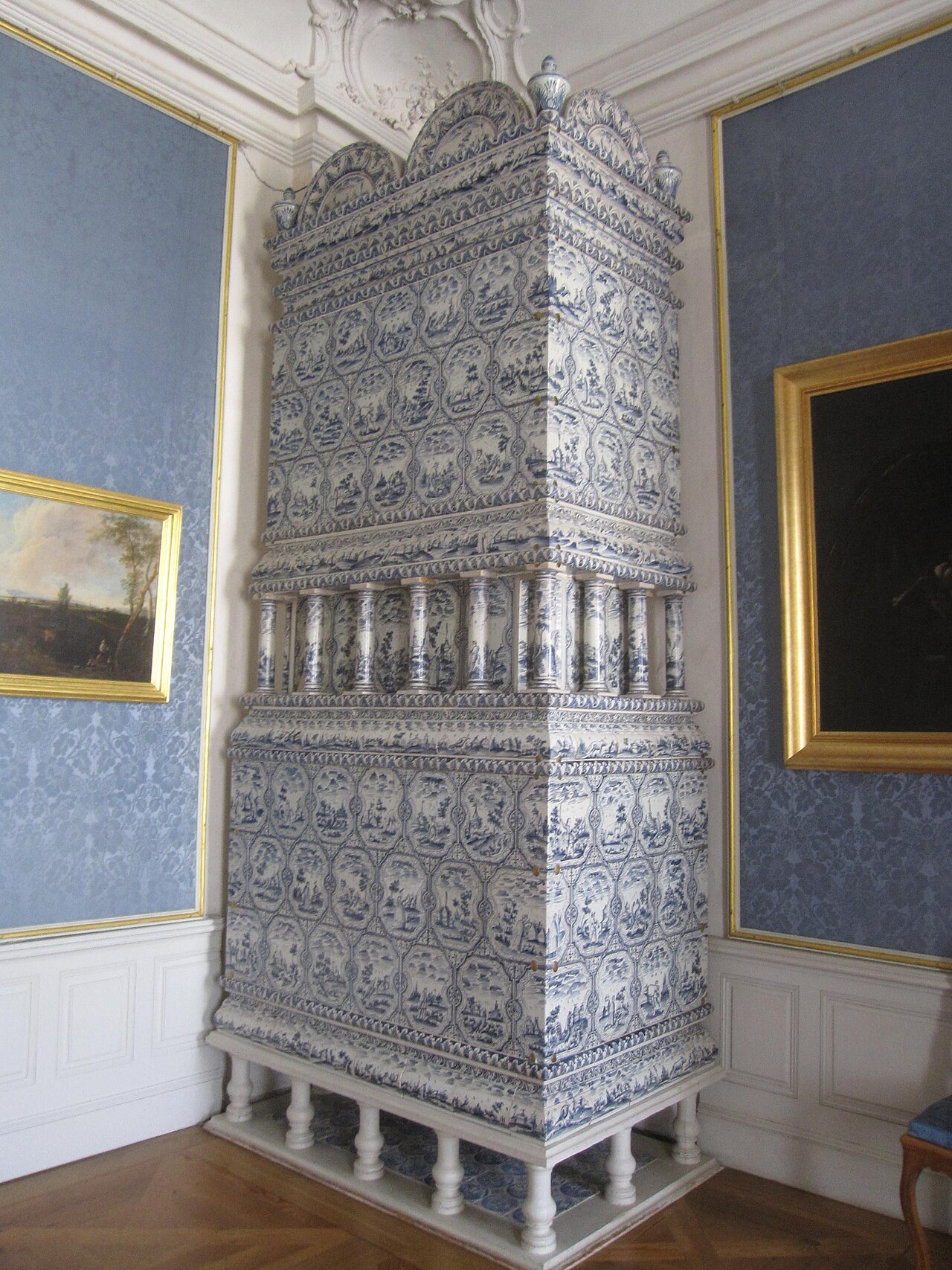
The apartments are rich in fine detail, from painted ceilings and decorative wall panels to inlaid floors, tiled stoves, and period furnishings. Each room has its own character and colour scheme, and the changing styles reflect the evolving tastes of the eighteenth century, moving from the heavier splendour of the Baroque toward the delicate charm of the Rococo.
Among the most admired features are the palace’s tiled stoves, magnificent objects that combined practical heating with decorative artistry. These and other furnishings help to recreate the atmosphere of a lived-in residence, showing how the grand spaces of the palace were complemented by rooms designed for comfort as well as display.
Moving through these apartments, visitors gain a fuller sense of the palace as a whole, from the public magnificence of the great halls to the more personal elegance of the private rooms. The care lavished on every space, however modest, reflects the ambition behind the whole enterprise and the desire to create a residence of consistent and comprehensive beauty.
The recreation of these private rooms posed particular challenges for the restorers, since intimate spaces often left less documentation than the grand halls. Where evidence survived, it was followed closely; where gaps remained, careful judgement based on the styles of the age filled them. The result is a convincing and harmonious whole that lets visitors imagine the daily life once lived within these elegant walls.
The French Garden and Its Roses
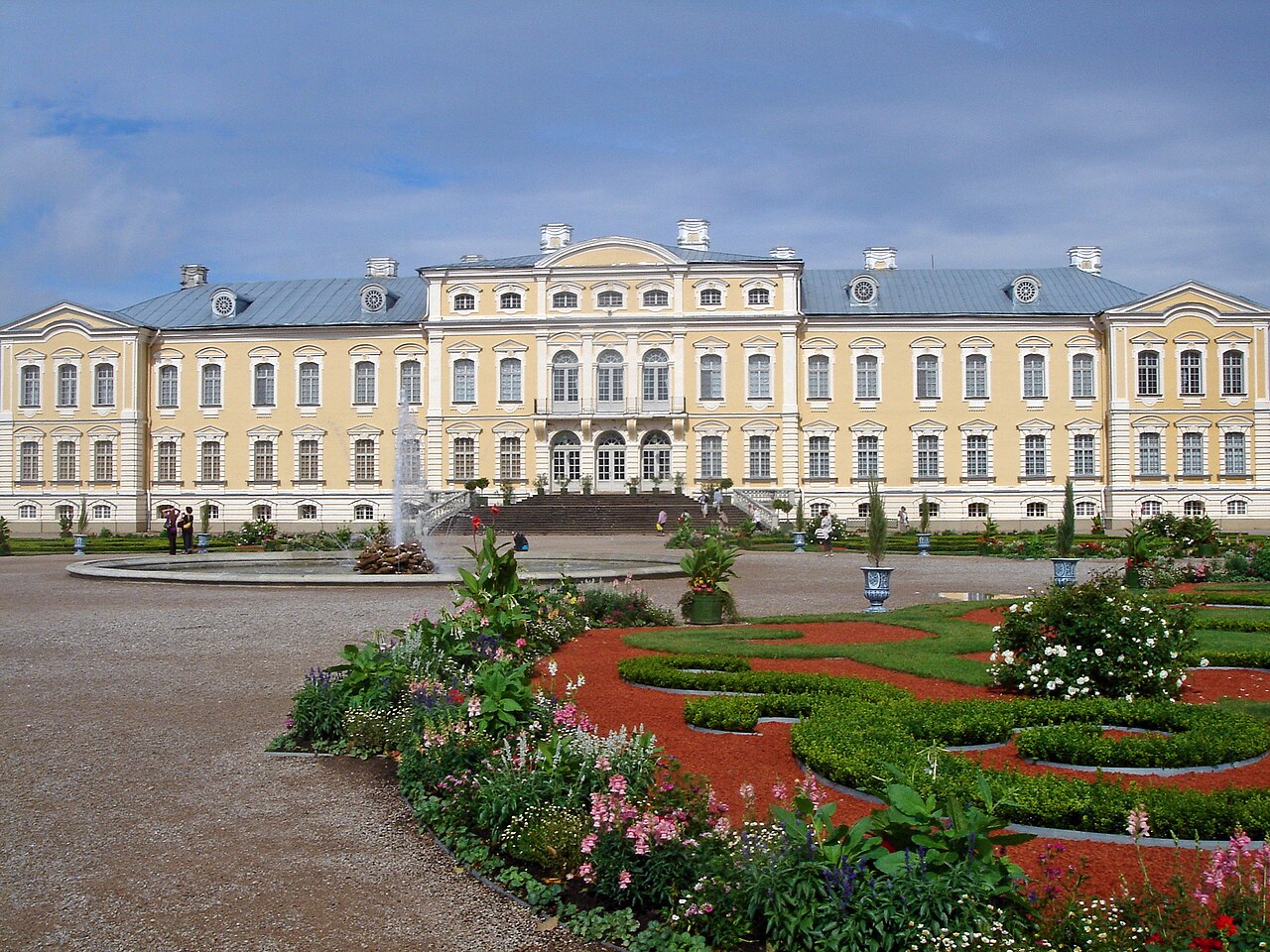
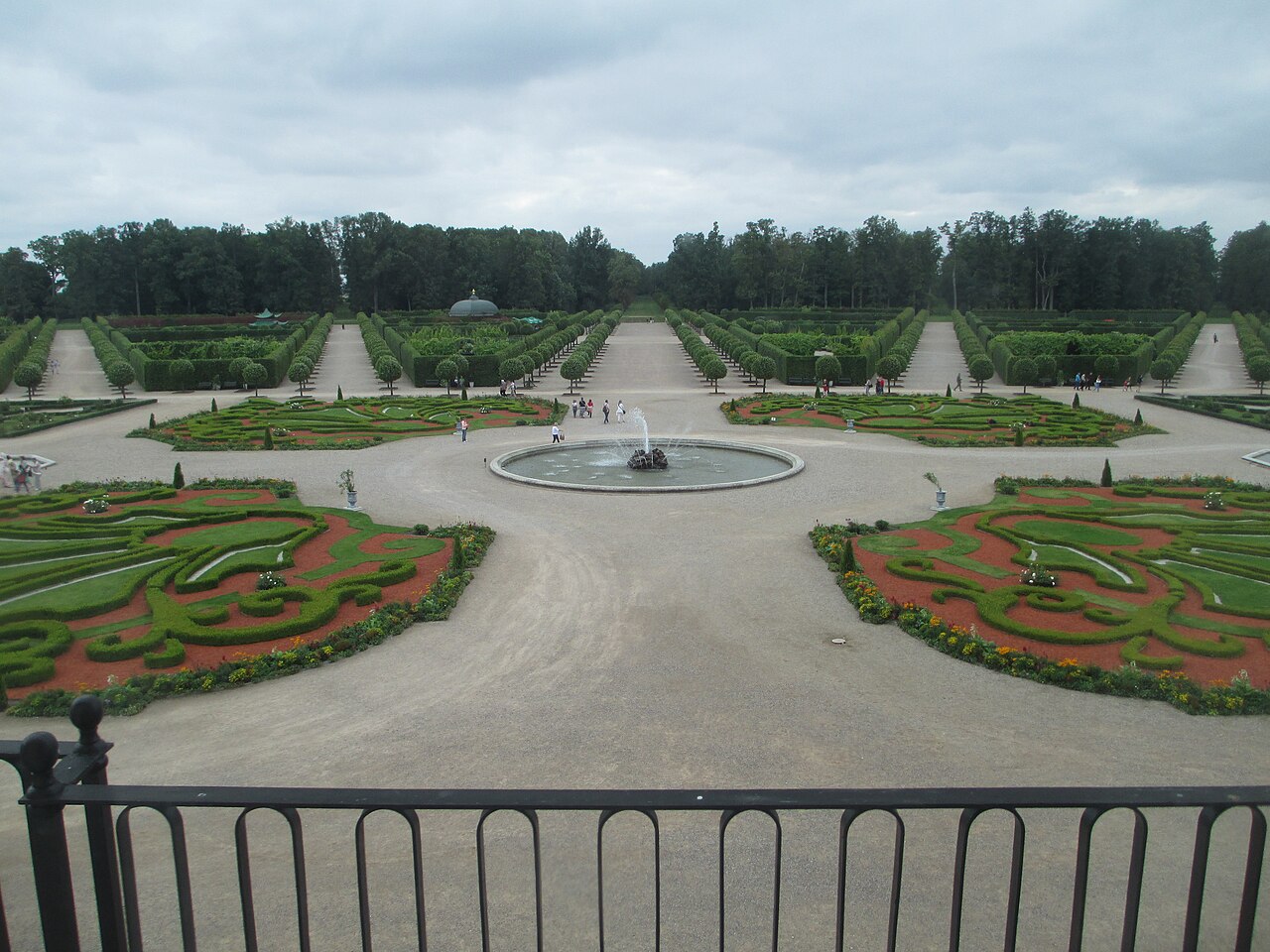
No Baroque palace was complete without its gardens, and at Rundale the grounds are as magnificent as the building. Laid out in the formal French manner, the garden extends the symmetry and order of the palace out into the landscape, with geometric parterres, clipped hedges, avenues, and ornamental features arranged in a grand and harmonious composition.
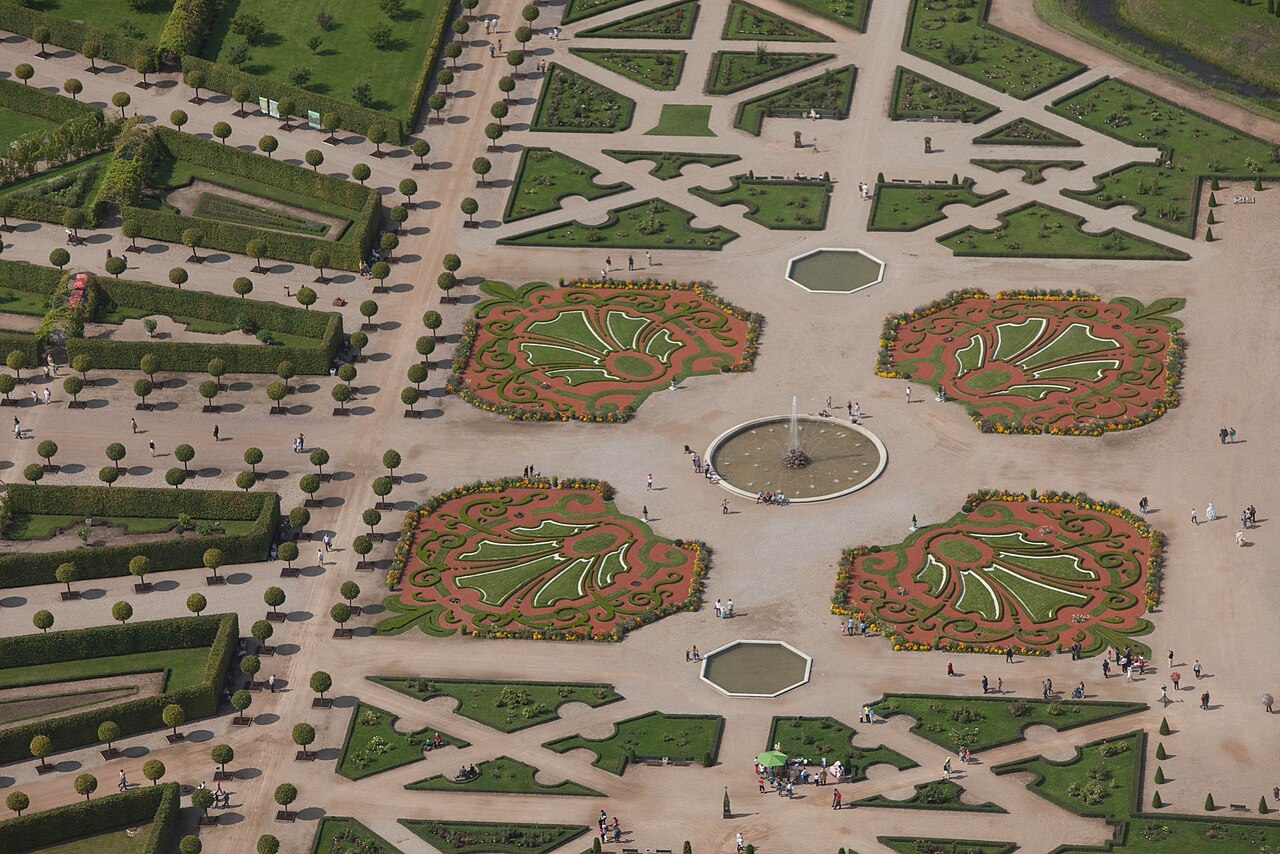
The French garden is designed to be viewed from the palace and to be walked through as a series of unfolding vistas, its patterns and perspectives calculated with mathematical precision. Fountains, sculptures, and carefully shaped plantings add richness to the scheme, creating an outdoor extension of the palace’s splendour in living green and blossom.
Rundale’s gardens are especially celebrated for their roses, with extensive collections that make the grounds a place of extraordinary beauty in the flowering season. The rose gardens draw visitors from far and wide, and the scent and colour of the blooms transform the formal geometry of the garden into a sensory delight, a fitting complement to the artistry of the palace.
The restoration of the gardens, like that of the palace itself, has been a labour of great dedication, recreating the formal designs of the eighteenth century from historical evidence. Today the gardens stand once more in their intended splendour, offering visitors the complete experience the palace was meant to provide, of architecture and landscape united in a single grand vision.
The scale of the garden project matches that of the palace, extending over a large area and requiring the same devotion to symmetry and detail. Walking its avenues, you appreciate how the designers thought in terms of long perspectives and grand axes, drawing the eye toward distant points and framing the palace itself as the culmination of every view. It is landscape conceived as architecture, nature shaped into art.
Neglect Across Turbulent Centuries
For all its magnificence, Rundale did not enjoy an untroubled existence. As the fortunes of the duchy of Courland changed and the region passed through the great upheavals of European history, the palace lost its original purpose and entered long periods of neglect and decline. The splendid residence of a duke became, over time, a building in search of a use.
With the eventual absorption of Courland into the Russian Empire and the later transformations of the region, the palace passed through various hands and was put to a range of uses far removed from its original grandeur. Grand rooms designed for a ducal court were adapted to humbler purposes, and the fabric of the building suffered from the changes and from simple neglect.
The turbulent history of the twentieth century, with its wars, occupations, and shifting regimes, dealt further blows to the palace. At various times it served practical rather than ceremonial functions, and its interiors and gardens fell far from the condition Rastrelli had created. By the middle of the century, the palace was a shadow of its former self, its splendour buried beneath the damage of the years.
That Rundale survived at all through these centuries of change is remarkable, and that it retained enough of its original fabric to make restoration possible is a piece of great good fortune. The long decline of the palace forms a sombre chapter in its history, but it also sets the stage for one of the most inspiring stories of cultural recovery in the region.
It is sobering to imagine the great halls, now restored to brilliance, in their years of neglect, their gilding tarnished and their stucco crumbling. That contrast makes the present splendour all the more moving, for visitors are seeing not merely a preserved palace but a resurrected one. The memory of decline gives the restored Rundale a poignancy that a building spared such hardship could never possess.
The Long Work of Restoration
The transformation of Rundale from a decayed shell back into a glittering palace is one of the great achievements of cultural preservation in the Baltic. Beginning in the later twentieth century, a dedicated and painstaking restoration effort set out to recover the palace and its gardens, a project that would extend over many decades and demand extraordinary scholarship, skill, and perseverance.
The restoration was guided by deep research into the original design and decoration of the palace, so that the recovered interiors would be as faithful as possible to Rastrelli’s vision. Craftsmen relearned old techniques to recreate the stucco, gilding, and painting of the great halls, and every detail was studied and reconstructed with meticulous care, turning the project into a school of traditional craftsmanship in its own right.
This was not the work of a few years but of a lifetime, sustained through political change and material difficulty by the commitment of those who believed in the palace’s importance. The gradual reappearance of Rundale’s splendour, room by room and season by season, became a source of pride and inspiration, a demonstration of what dedication to heritage could achieve.
The result is one of the most completely and beautifully restored Baroque palaces anywhere, a place where visitors can experience the artistry of the eighteenth century recovered in full. The restoration of Rundale stands as a monument not only to the original builders but to the modern devotion that brought their creation back to life, a triumph of patience and love over the ravages of time.
The story of the restoration is inseparable from the individuals who devoted their careers to it, working with a patience that spanned generations of visitors. Their willingness to master lost crafts, to hunt down historical evidence, and to hold to a vision over decades transformed Rundale from a ruin into a showpiece. In doing so they created not only a restored palace but a living tradition of conservation expertise.
The Palace Museum Today
Today Rundale is a museum, welcoming visitors to explore its restored halls, apartments, and gardens. The palace presents itself much as it would have appeared in its heyday, allowing visitors to step back into the world of the eighteenth-century court and to experience the splendour that Biron and Rastrelli created on the Zemgale plain.
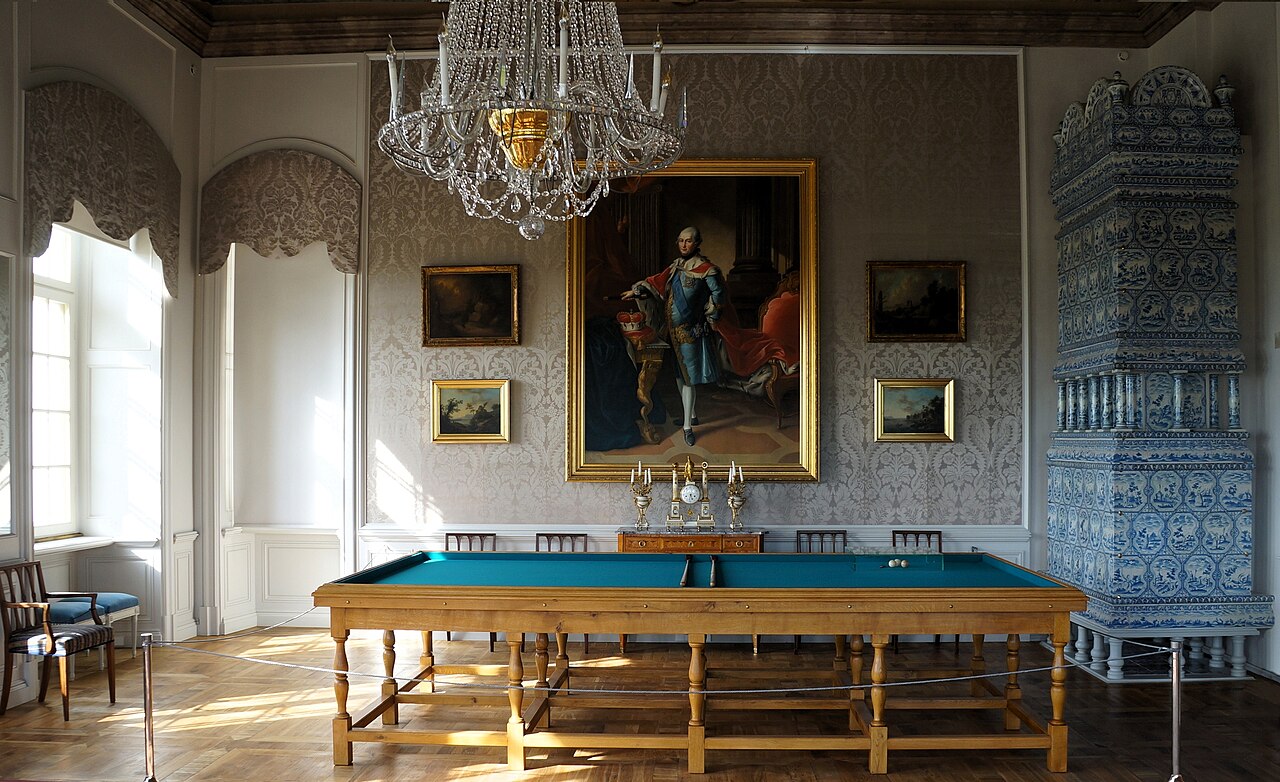
The museum offers a rich experience, from the grand ceremonial halls to the intimate private rooms, complemented by displays that tell the story of the palace, its builders, and its restoration. The collections and furnishings help to bring the rooms to life, recreating the atmosphere of a great Baroque residence in remarkable detail.
Beyond the permanent displays, the palace hosts exhibitions, concerts, and events that make it a living centre of culture as well as a monument of history. The magnificent halls provide an incomparable setting for musical performances and special occasions, and the gardens are a venue for festivals, particularly during the celebrated season of the roses.
As one of Latvia’s most important cultural sites, Rundale draws visitors from around the world and holds a place of honour in the nation’s heritage. Its combination of artistic magnificence, dramatic history, and inspiring restoration makes it far more than a beautiful old building; it is a symbol of the endurance of beauty and of the cultural pride of a nation that recovered a treasure from the brink of ruin.
The palace also plays an important educational role, helping visitors of all ages understand the history of the region and the artistry of the Baroque age. Through its displays, guided tours, and events, Rundale makes a distant world accessible and vivid, ensuring that the knowledge and appreciation of this heritage are passed on. It is a museum that teaches as well as delights.
Planning Your Visit to Rundale
Rundale lies in the countryside of southern Latvia, some distance from the capital, and reaching it is usually part of an excursion into the region. It can be visited by car or by organised trips from the main cities, and a visit rewards the journey with one of the most magnificent palace experiences in the Baltic. Allowing several hours lets you enjoy both the interiors and the gardens fully.
View Rundale Palace on Google Maps
Inside, the palace welcomes visitors to tour its restored halls and apartments, from the dazzling Golden Hall to the elegant White Hall and the private rooms of the duke. The displays and settings recreate the splendour of the eighteenth-century court, and moving through the sequence of rooms is the heart of any visit. The gardens deserve equal time, especially when the roses are in bloom.
As with any major museum, it is wise to check current opening hours and ticket arrangements before you go, since these can vary with the season, and different tickets may apply to the palace and the gardens. The flowering season of the gardens is especially popular, and timing a visit to coincide with the roses offers an unforgettable experience of colour and scent.
You can find the palace and plan your route using the map link below. Whether you come for the Baroque architecture, the magnificent interiors, the celebrated gardens, or the inspiring story of the palace’s restoration, Rundale offers one of the great cultural experiences of Latvia. Give yourself time to savour both the splendour within and the beauty of the gardens without.
Many visitors find that Rundale rewards a slower, more contemplative visit than a hurried tour allows. The interplay of the grand halls and quiet rooms, of gilded splendour and white refinement, and of palace and garden unfolds best when there is time to linger. Coming with a full afternoon to spare lets the place work its full effect, leaving an impression that lasts long after the journey home.
See Rundale for Yourself
A palace as splendid as Rundale, set in so beautiful a garden, is best appreciated in motion, and the short film below offers a closer look at the building, its halls, and its grounds. It conveys the grandeur of the facade, the dazzle of the Golden Hall, the delicacy of the White Hall, and the beauty of the formal gardens.
As you watch, keep in mind the remarkable story behind it: a duke raised by imperial favour, the greatest architect of the age, a dramatic tale of downfall and restoration, and a modern rescue that brought the palace back from ruin. Rundale is a place where the splendour of the eighteenth century lives again, a Versailles of the Baltic recovered through patience, scholarship, and love.
Palaces Nearby
If Rundale has drawn you into the royal and imperial heritage of the Baltic, two more palaces in the region make natural companions, each with its own character.
- Kadriorg, the Pink Palace Peter the Great Built by the Baltic — a rose-pink Baroque palace in Tallinn, built by Peter the Great and now an art museum.
- The Vanished Palace of Lithuania’s Grand Dukes, Rebuilt in Vilnius — the reconstructed Renaissance seat of the grand dukes at the heart of Vilnius.
You May Like
Inside the Azm Palace, a Hidden Paradise of Old Damascus