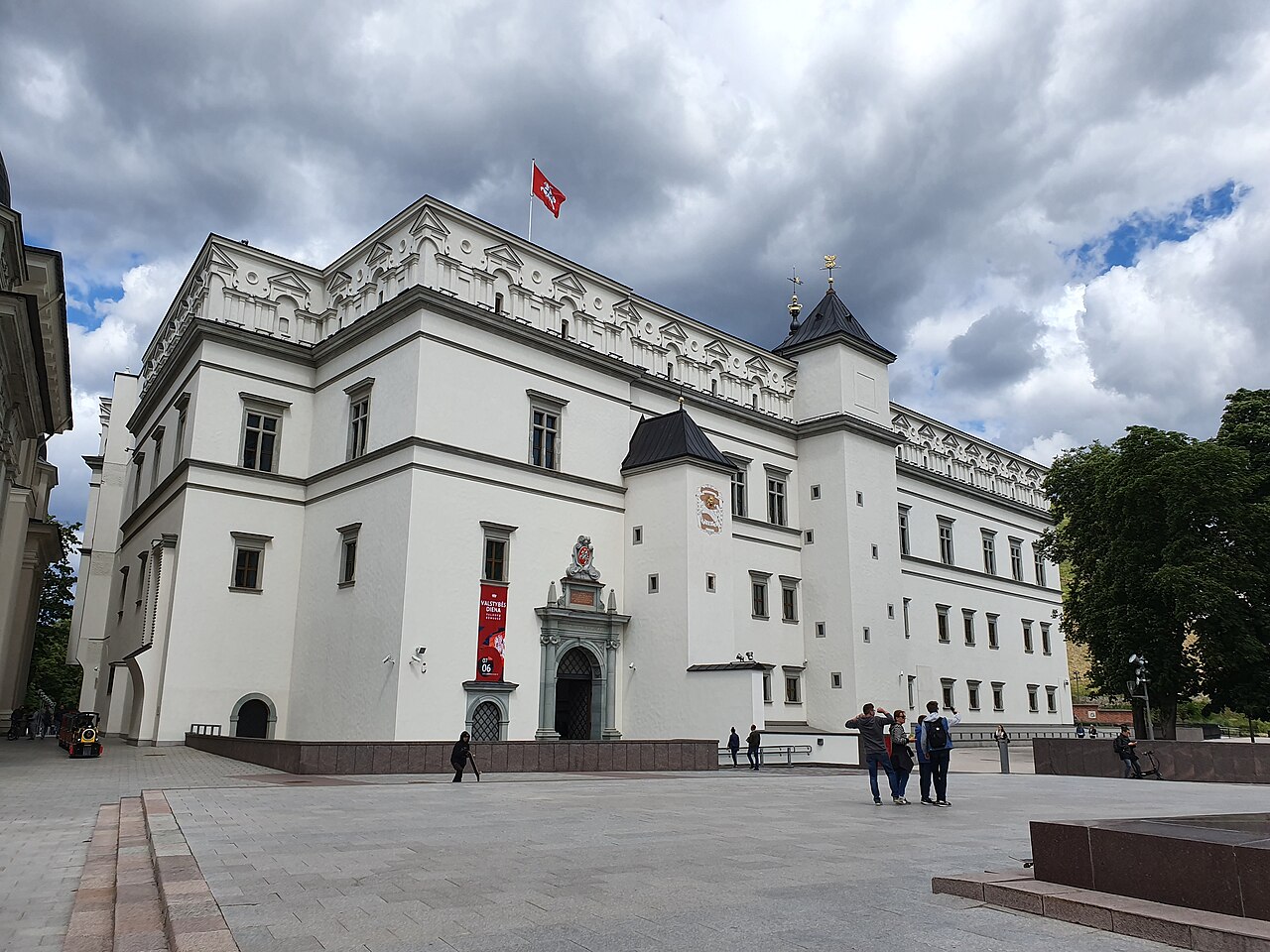
In the heart of Vilnius, at the foot of the green hill crowned by an ancient tower, stands a palace with one of the strangest histories in Europe. The Palace of the Grand Dukes of Lithuania looks, at first glance, like a stately Renaissance residence that has always stood there. In fact, the building you see is largely a modern reconstruction, painstakingly raised on the foundations of a palace that was demolished two centuries ago and had all but vanished from the landscape.
For centuries this was the beating heart of one of the largest states in Europe, the Grand Duchy of Lithuania, which at its height stretched across vast territories from the Baltic toward the Black Sea. From this palace, grand dukes and kings ruled, held court, received ambassadors, and gathered around them the art and learning of the Renaissance, making Vilnius a centre of culture at the eastern edge of the Latin world.
Then came conquest, partition, and deliberate destruction, and the palace was reduced to buried foundations, its memory kept alive only in old records and images. Its extraordinary reconstruction in modern times, a project of national ambition and scholarly dedication, has brought it back to life as a symbol of Lithuanian statehood and a museum of the country’s rich and often turbulent history.
In this guide you will explore the palace from its origins as the seat of the grand duchy, through its Renaissance golden age, its dramatic destruction, and its remarkable rebuilding, to the halls, courtyard, and treasures you can see today. By the end you will understand why this reconstructed palace means so much to the people of Lithuania and to all who value the endurance of history.
In This Article
- The Seat of the Grand Duchy
- A Renaissance Court at Europe’s Edge
- Kings, Dukes, and a Great Dynasty
- Gothic, Renaissance, and Baroque in One
- How the Palace Was Lost
- Rebuilding a Vanished Palace
- The Grand Courtyard at the Heart
- The Throne Room and Halls of State
- The Restored Renaissance Rooms
- The Foundations Beneath the Palace
- A Symbol of Lithuanian Statehood
- Planning Your Visit
- See the Palace for Yourself
The Seat of the Grand Duchy
The palace stands on ground that has been at the centre of Lithuanian power for many centuries. This is the site of the Lower Castle of Vilnius, part of a complex of fortifications and residences that grew up at the foot of the castle hill, where the rulers of Lithuania established their principal seat. Here, over generations, the modest early residences gave way to ever grander buildings as the duchy rose in power and wealth.
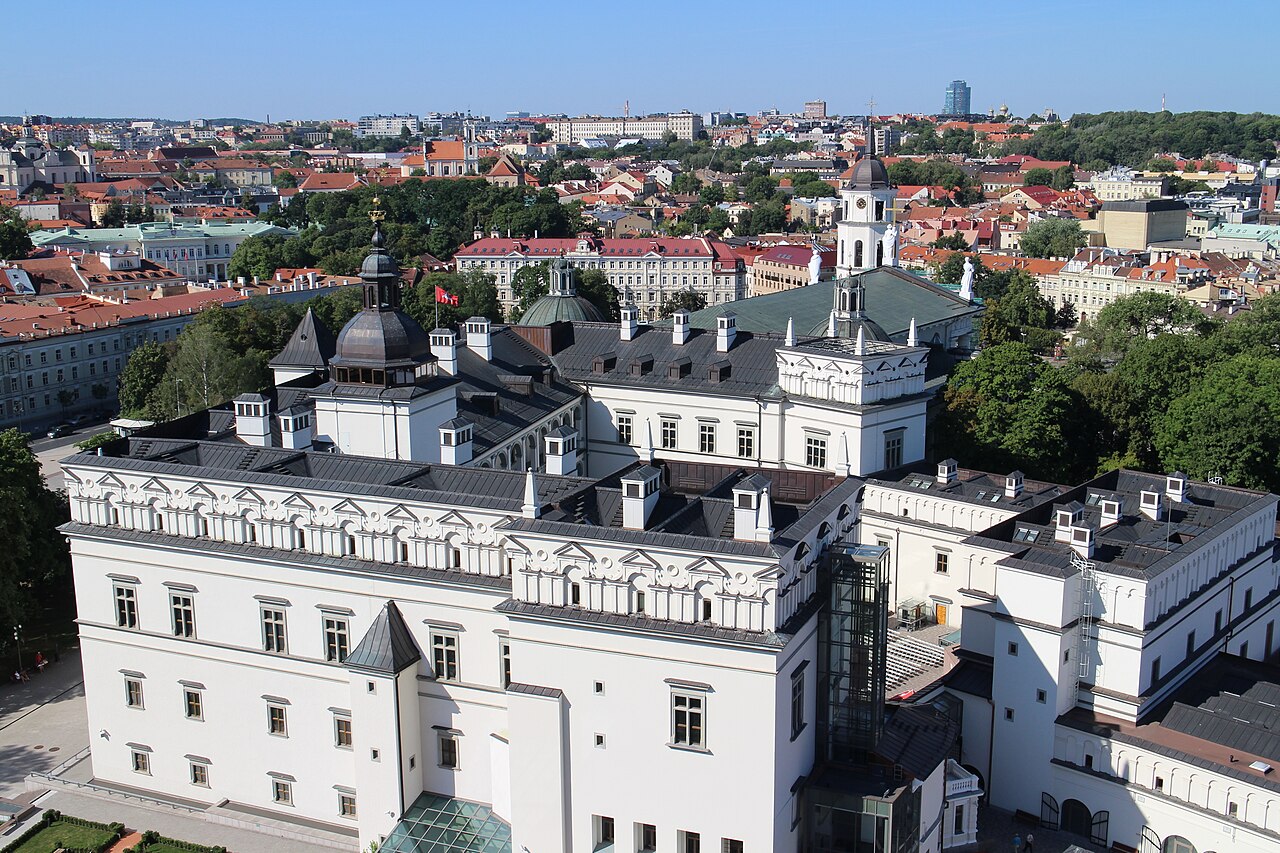
By the later Middle Ages, the Grand Duchy of Lithuania had become one of the largest and most powerful states in Europe, and its rulers needed a residence to match their standing. The palace that developed on this site became the main home of the grand dukes, the administrative and ceremonial centre of the state, and the stage on which the political life of the duchy was played out.
The location was rich in meaning as well as convenience. Overlooked by the ancient tower on the hill and set beside the cathedral, the palace stood at the symbolic heart of Vilnius and of the duchy itself. To rule from this spot was to occupy the very centre of Lithuanian identity, a place layered with the history and sanctity of the nation’s origins.
From these beginnings, the palace grew into a residence of European importance, keeping pace with the rising fortunes of the state it served. Its development mirrored the transformation of Lithuania from a medieval power into a Renaissance state deeply engaged with the wider currents of European culture, and the building itself became a canvas on which that transformation was written.
It is worth pausing to grasp the sheer extent of the state ruled from this spot. At its height the Grand Duchy of Lithuania was among the largest political entities in Europe, embracing lands far beyond the modern country’s borders. That so vast a realm should have been governed from this palace beneath the Vilnius hill gives the site a weight of history out of all proportion to its physical size, and the reconstruction seeks to honour that significance.
A Renaissance Court at Europe’s Edge
The palace reached its greatest splendour during the Renaissance, when it became one of the most brilliant courts in this part of Europe. Under rulers with cultivated tastes and wide connections, the residence was rebuilt and enriched in the fashionable Renaissance style, and it attracted artists, scholars, and craftsmen from Italy and elsewhere, bringing the ideas and beauty of the Renaissance to the shores of the Baltic world.
This was a court of genuine cultural distinction. The palace housed important collections of art, tapestries, and treasures, and it maintained a library and an atmosphere of learning that placed it among the cultured centres of the age. Music, ceremony, and the refined life of a Renaissance court flourished within its walls, and the palace became a meeting point of eastern and western European influences.
The connections of its rulers extended across the continent, through marriage and diplomacy, and the court reflected this cosmopolitan reach. Italian queens and foreign artists helped shape the culture of the palace, weaving Lithuania into the broader tapestry of Renaissance Europe and making Vilnius a place where the latest artistic and intellectual currents could be felt.
For a time, then, this palace at what many in the west considered the edge of Europe stood fully within the mainstream of European civilisation. Its golden age represents a high point of Lithuanian history, a period when the state was powerful, its court cultured, and its capital a genuine centre of Renaissance life. The reconstructed palace seeks above all to recall this moment of glory.
The presence of Italian and other foreign artists at the court was no mere fashion but part of a deliberate embrace of Renaissance civilisation. Queens who came from the great houses of the south brought with them their tastes, their retinues, and their connections, and through them the newest ideas of art, cuisine, gardening, and manners flowed into Vilnius. The palace became a channel through which the Renaissance reached one of the furthest corners of Latin Christendom.
This flowering of culture at the palace also left a legacy in Lithuanian memory that outlasted the building itself. The idea of a golden age, when the state was strong and its court cultured, became part of how the nation understood its own past, and it was in large part to recall that golden age that the modern reconstruction was undertaken. The rebuilt palace is thus as much a monument to a memory as to a building.
Kings, Dukes, and a Great Dynasty
The history of the palace is bound up with one of the great dynasties of European history, whose members ruled not only Lithuania but also neighbouring realms, uniting crowns and shaping the politics of the region for generations. From this residence, rulers governed a vast domain and played a leading role in the affairs of central and eastern Europe.
Through a long union between Lithuania and its neighbour, the rulers who used this palace were often kings as well as grand dukes, and the residence served as one of the principal seats of a large and complex state. The palace thus witnessed not only the domestic life of the court but the high politics of a major European power, hosting negotiations, ceremonies, and decisions of great consequence.
The rulers who lived here left their mark on the palace and on the wider history of the region. Their patronage shaped its art and architecture, their ambitions drove its expansion, and their fortunes determined its fate. The story of the palace is, in large part, the story of these rulers and the dynasty to which many of them belonged.
Understanding this dynastic dimension helps explain the importance of the palace. It was not merely a local residence but a seat of power in a state that mattered on the European stage, home to rulers whose decisions echoed far beyond the borders of Lithuania. The grandeur of the reconstructed building reflects this genuine historical weight.
The union of crowns that these rulers embodied created one of the largest and most influential states of its era, a commonwealth that shaped the destiny of central and eastern Europe for centuries. The palace in Vilnius was one of the principal centres of this great state, and the decisions and ceremonies that unfolded within it rippled outward across a huge expanse of the continent, a reminder of how much history this reconstructed building represents.
Gothic, Renaissance, and Baroque in One
One of the most fascinating aspects of the palace is the way it embodies several architectural styles layered across the centuries. As the residence was rebuilt and expanded over its long life, it absorbed the successive fashions of European architecture, from the Gothic of its medieval origins through the Renaissance of its golden age to the Baroque of its later years.
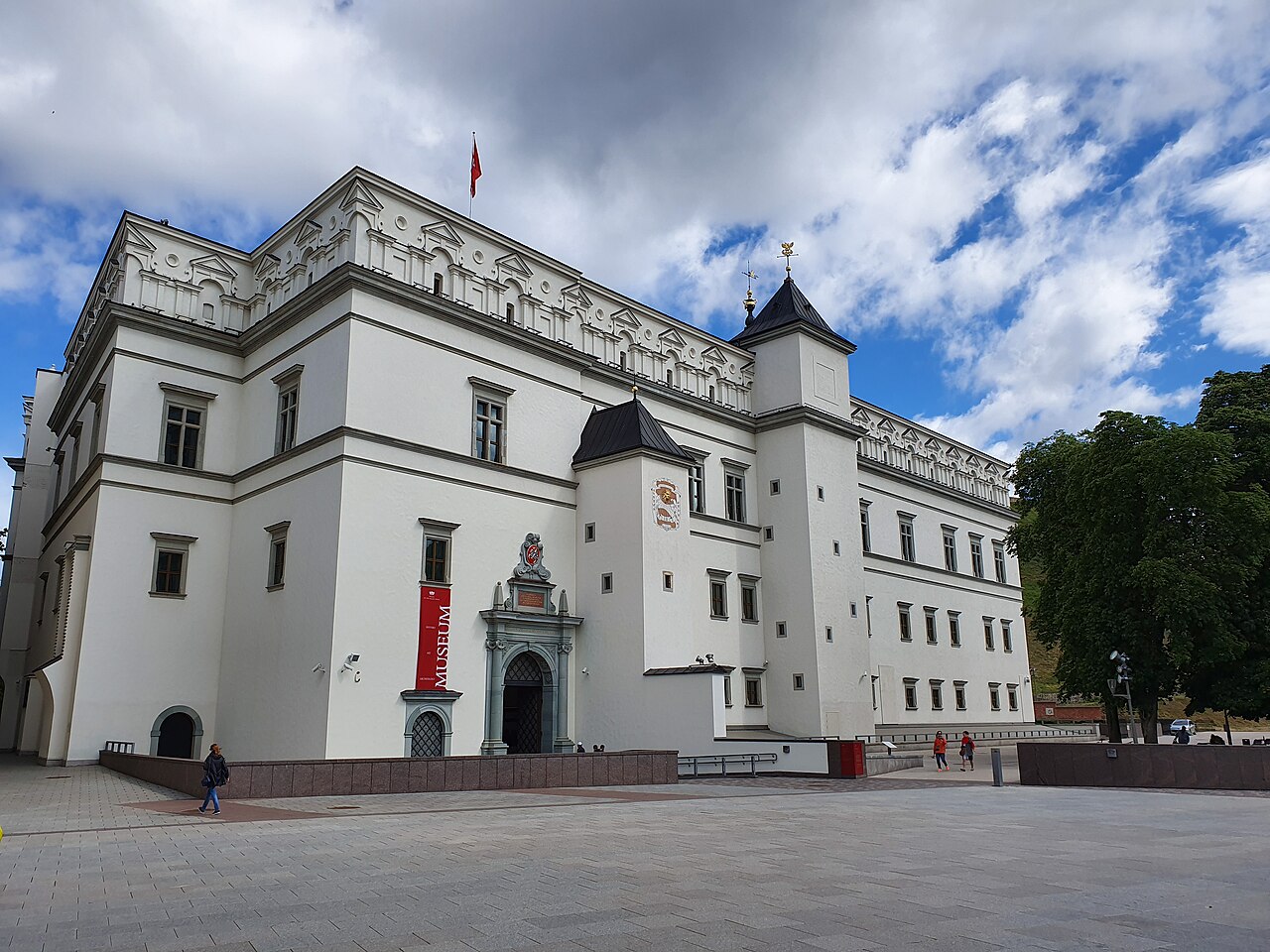
The reconstruction reflects this layered history, presenting the palace as a building shaped by many periods rather than a single unified design. Different parts and rooms evoke different eras, allowing visitors to trace the evolution of the building and of European taste through its varied spaces, from the sober strength of the medieval fabric to the exuberance of the Baroque.
This stylistic richness is one of the pleasures of exploring the palace. Rather than a single frozen moment, it offers a journey through the history of architecture, each style speaking of the age that produced it and of the changing life of the court. The building becomes a kind of textbook of European design, written in stone, brick, and decoration.
The challenge of representing so many periods in a single reconstruction was considerable, and the result reflects careful research into how the palace looked at different stages of its history. The reconstructed building aims to convey the layered richness of the original, giving visitors a sense of a residence that grew and changed with the centuries rather than one built all at once.
The decision to represent multiple styles rather than to freeze the palace at a single moment was itself a considered one. The original had never been a single unified design but a living building shaped by centuries of use, and the reconstruction honours that truth. Visitors move from medieval robustness to Renaissance harmony to Baroque exuberance, experiencing the palace as its historic occupants would have known it, as a place continually remade by successive generations.
How the Palace Was Lost
The palace’s long history of splendour came to a tragic end in the wake of political catastrophe. As the state it served weakened and was ultimately partitioned among its powerful neighbours, Lithuania lost its independence, and the palace lost its purpose. Without a court to serve, the great residence fell into decline, its glory fading as the political world that had sustained it collapsed.
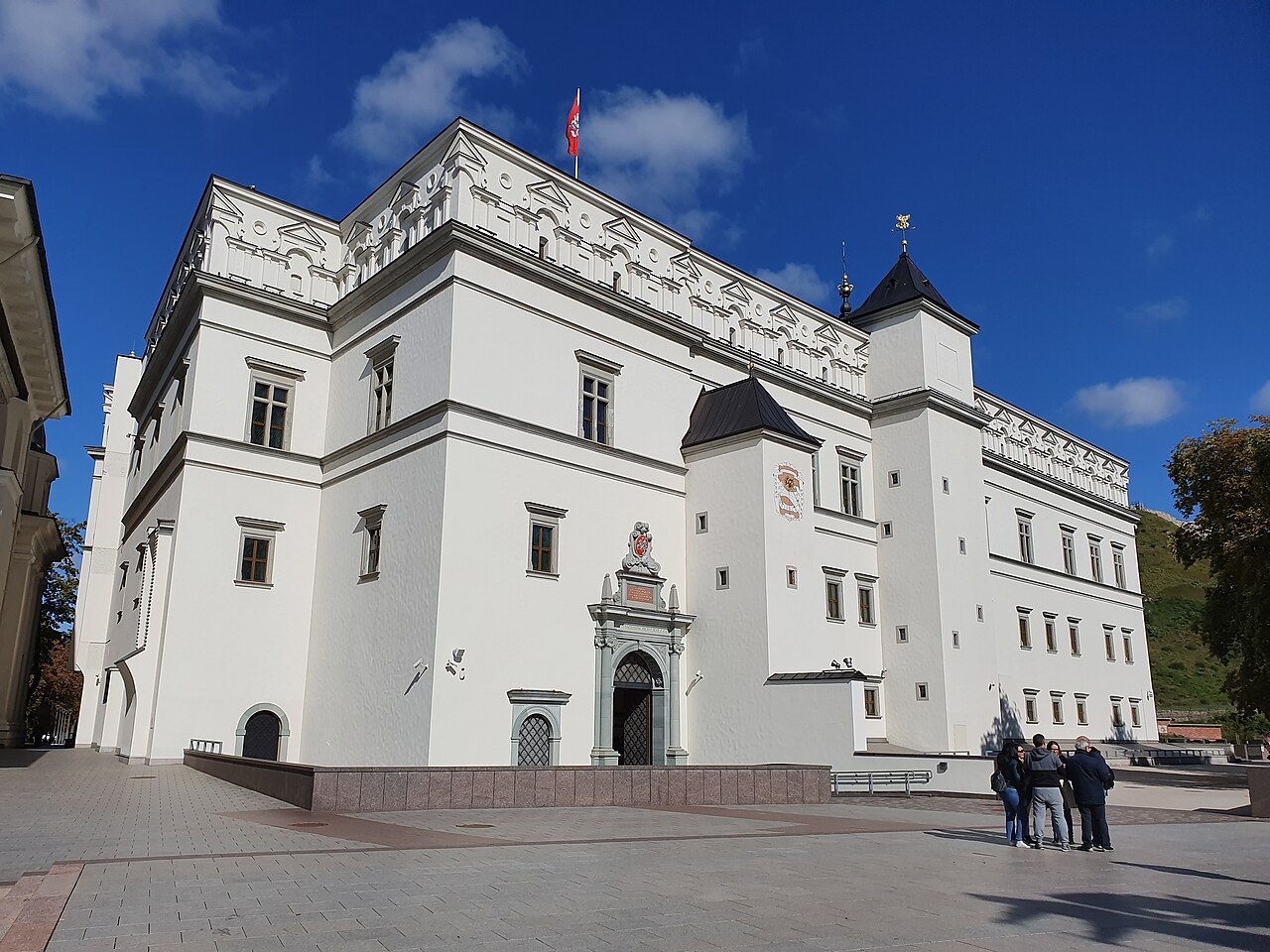
In the early nineteenth century, under the rule of a foreign empire, the decision was taken to demolish the decayed palace. The once-magnificent building was pulled down, its materials dispersed, and the site cleared, erasing from the landscape one of the most important monuments of Lithuanian history. What had been the seat of grand dukes and kings was reduced to little more than buried foundations.
This destruction was more than the loss of a building; it was a blow to the memory and identity of a nation that had been absorbed into a larger empire. The removal of the palace symbolised the erasure of Lithuanian statehood, and for generations the site stood empty, a gap in the heart of Vilnius where the great residence had once stood.
Yet the memory of the palace was never entirely lost. Old descriptions, images, and records preserved knowledge of what had stood there, and beneath the ground the foundations survived, waiting. This buried memory would, much later, make possible the extraordinary project of reconstruction, allowing a vanished palace to rise again from the evidence of its own remains.
The demolition of the palace was, in its way, a deliberate act of political meaning as well as practical decision. Removing the seat of the old rulers helped to sever the visible link between the land and its independent past, folding it more completely into the empire that now controlled it. That an empire should choose to erase such a monument is a measure of how potent a symbol the palace was, and how much its later rebuilding would come to mean.
Rebuilding a Vanished Palace
The rebuilding of the palace is one of the most ambitious cultural projects undertaken in modern Lithuania. Following the restoration of the country’s independence, the decision was made to reconstruct the lost residence of the grand dukes, both to recover a vital monument of national history and to make a powerful statement about the endurance of Lithuanian statehood and identity.
The project was grounded in decades of archaeological and historical research. Excavations of the site had uncovered the surviving foundations and countless artefacts, and scholars pored over old records and images to understand how the palace had looked at different periods. This wealth of evidence guided the reconstruction, which sought to recreate the building as faithfully as the sources allowed.
Rebuilding a palace that had vanished two centuries earlier was an enormous undertaking, requiring the recovery of lost crafts and the interpretation of incomplete evidence. The reconstruction rose over the preserved foundations, incorporating the surviving remains into the new building, so that the modern palace literally rests upon the fabric of its historic predecessor.
The completed palace opened as a museum, presenting both the reconstructed halls and the archaeological remains beneath. The project has not been without debate, as such ambitious reconstructions always are, but its achievement is undeniable: it has restored to Vilnius a monument central to the nation’s history and given physical form to a memory that empire had tried to erase.
Debates over reconstructions of this kind touch on deep questions about authenticity and memory, and Vilnius has had its share of them. Some argue that a rebuilt palace can never be the original; others reply that to leave the site empty would be to accept the erasure that empire intended. Whatever one’s view, the completed palace has become a much-visited and much-loved part of the city, and time is steadily weaving it into the living fabric of Vilnius.
The Grand Courtyard at the Heart
At the centre of the palace lies its Grand Courtyard, an elegant enclosed space that forms the architectural heart of the reconstructed residence. Surrounded by the wings of the palace, with their arcades and balconies, the courtyard recalls the great courtyards of Renaissance Italy, brought north to the Baltic and adapted to the life of the Lithuanian court.
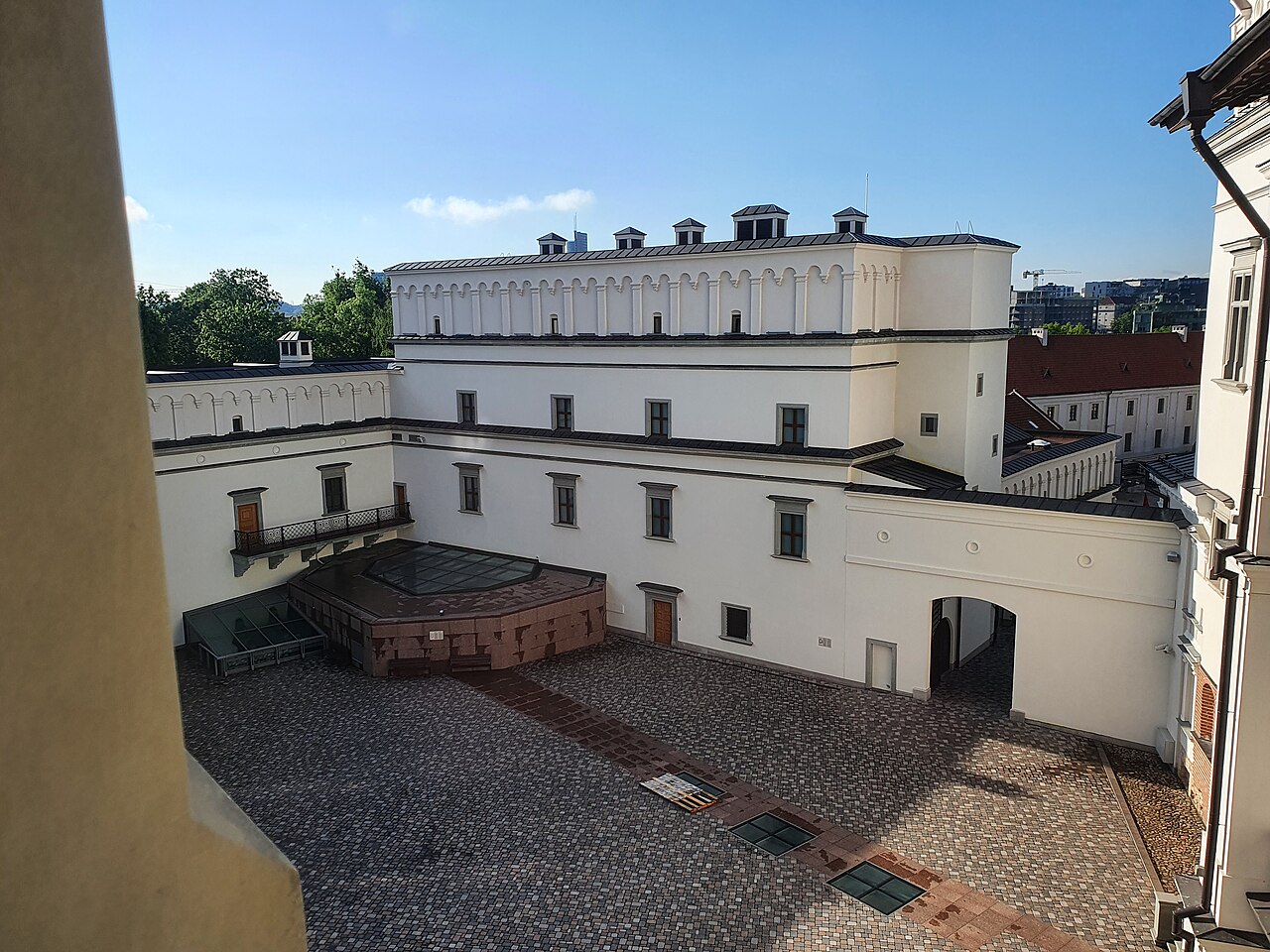
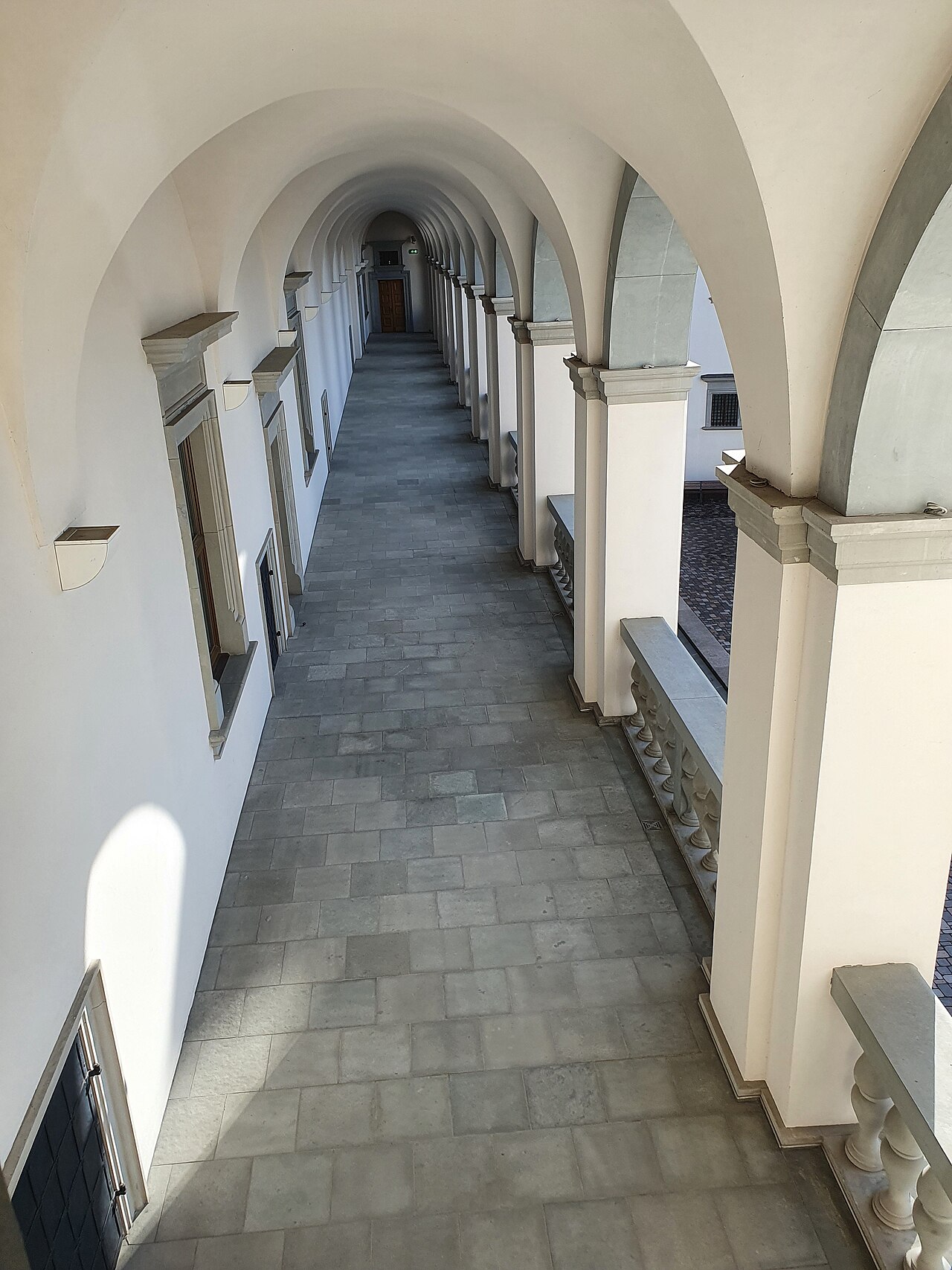
The courtyard served practical and ceremonial purposes alike. It was a place of arrival and gathering, where visitors entered the world of the palace, and it could serve as a setting for events and festivities. Its arcaded galleries connected the different parts of the residence and offered sheltered passage around the enclosed space, uniting the palace into a coherent whole.
Architecturally, the courtyard is one of the highlights of the reconstruction, its ordered facades and open central space embodying the Renaissance ideals of harmony and proportion. Standing within it, visitors can appreciate the palace as a unified design, experiencing the sense of enclosure and grandeur that such courtyards were meant to create.
From the courtyard, the eye is drawn upward to the balconies and windows of the surrounding wings, and beyond them to the hill and tower that overlook the palace. This relationship between the enclosed, ordered space of the courtyard and the wider setting of the castle complex captures the palace’s dual character as both an intimate residence and a great seat of state.
On summer evenings the courtyard sometimes comes alive with concerts and events, its arcades framing performances much as they once framed the ceremonies of the court. In these moments the reconstructed space fulfils its original purpose anew, gathering people together within the embrace of the palace and demonstrating that the building is not a static museum piece but a living venue at the heart of the city’s cultural life.
The Throne Room and Halls of State
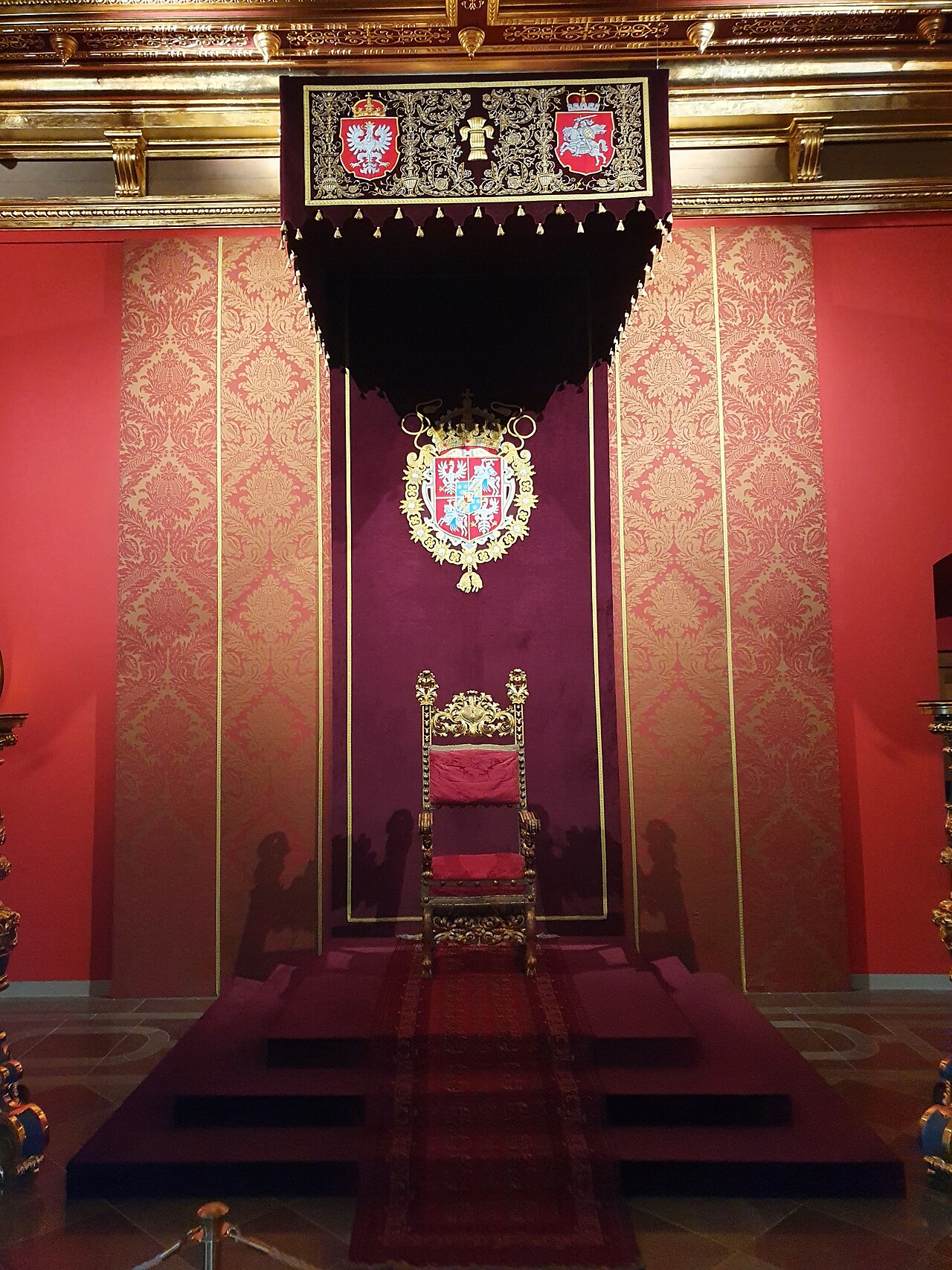
Among the grandest of the reconstructed interiors are the throne room and the ceremonial halls where the rulers of Lithuania once conducted the business of state. Here the grand dukes and kings received ambassadors, held audiences, and presided over the ceremonies that expressed their authority, and the reconstructed rooms recall the splendour of these occasions.
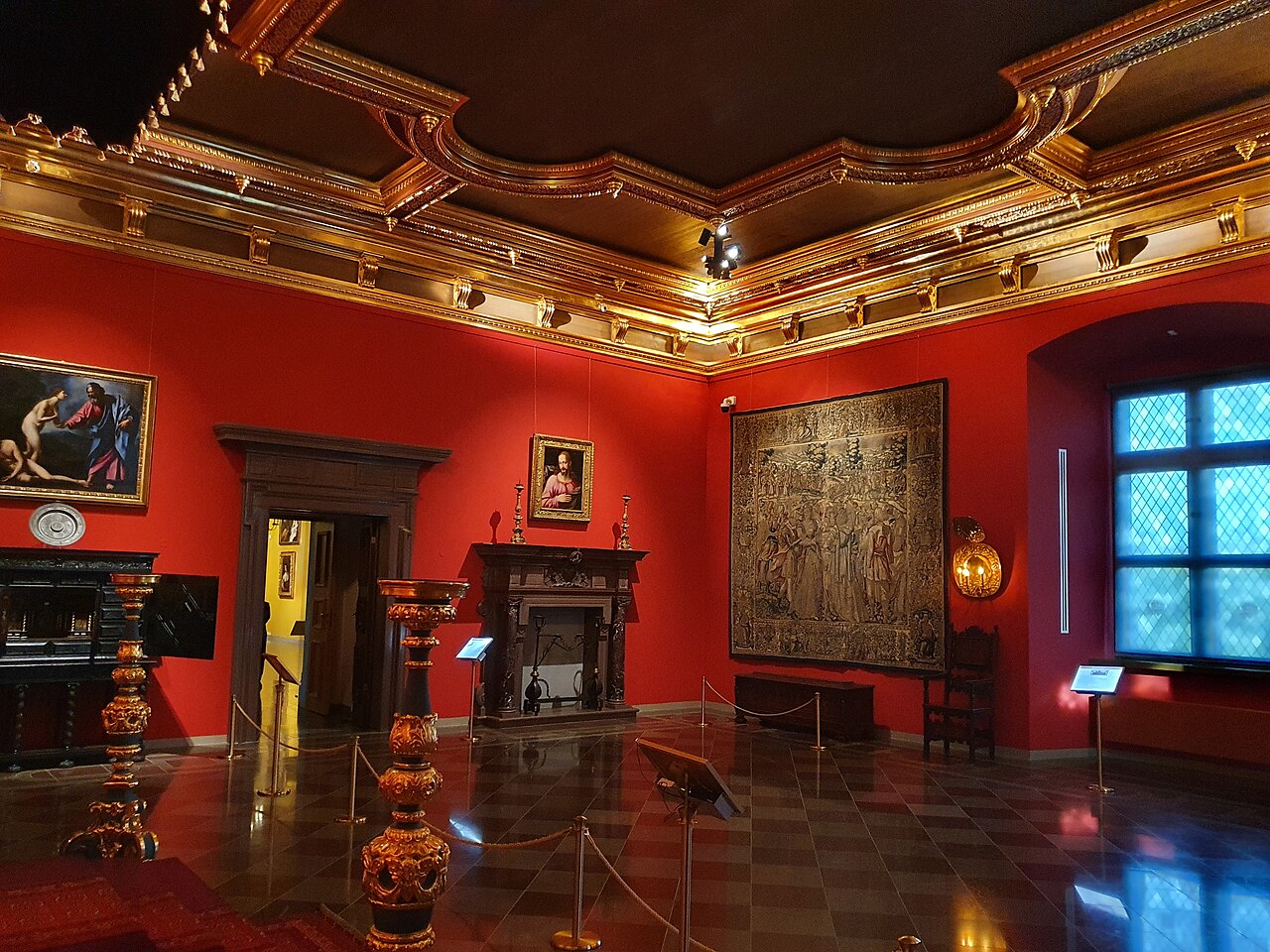
The throne room, with its throne set beneath a canopy, was the focus of ceremonial life, the place where the majesty of the ruler was displayed to visitors and subjects. Its decoration was designed to impress and to convey the power and dignity of the state, and the reconstruction seeks to recapture this atmosphere of solemn grandeur.
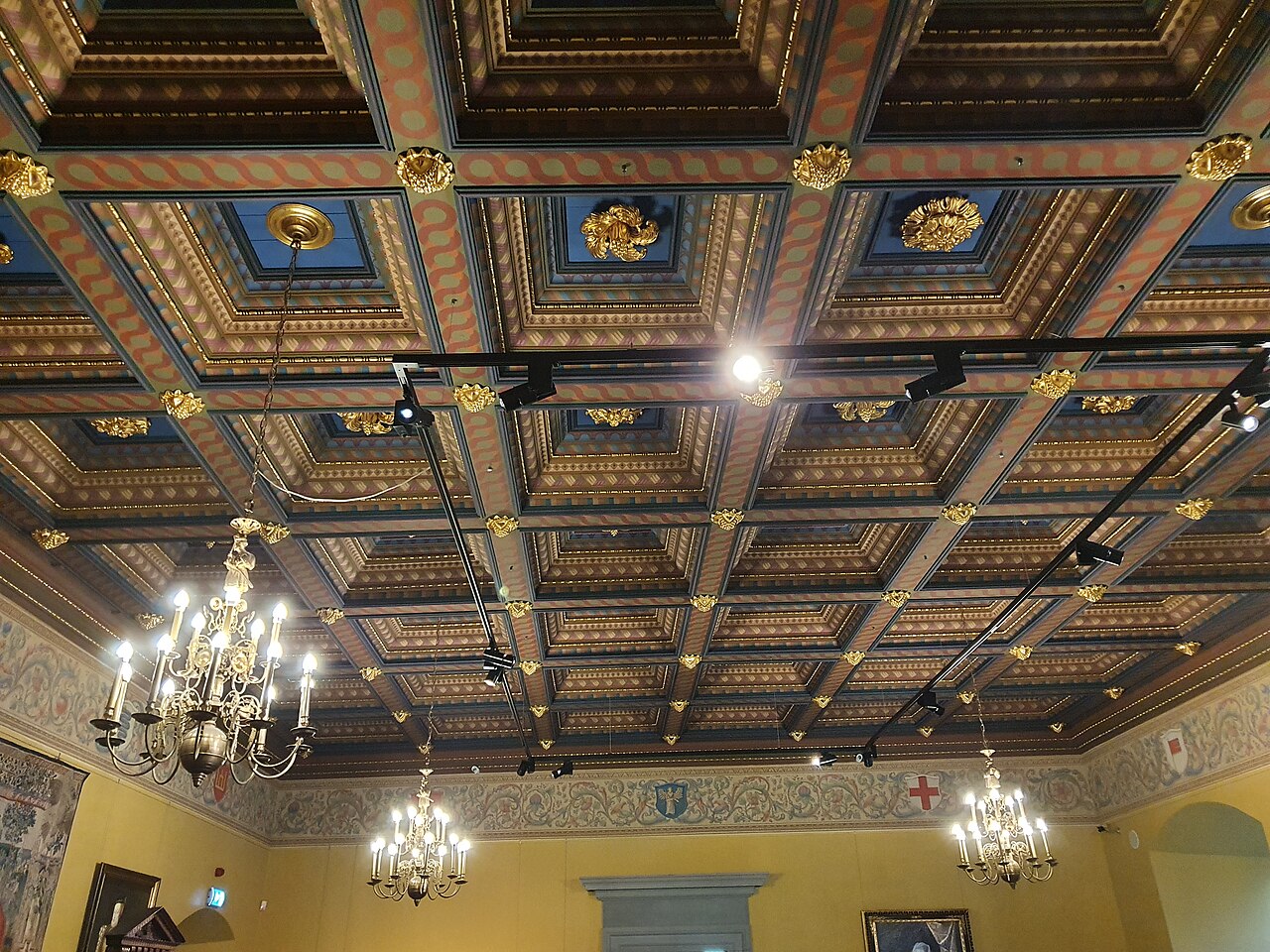
The great representative halls served for the largest gatherings, from receptions and banquets to important political assemblies. These spacious rooms, richly decorated in the styles of their periods, provided the setting for the public life of the court, and their scale and ornament reflected the importance of the events they hosted.
Together these halls of state form the ceremonial core of the palace, the spaces where its role as a seat of power was most fully expressed. Walking through them, visitors can imagine the great occasions they once witnessed, the ambassadors and dignitaries who passed through them, and the decisions that shaped the history of a major European state.
The recreation of these ceremonial spaces drew on descriptions of the receptions and audiences once held here, when envoys from across Europe came to treat with the rulers of a great power. Standing in the throne room today, it takes only a little imagination to people it again with the ambassadors, courtiers, and dignitaries who once filled it, and to sense the political weight that the room was built to convey.
The Restored Renaissance Rooms
Beyond the great halls, the palace contains a sequence of rooms decorated in the styles of its different periods, offering an immersive journey through the history of the residence. From Gothic-influenced spaces to elegant Renaissance chambers and Baroque interiors, these rooms recreate the changing tastes and life of the court across the centuries.
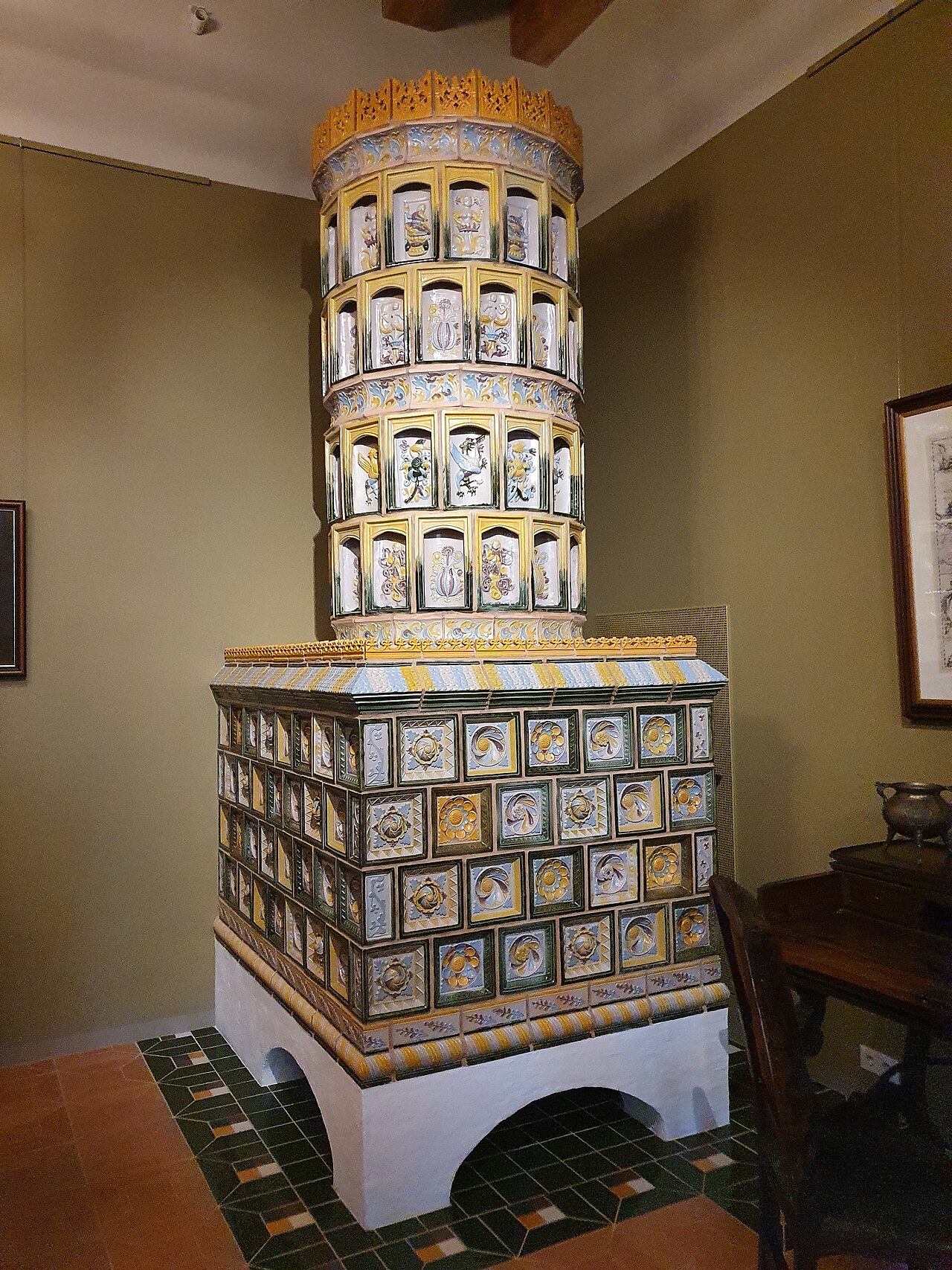
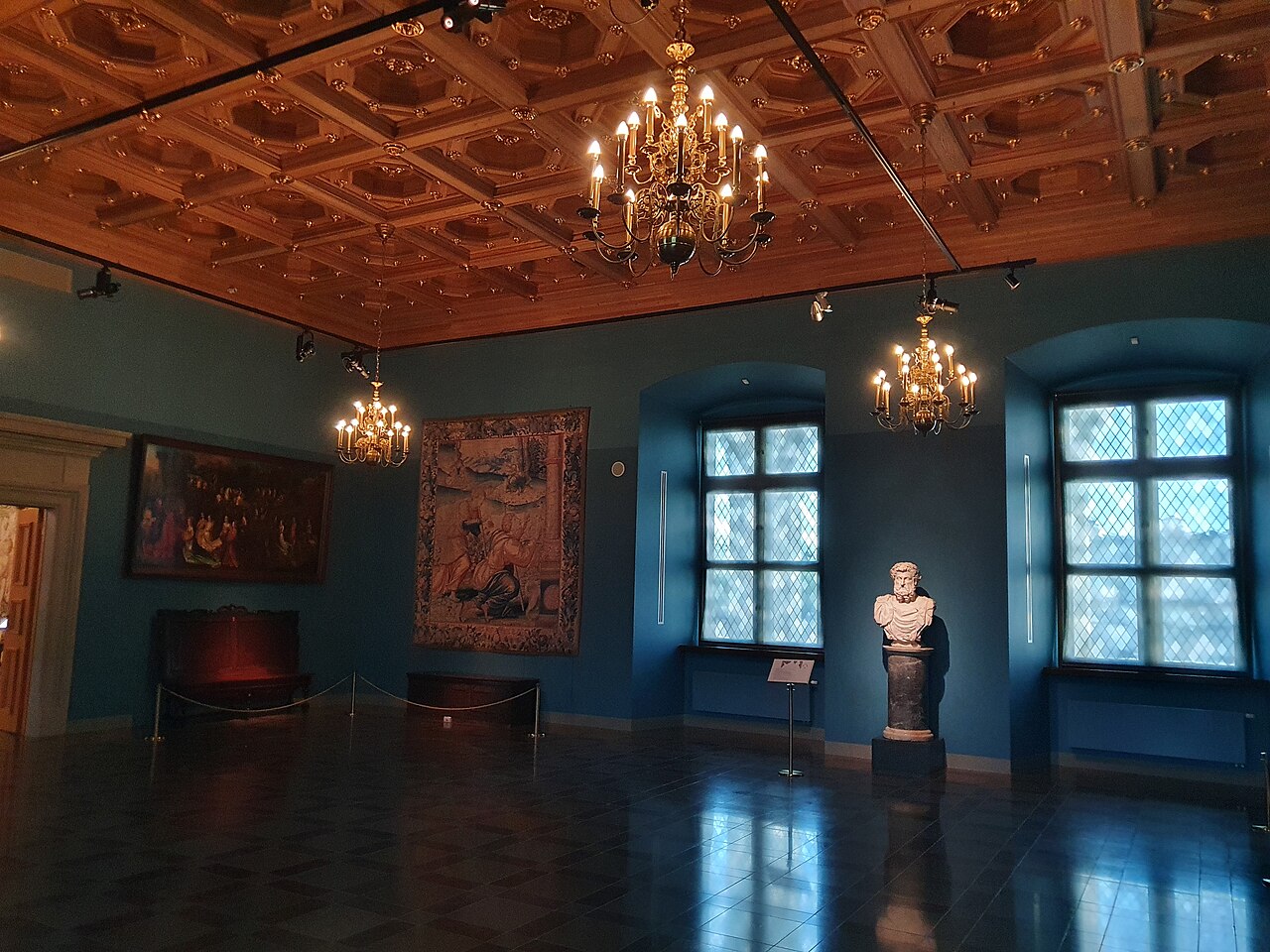
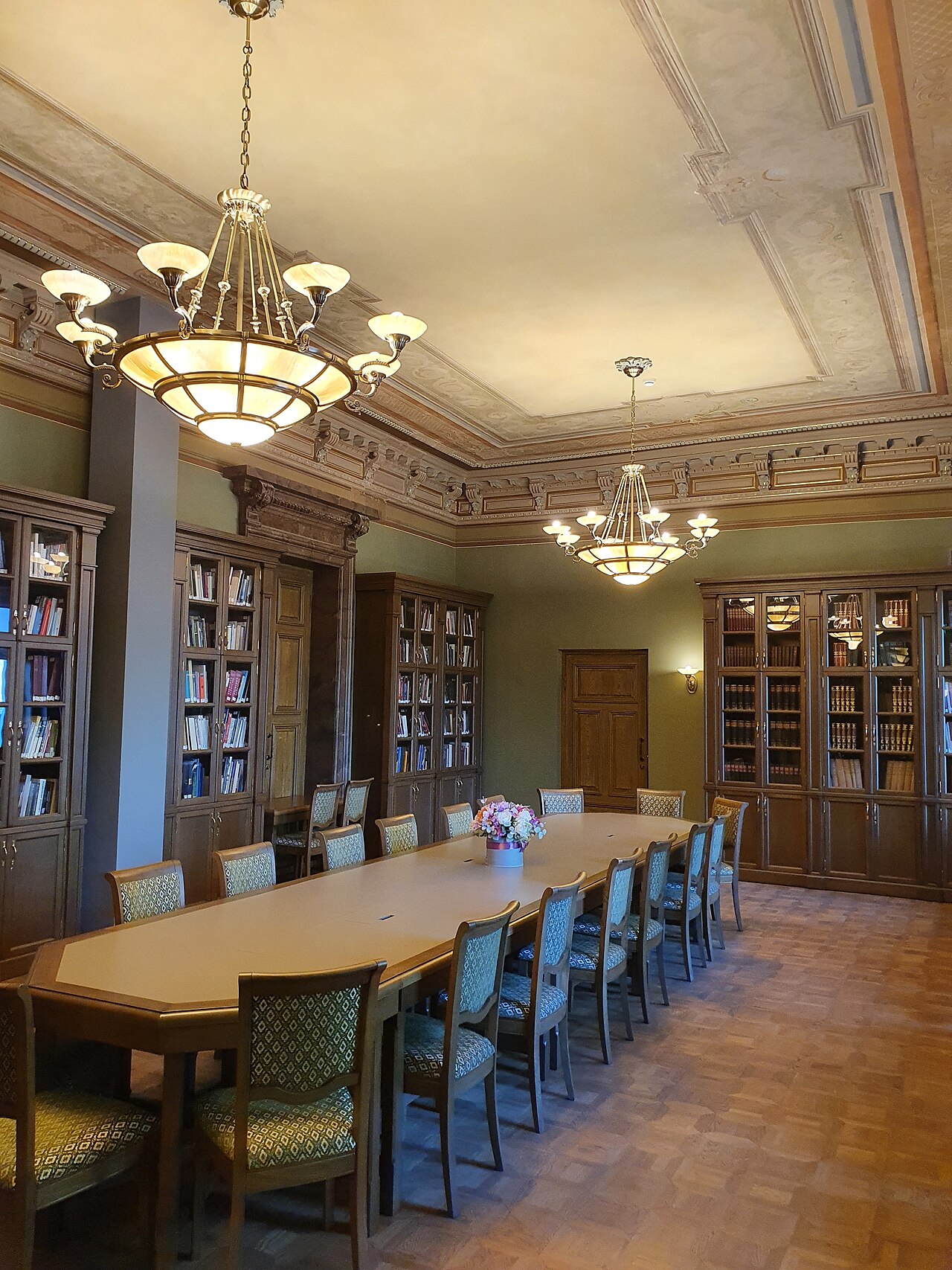
The reconstructed interiors are furnished and decorated with great care, drawing on historical evidence and on surviving examples from the period. Tapestries, furniture, tiled stoves, and works of art help to bring the rooms to life, evoking the atmosphere of a living court rather than a series of empty spaces. Particular attention has been paid to details such as the magnificent tiled stoves that once warmed and adorned the rooms.
Rooms such as the Blue Room and the various representative chambers each have their own character, allowing visitors to experience the variety of the palace’s interiors. The changing colours, decoration, and furnishings from room to room reflect both the different functions of the spaces and the evolving styles of the periods they represent.
These interiors are complemented by displays that explain the history of the palace and exhibit treasures associated with it. In this way the rooms serve both as recreations of historic spaces and as galleries, combining the experience of a restored palace with that of a museum and enriching the visitor’s understanding of the residence and its past.
The tiled stoves deserve particular attention, for they were among the glories of the historic palace and have been lovingly recreated. Towering and richly ornamented, decorated with heraldic and figurative motifs, these stoves were both practical heating and dazzling works of art, and their reconstruction required close study of surviving fragments recovered during the excavations. They stand among the most memorable features of the restored rooms.
The Foundations Beneath the Palace
One of the most remarkable features of the palace is what lies beneath it. The reconstruction was built directly over the surviving foundations of the original residence, and these ancient remains have been preserved and put on display, allowing visitors to descend below the reconstructed halls and see the actual fabric of the historic palace.
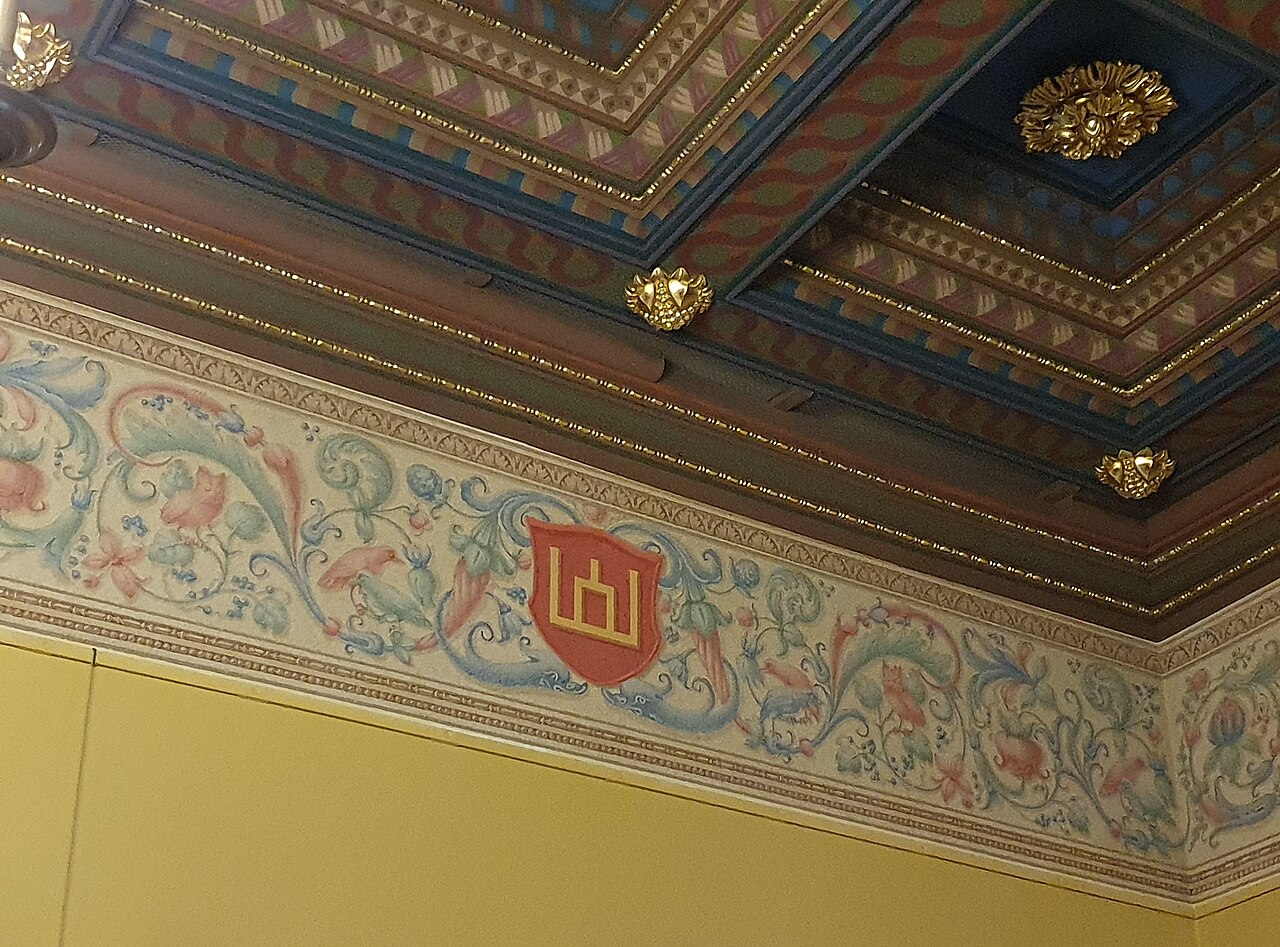
The archaeological displays reveal the layers of history on the site, from the earliest structures through the successive rebuildings of the palace. Walls, foundations, and floors of different periods can be seen in place, telling the story of how the residence grew and changed over the centuries, and grounding the reconstruction above in the physical reality of the past.
Alongside the structural remains, the excavations yielded a wealth of artefacts, from fragments of decoration and everyday objects to precious finds that shed light on the life of the court. Many of these are displayed in the museum, offering direct, tangible connections to the people who lived and worked in the palace across the centuries.
This combination of reconstruction above and preserved remains below gives the palace a special authenticity. Visitors do not simply see a modern recreation but can also stand among the genuine foundations of the historic building, experiencing both the imagined splendour of the restored halls and the real, weathered evidence of the palace that once stood on the spot.
Descending from the bright reconstructed halls into the cool, dim spaces of the foundations is a powerful experience. Here, among the genuine walls of centuries past, the abstract history told upstairs becomes physical and immediate. Visitors can lay eyes on the very stones the grand dukes knew, and the contrast between the recreated splendour above and the authentic remains below lends the whole palace a rare emotional depth.
A Symbol of Lithuanian Statehood
For Lithuanians, the palace is far more than a museum; it is a powerful symbol of national identity and statehood. Its destruction under foreign rule represented the erasure of Lithuanian sovereignty, and its reconstruction, undertaken after the restoration of independence, stands as a triumphant assertion that this identity had survived and could be reclaimed.
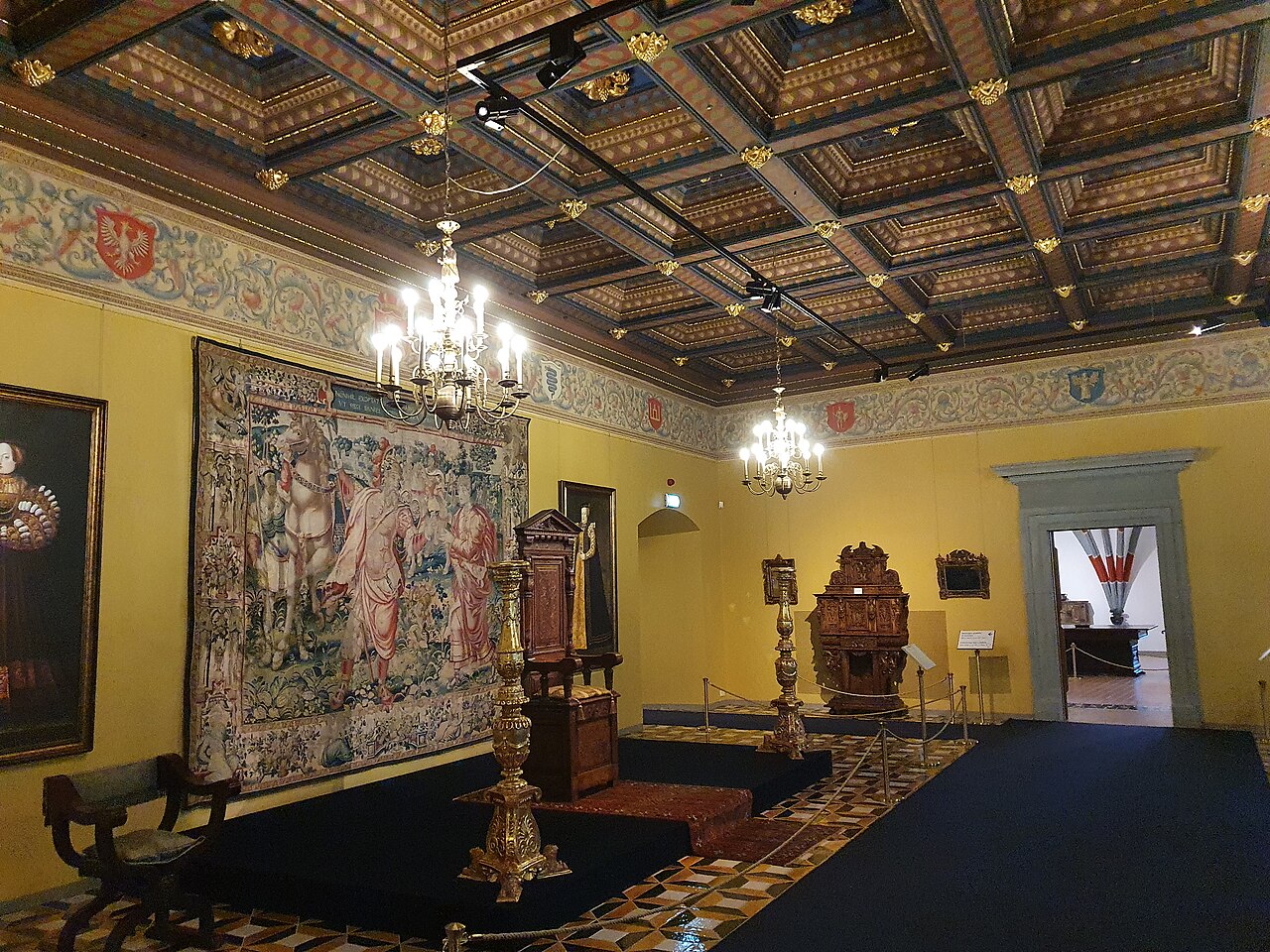
The rebuilding of the palace was, in this sense, an act of national memory and pride. By raising again the seat of the grand dukes, Lithuania reconnected with its historic role as a major European power and reaffirmed the continuity of its statehood across the long interruption of foreign rule. The palace gives physical form to the nation’s sense of its own history.
The site’s symbolic power is heightened by its setting at the heart of Vilnius, beside the cathedral and beneath the ancient tower on the hill, in the very cradle of Lithuanian statehood. To rebuild the palace here was to restore a missing piece at the symbolic centre of the nation, completing a landscape rich in historical meaning.
Today the palace plays an active role in the life of the modern state, hosting official events and welcoming distinguished visitors as well as serving as a museum. In this way it once again fulfils something of its historic function as a seat of national representation, linking the independent Lithuania of today to the grand duchy of the past.
The timing of the reconstruction gave it added resonance, coinciding with milestones in the nation’s modern history and its return to the family of independent European states. To complete the palace was to mark, in the most visible way, the recovery of a sovereignty long denied, and to declare that the interruptions of foreign rule had not extinguished the nation’s identity. Few buildings carry so direct a political and emotional charge.
Planning Your Visit
The palace stands in the very centre of Vilnius, beside Cathedral Square and at the foot of the castle hill, making it easy to include in any exploration of the old city. Its central location means it can be combined with the many other historic sights nearby, and a visit can range from a focused tour of the highlights to a longer exploration of its many rooms and displays.
View the Palace of the Grand Dukes of Lithuania on Google Maps
Inside, visitors can explore the reconstructed halls and chambers, the Grand Courtyard, the throne room and representative halls, and the archaeological remains beneath, along with exhibitions on the history of the palace and the grand duchy. Different routes through the museum allow visitors to focus on the aspects that most interest them, from architecture and interiors to archaeology and history.
As with any museum, it is wise to check current opening hours and ticket arrangements before you go, since these can vary and different tours or sections may have their own arrangements. Guided tours and information help visitors make sense of the palace’s complex history and appreciate both the reconstruction and the genuine remains it protects.
You can find the palace and plan your route using the map link below. Whether you come for the history of the grand duchy, the reconstructed Renaissance interiors, the archaeological remains, or the palace’s role as a symbol of Lithuanian statehood, it offers one of the essential experiences of Vilnius. Give yourself time to explore both the splendour above and the foundations below.
Many visitors find that the palace rewards more time than they first expect, for its combination of reconstructed halls, museum displays, and underground remains offers several very different experiences in one building. Coming with a few hours to spare allows you to move unhurried from the splendour of the state rooms to the quiet of the foundations, and to absorb the remarkable story that ties them together.
See the Palace for Yourself
A palace with so unusual a story is best appreciated in motion, and the short film below offers a closer look at the reconstructed residence, its courtyard, its halls, and its displays. It conveys the scale and splendour of the building and gives a sense of how the vanished palace has been brought back to life at the heart of Vilnius.
As you watch, keep in mind the extraordinary journey behind it: a great Renaissance court, a deliberate destruction under empire, centuries of absence, and a modern reconstruction that raised the palace again from its buried foundations. The Palace of the Grand Dukes is a monument not only to the history of Lithuania but to the determination of a nation to reclaim and rebuild its heritage.
Palaces Nearby
If the Palace of the Grand Dukes has drawn you into the royal and imperial heritage of the Baltic, two more palaces in the region make natural companions, each with its own character.
- Kadriorg, the Pink Palace Peter the Great Built by the Baltic — a rose-pink Baroque palace in Tallinn, built by Peter the Great and now an art museum.
- Rundale, the Baroque Palace on the Latvian Plain — Rastrelli’s Versailles of the Baltic, a Latvian masterpiece rescued from ruin.
You May Like
Inside the Azm Palace, a Hidden Paradise of Old Damascus


2 thoughts on “The Vanished Palace of Lithuania’s Grand Dukes, Rebuilt in Vilnius”