On the great open expanse of Dam Square, in the very heart of Amsterdam, stands a building of monumental dignity that has worn two very different identities across its long life. The Royal Palace of Amsterdam presents a stately classical facade to the bustling square, its grey stone rising in calm, ordered rhythms beneath a crowning dome and pediment. It looks every inch a royal residence, and yet it was not built for a king at all.
This magnificent building began life as the town hall of Amsterdam, raised at the height of the Dutch Golden Age when the city stood among the richest and most powerful in the world. It was conceived as a monument to civic pride and republican liberty, a statement of the confidence of a merchant city at the peak of its glory. Only much later, through the accidents of history, did it become a palace.
Behind its dignified exterior lie some of the most spectacular interiors in the Netherlands, above all the great Citizens’ Hall, a soaring marble chamber that was meant to represent the whole universe in miniature. The building is a treasure house of sculpture and decoration, a supreme expression of the art and ideals of the Dutch Republic at its zenith, and a monument of European importance.
In this guide you will explore the Royal Palace from its origins as a golden-age town hall, through its remarkable architecture and engineering, its magnificent halls and sculpture, its transformation into a royal palace, and its life today. By the end you will understand why this building on Dam Square is regarded as one of the great monuments of the Netherlands and of European civilisation.

In This Article
- A Town Hall for a Golden Age
- Jacob van Campen and Dutch Classicism
- The Castle on Wooden Piles
- The Citizens’ Hall and the Marble World
- Quellinus and the Sculpted Republic
- The Tribunal and Civic Justice
- How a Town Hall Became a Palace
- The Royal Rooms and Empire Furniture
- A Monument of the Dutch Golden Age
- The Palace on Dam Square
- A Working Royal Palace Today
- Planning Your Visit
- See the Royal Palace for Yourself
A Town Hall for a Golden Age
The Royal Palace of Amsterdam was born at a moment of extraordinary confidence. In the seventeenth century, the Dutch Republic had become one of the wealthiest and most powerful states in the world, its ships trading across the globe and its cities swelling with the riches of commerce. Amsterdam stood at the centre of this golden age, and it wished for a town hall worthy of its greatness.

The old town hall had become inadequate for so important a city, and its destruction by fire spurred the decision to build anew on a grand scale. The city fathers resolved to create not merely a functional civic building but a monument that would proclaim the wealth, power, and civic virtue of Amsterdam to the world, a statement of the city’s place among the great centres of Europe.
The new town hall was to house the government of the city, its courts, its treasury, and its administration, all under one magnificent roof. It was conceived as the seat of a proud and self-governing merchant republic, a building whose grandeur would rival the palaces of kings while celebrating the very different values of a free commercial city.
Construction began in the mid-seventeenth century and proceeded over many years, drawing on the wealth of the city and the talents of its finest artists and craftsmen. The result was a building of unprecedented magnificence for a civic structure, a town hall so grand that it was sometimes called the eighth wonder of the world, a fitting monument to Amsterdam at the height of its glory.
The scale of the undertaking astonished contemporaries, for no city had built a civic monument of such grandeur. In an age when great buildings were almost always churches or palaces of princes, for a merchant city to raise so magnificent a structure for its own government was a bold and even revolutionary statement. It proclaimed that the citizens of a free republic could match, and even surpass, the splendour of kings.
Jacob van Campen and Dutch Classicism
The architect of the great town hall was Jacob van Campen, the leading figure of Dutch Classicism and one of the most important architects in the history of the Netherlands. Drawing on the classical traditions of ancient Rome and the Italian Renaissance, he created a building of restrained grandeur and perfect proportion, a masterpiece of the classical style adapted to the Dutch context.

Dutch Classicism favoured balance, order, and dignity over exuberant ornament, and these qualities are everywhere apparent in the building. The facade is composed with mathematical precision, its rhythms of pilasters and windows creating an impression of calm authority. The style suited perfectly the sober, self-confident ethos of the merchant republic that built it.
Van Campen’s design drew on classical models but adapted them to serve the practical and symbolic needs of a great civic building. The result was not a copy of any ancient prototype but an original creation, a distinctly Dutch interpretation of the classical language that would influence architecture across the Netherlands and beyond for generations.
The building stands as the supreme achievement of Dutch Classicism and one of the most important works of European architecture of its age. In its harmony, dignity, and restraint, it embodies the ideals of the golden-age republic, and it established a model of classical civic architecture that would prove enormously influential in the centuries that followed.
The influence of van Campen’s masterpiece extended far beyond Amsterdam, shaping the course of classical architecture across northern Europe. Architects came to study its proportions and details, and its restrained, dignified manner became a model for civic and domestic buildings alike. In this sense the town hall was not only a monument but a teacher, spreading the ideals of Dutch Classicism across the continent.
The dome that crowns the building, topped by a weathervane in the form of a ship, is a fitting emblem of the maritime city, reminding all who see it that Amsterdam’s greatness rose from the sea. This small but telling detail unites the classical dignity of the architecture with the seafaring identity of the city, a reminder that beneath the grandeur lay the ships and trade that made it all possible.
The Castle on Wooden Piles
One of the most remarkable facts about the building is what lies beneath it. Amsterdam is built on soft, marshy ground, and to support so massive a structure the builders had to drive thousands of wooden piles deep into the earth to reach firm ground below. This feat of engineering was essential to the very existence of the building.

The number of piles beneath the building is famous, running to many thousands, a vast forest of timber sunk into the ground to bear the enormous weight of the stone above. This hidden foundation, invisible to visitors, is one of the great engineering achievements of the age, without which the magnificent building could never have stood.
The reliance on wooden piles reflects the challenges of building in the watery landscape of the Netherlands, where solid ground is scarce and the water table high. Dutch builders became masters of these techniques out of necessity, and the town hall represents the application of their skills on the grandest possible scale.
That the building has stood for centuries on its wooden foundations is a testament to the skill of its builders and the soundness of their methods. The famous piles have become part of the legend of the building, a reminder that beneath its classical grandeur lies a triumph of practical engineering, a castle raised on a forest of timber in the marshes of Amsterdam.
The famous figure for the number of piles beneath the building has entered Dutch folklore, cited by generations of schoolchildren as a symbol of the ingenuity required to build a great city on water. Whether or not every visitor recalls the exact number, the idea of a marble palace floating, in effect, on a submerged forest captures something essential about Amsterdam itself, a city wrested from the water by skill and determination.
The Citizens’ Hall and the Marble World
The heart of the building is its Citizens’ Hall, one of the most magnificent interiors in Europe and the crowning glory of the whole structure. This vast marble chamber rises through the full height of the building, flooded with light and lined with gleaming stone, a space of breathtaking grandeur that was meant to overwhelm visitors with the majesty of the city.
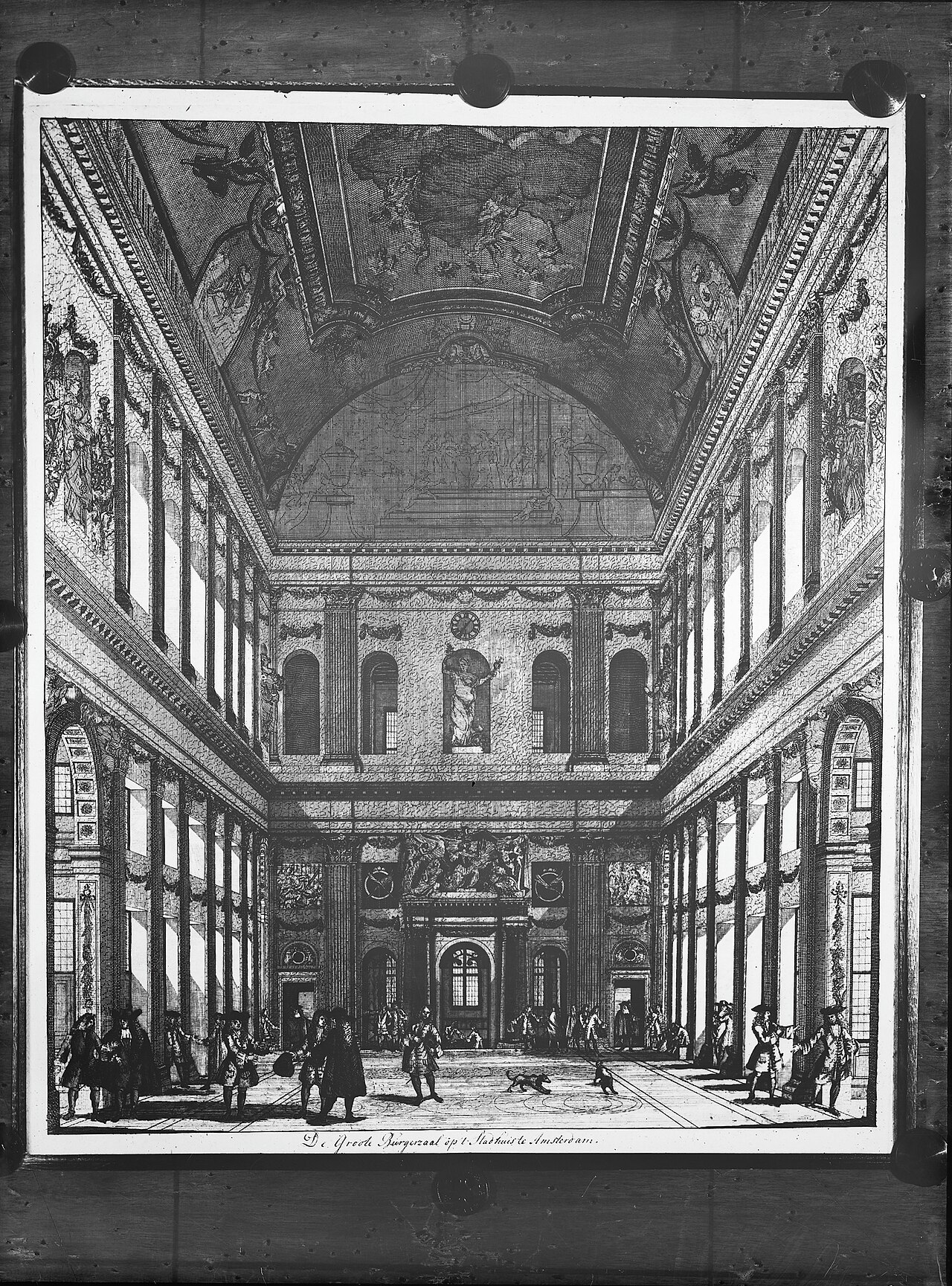
The hall was conceived as a representation of the universe itself, with the city of Amsterdam at its centre. Inlaid in the marble floor are great maps of the world and the heavens, so that those who walked across the hall symbolically strode across the globe. This extraordinary conceit expressed the global reach and ambition of the merchant city at the height of its power.
The decoration of the hall reinforces this cosmic theme, with sculpture and ornament celebrating the wealth, wisdom, and virtue of Amsterdam and its place at the centre of a world-spanning network of trade. Every element was designed to convey the greatness of the city and the ideals of the republic that governed it.
To stand in the Citizens’ Hall today is to feel the full ambition of the golden-age city that created it. The soaring marble space, the maps beneath your feet, and the sculpture all around combine to create one of the most impressive interiors anywhere, a room that captures in stone the confidence and reach of Amsterdam at the peak of its glory.
The maps set into the floor were more than decoration; they were a statement of worldview, placing Amsterdam at the centre of a globe its merchants and sailors had helped to chart. To walk across the hall was to traverse the known world, an experience designed to impress upon every visitor the astonishing reach of the city’s trade and knowledge. Few decorative schemes have expressed civic ambition so eloquently.
Light plays a special role in the hall, pouring in from high windows to illuminate the pale marble and make the great space glow. This luminosity was part of the design, for the architects understood that light itself could be a material of architecture, and the Citizens’ Hall remains one of the most beautifully lit interiors of its age, changing in mood with the passing hours and the Dutch weather.
Quellinus and the Sculpted Republic
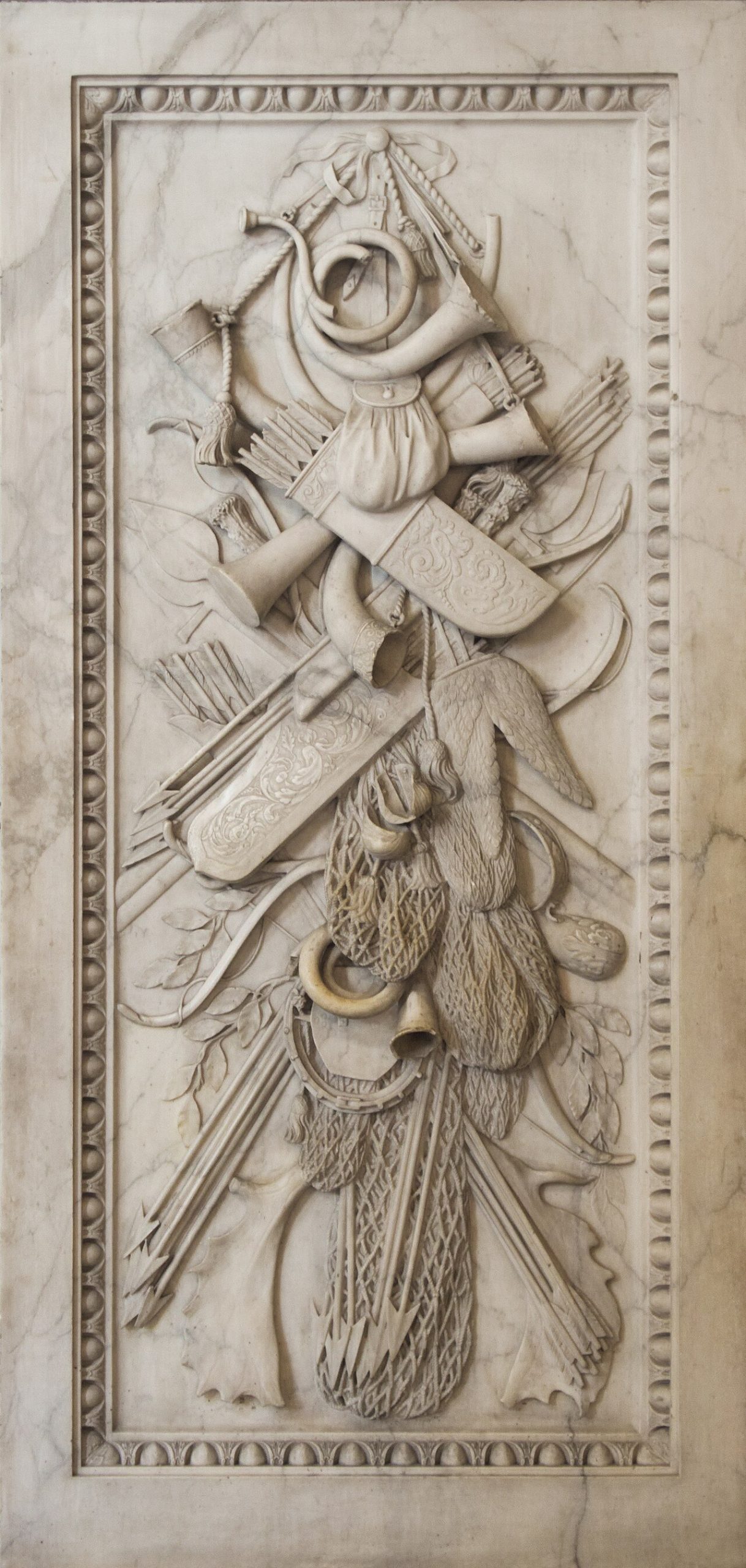
The building is celebrated not only for its architecture but for its sculpture, an extraordinary programme of carved decoration created by the workshop of the sculptor Artus Quellinus and his collaborators. This sculpture, in marble and bronze, ranks among the finest of its age and forms an integral part of the meaning of the building.
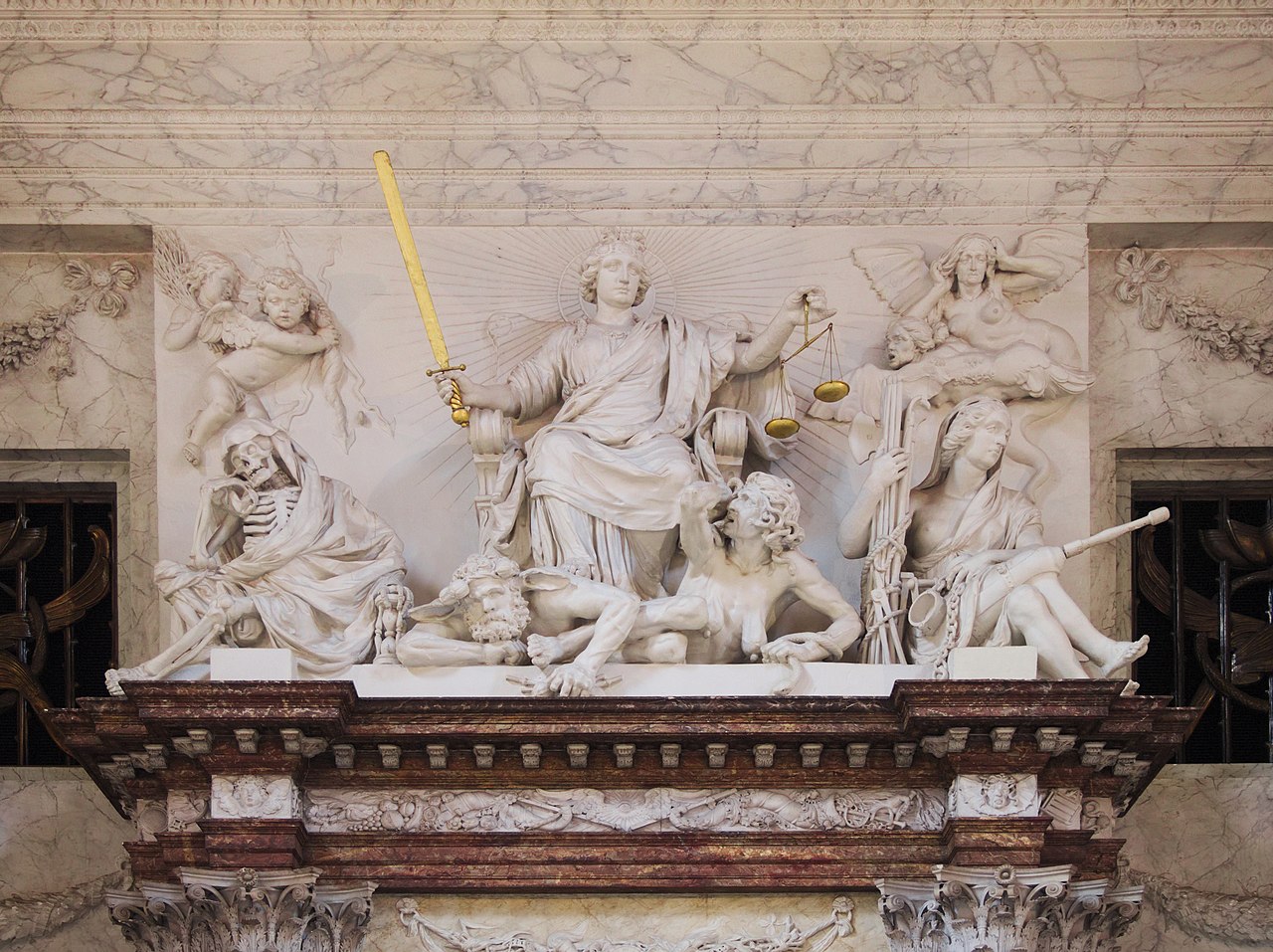
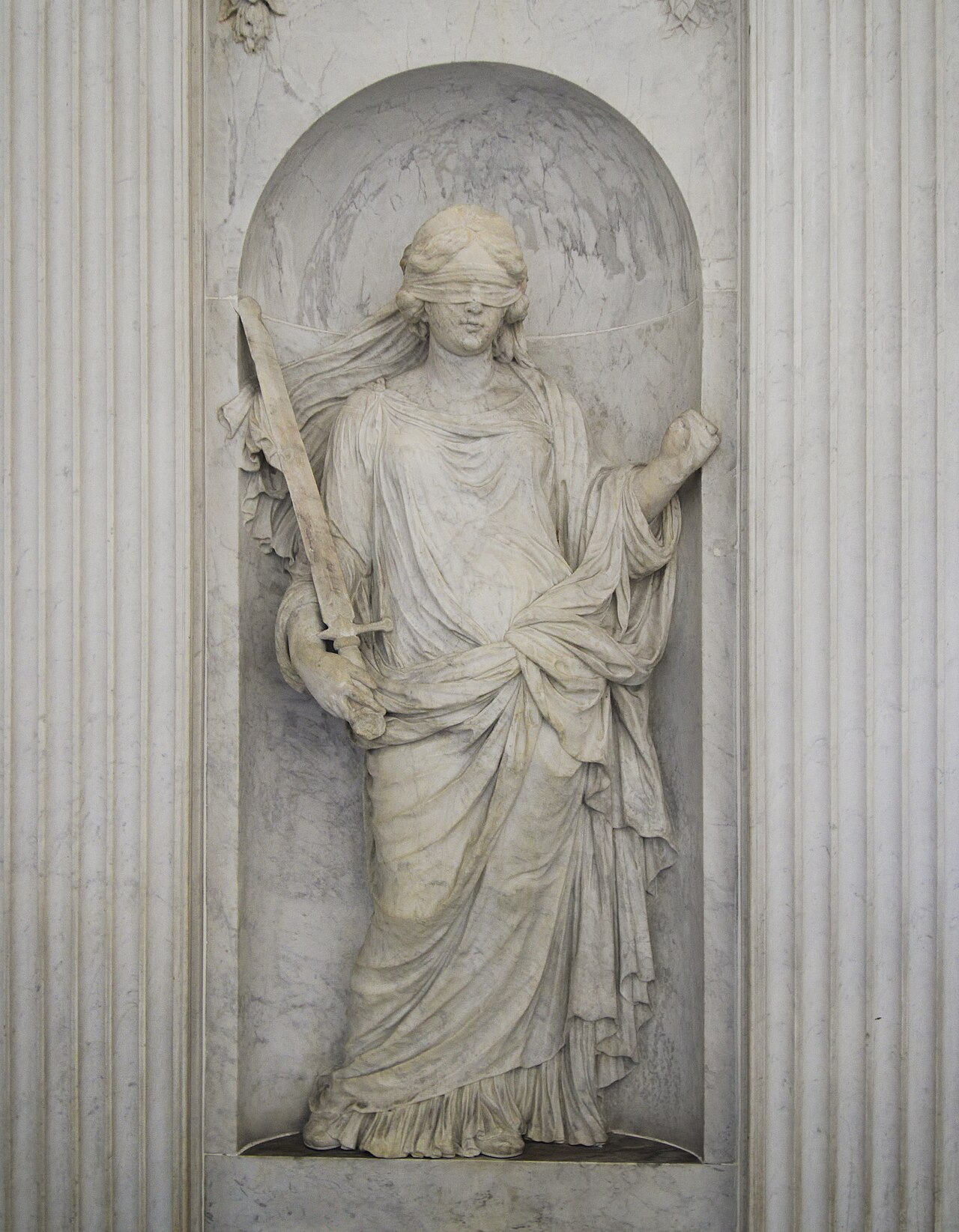
The sculptural programme was carefully devised to convey the ideals and self-image of the republic. Allegorical figures, mythological scenes, and symbolic reliefs celebrate the virtues of good government, justice, wisdom, and civic responsibility, as well as the wealth and power of the city. The whole building becomes a lesson in the values of the merchant republic, expressed through art.
Quellinus, working in a rich classical and baroque style, brought the marble to life with figures of great beauty and expressiveness. The sculpture adorns the exterior pediments, the great halls, and the many rooms of the building, creating a unified decorative scheme of remarkable coherence and quality that rivals the finest sculptural programmes of the age.
This wealth of sculpture makes the building a treasure house of seventeenth-century art as well as a monument of architecture. The collaboration of a great architect and a great sculptor produced a total work of art in which building and decoration are perfectly integrated, each enhancing the other in the service of a grand civic vision.
The integration of sculpture and architecture at Amsterdam set a standard rarely matched, for Quellinus and van Campen worked in close harmony toward a single vision. The figures do not merely adorn the building but explain it, guiding the visitor through a programme of ideas about government, justice, and the good society. The result is a building that can be read as well as admired, a monument in which art and meaning are inseparable.
The Tribunal and Civic Justice
Among the most striking spaces in the building is the Tribunal, the chamber where justice was administered in the days of the town hall. This solemn room, richly decorated with sculpture on themes of justice and judgement, was where the most serious sentences were pronounced, and its decoration was designed to convey the gravity and righteousness of the law.
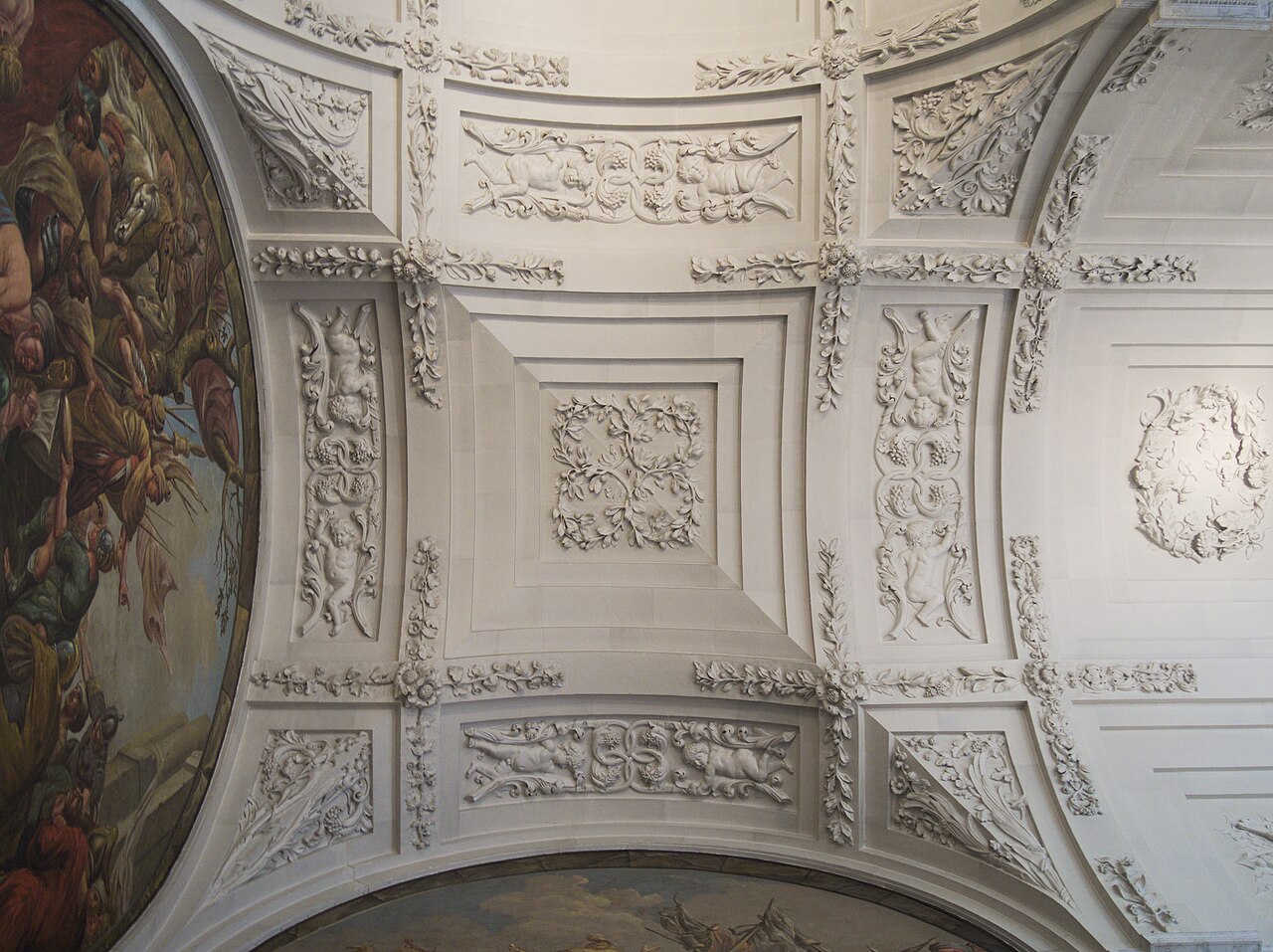
The Tribunal was positioned so that proceedings could be witnessed from the square outside, reflecting the public nature of justice in the republic. The sculpture that adorns it depicts scenes and figures associated with justice and mercy, reminding those who judged and those who were judged of the weight of the law and the ideals it was meant to serve.
The room reflects the seriousness with which the merchant republic regarded the administration of justice, seeing it as one of the foundations of a well-ordered and prosperous society. The care lavished on its decoration expressed the importance of the rule of law to the self-image and the success of the golden-age city.
For visitors today, the Tribunal offers a powerful glimpse into the civic ideals of the republic and the role of the building as a seat of government and justice. Its solemn beauty and its rich symbolism make it one of the most evocative spaces in the building, a reminder of the values that underlay the wealth and power of golden-age Amsterdam.
The public visibility of the Tribunal reflected a distinctive idea of justice, one in which the law was to be seen to be done. In an age when justice elsewhere was often hidden, this openness expressed the values of a society that prized transparency and accountability in its institutions, and the room stands as a reminder of the civic ideals that underpinned the republic’s remarkable success.
How a Town Hall Became a Palace
The transformation of the building from town hall to royal palace came through one of the great upheavals of European history. In the early nineteenth century, in the era of Napoleon, the Netherlands came under French influence, and Napoleon installed his brother as king of a new Kingdom of Holland, bringing monarchy to a land that had long been a republic.
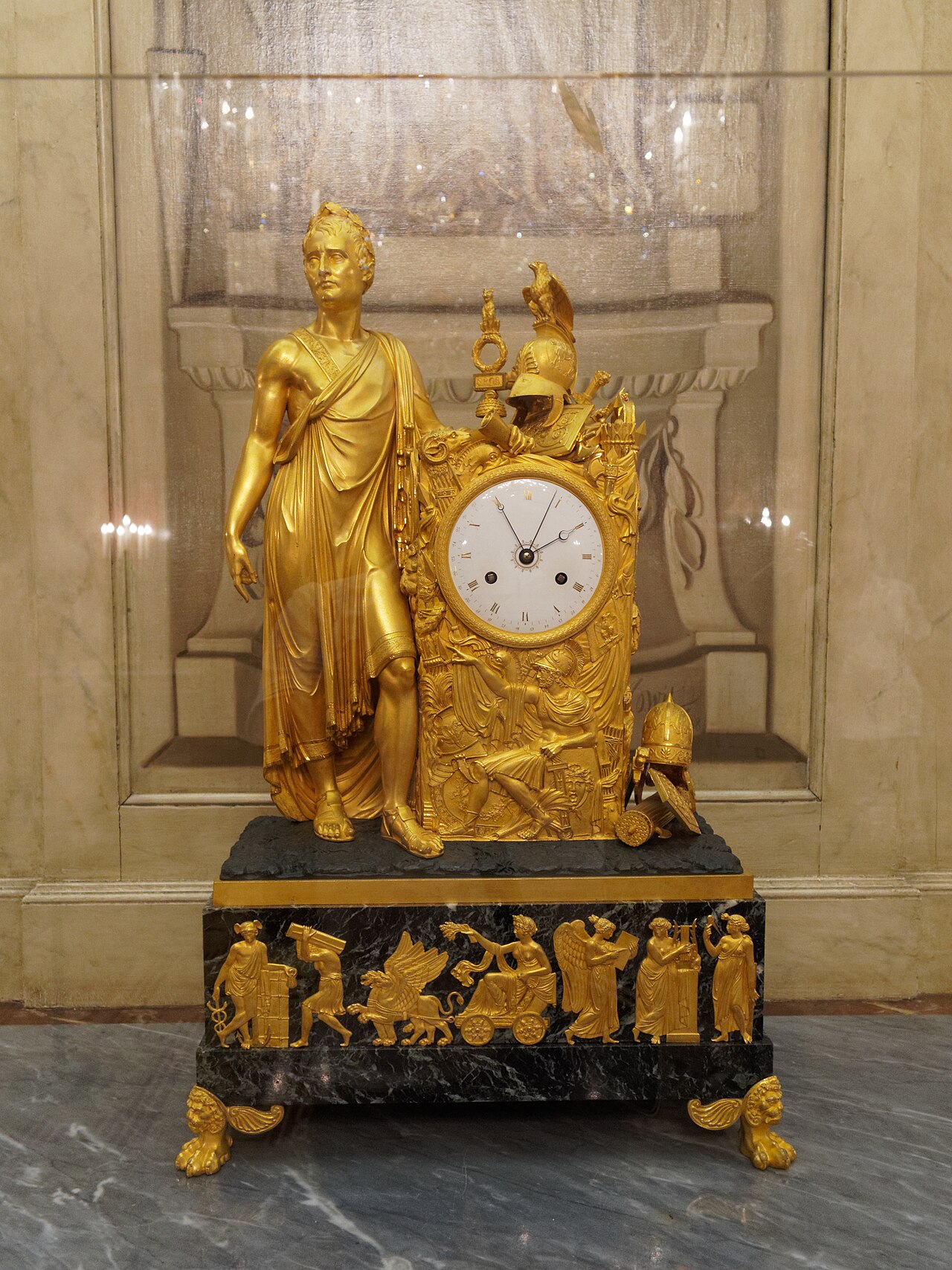
The new king needed a royal residence in Amsterdam, and his eye fell upon the magnificent town hall on Dam Square. The building was requisitioned and converted into a royal palace, its civic functions displaced to make way for the trappings of monarchy. Thus the proud symbol of republican Amsterdam became, almost overnight, the seat of a king.
The conversion brought significant changes, particularly to the interiors, which were furnished in the fashionable Empire style of the period to suit their new royal function. A great deal of Empire furniture was installed, much of which remains in the palace today, giving the interiors a distinctive character that reflects this brief but transformative episode in the building’s history.
Though the Kingdom of Holland was short-lived, the building’s new identity endured. After the fall of Napoleon and the establishment of an independent Netherlands under its own monarchy, the palace remained a royal property, and it has continued to serve as a royal palace ever since. The town hall of the republic had become, permanently, a palace of kings.
There is a deep irony in the building’s transformation, for the very monument raised to celebrate republican liberty became the seat of a monarchy imposed from abroad. Yet history is full of such reversals, and the building absorbed its new role as it had fulfilled its old one, with dignity. That it survived the change so gracefully is a tribute to the timeless quality of its architecture, equally suited to a republic and a court.
The Royal Rooms and Empire Furniture
The interiors of the palace reflect its dual history, combining the golden-age grandeur of the original town hall with the royal furnishings added in the era of monarchy. The great halls and chambers preserve their seventeenth-century architecture and sculpture, while the furnishings and decoration reflect the tastes of the nineteenth-century court.
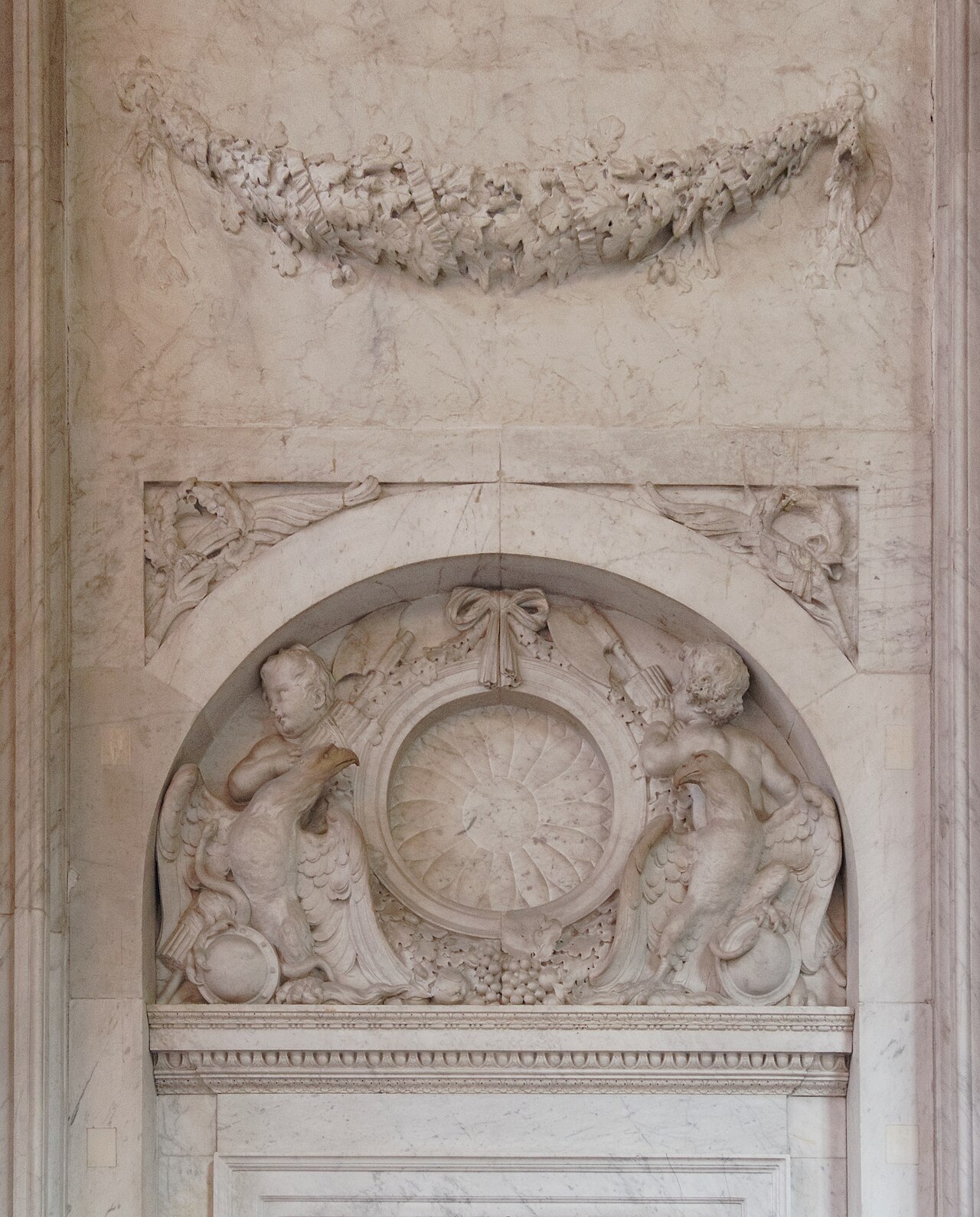
The Empire furniture installed during the Napoleonic period is one of the treasures of the palace, a remarkable collection of pieces in the sumptuous, classically inspired style of the age. Chandeliers, clocks, mirrors, and furnishings from this period fill the rooms, and the palace holds one of the finest collections of Empire furniture in the world.
The combination of golden-age architecture and Empire decoration gives the interiors a unique character, layering two great periods of European art within a single building. The result is a series of rooms of great beauty and interest, where the visitor can trace the building’s journey from republican town hall to royal palace.
Throughout the palace, the quality of the decoration and furnishing is exceptional, reflecting both the wealth of the golden-age city and the splendour of the later monarchy. The rooms provide a fitting setting for the state functions the palace still hosts, and they offer visitors a rich experience of the art and history of the Netherlands across the centuries.
The survival of so much Empire furniture in its original setting is unusual and precious, for such collections were often dispersed as tastes changed. At Amsterdam the furnishings remained, and today they allow visitors to experience the rooms much as they appeared in the age of the first king. The combination of golden-age halls and Napoleonic furniture is found nowhere else in quite the same way.
A Monument of the Dutch Golden Age
Beyond its beauty, the palace is above all a monument of the Dutch Golden Age, that extraordinary period when the small Dutch Republic became a global power and a centre of art, science, and commerce. The building embodies the wealth, confidence, and ideals of that age as few other monuments do.
The golden age was a time of remarkable achievement in the Netherlands, producing great painters, scientists, and thinkers, and generating wealth on an unprecedented scale through global trade. The town hall was built to celebrate and express this greatness, and it stands as one of its most tangible and impressive legacies.
The values celebrated in the building, civic virtue, good government, justice, and the rewards of enterprise, reflect the distinctive ethos of the merchant republic. Unlike palaces built to glorify individual rulers, this building was raised to honour a city and its citizens, making it a monument to a particular vision of society.
As a symbol of the golden age, the building holds a special place in the history and identity of the Netherlands. It reminds visitors of a time when a small nation stood at the forefront of the world, and it preserves in stone and sculpture the ideals and ambitions of one of the most remarkable periods in European history.
Standing in the building, it is easy to sense the spirit of the age that produced it, the same era that gave the world the paintings of its great masters and the discoveries of its scientists. The town hall was part of this flowering, the architectural expression of a society bursting with confidence and creativity. To visit it is to step into the world that produced so much of what we admire in Dutch culture.
It is worth reflecting that the building has now served as a palace for far longer than it served as a town hall, and yet it is still often thought of first as the golden-age monument it was born to be. That enduring identity speaks to the power of the original vision, which was so complete and so expressive that no later use could erase it. The republic’s monument endures within the king’s palace.
The Palace on Dam Square
The palace occupies a commanding position on Dam Square, the historic heart of Amsterdam and the symbolic centre of the city. This location places the building at the very core of Amsterdam’s public life, surrounded by the bustle of the square and overlooked by the adjacent Nieuwe Kerk, the great church where royal ceremonies take place.

Dam Square has been the focal point of Amsterdam for centuries, a place of markets, gatherings, ceremonies, and celebrations. The presence of the palace on the square underlines its importance and its connection to the life of the city, and the building forms one side of a great civic space that has witnessed much of the history of Amsterdam.
The relationship between the palace and the square is central to the experience of the building. Seen across the open expanse of the Dam, the classical facade rises with dignity above the crowds, its grandeur set off by the activity below. The square provides the perfect setting to appreciate the building’s scale and beauty.
For visitors, the palace and Dam Square together form one of the essential sights of Amsterdam. The location makes the palace easy to find and to combine with other attractions, and the lively atmosphere of the square adds to the pleasure of a visit. The building remains, as it was always meant to be, at the very heart of the city.
Over the centuries Dam Square and its palace have witnessed the great moments of the nation’s life, from celebrations of peace and prosperity to periods of hardship and mourning. The building has stood through it all, a fixed point at the centre of the city, and its presence lends the square a sense of continuity and gravity that few urban spaces possess. It is, in every sense, the heart of Amsterdam.
A Working Royal Palace Today
Today the Royal Palace of Amsterdam remains a working palace, one of several official palaces at the disposal of the Dutch monarch. Although the royal family does not live there, the palace is used for important state functions, from official receptions and ceremonies to the entertainment of visiting heads of state and other formal occasions.

The palace plays a significant role in the ceremonial life of the Dutch monarchy, hosting events of national importance and serving as a setting for the state’s most formal occasions. Its grand halls provide an incomparable backdrop for these events, combining historic splendour with the dignity appropriate to affairs of state.
When it is not required for official use, the palace is opened to the public as a museum, allowing visitors to explore its magnificent halls, sculpture, and furnishings. This combination of continuing official function and public access allows the building to serve both the state and the people, remaining a living monument rather than a mere relic.
The dual role of the palace, as a working royal residence and a public museum, reflects the character of the modern Dutch monarchy, which balances tradition with accessibility. The building continues to serve the nation, as it has in various forms for centuries, and its ongoing use ensures that it remains a vital part of the life and identity of the Netherlands.
The willingness of the monarchy to open the palace to the public when it is not needed for official use reflects a characteristically Dutch spirit of openness. Rather than keeping so grand a building closed and remote, the arrangement allows citizens and visitors alike to share in its splendour and to understand its history, keeping the palace connected to the society it has served for so long.
Planning Your Visit
The Royal Palace stands on Dam Square in the centre of Amsterdam, one of the most accessible and famous locations in the city. It is easily reached on foot from the main railway station and other central sights, making it a natural stop on any exploration of Amsterdam. A visit typically takes a couple of hours to appreciate the halls and collections.

View the Royal Palace of Amsterdam on Google Maps
Inside, visitors can explore the great Citizens’ Hall, the Tribunal, and the many decorated rooms, admiring the sculpture, the Empire furniture, and the architecture. Information and audio guides help to bring the history of the building to life, explaining its transformation from town hall to palace and the meaning of its rich decoration.
Because the palace is still used for official functions, it is not open every day, and its opening times can vary depending on the requirements of the state. It is therefore important to check current opening hours and any closures before planning a visit, and to consider booking ahead during busy periods.
You can find the palace and plan your route using the map link below. Whether you come for the golden-age architecture, the magnificent Citizens’ Hall, the sculpture, or the story of the building’s transformation into a royal palace, the Royal Palace of Amsterdam offers one of the essential experiences of the city. Give yourself time to appreciate both its beauty and its remarkable history.
Many visitors are surprised to discover how much history is layered within a single building, and those who come expecting simply a royal palace leave with a richer understanding of the Dutch golden age and its ideals. Arriving with some knowledge of the building’s dual identity greatly enhances the experience, turning a visit into a journey through several centuries of European history in the space of a few magnificent rooms.
See the Royal Palace for Yourself
A building as grand as the Royal Palace of Amsterdam is best appreciated in motion, and the short film below offers a closer look at its halls, sculpture, and setting on Dam Square. It conveys the majesty of the Citizens’ Hall, the richness of the decoration, and the dignity of the classical architecture.
As you watch, keep in mind the remarkable story behind it: a town hall built to celebrate a merchant republic at the height of its golden age, transformed by the upheavals of the Napoleonic era into a royal palace, and serving the Dutch monarchy to this day. The Royal Palace of Amsterdam is a monument where the ideals of the republic and the splendour of monarchy meet in a single magnificent building.
Palaces Nearby
If the Royal Palace of Amsterdam has drawn you into the royal heritage of the Low Countries, two more palaces of the region make natural companions, each with its own character.
- The Working Palace at the Heart of the Belgian Crown — the neoclassical Brussels seat of the Belgian king, with its famous beetle-wing ceiling.
- Luxembourg’s Grand Ducal Palace, a Renaissance Jewel of the Old Town — the ornate old-town seat of the world’s only grand duchy.
You May Like
The Bardo, a Palace of the Beys Filled With Roman Mosaics