High on a rocky promontory above the Mediterranean, overlooking the yachts and skyscrapers of the world’s most glamorous microstate, stands a palace that is also a fortress. The Prince’s Palace of Monaco has been the home of the Grimaldi family for more than seven centuries, making it one of the oldest continuously inhabited royal residences in Europe, the seat of a dynasty that has clung to this rock through wars, revolutions, and the whirl of modern celebrity.
Monaco is tiny, a sovereign city-state squeezed between the mountains and the sea on the French Riviera, yet it is a genuine principality, ruled by a reigning prince whose family has held power since the Middle Ages. The palace on the Rock is the heart of that principality, at once a working seat of government, a state residence still used for the ceremonies of the crown, and a monument to one of the most remarkable royal dynasties in the world.
Behind its pastel walls lie sumptuous state apartments, a grand courtyard with a sweeping marble staircase, and frescoes rediscovered beneath centuries of whitewash, while outside its gates the famous changing of the guard is performed each day. Bound up, too, with the glamour of a beloved film-star princess, the palace unites medieval fortress, Renaissance splendour, and modern celebrity in a single unforgettable place. In the sections that follow you will get to know the palace, the dynasty that holds it, and the many chapters of its long story.
In This Article
- A Fortress-Palace Above the Sea
- The House of Grimaldi
- The Prince Who Came Disguised as a Monk
- From Genoese Stronghold to Renaissance Palace
- The Court of Honour and Its Marble Staircase
- The State Apartments and the Throne Room
- Frescoes Hidden Beneath the Whitewash
- War, Revolution, and Recovery
- A Prince, a Film Star, and a Fairy Tale
- A Reigning Prince in the Modern Age
- The Changing of the Guard
- The Palace on Film
- Visiting the Prince’s Palace
A Fortress-Palace Above the Sea
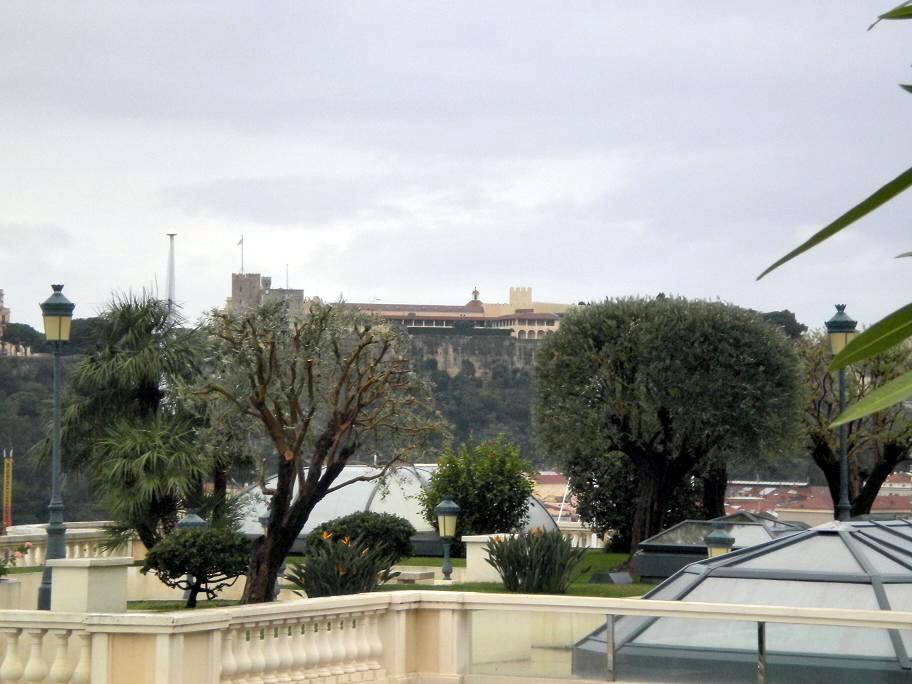
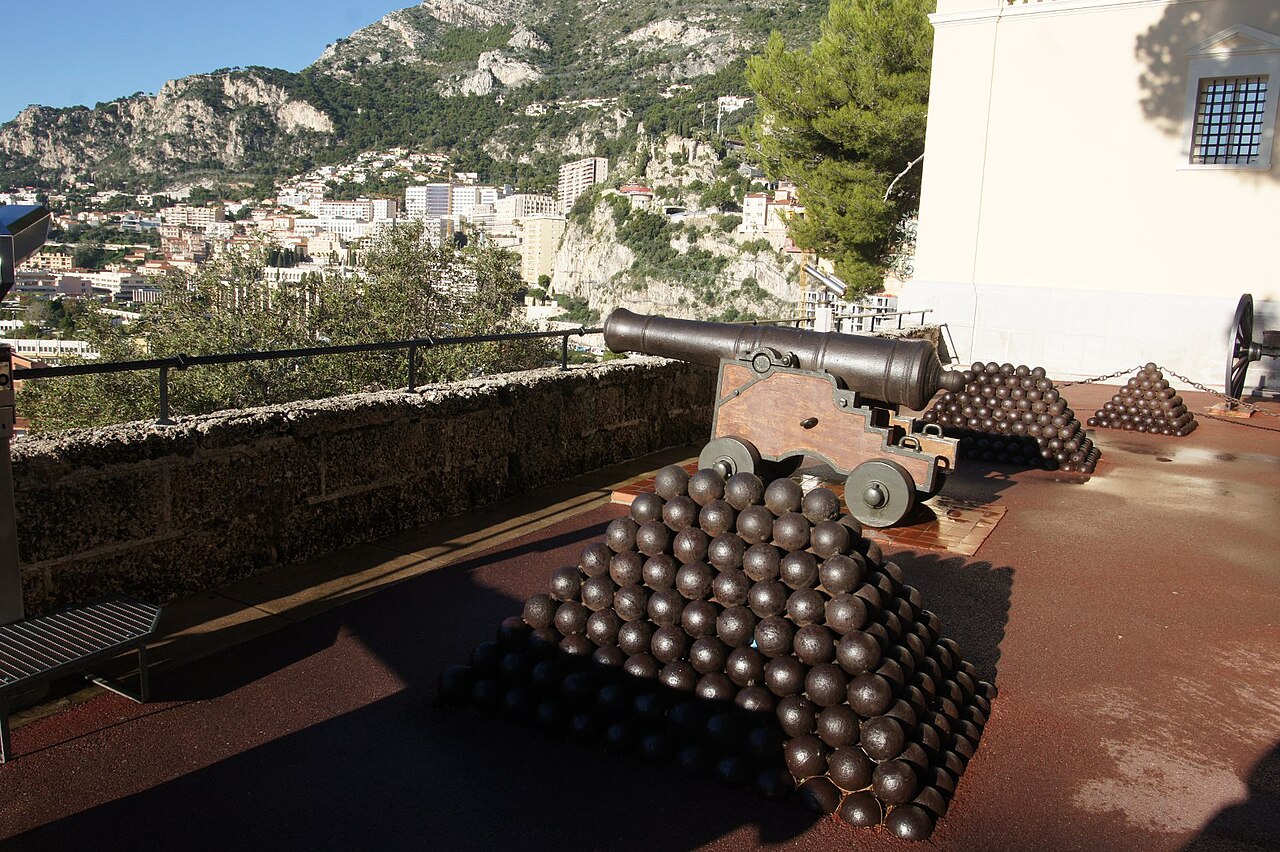
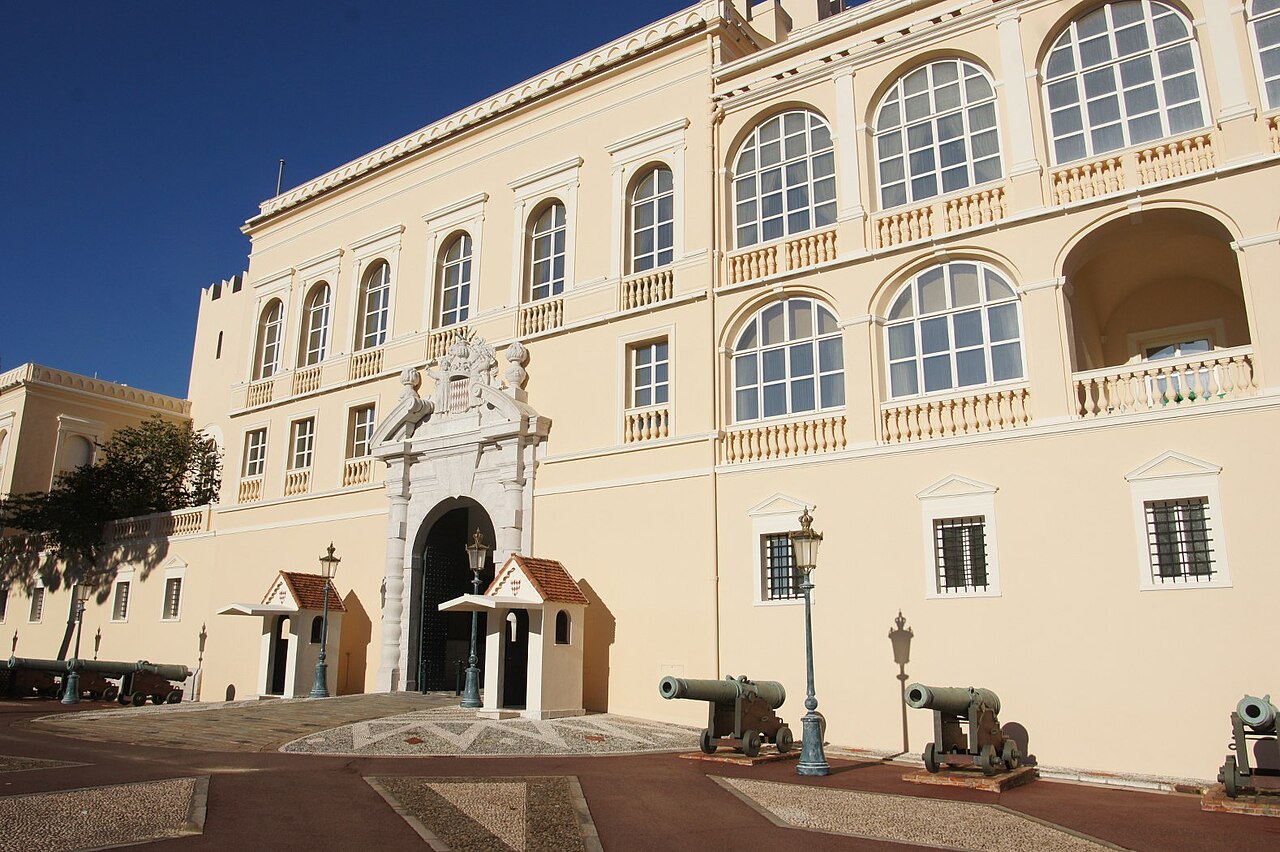
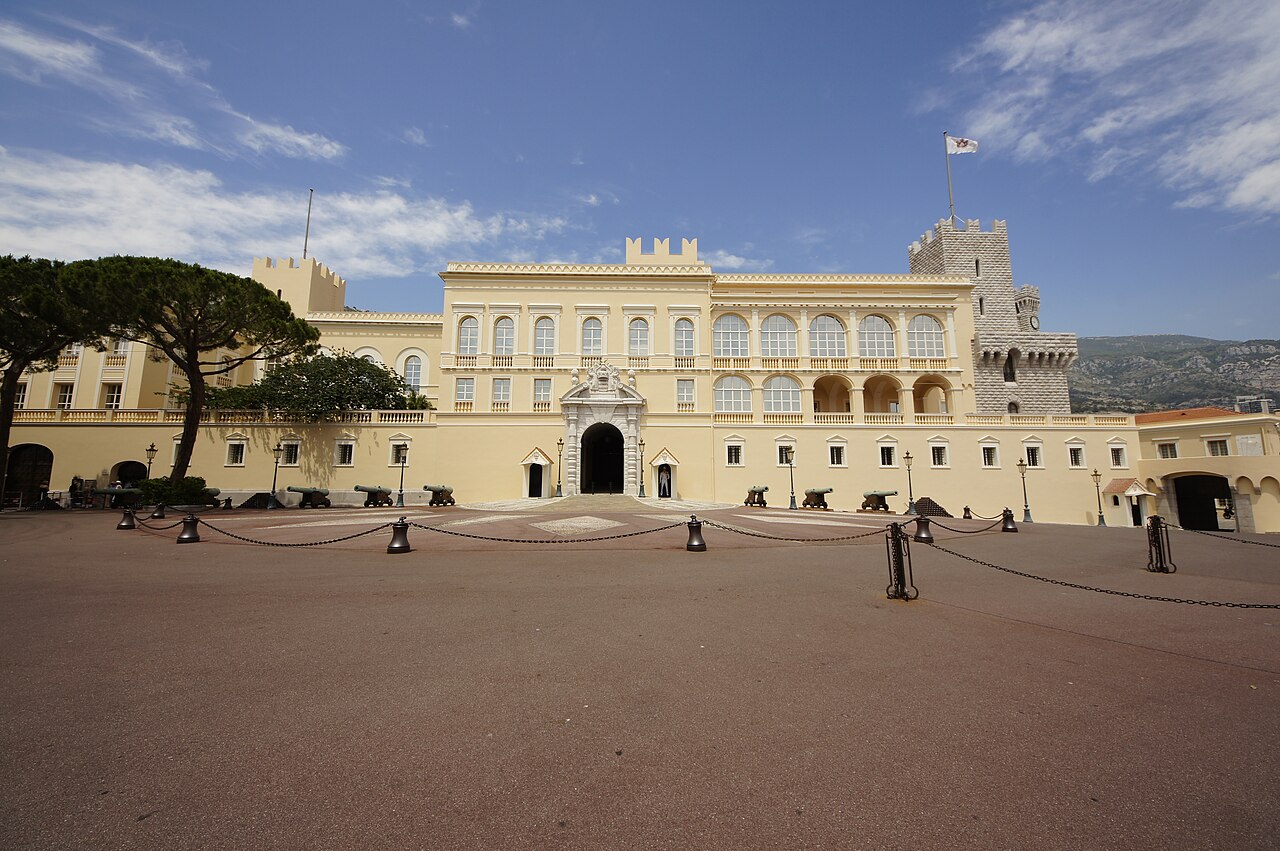
The Prince’s Palace occupies the most commanding position in Monaco, atop the rocky outcrop known as the Rock, which rises above the sea and the modern city clustered around its harbours. From this height the palace looks out over the Mediterranean and over the principality, a position chosen, centuries ago, for defence, and one that gives the residence a dramatic and unmistakable presence.
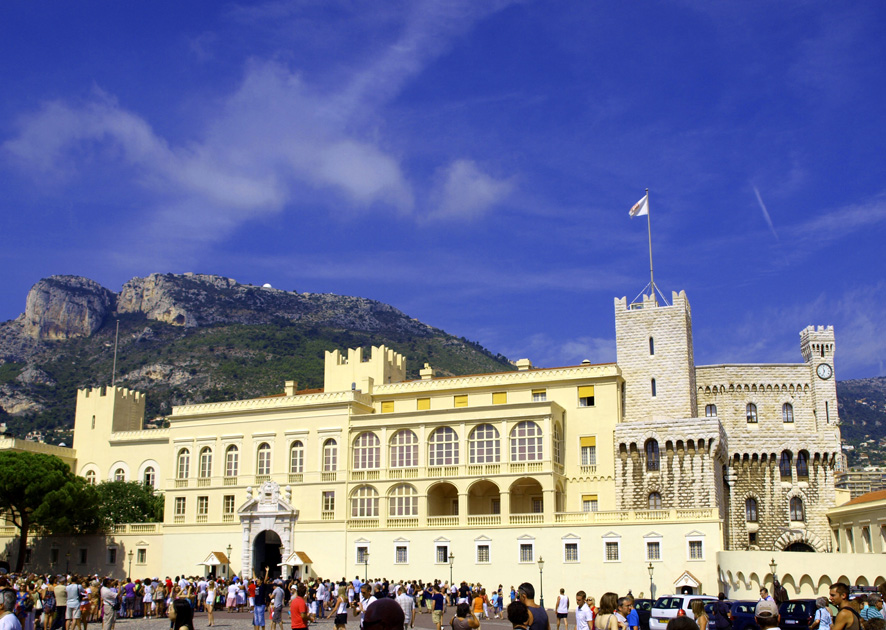
Unlike many European royal palaces, which shed their defensive character to become open pleasure-houses, the Prince’s Palace has retained the form and feel of a fortress. Its walls, towers, and battlements recall its origins as a stronghold, even as its interiors were transformed over the centuries into a residence of great luxury, so that the building unites the fortress and the palace in a single structure.
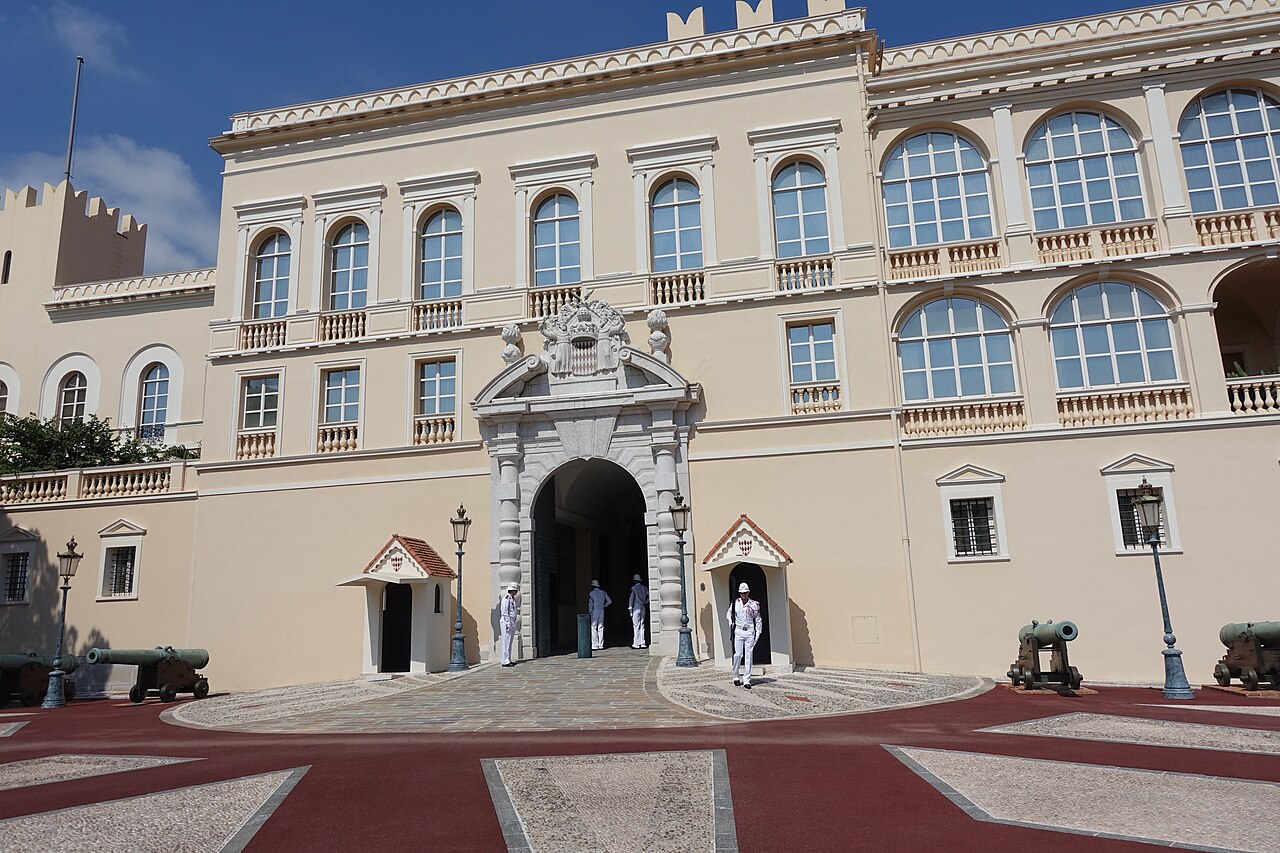
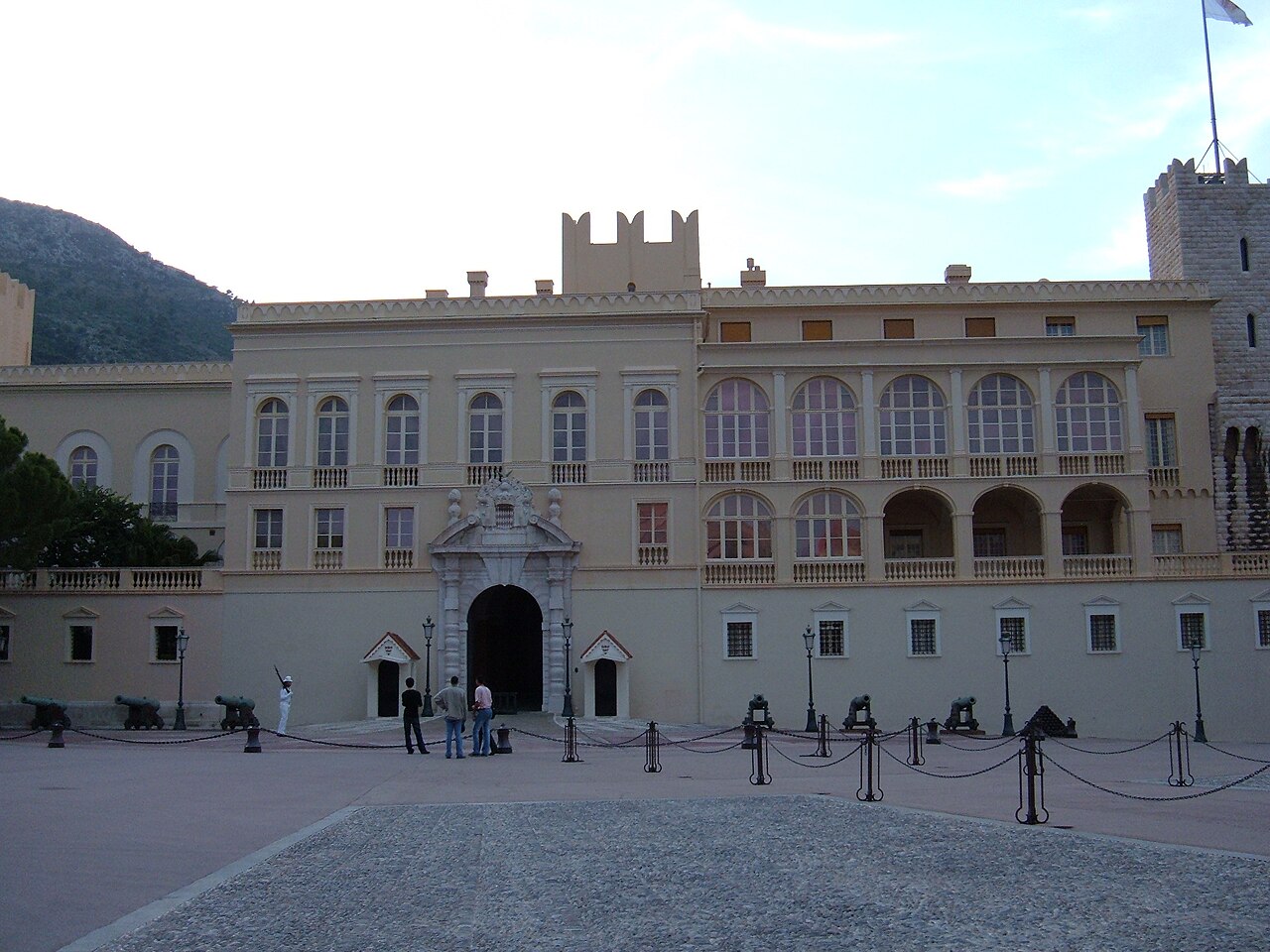
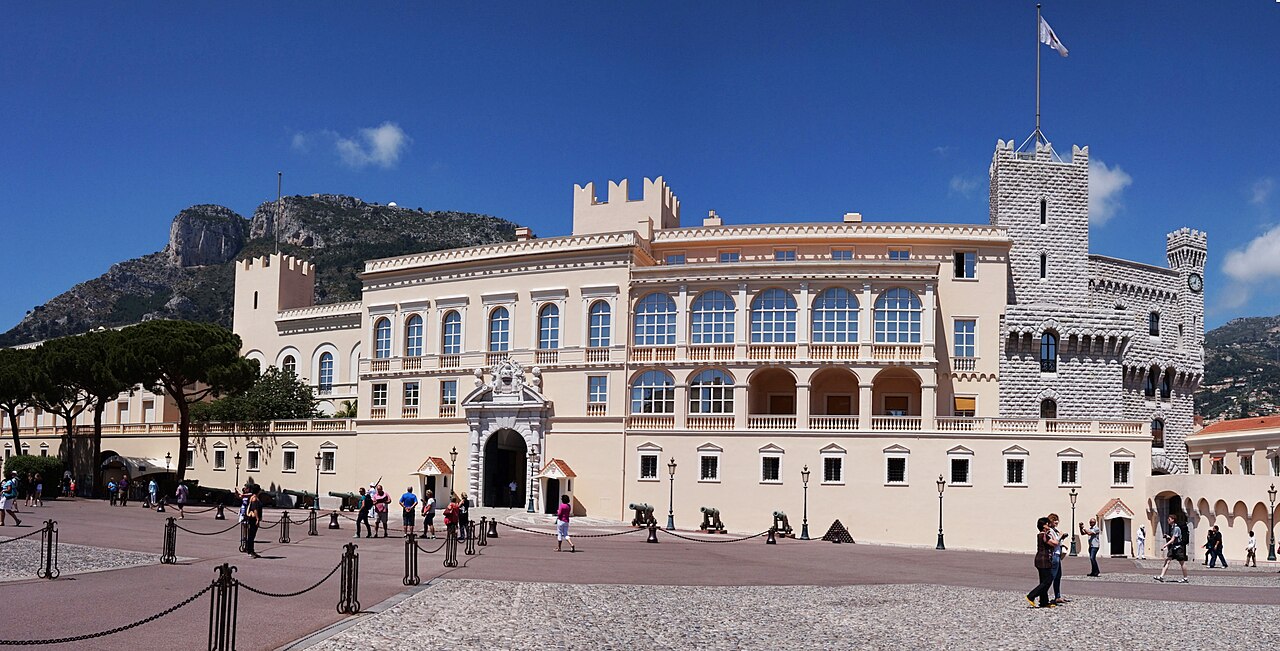
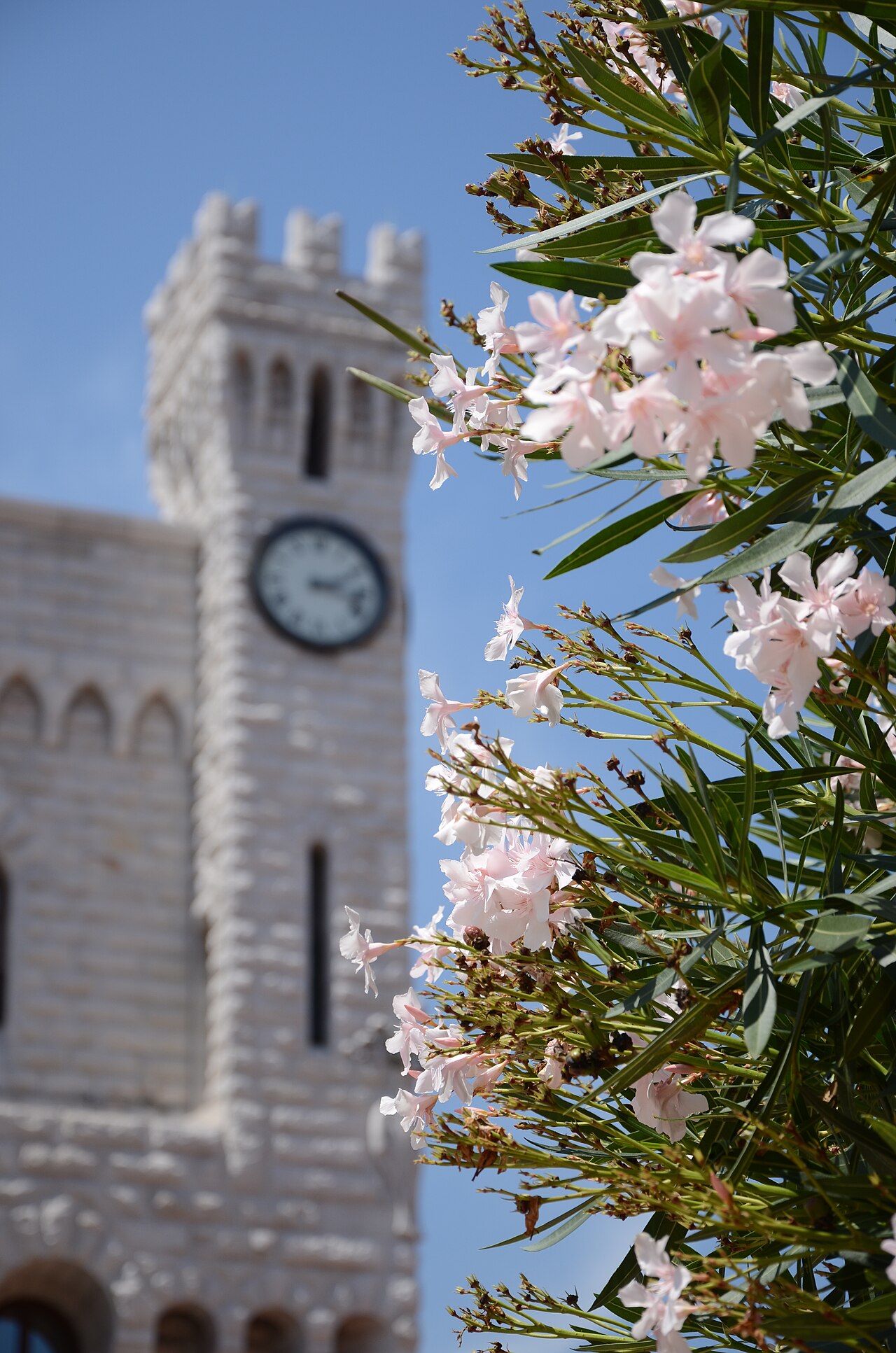
The exterior presents a picturesque composition of towers, ramparts, and pastel-walled ranges, crowned by clock and watch towers, rising above the approach and the palace square. The square before it, where crowds gather to watch the changing of the guard, and the ramparts with their views over Monaco and the sea, are part of the experience of the place, framing the palace in its spectacular setting.
To arrive at the Prince’s Palace is to arrive at the historic heart of Monaco, high above the glitter of the modern principality. The building’s blend of fortress and palace, its dramatic position, and its long association with the ruling dynasty make it one of the most distinctive royal residences in Europe, a medieval stronghold that became, and remains, the home of a reigning prince.
The approach up to the Rock, whether on foot through the old town or by the winding roads, builds anticipation, and the first sight of the palace square opening out before the pastel facade is one many visitors remember.
The House of Grimaldi
The palace is the seat of the Grimaldi family, the dynasty that has ruled Monaco for more than seven centuries, making it one of the oldest ruling houses in the world. The Grimaldi, originally a powerful family from the Italian city of Genoa, seized control of the Rock of Monaco at the end of the thirteenth century, and their descendants have held it, through many vicissitudes, ever since.
The continuity of the dynasty is extraordinary. Through wars, occupations, revolutions, and the immense changes of the centuries, the Grimaldi have maintained their hold on Monaco and their identity as its sovereigns, so that the family and the principality are inseparable. Few royal houses anywhere can claim so long and unbroken an association with a single place.
Over the centuries the Grimaldi navigated the dangerous politics of the region, at various times allied with or dependent upon the greater powers around them, from Genoa to France to Spain, while preserving their own rule over their small but strategically placed domain. Their survival owed much to skill, marriage, and the careful management of powerful neighbours.
The palace is the physical embodiment of this remarkable dynastic continuity. To walk its halls is to walk through the home of a family that has held the same rock for seven hundred years, and the building itself, layered with the additions and alterations of successive generations, is a record of that long history. The Grimaldi and their palace are among the great survivals of European royalty.
It is worth dwelling on just how rare such continuity is. Empires have risen and fallen, great dynasties have vanished, borders have been redrawn again and again, and through it all the Grimaldi have kept their rock. That a family should hold the same small territory from the thirteenth century into the twenty-first is one of the quiet marvels of European history, and the palace is its living proof.
The palace has been their anchor through all of it.
The Prince Who Came Disguised as a Monk
The Grimaldi claim to Monaco began with one of the most colourful episodes in the history of any dynasty. According to the famous tradition, a member of the Grimaldi family captured the fortress on the Rock at the end of the thirteenth century by a ruse, disguising himself and his men as Franciscan monks to gain entry, and then seizing the stronghold once inside.
This legendary act of cunning gave the family its foothold on the Rock and its later rule over Monaco, and it is commemorated in the very coat of arms of the Grimaldi, which famously depicts monks brandishing swords, a memorial in heraldry to the trick by which the dynasty won its home. The story, whether embellished over time or not, has become central to the identity of the house.
The episode set the tone for a dynasty that would survive by wit and daring as much as by force. The seizure of the fortress was the beginning of a long and often precarious history, in which the Grimaldi repeatedly had to defend, lose, and regain their hold on Monaco, but the tale of the monks remains the founding legend, the dramatic origin of seven centuries of rule.
For visitors, the story adds a note of romance and cunning to the palace’s history. The sight of the coat of arms, with its sword-wielding friars, is a reminder that this grand residence began with a bold deception, and that the dynasty which has held it for so long traces its rule to a moment of audacity on a Mediterranean rock at the close of the Middle Ages.
The nickname of the Grimaldi ancestor who led the ruse has come down through history along with the tale, and the family has never sought to hide the trickery at its origin. On the contrary, by placing the sword-bearing monks at the very centre of its heraldry, the dynasty turned an act of deception into a badge of pride, a reminder that Monaco was won by wit as much as by arms.
The date of the seizure is still remembered in Monaco as the true beginning of the nation.
From Genoese Stronghold to Renaissance Palace
The building the Grimaldi seized had begun life as a fortress, raised by the Genoese to guard this strategic point on the coast, and for a long time it retained its purely military character. Over the centuries, however, as the Grimaldi consolidated their rule and their fortunes rose, the stronghold was gradually transformed into a princely residence, without ever wholly losing its defensive form.
The great period of transformation came in the Renaissance and the centuries that followed, when successive princes rebuilt and embellished the fortress into a palace of considerable splendour, adding grand apartments, galleries, and decorative schemes in the fashionable styles of the age. The medieval stronghold was thus overlaid with the elegance of the Renaissance and later periods, producing the layered building of today.
This evolution from fortress to palace is written into the fabric of the building, which combines defensive towers and ramparts with sumptuous state rooms and a fine courtyard. The result is a residence of unusual character, neither a pure fortress nor a pure palace but a fascinating blend of both, reflecting the long history and changing fortunes of the dynasty that shaped it.
The palace’s mixed character sets it apart from the great purpose-built royal residences of other European monarchies. Rather than a single grand statement, it is an accumulation of centuries, a fortress made comfortable and splendid by generations of princes, and its blend of the martial and the magnificent is one of the things that makes it so distinctive and so evocative of the long Grimaldi story.
The tension between the two identities gives the building much of its charm. From certain angles it is plainly a stronghold, all towers and ramparts; from within the courtyard it is a Renaissance palace of frescoes and marble. The same walls that once repelled attackers now enclose salons hung with paintings, and the visitor moves, in a few steps, between the medieval and the magnificent.
It is this dual nature that visitors remember longest.
The Court of Honour and Its Marble Staircase
At the ceremonial heart of the palace lies its great courtyard, the Court of Honour, a beautiful open space around which the state apartments are arranged and which serves as the setting for important ceremonies and events. Paved and surrounded by frescoed and arcaded ranges, it is one of the most elegant spaces in the palace and a highlight of any visit.
The courtyard is famous above all for its grand marble staircase, a sweeping double flight of white marble that rises from the court in a graceful horseshoe form. This monumental staircase is one of the signature features of the palace, a piece of theatrical Renaissance-inspired architecture that lends the courtyard drama and splendour and provides a magnificent setting for ceremonial ascents.
Around the courtyard, the walls are decorated with frescoes, and the arcaded galleries add to the sense of Renaissance elegance, so that the Court of Honour feels like a stage set for the ceremonies of a princely court. It is here that important public events of the palace take place, from concerts to official occasions, with the courtyard as their splendid backdrop.
For the visitor, the Court of Honour and its marble staircase are among the most memorable sights of the palace, the point where the building’s Renaissance splendour is most fully displayed. To stand in the courtyard, beneath the frescoed walls and before the great white staircase, is to sense the grandeur of the Grimaldi court and the theatrical beauty of their palace on the Rock.
On summer evenings the courtyard becomes a concert venue, its frescoed walls and marble staircase forming a backdrop for music beneath the open sky, one of the loveliest settings for a performance anywhere in Europe.
The State Apartments and the Throne Room
Within the palace lie the state apartments, a series of sumptuous rooms used for the ceremonial and official life of the principality and opened, in part, to visitors. These grand chambers, richly decorated and furnished, include galleries, salons, and the throne room, and they preserve the splendour of the Grimaldi court across the centuries.
The throne room is the most solemn of these spaces, the setting for the most important ceremonies of the reign, where the prince appears in state and where the great occasions of the monarchy are marked. Decorated with all the richness appropriate to the seat of a sovereign, it is the ceremonial climax of the state apartments and a focus of the palace’s official life.
Among the other celebrated rooms are richly decorated galleries and salons, including chambers known for their fine frescoes, mirrors, and furnishings, each with its own character and history. These rooms, hung with paintings and adorned with the accumulated treasures of the dynasty, offer a vivid sense of the luxurious world of the Grimaldi princes.
For visitors, the state apartments are the heart of a tour of the palace, offering a glimpse into the private and ceremonial life of one of Europe’s oldest reigning families. Passing through the succession of grand rooms, from galleries to salons to the throne room, one experiences the splendour of the Grimaldi court and the long history of the dynasty that created it.
Because the palace remains a working residence, these rooms are not frozen relics but spaces still used for the ceremonies and receptions of the principality, so that the visitor walks through halls that will, in season, be filled again with the life of a functioning court.
Frescoes Hidden Beneath the Whitewash
One of the most remarkable recent chapters in the palace’s history has been the rediscovery and restoration of its Renaissance frescoes. Over the centuries, many of the palace’s original wall paintings had been covered over, hidden beneath layers of whitewash and later decoration, their existence half-forgotten, until careful restoration work began to bring them back to light.
This painstaking work revealed frescoes of great beauty and importance, dating from the palace’s Renaissance transformation, and returned to the walls decorative schemes that had been lost from view for generations. The recovery of these paintings has been one of the great cultural projects associated with the palace, restoring a hidden layer of its artistic heritage.
The rediscovered frescoes add greatly to the splendour of the state apartments and the courtyard, their rich colours and Renaissance designs revealing the palace as it was intended to appear in its great age of embellishment. For visitors, the frescoes are a highlight, and the story of their recovery from beneath the whitewash lends them an added fascination.
The restoration of the frescoes is part of the ongoing care lavished on the palace by the ruling family, who have sought to reveal and preserve its historic beauty. The paintings, brought back to light after centuries in hiding, are a reminder that even a building as well known as the Prince’s Palace can still yield surprises, and that its long history continues to be uncovered and celebrated.
The rediscovery was a reminder of how much of a building’s history can lie literally beneath the surface, waiting for patient hands and modern techniques to bring it back. What had been dismissed as plain walls turned out to hold some of the finest Renaissance decoration on the Riviera, and their recovery has been celebrated as a triumph of conservation.
War, Revolution, and Recovery
The long history of the palace has not been without disaster. During the upheavals of the French Revolution and its aftermath, the Grimaldi were driven from their home, and the palace was seized and put to other uses, serving for a time as a barracks and a hospital, its treasures dispersed and its fabric neglected or damaged.
This period of loss was one of the low points in the palace’s history, when the dynasty’s hold on Monaco was broken and their residence stripped of its royal character. The Grimaldi, like many European ruling houses, found their world turned upside down by the revolutionary age, and the palace suffered the indignities that befell so many royal residences in that era.
In time, however, the Grimaldi were restored to Monaco, and the palace was gradually recovered and renewed. Successive princes worked to repair the damage of the revolutionary years and to restore the residence to its former splendour, reclaiming and redecorating the state apartments and returning the palace to its role as the seat of the principality.
This story of loss and recovery is characteristic of the palace’s resilient history. Like the dynasty itself, the building survived the storms of revolution and emerged to be restored and cherished once more. The palace visitors see today is the product of this long process of recovery as much as of its original construction, a monument that has endured and been renewed across the turbulent centuries.
The dispersal of the palace’s treasures during those years means that part of the work of later princes was not only to repair walls but to gather back, or replace, the furnishings and art that make a residence a home. The palace’s splendour today is thus in part a careful reconstruction, a deliberate act of restoration after near-ruin.
A Prince, a Film Star, and a Fairy Tale
In the twentieth century the palace and the principality became bound up with one of the most famous royal romances of modern times, when the reigning prince married a celebrated American film star. The wedding, uniting a European sovereign with a Hollywood actress at the height of her fame, captured the imagination of the world and made Monaco and its palace a byword for glamour.
The princess, beloved for her films and her beauty, brought to the palace and the principality an aura of modern celebrity, and her life as a royal consort, played out partly within these walls, fascinated the public across the globe. Her story, blending the worlds of cinema and monarchy, gave the ancient dynasty a thoroughly modern glamour and drew the eyes of the world to Monaco.
The marriage also had a lasting effect on the fortunes of the principality, helping to transform Monaco’s image and to draw the wealthy and the famous to its shores, reinforcing its role as a playground of the rich. The palace, as the home of the prince and his film-star princess, became one of the most famous royal residences in the world.
The princess’s life ended in tragedy, in an accident that shocked the world, and her memory is cherished in Monaco to this day. The story of the prince and his princess remains one of the most romantic and poignant chapters in the palace’s long history, linking the medieval seat of the Grimaldi to the glamour and heartbreak of the modern age, and adding yet another layer to the legend of the Rock.
To this day her image is inseparable from Monaco’s identity, and the palace where she lived as princess draws admirers who come as much for her memory as for the Grimaldi centuries that preceded her. In her, the ancient dynasty acquired a modern legend.
A Reigning Prince in the Modern Age
The Prince’s Palace remains, today, the seat of a reigning sovereign, for Monaco is a genuine principality with a prince who is head of state and plays an active role in the government of the country. The palace is thus not a museum of a vanished monarchy but the living residence and working seat of a modern ruling prince, one of the few such palaces left in Europe.
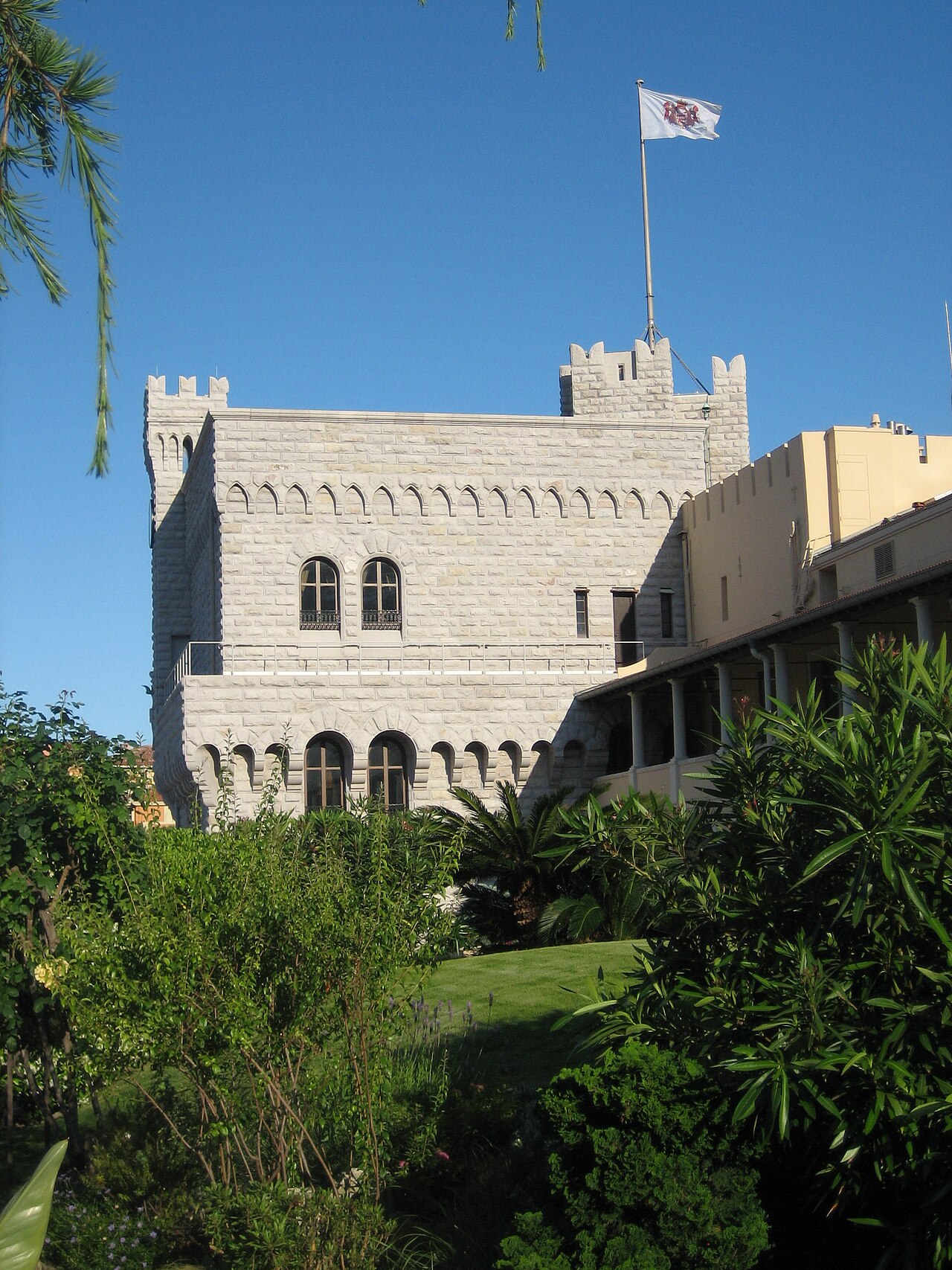
The reigning prince continues the seven-century tradition of Grimaldi rule, presiding over the affairs of the principality and performing the ceremonial functions of the crown. Monaco is a constitutional principality, with its own government and institutions, but the prince remains central to its life, and the palace is the heart of his role as sovereign.
As a working royal residence, the palace hosts the official functions and ceremonies of the principality, from state occasions to the great events of the princely family. Part of the building is given over to these functions and to the private life of the ruling family, while other parts, including the state apartments, are opened to visitors in season, so that the palace serves as both a living seat and a monument.
This continuing role gives the palace a special vitality. It is the residence of a reigning prince whose family has held the Rock for seven hundred years, a living link between the medieval origins of the dynasty and the glamorous modern principality of today. Few palaces so vividly combine deep history with living function, and the Prince’s Palace remains, after all the centuries, exactly what it has always been: the home of the sovereign of Monaco.
The principality’s prosperity, built on finance, tourism, and its famous tax regime, has given the modern Grimaldi the means to maintain their palace in splendid condition, so that the seat of the dynasty has never looked finer than it does today.
Few reigning families can claim so unbroken a link between a medieval fortress and a modern state.
The Changing of the Guard
One of the most popular sights at the palace is the daily changing of the guard, performed by the principality’s own guard, the Carabiniers of the Prince, in the square before the palace. This colourful ceremony, carried out with precision by the smartly uniformed guards, draws crowds of visitors each day and is one of the enduring traditions of the palace.
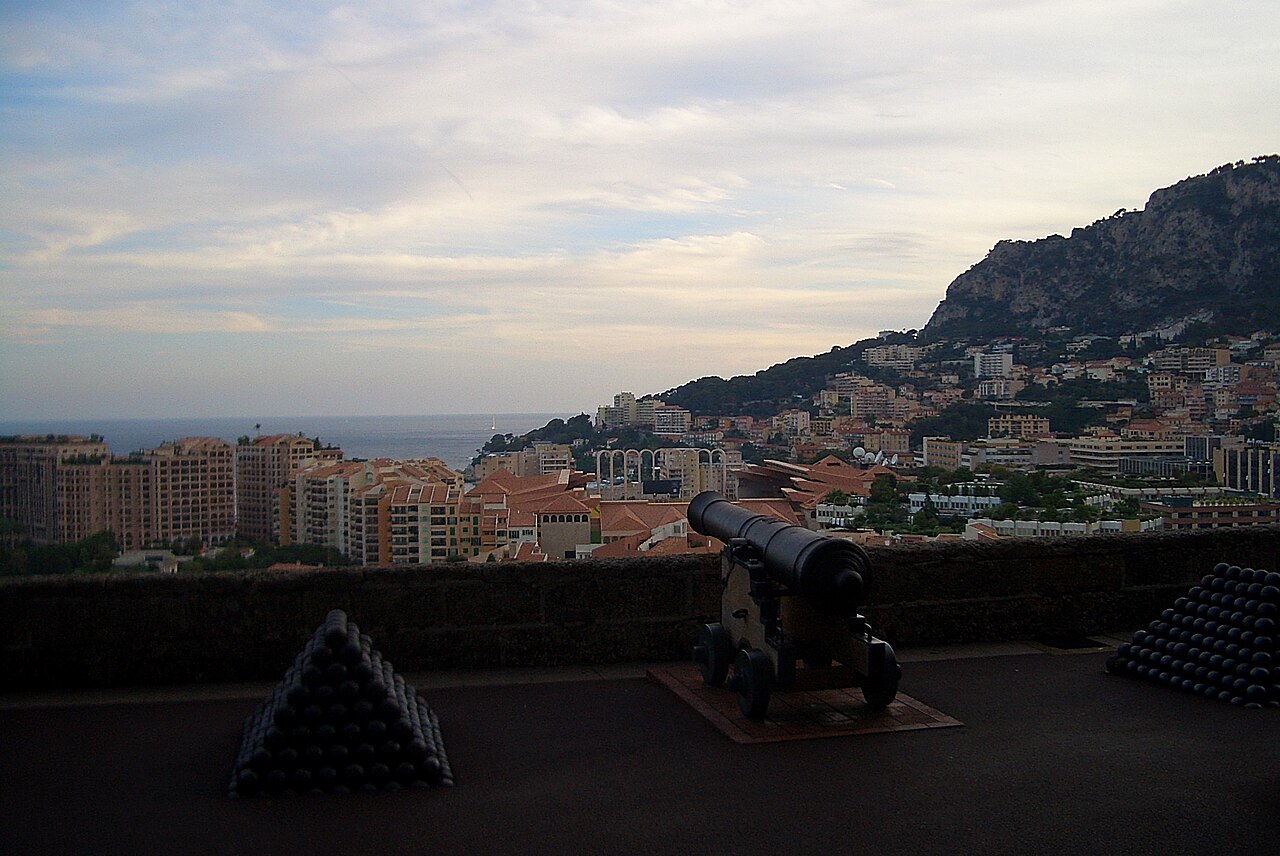
The Carabiniers are the prince’s guard, responsible for the security of the sovereign and the palace, and their daily ceremony in the palace square is both a genuine changing of the watch and a beloved spectacle. Performed at a set time each day, it offers visitors a chance to witness the ceremonial life of the palace and to enjoy the pageantry of a small but proud principality.
The ceremony takes place in the palace square, the open space before the main entrance, which offers not only a view of the guards but also splendid vistas over Monaco and the sea. The combination of the ceremony, the palace facade, and the spectacular setting makes the changing of the guard one of the highlights of a visit to the Rock.
For many visitors, timing their arrival to coincide with the changing of the guard is an essential part of the experience. The ceremony brings the palace to life, offering a glimpse of its role as the working seat of a reigning prince and a reminder that, behind its historic walls, the traditions of a living monarchy continue to be observed each day, in one of the most beautiful settings in Europe.
The guards wear white in summer and darker uniforms in winter, a small seasonal detail that regular visitors come to know, and the brief ceremony is watched each day by crowds far larger than the tiny principality’s own population might suggest.
It remains free to watch, one of the principality’s few pleasures that costs nothing.
The Palace on Film
The beauty and history of the Prince’s Palace, its fortress walls, its frescoed courtyard, its sumptuous state apartments, and its spectacular setting above the sea, are wonderfully conveyed in film, and the short feature below offers a tour of the palace and its treasures. Watching it alongside this article helps bring the long story of the Grimaldi and their home to life.
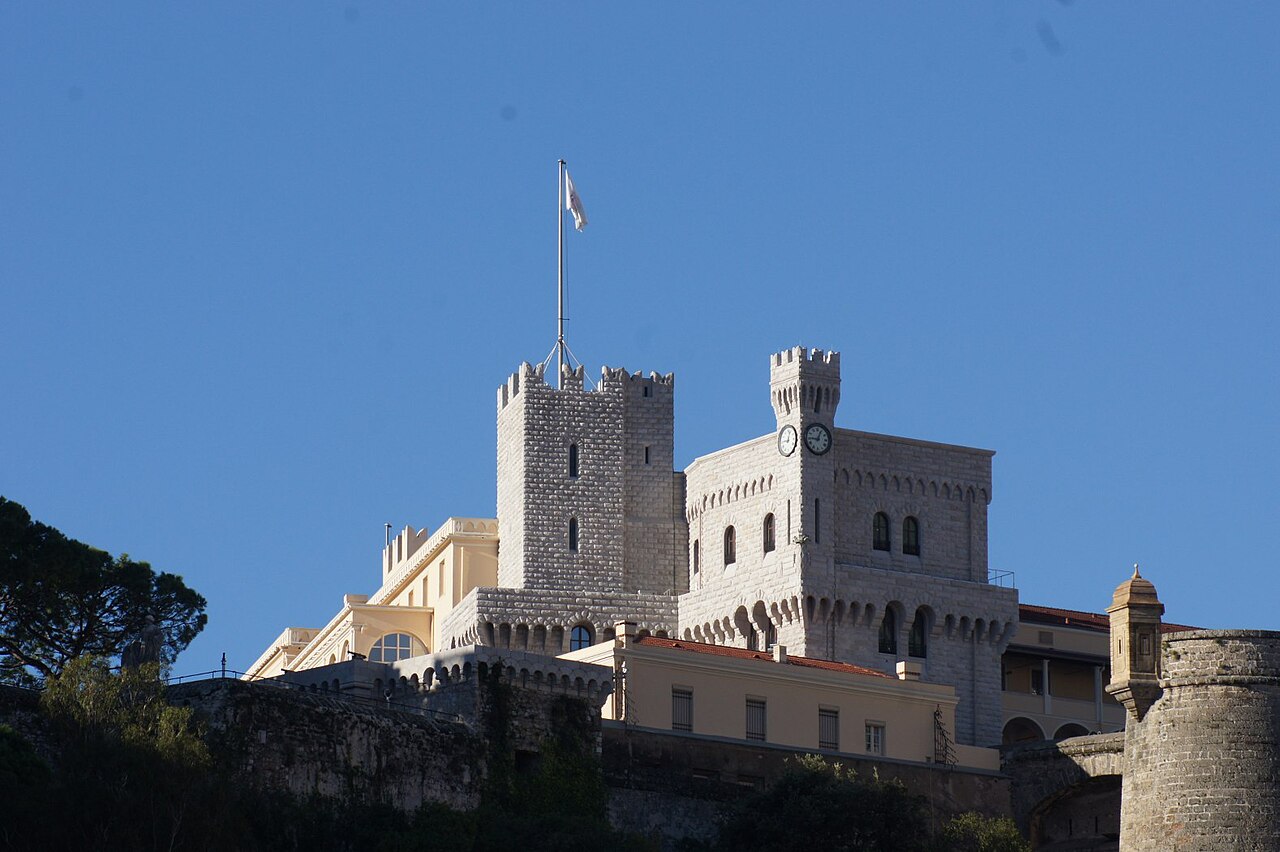
If you are planning a visit to Monaco, a video like this is a fine way to prepare, helping you recognise the palace’s celebrated features, from the Court of Honour and its marble staircase to the state apartments and their rediscovered frescoes, and to understand the remarkable history of the dynasty that has held the Rock for seven centuries.
And if a visit to the Riviera lies beyond your plans for now, the film lets you tour the palace of Monaco from afar. Let it play, and picture the fortress-palace of the Grimaldi rising above the Mediterranean, the seat of one of the oldest reigning dynasties in the world, in the glamorous heart of the little principality on the Rock.
Visiting the Prince’s Palace
For travellers to Monaco, the Prince’s Palace is one of the essential sights of the principality, crowning the historic quarter on the Rock. The state apartments are opened to visitors during part of the year, and touring them, along with enjoying the palace square, the changing of the guard, and the spectacular views, is a highlight of any visit to Monaco.
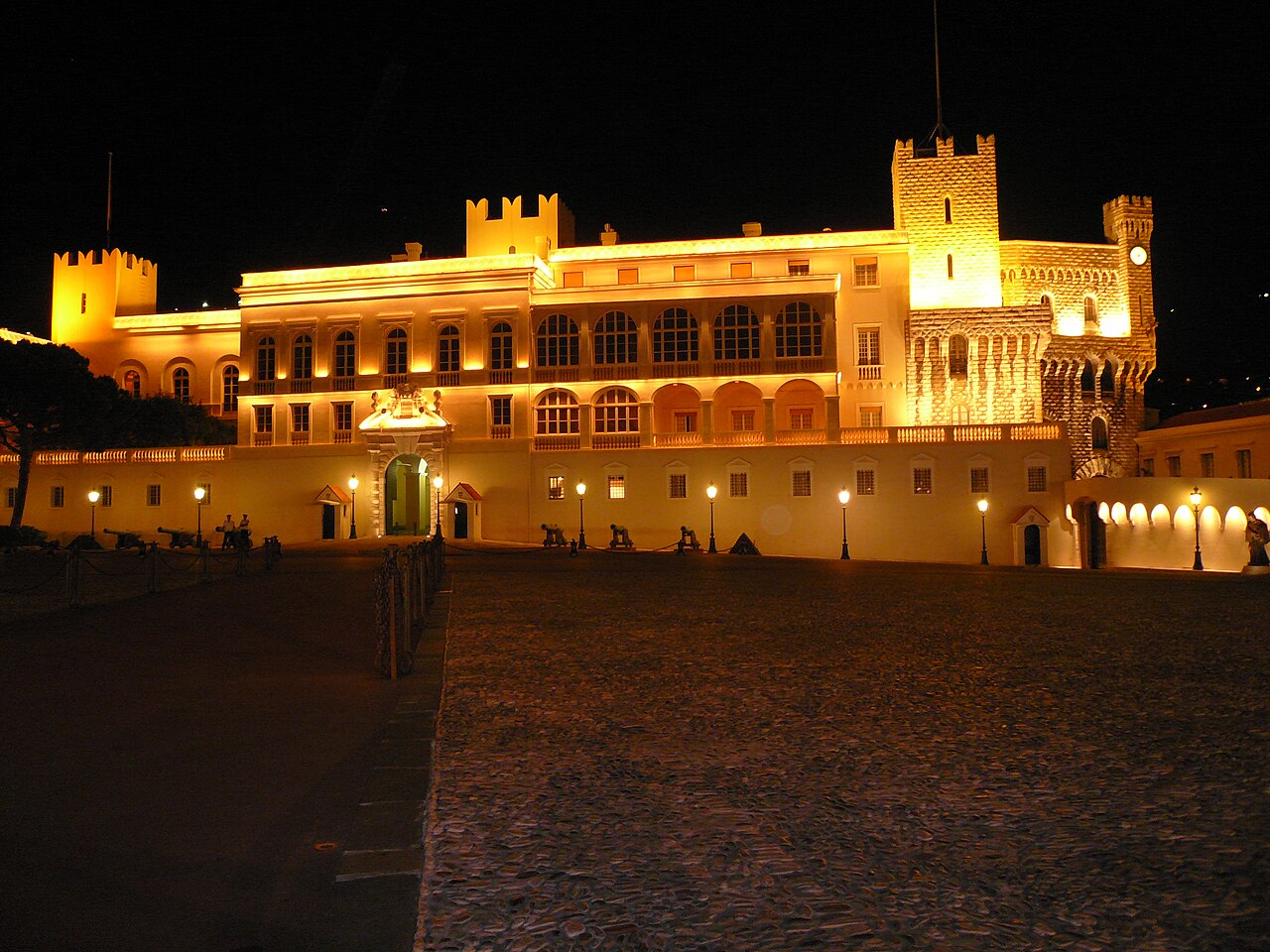
A visit rewards attention to the palace’s highlights: the Court of Honour with its marble staircase, the state apartments with their throne room, galleries, and restored frescoes, and the historic exterior with its towers and ramparts. Because the palace is a working royal residence, access to the interior is seasonal and managed, so it is worth checking the current arrangements before you go.
The palace square before the entrance is open year-round and offers not only the daily changing of the guard but magnificent views over Monaco and the Mediterranean. The surrounding historic quarter, with its narrow streets, the cathedral, and other sights, makes the Rock a rewarding area to explore on foot, with the palace as its crowning attraction.
However you come to it, the Prince’s Palace offers a rare encounter with a living European monarchy of extraordinary antiquity. To stand in its courtyard or before its walls, high above the glittering principality, is to touch seven centuries of Grimaldi history, from the monk’s disguise that won the Rock to the glamour of the modern age, in one of the most storied and beautiful royal residences in Europe.
Arriving in the late morning lets you combine a tour of the apartments with the changing of the guard and lunch in the old town.
Palaces Nearby
If the story of the Grimaldi has drawn you in, these two other seats of small reigning monarchies make a natural next stop.
- Istana Nurul Iman, the Largest Royal Palace in the World — the golden-domed seat of the Sultan of Brunei.
- Vaduz Castle, the Hilltop Home of Liechtenstein’s Reigning Prince — the private castle of the Prince of Liechtenstein.
You May Like