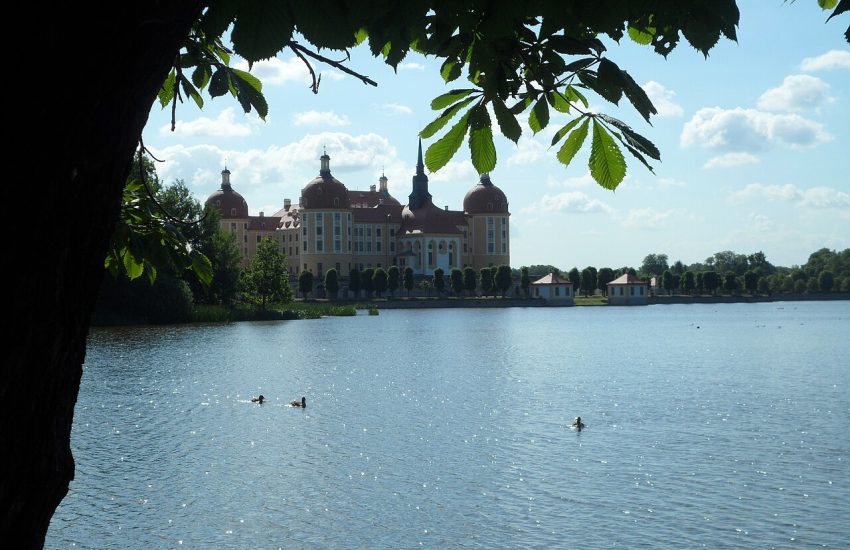
In the heart of Copenhagen, four elegant palaces face one another across a broad octagonal square, with a great bronze king on horseback rising at its centre and, beyond, the vast dome of a marble church. This is Amalienborg, the home of the Danish royal family and one of the finest achievements of European rococo town planning. It is at once a working royal residence, a museum, and the stage for one of the most beloved daily ceremonies in Scandinavia.
Denmark is home to one of the oldest monarchies in the world, a crown whose line reaches back more than a thousand years, and Amalienborg is its living seat. Here the Danish monarch has resided for more than two centuries, ever since fire drove the royal family from an earlier palace, and here the guards in their tall bearskin hats still march each day to change the watch, in a ceremony that draws crowds from around the world.
Yet Amalienborg is not a single grand palace but an ensemble of four, built originally not for kings but for noblemen, and only later gathered into the royal residence. Set within a beautifully planned district and framed by the harbour and the great church, it is a masterpiece of the eighteenth century that has become the beating heart of the modern Danish monarchy. In the sections that follow you will get to know the four palaces, the dynasty they house, and the ceremonies and history that make Amalienborg so special.
In This Article
- Four Palaces Around a Square
- One of the World’s Oldest Monarchies
- A District Built for a Jubilee
- The Four Mansions and Their Names
- The King on Horseback
- How the Royal Family Came to Amalienborg
- Elegant Rococo by the Harbour
- Inside the Palaces
- The Guards in the Tall Black Hats
- A Living Royal Home
- The Marble Church and the Harbour
- The Palace on Film
- Visiting Amalienborg Today
Four Palaces Around a Square
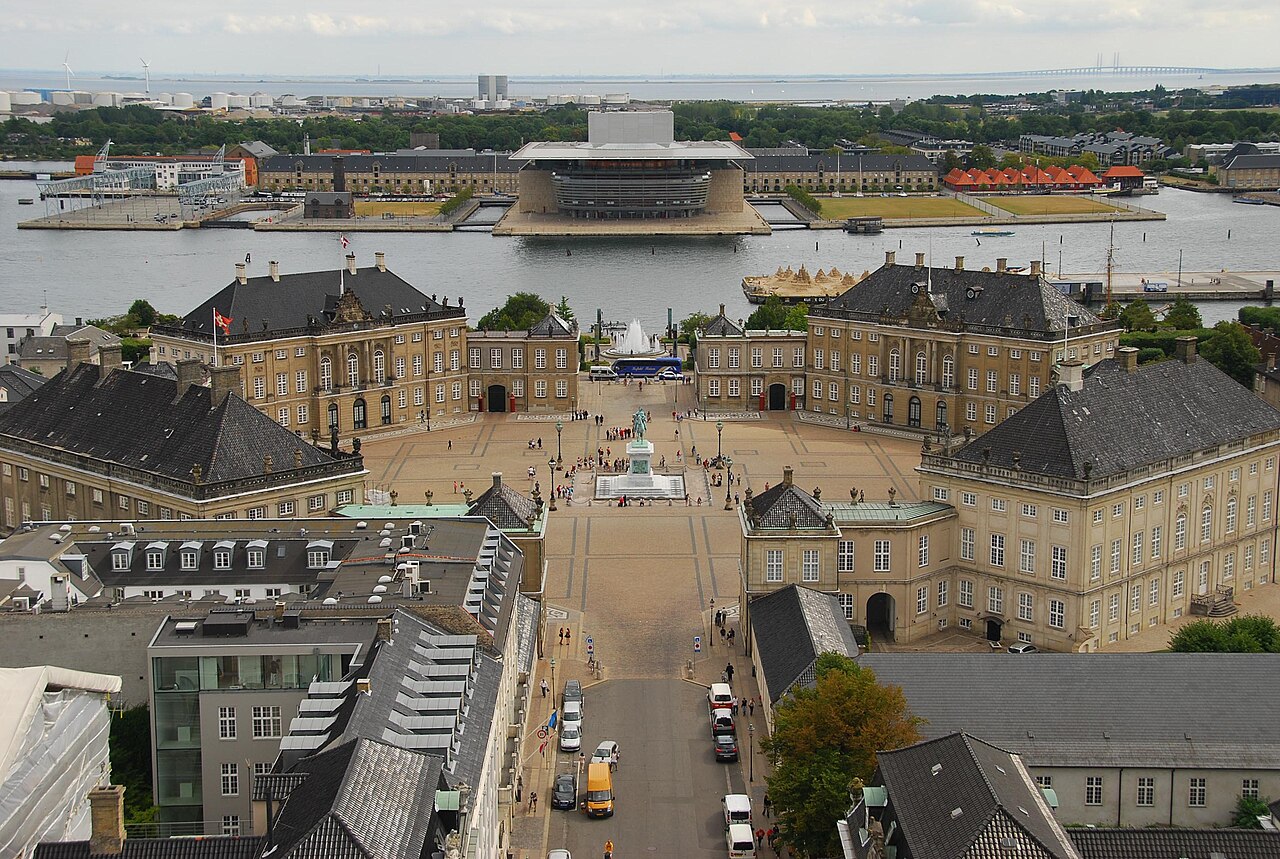
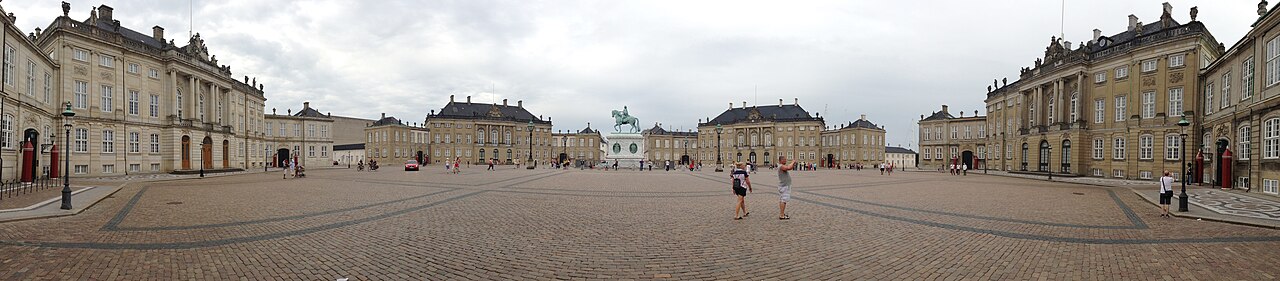
The first thing to understand about Amalienborg is that it is not one building but four, four grand mansions of almost identical design, set around a large octagonal square in the centre of Copenhagen. Together they form a harmonious ensemble, their matching facades facing inward across the open space, creating one of the most elegant and unified royal settings in Europe.

At the centre of the square stands a magnificent equestrian statue of a Danish king, the focal point around which the four palaces are arranged. The composition, with its balanced facades and central monument, is a masterpiece of eighteenth-century planning, designed to impress and to express the order and dignity of the monarchy, and it remains strikingly beautiful today.
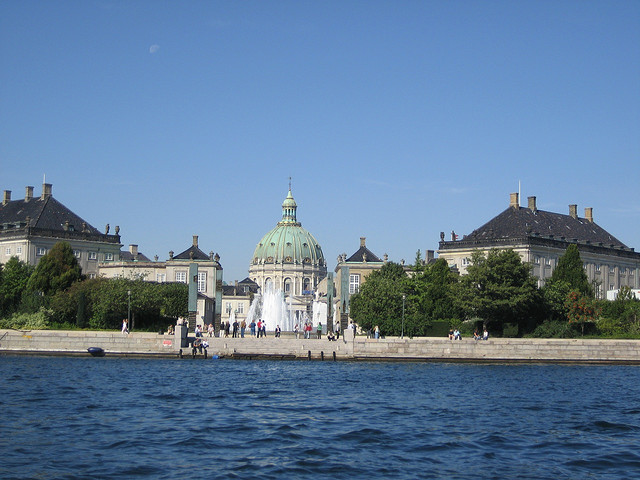
Beyond the square, the setting is completed by two great vistas: on one side, the broad dome of a marble church rises above the rooftops, and on the other, an avenue leads down toward the harbour, so that the palaces sit at the crossing of grand axes. This careful integration of palace, church, and harbour makes Amalienborg the centrepiece of a whole planned quarter of the city.
To arrive at Amalienborg is thus to arrive at a place of remarkable harmony and grandeur, where four palaces, a royal statue, a great church, and the sea are composed into a single magnificent scene. It is the home of the Danish royal family and the ceremonial heart of the kingdom, and its beauty and coherence make it one of the finest royal ensembles anywhere in the world.
It is a place that looks composed from every angle, as if arranged for a painting.
One of the World’s Oldest Monarchies
Amalienborg is the seat of the Danish monarchy, one of the oldest continuous monarchies in the world, whose line of kings and queens reaches back through more than a thousand years of history. Denmark has been a kingdom since the age of the Vikings, and its crown has passed down through the centuries in an unbroken succession that makes it one of the most venerable royal institutions on earth.
The dynasty that has ruled Denmark in the modern era belongs to the house of Oldenburg and its Glcksburg branch, families that have provided not only the kings and queens of Denmark but, through marriage, monarchs and consorts across Europe. The Danish royal family has long been connected to the other reigning houses of the continent, giving it a central place in the story of European royalty.
Today Denmark is a constitutional monarchy, in which the sovereign reigns as a beloved symbol of the nation while political power rests with the elected government. The monarchy enjoys deep affection among the Danish people, and the royal family plays an important ceremonial and unifying role, embodying the continuity and identity of one of the oldest nations in Europe.
Amalienborg is the living seat of this ancient crown, the home of the reigning monarch and the royal family. To visit is to encounter a monarchy that has endured for over a thousand years, still very much alive in the modern world, and to stand at the residence from which the Danish sovereign presides over the ceremonial life of the kingdom, in an ensemble of palaces worthy of so long a history.
The Danish flag, said to be among the oldest continuously used national flags in the world, is part of the same deep continuity, and it flies over whichever of the four palaces the monarch currently occupies, a simple daily sign of where the sovereign is at home.
Continuity, more than grandeur, is the crown’s defining quality.
A District Built for a Jubilee
Amalienborg was born as part of one of the great town-planning projects of eighteenth-century Europe. In the middle of the century, the Danish king resolved to create a splendid new district of Copenhagen, a planned quarter of grand streets and squares, to celebrate a great anniversary of the ruling dynasty and to adorn his capital with an ensemble of modern magnificence.
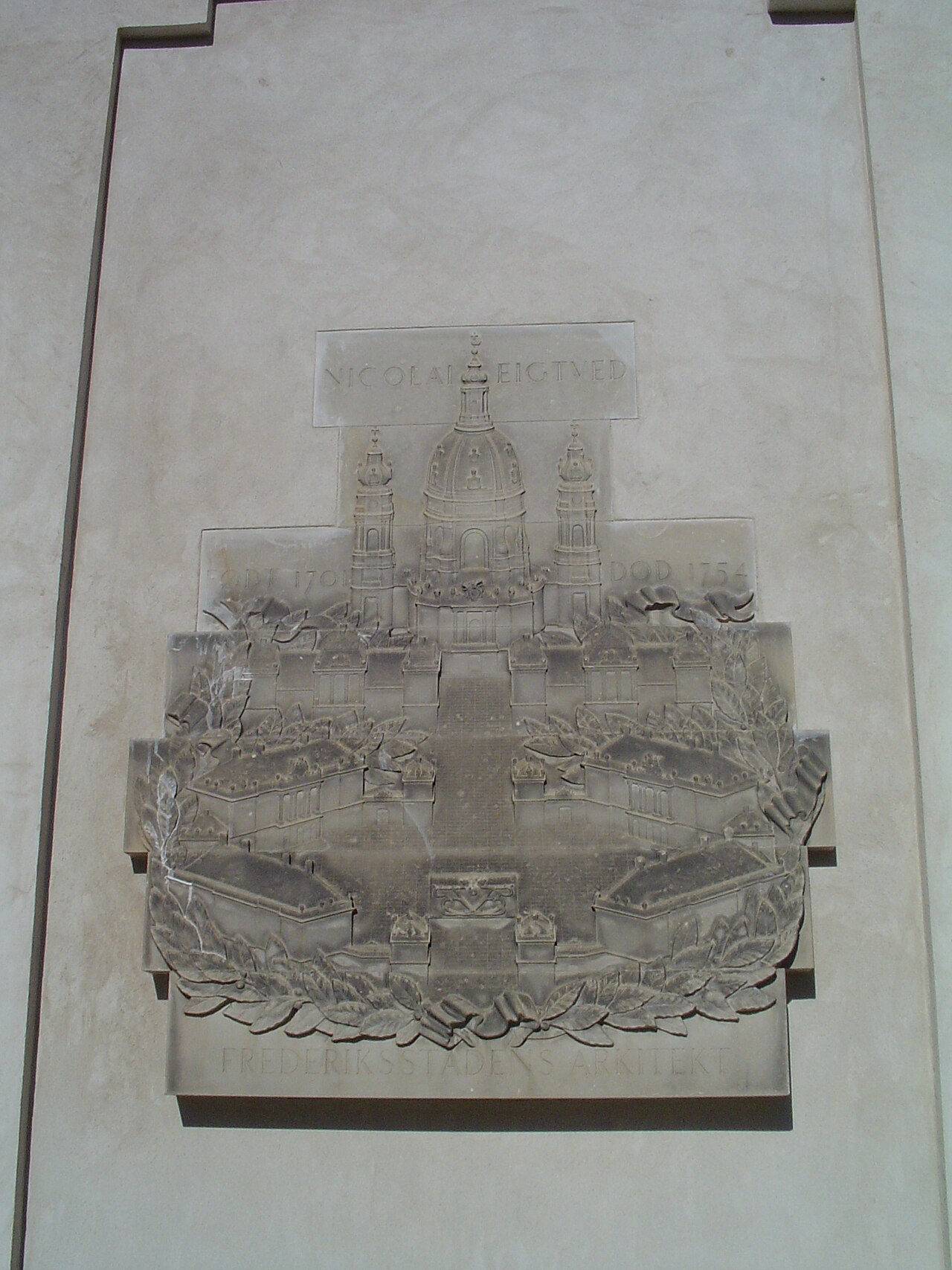
This new quarter was laid out on a rigorous plan, with a central octagonal square, from which broad streets radiated, and with the grandest buildings positioned to create imposing vistas. The whole scheme was designed by a leading architect of the age, who gave the district its harmonious rococo character, and it stands as one of the finest examples of planned urban design of its time.
The four palaces of Amalienborg were the centrepiece of this scheme, built around the central square as the grandest residences of the new quarter. Beyond them, the district was completed with other fine buildings and, as its crowning feature, a great domed church intended to close one of the main vistas, uniting the whole in a single magnificent composition.
This origin as a planned jubilee district gives Amalienborg its remarkable coherence. Unlike palaces that grew piecemeal over centuries, the ensemble was conceived as a unified whole, and that unity of design is one of its greatest glories. The four matching palaces, the central statue, the radiating streets, and the distant dome all belong to a single grand vision, realised in the elegant style of the eighteenth century.
The district around the square, with its ordered streets and fine townhouses, survives remarkably intact, so that a walk through the quarter is itself a journey into the eighteenth century. Few capitals preserve so complete a piece of Enlightenment-era planning, and the palaces are best appreciated as the jewel at the centre of that larger setting.
The ensemble was, from the first, meant to be read as a whole.
The Four Mansions and Their Names
Although Amalienborg is now the royal residence, the four palaces were not originally built for the king. They were raised as grand mansions for noble families, the most distinguished aristocrats of the day, each building his palace to the same overall design so that together they would form the harmonious ensemble around the square that the king desired.
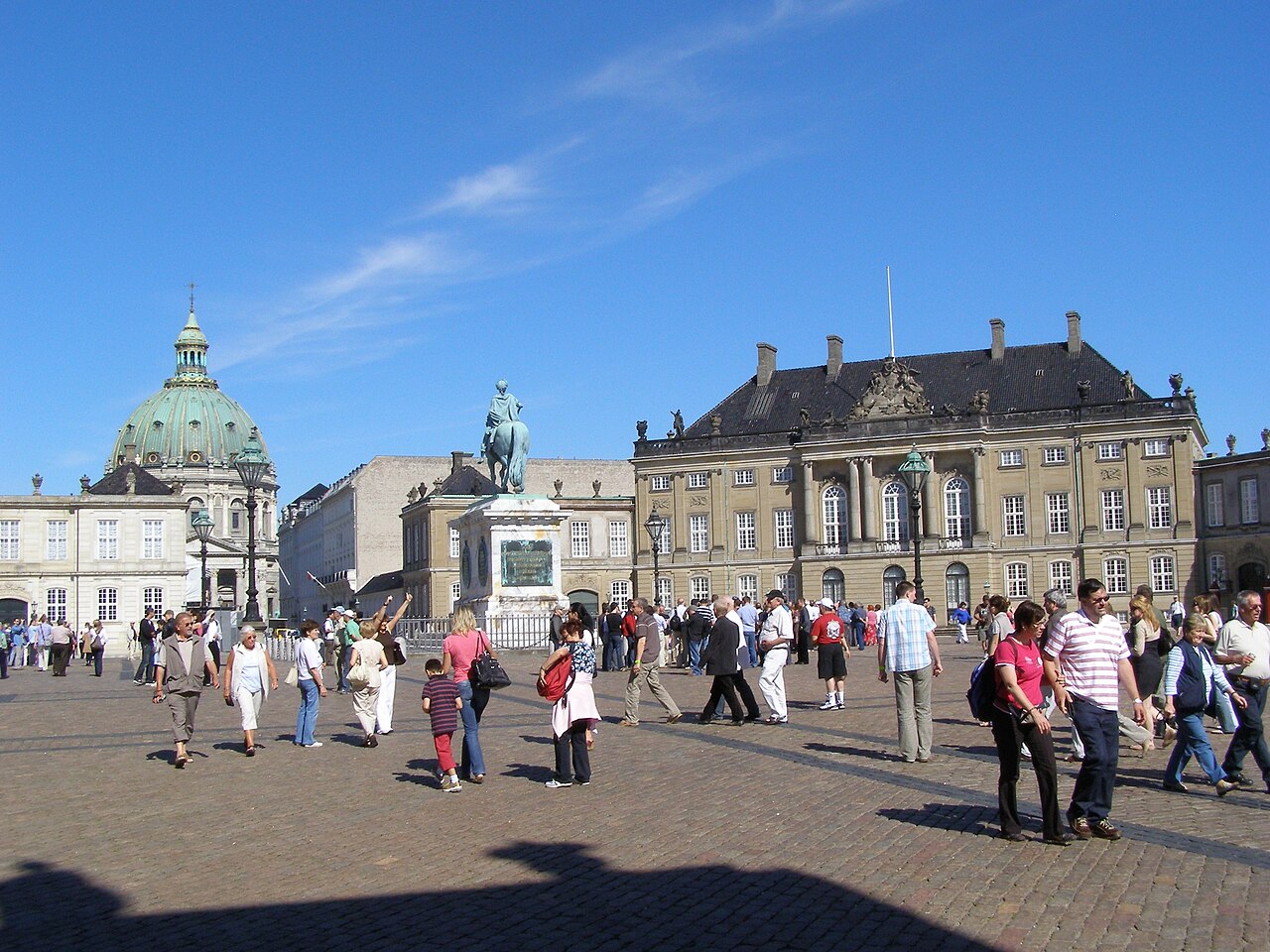
Each of the four palaces carries a name drawn from its history and its royal occupants, and over time they came to be associated with particular monarchs who lived in them. One served as the residence of one king, another of another, and so on, so that the four buildings are known by the names of the sovereigns and nobles connected with them across the generations.
Though the palaces share a common exterior design, giving the square its unity, their interiors differ, having been decorated and adapted over the centuries according to the tastes of their various occupants. Behind the matching facades lie distinct worlds, from grand state apartments to the private homes of the royal family, each with its own history and character.
This arrangement, of four separate palaces serving the royal family together, is unusual and is part of what makes Amalienborg distinctive. Rather than a single royal residence, it is a small complex of related palaces, allowing different members and generations of the royal family to have their own homes within the same elegant ensemble, all facing the common square at the heart of the composition.
There is something quietly democratic about the origin of the ensemble. The king did not simply command a single vast palace for himself; he set out a square and persuaded his greatest nobles to build matching houses around it, so that the grandeur of Amalienborg is a shared creation, the work of several great families brought into harmony by a common design. Only later did the crown gather these houses into one royal home.
Together they remain the finest rococo square in the north.
The King on Horseback
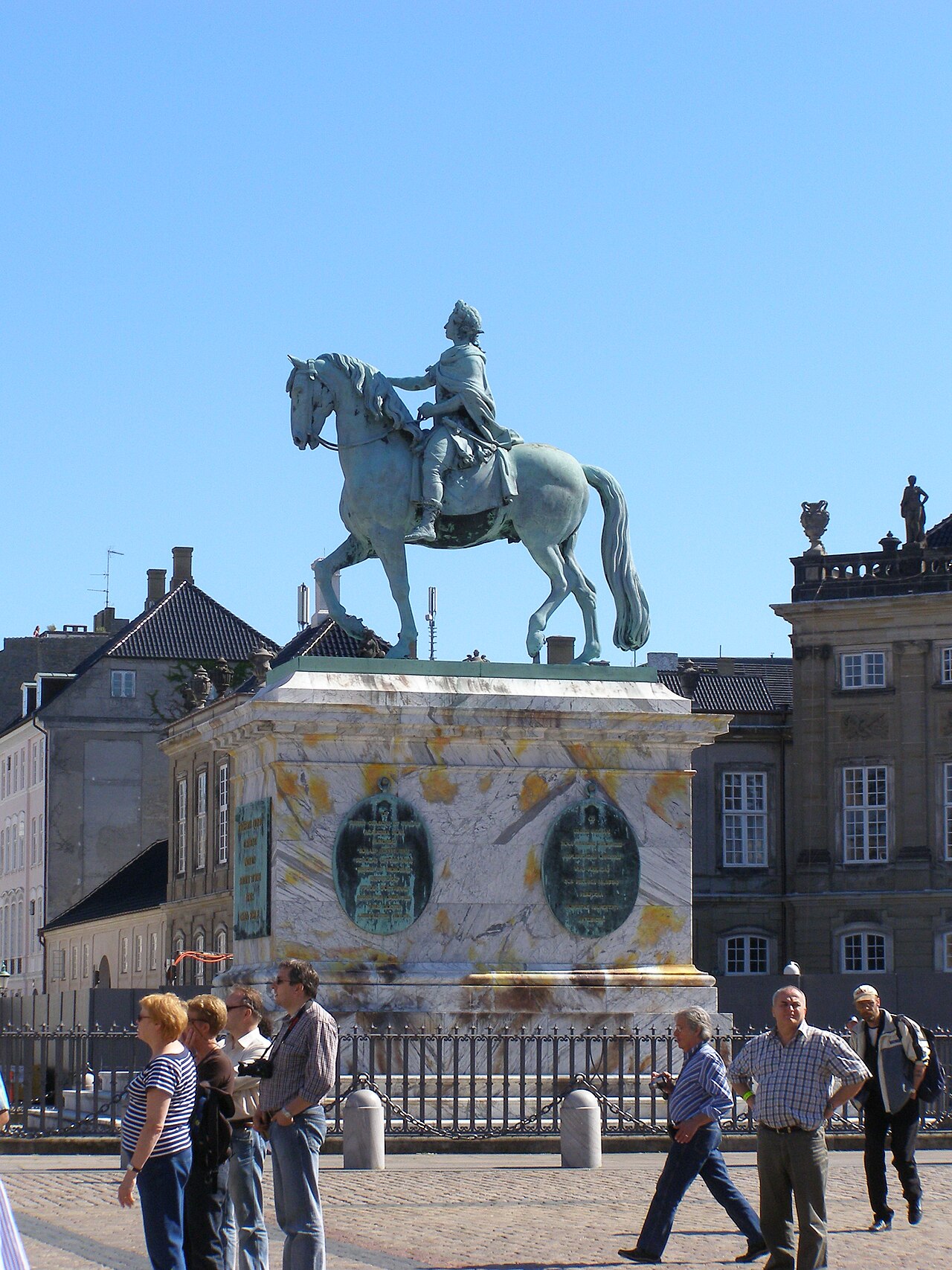
At the very centre of the square stands the equestrian statue that is the focal point of the whole ensemble, a magnificent bronze figure of the Danish king in whose reign the district was created, mounted in the manner of the great equestrian monuments of antiquity and the Renaissance. It is one of the finest such statues in Europe and the anchor of the entire composition.
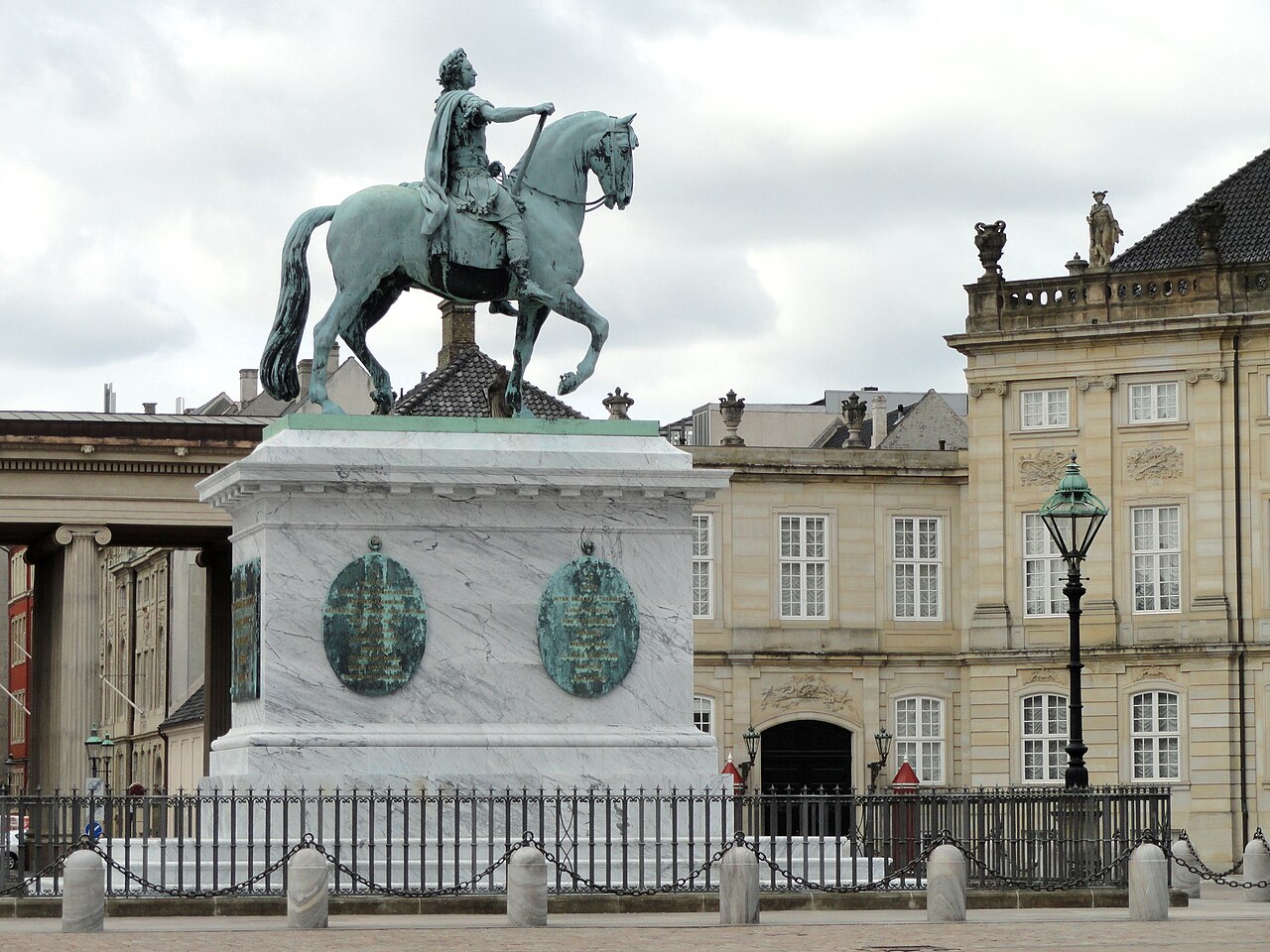
The statue was a costly and ambitious work, commissioned to honour the king and to crown the new square, and it was created by a distinguished sculptor of the age. Its placement at the centre of the octagon, with the four palaces arranged around it, makes the monarch the literal and symbolic heart of the ensemble, the figure toward which the whole design converges.
Such equestrian statues were the supreme expression of royal dignity in the age, evoking the image of the ruler as a commanding and heroic figure, and the Amalienborg statue fulfils this role superbly. Rising above the square, the king on his horse presides over the palaces and the ceremonies performed before them, a permanent embodiment of the monarchy at the centre of its seat.
For visitors, the statue is one of the great sights of Amalienborg, the point around which the changing of the guard is performed and the images of the square are composed. It ties the whole ensemble together, both visually and symbolically, and it remains a superb monument in its own right, one of the masterpieces of eighteenth-century sculpture set at the heart of one of Europe’s finest royal squares.
The making of the statue was, in its day, an extraordinarily expensive and drawn-out undertaking, and the finished bronze is reckoned among the great equestrian monuments of Europe. That so much care and cost went into a single statue tells us how important the king considered the image of the monarchy at the heart of his new square.
It remains the natural place to begin any visit.
How the Royal Family Came to Amalienborg
Amalienborg became the royal residence through misfortune. For much of its early history the Danish kings lived elsewhere, in a great palace that was the principal royal seat of the capital. But when that palace was destroyed by a devastating fire near the end of the eighteenth century, the royal family was left without a home, and they turned to the elegant palaces of Amalienborg.
The royal family acquired the four mansions around the square and took up residence there, transforming what had been the grand homes of noblemen into the seat of the crown. What began as an emergency measure became permanent, and Amalienborg has remained the principal home of the Danish royal family ever since, for well over two centuries.
This history explains the unusual character of the residence. Because the royal family moved into palaces built for others, Amalienborg is not a purpose-built royal palace but an ensemble of noble mansions adapted to royal use. The transition gave the monarchy a home of great elegance and harmony, and the four palaces proved admirably suited to housing the various branches and generations of the royal family.
The move to Amalienborg was thus a turning point in the history of both the palaces and the monarchy. A fire that destroyed one royal seat gave rise to another, and the elegant square built to celebrate a dynasty became the enduring home of its kings and queens. Ever since, Amalienborg has been the heart of the Danish monarchy, its four palaces sheltering the royal family through more than two centuries of the nation’s history.
It is one of history’s neat ironies that the loss of one royal palace to fire should have given Denmark an even more beautiful royal seat. What was intended as a temporary refuge proved so admirable a home that the crown never left, and the noble square became, by accident, the enduring heart of the monarchy.
Elegant Rococo by the Harbour
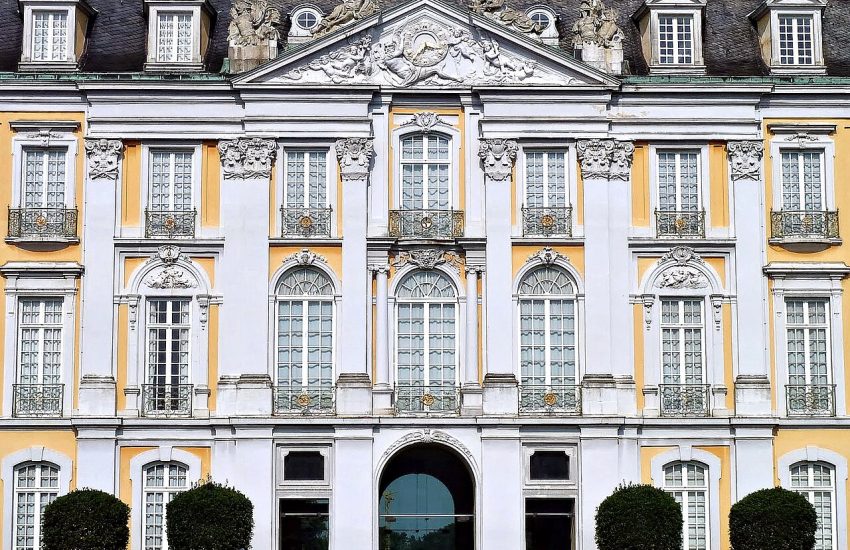
Architecturally, the palaces of Amalienborg are fine examples of the elegant rococo and early classical style of the mid-eighteenth century, restrained, harmonious, and beautifully proportioned. Their matching facades, with their ordered ranks of windows, their central pavilions, and their refined detailing, give the square its air of dignified elegance, avoiding heavy ornament in favour of balance and grace.
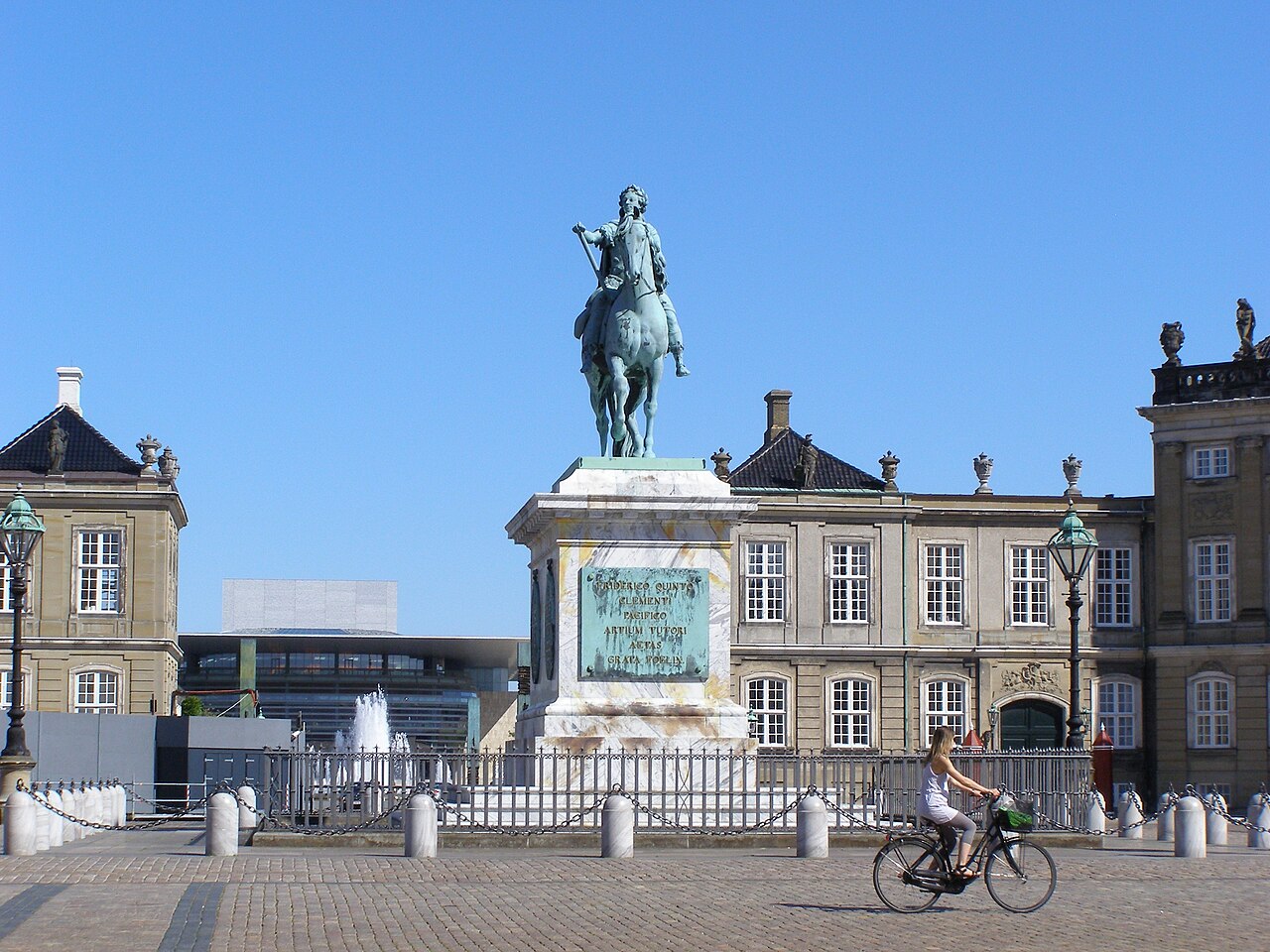
The unity of the four facades is central to the effect. Because the palaces were built to a common design, the square is framed by four harmonious buildings rather than a jumble of competing styles, creating a sense of order and calm that is one of the ensemble’s greatest strengths. The rococo taste of the age, with its love of elegance and proportion, is perfectly expressed in this restrained and unified architecture.
Behind the matching exteriors, the interiors were decorated in the fashionable styles of the eighteenth century and later, with fine rococo and classical rooms, though these have been altered and adapted over the generations. The palaces thus combine a unified exterior with varied and richly decorated interiors, reflecting both the original grand vision and the changing life of the royal family.
The setting enhances the architecture. Placed within the planned district, near the harbour and beneath the great dome of the church, the palaces belong to a wider composition of streets, vistas, and monuments, all in the elegant taste of the age. Amalienborg is thus not only a group of fine buildings but a masterpiece of eighteenth-century urban design, one of the most harmonious royal ensembles in Europe.
The restraint of the design has aged well. Where more flamboyant palaces can seem overwrought to modern eyes, the calm proportions of Amalienborg still read as elegant and dignified, a reminder that grandeur need not mean excess.
Inside the Palaces
While Amalienborg remains a working royal residence, part of it is opened to the public as a museum, allowing visitors to enter one of the palaces and to see the private and official rooms of the Danish royal family across the generations. This museum offers a rare and intimate glimpse into the life of the monarchy, within the very rooms where kings and queens lived.

The museum preserves and displays the studies, drawing rooms, and private apartments of recent monarchs, arranged much as they were used, so that visitors can see the personal surroundings of the royal family, from furniture and decoration to personal belongings. It brings the monarchy vividly to life, showing not only its grandeur but its domestic and human side.
The interiors on display reflect the tastes of successive reigns, and they include fine rooms decorated in the styles of their periods, along with the treasures, portraits, and mementoes of the royal family. The museum thus tells the story of the modern Danish monarchy through its own rooms and possessions, within the historic palaces of Amalienborg.
For visitors, this glimpse inside the palaces is one of the great pleasures of a visit. To walk through the rooms where the royal family has lived, to see their studies and salons preserved with their contents, is to encounter the monarchy in an unusually direct and personal way. The museum complements the grandeur of the square outside with the intimacy of the royal home within.
Seeing the private studies and drawing rooms of recent monarchs, preserved with their books, desks, and personal things, gives the visit a warmth that grander state rooms sometimes lack; here the royal family appears not only as an institution but as people who lived, worked, and relaxed in these rooms.
The Guards in the Tall Black Hats
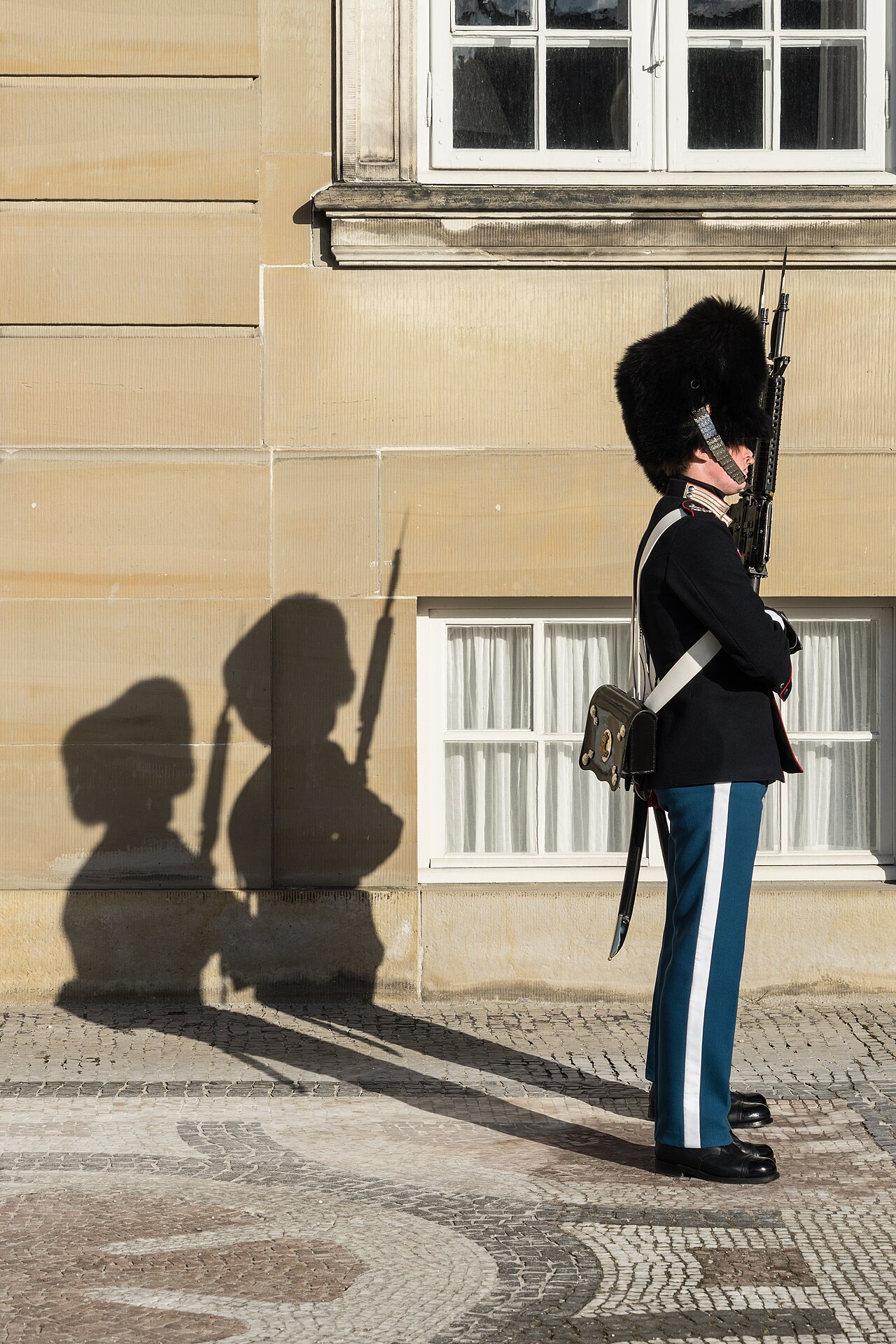
One of the most famous sights at Amalienborg is the changing of the guard, performed each day by the Danish Royal Life Guards, instantly recognisable in their smart uniforms and tall black bearskin hats. This daily ceremony, carried out with precision before the palaces, is one of the great spectacles of Copenhagen and a highlight for visitors from around the world.
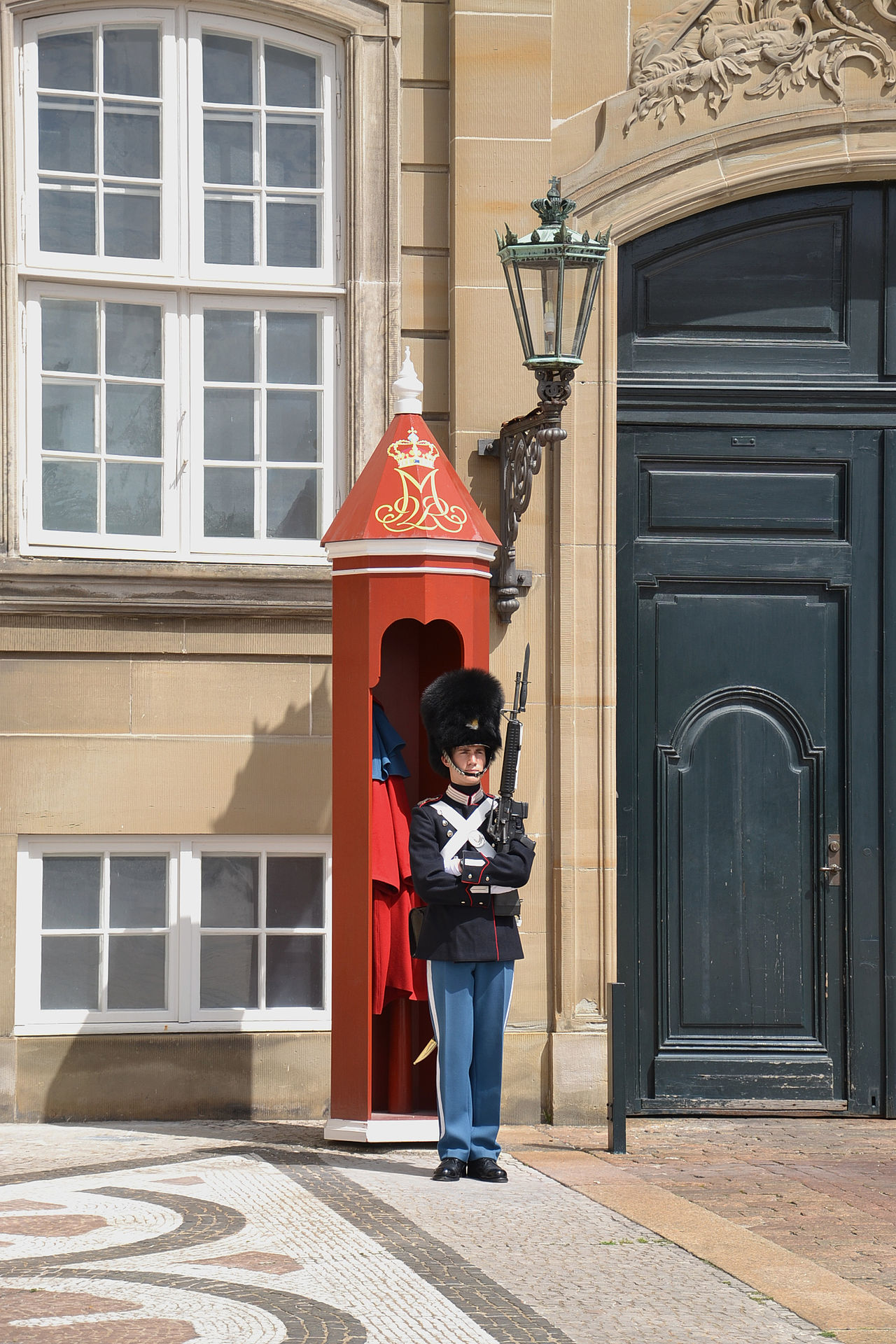
The Royal Life Guards are an elite regiment responsible for guarding the royal family and the palaces, and their duties at Amalienborg are both genuine and ceremonial. Each day, the guards march through the city from their barracks to the palace square, where the changing of the watch is performed, a tradition that combines real military function with colourful pageantry.
The ceremony is at its grandest when the monarch is in residence, when the guard is mounted in full strength and, on the greatest occasions, accompanied by music. The sight of the guards in their bearskins marching across the square, beneath the equestrian statue and before the elegant facades, is one of the defining images of the Danish monarchy and of Copenhagen itself.
For visitors, timing a visit to coincide with the changing of the guard, which takes place around midday, is essential. The ceremony brings the palace square to life, offering a vivid display of the ceremonial traditions of the monarchy and a reminder that Amalienborg is a living royal residence, guarded and served as it has been for generations, in one of the most beautiful settings in the city.
Children and adults alike line the route to watch the guards march through the streets, and there is a genuine thrill in the sound of the boots and the band approaching before the column comes into view. It is a piece of living tradition rather than a show staged for tourists, and that authenticity is part of its appeal.
For many, it is the abiding memory of Copenhagen.
A Living Royal Home
Amalienborg is not a museum of a vanished monarchy but the living home of a reigning one. The Danish royal family continues to reside in the palaces around the square, and the monarch performs many official functions here, so that the ensemble remains, as it has been for over two centuries, the working seat of the Danish crown.
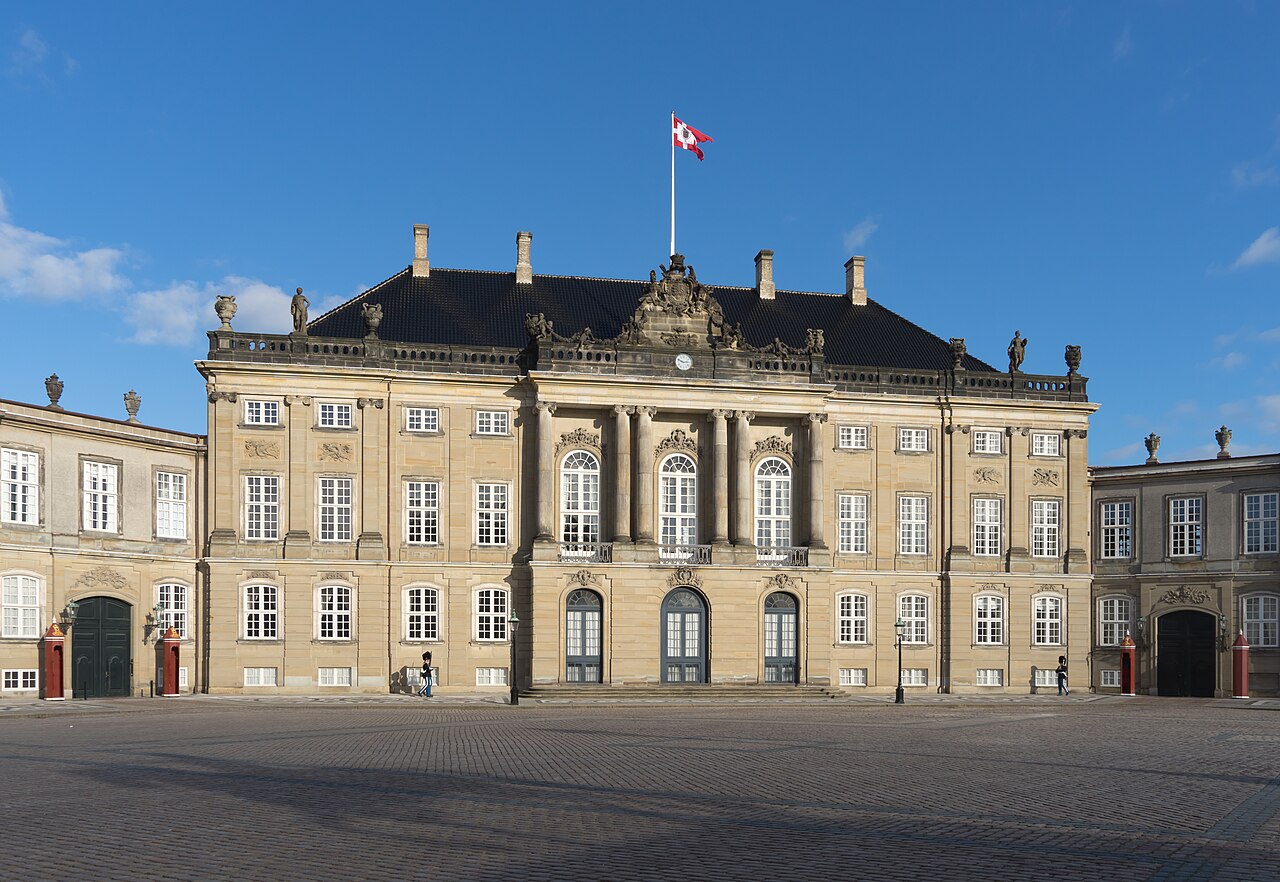
The continuing residence of the royal family gives Amalienborg its special vitality. The presence or absence of the monarch is signalled to the public, the guard is mounted accordingly, and the daily life of the court goes on within the palaces, so that the square is not a preserved relic but a place where the monarchy is genuinely at home and at work.
The Danish monarchy has moved with the times while preserving its traditions, and in recent years the crown has passed to a new generation, a transition followed with great interest and affection by the Danish people. Through such changes, Amalienborg has remained the steady centre of the monarchy, the home to which each new reign belongs.
This living quality is central to the meaning of Amalienborg. It is the actual home of one of the oldest royal families in the world, still lived in, still guarded, still the setting for the ceremonies of the crown. To visit is to encounter not a monument to the past but a functioning royal residence, where the long story of the Danish monarchy continues to unfold in the present day.
A raised standard over one of the palaces tells the passer-by that the monarch is in residence, a small, living detail that turns the whole square into a kind of daily bulletin on the life of the crown.
The Marble Church and the Harbour
Amalienborg does not stand alone but at the crossing of grand vistas that give it much of its splendour. On one side of the square, an avenue leads the eye to the great domed church known as the Marble Church, one of the most magnificent buildings in Copenhagen, whose vast dome closes the vista and crowns the whole quarter with a note of soaring grandeur.
The Marble Church, with its imposing dome among the largest in Scandinavia, was part of the original grand design of the district, intended to complete the composition and to provide a fitting religious counterpart to the royal palaces. The alignment of the church, the square, and the palaces is a masterstroke of planning, uniting the sacred and the royal in a single sweeping vista.
On the other side of the square, a second vista leads down toward the harbour, opening the ensemble to the water and, in modern times, to the striking architecture on the far shore. This double axis, church on one side and harbour on the other, gives Amalienborg a sense of openness and grandeur, connecting the royal square to both the spiritual and the maritime life of the city.
Together, the palaces, the statue, the church, and the harbour form one of the great planned landscapes of Europe, a composition in which every element is placed to enhance the others. To stand in the square and look one way to the dome of the church and the other to the water is to appreciate the genius of the eighteenth-century design, which made Amalienborg not just a royal residence but the centrepiece of a whole magnificent quarter of the city.
Across the harbour, the modern opera house now answers the church at the far end of the second axis, so that the eighteenth-century vista has been extended into the twenty-first, old and new framing the royal square between them.
The two vistas together make the square feel open to both heaven and sea.
The Palace on Film
The elegance and ceremony of Amalienborg, its four harmonious palaces, its central statue, its daily changing of the guard, and its grand setting, are wonderfully conveyed in film, and the short feature below offers a tour of the royal square and its traditions. Watching it alongside this article helps bring the seat of the Danish monarchy to life.
If you are planning a visit to Copenhagen, a video like this is a fine way to prepare, helping you recognise the four palaces, the statue, and the Marble Church, and to understand the workings of the changing of the guard and the life of the royal family. It sets the ensemble in the context of the city and the monarchy.
And if a visit to Denmark lies beyond your plans for now, the film lets you enjoy the royal square from afar. Let it play, and picture yourself standing before the four palaces of Amalienborg, beneath the bronze king on his horse, as the guards in their tall black hats march across the square in the heart of Copenhagen.
Visiting Amalienborg Today
For travellers to Copenhagen, Amalienborg is one of the essential sights of the city, easily reached in the historic centre and combining beautifully with the nearby Marble Church, the harbour, and the other attractions of the area. The square is open to all, and the palace museum welcomes visitors, so that one can experience both the grand exterior and, in part, the interior of the royal residence.

A visit rewards attention to the whole ensemble: the four elegant palaces, the equestrian statue at the centre, the vistas to the church and the harbour, and, above all, the daily changing of the guard around midday. The palace museum, housed in one of the four palaces, allows visitors to see the private and official rooms of recent monarchs and to learn the history of the modern Danish royal family.
Because Amalienborg is a working royal residence, visitors should respect the areas that are private and follow any guidance about access, especially around the changing of the guard and when the royal family is present. Timing a visit to coincide with the guard ceremony greatly enriches the experience, adding the colour and pageantry of the ceremony to the beauty of the square.
However you come to it, Amalienborg offers a rare encounter with one of the oldest living monarchies in the world, in one of the finest royal squares in Europe. To stand among the four palaces, beneath the bronze king, with the great dome of the church rising beyond and the guards marching across the square, is to experience the enduring dignity and charm of the Danish crown, at home in the heart of Copenhagen.
Mornings before the guard ceremony are a good time to enjoy the square before the crowds gather.
Palaces Nearby
If the elegance of the Danish royal square has drawn you in, these two other Baroque royal palaces of Northern Europe make a natural next stop.
- Het Loo, the Versailles of the Netherlands and Its Baroque Gardens — the Dutch Baroque palace of the House of Orange.
- Wilanow, the Golden Palace of the King Who Saved Vienna — the Baroque residence of King Jan III Sobieski near Warsaw.
You May Like
Konopiste the Bohemian Castle of a Doomed Archduke