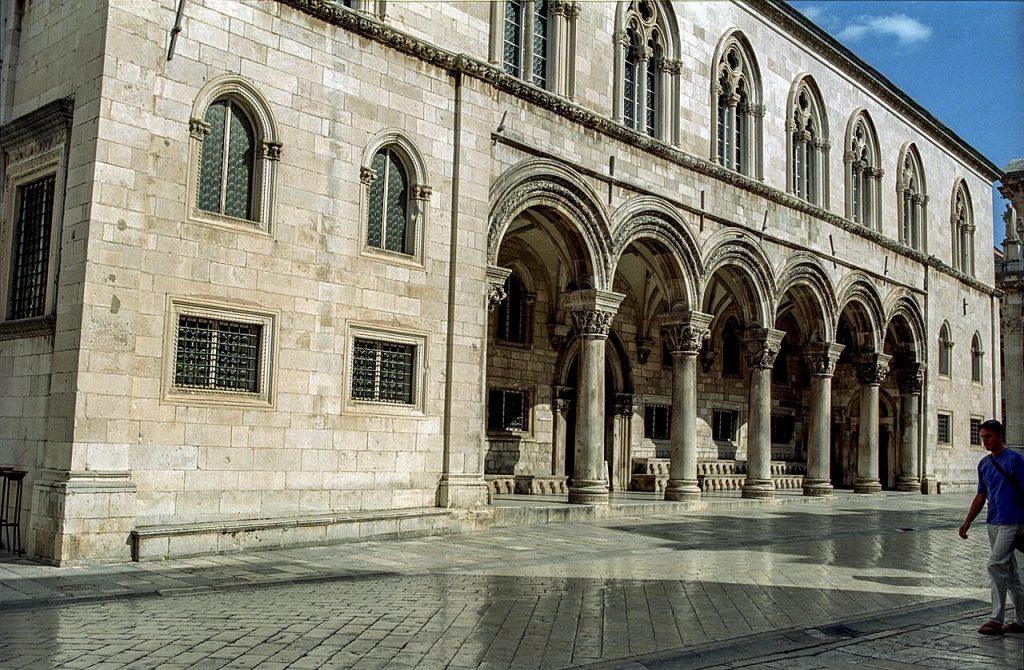
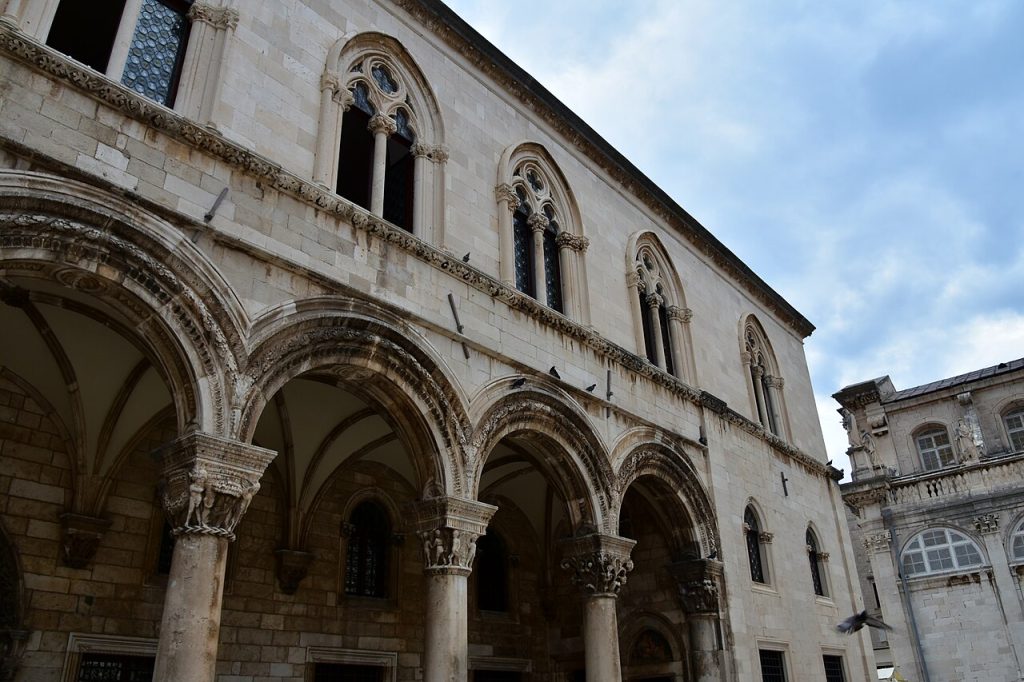
At the eastern end of Dubrovnik’s old town, between the cathedral and the Sponza Palace, where the main street opens into the small square before the harbour gate, stands a two-storey palace of pale Dalmatian stone with an arcaded loggia of six columns, Gothic windows above and a courtyard inside that is the most beautiful enclosed space on the Adriatic coast. It is the Rector’s Palace, Knežev dvor, the seat of government of the Republic of Ragusa for more than four centuries, and it was the home of a ruler who held office for exactly one month, could not leave the building without permission and then stepped down to let the next man in.
The republic of Dubrovnik, independent from 1358 to 1808 between Venice and the Ottomans, governed itself through councils of nobles and feared one-man rule above all things, and so it made its head of state a monthly rotating figurehead and wrote above the door of his council chamber the words Obliti privatorum publica curate, forget private matters, attend to public ones. The palace he lived in was built by Onofrio della Cava in 1435, rebuilt by Michelozzo and Salvi di Michele after gunpowder explosions in 1435 and 1463, repaired after the great earthquake of 1667 and is now the Cultural History Museum, with the rector’s rooms, the council hall, the prison and the stage of the Dubrovnik Summer Festival in its courtyard.
Walk with me from the Stradun to the loggia and the courtyard, up the stairs to the rector’s rooms and down to the cells, with the republic, its architects and its one-month ruler in order. The contents are below.
In This Article
- A Palace Between Cathedral and Harbour
- The Republic That Feared a Prince
- The Rector Who Served One Month
- 1435: Onofrio della Cava Builds a Palace
- Gunpowder, Fire and Michelozzo
- Salvi di Michele and the Renaissance Courtyard
- The Carved Capitals and Aesculapius
- Miho Pracat, the Only Commoner With a Statue
- 1667: The Great Earthquake
- The Rector’s Rooms and the Council Hall
- 1808: Napoleon Ends the Republic
- From Government Offices to Museum
- Festival Nights in the Courtyard
- Dubrovnik on Video
- Visiting the Rector’s Palace Today
- Palaces Nearby
A Palace Between Cathedral and Harbour
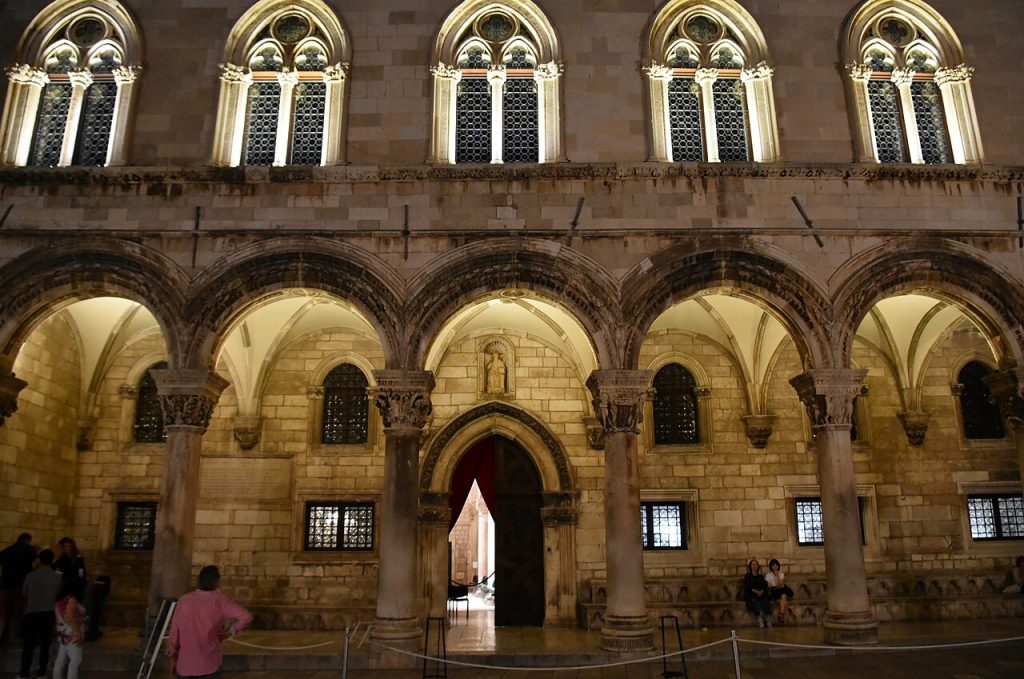
Dubrovnik’s old town is a walled oval on a rock between the mountain and the sea, with the Stradun running down its middle from the Pile gate to the Luža square, where the clock tower, the Sponza Palace and the church of St Blaise stand. The Rector’s Palace is a few steps south of the Luža, facing the cathedral across the Pred Dvorom street, with the harbour and the arsenal behind it, and its arcaded loggia of six columns and seven arches is the first thing you see from the square. The building is modest in size, two storeys and a courtyard, which is the measure of a republic that distrusted display.
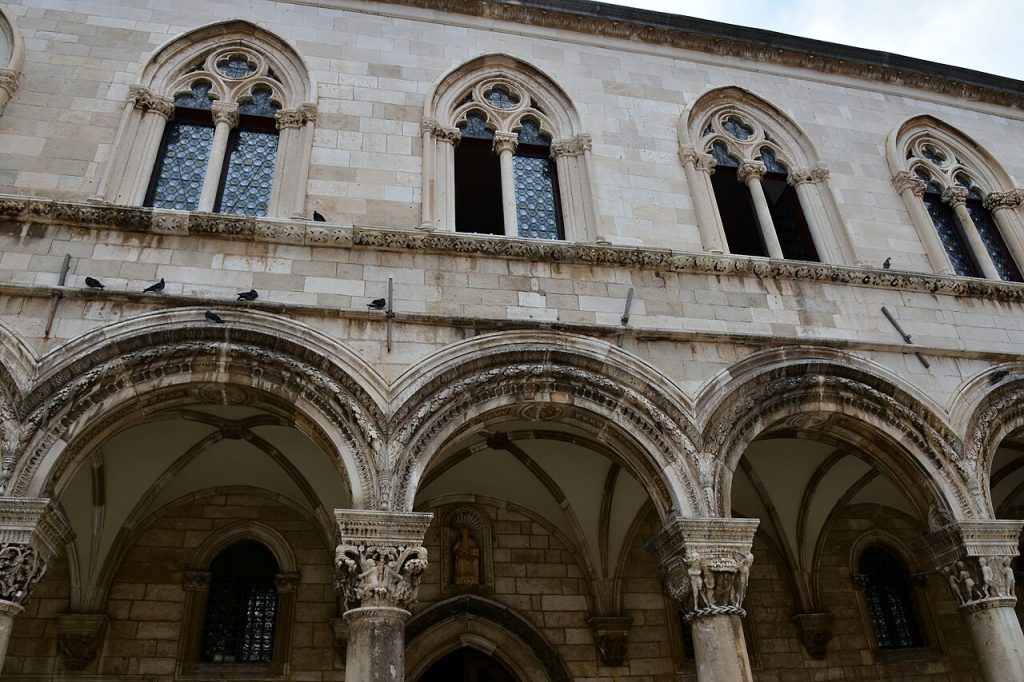
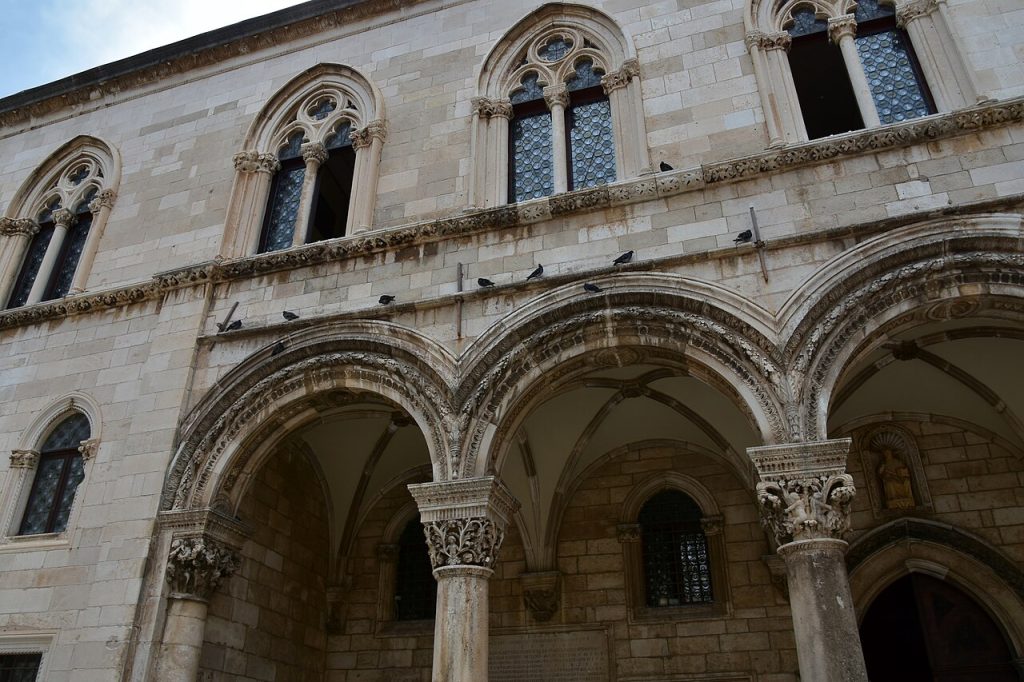
Now, stop here on the pavement opposite and look at the facade. The ground-floor arcade is Renaissance, round-arched, from after 1463; the windows above are Gothic, from before; and the whole is held together by the colour of the stone, the pale limestone of Korčula and Brač that makes all Dubrovnik one building.
The Republic That Feared a Prince
Dubrovnik, Ragusa to the Italians, was a Byzantine and then Venetian town that in 1358 passed to the nominal protection of the kings of Hungary and became in practice an independent republic, which it remained for four hundred and fifty years, paying tribute to the Ottoman sultan from 1458 and trading between the Turkish Balkans and Christian Europe with a fleet that at its height in the sixteenth century rivalled Venice’s. The republic was an aristocracy: a Great Council of all adult male nobles, a Senate of about forty-five, a Minor Council of eleven that was the executive, and a rector who presided. The motto was Libertas, and the flag that flew from the palace was white with the word on it.
Above all, the republic feared the rise of a prince. Venice had its doge for life, Florence its Medici; Dubrovnik made sure that no man could hold power long enough to become dangerous, and the office of rector was designed for exactly that.
The Rector Who Served One Month
The rector, knez in Croatian, was elected by the Great Council from among the nobles over fifty for a term of one month, and he could not be re-elected for two years. During his month he lived in the palace, separated from his family and his business, could leave only on state occasions and with the council’s leave, presided over the councils, held the keys of the city gates at night and received ambassadors in red robes, with a mace, trumpets and a guard. He was the head of state and he had almost no power: decisions belonged to the councils, and he was there to embody the republic, not to rule it.
The inscription above the door of the council chamber, Obliti privatorum publica curate, forget private matters and attend to public ones, told him what he was for. Now, stop here under the inscription and consider a state that changed its head twelve times a year for four and a half centuries and never had a tyrant, a coup or a civil war.
1435: Onofrio della Cava Builds a Palace
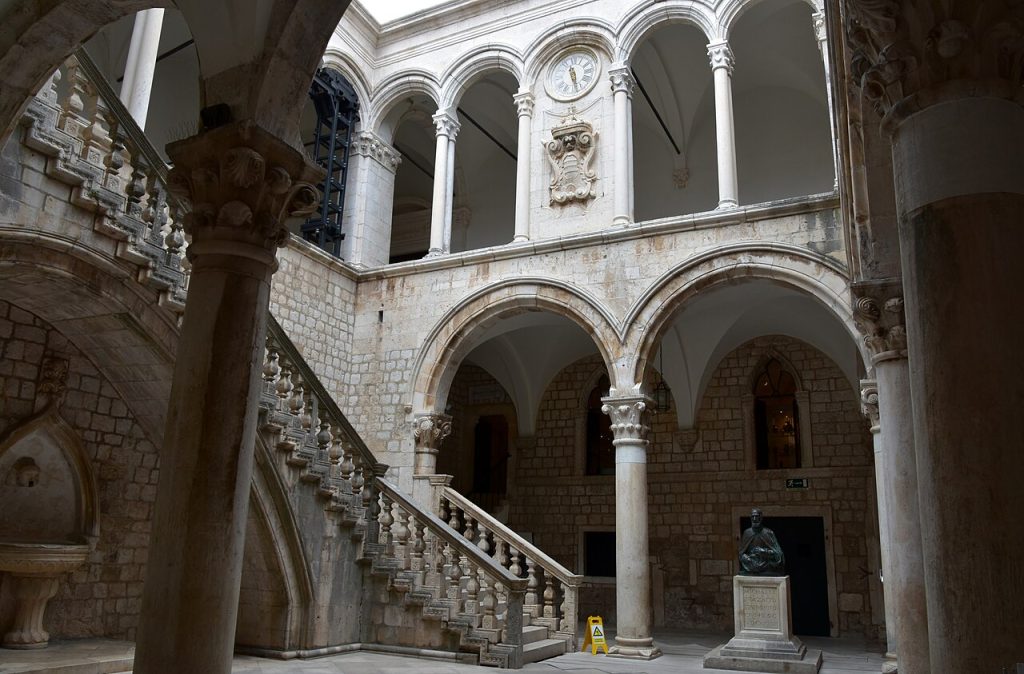
The first seat of the rector was a fortified castle on this site, which blew up in 1435 when the gunpowder stored in it exploded. The republic commissioned a new palace from Onofrio della Cava, the Neapolitan engineer who was then building Dubrovnik’s aqueduct and the two great fountains that bear his name, and he designed a Gothic palace with a loggia on the square, a courtyard with arcades on two levels, a grand staircase and the council hall and rector’s apartments on the upper floor, with the chancery, the guard and the prisons below. Onofrio’s palace was richly carved by Dalmatian and Italian sculptors, and much of its Gothic detail, the upper windows, the courtyard’s upper arcade and some capitals, survives.
The palace was finished in the 1440s and was the republic’s pride, the finest public building on the eastern Adriatic, and it lasted twenty years before the gunpowder went off again.
Gunpowder, Fire and Michelozzo
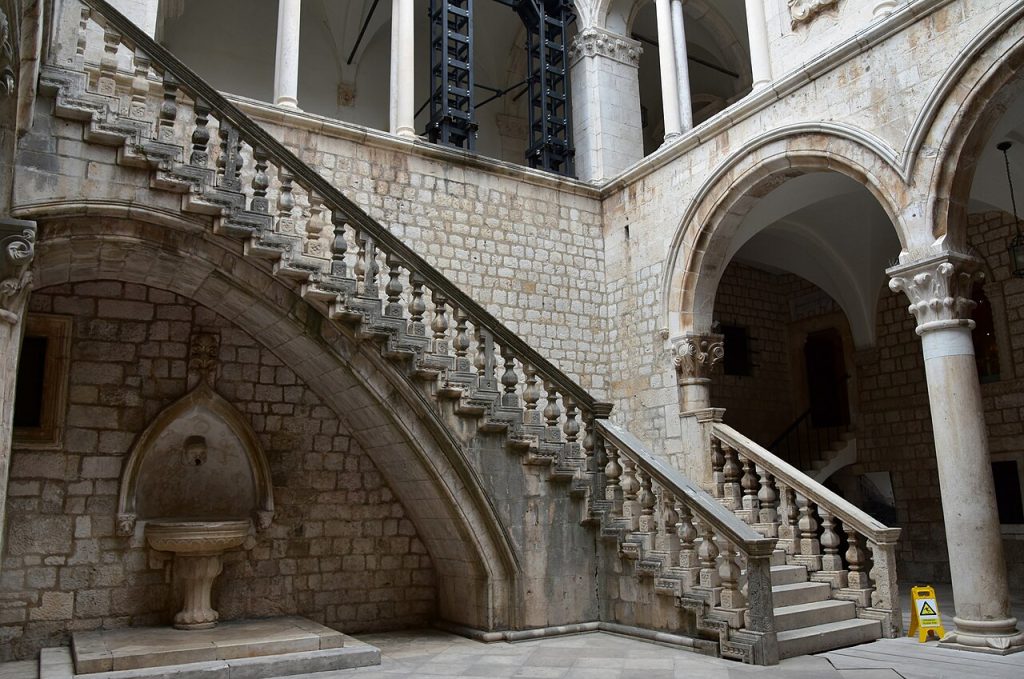
In 1463 a second gunpowder explosion, this time in the magazine beside the palace, destroyed the loggia and much of the ground floor, and the republic, which had just invited the Florentine architect Michelozzo di Bartolomeo, Cosimo de’ Medici’s architect, to work on its fortifications, asked him for a design. Michelozzo proposed a Renaissance palace with a round-arched loggia and classical detail, and the ground-floor arcade on the square, with its six columns and carved capitals, is attributed to him. The nobles quarrelled with him over the design and the cost, and he left Dubrovnik in 1464 without finishing, but the Renaissance loggia on a Gothic palace that resulted is the building’s signature.
The gunpowder was finally moved to the fortresses, and the palace has not exploded since.
Salvi di Michele and the Renaissance Courtyard
Michelozzo’s work was completed by another Florentine, Salvi di Michele, who finished the loggia and the courtyard between 1464 and 1468, and by local masters including the sculptor Petar Martinov of Milan and the Dalmatian carvers who worked on the capitals. The courtyard is the result: a rectangular atrium with a round-arched arcade below, a Gothic arcade above, a grand open staircase rising along one side to the upper gallery and the council hall, and the light falling from above onto the pale stone. It is at once Gothic and Renaissance, Venetian in plan and Florentine in detail, and it has been called the most harmonious courtyard of the fifteenth century outside Italy.
Now, stop here at the foot of the staircase and look up. This is the space the rector crossed each morning from his rooms to the council, and the space where the Summer Festival’s concerts are held, and the acoustics are as good as the proportions.
The Carved Capitals and Aesculapius
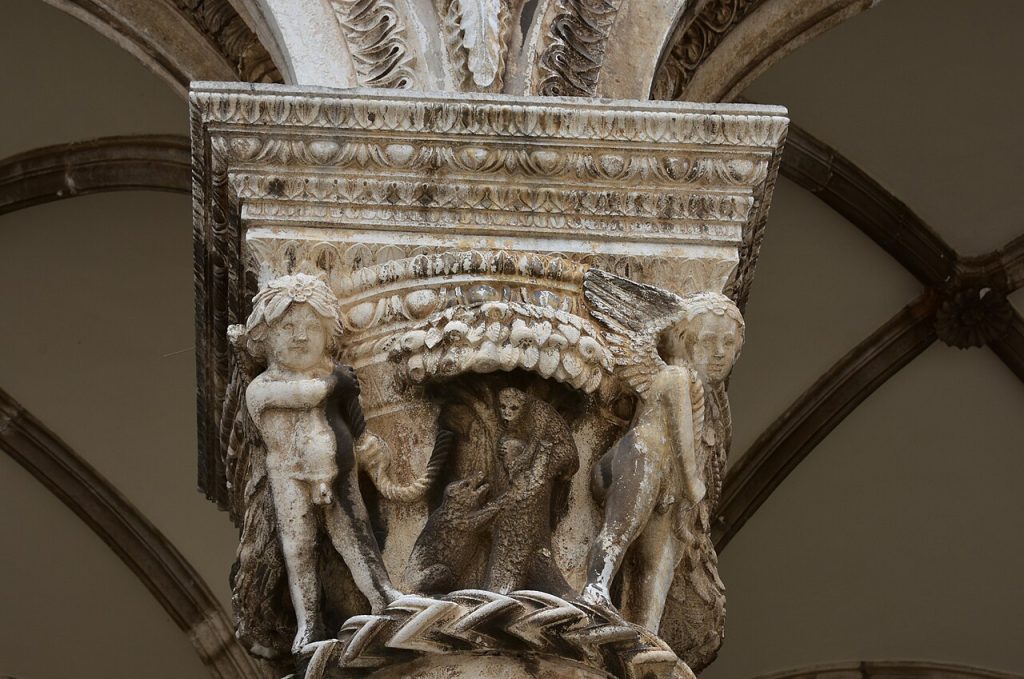
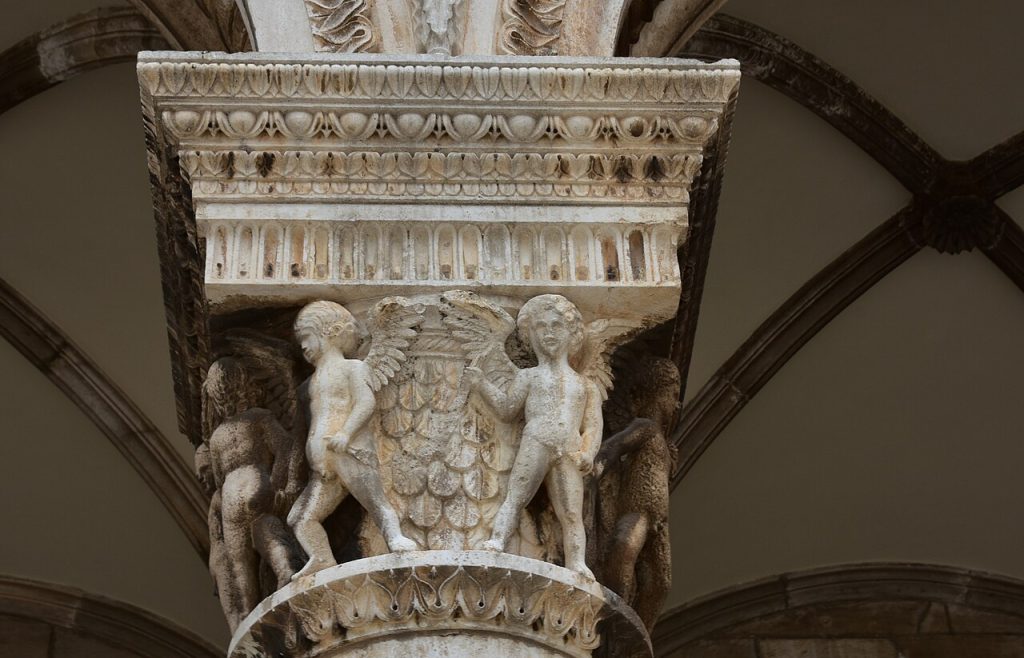
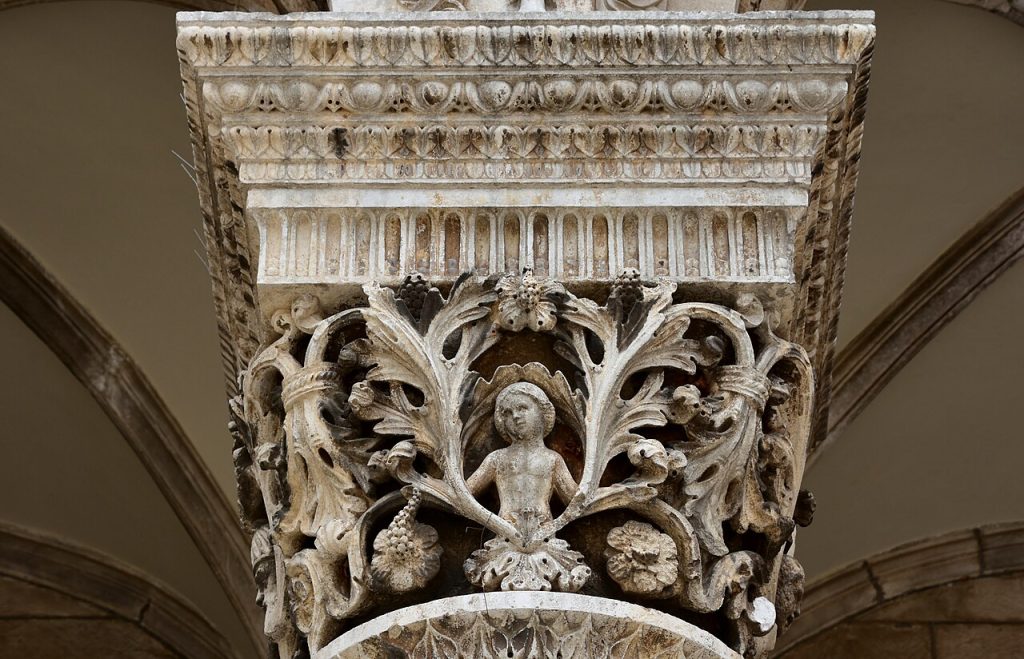
The capitals of the loggia and the courtyard are the palace’s sculpture gallery. The most famous, on the loggia, shows Aesculapius, the god of medicine, seated in a pharmacy among his jars and books with an attendant, a scene of extraordinary liveliness carved around 1440 by Petar Martinov; the republic claimed Aesculapius as a native of Epidaurus, the Greek colony at nearby Cavtat, and the capital was a civic boast. Other capitals show the Judgement of Solomon, putti, foliage, lions and the republic’s patron St Blaise, and the doorway to the council hall has a carved frame with the Ragusan arms.
The capitals were weathered and damaged over the centuries and some have been replaced by copies, with the originals in the museum, but the Aesculapius is in place, and a small crowd always stands beneath it.
Miho Pracat, the Only Commoner With a Statue
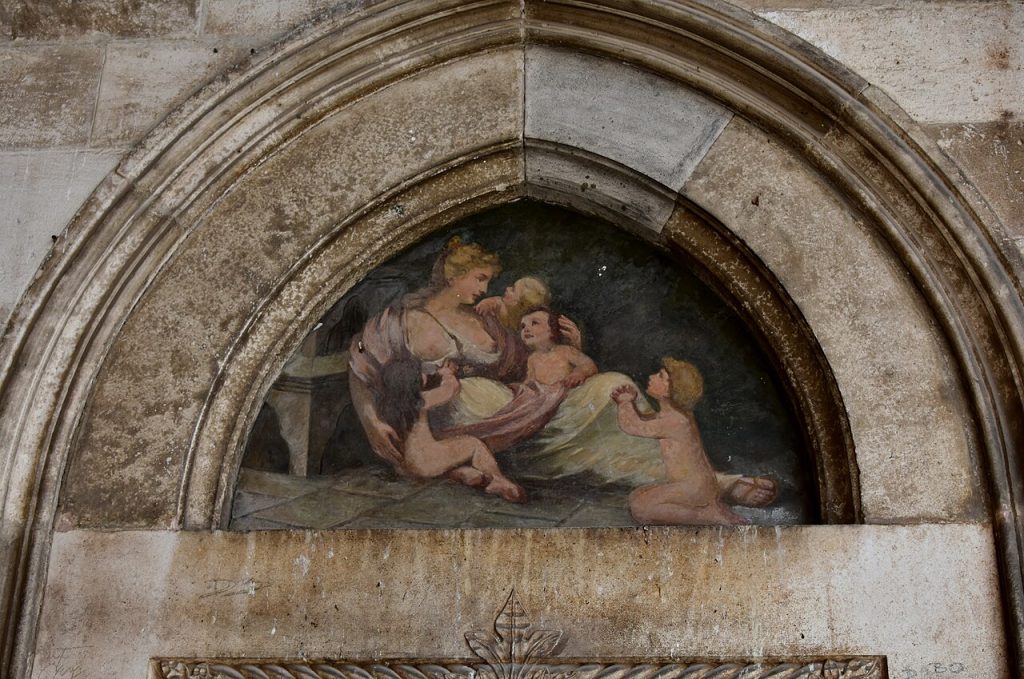
In the courtyard stands a bronze bust on a pedestal, the only monument the Republic of Ragusa ever raised to an individual, and the man is not a noble or a rector but a commoner: Miho Pracat, a shipowner and merchant from the island of Lopud who made a fortune in the Mediterranean trade and died in 1607 leaving the whole of it, some two hundred thousand ducats, to the republic for charity and public works. The grateful Senate commissioned the bust from the sculptor Pietro Giacometti of Recanati, and it was set up in 1638 with an inscription recording his gift.
The legend says Pracat failed three times at sea and was about to give up when he watched a lizard try three times to climb a wall and succeed on the fourth, and tried again. The republic, which gave no statues to its own rulers, gave one to him, and the lesson about public and private was intended.
1667: The Great Earthquake
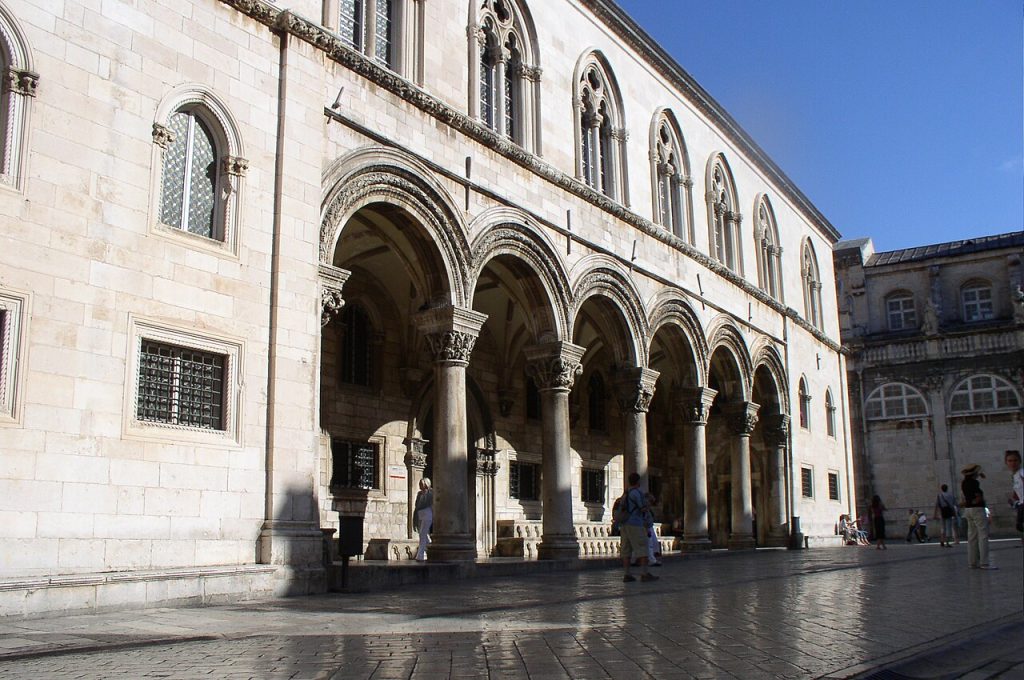
On the morning of 6 April 1667 an earthquake destroyed most of Dubrovnik, killing some three thousand people, about half the population, including the rector, Šimun Getaldić, who died in the palace. The cathedral and most of the churches and palaces fell, and the Rector’s Palace lost its upper floor and roof, though the loggia and courtyard survived. The republic, impoverished and depopulated, rebuilt slowly: the palace’s upper storey was restored in a plain Baroque manner, the staircase was repaired, and the new cathedral rose opposite over the following decades. The Baroque elements in the courtyard and on the upper floor date from this repair.
The earthquake was the beginning of the republic’s long decline. It never recovered its wealth or its fleet, and the palace, repaired rather than rebuilt, kept its fifteenth-century form because there was no money for anything grander.
The Rector’s Rooms and the Council Hall
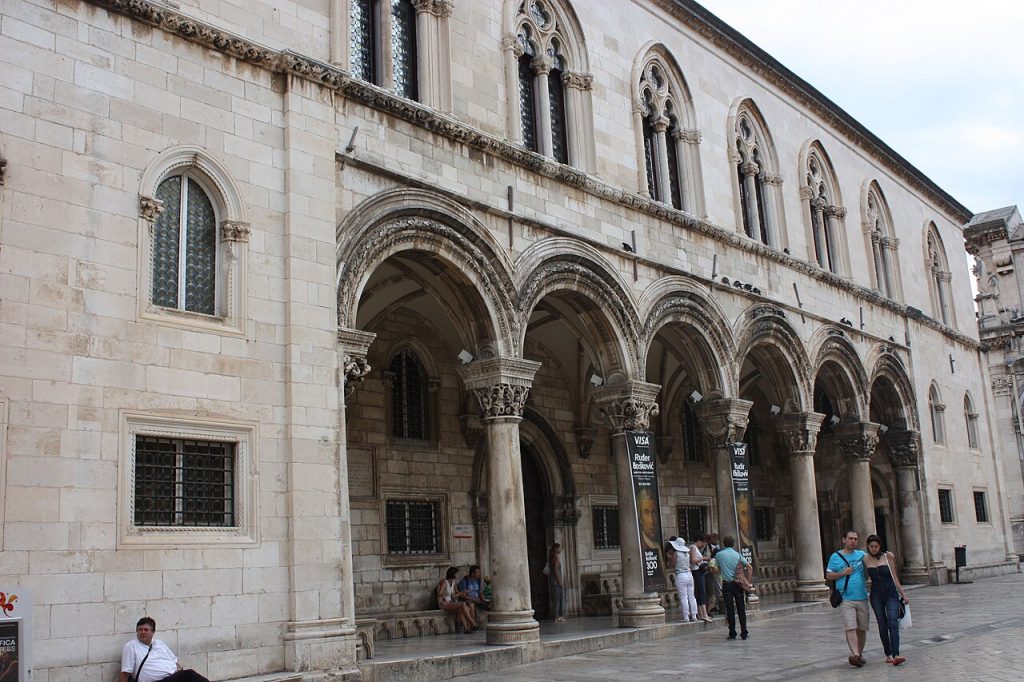
The upper floor holds the rector’s apartments, the hall of the Minor Council, the chancery and the chapel, now furnished by the museum with Dubrovnik and Venetian furniture of the seventeenth and eighteenth centuries, portraits of nobles, the rector’s red robes and the republic’s ceremonial objects, including the keys of the city gates, the mace and the seals. The council hall has its carved doorway with the inscription and the rector’s chair, and the rooms open onto the upper gallery of the courtyard. In the ground floor are the chancery, the guardroom, the courtroom and the prison cells, which held debtors and political prisoners under the rector’s own feet.
The museum also shows the coins of the republic, its weights and measures, the uniforms of the guard and the clock mechanism of the city tower, and in the atrium stands the republic’s bell. Now, stop here in the rector’s bedroom and remember that the man who slept here could not go home for thirty days.
1808: Napoleon Ends the Republic
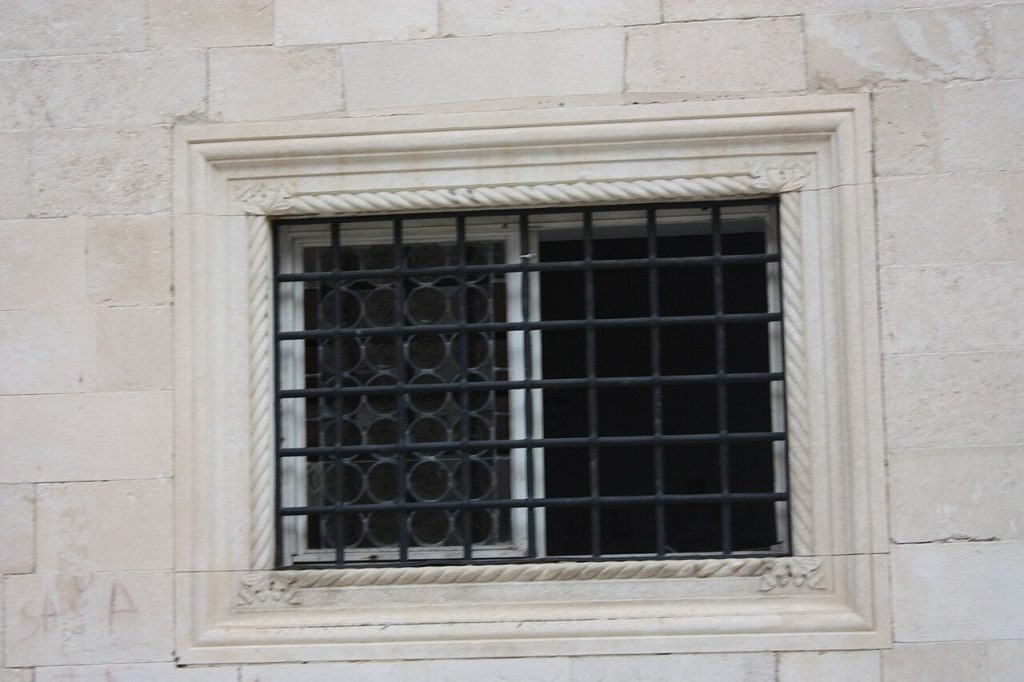
The republic survived Venice’s fall in 1797 by a decade. In 1806 French troops under General Lauriston entered Dubrovnik to forestall the Russians and Montenegrins who were besieging it, and never left; on 31 January 1808 Marshal Marmont, Napoleon’s governor of Dalmatia, read a decree in the Rector’s Palace abolishing the Republic of Ragusa and annexing it to the Kingdom of Italy, then to the Illyrian Provinces. The last rector, Sabo Giorgi, handed over the keys. In 1815 Dubrovnik passed to Austria, which kept it until 1918, and the palace became the seat of the Austrian district administration and the law courts.
The nobles, who had held the republic together for four and a half centuries, refused to marry outside their class and died out within a few generations, and the city they had governed became a provincial Austrian port and then, in the twentieth century, one of the most visited places on earth.
From Government Offices to Museum
Under Austria and the first Yugoslavia the palace housed offices, courts and archives, and the courtyard was used as a store; the upper rooms lost their fittings and the capitals weathered. After the Second World War the city museum, founded in 1872, was reorganised, and in 1950 the Rector’s Palace became the Cultural History Museum of Dubrovnik, with the rector’s rooms refurnished and the collections of the republic’s history, furniture, paintings, coins and costume installed. Restoration of the building continued through the second half of the century, and the palace was damaged by Yugoslav shelling during the siege of Dubrovnik in 1991 and 1992, when a shell hit the courtyard; the damage was repaired by 1994.
The museum today is one of the Dubrovnik Museums group, with the Maritime Museum in the fortress of St John and the Ethnographic Museum in the Rupe granary, and a combined ticket covers all three.
Festival Nights in the Courtyard
Since the Dubrovnik Summer Festival was founded in 1950 the courtyard of the Rector’s Palace has been its principal concert hall, where chamber orchestras, string quartets and pianists play on summer nights under the open sky with the audience on the stairs and in the arcades, and the acoustics and the setting have made it one of Europe’s famous festival venues. The palace also hosts the festival’s opening ceremony, exhibitions and, by day, the two million visitors a year who pass through the old town, so that the quietest building of the republic is now one of the busiest.
Now, stop here in the courtyard as a concert begins, with the stone turning gold under the lights and the stairs full. The republic built this space for a ruler who served a month and a council that served for life, and it has turned out to be a theatre, which the nobles who distrusted display would not have approved and the rest of us can only be grateful for.
Dubrovnik on Video
Before you plan your trip, take a few minutes to see Rector’s Palace in motion. The video below gives a good sense of the setting, the scale of the buildings and the atmosphere of the grounds.
Visiting the Rector’s Palace Today
The Rector’s Palace is open daily year-round, with longer hours in summer, and the ticket covers the Cultural History Museum on both floors, the courtyard and the prison; the combined Dubrovnik Museums ticket adds the Maritime and Ethnographic museums and the Dubrovnik Pass includes it with the city walls. Allow an hour, and go early or late, because the cruise-ship crowds fill the square and the courtyard in the middle of the day. Festival concerts in July and August must be booked well in advance through the Dubrovnik Summer Festival.
The palace is at the eastern end of the Stradun, two minutes from the Luža square and the harbour gate, and the old town is reached from the Pile gate by bus or on foot from the port and the cable car. Dubrovnik airport is at Čilipi, twenty kilometres south. The other Croatian palaces in this series are far to the north; Trakošćan and the castles of the Zagorje are a day’s drive. Here is the exact spot: Rector’s Palace on Google Maps.
Palaces Nearby
If you have enjoyed this palace, the region holds more remarkable residences. Here are two more well worth adding to your journey:
You May Like
Ilok Castle and the Odescalchi Who Ruled Croatia’s Easternmost Town