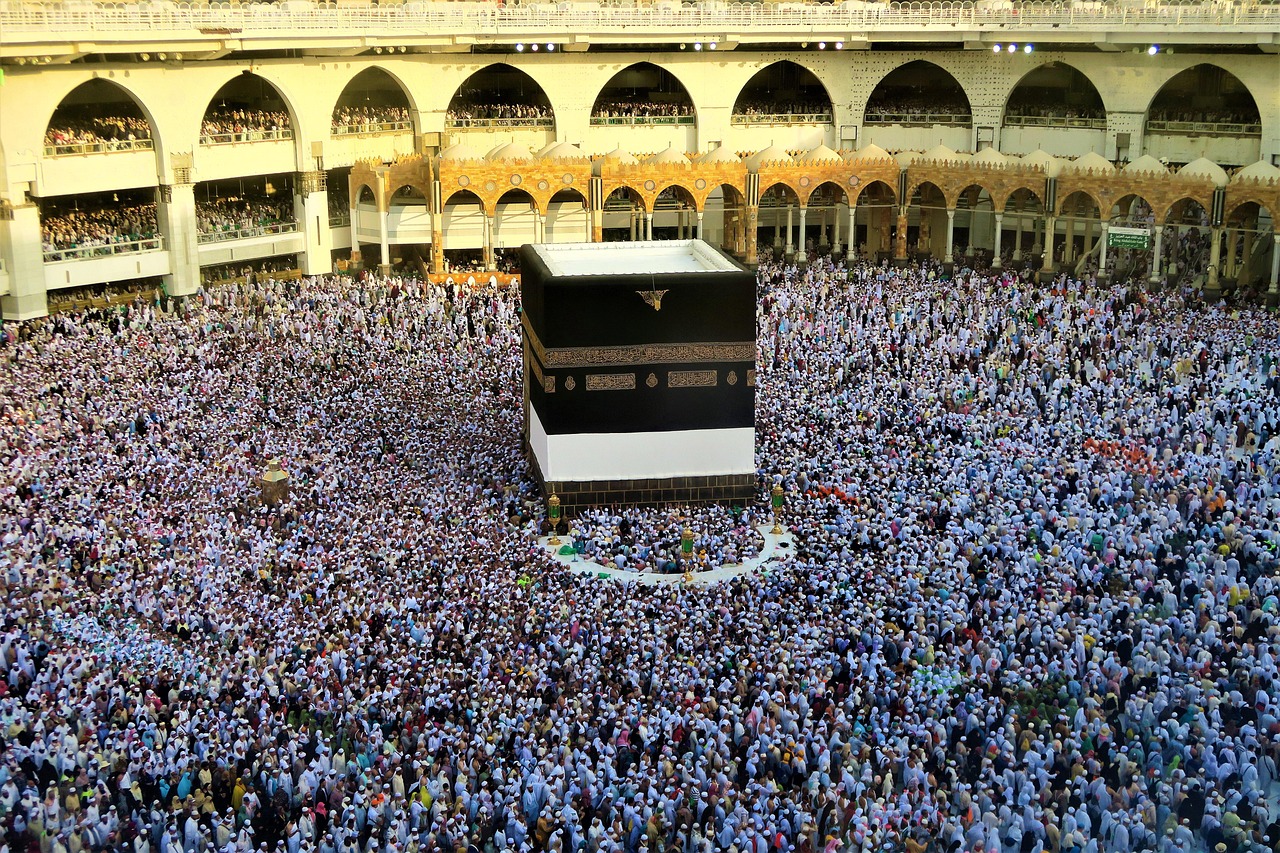
For more than fourteen centuries, the cube-shaped structure at the heart of Mecca has anchored the daily prayers of Muslims across every continent. Five times a day, hundreds of millions of believers turn their faces toward this single point, making the Kaaba the most universally oriented building on earth. Understanding why this happens, and what the surrounding Masjid al-Haram means to those who gather there, is the natural starting point for any guide to Islam’s holiest city.
What the Kaaba Is
The Kaaba is a roughly cubic stone building draped in a black silk-and-gold covering known as the kiswah, which is renewed each year. Muslims do not worship the structure itself; rather, it serves as the qibla, the direction toward which prayer is offered, unifying the global community in a shared physical orientation. According to Islamic tradition, its foundations are linked to the prophet Ibrahim and his son Ismail, who are believed to have raised its walls as a house dedicated to the worship of one God. Set into one corner is the Black Stone, which pilgrims try to touch or gesture toward as they circle the building.
The Great Mosque Around It
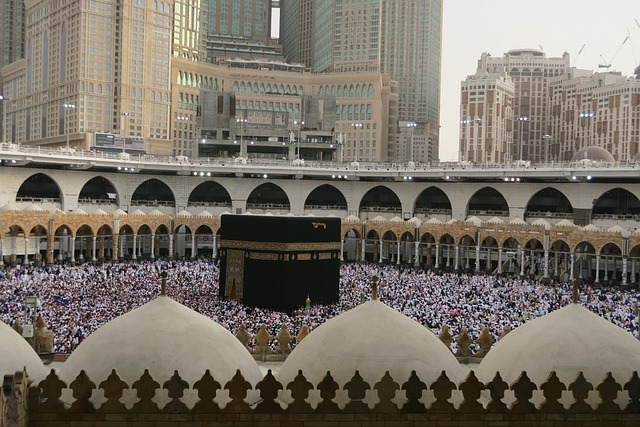
Encircling the Kaaba is the Masjid al-Haram, the largest mosque in the world, expanded repeatedly over the centuries to accommodate ever-growing crowds. Its vast marble courtyards, towering minarets, and layered galleries can hold enormous numbers of worshippers at once, especially during the pilgrimage season. Nearby stand other features rich with meaning: the station of Ibrahim, the well of Zamzam beneath the courtyard, and the small hills of Safa and Marwah enclosed within the complex, where pilgrims walk between the two points in remembrance of an ancient search for water.
Why It Matters to Believers
For Muslims, Mecca is described in their scripture as the mother of settlements, and entering its sacred precincts is regarded as a profound spiritual moment. Visitors come not as tourists but as pilgrims, arriving to fulfil religious duty, to seek forgiveness, and to feel part of a community that stretches across nations and generations. The sense of equality is striking: stripped of ordinary clothing and status during pilgrimage, the wealthy and the poor stand side by side in identical simple garments, a reminder of the faith’s emphasis on humility before God.
Access to the city is reserved for Muslims, and the experience of standing within the mosque is, for most, the culmination of a lifelong hope. In the guides that follow, we look more closely at the rituals of Hajj and Umrah and at the other sacred sites scattered across the valleys around Mecca.


One thought on “The Kaaba and the Masjid al-Haram: The Heart of Mecca”