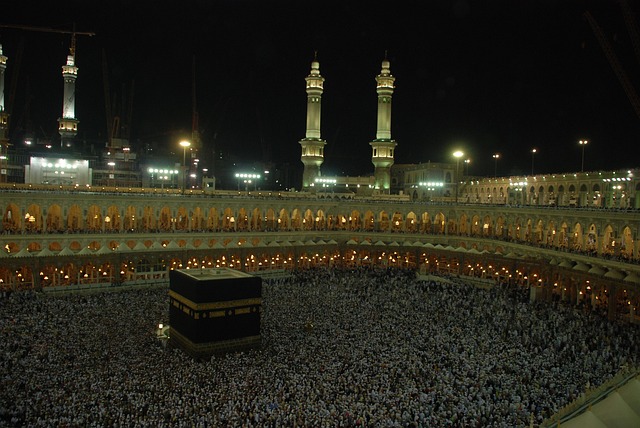
Once a year, the valleys around Mecca fill with one of the largest gatherings of humanity on the planet. Pilgrims arrive from every corner of the world to perform the Hajj, a journey that ranks among the five pillars of Islam and is required, where means and health allow, at least once in a lifetime. The rites unfold over several days during the month of Dhul-Hijjah and follow a sequence believed to retrace events from the lives of Ibrahim, his wife Hajar, and their son Ismail.
Entering the State of Ihram
Before reaching the sacred boundary, pilgrims enter a consecrated state called ihram. Men wear two plain unstitched white cloths, while women keep to modest ordinary dress; in this condition certain everyday acts are set aside, and the uniform simplicity erases visible distinctions of wealth and rank. Crossing the appointed boundary points without entering ihram is not permitted, and from this moment the pilgrim is fully devoted to the rites ahead, repeating the talbiyah, a declaration of readiness and devotion to God.
The Days of the Pilgrimage
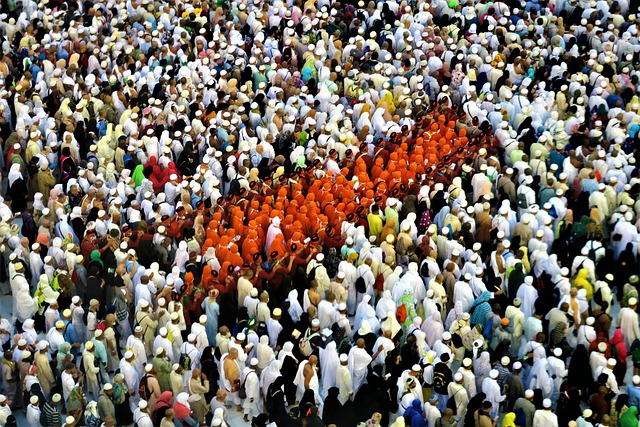
The pilgrimage weaves together several distinct acts. Pilgrims circle the Kaaba seven times in the rite known as tawaf, and walk seven times between the hills of Safa and Marwah in a ritual recalling Hajar’s desperate search for water for her infant. The central day is spent at the plain of Arafat, where pilgrims stand in prayer and reflection from midday until sunset, an act considered the essence of Hajj. They then move on to Muzdalifah to gather pebbles and spend the night, before proceeding to Mina to perform the symbolic stoning that represents the rejection of temptation, followed by the sacrifice marking the festival of Eid al-Adha.
The Meaning Behind the Rites
Each step carries layers of significance for those who perform it. The standing at Arafat is widely seen as a rehearsal for the day of judgement, when all people are believed to gather before God. The sacrifice echoes the story in which Ibrahim, ready to give up what he loved most in obedience, was spared at the final moment. Above all, pilgrims describe the experience as a great equaliser: the American activist Malcolm X famously wrote of meeting people of every colour as equals during his journey, a moment that reshaped his understanding of brotherhood. For believers, completing the Hajj is a renewal, a chance to return home spiritually cleansed and reconnected to their faith.
The shorter pilgrimage of Umrah, which can be performed at any time of year, shares several of these rites, and we explore it in a separate guide.


