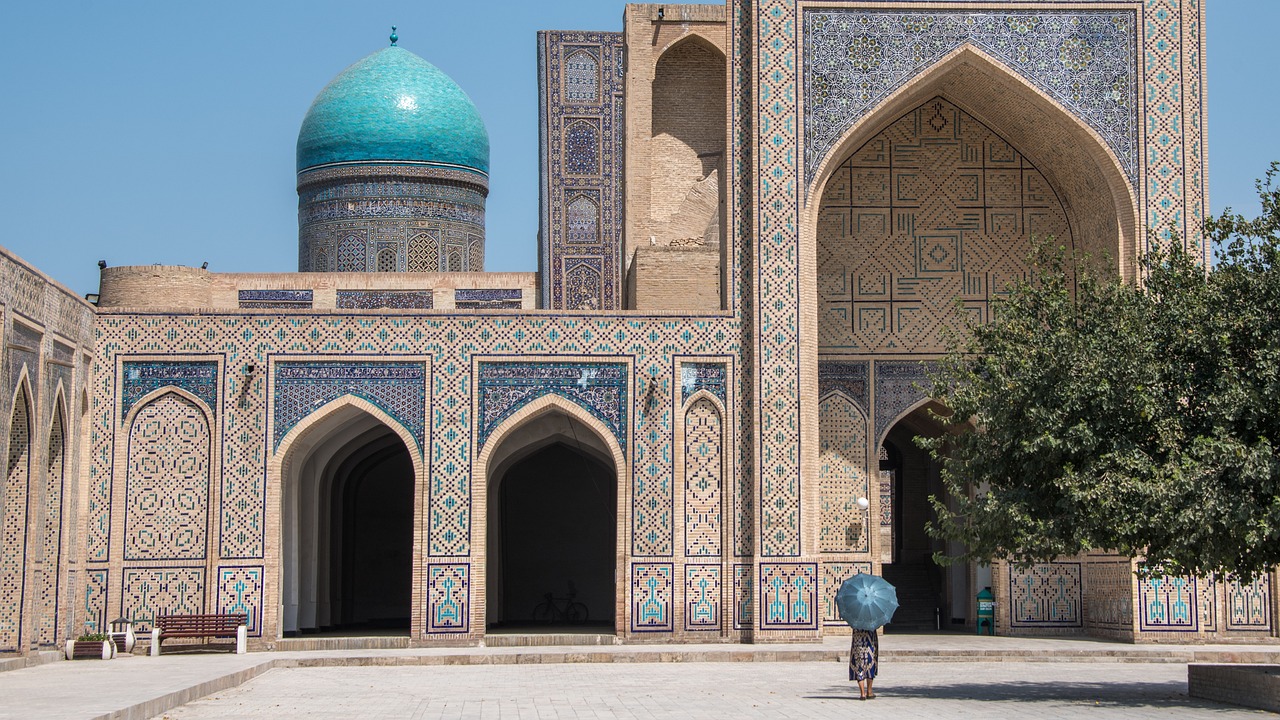
Of all the cities of the Silk Road, few carry as deep a religious reputation as Bukhara. For centuries this Central Asian city in modern Uzbekistan was a great centre of Islamic learning, so revered that Muslims honoured it with the title Dome of Islam in the East. Its skyline of minarets, domes and madrasas still recalls that golden age.
The Dome of Islam
Bukhara’s history stretches back some two and a half thousand years, but it was after the coming of Islam that the city reached the height of its fame. It produced and attracted countless scholars, theologians and scientists, and its many madrasas drew students from across the Muslim world. The reverence in which it was held earned it lasting renown as one of the holiest cities of Central Asia.
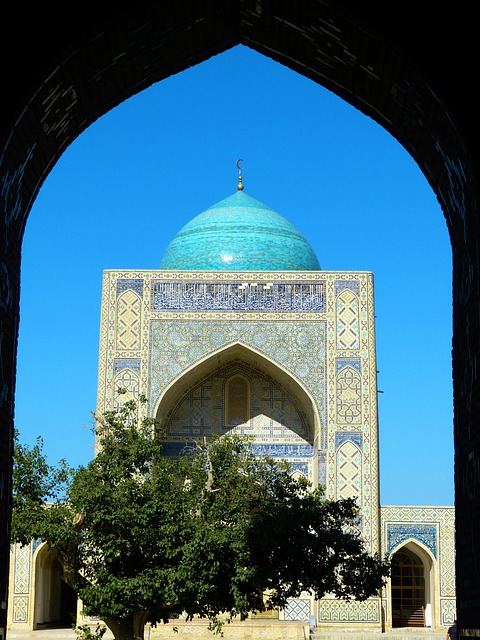
The Kalan Minaret and Mosque
The towering Kalan Minaret, built in the twelfth century, has long been the symbol of Bukhara. So impressive was it that, according to legend, even Genghis Khan ordered it spared when his armies swept through the region. Beside it stands the great Kalan Mosque, able to hold thousands of worshippers, its courtyard a serene space at the heart of the old city.
A City of Scholars and Saints
Bukhara is closely tied to the Naqshbandi order, one of the most influential Sufi brotherhoods in the Islamic world, whose founder is buried just outside the city. The shrine remains an important place of pilgrimage. To walk through Bukhara is to move among the memory of generations of saints, teachers and travellers who made it a beacon of faith and knowledge.


One thought on “Bukhara: The Dome of Islam in the East”