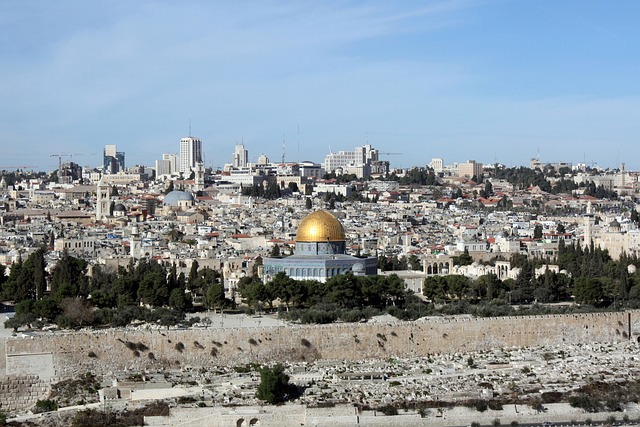
The golden dome rising at the centre of the Al-Aqsa compound is among the most recognisable images in the Islamic world. Often mistaken for the mosque itself, the Dome of the Rock is in fact a separate shrine, built to enclose the sacred rock at the highest point of the platform. Its shimmering cupola and richly patterned walls make it one of the earliest and most celebrated masterpieces of Islamic architecture.
A Shrine, Not a Mosque
The Dome of the Rock was constructed in the late seventh century, during the Umayyad period, under the caliph Abd al-Malik. Unlike the congregational mosque at the southern end of the compound, it was conceived as a shrine sheltering the rock beneath its dome rather than as a hall for the main prayers. Its octagonal form, encircling galleries, and luminous mosaics set it apart, and over the centuries its exterior has been clad in the gleaming tiles and gilded dome that give it its unmistakable appearance.
The Sacred Rock
At the heart of the building lies the rock from which the shrine takes its name. In Islamic tradition it is connected to the ascension of the Prophet during the Night Journey, and the spot has carried layers of sacred meaning across different faiths over the ages. The platform on which it stands has been a place of profound religious significance for thousands of years, and the rock itself is treated with deep reverence by those who visit.
A Symbol Recognised Worldwide
Because of its striking beauty, the Dome of the Rock has become a visual emblem not only of Jerusalem but of the wider Muslim attachment to the city. Its image appears in countless depictions of the holy compound, and for many people it has come to stand for Al-Aqsa as a whole. Appreciating the difference between the shrine and the mosque beside it helps visitors understand the layout and meaning of this remarkable sacred space.


