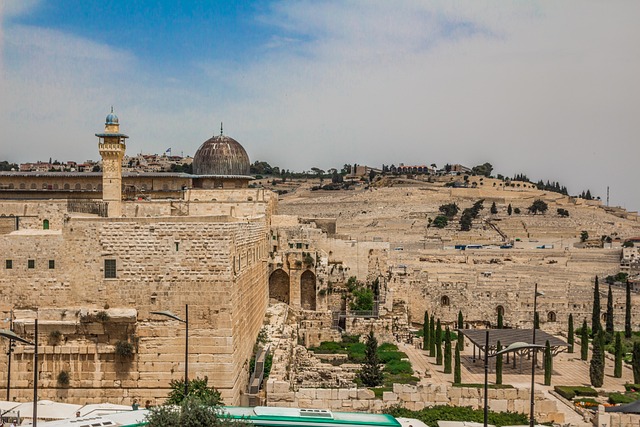
In the heart of the Old City of Jerusalem stands a walled enclosure that Muslims regard as the third holiest place in their faith, after the sacred mosques of Mecca and Medina. Known as Al-Aqsa, meaning the farthest mosque, this sacred precinct holds a unique place in Islamic history as the first direction of prayer and as the destination of one of the most extraordinary journeys described in Islamic tradition.
The Farthest Mosque
The name Al-Aqsa, the farthest, reflects its distance from the sacred mosque in Mecca. In its fullest sense the term refers not to a single building but to the entire walled compound, a wide platform that contains numerous structures, fountains, and prayer halls spread across many acres. The most prominent of these are the silver-domed congregational mosque at the southern end and the famous golden Dome of the Rock at the centre, two distinct buildings that are often confused with one another.
Islam’s First Direction of Prayer
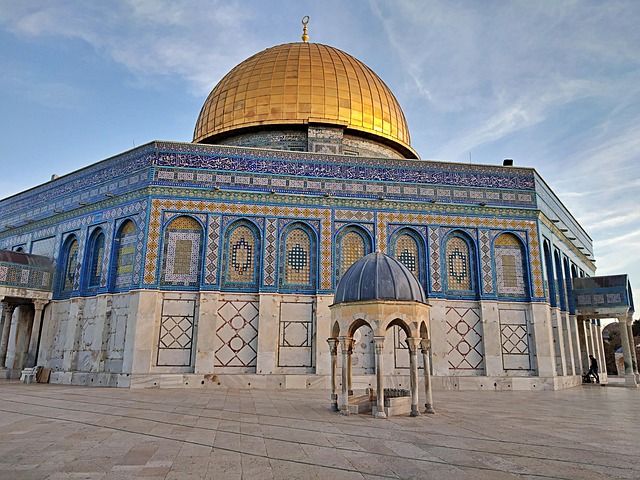
One of the reasons Al-Aqsa holds such reverence is that, according to tradition, the early Muslim community in Medina prayed facing Jerusalem for roughly sixteen months before the direction of prayer was turned toward Mecca. This makes the site the first qiblah of Islam. A well-known saying attributed to the Prophet also names Al-Aqsa among only three mosques toward which believers should undertake a special journey, alongside those of Mecca and Medina, underlining its enduring spiritual importance.
A Sacred Place Through the Centuries
The compound has passed through many hands over its long history, and its buildings have been raised, damaged by earthquakes, and rebuilt repeatedly. An early prayer hall was established here in the seventh century, later enlarged in stone, and successive dynasties added their own restorations and embellishments. For Muslims today, Al-Aqsa remains a powerful symbol of faith and continuity, a place whose history is woven deeply into the story of Islam.


2 thoughts on “Al-Aqsa: Islam’s Third Holiest Site”