Some ruins look sad. Corfe Castle looks defiant. Torn apart by gunpowder nearly four centuries ago, its great towers left leaning at crazy angles, its walls split and scattered down the hillside, it still crowns its steep green hill in Dorset like a broken crown that no one dared take off. It is one of the most dramatic and beloved ruins in all of England, and the very violence of its destruction is part of what makes it so unforgettable. This is a castle that was deliberately blown up because it simply would not surrender easily, and even in pieces it seems to remember that.
Behind the picturesque wreckage lies a thousand years of astonishing history. Corfe was the scene of a real royal murder, the killing of a teenage Saxon king who became a saint. It was a favourite fortress of the notorious King John, who used it as a treasure house and a prison where enemies were left to starve. And it was the stage for one of the great tales of the English Civil War, when a determined woman held the castle against an army with only a handful of defenders. Few castles pack so much drama into their stones.
So do not be fooled by the romantic ruin and the pretty village at its feet. Corfe has seen murder, treachery, siege, and deliberate destruction on an epic scale. Let’s climb the hill and piece its shattered story back together.
We will take the long view, because Corfe’s thousand years fall into a handful of unforgettable acts: a Saxon murder, a cruel king’s stronghold, a heroic siege, and a violent, deliberate end. Keep those in mind as we climb, and the tumbled stones will start to arrange themselves back into one of the most stirring stories any English castle has to tell.
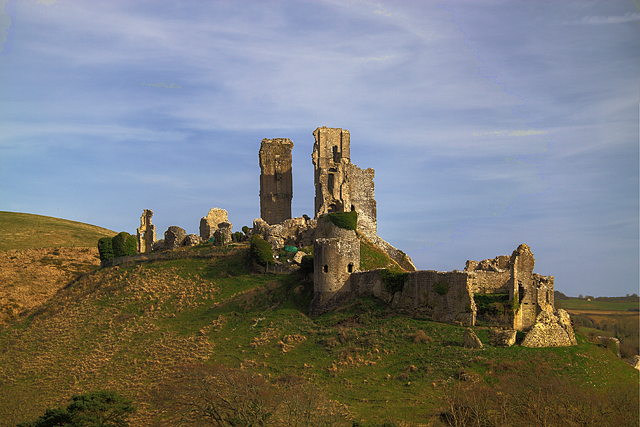
Table of Contents
- A Hill Made for a Fortress
- The Murder of a Boy King
- Whispers on the Hill
- King John’s Stronghold
- One of the Strongest Castles in England
- Lady Bankes Holds the Line
- Blown Apart
- The Village Beneath the Ruin
- A Romantic Ruin for the Ages
- Visiting Corfe
- Nearby Castles
- Before You Go
A Hill Made for a Fortress
Nature built the foundations of Corfe Castle long before any human did. In the ridge of the Purbeck Hills in Dorset there is a single natural gap, and rising in the middle of that gap is a steep, isolated hill, as if placed there deliberately to be fortified. Whoever held that hill controlled the only easy route through the hills toward the coast, and it would have been almost perverse not to build a castle on so perfect a spot.
People recognised this very early. There was a stronghold here in Saxon times, well before the Normans came, guarding this vital gap and the surrounding land. The hill’s steep sides made it naturally defensible, and its command of the gap gave it real strategic importance, controlling movement through the Isle of Purbeck.
When the Normans arrived after 1066, they saw exactly what the Saxons had seen, and Corfe became one of the first English castles to be built in stone rather than the usual quick earth and timber. From then on it grew into one of the mightiest royal fortresses in the land, its defences piled onto that dramatic natural hill. But its most famous early story belongs to the Saxon age, and it is a dark one.
The Isle of Purbeck, despite its name, is not really an island but a peninsula, famous for its stone. The hard, handsome Purbeck stone quarried here has been prized for centuries and used in cathedrals across England, and the same stone built both the castle and the village at its feet. Corfe is, in a sense, made of the very landscape it guards, which is part of why castle, village, and hills all seem to belong so naturally together.
The Murder of a Boy King
In the year 978, Corfe was the scene of one of the most notorious crimes in early English history: the murder of a king. Edward, later known as Edward the Martyr, was a teenage king of England, and the circumstances of his reign were tangled by rivalry within the royal family, in particular the ambition of his stepmother, who wanted the throne for her own young son.
According to the traditional account, the young king rode to Corfe to visit his stepmother and half-brother. As he arrived, still on horseback, he was offered a drink in welcome, and as he took it he was set upon and stabbed to death, then his body hurriedly hidden. He was still only a youth, and the treachery of the killing, a guest murdered as he accepted hospitality, shocked the age deeply.
In death Edward became far more powerful than he had been in life. Stories of miracles gathered around him, he was venerated as a saint and martyr, and his murder came to be seen as a great national wrong. Corfe, the place of the crime, was forever marked by it, and the tale of the boy king killed on this hill is the oldest and most haunting of all its many stories.
The murder had lasting political consequences too. Edward’s young half-brother, who benefited from his death, became king as Aethelred, a ruler so dogged by disaster and so poorly served by his own decisions that he went down in history with the mocking nickname the Unready. Many at the time felt his troubled reign was a kind of divine punishment for the crime that had cleared his path to the throne at Corfe.
Whispers on the Hill
With a murdered king and a violent, betrayed fall behind it, Corfe naturally comes wrapped in ghost stories and legends. The most enduring are tied to the killing of Edward the Martyr, and there are old tales of ghostly figures and unexplained happenings connected to that ancient crime, as though the hill itself still remembers the treachery done upon it.
Visitors and locals over the years have reported the usual repertoire of a haunted ruin: shadowy shapes among the broken walls, a sense of being watched, and strange sounds carried on the wind that sweeps across the exposed hilltop. One well-known local legend even tells of a spectral headless figure associated with the castle and its bloody past.
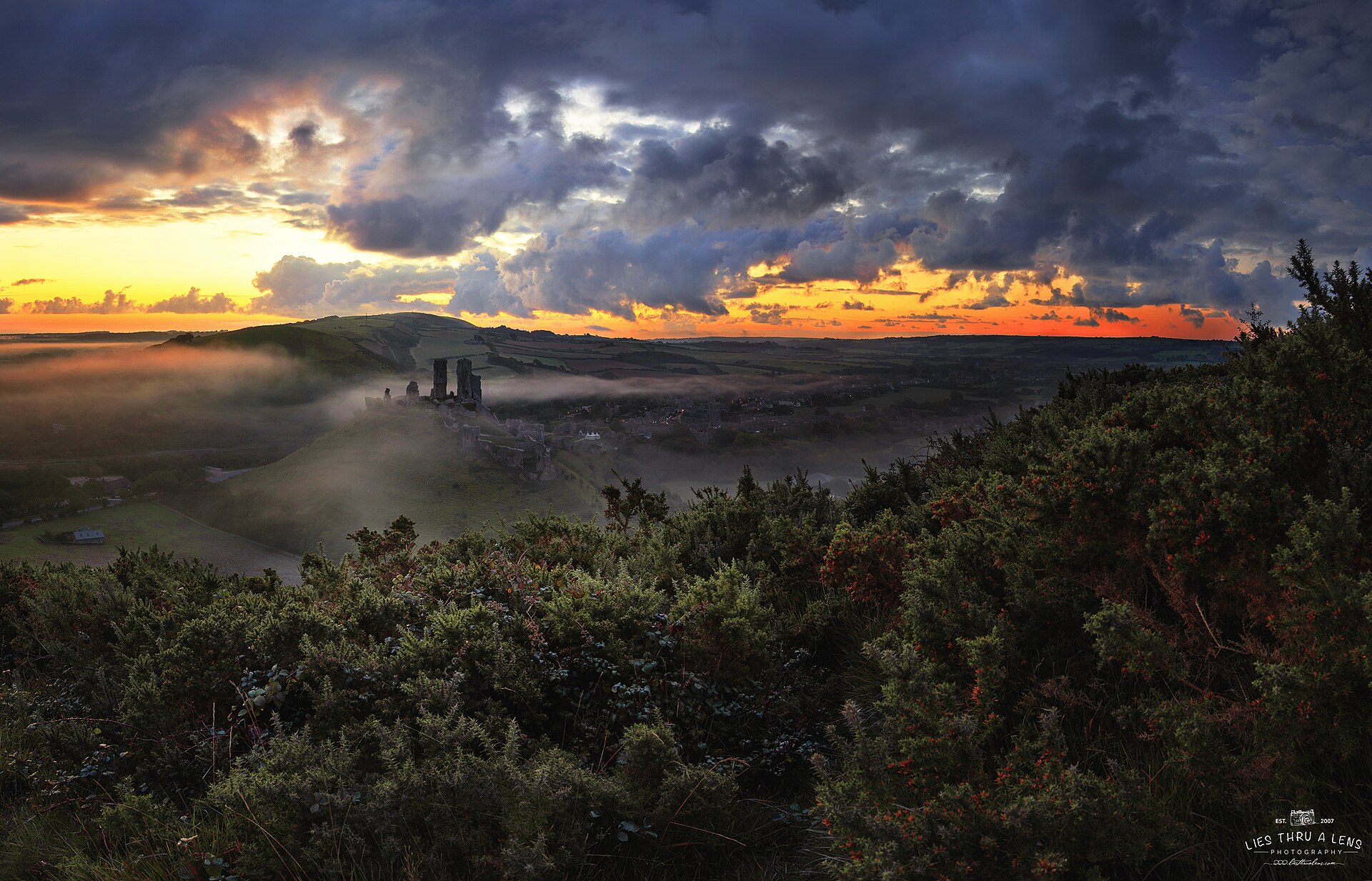
Whatever you make of such stories, Corfe is undeniably atmospheric, especially when the mist rolls in and the shattered towers loom out of the grey. A place that has seen murder, imprisonment, and destruction on this scale seems almost to invite the imagination to people its ruins with ghosts, and Corfe, brooding on its hill, does nothing to discourage them.
King John’s Stronghold
In the Norman and medieval centuries Corfe became a major royal castle, and no king made more use of it than the infamous King John, at the start of the thirteenth century. John clearly loved Corfe, spending heavily on it and treating it as one of his most important and trusted strongholds. He used it to store part of the royal treasure and the crown jewels, a sign of just how secure the castle was considered to be.
But Corfe under John had a much darker function too. It served as a state prison, and John used it to hold, and in some cases to destroy, those he feared or hated. In one grim episode, a group of noble prisoners connected to a rebellion are said to have been left to starve to death within its walls, a fate that fits all too well with John’s reputation as one of England’s cruellest kings. He also held here, for many years, a royal rival with a claim to the throne, keeping her out of the way in comfortable captivity.
Under John and his successors, then, Corfe was both a treasure house and a place of dread, a symbol of royal power at its most secure and its most ruthless. Its strength, the very thing that made it a safe home for the crown jewels, also made it a perfect prison from which there was no escape.
The royal rival John kept here was Eleanor of Brittany, a princess with arguably a better claim to the throne than John himself. Rather than kill her outright and risk outrage, John and his successors simply kept her in honourable confinement for the rest of her long life, much of it associated with strongholds like Corfe. Her sad story, a life quietly stolen to protect a king’s crown, is one of the many human tragedies folded into the castle’s walls.

One of the Strongest Castles in England
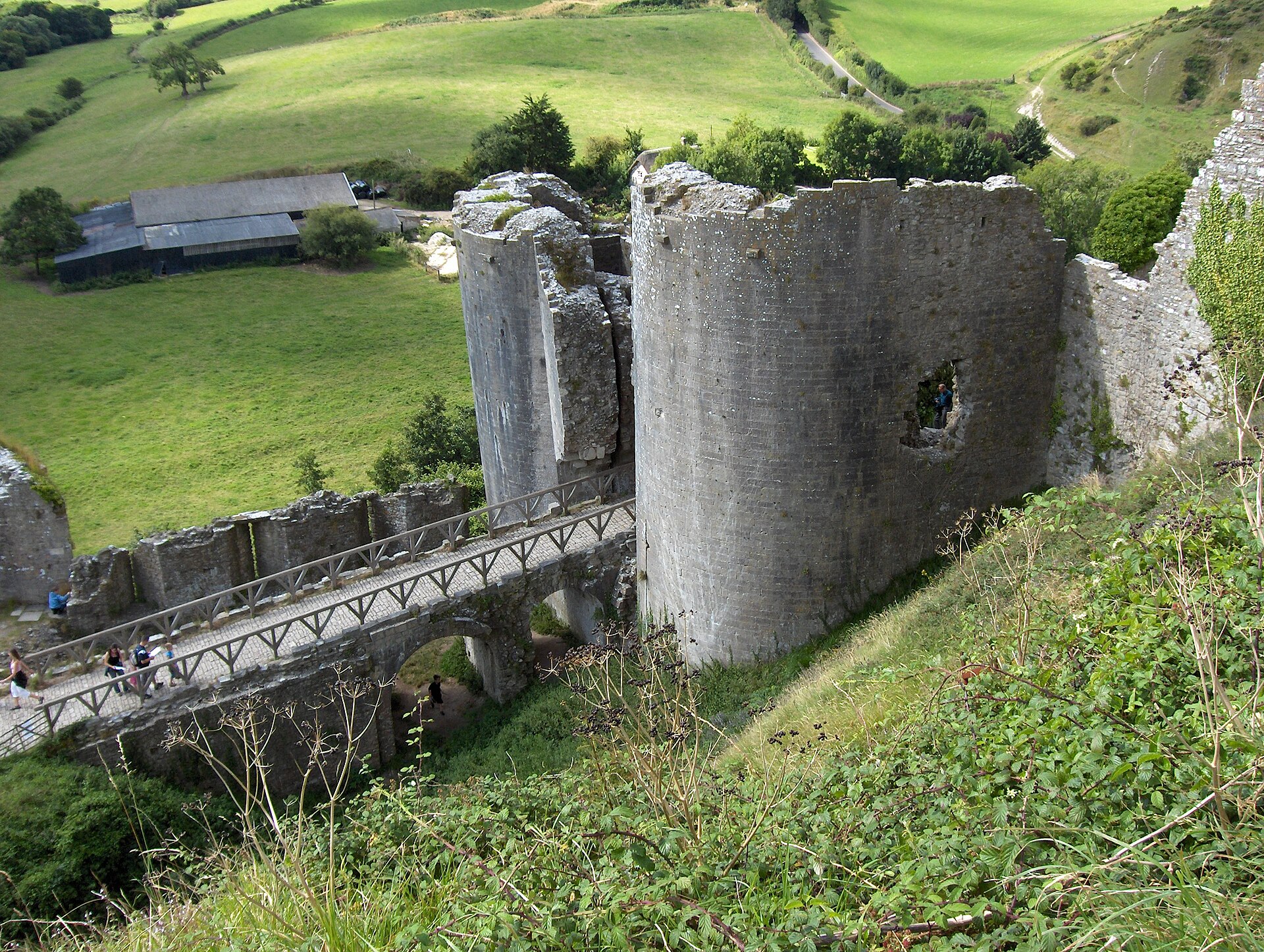
By the height of the Middle Ages, Corfe had grown into one of the strongest fortresses in the kingdom. Its defences climbed the steep hill in rings, with a mighty stone keep at the summit, walls and towers stepping down the slopes, and a heavily defended gatehouse guarding the approach. The natural steepness of the hill did much of the work, and the stonework completed it, making Corfe extremely difficult to attack.
For centuries this strength kept Corfe firmly in royal hands and largely out of trouble, a secure base rather than a battleground. Its reputation as an almost impregnable fortress was well earned, and it was the kind of place attackers preferred to avoid rather than assault. That formidable strength would be tested to the limit only much later, in the great civil war that tore England apart in the seventeenth century.
Eventually the castle passed out of royal ownership and, in the early seventeenth century, was bought by Sir John Bankes, a distinguished lawyer and loyal servant of the crown. It became the Bankes family home, and it was into their hands that fate delivered Corfe’s most heroic and most tragic hour.
Corfe also has the distinction of being one of the earliest English castles built substantially of stone from the outset, rather than starting as the usual earth-and-timber affair and being upgraded later. That head start helps explain its exceptional strength, and it makes the castle an important example for anyone interested in how Norman military building developed in the decades after the Conquest.
Lady Bankes Holds the Line
When the English Civil War broke out in the 1640s between King and Parliament, Corfe stood firmly for the king in a region increasingly controlled by Parliament. Sir John Bankes was away serving the royal cause, which left the defence of the castle in the hands of his wife, Lady Mary Bankes, and it is her extraordinary courage that has made Corfe legendary.
In 1643 Parliamentary forces moved to seize the castle. Lady Bankes, with only a tiny garrison of family, servants, and a few soldiers, refused to give it up. Against a besieging force vastly larger than her own, she organised a fierce defence, and her small band held the great fortress through the siege, even, in one celebrated moment, driving off attackers by hurling stones and hot embers down from the walls. Astonishingly, the siege failed, and the attackers withdrew. A woman with a handful of defenders had held one of England’s strongest castles against an army.
Her triumph, though, could not last forever. In 1645, with the royalist cause collapsing across the country, Corfe was besieged again. This time the castle fell not to force but to treachery: one of the defenders betrayed it, letting the enemy in by a trick. Even then Lady Bankes was treated with respect by her opponents, who honoured her bravery, and she was allowed to leave. But the castle itself was doomed.
What makes the story resonate is how completely it overturns the usual picture of a castle siege. Here the hero is not a battle-hardened lord but a woman defending her home and her absent husband’s cause with wit, nerve, and whatever came to hand. The keys she surrendered are said to have been kept by the family afterwards as a mark of honour, a proud memento of the day Lady Bankes very nearly held the impossible.
Blown Apart
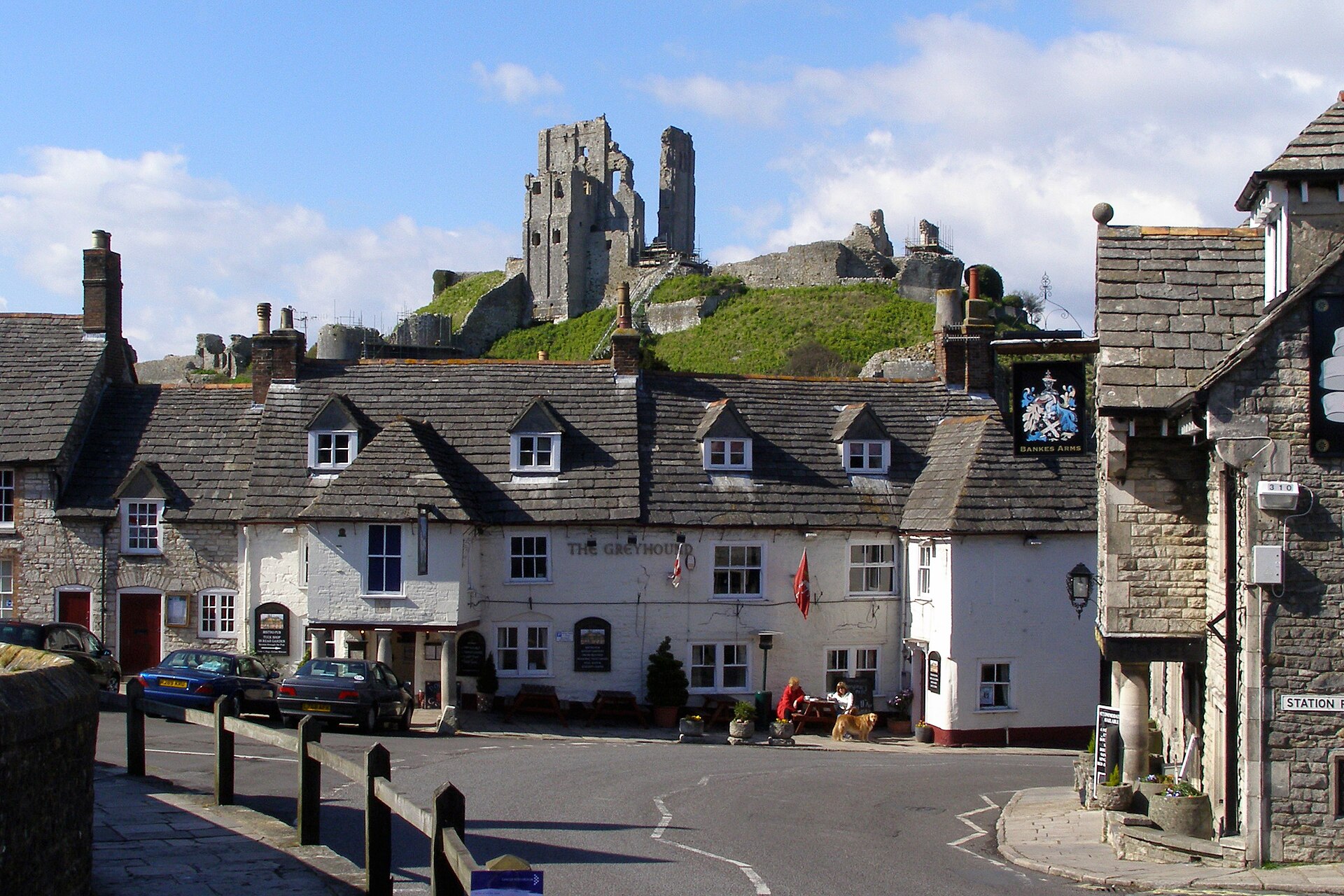
Having finally taken Corfe, Parliament was determined that this stubborn royalist fortress would never defy them again. In 1646 they ordered it slighted, deliberately destroyed, and set about the task with gunpowder and grim thoroughness. Charges were packed beneath the towers and walls and detonated, blowing the mighty defences apart and toppling great masses of masonry down the hillside.
The destruction was violent and dramatic, and its scars are exactly what give Corfe its unforgettable appearance today. Whole towers were split and left leaning at impossible angles, walls were torn open, and the neat lines of the medieval fortress were reduced to the jagged, tumbled ruin we see now. The sheer force needed to wreck such strong stonework is written all over the site.
So Corfe’s ruin is not the gentle work of time and weather but the sudden, deliberate act of an army determined to end its military life forever. In a strange way, the destruction is a tribute to the castle’s strength: they blew it up precisely because it was too dangerous to leave standing. The broken towers are a monument to a fortress that had to be destroyed rather than merely captured.
The demolition was not a single blast but a laborious campaign, with miners and engineers working to undercut and topple the strongest points one by one. That it took such effort, and left the towers cracked rather than flattened, is why Corfe is so visually spectacular today. A castle simply abandoned crumbles into shapeless mounds; a castle blown up in its prime leaves exactly these dramatic, defiant fragments still standing against the sky.
The Village Beneath the Ruin
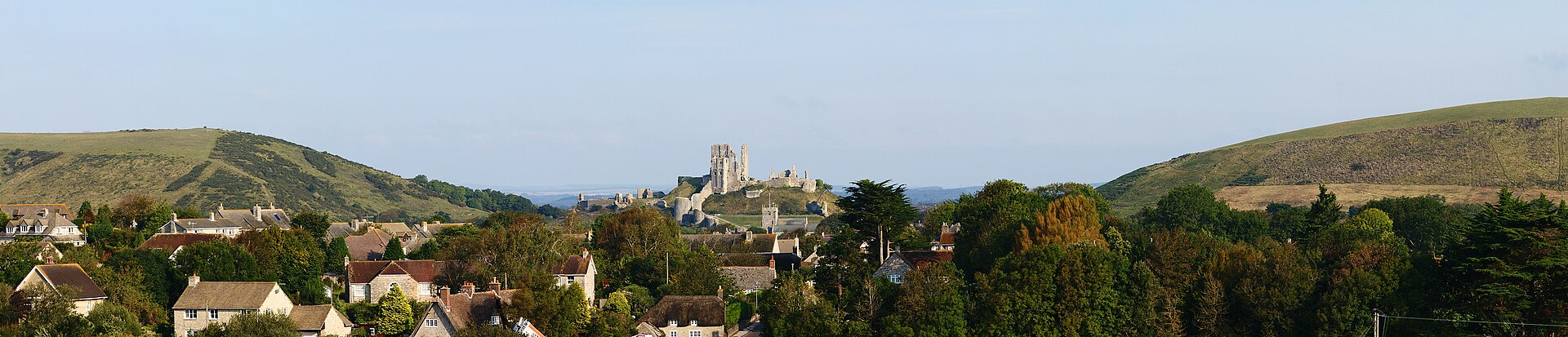
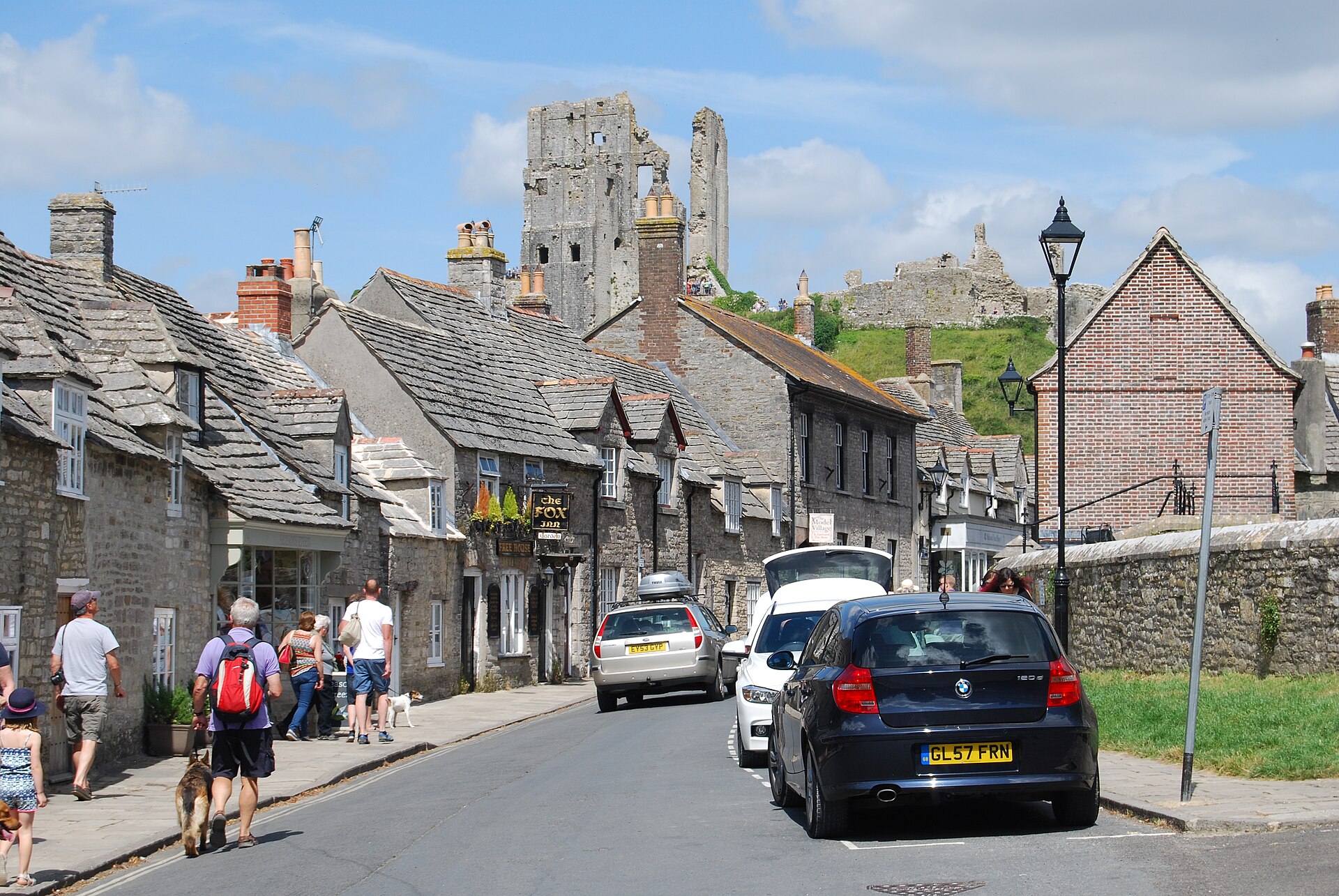
At the foot of the castle hill nestles the village of Corfe Castle, which shares its name and much of its story. Built largely of the same grey Purbeck stone, its cottages, inn, and church cluster below the ruin in a way that makes the whole scene look almost impossibly picturesque, castle and village framing each other perfectly.
The village and the castle have always been bound together. The people here lived in the shadow of the fortress, worked for its lords, and were caught up in its dramas, including the Civil War siege that raged right above their homes. Much of the stone from the slighted castle was carted off and reused in the village and beyond, so that the ruin quite literally lives on in the buildings around it.
Today the village is a beloved destination in its own right, a quintessential English scene of stone cottages and narrow lanes, made all the more romantic by the broken castle looming above. Together they form one of the most photographed and painted views in the whole of the south of England.
A Romantic Ruin for the Ages
After its destruction, Corfe was left as a ruin, and over the centuries it became exactly the kind of romantic wreck that the English came to adore. Artists painted it, poets admired it, and travellers made their way to Dorset to marvel at the shattered towers on their green hill, wreathed in mist or glowing in the evening light. Its very brokenness made it beautiful.
The castle remained in the Bankes family for generations after its fall, a treasured if useless possession, until in the twentieth century it passed, along with a great swathe of the surrounding Purbeck landscape, to the National Trust. Today it is one of the Trust’s most popular properties, carefully conserved as a ruin, its dangerous leaning walls stabilised so that visitors can safely explore.
Corfe has also become a favourite backdrop for film and television, standing in for fortresses of legend and history, and it is often said to have inspired the fictional castles of storybooks. Its combination of dramatic ruin, steep hill, and perfect village has made it one of the defining images of the English castle in the popular imagination.

Visiting Corfe
Corfe Castle sits in the Isle of Purbeck in Dorset, on the south coast of England, a beautiful part of the country close to the famous Jurassic Coast. It is easily reached by car, and, delightfully, it can also be approached by a heritage steam railway that runs through the Purbeck countryside to the village, which makes for a wonderfully atmospheric arrival beneath the ruins.
Allow a good couple of hours to climb the hill and explore the ruins, and wear sturdy shoes, as the ground is steep and uneven. Take time to walk around the village at the bottom, visit the church and the inn, and find the classic viewpoints from the surrounding hills, where the castle and village line up into that famous picture-postcard scene. On a misty morning, with the broken towers rising out of the fog, Corfe is as romantic a ruin as you will find anywhere in England.
The castle sits at roughly 50.6395, -2.0566. Punch that into Google Maps and it will take you straight to Corfe Castle in Dorset.
Nearby Castles
A Ruin That Refuses to Be Forgotten
Corfe is the castle that would not go quietly. It saw a king murdered, guarded another’s treasure, swallowed prisoners whole, and, at the very end of its fighting life, defied an army under the command of a single determined woman. When it finally fell, it fell to betrayal rather than to force, and even then its enemies had to blow it apart with gunpowder to be sure it would never rise again.
That is why its ruin moves people so deeply. The leaning towers and split walls are not the soft decay of neglect but the wounds of a fortress that had to be destroyed because it could not simply be beaten. Stand on the hill among the shattered stones, with the little grey village below and the mist drifting across the Purbeck hills, and Corfe tells you, as clearly as any ruin can, that some places refuse to be forgotten.
You May Like

Mafra, the Palace a King Built From a Vow