Halfway between Luxor and Aswan, in the town of Edfu, stands the most complete and best-preserved temple in all of Egypt. Dedicated to the falcon god Horus, the Temple of Edfu survives almost intact, from its towering entrance pylon to its dark inner sanctuary, offering the clearest picture anywhere of what a great Egyptian temple was really like.
Built over many years by the Greek Ptolemies who ruled Egypt after Alexander the Great, Edfu faithfully preserved ancient traditions. Its walls are covered with texts and reliefs that tell us more about temple ritual and myth than almost any other site.

Table of Contents
- The Best-Preserved Temple in Egypt
- The Temple of the Falcon God Horus
- A Ptolemaic Masterpiece
- The Great Pylon
- The Court and Hypostyle Halls
- The Falcon Guardians of Horus
- The Sanctuary and the Sacred Barque
- The Myth of Horus and Seth
- Buried in Sand, Then Rediscovered
- The Festival of the Reunion
- Getting There
- Nearby Places
- Closing Thoughts
The Best-Preserved Temple in Egypt
Most ancient Egyptian temples survive only as ruins, missing their roofs, upper walls or whole sections. Edfu is the great exception: it stands almost complete, so that visitors can walk through it much as ancient priests did.
This exceptional preservation is due to the sand that buried the temple for centuries, protecting it until it was dug out in modern times. Edfu is therefore the ideal place to understand how these vast sacred buildings worked.
The Temple of the Falcon God Horus
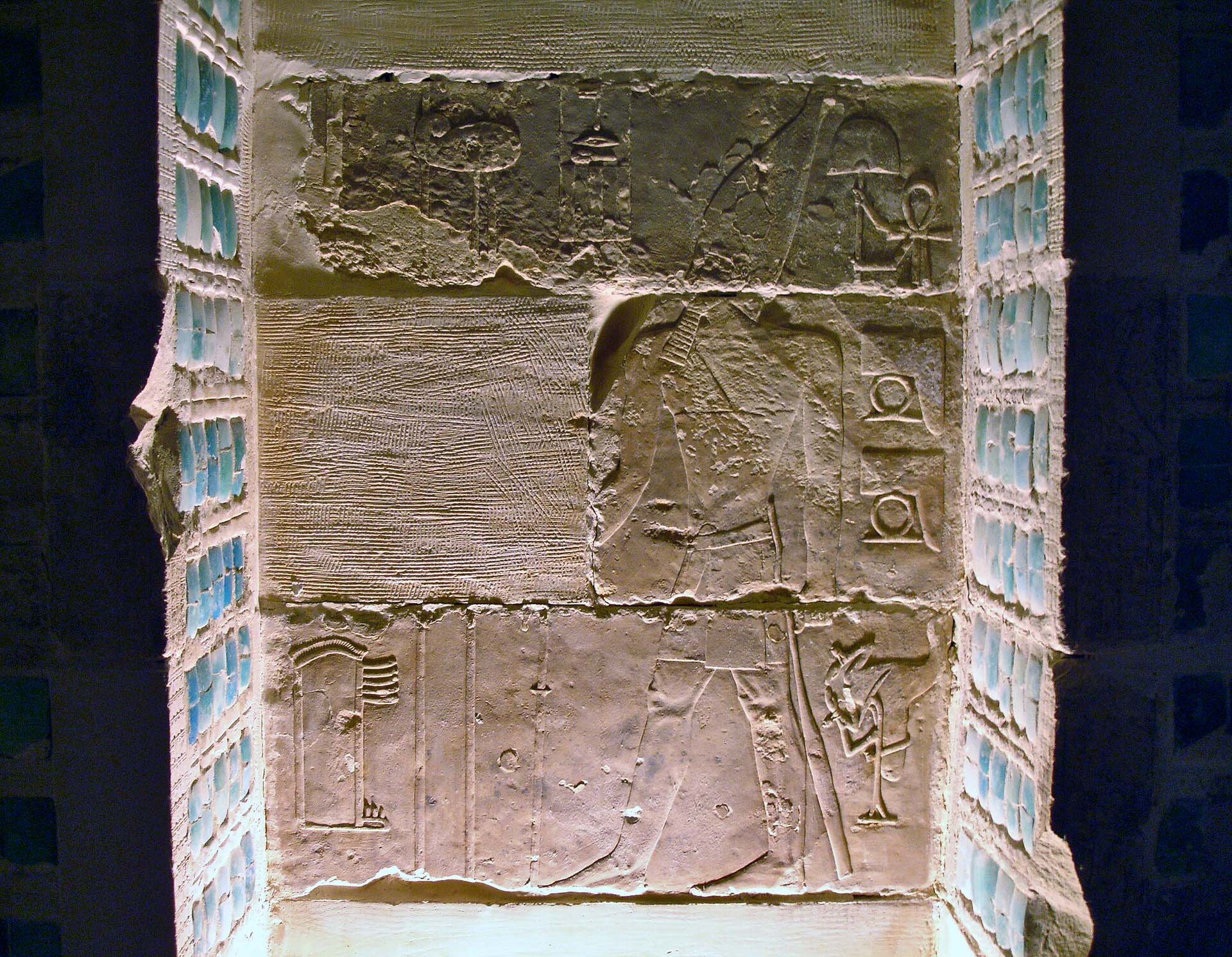
Edfu was the cult centre of Horus, the falcon-headed sky god and protector of kingship, one of the most important deities in the Egyptian pantheon. The pharaoh himself was regarded as the living Horus on earth.
According to myth, Edfu was the site of a great battle in which Horus avenged his murdered father Osiris. The temple celebrated this victory and the triumph of order over chaos.

A Ptolemaic Masterpiece
The temple was built between the third and first centuries BC, under the Ptolemaic dynasty of Greek pharaohs. Though these rulers were of Macedonian descent, they presented themselves as traditional Egyptian kings and built in the ancient style.
Edfu is the finest surviving example of their temple building. Its careful adherence to old forms, combined with its completeness, makes it a perfect model of the classic Egyptian temple.
The Great Pylon
The temple is entered through a colossal pylon, a pair of massive tapering towers flanking the gateway, rising to a great height. Its outer face is carved with enormous images of the king smiting his enemies before the gods.
This monumental entrance was designed to overwhelm and to mark the boundary between the everyday world and the sacred space within. It is one of the best-preserved pylons in Egypt.

The Court and Hypostyle Halls
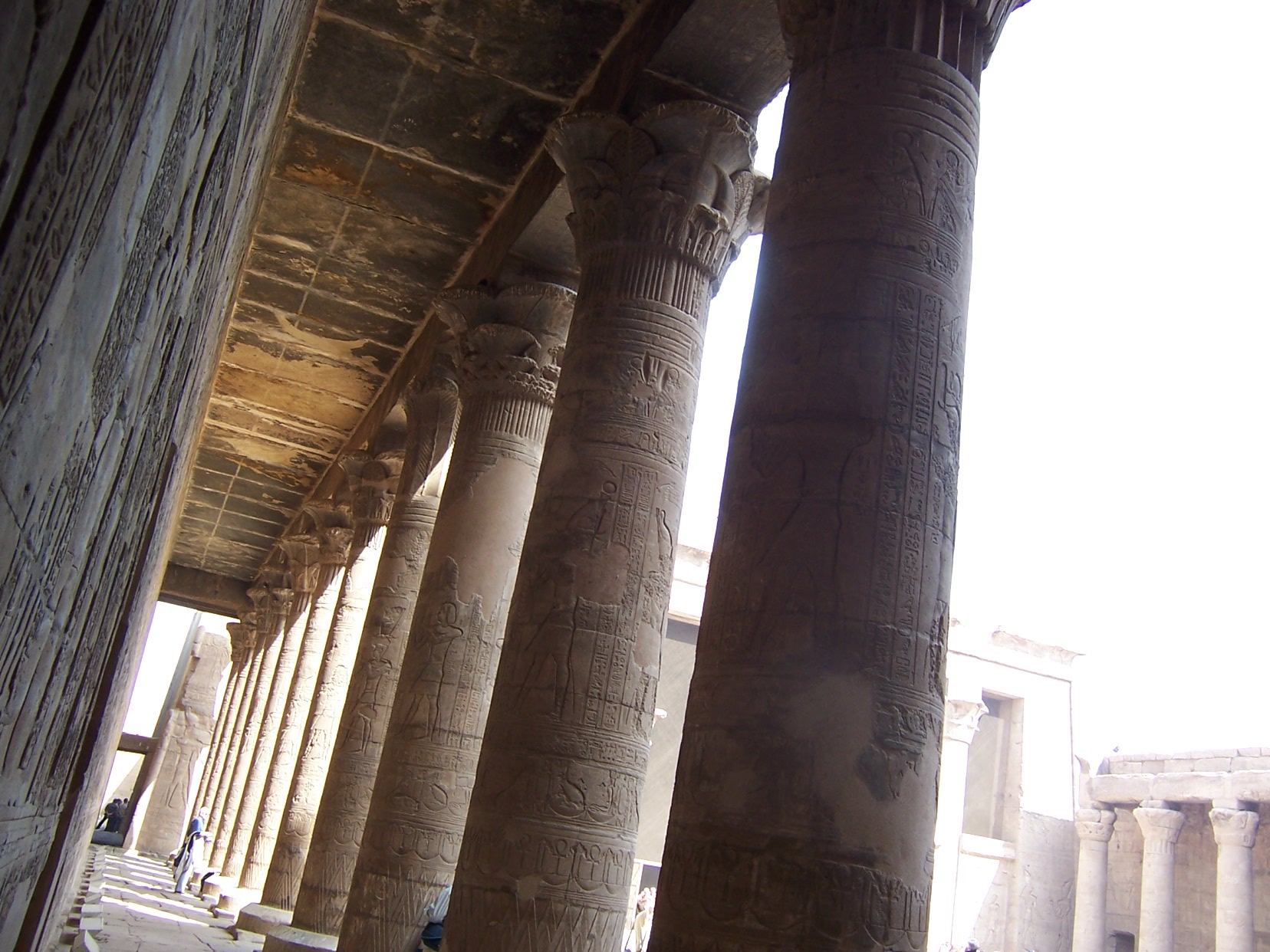
Beyond the pylon lies an open courtyard surrounded by columns, where the public could gather during festivals. From there the temple grows progressively darker and more restricted as one moves inward.
Two great hypostyle halls, filled with columns and covered with reliefs, lead toward the sanctuary. This gradual passage from light to darkness, from open court to hidden shrine, was central to the design of every Egyptian temple.

The Falcon Guardians of Horus
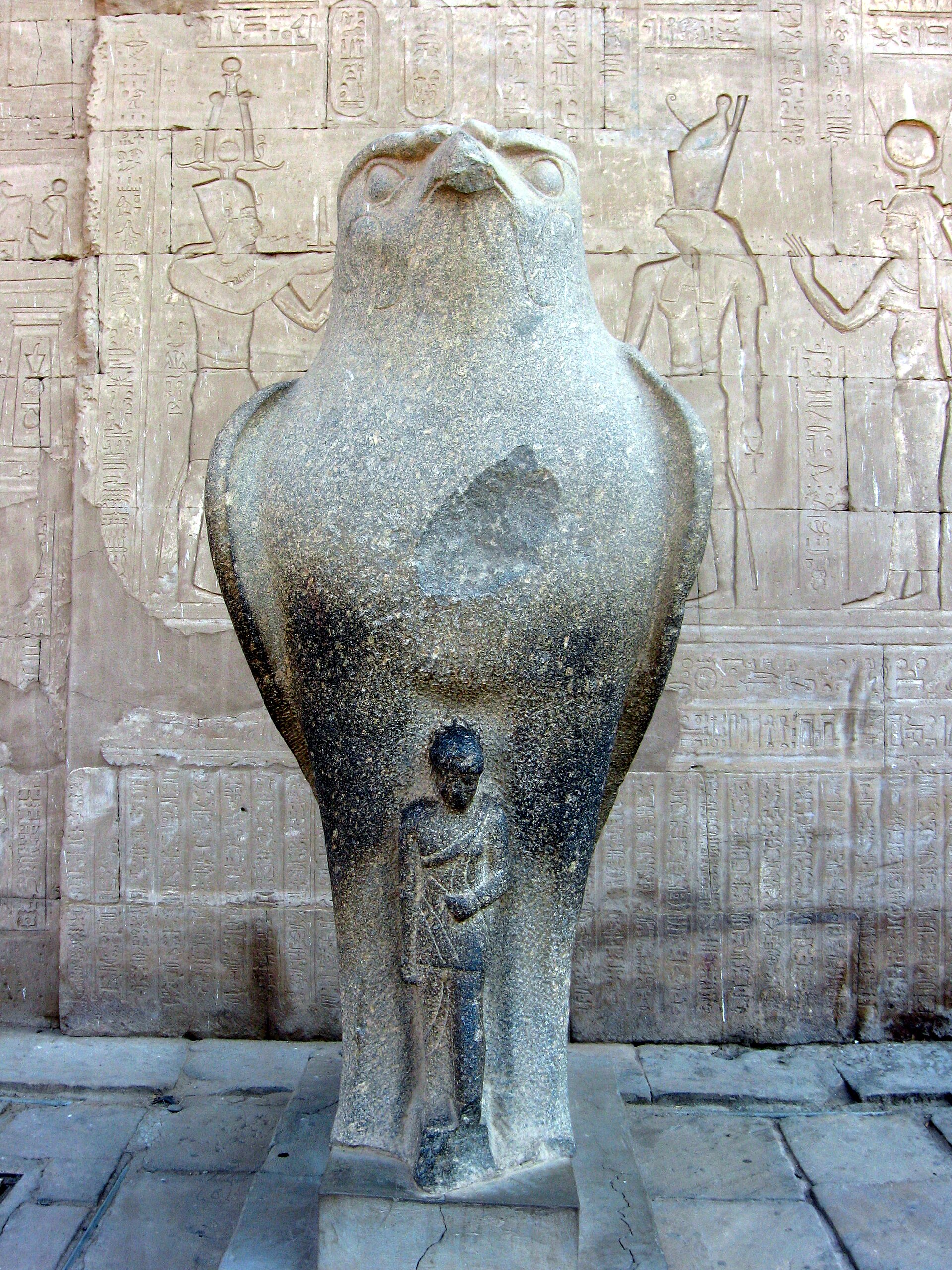
Throughout the temple, the falcon form of Horus appears again and again. Fine statues of the falcon god, some wearing the double crown of Upper and Lower Egypt, stand guard within the complex.
These noble figures are among the most memorable images at Edfu, embodying the majesty and watchfulness of the sky god to whom the whole temple was dedicated.
The Sanctuary and the Sacred Barque
At the heart of the temple, in its darkest and most sacred room, stood the shrine that held the statue of Horus. Only the highest priests and the king could enter this holy of holies.
Nearby stood a model of the sacred barque, the boat on which the god’s image was carried in procession during festivals. The survival of these inner spaces makes Edfu uniquely valuable for understanding temple ritual.

The Myth of Horus and Seth
The walls of Edfu are covered with texts and reliefs, including a detailed account of the mythical struggle between Horus and his enemy Seth, the god of chaos. These scenes were re-enacted in temple dramas.
Such carvings are a priceless source for Egyptian mythology and ritual, recording the sacred stories and ceremonies in far greater detail than survives at most other temples.

Buried in Sand, Then Rediscovered
Over the centuries, after the ancient religion ended, the temple was gradually buried by drifting sand and the debris of the growing town, until houses stood on top of its buried roof.
In the mid-nineteenth century the French Egyptologist Auguste Mariette cleared the sand and revealed the temple in its remarkable completeness. Its excavation was one of the triumphs of early Egyptology.
The Festival of the Reunion
Each year the image of Horus of Edfu was carried by boat upriver to the temple of Hathor at Dendera, so that the two deities could be united in a great festival. Then the goddess travelled downstream to visit Horus.
These joyful festivals, recorded on the temple walls, linked Edfu to other great sanctuaries and filled the sacred calendar with celebration. They remind us that the temple was a living centre of worship, not a silent ruin.
Getting There
Edfu lies on the west bank of the Nile in Aswan Governorate, in southern Egypt, roughly midway between Luxor and Aswan. The temple stands in the middle of the modern town.
Almost every Nile cruise between Luxor and Aswan stops at Edfu, and the temple is also reached by road. From the riverbank, visitors traditionally travel the short distance to the temple by horse-drawn carriage.
Coordinates: 24.9779, 32.8731 — open the Temple of Edfu in Google Maps.
Nearby Places
- Dendera — the temple of Hathor, Horus’s divine consort, visited by his sacred boat each year in a great festival.
- Thebes — the great temple-city of Luxor and Karnak, the usual base for exploring the temples of the south.
- Abydos — the holy city of Osiris, whose murder Horus avenged in the myth celebrated at Edfu.
Closing Thoughts
Edfu is the ancient Egyptian temple made whole again: pylon, court, columned halls and hidden sanctuary all standing as they were meant to be, covered with the myths and rituals of the falcon god Horus.
Preserved by the very sand that buried it, and dug out to astonish the modern world, Edfu offers an unmatched journey into the heart of Egyptian religion. It remains the finest place on earth to understand how a great temple truly worked.
You May Like

Mafra, the Palace a King Built From a Vow


One thought on “Edfu: The Best-Preserved Temple in Egypt, Home of the Falcon God Horus”