Rising beside the Nile in southern Egypt, the Temple of Hathor at Dendera is one of the best-preserved and most beautiful temple complexes in the whole country. Dedicated to Hathor, the goddess of love, music and joy, its halls are filled with towering columns, glowing painted ceilings and one of the most famous images of the ancient sky ever carved.
Though built relatively late in Egypt’s history, in the age of the Ptolemies and the Romans, Dendera faithfully continued the ancient traditions. Its astronomical ceilings, hidden crypts and rooftop chapels make it a place of wonder and a treasure house of Egyptian religion and science.
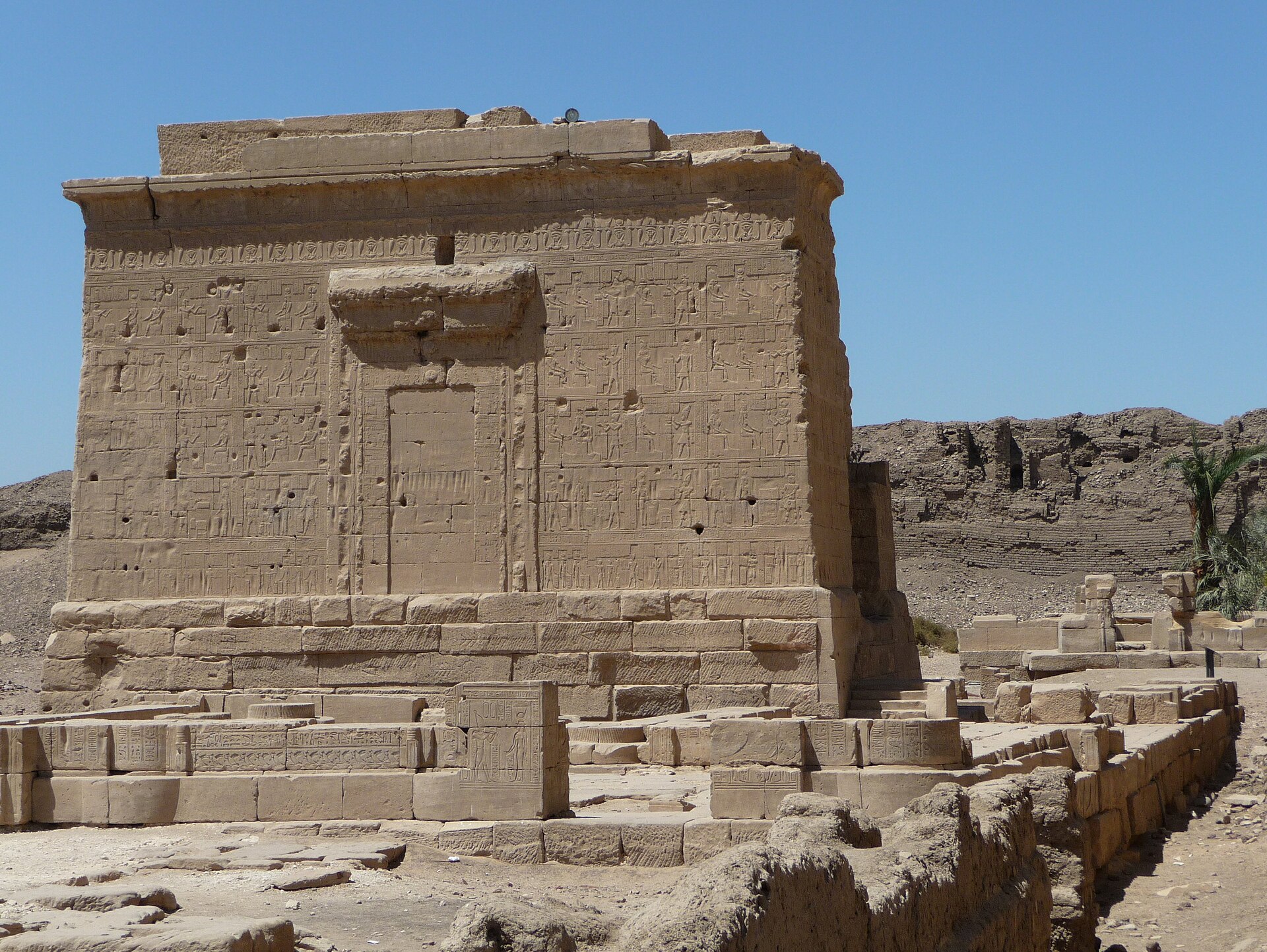
Table of Contents
- The Temple of the Goddess Hathor
- Hathor: Goddess of Love, Music, and Joy
- A Late Temple of Timeless Beauty
- The Great Hypostyle Hall
- The Astronomical Ceiling
- The Dendera Zodiac
- Crypts and Hidden Chambers
- Cleopatra on the Temple Walls
- The Rooftop Chapels and Osiris
- Rediscovery and the Zodiac in Paris
- Getting There
- Nearby Places
- Closing Thoughts
The Temple of the Goddess Hathor
Dendera was the cult centre of Hathor, and a temple stood here from very ancient times, rebuilt again and again over the centuries. The great temple we see today is largely the work of the last few centuries BC and the early Roman period.
The complex includes not only the main temple but sacred lakes, birth houses, a Roman gate and other chapels, all enclosed within a mud-brick wall. It is one of the most complete temple precincts to survive in Egypt.

Hathor: Goddess of Love, Music, and Joy
Hathor was one of the most beloved of all Egyptian deities, goddess of love, beauty, music, dance and motherhood, often shown as a cow or as a woman with cow’s horns and a sun disc. She was a giver of joy and a protector of women.
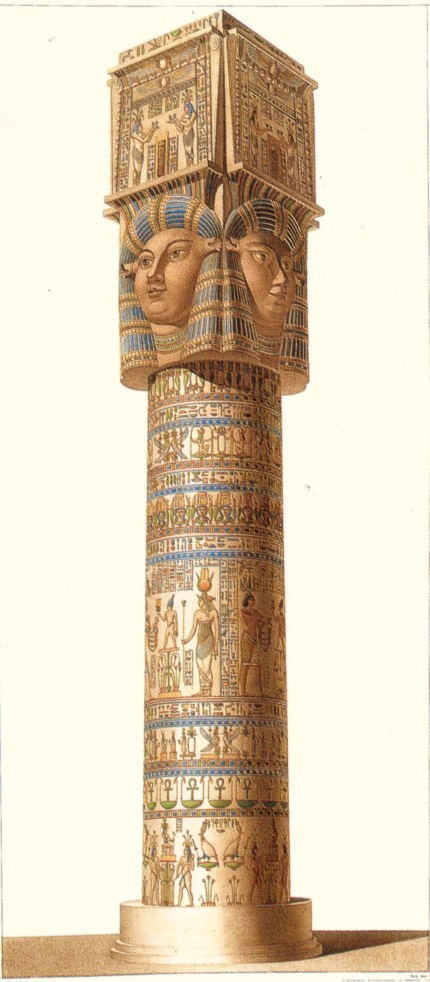
At Dendera she was worshipped with music and celebration. Her gentle, welcoming character is reflected in the warmth and beauty of her temple, whose columns are crowned with her smiling face.
A Late Temple of Timeless Beauty
Dendera was built when Egypt was ruled by the Greek Ptolemies and then by Rome, yet its architecture and decoration are thoroughly Egyptian. The builders deliberately followed ancient forms, keeping the traditions alive.
This makes Dendera a wonderful place to see the classic Egyptian temple as it was meant to look, complete and richly decorated, long after the age of the great pharaohs had ended.
The Great Hypostyle Hall
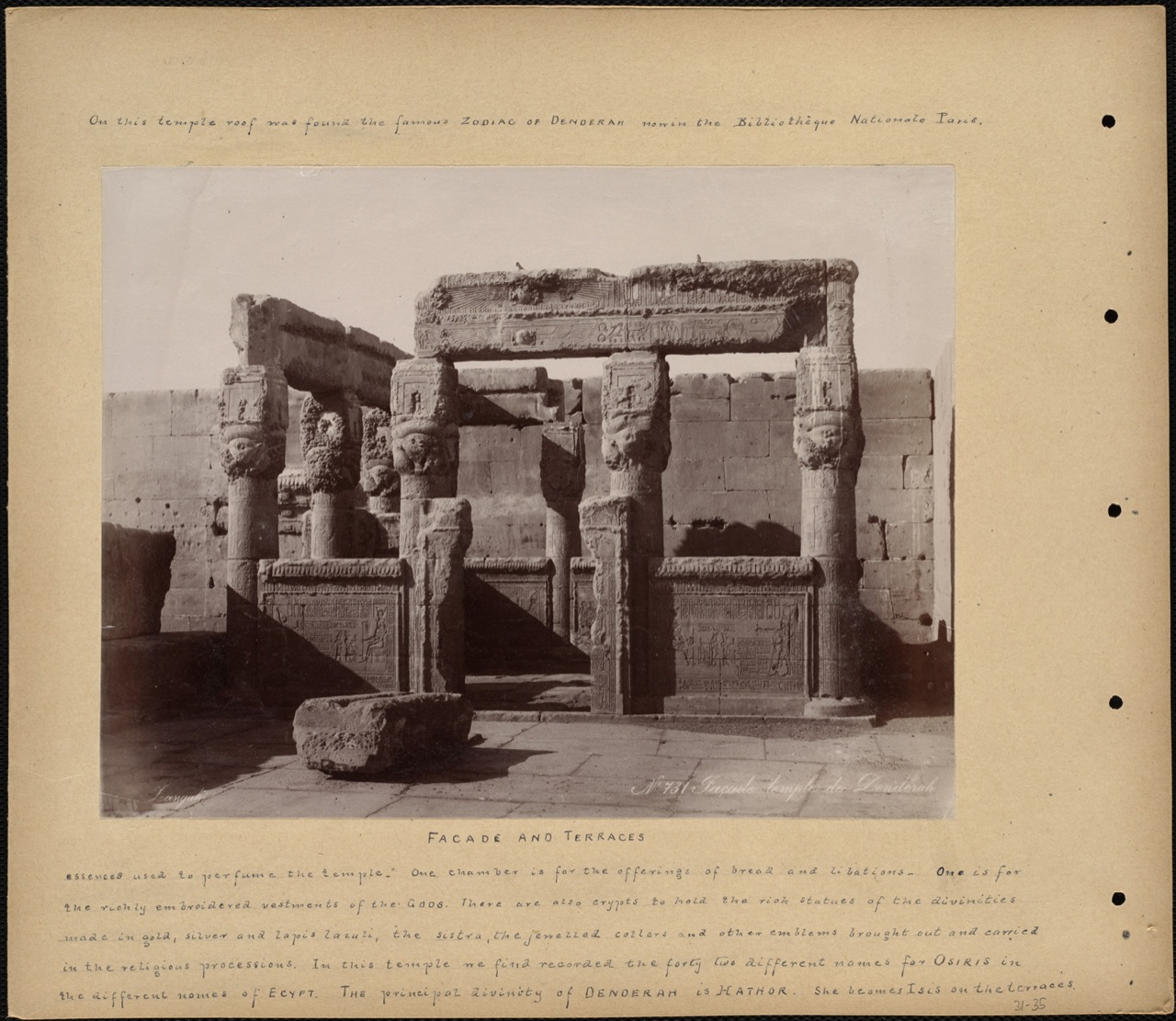
Entering the temple, the visitor passes into a magnificent hypostyle hall, a forest of massive columns each topped with the face of Hathor. Recent cleaning has revealed the astonishing original colours beneath centuries of soot.
The restored ceiling glows once more with blues, reds and golds, giving a rare sense of how dazzling an Egyptian temple interior truly was. It is one of the most breathtaking spaces in all of Egypt.

The Astronomical Ceiling
The ceilings of Dendera are covered with images of the sky: the goddess Nut arching over the world, the sun and moon in their boats, and the constellations as the Egyptians imagined them. Newly cleaned, they blaze with colour.
These ceilings are among the most complete depictions of the ancient Egyptian cosmos to survive. They turn the temple roof into a map of the heavens, linking earthly ritual to the order of the stars.

The Dendera Zodiac
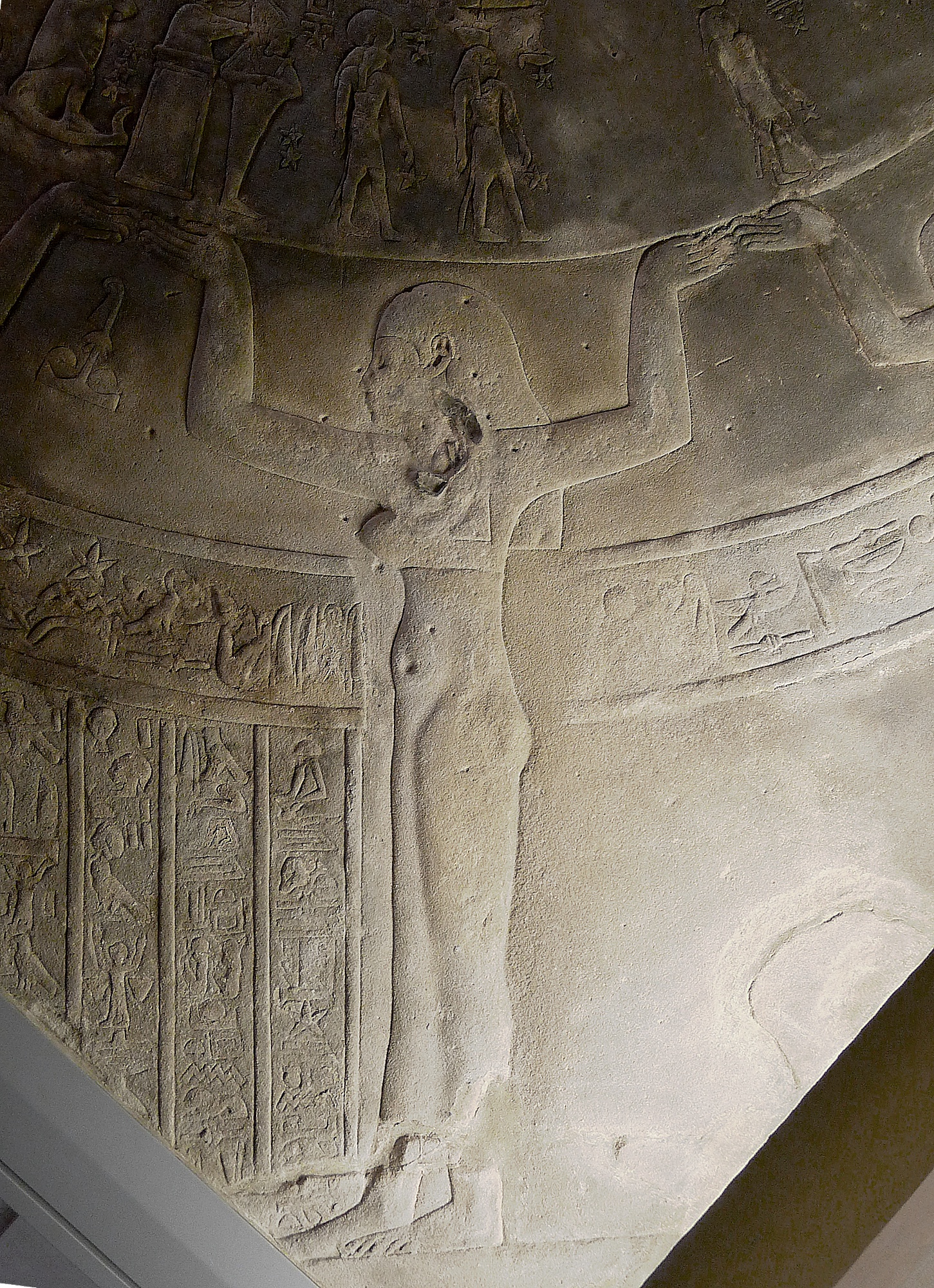
The most famous single image from Dendera is the zodiac, a circular relief from a rooftop chapel showing the sky with its constellations, including familiar zodiac signs. It is one of the rare maps of the sky from the ancient world.
The zodiac blends Egyptian and Greek astronomical ideas, reflecting the mixed culture of the age. The original was removed to France in the nineteenth century, and a cast now stands in its place at Dendera.
Crypts and Hidden Chambers
Dendera is honeycombed with hidden crypts, narrow chambers built into the thickness of the walls and beneath the floors. They were used to store the temple’s most sacred objects and treasures.
Their walls are covered with finely carved reliefs, including some of the most debated images in Egyptology. Exploring these secret spaces adds to the sense of mystery that surrounds the temple.

Cleopatra on the Temple Walls
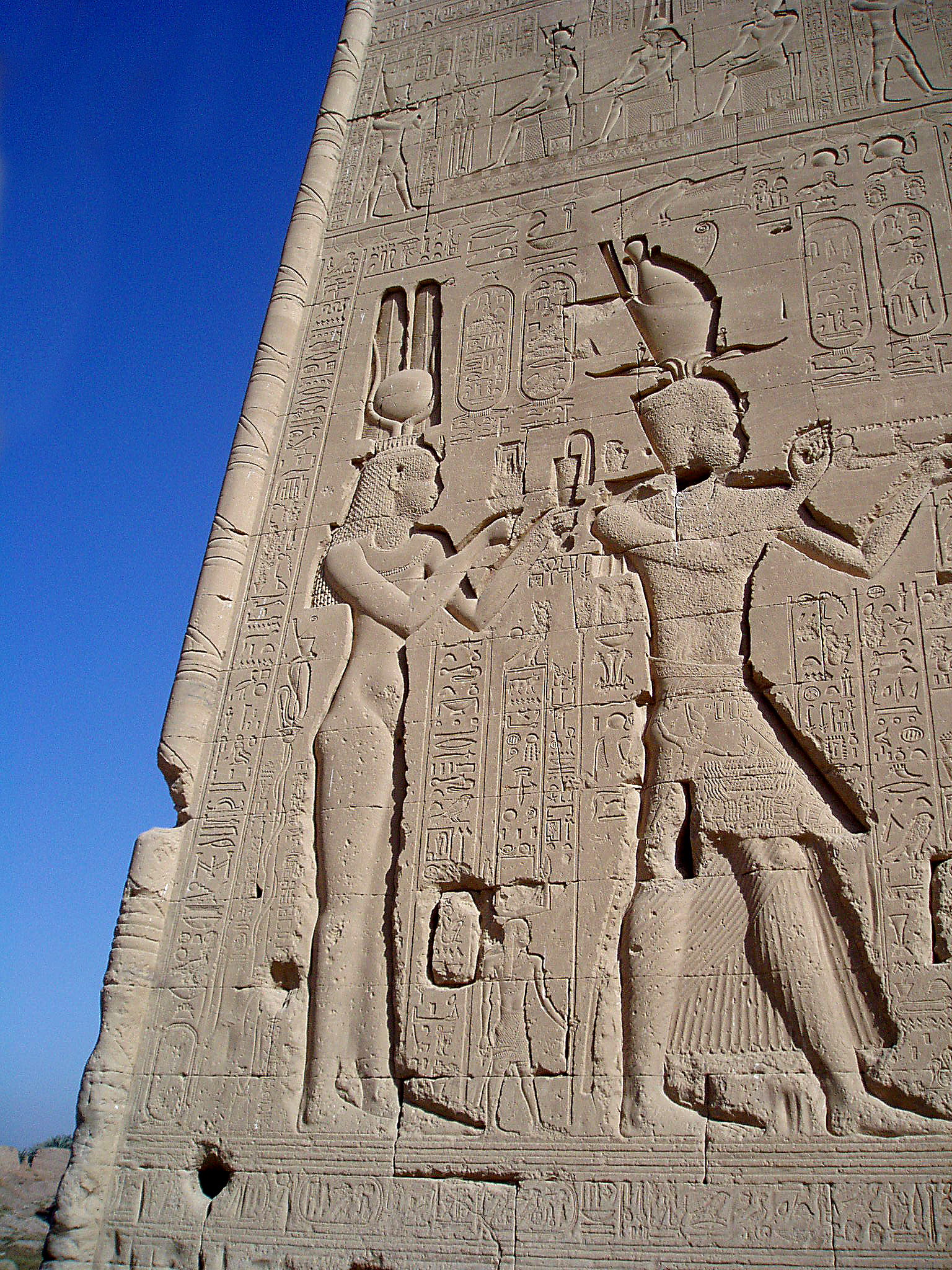
On the great rear wall of the temple is a famous relief showing Queen Cleopatra VII, the last ruler of independent Egypt, together with her son Caesarion, making offerings to the gods.
It is one of the few monumental images that may show the legendary queen, depicted in fully Egyptian style. Her presence at Dendera links this temple directly to one of the most famous figures of the ancient world.
The Rooftop Chapels and Osiris
A staircase, its walls carved with processions, leads up to chapels on the temple roof dedicated to Osiris. Here rituals celebrated the death and resurrection of the god, linking Hathor’s temple to the great cycle of rebirth.
From the roof there are fine views over the whole complex and the surrounding countryside. The rooftop chapels are among the most atmospheric parts of the temple.
Rediscovery and the Zodiac in Paris
Dendera drew the attention of European scholars and travellers, especially during and after Napoleon’s expedition to Egypt. The removal of the zodiac to Paris caused a sensation and remains a subject of debate about cultural heritage.
Since then the temple has been studied, cleared and, most recently, spectacularly cleaned, revealing its colours anew. Dendera today is admired as one of the jewels of ancient Egyptian architecture.
Getting There
Dendera lies on the west bank of the Nile in Qena Governorate, near the town of Qena, in southern Egypt. It is about sixty kilometres north of Luxor.
Most visitors come on a day trip from Luxor, often combined with the temple of Abydos further north. The site is reached by road, and some Nile cruises also include a stop at Dendera.
Coordinates: 26.1417, 32.6700 — open Dendera in Google Maps.
Nearby Places
- Abydos — the holy city of Osiris nearby, often visited together with Dendera on a trip from Luxor.
- Thebes — the great temple-city of Luxor and Karnak, the usual base for visiting Dendera.
- The Pyramids of Giza — the monuments of a far earlier age of the same long Egyptian civilisation.
Closing Thoughts
Dendera shows ancient Egyptian temple art at its most complete and dazzling: a forest of Hathor-headed columns, ceilings painted with the whole sky, and secret crypts full of carving, all recently restored to their original glory.
Home to the famous zodiac and an image of Cleopatra herself, this late but magnificent temple keeps the ancient traditions alive in brilliant colour. It is one of the most beautiful and rewarding sacred sites in all of Egypt.
You May Like

Mafra, the Palace a King Built From a Vow


One thought on “Dendera: The Temple of Hathor With a Star Map on Its Ceiling”